Arriva’s Grand Central Applies For Extended Track Access Rights
The title of this post, is the same as that of this news item from Arriva.
These three bullet points, act as sub-headings.
- Grand Central to submit application to the rail regulator for extended track access up to 2038.
- Proposals for a new, greener fleet are outlined as part of the application.
- Application signals Arriva’s long-term commitment to UK rail.
These three paragraphs add more detail to the application.
Arriva Group’s UK open access train operating company, Grand Central, has today announced it is seeking to extend its existing track access rights until 2038, securing its services for the next 15 years and unlocking Arriva’s intentions to invest in new, state-of-the-art trains.
Grand Central has been operating services on the East Coast mainline since 2007 as an open access operator, which means it receives no government funding or subsidy. It directly links 15 destinations, including cities in Yorkshire and the North East with London’s Kings Cross.
The application represents a significant commitment to long-term services and supports its plans to expand services with improved connectivity and increased frequency, as outlined in a previous application, submitted to the Office of Rail and Road in May this year.
These are my observations and thoughts.
Grand Central’s Current Services
Grand Central currently runs two separate services.
- King’s Cross and Sunderland via Peterborough,York, Thirsk, Northallerton, Eaglescliffe and Hartlepool – six tpd
- King’s Cross and Bradford Interchange via Peterborough, Doncaster, Pontefract Monkhill, Wakefield Kirkgate, Mirfield, Brighouse, Halifax and Low Moor – four tpd
Note.
- tpd is trains per day.
- Weekend services are reduced.
- Peterborough is served by one train in each direction.
Grand Central have applied to run more services.
Distances Without Electrification On Current Services
Only the Northern ends of both routes are not electrified.
- King’s Cross and Sunderland – Longlands junction and Sunderland – 48.5 miles
- King’s Cross and Bradford Interchange – Doncaster and Bradford Interchange – 52.1 miles
Note.
- Going North, any train batteries could be charged on the East Coast Main Line.
- Before returning South, train batteries could need to be charged at the two terminals.
- Battery-electric trains would need infrastructure changes at the two terminals.
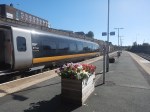
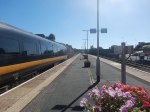
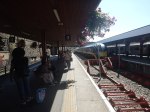
The two terminals; Bradford Interchange and Sunderland are not particular spacious.
These pictures show Bradford Interchange station.

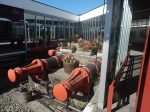
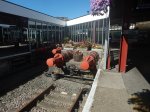
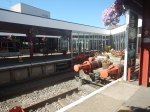
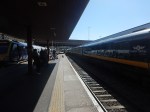
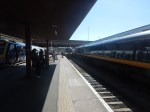



And these pictures show Sunderland station, which is underground.
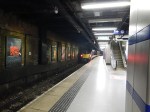
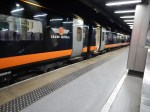
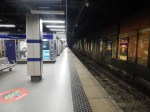

Putting even a short length of catenary to charge battery-electric trains might not be that easy at either station.
Grand Central’s New Trains
Arriva’s news item, gives these details on the new trains.
- Increased capacity: The new trains would feature approximately 20 per cent more seats than the current Class 180 units, providing additional capacity to meet growing passenger demand.
- Modernised fleet: The new Bi-Mode trains would replace the existing 24-year-old Class 180 units bringing new customer focussed features and a more comfortable experience for passengers.
- Greener services: The Bi-mode trains would cut carbon emissions and provide smoother journeys for passengers. They can operate on electric and non-electric tracks, so they can serve long into the future as track electrification gathers pace across the UK.
Note.
- A five-car Class 802 train has approximately twenty percent more seats than a four-car Class 180 train.
- Hull Trains, LNER, Lumo and TransPennine Express all run Hitachi Class 80x trains on the East Coast Main Line, which could ease operations, if all trains were similar.
- Bi-mode trains are specified. Grand Central will change mode once on each trip.
- LNER have specified CAF Tri-mode trains for their new fleet. Will these have an extra level of complication, that Grand Central don’t need?
I suspect that rand Central will opt for the Hitachi trains.
Using The Joint Line Between Peterborough and Doncaster via Lincoln
The diesel Class 180 trains can use this line, in times of incidents or engineering works.
Class 800 and Class 802 trains can also use this diversion, so it might be sensible to be able to use the line in time of trouble.
Chiltern Trains’ London And Birmingham Services
Both Arriva and Chiltern Trains are subsidiaries of Deutsche Bahn.
Currently, Chiltern run six-car rakes of Mark 3 coaches, with a Class 68 locomotive at one end and a driving van trailer at the other, between London and Birmingham.
They are nice trains, but they are not zero-carbon.
Could these be replaced by an eight-car Class 802 train?
- Chiltern have said that they are looking for new trains.
- An eight-car Class 802 train could be a similar length to the current trains.
- London Marylebone and Birmingham Moor Street is only 111.7 miles.
- The Hitachi trains would offer an increase in capacity.
- They might save a few minutes.
But the trains will still be not zero-carbon.
This page on the Hitachi web site is entitled Intercity Battery Trains.
The trains for London Marylebone and Birmingham Moor Street would be built as conventional eight-car Hitachi trains, with perhaps four diesel engines.
- Over the years, the Chiltern Main Line would be partially electrified, starting perhaps in the middle around Banbury.
- One by one, the diesel engines would be replaced by batteries, so that the trains could run on battery power between the electrified sections.
- Eventually, the London Marylebone and Birmingham Moor Street service would be fully battery-electric.
- As Kidderminster is only twenty miles past Birmingham Moor Street, there must surely be possibility for extension of the service.
I believe that Hitachi’s Intercity Battery Train, is going to play a large part in the decarbonisation of UK railways.
Chiltern Trains’ London And Oxford Services
If eight-car Hitachi Intercity Battery Trains can handle London Marylebone and Birmingham Moor Street services, then I am fairly sure that five-car Hitachi Intercity Battery Trains could handle London Marylebone and Oxford services.
They would also have more capacity, than the current trains, that serve Oxford and Bicester Village.
Conclusion
It may be advantageous for Deutsche Bahn to put the two orders together.
Width And Height Of A Stadler Regio Shuttle RS1 Compared To UK Multiple Units
I am building this table, so that I can get a feel for where Stadler RS ZERO trains can go on the UK network.
Height Of The Regio Shuttle RS1
This is given as 3.70 metres in Wikipedia.
Other figures given in Wikipedia are.
- Class 150 – 3.774 metres
- Class 156 – 3.805 metres
- Class 158 – 3.73 metres
- Class 165 – 3.79 metres
- Class 185 – 3.71 metres
- Class 195 – 3.85 metres
- Class 378 – 3.774 metres
- Class 345 – 3.760 metres
- Class 399 – 3.720 metres
- Class 710 – 3.760 metres
- Class 745 – 3.915 metres
- Class 755 – 3.915 metres
Surprisingly, the Regio Shuttle RS1 is the shortest train!
But this means, that if the Regio Shuttle RS1 can get under all the bridges on a route, then all the other trains can.
Width Of The Regio Shuttle RS1
This is given as 2.90 metres in Wikipedia.
Other figures given in Wikipedia are.
- Class 150 – 2.816 metres
- Class 156 – 2.730 metres
- Class 158 – 2.700 metres
- Class 165 – 2.810 metres
- Class 185 – 2.673 metres
- Class 195 – 2.772 metres
- Class 378 – 2.800 metres
- Class 345 – 2.772 metres
- Class 399 – 2.650 metres
- Class 710 – 2.772 metres
- Class 745 – 3.720 metres
- Class 755 – 3.720 metres
Surprisingly, the Regio Shuttle RS1 is the widest train!
But this means, that if the Regio Shuttle RS1 can squeeze between the narrowest infrastructure on a route, then all the other trains can.
Conclusion
Does this mean, that once a Regio Shuttle RS1 can run on a route, lots of other trains can?
Itb looks to me, like a clever example of cunning Swiss engineering.
Could Stadler RS ZERO Be Used For The West London Orbital Railway?
In Stadler Presents A World First In Berlin, I talked about the launch of the Stadler RS ZERO.
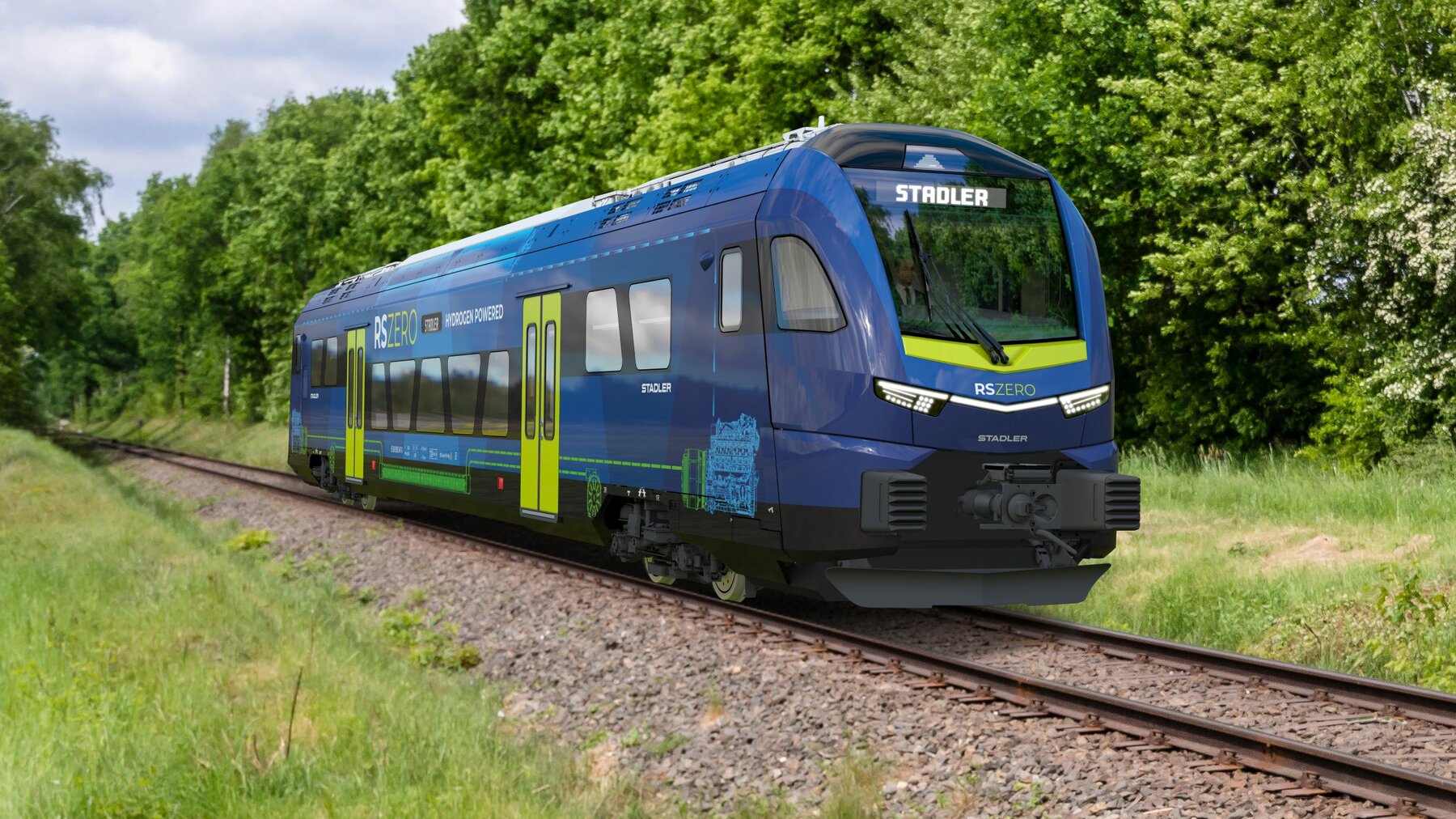
I wonder, if these newly-launched trains, would be ideal for the West London Orbital Railway?
- They will be zero-carbon and will not be emitting fumes or carbon dioxide.
- Stadler could size the trains to UK platform height, just as they did the Flirts for Greater Anglia.
- The two routes are only eleven miles long with 25 KVAC electrification at the Midland Main Line end, so the battery-electric version could be ideal.
- They are likely to be extremely quiet, as battery-electric trains always seem to be.
This picture of the earlier Stadler Regio-Shuttle RS1 from Chemnitz, shows that it should be possible to have almost level boarding.
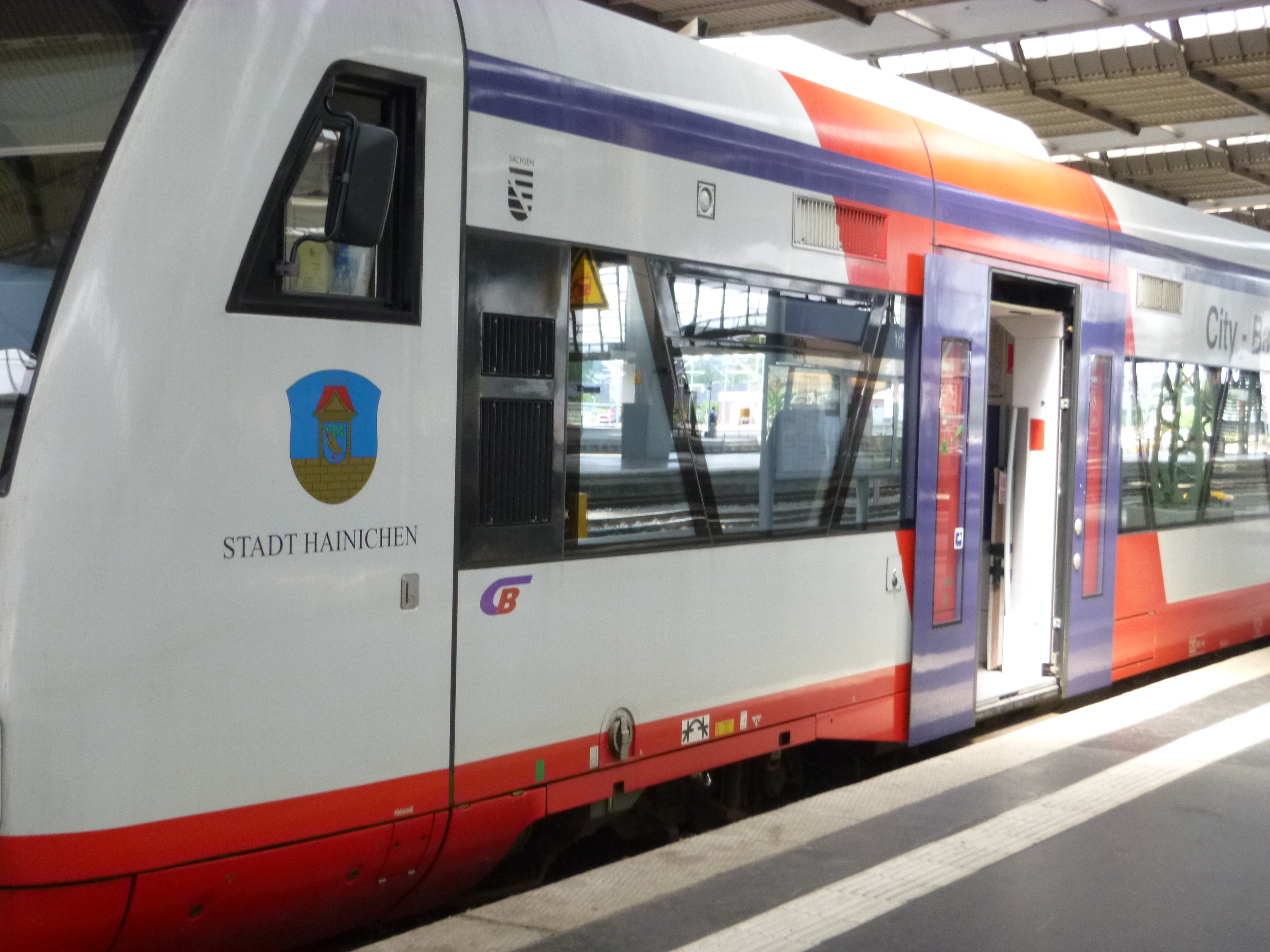
At least at new stations, where the platform height could be built for the RS ZERO.
The new stations along the Dudding Hill Line could be very simple indeed.
Conclusion
I feel that a fleet of RS ZEROs could convert the Dudding Hill Line into an efficient, step-fee and frequent addition to London’s passenger railways.
Out Of Thin Air: Solving The Dilemma Of Long-Duration Storage
The title of this post, is the same as that of this excellent article on the Australian Financial Review.
This is the sub-heading.
Two first-of-a-kind technologies in Australia are firming up as options to crack the tough nut of energy storage that lasts much longer than batteries.
This is the first paragraph.
Two competing technologies that use different forms of air to store energy are emerging as potential solutions for the thorny problem of long-duration storage needed to smooth out Australia’s bumpy transition to low-carbon energy.
The article then compares the two competing technologies.
- Hydrostor of Canada are developing the 200 MW/1600 MWh Silver City Energy Storage Centre at Broken Hill in New South Wales.
- Highview Power of the UK are proposing a 12-hour energy store for the Northern Territory.
Australia certainly has plenty of solar power to fill the energy storage.
What Are Offshore Hybrid Assets?
The title of this post is the same as that of a story explaining energy from National Grid.
This is the sub-heading.
Offshore Hybrid Assets or OHAs (formerly known as multi-purpose interconnectors) are a new generation of subsea technology that will connect clusters of offshore wind farms to multiple countries.
This is the first paragraph.
OHAs will help to speed up the connection of offshore wind and maximise the use of wind generation. They will also reduce the impact on local communities by reducing the amount of connection points and onshore infrastructure required to connect this clean energy to the shore.
The story goes on to discuss OHAs and how they are being developed.
It is very much a must read.
Stadler Presents A World First In Berlin
The title of this post, is the same as that of this press release from Stadler.
These are the first two paragraphs.
With the RS ZERO, the rail vehicle manufacturer is presenting the successor to the successful Regio-Shuttle RS1 model. There is a choice of two modern and environmentally friendly drive technologies: Hydrogen and battery. Both will enable CO2 emission-free operation of secondary lines in the future.
Stadler today unveiled the prototype of the new RS ZERO, the innovative successor to the successful RS1 Regio-Shuttle. The Regio-Shuttle has been one of the most popular vehicles in German regional rail transport for 28 years, with around 500 RS1 vehicles currently in operation in Germany and the Czech Republic. Stadler is building on this proven technology and integrating state-of-the-art, environmentally friendly drive systems. The RS ZERO is optionally available with a hydrogen and/or battery drive and thus not only sets new standards for environmentally friendly rail transport, but also presents a world first.
These pictures from Chemnitz Trams And The Chemnitz Model, show the Regio-Shuttle RS1.
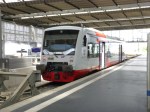
Note.
- The Regio-Shuttles can run as up to seven car trains.
- These Regio-Shuttles are electro-diesel.
- The distinctive diagonal windows.
- They can carry 170 passengers at 75 mph.
- They can run as train-trams using the Chemnitz model on compatible tram networks.
The Regio-Shuttle Wikipedia entry gives more details.
This image from the press release shows the prototype RS ZERO.
It looks very similar to my pictures from Chemnitz.
I have a few thoughts.
Comparison To A Class 150 Train
A Class 150 train can carry up to 149 seated passengers at 75 mph, which is similar to the RS ZERO.
As Stadler have built trains for Greater Anglia, Merseyrail and the Glasgow Subway, I believe that Stadler could build an RS ZERO, that would fit the UK loading gauge.
In What Train Is This?, I show the standard of interior, that can be achieved by refurbishing a Class 150 train, but unlike the RS ZERO, the train won’t be zero-carbon.
Does The RS ZERO Have A Toilet?
This is a paragraph from the press release.
The prototype of the RS ZERO presented today in Berlin is a one-car vehicle with hydrogen drive. Stadler is demonstrating the numerous design options with a multi-purpose area equipped for carrying bicycles, pushchairs and bulky luggage, lounge and comfort zones, standard and privacy seats, a wheelchair space, WC and a train office.
The train appears to be able to have what an operator might need.
What Will Be The Range Of An RS ZERO On Hydrogen?
I suspect, Stadler will provide a train, that will handle the route.
Conclusion
This could be a very handy train to decarbonise branch and secondary lines in the UK.
Mammoet Launches ‘World’s Strongest’ Land-Based Crane That Can Handle Large Offshore Wind Turbine Components
The title of this post, is the same as that of this article on offshoreWIND.biz.
This is the sub-heading.
Mammoet has launched the SK6000 ring crane, said to be the world’s strongest land-based crane, at its Westdorpe facility in the Netherlands. According to the company, the new crane supports the continued constructability of next-generation offshore wind turbines and foundations.
This is the first paragraph.
The new crane has a maximum capacity of 6,000 tonnes and can lift components of up to 3,000 tonnes to a height of 220 metres, and builds on the design philosophy of Mammoet’s SK190 and SK350 series, which are proven in the market, the company said.
In the early decades of North Sea Oil and Gas, I remember a project management consultant telling me how larger cranes were improving productivity.
It appears history is repeating itself.
The crane can also be transported in standard shipping containers, as this sentence details.
The crane design uses containerization techniques for ease of deployment and can be transported using shipping containers to any location worldwide.
Let’s hope wind farms can be erected faster.
Heathrow Rail Link Withdrawn, But MP Vows To Carry On
The title of this post, is the same as that as this article on Rail Magazine.
These are the first three paragraphs.
Hopes for a rail link between the Great Western Main Line and Heathrow Airport appear to have finally ended.
The scheme had been on hold since 2021, when Network Rail staff working on it were transferred to other tasks.
At the time, NR called it a “controlled pause”, but a pre-application process has now been withdrawn, according to the Planning Inspectorate website.
Currently, the two main routes to Heathrow from the Great Western Main Line are.
- Continue to Paddington and get either the Heathrow Express or the Elizabeth Line to the airport.
- Use the RailAir bus from Reading to the airport.
Both routes probably encourage passengers and staff to drive to the airport.
I have my thoughts.
Tan Dhesi
The article says this about this MP’s support for the rail link.
However, Slough MP Tan Dhesi, a former shadow transport minister, believes the link still has wide support as it would bring 20% of the UK population within one interchange of its busiest airport.
Dhesi led an All-Party Parliamentary Group for the Western Rail Link to Heathrow before the General Election. He now plans to re-launch the group, as some previous members have since lost their seats.
He has a point, but is this because a large number of his constituents work at Heathrow.
Would an improved local bus service, at least partially serve the need?
RailAir Between Reading And Heathrow
This appears to have two drawbacks.
- It only runs every thirty minutes.
- It doesn’t serve Terminal Four.
But at least it runs modern coaches, not buses.
I would increase the frequency to perhaps every twenty or even fifteen minutes, serve Terminal Four and perhaps in the future, switch to Wrightbus’s new hydrogen coaches, which I wrote about in Wrightbus Hydrogen Coach Planned For 2026.
I feel that switching to hydrogen power, may attract more passengers to the route.
Obviously, I feel the other RailAir routes from Guildford, Watford and Woking to Heathrow would also be updated.
Improving The Rail Route Between Reading And Heathrow Via Hayes And Harlington Station
Hayes and Harlington station has the following frequencies to Heathrow and Reading, in trains per hour (tph)
- Heathrow Terminals Two & Three – 6 tph
- Heathrow Terminal Four – 4 tph
- Heathrow Terminal Five – 2 tph
- Maidenhead – 2 tph
- Reading – 2 tph
More trains between Reading and Hayes and Harlington might encourage more passengers to use the trains.
Could Hayes And Harlington Station Become A Transport Hub For Heathrow?
This Google Map shows Hayes and Harlington station.
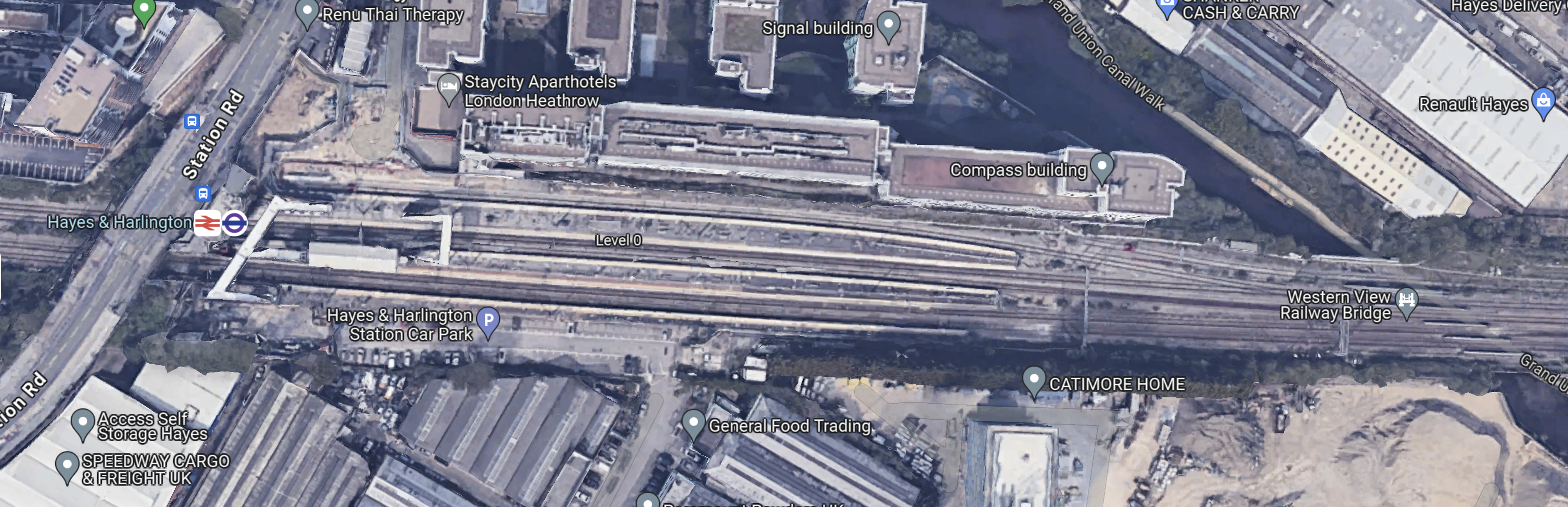
Note.
- It has platforms on all four tracks of the Great Western Main Line.
- There is a London-facing bay platform to terminate Elizabeth Line trains, if needed.
- The land to the North of the station has been developed.
- There is land to the South of the station that could be developed.
Could the space above the tracks, with some of the land to the South of the station be developed into a transport hub for Heathrow?
Heathrow Southern Railway
I prefer the Heathrow Southern Railway, which is a comprehensive, privately funded scheme.
Liver From Ocado
I like to eat liver, as it supplements my B12 injections.
So I was pleased to see that Ocado stock Marks and Spencer’s Liver and Bacon meal-for-one.



Note, that I cooked it in the oven, which is recommended.
I enjoyed it and I will cook it more often, provided Ocado keep delivering it.
Gluten And Heart Disease
Type “Gluten And Heart Disease” into Dr. Google and you find two major peer-reviewed studies.
This study is entitled Effects Of A Gluten-Reduced Or Gluten-Free Diet For The Primary Prevention Of Cardiovascular Disease.
These are the authors’ conclusions.
Very low-certainty evidence suggested that it is unclear whether gluten intake is associated with all-cause mortality. Our findings also indicate that low-certainty evidence may show little or no association between gluten intake and cardiovascular mortality and non-fatal myocardial infarction.
There would appear to be no strong link, between gluten and heart disease.
This British study is entitled Long Term Gluten Consumption In Adults Without Celiac Disease And Risk Of Coronary Heart Disease: Prospective Cohort Study.
These were the authors’ conclusions.
In these two large, prospective cohorts, the consumption of foods containing gluten was not significantly associated with risk of coronary heart disease. Although people with and without celiac disease may avoid gluten owing to a symptomatic response to this dietary protein, these findings do not support the promotion of a gluten restricted diet with a goal of reducing coronary heart disease risk. In addition, the avoidance of dietary gluten may result in a low intake of whole grains, which are associated with cardiovascular benefits. The promotion of gluten-free diets for the purpose of coronary heart disease prevention among asymptomatic people without celiac disease should not be recommended.
As before there would appear to be no strong link between gluten and heart disease.
To me, this is the most important sentence.
In addition, the avoidance of dietary gluten may result in a low intake of whole grains, which are associated with cardiovascular benefits.
So can we do something about it?
Enter The First Great Ethiopian Marathon Runner
I used to run a bit (badly) at school and my three heroes were Chris Brasher, Bruce Tulloh and Abebe Bikula.
The Ethiopian; Abebe Bikula was a double Olympic marathon champion.
- In 1960, he won in Rome, running barefoot.
- In 1964, he won in Tokyo, a few days after leaving hospital after having his appendix removed.
Both wins were in world record time.
Since 1964, three Olympic men’s marathons have been won by Ethiopians.
Ethiopian women have also won two gold and one bronze medals since the women’s marathon was inaugurated in 1984.
And then there’s the Kenyans, who’ve won a hatful of marathon medals.
Their competence is generally put down to living at altitude and I wouldn’t disagree with that.
My Experience Of Kenya
Soon after C died, I went on holiday to Kenya.
In one part of the holiday, I was riding horses in the Masai Mara and in the other I was glamping.
The second part was upmarket and one evening the chef approached me to find out more about my gluten-free diet. At breakfast next day, he presented me with a couple of rolls made from a local flour, which was probably something like millet or perhaps, teff from Ethiopia.
I had no adverse reaction. and he said, I could eat like a true African, as Western flour had no place in the local diet.
Conclusion
If we are worried about the lack of whole grains in gluten-free food, then perhaps we should add gluten-free whole grains from East Africa.
As a manager in a Marks and Spencer store, told me that they used Ethiopian flour in their gluten-free breads, I suspect this is already happening.
 The Anonymous Widower