Battery Train Deployment Report Commissioned
The title of this post, is the same as that of this article on Railway Gazette.
This is the first paragraph.
The Rail Safety & Standards Board has commissioned consultancy WSP to produce evidence-based recommendations for optimising and standardising the adoption of battery-powered trains.
Note.
- The train shown in the picture in the article is a Stadler FLIRT Akku.
- WSP are a well-respected Canadian engineering consultancy.
To commission a development report sounds to be a sensible act.
Progress In Front Of Moorgate Station – 7th August 2023
The pedestrian area in front of the Elizabeth Line entrance at Moorgate station is progressing and I took these pictures this morning.





Note.
- The tree-like sculpture is Manifold (Major Third) 5:4, is by Conrad Shawcross, which I showed being installed in An Art Installation In Front Of Moorgate Station.
- The pedestrian area will be protected by the City of London’s distinctive bollards.
- Only two of the bollards have been painted in their final colours.
- In No Budget; Employ Students, I talked about how the City of London has form in using art students to do decorative paintwork.
The UK is certainly going for appropriately-sized pedestrian areas in front of stations to allow travellers to get easily clear at busy times.
A Funny Turn On Friday
Thursday, 3rd August
I’d slept with the window open, as I often do and woke up to a very damp bedroom. I suspect, that I’d had a similar incident to the one in My Strange Skin.
I measured my INR at 0800 and it was 2.4.
I had my usual bath and breakfast in Leon on Moorgate.
Afterwards, I just went home and added to this blog.
One thing I noticed was that my left leg was going dead, as I sat on the chair typing. but then that happens regularly. It was similarly to the incident in Saved By A Beer?.
Later I had a tremendous itch in my left foot which I treated with copious amounts of the Body Shop’s Hemp Foot Protector.
Friday, 4th August
I had intended to go to the section of the city wall, that has been put on display at City Wall At Vine Street.
But as I was bumping into people and street furniture, I thought there might be something wrong, so I diverted to the A & E at the Royal London Hospital. I was also dropping my brief-case, when I held it in my left hand.
After various tests, including a CT-Scan, I finally left at 21:30, after they’d found nothing serious.
They measured by INR and they said it was 1.9. As I’d not eaten or drunk, large amounts of food and drink, that would drop my INR, how did it drop by 0.5 in 24 hours?
I went home on the Overground and a bus.
Saturday, 5th August
I wasn’t feeling unwell at all.
I was in all day watching the sport.
I was drinking a lot. Perhaps it was 4-5 mugs of tea and a 500 ml. bottle of Adnams 0.5 % Ghost Ship.
Sunday, 6th August
Very much like Saturday, except that I had lunch with my granddaughter.
I had two bottles of 0.5 % beer.
Monday, 7th August
I measured my INR at 0800 and it was 2.8.
Lord Bamford: We’re Too Mesmerised By Musk — Here’s Why I’m Building A Hydrogen JCB
The title of this post, is the same as that of this article in the Sunday Times.
This is the sub-heading.
JCB’s Lord Bamford has spent £100m on a hydrogen engine. Tesla’s tech won’t suit everyone, he tells Jim Armitage
These are my thoughts.
The Need For Zero-Carbon Construction Equipment
Construction sites can be dangerous places and in addition to the obvious dangers, there are hidden pollutants in the atmosphere on sites.
Health and Safety will surely demand an improvement in air quality on construction sites for the protection of the workforce and nearby residents.
If JCB can produce zero-carbon construction equipment, then whether it is electric or hydrogen, this will be to their advantage.
High Speed Two And Low-Carbon Construction
High Speed Two is the UK’s biggest construction project and these posts on this blog, talk about low-carbon construction.
- HS2 Reveals Dramatic Carbon Saving With Ambitious Modular Design For Thame Valley Viaduct
- HS2 Smashes Carbon Target
- HS2 To Trial New Building Method Which Could Provide Carbon-Free Energy
- New HS2 Pilot Project Swaps Steel For Retired Wind Turbine Blades To Reinforce Concrete
- World First As HS2 Trials Dual-Fuel Piling Rig On London Site
If High Speed Two are thinking this way, how many other projects will be built in a similar way?
Decarbonising Cargo Handling
It should be noted that JCB are involved in Freeport East at Felixstowe/Harwich.
Ports will be the sort of workplaces, where all vehicles should be zero-carbon, to protect the workforce. Some of the container handling machines are large and would be ideal for hydrogen.
Decarbonising Agriculture
JCB also make tractors, like the Fastrac and other equipment for agriculture. As they often work around people, hydrogen could be much better.
New Markets
Zero-carbon engines will result in new products for new markets.
Lord Bamford is on track to create valuable new markets for his diggers and other equipment.
Hydrogen-Powered Land Speed Record
JCB already hold the land speed record with the JCB Dieselmax, at over 350 mph.
This paragraph from Wikipedia describes the powerplant.
The car is powered by two specially-tuned versions of the production JCB444 powerplant, developing up to 750 brake horsepower (560 kW) each (over five times the power output of the production version with 90 psi (6 bar) of boost) and featuring four cylinders and 5 litres of displacement, accompanied by two stage turbochargers, intercooler and aftercooler.
I believe that getting that amount of power out of a production diesel engine, shows that JCB’s combustion engineers could do the same for a hydrogen-powered vehicle.
Crown Estate Supports Four Nature-Positive Offshore Wind Research Projects
The title of this post, is the same as that of this article on offshoreWIND.biz.
This is the sub-heading.
The Crown Estate has revealed that it is partnering with a range of UK-wide expert bodies to launch four research projects to support nature recovery and the coexistence of offshore wind farms with marine life.
The four projects are described in these paragraphs.
The first of four projects is called Prevalence of Seabird Species and Collision Events in OWF (PrediCtOr), led by the Carbon Trust under the Offshore Renewables Joint Industry Programme (ORJIP).
It aims to develop a coordinated approach for reducing uncertainty surrounding bird collision risk and influencing factors, and therefore reducing consenting risk, at offshore wind farms.
The second project is Procellariiform Behaviour & Demographics (ProcBe), led by JNCC, which seeks to fill evidence gaps around how seabird species, such as storm petrels and Manx shearwater might interact with offshore wind farms and improve the demographic rate and population modelling approaches.
Reducing Seabird Collisions Using Evidence (ReSCUE) project, led by Natural England, is a three-and-a-half project that could improve the industry’s knowledge of seabird flight heights and collision risk with offshore wind turbines in UK waters.
And the last project, named Strategic Compensations Pilots for Offshore Wind, is led by OWIC.
Research like this will surely increase the acceptance of offshore wind power amongst conservationists.
Air-Purifying Totems Trial At Birmingham New Street Station
The title of this post, is the same as that of this article on Railway Gazette.
These two paragraphs outline the trial.
The use of air-purifying totems to reduce the impact of diesel train exhaust fumes on air quality is to be tested at Birmingham New Street station.
The Pluvo Column devices take in air at the bottom of the totem and pass it through a series of filters before releasing it at head height.
Note.
- This is the Pluvo web site.
- The company has an impressive list of backers including Innovate UK and Land Securities.
- Land Securities Group plc is the largest commercial property development and investment company in the United Kingdom.
- From my experience of Birmingham New Street station, the station could be an interesting application of the technology.
I believe this technology can be developed for a large number of applications.
It’s T-time! All T-Pylons Now Erected On Hinkley Connection Project
The title of this post, is the same as that as this press release from National Grid.
These are the three bullet points.
- All 116 world-first T-structures now complete as part of the Hinkley Connection Project
- Last of 232 diamond ‘earrings’ lifted onto a T-pylon between Yatton and Kenn in North Somerset
- 36 of the new T-pylons between Woolavington and Loxton were energised in March
This is the first paragraph.
National Grid’s Hinkley Connection Project reached another milestone with the completion of all 116 of its iconic new T-pylons, which will connect six million homes and businesses in the South West to home grown, low-carbon energy.
There is a video in the press release, which is well worth a view.
UK’s First Deep Geothermal Power Plant To Be Built In Cornwall
The title of this post, is the same as that of this article on Energy Monitor.
This is the sub-heading.
Once operational in late 2024, the United Downs geothermal project will deliver around 3 MW of baseload renewable electricity and up to 10 MWh of zero-carbon heat.
This is the introductory paragraph.
Italian cleantech company Exergy International will team up with the UK’s Geothermal Engineering to construct the first deep geothermal power plant in the UK, located at the United Downs Deep Geothermal Power project in Cornwall. By late 2024, the project will deliver around 3MWe of baseload renewable electricity and up to 10MWh of zero-carbon heat for a large housing development at the newly developed Langarth Garden Village.
I have already written about using geothermal methods in the UK.
- Can Abandoned Mines Heat Our Future?
- Eden Project: Geothermal Heat Project ‘Promising’
- Exciting Renewable Energy Project for Spennymoor
- Mine Water Heat
- Schlumberger New Energy And Thermal Energy Partners Form Geothermal Development Company STEP Energy
- The Earth’s Energy: Switching Geothermal Power On
- ‘World-First’ As Bunhill 2 Launches Using Tube Heat To Warm 1,350 Homes
I can’t help feeling that in ten years time, geothermal energy will be a larger part of the UK’s energy mix, than anybody believes today.
These are my reasons.
- When engineering companies like Schlumberger get involved, they usually succeed, as this means more projects and more profits.
- If Bunhill 2 in Islington can be a success using heat from the Underground, then any well-designed geothermal project can be a success.
- There are hundreds of coal mines in the UK, that are full of warm water, that can be used as a heat source.
- Research is ongoing all over the world to improve geothermal power.
We may not be able to generate lots of geothermal energy like the United States, Iceland, Indonesia, the Philippines, Turkey, Italy, Kenya and New Zealand, but we’ll be plucky.
Traffic Constipation At The Angel
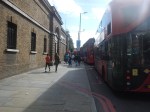
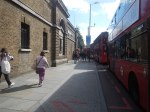
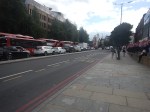
On Tuesday, I went to the Angel, with the intention of doing some shopping and then got tuck in an enormous traffic jam.





















Note.
- In the end I abandoned the bus and walked.
- It looked like it was all caused by emergency roadworks at the Angel.
- These happen regularly, as Islington’s water pipes aren’t the best quality.
I believe traffic jams at the Angel will get worse, when the Silvertown Tunnel opens, as this will encourage trucks to take routes through Central London, when the Dartford Crossing is busy.
The Platform 1 End Of Victoria Station – 2nd August 2023
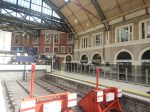
I took these pictures of Platform 1 at Victoria station and Wilton Road, which runs along the side of the station.
This gallery shows Platform 1, how it is accessed and the retail units that you pass to access the platform.











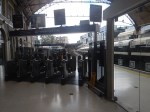



Note.
- The glass barrier between the retail units and the toilets and Platform 2.
- Passengers for Platform 1 have to walk down to gates that are at the far end of the retail units.
- The Victoria end of Platform 1 is set back from the other platforms.
This gallery shows Wilton Road.











Note.
- Wilton Road is immediately outside of the station
- Parts of the outside of the station has quality stonework.
- There is a bus stand close to the station.
- There is a taxi rank on the other side.
- There is an entrance to the station.
- There is also an entrance to the Underground station, if you walk to the front of the station.
This gallery shows Hudson’s Place.








Note.
- The shops inside the station by Platforms 1 and 2 are behind the three-story Victorian facade.
- An M & S sign is in one window.
- There is an entrance to the station.
What is happening behind the hoardings in the middle of Hudson’s Place?
This gallery shows Platforms 1 and 2.








Note.
- Platform 1 is surprisingly long,
- I’ve seen steam specials in the platform with the engine at the country end.
- Platform 2 is also long.
This gallery shows the gateline upgrade and a few odds and sods.





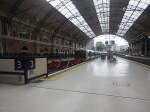








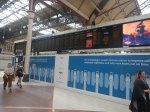

Note.
- The platforms 3 and 4 would appear to be shorter and can only take eight-car trains.
- The gatelines in the two halves of the station are being upgraded and new destination boards are being upgrade.
This table gives the platform lengths for Platforms 1 to 7.
- Platform 1 – 270 metres
- Platform 2 – 359 metres
- Platform 3 – 180 metres
- Platform 4 – 203 metres
- Platform 5 – 247 metres
- Platform 6 – 245 metres
- Platform 7 – 286 metres
Note.
- Platforms 3 and 4 will only take eight-car trains, which are 160 metres long.
- All other platforms will take twelve-car trains, which are 240 metres long.
- A single High Speed Two Classic Compatible Train os 200 metres long.
This OpenRailwayMap shows the platforms at Victoria station.
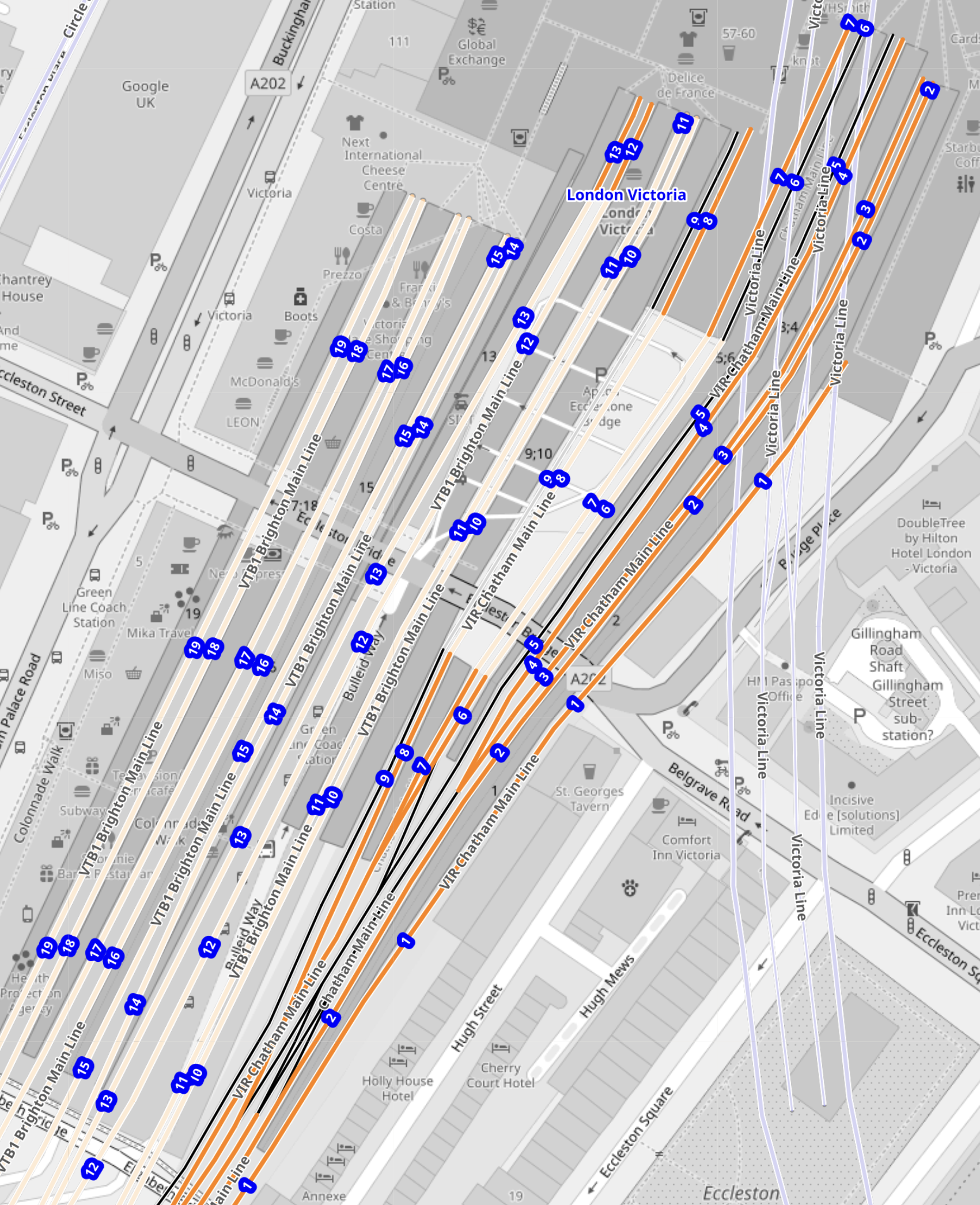
Note.
- The platforms are numbered starting with one on the right.
- The blue numbers give the platform numbers.
- Platform 1 is stepped-back from all the others.
- Platform 2 is the longest platform.
- Platforms 1 and 2 share an island platform.
This second OpenRailwayMap shows the North-East corner of the previous map to a larger scale.
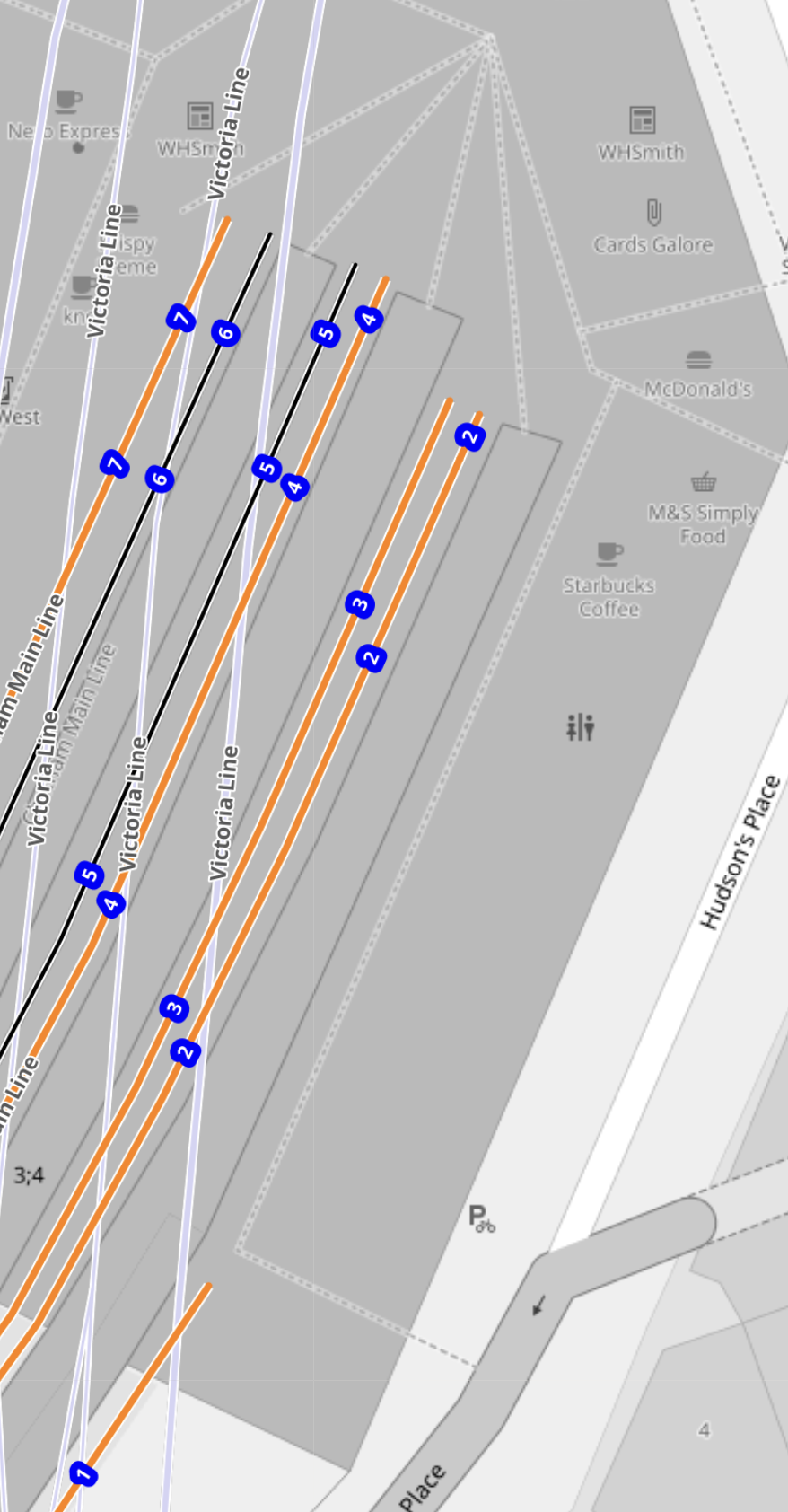
Note that there are retail units for WH Smith, Cards Galore, McDonalds, M & S Simply Food and Starbucks, toilets and a reception area for British Pullman.
Could this area be revamped to be a Customs and Immigration are for passengers going to and from Europe?
- I estimate the area available is about twenty-five metres wide over a hundred metres long.
- There are also two extra floors above the ground floor.
- It might be possible to build over part of Hudson’s Place outside of the station.
I suspect that, if the space is efficiently used, that a secure and efficient Customs and Immigration facility, that would handle perhaps four trains per hour (tph) could be created.
 The Anonymous Widower