Putin Burns $10m Of Gas A Day In Energy War With The West
The title of this post, is the same as that of this article in The Times.
This is the first paragraph.
Russia is burning off an estimated $10 million of natural gas a day from a single plant, leading to accusations that President Putin is deploying his country’s vast energy reserves as a weapon against Europe.
It just showed the sort of idiot we’re dealing with!
- He doesn’t care about the planet.
- He’s effectively burning his country’s cash reserves.
- He’s spurring Western engineers on, to on the one hand find ways to beat him and on the other to find ways to make our gas go further, so we don’t need to buy his bloodstained gas.
- If he thinks, that he might provoke a war with Finland, I suspect the Finns are too bright for that.
They’ll be waiting and if the Russian Army should invade, they’ll get the kicking of a lifetime, just like Stalin’s thugs did in the Winter War of 1939-1940.
I
Would A Lower Cost Rail Link To Skelmersdale Be Possible?
In the Wikipedia entry for Skelmersdale railway station, there is a section called Reopening Proposals, where this is said.
Skelmersdale has been described as the largest town in North-West England that doesn’t have a railway station, although Leigh, Greater Manchester, which also has no station is larger.
This section called 2022, gives the latest status of the proposals to connect Skelmersdale to the UK rail network.
Government reinforces that the station proposals are being considered. Rosie Cooper calls for the new Rail Minister to visit Skelmersdale, in order to aid the DfT’s decision. However, the Department for Transport announced in July 2022 that it was rejecting the Strategic Outline Business Case, throwing the scheme into doubt. The DfT instead suggested that better bus links with the Kirkby–Wigan rail line would be a cheaper way of improving connectivity for Skelmersdale.
This Google Map shows the town of Skelmersdale.
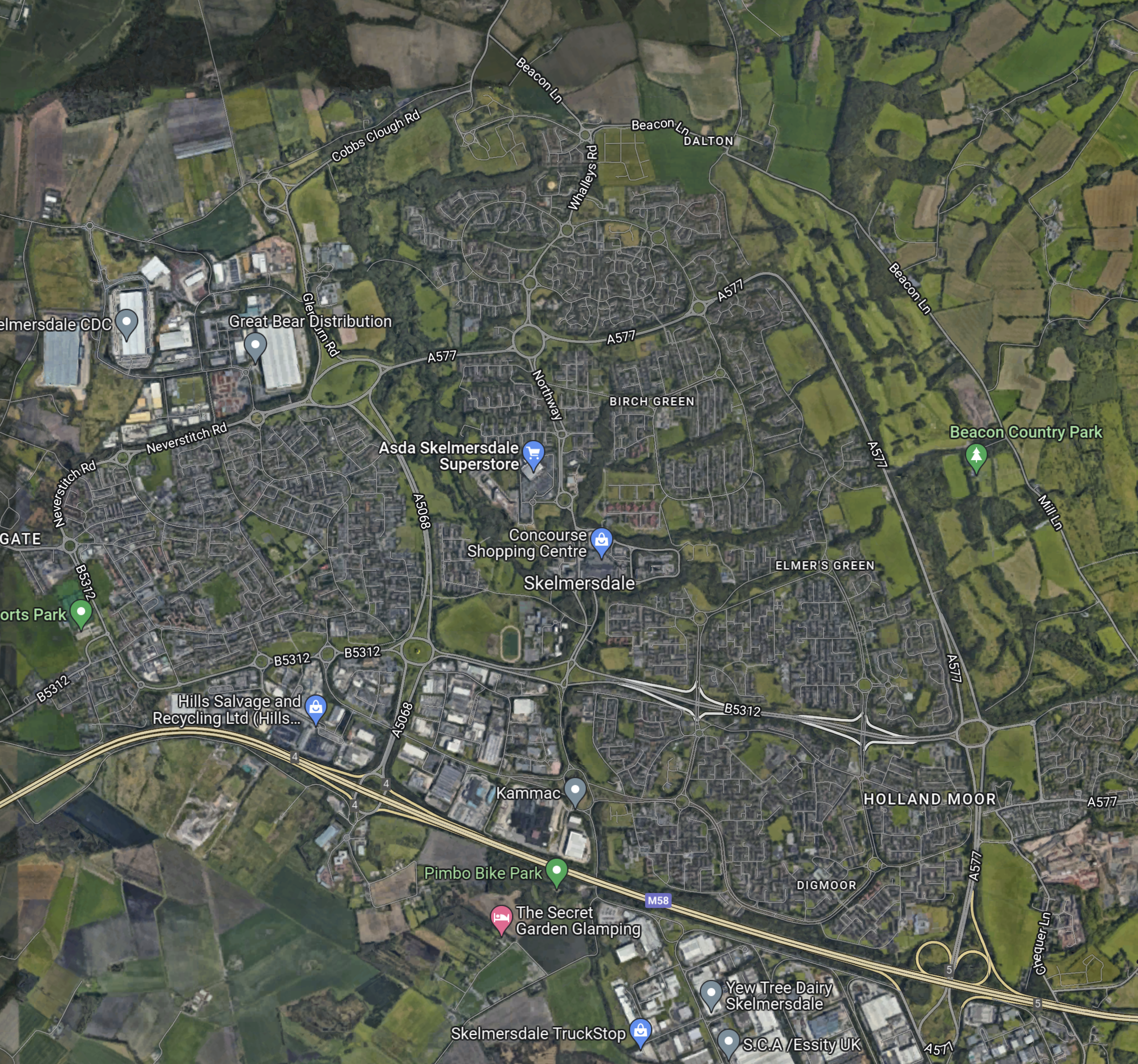
Skelmersdale is a town with an extensive road network, with good links to the M58 motorway.
I would suspect, that those who don’t have access to a car or some other form of personal transport, are second-class citizens.
According to Wikipedia, in the latest statement from the DfT, this was said.
The DfT instead suggested that better bus links with the Kirkby–Wigan rail line would be a cheaper way of improving connectivity for Skelmersdale.
I would simplify the DfT statement by removing the word bus. All transport links should be improved.
Consider.
- By the end of 2023, there will be five stations between Kirkby and Wigan; Headbolt Lane, Rainford, Upholland, Orrell and Pemberton.
- Upholland station is the nearest to Skelmersdale.
- Headbolt Lane station is being built with approximately 300 car parking spaces.
- Rainford station has ten car parking spaces.
- Upholland station has no car parking.
- Orrell station has no car parking.
- Pemberton station has no car parking.
- From Google Maps it doesn’t look promising to add parking at Rainford, Upholland, Orrell and Pemberton stations.
- Only Headbolt Lane station will have bicycle parking.
- Headbolt Lane station will have direct rail access to Liverpool.
- Headbolt Lane, Rainford, Upholland, Orrell and Pemberton stations will have direct rail access to Wigan and Manchester.
- Headbolt Lane station will be built with provision for buses.
- Skelmersdale bus station is at the main shopping centre in the centre of the town.
After Headbolt station opens in 2023, I would do the following.
- Provide a high-capacity bus service between Headbolt Lane station and Skelmersdale.
- Provide secure bicycle parking at Rainford, Upholland, Orrell and Pemberton stations.
- Investigate a bus service between Upholland station and Skelmersdale.
- Monitor all passenger movements in the area, to see whether a rail link is needed.
Once Headbolt Lane station and the new services settle down, it should be possible to make a good estimate of the number of passengers who would use the rail link.
These are my thoughts on a lower-cost service to a new Skelmersdale station.
The Current Plan For A Branch To Skelmersdale
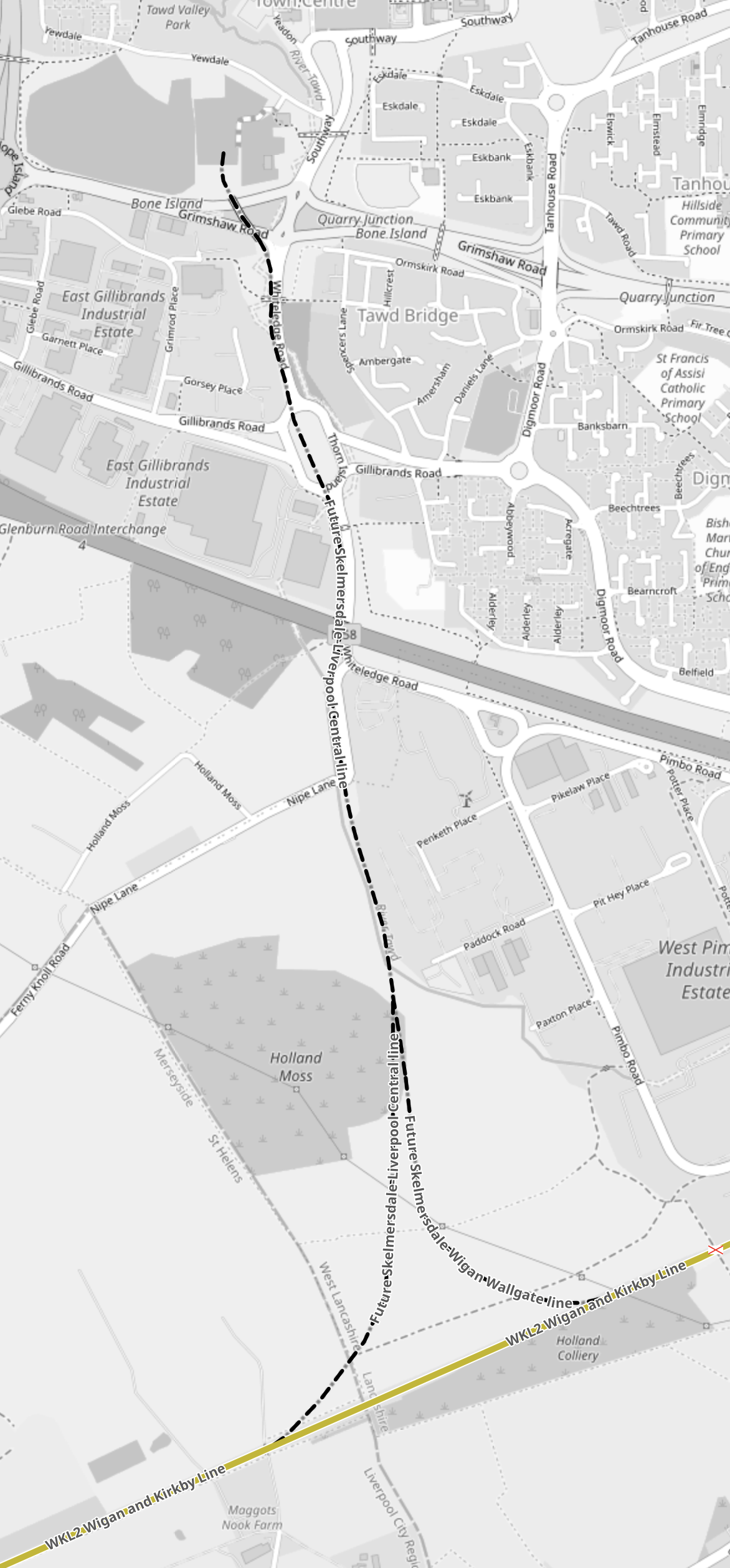
This map from OpenRailwayMap shows the proposed future railway between Skelmersdale and the Wigan and Kirkby Line.
Note.
- The new branch to Skelmersdale is shown dotted.
- The Northern end of the branch is in the Concourse shopping centre in Skelmersdale.
- The branch goes under the M 58 Motorway.
- The branch joins the Wigan and Kirkby Line in a triangular junction.
- Rainford station is to the West of the junction.
- Upholland station is to the East of the junction.
It could be a complete solution.
Will There Be A Direct Service Between Skelmersdale And Liverpool?
I feel the design of Headbolt Lane station precludes this, as there doesn’t appear to be a line through Headbolt Lane station, as all three platforms are terminal platforms, with two serving Liverpool and one serving Wigan and Manchester.
Passengers would need to change at Headbolt Lane station, if travelling between Skelmersdale And Liverpool.
Will There Be A Direct Service Between Skelmersdale And Manchester?
This would appear to be possible.
Could The Original Route Be Used?
The original Skelmersdale Branch ran between Rainford and Ormskirk, with a station on the West side of Skelmersdale.
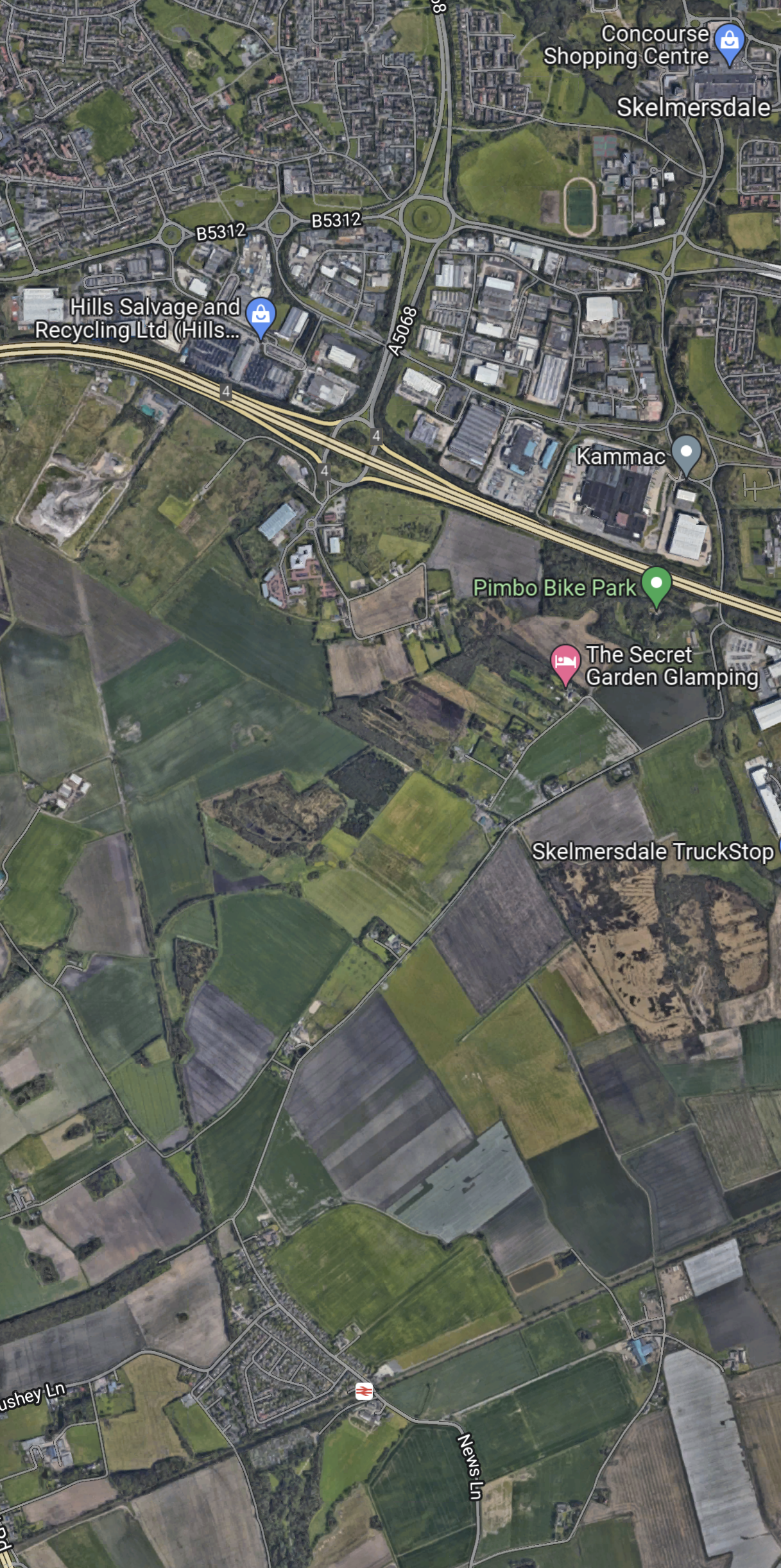
This Google Map shows the route.
Note.
- Skelmersdale town centre and the Concourse shopping centre are in the North-East corner of the map.
- The M 58 motoway runs across the top of the map.
- The dark green scar of the Skelmersdale branch runs down the West side of the map.
- Just below, where the motorway and the old railway cross, there is a large landfill.
- Rainford station on the Wigan and Kirkby Line is towards the bottom of the map.
I wonder, if a lower-cost track layout could be slotted in partially using the route of the old railway.
- It would be mainly single track.
- The branch would only connect to Headbolt Lane station.
- A passing loop would be needed to run two trains per hour (tph).
- It might be possible to slot a single-track through to the centre of Skelmersdale.
Would it be an alternative, if a Park-And-Ride station were built near or on top of the landfill?
What Would Be The Train Service?
Southport station has the following services.
- Four tph to and from Liverpool
- Two tph to and from Wigan Wallgate and Manchester
I think reasons of fairness would dictate that Skelmersdale has a two tph service to both Liverpool and Manchester.
It is also worth looking at the services through Wigan Wallgate station.
- 1 tph – between Southport and Alderley Edge via Westhoughton and Manchester Piccadilly
- 1 tph – between Southport and Stalybridge via Westhoughton and Manchester Victoria
- 1 tph – between Kirkby and Blackburn via Atherton and Manchester Victoria
The third service does not run on Sundays. This is surely an omission in the timetable, that should be rectified.
Wigan Wallgate And Skelmersdale Via Headbolt Lane
As I said earlier Headbolt Lane station is a station with three terminal platforms, two of which will have trains to and from Liverpool and the other will have trains to and from Wigan Wallgate and Manchester.
If Headbolt Lane and Skelmersdale stations are connected by a route using the original branch, it would be possible to run a service between Wigan Wallgate and Skelmersdale stations with a reverse at Headbolt Lane station.
Note.
- The Kirkby and Wigan Wallgate Line is double-track and all stations have two platforms.
- A passing loop on the Headbolt Lane and Skelmersdale section would probably be needed for two tph.
- Passengers between Skelmersdale and Liverpool would change at Headbolt Lane station.
- There would be no changes to services between Liverpool and Headbolt Lane stations and they would remain at 4 tph.
- Preferably, Wigan Wallgate and Skelmersdale would operate at two tph.
- All stations between Wigan Wallgate and Headbolt Lane would get two tph to Manchester.
- I estimate that Wigan Wallgate to Skelmersdale is less than twenty miles.
- In Bolton-Wigan £78m Rail Electrification Project Announced, I indicate that Wigan Wallgate station will be electrified.
The service to Manchester could either be direct or with a change at Wigan Wallgate to a Southport service.
A Shuttle Train Between Wigan Wallgate And Skelmersdale Via Headbolt Lane
This may be an alternative to running the Skelmersdale service all the way to Manchester.
- Services would terminate in the bay Platform 3 at Wigan Wallgate station.
- Passengers to and from Manchester would catch a Southport train.
- The frequency of the shuttle train would be two tph.
Using a shuttle would need less trains.
Rolling Stock
The Wikipedia entry for the Kirkby branch line, shows the service being run by a Class 150 train, which are diesel-powered.
Services on the Manchester and Southport Line are run by a variety of diesel multiple units and all Class 769 trains.
If the platforms at Headbolt Lane and Skelmersdale are built to handle four-car trains, then Northern have any number of diesel multiple units and the Class 769 trains, which could run the service.
But there is also the possibility of using battery-electric multiple units, like the Class 321 BEMU train, that I wrote about in Eversholt Rail And Vivarail To Develop Class 321 BEMU.
- The distance between Wigan Wallgate and Skelmersdale is probably about twenty miles.
- Charging would be needed at Skelmersdale station.
- Wigan Wallgate would need an electrified route to Manchester.
- It also appears that the Class 321 BEMU, which will have a 30 minute range could handle the Wigan Wallgate and Southport leg on batteries.
- If a battery-electric shuttle train is used between Wigan Wallgate and Skelmersdale, it would be charged at both ends of the route.
It appears to me, that if Network Rail electrify between Wigan Wallgate and Manchester, then services between Manchester and Kirkby, Skelmersdale and Southport could be run by Class 321 BEMU trains, which with their Renatus interiors will not be British Rail trains rescued from the scrapyard.
It will also mean passengers between Liverpool and Skelmersdale will be using two smart trains.
Conclusion
Consider.
- New track should be the minimum possible between Headbolt Lane and Skelmersdale stations.
- Network Rail must electrify between Manchester and Wigan Wallgate.
- Class 321 BEMU trains should be used between Manchester and Headbolt Lane, Skelmersdale and Southport.
I believe that there is an affordable solution to the provision of electric train services to Skelmersdale somewhere in my ramblings.
Prysmian Completes HVDC Submarine Cable Testing
The title of this post, is the same as that of this article on renews.biz.
The article has this sub-heading.
The ‘first’ 525kV extruded wire can increase maximum transmission capacity up to more than 2.5GW.
This paragraph gives the implications of this new maximum transmission capacity.
This will enable a massive increase of the maximum transmission capacity of bi-pole systems up to more than 2.5GW, which is more than double the value achieved with 320kV DC systems currently in service, Prysmian said.
As in the future we will have many more large offshore wind farms in the UK, this surely must mean that we will find connecting them up a lot easier.
Should The World Call A Halt To Large Nuclear Power Stations?
When I left Liverpool University in the 1960s with an engineering degree, my fellow graduates and myself felt that nuclear power would be a sensible way to provide the electricity we need. Aberfan and other disasters had ruined coal’s reputation and not one of my colleagues joined the National Coal Board.
Over the intervening years, nuclear power has suffered a greater proportion of adverse events compared to other forms of electricity generation.
Large nuclear has also suffered some of the largest time and cost overruns of any energy projects.
My optimism for nuclear power has declined, although I do hope and feel, that small modular factory-built reactors, like those proposed by Rolls-Royce and others, might prove to be as reliable and economic as gas-fired, hydro-electric and tidal power stations, or solar and wind farms.
The smaller size of an SMR could be advantageous in itself.
- Smaller factory-built power stations are more likely to be built on time and budget.
- The amount pf nuclear material involved is only about twenty percent of that of a large nuclear station.
- A smaller site would be easier to protect from terrorists and Putinistas.
- Would the risk of a serious accident be reduced?
- SMRs would be less of a blot on the landscape.
- SMRs would not need such a high-capacity grid connection.
- An SMR integrated with a high temperature electrolyser could be the easiest way to generate hydrogen for a large customer like a steelworks.
Overall, I believe an SMR would be involve less risk and disruption.
Zaporizhzhya
Zaporizhzhya is probably the last straw for large nuclear, although the incident isorchestrated by an evil dictator, who is much worse, than any of James Bond’s cruel adversities.
I doubt Putin would get the same leverage, if Zaporizhzhya were a gas-fired or hydroelectric power station.
Conclusion
I feel, the world must seriously question building any more large nuclear power stations.
New Octopus Energy Makes First Investment To Develop UK’s Largest Battery
The title of this post, is the same as that of this article on Renewable Energy Magazine.
This is the first paragraph.
Octopus Energy Group has launched its new renewables fund Octopus Energy Development Partnership (OEDP) which has just made its debut investment in renewables developer Exagen to build new green energy and rapidly grow the UK’s energy storage capacity.
These three paragraphs outline the deal with Exagen.
This latest multi-million pound deal sees OEDP take a 24 percent stake in Exagen, which is working on large-scale solar and battery facilities, partnering with farmers, landowners and local communities to build projects that help bring energy security.
This deal includes the option to purchase one of the UK’s largest batteries at 500 MW/1 GWh located in the Midlands, England, scheduled to be operational by 2027. This standalone battery would be the UK’s largest, and with the capacity to export the equivalent electricity usage of 235,000 homes in a single day. Batteries provide grid-balancing services by storing cheap green energy when it is abundant, and releasing it when it is needed.
As part of the agreement, OEDP has also acquired three solar farms with batteries on-site in the Midlands and North East of England, which Exagen is currently developing. The solar farms have a combined capacity of approximately 400 MW. Exagen already has 2 GW of solar and battery storage projects in their pipeline, which Octopus will be able to invest in once they’re ready to build.
I am intrigued about the 500 MW/1 GWh battery!
Will it be lithium-ion?
The largest lithium-ion battery in the world is currently the 400 MW/1.6 GWh battery at Moss Landing Power Plant in California, which offers more storage capacity, but less output than Exagen’s proposed battery.
Exagen’s battery needs to be operational by 2027, which means that there is almost five years for an alternative technology to be thoroughly tested.
Highview Power say this about their proposed CRYOBattery in Yorkshire, on their web site.
Highview Power’s second commercial renewable energy power station in the UK is a 200MW/2.5GWh facility in Yorkshire. This is the first of 18 sites for UK wide deployment strategically located to benefit from the existing transmission infrastructure.
A battery similar to Highview’s proposed battery in Yorkshire, would surely be big enough.
Exagen’s battery could be one of the eighteen mentioned on Highview Power’s web site.
As Highview are currently building their first commercial system at Carrington in Manchester and hope to commission it this year, there should be enough time to debug the design.
But there are other companies, who may have the capability to build a large enough battery in the timescale.
On the other hand, lithium-ion would be the conservative choice.
Ryze Hydrogen – The Future of Motorsport Is Hydrogen; Will Consumers Follow It In Its Wake?
The title of this post, is the same as that of this article on Hydrogen Central.
These are the first two paragraphs.
Internal combustion engines running on hydrogen produce just as much torque as their petrol-powered cousins, with all the associated noise and excitement.
Toyota put this theory to the test this month in the ninth round of the 2022 World Rally Championship (WRC) where it debuted the Toyota GR Yaris H2 concept car outside of Japan.
This is a must-read article, which makes some interesting points about the future of motorsport.
Three Shetland ScotWind Projects Announced
The title of this post, is the same as that of this press release on Crown Estate Scotland.
These three paragraphs outline how the leases were allocated.
Three projects will be offered seabed agreements for offshore wind projects following Crown Estate Scotland’s ScotWind clearing process.
The announcement comes as an offshore wind supply chain summit is held in Aberdeen today (22 August) with Sir Ian Wood, chaired by Michael Matheson MSP, Cabinet Secretary for Energy, and including a keynote address by First Minister Nicola Sturgeon MSP.
Clearing saw the ‘NE1’ area east of Shetland made available for ScotWind applicants who met the required standards but who did not secure their chosen location earlier in the leasing process.
I think it was good idea to offer these leases to those bidders that failed to get a lease, the first time around, despite meeting the standards.
- Would it encourage bidders, if they knew that after the expense of setting up a bid, that if they failed, they could have another chance?
- It must also save the Scottish Government time and money checking out bidders.
- How many times have you interviewed several applicants for a job and then found jobs for some of those, that you didn’t choose for the original job?
Let’s hope the philosophy has generated some good extra contracts.
This map from Cross Estate Scotland shows all the contracts.

Note the three new leases numbered 18, 19 and 20 to the East of Shetland, in the North-East corner of the map.
Their details are as follows.
- 18 – Ocean Winds – 500 MW
- 19 – Mainstream Renewable Power – 1800 MW
- 20 – ESB Asset Development – 500 MW
Note.
All are floating wind farms.
- Ocean Winds is a Spanish renewable energy company that is developing the Moray West and Moray East wind farms.
- Mainstream Renewable Power appear to be a well-financed and ambitious company, 75 % owned by Aker.
- ESB Energy appear to be an experienced energy company owned by the Irish state, who operate several wind farms and Carrington gas-fired power station in the UK.
2.8 GW would appear to be a generous second helping.
Ocean Winds and Mainstream Renewable Power
This web page on the Ocean Winds web site, is entitled Ocean Winds Designated Preferred Bidder For Seabed Leases For 2.3 GW Of Floating Projects East Of Shetland, Scotland, contains several snippets of useful information.
- Crown Estate Scotland announced the result of ScotWind Leasing round clearing process, awarding Ocean Winds with two seabed leases for floating offshore wind projects: a 1.8 GW capacity site with partner Mainstream Renewable Power, and another 500 MW capacity site, east of the Shetland Islands.
- Ocean Winds’ international portfolio of projects now reaches 14.5 GW of gross capacity, including 6.1 GW in Scotland.
- Floating wind turbines for the two adjacent sites are confirmed, because of the water depth.
- The partners are committed to developing floating offshore wind on an industrial scale in Scotland, generating local jobs and opportunities in Scotland and the Shetland Islands.
- From the picture on the web page, it looks like WindFloat technology will be used.
- Ocean Winds developed the WindFloat Atlantic project.
Ocean Winds appear to want to go places.
The Shetland HVDC Connection
The Shetland HVDC Connection will connect Shetland to Scotland.
- It will be 160 miles long.
- It will have a capacity of 600 MW.
- It is estimated that it will cost more than £600 million.
- It will allow the 66MW Lerwick power station to close.
- It will be completed in 2024.
I have a feeling that all these numbers don’t add up to a sensible answer.
Consider.
- The three offshore wind farms can generate up to 2800 MW of green electricity.
- With a capacity factor of 50 %, an average of 1400 MW of electricity will be generated.
- The Viking onshore wind farm on Shetland could generate up to 450 MW.
- More wind farms are likely in and around Shetland.
- Lerwick power station can probably power most of the Shetland’s needs.
- Lerwick power station is likely to be closed soon.
- Sullum Voe Terminal has its own 100 MW gas-turbine power station.
- Load is balanced on Shetland by 3MWh of advanced lead-acid batteries.
- Lerwick has a district heating scheme.
If we assume that Shetland’s energy needs are of the order of a few hundred MW, it looks like at times the wind farms will be generating more electricity, than Shetland and the Shetland HVDC Connection can handle.
Various plans have suggested building electrolysers on Shetland to create hydrogen.
Conversion of excess electricity to hydrogen, would have the following advantages.
- The hydrogen could be used for local heavy transport and to replace diesel.
- Hydrogen could be used to fuel a gas turbine back-up power station, when needed.
- Hydrogen could be used for rocket fuel, if use of Shetland as a Spaceport for launching satellites takes off.
Any excess hydrogen could be exported to the rest of the UK or Europe.
Stockport Hydro
I hadn’t heard of Stockport Hydro, until there was a report about it on BBC Radio 5.
This is the introductory paragraph.
Stockport Hydro, a renewable energy scheme at Otterspool Weir on the river Goyt near Marple, Stockport, is Greater Manchester’s first community-owned hydro-electric project. Our two Archimedes screws, Thunder and Lightning, have been operational since October 2012, generating renewable electricity which is fed into the National Grid. We are accredited to earn the Government’s Feed-in-Tariff and the Environment Agency has approved our operation to ensure no damage to the river’s eco-system and wildlife.
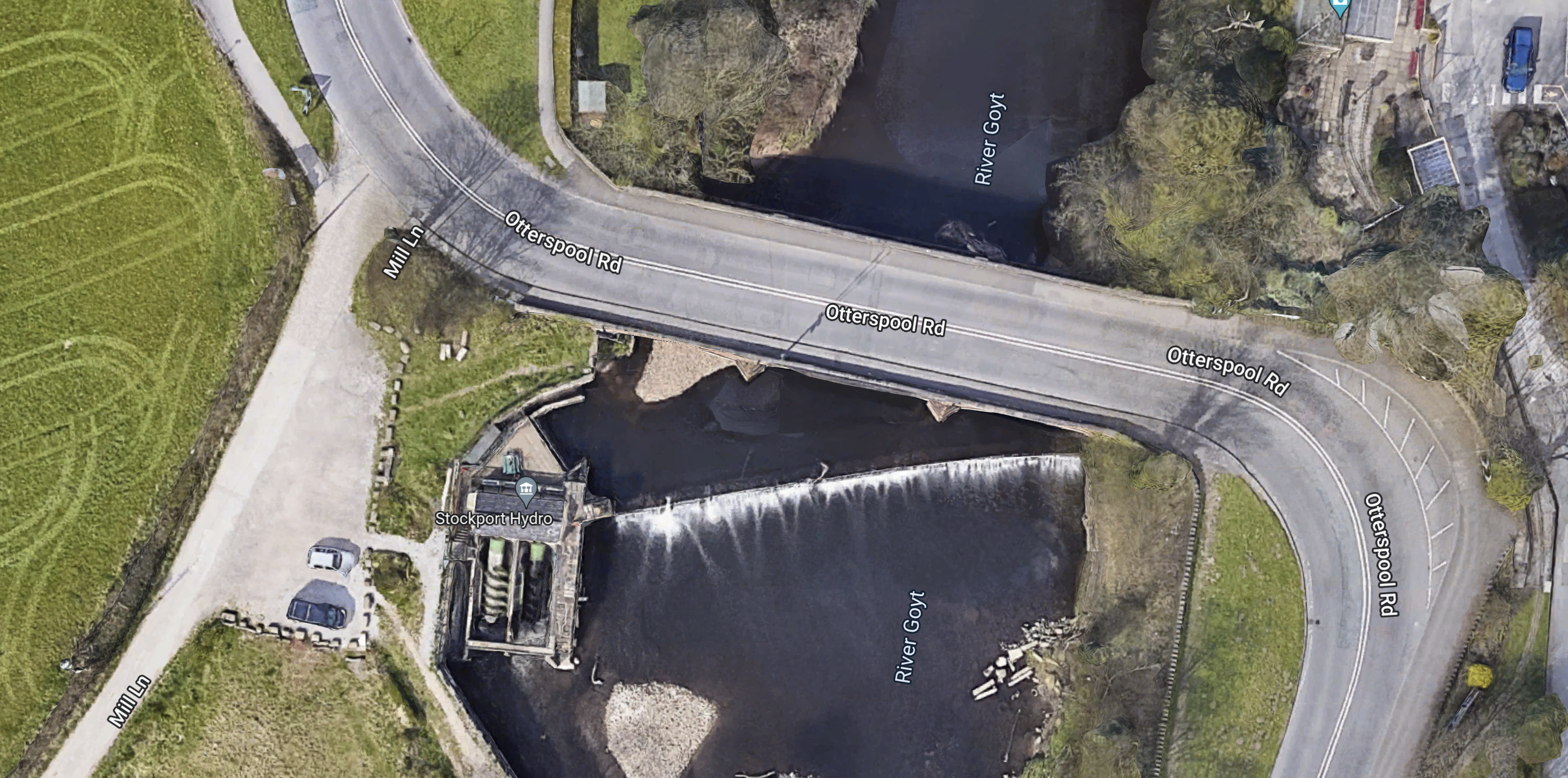
This Google Map shows the location of the Stockport Hydro.
Note.
- The weir crosses the River Goyt
- The Stockport Hydro is at the West end of the weir.
- The green Archimedean screws can be seen on the South side of the building.
How many other weirs could host a small hydroelectric power station like this?
The Creation Of The Coire Glas Monster
Loch Ness is probably most famous for the mythical monster, but it is about to be joined by a man-made monster of a different kind.
To the South-West of Loch Ness lies Loch Lochy.
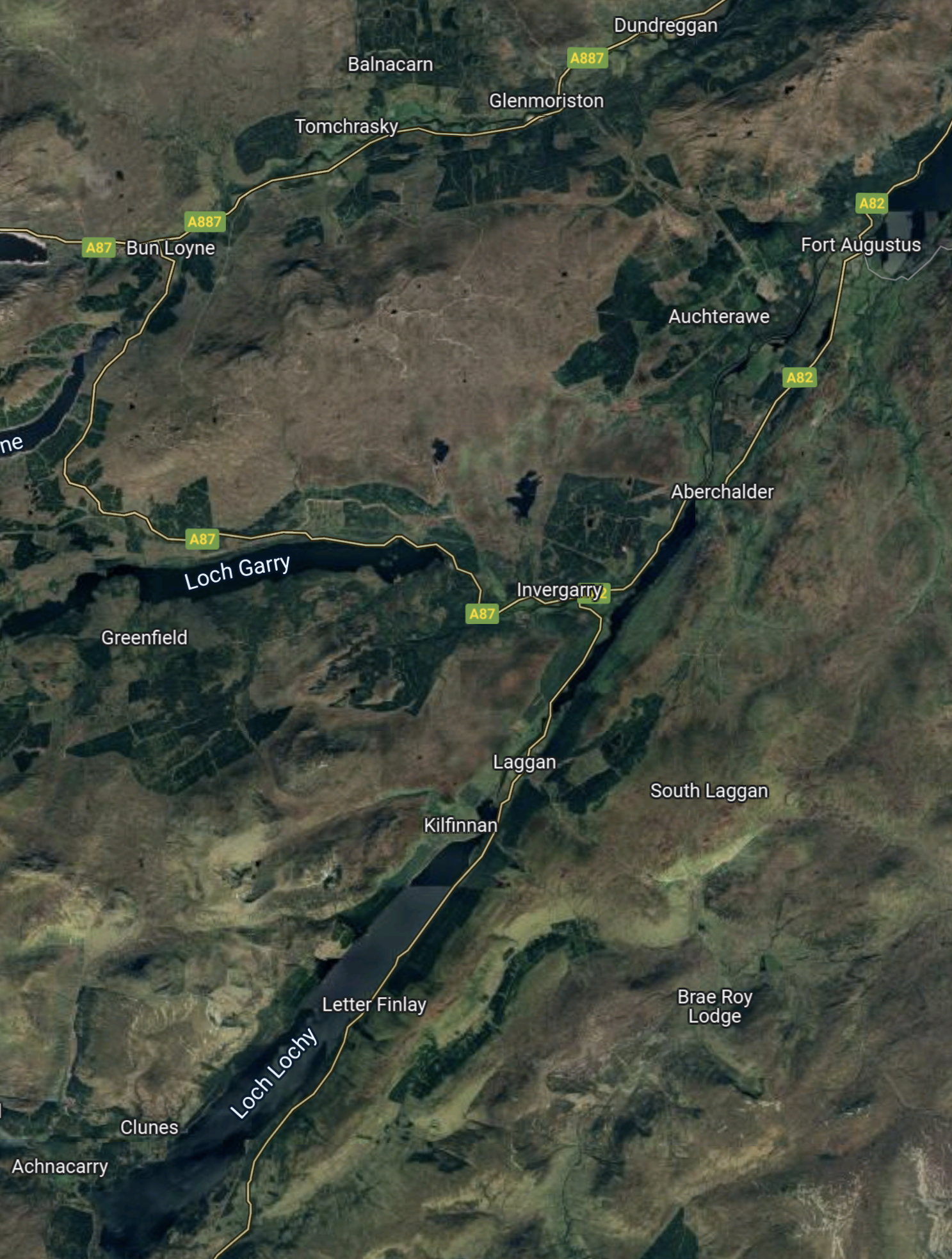
This Google Map shows the South-Western part of the Great Glen, which runs diagonally across the Highlands from Fort William in the South-West to Inverness in the North-East.
Note.
- Fort Augustus in the North-East corner of the map, is at the South-West end of Loch Ness.
- In the South-West corner of the map, Loch Lochy can be seen.
- To the North-West of Loch Lochy, there are mountains.
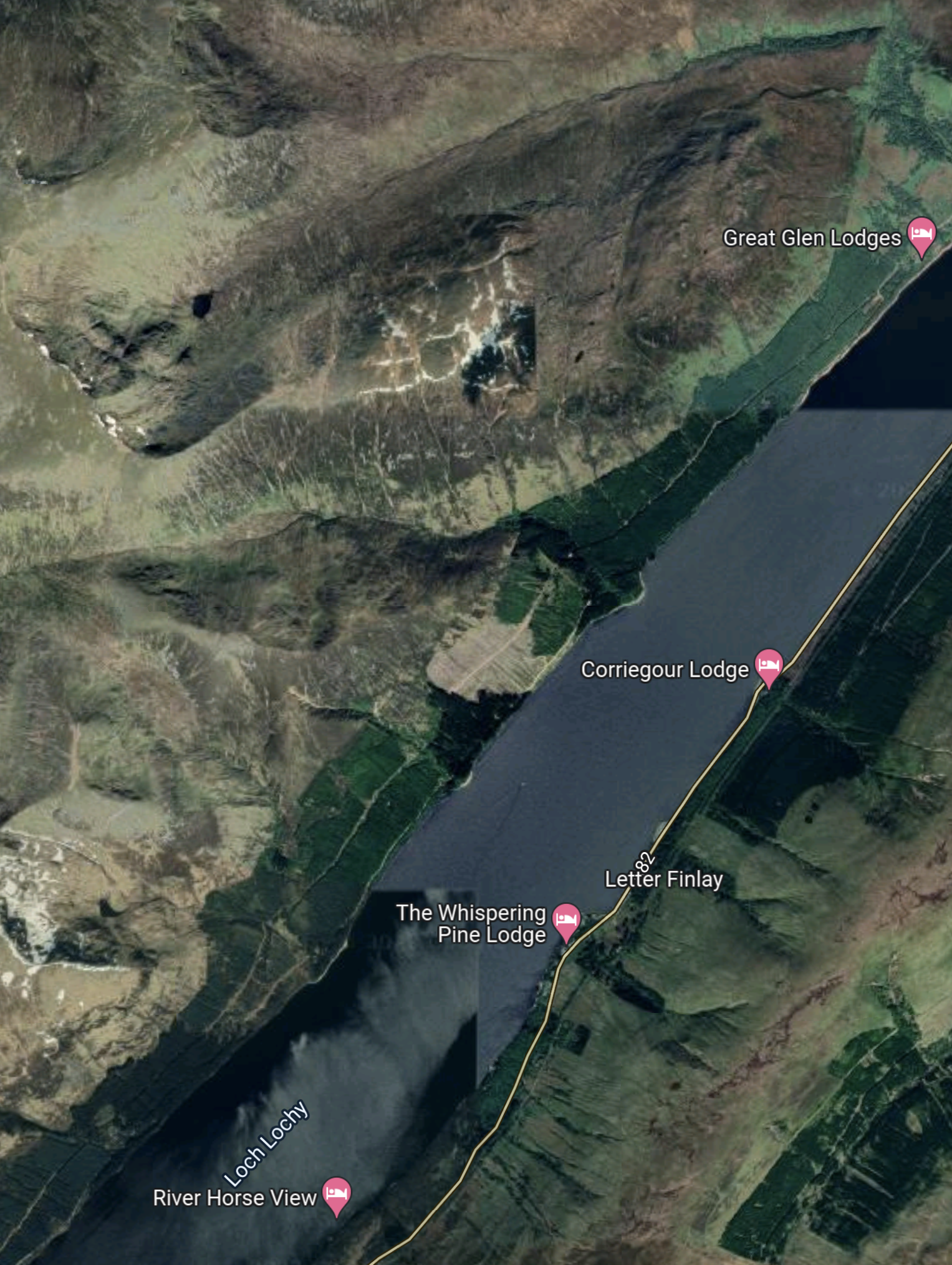
This second Google Map shows Loch Lochy and the mountains.
SSE plan to create a pumped storage hydroelectric power station called Coire Glas.
- Loch Lochy will be the lower reservoir.
- The upper reservoir will be in the mountains to the North-West of the loch.
- Energy will be stored by pumping water from the lower to the higher reservoir.
- The power station will be able to provide 1.5 GW of electricity.
- The upper reservoir will be able to store enough water to generate 30 GWh of electricity.
If that isn’t a monster of a power station, I don’t know what is! It has more than three times the storage capacity of both Dinorwig or Cruachan.
This article on Utility Week, which is entitled Inside £1bn Pumped Hydro Plans To ‘More Than Double’ Britain’s Electricity Storage, gives more details.
This is the sort of heroic engineering, that will defeat Vlad the Mad and his bloodstained gas.
First Power At Scotland’s Largest Offshore Wind Farm
The title of this post, is the same as that of this press release from Seagreen wind farm.
These two paragraphs summarize the project and its start-up.
TotalEnergies and its partner SSE Renewables, has announced first power generation from the Seagreen offshore wind farm, 27km off the coast of Angus in Scotland.
The first turbine of a total of 114, was commissioned in the early hours of Monday morning. The aim is for the 1075 MW farm to be fully operational in the first half of 2023. The £3bn Seagreen project will be Scotland’s largest offshore wind farm and the world’s deepest fixed bottom wind farm as it is being developed in up to water depths of 59 meters.
It looks like 1075 MW cost £3billion, so I suspect it’s reasonable to say that offshore fixed-foundation wind farms cost about £2.79billion per GW.
The press release also says this about yearly output.
When fully operational, the site will produce around 5 terawatt hours (TWh) of renewable electricity per year, enough to power the equivalent of 1.6 million households.
That looks like an expected capacity factor of 53.1 %.
 The Anonymous Widower