Beeching Reversal – Ferryhill Station Reopening
This is one of the Beeching Reversal projects that the Government and Network Rail are proposing to reverse some of the Beeching cuts. There used to be a Ferryhill station on the East Coast Main Line. It closed in 1967 and burnt down in 1969, before being demolished.
I first noted the station in Boris Johnson Backs Station Opening Which Could See Metro Link To County Durham, after Boris promised it would be built in PMQs.
I then mentioned the station in Northern Powerhouse Rail – Significant Upgrades Of The East Coast Main Line From Leeds To Newcastle (Via York And Darlington) And Restoration Of The Leamside Line.
Last night, I read this document from Railfuture, which talks about rail improvements in the North East and on the East Coast Main Line.
In the document, Ferryhill station is mentioned eighteen times.
Reopening Ferryhill station would appear to have support at all levels.
The Location Of Ferryhill Station
This Google Map shows the general area of the proposed Ferryhill station.
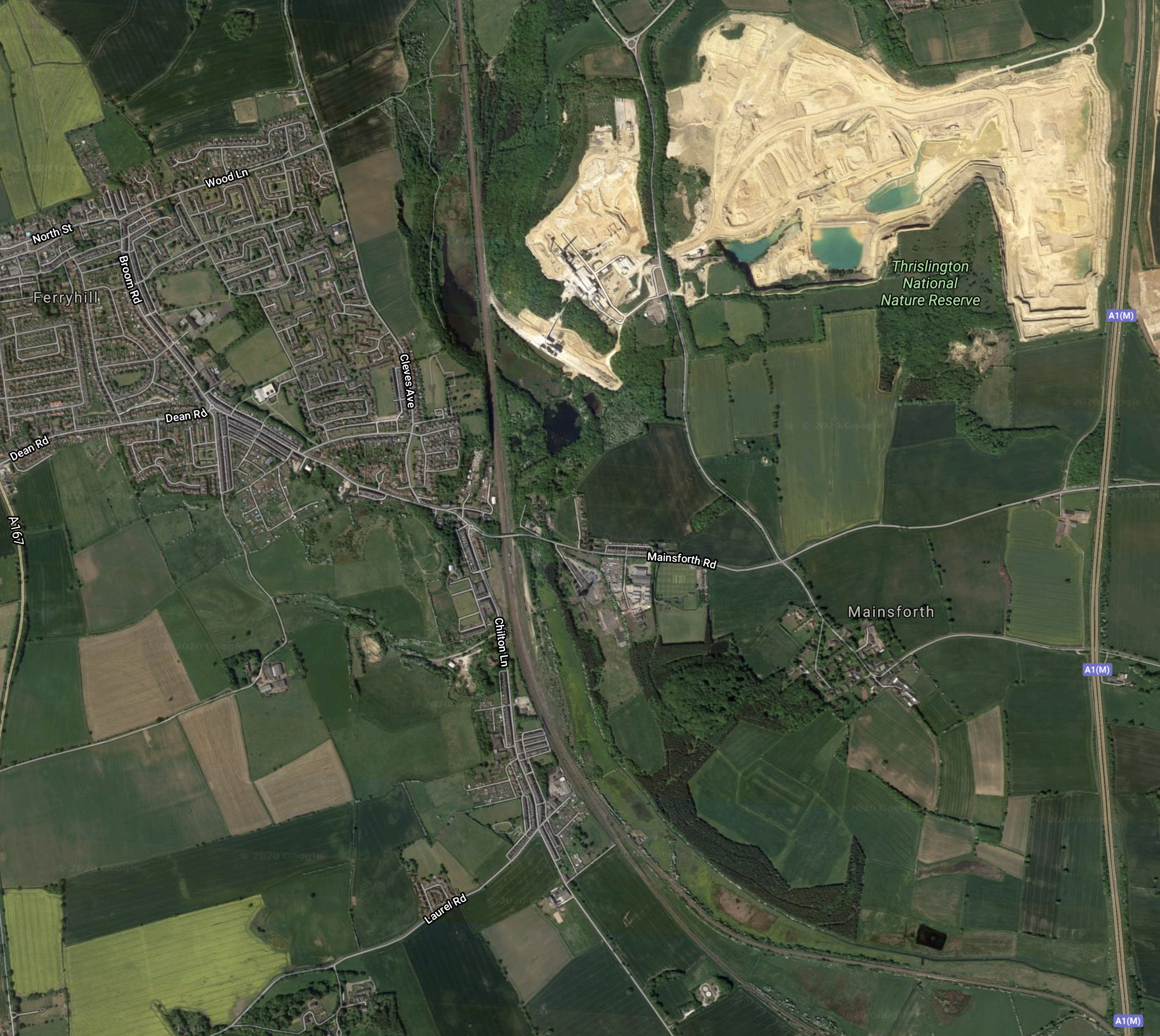
Note.
- Ferryhill is the village in the North-West corner of the map.
- The lion-shaped quarry in the North-East is destined to become a landfill site.
- Below this is Thrislington Plantation, which is a National Nature Reserve.
- The East Coast Main Line runs North-South between the village and the quarry.
South of the village the line splits, as is shown in detail in this second Google Map.
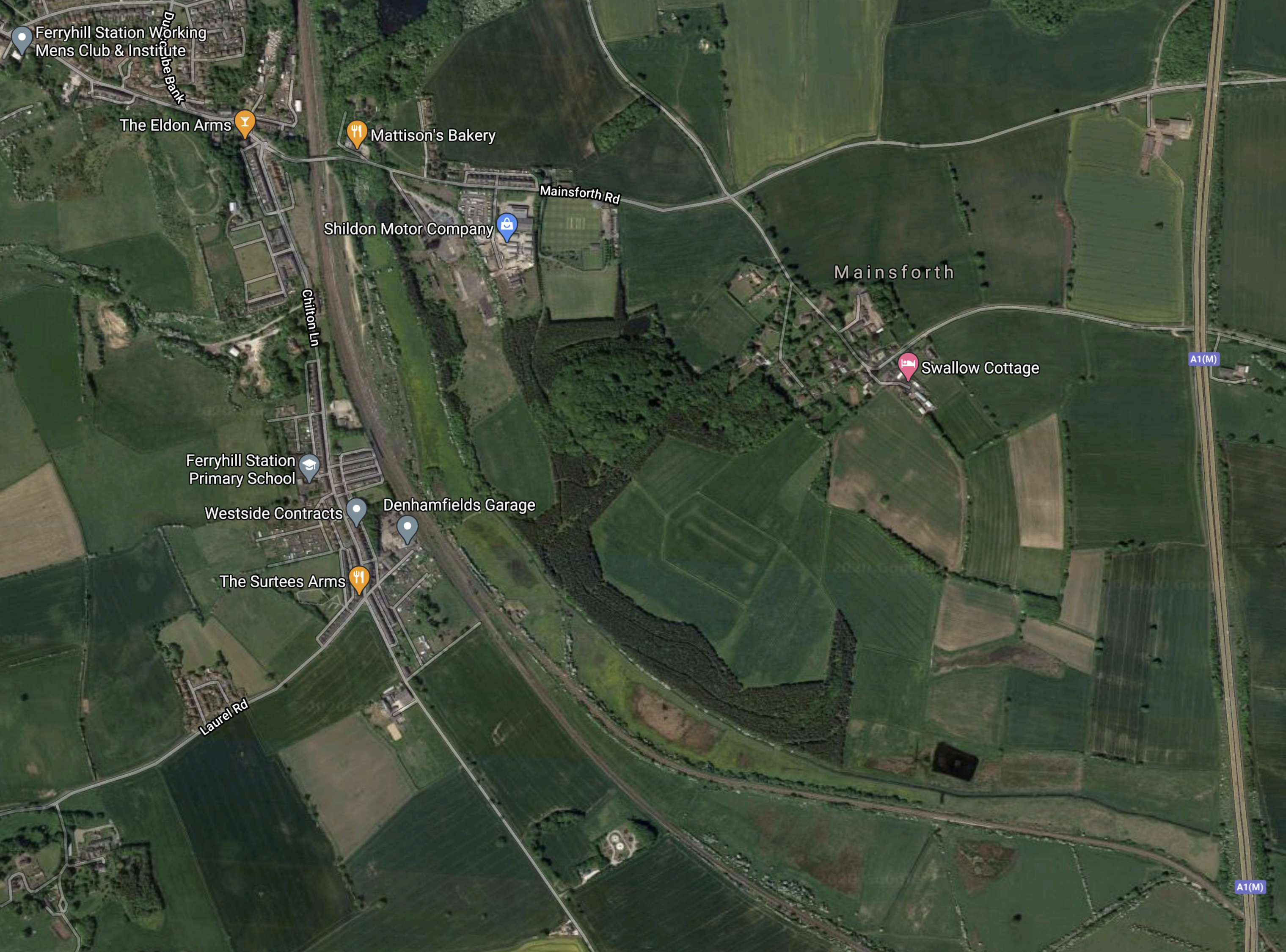
Note.
- Ferryhill South junction by Denhamfields Garage, with the nearby Ferryhill Station Primary School
- The line going South-East is the Stillington freight line to Teesside.
- The other line going in a more Southerly direction is the electrified East Coast Main Line to Darlington and the South.
- Between Ferryhill South junction and Tursdale Junction with the Leamside Line is a 2.5 mile four-track electrified railway.
I suspect the station could be any convenient location, to the North of the junction.
Railfuture have strong opinions on the station and feel it should be a Park-and-Ride station for the settlements in the former North Durham coalfield, with frequent services to Newcastle.
Current Passenger Train Services Through Ferryhill
These services currently pass the location of the proposed Ferryhill station.
- LNER – London Kings Cross and Edinburgh via York, Darlington. Newcastle and Berwick-upon-Tweed
- LNER – London Kings Cross and Edinburgh via Peterborough, Newark North Gate, Doncaster, York, Darlington, Durham and Newcastle
- CrossCountry – Plymouth and Edinburgh via Totnes, Newton Abbot, Exeter St Davids, Tiverton Parkway, Taunton, Bristol Temple Meads, Bristol Parkway, Cheltenham Spa, Birmingham New Street, Derby, Chesterfield, Sheffield, Wakefield Westgate, Leeds, York, Darlington, Durham and Newcastle
- CrossCountry – Southampton and Newcastle via Birmingham New Street, Derby, Sheffield, Doncaster, York, Darlington and Durham
- TransPennine Express – Liverpool Lime Street and Edinburgh via Newton-le-Willows, Manchester Victoria, Huddersfield, Leeds, York, Darlington, Durham, Newcastle and Morpeth
- TransPennine Express – Manchester Airport and Newcastle via Manchester Piccadilly, Manchester Oxford Road, Manchester Victoria, Huddersfield, Dewsbury, Leeds, York, Northallerton, Darlington and Durham
Note.
- All trains have a frequency of one train per hour (tph)
- All trains call at York, Darlington and Newcastle.
- I have missed out some of the intermediate stations, where trains don’t call at least hourly.
- I have missed out stations South of Birmingham New Street.
- A few Northern Trains services pass through at Peak times or to go to and from depots.
I suspect some of these services could stop and to encourage commuters to Newcastle, Durham and Darlington to swap from car to train,
I also suspect that Ferryhill station needs a frequency of at least two tph and if possible four! Four tph would give a Turn-up-and-Go service to Darlington, Newcastle and York.
Planned And Possible Future Passenger Train Services Through Ferryhill
From various sources, these services are either planned or possible.
High Speed Two
High Speed Two are planning the following services, that will pass through.
- Birmingham Curzon Street and Newcastle via East Midlands Hub, York, Darlington and Durham.
- London Euston and Newcastle via Old Oak Common, East Midlands Hub and York.
- London Euston and Newcastle via Old Oak Common, East Midlands Hub, York and Darlington.
Note.
- All trains have a frequency of one tph.
- All trains call at York, East Midlands Hub, York and Newcastle.
- All trains will be 200 metres long.
I feel that Ferryhill station should have platforms long enough to accommodate these trains and other long trains, to future-proof the design and to cater for possible emergencies.
The longest trains on the route would probably be one of the following.
- A pair of five-car Class 800 trains or similar, which would be 260 metres long.
- A High Speed Two Classic-Compatible train, which would be 200 metres long.
Unless provision needed to be made for pairs of High Speed Two Classic-Compatible trains.
East Coast Trains
From next year, East Coast Trains, intend to run a five trains per day (tpd) service between London and Edinburgh via Stevenage, Newcastle and Morpeth.
Note that in Thoughts On East Coast Trains, I said this service would stop at Durham, as that was said in Wikipedia at the time.
Northern Powerhouse Rail
Northern Powerhouse Rail has an objective to to run four tph between Leeds and Newcastle in 58 minutes.
At present there are only three tph on this route, two tph from TransPennine Express and one tph from CrossCountry. All three services stop at Leeds, York, Darlington, Durham and Newcastle.
I believe that the best way to provide the fourth service between Leeds and Newcastle would be to run a third LNER service between London Kings Cross and Edinburgh, when upgrades to the East Coast Main Line give the train operating company another path.
- The service would only stop en route at Leeds and Newcastle.
- It would increase the frequency between London Kings Cross and Leeds to three tph
- It would increase the frequency between London Kings Cross and Newcastle to three tph
- It would increase the frequency between London Kings Cross and Edinburgh to three tph
- It would increase the frequency between London Leeds and Newcastle to four tph
- It would run non-stop between London Kings Cross and Leeds, in under two hours.
I believe that, when all the upgrades to the East Coast Main Line are complete, that such a service could match or even better High Speed Two’s time of three hours and forty-eight minutes between London and Edinburgh.
Ferryhill And Teesside Via The Stillington Freight Line
The Clarence Railway is described in this paragraph in its Wikipedia entry.
The Clarence Railway was an early railway company that operated in north-east England between 1833 and 1853. The railway was built to take coal from mines in County Durham to ports on the River Tees and was a competitor to the Stockton and Darlington Railway (S&DR). It suffered financial difficulty soon after it opened because traffic was low and the S&DR charged a high rate for transporting coal to the Clarence, and the company was managed by the Exchequer Loan Commissioners after July 1834.
But it has left behind a legacy of useful rail lines, that connect important factories, ports, towns, works on other railways on Teesside.
- It forms the link between the Durham Coast Line and Middlesbrough station.
- It forms the link between Northallerton and Middlesbrough stations.
This Google Map shows the triangle between Eaglescliffe, Stockton-on-Tees and Thornaby stations.
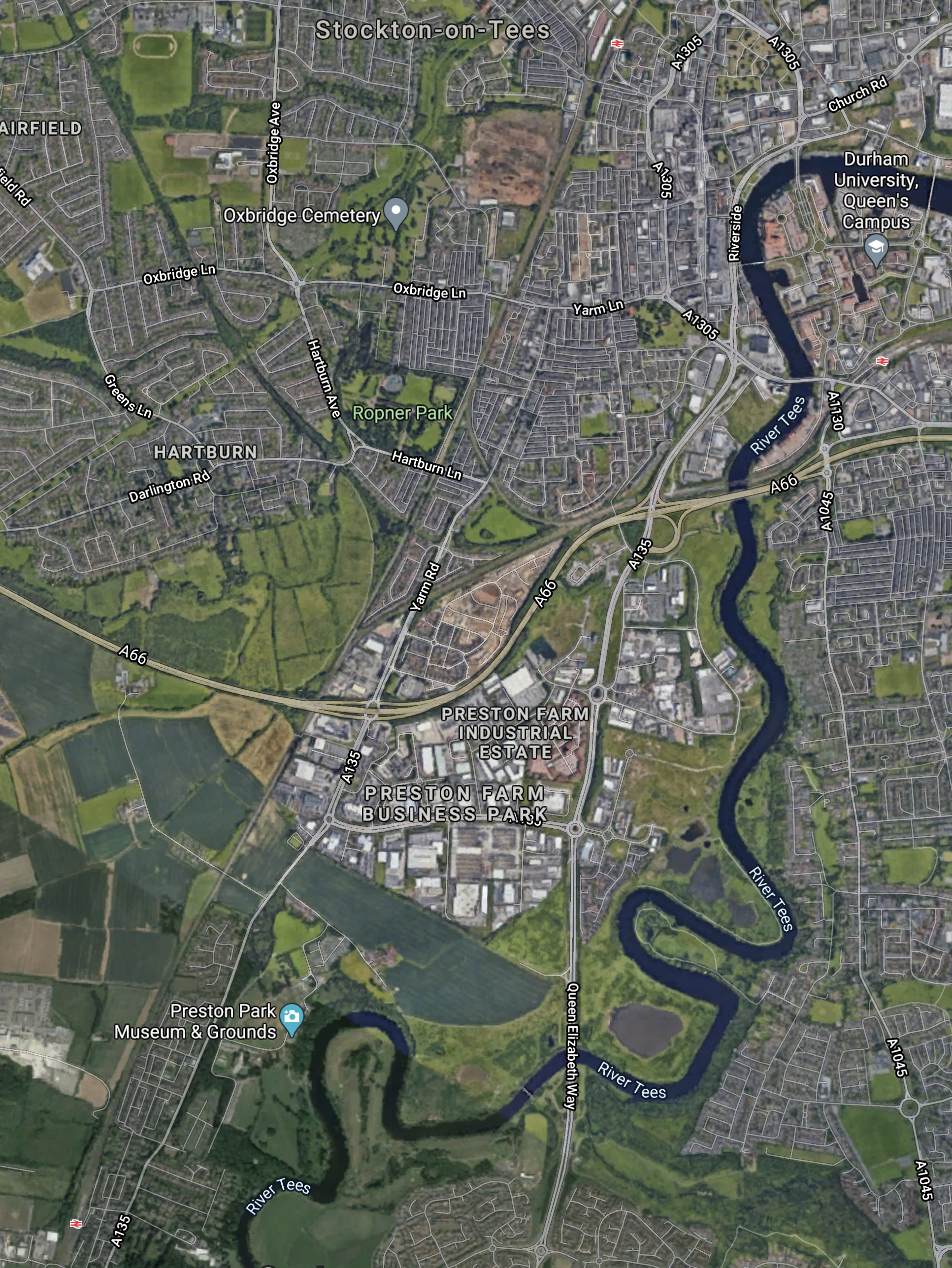
Note.
- Eaglescliffe station is in the South-West corner of the map and lines from the station lead to Darlington and Northallerton stations.
- Thornaby station is in the North-East corner of the map and connects to Middlesbrough station.
- Stockton station is at the North of the map.
Tracks connect the three stations.
This Google Map shows the connection between Thornaby and Stockton stations.
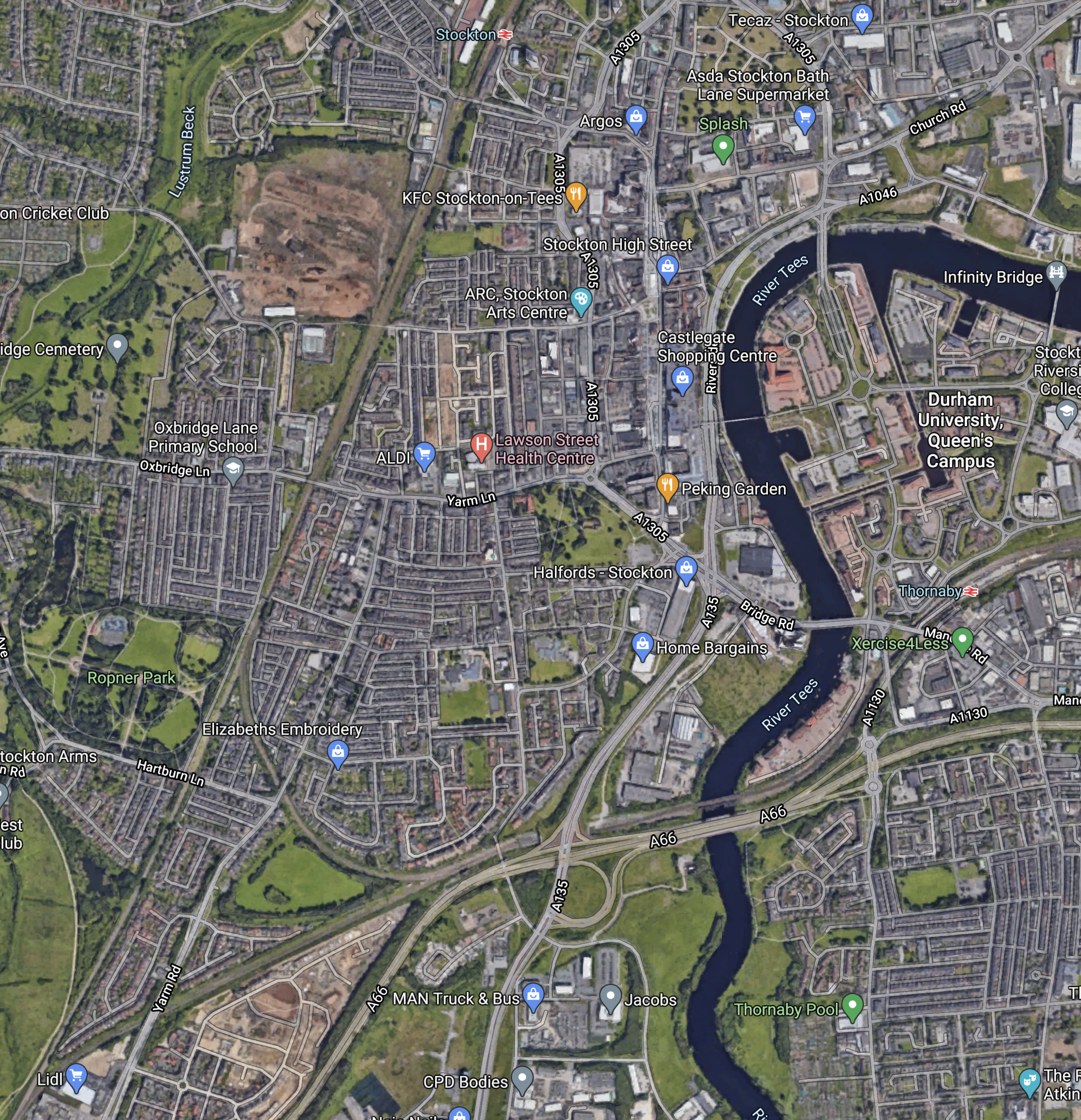
Note.
- Stockton station is at the North of the map.
- Thornaby station is at the East of the map.
- In the South-Western corner of the map is a triangular junction, that links Eaglescliffe, Stockton-on-Tees and Thornaby stations.
Currently, this triangular junction, allows trains to go between.
- Middlesbrough and Newcastle via Thornaby, Stockton, Hartlepool and Sunderland.
- Middlesbrough and Darlington via Thornaby and Eaglescliffe.
- Middlesbrough and Northallerton via Thornaby and Eaglescliffe.
But it could be even better.
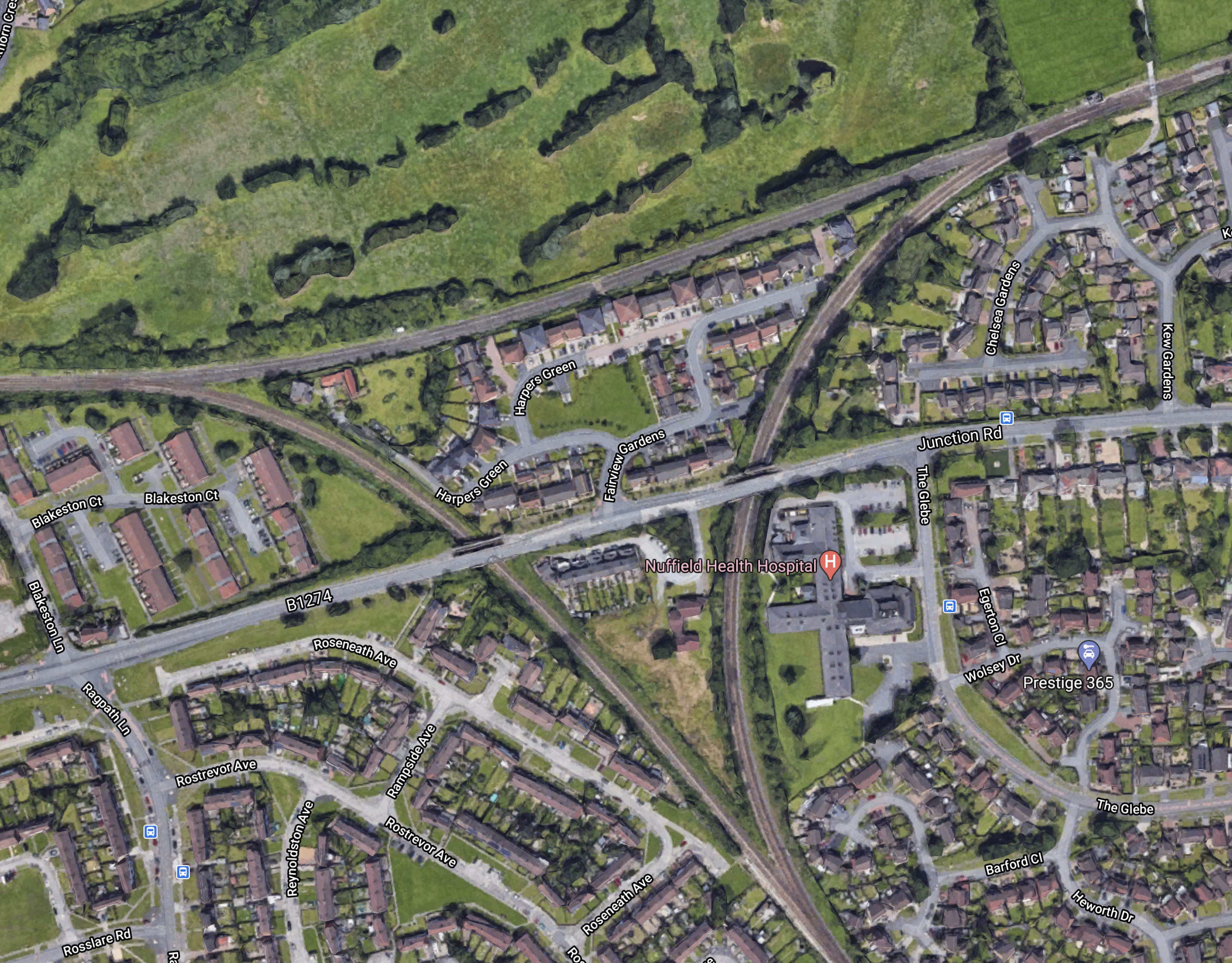
This Google Map shows another triangular junction to the North of Stockton station.
Note.
- The Southern junction of the triangle leads to Stockton station and ultimately to Darlington, Eaglescliffe, Middlesbrough, Northallerton and Thornaby.
- The Eastern junction leads to Hartlepool, Sunderland and Newcastle.
So where does the Western Junction lead to?
The railway is the Stillington Branch Line.
- It leads to Ferryhill.
- It is about ten miles long.
- It is double-track.
- There used to be intermediate stations at Radmarshall, Stillington and Sedgefield.
Looking at timings for trains on the various sections of the route gives.
- Middlesbrough and Stockton – 11 minutes
- Stockton and Ferryhill South Junction – 23 minutes
- Ferryhill South Junction and Newcastle – 20 minutes
This gives a timing of 54 minutes compared with up to 78 minutes for the current service on the Durham Coast Line.
In their document, Railfuture gives this as one of their campaigns.
Providing Faster Journeys Teesside to Tyneside by running passenger services from
Middlesbrough, Thornaby and Stockton via the 10 mile Stillington freight only line and then via the
East Coast Main Line to Newcastle. Our aim is to reduce overall journey time on direct train
between Middlesbrough to Newcastle from 1 hour 15 minutes to 55 minutes and so open up many
additional job opportunities to the residents of both areas.
My calculations say that it should be possible, to run a useful service between Middlesbrough and Newcastle, via the Stillington freight line.
- The route is used regularly for freight trains and by LNER for what look to be testing or empty stock movements.
- Will any station be built at Radmarshall, Stillington or Sedgefield?
- I estimate that between Ferryhill South Junction and Middlesbrough, is about fifteen miles, so it might be possible to run a Middlesbrough and Newcastle service using battery electric trains, like Hitachi’s Regional Battery Trains, which would be charged on the East Coast Main Line.
Activating the route, doesn’t look to be the most expensive passenger reopening on the cards.
I suspect though, that if passenger services were to be run on the Stillington Line, that Ferryhill station, will need platforms on both the East Coast Main Line and the Stillington Line.
Services could include.
- Newcastle and Middlesbrough via Ferryhill
- Newcastle and Hartlepool via Ferryhill
- Newcastle and York via Eaglescliffe and Ferryhill, with a reverse at Middlesbrough.
Note.
- The Northern terminus could be Ferryhill for some trains.
- Two tph between Stockton and Ferryhill would be a useful service.
- Would a Newcastle and Middlesbrough service call at the poorly-served Chester-le-Street station to improve services?
I also feel that as some of these services will be running on the East Coast Main Line between Ferryhill and Newcastle, it probably would be desirable for these services to be run by Hitachi’s Regional Battery Trains, which would be capable of maintaining the maximum speed for the route, as all the other passenger services can at present!
Ferryhill And Tyneside Via The Leamside Line
The reopening of the Leamside Line is a high priority of Northern Powerhouse Rail, which I wrote about in Northern Powerhouse Rail – Significant Upgrades Of The East Coast Main Line From Leeds To Newcastle (Via York And Darlington) And Restoration Of The Leamside Line.
In their document, Railfuture gives this as one of their campaigns.
Reopening the rail line from Ferryhill to Pelaw (the Leamside Line) with the aim of providing
services that will improve local connections and open new opportunities to people living in this part
of County Durham, as well as providing relief for congestion on the existing line through Durham.
This reopening has been talked about for years, so I suspect that Network Rail know the problems and at least have a rough estimate for what needs to be done and how much it will cost.
The Wikipedia entry for the Leamside Line has a section, which is entitled Proposed Re-Opening, Upgrade and Development, where this is the first paragraph.
Since the line’s closure in the early 1990s, a number of proposals to re-open the Leamside Line were put forward, including plans by AECOM, ATOC, Durham County Council, Railtrack and Tyne and Wear PTE. The line has been considered for a number of potential uses, including a regional suburban rail service linking Tyneside and Teesside, a diversionary freight route for the East Coast Main Line, and an extension to the Tyne and Wear Metro network.
Wikipedia also states that an application to the Restoring Your Railway Fund for money for a feasibility study was unsuccessful.
All that could change with the developments needed between Leeds and Newcastle for High Speed Two and Northern Powerhouse Rail.
- High Speed Two are planning to run at least three tph to and from Newcastle.
- Northern Powerhouse Rail are planning to run an extra service between Leeds and Newcastle.
- LNER will have an extra path on the East Coast Main Line, that could be used through the area.
Using the Leamside Line as a diversion for freight and slower passenger trains would appear to be a possibility.
It could also be combined with the Stillington Line and Northallerton and Stockton to create a double-track diversion, alongside the double-track section of the East Coast Main Line between Northallerton and Newcastle.
Extending The Tyne And Wear Metro Along The Leamside Line
This has been talked about for some time.
In the Wikipedia entry for the Tyne and Wear Metro. there is a section, which is entitled Extension To Washington IAMP, where this is said.
There have been a number of proposals looking in to the possibility of re-opening the former Leamside Line to Washington, including a 2009 report from the Association of Train Operating Companies (ATOC), and a 2016 proposal from the North East Combined Authority (NECA), as well as the abandoned Project Orpheus programme, from the early 2000s. Most recently, proposals are being put forward to link the current network at Pelaw and South Hylton, with the International Advanced Manufacturing Park in Washington, using part of the alignment of the former Leamside Line.
If the Tyne and Wear Metro were to be extended to the Southern end of the Leamside Line, Ferryhill station could be a Southern terminal.
- There is space to create a line alongside the East Coast Main Line between Tursdale Junction, where it connects with the Leamside Line and Ferryhill station.
- The new Tyne and Wear trains have been designed to share tracks with other trains on Network Rail tracks.
- This would enable interchange between East Coast Main Line, Stillington Line and Metro services, without going North to Newcastle.
At the present time, all that would be needed would be for the Metro connection to be safeguarded.
Railfuture’s Campaigns In The North East
This is a tidying up of several improvements, which are campaigns of Railfuture, that are outlined in this document.
- New Station At Team Valley
- New Station At Gilsland
- New Rail Service From Newcastle To Ashington
- North Of Morpeth Local Service
They will be covered in separate posts.
Conclusions
I can separate conclusions into sections.
The Design Of Ferryhill Station
These are my conclusions about the design of Ferryhill station.
- It should be built as a Park-and-Ride station.
- It should have platforms long enough for any train that might stop at the station. I suspect this would be a pair of Class 800 trains, which would be 260 metres long.
- Platforms should be on both the East Coast Main Line and the Stillington Line.
- There should be safeguarding of a route, so that Metro trains could access the station from the Leamside Line.
As the station could be a Park-and-Ride station, I will assume the station will need good road access.
Train Services At Ferryhill Station
These are my conclusions about the services calling at Ferryhill station.
There should be four tph between Leeds and Newcastle, all of which would stop at York, Darlington, Ferryhill and Durham, with some services calling at Northallerton and Chester-le-Street.
There should also be less frequent services at Ferryhill to Scotland and London. Perhaps a frequency of around six tpd would be sufficient, as changes could be made at Leeds, Newcastle of York.
Two tph would probably be ideal for services on the Stillington Line to Hartlepool, Middlesbrough and Redcar.
It would certainly be a busy and well-connected station.
Thermal Energy Storage The Key To Reducing Agricultural Food Pollution
The title of this post, is the same as that of this article on EurekAlert.
These two paragraphs, introduce the article and give the aim of the project.
University of South Australia thermal energy researcher Professor Frank Bruno has been awarded almost $1 million by the Federal Government to find a solution to agricultural pollution in Australia and India.
Prof Bruno, South Australian Energy Chair at UniSA’s Future Industries Institute, will lead a collaborative project with India’s biggest private university, LPU, to develop a renewable energy-driven food processing and drying system which alleviates both pollution and landfill issues in both countries.
The big problem in India is air pollution, a lot of which is caused by farmers burning rice husks. By collecting solar energy, which will be stored as heat and used to dry crops, there is hope that this pollution can be reduced.
The whole article is very much a must-read.
Conclusion
This very much sounds like a good way to cut pollution in areas with lots of solar energy.
Limach And Hyperdrive Partner On Electric Machines
The title of this post, is the same as that as of this article on International Rental News.
This second deal from Hyperdrive Innovation is with Dutch excavator manufacturer Limach.
This paragraph from the article is important.
The construction industry is responsible for 40% of European carbon emissions, making it an urgent priority for decarbonisation to meet net zero targets.
That is a lot of carbon.
Multi-Million-Pound Battery Partnership Announced
The title of this post, is the same as that as of this article on Eureka magazine.
This is the introductory paragraph.
Hyperdrive Innovation, the UK’s leading designer and manufacturer of lithium-ion battery technology, today announces a new multi-million-pound 4-year supply agreement with Moffett, part of Hiab and world leading forklift truck manufacturer, to supply state-of-the-art battery packs for zero-emission machinery.
This seems to be a big deal for the Sunderland-based manufacturer, who are also working with Hitachi to provide battery packs for Hitachi’s Regional Battery Train.
Hyperdrive Innovation certainly must be developing some of the best battery technology available.
Covid: Genes Hold Clues To Why Some People Get Severely Ill
The title of this post, is the same as that of this article on the BBC.
This is the opening paragraph.
Why some people with coronavirus have no symptoms and others get extremely ill is one of the pandemic’s biggest puzzles.
It is now less of a puzzle, thanks to research led by the University of Edinburgh.
These paragraphs explain the methodology.
Scientists looked at the DNA of patients in more than 200 intensive care units in UK hospitals.
They scanned each person’s genes, which contain the instructions for every biological process – including how to fight a virus.
Their genomes were then compared with the DNA of healthy people to pinpoint any genetic differences, and a number were found – the first in a gene called TYK2.
One of the other genes mentioned is IFNAR2, where this was said.
Variations in a gene called IFNAR2 were also identified in the intensive care patients.
IFNAR2 is linked to a potent anti-viral molecule called interferon, which helps to kick-start the immune system as soon as an infection is detected.
It’s thought that producing too little interferon can give the virus an early advantage, allowing it to quickly replicate, leading to more severe disease.
I know a bit about interferon and I must admit I’ve made a bit of profit on shares in Synairgen, which are linking interferon with an inhaler.
I then typed “coeliac disease and interferon” into Google and found this article on The Lancet, which is entitled Onset Of Coeliac Disease and Interferon Treatment.
My medical knowledge is very limited, but it does appear that if you are coeliac on a gluten-free diet, you don’t get any problems, with interferon.
The plot thickens!
Not for nothing, do some doctors call coeliac disease, the Many-Headed Hydra.
Nippon Steel Pledges To Be Carbon Neutral By 2050
The title of this post, is the same as that of this article on NikkeiAsia.
These are the first two paragraphs.
Nippon Steel has set a goal to reach net-zero emission by 2050, Nikkei learned on Thursday, a move that could nudge other manufacturers to try to meet Prime Minister Yoshihide Suga’s pledge to achieve carbon neutrality across the country by the same year.
Nippon Steel, Japan’s biggest steelmaker, will introduce a new way of steelmaking using hydrogen which can reduce carbon emissions by up to 80% compared with conventional methods of production. The steelmaker’s new green target will be unveiled in a business plan it is currently drafting which will be published by March 2021.
To my mind, hydrogen is the way to go!
This Material Can Store The Sun’s Energy For Months, Maybe Even Years
The title of this post, is the same as that of this article on Anthropocene.
This is the sub-title.
Thin coatings of the material could soak up sun in summer months and provide heat to buildings in winter, all without using fuel or electricity.
This sounds like something to file under Too Good To Be True.
But the research does come from the University of Lancaster and uses a type of material called a metal-organic framework.
Conclusion
Increasingly, it seems to me, that we’re seeing lots of outstanding chemistry coming to the fore.
Restoring Your Railway: Successful Bids
As of the 26th of November, this is the list of successful bids, which are detailed on this page of the Government web site.
To Reinstate The Passing Loop Between St Albans Abbey And Watford Junction (Abbey Line)
See Reinstatement Of The Abbey Line Between St Albans Abbey And Watford Junction
To Re-open The Meir station between Stoke-On-Trent And North Staffordshire
See Reopening Meir Railway Station Between Stoke-On-Trent And North Staffordshire
To Reintroduce Passenger Services On The Leicester To Burton (Ivanhoe) Line
See Reinstatement Of The Ivanhoe Line
Reopened Lines And New Passenger Services, Melton Mowbray – Nottingham
Reopened Lines And New Passenger Services, Alfreton – Ashfield (Maid Marian Line)
See Beeching Reversal – Reconnecting Ashfield Communities Through The Maid Marian Line
Reopened Lines And New Passenger Services, Stratford Upon Avon – Honeybourne – Worcester/Oxford
Reopened Lines And New Passenger Services, Consett-Newcastle
See Beeching Reversal – Consett-Newcastle Connection
New Station At Ferryhill, Ferryhill – Stockton-on-Tees
See Beeching Reversal – Ferryhill Station Reopening
To Reinstate The Bury-Heywood-Rochdale Lines
See Reinstatement Of The Bury-Heywood-Rochdale Lines
To Reintroduce Passenger Services Between Clitheroe and Hellifield And Explore Freight Options
See Reinstatement Of The Clitheroe To Hellifield Railway Line
Enhanced Existing Passenger Services, Preston – Blackpool South
See Beeching Reversal – South Fylde Line Passing Loop
Reopened lines And New Passenger Services, Bolton-Radcliffe / Bolton-Bury
See Beeching Reversal – Reinstatement of Bolton-Radcliffe / Bolton – Bury
New Station At Beeston Castle And Tarporley, Crewe – Chester
See Beeching Reversal – Reinstating Beeston Castle And Tarporley Station
To reinstate Branch Lines On The Isle of Wight
See Reinstatement Of Branch Lines On The Isle Of Wight
To Introduce Passenger Services On The Totton-Fawley (Waterside) Line
See Special Train Offers A Strong Case For Reopening Fawley Line
To Re-open Of Wellington and Cullompton Stations
See Reopening Of Wellington and Cullompton Stations
To Reinstate Rail Access To Devizes Via A New Station At Lydeway
See Reinstatement Of Rail Access To Devizes Via A New Station At Lydeway
New Station At St Anne’s Park, Bristol Temple Meads – Bath Spa
See Beeching Reversal – St Anne’s Park Station
Enhanced Existing Passenger Services, Truro – Falmouth
New Station At Langport And Somerton, Castle Cary – Taunton
Reopened Lines And New Passenger Services, Kemble – Cirencester
See Beeching Reversal – Cirencester Community Railway
Reopened Lines And New Passenger Services, Wareham – Swanage
See A Visit To The Swanage Railway
To Reintroduce Passenger Services On The Barrow Hill Line Between Sheffield And Chesterfield
See Reinstatement Of The Barrow Hill Line Between Sheffield And Chesterfield
Reopened Lines And New Passenger Services, Gainsborough – Barton
See Beeching Reversal – Restoring A South Humber Link
New Station At Waverley, Sheffield – Chesterfield
See Beeching Reversal – A New Station At Waverley In Sheffield
Summarising The Bids
In total, there are twenty-five successful bids.
Stations
There are nine possible new or rebuilt station projects.
- Beeston Castle And Tarporley – Rebuilt – Closed in 1966
- Cullompton – Rebuilding – Closed in 1964
- Ferryhill – Rebuilding – Closed in 1967
- Langport And Somerton – Rebuilt – Closed in 1964
- Lydeway – New
- Meir – Rebuilt – Closed in 1966
- St Anne’s Park – Rebuilt – Closed in 1970
- Waverley – New
- Wellington– Rebuilt – Closed in 1964
Note.
- Only two are in new locations.
- None seem to be challenging sites and some seem to have the remains of previous stations.
- I am fairly sure, that all stations are on double-track railways.
- Cullompton and Wellington stations could be a single project.
These are typical costs from the last few years for typical two platform stations on a double-track railway.
- Horden – £10.5 million
- Kenilworth – £11.3 million
- Lea Bridge – £5.6 million
- Maghull North – £13 million
- Robroyston – £14 million
- Warrington West – £20.5 million
Meridian Water, which was a large four-track station cost £46 million.
Line Reopenings
There are thirteen lines that could be reopened for passenger services.
- Barrow Hill Line
- Bolton-Radcliffe / Bolton-Bury
- Bury-Heywood-Rochdale Lines
- Consett-Newcastle
- Gainsborough – Barton
- Isle of Wight Branch Lines
- Ivanhoe Line
- Kemble – Cirencester
- Maid Marian Line
- Melton Mowbray – Nottingham
- Stratford Upon Avon – Honeybourne – Worcester/Oxford
- Wareham – Swanage
- Waterside Line
Note.
- Several of the tracks are already in place and used for freight.
- Full electrification is not involved in any proposed scheme.
- Few, if any bridges and no tunnels are needed.
- Some will share lines with well-run heritage railways.
There will probably be some new stations. As examples, I would suggest Cirencester, Consett and intermediate stations on the Ivanhoe Line.
Enhanced Passenger Services
There are four bids, to enhance passenger services.
- Abbey Line
- Clitheroe and Hellifield
- Preston and Blackpool South
- Truro – Falmouth
Note.
- Small amounts of new infrastructure may be needed.
- Some extra trains may be needed.
None should be challenging.
Conclusion
The successful bids are a sensible collection of ones to progress.
None are outrageously difficult.
Beeching Reversal – Consett-Newcastle Connection
This is one of the Beeching Reversal projects that the Government and Network Rail are proposing to reverse some of the Beeching cuts. There used to be a direct line between Newcastle and Consett, which was the Derwent Valley Railway, which connected Consett to the Tyne Valley Line.
I would assume that the basis of the plan, is to reinstate this route and build a new station at Consett.
The Former Route
I will show the route starting from the Tyne Valley Line.
Connection To The Tyne Valley Line
This Google Map shows the MetroCentre with the Tyne Valley Line running along its North side.

Note.
- The River Tyne running along the North side of the map.
- MetroCentre station on the Tyne Valley Line is by the North-East corner of the MetroCentre.
- The River Derwent meanders its way to the River Tyne, to the West of the MetroCentre.
- The Derwent Valley Line used to come through this area to join the Tyne Valley Line.
I have a feeling that much of the route of the Derwent Valley Line lies under the new roads.
This map clipped from the Wikipedia entry for the Derwent Valley Line, shows how, the line connected to the Tyne Valley Line.

This Google Map shows the area.

Note.
- The Scotswood Railway Bridge is the dark-coloured bridge in the North-West corner of the map.
- The Tyne Valley Line runs East-West across the map.
- Swalwell station must have been in the area of the junction on the A1.
As the old route appears to be blocked, another route must be found to connect to the Tyne Valley Line.
Perhaps there would be enough space to squeeze a railway line alongside the River Derwent.
Between Swalwell And Nine Arches Viaduct
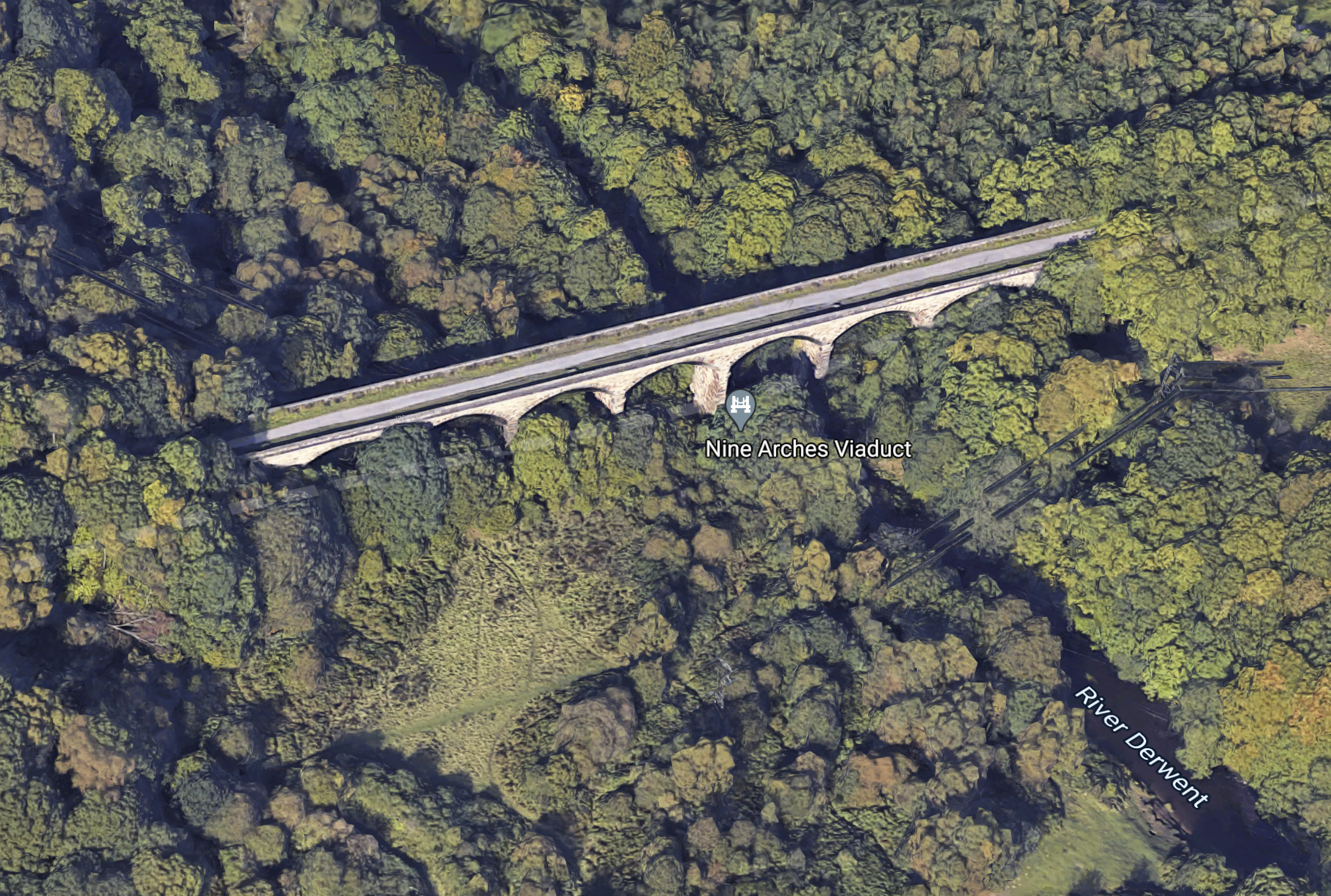
The Nine Arches Viaduct is an iconic feature of the line. This image of the bridge was taken from a Google Map.
This second image shows it as a map.
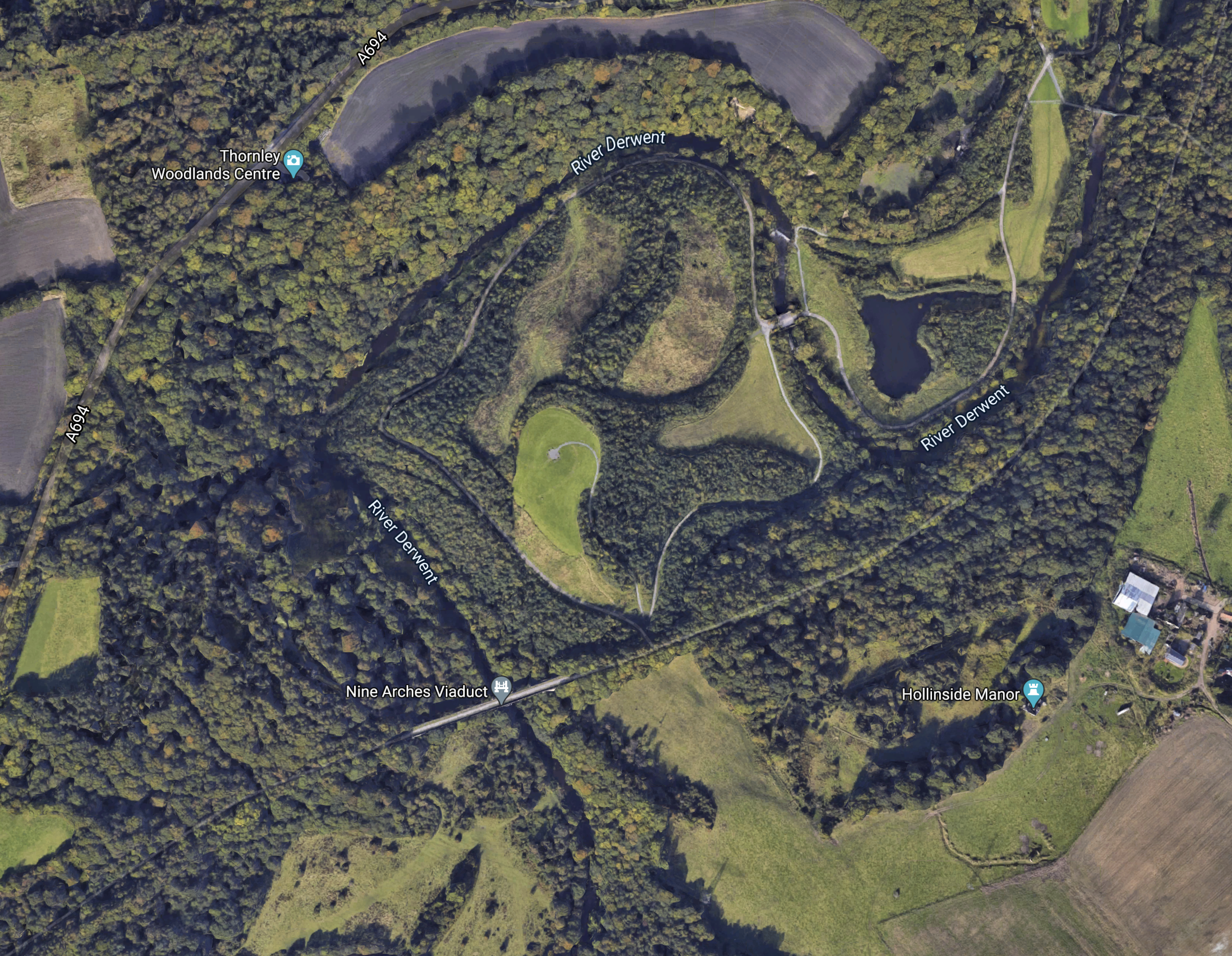
Note that I have arranged the map, so that the path that uses the route of the Derwent Valley Line runs between the South-West and North-East corners of the map.
This third Google Map has the Nine Arches Viaduct in the South-West corner and Swalwell in the North-East corner.

Note the tadpole-shaped green space by the bridge.
Between Nine Arches Viaduct and Lintz Green
This Google Map shows this section.

Note.
- The Nine Arches Viaduct is in the North-East corner.
- Lintz Green is in the South West corner.
On the Derwent Valley Railway, there were stations at Lintz Green and Rowlands Gill.
The History section in the Wikipedia entry for the Derwent Valley Railway, explains why a more direct route wasn’t taken in this area.
Between Lintz Green And Ebchester
This Google Map shows this section.

Note.
Lintz Green is at the Eastern edge of the map.
Ebchester is in the South-West corner.
On the Derwent Valley Railway, there were stations at High Westwood and Ebchester.
Between Ebchester and Consett
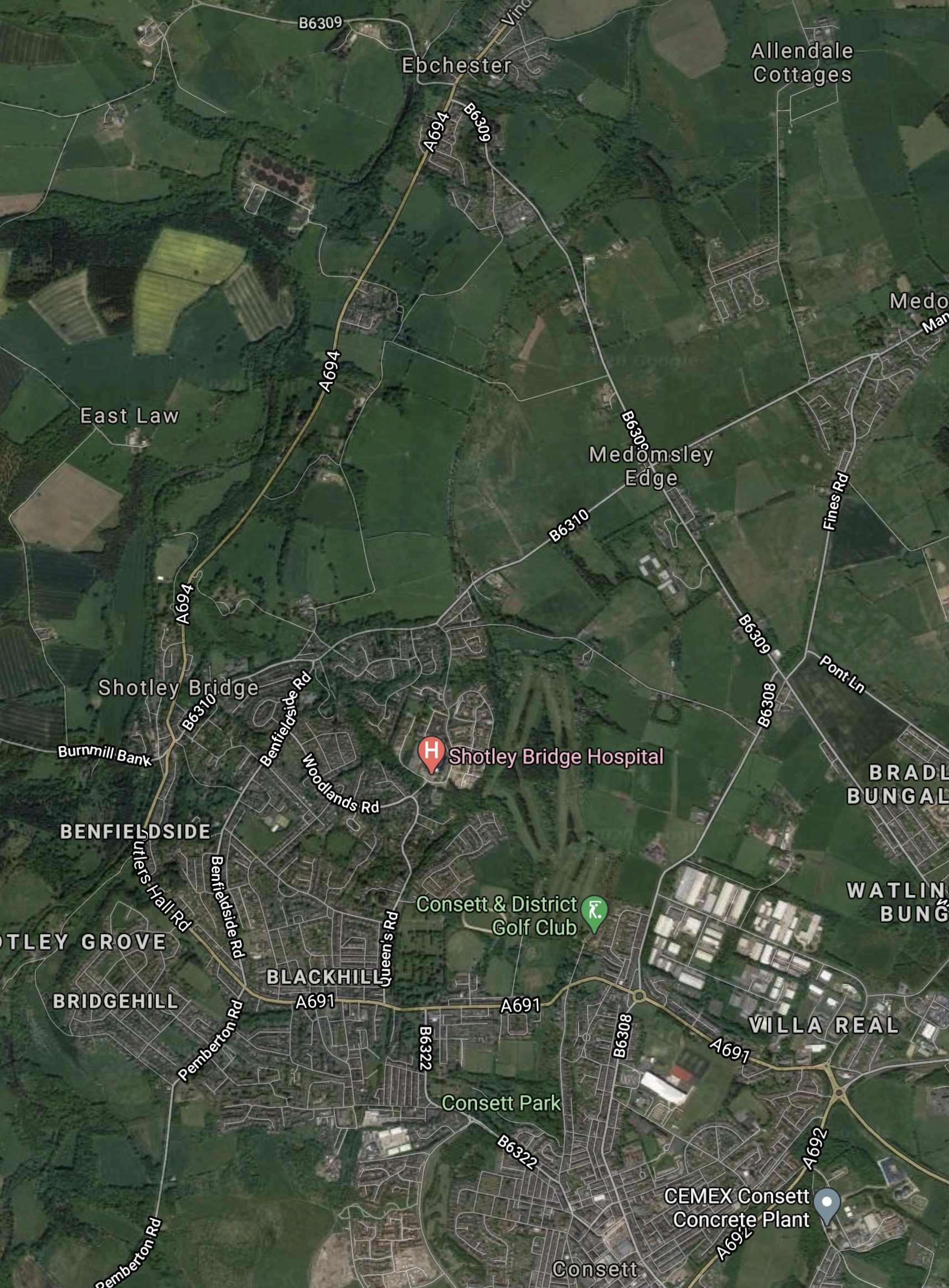
This Google Map shows this section.
Note.
- Ebchester is at the Northern edge of the map in the centre.
- Consett is in the South of the map.
- Shotley Bridge Hospital is an NHS hospital.
On the Derwent Valley Railway, there were stations at Shotley Bridge, Blackhill and Consett.
Consett Station
A new station would have to be built in Consett.
Consett is a town of around 25,000 and is shown in this Google Map.

Note that the red arrow shows the rough location of the original station near Annfield Plain. The station and the tracks were demolished in the 1980s to make way for new roads.
How thinking on transport has changed in forty years!
Is This Route Feasible?
Google gives the distance between the Metrocentre and Consett as 11.5 miles and Wikipedia says that Consett is about 900 feet above sea level.
To put the altitude into perspective, this is higher than Merthyr Tydfil, but not as high as Buxton, so I feel that trains could ascend to Consett, as steam trains did in far-off Victorian days, when they carried over half a million passengers every year, according to Wikipedia.
I would say, that although restoring the route could be challenging, it would not be filed under Impossible.
These are a few other thoughts.
Would The Route Carry Freight?
If we’re talking about long freight trains with lots of containers or many trucks of coal, the answer is probably a negative.
But rail freight is changing, I can see many towns in the UK getting a high speed parcels service using modified electric multiple units.
- Rail Operations Group and others are planning to experiment with this type of service.
- With on-line shopping, 25,000 residents can generate a lot of deliveries and returns.
- The average guy on the Consett omnibus, is getting more worried about carbon emissions.
But trains like these could fit in with the passenger service on the route and could even unload at a well-designed passenger terminal in Consett.
The route would also have to be able to take maintenance and construction trains, just like the London Underground and the Tyne and Wear Metro do!
Would The Route Be Single- Or Double-Track?
Consider.
- The original Victorian route was double-track.
- The more trains on the route, the greater the need for a full double-track railway.
- Would the Nine Arches Viaduct accommodate a double-track.
- Single-track railways are easier to construct and more affordable.
Hopefully a serious study, will give an answer.
How Would Trains Go Between MetroCentre and Newcastle Stations?
Currently, there are three trains per hour (tph) between MetroCentre and Newcastle stations.
The Tyne and Wear Metro generally runs on the principle of five tph, so a one or two tph service between Consett and Newcastle would fit in well with the Tyne and Wear Metro, even if it was not their service.
This Google Map shows MetroCentre station.

Could a third platform be fitted here to run a shuttle service to Consett?
Trains between MetroCentre and Newcastle stations, go via Dunston station, Norwood Junction and the King Edward VII Bridge.
Note.
- Norwood Junction also allows trains to go between The Tyne Valley Line and the East Coast Main Line in both North and South directions.
- The comprehensive track layout to the South of Newcastle allows access to everywhere.
The Consett trains could even be run on a Back-to-Back basis to Ashington and Blyth, which is now being called the Northumberland Line in the media.
Would The Line Be Zero-Carbon?
I feel strongly, that all new or reopened railways should be zero-carbon.
But whether it should be electrified is another matter and depends on the rolling stock.
Battery Electric Trains To Consett
If the route to Consett is to be zero-carbon, then the obvious choice for the route are battery electric trains.
- To run these successfully, there would probably need to be some electrification along the Tyne Valley Line, as far as the junction with the new Derwent Valley Line, so trains started the climb to Consett with full batteries.
- If necessary, some parts of the Derwent Valley Line could be electrified, to assist the trains up the hill.
- Coming down from Consett, they could use Newton’s friend, with regenerative braking charging the batteries.
- Intriguingly, between MetroCentre and Hexham is under twenty miles, so why not run these services using similar battery electric trains.
I also think, that if the electrification were to be 25 KVAC, then it could enable battery electric trains like Hitachi’s Regional Battery Train or CAF’s proposed battery-electric Class 331 train, to run between Newcastle and Carlisle stations.
The Tyne And Wear Metro’s New Trains
I believe that the new trains being built by Stadler for the Tyne and Wear Metro, will be very similar to the Class 777 trains for Merseyrail.
The Class 777 trains are known to have this features.
- A capacity of 484 passengers.
- An operating speed of 75 mph.
- A weight of 99 tonnes.
- Ability to use 750 VDC third-rail electrification.
- A small battery to be used for hotel power, when there is no electrification.
- Some will be fitted with batteries to allow route extension on unelectrified lines, like between Ormskirk and Preston, which is 15.3 miles.
- In the future, they will be able to use 25 KVAC overhead electrification.
The new Tyne and Wear trains appear to be different to the Class 777 trains in the following ways.
- A different length, with five cars instead of four.
- Ability to use 750 VDC overhead instead of 750 VDC third-rail electrification.
- Longitudinal instead of transverse seating.
These facts should also be born in mind.
Stadler built the Class 399 tram-trains for Sheffield, that can use both 750 VDC and 25 KVAC overhead electrification from the same pantograph.
Parts of the Tyne and Wear Metro use tram-train operation under the Karlsruhe model, which is also used in Sheffield.
Could The Tyne And Wear Metro’s New Trains Work Between Newcastle And Consett Stations?
I feel if the following conditions were to be met, that the Tyne And Wear Metro’s new trains, would be able to work the route.
- Batteries with sufficient range to work the route were fitted.
- Ability to use both 750 VDC and 25 KVAC overhead electrification.
- Sufficient electrification were erected to power the train and charge the batteries on their journey between Newcastle and MetroCentre stations.
It is my view, that the trains could be ideal for the route.
They could also work between Newcastle and Hexham, with slightly larger batteries than their Liverpool cousins.
What Size Batteries Would Be Needed For A Service To Consett?
I will do a calculation based on the Class 777 train figures.
- The train weight is 99 tonnes.
- Each of 484 passengers weighs 80 Kg with baggage, bikes and buggies.
- This adds up to 38.7 tonnes giving a train weight of 137.7 tonnes.
Using Omni’s Potential Energy Calculator gives a value of 103 kWh to lift the full train the 900 feet to Consett.
In an article in the October 2017 Edition of Modern Railways, which is entitled Celling England By The Pound, Ian Walmsley says this in relation to trains running on the Uckfield Branch, which is not very challenging.
A modern EMU needs between 3 and 5 kWh per vehicle mile for this sort of service.
The new Tyne and Wear Metro trains have five cars, so assuming 3 kWh per vehicle mile, would need the following energy to power the train to Consett.
5* 3 * 11.5 = 172.5 kWh
I wouldn’t be surprised to see a 400 kWh battery on the train.
On the flat, it would do about twenty-seven miles, which would mean the train could provide a service between Newcastle and Hexham.
Incidentally, the distance between Newcastle and Ashington is under twenty five miles of which a couple of miles are electrified.
Conclusion
Newcastle and Consett would appear to be an ideal route to reopen.
It would require.
- A dozen miles of new track. much of which would be on an dismantled alignment.
- An appropriate number of new stations.
- Some electrification between Newcastle and MetroCentre stations.
- A number of the new Stadler trains for the Tyne and Wear Metro to be fitted with batteries.
A service of one or two tph could be provided.
In addition, the following could be possible.
- The Newcastle and Hexham service could be run by the same battery electric trains.
- The Consett and Newcastle service could be run Back-to-Back with the proposed Newcastle and Ashington service.
This scheme has collateral benefits.
magniX, Sydney Seaplanes And Dante Aeronautical Partner For World’s First All Electric Cessna Caravan STC Program
The title of this post, is the same as that as this article on Cision.
This sub-title defines their objective.
Global leader in electric propulsion technology to work with leading charter and integrator companies in Australia and the South Pacific to provide electric aircraft.
Note.
- An STC is a Supplemental Type Certificate, which is added to the aircraft’s type certificate, to allow it to be flown, after a major modification, such as a different power plant or a structural modification, such as a cargo door or aerodynamic modification.
- In the case of the Cessna Caravan, the gas turbine engine is being replaced by an electric motor and batteries.
- Over 2, 600 Cessna Caravans have been built.
This picture shows the Cessna Caravan in which I flew in Kenya.
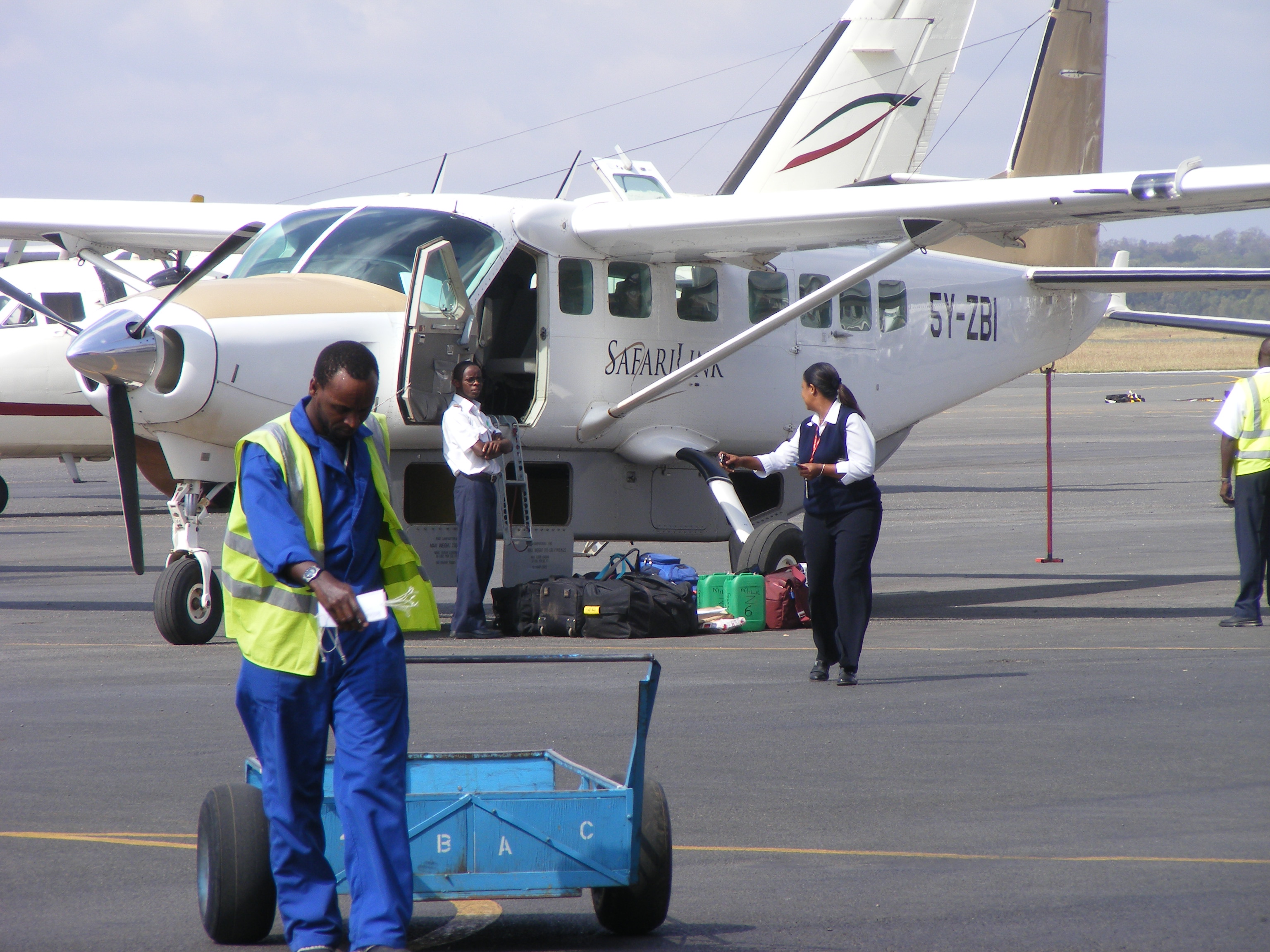
I look forward to flying in an electric Caravan!
 The Anonymous Widower