Coronavirus Lockdown In Sweden: a New Take On Safe Shopping — No Assistants
The title of this post is the same as that of this article on The Sunday Times.
It could be the way, that convenience stores will be going! Even my local Marks and Spencer in Dalston, allows you to scan using an app, put the goods in your bag and just walk out!
I must try it, as it would mean that I would have to touch less equipment and won’t have to stand there like a wally, whilst the assistant verifies my age, after I have purchased low alcohol beer.
There could also be little robots like Daleks or R2-D2 wandering around, who you could ask questions, like “Where is the Adnams 0.5% low-alcohol beer?”. They would reply “Follow me!” and lead you to your next purchase.
Climate Change: ‘Bath Sponge’ Breakthrough Could Boost Cleaner Cars
The title of this post is the same as that of this article on the BBC.
This is the introductory paragraph.
A new material developed, by scientists could give a significant boost to a new generation of hydrogen-powered cars.
The article is a must read and the development could make it a lot easy to store hydrogen in vehicles.
The problem is that hydrogen is extremely light and the article says this about storage.
In normal atmospheric pressure, to carry 1kg of hydrogen which might power your car for over 100km, you’d need a tank capable of holding around 11,000 litres.
That is rather large. This extract from the article describes the solution.
To get around this problem, the gas is stored at high pressure, around 700 bar, so cars can carry 4-5kg of the gas and travel up to 500km before refilling.
That level of pressure is around 300 times greater than in a car’s tyres, and necessitates specially made tanks, all of which add to the cost of the vehicles.
Now researchers believe they have developed an alternative method that would allow the storage of high volumes of hydrogen under much lower pressure.
The team have designed a highly porous new material, described as a metal-organic framework.
As ITM Power’s hydrogen filling stations can provide hydrogen at up to 350-700 bar, I’m sure that there could be a useful coming together, that will make hydrogen-powered vehicles more common.
Could for instance, the new material mean, that hydrogen becomes the fuel of choice for heavy trucks and railway locomotives?
Surviving Lockdown
People ask if I am surviving lockdown.
I am lucky in several ways.
Housing
I live in a spacious house, which is comfortable.
Although, it does have problems.
- It was built by a Turkish Jerrybuilder, who bought fixtures and fittings at the cheapest price possible.
- It gets too hot.
- The plumbing is suspect.
- The air-conditioner is broken and the service company, have had my money to fix it, but won’t come.
- The smoke detector above my bed is just hanging there, as I wrote in A Design Crime – The Average Smoke Detector
Hopefully, when we beat COVID-19, I’ll be able to move.
Finances
My investments give me enough to live comfortably. If you call, living in two rooms, never talking face-to-face with anybody living comfortably.
Exercise
I am still fit and can exercise as much as I need and is recommended.
I have a workout that I do twice a day, which includes movements like press-ups, stretches and single-leg stands.
I can do two dozen press-ups straight off or walk three miles, if I need to.
Health
My health is good, despite being a coeliac and suffering a serious stroke ten years ago.
- I test my own INR.
- I seem to have survived my fall of a month ago.
- I only go to the surgery for B12 injections, drug reviews and the odd problem.
Other than that I just suffer from the problems of a healthy man of 72, like arthritis and hay fever.
I do have a strange skin, that leaks a lot of water and doesn’t bleed, when I have an injection or a doctor or nurse takes blood. I never have a plaster after either procedure.
Food
I am a reasonable and very practical cook, or so my son and various friends tell me. These are some meals, I’ve been cooking under lockdown.
Pasta With Yogurt Sauce For One
Goat’s Cheese, Strawberry And Basil Salad
Smoked Haddock And Curried Rice
I shall add more here.
I won’t starve!
Shopping
A Marks and Spencer food store is fifteen minutes walk away, so I can get all the food I need.
I also got plenty of Adnams 0.5% alcohol Ghost Ship beers direct from the brewers delivered last week.
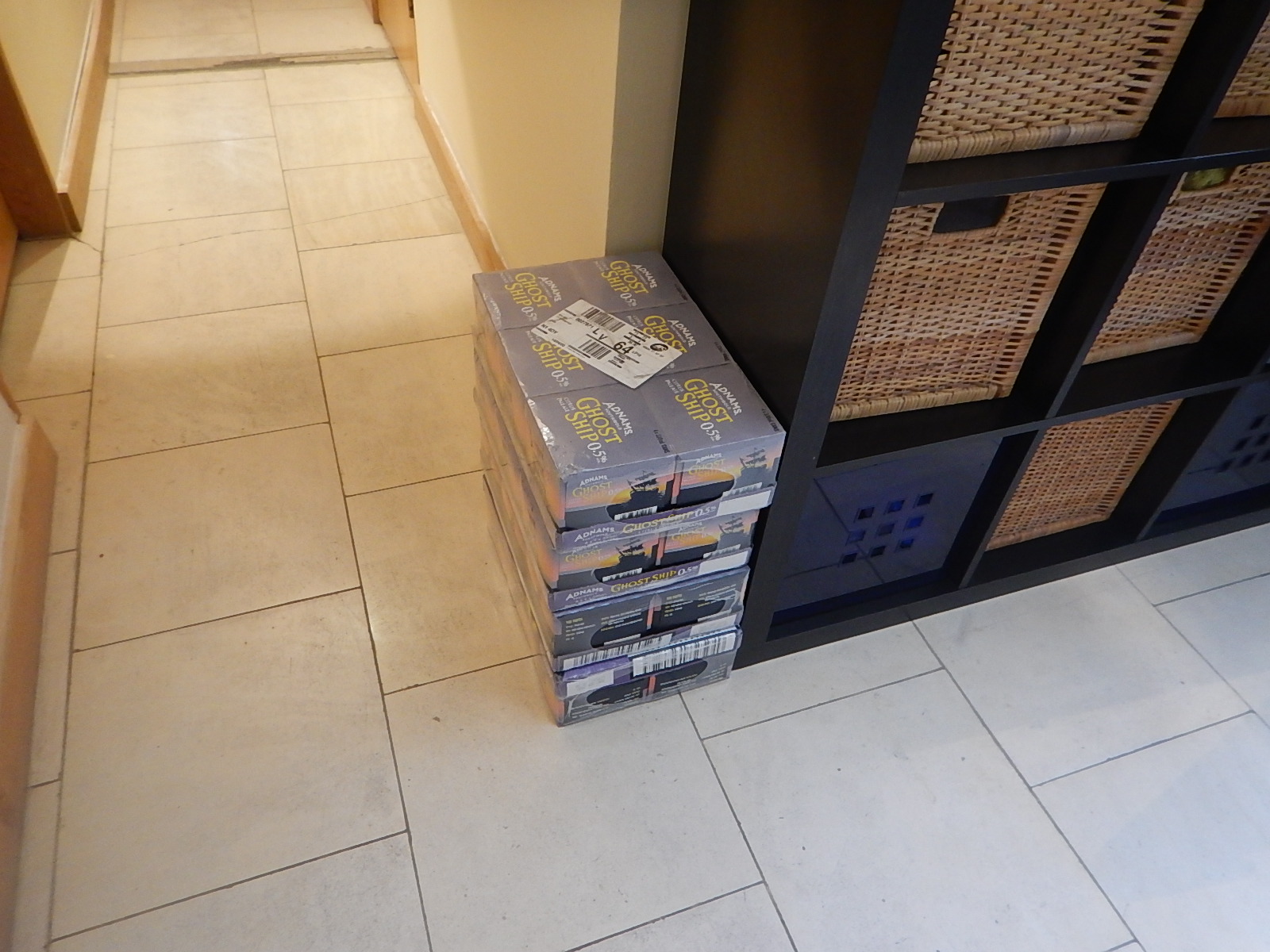
Their beers have been a lifeline, as they are gluten-free, thirst-quenching and don’t get me drunk. Even in quantity!
I also have safe delivery without any contact, as the couriers just ring my bell, we chat through the window about three metres away and they leave the goods on the step.
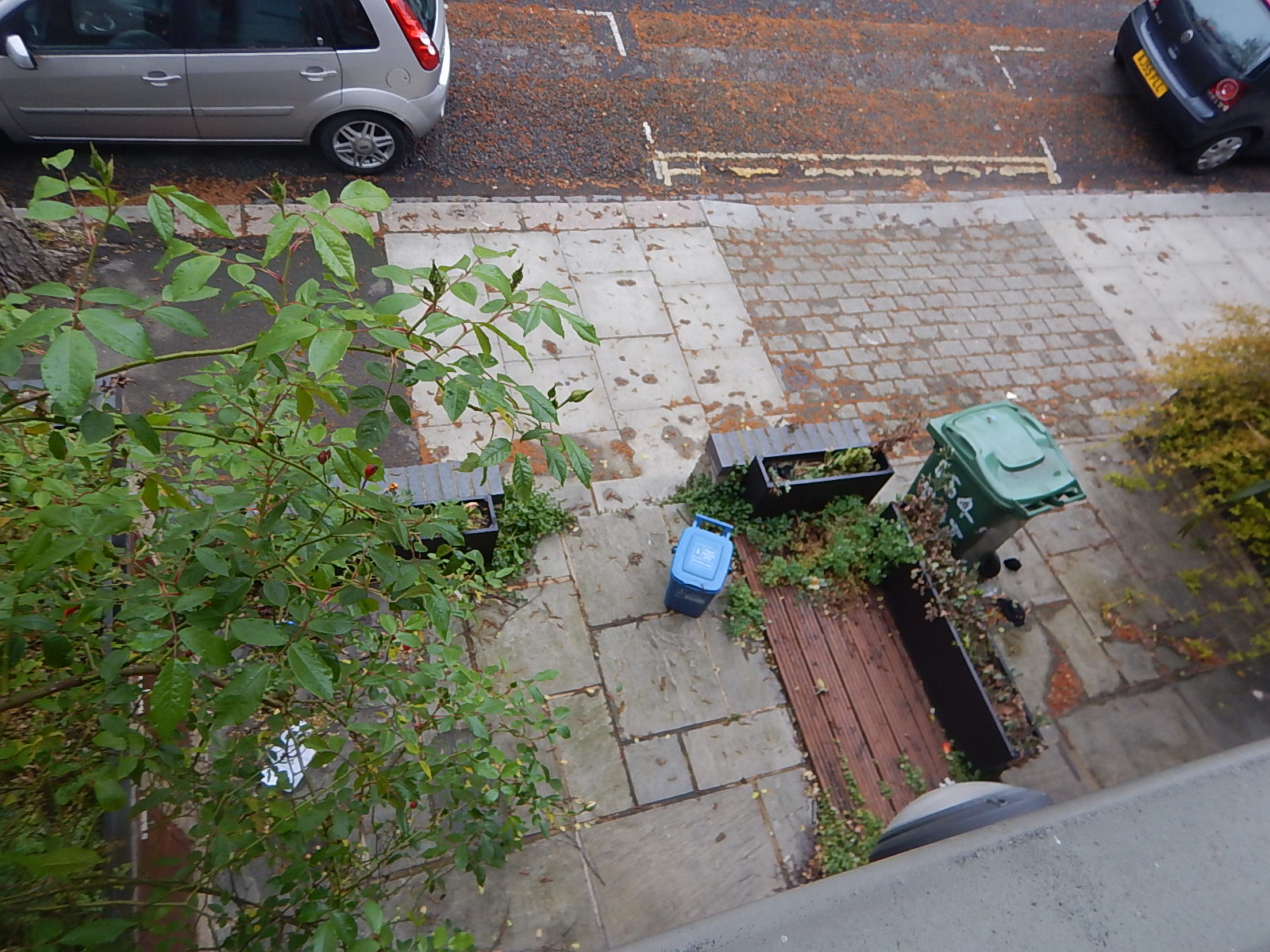
I didn’t think about lockdown, when I bought this house, but it is ideal for safe COVID-19-free deliveries.
Lockdown Practice
There can’t be many people, now going through the COVID-19 lockdown, wo have locked themselves away so many times in their life as I have.
- At the age of about six, I spent three months or more, in isolation because I caught scarlet fever.
- For the summer before A-Levels, my parents went to their house in Felixstowe. For part of the time, I locked myself in my bedroom and read up on my A level Physics.
- A couple of times at ICI, I self-isolated with a computer to get important jobs done. How many have used an IBM-360 as a PC?
- I self-isolated to write Speed, my first piece of independent software.
- Pert7 and other software for Time Sharing Ltd was written overnight sitting in the window of their offices on Great Portland Street.
- Artemis was written in an attic in Suffolk, with no-one else around for most of the time.
- The special PC version of Artemis, that was a combined project management, database and spreadsheet program, was also written under lockdown.
- After Celia died, I wrote Travels With My Celia(c) under lockdown. You can download the pdf file here.
Lockdown has almost been a way of life for me.
But on past form, I certainly have the mental strength to get through lockdown unscathed.
Conclusion
There must be a lot of others in much worse situations than myself.
The Scientists Who Made A ‘Home-Brew’ Coronavirus Test
The title of this post, is the same as that of this article on the BBC.
Only by reading all the article, will you get any handle on what scientists at the Crick Institute have been up to.
At least, they are on our side!
First Of Five FirstGroup Class 803s Arrives In UK
The title of this post is the same as that of this article on Rail Magazine.
The Class 803 trains will be used by East Coast Trains for their low-cost, one-class, open-access service between London Kings Cross and Edinburgh.
The trains would appear to be being delivered in time for services to start in Autumn 2021.
The article says the trains are the first to have a new feature.
They will be fitted with batteries, although these will not provide traction performance – instead, they can power on-board services should the train fail.
The Class 803 trains are electric trains and are these batteries a replacement for the single diesel-engine on the electric Class 801 trains? This diesel-engine has two main purposes.
- Provide emergency power for on-board services.
- Move the train to a safe place foe evacuation of passengers.
The article also says that Hitachi could fit traction batteries to existing bi-mode fleets.
Global Oil Storage Close To Being ‘Overwhelmed’
The title of this post is the same as that of this article in The Times.
This is the introductory paragraph.
Ships, pipelines and storage tanks holding surplus oil could be “overwhelmed” within weeks as the coronavirus pandemic causes unprecedented drops in fuel usage, the International Energy Agency warned yesterday.
So what are we going to do?
I can’t see Iran, Russia, Saudi Arabia and the United States cutting oil production.
But that is what must happen!
NHS Procurement
I first had knowledge of government procurement in the 1970s! Then it was defence procurement, which was shambolic!
Nothing appears to have changed.
Perhaps, we should ask Tesco or Screwfix to source PPE and PCWorld to source ventilators?
HS2 Phase One Given The Green Light
The title of this post is the same as that as this article on Rail Magazine.
This is the two introductory paragraphs.
Government confirmed today (April 15) that work can now start on building Phase 1 of HS2 from London to Birmingham.
Until now, only preparatory work had been carried out. But the Department for Transport has now given approval for HS2 Ltd to issue Notice to Proceed (NtP) to the four main works civils contractors, to commence full detailed design and construction of the railway.
The article also gives this quote from the Chief Executive of HS2 Ltd; Mark Thurston.
In these difficult times, today’s announcement represents both an immediate boost to the construction industry and the many millions of UK jobs that the industry supports, and an important investment in Britain’s future – levelling up the country, improving our transport network, and changing the way we travel to help bring down carbon emissions and improve air quality for the next generation.
Perhaps, we should give the go-ahead for more big infrastructure projects, to create the employment we need.
It would only be enacting one of the principles of Franklin D. Roosevelt‘s New Deal.
There is a section called Public Works in the Wikipedia entry for the New Deal.
This is said.
To prime the pump and cut unemployment, the NIRA created the Public Works Administration (PWA), a major program of public works, which organized and provided funds for the building of useful works such as government buildings, airports, hospitals, schools, roads, bridges and dams. From 1933 to 1935 PWA spent $3.3 billion with private companies to build 34,599 projects, many of them quite large.
Under Roosevelt, many unemployed persons were put to work on a wide range of government-financed public works projects, building bridges, airports, dams, post offices, hospitals and hundreds of thousands of miles of road. Through reforestation and flood control, they reclaimed millions of hectares of soil from erosion and devastation. As noted by one authority, Roosevelt’s New Deal “was literally stamped on the American landscape”
Wouldn’t this be good for the UK to offset the damage caused by COVID-19?
The current government has already flagged up several suitable projects, since they were elected.
- High Speed Two
- Northern Powerhouse Rail
- East-West Rail
- City Light Rail Systems
- Decarbonisation of the Rail Industry
- Offshore Wind Farms
- Energy Storage
- Reversal of the Beeching Cuts
- Improvements to and decarbonisation of bus services
- Flood relief schemes
There are many more.
One difference to the United States in the 1930s, is that some of these projects can be funded by financial institutions like Pension Funds and Insurance Companies. In World’s Largest Wind Farm Attracts Huge Backing From Insurance Giant, I talk about how Aviva will have invested a billion pounds in offshore wind by the end of 2018, to fund pensions and insurance.
Fruit And Veg Self-Sufficiency Ahead Thanks To Heat From Sewage Farms
This headline caught my eye on an article in today’s Times.
This is the introductory paragraph.
Britain will become far more self-sufficient in tomatoes, cucumbers, peppers and other produce under plans to tap heat from sewage farms and pipe it to giant greenhouses.
The idea of using waste heat to grow fruit and vegetables is not new.
The technique is used at Drax power station and at various Scottish distilleries.
Low Carbon Farming just intend to do it with heat from sewage works.
- They have identified 41 sites in the UK.
- The greenhouses will be larger than the O2.
- The first two sites are in East Anglia and are being built near two of Anglian Water’s sewage works.
- Fully developed, they could make the UK self-sufficient in tomatoes, cucumbers and peppers and for most of the year.
- It would be a £2.67 billion investment, that would create 8,000 jobs.
Intriguingly, if they need more heat, they’ll use a fossil-fuel combined heat and power unit. The carbon dioxide produced will be fed directly to the fruit and veg, as it makes them grow faster.
Another Source Of Heat
In Exciting Renewable Energy Project for Spennymoor, I wrote about a Durham University project to use the waste heat in old coal mines to heat housing.
Could this heat be used to grow fruit and veg?
Brain Boost: Lockdown Puzzles
The title of this post, is the same as that of a little section in the online copy of The Times, which says this.
Every day, Monday to Thursday, a printable page of extra puzzles to keep your brain trained during the lockdown
It’s funny, but the extra puzzles I got in the on-line copy were ones that I commonly do.
Does the Times server, look at the puzzles I do and give me ones I like as extras?
If they do, it is surely good marketing.
I think they’ll be giving out extra puzzles for a long time.
 The Anonymous Widower