The Footbridges Over The Railway At Lincoln
Both footbridges at Lincoln station over the railway are now complete.
This Google Map shows their location.
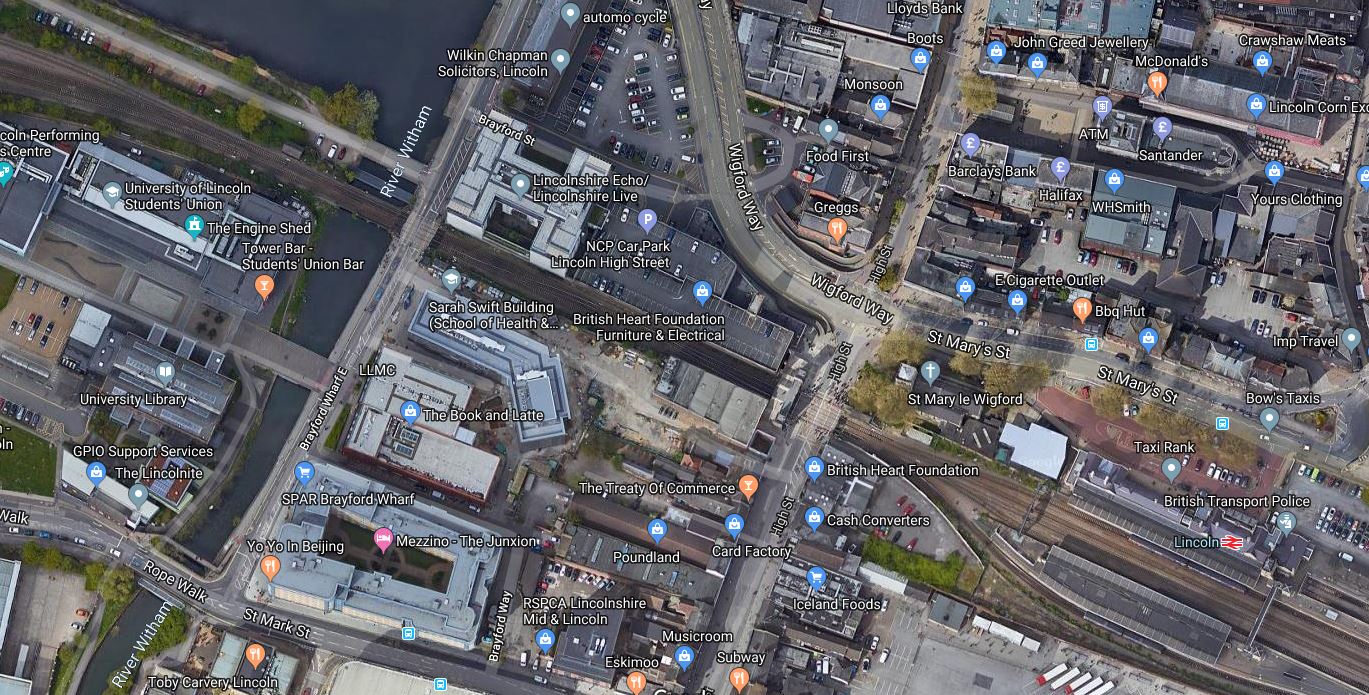
These pictures show the bridge at the High Street level crossing, which is the nearest one to the station.








It is not your average footbridge with lifts across a railway.
These pictures show the bridge at the Brayford Wharf East level Crossing, which is the one further to the West.

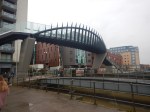
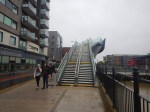

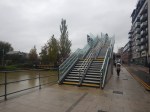
I like this unusually-designed bridge.
It is not step-free, but it does offer shelter whilst you wait for the level crossing to open.
Conclusion
Lincoln has now got two unusual footbridges over the railway.
Orders For A New All-Electric Airplane Now Top 150
The title of this post is the same as that of this article on Bloomberg.
This looks to be a very positive article as Eviation Aircraft now have more orders for the all-electric Alice aircraft.
This is a couple of paragraphs from the article.
Talks are underway with a fourth possible client in Australia, while the CEO has previously said that prospective customers include major U.S. carriers like United Airlines Holdings Inc. and JetBlue Airways Corp., which are interested in planes to feed their hubs.
The U.K. also represents a natural market, given its relatively small size and plethora of regional airports, Bar-Yohay said. The Alice would be well suited to Virgin Atlantic Airways Ltd.’s Connect arm — previously Flybe — which has an average flight time of 55 minutes. The executive was appearing with Virgin founder Richard Branson and CEO Shai Weiss at a technology conference.
I hope the second paragraph is true, as flying in an all-electric aircraft is definitely on my bucket list!
I would feel that if the aircraft does well, then this experience would translate to France.
Thoughts On The Next Generation Of Hitachi High Speed Trains
In Rock Rail Wins Again!, I started with this section, describing the new Hitachi AT-300 bi-mode trains for the Midland Main Line.
This article on the Railway Gazette, is entitled Abellio Orders East Midlands Inter-City Fleet.
The order can be summarised as follows.
- The trains will be Hitachi AT-300 trains
- There will be thirty-three bi-mode trains of five cars.
- The trains will be 125 mph capable.
- Unlike the similar Class 802 trains, the trains will have 24 metre long cars, instead of 26 metres.
- They will have a slightly modified nose profile.
- The new trains will have an extra diesel engine.
- The new trains will cost a total of £400 million.
I also came to these general conclusions.
- The trains may well have a more sophisticated diesel-electric system using regenerative braking to batteries.
- Capacity of the trains is difficult to predict, as East Midlands Railway have said there will be lots of tables.
- The new nose may improve aerodynamics.
I also suspect that the trains will still be able to automatically split and join, as Class 395 and Class 80x trains can do.
Summing Up The Class 80x Trains As A Passenger
I certainly don’t have any seriously negative comments, but I do think a new generation could address some problems.
- I’d like to see level entry between train and platform.
- There have been complaints about the carrying of bicycles.
- Some passengers would like a buffet.
These are not major problems with the basic design of the train itself and surely could be improved reasonably easily.
Further Thoughts On The Car Length
The AT300 trains for East Midlands Railway have a car length of twenty-four metres, as opposed to the twenty-six metres of the Class 80x trains.
If you look at some of the new fleets that are starting to be delivered, they have car lengths as follows.
- Class 710 trains – 20 metres
- Class 720 trains – 24 metres.
- Class 195 and 331 trains – 24 metres
Twenty metres has for decades been the UK standard length, so could it have been replaced with twenty-four metres?
It should be noted that a twelve-car train with twenty metre cars and a ten-car train with twenty-four metre cars are more or less the same length.
With respect to the Midland Main Line, this means that platforms built to take two five-car AT300 trains, will also take a twelve-car formation of Class 360 trains.
Augmenting And Possible Replacement Of The Class 395 Trains
Class 395 trains run Southeastern’s HighSpeed services between St. Pancras and Kent.
- They are six-car trains.
- Each set is 121.3 metres long with twenty metre cars.
- Extra sets are needed for the proposed Hastings service and to possibly serve a second London terminus.
- Independent power, which could be diesel or batteries is needed for the Hastings service.
- The trains were built in 2007-2009, so still have plenty of life left.
Extra or replacement trains built with five cars, that were twenty-six metres long, could cause operational issues and possibly mean some platforms needed to be lengthened.
However, trains with a similar size specification to the AT300 trains for the Midland Main Line, might be ideal.
- Five twenty-four metre cars.
- A reprofiled nose for better aerodynamics.
- Regenerative braking to batteries.
But all or some of the diesel engines would be replaced by batteries. As with the Class 801 train, units may always have one diesel engine for use in case of power failure.
Has anybody got any statistics on how often the Class 801 trains that are in service have used their diesel engine?
If Class 395 Trains Were To Be Replaced, Where Would They Go?
These trains are too good to be scrapped, but I’m sure they will find a use.
- Kings Cross and Kings Lynn via Cambridge – This service uses the Southern section of the East Coast Main Line, which is going to be digitally-signalled to allow 140 mph running. Currently, the Kings Cross and Kings Lynn service is run by 110 mph trains. Class 395 trains could probably run this service and keep out of the way of the Azumas and other 140 mph trains.
- Waterloo And Portsmouth Harbour Via The Direct Line – Because it is a challenging route, more powerful and faster trains may be an ideal train for this line. The Class 395 trains already have third-rail shoes.
- Manchester And Blackpool Via The West Coast Main Line – This could be a possibility, especially if High Speed Two connects into Manchester from the West,
I suspect there will be other routes, which would welcome the speed and/or power of Class 395 trains.
Other Uses For Battery-Electric AT300 Trains
In Shapps Wants ‘Earlier Extinction Of Diesel Trains’, I gave this list of main-line services, which are run partly on electricity and partly on diesel.
- London and Aberdeen – 126 miles
- London and Bradford – < 27 miles
- London and Chester – 21 miles
- London and Cheltenham – 42 miles
- London and Exeter – 120 miles
- London and Fishgruard – 119 miles
- London and Gobowen – 25 miles
- London and Harrogate – <18 miles
- London and Hereford – 106 miles
- London and Holyhead – 108 miles
- London and Hull – 45 miles
- London and Inverness – 136 miles
- London and Lincoln – 17 miles
- London and Llandudno – 68 miles
- London and Middlesbrough – 20 miles
- London and Ocford – 10 miles
- London and Paignton – 148 miles
- London and Penzance – 252 miles
- London and Plymouth – 172 miles
- London and Shrewsbury – 42 miles
- London and Sunderland 41 miles
- London and Swansea – 46 miles
- London and Weston-super-Mare – 19 miles
- London and Worcester – 66 miles
- London and Wrexham – 23 miles
Note.
- The distance given is between the end of the electrification and the final destination.
- I am assuming continuous electrification from London to Bristol Temple Meads, Cardiff Central, Dunblane and Newbury
- Plans already exist from West Coast Rail to use bi-mode trains on the Holyhead route via Chester.
How far will an AT300 train go on battery power?
- I don’t think it is unreasonable to be able to have 150 kWh of batteries per car, especially if the train only had one diesel engine, rather than the current three in a five-car train.
- I feel with better aerodynamics and other improvements based on experience with the current trains, that an energy consumption of 2.5 kWh per vehicle mile is possible, as compared to the 3.5 kWh per vehicle mile of the current trains.
Doing the calculation gives a range of sixty miles for an AT300 train with batteries.
As train efficiency improves and batteries are able to store more energy for a given volumn, this range can only get better.
Routes can be divided as follows.
- Diesel Power Needed – Aberdeen, Exeter, Fishguard, Hereford, Holyhead, Inverness, Llandudno, Paignton, Penzance, Plymouth and Worcester.
- Battery Charge At Terminus Needed – Cheltenham, Hull, Shrewsbury, Sunderland and Swansea.
- Battery Power Only – Bradford, Chester, Gobowen, Harrogate, Lincoln, Middlesbrough, Oxford, Weston-super-Mare and Wrexham.
There are some interesting points dug out by my figures.
West Coast Rail Could Reach Chester, Gobowen, Shrewsbury And Wrexham On Battery Power
With a range of sixty miles on batteries, the following is possible.
- Chester, Gobowen, Shrewsbury And Wrexham Central stations could be reached on battery power from the nearest electrification.
- Charging would only be needed at Shrewsbury to ensure a return to Crewe.
Gobowen is probably at the limit of battery range, so was it chosen as a destination for this reason.
I feel that trains with a sixty mile battery range would make operations easier for West Coast Rail.
London To Lincoln
LNER have just started an augmented service between Kings Cross and Lincoln from today..
- There are five trains per day in both directions.
- The service runs seven days a week.
- The service is being run using bi-mode Class 800 trains or Azumas to the marketing men.
- The trains make intermediate stops at Newark North Gate, Grantham, Peterborough and Stevenage..
In some ways it is more of a long-distance high speed commuter, than an inter-city train.
It will get better in future.
- Digital signalling will allow 140 mph running South of Newark and this will reduce journey times.
- If demand grows LNER might be sable to extend another Newark train to Lincoln.
As Newark to Lincoln is only seventeen miles, I’m certain that this route could be handled by a battery-equipped train, if Hitachi develop one.
What would it do for Lincoln’s tourism from London, if the train service was advertised as a high speed battery train?
London To Middlesbrough And Sunderland
There has been plans to electrify between Northallerton and Midfdlesbrough for some years, but they never seem to get started.
If electrification were to be erected on the fourteen miles between Northallerton and Eaglescliffe, there would only be a six mile gap without electrification between the end of the electrification and Middlesbrough.
- Battery-electric Azumas would be able to serve Middlesbrough from London.
- They wouldn’t need a charging facility at Middlesbrough.
- It might remove the need to electrify Middlesbrough station, if the proposed Tees Valley Metro could be run on batteries.
In December 2019, TransPennine Express will be extending their Manchester Airport and Middlesbrough service to Redcar Central station, which is just another five miles from Middlesbrough.
Currently, this service is run by a Class 68 locomotive and a rake of Mark 5 coaches, but surely an AT300 train with batteries could handle this end of the route.
There are four sections of lines without electrification between Redcar and Manchester Airport.
- Redcar and Northallerton – 26 miles – Has been talked about for years.
- Colton Junction and Leeds – 18 miles – Has been talked about for years.
- Holbeck Junction and Huddersfield – 16 miles – Currently planned to be electrified.
- Huddersfield and Stalybridge – 18 miles
It looks to me, that an AT300 with batteries could cross the Pennines, if the Holbeck Junction and Huddersfield section was electrified.
Electrification of this section would also benefit TransPennine services between Manchester and Edinburgh, Newcastle and Scarborough.
- Some or all could be run by an AT300 train with batteries.
- A substantial about of carbon emissions would be eliminated.
- In an ideal world, Hitachi will have a route to add batteries to Class 802 trains.
- Obviously, the more electrification the better.
It certainly looks as if, progress is being made on the North-Eastern section of Northern Powerhouse Rail.
London To Bradford And Harrogate
These routes are both short extensions from Leeds, that would be easily handled by AT300 trains with a battery capability.
Conclusion
I strongly believe that the next generation of the AT300 train will greatly rxtend the UK’s electrified network
A lot depends on how far it will go on battery power.
I have stated that the train will go for sixty miles on battery power and that it will have a single diesel engine, as does the all-electric Class 801 train.
But even a range of forty miles and charging stations at some terminals like Hull and Redcar could still have a major impact.
Hydrogen Safety: Busting The Myth That Hydrogen Is More Dangerous Than Gas
The title of this post is the same as that of this article on Hydrogen Fuel News.
It is a must read. Especially for hydrogen sceptics!
The Purfleet Ro-Ro Terminal
This article on the BBC is entitled Essex Lorry Deaths: 39 Found Dead Were Chinese Nationals.
The tragedy has got me wondering, where did the lorry enter the UK.
So I drew this Google Map of Purfleet.
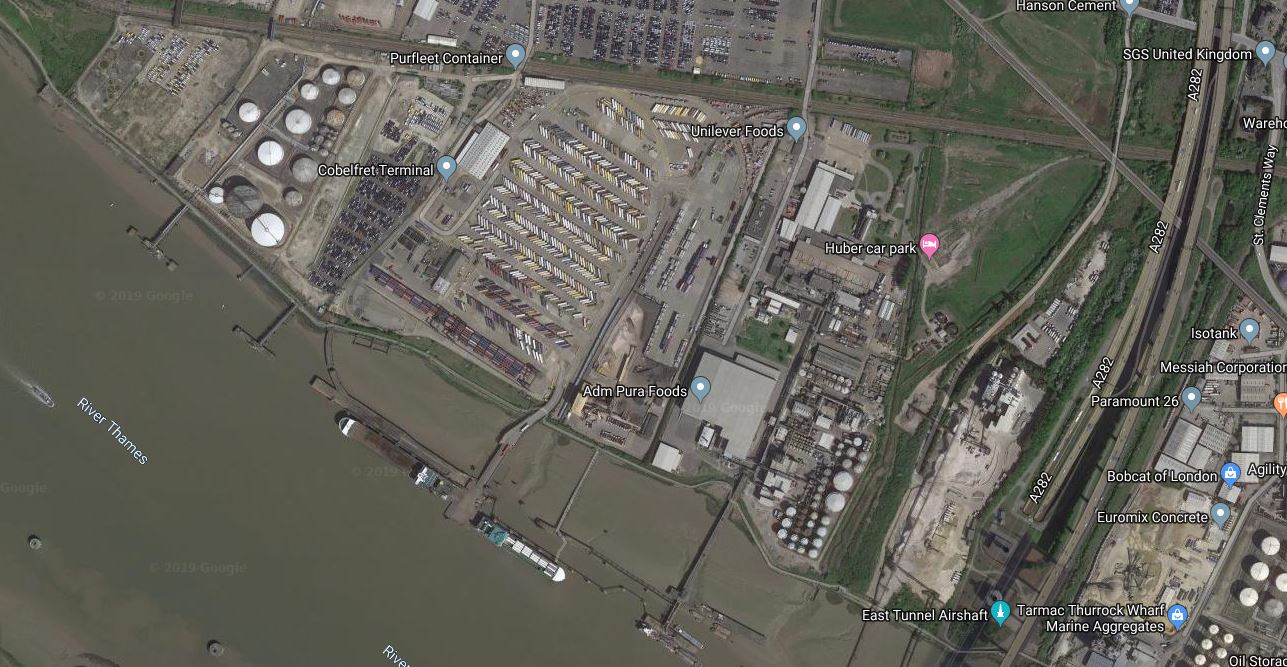
Note.
- The c2c rail line between Fenchurch Street and Southend via Grays, that runs West-East across the top of the map.
- The Channel Tunnel Rail Link runs diagonally across the corner of the map.
- The approach roads to the Dartford Crossing running North-South at the East of the map.
The Purfleet Ro-Ro Terminal lies to the South-west of these railways and road, with piers for the ships strewtching out into the River Thames.
If you enlarge the map by clickjing on it, you’ll see rows of trailers parked ready to cross the Channel or having just arrived.
You canm also see it from Eurostar and other high speed trains or when going South on the Dartford Bridge.
Immigration
Illegal or legal, there is always a lot of strong views about immgration.
- In Did The Tailor Of Bexley Come From Koningsberg?, I discuss how my paternal great-great-great-grandfather came to the UK from Konigsberg in Germany, which is now Kaliningrad in Russia!!
- On my mother’s side my family were French Huguenot and probably came over some decades earlier.
So I tend to have a variety of views about immigration depending on the point being discussed.
- For instance, is it right to deny those who were persecuted like my ancestors for religious reasons, the right to come to the UK. I’d be a hypocrite.
- On the other hand, those who want t come for criminal reasons should be turned away.
The Chinese, a number of whom perished in the Purfleet trgedy are a difficult group to think about. China is a place, where I would not want to live and if I had the money to get out, I would want to leave, as many have over the years. Twenty years ago, I met a Chinese lady of my age, who’d escaped by swimming into Hong Kong.
Darwin talked of natural selection and in some way immigration is natural selection at work.
The intelligent, ambitious and resourceful ones, are the immigrants who tend to get to their preferred destination. The ones who lack these character traits either stay put or don’t make it.
I often think of my Jewish great-great-grandfather, who at eighteen had just qualified as a tailor after serving his apprenticeship. The law in the City was that if you were a Jewish male of eighteen and not one of the privileged families you had to leave.
So he jumped on a ship and ended up Bexley. No doubt, being a tailor, he was able to find a small space for his tools.
I certainly, think I inherited some of his good genes along with those for coeliac disease.
But was my ancestor any different to the skilled Iraqis, Brazilians or Ethiopians today?
An Oasis In A Gluten-Free Desert
I took this picture, this morning in Mark’s and Spencer’s cafe in Ipswich.
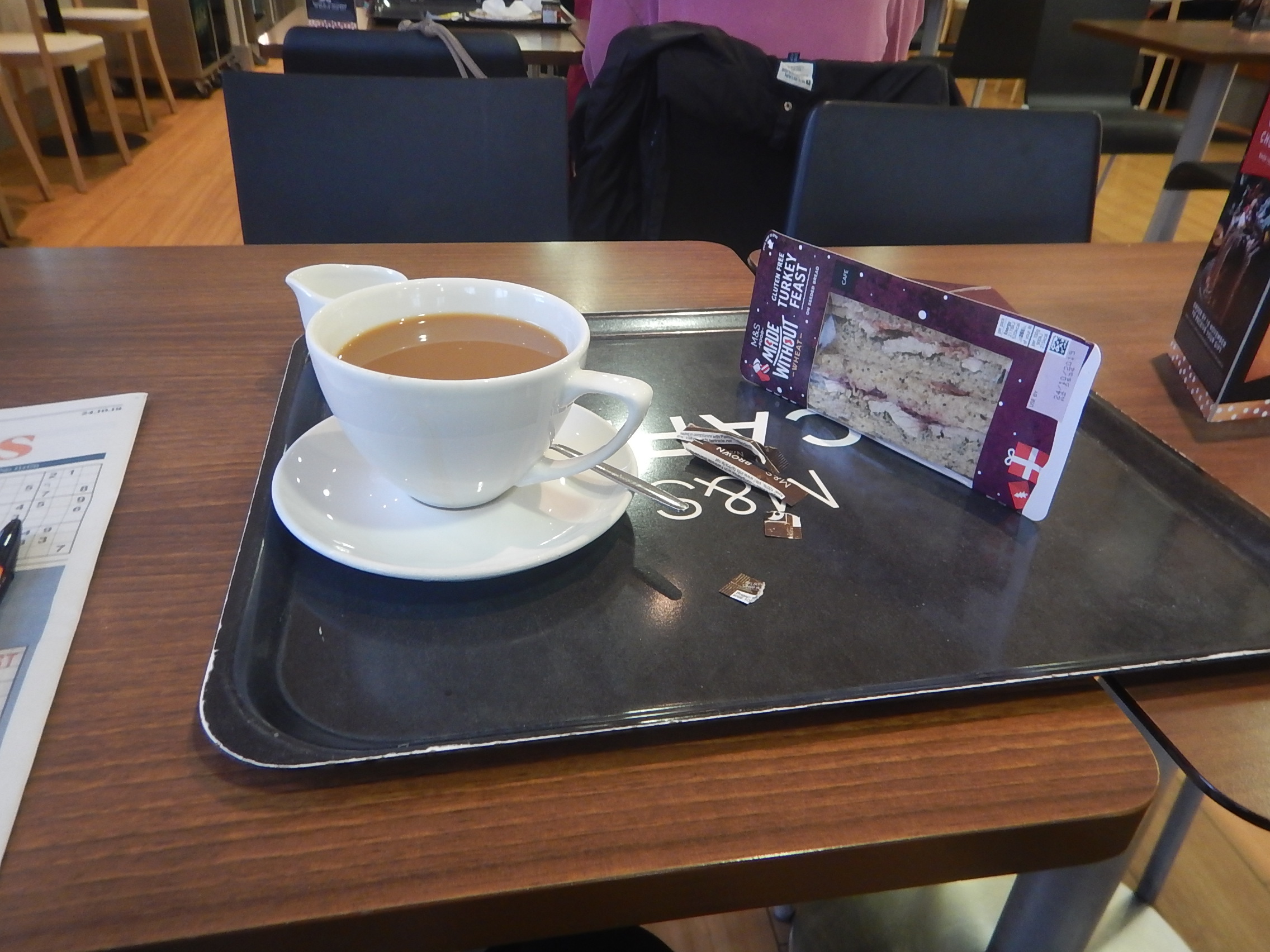
It was the only place, I could find a gluten-free breakfast in the town.
Note that Christmas must be coming, as it’s a turkey feast sandwich.
A Hotel That Loves To Say No!
Last night I stayed in the easyHotel in Ipswich.
It was convenient for after the match. affordable and I wanted to see what the low cost chain was like.,
I took these pictures.










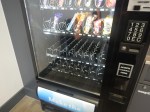
Note all these Noes!
- No Space
- No Two-Ply Toilet Paper
- No window.
- No Space For Two People To Hang Clothes
- No Glass For Water
- No Bottles Of Water In The Vending Machine. This made worse the fact that there is no late-night shop in the centre of Ipswich.
- No automated check-in system.
- No free wi-fi
- No free television. The need to enter a code each time you switched it on, was a total pain.
- No free room cleaning
- No space to put a large suitcase.
- No space to put a cot for a baby.
- No flat space to change a baby’s nappy! A real one, I hope!
- No bottle opener.
- No food to buy except chocolate or even a good nearby cafe.
I know it’s designed down to a price, but I’ve been in sleeper trains, caravans and boats that do it much better.
Note that I’m only one metre seventy and sixty kilos and C was a little bit smaller. We could just about have managed, as we always travelled light.
I don’t think, I’ll use it again, but if I do, I’ll use it this way.
- No case bigger than a brief-case.
- Bring a bottle!
- Bring a plastic glass.
- Make sure, I arrived as late as possible and left as early as possible.
- Expect to leave in the same clothes I arrived in.
- Ask how to get radio on the TV.
But at least, I slept reasonably well!
Rumours about the possible Ryanair hotels include.
- Pay-As-You-Go use of the bathroom.
- Corkage charges for any wine or beer taken into the room.
- Extra charges for those not checking in online.
- Extra charges to put your large cases in a secure separate room.
- Shielded room, so you get no mobile signal and have to pay to use wi-fi.
I do wonder, if there is to be a race to the cheapest, whether Governments will legislate on room size and various charges.
Pacers To Continue Into 2020, Operators Confirm
The title of this post is the same as that of this article on Railway Gazette.
This is the introductory paragraph.
Operators have confirmed that their Pacer diesel multiple-units will remain in service into early 2020, in spite of previous announcements that the unpopular four-wheeled vehicles dating from the 1980s would be withdrawn before enhanced PRM accessibility requirements come into force on January 1 2020.
The article then summarises the situation in the three operators running Pacers.
Northern
Some Pacers used by Northern will continue in service into 2020, because of late delivery of new Class 195 diesel trains and Class 331 electric trains.
They are also still awaiting delivery of eight Class 769 trains, which are very late into service.
Great Western
Great Western has said, that some Pacers will continue in service around Exeter.
No reason is given, but it does appear that because of non-delivery of electrification to Oxford and the late arrival of Crossrail, Great Western they still need Class 165 and Class 166 trains to work services for London commuters.
They are also still awaiting delivery of nineteen Class 769 trains.
Transport For Wales
Transport for Wales are in the same position as Great Western, in that the Class 769 trains, they ordered have still not been delivered.
The Operator Will Get The Blame!
Obviously, the operator will get the blame, but I would argue that all three have at least tried hard to avoid this crisis, as they knew the Pacers would have to be on their way to the scrapyard at the end of 2019.
- If CAF had delivered their trains for Northern on time, things would be much better in the North.
- If Porterbrook and their engineers had delivered the Class 769 trains on time, all three operators would be in a better position.
Hopefully, in a few months, the new trains will have been delivered and the Class 769 trains will have been created and in service.
Smart Lavatories Could Spot Tumours Before They Form
The title of this post is the same as that of this article on page 14 of today’s copy of The Times.
With bowel cancer being a big killer, I can understand how it might work there, but how will it spot brain tumours.
Perhaps all those school bullies, who put unfortunates’ heads down the toilet and pulled the chain, had it roight?
Pollution Charge For Diesels Has Cut City’s Toxic Fumes By A Third
The title of this post is the same as that of this article on Page 4 of today’s copy of The Times.
The only applies to London at the moment.
Surely other cities should follow the capital’s lead.
 The Anonymous Widower