Are Extinction Rebellion Counter Productive?
I am coming to the conclusion that Extinction Rebellion are a bunch of climate-change fascists of the left, that mirror, the racist and immigration fascists on the right.
Both have unrealistic ambitions and just like Hitler and Stalin want to control out lives and give themselves and their acolytes absolute power.
In my mind, there is no difference between the extreme left and extreme right. For instance the extreme-right is generally thought to be anti-Semitic and who is being accused of that now? The once respectable Labour Party, which is now more useless than a chocolate teapot.
I am scientifically green and have been so since my I left Liverpool University round fifty years ago.
I have believed in global warming for about thirty years, ever since I was told by a guy on the NASA team, that measured the Earth’s temperature from satellites, that the world was warming up.
No matter what Bolsonaro Trump, Xi Jinping and other leaders say, global warming is a NASA fact!
But large numbers of people don’t believe in good scientific practice and behaviour.
- Some are anti-vaccination.
- Some believe in homeopathy.
- Many believe in religion, some of which are totally bonkers!
- Some think the 9/11 attacks were faked or carried out by the Israelis.
- Some believe the moon landings were faked!
- Some believe in log fires.
- They drive hundreds of miles to work every year.
- They drive their children everywhere.
- They never talk to anybody of a different race or religion.
- Some have a holiday home in Cornwall, North Norfolk, France or Spain.
There is only one way to convince morons like these to change to a more scientifically-green lifestyle.
By nudging them to it, by showing them it can be better and more affordable.
Extinction Rebellion and their ilk just alienate Middle England and they push green issues under the carpet for another day.
Incidentally, we need politicians at both a National and local level to stop playing stupid games about Brexit and get on with the job of improving the lives of all of the residents of the UK.
Expansion At Southall Station (?)
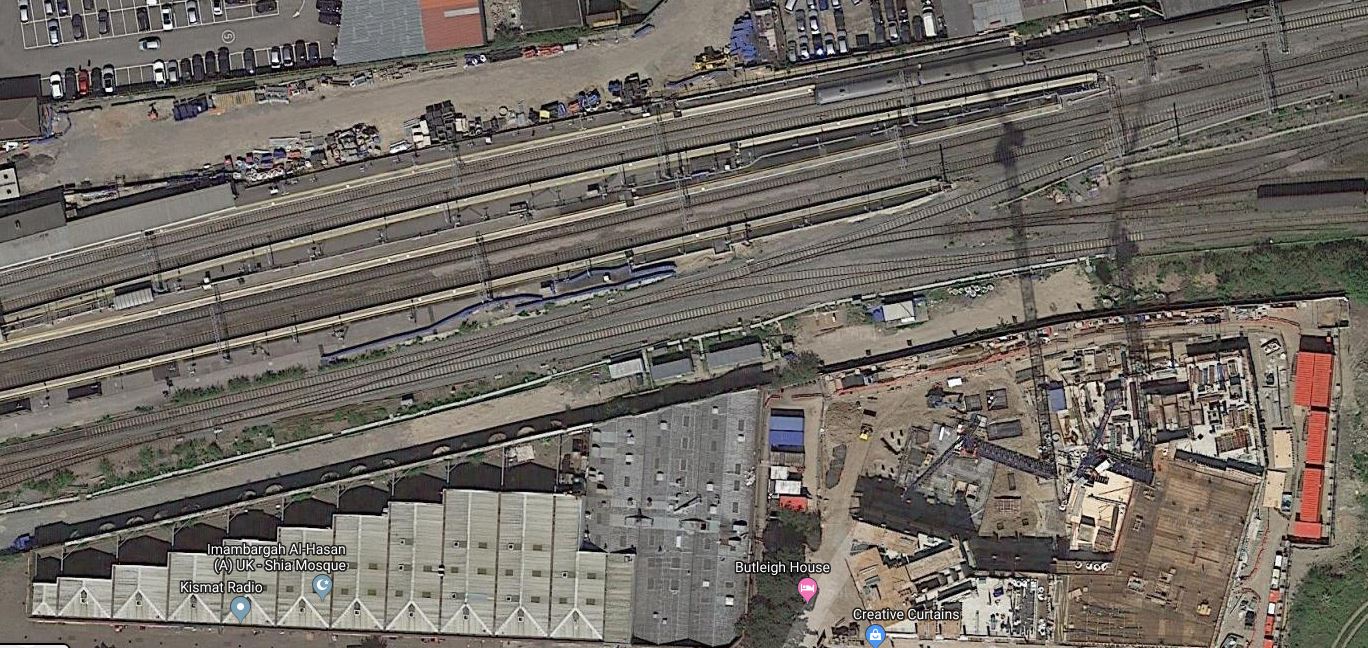
This Google Map shows Southall station.
Note
- Southall station with one side and two island platforms towards the top of the map.
- Two fast and two slow railway lines going East towards Paddington station.
- A large commercial and residential development called The West Works to the South of the map.
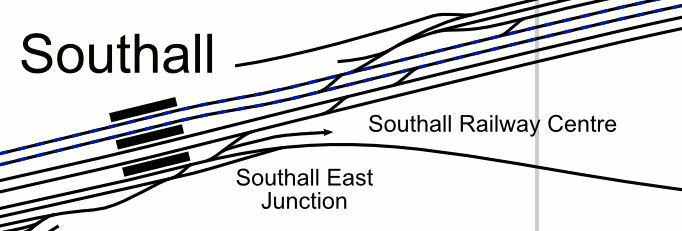
And this map from varto.metro.free.fr shows a map of the railway lines in the area.
Note.
- The two East-West fast lines, that are shown in black are used for Great Western Railway expresses and Heathrow Express services.
- The two East-West railway lines, that are shown in blue, will be used for Crossrail and other slow services into Paddington.
- Platforms and numbers South to North, with 1 and 2 serving the fast lines and 3 and 4 serving the slower services.
- The line going off to the South-East is the Brentford Branch Line.
These are pictures I took of a new step-free bridge that will link the platforms at Southall station.


Note.
- The bridge will definitely have access to platforms 1 and 2 and 3, and I would assume it will also serve platform 4.
- The bridge will have lifts.
- The West Works can be seen in the last picture.
Even now it looks to be a comprehensive scheme.
Access Between Southall Station And The West Works
Thjs picture was taken from the islans platform 2 and 3 in July 2015 and clearly shows a rusty footbridge, that has since been demolished.

I would assume the bridge used to provide access across the railway.
Has the new bridge been designed so that, it can be extended at both ends to give full step-free access across the railway and provide a step-free route between The West Works and Southall station?
Serving A Future Brentford Branch
Hounslow Council is keen to reopen the Brentford Branch Line, to link Btrntfprd to Southall station for Crossrail.
I wrote about it in Plans To Reopen The Brentford To Southall Railway.
This recent Google Map shows the Southernmost of the two island plsatforms at Southall station.
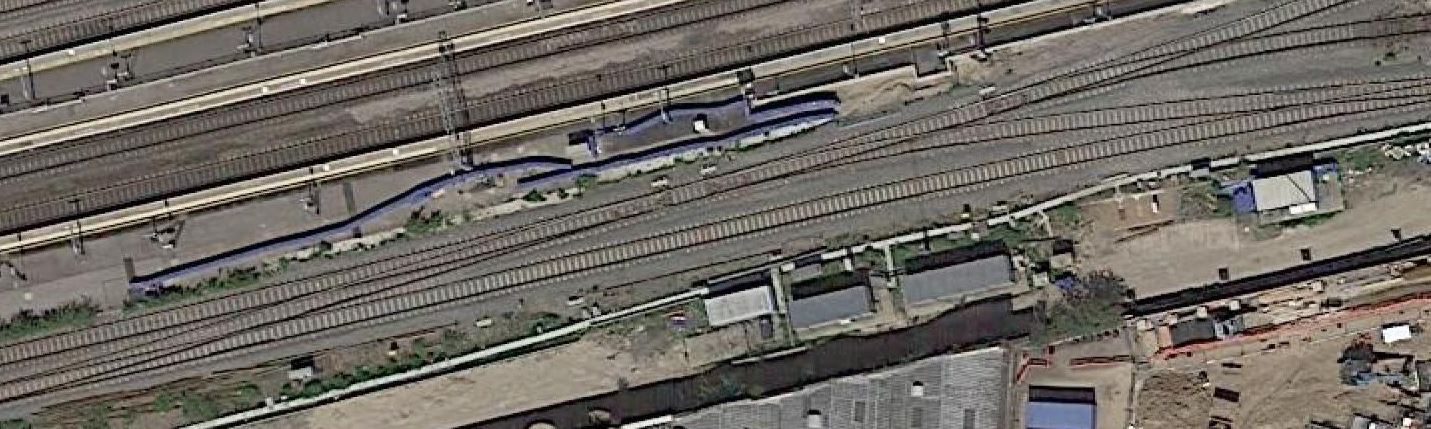
The island platform seems to have a few blue safety hoardings.
- The Down Fast line from Paddington is on the North side.
- It is likely, that the platform for the Brentford Branch Line will be on the South side.
For safety reasons, there will probably be a safety fence down the middle of the platform.
Passengers needing to change between Crossrail and the Brentford Branch Line will have to use the bridge.
I would assume that the step-free bridge will only need minor improvements to accommodate the Brentford Branch Line.
Southall’s Suicide Problem
I suspect that safety fences will be put on platforms 1 and 2, which will be only used occasionally and under strict supervision, to minimise the suicide problem at the station.
Southall Gasworks Site
Whilst at Southall, I’ll take a look at the massive Southall Gas Works site.
It is shown on this Google Wap to the West of Southall station.
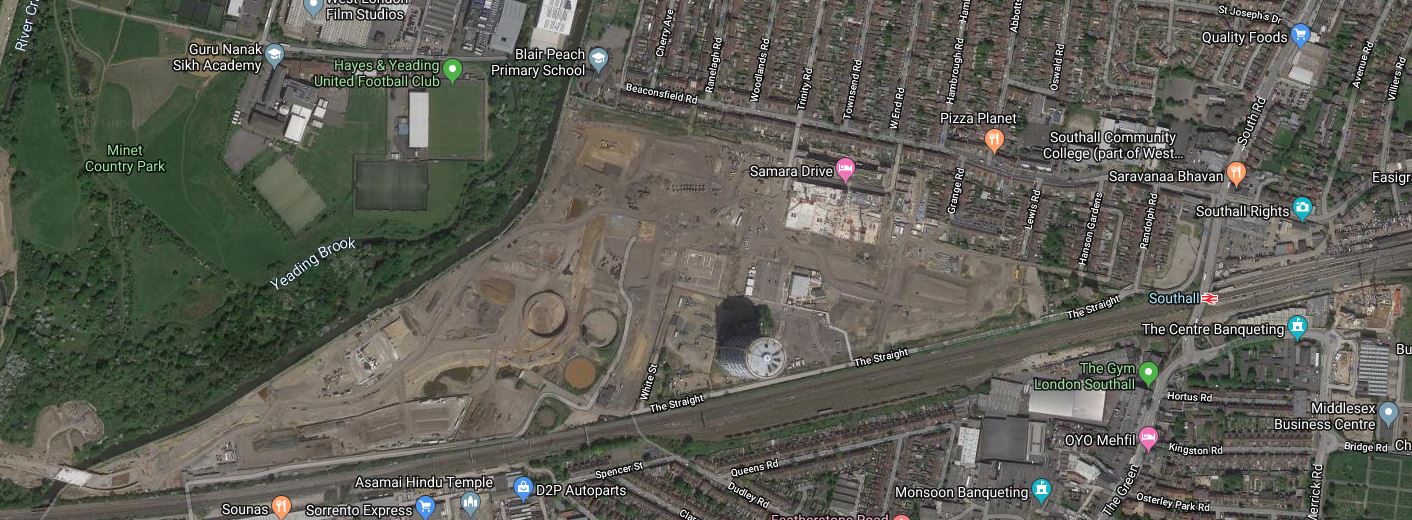
It is likely to be over three thousand houses and flats.
- So that will surely mean a similar number of cars.
- Can the roads in the area cope?
- What about the air quality?
Are there any plans for an innovative rail connection to the station? And cycleways through the site?
Conclusion
It does seem that the bridge will allow limited expansion of the station.
I feel very strongly, that the type of housing developments being built around Southall station, must be built with step-free access to a rail station or tram stop.
HS2 Way Out In Front In Tunnel Design For High-Speed Rail
The title of this post is the same as that of this article on Rail Engineer.
The article describes how Arup and Birmingham University are using physical and computer modelling to obtain the ultimate profiles of both tunnel portal and train nose to both increase train performance and reduce train noise as the trains enter tunnels.
They are even using a huge shed at the former British Rail Research Centre in Derby!
The biggest problem, is that there are aerodynamic effects, as the trains enter the tunnels at very high speeds, which result in what are inevitably called sonic booms, that disturb the local residents.
Because the new trains and tunnel portals are being developed together, there must be a greater chance, they will meet the objectives.
Collateral Benefits
Get the design right and there will be other benefits.
Lower Power In The Cruise
In How Much Power Is Needed To Run A Train At 125 mph?, I said this.
I have found this on this page on the RailUKForums web site.
A 130m Electric IEP Unit on a journey from Kings Cross to Newcastle under the conditions defined in Annex B shall consume no more than 4600kWh.
This is a Class 801 train.
- It has five cars.
- Kings Cross to Newcastle is 268.6 miles.
- Most of this journey will be at 125 mph.
- The trains have regenerative braking.
- I don’t know how many stops are included
This gives a usage figure of 3.42 kWh per vehicle mile.
This figure is not exceptional and I suspect that good design of the train’s nose will reduce it, especially as the design speed of High Speed Two will be 360 kph or 224 mph.
Reduced Noise
Stand on a Crossrail platform at say Southall or West Drayton stations and listen to the Class 801 trains passing.
They are only doing about 100 mph and they are certainly not quiet! Noise comes from a variety of sources including aerodynamics, overhead wires and running gear.
Could the nose and profile of high speed trains also be designed to minimise noise, when cruising at high speeds?
Reduced Pantograph Noise
Travelling at up to 360 kph, pantograph noise could be a serious problem.
The only way to cut it down, would be to lower the pantograph in sensitive areas and run the train on battery power.
But if the trains energy consumption could be cut to a much lower level, it might be possible for the cruise to be maintained on battery power alone.
Consider a journey between Euston and Birmingham.
- The train would accelerate away from Euston and go in a tunnel to Old Oak Common.
- Batteries could be charged whilst waiting at Euston and in the run to Old Oak Common.
- Accelerating away from Old Oak Common would bring the train to 360 kph as fast as possible.
- It would now cruise virtually all the way to Birmingham Interchange at 360 kph.
- At the appropriate moment the pantograph would be lowered and the train would use the kinetic energy to coast into Birmingham Interchange.
- There would probably be enough energy in the batteries to take the train into Birmingham Curzon Street station after the stop at Birmingham Interchange.
One technology that will massively improve is the raising and lowering of the pantograph at speed.
So could we see much of the long non-stop intermediate section being run on batteries with the pantograph down. If power is needed, it would raise to power the train directly. If the raising and lowering was efficient, then it might be able to use the pantograph only in tunnels.
Could It Be Possible To Dispence With Wires Outside Of Tunnels?
Probably not on the first phase of High Speed Two, but consider.
- High Speed Two is designed to have a lot of tunnels.
- Arup and Birmingham may come up with even better aerodynamic designs.
- Pantograph raising and lowering will get faster and extremely reliable.
- Battery technology will hold more electricity for a given weight and volume.
- Dispensing with visible wires could reduce the problems of getting planning permissions.
- Noise and visible intrision will be reduced.
I believe there will come a time, when high speed railways could be built without visible overhead electrification.
The only places, where electrification would be used would be in tunnels and stations.
Are There Any Other Applications Of This Research?
These are a few thoughts.
Hitachi Trains For The Midland Main Line
I’m suspicious, that the research or similar research elsewhere, might have already produced a very handy result!
In an article in the October 2019 Edition of Modern Railways, which is entitled EMR Kicks Off New Era, more details of the new Hitachi bi-mode trains for East Midlands Railway (EMR) are given.
This is said.
The first train is required to be available for testing in December 2021 with service entry between April and December 2022.
The EMR bi-modes will be able to run at 125 mph in diesel mode, matching Meridian performance in a step-up from the capabilities of the existing Class 80x units in service with other franchises. They will have 24 metre vehicles (rather than 26 metres), a slightly different nose to the ‘800s’ and ‘802s’, and will have four diesel engines rather than three.
Could the new nose have been designed partly in Birmingham?
Consider.
- Hitachi’s bi-modes for EMR InterCity could be running at up to 225 kph in a few years.
- The Midland Main Line between Derby and Chesterfield goes through a number of tunnels in a World Heritage Site.
- Hitachi have collaborated with UK research teams before, including on the Hyabusa.
- Hitachi and Bombardier are submitting a joint bid for High Speed Two trains, which is based in Birmingham.
It should be noted that when the Tōkaidō Shinkansen opened in 1964 between Tokyo and Osaka average speed was 210 kph.
So are Hitachi aiming to provide EMR InterCity with almost Shinkansen speeds on a typical UK main line?
Arup and Birmingham University, certainly have the capability to design the perfect nose for such a project.
Aventras
Did the research team also help Bombardier with the aerodynamics of the Aventra?
I’m pretty certain, that somebody did, as these trains seem to have a very low noise signature, as they go past.
Talgo
Tsalgo are building a research centre at Chesterfield.
Will they be tapping in to all the rail research in the Midlands?
Conclusion
It looks to me, that there is some world-class research going on in Birmingham and we’ll all benefit!
The Body: A Guide For Occupants
The title of this post, is the title of Bill Bryson‘s new book.
It sounded to me, that it could be a human equivalent of the invaluable Veterinary Notes For Horse Owners.
Transport for London’s New Train Information Displays
I came across this train information display for the first time in Paddington station.
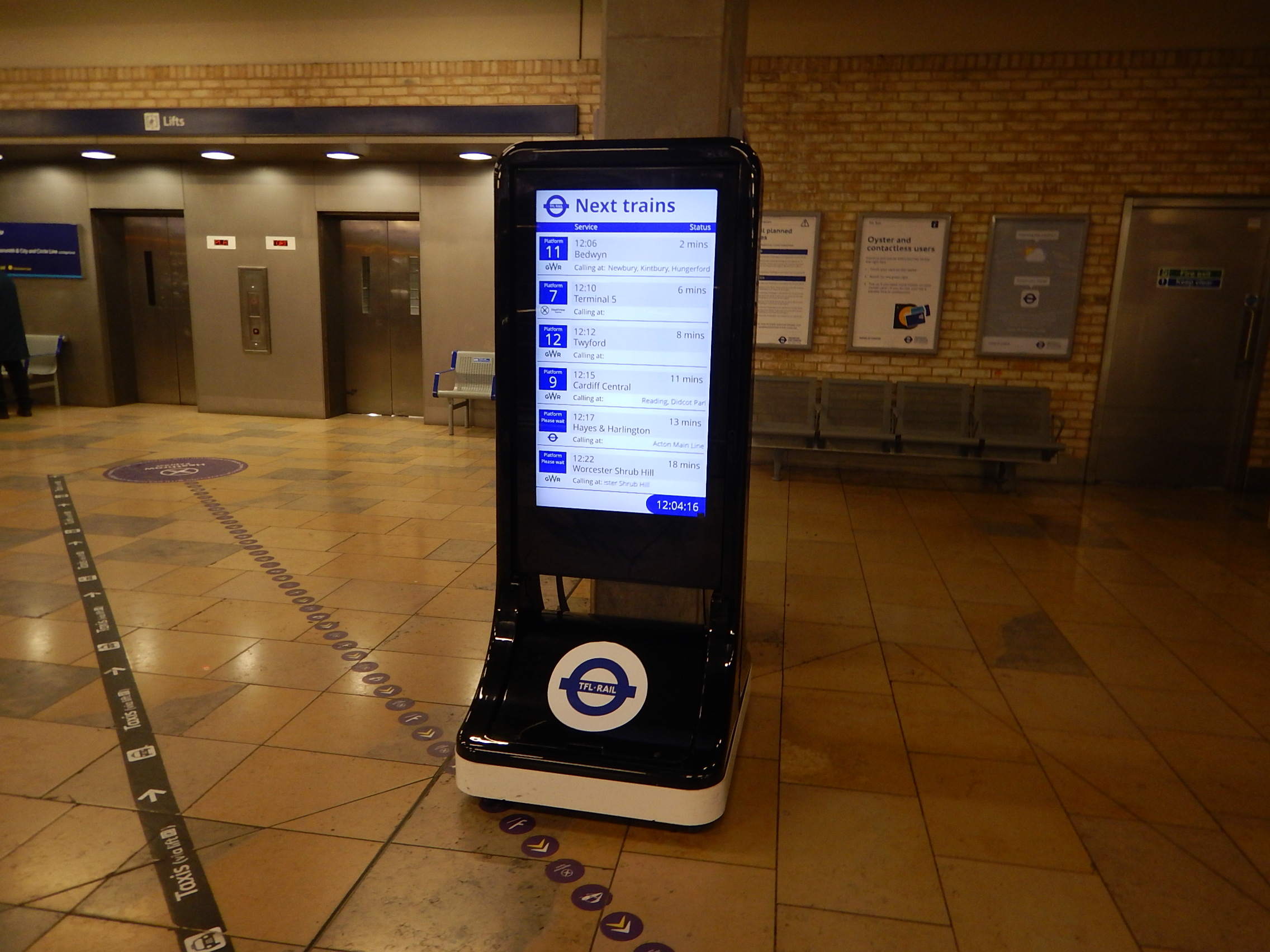
It appears to be wireless and battery-powered, which means they can be placed anywhere that an Internet signal can be obtained.
Surely, this must be the quickest way to improve the dreadful information provision at some places on the UK rail and bus network.
The display shown was placed in an area, where there is little information and I suspect that no-one thought torun any cables for a traditional display.
Gresham House Plots £58million Raise To Pursue Energy Storage Pipelines
The title of this post is the same as this article on Solar Power Portal.
The article shows how increasingly the City of London is moving to increase the energy storage capacity we need as more wind and solar power comes on-line.
I wouldn’t invest my money in something like this directly, but I wouldn’t object if my pension provider placed money in energy storage.
Will Hackney Central Station Get A Second Entrance?
Hackney Central station is a station that has been designed by that well-known architectural practice; Topsy and Partners.
When I moved back to London, the station was very simple with a crude concrete footbridge.
- It has since acquired a step-free footbridge with lifts.
- A high level walkway has also been built to connect Platform 1 at Hackney Downs station.
- Hackney Downs station is also on the latest list of stations to be made step-free as I reported in Hackney Downs Station To Go Step-Free.
And now there is talk of a second entrance at Hackney Central station in Graham Road.
This article on Ian Visits is entitled Hackney Central Overground Station Could Get A Second Entrance
This is the first paragraph.
A second entrance for Hackney Central station to deal with overcrowding is being explored as part of a joint project between the council and Transport for London.
And this Google Map shows the plot of land, where the entrance would be built.
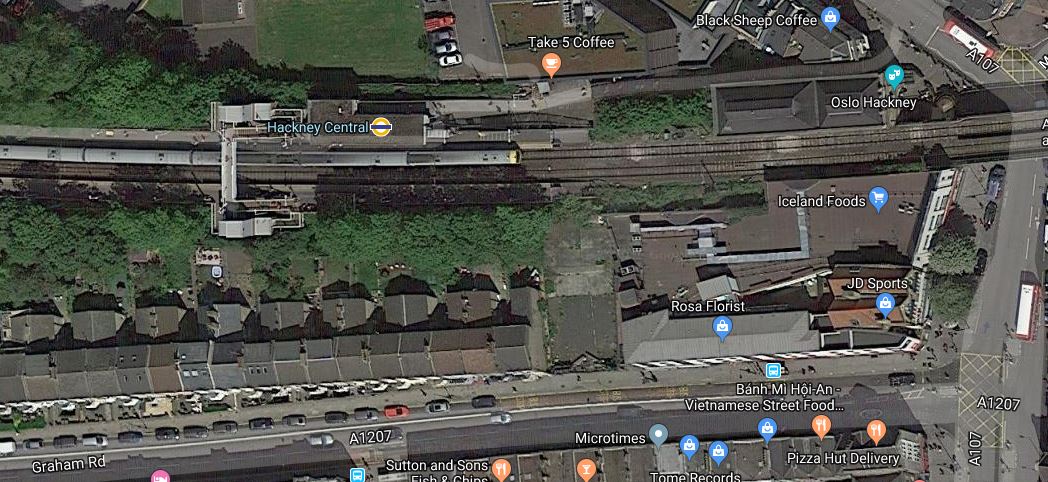
Graham Road runs across the bottom of the map and there is a gap in the houses on the North side, that leads up to the railway.
I took these pictures as I walked from West to East along Graham Road.


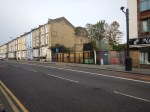
Notice the sign on the site, which says Development Site Sold.
The Ian Visits article says this about development of the second entrance.
Hackney council and TfL have agreed in principle to contribute to the scheme and work together with Network Rail on the project. Initial feasibility work has started and ground investigations are expected to begin in October. Depending on feasibility work and funding arrangements, construction of the second entrance may start next year.
Doubtless the new entrance will be funded by the usual over site development, but it is on the end of a row of residential houses, so a block of flats would not be overly out of place here.
Ian also states that the land is owned by Hackney Council.
Could it be that we’re looking at a plan being put together, by a property developer bearing in mind, the wishes of Hackney Council?
- The Council have sold the land with conditions on development.
- There would be an appropriately-sized block of apartments.
- Some would be affordable.
- The block would contain an entrance to the station.
It would certainly be a well-located housing development.
- It would have a convenience entrance to the station, with trains every few minutes to the North, South, East and West.
- There are three frequent bus services on Graham Road.
- Walk to the North and you are in Hackney’s main shopping area.
- Walk to the South and you come to the Hackney Cultural Quarter that comprises the Town Hall, Library, the Hackney Empire theatre and the cinema.
I doubt there would be much if any car parking in the block and it will be difficult locally.
What Would The Station Entrance Do For Rail Passengers?
Obviously, it would help those who lived by the entrance, but it would also help other groups.
Passengers From The Cultural Quarter Going West
Currently, if you’re going from say the Town Hall to perhaps Highbury & Islington for the Victoria Line of Hampstead Heath for a constitutional, you have to walk under the railway, enter the station on the Stratford-bound platform and then use the footbridge to cross the tracks.
Wjen the second entrance opens, you would use it to go direct to the Westbound platform.
Passengers Arriving From Stratford Wanting To Catch A Bus To The West
I regularly come home from Stratford, after shopping in the big Marks & Spencer in Eastfield.
It is a tricky journey, as whatever way you take, there seems to be steps at some point.
When the second entrance opens, I will use it to catch one of the frequent 38 buses stopping outside the station to get home.
I don’t think, I will be the only person using this route..
Passengers Of Reduced Mobility And Those With Baggage, Bikes And Buggies
A Second Entrance on Graham Road would certainly make it easier for any of these groups of passengers.
Increased Services On The North London Line
Services on the North London Line are currently si-eight trains per hour (tph) and this frequency wil surely increase to reduce overcrowding.
There will be more passengers wanting to use train services at Hackney Central, making an additional entrance more necessary.
Conclusion
A Second Entrance to Hackney Central station on Graham Road would be a valuable additio to the increasingly busy Hackney Central/Hackney Downs station complex.
The Batteries For Bombardier Electrostars
This article on the Railway Gazette is entitle Bombardier And Leclanché Sign Battery Traction MoU.
This is the second paragraph.
According to Bombardier, Leclanché will deliver ‘imminently’ its first performance demonstrator battery systems, after which it will be in line to supply traction equipment worth in excess of €100m for use in more than 10 rolling stock projects.
In Stadler’s New Tri-Mode Class 93 Locomotive, I investigated who was providing two large suitcase-sized batteries for Stadler’s new Class 93 locomotive.
In the related post, I said this about the batteries in the Class 93 locomotive, which I describe as a hybrid locomotive.
The Class 93 Locomotive Is Described As A Hybrid Locomotive
Much of the article is an interview with Karl Watts, who is Chief Executive Officer of Rail Operations (UK) Ltd, who have ordered ten Class 93 locomotives. He says this.
However, the Swiss manufacturer offered a solution involving involving an uprated diesel alternator set plus Lithium Titanate Oxide (LTO) batteries.
Other information on the batteries includes.
- The batteries are used in regenerative braking.
- Batteries can be charged by the alternator or the pantoraph.
- Each locomotive has two batteries slightly bigger than a large suitcase.
Nothing is said about the capacity of the batteries, but each could be say 200 litres in size.
I have looked up manufacturers of lithium-titanate batteries and there is a Swiss manufacturer of the batteries called Leclanche, which has this data sheet, that describes a LT30 Power cell 30Ah.
- This small cell is 285 mm x 178.5 mm x 12 mm.
- It has a storage capacity of 65 Wh
- It has an expedited lifetime of greater than 15,000 cycles.
- It has an energy density of 60 Wh/Kg or 135 Wh/litre
These cells can be built up into much larger batteries.
- A large suitcase is 150 litres and this volume would hold 20 kWh and weigh 333 Kg.
- A battery of 300 litres would hold 40 kWh. Is this a large Swiss suitcase?
- A box 2.5 metres x 1 metre x 0.3 metres underneath a train would hold 100 kWh and weigh 1.7 tonnes
These batteries with their fast charge and discharge are almost like supercapacitors.
, It would appear that, if the large suitcase batteries are used the Class 93 locomotive will have an energy storage capacity of 80 kWh.
I wonder how many of these batteries can be placed under a Bombardier Eectrostar.
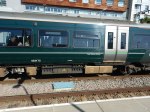
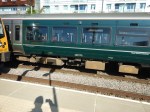
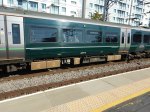
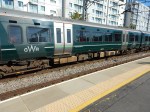
It looks rather cramped under there, but I’m sure Bombardier have the detailed drawings and some ideas for a bit of a shuffle about. For comparison, this is a selection of pictures of the underneath of the driver car of the new Class 710 trains, which are Aventras.

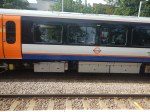
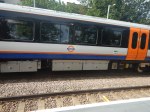
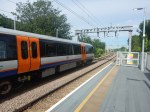
It looks like Bombardier have done a big tidy-up in changing from Electrostars to Aventras.
In Battery Electrostars And The Uckfield Branch, I came to the conclusion that Class 387 trains were the most likely trains to be converted for battery operation.
I also developed Excel spreadsheets that model the operation of battery trains on the Uckfield Branch and the Marshlink Line.
Feel free to download and examine.
Size Of Batteries Needed
My calculations in the two spreadsheets are based on the train needing 3 kWh per vehicle-mile to cruise between stations.
To handle the Uckfield Branch, it appears that 290.3 kWh is needed to go South and 310.3 kWh to go North.
I said this earlier.
A box 2.5 metres x 1 metre x 0.3 metres underneath a train would hold 100 kWh and weigh 1.7 tonnes.
So could we put some of these batteries under the train?
The Effect Of More Efficient Trains
My calculations are based on the train needing 3 kWh per vehicle-mile, but what if the trains are more efficient and use less power?
- 3 – 290.3 – 310.3
- 2.5 – 242.6 – 262.6
- 2 – 194.9 – 214.9
- 1.5 – 147.2 – 167.2
- 1 – 99.4 – 119.4
Note.
- The first figure is Southbound and the second figure is Northbound.
- More power is needed Northbound, as the train has to be accelerated out of Uckfield station on battery power.
The figures clearly show that the more efficient the train, the less battery capacity is needed.
I shall also provide figures for Ashford and Ore.
- 3 – 288
- 2.5 – 239.2
- 2 – 190.4
- 1.5 – 141.5
- 1 – 92.7
Note that Westbound and Eastbound energy needs are the same, as both ends are electrified.
I obviously don’t know Bombardier’s plans, but if the train’s energy consumption could be reduced to around 2 kWh per vehicle-mile, a 250 kWh battery on the train would provide enough energy storage for both routes.
Could this be provided by two of Leclanche’s batteries designed to fit a space under the train?
These would be designed to provide perhaps 250 kWh.
What Would Be The Ultimate Range Of A Class 387 Train On Battery Power?
Suppose you have a four-car Class 387 train with 25 kWh of battery power that leaves an electrified station at 60 mph with a full battery.
How far would it go before it came to a lifeless stop?
The battery energy would be 250 kWh.
There would be 20 kWh of kinetic energy in the train.
Ranges with various average energy consumption in kWh per vehicle-mile are as follows.
- 3 – 22.5 miles
- 2.5 – 27 miles
- 2 – 34 miles
- 1.5 – 45 miles
- 1 – 67.5 miles
Obviously, terrain, other traffic and the quality of the driving will effect the energy consumption.
But I do believe that a well-designed battery-electric train could easily handle a fifty mile electrification gap.
What Would Be The Rescue Range On One Battery?
One of the main reasons for putting batteries on an electrical multiple unit is to move the train to a safe place for passenger evacuation if the electrification should fail.
This week, there have been two electrification failures in London along, one of which was caused by a failing tree in the bad weather.
I’ll assume the following.
- The train is a Class 387 train with one 125 kWh battery.
- The battery is ninety percent charged.
- The train will be moved at 40 mph, which has a kinetic energy around 9 kWh.
- The energy consumption of the train is 3 kWh per vehicle-mile.
The train will use 9 kWh to accelerate the train to line speed, leaving 116 kWh to move the train away from the problem.
With the energy consumption of 3 kWh per vehicle-mile, this would be a very useful 9.5 miles.
Regenerative Braking To Battery On Existing Trains
This has been talked about for the Class 378 trains on the London Overground.
Regenerative braking to batteries on the train, should cut energy use and would the battery help in train recovery from the Thames Tunnel?
What About Aventras?
Comparing the aerodynamics of an Electrostar like a Class 387 train with an Aventra like a Class 710 train, is like comparing a Transit van with a modern streamlined car.
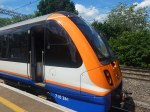
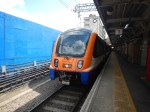
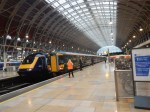
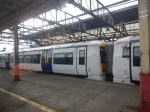
Look at these pictures some of which are full frontal.
It should be noted that in one picture a Class 387 train is shown next to an InterCity 125. Did train designers forget the lessons learned by Terry Miller and his team at Derby.
I wonder how much electricity would be needed to power an Aventra with batteries on the Uckfield branch?
These are various parameters about a Class 387 train.
- Empty Weight – 174.81 tonnes
- Passengers – 283
- Full Weight – 2003 tonnes
- Kinetic Energy at 60 mph – 20.0 kWh
And these are for a Class 710 train.
- Empty Weight – 157.8 tonnes
- Passengers – 700
- Full Weight – 220.8 tonnes
- Kinetic Energy at 60 mph – 22.1 kWh
Note.
- The Aventra is twenty-seven tonnes lighter. But it doesn’t have a toilet and it does have simpler seating with no tables.
- The passenger weight is very significant.
- The full Aventra is heavier, due to the large number of passengers.
- There is very little difference in kinetic energy at a speed of 60 mph.
I have played with the model for some time and the most important factor in determining battery size is the energy consumption in terms of kWh per vehicle-mile. Important factors would include.
- The aerodynamics of the nose of the train.
- The turbulence generated by all the gubbins underneath the train and on the roof.
- The energy requirements for train equipment like air-conditioing, lighting and doors.
- The efficiency of the regenerative braking.
As an example of the improvement included in Aventras look at this picture of the roof of a Class 710 train.
This feature probably can’t be retrofitted, but I suspect many ideas from the Aventra can be applied to Electrostars to reduce their energy consumption.
I wouldn’t be surprised to see Bombardier push the energy consumption of an Electrostar with batteries towards the lower levels that must be possible with Aventras.
Cummins And Hyundai To Collaborate For Fuel Cell Technology
The title of this post is the same as that of this article on Yahoo.
This collaboration between two big beasts could be good for both companies.
But it is just another sign, that those involved in heavy transport like Rolls Royce MTU are planning for a zero-carbon future.
Many pf these companies are finally responding.
Getting To The Bottom Of My INR Results
Since the start of the hot weather my INR results have not been troublesome but just a bit wayward.
To get a hold on it, I have been testing my INR every day from the 1st of July.
Normally, I take a dose of 4 mg of Warfarin every day and this keeps my INR at around 2.5.
But in the hot weather the INR was drifting towards 2.0, so I was using a dose of 5 mg every so often to nudge it upwards.
I was also drinking heavily in the hot weather, but nothing was stronger than 0.5% alcohol Adnams beer, which I know doesn’t affect my INR and to my body, it is gluten-free. Most of the other drinks were still lemonade, tea and water.
I came to the conclusion, that the water was being boiled out of my body by the heat.
At least, the INR only hit 2.0 a couple of times and never went below it.
On the 14th of September I had the decompensation stroke, I wrote about in I Had A Decompensation Stroke On Saturday.
This is my INR values and Warfarin dose since that day.
- 14th September – 2.2 – 5
- 15th September – 2.2 – 5
- 16th September – 2.2 – 5
- 17th September – 2.3 – 5
- 18th September – 2.7 – 4
- 19th September – 2.9 – 4
- 20th September – 2.6 – 4
- 21st September – 2.7 – 4
- 22nd September – 2.7 – 4
- 23rd September – 2.5 – 4
- 24th September – 2.6 – 4
- 25th September – 2.6 – 4
- 26th September – 2.6 – 4
- 27th September – 2.7 – 4
- 28th September – 2.9 – 4
- 29th September – 2.8 – 4
- 30th September – 3.3 – 3
- 1st October – 2.6 – 4
Note.
- I usually measure my INR, when I have a bath at eight in the morning.
- I usually take my Warfarin around three in the afternoon.
I do this so that I don’t test my INR too close to taking the drugs.
Note too how the INR rose on the 28th of September and stayed high or higher for two days.
I don’t think I ate anything that would cause the INR to rise and the weather was getting more humid. So was that the cause, or was it the fact that I had a hair-cut on Friday night?
Why should I blame the haircut? After I came out of hospital my hair looked like Einstein’s and it felt very dry.
So do I normally lose water from my body through my hair? Trying to find a connection on the Internet is a nightmare, as they assume I’m asking about hair loss.
I’m not worried about myself, but suppose you are having regular INR tests in hospital every few weeks.
Would a false reading mean that you ended up on the wrong dose?
Conclusion
I will continue to test my own INR, as I feel it is easier.
 The Anonymous Widower