Celebrating Gay Pride
Yesterday, was London’s Gay Pride Day.
Some of the roundels have been changed in certain stations.
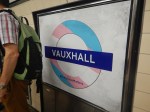


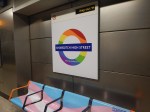


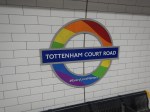
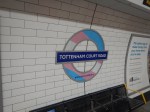
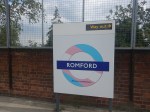
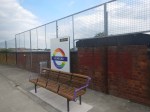
Should we see jaunty alternatives at other times or events during the year?
From Farringdon To Tottenham Court Road Station
After photographing the artwork at the new Barbican entrance to Farringdon station, I went to the current station entrance with the aim of getting to Tottenham Court Road station.
Obviously, when Crossrail opens, this will be a single-station hop on Crossrail, but there is no obvious quick way as present.
So out of curiosity, I asked one of the station staff, what is the recommended route.
She said, that the easiest way is to walk to Chancery Lane station and take the Central Line.
I also asked her why Thameslink, which is so much part of Farringdon station and will be such an important route at the station after Crossrail opens.
She said, but that’s National Rail.
So I walked to Chancery Lane.





It was a very hot day and uphill. But I made it without difficulty.
Crossrail will certainly make my journey easier, but I can’t help feeling that some journeys from Farringdon are better done using Thameslink.
Consider the following journeys.
Farringdon To London Bridge
Currently, I would do this journey using Thameslink, but what will Transport for London want us to do?
- Use Crossrail to Moorgate and get the Northern Line.
- Use Crossrail to Bond Street and get the Jubilee Line.
- Use Crossrail to Whitechapel and get the Jubilee Line.
I shall still use Thameslink.
Farringdon To Victoria
Currently, I would do this journey using Thameslink to Blackfriars and then get the Circle or |District Lines.
I suspect that Transport for London would recommend one of these.
- Use the Circle Line all the way. Easy but long.
- Go to Kings Cross on the Circle or Metropolitan Lines and get the Victoria. Not the easiest with a heavy case.
I shall continue to use Thameslink.
The New Museum Of London
The new Museum of London will be built close to Farringdon station.
I think, it will end up as one of London’s top museums.
But is it easy to get to the British Museum, National Gallery,Tate Modern and all those other museums in South Kensington.
The British Museum will be just a stop on Crossrail, when that opens, but for the others Thameslink will play a part.
For these routes and other reasons, Thameslink must be on the Tube Map.
Farringdon Station – 7th July 2018
These pictures show the Barbican station end of the Crossrail entrance at Farringdon station.


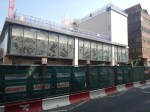

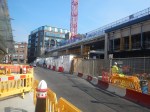
Note the design in the glass.
This article on Property Week is entitled Helical To Build £120m Office Over Farringdon Station.
It looks like the building of this block is starting.
West Hampstead Station – 7th July 2018
The new bridge at the West Hampstead station is now in use and it looks like the new station will be completed by the end of the year.
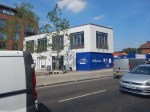
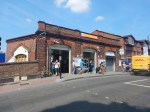
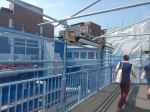
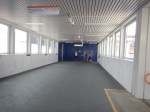
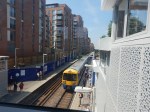
As the last picture shows this could be one of those station developments, where a deck could have been built over the North London Line to increase the number of flats built in the development on the South side of the railway.
This Google Map shows West Hampstead station on the North London Line and West Hampstead tube station on the Jubilee and Metropolitan Lines, although the latter don’t stop.
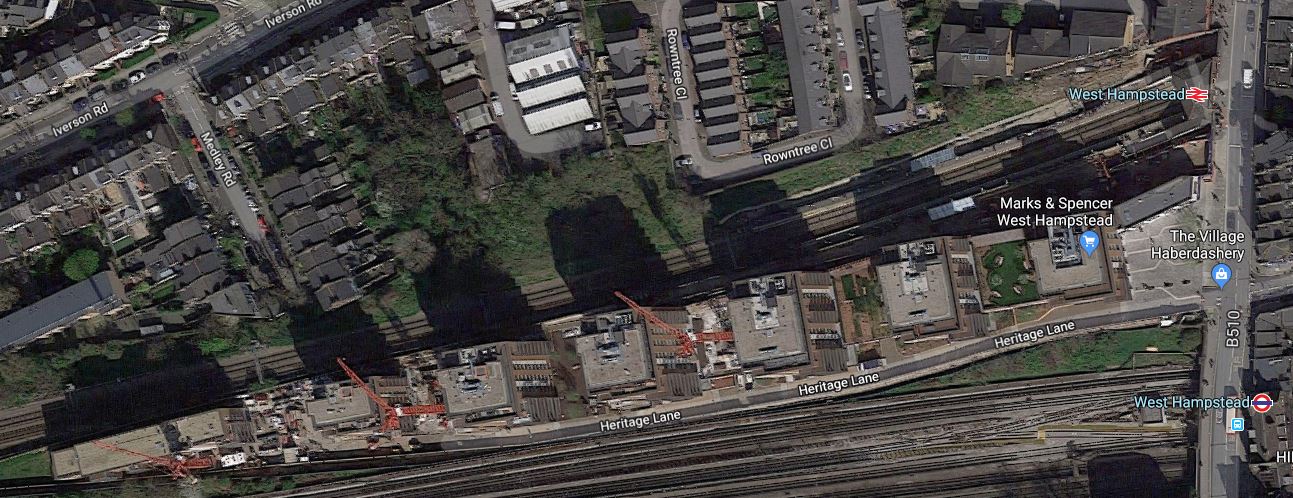
Note the development stretches a long way to the West between the North London Line and Underground Lines.
There have been plans to create a West Hampstead Interchange on West End Lane.
As these envisaged moving the Overground station to the East side of West End Lane and the new station is being built on the West side, It would appear there’s been a rethink.
Perhaps the Underground station is to be moved to the West side of West End Lane and will have an entrance on the small square in front of the M & S Simply Food and alongside the new Overground station.
This Google Map shows an enlargement of the area.
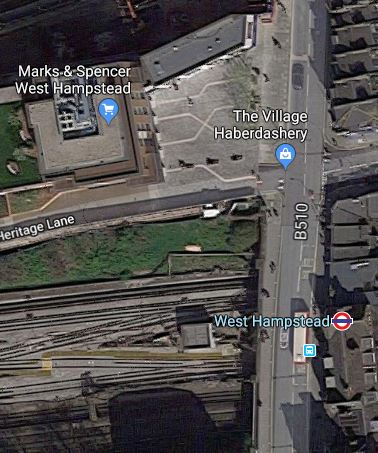
The new station could have platforms on the following lines.
- Jubilee Line
- Metropolitan Line
- Cjhiltern Railway
It would be a very worthwhile interchange. Especially, as passengers could do the following.
- Walk across the square for the Overground for East London.
- Walk perhaps another hundred metres to West Hampstead Thameslink station, which is also proposed as the terminus of the West London Orbital Railway.
There could also be a development on the top of the new station, which would hopefully contribute to the cost.
I have no idea, if anything will happen here, but Transport for London are looking to create new stations with over-site development. The Mayor also seems keen on the West London Orbital Railway, as it is based on under-used infrastructure and requires no new track or tunnels.
Getlink Pushes Budget Train Service Between London And Paris To Rival Eurostar
The title of this post is the same as that of this article on I-News.
Getlink is the infrastructure company, who actually own the tunnel and they have commissioned research into the idea, as this paragraph indicates.
Currently, Eurostar trips take around 2.2o hours and depart from St Pancras. The new link between Stratford and Paris would take just over three hours, but 25-30 per cent lower operating costs would mean lower fares for passengers. The numbers come from consultancy firm Roland Berger, and was commissioned by Getlink.
Elsewhere, the article says that the service will go to Roissy, which would be convenient for Charles de Gaulle Airport.
I do wonder, if someone has their eye on a couple of Eurostar’s retired Class 373 trains.
In 2011, I posted about an idea for a Trans Manche Metro.
Thoughts On A Classic-Compatible Train For High Speed Two
Trains on High Speed Two will start at Euston and some will then lever the high speed line and continue to their destination on the classic lines.
Trains for Liverpool, Preston and Glasgow will leave High Speed Two at Crewe and the continue to their destinations using the electrified West Coast Main Line. These destinations will be reached in 96, 84 and 218 minutes respectively.
A train is needed with these abilities.
- Cruise at 400 kph on High Speed Two.
- Cruise at 225 kph on the West Coast Main Line.
- Share platforms with existing trains like Class 390 Pendelinos.
In Will The Trains On High Speed Two Have Batteries For Regenerative Braking?, I showed that the kinetic energy in each car of a train for High Speed Two will be about 100 kWh, when running at a full speed of 400 kph.
Imagine a train going from London to Glasgow using High Speed Two and the West Coast Main Line.
At Crewe station, the only change that will be needed to be made is move from a line with a 400 kph speed limit to one with a lower limit of 200 kph, as both lines will use the same 25 KVAC overhead electrification and complimentary signalling systems.
It would be a bit like a car leaving a motorway and then continuing on ordinary roads.
Could The Classic-Compatible Trains Be Bi-Mode Trains?
I don’t see why not!
But probably instead of using diesel engines, advances in battery technology would probably mean that to reach places like Barrow or Burnley from the West Coast Main Line could be done using battery power.
Will The Trains On High Speed Two Have Batteries For Regenerative Braking?
Regenerative braking is being fitted to most modern trains with an electric transmission.
So the proposed trains on High Speed Two will definitely use the technique.
But what will be done with the energy generated, when a train brakes?
It won’t be turned into heat, by passing the electricity through resistors on the train roof. It’s just not efficient!
Could it be returned through the electrification system to power nearby trains?
- I think this is unlikely as you can’t always be sure there is a nearby train.
- It also makes electrification more expensive.
So I’m pretty certain, that if possible, the energy created by braking will be stored on the train in batteries.
Modern high speed trains like Siemens Velaro have lots of powered axles, as this distributes the traction and braking forces along the train.
The AVE Class 103 is a member of the Velaro family and has these characteristics, which are given by Wikipedia.
- Eight cars, of which six are powered.
- Cab car length – 25.7 metres
- Intermediate car length – 24.2 metres
- Service speed – 310 kph
- Capacity – 404 passengers
- Train weight – 425 tonnes
Can this data be used to estimate the energy of a train on High Speed Two?
I will calculate the energy for an individual car.
- I know the cab cars will be heavier, but dividing the train weight by eight should give an estimate.
- So the car weight is 53.125 tonnes.
- Each car will have fifty passengers.
- So assuming each passenger weighs 90 Kg with bags etc, this gives a passenger weight of 4.5 tonnes.
- The line speed is 400 kph.
This gives a kinetic energy for a single car of 98.8 kWh.
A Bombardier Primove 50 kWh battery, which is built to power trams and trains, has the following characteristics.
- A weight of under a tonne.
- Dimensions of under two x one x half metres.
- The height is the smallest dimension, which must help installation under the train floor or on the roof.
I conclude that the train designer won’t have any problems sourcing batteries with sufficient capacity to handle the regenerative braking, that can be fitted into the train.
I would distribute the batteries along the train.
The UK’s New High Speed Line Being Built By Stealth
Wikipedia has a section called High Speed Rail. This is the first paragraph.
High-speed rail is a type of rail transport that operates significantly faster than traditional rail traffic, using an integrated system of specialised rolling stock and dedicated tracks. While there is no single standard that applies worldwide, new lines in excess of 250 kilometres per hour (160 miles per hour) and existing lines in excess of 200 kilometres per hour (120 miles per hour) are widely considered to be high-speed.
In the UK we have both types of high speed line mentioned in this definition.
High Speed One and High Speed Two have or will have operating speeds of 300 kph and 400 kph respectively and by any definition are true high speed lines.
There is also the East Coast Main Line and Great Western Main Line and West Coast Main Line, which are lines with long stretches, where continuous running at 200 kph is possible.
These lines certainly meet the 200 kph definition now and will likely exceed it, as digital in-cab signalling is deployed in the future and allows running at up to 225 kph in certain places.
Electrification Between Sheffield And Clay Cross On The Midland Main Line
This article on Rail Technology Magazine is entitled Grayling Asks HS2 To Prepare For Electrification Of 25km Midland Main Line Route.
If this electrification happens on the Midland Main Line between Sheffield and Clay Cross North Junction, it will be another project in turning the line into a high speed route with a 200 kph operating speed, between London and Sheffield.
Currently, the electrified section of the line South of Bedford is being upgraded and the electrification and quadruple tracks are being extended to Glendon Junction, where the branch to Corby leaves the main line.
The proposed electrification will probably involve the following.
- Upgrading the line to a higher speed of perhaps 225 kph, with provision to increase the speed of the line further.
- Rebuilding of Chesterfield station in readiness for High Speed Two.
- Full electrification between Sheffield and Clay Cross.
Clay Cross is significant, as it is where the Midland Main Line splits into two Southbound routes.
- The main route through the Derwent Valley Mills World Heritage Site and Derby station.
- The secondary route of the Erewash Valley Line to the East Midlands Hub station.
Note.
- Some of the tunnel portals in the Derwent Valley are Listed.
- Trying to electrify the line through the World Heritage Site will be a legal and engineering nightmare.
- Network Rail has spent or is spending £250million on upgrading the Erewash Valley Line.
- High Speed Two will reach The East Midlands Hub station in 2032.
When High Speed Two, is extended North from the East Midlands Hub station, it will take a route roughly following the M1. A spur will link High Speed Two to the Erewash Valley line in the Clay Cross area, to enable services to Chesterfield and Sheffield.
But until High Speed Two is built North of the East Midlands Hub station, the Erewash Valley Line looks from my helicopter to be capable of supporting 200 kph services.
- It is mainly double track, with sections where extra lines have been added.
- It is reasonably straight.
- There seem to be generous margins on either side.
- There is only one tunnel at Alfreton, which is 770 metres long.
- There is only three stations at Ilkeston, Langley Mill and Alfreton.
As many of the bridges seem new, has the Erewash Valley Line been prepared for electrification?
Electrification Around East Midlands Hub Station
I wouldn’t be surprised to see that by the opening of the East Midlands Hub station in 2032, that the following will have happened.
- The route between East Midlands Hub station and Sheffield via the Erewash Valley Line and Chesterfield has been fully electrified.
- A higher proportion of services between London and Sheffield will use the Erewash Valley Line, with times under two hours.
- From 2022, the trains running on the Midland Main Line will be 200 kph bi-mode trains.
As the East Midlands Hub Station and High Speed Two is developed, various electrified routes will open through the area, thus grdually reducing journey times between London and Sheffield.
Once the station is fully open, I suspect there will be services between London and Sheffield via High Speed Two and the Erewash Valley Line.
But when the High Speed 2 spur towards Sheffield is opened, the trains will take the high speed route.
Electrification From London To Kettering, Glendon Junction And Corby
Currently, the electrified section of the line South of Bedford is being upgraded and the electrification and quadruple tracks are being extended to Glendon Junction, where the branch to Corby leaves the main line.
When completed, this electrification will enable the following.
- Two electric trains per hour (tph) between London and Corby.
- Much of the route between London and Glendon Junction will be improved to allow 200 kph running.
- Much of the route between London and Glendon Junction will be quadruple tracks.
It will be a quality high speed line to a similar standard to that of much of the East Coast Main Line.
The True 200 kph (125 mph) Bi-Mode Train
In the Wikipedia entry for Leicester station, this is said about electrification of the Midland Main Line.
From 2022, services will be operated using bi-mode electro-diesel trains running in electro-pantograph mode between London St Pancras and Kettering North Junction, switching to electro-accumulator/diesel-electric mode northwards from there.
Bombardier have been quoted as developing a 200 kph bi-mode Aventra with batteries.
- 200 kph on 25 KVAC overhead electrification.
- 200 kph on diesel.
- Batteries for Last Mile operation.
- Better ambience than current bi-modes.
- Low and level floors.
If Bombardier can produce such a train, surely other train manufacturers can?
Electrification Between Glendon Junction And Market Harborough
I talked about this in MML Wires Could Reach Market Harborough, where I said this.
It appears that Network Rail have a problem.
- Electrification of the Midland Main Line (MML) is to run as far as Kettering and Corby stations.
- The power feed is to be located at Braybrooke, which is just South of Market Harborough station.
So Network Rail are now looking for a twelve mile long extension lead.
A Network Rail spokesman, says they are looking at various options, including an underground cable or extending the Overhead Line Equipment.
Since I wrote that post a few weeks ago, I have looked at that section of line and have had various messages, which lead me to the belief, that all bridges and structures have been raised to allow electrification to be added to the line.
These points are in favour of electrification!
- The only station is Market Harborough, where the track is s being realigned to increase linespeed.
- Bridges, structures and track appear to have been upgraded for electrification.
- There are only two tracks.
- Network Rail need a power connection.
It will be a matter of heads and tails, as to whether Glendon Junction and Market Harborough station will be electrified.
The Electrification Gap Between Market Harborough And East Midlands Hub Stations
These are my thoughts on various sections going North from Market Harborough station.
Between Market Harborough And Leicester
This doesn’t appear to be too difficult to electrify, if that were to be decided, until approaching Leicester station, where there are several bridges over the track.
A driver also told me, that under one bridge the track can’t be lowered, due to the presence of a large sewer.
If the proposed bi-mode trains have a Last Mile battery capability, discontinuous electrification as proposed for South Wales could be used on these bridges.
But the track is fairly straight and the speed limits could be fairly high enabling the proposed bi-mode trains to be cruising near to 200 kph.
Whatever is done, I suspect that the track improvements and the electrification work South of Kettering will enable the new bi-mode trains to go between Leicester and London in comfortably under an hour.
Leicester Station
I think Leicester station is both a problem and a solution.
I don’t think it is possible to electrify the current station without a lot of disruption and major works because of the number of bridges South of the station.
But according to Wikipedia, plans exist to regerenate the station, which could be a big opportunity to create the most cost-effective solution to powering the trains.
Northwards From Leicester
This section looks an ideal one for the proposed 200 kph bi-mode train, with fairly straight tracks.
Operation Of The Bi-Mode Trains
Battery Use
I believe that Bombardier’s design for a 200 kph bi-mode train, doesn’t just use batteries for Last Mile operation.
Using discontinuous electrification on the bridges South of Leicester, which would be the sensible way to electrify that section, but would need the new trains to have a battery capability to jump the gaps.
I also believe that Aventras use batteries to handle regenerative braking, as do Hitachi on their Class 800 trains.
Bombardier Aventras seem to have lots of powered axles and Bombardier have stated that the bi-mode will have distributed power.
As an Electrical and Control Engineer, I believe that the most efficient battery strategy with distributed power, would be to distribute the batteries to each car.
- Batteries would be close to the traction motors, which is electrically efficient.
- Batteries would be smaller and easier to install on the train.
- Battery power could be used to power the train’s systems, as Hitachi do!
- Battery power could be used to move the train and assist in acceleration
Each car would have its own computer to use the most efficient strategy.
I would also put an appropriately sized diesel generator in each car.
In the mathematical modelling of systems consisting of several identical units working together, it is a common technique to look at an individual car.
Consider the following, where I estimate the weight of a car in a proposed bi-mode Aventra.
- A motor car for a Class 345 train, which is another Aventra variant, weighs 36.47 tonnes.
- I estimate that a typical car in the proposed bi-mode train will accommodate a total of about 70 seated and standing passengers.
- With bags, buggies and other things passengers bring on, let’s assume an average passenger weight of 90 kg, this gives an extra 6.3 tonnes.
- Suppose the battery and the diesel were to weigh a tonne each
So I will assume that a typical car weighs 44.77 tonnes.
When running at 200 kph, the car will have a kinetic energy of around 19.5 kWh.
The 30 kWh battery in a Nissan Leaf could handle that amount of energy.
The kinetic energy of a passenger train is surprisingly small.
I suspect that each car has a battery size of about 50 kWh, so that it can adequately power the train in all modes.
Acceleration
Acceleration of a train, is the part of the journey that uses most power.
These trains will need to have the same or better acceleration to the Class 222 trains, that currently work the route, as otherwise timings would be slower and a marketing disaster.
In Have Bombardier Got A Cunning Plan For Voyagers?, I did the calculation of the kinetic energy for a four-car Class 220 train, which is in the same Voyager family as the Class 222 train.
Voyagers are an interesting train, as they cruise at 200 kph and have a diesel engine in each car, which generates electricity to power the train.
Consider these facts for a four-car Class 220 train.
- The train has a weight of 185.6 tonnes, so the average car weight is 46.4 tonnes
- The train has seats for two hundred passengers or 50 per car.
- If we assume that each passenger weighs 90 Kg. with their baggage this gives a total car weight of 50.9 tonnes.
This one car of a Class 222 train running at 200 kph has a kinetic energy of 22 kWh.
As both trains are assumed to be travelling at the same speed, the difference in kinetic energy is down to the weight of the car and the number of passengers.
I have assumed more passengers in the Aventra, as I suspect modern design will improve the figure.
Consider each of these trains doing a stop from 200 kph on the Midland Main Line.
The Aventra will convert the train’s kinetic energy into electricity in the batteries, so if I assume that the efficiency of the regenerative braking is eighty percent, this would mean that 19.5 * 0.8 or 15.6 kWh will be stored in the battery in each car. To accelerate back to 200 kph, the onboard diesel engines will have to supply 3.9 kWh for each car.
The Class 222 train will convert the train’s kinetic energy into heat. To accelerate back to 200 kph, the onboard diesel engines will have to supply 22 kWh for each car.
Bombadier have said that their design for a bi-mode Aventra will have distributed power. So if this includes the batteries and the diesel engines, I wouldn’t be surprised if each car has a battery and a diesel engine.
On the Class 222 train a 560 kW diesel is used in each car to provide the 22 kWh to accelerate the train.
So what size of diesel engine would be needed to supply the 3.9 kWh needed to accelerate the train?
Assuming the diesel is as efficient as that in the Class 222 train, the diesel engine would only be in the region of 100 kW.
Which seems very small!
But suppose something like the quiet Cummins ISBe engine, that is used in a New Routemaster bus is installed.
- This engine has a capacity of 4.5 litres and a rating of 185 bhp/138 kW.
- It is a quarter the size of the engine in the Class 222 train.
- One of the major uses of a larger 5.9 litre version of this engine is in a Dodge Ram pickup.
The engine would only run when the power in the battery was below a certain level.
Cruising At 200 kph
Once at 200 kph, I suspect that most of the power required would come from the batteries.
These would be topped up as required by the diesel engine.
Charging The Batteries
Expecting a small diesel engine to charge the batteries sufficiently between London and Sheffield is probably a big ask, especially if the new franchise wanted to run a train that stopped everywhere North of Kettering.
South of Kettering the train would use the electrification and I suspect trains going North will say good-bye to the electrification with full batteries.
So this is why Chris Grayling’s statement of possible electrification between Sheffield and Clay Cross is important.
Southbound trains from Sheffield would leave Clay Cross junction with full batteries, whether they are going via Derby or the Erewash Valley Line.
Between London And Sheffield
Trains between London and Sheffield would only be relying on the diesel engines to top up the batteries between Glendon Junction and Clay Cross.
This is probably about eighty miles. Trains currently take an hour with stops at Leicester and Derby.
It’s a tough ask!
But it might be possible, if an efficient, aerodynamically slippery train is launched with full batteries at full speed at Clay Cross and Glendon Junctions into a route without electrification, which is as straight and level as possible with only gentle curves.
Between London And Nottingham
The distance on the related route between Glendon Junction and Nottingham is about sixty miles with a couple of stops.
This could be an even tougher ask! A charging system at Nottingham might make all the difference.
Bombardier
Obviously Bombardier have done extensive simulations and they wouldn’t be offering the train for the new East Midlands Franchise, if they knew it wasn’t a viable solution!
If they can develop a train that can jump an eighty mile electrification gap at 200 kph, they’ll have a train, that will be a serious export possibility.
The following would also help.
- Any extra electrification.
- Launching the train at a higher speed into the gap. 225 kph would be the equivalent of an extra 5kWh in the battery.
- Batteries with a higher energy density will emerge.
- More efficient regenerative braking.
- Better aerodynamics.
I also believe that big improvements could come from a more sophisticated train control system.
Bombardier are developing a totally different philosophy of train design.
Conclusion
It looks like the reality of mathematics and dynamics will be able to satisfy the seemingly impossible dreams of Chris Grayling!
First D-Train With Transport for Wales In March 2019
The title of this post, is the same as that of this article on Rail Magazine.
This is the first paragraph.
The first Class 230 D-Train for Transport for Wales should be ready by March 2019, with all five in traffic from May 2019.
There are also other details.
The Train Formation
More details are given about the formation of the Class 230 trains.
- The trains will be three cars.
- The driving cars will have batteries.
- The centre car will have four generators.
When the trains were D78 Stock on the London Underground, they ran as a six-car train formed of two half-trains containing.
- DM – Driving Motor
- T – Trailer
- UNDM – Uncoupling Non-Driving Motor
The two UNDM cars were coupled together, to form the six-car train.
So is the formation of a Class 230 train as follows?
- DM – Driving Motor with battery
- T – Trailer with four generators
- DM – Driving Motor with battery
I would suspect that the DM cars are identical.
Regenerative Braking
The trains will have regenerative braking, where the energy recovered will be stored in the batteries.
In the D78 Stock, the Trailer car wasn’t motored, so unless motors are fitted in this application, the two Driving Motor cars can almost be considered two identical battery locomotives with regenerative braking, that are solely responsible for moving the train.
The Trailer Car With Power
The Trailer Car in the middle of the train contains the four generators.
The Wikipedia entry for the Ford Duratorq engine, has a section for a 3.2 litre diesel engine, where this is said.
The 3.2 is an I5 engine used in the Ford Transit, the Ford Ranger, Ford Everest, Mazda BT-50 and the Vivarail D-Train.
The standard engine has a rating of 200 hp or 150 kW.
The Class 230 train would appear to have an installed power of 600 kW.
Interiors
The article says that everything the passenger will see inside the train is new!
Performance
This is a quote from Tristan Guyard of Transport for Wales.
On the Conwy Valley and Wrexham – Bidston routes, ‘230s’ will be quicker than most other new trains built in the UK at the moment. This is because of the high proportion of motored wheels and the use of batteries to provide additional power. When these trains come into service, we will be able to improve journey times and have a more flexible timetable as soon as 2019.
The Conwy Valley Line seems a stiff route, which might get a better service with a more powerful train.
The Wrexham-Bidston route currently takes 56 minutes to go South and 58 minutes to go North, which probably makes timetabling a half-hourly service a difficult job.
Will the Class 230 trains offer enough extra performance for these services?
Perhaps this is why they have four diesel power packs.
We will find out next year, what is the toughness of these remanufactured London Underground trains!
Thoughts On The Traction System
How Does The Power Compare To Other Trains?
How powerful is the 600 kW in the Class 230 train?
By comparison. a two-car Class 156 train, has 860 kW of diesel power.
On the other hand the three-car Class 230 train has regenerative braking using batteries.
Is The Class 230 Train A Serial Hybrid?
In a serial hybrid vehicle, a power source like a diesel engine charges the battery and the battery drives the vehicle and powers internal systems.
The classic serial hybrid vehicle is a New Routemaster bus, which is powered by a 138 kW diesel engine.
In this bus., the engine starts and stops to keep the energy in the battery within a particular range.
It is a very simple control system and is regularly used in many applications, where water or temperature levels are to be kept within range.
The layout of the Class 230 train with a central power car could easily provide power to the batteries in the two Driving cars.
The train’s control system would switch the engines on and off automatically as required.
If two diesel generators supplied the battery in each Driving Car, the train could even be considered a double serial hybrid.
So this should make the train reliable, as most components of the drive-train are duplicated.
Conclusion
I sometimes feel that the Class 230 train could end up as a heroic design failure.
But then the oldest trains in service on the UK’s rail network are the London Underground 1938 Stock on the Island Line.
London Underground rolling stock seems to have a longevity, that other trains seem to have been built without!
Or is it that as the elderly fleets of the Glasgow Subway, Merseyrail and the Northern City Line seem to keep soldiering on, that spending a large proportion of your working life underground, is good for trains?
Thoughts On The New Tube For London
This article on the BBC is entitled East Yorkshire Factory Wins £1.5bn Tube Train Deal.
This is the second paragraph.
Transport for London (TfL) said the 94 trains will be designed and built by Siemens Mobility at its planned £200m facility in Goole.
But what else do we know of the design?
In 2013, I went to an exhibition of Siemens’ early design study, which I wrote about in Siemens’ View Of The Future Of The Underground.
These are the pictures I took at the time of the mock-up in the exhibition.
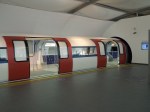
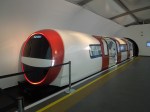
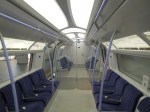
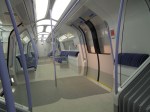
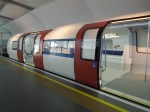
From my visit, I ascertained the following.
- The cross section appears taller and wider than the current deep-level trains.
- It has been designed so that someone of 2.6 metres can stand without stooping.
- The trains are designed to be articulated with a walk-through gangway.
- Access appears to be level between train and platform.
Will the new trains be like the mock-up?
This article on Rail Engineer is entitled London Underground Deep Tube Upgrade.
It gives some useful information and clues about the design of the New Tube for London (NTfL).
- The press release mentioned longer, walk through trains and air conditioning.
- An illustration with the press release shows all double doors.
- It is possible to provide an inter-car gangway by using an articulated configuration with more, shorter carriages.
- Bogies appear to be shared between cars.
- Bogie positioning allows all doors to be double.
- Rail Engineer’s view is that there are ten cars to a train.
- Most axles motored to deliver Victoria Line traction and braking performance.
- A 100 kph speed is quoted, as, opposed to 80 kph for current 2009 Stock on the Victoria Line.
- There might be a battery to power the train in case of power failure.
Taking all of these clues, what can I deduce?
Safe Platform Area
Before continuing, I will define what I mean as the safe platform area.
Usually on most Underground platforms without platform-edge doors, there are barriers at both ends of the platform beyond, which passengers are not allowed.
These limit the end of what I define as the safe platform area, where passengers can freely circulate and enter and leave the trains.
These pictures show the ends of various Underground platforms.
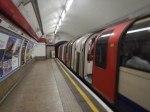
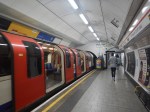
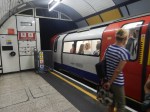
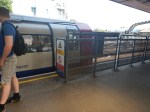
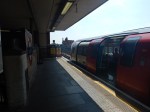
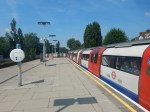


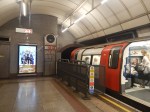


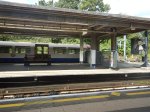
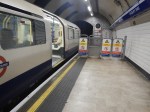

Each picture is identified with Station, Line, Direction and Train End.They all seem fairly similar.
Train Length And Car Length
The press release says the new trains will be longer.
The current length of the 1973 Stock on the Piccadilly Line is 106.8 metres.
This length is determined by the underground platforms, where if the driver stops, so that they can get off into the protected area, at the forward end of the platform, the rear end of the train is still in the tunnel.
The end passenger doors are of course in the safe area of the platform.
From looking at trains at Kings Cross station and judging it against the known length of a 1973 Stock train, I estimate that the length of the safe area is around ninety-five metres.
Looking at the picture of the cab in the mock-up, there is no driver’s door. So I will assume that drivers will access the cab from the passenger compartment. This probably means that the trains could be a little bit longer and still give access to all cars on the train.
The Rail Engineer article speculates that the trains will have ten sections of which two must have cabs on one end.
I think this will mean the following.
- There will be nine bogies between cars.
- There will be an end bogie under the cab of both driving cars.
- Each passenger car and the passenger section of the driving cars, will have two double doors on either side.
- I believe that the interiors of the passenger cars and the passenger sections of the driving cars will be virtually identical.
- The driving cab would be perhaps four metres long and could have a plant room behind it.
- The driving cab and its structure would probably incorporate a crush zone.
If the end pair of doors behind the driver’s cab, were locked out on underground platforms, this would not cause inconvenience to passengers. It certainly doesn’t now, when selective door opening is used at various stations on the Underground, like Baker Street station on the Sub-Surface Lines.
So perhaps, the safe platform area will go to the middle of the passenger compartment in the driving cars?
This will mean that.
- At some stations only one door can be used in the end cars.
- Access will always be available through the second door of the car or the two doors in the next car.
- The driver can easily access the cab, through the bulkhead door between the cab and passenger compartment.
This will also mean that there will be eight passenger cars and two half passenger sections from the driving cars in the safe platform area.
It should be noted that on the Victoria Line trains have always stopped automatically in the correct position, so this wouldn’t be difficult to arrange with automation of this function on the NTfL
Suppose the safe platform area can be stretched to 108 metres, this would mean.
- The passenger cars would be 12 metres long
- The passenger sections of the driving car would be 12 metres long.
- The driving cars would be perhaps 16 metres long.
This would give a total train length of 128 metres, with a passenger compartment that is 120 metres long.
Obviously, these lengths are speculative and others will work.
- 12.5 metre passenger cars would result in a 133 metre long train and would need a 112.5 metre safe platform area.
- 13 metre passenger cars would result in a 138 metre long train and would need a 117 metre safe platform area.
- 14 metre passenger cars would result in a 148 metre long train and would need a 126 metre safe platform area.
I do think the figures show, that if trains can overhang the safe platform area, then trains can be longer and train capacity can be increased.
It also shows, that if the safe platform area can be lengthened, so can the trains, which would further increase capacity.
But lengthening platforms, especially in tunnels can be very expensive!
Train Length On Other Lines
These trains must also fit the Bakerloo, Central, Jubilee, Northern and Waterloo & City Lines.
These lines all have different length trains.
- Bakerloo – 114 metres
- Central – 133 metres
- Jubilee – 126 metres
- Northern – 108 metres
- Waterloo & City – 66.5 metres
To further complicate matters, some stations on the Jubilee Line have platform-edge doors.
The Rail Engineer article states that the NTfLwill have ten articulated segments.
If all the passenger cars are identical, then a longer or shorter train should be able to be created by fitting an appropriate number of passenger cars between the two driving cars.
Train Length On The Waterloo & City Line
A five-car train with twelve metre segments and sixteen metre driving cars, would be 68 metres long and could fit the simple platforms of the Waterloo & City Line.
Train Capacity
The capacity of the 1973 Stock is 228 seated and 684 standing passengers.
The most modern deep tube trains on the Underground are the 2009 Stock of the Victoria Line.
These trains accommodate 252 seating and 1196 standing passengers in a train length of 133.3 metres, which is 10.85 passengers per metre.
A better comparison might be the S7 Stock of the Circle Line, as they have similar a seating arrangement to the NTfL.
These trains accommodate 865 sitting and standing passengers in a length of 117.5 metres, which is 7.36 passengers per metre
As the passenger section of the proposed design for the NTfL is 120 metres,
- This gives a capacity .of 1302 passengers using the 2009 Stock figure.
- This gives a capacity .of 883 passengers using the S7 Stock figure.
The actual figure is probably somewhere in the middle. I shall use 1100, which is an increase of twenty percent over the current trains.
Train Weight
Obviously, I don’t have the weight of the proposed NTfL.
A 2009 Stock train weighs 197.3 tonnes and is 133.3 metres long.
My guess for the length of a proposed NTfL is 128 metres.
The best I can come up with is to say that the NTfL is the same weight per metre as the 2009 Stock.
This gives the weight of the NTfL as 189.5 tonnes.
I would put an error of 25 tonnes on that figure either way.
Train Kinetic Energy
The value of the kinetic energy of the train is important, as it determines the energy that must be.
- Transferred to the train to accelerate it up to speed.
- Absorbed by the braking system, when the train stops.
Consider.
- The basic train weight is 189.5 tonnes.
- There are 1100 passengers.
- With bags, buggies and other things passengers bring on, let’s assume an average passenger weight of 90 kg, this gives an extra 99 tonnes.
- This gives a total train weight of 288.5 tonnes
If the train is travelling at 100 kph, this gives a kinetic energy of 30.9 kWh.
Regenerative Braking
The S Stock trains of the sub-surface lines have regenerative braking.
This saves energy and it will certainly be applied on the proposed NTfL.
The regenerative energy system on the S Stock returns the electricity through the electrification to power other trains nearby. This means a braking train effectively powers one that is accelerating.
The Rail Engineer article about the NTfL, says that most axles will be powered.
- This gives good acceleration and smooth regenerative braking.
- I would not be surprised to see a small battery of about 5 to 10 kWh in each car to handle the regenerative braking.
- When the train brakes the traction motors will pass their generated energy to the battery.
- On acceleration, the traction motors would use the energy stored in the battery.
One of the great advantages of using batteries with regenerative braking in tunnels, is that it reduces the amount of heat that a train emits into the trunnel.
Electrical System
I wouldn’t be surprised to see each car designed like a serial hybrid bus.
- The third-rail electrification and energy from regenerative braking would charge the battery.
- Each car might have its own pickup shoes.
- The battery would power the car’s traction motors and other systems.
An intelligent computer system would control each car and the whole train.
Effectively, the train could be a connected string of ten independently powered cars.
Think liberty horses with a ringmaster in charge.
Keeping The Tube Cool
This article on IanVisits is entitled Cooling The Tube – Engineering Heat Out Of The Underground.
Read it and you’ll find all the methods Transport for London are employing to make Underground travel better.
The first thing that must be done is to make sure that the proposed NTfL do not increase the heat input into the tunnels and trains to make the experience hotter
The train must be well-insulated, so that if the temperature in the train is at the required level for passengers, it tends to stay there and only change slowly.
The second thing that must be done is that the train should be designed so that it puts a minimum level of heat into the tunnels.
- Regenerative braking to batteries will help, as it will mean that braking should be heat-free and the train will be taking less traction current from the rails.
- An aerodynamic train will produce less heat from friction.
- Traction motors and other electrical systems will produce heat.
I suspect Siemens will look at every component of the train and heat production will be one of the criteria.
I also believe that the design of an intelligent air-conditioning system is important.
Suppose you are trying to use air-conditioning to cool a 30 °C train in a 30 °C tunnel. All you’ll do is heat the tunnel even more.
Take the Piccadilly, Jubilee and Central Lines, which all have surface sections at both ends.
So why not cool the trains on the surface to say 22 °C, before they enter the central tunnels?
- There will be no problem venting the heat to air.
- The outside air temperature on the surface, will probably be less than in the tunnels
- If the trains are well-insulated, this will help.
By the time the trains get to the other end of the tunnel, the train’s temperature will have risen and then the cycle is ready to start again.
Some trains spend thirty minutes or more running on the surface in a round trip of more than an hour.
Emergency Train Recovery Using Battery Power
If there is sufficient battery capacity, then this must be possible.
Conclusion
These trains could be very different than the trains they replace.
 The Anonymous Widower