Underground Hydrogen Storage Pilot Gets Funding Boost
The title of this post is the same as that of this article on Energy Live News.
This is the sub-heading.
New hydrogen storage tech could boost grid resilience and emissions cuts
These first three paragraphs add some details.
National Gas and Gravitricity have secured £500,000 from Ofgem to develop a new type of underground hydrogen storage.
The H2FlexiStore system, designed by Edinburgh-based energy storage firm Gravitricity, aims to store up to 100 tonnes of green hydrogen in lined geological shafts.
The technology, which could see a demonstrator built in 2026, is intended to offer a flexible, resilient solution to future hydrogen network needs.
The article also has an excellent graphic.
Note that it takes 55.2 MWh of electricity to generate a tonne of hydrogen, so a hundred tonnes of hydrogen would store 5.52 GWh of electricity as hydrogen.
British Passenger In Seat 11A Survives India Plane Crash, Reports Say
The title of this post, is the same as that of this article on the BBC.
This is the sub-heading.
A man survived the Air India crash that killed at least 200 people, a police chief has told an Indian news agency.
This is the first paragraph, which adds more details.
Ahmedabad Police Commissioner GS Malik told ANI there was one survivor who was in seat 11A on the London-bound Boeing 787-8 flight.
I do feel, that his window seat towards the front of the plane may have helped him survive.
This image on SeatGuru, shows the seat layout on an Air-India 787.
Seat 11A is in the front row of Economy on the left-hand side, by one of the exits from the plane.
It was certainly, a good place to be on a plane that crashed.
There is this Wikipedia entry, which is entitled List Of Sole Survivors Of Aviation Accidents And Incidents.
Surprisingly, there are over a hundred lucky souls on the list.
Do Animals Lose Water In Low Pressure Weather?
I feel I do and I wrote a post called My Strange Skin, which is explained by water being driven out of my body.
So I asked Dr. Google, the question in the title of this post and got this answer.
Yes, animals can lose more water in low-pressure weather conditions. Lower atmospheric pressure, often associated with unstable weather, can increase water loss through evaporation and other physiological processes.
Here’s why:
Low pressure often means lower relative humidity, which increases the vapor pressure deficit between the animal’s body and the environment. This difference in water vapor concentration drives more water to evaporate from the animal’s body, particularly through the skin.
That’s all very sound physics.
Last night, I was woken by an intense strange itch in the sole of my right foot.
- As I often do, I rubbed the itch on the a genuine Indian rug I have on the floor by my bed, but it didn’t work.
- So I had to get up and apply a dollop of Udrate cream and rub it in.
About, half-an-hour later I got back to sleep.
Today, I got a similar intense itch in the sole of my left foot. Again it was stopped by a dollop of cream rubbed in. But this time it was Body Shop’s Hemp Foot Protector.
Does water find it easier to get out through the soles of my feet?
Centrica And Equinor Agree Major New Deal To Bolster UK Energy Security
The title of this post, is the same as that as this news item from Centrica.
This is the sub-heading.
Centrica and Equinor have today announced a £20 billion plus agreement to deliver gas to the UK. The new deal will see Centrica take delivery of five billion cubic meters (bcm) of gas per year to 2035.
These three paragraphs add more detail to the deal.
The expansive ten-year deal continues a long-term relationship with Equinor that dates back to 2005 bringing gas from Norway to the UK.
In 2024, the UK imported almost two-thirds (66.2%) of its gas demand, with 50.2% of the total imports coming from Norway1. This is an increase from the UK importing around a third of its gas requirements from Norway in 20222 and underlines the strategic importance of the Norwegian relationship to UK energy and price security.
The contract also allows for natural gas sales to be replaced with hydrogen in the future, providing further support to the UK’s hydrogen economy.
I believe there is more to this deal than, is stated in the news item.
These are my thoughts.
Where Does AquaVentus Fit In?
The AquaVentus web site has a sub heading of Hydrogen Production In The North Sea.
This video on the web site shows the structure of the project.
I clipped this map from the video.

Note.
- The thick white line running North-West/South-East is the spine of AquaVentus, that will deliver hydrogen to Germany.
- There is a link to Esbjerg in Denmark, that is marked DK.
- There appears to be an undeveloped link to Norway, which goes North,
- There appears to be an undeveloped link to Peterhead in Scotland, that is marked UK.
- There appears to be a link to just North of the Humber in England, that is marked UK.
- There appears to be an extra link, that would create a hydrogen link between Norway and Humberside.
- Just North of the Humber are the two massive gas storage sites of Aldbrough owned by SSE and Brough owned by Centrica.
- Aldbrough and Rough gas storage sites are being converted into two of the largest hydrogen storage sites in the world!
- There appear to be small ships sailing up and down the East Coast of the UK. Are these small coastal tankers, that are distributing the hydrogen to where it is needed?
When it is completed, AquaVentus will be a very comprehensive hydrogen network.
RWE
I should add that AquaVentus is a project of German energy company; RWE.
It should be noted that RWE are the largest generator of electricity in the UK.
They will soon be even larger as they are developing these offshore wind farms in British waters.
- Dogger Bank South – 3 GW
- Norfolk Boreas – 1.4 GW
- Norfolk Vanguard East – 1.4 GW
- Norfolk Vanguard West – 1.4 GW
Note.
- This is 7.2 GW of electricity.
- The three Norfolk wind farms wwere possibly acquired at a bargain price from Vattenfall.
- None of these wind farms have Contracts for Difference.
- RWE are developing large offshore electrolysers.
- East Anglia is in revolt over pylons marching across the landscape.
I wonder, if RWE will convert the electricity to hydrogen and bring it ashore using AquaVentus, coastal tankers or pipelines to existing gas terminals like Bacton.
The revenue from all this hydrogen going to Germany could explain the rise in Government spending, as it could be a Magic Money Tree like no other.
HiiROC
HiiROC is a Hull-based start-up company backed by Centrica, that can turn any hydrocarbon gas, like chemical plant waste gas, biomethane or natural gas into turquoise hydrogen and carbon black.
I asked Google about the size of Norway’s chemical industry and got this reply.
Norway’s chemical industry, including oil refining and pharmaceuticals, is a significant part of the country’s economy. In 2023, this sector generated sales of NOK 175 billion (approximately €15.2 billion), with 83% of those sales being exports. The industry employed 13,800 full-time equivalents and added NOK 454 billion (approximately €3.9 billion) in value.
Isn’t AI wonderful!
So will Norway use HiiROC or something similar to convert their natural gas and chemical off-gas into valuable hydrogen?
If AquaVentus were to be extended to Norway, then the hydrogen could be sold to both the UK and Germany.
A scenario like this would explain the option to switch to hydrogen in the contract.
Aldbrough And Brough
Earlier, I said that just North of the Humber are the two massive gas storage sites of Aldbrough owned by SSE and Brough owned by Centrica.
I have read somewhere, that Germany is short of hydrogen storage, but I’m sure Centrica and SSE will help them out for a suitable fee. Centrica are also thought to be experts at buying energy at one price and selling it later at a profit.
Conclusion
I have felt for some time, that selling hydrogen to the Germans was going to be the Conservative government’s Magic Money Tree.
Has this Labour government decided to bring it back to life?
‘Bakerloop’ Bus Route launches In Autumn, TfL Says
The title of this post, is the same as that as this article on the BBC.
This is the sub-heading.
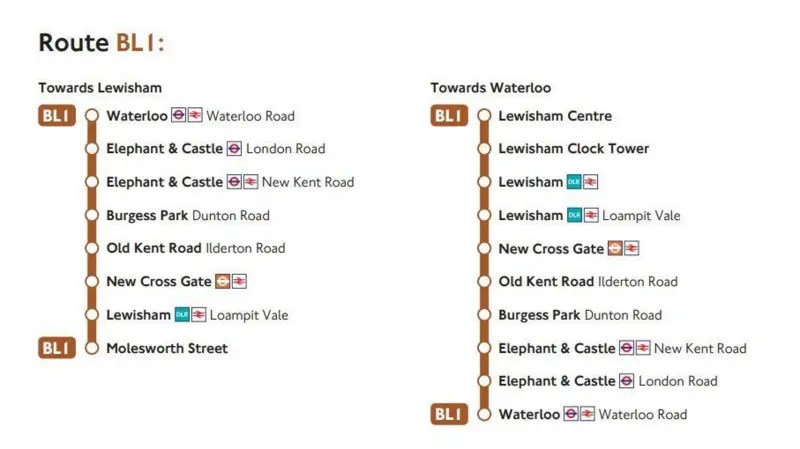
A new bus route named the Bakerloop is set to launch in autumn to connect stations and areas in south-east London.
This graphic clipped from the BBC article shows the route.
I don’t deny that South London doesn’t need more buses, but I am getting rather fed up with SadIQ showing he is a South Londoner by putting on more and more buses for his friends.
My regular bus to Moorgate is the 141 bus, which must be the worst bus route in London on an overall basis.
Earth Friendly Concrete Spotted On Moorgate
I’ve been hoping to spot one of Capital Concrete’s trucks before, but this is the first one, I’ve seen delivering Earth Friendly Concrete.





I said more about the product in Earth Friendly Concrete.
Eden Project Morecambe Revealed In New Images
The title of this post, is the same as that of this article on the BBC.
This is the sub-heading.
New images of what the long-awaited ecotourism attraction Eden Project Morecambe will look like have been released.
These three paragraphs add more detail.
The shell-inspired structure, sister site to the original Eden Project in Cornwall, is due to open in late 2028 and is expected to attract thousands of people to the Lancashire town.
CGI images, by architects Grimshaw, show how the design will look on the edge of Morecambe Bay promenade.
The project team said the structure would be “instantly recognisable” as an “emblem of sustainability” with a “deep connection to place” and complimenting heritage landmarks nearby.
The BBC article contains a selection of stunning images.
I have never been to the original Eden Project in Cornwall, as I don’t drive and it is difficult to get to by train.
But Morecambe from Euston is an easy sub-three hours train journey and not much over an hour from Liverpool and Manchester.
So the Eden Project Morecambe will be much easier to get to and will surely bring in the visitors.
But it needs a better train between Lancaster and Morecambe than this.
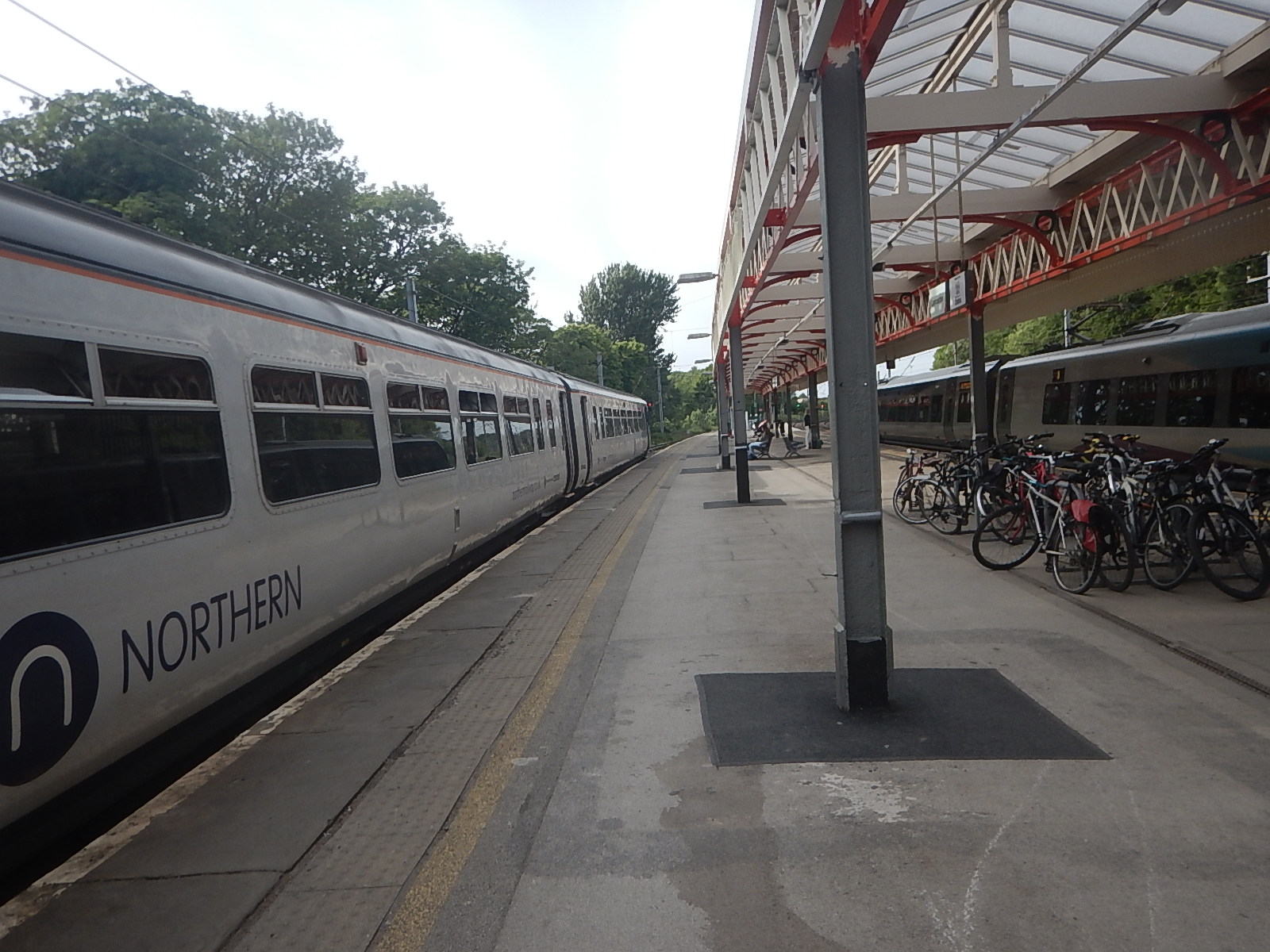
Note.
- The train is a British Rail-era Class 156 diesel train, that was built in the late 1980s.
- A diesel train to an eco-project is probably not the right image.
- If they get all the visitors by rail, that I think they will, a two-car train will probably not have enough capacity.
- The platform appears to be electrified and be around 70-80 metres long.
- The Lancaster and Morecambe service is less than five miles.
But I believe, that this platform could be used to charge a battery-electric train through a pantograph.
This train would then be able to trundle silently all day between Lancaster and Morecambe stations.
Glen Earrach Energy (GEE) To Give £20m Per Year To Highland Communities
The title of this post, is the same as that of this article on the Inverness Courier.
These two paragraphs introduce the article.
The announcement is underpinned by the publication of a new developer-led research report, the first of its kind in the UK energy sector, which brings together national polling, public consultation, and direct input from communities.
The report marks a major step in the development of the fund, setting out emerging priorities, design principles and governance themes that reflect what GEE has heard to date and will help guide the next phase of engagement.
Other points from the article include.
Size And Delivery
This is said about the size and delivery of the project.
Subject to planning, the project will provide up to 34GWh of long-duration energy storage in 2030.
All these projects seem to be on course for delivery by 2030. Mr. Ed. Milliband will be pleased.
The Community Wealth Fund
This is said about the Community Wealth Fund.
The fund will be rooted in the communities that share the key water resource underpinning the scheme, with scope to contribute to wider regional projects, including contributions to a Strategic Fund for the Highlands as a whole.
“The GEE Community Wealth Fund is about more than sharing the benefits of clean energy, it is about creating long-term value for the communities who make this project possible.
As the grandmother of all pumped storage hydro in the UK; Electric Mountain, started storing energy and producing power in 1984, the Community Wealth Fund should last a few years.
Battery-Powered SOVs, CTVs To Soon Become Cheaper than Their MGO Alternatives, Study Says
The title of this post, is the same as that of this article on offshoreWIND.biz.
This is the sub-heading.
Studies commissioned by ScottishPower Renewables found that battery-powered vessels (re)charging offshore is feasible and could be part of the operations of future offshore wind farms. One of the reports also says electric operations and maintenance (O&M) vessels will become cheaper than their Marine Gas Oil (MGO) alternatives within the next few years.
The article is definitely a must-read, as it talks in detail about using service operation vessels (SOVs) and crew transfer vessels (CTVs), that are powered by electricity, rather than by marine gas oil (MGO).
Network Rail Objects To Wrexham To London Service
The title of this post, is the same as that of this article on the BBC.
This is the sub-heading.
Concerns have been raised about plans for a direct rail service between Wrexham and London, including fears over safety at level crossings.
These three paragraphs add details to the story.
Network Rail warned the line was already congested and there was not enough timetable capacity for extra services.
In a report, it said increased use would raise the risk of a collision at crossings along the route and that it could not support the application, put forward by a new open-access rail operator called the Wrexham, Shropshire and Midlands Railway (WSMR).
The new service would link Wrexham, Gobowen, Shrewsbury, Walsall and Coleshill up with the capital.
This Google Map shows the area of the crossing.
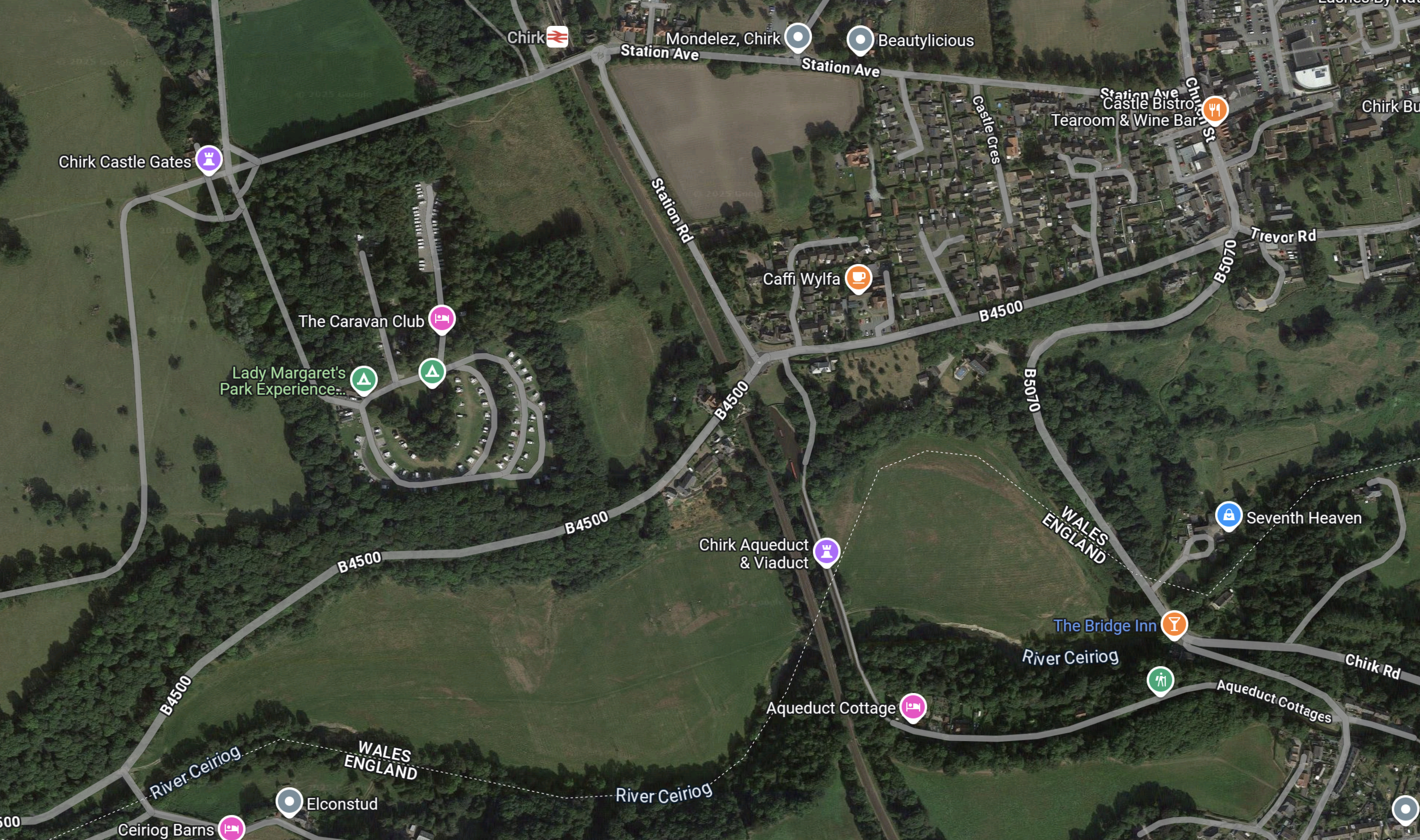
Note.
- Chirk station, which is fully-accessible via ramps, is at the top of the map.
- The railway between and running down the middle of the map.
- The railway has a maximum speed of 70 mph.
- The Aqueduct and the Viaduct crossing the valley of the River Ceirog together.
- The large caravan park.
- Chirk Castle Park.
If the Viaduct level crossing is in this area, it is a serious accident waiting to happen.
The BBC article says this about the crossing.
They include the Viaduct level crossing in Shropshire, which it said was “used by large groups and is also a hot spot for trespassing and fatalities”.
The operator said work would need to be carried out to make it safe.
North Shropshire MP Helen Morgan has previously spoken out on the safety of the crossing, which is close to the Chirk Viaduct.
She has written to Network Rail to request additional safety measures be put in place.
Network Rail said it had reviewed the safety of the crossing and brought forward plans to install crossing lights, which should be in place in December this year.
Note.
- I hope this is enough. But, I do know that the level crossing lights work well at Thurston station in Suffolk.
- It must help, that there is a bridge at the station.
The line between Wolverhampton and Wrexham, except for a short 15 mph section at Shrewsbury has at least a 70 mph maximum speed.
As electric trains, including battery-electric ones, have fast acceleration and deceleration would it not be possible for them to slow down for the level crossings?
This could even be done automatically using digital signalling.
Conclusion
I believe that this level crossing problem is solvable.

