BOEM Links Up With US Department of Defense On Offshore Wind
The title of this post, is the same as that of this article on offshoreWIND.biz.
This is the sub-heading.
The US Bureau of Ocean Energy Management (BOEM) and the Department of Defense (DOD) have signed a memorandum of understanding (MoU) to support the coordinated development of offshore wind on the US Outer Continental Shelf (OCS).
These three paragraphs give more details of the agreement.
The agreement calls for DOD and BOEM to find mutual solutions that support renewable energy in a manner compatible with essential military operations.
The MoU also requires the organizations to collaborate early in the offshore wind leasing process and maintain regular communication at all levels.
Additionally, the agreement calls for DOD and BOEM to determine what areas should be deferred from leasing to enable the performance of DOD activities on the OCS.
I feel this is a very sensible agreement, as time progress, I’m sure that the co-operation will lead to several joint projects.
- Support boats ensuring safety, like the deal between Ørsted and the RNLI, that I talked about in Ørsted Evolves Long-Standing Partnership With RNLI,
- Offshore structures like electrolysers and substations could have a secondary use as military training facilities.
- Smaller ships, like minehunters, coastguard cutters and fishery protection vessels could go electric and the wind farms could provide charging facilities.
If the United States Navy are hanging around the wind farms, it might discourage Putin’s friends.
Wind farms and the US military could be good neighbours.
Brendan Owens, who is the Assistant Secretary of Defense for Energy, Installations, and Environment, said this.
We will continue to work with BOEM and our other interagency partners, to find solutions that enable offshore wind development while ensuring long-term compatibility with testing, training, and operations critical to our military readiness.
Other nations with large amounts of continental shelf and ambitions to install large amounts of offshore wind like Australia, Belgium, Canada, Denmark, France, Germany, the Netherlands, Portugal, Spain and the UK could do worse that follow the American strategy.
Bicester MP Calls On Chancellor To Fund London Road Crossing
The title of this post, is the same as that of this article on the Oxford Mail.
This is the sub-heading.
An MP has called on the chancellor for funding to keep a town’s level crossing open ahead of the budget this week.
These are the first two paragraphs.
The MP for Bicester and Woodstock, Calum Miller, has written to the chancellor, Rachel Reeves, ahead of Wednesday (October 30), calling on her to fund the London Road Crossing in Bicester.
The East Railway project will result in the London Road Crossing being closed to vehicles, bikes and pedestrians for more than 45 minutes every hour and could, as a result, be closed permanently by Network Rail.
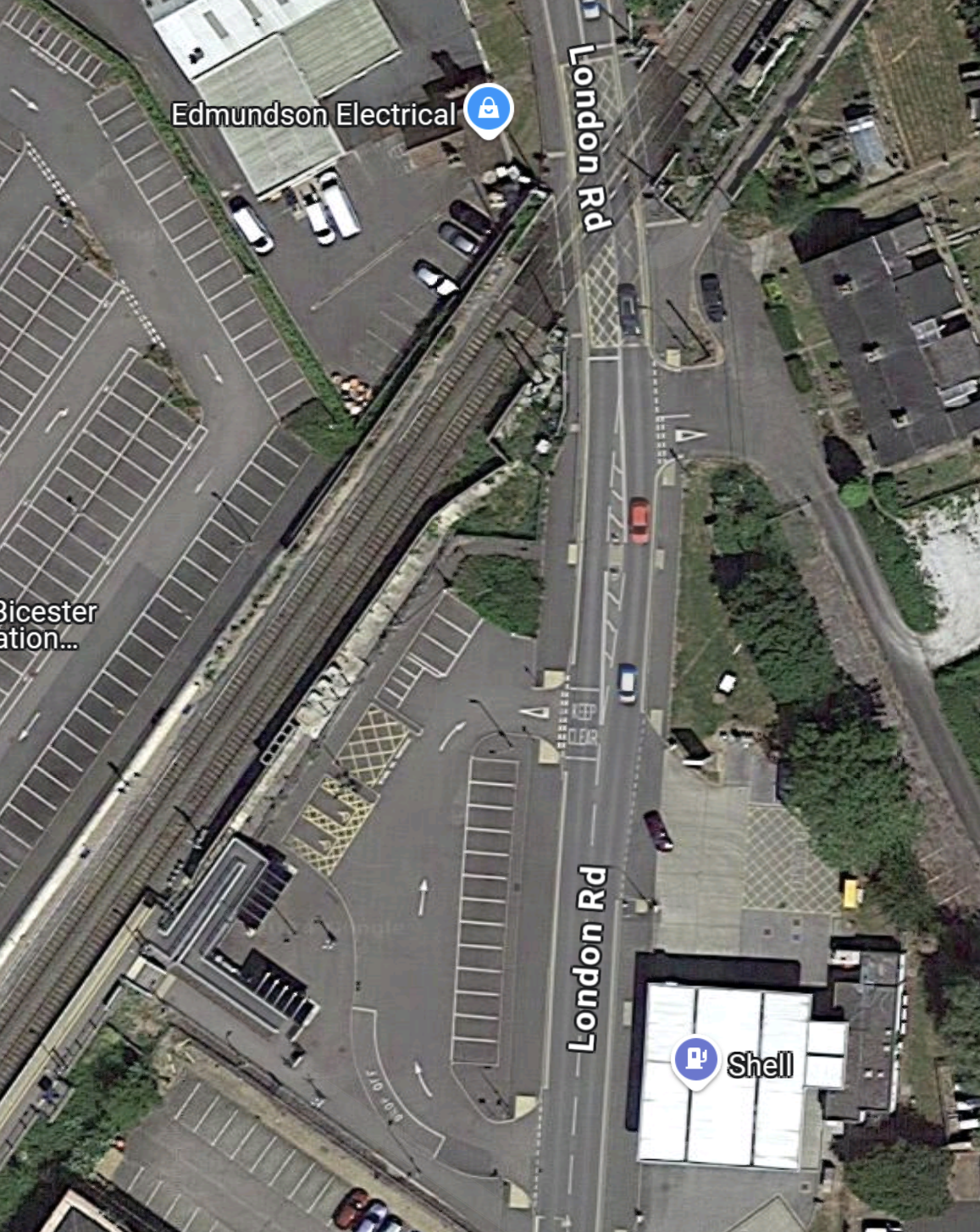
This Google Map shows the level crossing.
Note.
- London Road runs North-South across the map.
- There is a petrol station on the East side of London Road.
- Bicester Village station is on the West side of London Road.
- Bicester Village station is surrounded with lots of car parking.
- The level crossing is at the top of the map, where level crossings normally are.
This Google Map is a closer view of the level crossing.
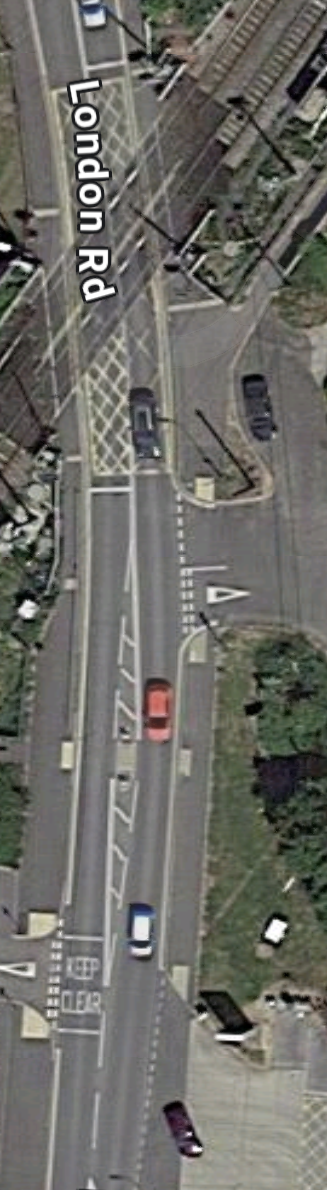
There seems to be several side roads giving access to side-roads and car-parks.
It is a very crowded site with in addition to the level crossing, there is a station, a Shell garage and lots of car parking.
I shall go and have a look next week, but at least the filling station should go. After all, who will want petrol and diesel in a few years?
Iarnród Éireann Looks At Diesel Loco Replacement Options
The title of this post, is the same as that of this article on Railway Gazette.
These three paragraphs introduce the article.
The Stadler Class 99 electro-diesel locomotive for UK operator GB Railfreight was receiving close scrutiny from Iarnród Éireann at InnoTrans in Berlin, with the Irish national operator confirming to Railway Gazette International that it had discussed with the manufacturer how the type might be adapted for operation in Ireland.
Iarnród Éireann Chief Executive Jim Meade told Railway Gazette International ‘we will eventually need to replace our aging diesel fleet with dual-mode locomotives because our freight strategy will take us down that direction after we complete our electrification programme.
‘The replacement for the class 071s and 201s eventually will have to be a bi-mode electric with some form of HVO [renewable diesel fuel] traction in the long term; even the Class 201s are beyond mid-life already.
The Class 99 locomotive is a version of the Stadler Eurodual locomotive, which is described in this Stadler data sheet.
The Wikipedia entry for the Stadler Euro Dual is also informative and lists a dozen different versions of the locomotive, that have been sold to various countries and operators.
This paragraph summarises how the design can handle different gauges and electrical voltages.
The Euro Dual was designed from the onset as a highly modular platform, allowing it to be offered to customers in various different configurations, covering various gauges and voltage systems.
I doubt Stadler would have great difficulty producing an Irish gauge locomotive capable of running on whatever electrification, the Irish erect.
Will The Irish Class 99 Have Enough Power?
The power of the various diesel locomotives are as follows.
- Current Irish Class 071 – 1.68 MW
- Current Irish Class 201 – 2.4 MW
- UK Class 66 – 2.4 MW
- UK Class 99 – 1.79 MW
It would appear that the Class 99 is less powerful than the Irish Class 201 and the UK Class 66, but the Wikipedia entry for the Class 99 says this.
The chief executive of GBRf, John Smith, reports that the Class 99, despite having a less powerful diesel engine than the Class 66, will outperform the Class 66 at low speeds. The greater tractive effort means that the Class 99 on diesel power can deliver more power at the rail than the 66.
But as the Class 99 has 6.17 MW in electric mode, the solution must be to electrify the difficult sections.
I have just looked at the Felixstowe Branch Line, which will be very much Class 99 territory. I am fairly sure, that with some short lengths of electrification on the single-track sections, any performance problems with the Class 99 on the branch could be solved.
Could The Irish Class 99 Use Hydrogen As Secondary Power?
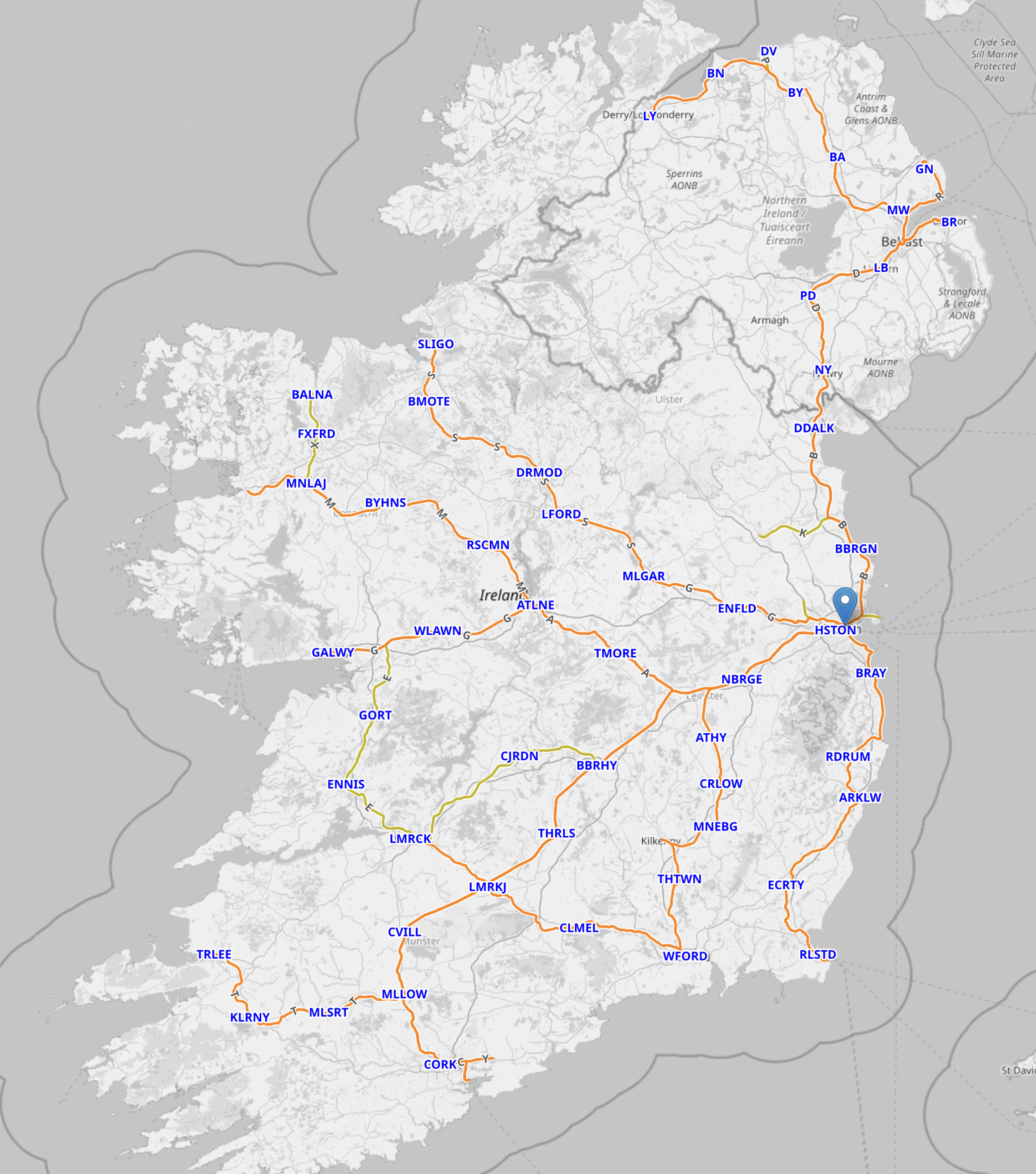
This OpenRailwayMap shows all the railways on the island of Ireland.
Note.
- All railways on the island of Ireland have an Irish gauge of 1.6 m.
- Only the DART in Dublin is electrified with 1,500 VDC overhead.
- There are 2,733 km. of track.
- New lines are still being added and old ones have been reopened in recent years.
- There will surely be pressure for the Irish to decarbonise their railways, both North and South of the Northern Irish border.
- There are no rail connections to another country, except for the link between Northern Ireland and the Republic of Ireland, which is between two similar systems.
- It is unlikely, that there will ever be a rail link between the Irish gauge railways on the island of Ireland and the standard gauge railways of Europe.
Effectively, the island of Ireland has an isolated network of tracks on which they could build a zero-carbon railway system.
- Signalling could be an off-the-shelf digital system.
- Zero-carbon traction power could be trains powered by either electricity and/or hydrogen.
- Both electricity and hydrogen would need substantial amounts of new rolling stock.
- Electricity would require electrification at €1,000,000 per single track kilometer, which could be around €5.5 billion for the electrification alone.
- Electrification would also need many bridges, stations and tunnels to be modified or rebuilt.
- Hydrogen would need a refuelling infrastructure and could go anywhere that diesel can.
- Hydrogen locomotives and trains, would be one-to-one replacements for diesel locomotives and trains.
It would appear that because of their geographic isolation, hydrogen could be an ideal zero-carbon fuel for the railways of Ireland.
In Do Cummins And Stadler Have a Cunning Plan?, I speculated that the electro-diesel Class 99 locomotive could be converted into an electro-hydrogen Class 99 locomotive, as Cummins are building diesel engines that can be converted into hydrogen ones.
Ireland with its unusual network could change to a zero-carbon railway in the following way.
- Purchase a fleet of diesel locomotives and trains that can run on Hydrotreated Vegetable Oil (HVO) and be convertible to hydrogen.
- A version of the Class 99 with or without the electrical gubbins would satisfy the locomotive replacement.
- A version of the tri-mode Stadler FLIRT like a Class 745 train, would satisfy the train replacement.
- All new trains and locomotives would replace the current stock and run on HVO.
- The hydrogen infrastructure would be built.
- The new trains and locomotives would be gradually converted to run on green hydrogen.
Within a few years, the island of Ireland would have a zero-carbon railway.
Advantages Of A Fully-Hydrogen Railway
These are a few advantages.
- One fuel for all trains.
- All trains and locomotives would be one manufacturer.
- No expensive electrification.
- Hydrogen trains and locomotives have a long range.
- No infrastructure modification for gauge clearance.
- Ireland has plenty of onshore and offshore wind for hydrogen.
- Standard fuelling systems are being developed.
- There would be no disruption as the trains changed to HVO and little disruption as they changed to hydrogen.
I believe that there would be a large increase in train usage both from locals and visitors, which can only be good for the Irish economy.
Managing The Project
This could be one of those rare projects that flows well.
- The changeover to hydrogen could involve very little rail infrastructure work.
- The hydrogen filling stations could be more-or-less independent of the rail infrastructure.
- Trains and locomotives could go into service, when they are accepted and the staff have been trained.
- Trains and locomotives would only be converted to hydrogen, as routes are made hydrogen-capable.
- There should be no gauging problems with the new trains and locomotives.
- There is only one train manufacturer.
Hopefully, it will all be delivered on time and on budget.
Ørsted Evolves Long-Standing Partnership With RNLI
The title of this post, is the same as this news item from Ørsted.
This is the sub-heading.
Ørsted, the global leader in offshore wind power and one of the largest renewable energy companies in the world, has announced the latest phase of its long-standing partnership with the Royal National Lifeboat Institution (RNLI).
These three paragraphs give a few more details of the partnership.
Over the next two years, Ørsted will provide more than £140,000 to help the charity in its mission to save lives at sea.
The RNLI is the charity that saves lives at sea and its volunteers provide a 24-hour search and rescue service across the British Isles.
Established in 2015, the partnership previously focused on supporting seven individual lifeboat stations in areas where Ørsted operates its offshore windfarms and is now evolving to support even more lifeboat stations.
Little is said about what benefits Ørsted get from the partnership.
Although, this is said.
Previously focused on supporting seven individual lifeboat stations in areas where Ørsted operates its offshore windfarms.
Does this mean, that for small incidents, the RNLI can do the rescue or perhaps tow a broken-down workboat to the shore?
In a busy area, the RNLI might even act as backup to Ørsted’s own safety boat, if a second incident occurred.
It might be a more affordable way to ensure safe operation, which is obviously paramount.
Conclusion
As the partnership is being extended, it must surely have been working well.
Centrica And European Energy Sign Agreement On Måde Green Hydrogen Facility
The title of this post, is the same as that of this press release from Centrica.
This is the sub-heading.
Centrica Energy and European Energy have signed a balancing and optimisation agreement for the Måde green hydrogen facility located at Port Esbjerg. Under the agreement, Centrica Energy will manage power production from co-located wind turbines, designating excess power production to green hydrogen production.
These two introductory paragraphs give more details.
Powering the 12MW green hydrogen facility are two wind turbines, part of the Måde Wind Turbine Test Center, developed by European Energy with a total installed capacity of 16MW. The turbines will provide renewable electricity, which is used to produce green hydrogen through electrolysis with demineralised water.
Expected to produce approximately 1,500 tonnes of green hydrogen every year, European Energy has secured an agreement with Port Esbjerg and a world-class industrial gases company for the offtake from the facility. As the production of hydrogen is a heat-intensive process, the excess heat from production will be fed into the local district heating network, demonstrating sector coupling across the electricity, fuel, and heating domains.
These are my thoughts,
Hydrogen Production
The hydrogen production uses a standard electrolysis method, but excess heat will be fed into the local district heating network.
AquaVentus And Denmark
I introduced AquaVentus in this post called AquaVentus.
This video shows the structure of AquaVentus.
I clipped this map from the video.

Note.
- The thick white line running North-West/South-East is the spine of AquaVentus, that delivers hydrogen to Germany.
- There is a link to Esbjerg in Denmark.
- There appears to be an undeveloped link to Norway.
- There appears to be an undeveloped link to Peterhead in Scotland.
- There appears to be a link to just North of the Humber in England.
- Just North of the Humber are the two massive gas storage sites of Aldbrough owned by SSE and Brough owned by Centrica.
- There appear to be small ships sailing up and down the East Coast of the UK. Are these small coastal tankers, that are distributing the hydrogen to where it is needed?
In the last century, the oil industry, built a substantial oil and gas network in the North Sea.
It appears now the Germans are leading the building of a substantial hydrogen network in the North Sea, that will bring the hydrogen they need to their country.
I also suspect that any spare hydrogen produced in Esbjerg can be added to the AquaVentus network.
- Hydrogen could be sent to Brough and Aldbrough in the UK for storage.
- Hydrogen could be sent to any country in the network that needs it.
Countries will pay for the hydrogen they use.
Optimising AquaVentus
AquaVentus is a complex network.
- Hydrogen could be produced offshore in British, Danish, Dutch, English, German, Norwegian, Orcadian, Scottish and Shetland waters.
- Hydrogen could be sent to Brough and Aldbrough in the UK for storage.
- Hydrogen can be sent to Belgium, Denmark, Germany, Norway, The Netherlands and the UK.
A company like Centrica has the expertise and the software to control the various hydrogen flows to the best advantage of hydrogen producers and users.
The MailOnline’s View Of Pumped Storage Hydroelectricity
The MailOnline gives their view on Pumped Storage Hydroelectricity on the front page of their web site today.
This is the bold title.
Scotland is littered with windfarms. Now the impact of billion-pound hydro projects to store energy they produce threatens our scenic landscapes… and led critics to brand the plans – The Loch Ness Monstrosity
To my mind, the site’s language leaves no doubt that they are not keen on either windfarms or the hydro projects to store energy.
Calling the plans the Loch Ness Monstrosity, is an insult to the engineers, who have devised the plans.
The journalist, who wrote the article has made the same mistake, that many do when they write about any form of energy storage – They only give the output of the battery and not the output and the storage capacity.
Thus Red John Pumped Hydro is described in the article like this.
The £550million Loch na Cathrach venture (formerly known as Red John, after a popular local lochan), is one of the biggest renewable energy projects in the North and was granted consent by the Scottish Government in June 2021 despite strong objections from campaigners and Highland Council but has yet to be built in the hills near Dores.
The 450MW project owned by Norwegian state firm Statkraft hopes to start construction next year and be operational by 2030.
Note.
- Red John is a 450 MW project with a storage capacity of 2,800 MWh, which is conventionally shown as a 450 MW/2,800 MWh battery.
- A battery of this size can supply 450 MW for 6.2 hours, which is more than a lithium-ion battery of the same cost could manage.
- 450 MW is about the average size of a gas-fired power station.
Where the geography is suitable, pumped storage hydroelectric stations may be able to replace gas-fired power stations.
- There would be no cooling towers.
- There would be no chimneys or associated pollution.
- The electrical gubbins to connect to the grid would be the same and could probably be refurbished.
The new lake could be used for water-based activities like fishing, sailing skiing and swimming.
Conclusion
Obviously, playing the Nimby-card sells newspapers.
FART Train On Show At InnoTrans
The title of this post, is the same as that of this article on Railway Gazette.
This is the first paragraph.
Stadler has unveiled a custom-designed electric multiple-unit for the narrow gauge Centovalli railway which runs for 52 km between Locarno in Switzerland and Domodossola in Italy.
This appears to be one of Stadler’s special trains for a very unique railway in the Southern Alps.
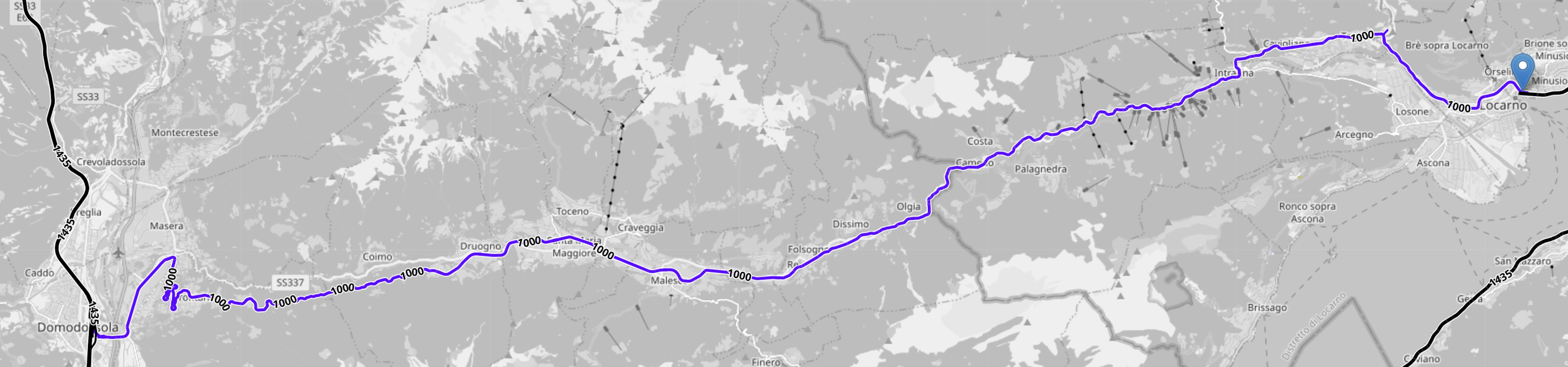
This Google Map shows the route between Domodossola and Locarno.
Note.
- The Centovalli Railway runs East-West and is shown in purple.
- Locarno is in the East and is marked by a blue arrow.
- Domodossola is in the West, where the Centovalli Railway meets the Domodossola–Milan railway, which is shown in black and runs North to Brig via the Simplon Tunnel.
In From Milan To Geneva, I must have taken a train through Domodossola, as this picture is in the post.
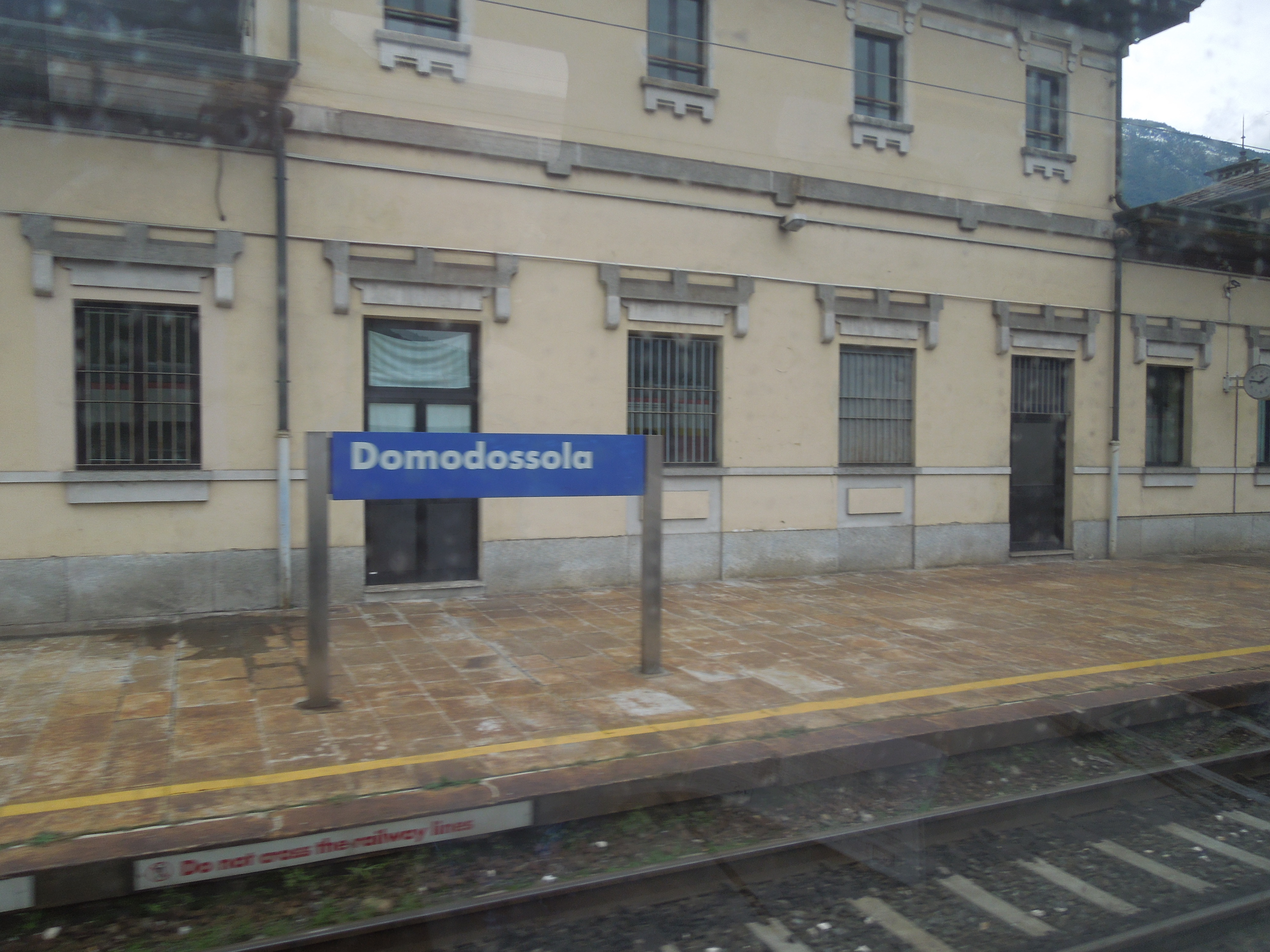
Domodossola station looks a lot grander in its Wikipedia entry.
Hydrogen Energy Explained
The title of this post, is the same as this story on Centrica.
This is the sub-heading.
Hydrogen is a clean alternative to natural gas, when it’s burnt it doesn’t produce carbon dioxide, which is a harmful greenhouse gas. It has the potential to play a significant role in achieving net-zero and decarbonising various sectors.
The story is a good introduction to hydrogen.
In the 1960s, when I first worked in a hydrogen electrolyser at ICI in Runcorn, I would have found a document like this one from Centrica invaluable.
Plans To Turn Former Station Waiting Room Into Pub
The title of this post, is the same as that of this article on the BBC.
This is the sub-heading.
Plans to turn a Grade II listed railway station’s former waiting room back into a pub have been submitted.
These are the first three paragraphs of the article.
Network Rail wants to refurbish the room at Carlisle’s station, which is now a storage room and kitchen.
The first class waiting room, which was until recently used as a pub, was built by architect William Tite in 1880 as an extension to his original 1847 neo-Tudor station designs.
The plans are part of the £27m Carlisle Gateway project to turn the city’s station into a “national interchange” transport hub, funded by central government, Cumberland Council and Network Rail.
I very much like this idea.
Carlisle could be turned into a national interchange, that was almost unique in the world.
- Rail services across the Borderlands could be improved, to the cities of Glasgow, Lancaster, Leeds, Newcastle and York.
- Rail services could be developed, so visitors could explore the Lake District by rail.
- The Eden Project at Morecambe would be a rail-accessible attraction, that was just an hour away from Carlisle.
- The Borders Railway from Edinburgh could be extended to Carlisle.
- All services would be zero-carbon, with power coming from either batteries or hydrogen.
- Services would be tourism-friendly, with space for bicycles, large panoramic windows and high-class catering.
Current times between London and Carlisle could be reduced to under three-and-a-half hours, with reductions of up to an hour, as High Speed Two is eventually delivered.
 The Anonymous Widower