Riding Sunbeams Deploys Solar Array
The title of this post is the same as that of this article on Railway Gazette.
These are the introductory paragraphs.
Riding Sunbeams Ltd has installed a 30 kWp solar test unit with around 100 panels near Aldershot which is directly supplying electricity to power signalling and lighting on Network Rail’s Wessex Route.
This will enable data to be gathered to assess how much larger solar arrays could be used to power trains.
Note that kWp is peak kW. On a very sunny day, 30 kW is the highest power level that will be supplied.
This page on the Energy Saving Trust is entitled Costs and Saving and this is said.about solar generation in the South of England.
A 4kWp system in the south of England can generate around 4,200 kilowatt hours of electricity a year – that’s the same amount of electricity as it takes to turn the London Eye 56 times. It will save around 1.6 tonnes of carbon dioxide every year.
For comparison, they say this about solar generation in Scotland.
A 4kWp system in Scotland can generate about 3,400 kilowatt hours of electricity a year – that’s the same amount of electricity as it takes to turn the Falkirk Wheel 2,200 times. It will save approximately 1.3 tonnes of carbon dioxide every year.
I’d be interested to know, the two locations, where they measured the sunlight.
It was a lovely sunny day recently, when I passed through Aldershot station, so I’ll use the Southern England figures.
- Uprating the Energy Saving Trust figures by 30/4 gives a yearly output of 31,500 kWh,
- The daily output is 86.3 kWh.
- The hourly output based on a 0600-2200 sixteen hour day is 5.4 kWh
There would probably be a battery to make the most of the electricity generated.
Powering Feeder Stations For Third-Rail Electrification
As the Railway Gazette article says, the trial installation at Aldershot station will be used to power signalling and the station, which will then give figures to assess how trains can be powered.
In the September 2017 Edition of Modern Railways, there is an article entitled Wires Through The Weald, which discusses electrification of the Uckfield Branch in Sussex, as proposed by Chris Gibb. This is an extract.
He (Chris Gibb) says the largest single item cost is connection to the National Grid, and a third-rail system would require feeder stations every two or three miles, whereas overhead wires may require only a single feeder station for the entire Uckfield Branch.
It would appear that 750 VDC rail-based direct current electrification needs many more feeder stations, than 25 KVAC overhead electrification.
Could a solar system from Riding Sunbeams supply power in the following situations?
- Places where there was space for a solar array.
- Remote locations, where a connection to the grid is difficult.
- Places, where the power supply needed a bit of a boost.
How large would an individual solar feeder station need to be?
Consider a feeder station on a rail line with these characteristics.
- Third-rail electrification
- Four-car trains
- Each train uses three kWh per vehicle mile.
- Two trains per hour (tph) in both directions.
- Electrification sections are three miles long.
- Trains run from six in the morning to ten at night.
- Trains pass at speeds of up to 100 mph.
The hourly electricity need for each section would be 144 kWh or 2304 kWh per day and 841 MWh for the whole year.
The Energy Saving Trust says this.
A 4kWp system in the south of England can generate around 4,200 kilowatt hours of electricity a year.
Using these figures says that a solar array of 800 MWp will be needed to provide the power for one feeder station.
Consider.
- The largest solar array in the UK is Shotwick Solar Farm, which has a capacity of 72 MWp.
- Shotwick covers 730 acres.
Am I right to question if that enough electricity to create a feeder station to power trains, can be produced reliably from a solar array and a battery?
I’d love to have the electricity usage and bill for one of Network Rail’s typical third-rail feeder stations. Not that I’d want to pay it!
How Would Station Stops Be Handled?
When a modern electrical multiple unit stops in a station, there is a three-stage process.
- The train decelerates, hopefully using regenerative braking, where the braking energy is returned through the electrification to hopefully power nearby trains.
- The train waits in the station for a minute or so, using power for air-conditioning and other hotel functions.
- The train accelerates away using track power.
Would a Riding Sunbeams system provide enough capacity to accelerate the train away?
In What Is The Kinetic Energy Of A Class 710 Train?, I calculated the kinetic energy of a very full Class 710 train, which is just about as modern and probably efficient, as you can get.
These were my results.
- 50 mph – 15.3 kWh
- 60 mph – 22.1 kWh
- 90 mph – 49.4 kWh – Operating speed of a Crossrail Class 345 train.
- 100 mph – 61.3 kWh – Operating speed of many electric multiple units.
These kinetic energy values are low enough to make it possible that a modern electric multiple unit can run using on-board batteries.
- Regenerative braking would be captured in the batteries.
- Hotel power in the station can be provided by batteries.
- Batteries can cruise the train through sections of line without electrification or with a poor electrical supply.
Suppose there is a twenty mile gap between two stations; A and B, where trains cruise at 90 mph.
- The train arrives at station A, with a battery that has been charged on previous parts of the journey from the electrification.
- Regenerative braking energy will be stored in the battery on braking.
- Acceleration to 90 mph will need 49.4 kWh of electricity from the battery.
- Using my 3 kWh per vehicle mile figure, going from A to B, will need 4 cars * 20 miles * 3 = 240 kWh of electricity.
It looks like a battery with a capacity of 300 kWh would handle this situation
Could this be fitted into a four-car train, like an Aventra?
In this article in Global Rail News from 2011, which is entitled Bombardier’s AVENTRA – A new era in train performance, gives some details of the Aventra’s electrical systems. This is said.
AVENTRA can run on both 25kV AC and 750V DC power – the high-efficiency transformers being another area where a heavier component was chosen because, in the long term, it’s cheaper to run. Pairs of cars will run off a common power bus with a converter on one car powering both. The other car can be fitted with power storage devices such as super-capacitors or Lithium-ion batteries if required. The intention is that every car will be powered although trailer cars will be available.
Unlike today’s commuter trains, AVENTRA will also shut down fully at night. It will be ‘woken up’ by remote control before the driver arrives for the first shift
This was published over eight years ago, so I suspect Bombardier have refined the concept.
If 424 kWh can be fitted under the floor of a two-car Class 230 train, I’m sure in a train designed for energy storage at least 500 kWh or maybe as high as 1000 kWh could be fitted to a four-car Aventra.
A 500 kWh battery would give a battery range of just under forty miles, whilst a 1000 kWh battery would give a ninety-five mile range.
Obviously, the battery would need to be charged, but in many cases the range would take the train between two existing electrified lines. Think Ipswich -Cambridge, Newcastle-Carlisle, the Fife Circle Line, the Uckfield Branch and Ashford-Hastings!
Conclusion
Riding Sunbeams may be suitable for providing local power for signalling and stations, but batteries on trains looks like it could be a better way of powering trains.
West Ealing Station – 2nd September 2019
These pictures show West Ealing station.
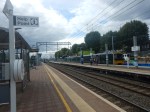

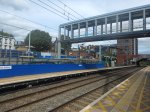
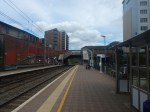
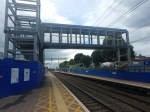
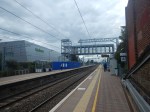
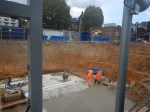
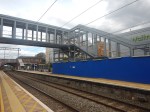
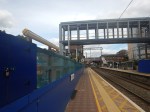
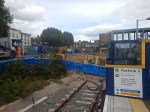
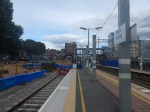
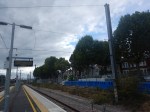
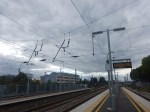
Some observations.
The Big Hole
A big hole is being dug on the North side of the station.
- This is the side where the entrance will be giving access from the road at the side of the station.
- There are no stairs or lift tower on this side.
- There looks to be foundations in the hole!
Could these support the stairs and lift and the entrance on this side of the station? I suspect the answer is an affirmative!
Bay Platform 5 Electrification
Platform 5 is not electrified, but two gantries are at the Western end of the platform and these could easily be fitted with wires.
Perhaps at the Eastern end, the wires will be fixed to the station building, as they have been at Abbey Wood station.
An electrified bay platform would be ideal for charging a battery-electric train, that was working the Greenford Branch.
- In How Much Power Is Needed To Run A Train At 125 mph?, I calculated that to overcome air resistance and keep a high speed train at 125 mph needs around three k|Wh per vehicle mile.
- I know that, trains on the Greenford Branch will be going a lot slower than 125 mph, so I will treat the three kWh figure as a maximum value.
- The maximum size of train will be two cars.
- The Greenford Branch is two-and-a-half miles long, so a round trip is five miles.
\Multiplying all the numbers together gives a maximum energy requirement for the cruise of thirty kWh.
I think that it should be possible to design a two-car battery-electric train with sufficient range to handle the Greenford Branch.
In Will The Class 230 Trains Be Coming Home?, I speculated that the Greenford Branch could be run by a small fleet of Class 230 trains.
Could this be right? Probably not!
But!
- The diesel version is already in service at Bedford.
- They are the right loading gauge and weight.
- Two cars would be an ideal length.
- They could have upwards of two hundred kWh of energy storage.
- They can be fitted with a pantograph for charging or a Vivarail fast charger could be used.in one or both stations.
If the battery version were to be thought too risky, the diesel version, as at Bedford could be used.
Judging by their performance at Bedford, they would probably do a quality job.
World’s First Solar-Powered Trains Are Coming To England
The title of this post, is the same as that on this article on Lonely Planet.
This is the first paragraph
The first ever solar unit to directly supply a railway line with electricity has been put in place in England, paving the way for the world’s first solar-powered trains
I am not sure yet about this technology., powering large sections of the UK’s railways.
But the technology does have applications, if it is combined with energy storage.
Boosting Power With Third-Rail Electrification
Third-rail electrification has a problem, in that it needs to be fed with power every few miles. Inevitably, as timetables get busier, there are areas, where there is not enough power to supply the trains.
These systems can provide that fill-in power.
Note that 25 KVAC overhead electrification doesn’t have the problem, as the wires themselves distribute the electricity.
This means that the Great Western Main Line electrification is only supplied with power from the electricity grid at three places; the two ends and one in the middle.
Electrification In Visually-Sensitive Places
Look at this picture of Brunel’s magnificent Wharncliffe Viaduct.
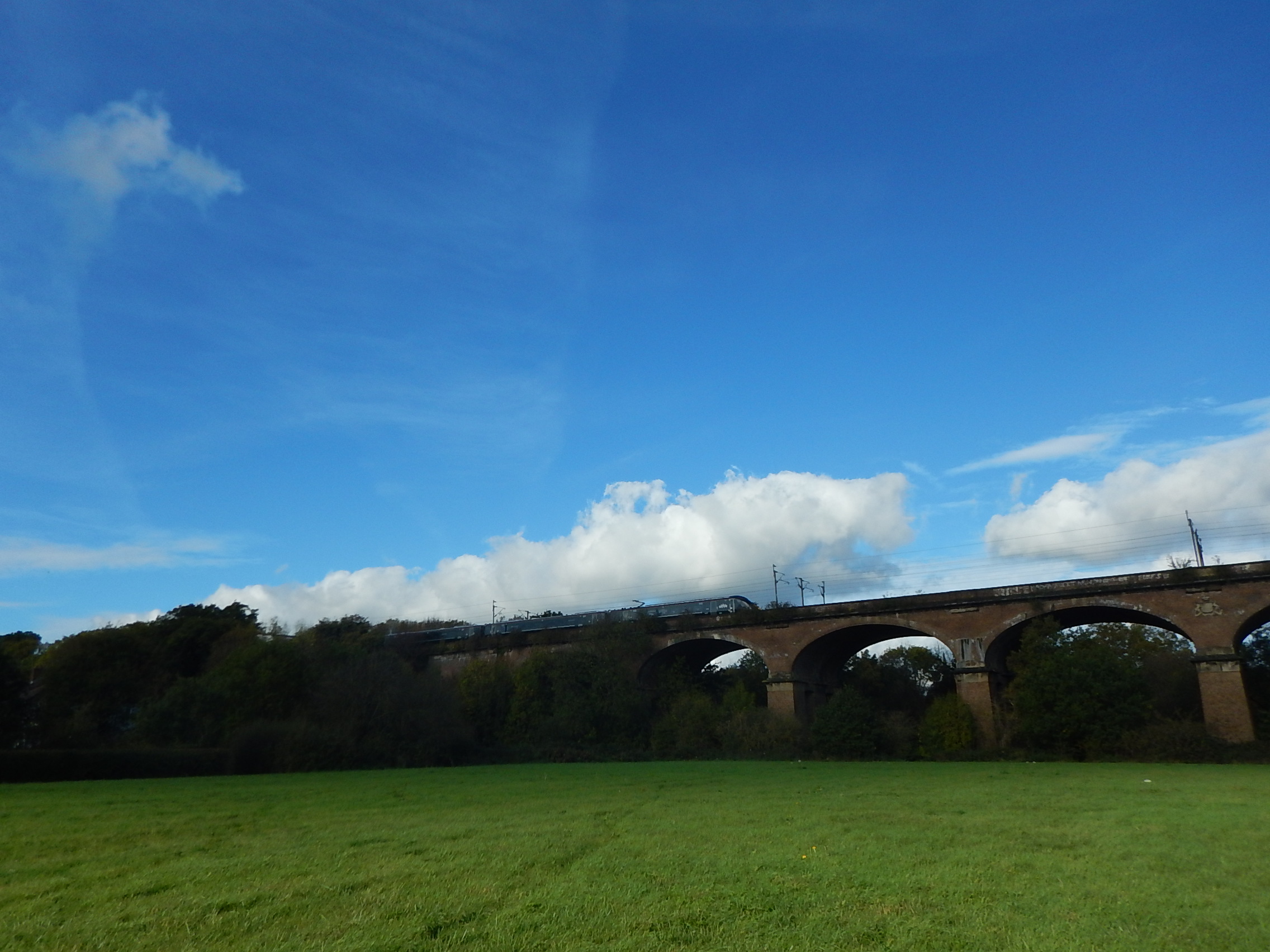
It has been recently electrified and some groups object to the electrification of Grade I Listed structures like this.
Most modern electric trains can be dual-voltage and can work on both electrification systems used in the UK; 25 KVAC overhead and 750 VDC third rail. They can also change between electrification systems at maximum speed
So could we see selective use of solar-powered third-rail electrification in visually-sensitive areas?
Possibly! But battery/electric trains may be a better alternative!
Charging Battery-Electric Trains
There are some branch lines, that will be served by battery-electric trains in the future.
These solar-powered systems could be used to provide the energy to charge the batteries for the return journey.
Powering Remote Stations
Stations are increasingly needing better electricity supplies with more lighting and various ticket and parking machines, and charging for electric cars will become more important.
Solar power systems and batteries could be used.
Conclusion
Solar power will be increasingly used on the railways, with a large number of stations like Blackfriars and the recently-opened White Hart Lane.
But that will happen, irrespective of the result of the Aldershot trial, as many stations are easy places to install solar panels, either on the roof or redundant spaces.
This Google Map shows one of my local stations; Haggerston.

It was rebuilt and reopened in April 2010, so solar panels were probably not thought about for the station.
From my helicopter, it appears that the stations at Dalston Junction, Hoxton and Shoreditch High Street, which were all built at the same time, don’t have solar rooves either.
Perhaps Transport for London and/or Network Rail should rent their roof areas to companies, who run solar farms?
I’m sure there’s a mutually beneficial deal in there somewhere!
As to powering trains, I’m sure they that Riding Sunbeams has a place on third-rail networks, where power needs boosting.
However, electric trains with batteries might be a better option in other applications.
Around The Fife Circle Line
Although, I’ve been to Scotland many times, I’d never knowingly been over the Forth Bridge in good light.
So I went all the way round the Fife Circle Line and took these pictures.
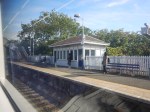

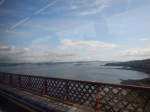


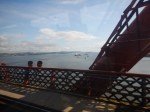
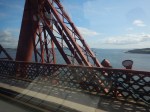
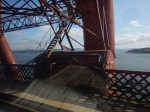
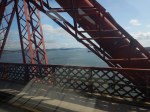
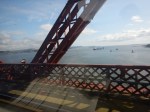
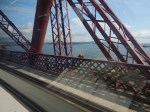
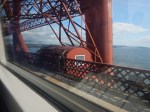
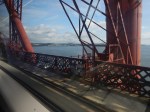
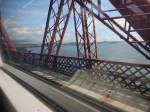
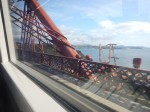
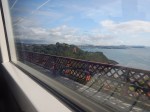

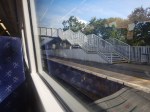
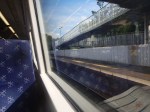
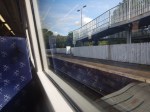
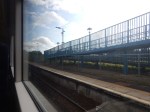
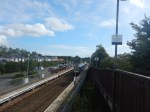
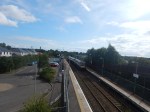
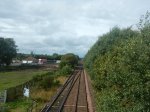
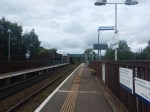
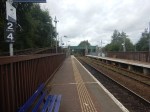
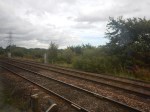
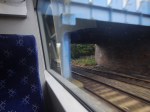
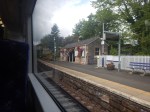
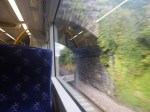
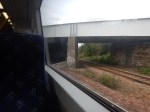
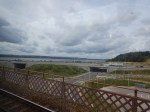
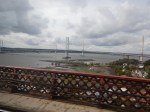
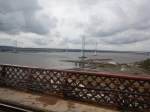


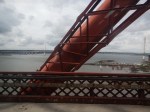
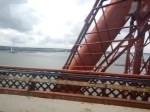

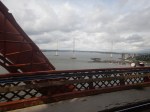
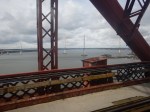
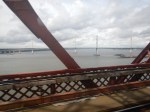
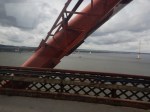
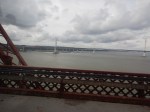

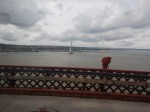
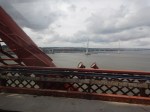
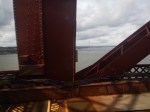
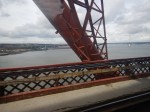
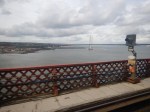
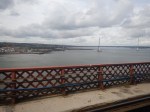
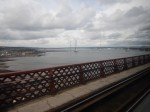
The route was fairly busy and I very much feel that the three-car Class 170 train could at times be rather small for the route.
The Fife Circle Line
This map from Wikipedia shows the stations on the Fife Circle Line.
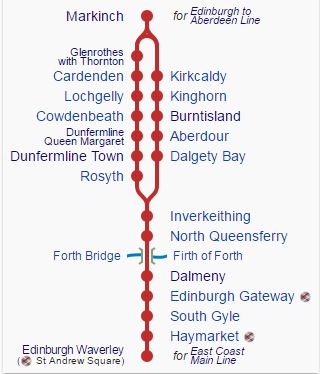
Consider.
The route is double-track.
- The distance from Dalmeny to Glenrothes with Thornton station via Comdenbeath is 22.3 miles
- The distance from Dalmeny to Glenrothes with Thornton station via Kirkcaldy is 21.4 miles
- The train I was on waited a couple of minutes at Glenrothes with Thornton station before turning to Edinburgh.
In addition my pictures show the following.
- Many of the bridges are high- enough to allow electrification.
- On the East side of the Circle, there are some old stone bridges that would need to be raised for electrification.
- Some of the stations are step-free with ramps.
Overall, it is a typically-Scottish neat-and-tidy line, that needs some improvement, like longer electric trains and some improved stations with step-free access.
Electrification Of The Fife Circle Line
In my view, there are two major obstacles to full-electrification of the Fife Circle Line.
The Forth Rail Bridge
I feel that engineers could electrify the Forth Rail Bridge without too much difficulty.
But that is not the problem.
- The bridge is on the main route between Edinburgh and Aberdeen and North East Scotland and electrification would cause major disruption during the installation.
- There is also the Heritage Lobby, who would probably be totally against major changes to a World Heritage Site.
For these reasons, I don’t think that the Forth Bridge will be electrified.
The Stone Bridges On The Eastern Side Of The Circle
There are nearly a dozen stone arch bridges on the route through Kirkcaldy and raising these for electrification would cause major disruption to one of Scorland’s main rail routes.
Third-Rail Electrification Of The Fife Circle Line
In my view, this would be an option to get round the problems of disruption and the Forth Rail Bridge.
But, third-rail electrifrication is still-considered a method non-grata, despite being used successfully for over a hundred years in Merseyside and South of London.
I do wonder, if Brexit will make it easier to install third-rail systems.
Certainly, Hitachi who would probably make most of the electric trains that would use the Forth Rail Bridge and the Fife Circle Line have the technology for third-rail trains, which they used on the Class 395 trains for HighSpeed commuter services to Kent.
I do wonder, if Brexit will make it easier to install third-rail systems.
Battery-Electric Trains On The Fife Circle Line
In Hitachi Plans To Run ScotRail Class 385 EMUs Beyond The Wires, I discussed Hitachi’s plan to fit batteries to Class 385 trains, so they could run on unelectrified lines.
The Fife Circle Line would be an ideal route for battery-electric trains.
This map shows the rail lines to the South of the Forth Rail Bridge.
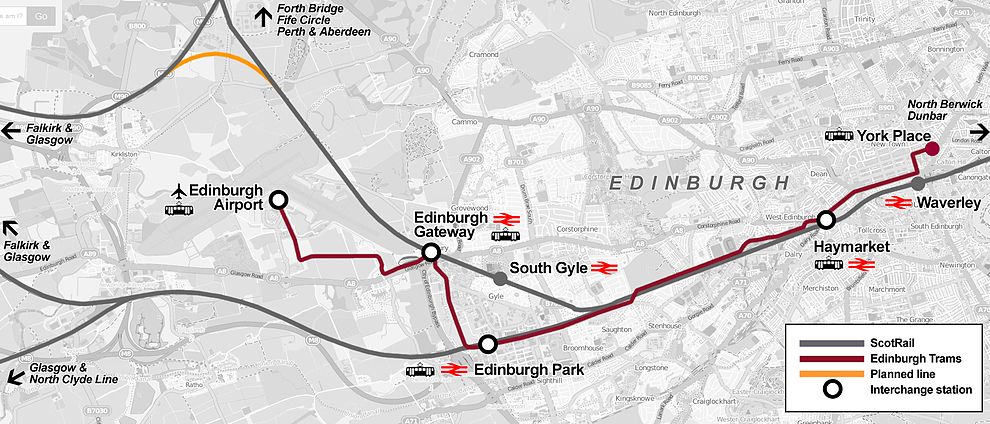
Note.
- An unelectrified line, through South Gyle and Edinburgh Gateway stations, connects the Forth Bridge to the main electrifield Edinburgh and Glasgow Line through Edinburgh Park station.
- There is also another unelectrified line, that connects the Forth Rail Bridge to Linlithgow, Falkirk and Glasgow.
- Shown in yellow is a proposed chord, which would create another route between Edinburgh and Glasgow.
Electrification as far as Dalmeny station, which is between the Forth Bridge and the proposed chord would enable LNER’s bi-mode Class 800 trains to use electric power for a few extra miles.
As I said earlier, the distance between Dalmeny and Glenrothes with Thorntonh station is under twenty-five miles using either the Western or Eastern side of the Fife Circle Line.
- Twenty-five miles is well within range of a battery-electric train, that has charged the battery using the electrification between Edinburgh and Dalmeny.
- Most quoted ranges for battery-electric trains are in the order of sixty miles, so a well-designed train could probably do a complete round trip from Dalmeny station.
- A charging point could be provided at Glenrothes with Thorton station to top up the batteries, whilst the train waits to return, if that were deemed necessary.
In my view, the Fife Circle Line is an ideal route for battery-electric trains. Especially, as the only new infrastructure required is as follows.
- Electrification to Dalmeny station, which may be under consideration anyway.
- Provision of a charging station at Glenrothes with Thornton station.
It is undoubtedly, the lowest cost way to provide new electric trains on the Fife Circle Line.
How Big Would The Batteries Need To Be?
I use a figure of three kWh per vehicle mile for the energy consumption of an electric multiple unit running on a typical route. My reasoning for this figure is given in How Much Power Is Needed To Run A Train At 125 mph?.
On that basis a three-car Class 385 train would need a battery capacity of 3x3x50 or 450 kWh to do a complete trip around the Fife Circle Line.
Note that Vivarail are talking about putting 424 kWh in a three-car Class 230 train.
This page on the Vivarail web site is entitled Battery Train Update.
This is a paragraph.
Battery trains are not new but battery technology is – and Vivarail is leading the way in new and innovative ways to bring them into service. 230002 has a total of 4 battery rafts each with a capacity of 106 kWh and requires an 8 minute charge at each end of the journey. With a 10 minute charge this range is extended to 50 miles and battery technology is developing all the time so these distances will increase.
So it looks like Vivarail manage to put 212 kWh under each car of their two-car train.
Surely, Hitachi have the technology to put 450 kWh in a three-car Class 385 train.
Trains On The Levenmouth Rail Link
In Scottish Government Approve £75m Levenmouth Rail Link, I talked about using Class 385 trains with batteries on the Levenmouth Rail Link.
The same Class 385 trains with batteies could do both routes.
Extension To The Borders Railway
There has been suggestions, that Borders Railway and Fife Circle Line trains run back-to-back across Edinburgh.
It is just over thirty miles between Newcraighall, where the electrification from Edinburgh ends, and Tweedbank.
With a charging station at Tweedbank, Class 385 trains with batteries could run both routes.
Conclusion
It appears that running battery-electric Class 385 trains on the Fife Circle Line and the Levenmouth Rail Link is a feasible option.
It would also be superb publicity for the company, who supplied the trains, if videos were shown of the trains on the Forth Rail Bridge.
Scottish Government Approve £75m Levenmouth Rail Link
The title of this post is the same as that of this article on Rail Technology Magazine.
The plan seems to have been well-received by politicians and the media.
I’ve always thought this line to be a good candidate for reopening.
- It is only five miles long.
- It would serve Scotland’s largest town without a rail station.
- There must be freight opportunities for freight, as the line could serve Scotland’s largest distillery.
There is more here on the Wikipedia entry for the Levenmouth Rail Link under Cost, Feasibility And Services.
Could The Levenmouth Rail Link Be Part Of A Bigger Picture?
The Fife Circle Line is an important route into Edinburgh for commuters, shoppers and visitors.
This map from Wikipedia shows the stations on the Fife Circle Line.
Consider.
- The route is not electrified.
- A train starting in Edinburgh and going rund the loop would cover about sixty miles.
- Trains have a frequency of four trains per hour (tph)
It would appear that it would be the sort of service that would be ideal for electric trains, like ScotRail’s Class 385 trains, where a fleet of perhaps eight trains could provide the current service.
But there is a big obstacle to electrification; the Forth Rail Bridge.
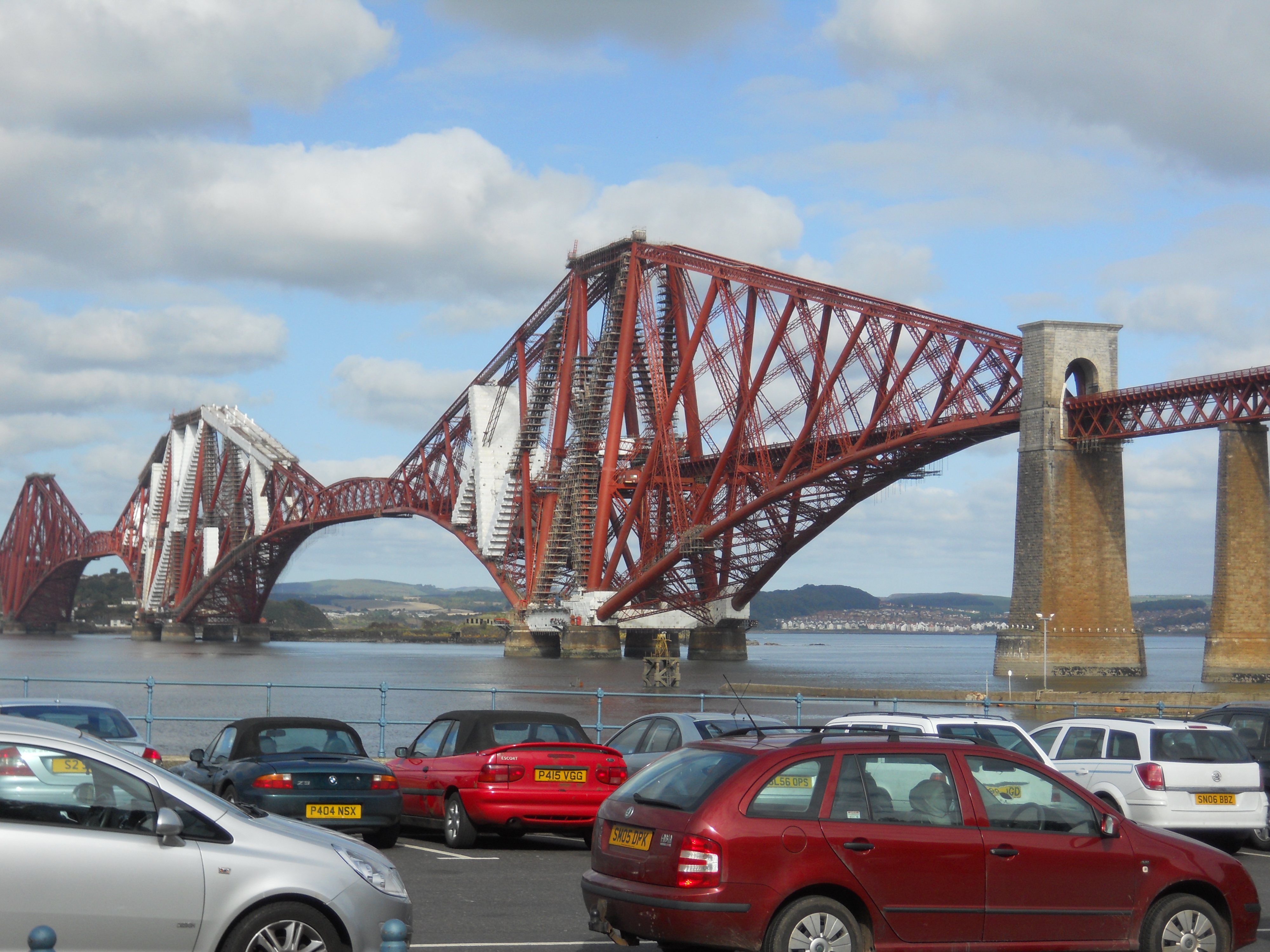
It would be a difficult engineering project, that would cause massive disruption and one that would probably be strongly opposed by the Heritage lobby.
This map from Wikipedia shows the proposed Levenmouth Rail Link.
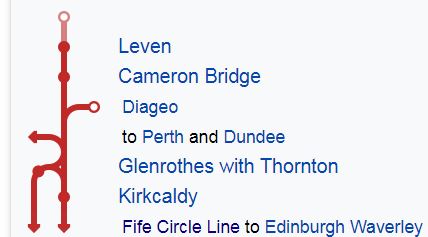
Note how it connects to the Fife Circle Line at Glenrothes with Thorton and Kirkcaldy stations.
I estimate that the distance between Leven and Edinburgh stations would be about 31 miles.
Could Battery-Electric Trains Work To Glenrothes with Thorton And Leven?
Consider these facts abut battery-electric trains.
- Bombardier ran a battery-electric train on the 11.5 mile Mayflower Line in public service for three months, without a hitch in 2015.
- Hitachi, Siemens, Stadler and Vivarail have sold battery-electric trains.
- Hitachi are running battery-electric trains in Japan.
- Ranges of upwards of fifty miles are being claimed.
- Battery-electric trains are a quality experience for passengers.
.As the Edinburgh and Leven and dinburgh and Glenrothes with Thorton routes are about thirty miles, I believe it is now possible to run battery-electric trains on these two routes.
- They would be charged at the Edinburgh end using the existing electrification.
- Charging stations would be needed at Leven and Glenrothes with Thornton.
- Electrification could also be erected as far as Dalmeny station at the Edinburgh end, which would reduce the range on batteries by about seven miles.
There would be no difficult engineering and the Forth Rail Bridge would look the same as the day it was built!
Hitachi Plans To Run ScotRail Class 385 EMUs Beyond The Wires
I covered this in more detail in Hitachi Plans To Run ScotRail Class 385 EMUs Beyond The Wires.
Hitachi appear to be serious according to this article of the same name on Rail Engineer.
The article concludes with this paragraph.
Hitachi’s proposal to operate battery trains in Scotland is at an early stage. However, with their use being recommended by the rail decarbonisation task force and the Scottish Government about to pass new climate change legislation, it may not be long before battery trains are operating in Scotland.
Hitachi aren’t stupid and I doubt they could want for a better portfolio of launch routes, than some of those in Scotland.
- Edinburgh and Leven over the Forth Rail Bridge.
- Edinburgh and Grenrothes with Thornton over the Forth Rail Bridge.
- The Borders Railway.
I also show in the related article, that Glasgow to Oban and Mallaig may be possible.
The Rail Network And Electrification To The West Of Edinburgh
This map shows the rail system to the West of Edinburgh.
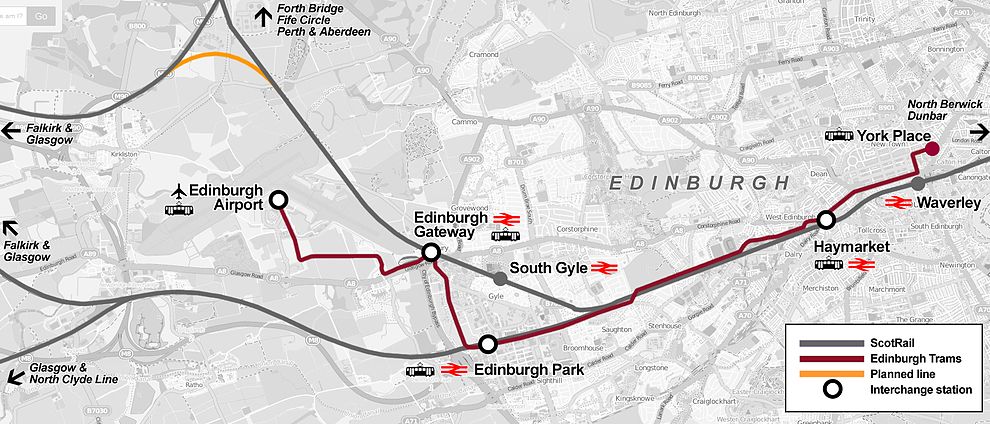
All lines except for the route through South Gyle and Edinburgh Gateway stations are electrified.
Electrification as far as Dalmeny station, the addition of the new chord (shown in yellow) and fill in electrification to join the chord to the Glosgow wires would open up the possibilities of more routes between Edinburgh and Glasgow and a connection between Glasgow and the Fife Circle.
But battery-electric trains would be needed.
ScotRail has Options For More Class 385 Trains
This is said in the Wikipedia entry for the Class 385 trains.
10 unit optional follow up order after 2020.
So ScotRail seem to have a gateway to the future.
Will Battery-Electric Trains Be Good For Tourism?
I very much doubt, that they’ll be bad for it!
Conclusion
The announcement of the reinstatement of the Levenmouth Rail Link, could be be a collateral benefit of a decision to trial or even order some battery-electric Hitachi Class 385 trains.
Baden-Württemberg Backs Battery Mireos
The title of this post, is the same as that of this article on Railway Gazette.
This is the first paragraph.
The Land of Baden-Württemberg has decided to order a fleet of 20 Mireo battery-electric multiple units from Siemens Mobility to operate the Netz 8 Ortenau package of regional lines, the state government announced on August 2.
Routes to be operated include.
- The electrified line between Offenburg and Freudenstadt/Hornberg
- Rench Valley Railway between Appenweier and Bad Griesbach – 29.1 km.
- , Acher Valley Railway between Achern and Ottenhöfen. – 10.4 km.
- Harmersbach Valley Railway between Biberach and Oberharmersbach-Riersbach – 10.6 km.
Reading about the area, it could be a nice place to go for an explore.
But it also could be the sort of area, that is ideal for battery-electric trains.
Germany Is Going Green In Local Rail Services
There have been other stories of hydrogen and battery-electric trains in Germany.
- Battery Answer To Schleswig-Holstein’s Diesel Replacement Question
- World’s Largest Fleet Of Fuel Cell Trains’ Ordered
- My First Ride In An Alstom Coradia iLint
- Bombardier Introduces Talent 3 Battery-Operated Train
- Flirt Akku Battery Multiple-Unit Unveiled
- Alpha Trains Commits To Hybrid Retrofit For Diesel Fleet
Manufacturers involved include Alstom, Bombardier, Rolls-Royce MTU, Siemens and Stadler.
Who will win the battle of zero-carbon technologies?
My money is on a new design of train, that is built specifically around battery or hydrogen technology.
- I’m sure Bombardier’s Aventras use battery technology, as an integral part of their excellent design.
- Stadler’s launch of the Class 755 train, shows they’ve got a top-of-the-range platform on which to install battery or hydrogen power.
Will Siemens battery-powered Mireo be another challenger.
Bombardier Doesn’t Seem Too Disappointed On Missing Out On The Abellio East Midlands Railway Order
This article on the Derby Telegraph is entitled Derby’s Bombardier Misses Out On Big Contract To Supply Trains For The East Midlands.
This is two paragraphs from the article.
In a statement, Bombardier said: “Bombardier is clearly disappointed that we have not been selected to supply bi-mode trains for the East Midlands franchise.
“We believe we submitted a competitive bid – on technology, strength of product, deliverability and cost, and will seek formal feedback from Abellio.”
There certainly hasn’t been any published threat of legal action.
The Abellio East Midlands Railway Order From Hitachi.
The order placed was as follows.
Thirty-three five-car AT-300 trains.
- 25 KVAC overhead electrification.
- Four cars have underfloor diesel-engines.
- 125 mph running.
- 24 metre cars.
- Ability to work in pairs.
- Evolution of a Class 802 train.
- A new nose.
It is a £400 million order.
No Trains For Corby
In How Will Abellio East Midlands Railway Maximise Capacity On The Midland Main Line?, I calculated that the current timetable to Derby, Nottingham and Sheffield would need thirty-two trains.
So thirty-three trains would only be enough trains for the bi-mode services to the three Northern termini.
So it looks like Hitachi are not providing any trains for the Corby services! Surely, to have a compatible fleet from one manufacturer would be of an advantage to Abellio East Midlands Railway.
An Ideal Fleet For Corby
Trains between London and Corby take around 70-75 minutes, with a round trip taking three hours.
This means that to run a one train per hour (tph) service to Corby needs three trains and a two tph service will need six trains.
As trains go wrong and also need servicing, I would add at least one spare train, but two is probably preferable.
It would have the following characteristics.
- All electric.
- 125 mph running, as they will need to keep out of the way of the Hitachi bi-modes.
- 240 metres long.
- A passenger-friendly interior, with loys of tables.
- Energy efficient
If the last point s to be met, I and many other engineers believe that to save energy, trains must have regenerative braking to batteries on the train.
In Kinetic Energy Of A Five-Car Class 801 Train, I calculated that the kinetic energy of a Class 801 train, with every seat taken was 104.2 kWh
This calculation was performed for a half-length train, so a full electric train for London and Corby would have a kinetic energy of 208.4 kWh, if it was similar to one of Hitachi’s Class 801 train.
The reason the kinetic energy of a train is important, is teat if a train brakes from full speed and has batteries to handle the energy generated by regenerative braking, the batteries must be big enough to handle all the energy.
So a ten-car train similar in capacity and weight to a Class 801 train would need batteries capable of handling 208.4 kWh.
I’ll give a simple example.
A train similar to a Class 801, is full and running using electrification at 125 mph. It is approaching a station, where it will stop.
- The train’s computer knows the mass and velocity of the train at all times and hence the kinetic energy can be calculated.
- The train’s computer will constantly manage the train’s electricity supply, so that the batteries always have sufficient capacity to store any energy generated by braking.
- As the train brakes, the energy generated will be stored in the batteries.
- As the train moves away from the station, the train’s computer will use energy from the overhead electrification or batteries to accelerate the train.
Energy will constantly be recycled between the traction motors and the batteries.
I don’t know what battery capacity would be needed, but in my experience, perhaps between 300-400 kWh would be enough.
Any better figures, gratefully accepted.
When you consider that the battery in a Tesla car is around 60-70 kWh, I don’t think, there’ll be too much trouble putting enough battery power underneath a ten-car train.
Onward To Melton Mowbray
This page on the Department for Transport web site is an interactive map of the Abellio’s promises for East Midlands Railway.
These are mentioned for services to Oakham and Melton Mowbray.
- After electrification of the Corby route there will continue to be direct service each way between London and Oakham and Melton Mowbray once each weekday, via Corby.
- This will be operated with brand new 125mph trains when these are introduced from April 2022.
This seems to be a very acceptable minimum position.
Surely, in a real world driven by marketing and finance and more and more passengers wanting to travel regularly by train to places like London, Luton Airport and Leicester, there will come a time, when an hourly service on this route is needed.
Could a Corby service be extended to Melton Mowbray using battery power, at perhaps a slower speed of 90 mph?
Accelerating away from Corby, the train would need 108 kWh of energy to get to 90 mph with a full train.
- There would be a continuation of the electrification for perhaps a couple of hundred metres after Corby station.
- The train would probably leave Corby with a full battery, which would have been charged on the journey from London.
Once at cruising speed, the train would need energy to maintain line speed and provide hotel power.
In How Much Power Is Needed To Run A Train At 125 mph?, I calculated the figure for some high-speed trains.
This was my conclusion.
In future for the energy use of a train running at 125 mph, I shall use a figure of three kWh per vehicle mile.
So I will use that figure, although I suspect the real figure could be lower.
I will also assume.
- Corby to Melton Mowbray is 26.8 miles.
- It’s a ten-car train.
- Regenerative braking is seventy percent efficient.
- The train is running at 90 mph, between Cotby and Melton Mowbray, with an energy of 108 kWh
Energy use on a round trip between Corby and Melton Mowbray, would be as follows.
- Accelerating at Corby – 108 kWh – Electrification
- Stop at Oakham – 32.4 kWh – Battery
- Corby to Melton Mowbray – 804 kWh – Battery
- Stop at Melton Mowbray – 32.4 kWh – Battery
- Stop at Oakham – 32.4 kWh – Battery
- Melton Mowbray to Corby – 804 kWh – Battery
This gives a total of 1705.2 kWh
The battery energy need gets a lot more relaxed, if there is a charging station at Melton Mowbray, as the train will start the return journey with a full battery.
Energy use from Corby to Melton Mowbray would be as follows.
- Accelerating at Corby – 108 kWh – Electrification
- Stop at Oakham – 32.4 kWh – Battery
- Corby to Melton Mowbray – 804 kWh – Battery
This gives a total of 836.4 kWh.
Energy use from Melton Mowbray to Corby would be as follows.
- Accelerating at Melton Mowbray- 108 kWh – Battery
- Stop at Oakham – 32.4 kWh – Battery
- Melton Mowbray to Corby – 804 kWh – Battery
This gives a total of 944.4 kWh.
The intriguing fact, is that if you needed a train to go out and back from Corby to Melton Mowbray, it needs a battery twice the size of one needed, if you can charge the train at Melton Mowbray., during the stop of several minutes.
Charging The Train
This page on the Furrer + Frey web site, shows a charging station..
It might also be possible to erect a short length of 25 KVAC overhead electrification. This would also help in accelerating the train to line speed.
This Google Map shows Melton Mowbray station.
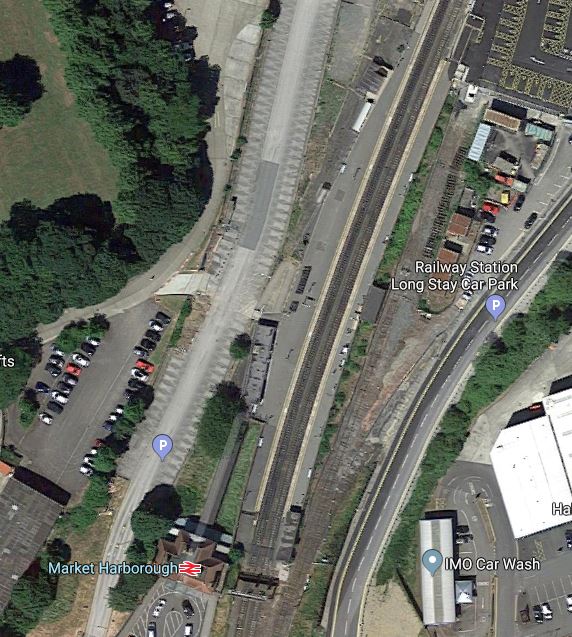
It looks to be a station on a large site with more than adequate car parking and I suspect building a bay platform with charging facilities would not be the most difficult of projects.
More Efficient Trains
I also think that with good design electricity use can be reduced from my figure of 3 kWh per vehicle mile and the regenerative braking efficiency can be increased.
Obviously, the more efficient the train, the greater the range for a given size of battery.
Onward To Leicester
If the train service can be extended by the 26.8 miles between Corby and Melton Mowbray, I wonder if the electric service can be extended to Leicester.
Under current plans the Northern end of the electrification will be Market Harborough.
In Market Harborough Station – 11th July 2019, I wrote about the station after a visit. In my visit, I notices there were a lot of croaaovers to the North of the station.
As it was a new track alignment, I suspect that they were new.
So is it the interntion to turnback services at Market Harborough or are the crossovers preparation for links to stabling sidings?
It got me asking if battery-electric trains could reach Leicester.
- Leicester and Market Harborough are only fourteen miles apart.
- There are no stops in between.
- Using my three kwH per vehicle mile, this would mean that a ten car train would use 420 kWh between the two stations at 125 mph.
I certainly believe that a Northbound train passing Market Harborough with fully-charged batteries could reach Leicester, if it had an adequate battery of perhaps 700 kWh.
As at Melton Mowbray, there would probably need to be a charging station at Leicester.

The picture shows the station from the Northern bridge.
The platforms shown are the two main lines used by most trains. On the outside are two further lines and one or both could be fitted with a charging station, if that were necessary.
An Example Electric Service Between London And Leicester
If they so wanted, Abellio East Midlands Railway could run 125 mph battery-electric services between London and Leicester.
The Current Timings
The fastest rains go North in around 66-67 minutes and come South in seventy.
So a round trip would take around two and a half hours.
Five trains would be needed for a half-hourly service.
I feel it would be very feasible, if Abellio East Midlands Railway wanted to increase services between London and Leicester, then this could be done with a fleet of zero-carbon battery-electric trains, using battery power between Leicester and Market Harborough.
A Non-Stop London And Leicester Service
I wonder what would be the possible time for an electric express running non-stop between London and Leicester.
- Currently, some diesel Class 222 trains are timetabled to achieve sixty-two minutes.
- Linespeed would be 125 mph for much of the route.
- There is no reason, why the fourteen mile section without electrification North of Market Harborough couldn’t be run at 1235 mph on battery-power, once the track is upgraded to that speed.
- iIn the future, modern digital signalling, as used by Thameslink, could be applied to the whole route and higher speeds of up to 140 mph may be possible.
I wouldn’t be surprised to see a battery-electric train travelling between London and Leicester in fifty minutes before 2030.
A fifty-minute service would result in a two-hour round trip and need just two trains for a frequency of two tph.
It would surely be a marketing man’s dream.
It should be noted that Abellio has form in this area and have introduced Norwich-in-Ninrty services on the slower London and Norwich route.
London And Leicester Via Corby, Oakham And Melton Mowbray
I have been very conservative in my calculations of battery size.
With real data on the terrain, the track profile, the train energy consumption, regenerative braking performance and the passengers, I do wonder, if it would be possible to run on battery power between Corby and Leicester via Oakham and Melton Mowbray.
- The distance would be 62 miles on battery power.
- Trains could serve Syston station.
- Using times of current services London and Leicester would take two hours fifteen minutes.
I suspect it would be possible, but it would be a slow service.
Would These Services Be An Application For Bombardier’s 125 mph Bi-Mode Aventra With Batteries?
Could Bombardier’s relaxed reaction to not getting the main order, be because they are going to be building some of their proposed 125 mph bi-mode trains with batteries, that will be able to work the following routes?
- London and Melton Mowbray via Corby and Oakham.
- London and Leicester via Market Harborough.
But I think that the main emphasis could be on a non-stop high-speed service between London and Leicester.
I have been suspicious that there is more to Bombardier’s proposed train than they have disclosed and wrote Is Bombardier’s 125 mph Bi-Mode Aventra With Batteries, A 125 mph Battery-Electric Aventra With Added Diesel Power To Extend The Range?
Since I wrote that article, my view that Bombardier’s train is a battery-electric one, with diesel power to extend the range, has hardened.
These Midland Main Line trains will run in two separate modes.
- On the Southern electrified sections, the trains will be 125 mph electric trains using batteries for regenerative braking, energy efficiency and emergency power in the case of overhead line failure..
- On the Northern sections without electrification,the trains will be battery-electric trains running at the maximum line-speed possible, which will be 125 mph on Leicester services.
There will be an optimum battery size, which will give the train the required performance.
Is there any need for any diesel engines?
Quite frankly! No! As why would you lug something around that you only need for charging the batteries and perhaps overhead supply failure?
- Batteries would only need to be charged at the Northern end of the routes. So use a chasrging station, if one is needed!
- Batteries can handle overhead supply failure, automatically.
Who needs bi-modes?
How Big Would The Batteries Need To Be?
A full train would have a kinetic energy of around 200 kWh and I said this about battery capacity for handling the energy from regenerastive braking.
I don’t know what battery capacity would be needed, but in my experience, perhaps between 300-400 kWh would be enough.
Any better figures, gratefully accepted.
To handle Corby to Melton Mowbray and back, I estimated that 1,800 kWh would be needed, but if the train had a top-up at Melton Mowbray a capacity of 1,000 kWh would be sufficient.
Pushed, I would say, that a battery capacity of 2,000 kWh would be sufficient to run both routes without a charging station, at the Northern end.
I also believe the following will happen.
- Trains will get more efficient and leighter in weight.
- Batteries will increase their energy density.
- Charging stations will charge trains faster.
- Battery costs will fall.
This would mean that larger battery capacities can be achieved without the current weight and cost penalty and the achievable range after the end of the wires will increase.
I wouldn’t be surprised to see ranges of over fifty miles in a few years, which with a charging station at the destination, means battery-electric trains could venture fifty miles from an electrified line.
A few other suggested routes.
- Ashford and Southampton
- Birmingham and Stansted Airport
- Carliswle and Newcastle
- Doncaster and Peterborough via Lincoln (CS)
- Edinburgh and Tweedbank (CS)
- London Euston and Chester
- London St. Pancras and Hastings
- London Waterloo and Salisbury (CS)
- Manchester and Sheffield (CS)
- Norwich and Nottingham (CS)
- York and Hull via Scarborough (CS)
Note.
- Stations marked (CS) would need a charging station.
- Some routes would only need 100 mph trains.
I think that a 125 mph battery train will have a big future.
Conclusion
I have a feeling that Bombardier are right to be not too disappointed.
« Previous | Next »
Solar Panel Pilot For Aldershot
The title of this post is the same as that of an article in the August 2019 Edition of Modern Railways.
This is the two paragraphs.
Solar panels are to be installed on derelict land near Aldershot station as part of an experiment into whether renewable energy can be used to power trains.
A total of 135 discrete solar panels are being installed and are expected to go live in August. The Riding Subnbeams ‘First Light’ demonstrator project is a collaboration between climate change charity 10:10, Community Energy South and Network Rail, alongside a consortium of specialist consultants and university departments.
I wrote about the company and its ideas in Solar Power Could Make Up “Significant Share” Of Railway’s Energy Demand, which I posted in December 2017.
I won’t repeat myself, but I will say that since I wrote the original article, a compatible development has happened.
In Vivarail Unveils Fast Charging System For Class 230 Battery Trains, I wrote about Vivarail’s charging system for battery trains, which uses battery-to-battery power transfer to charge batteries on trains, through standard third-rail technology.
I do feel that the 10:10 and Vivarail ought to be talking, as I feel that between them, they could come up with some good joint ideas.
Getting To The Proposed Morecambe Eden Project By Train
I originally wrote this post as part of Thoughts On The Morecambe Bay Eden Project, in August 2018, but I now feel it is better as a standalone post!
Current Train SAervices To Morecambe
Morecambe is served by the Morecambe Branch Line, This diagram from Wikipedia, shows how Morecambe is well-connected to Lancaster and the West Coast Main Line.

Note.
- The line has two stations in the town at Bare Lane and Morecambe and another at the nearby Heysham Port.
- Service between Morecambe and Lancaster seems to have a frequency of two trains per hour (tph) and a journey time of around ten minutes.
- There are also upwards of three services a day to and from Skipton and Leeds, which reverse at Lancaster.
I don’t think that a train every half-hour, is sufficient to serve a major attraction.
Possible Expansion Of The Train Service
As both Bare Lane and Morecambe stations have two platforms and there used to be extra tracks along the route, I think it would be possible to create a railway system to Morecambe that could include.
- Two tph to and from Lancaster.
- Trains to and from Leeds via Lancaster, Carnforth, Hellifield for the Settle & Carlisle Railway and Skipton
- Trains to and from Windermere via Lancaster, Carnforth and Oxenholme Lake District.
- Trains to and from Carlisle via Lancaster, Carnforth, Barrow and the Cumbrian Coast Line.
There is tremendous scope to expand rail services in an area of scenic beauty, that includes the Lake District and the Pennines.
Creating an iconic attraction at Morecambe could be a catalyst to develop the rail services in the wider area.
A decent rail service with good provision for bicycles and wheelchairs, might also encourage more tourism without the need for cars.
The West Coast Main Line And High Speed Two
The West Coast Main Line, which will also be used by High Speed Two trains in the future goes between Lancaster and Carlisle.
- Trains to and from Morecambe, Windermere and Barrow will have to share with the 125 mph trains on the West Coast Main Line.
For this reason, I feel that the specification for local trains must be written with care.
Battery Trains Between Morecambe And Lancaster
In my view, the short Morecambe and Windermere Branch Lines are ideal for services that use battery trains, which would charge the batteries on the electrified West Coast Main Line.
- All trains between Lancaster and Morecambe could use battery power.
- Morecambe to Windermere could even be a 125 mph electric train on the West Coast Main Line, that used batteries on the short branch lines at either end.
Consider
- Bombardier are talking about a 125 mph bi-mode Aventra with batteries. Diesel power would not be needed, so add more batteries.
- Battery trains are talking about ranges of thirty miles, in a few years.
- Batteries would be charged on the West Coast Main Line.
- The trains would not be slow enough to interfere with the expresses on the West Coast Main Line.
How cool is that?
The battery-powered trains would surely fit in well with the message of the Eden Project.
Hydrogen-Powered Trains Between Morecambe And Leeds
In my view these routes would be ideal for environmentally-friendly hydrogen-powered trains.
- Morecambe and Leeds
- Lancaster and Carlisle via Barrow and Workington
- Carlisle and Newcastle
- Carlisle and Leeds via the Settle and Carlisle Line.
All passenger trains in Cumbria would be zero-carbon.
Conclusion
Morecambe and the Eden Project could be at the centre of an extensive zero-carbon rail network.
These major cities would have direct electric trains to Lancaster, which would be a short local train ride away.
- Birmingham
- Edinburgh
- Glasgow
- Liverpool
- London
- Manchester
All journeys could be zero-carbon.
Industry Urged To Decide On Alternative Technology
The title of this post, is the same as that of this article on Rail Magazine.
This is the first paragraph.
The rail industry needs to decide on the right approach to alternative technology as soon as possible, to ensure the industry can continue to reduce emissions.
Speaking to the All-Party Parliamentary Rail Group, Anthony Perratt of the RSSB, outlined how there was a huge opportunity to replace ageing Sprinter trains with new units powered by alternative energy sources like batteries and hydrogen.
The Size Of The Opportunity
Sprinter trains in service of stored in the UK include.
- Class 150 – 135 x two-car, 2 x three-car
- Class 153 – 70 x one-car
- Class 155 – 7 x two-car
- Class 156 – 114 x two-car
- Class 158 – 147 x two-car, 21 x three-car
- Class 159 – 30 x three-car
These add up to 516 trains, with a total of 1035 cars.
In the Wikipedia entry for the Class 710 train, this is said.
TfL announced that it had placed a £260m order for 45 four-car Bombardier Aventra EMUs.
This works out at nearly £1,500,000 for each car of a modern train.
This means that replacement of the Sprinters, with new independently-powered trains, would be project of the order of £1.5billion.
That is a market, that would be very much desired by a train builder.
Battery, Diesel Or Hydrogen Power?
Diesel power is probably not a good idea, if it can be avoided.
The following points about hydrogen- and battery-powered trains should be noted.
- Most hydrogen-powered trains are battery-powered trains, with a hydrogen fuel-cell to recharge the batteries.
- Battery technology is improving fast.
- Systems to rapidly charge batteries will be available in a couple of years.
- Battery-powered trains can use existing electrification to charge the batteries.
- Hydrogen-powered trains may need a large tank for the hydrogen, which limits passenger capacity.
- Hydrogen-powered trains need a refuelling structure, which may be more difficult to install, than a charging system for battery trains.
I feel that innovative engineers will be able to find ways to enable battery-powered trains on routes that need independently powered trains.
Conclusion
I don’t think, that we’ll see many long-term applications of hydrogen-powered trains in the UK.

