The High Speed Local Train
If Great Western Railway (GWR) are going to run a train service between Paddington and Bedwyn, they need an electric train which can power itself on the last thirteen miles between Newbury and Bedwyn, which is not electrified and is unlikely to be so in the next couple of decades.
The train must also be capable of cruising at 125 mph on the fast lines of the Great Western Main Line between Reading and Paddington.
GWR have no choice, but to run the service with a five-car Class 802 train.
When Hitachi were designing these 125 mph trains in Japan, I don’t suspect that running a service over a distance of 66.5 miles between London and a small village in Berkshire, was in the specification.
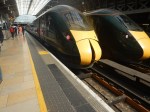
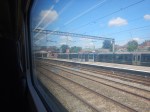
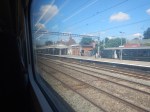
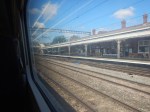
This morning, I took the 10:05 service from Paddington to Bedwyn, with the intention of returning on the 11:41 from Bedwyn to Paddington.
These are a few of the pictures that I took.
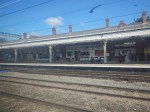
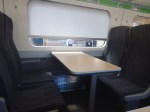
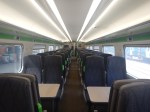

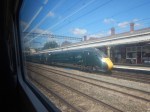

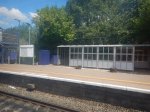
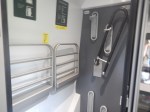
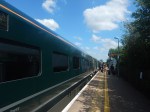

But things didn’t turn out as planned.
- Nothing serious and some animals got on the tracks between Reading and Swindon, meaning that we were some minutes late into Bedwyn, due to platform congestion at Reading.
- The return journey was consequently delayed.
These are a few observations.
Operating Speed
These were speeds on various parts of the journey.
- I timed the train at 115 mph through Southall and at 123 mph through Hayes & Harlington as the train accelerated out of Paddington.
- The train was doing just short of 125 mph for the major part of the route between London and Reading, until it had to stop because of the congestion.
- The train was doing around 100 mph on the electrified line between Reading and Newbury.
- Between Newbury and Bedwyn, speeds were between 80 and 90 mph.
Similar speeds were attained on the return journey.
Passenger Numbers
As the pictures show, there weren’t that many passengers who were travelling to Bedwyn, although there were more heading back to London.
Many more joined and left the service at the three larger stations of Reading, Newbury and Hungerford.
Now that the service is hourly between Reading and Bedwyn and half-hourly between Reading and Newbury in modern, comfortable trains, I can see passenger numbers growing.
Current Service
There are eleven trains per day, between Paddington and Bedwyn, at an hourly frequency, which take around three hours for a round trip.
So it would appear that three trains are needed for the service.
The service is also supplemented by an hourly stopping shuttle train between Reading and Newbury.
Two years ago, the service was just one three-car diesel train per hour between Paddington and Bedwyn with a few additional stops from long-distance trains.
Bedwyn Station Improvements
I got the impression, that Bedwyn station is probably at its limit for car parking with the current twenty-five spaces and cars all over the place.
This article on the Wiltshire Gazette and Herald, is entitled It’s A Rail Problem At Great Bedwyn and indicates that commuters and residents don’t see eye-to-eye with the car parking.
If the car parking were to be increased and usage at the station increased then I feel that a step-free bridge could be needed.
In Winner Announced In The Network Rail Footbridge Design Ideas Competition, I wrote how the competition was won by this bridge.
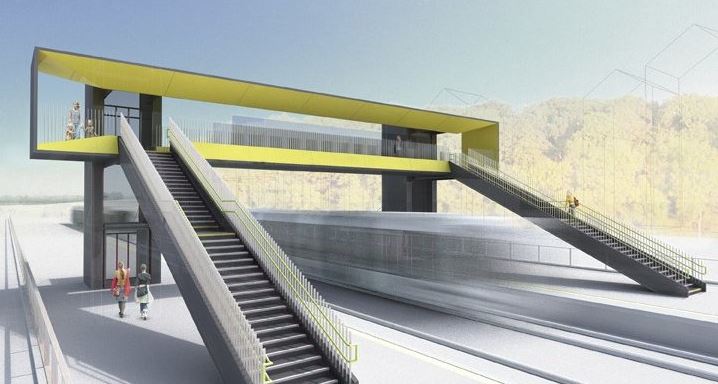
So could a factory-built bridge like this be installed at Bedwyn station?
The installation wouldn’t be difficult, but the politics could be.
Other Station Improvements
A quick look at other stations suggest these improvements.
- Hungerford station, which has a large car park, needs a step-free bridge.
- Kinbury station doesn’t have a bridge.
- Midgham station doesn’t have a bridge
- Theale station has improvements planned.
There are level crossings at Hungerford, Kintbury, Thatcham and Midgham.
Future Trains To Bedwyn
In Hitachi Plans To Run ScotRail Class 385 EMUs Beyond The Wires, I discussed how Hitachi were proposing to add battery power to Class 385 trains, which are in the same family as GWR’s Class 802 trains.
So surely, what is a power source for the goose is also a power source for the gander.
As it would only be a journey of thirteen miles both ways between Newbury and Bedwyn, this would surely be an ideal route for the use of battery power.
The other route, where battery power could be used would be between Didcot and Oxford, which is just over ten miles.
A Future Service To Marlborough
I covered this proposal in A Station For Marlborough.
Marlborough would be served by a single-track branch line on an old railway alignment, probably terminating near the large Tesco superstore in a single platform station.
The advantages of doing this would be.
- Marlborough, which is an important market town of 8,500 people would be connected to the rail network.
- Adequate car parking could be provided.
- Creating a station at Marlborough could be an alternative to expanding Bedwyn station, which could be problematical.
- It would improve the economics of the Paddington and Bedwyn service.
This is the sort of service, that should be developed.
Other Possible Services
The big advantage of this high speed local service for Great Western Railway, is that when it is on the Great Western Main Line, it becomes just another 125 mph service or once digital signalling is installed a possible 140 mph service.
These routes could have this type of high speed local services.
Great Western Main Line
Great Western Railway has several routes, where Class 800 and Class 802 trains break away from the Great Western Main Line to operate local services.
- Paddington and Bedwyn
- Paddington and Oxford
It could be argued that services to Cheltenham and Hereford are also high speed local services.
East Coast Main Line
In April 2018, I wrote Call For ETCS On King’s Lynn Route.
This post was based on an article in Rail Magazine, which talked about running 125 mph trains on the Kings Cross and Kings Lynn route.
This would make operation of the East Coast Main Line easier with herds of 125 mph trains steaming into and out of London.
I think, improvement would also extend to the Cambridge Line, in addition to the Fen Line.
- Operating speed up from 90 mph to 110 mph plus.
- Full digital signalling.
- Automatic Train Control.
Journey times and frequency to and from London Kings Cross would be improved significantly.
Siemens would probably need to uprate the Class 700 trains for faster running, as 100 mph trains are just too slow!
If you look at the East Coast Main Line between Doncaster and Edinburgh, large sections of the line are only double track.
It is the ambition of train operating companies to run more high speed expresses between London and the North of England and Scotland.
I can see a time, when all trains using the East Coast Main Line will have to confirm with a high minimum speed, otherwise the future plans cannot be fulfiled.
Midland Main Line
By the end of 2020, the Midland Main Line South of Market Harborough, will be a 125 mph electrified railway with a high speed branch to Corby, which will be served by a half-hourly twelve-car electric service.
From 2022, 125 mph bi-mode trains will be running services on the Midland Main Line.
I can see services between St. Pancras and Corby becoming another high speed local service.
- Half-hourly service.
- 125 mph running.
- Limited stop between Corby and London, with stops at Kettering, Luton And Luton Airport Parkway.
- The journey time could even be under an hour.
Selected trains could even use battery power to extend the service to Melton Mowbray.
West Coast Main Line
The West Coast Main Line will become increasingly crowded with fast 140 mph trains, especially after the opening of Phase 2a of High Speed Two to Crewe in 2027.
I believe that this will mean that all passenger services using the West Coast Main Line will need to be run using trains capable of at least 110 mph and possibly 125 mph.
The new operation of suburban services on the West Coast Main Line; West Midlands Trains are replacing their fleet with new Class 730 trains. Like the previous trains, they are 110 mph units, but are they capable of upgrading to 125 mph?
If they are upgradeable, they would ease timetabling problems between London and the West Midlands, as they could mix it with Virgin’s Class 390 trains.
Further North, Northern run services like these.
- Barrow and Manchester Airport.
- Blackpool and Manchester Airport
- Windermere and Manchester Airport
Currently, the operator is introducing new Class 195 and Class 331 trains, alongside the Class 319 trains.All of these trains are 100 mph capable, which is probably not fast enough, if they have to use the West Coast Main Line between Crewe and Lancaster, some of which is only double-track.
In Northern Considering Options For More New Trains, I wrote about Northern’s future rolling stock plans.
I suspect some 125 mph trains are in their plans for both the East and West Coast Main Lines.
Implications For Freight
There must surely be pressure for freight trains to go faster.
The 110 mph Class 93 locomotive is on its way, but with rail freight increasing we need to radically think how we run freight trains on a busy passenger line.
Conclusion
We will increasingly see upgrading of suburban services that use 125 mph line and not just around London.
The Mathematics Of Fast-Charging Battery Trains Using Third-Rail Electrification
In Vivarail Unveils Fast Charging System For Class 230 Battery Trains, I talked about how Vivarail are proposing to fast-charge their Class 230 trains.
- The trains are fitted with special high-capacity third rail shoes.
- Third-rail electrification is laid in stations.
- The third rail is powered by a bank of bstteries, that are trickle-charged from the mains or perhaps even solar power.
- When the train connects to the rail, the rail is made live and a fast transfer takes place between third-rail and train.
So how much electricity could be passed to a train during a stop?
The most powerful locomotive in the UK, that can use 750 VDC third-rail electrification is a Class 92 locomotive.
According to Wikipedia, it can produce a power output of 4 MW or 4,000 kW, when working on third-rail electrification.
This means, that in an hour, four thousand kWh will be transferred to the train using conventional third-rail electrification.
Or in a minute 66.7 kWh can be transferred.
In Vivarail’s system, because they are transferring energy between batteries, enormous currents can be passed.
To illustrate how batteries can can deliver enormous currents here’s a video of a guy using two car batteries to weld things together.
These currents are possible because batteries have a low impedance and when the battery on the train is connected to the battery bank on the station, the two batteries will equalise their power.
If we take the example of the Class 92 locomotive and conventional electrification, this would be able to transfer 200 kWh in three minutes or 400 kWh in six minutes.
But I believe that battery-to-battery transfers could be at a much higher current
Thus in a typical one or two minute stop in a station, upwards of 200 kWh could be transferred to the train.
On this page of their web-site, Vivarail say this.
Due to the high currents required for the train Vivarail uses a carbon ceramic shoe able to withstand the heat generated in the process – without this shoe the charge time would make operational running unfeasible.
The devil is always in the details! From what I’ve seen and heard about the company, that would fit!
Market Harborough Station – 11th July 2019
Compare these pictures taken today, with those in Market Harborough Station – 10th May 2019.
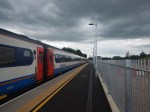
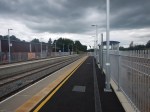
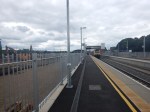
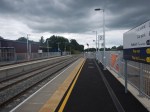
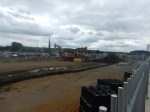
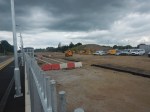
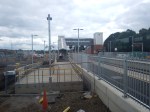
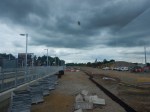
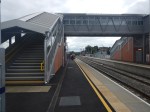
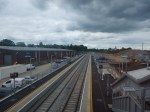
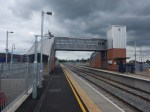
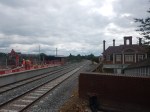
In the intervening two months, there have been major changes at Market Harborough station.
Two Shorter Curved Platforms Have Been Replaced
The two shorter curved platforms have been replaced by two long straight platforms.
- They can handle the longest trains likely to stop in the station.
- As they are straight, it is likely that there will be a smaller gap to mind, between platform and train.
- The platforms and the tracks have been moved to the West by several metres.
- The platforms are now furnished to a high standard, with shelters and information screens.
The new platforms and tracks are a great improvement for passengers, staff and train operators.
But they also mean.
- Trains that stop at the station, can perform faster stops, as the better train-platform interface speeds passengers entering or leaving the train.
- Passing trains can benefit from a higher speed limit through the station.
This should mean a faster journey time along the Midland Main Line.
The Land Released Will Be Used To Extend The Car Park
Several hundred new car parking spaces will be provided on the Eastern side of the line, in the land released by moving the platforms and tracks.
There Is A Fully Working Step-Free Bridge
The new step-free bridge is now fully working.
- The steps are wide enough for bi-directional traffic.
- There are lifts on both sides.
It is asymmetric, with the steps probably leading in the direction most passengers will be walking to and from.
- On the Eastern London-bound platform, passengers will be walking to and from the car park.
- On the Western Leicester-bound platform, passengers will be walking to and from the main station building with the exit to the town, the ticket office and the cafe.
The bridge will certainly handle commuters to London or Leicester, who drive to the station and have to cross the tracks before or after one journey.
It will also handle commuters, who walk or cycle from the town centre.
This bridge has been placed by someone, who knows what they’re doing!
There Are A Pair Of Crossovers To The North Of the Station
I don’t know whether these are new, but they certainly will give operational advantages, if for instance, a train should fail in Market Harbprough station.
As it is likely, that the Midland Main Line will be electrified as far North as Market Harborough station, could they be used for other purposes?
125 mph electric services could be run between London and Market Harborough.
- The two crossovers would easy turnback of the trains or the building of a stabling siding, North of the station.
- Trains would probably take under an hour.
- They could stop at intermediate stations like Luton Airport Parkway Luton, Bedford and Wellingborough.
- Market Harborough station has a lot of parking.
- It could be a second electric service into St. Pancras.
It could be a useful complimentary service or an alternative one whilst planned major regeneration work is ongoing at Leicester station.
Market Harborough Station Has A Bigger Capacity
Consider.
- The longer platforms will allow longer trains with more seats to call at the station.
- The shorter dwell times at the station of stopping trains will allow more trains to stop in the station every hour.
- The step-free bridge is additional capacity for crossing the tracks.
- There will be a massive increase in car parking.
It looks to me that the station has been upgraded to fulfil a need for more trains.
These figures show the population and passenger numbers at stations around Market Harborough.
- Corby – 70,800 – 300,000 – 4.24
- Kettering – 56,200 – 1,070,000 – 19
- Market Harborough – 22,900 – 900,000 – 39.3
- Wellingborough -49,100 – 1,015,000 – 20.7
The last figure was obtained by dividing the number of journeys by the population.
Does Market Harborough’s high figure mean that there is a high demand for travellers living around Market Hsrborough and the large amount of extra car parking will be well-used.
Note.
- I travelled to Market Harborough with a lady and her two young children, who wee actually going to Leicester and were being picked up by family at the earlier station due to all the traffic problems around Leicester station.
- There used to be four stations between Market Harborough and Leicester, but all closed in 1968.
- There used to be two stations between Market Harborough and Kettering, but all closed in the 1960s.
- Market Harborough is well-connected by roads.
So is Market Harborough station used by locals as a Leicester South station?
As an aside, I wouldn’t be surprised to see a new parkway station developed in conjunction with a large housing development, built between Kettering and Leicester, at some point in the future..
Future Electrification
There is a section entitle Electrification in the Wikipedia entry for the Midland Main Line.
This is the last paragraph.
On 26 February 2019 Andrew Jones, Parliamentary Under Secretary of State for Transport, announced that electrification would be extended northwards from Kettering to Market Harborough, enabling the connection of the railway to a new power supply point at Braybrooke.
I will assume that this means, that electric trains will be able to run to Market Harborough station.
As I said earlier, there are a pair of crossovers to the North of the station, which could be useful for turning trains or giving easy access to a couple of stabling sidings.
Hopefully, electrifying the station will not be difficult, as it has only recently been built and foundations for the electrification gantries have either been built or surveyed thoroughly.
Battery Trains Through Market Harborough Station
One thing that won’t be needed at Market Harborough station is a charging station for battery-electric trains, as this will be handled by the electrification.
Bi-mode and battery-electric trains would either raise or lower the pantograph at speed or at a stop in the station.
The operation of a battery-electric train going North could be interesting.
If it wasn’t scheduled to stop in the station, the train would go through Market Harborough station, with maximum charge in the onboard storage, after being charged by the overhead electrification, on the way up from London. The train would also run through the station, at the highest possible speed, as allowed by the track, so that the train had the highest possible kinetic energy.
Electrification to Market Harborough will act like a catapult to send trains North at their maximum kinetic energy and they could probably glide all the way to Leicester station using little of their energy stored in the onboard battery.
The electrification would probably go a short way North of Market Harborough station, so that sropping trains could be accelerated to full speed using the electrification.
There Is Still Work To Be Done
Work to be done appears to include.
- Refurbishing the original subway to give access between the London-bound platform and the station building.
- Finishing the shelters and other platform furnishings.
- Landscape the car-park and create ramped access to the London-bound platform.
A notice said the subway would reopen in December 2019.
Conclusion
Market Harborough now has a much higher capacity modern station.
Irlam Station To Go Step-Free
This document on the Government web site is entitled Access for All: 73 Stations Set To Benefit From Additional Funding.
Irlam station is on the list.
These pictures show the station and the current subway.

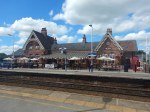

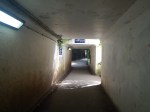

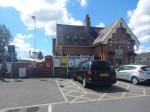
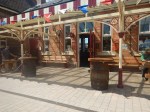

The station was a total surprise, with a large pub-cafe and a lot of visitors and/or travellers sitting in the sun.
I had an excellent coffee and a very welcoming gluten-free blueberry muffin!
This Google Map shows the station.
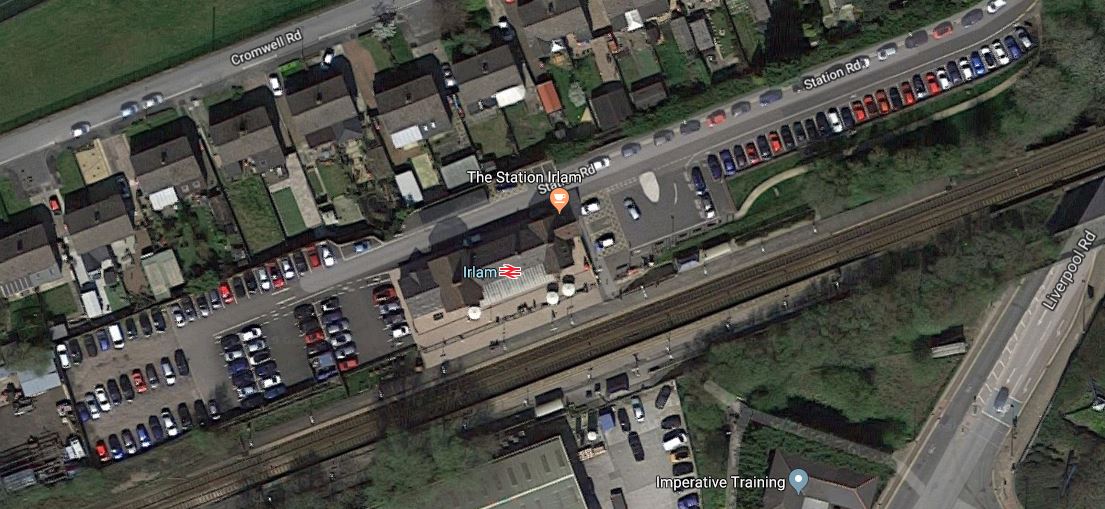
It is one of those stations where commuters have to cross the railway either on the way to work or coming home.
So a step-free method of crossing the railway is absolutely necessary.
The Current And Future Rail Service
As the station lies conveniently between Liverpool and Warrington to the West and Manchester and Manchester Airport to the East, it must be a station with tremendous potential for increasing the number of passengers.
At the moment the service is two trains per hour (tph) between Liverpool Lime Street and Manchester Oxford Road stations.
- Oxford Road is probably not the best terminus, as it is not on the Metrolink network.
- When I returned to Manchester, many passengers alighted at Deansgate for the Metrolink.
- On the other hand, Liverpool Lime Street is a much better-connected station and it is backed up by Liverpool South Parkway station, which has a connection to Merseyrail’s Northern Line.
- The current service doesn’t serve Manchester Piccadilly or Airport stations.
A guy in the cafe also told me that two tph are not enough and the trains are often too short.
Merseyrail work to the same principle as the London Overground and other cities of four tph at all times and the frequency certainly draws in passengers.
Whilst I was drinking my coffee, other trains past the station.
- One tph – Liverpool Lime Street and Manchester Airport
- One tph – Liverpool Lime Street and Norwich
Modern trains like Northern’s new Class 195 trains, should be able to execute stops at stations faster than the elderly diesel trains currently working the route.
So perhaps, after Irlam station becomes step-free, the Manchester Airport service should call as well.
As Liverpool Lime Street station has been remodelled, I can see a time in the not too distant future, when that station can support four tph, that all stop at Irlam station.
The Manchester end of the route could be a problem, as services terminating at Oxford Road have to cross the busy lines of the Castlefield Corridor.
So perhaps all services through Irlam, should go through Deansgate, Manchester Oxford Road and Manchester Piccadilly stations to terminate either at the Airport or perhaps Stockport or Hazel Grove stations.
But would this overload the Castlefield Corridor?
Battery/Electric Trains
If you look at the route between Liverpool Lime Street and Manchester Oxford Road stations, the following can be seen.
- Only about thirty miles between Deansgate and Liverpool South Parkway stations is not electrified.
- The section without electrification doesn’t appear to be particularly challenging, as it is along the River Mersey.
It is my view, that the route between Liverpool and Manchester via Irlam, would be an ideal route for a battery/electric train.
A train between Liverpool Lime Street and Manchester Airport stations would do the following.
- Run from Liverpool Lime Street station to Liverpool South Parkway station using the installed 25 KVAC overhead electrification.
- Drop the pantograph during the stop at Liverpool South Parkway station.
- Run from Liverpool South Parkway station to Deansgate station using battery power.
- Raise the pantograph during the stop at Deansgate station.
- Run from Deansgate station to Manchester Airport station, using the installed 25 KVAC overhead electrification.
The exact distance between Deansgate and Liverpool South Parkway stations is 28.2 miles or 45.3 kilometres.
In 2015, I was told by the engineer riding shotgun on the battery/electric Class 379 train, that that experimental train was capable of doing fifty kilometres on battery power.
There are at least four possible trains, that could handle this route efficiently.
- Porterbrook’s proposed batteryFLEX train based on a Class 350 train.
- A battery/electric train based on the seemingly unwanted Class 379 train.
- A battery/electric version of Stadler’s Class 755 train.
- I believe that Bombardier’s Aventra has been designed so that a battery/electric version can be created.
There are probably others and I haven’t talked about hydrogen-powered trains.
Battery power between Liverpool and Manchester via Irlam, appears to be very feasible.
Tram-Trains
As my train ran between Manchster and Irlam it ran alongside the Metrolink between Cornbrook and Pomona tram stops.
Manchester is very serious about tram-trains, which I wrote about in Could A Class 399 Tram-Train With Batteries Go Between Manchester Victoria And Rochdale/Bury Bolton Street/Rawtenstall Stations?.
Tram-trains are often best employed to go right across a city, so could the Bury tram-trains go to Irlam after joining the route in the Cornbrook area?
- Only about thirty miles between Deansgate and Liverpool South Parkway stations is not electrified.
- The route between Liverpool and Manchester via Irlam doesn’t look to be a very challenging line to electrify.
- The total distance bettween Liverpool Lime Street and Manchester Victoria station is only about forty miles, which is a short distance for a tram-train compared to some in Karlsruhe.
- Merseyrail’s Northern Line terminates at Hunts Cross station, which is going to be made step-free.
- There is an existing step-free interchange between the Liverpool and Manchester route via Irlam and Merseyrail’s Northern Line at Liverpool South Parkway station.
- Class 399 tram-trains will have a battery capability in South Wales.
- Class 399 tram-trains have an operating speed of 62 mph, which might be possible to increase.
- Stadler make Class 399 tram-trains and are building the new Class 777 trains for Merseyrail.
I think that Stadler’s engineers will find a totally feasible and affordable way to link Manchester’s Metrolink with Liverpool Lime Street station and Merseyrail’s Northern and Wirral Lines.
I can envisage the following train service running between Liverpool and Manchester via Irlam.
- An hourly service between Liverpool Lime Street and Nottingham, as has been proposed for the new East Midlands Franchise.
- A four tph service between Liverpool Lime Street and Manchester Airport via Manchester Piccadilly.
- A tram-train every ten minutes, linking Liverpool Central and Manchester’s St Peter’s Square.
- Tram-trains would extend to the North and East of Manchester as required.
- All services would stop much more comprehensively, than the current services.
- Several new stations would be built.
- In the future, the tram-trains could have an interchange with High Speed Two at Warrington.
Obviously, this is just my speculation, based on what I’ve seen of tram-train networks in Germany.
The possibilities for the use of tram trains are wide-ranging.
Installing Step-Free Access At Irlam Station
There would appear to be two ways of installing step-free access at Irlam station.
- Add lifts to the existing subway.
- Add a separate bridge with lifts.
These are my thoughts on each method.
Adding Lifts To The Existing Subway
Consider.
- The engineering would not be difficult.
- Installaton would probably take a number of weeks.
- There is good contractor access on both sides of the railway.
There are similar successful step-free installations around the UK
The problem is all about, how you deal with passengers, whilst the subway is closed for the installation of the lifts.
Adding A Separate Bridge With Lifts
Consider.
- There is a lot of space at both the Eastern and Western ends of the platform to install a new bridge.
- Adding a separate bridge has the big advantage, that during the installation of the bridge, passengers can use the existing subway.
- Once the bridge is installed, the subway can be refurbished to an appropriate standard.
Passengers will probably prefer the construction of a new bridge.
In Winner Announced In The Network Rail Footbridge Design Ideas Competition, I wrote how the competition was won by this bridge.
So could a factory-built bridge like this be installed at Irlam station?
There is certainly space at both ends of the platform to install such a bridge and the daily business of the station and its passengers would be able to continue unhindered, during the installation.
I’m also sure, that the cafe would be happy to provide the daily needs of the workforce.
Conclusion
From a station and project management point-of-view, adding a new factory-built bridge to Irlam station is the easiest and quickest way to make the station step-free.
It also appears, that Network Rail have made a wise choice in deciding to put Irlam station on their list of stations to be made step-free, as the station could be a major part in creating a new high-capacity route between Liverpool and Manchester.
This could also be one of the first stations to use an example of the new bridge.
- Installation would be quick and easy.
- There is no site access problems.
- There station can remain fully open during the installation.
- All stakeholders would probably be in favour.
But above all, it would be a superb demonstration site to bring those from stations, where Network Rail are proposing to erect similar bridges.
Vivarail Wins Environment Award For Class 230 Train
The title of this post, is the same as that of this article on Rail Advent.
This is the first two paragraphs.
Vivarail has announced that they have won the Environment award for their Class 230 battery train and fast charge system.
The awards are one of the industry’s top events.
The article also says this about the Class 230 trains.
- 60 miles range between charges
- 10 minute recharge time
- And can be fitted with range extenders (such as pantograph, genset or fuel cells)
Trains are getting more like houses.
After one useful life, someone comes along and gives them trains a makeover and they have a second useful life.
Ride Quality In Class 345 And Class 710 Trains Compared
Yesterday, I had rides in two different Bombadier Aventras.
- Two Class 710 trains on the Gospel Oak to Barking Line.
- Three Class 345 trains on Crossrail.
Both have a smooth ride, that we come to expect from modern trains.
But my bottom was telling me, that the ride on the Class 710 train was smoother.
I have read somewhere, that the train control system on the Class 345 train is a version of the MITRAC system used on many of Bombardier’s earlier trains and trams, which was certainly used on Class 379 trains.
As has been widely reported, Bombardier are introducing a new Train Management and Control System on the Class 710 trains.
They have also had a lot of trouble getting it to work properly.
If I am right about the ride being smoother, could it be that the new TMCS, has much better control of the traction motors and their power supply?
In The Formation Of A Class 710 Train, I stated that the formation of a Class 710 train is as follows.
DMS+PMS(W)+MS1+DMS
Note that all cars have motors, which must increase the smoothness of acceleration and braking.
But then Class 345 trains have lots of motors too!
In this article in Global Rail News from 2011, which is entitled Bombardier’s AVENTRA – A new era in train performance, gives some details of the Aventra’s electrical systems. This is said.
AVENTRA can run on both 25kV AC and 750V DC power – the high-efficiency transformers being another area where a heavier component was chosen because, in the long term, it’s cheaper to run. Pairs of cars will run off a common power bus with a converter on one car powering both. The other car can be fitted with power storage devices such as super-capacitors or Lithium-ion batteries if required. The intention is that every car will be powered although trailer cars will be available.
Unlike today’s commuter trains, AVENTRA will also shut down fully at night. It will be ‘woken up’ by remote control before the driver arrives for the first shift
This was published over eight years ago, so I suspect Bombardier have refined the concept.
Note this phrase.
The other car can be fitted with power storage devices such as super-capacitors or Lithium-ion batteries if required.
Could the Class 710 train be the first Aventra to take advantage of energy storage devices to provide a smoother power supply to traction motors?
The trains could be serial hybrids, like London’s Routemaster buses.
In a serial hybrid vehicle, the following happens.
- The power supply charges the energy storage device.
- The energy storage device provides power to the traction motors
- On braking, the traction motors use regenerative braking and the electricity generated is stored in the energy storage device.
- Power to provide services for the train comes from the energy storage device.
It is a very efficient system, which also has other advantages.
- The train can move for a short distance without external power.
- When the power supply is diesel, it doesn’t need to be run in sensitive areas, like stations.
- Depots and sidings don’t need to be electrified, which increases safety.
- As the extract said earlier, trains can have a remote wake-up capability.
The energy storage device between the power source and the traction system would have the effect of smoothing power fluctuations in the supply.
Energy storage devices also have a very low impedance.
- When the driver asks for maximum power, the energy storage devices can give all they’ve got immediately.
- When the driver applies the brakes, if they’ve got space, the energy storage devices, will lap it up the energy like a pack of thirsty hounds.
I have no proof, that Class 710 trains are serial hybrid trains, but I think there’s more than a good chance they are.
The trains run very smoothly, with good acceleration and smooth braking.
Perhaps, because the Class 345 trains were designed and built earlier, they had to use the less sophisticated MITRAC control system.
What Size Is The Energy Storage Device On A Class 710 Train?
In What Is The Kinetic Energy Of A Class 710 Train?, I calculated the energy of a Class 710 train.
I calculated the figures for a train with 700 passengers, each weighing 90 Kg for different speeds.
- 90 mph – 49.4 kWh – Operating speed of a Crossrail Class 345 train.
- 100 mph – 61.3 kWh – Operating speed of many electric multiple units.
Note that the amount of energy is proportional to the square of the speed.
As the energy storage device must be able to capture all of the braking energy if a train is trundling around North London, I would suspect that two fifty kWh batteries would be more than enough!
But a good control algorithm might cut this considerably!
A total of 100 kWh, would certainly be possible to put under a train, and could be a mix of the following.
- Fast response supercapacitors.
- High capacity lithium ion batteries or similar.
This is not an unknown combination on a battery-electric train or tram.
Conclusion
Supercapacitors could be the reason for the perceived smoother ride.
But don’t trust my nearly seventy-two year-old bottom!
Go and experience the trains for yourself and then post your thoughts here!
Battery Answer To Schleswig-Holstein’s Diesel Replacement Question
The title of this post, is the same as that of this article on Railway Gazette International.
It is a good explanation of why there is so much interest in battery-powered trains.
This paragraph from the article, describes how the trains will operate in Schleswig-Holstein.
They will have range of 150 km under optimal conditions, although the longest non-electrified route they will operate on is around 80 km. The batteries will be recharged from the existing 15 kV 16·7 Hz overhead electrification at Kiel, Neumünster, Flensburg, Lübeck and Lüneburg stations and on the Osterrönfeld – Jübek line. Charging facilities will also be provided in other locations, and there will be some extensions to the existing overhead power supply.
Consider.
- These trains can run on routes of up to eighty kilometres or around fifty miles.
- Greater Anglia and Transport for Wales will be running the UK versions of the Stadler Flirts, that will be used in Schleswig-Holstein.
- Transport for Wales will also be running a tri-mode Flirt with electric, diesel and battery power.
- The Continental loading gauge, probably allows more batteries than the smaller UK loading gauge.
I think it could be reasonable to assume, that a UK-sized battery-electric Stadler Flirt could have a range of forty miles on batteries.
These could be possible routes for Greater Anglia.
- Norwich and Sheringham – 30 miles
- Norwich and Lowestoft – 23.5 miles
- Norwich and Great Yarmouth – 18 miles
- Ipswich and Felixstowe – 16 miles
- Colchester Town and Sudbury – 20 miles
In addition some partially-electrified routes have gaps less than forty miles. Think Cambridge and Ipswich!
I would not be surprised to see battery trains, quietly gliding around East Anglia.
Would they attract passengers and tourists?
Perhaps Germany and Stadler will give us the Schleswig-Holstein Answer, which will be much more interesting than the Schleswig-Holstein Question.
Economics Of Battery Trains
The article also has this quote from the CEO of Stadler Germany about the economics of battery trains.
It makes us very proud that with the battery-powered Flirt we have not only managed to find an ecological and innovative solution, but have also enabled a clear economic improvement. If we consider the average life of a rail vehicle of around 30 years, battery-operated vehicles are more cost-effective than diesel’.
I think it can also be said, that battery technology will improve continuously in the next thirty years and we should see a corresponding improvement in range and performance.
You don’t get that with diesel.
Hydrogen Or Battery Power?
I would think that Alstom are not happy about this order for battery-powered trains.
- Only a hundred kilometres or so to the West, they are supplying Alstom Coradia iLint trains for a similar network.
- These trains are working well.
- They have teamed up with Linde to supply the hydrogen.
I wouldn’t have been surprised if Schleswig-Holstein had chosen hydrogen trains.
So why did Schleswig-Holstein, choose battery rather than hydrogen trains?
- Provided, the driver or a computer, raises and lowers the pantograph appropriately, there is no difference between an electric train and its battery-electric sibling.
- Systems to charge battery trains can be installed anywhere, there is an electricity supply.
- The electricity supply could be local wind or solar.
- Charging battery trains could be automatic and require no more action from the driver, than checking everything is as it should be and perhaps pushing a button or two. On a bleak miserable day, the driver would remain in the warm and comfortable cab.
- Hydrogen would need to be loaded on the train at a depot or another place with the necessary safety clearance.
- The iLint seats 160 and the Flirt Akku seats 124, so I suspect capacity isn’t much of a problem.
- The Flirt Akku is a train designed for battery-electric operation, whereas the iLint is a modified diesel train, with a noisy and harsh mechanical transmission. It’s like comparing Class 710 trains, with their predecessors on the Gospel Oak to Barking Line; the Class 172 trains.
- I suspect most Germans have talked to a relative or older person, who remembers the Hindenburg.
There is probably little to choose between the two trains, but I believe that the operation of the hydrogen-powered train will be more complicated.
I also don’t know the cost of each train.
As I said earlier, Stadler claim long-term ownership of battery-powered trains is more economic than diesel. Does the same apply to battery against hydrogen power.
Conclusion
I believe we’ll see lots more battery trains.
Mathematics Of A Stadler Flirt Akku Battery Train
In Stadler Receives First Flirt Akku Battery Train Order, I quoted this from as that of this article in Railway Gazette International.
Schleswig-Holstein transport authority NAH.SH has selected Stadler to supply 55 Flirt Akku battery multiple-units to operate regional services and provide 30 years of maintenance.
This is a substantial order for a large number of trains and many years of maintenance, and would appear to be structured similarly to deals in East Anglia, Glasgow and Liverpool in the UK.
Does The Train Have A Central Power-Pack Car?
Is the Flirt Akku, similar to Greater Anglia’s Class 755 trains and other of the companies products, in that it has a central power-pack car?
This picture shows a Class 755 train at Norwich.
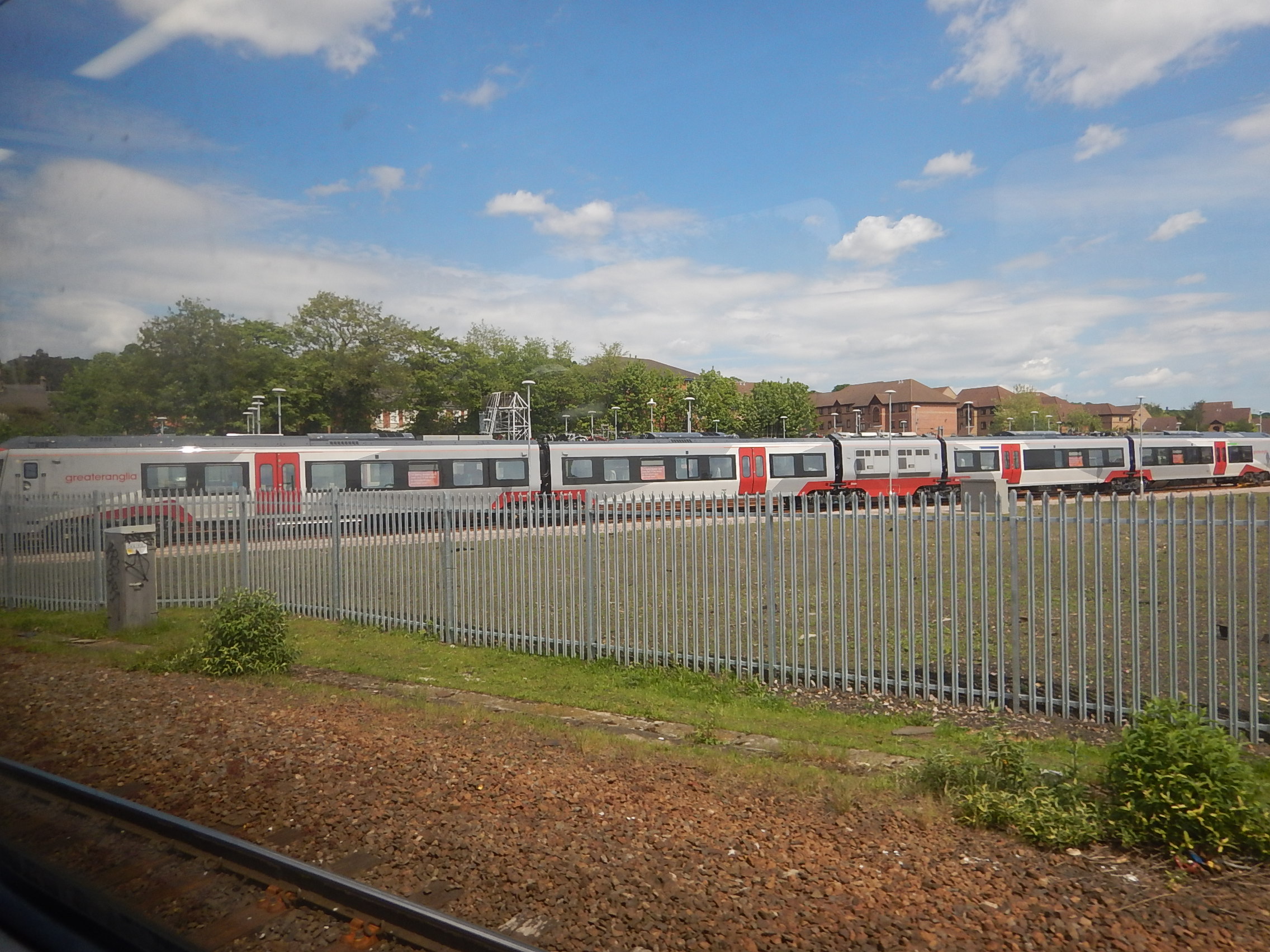
Note that this four-car train has four full-size cars and a shorter one, that doesn’t appear to have any doors or proper windows.
This is the power-pack car, which in these trains has the following properties.
- The power-pack car is 6.69 metres long.
- The power-pack car is identical in both the four-car and three-car versions of the Class 755 trains.
- The four-car trains have four diesel engines.
- The three-car trains have two diesel engines.
The number of engines possible, leads me to believe there are four slots for engines in the power-pack car.
Transport for Wales have ordered a number of Flirts, which are similar to those in use by Greater Anglia, but they are tri-mode trains, that can run on overhead 25 KVAC electrification, diesel or battery power.
I speculate that they have one diesel engine and three batteries in the four slots.
This is a picture of the Flirt Akku.
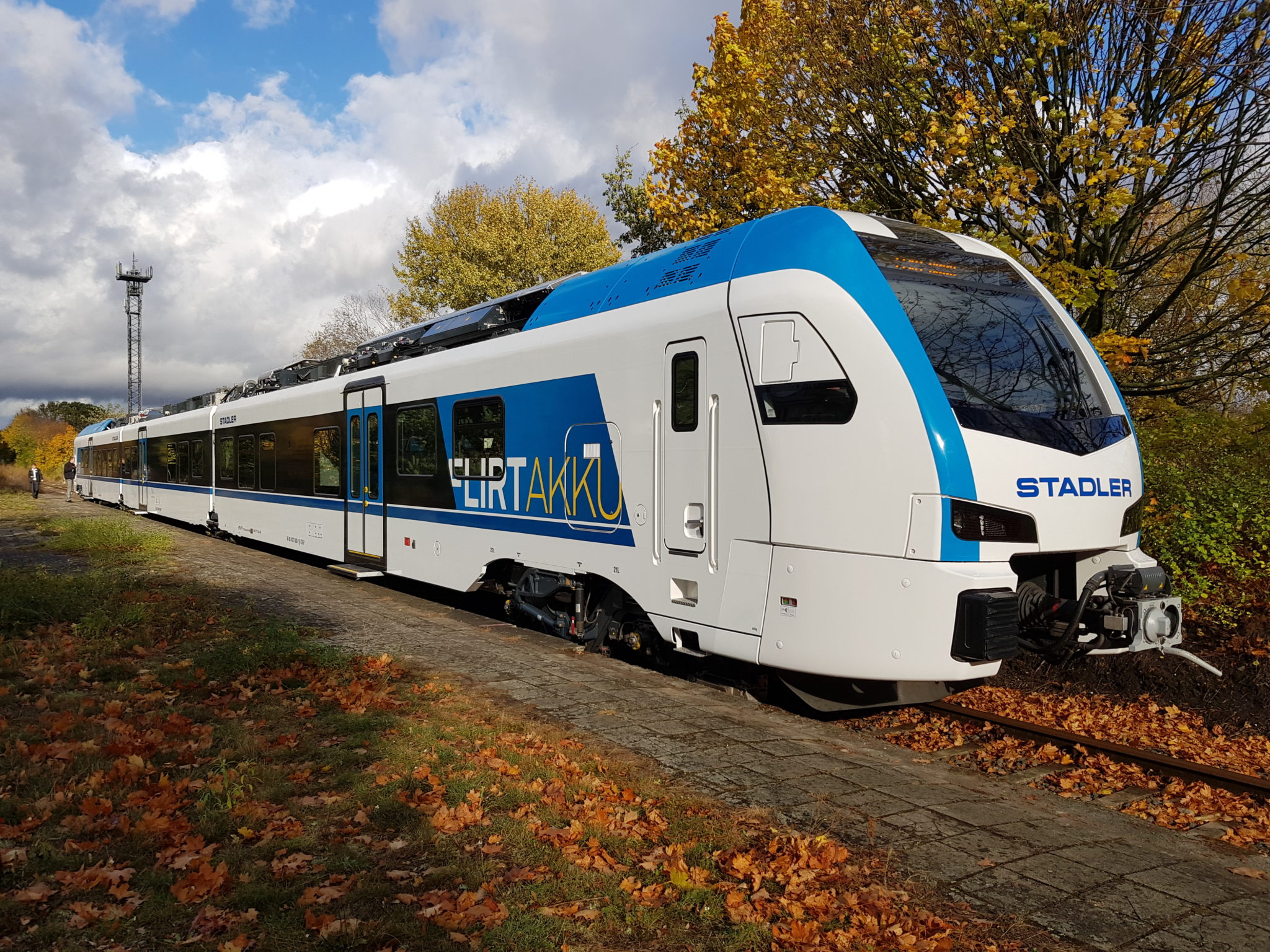
I have enlarged the image and it would appear that the trains do not have a central power-pack car, but they do seem to have a lot of electrical gubbins on the roof.
This video shows the Class 755 train being tested at Diss.
It looks to have a much smoother roof line.
Could this indicate that the batteries on the Akku are placed on the roof of the train, as there is certainly a lot of equipment up there?
Importance Of Battery Range: Stadler’s FLIRT BMU For Greater Anglia
The title of this post is the same as a sub-section of this article on Railway News, which is entitled Stadler Presents New FLIRT Akku For The First Time.
This is said.
By contrast, Stadler recently unveiled its bi-mode (electric-diesel) FLIRT for Greater Anglia (U.K.) at InnoTrans 2018. When asked why Greater Anglia went for a diesel-electric option rather than a battery-electric option to bridge the non-electrified gaps in the network, Railway-News was told that the non-electrified distances in the U.K. are currently too great for battery-operated trains to cope with. As battery technology improves, this will hopefully change, making diesel and the need for electrification obsolete
Does this infer the following?
- Greater Anglia would have preferred to use battery-electric trains.
- It is possible to swap the diesel engines in the power-pack for battery modules.
- It could be possible to swap a diesel generator for a hydrogen fuel cell.
Option three might be difficult, as you need somewhere to put the hydrogen tank within the limited UK loading gauge.
Conclusion
I think it is highly likely that as battery technology improves and Stadler are able to package it better for the Class 755 trains, that Greater Anglia will change some of their Class 755 trains to battery-electric operation.
Scottish Government Is Considering Plans To Electrify The Borders Railway
The title of this post is the same as that of this article in The Scotsman.
These reasons are given for the electrification, of the Borders Railway.
- Electric trains would shorten journey times.
- New Class 385 trains would be more reliable than the current elderly diesel trains.
- It would be an easy line to electrify, as the line was built so that overhead electrification could be added without any gauge enhancement.
I would add a few reasons of my own.
- The route is already electrified as far as Newcraighall station. This would probably ease the grid connection to the new electrification.
- I believe that electrification of a new railway, where everything is known an well-documented has a higher change of being delivered on time and on budget.
- Running Class 385 trains may also produce operating and maintenance savings.
- The Class 385 trains are serviced at the convenient Millerhill Depot.
- Electrification might help running trains across Edinburgh.
If and when the Borders Railway is extended to Carlisle, there could be very good reasons to electrify the whole route.
I will answer a few questions.
How Much Time Would a Class 385 Train Save?
Currently, trains between Edinburgh and Tweedbank currently take fifty-five minutes with seven stops.
The Class 385 trains will probably save a few minutes at each stop, so this will make the journey time a bit shorter and turnround at each end of the route will be more relaxed.
How Long Is The Section Without Electrification Of The Borders Railway?
The distance between Newcraighall and Tweedbank stations is 30.75 miles.
How Challenging Is The Borders Railway?
It is not the easiest of routes, but it is not the most difficult either. It also has a high summit.
The current diesel trains don’t seem to be working that hard, when I’ve used the railway.
Would Electrification Be Difficult?
If I look at electrification projects over the last few years in the UK, they have been delayed and suffered cost increases because of the following.
- Difficulty of raising bridges over the route.
- Connecting to the electricity grid.
- Surprises like unexpected sewers and mine workings, when installing the electrification.
Hopefully, as the Borders Railway is new railway, that is already partially electrified, this will not be a difficult electrification.
Could the Current Route Be Served By A Battery-Electric Train?
This is the big question, as it were possible, then the current Borders Railway may not need to be electrified.
In Hitachi Plans To Run ScotRail Class 385 EMUs Beyond The Wires, I talked about Class 385 trains with batteries, that #Hitachi are proposing.
Hitachi have said this.
- It would be straightforward to add batteries to give a range of twenty miles on batteries.
- Sixty miles would be possible but more difficult.
I believe that a safety-first way to run a battery-electric Class 385 train on the Borders Railway would be to do the following.
- Procure a sin-fleet of Class 385 trains, with a range of forty miles on onboard batteries.
- The trains would handle regenerative braking to the onboard batteries.
- A charging station would be provided at Tweedbank station.
The only new infrastructure would be the charging station, which I believe should be based on Vivarail’s design, which I wrote about in Vivarail Unveils Fast Charging System For Class 230 Battery Trains
- Currently, trains take just under ten minutes to turn round at Tweedbank station, which would be time enough to charge the battery.
- Vivarail’s system is fully automatic, after the driver stops the train over a length of third-rail electrified track, which is only live, when a train is connected.
Hitachi would need to fit third-rail shoes to the trains, but then they could use the design from their Class 395 trains.
Conclusion
There is currently no need to electrify the Borders Railway, if Hitachi can do the following.
- Fit batteries to a Class 385 train, to give a range of forty miles.
- Design a fast charging system and install it at Tweedbank station.
I also believe that if and when the Borders Railway is extended to Carlisle, that there could be a strong case for electrification of the whole route.
Running battery-electric Class 385 trains on the Borders Railway would be a project with a lot of winners.
- Hitachi would have a scenic demonstration route, close to a major well-connected international city.
- The Borders would get a better and more environmentally – friendly train service to Edinburgh.
- Scotrail would have a higher proportion of one class of electric trains.
But the biggest advantage could be the possibility of terminating Borders Railway services on the other side of Edinburgh, at perhaps Stirling or Dunblane.

