Completing Northern Powerhouse Rail
The Northern Powerhouse Rail/High Speed Two Connection To Manchester Airport Station
This OpenRailwayMap shows the rail connections that terminate at Manchester Airport station.
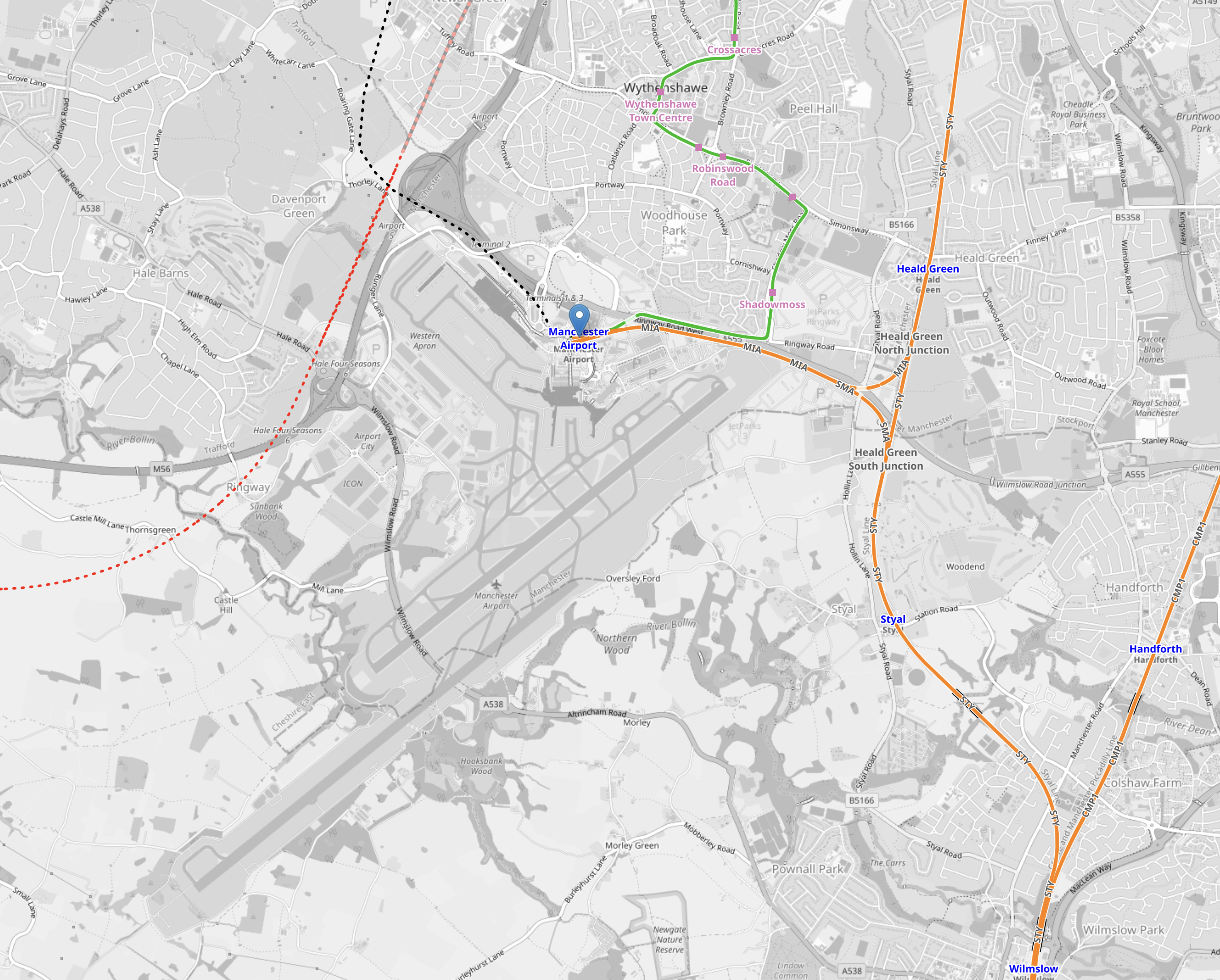
Note.
- The two runways are clearly shown.
- Manchester Airport station is indicated by the blue arrow near the top of the map.
- The orange tracks are rail lines.
- The green lines are Manchester Metrolink tracks.
- Rail and tram services approach the airport station from the East.
- The red dotted line is the current proposed path of Northern Powerhouse Rail/High Speed Two
- The black dotted line appears to be an extension of the tram line to the airport.
This second OpenRailwayMap shows the lines around the airport station to a larger scale.
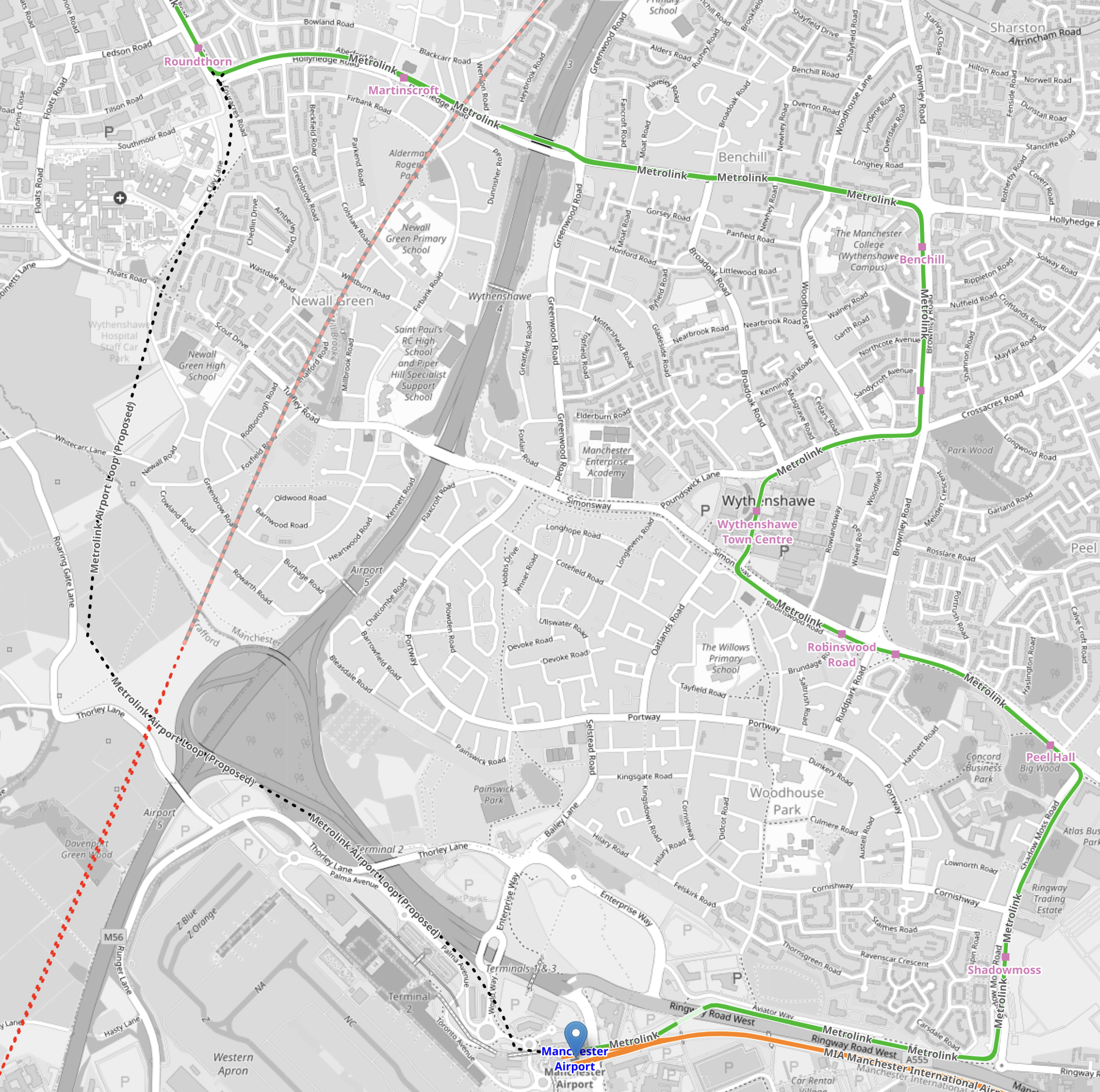
Note.
- Manchester Airport station is indicated by the blue arrow at the bottom of the map.
- The orange tracks are rail lines.
- The green lines are Manchester Metrolink tracks.
- The red dotted line is the current proposed path of Northern Powerhouse Rail/High Speed Two.
- The Manchester Metrolink now makes a loop around the Airport.
I think the following will happen.
- A large proportion of passengers and staff travelling between Manchester Airport and Manchester City Centre will use Northern Powerhouse Rail/High Speed Two.
- Passengers and staff, who live locally will use the Manchester Metro loop.
- Northern Powerhouse Rail/High Speed Two will replace some of the current train services.
- Some services on the Castlefield Corridor will migrate to Northern Powerhouse Rail/High Speed Two.
There could be as many as twelve trains per hour (tph) between Manchester Airport and Manchester City Centre on Northern Powerhouse Rail/High Speed Two. But a new urban line like that, which was mostly in a tunnel could probably handle 20 tph.
Manchester Airport And Crewe
This OpenRailwayMap shows the railways between Manchester Airport and Crewe stations.
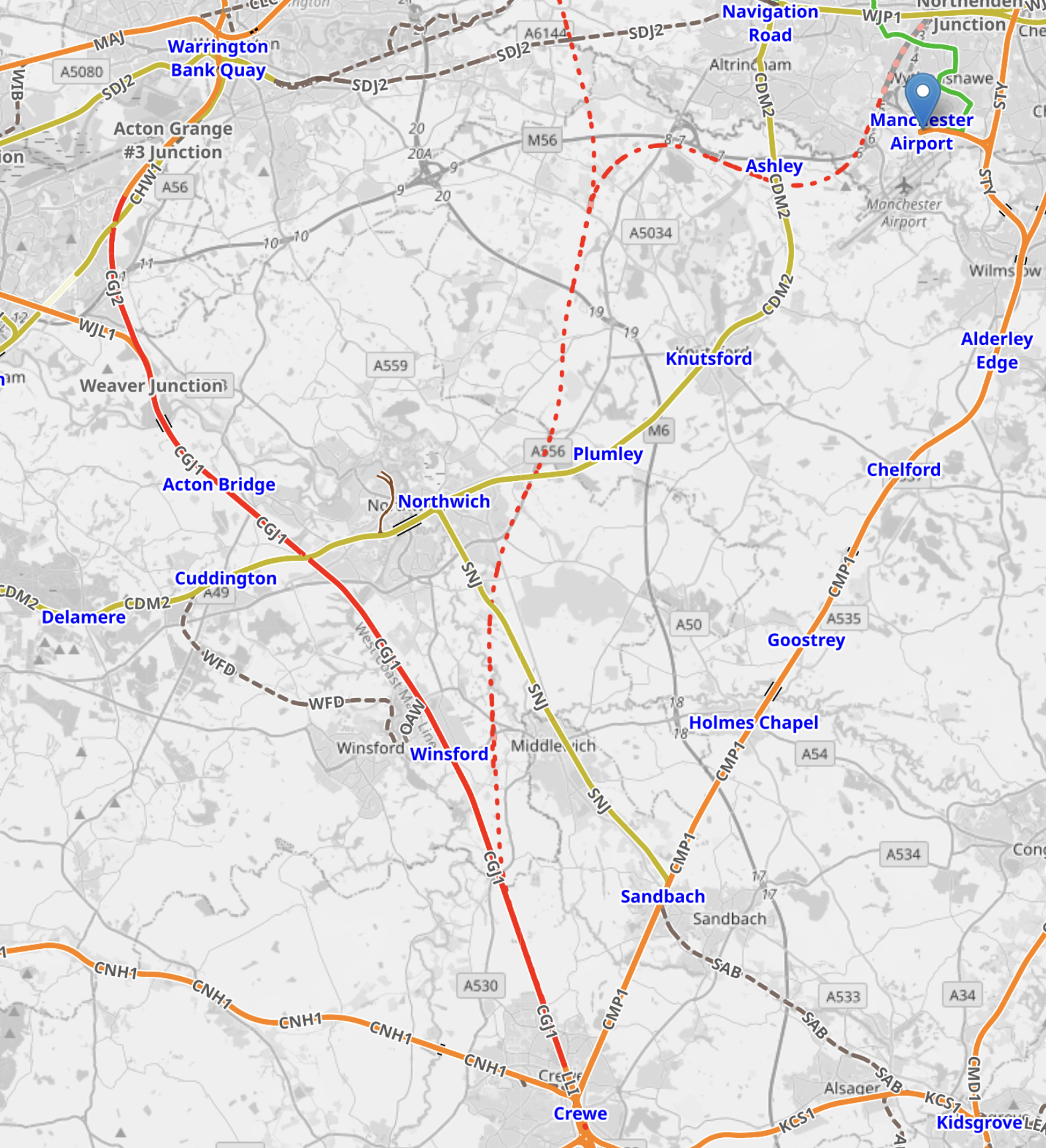
Note.
- Manchester Airport station is indicated by the blue arrow at the top of the map.
- The orange tracks are rail lines.
- The red track going down the left hand side of the map is the West Coast Main Line.
- The green lines are Manchester Metrolink tracks.
- The red dotted line is the current proposed path of Northern Powerhouse Rail/High Speed Two.
- Crewe station is at the bottom of the map in the middle.
There could be as many as 12 tph between Manchester Airport and Crewe.
Manchester Airport And Manchester Piccadilly
This OpenRailwayMap shows the railways between Manchester Airport and Manchester Piccadilly stations.
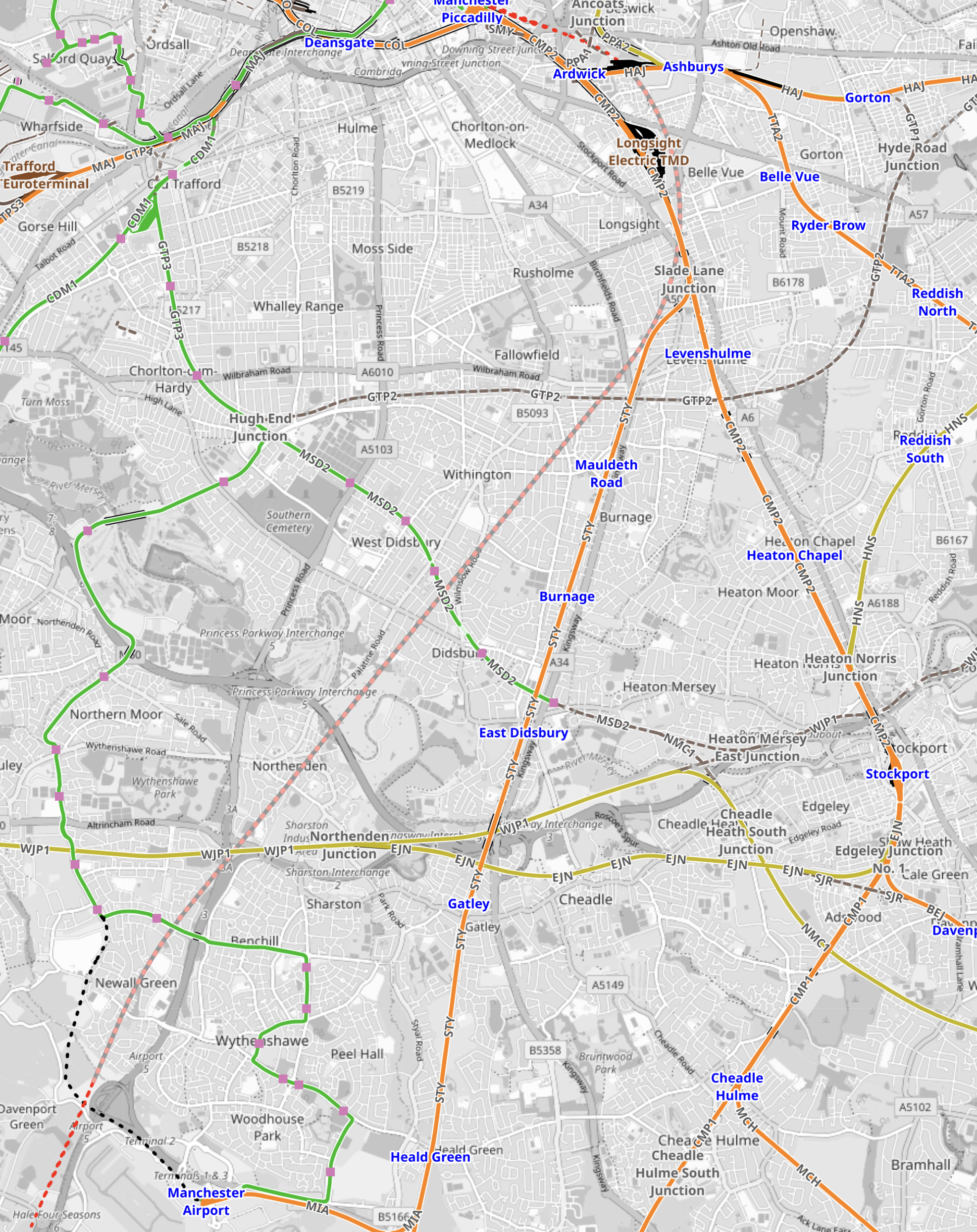
Note.
- Manchester Airport station is in the South-West corner of the map.
- The orange tracks are existing rail lines.
- The green lines are Manchester Metrolink tracks.
- The red dotted line going up the middle of the map is the current proposed path of Northern Powerhouse Rail/High Speed Two.
- Manchester Piccadilly station is at the Northern end of Northern Powerhouse Rail/High Speed Two.
This OpenRailwayMap shows the City Centre between Manchester Piccadilly and Manchester Victoria stations.
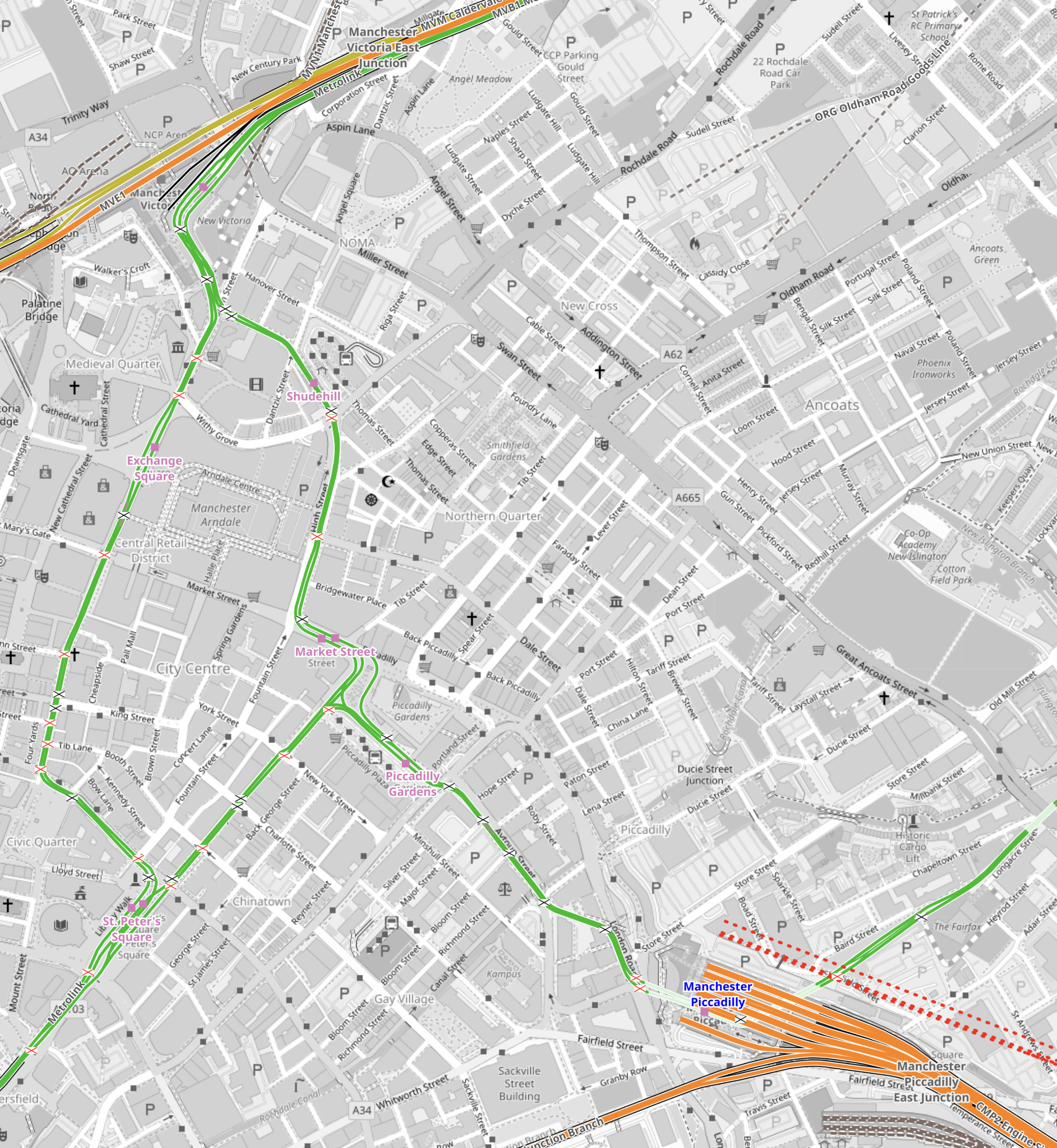
Note.
- Manchester Piccadilly station is in the South-East corner of the map.
- The red dotted lines creeping into the map is the current proposed path of Northern Powerhouse Rail/High Speed Two.
- All the platforms in Manchester Piccadilly station can be picked out, with the Castlefield Corridor breaking away to the West.
- The current plans will need demolition of buildings to the North of Manchester Piccadilly station.
- Manchester Victoria station is in the North-West corner of the map.
- The green line of the Manchester Metrolink route picks out the walking route between Manchester’s two main stations.
- About halfway between Manchester Piccadilly and Manchester Victoria stations is the open space of Piccadilly Gardens.
This Google Map shows Piccadilly Gardens.
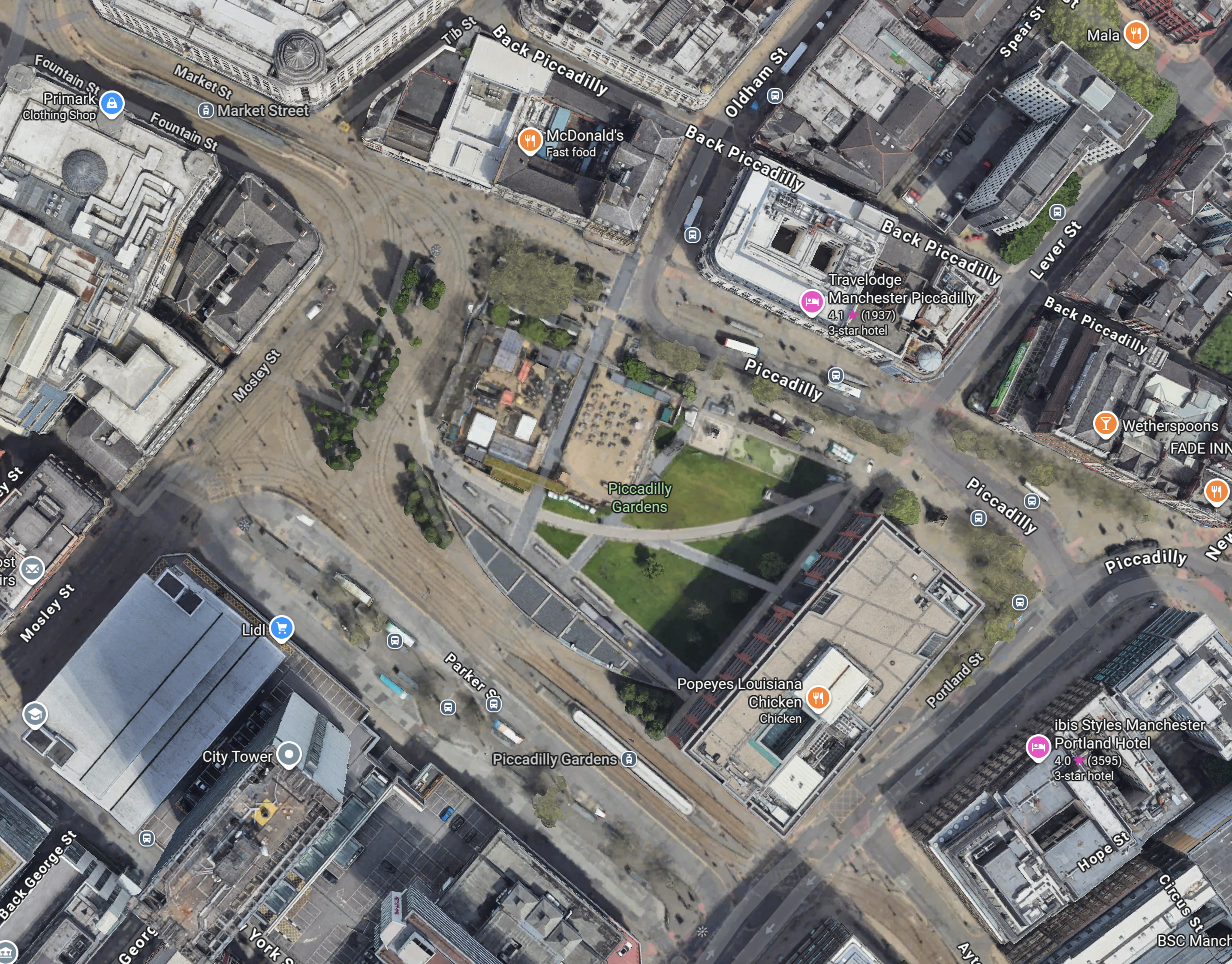
Note.
- The Manchester Metrolink running through.
- There are two Metrolink stops ; Market Street and Piccadilly Gardens, in the area.
- It appears any stop on the Manchester Metrolink can be reached with no more than a single change from one of these two stops.
Looking at the map showing Victoria and Piccadilly stations, I wonder, if a Lizzie Line of the North could be built under Manchester City Centre.
- There would be underground platforms at Piccadilly station, with two through platforms and two to terminate trains from the South.
- Local services from Piccadilly station could continue as now, although services to Manchester Airport could be simplified.
- There would be an underground station at Piccadilly Gardens with two through platforms , to connect with an expanded Manchester Metrolink, buses and walking routes.
- There would be underground platforms at Victoria station, with two through platforms and two to terminate trains from the East.
- Local services from Victoria could continue as now.
- There could be as many as 12 tph between Manchester Victoria, Piccadilly Gardens, Manchester Piccadilly and Manchester Airport.
Just as the Lizzie Line was slotted into London, with the minimum of disruption, I am fairly certain, a similar but smaller construction process could be carried out in Manchester City Centre.
- Manchester doesn’t have an Underground to avoid.
- The stations could be very similar to each other and like Custom House station on the Lizzie Line, they could be built with giant concrete Lego.
- There would only be four stations to create.
- The tunnel would be about fifteen miles at most.
- The tunnel would not need to be electrified as the trains could run on batteries.
As a Manchester Rail Tunnel has been talked about for decades, I suspect there is a big knowledge base of ground conditions, which would help with the design and construction.
Between Manchester Victoria And Leeds
Consider.
- The electrification between Manchester Victoria and Stalybridge stations has recently been switched on.
- Part of the electrification between Leeds and York stations has been switched on.
- Full electrification is being installed between Leeds and Manchester Victoria stations.
This OpenRailwayMap shows the Huddersfield Line between Manchester Victoria station and a few miles short of Huddersfield station.
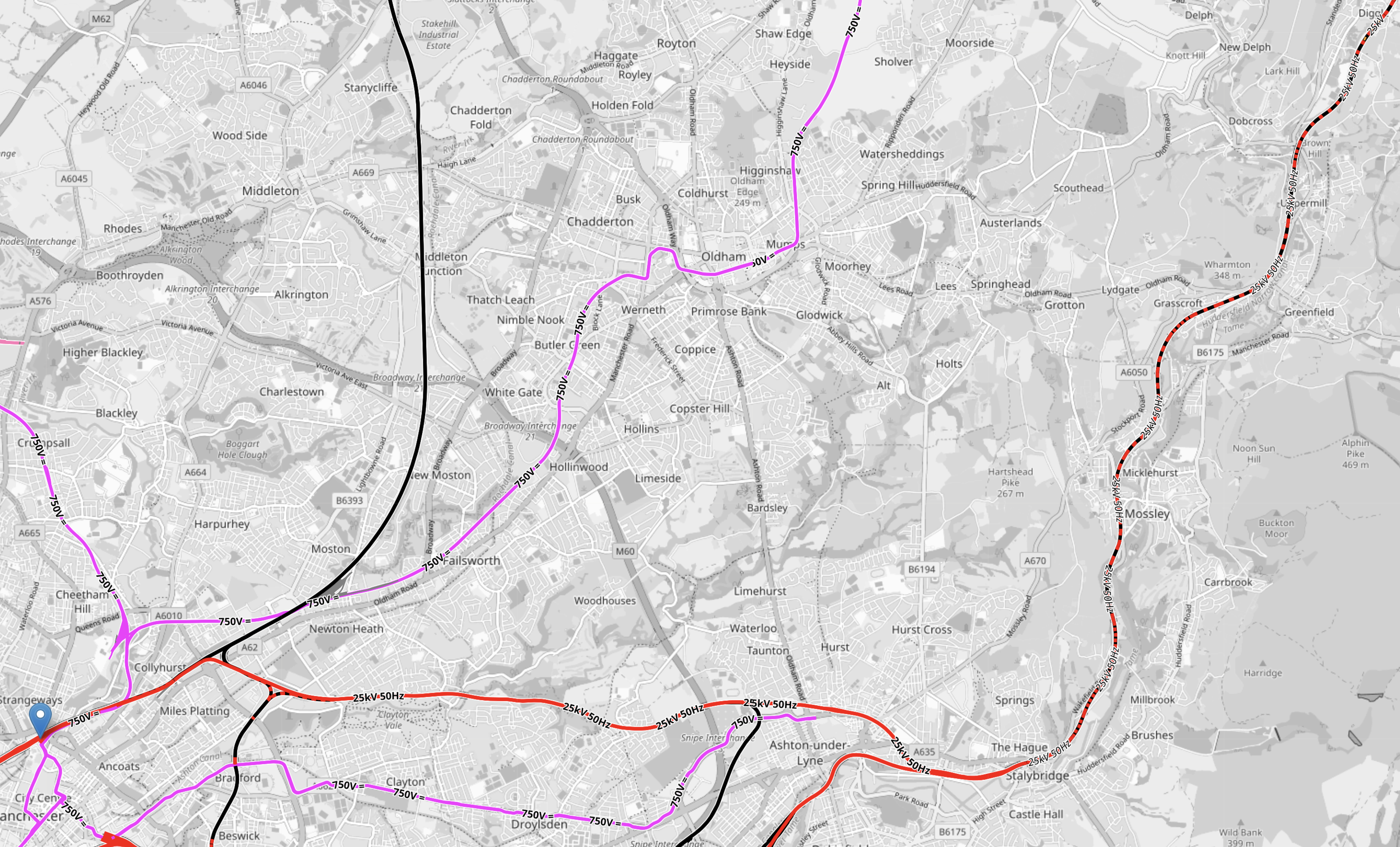
Note.
- Manchester Victoria station is indicated by the blue arrow in the South-West corner of the map.
- Huddersfield station is just off the map in the North-East corner.
- Manchester Victoria and Stalybridge stations is fully electrified and shown in red.
- Stalybridge and Huddersfield stations is being electrified and is shown as black and red dotted.
- Electrification between Huddersfield and Leeds is underway under the TransPennine Upgrade.
This section will be completed, when the Manchester City Centre Rail Tunnel is connected to the Huddersfield Line.
Connecting The Manchester City Centre Rail Tunnel To The Huddersfield Line
This Google Map shows where the Huddersfield Line crosses the M60 Motorway to the West of Ashton-under-Lyme.
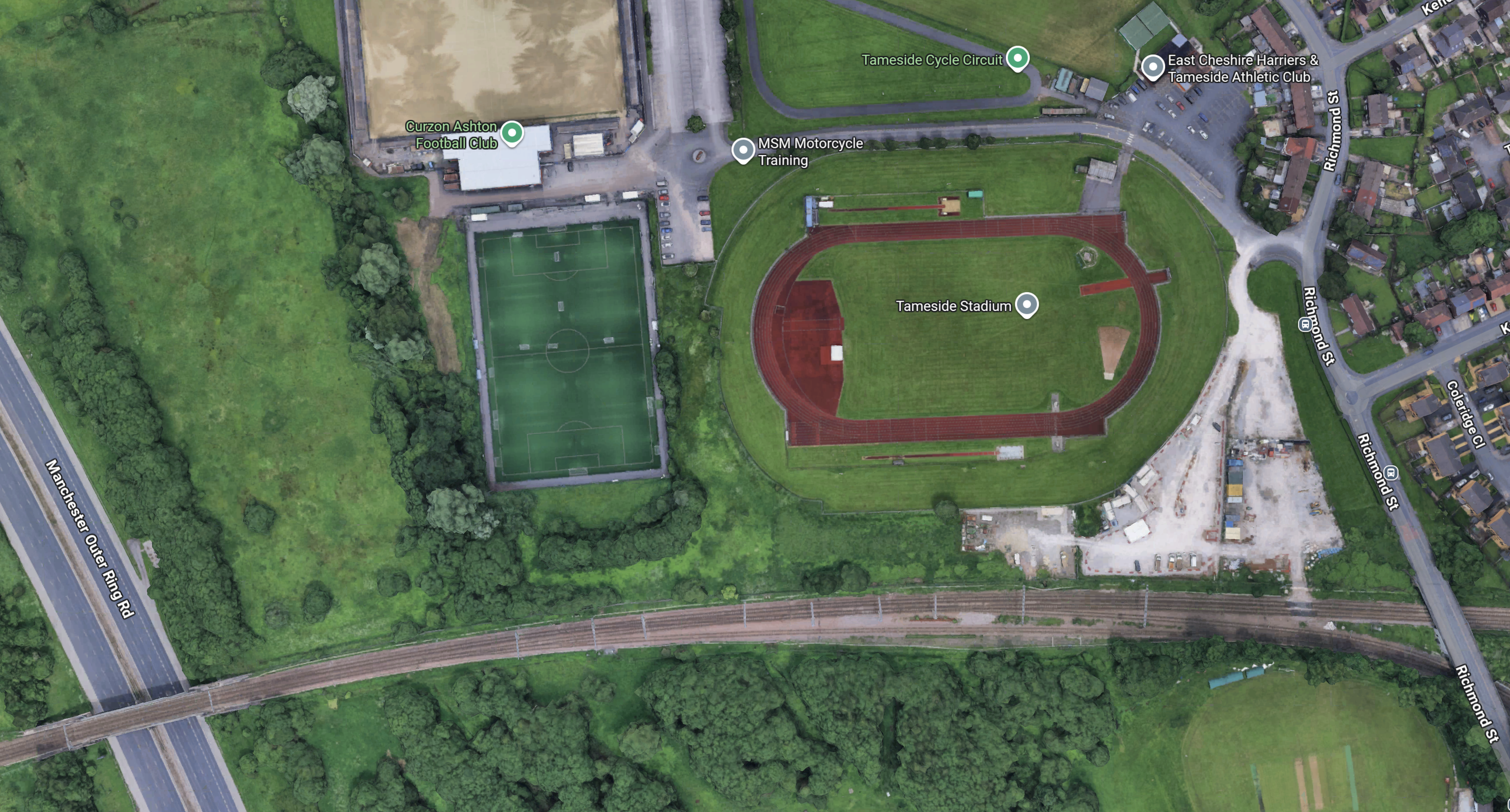
Note.
- The newly-electrified Huddersfield Line runs across the map.
- The M60 Motorway is on the left.
- There are facilities for athletics, cricket and football.
I wouldn’t be surprised if the Eastern portal of the Manchester City Centre Rail Tunnel was in this area.
But looking at Google Maps between this site and Manchester Victoria, there are other sites.
Conclusion
I now feel that it is possible to create a Northern Powerhouse Rail/High Speed Two route using a tunnel under Manchester.
Obviously, there is more work to be done.
A Redbrick Station For A Redbrick University
My late wife; C and myself, met at Liverpool University in the 1960s.
Liverpool considers itself as the Original Redbrick on its web site.
This Google 3D visualisation shows why.

Note.
- This 3D picture was taken from the East.
- The white building in the bottom-right corner is the Electrical Engineering and Electronics, where I did most of my studying.
- The building above it is the Harold Cohen Library.
- The clock tower in front is part of the Victoria Building.
There’s a lot of redbrick on the University site.
These pictures show University (Birmingham) station.
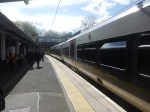
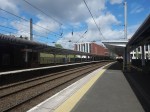
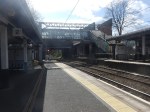
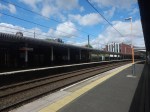
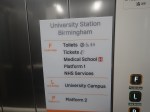




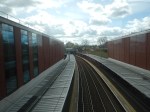
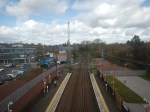

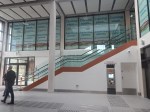
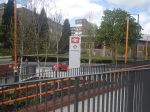
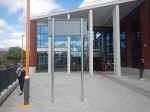

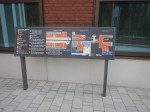
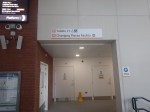

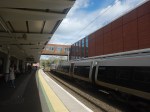
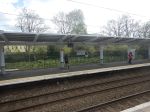
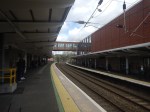
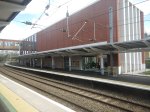
Note.
The Architects didn’t spare the red bricks.
- The station has an NHS Clinic
- The bridge has lifts and steps.
- There is a lot of glass.
There are a pair of bi-sexual toilets, which seems to the standard for new stations these days.
Will Other Universities Want A Station?
Here are a few thoughts.
Liverpool University
I wrote about the possibility in A Railway Station At Liverpool University.
This is an extract.
In Liverpool’s Forgotten Tunnel, I showed this map, which shows a proposed reopening of the Wapping Tunnel as a passenger route between Liverpool Central and Edge Hill stations.
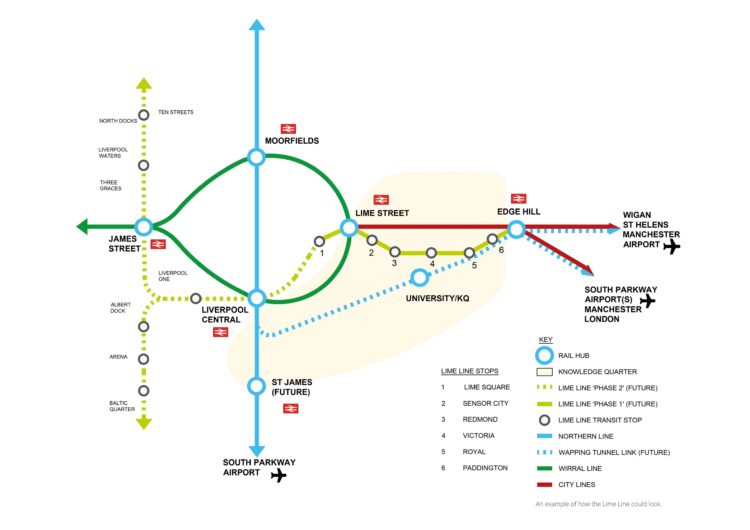
Note.
- The map shows a station at University
- The Wapping Tunnel is shown as a dotted blue line.
- Between four and eight trains per hour (tph) would be running through University station.
Liverpool has other projects on its mind at present, but I wouldn’t rule it out in the future.
Manchester University
This Google Map shows the location of Manchester University.
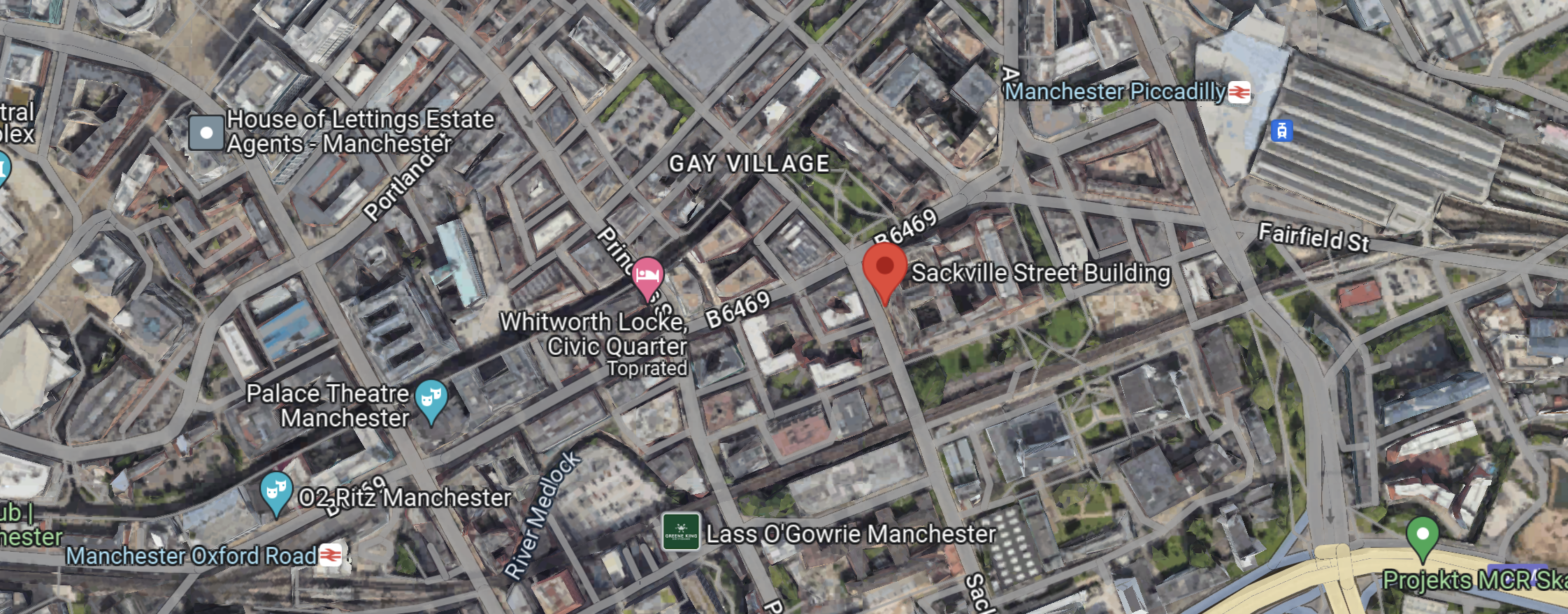
Note.
- The red arrow picks out a notable building in the University.
- Manchester Piccadilly station is in the North-East corner of the map.
- Manchester Oxford Road station is in the South-West corner of the map.
- In recent years I’ve walked between the two stations.
- The Castlefield Corridor passes through the University.
A station on the Castlefield Corridor could be a possibility.
Freight Trains Through Lincoln Station
I must have spent nearly ninety minutes in total at Lincoln station yesterday and in that time, at least four long freight trains went through.




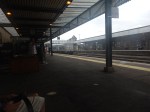
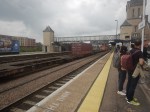

The reason is that Lincoln station lies on the Great Northern and Great Eastern Joint Line, which is a major freight diversion between Doncaster and Peterborough.
- It appears to me, that more freight trains are now using this route since the opening of the Werrington Dive Under.
- All were hauled by a noisy and polluting diesel Class 66 locomotive.
- Some were hauling as many as forty containers.
Articles like this one on Lincolnshire Live, which is entitled Who Had The Crazy idea to Let Trains Run Right Through Lincoln City Centre?, which contains this paragraph.
Then, you’re left with a decision over whether you take your own life in your hands by scuttling over the crossing as fast as you can before being trapped by the barriers, climbing the stairs of one of the two footbridges, or simply waiting at the barrier for the trains to pass (and God help you if it’s one of those freight trains with a seemingly endless amount of carriages).
New footbridges have been installed over the railway, as I wrote about in The Footbridges Over The Railway At Lincoln. But is that enough?
Diesel locomotives are not the most friendly of neighbours and the sooner we start to replace them with quieter locomotives the better.
Lincoln is not the only place, that is plagued by Class 66 locomotives.
- Near me, the North London and Gospel Oak to Barking Lines are regularly used by freight trains hauled by diesel locomotives, despite being electrified.
- Diesel locomotives regularly use the Castlefield Corridor through Manchester.
There must be other places, which suffer from these beasts.
A Heavy Load From Felixstowe To Manchester
As I waited for my train at Canonbury station this morning, this very long train went through.
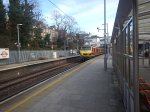
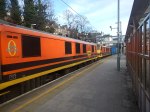

After I got home, I found that it was going from the Port of Felixstowe to Trafford Park Freightliner Terminal.
The journey will take around nine-and-a-half hours.
- This time includes a sixty-five minute stop at Ipswich to change the diesel locomotive or locomotives used to haul the train out of the Port of Felixstowe for the pair of Class 90 electric locomotives for the rest of the journey to the North-West.
- The two locomotives together have a power output of about 7.5 MW.
- The train will pick up the West Coast Main Line at Primrose Hill and then take the Trent Valley Line between Rugby and Stafford before approaching Trafford Park, using the Castlefield Corridor through Manchester Piccadilly and Oxford Road stations.
- As I write this, the train is on time as it approaches Tamworth.
The train has done well as at Watford, it was running twenty minutes late. The train crew have used the 7.5 MW well to claw back the time.
Did it help the crew to regain the schedule, that they had 7.5 MW on hand, as opposed to the less than 3 MW from the UK’s largest diesel locomotive?
To my mind, this illustrates one of the reasons, why long distance trains are best run by powerful electric locomotives.
In Do Cummins And Stadler Have a Cunning Plan?, I describe the new Class 99 locomotive.
- It is an electro-diesel locomotive.
- It has 6 MW available on 25 KVAC overhead electrification.
- It has a 1.8 MW Cummins diesel engine, which may be powerful enough to haul the largest trains in and out of the Port of Felixstowe, where the route is not electrified.
Thirty of these locomotives have been ordered by GB Railfreight.
I believe that one of these locomotives could handle a very heavy freight train between the Port of Felixstowe and Trafford Park Freightliner Terminal.
- The locomotive working alone could handle the train on the unelectrified line between Felixstowe and Ipswich.
- There would be no need to electrify the lines in the Port of Felixstowe.
- There would be no need for a prolonged stop in Ipswich.
- An hour on the journey could be saved.
- There might be a saving in the number of crew.
The Class 99 locomotive seems to be well-designed for handling freight trains out of Felixstowe.
Were Freightliner experimenting with what they needed from an electro-diesel locomotive, when I took this picture at Shenfield?
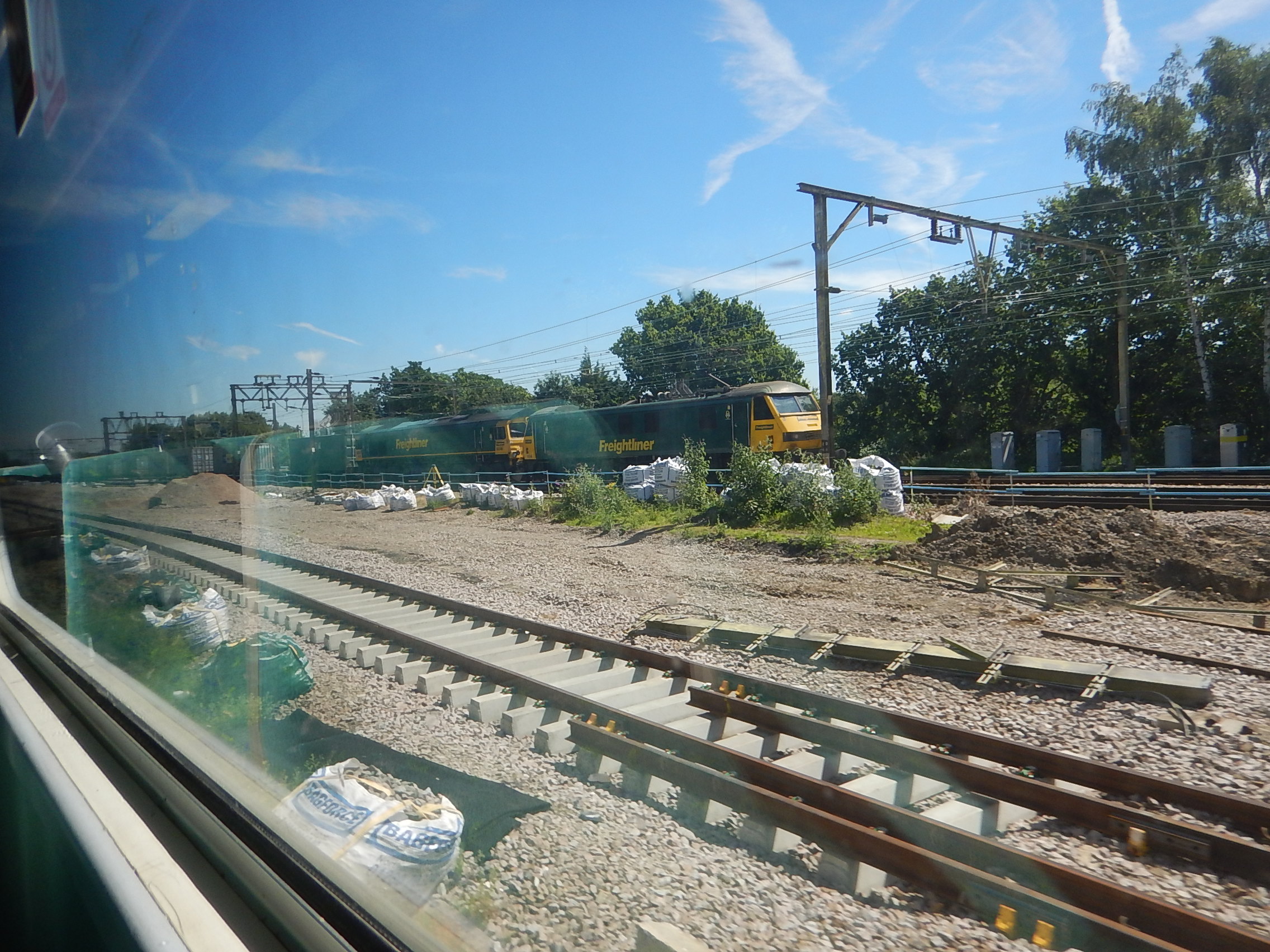
Note.
- The Class 90 electric locomotive has 3.7 MW of power.
- The Class 66 diesel locomotive has 2.4 MW of power.
Was what I saw an affordable electro-diesel locomotive?
Beeching Reversal – East Didsbury – Stockport
This is one of the Beeching Reversal projects that the Government and Network Rail are proposing to reverse some of the Beeching cuts.
This project has been puzzling me.
Search Google for “East Didsbury and Stockport Rail Link” and all you find is grandiose plans for billion pound extensions to the Manchester Metrolink.
Having researched a lot of the proposed Beeching Reversal projects, it appears to me, that the ones likely to be built, will give a lot of benefit for millions, not billions of pounds.
I just wonder, if in this project, Manchester is stealing an idea from Birmingham – the four-poster station!
This Google Map shows Smethwick Galton Bridge station.
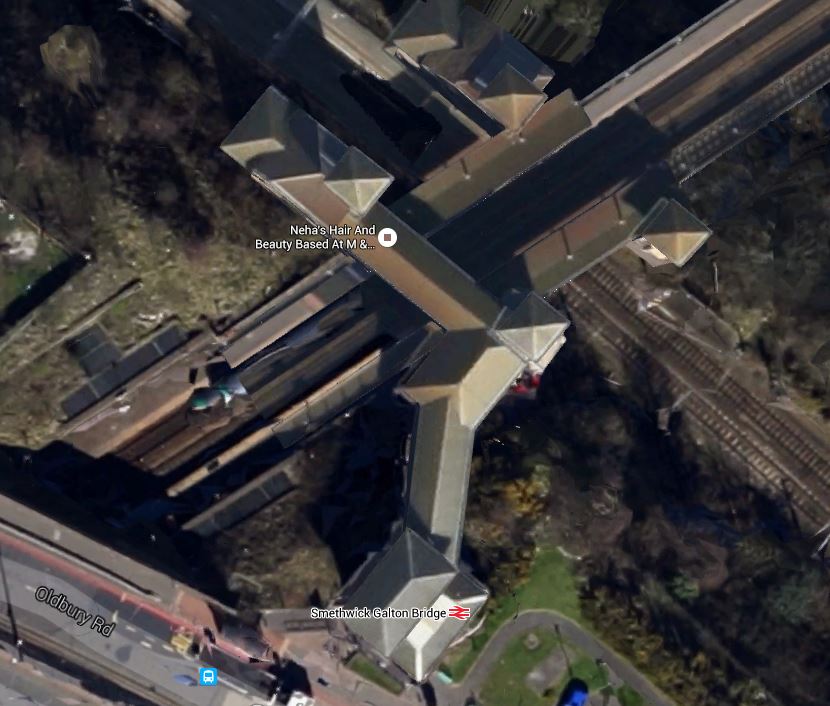
This extract from the Wikipedia entry, describes the station.
The station was opened in September 1995 as part of the Jewellery Line scheme to reopen the line between Smethwick and Birmingham Snow Hill station. It was built as an interchange station between two lines, and the platforms on both lines opened at the same time.
Note.
- The four lift towers with stairs, that connect the four platforms, have pyramid roofs.
- The station is fully step-free.
- The rail lines are at different levels.
These pictures show the station.
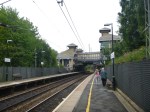
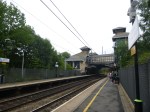

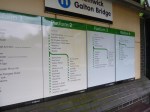
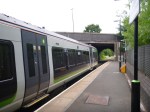
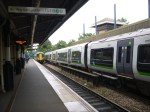


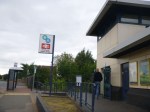


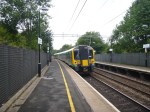
It is a very practical architectural idea and the world needs more four-poster stations to connect rail lines where they cross at different levels.
Could A Four-Poster Station Link East Didsbury And Stockport?
These are my thoughts.
The Location
This Google Map shows the general area, where the station could be built.
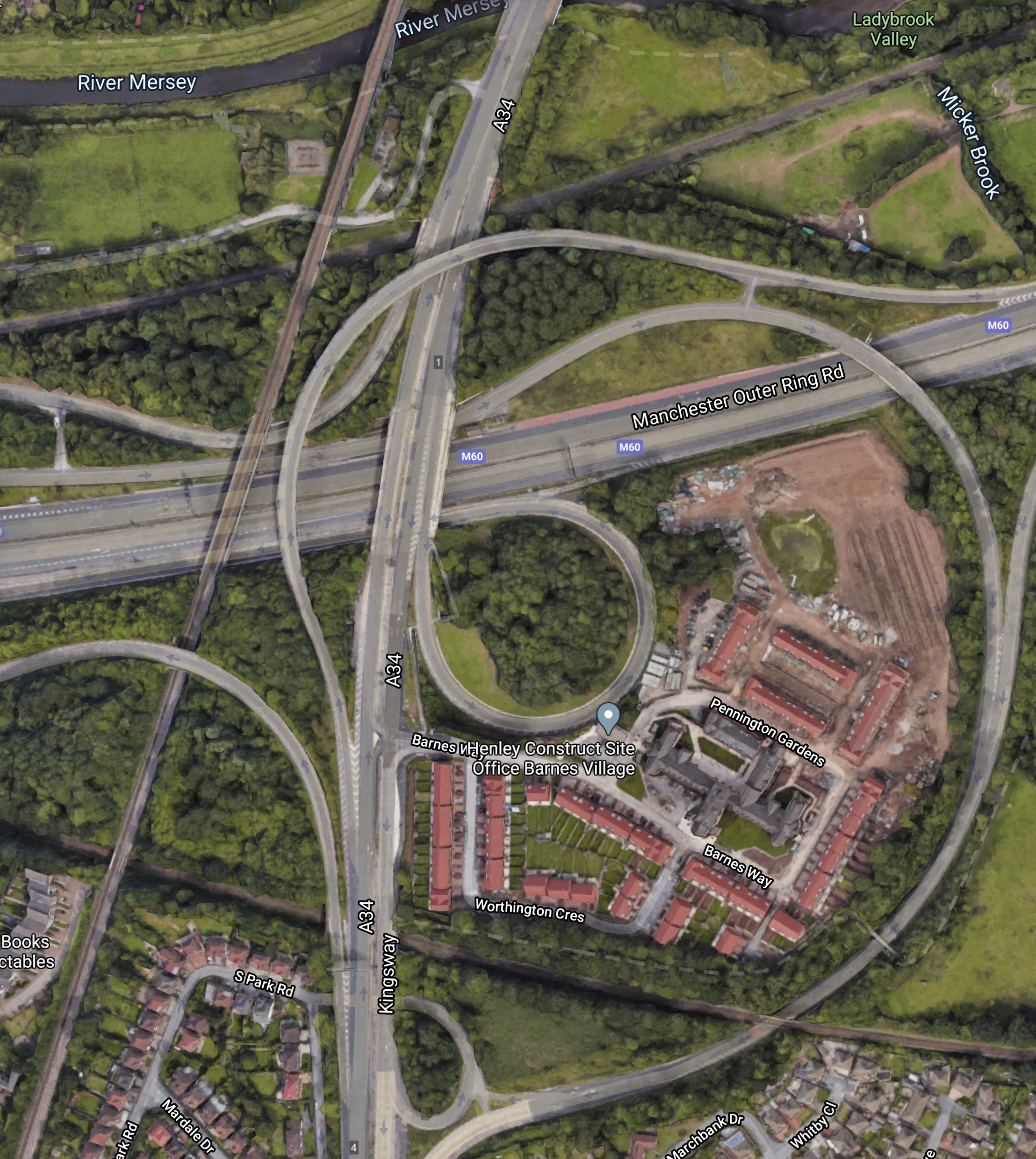
It is a spaghetti of motorways and rail lines with a lumpy sauce of new housing called Barnes Village in the middle.
Note, where the two rail lines cross in the South-West corner of the map.
This second Google Map, shows an enlarged image of the location, where the two rail lines cross.
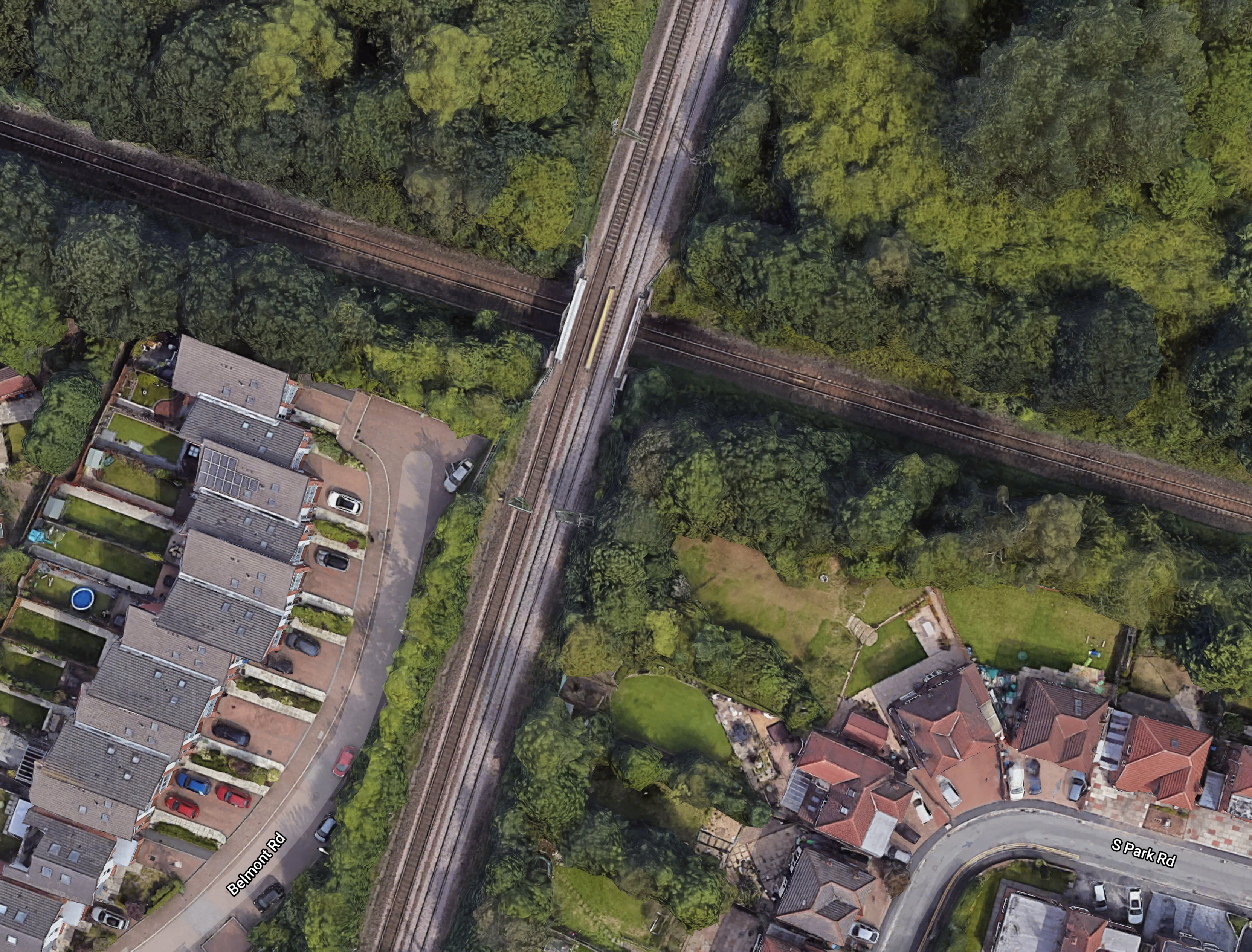
Note.
- The Styal Line runs North-South.
- The line running East-West is the Mid-Cheshire Line between Altrincham and Stockport stations.
I suspect most travellers joining the rail network at this point, would walk or cycle in from nearby locations or turn up in a taxi.
The Styal Line
The Styal Line has the following characteristics.
- It is an electrified double-track line.
- It connects Manchester Piccadilly and Wilmslow stations.
- There is a spur that serves Manchester Airport station.
- East Didsbury station, is the station North of where the two lines cross.
- Gatley station, is the station South of where the two lines cross.
- It is the route of trains to and from Manchester Airport.
These trains go through East Didsbury and Gatley stations in trains per hour (tph)
- 1 tph – Northern – Liverpool Lime Street and Crewe
- 1 tph – Northern – Liverpool Lime Street and Manchester Airport
- 1 tph – Northern – Manchester Airport and Blackpool North
- 1 tph – Northern – Manchester Airport and Cumbria
- 1 tph – Trains for Wales – Manchester Airport and Chester
- 1 tph – TransPennine Express – Manchester Airport and Redcar Central
- 1 tph – TransPennine Express – Manchester Airport and Newcastle
- 1 tph – TransPennine Express – Manchester Airport and Glasgow Central or Edinburgh
Freight trains also use the route.
This means that currently, there are eight tph between the Castlefield Corridor (Deansgate, Manchester Oxford Road and Manchester Piccadilly) and Manchester Airport, all of which go through the location, where the four-poster station could possibly be built.
So could the new station, be used to take pressure off the overloaded Castlefield Corridor?
The Mid-Cheshire Line
The Mid-Cheshire Line has the following characteristics.
- At this point it is a single-track without electrification.
- It connects Stockport and Altrincham stations.
Re-Doubling Of The Mid Cheshire Line Between Stockport and Altrincham And Associated Station Reopenings is another of the Beeching Reversal projects and envisages the following.
- Re-doubling the route.
- Possible electrification
- Reopening some stations.
This is the only passenger service that uses the route.
- 1 tph – Northern – Manchester Piccadilly and Chester
Up to two-three freight tph, also use the route.
In the related post, I said this about the desired frequency of services between Manchester and Chester stations.
It could be argued that two tph between Manchester Piccadilly and Chester are needed now and that four tph should be the preferred frequency.
There certainly needs to be four tph going through the proposed four-poster station.
Conclusion
I am being drawn to the conclusion, that this station if it were to be built, would help a lot of problems with Manchester’s railways.
- It would allow a sort out of train services to Manchester Airport.
- It would connect Stockport and Manchester Airport.
- It would connect Stockport and East Didsbury.
- It could help a solution to the problem of the Castlefield Corridor.
The station should be built.
The Rival Plans For Piccadilly Station, That Architects Say Will ‘Save Millions’
The title of this post, is the same as that of this article on the Manchester Evening News.
This subtitle introduces the idea.
The speculative proposal includes a new underground HS2 station and an ‘s-shaped tunnel’ under the city centre.
The architects are Weston Williamson and I have felt for years that this was the best way and I put my ideas and some fragments from the press and Northern Powerhouse Rail in Manchester Piccadilly ‘Super Hub’ Proposed.
This picture from Weston Williamson, shows their proposed station.

Note.
- In the visualisation, you are observing the station from the East.
- The existing railway lines into Piccadilly station are shown in red.
- Stockport and Manchester Airport are to the left, which is to the South.
- Note the dreaded Castlefield Corridor in red going off into the distance to Oxford Road and Deansgate stations.
- The new high speed lines are shown in blue.
- To the left they go to Manchester Airport and then on to London, Birmingham and the South, Warrington and Liverpool and Wigan, Preston, Blackpool, Barroe-in-Furness, the North and Scotland.
- To the right, they go to Huddersfield, Bradford, Leeds, Hull and the North East, and Sheffield, Doncaster and the East.
- Between it looks like a low-level High Speed station with at least four tracks and six platforms.
- The Manchester Mretrolink is shown in yellow.
- The potential for over-site development is immense. If the Station Square Tower was residential, the penthouses would be some of the most desirable places to live in the North.
This Google Map shows the current station.
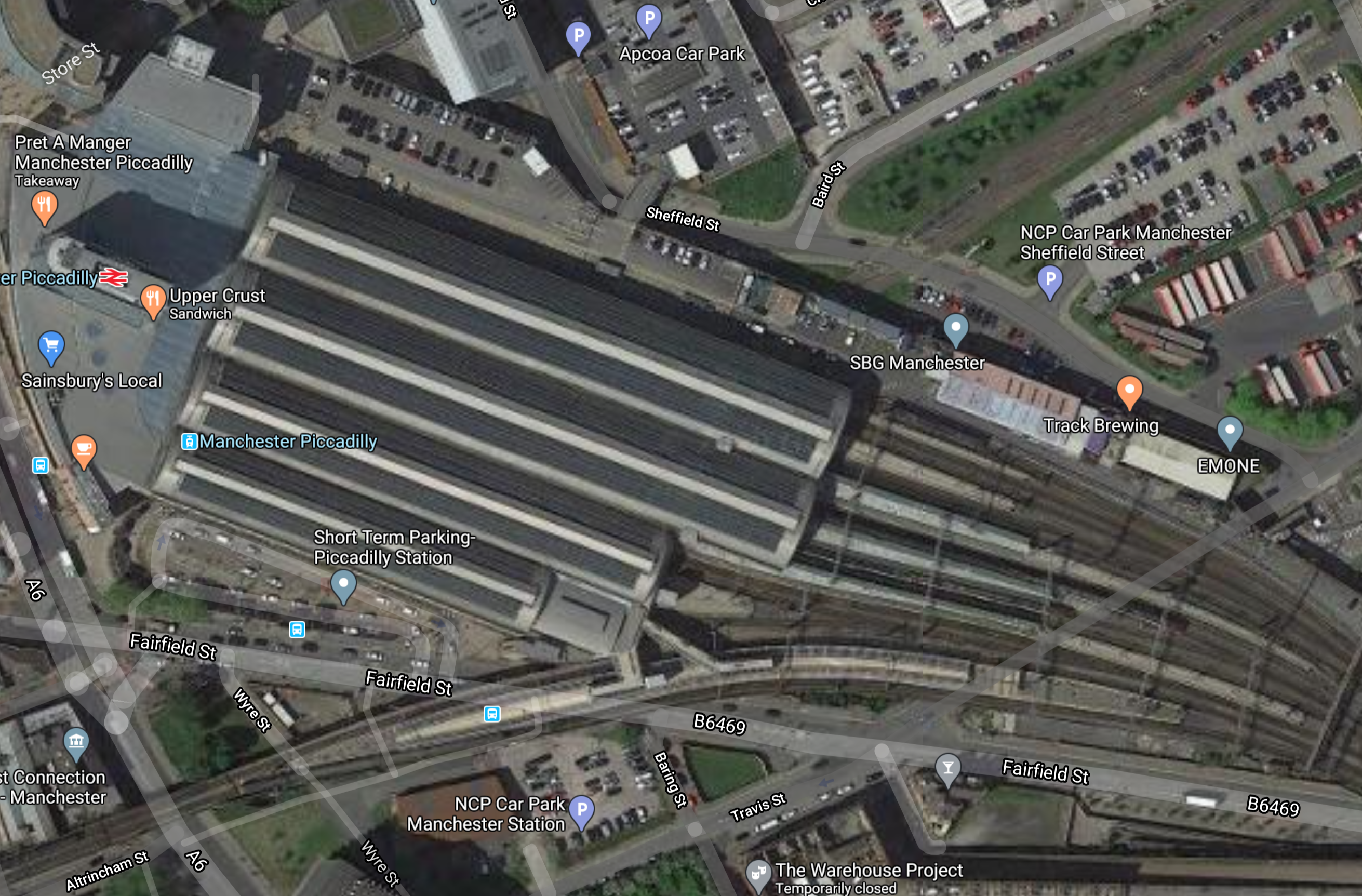
Unfortunately, the map is round the other way to the visualisation, but I hope you can see how the shape of the current station is intact and can be picked out in both.
If you’ve ever used London Paddington station in the last few years, you will know that Crossrail is being built underneath. But the massive construction project of building the Crossrail platforms has not inconvenienced the normal business of the station.
Weston Williamson’s proposed station can be built in the same way.
It could be truly transformational
- Manchester Piccadilly station would have at least 43 percent more platforms.
- Classic-compatible High Speed commuter trains would run to Barrow, Blackpool, Chester, Derby, Nottingham and Shrewsbury from the low-level High Speed station.
- The Northern Powerhouse Rail for all TransPennine Express services would use the low-level High Speed station.
- Glasgow services would use the low-level High Speed station.
- Manchester Piccadilly and Manchester Airport would have up to 18 high speed trains per hour and would be the finest airport service in the world.
- Some or all of the low-level High Speed platforms, would be able to take 400 metre long trains.
- 400 metre long platforms could handle one 200 metre long train from Manchester Airport and one 200 metre long train from Yorkshire.
- The Castlefield Corridor would only have local trains, limited to a number, with which it could cope.
- The use of the existing platforms would be reorganised.
It would be a massive increase in the capacity of the station and as been shown at Paddington with Crossrail, I am sure, that it could be built without massive disruption to existing services.
The Ultimate Train To The North
Imagine a pair of 200 metre long classic-compatible trains running between London Euston and Leeds.
- They would travel via Birmingham Interchange, Manchester Airport, Manchester Piccadilly, Huddersfield and Bradford.
- The trains would divide at Leeds.
- One train would go to Hull.
- The second train would go to York, Darlington, Durham and Newcastle. It could be extended to Edinburgh.
- It could even run with a Turn-Up-And-Go frequency of four tph.
Why not?
Railfuture On The Castlefield Problem
This report on the railfuture web site is entitled The Castlefield Problem – A Great Opportunity For Freight.
This is the introduction to the report.
Railfuture believes that railways should be the transport mode of choice if we are to balance the needs of the economy with those of tackling the Climate Emergency and campaigns for a bigger and better railway capable of carrying more freight as well as providing for ever increasing passenger demand.
Manchester’s Castlefield corridor is a bottleneck and has become a byword for unreliability. It is expected to carry 12 passenger services and one freight train in each direction every hour. This report recommends some medium to long term interventions aimed in particular at expanding the freight offering, since movement of goods by road is the most difficult to decarbonise.
It then goes on to describe the problem in detail. This is an important paragraph.
Meanwhile, the increase in intermodal freight traffic between Trafford Park and the southern ports has seen all the available freight capacity (known as signalling paths) taken up, with each freight train using the equivalent of two passenger paths.
The report then makes these points about the freight services to and from Trafford Park Rail Freight Terminal.
- Freight has no choice but to use the Castlefield route.
- There is no access to Trafford Park is from the West Coast Main Line (WCML) other than via Castlefield.
- As freight doesn’t complain on social media when it is late or cancelled, it is a popular target for politicians looking for a solution.
The report says that the ideal solution would be to access Trafford Park from the western end.
The report then asks, the fundamental question, as to whether the Trafford Park terminal is fit for purpose and details these points.
Operation is not very efficient.
It only has a limited number of sidings with gantries.
Can Trafford Park handle the growth of rail freight to and from Manchester?
This map shows the Trafford Park terminal.
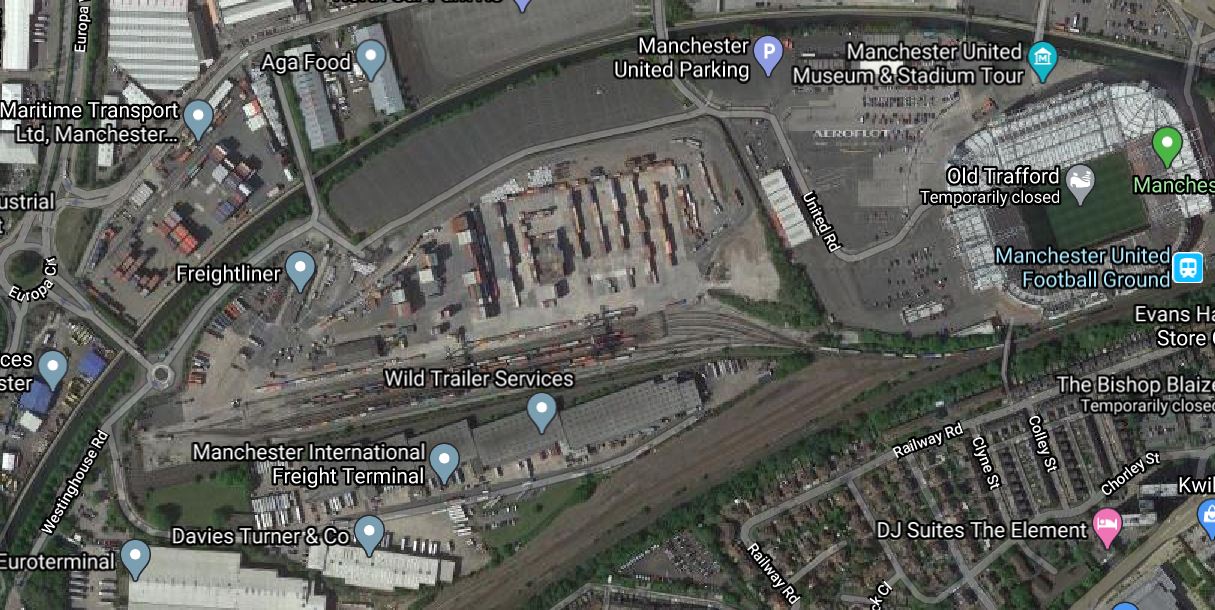
There doesn’t appear to be much space to expand.
railfuture’s Solution
railfuture are proposing that a second rail freight terminal be built in the Borough of Trafford at Carrington Park, which is described by this paragraph in the report.
This brownfield site, once the Shell chemical works, lies to the south west of Manchester but still within Trafford Borough. Until its closure it enjoyed rail access via the former line between Stockport and the Warrington Central (CLC) line at Glazebrook. It is currently a Business Park, although the lorry parking facility in the area we are interested in could easily be relocated to another part of this vast and mostly empty site.
This Google Map shows the site.
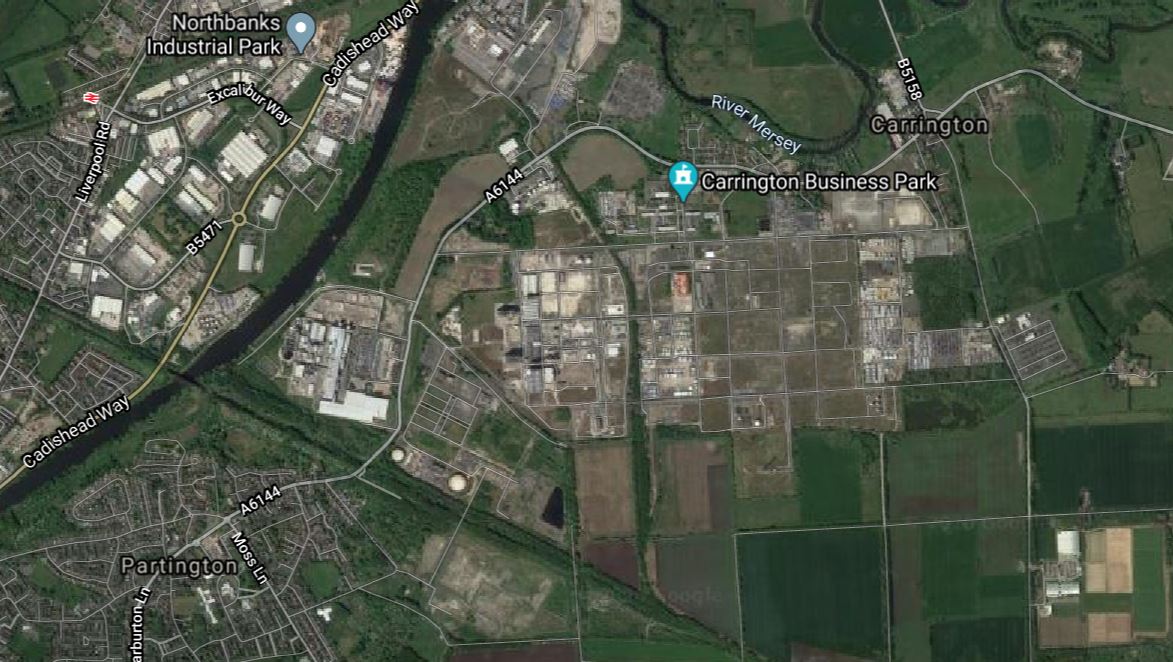
Note.
- The blue arrow indicating the centre of Carrington Business Park.
- Irlam station on the route between Liverpool and Manchester line via Warrington is in the North West corner of the map.
- The Manchester Ship Canal running across the North-West corner of the map.
- The route of the former Glazebrook East Junction–Skelton Junction line, runs diagonally across the bottom of the map.
- Another railway used to run up the middle of the site.
railfuture’s plan for Carrington Park is as follows.
- Build a Rail Freight Terminal North-South along the route of the disused railway indicated in 5.
- Reinstate the Glazebrook East Junction–Skelton Junction line, so that freight trains can go between Carrington Park and the East.
- I doubt, it’s possible to connect to the Liverpool and Manchester line via Warrington, as there is Carrington power station in the way.
- But it would link Carrington Park and Trafford Park.
Once at Skelton Junction, trains can go East to connect with the Manchester branch of the West Coast Main Line between Stockport and Cheadle Hulme stations.
I have followed the line to the East in my helicopter.
It is double track until it splits from the route to Stockport and Manchester under Junction 4 of the M60.
It continues as single-track under the Styal Line, before turning South.
It then passes under the Manchester branch of the West Coast Main Line.
This Google Map shows where we have arrived.
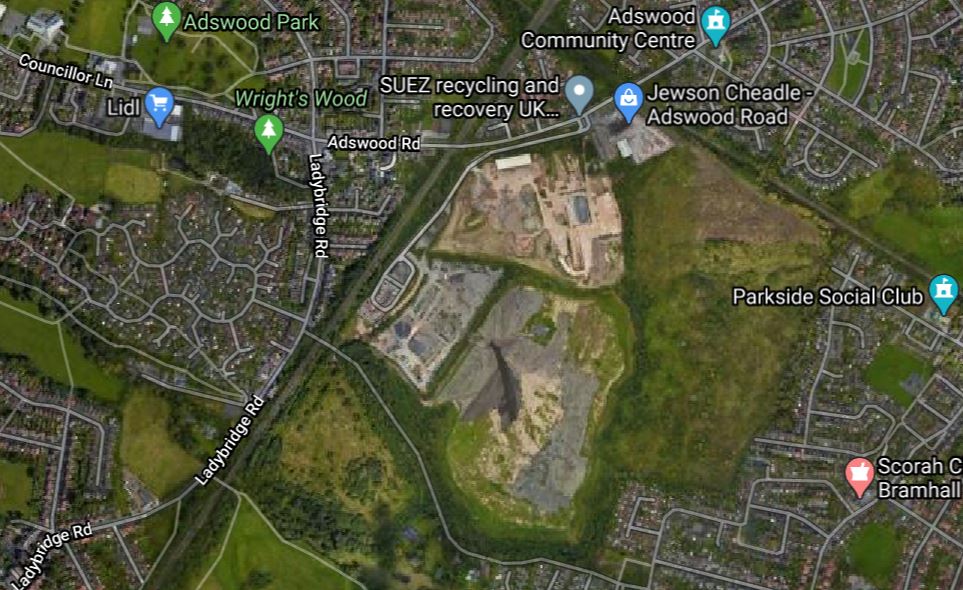
Note.
- The Manchester branch of the West Coast Main Line going diagonally North-South across the map.
- Stockport and Manchester are to the North.
- Cheadle Hulme station is just off the map to the South.
- The line, I’ve been following crossing the Manchester branch in an East-West direction.
Conveniently, the large block of land lying to the South-East of where the two rail lines cross, is a landfill site that closed in 1985.
railfuture’s plan is to use this space to create a new Adswood junction between the two lines.
They recommend building a double-track junction.
- Trains could go between Manchester and the South via Wilmslow or Stoke.
- Trains via Stoke would avoid the busy lines through Crewe.
The report, then goes on to list a load of other benefits that could be built into the scheme.
- Adswood junction could be built, so that stone trains between the Peak District and the South could use a simpler route.
- The route through Carrington Park could be extended to Trafford Park.
- Passenger services could be run on the new route.
- There could be possibilities to combine parts of the scheme with High Speed Two.
- A new route to the North East is thought possible.
The report says this about the costs and benefit cost ratio of the proposed scheme.
Benchmarking against the outturn prices of similar projects undertaken elsewhere and allowing for inflation, we expect the costs to come in under £300m. This does not include potential third party investment or assume any release value of eventual redevelopment at Trafford Park. Adding the connection at Flixton would probably add a further £100m, still giving an overall BCR of over 2:1.
This scheme needs serious consideration.
Manchester Piccadilly, Liverpool Lime Street And Some Other Stations Compared
I am doing this exercise to get a handle on the scale of the problem at Platforms 13 and 14 at Manchester Piccadilly station.
In 2018/19, these were some passenger statistics for the two stations and some others.
- Birmingham New Street station handled 47.928 million passengers on its thirteen platforms or 3.62 million per platform per year.
- Brighton station handled 17.385 million passengers on its eight platforms or 2.17 million per platform per year.
- Bristol Temple Meads station handled 11.368 million passengers on its thirteen platforms or 0.87 million per platform per year.
- Cardiff station handled 14.205 million passengers on its eight platforms or 1.78 million per platform per year.
- Chelmsford station handled 8.927 million passengers on two platforms of 4.46 million per platform per year.
- Crewe station handled 3.318 million passengers on its twelve platforms or 0.28 million per platform per year.
- Deansgate station handled 0.458 million passengers on its two platforms or 0.23 million per platform per year.
- Doncaster station handled 3,918 million passengers on its nine platforms or 0.44 million per platform per year.
- East Croydon station handled 24.770 million passengers on its six platforms or 4.12 million per platform per year.
- Exeter St. Davids station handled 2.620 million passengers on its six platforms or 0.44 million per platform per year.
- Gatwick Airport station handled 21.225 million passengers on its seven platforms or 3.03 million per platform per year.
- Leeds station handled 30.839 million passengers on its seventeen train platforms or 1.81 million per platform per year.
- Leicester station handled 5.582 million passengers on its four platforms or 1.40 million per platform per year.
- Liverpool Lime Street station handled 14.221 million passengers on its eleven platforms or 1.29 million per platform per year.
- London Bridge station handled 61.308 million passengers on its fifteen platforms or 4.08 million per platform per year.
- London Fenchurch Street station handled 18.508 million passengers on its four platforms or 4.63 million per platform per year.
- London Paddington station handled 38.18 million passengers on its thirteen platforms or 2,94 million per platform per year.
- Manchester Oxford Road station handled 9.338 million passengers on its five platforms or 1.87 million per platform per year.
- Manchester Piccadilly station handled 30.252 million passengers on its fourteen platforms and two tram platforms or 1.89 million per platform per year.
- Manchester Victoria station handled 8.950 million passengers on its eight platforms or 1.12 million per platform per year.
- Newcastle station handled 8,914 million passengers on its twelve platforms or 0.74 million per platform per year.
- Nottingham station handled 8.005 million passengers on its nine platforms or 0.89 million per platform per year.
- Peterborough station handled 5.060 million passengers on its seven platforms or 0.72 million per platform per year.
- Preston station handled 4.646 million passengers on its nine platforms or 0.52 million per platform per year.
- Reading station handled 17.081 million passengers on its fifteen platforms or 1.14 million per platform per year.
- York station handled 9.991 million passengers on its eleven platforms or 0.90 million per platform per year.
These figures have given rise to a few thoughts.
Brighton
Brighton station is an eight platform terminal station, that handles a lot of passengers, considering that the City doesn’t have any mass transit system and passengers rely on walking, bicycles, buses and private cars for onward travel.
- There are upwards of eight trains per hour (tph) at the station to and from London, all of which can be up to twelve cars.
- The West Coastway and East Coastway Lines have at least six tph in the Off Peak.
- Arriving passengers can walk straight through the wide gate line and out to walking routes and the buses, with leaving passengers walking the other way.
I wouldn’t be surprised to hear that Brighton station is at capacity.
Chelmsford
It is truly remarkable that Chelmsford station is the second busiest station in terms of passengers per platform per year on my list.
- The station has two separate platforms on either side of the tracks.
- Access is via wide stairs and lifts.
- The station appears to handle five tph in both directions in the Off Peak, with up to twice that number in the Peak.
- Most trains calling at the station are between eight and twelve cars.
- Chelmsford station could get even busier in terms of passengers when the new longer Class 720 trains and Class 745 trains are brought into service in the next twelve months, as these trains have higher capacities, than the current trains.
- It is aimed, that the new trains though will have level access between train and platform, at some point in the future.
I very much feel, that Chelmsford shows what can be done at an ordinary two platform station with the application of good simple design.
London Fenchurch Street
London Fenchurch Street is the busiest station on my list.
- The limited number of platforms will increase the number of passengers per platform per year.
- The station has two entrances to each platform.
- Arriving passengers can walk straight through the wide gate line at the main entrance and down escalators to walking routes at street level, with leaving passengers walking the other way.
- Many trains in the Peak are twelve cars.
- Adding extra platforms would be difficult.
It does appear, that work has been done to maximise the station’s capacity.
Crewe, Doncaster, Exeter St. Davids, Newcastle, Peterborough, Preston and York
All these stations are interchange stations on the main lines, that may have been improved, but have not been substantially rebuilt.
They all manage to handle between 0.5 million and 1 million passengers per platform per year.
Leeds
Leeds station has been improved over the last few years.
- There are six through platforms and eleven where trains can terminate.
- After passing through the gate line, passengers are in a concourse from where long distance services to London and the North and local services to Bradford, Harrogate, Ilkley and Skipton can be boarded.
- A new wide bridge with escalators, a lift and steps leads from this concourse across the through lines and platforms to the other side of the station.
- There are lifts and escalators from the bridge to some of the through platforms and the terminating platforms beyond them.
- At the far side of the bridge, a new Southern entrance has been added.
<The bridge works well and shows how a wide bridge over or a wide concourse under the tracks, can improve circulation in a station.
If you compare the bridge at Leeds, with the bridge at Reading, which was designed at around the same time, the Reading one is better in that it is wider and has more escalators, with one up and one down escalator to each pair of platforms.
Was a certain amount of design at Leeds station performed by accountants?
London Bridge
London Bridge station shows what can be done by applying good design in a new or rebuilt station.
- There are nine through and six terminal platforms.
- All platforms can take full-length twelve-car trains.
- There is a massive concourse underneath all fifteen platforms.
- There are lots of escalators and lifts between the concourse and the platforms.
- Steps provide additional and reserve capacity.
- Passengers changing between routes can take an escalator or lift to the concourse and another one to their new route.
- Arriving passengers can walk straight through the wide gate lines and out to walking routes, the Underground and the buses, with leaving passengers walking the other way.
- London Bridge station was designed by Grimshaw Architects
It is a design with a wow factor that works very well.
Reading
Reading station is another good design applied to a rebuilt station.
- There are nine through platforms, three East-facing bay platforms and three West-facing bay platforms.
- All through platforms can take full-length trains.
- All bay platforms are a level walk from the Southernmost through platform and the main entrance gate line to the station.
- There is a massive bridge over all nine through platforms.
- There are lots of escalators and lifts between the bridge and the through platforms.
- Steps provide additional and reserve capacity.
- Passengers changing between routes can take an escalator or lift to the bridge and another one to their new route.
- Arriving passengers can walk straight through the wide gate lines and out to walking routes, the car-parks and the buses, with leaving passengers walking the other way.
- Reading station was designed by Grimshaw architects.
It is a design with a wow factor that works very well.
Redesigning Manchester Piccadilly
Could some of the principles of these stations be applied to rebuilding Manchester Piccadilly station?
There are currently twelve terminal platforms numbered 1-12 in the main part of the station.
- Platforms 1 to 4 are used for services to Marple, New Mills, Rose Hill and Sheffield via the Hope Valley Line, and services on the Glossop Line.
- Platforms 5 to 9 are the longest and used by Avanti West Coast and CrossCountry services.
- Platforms 10 to 12 are shorter than the others and are usually used to accommodate local trains to Crewe and Manchester Airport, plus Mid-Cheshire line, Buxton Line and South Wales services.
The two through platforms 13 and 14 are on the Southern side of the station.
These ideas might be possible.
A Wide Bridge Or Concourse Connecting The Platforms At The London End
Currently, there is a bridge over the platforms 1 to 12 at the London end, but compared to the bridges at Leeds or Reading stations, it is a rather feeble affair.
- It is narrow.
- It doesn’t have any kiosks or shops.
- It is only connected to the platforms by steps.
Could this be replaced by a wide bridge, like say the one at Reading?
It would certainly give advantages if it could!
- Passengers arriving in Manchester Piccadilly needing to change to another service, might find it more convenient to use the bridge, rather than exit on to the main concourse.
- The bridge could be designed as a waiting area, with kiosks, shops, cafes and other facilities.
- The bridge would be connected to all platforms by escalators and lifts.
- Steps would provide additional and reserve capacity.
Note that if you buy a ticket to Manchester stations, that allows you to go to either Manchester Piccadilly, Manchester Oxford Road, Deansgate or Manchester Victoria stations, So a quick route up and down an escalator at the London end of Piccadilly station to Platform 14 would be very convenient.
Access To Platforms 13 And 14
Compared to the wide island platforms at Leeds and Reading, platform 13 and 14 are a bit narrow, but I’m fairly sure, that a good layout for escalators and lifts could be designed, so that access to these two platforms can be improved.
Trains Through Platforms 13 and 14
These must be arranged, so that they are all similar with wide double doors and step-free access between platform and train.
Improvement Along The Castlefield Corridor
Various improvements need to be done on the Castlefield Corridor.
- Deansgate can be improved to provide better access to the Metrolink at Castlefield.
- Manchester Oxford Road station needs a complete rebuilt and a better track layout.
- The Liverpool Lime Street and Manchester Airport service via Warrington and Manchester Oxford Road needs a strong rethink.
It appears that it has already been decided to reduce the number of trains, as I wrote about in Castlefield Corridor Trade-Off Plan For Fewer Trains.
Wide Gate Lines
Passengers arriving at Manchester Piccadilly station in the main part of the station should be able to walk forward to a gate line stretching right across all the platforms.
- The present gate line isn’t continuous.
- There is still a lot of manual checking of tickets.
The current layout can certainly be improved.
Access To Metrolink
I also wonder if better access to the Metrolink could be provided, so that passengers access the Metrolink station from inside the gate line. Now that the Metrolink allows contactless ticketing, this might be easier.
Conclusion
I believe there’s a solution in there somewhere!
Castlefield Corridor Trade-Off Plan For Fewer Trains
The title of this post is the same as that of this article on Rail Magazine.
The article says that to solve the problems through the Castlefield Corridor, the number of trains will be reduced from 15 trains per hour (tph) to thirteen tph.
This arrangement applied until May 2018 and meant that two tph between Manchester Airport and East of the Pennines reversed in Manchester Piccadilly station to go East, rather than using the Castlefield Corridor through Deansgate and Manchester Victoria stations.
The arrangement worked well before May 2018 and I doubt there’s no reason, why it won’t work in the short-term.
The long-term solution is Northern Powerhouse Rail and/or High Speed Two, which looks like will be in tunnel between the Airport and Manchester City Centre and could carry as many as six tph between Manchester and Liverpool via the Airport.
Perhaps, this should be the first piece of High Speed Two to be built in the North.
- It connects the three most important economic areas in the North West of England; Liverpool, Manchester and Manchester Airport.
- It would greatly increase capacity.
- It would probably have good connections to Crewe, Warrington, Wigan and the West Coast Main Line.
- Liverpool has an extensive local rail network, which is being expanded.
- Manchester is expanding the Metrolink network.
Some of the Castlefield Corridor services would have been replaced by better and faster services.
Rochdale Still Doesn’t Have A Direct Link To Manchester Airport
The title of this post is the same as that of this article on Richdale Online.
I recently went to Rochdale to see Ipswich play and what surprised me about the town, was how far it was from my hotel close to Manchester Victoria station.
I went on a tram and it took over an hour and it was also very crowded.
I then walked about a mile to the football ground. Luckily a friendly Rochdale supporter showed me the way.
But is Rochdale’s link to Manchester Airport, any worse than say Walthamstow’s link to Heathrow or Gatwick.
- Rochdale Town Centre to Manchester Airport by train – 1:05
- Rochdale Town Centre to Manchester Airport by tram – 2:02
- Rochdale Station to Manchester Airport by train – 0,:55
- Rochdale to Manchester Airport by taxi- 0:27
- Walthamstow Central to Heathrow Airport by Underground and Heathrow Express – 1:05
- Walthamstow Central to Heathrow Airport by Underground – 1:27
- Walthamstow to Heathrow Airport by taxi – 1:27
- Walthamstow Central to Gatwick Airport by train – 1:22
Note.
- All journeys, except the taxis, need at least one change.
- My lawyer son lives in Walthamstow and always flies from Heathrow.
- He gets there by Underground, with one cross-platform change at Finsbury Park.
- Crossrail won’t help the man on the Walthamstow Underground.
- In Manchester the taxi is quicker, but it isn’t in London.
These are my thoughts.
Mancunians Are More Impatient
Not my view, but the view of a Northern station guy, who has worked on Platforms 13 and 14 at Manchester Piccadilly and busy stations on the London Overground.
He thought that they were sometimes in such a hurry to get on a train, that the train is delayed.
He also said, if you ask Londoners to stand behind the yellow line, they do. Mancunians don’t!
Access To Northern And TransPennine Trains Is Bad
Consider.
- There is often a step up into the train in Manchester.
- Manchester Metrolink is generally step-free into the tram.
- Parts of London Underground/Overground are step-free.
- The new TransPennine trains have pathetic and slow end-door access.
The two train companies have bought fleets of trains that are not fit for purpose.
The Manchester Airport Rail Link Is At Full Capacity
Manchester Airport station, does not have the best rail line from the City Centre.
Wikipedia says this.
Any future additional services to the Airport are in doubt without further infrastructure works; unresolved issues surround the lack of new ‘through’ platforms at Manchester Piccadilly which have been shelved by the government and the Styal Line to Manchester Airport operating at full capacity with little resilience to absorb delays.
The Rochdale Online article blames the stations in Manchester, but the Styal Line is equally to blame.
The Long Term Solution Is High Speed Two
In the 2030s, High Speed Two will solve the problem by using a tunnel between Manchester Airport and the City Centre.
It will also do the following.
- Provide direct access between Manchester Airport and the Midlands, the South and London.
- Provide direct access to Liverpool and Warrington in the West.
- Provide direct access to Huddersfield, Bradford, Leeds, Hull and the North East, in the East.
- All services will probably be at least five trains per hour (tph).
But High Speed Two won’t provide a direct link to Richdale.
Passengers between Rochdale and Manchester Airport will still have to change in the City Centre.
Unless of course, some TransPennine services to Manchester Airport are discontinued, as they can be done by High Speed Two.
This would free up paths to add extra services to Manchester Airport.
An Interim Solution
Not only Rochdale, but other towns and cities across the North like Bradford moan about lack of a direct service to and from Manchester Airport.
So what would I do?
Ban Freight Trains Through The Castlefield Corridor
This may not be possible, but it should be a long term objective.
It will cost money, but it would release capacity through the Castlefield Corridor.
Ban Trains Without Level Access At Stations In The Castlefield Corridor
I know that Northern and TransPennine have just bought a load of new trains, but they make matters worse in the stations through the Castlefield Corridor.
All Trains To The Airport Must Be Eight Cars
This makes sense as it increases the capacity, but use the same number of paths.
- Eight-car Class 379 trains – Stansted Express – 160 metres and 418 passengers
- Five-car Class 802 trains – TransPennine Express – 130 metres and 342 passengers
- Eight-car Class 331 trains – Northern – 190 metres and 568 passengers
It does appear that the new trains are also setting new standards for train length.
ERTMS Signalling Should Be Installed Between Manchester Victoria And Manchester Airport
ERTMS signalling would give more flexibility on the route.
Create A Manchester Airport Express
This has been suggested and would have the following characteristics.
- Running between Manchester Airport and Manchester Victoria via Deansgate, Manchester Oxford Road and Manchester Piccadilly.
- Eight cars
- Airport-style interiors
- Step-free access at all stations.
- Four tph
- Running twenty-four hours a day.
- It would have step-free access to the Metrolink at Manchester Victoria, Deansgate and Manchester Piccadilly.
Ideally it would use dedicated platforms at Manchester Airport and Manchester Victoria. The platform at Victoria would hopefully have cross-platform interchange with services going through the station from East to West.
Reduce TransPennine Services To The Airport
TransPennine Express runs the following hourly services to the Airport
- Cleethorpes via a reverse at Manchester Piccadilly.
- Edinburgh or Glasgow via the Castlefield Corridor
- Middlesborough via the Castlefield Corridor
- Newcastle via the Castlefield Corridor
Why not cut-back either the Newcastle or Middlesborough service to Manchester Victoria and make sure it has good cross-platform access to the Manchester Airport Express?
These services are regularly cut-back anyway due to the congestion.
Demolish Manchester Oxford Road Station And Build A Station That’s Fit For Purpose
Manchester Oxford Road is one of ultimate design crimes on the UK Rail network.
- The new or refurbished station would be step-free.
- Platforms would be able to accept two hundred metre long trains.
- A well-designed bay platform would be provided to turn trains from the North efficiently.
- Up to four tph could probably be turned back.
Network Rail do station and track layout design generally very well and I’m sure that a redesigned Oxford Road station could improve capacity through the Castlefield Corridor.
Improve Deansgate And Manchester Piccadilly Stations
If longer trains are to be run through the Castlefield Corridor, then the platforms at these two stations will need lengthening and passenger access will need to be improved.
Is There A Place For Tram-Trains?
Manchester are keen on using tram-trains to improve the Metrolink network.
This map clipped from Wikipedia shows the layout of the Metrolink in the City Centre.
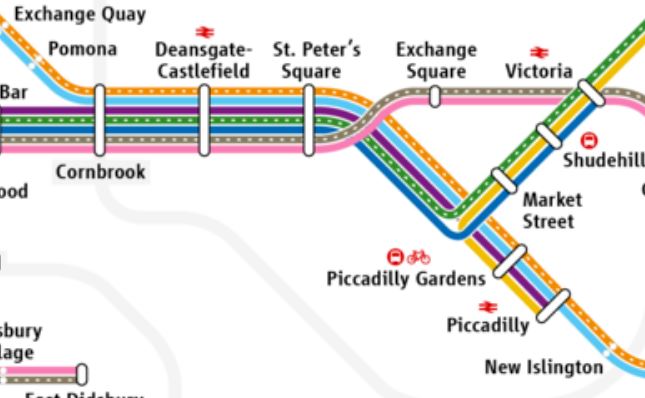
Note.
- Manchester Piccadilly, Deansgate and Manchester Victoria all have step-free connections to the trains to and from Manchester Airport.
- The new Trafford Line will branch off at Pomona.
I think it is likely, that any new lines run by tram-trains will pass through at least one of the connecting stations.
This will increase the list of places that will have good access with a single change to and from Manchester Airport.
Conclusion
There would appear to be a lot of scope to create a high-capacity link between Manchester and the Airport.
But it does appear that the current timetable leaves little or no room to expand the service.
That is why, I believe a simpler but higher capacity service, based on a Manchester Airport Express could be developed.
 The Anonymous Widower