Eurostar Orders First Double-Decker Trains
The title of this post, is the same as that of this article on the BBC.
This is the sub-heading.
Eurostar has revealed plans to run double-decker trains through the Channel Tunnel for the first time.
These three paragraphs add more details.
The cross-channel rail operator has confirmed it will order up to 50 trains from manufacturer Alstom, eventually increasing the size of its fleet by nearly a third.
The expansion plans would include investing heavily in a crucial London depot, it said.
But questions remain over whether the facility has enough space for both Eurostar and potential rival operators to use it.
This my solution to the problem outlined in the last paragraph.
Note, that I wrote the software that planned the building of the Channel Tunnel and the rail links to London and was also friends with the project manager of the 1960s attempt to build a Channel Tunnel.
We need more terminal platforms and depot space in the UK to handle Eurostar’s extra trains and the other companies who want to run to London.
We should split services into two groups.
Group 1 would terminate as now in an updated St. Pancras with more passenger handling capacity, which could probably be built over the tracks at the Northern end of the station. Trains would still be stabled at Temple Mills.
Group 2 would terminate at Ebbsfleet International, which would have extra platforms, a new depot, masses of car parking and a coach terminal.
Some trains from both groups could also stop at Ashford International.
To access Ebbsfleet from Central London and also create a Heathrow link to the Channel Tunnel, the Lizzie Line would be extended to Northfleet, where there is space to handle up to eight trains per hour in new platforms built in two disused sidings.
This OpenRailwayMap shows the location of Northfleet and Ebbsfleet stations.
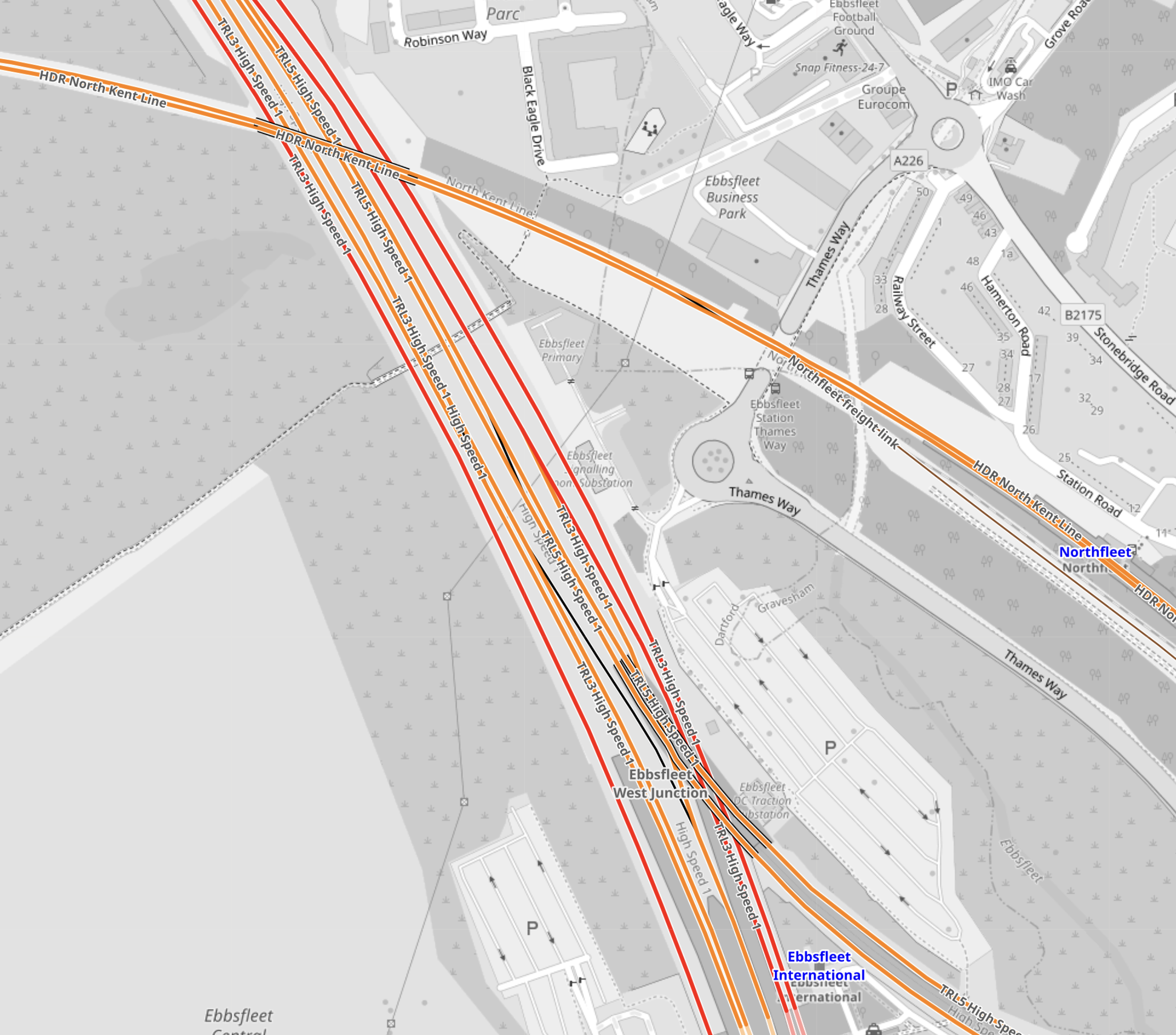
Note.
- Ebbsfleet International station at the bottom of the map.
- The red tracks are High Speed One.
- The orange tracks are third-rail electrified lines.
- The orange tracks going across the map is the North Kent Line.
- Northfleet station is at the right edge of the map on the North Kent Line.
- Northfleet and Ebbsfleet stations are less than a kilometer apart.
- Ebbsfleet has a lot of car parking spaces.
I believe a spectacular cable-car or other link would connect Northfleet and Ebbsfleet stations.
These are some other thoughts.
Ebbsfleet International Station Has Good Motorway Access
This Google Map shows the location of Ebbsfleet International station in relation to the motorways.
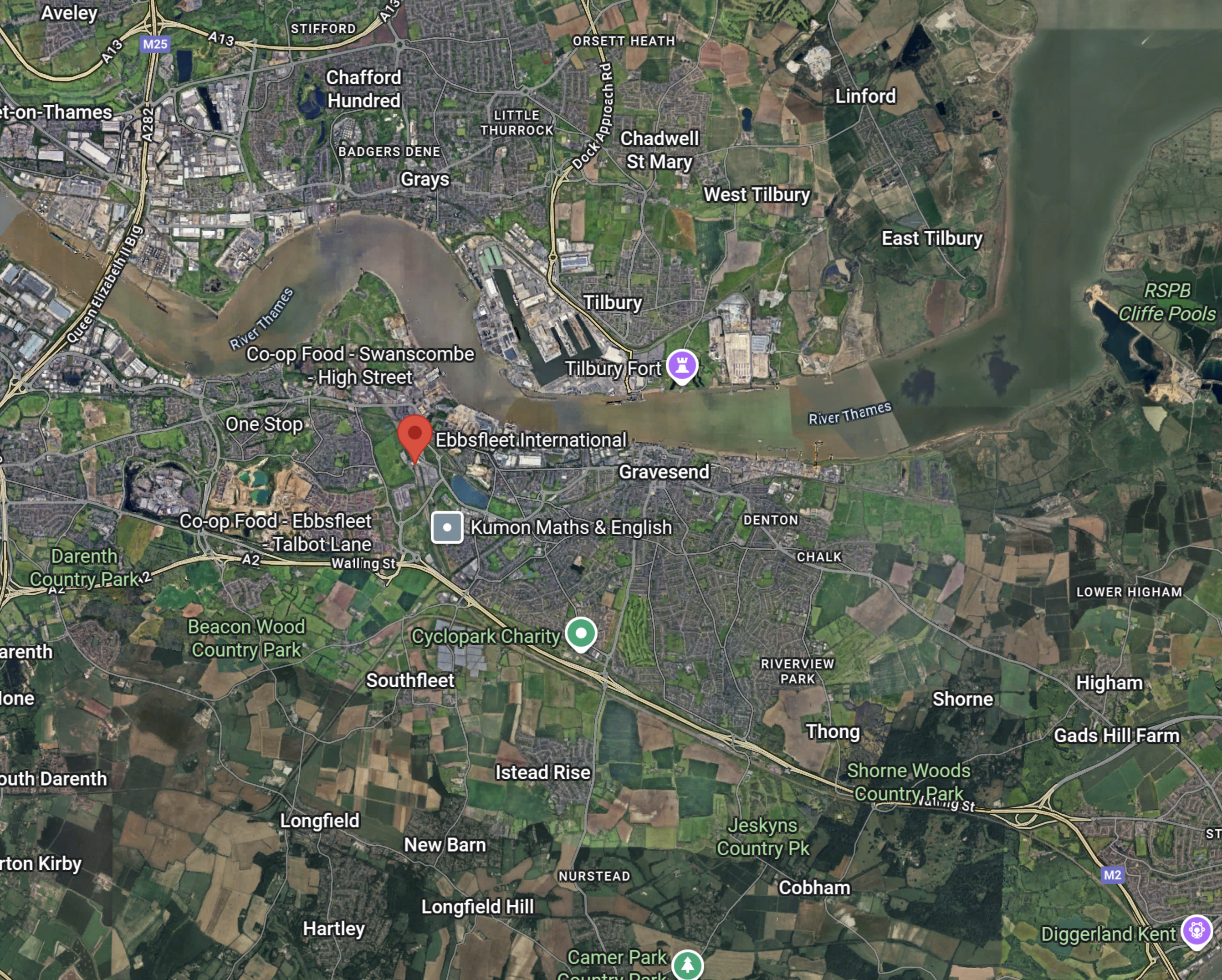
Note.
- The A2/M2 road runs across the bottom half of the map.
- The red arrow marks the position of Ebbsfleet International station.
- The Dartford Crossing is a few miles West of the station.
In my last few years, as an Ipswich season ticket holder, I regularly had a lift to Ebbsfleet International from a friend and the route to the station from the M25 and the A2/M2 wasn’t bad.
But it will be getting better.
This map from the Government’s consultation on the Lower Thames Crossing, shows the road layout in a few years.
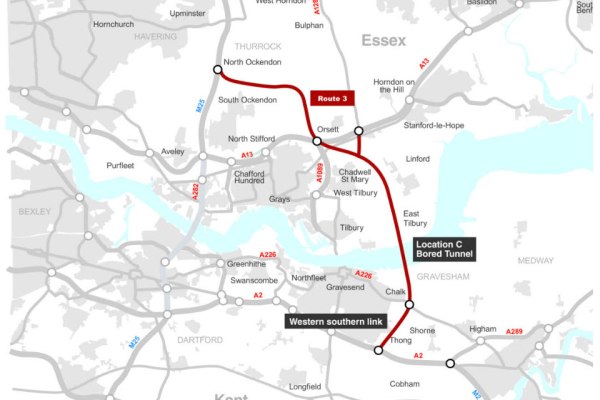
Note.
- The Lower Thames Crossing is shown in red.
- Ebbsfleet International station is about a mile South of Northfleet
- The new crossing will connect to the A2, a few miles East of the link road to the station.
Travellers from much of the East of and Middle England could use the new crossing to get to Ebbsfleet International station.
These are current times from Google.
- Birmingham – 2 hours and 41 minutes
- Cambridge – 1 hour and 17 minutes
- Edinburgh – 7 hours and 44 minutes
- Fishguard – 5 hours and 29 minutes
- Glasgow – 7 hours and 6 minutes
- Holyhead – 5 hours and 29 minutes
- Hull – 4 hours and 1 minute
- Ipswich – 1 hour and 29 minutes
- Leeds – 3 hours and 55 minutes
- Liverpool – 4 hours and 40 minutes
- Manchester – 4 hours and 28 minutes
- Milton Keynes – 1 hour and 37 minutes
- Newcastle 5 hours and 25 minutes
- Norwich – 2 hours 23 minutes
- Nottingham – 2 hours and 55 minutes
- Peterborough – 1 hour and 54 minutes
- Sheffield – 3 hours and 35 minutes
- Stoke-on-Trent – 3 hours and 25 minutes
- York – 4 hours and 16 minutes
Note.
- I would suspect that the opening of the Lower Thames Crossing will knock 10-15 minutes off these times.
- Edinburgh, Glasgow, Hull, Leeds, Newcastle, Nottingham, Peterborough, Sheffield and York would probably be quicker to Europe with a change to Continental train services at St. Pancras, rather than Ebbsfleet International.
- With improvements to rail services, more of these journeys will be quicker by train.
- High Speed Two should connect Birmingham, Liverpool, Manchester and Stoke-on-Trent to London, by the mid 2030s.
But there are some, who always feel their car is safer in a car park!
Ebbsfleet International Station Has A Large Amount Of Car Parking
This map shows the car parks at Ebbsfleet International station.
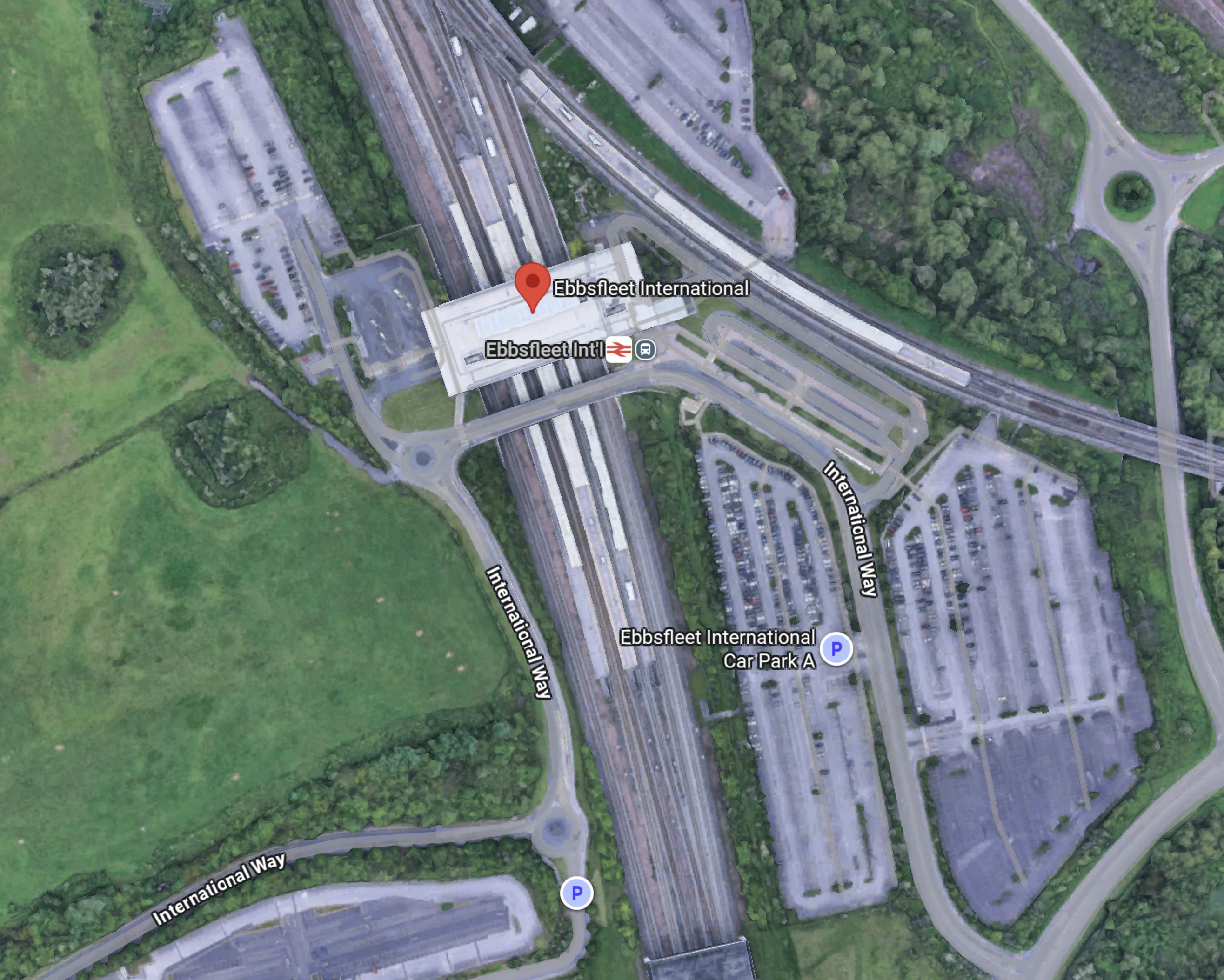
Note.
- Some of the parking areas are marked with a P.
- It is easy to pick-up and drop passengers.
- The car parks could be double-decked to add more spaces if needed.
- According to the Ebbsfleet International web site, the station currently has 5225 parking spaces, 68 accessible car parking spaces.
For those that have a lot of luggage or a large family, taking the car to Ebbsfleet International may be the best option.
Ebbsfleet International Station Should Have A Coach Station
Consider.
- In the next few years, hydrogen-powered coaches with a thousand kilometre range will come to dominate the long distance coach market.
- Mercedes and Wrightbus are know to be developing long-distance hydrogen-powered coaches.
- Hydrogen-powered coaches will be able to reach all of England and Wales and a large part of Scotland from Ebbsfleet International.
- Ebbsfleet International is closely connected to the UK motorway network.
- Continental coaches using the Channel Tunnel, could use Ebbsfleet as a coach interchange with the UK.
- Ebbsfleet International could also handle customs services for Continental coach services, which would take the pressure off the Channel Tunnel and the ferries.
- Ebbsfleet International could also have a coach link to Gatwick Airport.
These and other reasons make me feel, that a coach terminal at Ebbsfleet International is essential.
A Green Connection Between The Two Halves Of The European Union For the Gretas Of This World
Consider.
- There is no zero-carbon route between the island of Ireland and Continental Europe.
- Eurostar is all-electric between London and Continental Europe, but only serves a limited number of destinations.
- Low- or zero-carbon ferries are being designed, that run on hydrogen.
- Trains between London and the Irish ferries are diesel-powered.
- The simplest solution would surely be to run hydrogen-powered coaches between Ebbsfleet International and Fishguard and/or Holyhead. Both journeys would take three and a half hours.
Hydrogen-powered coaches are under development by Wrightbus.
I also asked Google AI if anybody is planning zero-carbon ferries between the UK and ireland and received this answer.
Yes, there are plans for zero-carbon ferries between the UK and Ireland, with a specific “Green Corridor” feasibility study underway for the Holyhead to Dublin route, and a separate, separate commuter service project planned between Belfast and Bangor. The Belfast Maritime Consortium is developing the zero-carbon commuter service, and a separate “Green Corridor” feasibility study is assessing potential low-carbon pathways between Holyhead and Dublin
I believe the green connection is feasible, provided the following happens.
- Ebbsfleet International is reopened and developed as a station for Continental Europe.
- The zero-carbon ferries are developed.
- The busmasters from Ballymena deliver the ultimate hydrogen-powered coach.
- Hydrogen and other fuels are made available, where they is needed.
This could do wonders for the economy of the island of Ireland.
Out of curiosity, I did ask Google AI, what is the longest coach route in the UK and received this answer.
The longest scheduled coach journey in the UK is the Scottish Citylink route from Glasgow to Uig on the Isle of Skye (route 915 or 916), which is about 230 miles and takes around 7 hours and 50 minutes. Historically, there have been much longer international bus routes, such as the Penn Overland tour from London to Ceylon, but these were not regular, scheduled services.
So my proposal at five hours and 29 minutes is only a short hop.
I also believe that with good project management that the additional infrastructure could be built by 2030, with little or no disruption to existing services.
Uber Partners With Gemini For Channel Tunnel Train Plan
The title of this post is the same as that of this article on Railway Gazette.
These two introductory paragraphs give more details.
Ridesharing app company Uber has announced a co-branding partnership with Gemini Trains, which is developing plans to launch open access passenger services through the Channel Tunnel.
Gemini plans to purchase 10-newly designed trains to offer ‘comfortable high-quality and frequent’ services with competitive fares, running from London Stratford International station – which has never been used for international services – to Paris Nord and Brussels Midi. All trains would call at Ebbsfleet International, which Eurostar no longer serves. Gemini also plans to expand services to ‘further exciting European destinations’, suggesting that Paris and Brussels are ‘just the start’.
It looks like Gemini Trains will run the trains and Uber will help with marketing, publicity and ticket sales.
Is The Silvertown Tunnel A Silver Elephant?
I have been through the Silvertown Tunnel several times now and every time the bus has never really slowed for lots of traffic.
I went through this morning on Easter Sunday and these pictures show all the other traffic I saw.
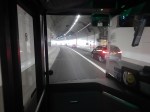

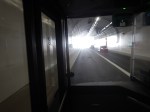

Note.
- I was sitting in the front passenger seat of a 129 bus, which is on the left of the bus.
- We were going from South to North through the Silvertown Tunnel.
- I could read the driver’s speedometer and it showed within a mile per hour of thirty all the way.
- We were passed by only one car in the tunnel.
- There were about a dozen passengers on the lower deck of the bus.
- I didn’t check how many were on the top deck of the bus.
Even on an Easter Sunday, I would have thought the service would have been busier.
Is The Silvertown Tunnel A Silver Elephant?
There are two answera to this question.
- Yes – A lot of money has been spent for just a few cars and bus passengers to have an easy ride through the tunnel.
- No – As traffic is flowing freely through the tunnel, it shows the tunnel is doing its job and freeing up traffic in East London.
But whatever view you take, a lot of money has been spent for a small number of vehicles and passengers to pass through the tunnel.
I also suspect very little extra revenue is being generated.
The Jubilee Line Was Busy
The complete route I took this morning was as follows.
- Home To Angel – 38 bus – Not very busy.
- Angel to London Bridge – Northern Line – Not very busy.
- London Bridge to North Greenwich – Jubilee Line – All seats taken.
- North Greenwich to West Silvertown – 129 bus – Not very busy.
- West Silvertown to Canning Town – Docklands Light Railway – Not very busy.
- Canning Town to Canada Water – Jubilee Line – All seats taken.
- Canada Water to Dalston Junction – Overground – Not very busy.
- Dalston Junction to Home – 30 bus – Not very busy.
Note.
- Only the sections on the Jubilee Line were really busy, with all seats taken.
- London Bridge, Stratford and Waterloo stations on the Jubilee Line are also busy National Rail stations.
- London Bridge, Canada Water, North Greenwich, Canning Town and Stratford all have large modern well-designed bus stations within easy walking distance of the Jubilee Line.
- Given, that there is now a charge to cross the river, have a lot of people decided to take the Jubilee Line rather than their car to go to the O2 at North Greenwich and the Olympic Park and Eastfield at Stratford?
I strongly feel, that more capacity is needed on the Jubilee Line, as no matter what time I use it, I never seem to get a seat.
Taking The Dover Road
This Google Map shows how the A2 ( the Dover Road) links up with the Silvertown and Blackwall Tunnels.
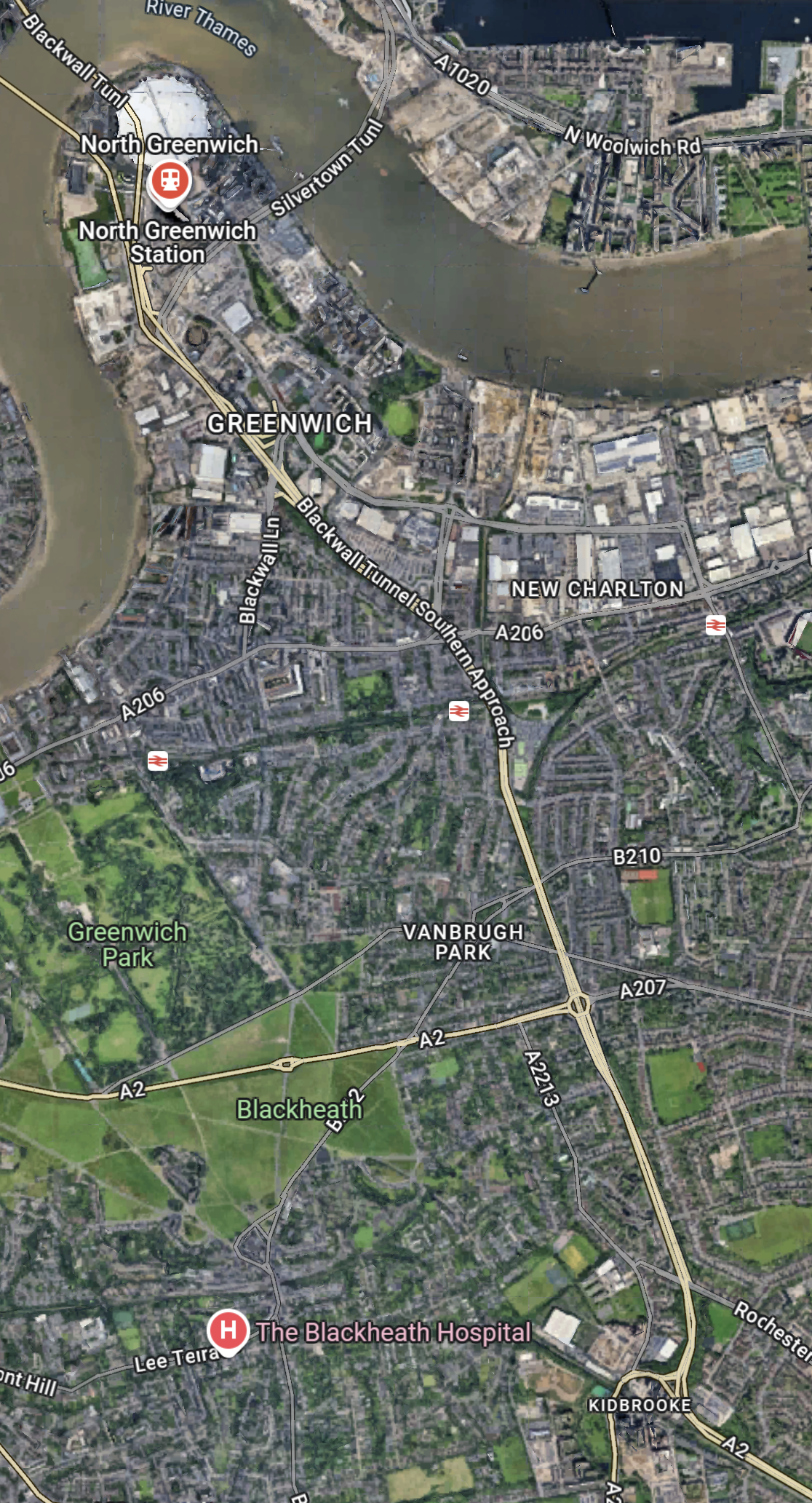
Note.
- The O2 in the North-West corner of the map, with North Greenwich station in red under it.
- The Blackwall Tunnel crosses the river to the North-West of the O2.
- The Silvertown Tunnel crosses the river to the East of the O2.
- Running diagonally across the map is the Blackwall Tunnel Southern Approach, which also serves the Silvertown Tunnel.
- The station to the West of the Southern Approach is Westcombe Park station.
- Click the map to show it to a larger scale.
This second Google Map shows the O2, North Greenwich station and the approaches to both tunnels.
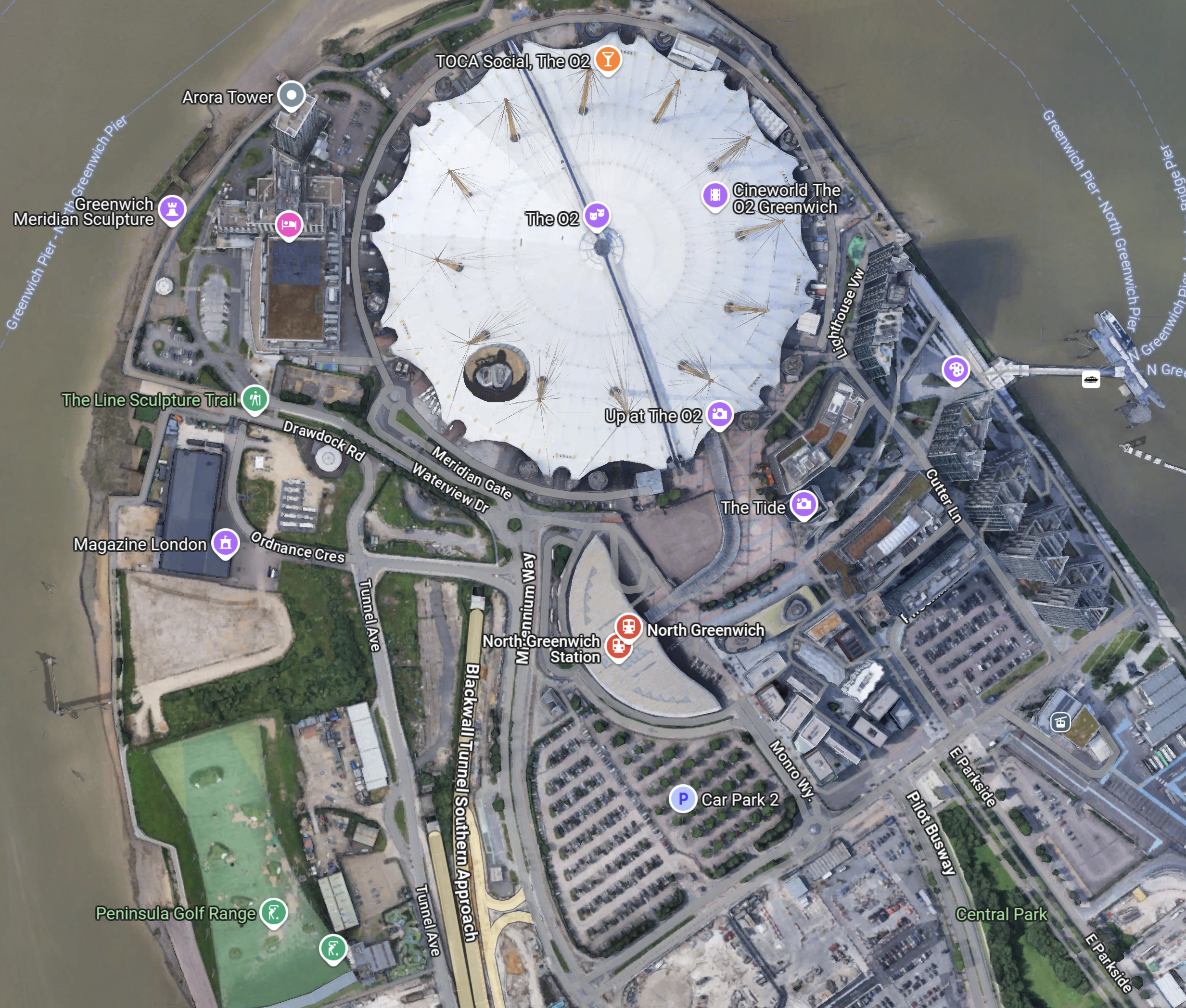
Note.
- The half-moon-shaped building is North Greenwich station.
- The tunnel approaches are rather complicated, but seem to be working well.
- There is lots of car parking.
- The Blackwall Tunnel Southern Approach leaves the tunnles in a Southerly direction.
- Click the map to show it to a larger scale.
This third Google Map shows how the A2 (Dover Road) and A20 (Folkestone Road) link up to the Blackwall Tunnel Southern Approach.
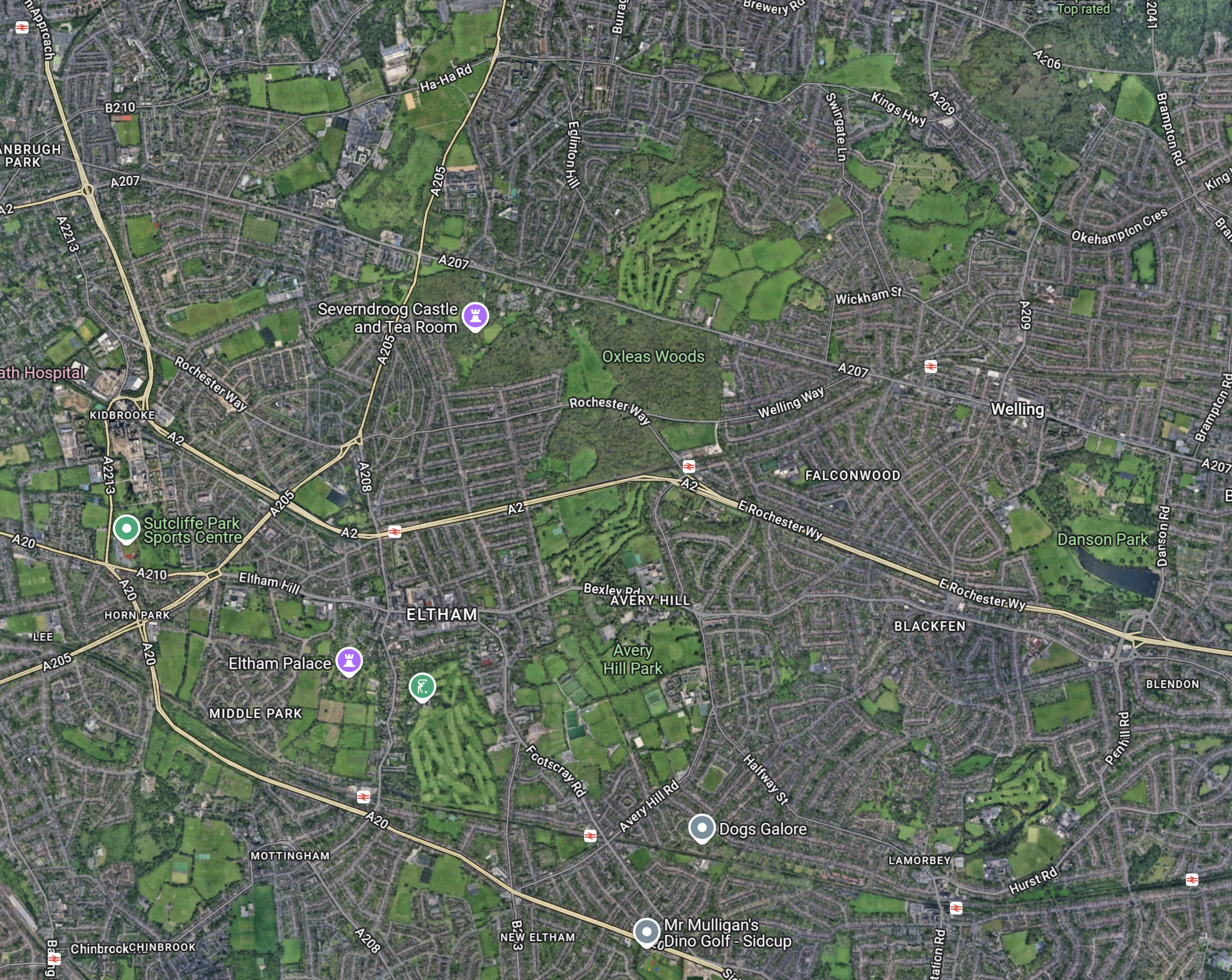
Note.
- The station in the North-West corner of the map is Westcombe Park.
- The road running diagonally South-East from the corner is the Blackwall Tunnel Southern Approach.
- The Blackwall Tunnel Southern Approach then turns East to join with the A2 (Dover Road).
- The Blackwall Tunnel Southern Approach also links up with the A20 (Folkestone Road) , which is the other road running diagonally at the bottom of the map.
In some ways, I am rather surprised at how little traffic is passing through the tunnels given this double dual-carriageway/motorway connection to East Kent, the Channel Tunnel and the Continent. It also has a double connection at both the A2 and A20 to join the M25.
Perhaps, it does mean that the charges are frightening drivers away.
The Roads To The North
This Google Map shows the main approach road to the Blackwall Tunnel.
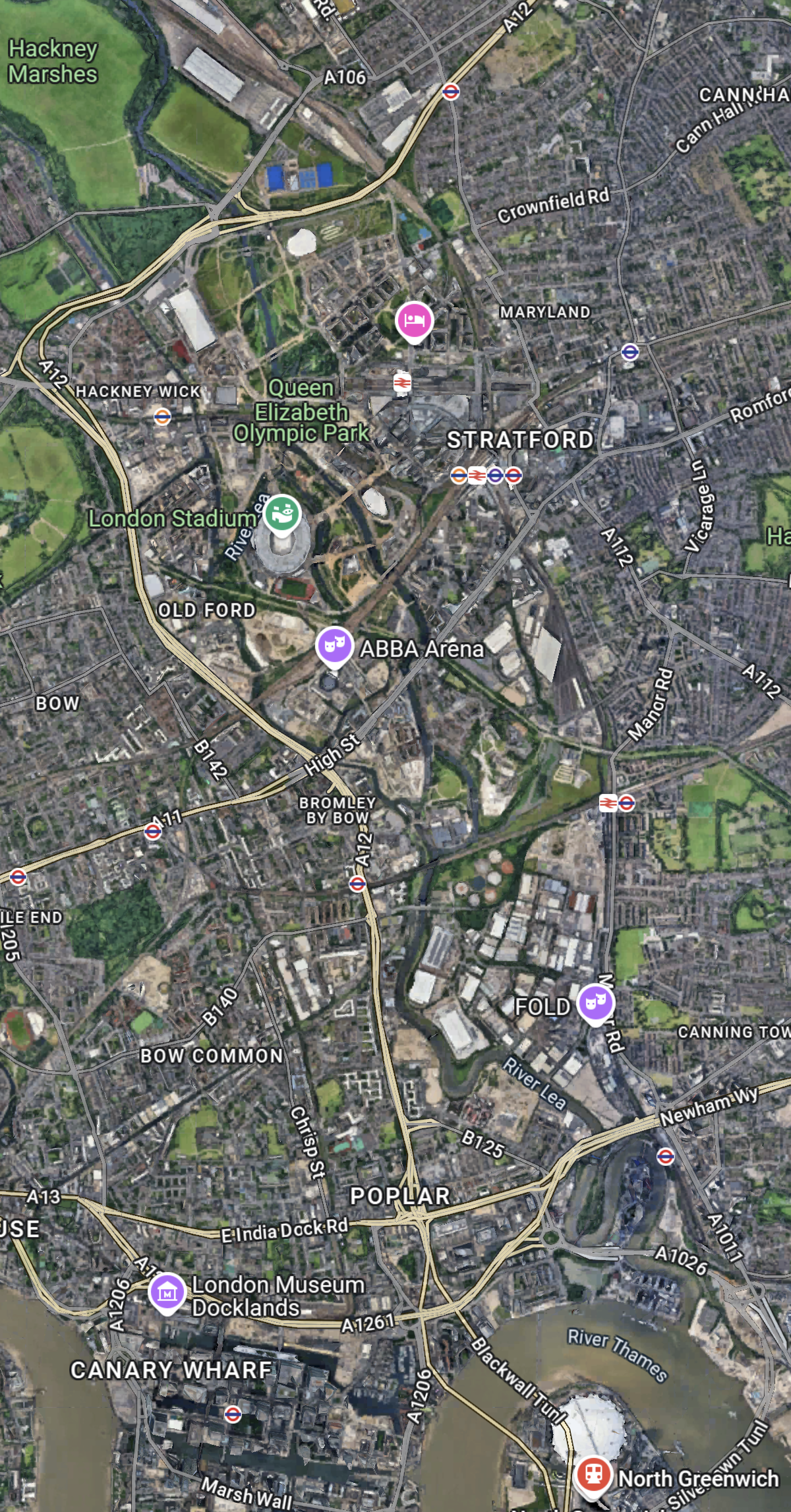
Note.
- The O2 and North Greenwich station in the South-East corner of the map.
- The Blackwall Tunnel crosses the river to the North-West of the O2.
- The A12 dual-carriageway runs North up the Lea Valley through Hackney.
- There is a dual-carriageway/motorway box formed by the M11 in the West, A12 in the East, M 25 in the North and A 406 in the South to speed traffic on its way, including to the two main routes to the North; the M1 and the A1.
I have lived for thirty years of my life in North London, and I feel, that although the roads to the North of London could be improved, I don’t suspect they are the reason drivers are not using the Silvertown and Blackwall Tunnels.
I would suspect that drivers don’t like or trust the charging system, or could it be that the public transport system in London and especially the East of London is too good?
But we do need to increase the capacity of the Jubilee Line either directly or would a high-capacity bus-route shadowing the line, be able to add the extra capacity needed?
Swiss Federal Railways Targets London As It Seeks More Cross-Border High Speed Trains
The title of this post is the same as that of this article on the Railway Gazette.
This is the introductory paragraph.
Swiss Federal Railways is looking at ordering up to 40 high speed trainsets for use on international services to Italy and France, and ’potentially for other destinations such as Barcelona and London’.
There also three paragraphs, which talk about Switzerland and London services.
SBB has also examined the possibility of launching a direct service between Switzerland and London, concluding that this would be technically feasible but challenging.
The need to provide security and border controls at all the stations served has long been a barrier to new services through the Channel Tunnel. However, SBB believes this may be possible at Zürich HB, Basel SBB and Genève Cornavin.
SBB would like to offer such a service and is to further develop its plans, but implementation is not seen as possible until the 2030s at the earliest.
These are my thoughts.
The Channel Tunnel Is Being Opened Up For Other Operators
The Channel Tunnel is at last looking to put on other services.
Switzerland could be easy technically, but there is the security and border controls, as the article points out.
But I see sorting security and border controls as an opportunity, not a problem.
Surely, a workable solution would have export potential all round the world.
London And Geneva Is Only Six Hours On The Train
Six hours in comfort on a train, would not bother me!
Switzerland And London Are Both Suitable Destinations For Year-Round, Short-Break Trips
C and myself were always popping off for short breaks, as it suited our work patterns.
She would sometimes say, that a case had come out and we would nip off somewhere for a couple of days.
I think, that more people will work flexibly and will have more gaps, where two days in Geneva or Zurich would fit. Provided, they could just turn up and go.
I also have done several business and leisure trips to Switzerland.
Fast Direct Trains To Switzerland Would Make Italy More Accessible
I have taken trains to Italy and it is a long way.
But breaking the journey in Switzerland could make the journey easier and you could use one city going South and another going North.
When I stayed in Geneva to go to CERN, I got a free day ticket for the buses and trams thrown in, which was very useful.
Will The Swiss Offer A Rail Pass For All Their High Speed Trains?
I wonder, if the Swiss have this in mind, as they already offer passes that include all Swiss public transport including all the cable cars.
A Swiss High Speed Rail Pass might allow me to go London and Florence, Naples or Rome and return all on one ticket.
Americans wanting to get away from Trump could fly to Switzerland and then explore Europe in Swiss trains, with no worries.
Conclusion
The Swiss should take their fingers out and go for it!
Could An Open Access Operator Develop A Train Service Along The South Coast of The UK Between Kent and Fishguard?
Before I go into detail, I will answer a question that explains the terminology and the why’s and wherefores’ of the title of this post.
What Is An Open Access Operator?
This is the first paragraph of the Wikipedia entry of an Open Access Operator.
In rail transport, an open-access operator is an operator that takes full commercial risk, running on infrastructure owned by a third party and buying paths on a chosen route and, in countries where rail services run under franchises, are not subject to franchising.
In the UK, these are all open access operators, that are running services.
Note.
- Other groups are developing services.
- Regional, High Speed, International, Local and Sleeper services seem to be offered by various open access operators.
- Grand Central is a subsidiary of Deutsche Bahn,
- Hull Trains and Lumo are both subsidiaries of FirstGroup.
Open Access operators seem to operate in most European Union countries.
Why Run Between Kent and Fishguard?
- The main purpose of the train service would be to provide a low-cost rail connection between the island of Ireland and particularly the Republic of Ireland, with the Southern part of England and the European Union.
- At both ends of the route the train service would connect to ferries.
- At the Eastern end, the train service would also connect to Eurostar services through the Channel Tunnel.
- The Port of Dover could be efficiently connected to Dover Priory Station.
- Dover Priory Station could be the Eastern terminus.
- The service could stop at Folkestone Central station, if ferries call at the Port of Folkestone in the future.
- The service could stop at Ashford International station for Eurostar services.
- Fishguard Harbour station has been built as a train terminus for the Port of Fishguard.
- Fishguard Harbour station could be the Western terminus.
This could be a busy service.
Where Would The Trains Call?
Intermediate stations would depend on passenger umbers, but could start as Folkestone Central, Ashford International, Hastings, Eastbourne, Brighton, Portsmouth & Southsea, Southampton Central, Romsey, Salisbury, Warminster, Westbury, Trowbridge, Bradford-on-Avon, Bath Spa, Bristol Temple Meads, Bristol Parkway, Newport, Cardiff Central, Gowerton, Llanelli and Carmarthen.
How Long Would The Journey Be?
The journey would be around 377 miles and I suspect could take about three and a half hours with modern digital signalling.
Surprisingly, the route is fully-electrified except for the following.
- Ashford International and Ore – 27.9 miles
- Southampton Central and Bristol Parkway – 82 miles
- Cardiff Central and Fishguard Harbour – 115.6 miles
All gaps should be able to be bridged using battery power.
I suspect trains would be Hitachi high speed battery-electric trains.
Would Any European Funding Be Available?
This is an interesting question, as the service does join up two separate sections of the European Union.
Council’s Concerns Over Suggested Tunnel Charges
The title of this post, is the same as that of this article on the BBC.
This is the sub-heading.
Concerns have been raised by a county council over suggested charges at the Silvertown and Blackwall tunnels in London.
These are the first two paragraphs.
Kent County Council (KCC) said the proposed charges could impact on the county’s traffic, including at the Dartford Crossing.
The council said although it supported TfL’s ambition to improve journey reliability and reduce air pollution, it believed the proposed changes could “significantly affect” drivers from Kent.
I can’t see that the charges on the two tunnels won’t affect drivers habits.
Thirty years ago, before satellite-navigation had been invented, when my family and myself lived in East Suffolk, if I was returning from Brighton or Gatwick, I would make a choice about, whether to use the Dartford Crossing or the Blackwall Tunnel. Sometimes traffic was so bad, that I had to take the longer Western route using the M11 and the A14.
I didn’t really bother about the toll on the Dartford Tunnel, as it was then, but often the free Blackwall route was quicker.
In those days, I was relying on radio reports, but now with satellite-navigation, drivers will be taking more intelligent decisions, that take account of tolls.
The BBC article also says this.
The council says Kent drivers make up 10% of the Blackwall Tunnel’s users.
So it looks like the drivers of Kent will be paying tolls to London.
These are my thoughts.
How Can The Tolls Be Avoided?
There will still be two free crossings, to the East of Tower Bridge; the Rotherhithe Tunnel and the Woolwich Ferry, but how long will they remain free, if they drain money from the tolled tunnels?
What About The Trains?
Trains from somewhere like Ebbsfleet international station can be used.
Ebbsfleet international station has a lot of parking, but at some stations parking is distinctly limited.
I doubt though, that Transport for London have done a professional survey of the amount of parking that is needed.
They tend to believe if people live out of London, that parking for trips to London is not a Transport for London problem.
Are there any plans to increase the train frequencies, if more people use them?
Note that Off Peak Day Return tickets can be purchased with a Railcard, from Dartford to London for under a tenner, and from Ebbsfleet international to London for under fifteen pounds.
If Built, Will The Lower Thames Crossing Help?
The first paragraph of the Wikipedia entry for the Lower Thames Crossing, describes it like this.
The Lower Thames Crossing is a proposed road crossing of the Thames estuary downstream of the Dartford Crossing that links the counties of Kent and Essex, and its proposed approaches. If built it would pass through the districts of Thurrock and Gravesham, supplementing the Dartford route. The approximately 14.3-mile (23.0 km) route is being assessed by the Planning Inspectorate.
As it is likely to cost nine billion pounds and take six years to build, I can’t see the current Government building it.
But it would certainly make it easier for traffic to go between the Channel Tunnel and North of London.
Conclusion
I can see the UK muddling through, when we should be bold and create the transport infrastructure for the Twenty-First Century.
For instance, I would extend the Elizabeth Line in the North-East to Southend and in the South-East to Ebbsfleet and Gravesend. With the existing cross-platform interchange at Whitechapel, I believe, it could pick up much of the cross-river passenger traffic close to London.
I also feel that there will need to be improved connections between the fast-expanding London Gateway freight port and the Channel Tunnel.
Getlink To Enable The Doubling Of Direct High Speed Rail Services From The UK Over The Next 10 Years Via The Channel Tunnel
The title of this post, is the same as that of this press release from Getlink.
This is the sub-heading.
This doubling will be achieved by reducing the “time to market” from 10 to 5 years for operators who intend to launch new services between London and Cologne, London and Frankfurt, London and Geneva, London and Zurich.
These three paragraphs introduce the press release.
On 6 May 2024, Eurotunnel, a wholly owned subsidiary of Getlink, will celebrate 30 years since the opening of the Channel Tunnel and the introduction of the first LeShuttle and LeShuttle Freight rail services linking Folkestone (Kent)to Coquelles (Pas-de-Calais). This year will also mark the 30th anniversary of the first direct rail links between London and Paris, and London and Brussels.
Three decades after this pioneering step forward in Europe’s rail network, and in the wake of the development of the recently introduced link between London and Amsterdam, Eurotunnel is aiming to further accelerate the low-carbon mobility of people between the UK and continental Europe by doubling the number of new direct destinations from London via the Channel Tunnel over the next 10 years.
The reduction in the time needed to launch new services to just 5 years is the fruit of the work by Eurotunnel, the infrastructure manager and keystone of the cross-Channel high-speed links, in cooperation with partners from across the European ecosystem (infrastructure managers, authorities, manufacturers, regulators).
Getlink will use these four steps towards simplification.
- Market research carried out by Eurotunnel to identify destinations.
- Standardisation of Tunnel regulations with the relevant authorities.
- Integration of tunnel specific criteria with manufacturers in their standard rolling stock offering.
- Preparing cross-Channel connections with network operators and stations.
It will be so good to have more services between London and Europe.
Could Extra Passenger-Handling Capacity Be Added At St. Pancras International Station?
This article in Railway Gazette International, which is entitled Start-Up Announces Amsterdam To London And Paris High Speed Train Ambitions, has this opening paragraph.
A proposal to launch high speed train services from Amsterdam to London and from Groningen to Paris has been announced by Dutch start-up Heuro, while Virgin founder Sir Richard Branson is also reported to be looking at competing with Eurostar on cross-Channel routes.
This other paragraph also gives more details of Branson’s plans.
Heuro’s announcement comes after Spanish start-up Evolyn announced plans in October for a Paris – London service, while on November 11 British newspaper The Daily Telegraph reported that Sir Richard Branson and Phil Whittingham, former head of Virgin Trains and Avanti West Coast, were also drawing up plans to compete with Eurostar and had held discussions with infrastructure managers.
As in the past, German and Italian rail companies have expressed interest in running services to London, I don’t think it will be long before capacity at St. Pancras International will need to be increased.
There are six International platforms at St. Pancras International station and as it generally accepted that one well-managed platform can handle four trains per hour (tph), this means that the station has a theoretical limit of twenty-four tph.
Currently, services into St. Pancras International include.
- Up to 19 trains per day between London and Paris.
- Up to 10 trains per day between London and Brussels.
- One train per day between London and Amsterdam.
If we assume that trains can leave between 05:00 and 20:00, that is only about two trains per hour (tph).
There would appear to be plenty of space for the proposed 16 trains per day, that Heuro have said they will run.
My worry is will Customs and Immigration be able to handle all the extra passengers?
This Google Map shows King’s Cross and St. Pancras International stations.
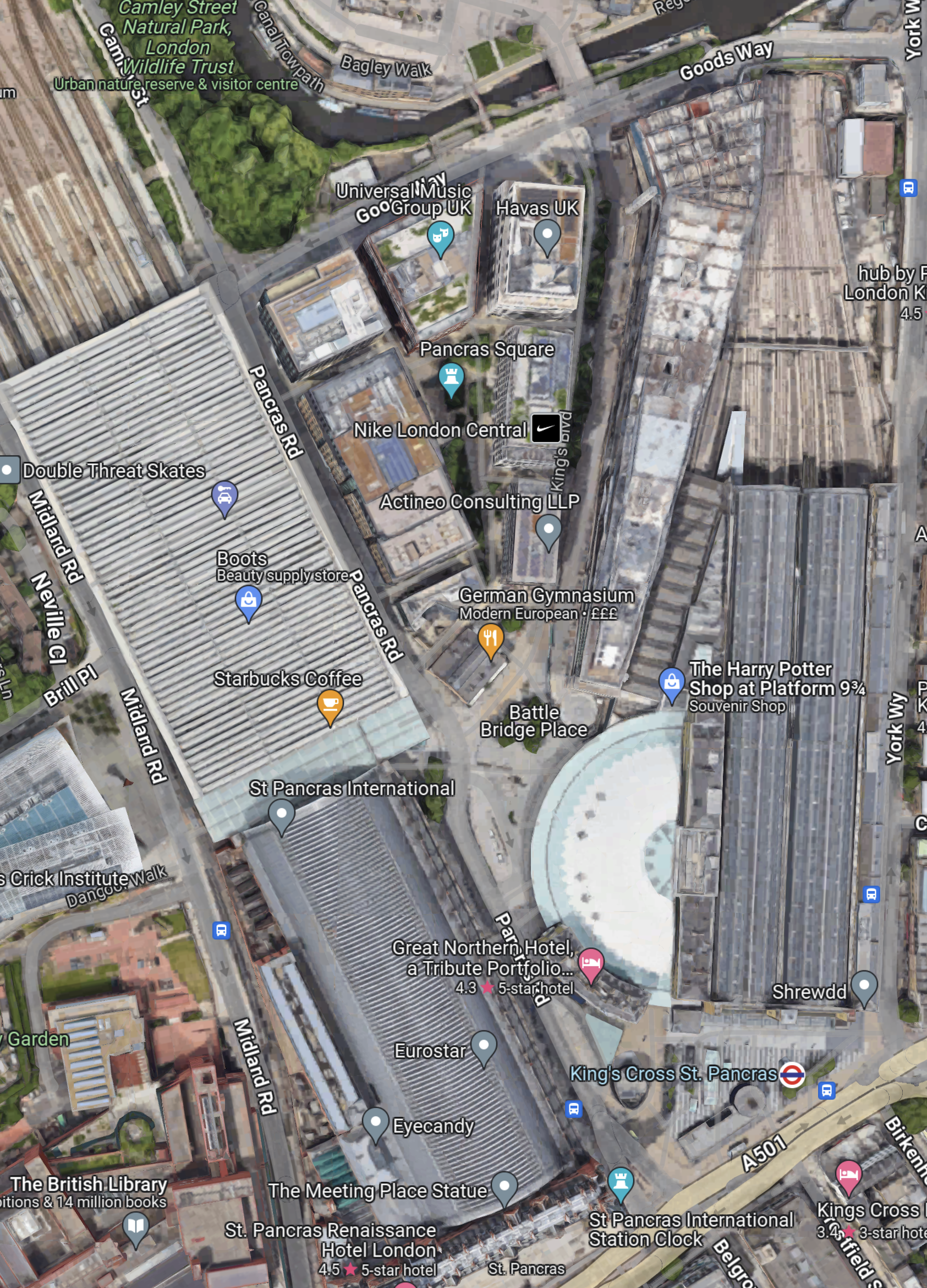
Note.
- St. Pancras International is the station on the left of the V.
- King’s Cross is the station on the right of the V.
- The new corrugated roof covers the Northern ends of the trains in the platforms at St. Pancras.
These pictures show the Northern end of the International and domestic HighSpeed platforms.

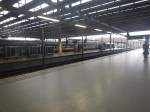
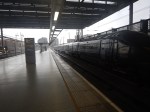



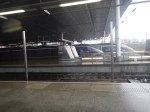
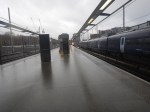
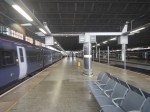
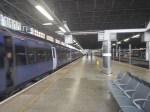
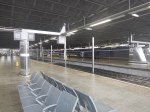
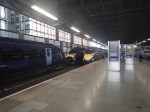



Note.
The pictures taken on the platforms were taken from the Southeastern HighSpeed platforms.
The Continental trains appear to be wholly in the dry either under the classic or the new roof.
The noses of the Continental trains appear to peek out from under the new roof by a few inches.
The air space above the platforms to the North of the new roof appears to be unobstructed.
This Google Map shows the Northern ends of the platforms at St. Pancras.
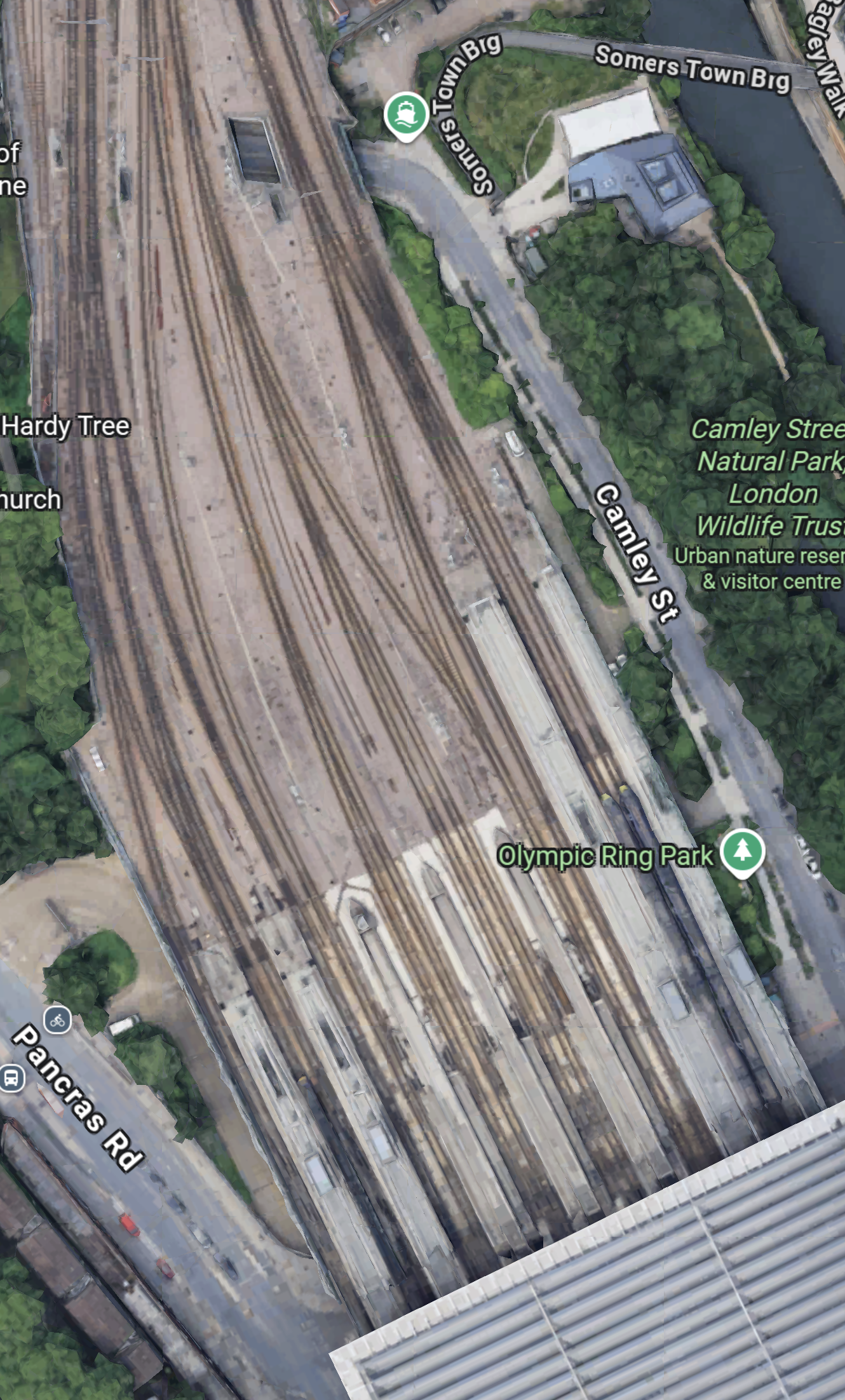
Note.
- The new roof is in the bottom-right of the picture.
- The platforms are numbered 1-13 from left to right.
- Platforms 1-4 are for East Midlands services, which are arranged in a 1-2-1 formation.
- Platforms 5-10 are for Continental services, which are arranged in a 1-2-2-1 formation.
- Platforms 11-13 are for Southeastern HighSpeed services, which are arranges in a 1-1-1 formation.
- Any trains in the station seem to be mainly under cover, although I think a couple of noses are just about visible.
- I am fairly certain, if more passenger-handling capacity were to be needed in the distant future, it could be built above the platforms.
I’ve never seen it said, but did the architects and structural engineers leave this space for future expansion of the station?
- The foundations could have even been designed to support a future vertical extension.
- But at least there is nothing of importance in the space above the exposed Northern ends of the station except a few pigeons.
- With two passenger-handling areas, one could be for departures and the other for arrivals.
- Escalators and lifts could give access to the three wide island platforms for Continental traffic.
Was this station designed to be expanded if required?
I also believe that that much of the work to add any new floors above the platforms could be carried out whilst train services were still running.
Alistair Lansley
According to his Wikipedia entry, the architect of the station was Alistair Lansley, who is not a well-known name or a celebrity architect, but an architect from British Rail’s Architect’s Department, who was also lead architect for Stratford and Ebbsfleet International stations.
So did he leave a space for the extension, that he knew from former experience would be needed?
Could A Mega-Station Be Built For The Channel Tunnel?
This article on Railway Gazette International, is entitled Start-Up Announces Amsterdam To London And Paris High Speed Train Ambitions.
It talks about how Dutch start-up; Heuro wants to run fifteen trains per day (tpg) between London and Amsterdam.
The article then has this paragraph, which details other operators, who are wanting to run services between London and the near Continent.
Heuro’s announcement comes after Spanish start-up Evolyn announced plans in October for a Paris – London service, while on November 11 British newspaper The Daily Telegraph reported that Sir Richard Branson and Phil Whittingham, former head of Virgin Trains and Avanti West Coast, were also drawing up plans to compete with Eurostar and had held discussions with infrastructure managers.
This leads me to the conclusion, that there will be a need for more capacity for trains and/or passengers at some time in the future.
- There are six International platforms at St. Panvcras International station, which can each probably handle four trains per hour (tph), so I suspect the station could handle 24 International tph.
- As a modern high speed train can carry over 500 passengers, that is 12000 passengers per hour.
- Visit St. Pancras station in the morning and it is often crammed with travellers coming from and going to Europe.
I suspect that the number of trains may not be a problem, but the number of passengers will.
We could always join Shengen, but then that would be an open door to all the would-be migrants to the UK.
This Google Map shows Stratford International station.
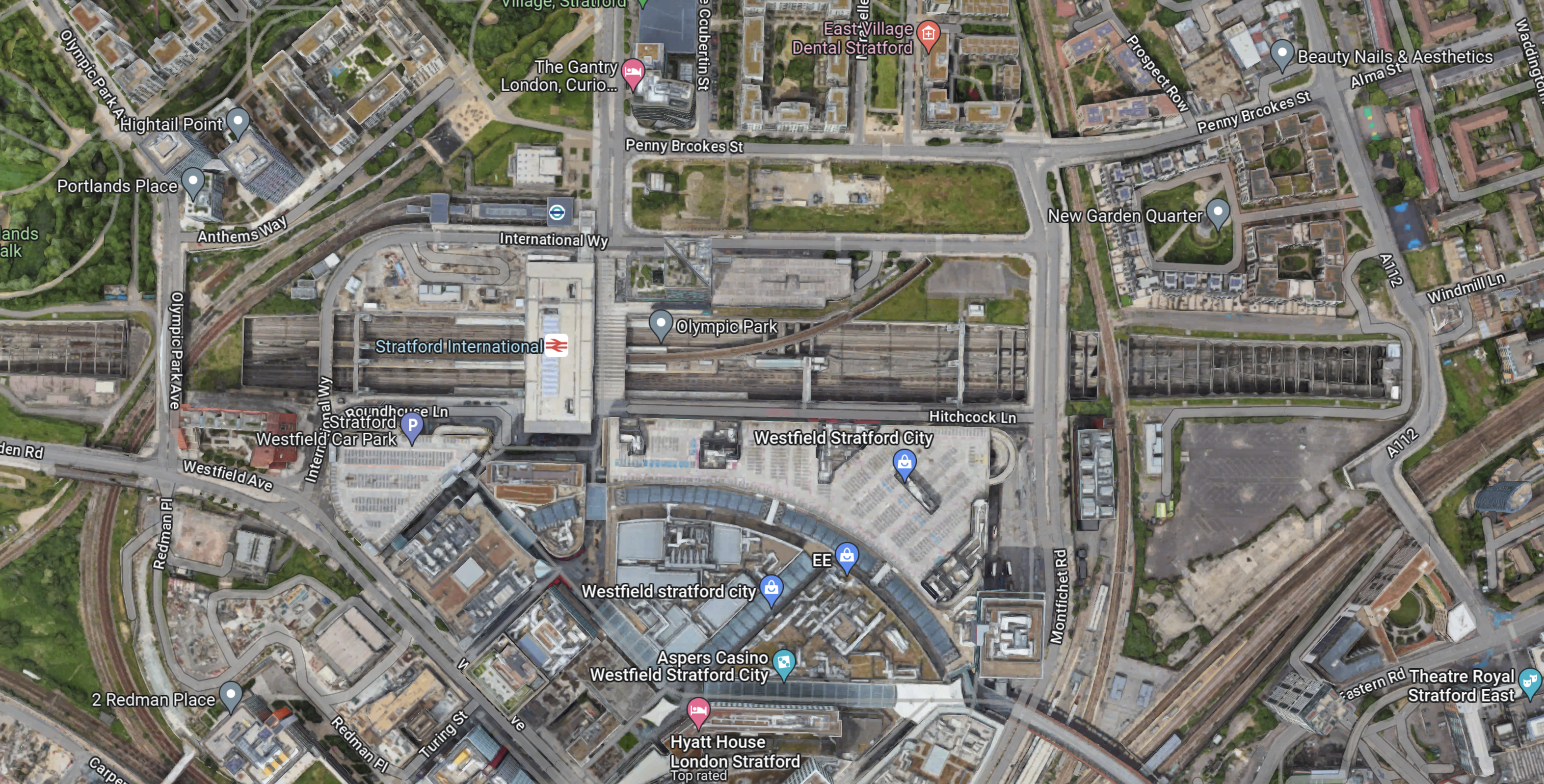
Stratford International station is in a soulless concrete cavern, that lies across the middle of the map.
In Platforms 1 And 4 At Stratford International Station, there are a lot of pictures of the station.
I think it would be extremely difficult to add extra platforms and passenger facilities to the station.
This Google Map shows Ebbsfleet International station.
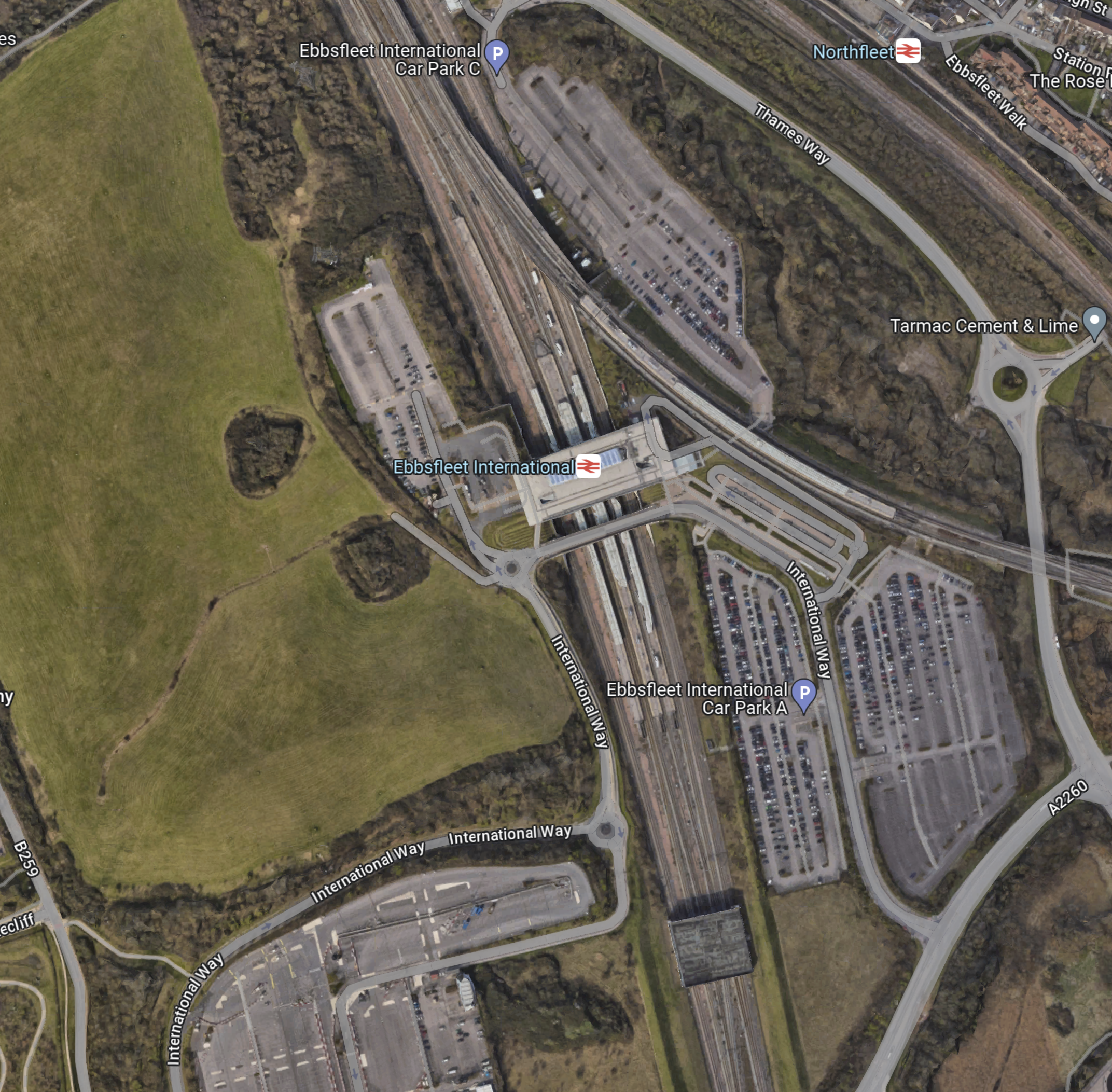
Note.
- Ebbsfleet International station, with its two International and four domestic platforms is in the middle of the map.
- The station is surrounded by car parks with a total of 5,000 spaces.
- Northfleet station is in the North-East corner of the map.
There is a lot of land, without any buildings on it.
These are my thoughts.
Enough Extra Bay Platforms To Handle The Additional Trains
There would appear to be space for perhaps two bay platforms to terminate trains.
But would passengers we happy being dumped outside Central London?
Would An Elizabeth Line Extension To Ebbsfleet Be Needed?
There are various plans to link the Elizabeth Line tp Ebbsfleet International.
In Elizabeth Line To Ebbsfleet Extension Could Cost £3.2 Billion, I showed this map from the Abbeywood2Ebbsfleet consultation.
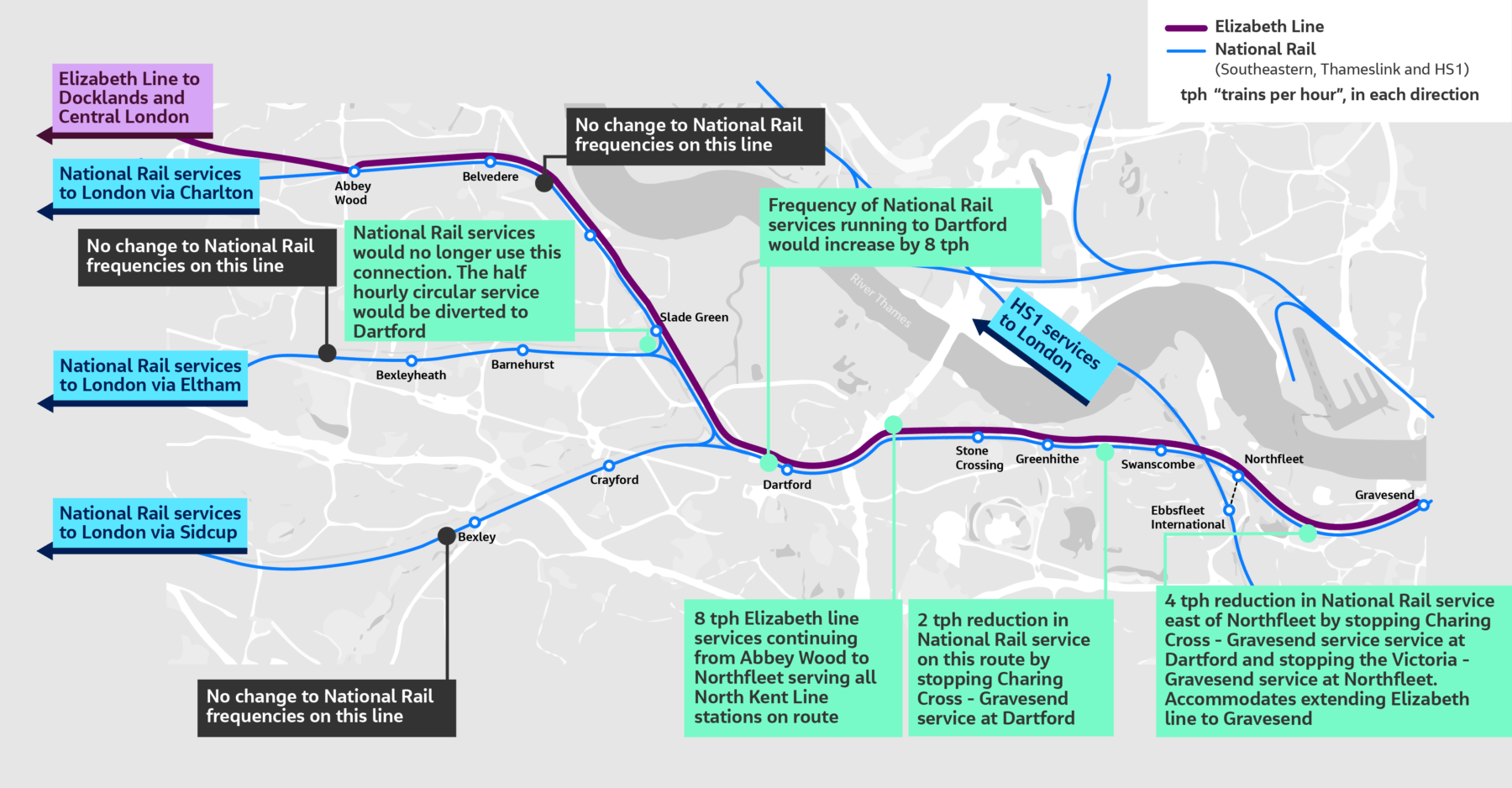
There doesn’t appear to be too much new infrastructure, except for a proper connection between Northfleet and Ebbsfleet stations. References on the Internet, say that the similar-sized Luton DART connection at Luton Airport, cost around £225 million.
The Elizabeth Line connects to the following.
- Bond Street
- Canary Wharf
- City of London
- Farringdon for Thameslink
- Heathrow Airport
- Old Oak Common for High Speed Two
- Liverpool Street station
- Oxford Street
- Paddington station
- Slough for Windsor
- Tottenham Court Road for the British Museum, Oxford Street, Soho, Theatreland and the Underground.
- West End of London
- Whitechapel for the Overground and Underground
For many people like me, the Elizabeth Line at Ebbsfleet will provide one of the quickest ways to get to and from European trains.
Ebbsfleet Has Space For A Bus Station
A bus station with comprehensive routes could be built at Ebbsfleet station, which I don’t think will be possible at St. Pancras.
It would also be possible to provide an easy route to Gatwick Airport along the M25.
Hotel Accommodation
This is surely necessary.
It would make an ideal base for tourists and business people, who wanted to visit several of the large cities connected to Ebbsfleet.
A Very Large Car Park
Consider.
- Heathrow Airport is looking at providing upwards of 50,000 car parking spaces.
- Some travellers are seriously allergic to public transport and will always use their car.
- Many travellers these days want to take a severely outside case with them, when they’re only having a weekend in Paris.
I feel that a mega-station for Europe will need upwards of 10,000 car parking spaces. All of them with vehicle-to-grid chargers.
A Very Large Storage Battery
According to this page on the E-on web site, the average size of the battery in an electric vehicle is 40 kWh.
If 5,000 car parking spaces were to be fitted with vehicle-to-grid charging (V2G), that would be 2 MWh of energy storage, that could be used by National Grid, to store surplus electricity.
Get V2G right and it could make a serious contribution to your parking costs.
Pictures Of Ebbsfleet Station
These are some pictures I took at Ebbsfleet station today.
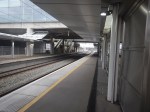
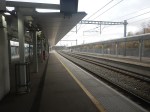
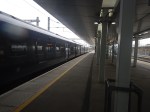
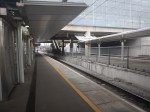

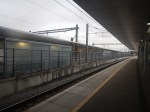
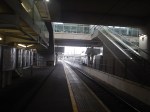







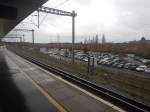
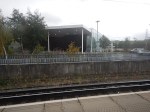
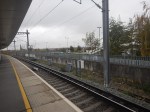

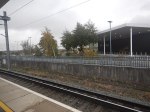
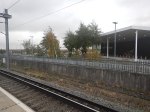
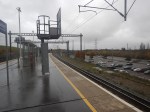
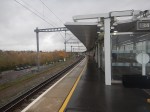
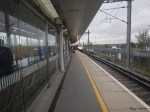
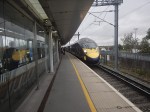
Note.
- The station is a fairly boring concrete, glass and steel construction.
- The SouthEastern HighSpeed services also go to St. Pancras, so they don’t offer any different connectivity towards the capital.
In addition, the SouthEastern HighSpeed Class 395 trains aren’t step-free at the platforms, as these pictures shows.
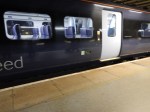
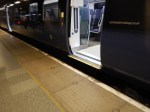
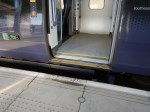
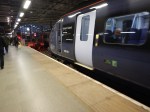
As I came back into St. Pancras International station, staff were struggling to load a wheelchair onto a train using a ramp.
Would A Two-Station Solution Increase Capacity?
High Speed Rail lines have high capacity trains and there are examples of more than one station at the end of a route.
- The London end of High Speed Two will have stations at Old Oak Common and Euston.
- The Manchester end of High Speed Two will have stations at Manchester Airport and Manchester Piccadilly.
- The Edinburgh end of the East Coast Main Line has stations at Waverley and Haymarket.
- The Amsterdam end of Eurostar and Thalys has stations at Rotterdam, Schipol Airport and Amsterdam.
A selection of stations gives choice and convenience for travellers.
Conclusion
I believe that selective development of Ebbsfleet International station could be used to take the pressure away from St. Pancras International station.
These developments could include.
- A comprehensive bus station
- Elizabeth Line to Northfleet
- Hotel Accommodation
- Lots Of Car Parking
Europe’s Next High-Speed Train Operator
I was alerted to Heuro Train, by this article in Railway Gazette International, which has this opening paragraph.
A proposal to launch high speed train services from Amsterdam to London and from Groningen to Paris has been announced by Dutch start-up Heuro, while Virgin founder Sir Richard Branson is also reported to be looking at competing with Eurostar on cross-Channel routes.
The Heuro Train web site was easily found and the title of this post, was part of their mission statement on the home page.
I have read the web site and have a few initial thoughts.
Technology-Driven Excellence
This is their first sub heading and this is the text.
In a world where technology defines possibilities, Heuro develops the latest innovations into every aspect of our service. From advanced train systems to intuitive in-seat features that cater to your needs, our technology is the driving force behind a seamless, state-of-the-art travel experience.
We’ve all written things like that in the past.
Meeting The Human Need
This is their second sub heading and this is the text.
Heuro emerged from human desires, informed by analyses from Marveltest.
There’s been a 32% annual increase in online interest for train travel over five years. High-Speed Trains are 98% full at peak times. Over half of Europeans prefer train travel under 2 hours as a greener option. Introducing High-Speed Operators in train monopolies boosts demand by 45%.
They appear to have done their research and those are interesting figures.
Lightning Speed Connectivity
This is their third sub heading and this is the text.
In our digital age, both work and leisure have found a substantial home on the internet for urban humans. Whether sealing a business deal, streaming a favorite show, or connecting with loved ones, online interactions have become integral to our daily lives. At Heuro, we don’t just commit—we guarantee the best internet experience.
This is actually irrelevant these days, as there will be a high standard of Internet experience on all modes of transport in a few years, although some will get it earlier than others.
Planned Routes
This is their sixth sub heading and this is the text.
We will connect Amsterdam with Brussels, Paris, and London with intermediate stops at Schiphol Airport, Rotterdam Central, Antwerp Central & complimentary services to Groningen, Assen, Zwolle and Almere (continuing to Paris, 2 times per day)
This route map is shown.
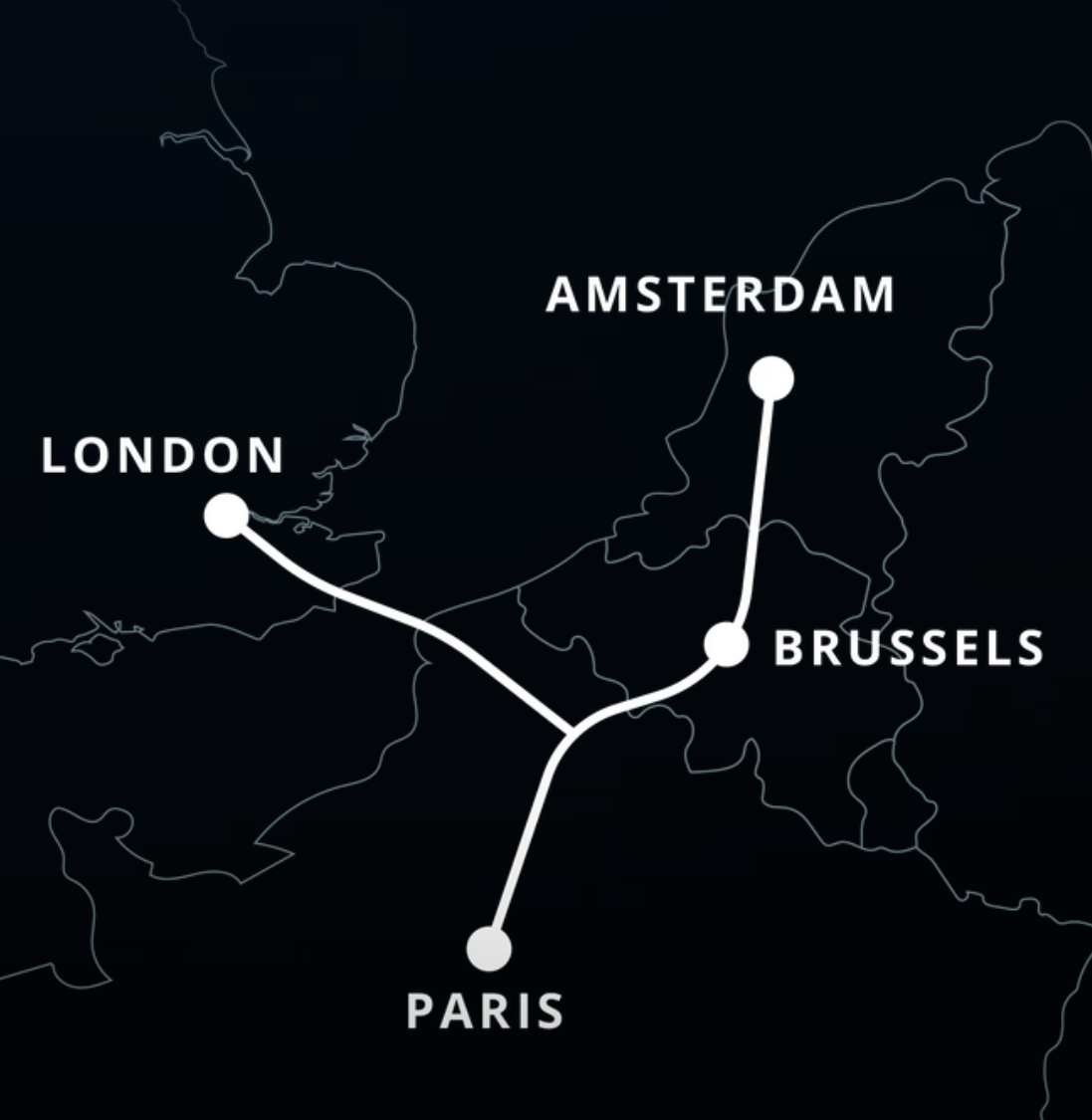
Note.
- It is not a large network.
- It makes a lot of use of the Dutch high speed line; HSL-Zuid, that runs between Amsterdam and the Belgian border.
- I suspect it has been designed to be extended.
The Railway Gazette Article has these two paragraphs, which give more information on services and Heuro’s thinking.
On November 15 Heuro told Railway Gazette International that it aims to launch in 2028, offering 16 Amsterdam – Paris and 15 Amsterdam – London trains each day with intermediate stops at Schiphol Airport, Rotterdam Centraal, Antwerpen Centraal and Brussels. Two of the Paris trains would run to and from Groningen via Assen, Zwolle and Almere.
The company said ‘every day, 55 planes fly from Amsterdam to London, while only four trains make this journey. Heuro intends to change that, aiming for more trains to depart from Amsterdam than flights’.
With other train companies wanting to serve London, will St. Pancras International be able to incorporate another fifteen trains per day from Amsterdam?
Web Site Language
Everything is in English! It also appears to be English English.
Les français ne seront pas amusés.
Extensions From London
Much of Central and Eastern England, and Eastern Scotland can be reached from St. Pancras International station, by a hundred metre walk to change platforms.
There is even a signed walking route between St. Pancras International and Euston stations, that isn’t the most arduous of walks.
The St. Pancras International and Euston stations connection could also be handled by a frequent electric shuttle bus.
Extensions From Amsterdam
Heuro are already indicating their intention to extend to Almere, Zwolle, Assen and Groningen.
I have taken that route and extended it via Leer, Oldenburg and Bremen to Hamburg.
Could this be in Heuro’s long term thinking?
Extensions From Paris
The French probably have ideas.
Conclusion
I like Heuro’s philosophy and starter kit.
 The Anonymous Widower