Crossrail And Stratford Station
This map from carto.metro.free.fr shows the tangle of lines at Stratford station.
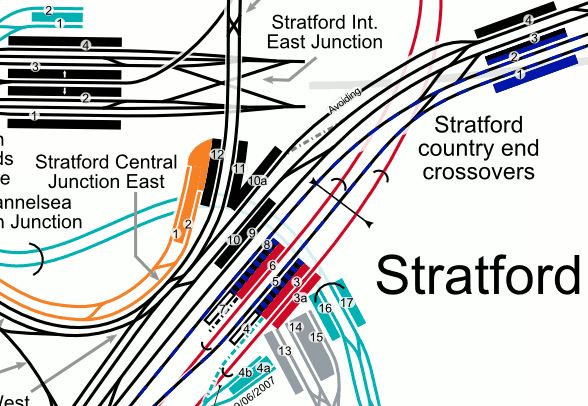
Note Maryland station in the North-East corner of the map.
- The black lines and platforms are the fast lines
- The blue lines and platforms are the slow lines used by Crossrail.
The Crossrail lines then curve round through Stratford calling in the following platforms.
- Platform 5 for London-bound services.
- Platform 8 for Essex-bound services.
Each Crossrail track is paired with a Central Line track, which are shown in red, in the same direction on an island platform.
These pictures show coming and going on the London-bound island.
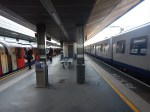
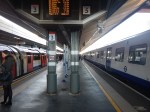
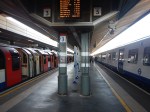
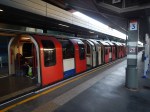
Unfortunately, there were only old Class 315 trains running, when I took the pictures.
The layout used at Stratford is rarely used elewhere. Especially, as the layout dates from probably the 1940s.
Crossrail And Ealing Broadway Station
This map from carto.metro.free.fr shows the track layout at Ealing Broadway station.
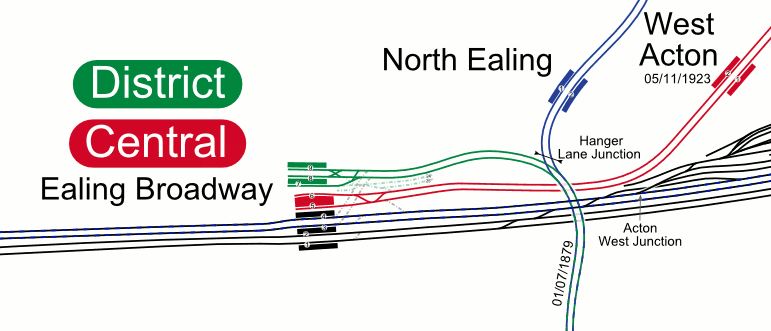
These are lines from North to South through the station.
- The lines shown in green are the District Line, which terminates in platforms 9, 8 and 7.
- The lines shown in red are the Central Line, which terminates in platforms 6 and 5.
- The lines shown in dark blue are the slow lines through platforms 4 and 3, which carry Crossrail and other slow services. Platform 4 is the London-bound platform.
- The lines shown in black are the fast lines through platforms 2 and 1, which carry all fast services. Platform 2 is the London-bound platform.
These are my thoughts on the layout.
Eastbound Crossrail Trains
Passengers travelling East on Crossrail, will be able to walk across from Platform 4 to any of the terminal platforms numbered 5 to 9, for the Central and District Lines.
This picture taken from a London-bound train in Platform 4 shows a Central Line train in Platform 5.
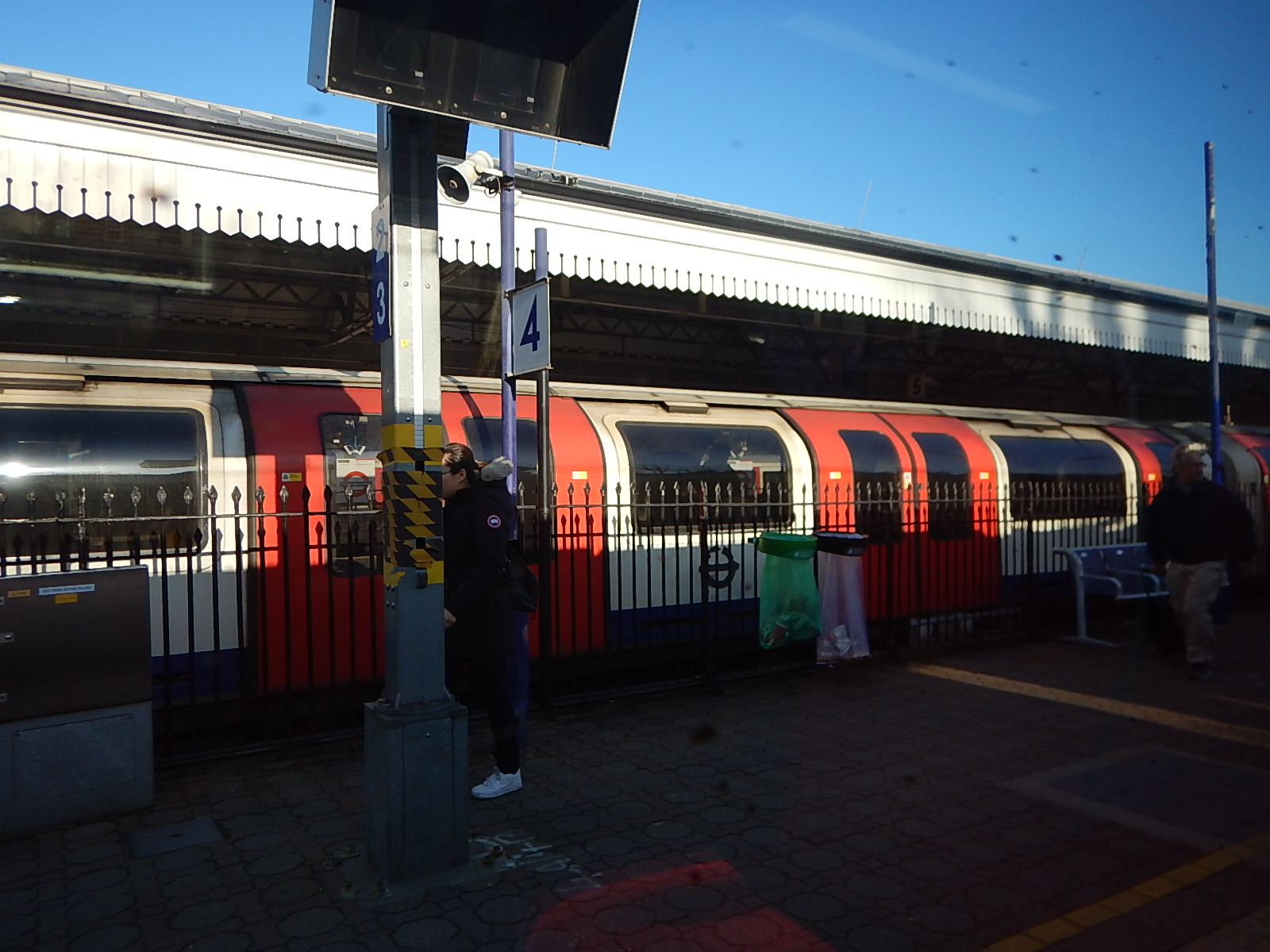
They are only a short walk apart and passengers who are changing trains will probably position themselves in the rear of the Crossrail train.
Passengers entering the station will just walk across to Platform 4 to use Crossrail to Central London and beyond.
I doubt there will be many passengers arriving on the Central and District Lines, who will want to go back on themselves to Central London. If say they lived near a station between West Acton and Marble Arch, and wanted to go East on Crossrail, they’d probably change between the Central Line and Crossrail at Bond Street station.
Westbound Crossrail Trains
Passengers needing to access the Westbound Crossrail trains in Platform 3, will have to use the bridge over the slow lines carrying Crossrail.
Because of the multiple interchanges between the Central Line and Crossrail, depending on where you join the Central Line, you will probably change to Westbound Crossrail trains at different points.
- Start a journey between West Acton and Marble Arch and you’ll probably change to the Westbound Crossrail at Ealing Broadway.
- Start a journey at Oxford Circus and you’ll probably change to the Westbound Crossrail at Bond Street.
- Start a journey between Bank and Holborn and you’ll probably change to the Westbound Crossrail at Tottenham Court Road.
- East of Bank, there are two interchanges at Liverpool Street and Stratford.
It is very much a ducker and diver’s paradise.
Escalators And Lifts Could Be Needed At Ealing Broadway Station
There could be quite a number of passengers needing to cross to and from Platform 3, who will mainly be in two categories.
- Westbound passengers leaving the station.
- Westbound passengers arriving on the Central and District Lines wanting to continue West on Crossrail.
In addition, there will be a large number of passengers entering the station, wanting to catch trains to Central London.
To cater for these passenger flows, there must be a full set of up-and-down escalators and lifts for the following.
- Platforms 4 to 9 in the main station.
- Platform 3 on the Westbound slow line for Crossrail and other slow services.
Wikipedia says four lifts will be added.
It should be noted, that Dlston Junction station handles similar numbers of passengers to Ealing Broadway with one lift and one wide double staircase.
Escalators would future proof the station for more services.
Will District Line Services Be Replaced By Piccadilly Line Services?
There are rumours, that the District Line services at Ealing Broadway station will be replaced by Piccadilly Line services.
Reportedly, this will do the following.
- Allow frequency increases on the District Line to Richmond and Wimbledon.
- Allow a frequency increase on the core section of the Piccadilly Line.
Consider
- Whatever service uses Ealing Broadway will have little effect on the operation of the station.
- Acton Town, Hammersmith, Barons Court, Earl’s Court, Gloucester Road and South Kensington stations are all served by both the District and Piccadilly Lines.
- The Piccadilly Line could be an alternative to Crossrail 2 between Green Park and Kings Cross.
- The Piccadilly Line will have new high-capacity trains in a few years.
Will the change, which means the Piccadilly Line has a capacity increase, allow Crossrail 2 to be delayed by a couple of years?
- This would ease, Transport for London’s cash flow.
- It might also allow a better plan for building Crossrail 2
It will be interesting to see the full details of the swapping of lines.
Tottenham Court Road Western Entrance – 2nd December 2019
These pictures show the new Western entrance to Tottenham Court Road station.




This Google Map shows the location of the massive double-ended station.
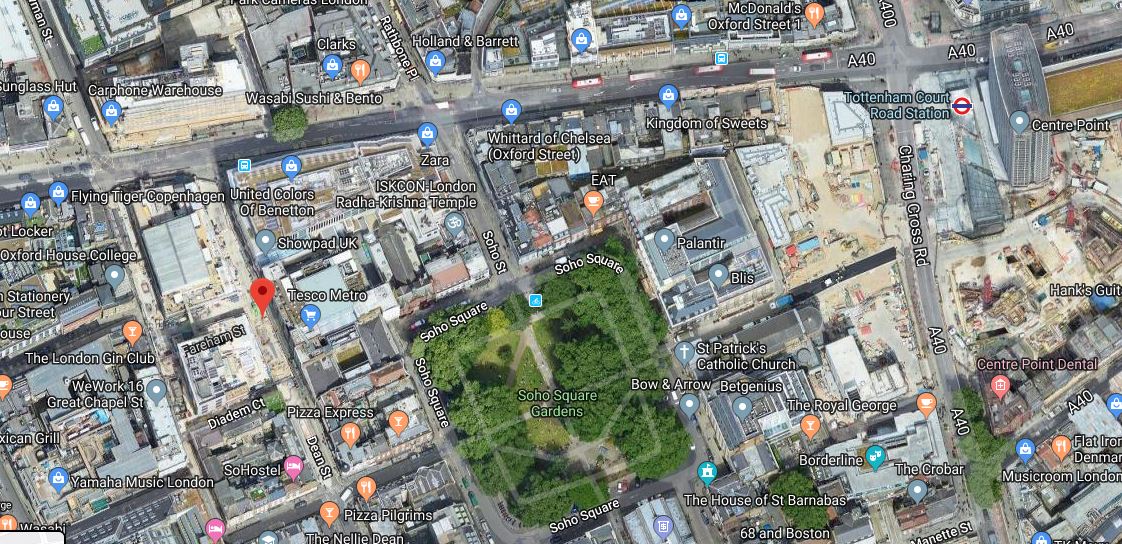
Note.
- Soho Square is the green space in the middle of the map.
- The Eastern entrance to the station is by Centre Point in the North East corner of the map.
- The new Western entrance is to the West of the red arrow.
The size of the station is such, that passengers will have to make sure they get out at the right end of the train.
- For Marks and Spencer at the Pantheon, get out at the Western entrance to the station.
- For Primark and the other shops clustered around the current station entrance, get out at the Eastern entrance to the station.
- For Tottenham Court Road, Charing Cross Road, the Dominion Theatre and Centre Point, get out at the Eastern entrance to the station.
A few years ago, a young Crossrail engineer told me, that the stations are very long underground.
Perhaps they should have a directory of all shops, theatres, hotels, attractions and other sites on the platforms, to ensure that passengers use the best entrabce for their destination.
This image shows a visualisation of the station.
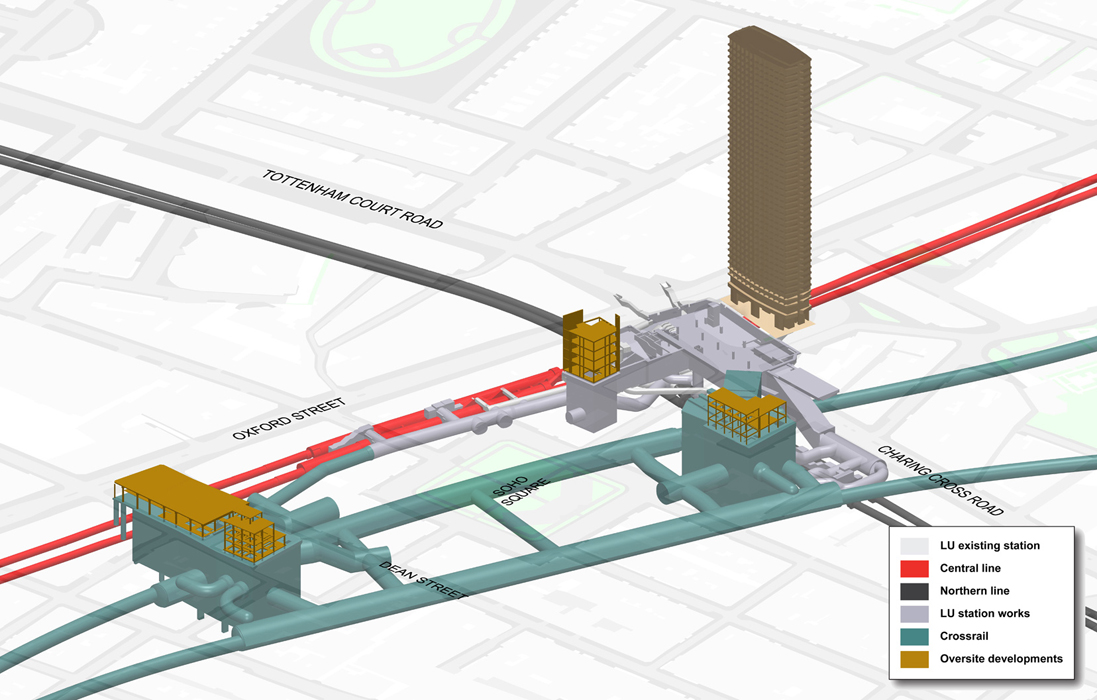
Note.
- The Westerm entrance is the one on the left.
- Centre Point at the Eastern end of the complex, by the Eastern entrance.
The visualisation also shows lots of detail.
The Connecting Tunnel Between The Two Entrances
There appears to be a connecting tunnel between the two entrances.
This pictures show the inside of the Eastern end of the tunnel which has already been built.

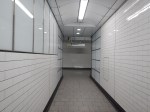


Note.
- The relatively cramped Central Line platform.
- The tunnel has good connections to the Central Line.
- It looks like the Western end of the connecting tunnel will be extended towards the Western Entrance.
- Obviously, breaking through between the connecting tunnel and its extension, will be one of the last jobs to do.
The completed tunnel will allow the following.
- Passengers entering the station at either entrance to be able to access the Central Line.
- Passengers needing to access the Northern Line to be able to enter at the Western Entrance and use the connecting tunnel.
Will this tunnel be a good walking route, when it’s raining cats, dogs and hippopotami on the surface?
Access To Crossrail
Both entrances will have their own step-free access to the Crossrail platforms.
Because Crossrail is at a different level to the Central and Northern Lines, it appears that passengers needing to change to and from Crossrail will probably come to the surface by lift or escalator and then go back down again using a second set.
This may seem to make walking distances longer, but I suspect the following.
- It makes the station easier to construct.
- Access to existing lines can be maintained during construction.
- It allows for the installation of multiple escalators for high capacity.
There are also older stations in London, where there are up and down changes of lines. So perhaps it’s an affordable way of building the connection.
Changes Between Crossrail and The Central Line
Crossrail and the Central Line have several interchanges.
- Stratford, where the interchange is cross-platform.
- Liverpool Street
- Tottenham Court Road
- Bond Street
- Ealing Broadway, where the interchange is on the surface. See Crossrail And Ealing Broadway Station for my thoughts on the interchange.
I suspect that there will be a certain amount of ducking and diving by passengers, as they go on their easiest way. Many will probably change at Stratford, as it is a walk across the platform.
Will Tottenham Court Road station see a lot of passengers changing between Crossrail and the Central Line?
I have no idea. But I suspect that Transport for London will be able to make an accurate prediction, based on information from London’s contactless ticketing.
It does look though from the visualisation, that the following can be ascertained.
- There will be an escalator and a walk to change between Crossrail and the Central Line at Tottenham Court Road station.
- The change may be easier at the Western end of the Crossrail station.
- The design of the Central Line with two tunnels close together and not much space for stairs and lifts between them, makes a high-capacity link to the large connecting tunnel difficult to built.
- There appears to be no provision to extend the connecting tunnel to the West. The original plan was to pedestrianise Oxford Street, but that has been abandoned, due to pressure from residents and Westminster Council.
It is an illustration of the difficulty of connecting to London’s older Underground lines.
Changes Between Crossrail and The Northern Line
Crossrail and the Charing Cross branch of the Northern Line only have the single interchange at Tottenham Court Road station.
- Does this mean it is expected to be busy, as the Charing Cross branch of the Northern Line serves Euston, Waterloo and will serve the new Battersea extension?
- From the visualisation, there appear to be lots of connections between Crossrail and the Northern Line at the Eastern entrance.
These pictures show some of the tunnels leading to both Crossrail and the Northern Line at the Eastern entrance.


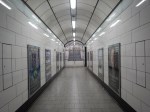

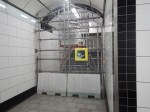
It looks like Transport for London are expecting a party. But you’ll probably need to be in the Eastern end of the Crossrail trains, to do a fast interchange.
If you get out at the Western end of the train, you’ll have to walk back along the connecting tunnel.
Crossrail 2
Crossrail 2 will complicate and improve things further at Tottenham Court Road station, as it sits between the proposed Crossrail 2 stations of Victoria and the mega-station Euston-St. Pancras-Kings Cross.
Will Cinderella Come To The Rescue?
The Docklands Light Railway (aka Cinderella) was the star of the 2012 Olympics transport system and she now has ambitions to expand to the West, as I wrote about in A Connection Between City Thameslink Station And The Docklands Light Railway.
This map from Transport for London, shows the possible Western extension of the DLR.
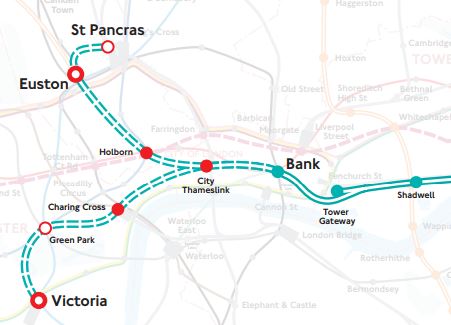
With all the problems of the funding of Crossrail 2, this extension could create a lot of important connections across the City.
It already connects or will soon connect.
- Canary Wharf and Bank
- City Airport and Bank
- Crossrail’s South Eastern Branch and Bank, with a change at Custom House station.
The upgrade at Bank, which should complete in a couple of years will help, with better connections to the Central, Circle, District and Northern Lines.
If the extension to the DLR is built, it would connect Canary Wharf, City Airport and Crossrail’s South Eastern Branch in the East, with Charing Cross, Euston, Kings Cross, St. Pancras, Thameslink and Victoria in the West.
It would also take the pressure off of some of Central London’s most crowded lines.
So get your coal shovel out Cindy and start digging!
Galliard Homes To Develop £140m Luxury Flat Complex Above Crossrail Station
The title of this post is the same as that of this article on City AM.
This is yet another Crossrail related development.
One Liverpool Street: City Of London Approves Crossrail Entrance Office Block
The title of this post is the same as that as this article on City AM.
This paragraph describes the financial structure of the development.
One Liverpool Street will be run by asset managers Aviva Investors, through a joint venture with Transport for London (TfL), and will replace an existing six-storey office block.
It is yet another development along the Crossrail route.
Crossrail’s Paddington Service Plans Revealed
The title of this post is the same as that of this article on Rail Magazine.
This is the first paragraph.
Trains from London Paddington Crossrail station to Shenfield will begin six months after trains start serving the low-level station from other destinations.
In Crossrail Ltd Outlines Plan To Complete The Elizabeth Line,, which I wrote in April 2019, I quoted these points from a statement on the Crossrail web site.
- Crossrail Ltd has identified a six-month delivery window with a midpoint at the end of 2020.
- Bond Street station will open later.
- Service will be initially twelve trains per hour (tph) between Paddington and Abbey Wood stations.
- Services between Paddington and Reading will commence in December 2019 with a frequency of 4 tph in the peak.
None of these promises from six months ago appear to have been changed.
So my comment at the time still stands.
Twelve trains per hour (tph) gives a capacity of 18,000 passengers per hour, which compares with the 36 tph and 31,500 passengers per hour of the Victoria Line.
Practically, this means that a twelve tph Crossrail could be carrying sixty percent of the number of passengers of the Victoria Line. It’s better than a kick in the teeth!
But then Dear Old Vicky is the Platinum Standard with lots of encrusted diamonds!
There is also other information in the Rail Magazine article.
- Paddington to Shenfield services will start six months after the start of Paddington to Abbey Wood services.
- Services will initially use the two-platform Crossrail station under Paddington as a terminus.
- Through services are expected to start a year later.
It looks like Crossraill should be fully open by the May 2022 timetable change.
This map from carto.metro.free.fr shows the layout of the lines at Paddington station.

Note that if you go pass the Crossrail tunnel portal on a train, there are generally several of Crossrail’s Class 345 trains to be seen, lined up in front of Westbourne Park bus garage.
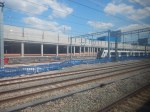
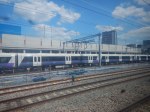
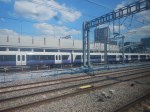

These pictures were taken in July 2019.
Expansion At Southall Station (?)
This Google Map shows Southall station.
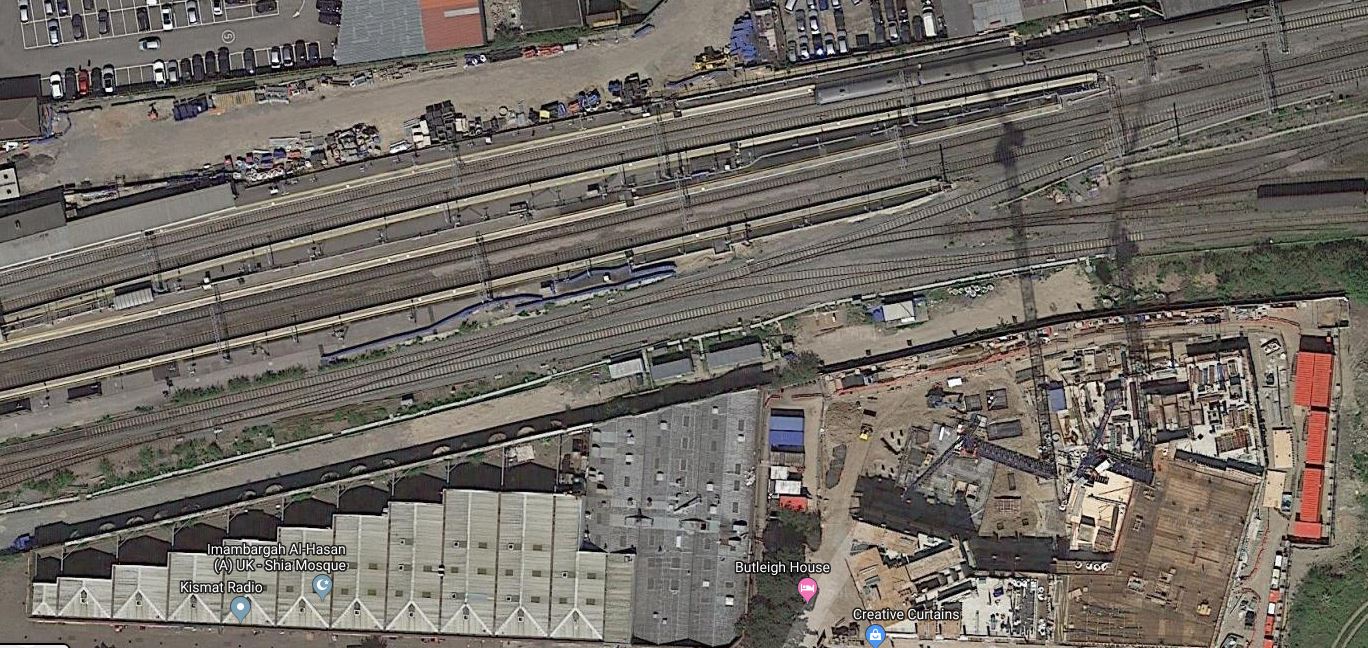
Note
- Southall station with one side and two island platforms towards the top of the map.
- Two fast and two slow railway lines going East towards Paddington station.
- A large commercial and residential development called The West Works to the South of the map.
And this map from varto.metro.free.fr shows a map of the railway lines in the area.
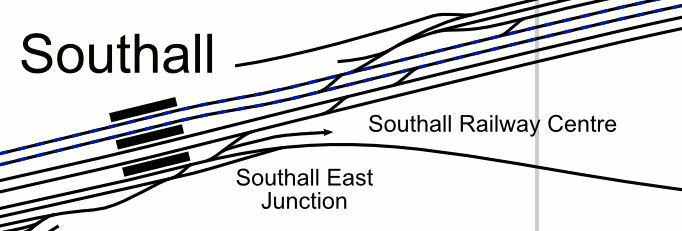
Note.
- The two East-West fast lines, that are shown in black are used for Great Western Railway expresses and Heathrow Express services.
- The two East-West railway lines, that are shown in blue, will be used for Crossrail and other slow services into Paddington.
- Platforms and numbers South to North, with 1 and 2 serving the fast lines and 3 and 4 serving the slower services.
- The line going off to the South-East is the Brentford Branch Line.
These are pictures I took of a new step-free bridge that will link the platforms at Southall station.


Note.
- The bridge will definitely have access to platforms 1 and 2 and 3, and I would assume it will also serve platform 4.
- The bridge will have lifts.
- The West Works can be seen in the last picture.
Even now it looks to be a comprehensive scheme.
Access Between Southall Station And The West Works
Thjs picture was taken from the islans platform 2 and 3 in July 2015 and clearly shows a rusty footbridge, that has since been demolished.

I would assume the bridge used to provide access across the railway.
Has the new bridge been designed so that, it can be extended at both ends to give full step-free access across the railway and provide a step-free route between The West Works and Southall station?
Serving A Future Brentford Branch
Hounslow Council is keen to reopen the Brentford Branch Line, to link Btrntfprd to Southall station for Crossrail.
I wrote about it in Plans To Reopen The Brentford To Southall Railway.
This recent Google Map shows the Southernmost of the two island plsatforms at Southall station.
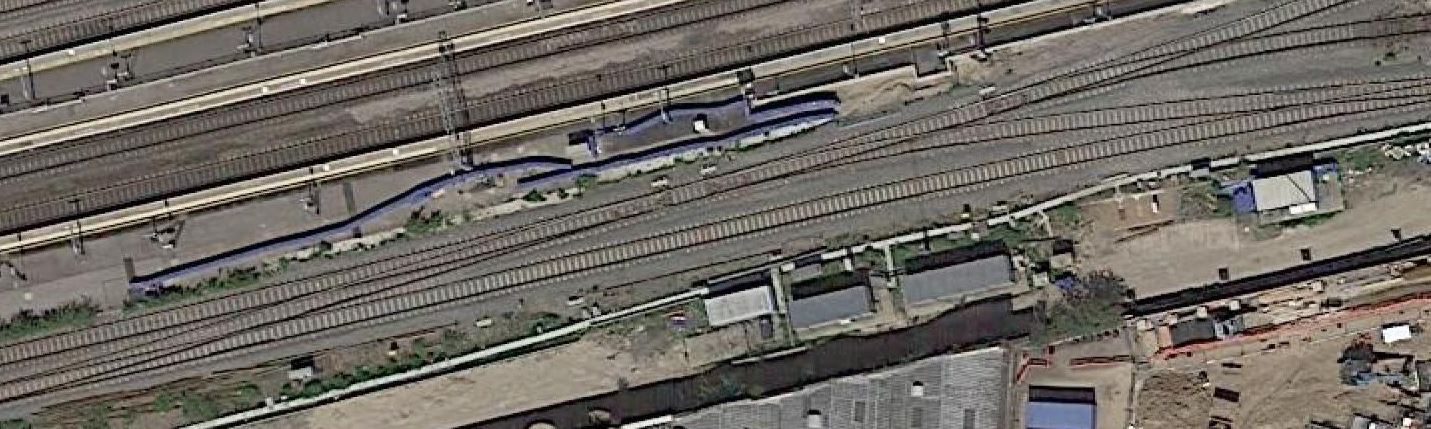
The island platform seems to have a few blue safety hoardings.
- The Down Fast line from Paddington is on the North side.
- It is likely, that the platform for the Brentford Branch Line will be on the South side.
For safety reasons, there will probably be a safety fence down the middle of the platform.
Passengers needing to change between Crossrail and the Brentford Branch Line will have to use the bridge.
I would assume that the step-free bridge will only need minor improvements to accommodate the Brentford Branch Line.
Southall’s Suicide Problem
I suspect that safety fences will be put on platforms 1 and 2, which will be only used occasionally and under strict supervision, to minimise the suicide problem at the station.
Southall Gasworks Site
Whilst at Southall, I’ll take a look at the massive Southall Gas Works site.
It is shown on this Google Wap to the West of Southall station.
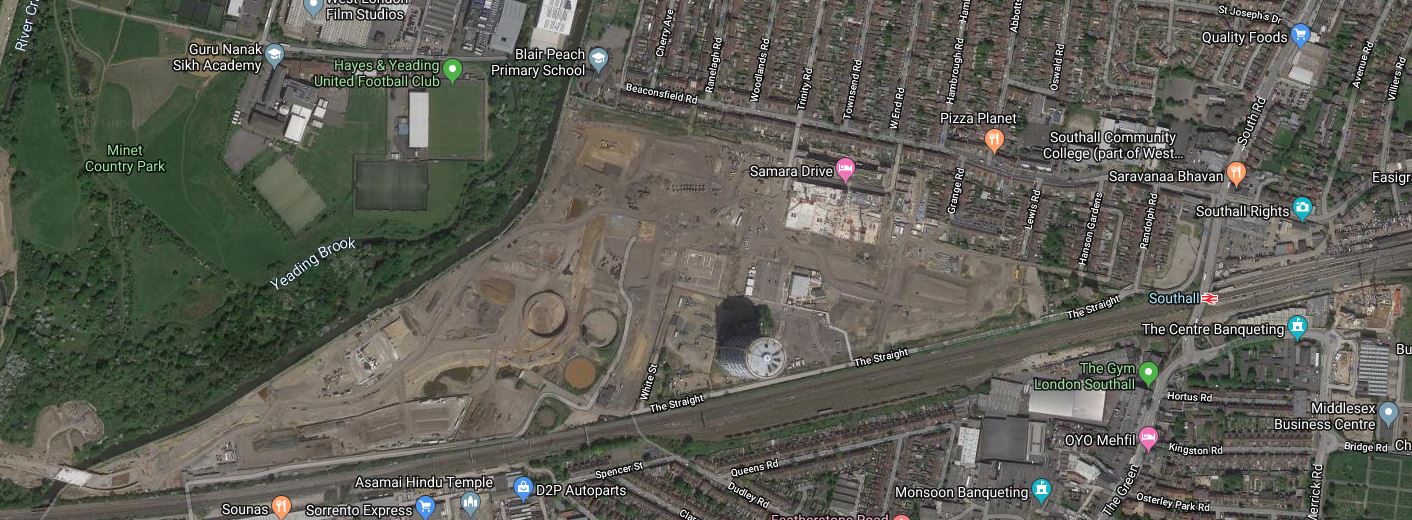
It is likely to be over three thousand houses and flats.
- So that will surely mean a similar number of cars.
- Can the roads in the area cope?
- What about the air quality?
Are there any plans for an innovative rail connection to the station? And cycleways through the site?
Conclusion
It does seem that the bridge will allow limited expansion of the station.
I feel very strongly, that the type of housing developments being built around Southall station, must be built with step-free access to a rail station or tram stop.
TfL Confirms Details Of Reading Services
The title of this post is the same as that of this article on Railway Gazette.
This is first paragraph.
Details of the transfer of London Paddington – Reading stopping services from Great Western Railway to TfL Rail from the December 15 timetable change have been confirmed by Transport for London.
Some significant points to note from the article.
- The service will be run by Class 345 trains.
- Fast services from Reading and some stations to the East will continue to be run by Great Western Railway.
- There will be four trains per hour (tph) in the Peak and two tph in the Off Peak.
- After the New Year Bank Holiday, contactless payments will be available between Paddington and Reading.
- Children under 11 who are accompanied by an adult, as well as people who are eligible for the Freedom Pass, will be able to travel for free to Reading on the TfL service.
- Oyster will not be available to the West of West Drayton.
- Great Western Railway , but not South Western Railway, are expected to bring in contactless ticketing in the New Year.
A few of my thoughts.
What Will Be The Service Pattern?
When the possibility of TfL Rail taking over the services to Reading, I wrote Will Crossrail Open To Reading in 2019?.
The service pattern to Maidenhead to Reading appears to be.
Reading To Paddington – Limited Stop
This service will be run at two trains per hour (tph) in the Peak with no trains in the Off-Peak.
Stops are Twyford, Maidenhead, Slough, West Drayton and Ealing Broadway.
Reading To Paddington – All Stations
This service will be run at two tph all day.
The service will call at all stations except Hanwell and Acton Main Line.
Maidenhead To Paddington
This service will be run at two tph all day.
The service will call at all stations except Hanwell and Acton Main Line.
A Summary Of Peak/Off Peak Calls
Adding these services up, gives the following numbers for Peak and Off Peak calls in trains per hour (tph)
- Reading – 4,2
- Twyford – 4,2
- Maidenhead – 6,4
- Taplow – 4.4
- Burnham 4,4
- Slough – 6,4
- Langley – 4,4
- Iver – 4,4
- West Drayton – 6,4
- Hayes & Harlington – 4.4
- Southall – 4,4
- Hanwell – None to Reading/Maidenhead
- West Ealing – 4.4
- Ealing Broadway – 6,4
- Acton Main Line – None to Reading/Maidenhead
- Paddington – 6,4
Note.
- 4,2 means 4 tph in the Peak and 2 tph in the Off Peak.
- It would appear that all stations except Reading and Twyford have at least four tph all day.
- Stations between Hayes & Harlington and Ealing Broadway will get another six tph all day going to Heathrow.
- Acton Main Line station will get another four tph all day going to Heathrow.
The frequency of trains would appear to satisfy Transport for London’s Turn-Up-And-Go frequency for Metro services.
No one should wait more than fifteen minutes on a Metro for a train!
Freedom Pass Holders Will Be Winners
Being able to use a Freedom Pass between Paddington and Reading will be very useful for many travellers.
It would appear that the cheapest way to use the trains West of Reading for a Freedom Pass Holder, will be to use the pass to get to Reading on TfL Rail and then buy a ticket from Reading to your ultimate destination.
Note that on the Overground, you can buy a ticket between any two UK stations. So if I was going to Bristol, I’d buy a Return at my local Dalston Junction station and use it from Reading, after going there on TfL Rail.
Very covenient and with the best price!
Full Steam Ahead For Eric Parry’s Crossrail Scheme
The title of this post, is the same as that of this article on Building Design.
These points are made in the introduction.
- Plans for a nine-storey Eric Parry scheme above a Crossrail station in the City of London have taken a significant step forward.
- Transport for London inked a deal with Aviva for the overstation development at Liverpool Street station.
- It is one of 12 developments TfL is planning above and around Crossrail sites.
It illustrates how Crossrail is leading to a vast amount of development along the route.
How many cities in the UK and around the world, could benefit from their own cross-city rail line?
Aberdeen, Birmingham, Cardiff, Edinburgh, Glasgow, Leeds, Liverpool and Newcastle have them of various standards, but in some cities getting across the city is a nightmare on public transport and people drive.
The Crossrail Portal At Pudding Mill Lane Station
These pictures show the Crossral portal at Pudding Mill Lane station, as it is approached on a DLR train from Stratford station.
The portal does appear to be rather functional.
 The Anonymous Widower