Could The Settle And Carlisle Be Used As A More Formal Route?
In June 2021, I wrote Through Settle And Carlisle Service Under Consideration, which starts like this.
The title of this post, is the same as that of an article in the June 2021 Edition of Modern Railways.
This is the first paragraph.
Plans for a new Leeds to Glasgow through service via the Settle and Carlisle line are being developed, with CrossCountry and the Department for Transport starting to look at the possible scheme.
It sounds like a sensible idea to me.
The article also suggests the following.
- CrossCountry is a possible operator.
- CrossCountry are keen to improve services between Leeds and Glasgow
- The trains could be InterCity 125s, freed up, by a the arrival of Class 221 trains from Avanti West Coast, when they receive their new Class 805 trains.
- Maintenance of the trains wouldn’t be a problem, as this could be done at Neville Hill in Leeds or Craigentinny in Edinburgh.
- Services could start in December 2023.
But nothing more has been heard.
However some things have happened.
The Settle And Carlisle Has Become A Popular Charter Route
Google AI gave me this paragraph.
The Settle and Carlisle line is an extremely popular, premier route for heritage rail charters, steam excursions, and luxury rail tours in the UK, often operating at full capacity. Renowned for its scenic 72-mile journey through the Yorkshire Dales and Pennines, it features iconic structures like the Ribblehead Viaduct.
I have also written these posts about charters on the Settle and Carlisle Line.
Scheduled Steam-Hauled Services For the Settle And Carlisle Railway
Rail Operator Crosses Line For First Time In Years
‘Staycation Express’ To Return Along Full Length of S & C
It doesn’t appear that the numbers of charter trains are showing any sign of decrease.
LNER Has Ordered Class 897 Trains
When LNER took over the East Coast Main Line services, they had six main classes of trains.
- Five-car Class 800/1 bi-mode trains
- Nine-car Class 800/2 bi-mode trains
- Five-car Class 801/1 electric trains
- Nine-car Class 801/2 electric trains
- Seven-car InterCity225 trains
- Nine-car InterCity225 trains
Note.
- The five-car trains can run in pairs as ten-car trains.
- The Class 800 and Class 801 trains can run to destinations, that lack full electrification using diesel power where needed.
- Hitachi are developing battery-power for rail routes without electrification.
In 2023 to replace the InterCity225 trains ten ten-car Class 897 tri-mode trains were ordered from CAF, which will soon be in service, over all LNER’s network.
LNER Has Fully Electrified And Unelectrified Destinations
LNER’s current destinations, that are fully electrified to King’s Cross include.
- Bradford Forster Square
- Berwick on Tweed
- Darlington
- Doncaster
- Durham
- Edinburgh Haymarket
- Edinburgh Waverley
- Grantham
- Keithley
- Leeds
- Newark Northgate
- Newcastle
- Peterborough
- Retford
- Shipley
- Skipton
- Stevenage
- Wakefield Westgate
- York
Whilst those are not fully electrified include.
- Aberdeen
- Cleethorpes
- Dundee
- Grimsby Town
- Harrogate
- Huddersfield
- Horsforth
- Hull
- Inverness
- Lincoln
- Middlesbrough
- Sheffield
- Sunderland
- Thornaby
- Worksop
Note.
- Other destinations can be added as required.
- I suspect, that Class 897 trains will be able to approach many stations without electrification on battery power alone.
- Staff and Passengers would probably like underground stations like Sunderland to be worked on batteries alone.
The Class 800 bi-mode, the Class 801 electric and the Class 897 tri-mode trains will give LNER a very flexible fleet.
Onward To Skipton, Carlisle and Glasgow Central And Edinburgh From Bradford Forster Square
I wonder is someone has realised that the Class 897 trains could use their tri-mode capabilities to invade Scotland?
This OpenRailwayMap shows the railways between the Scottish Lowlands and northern England.
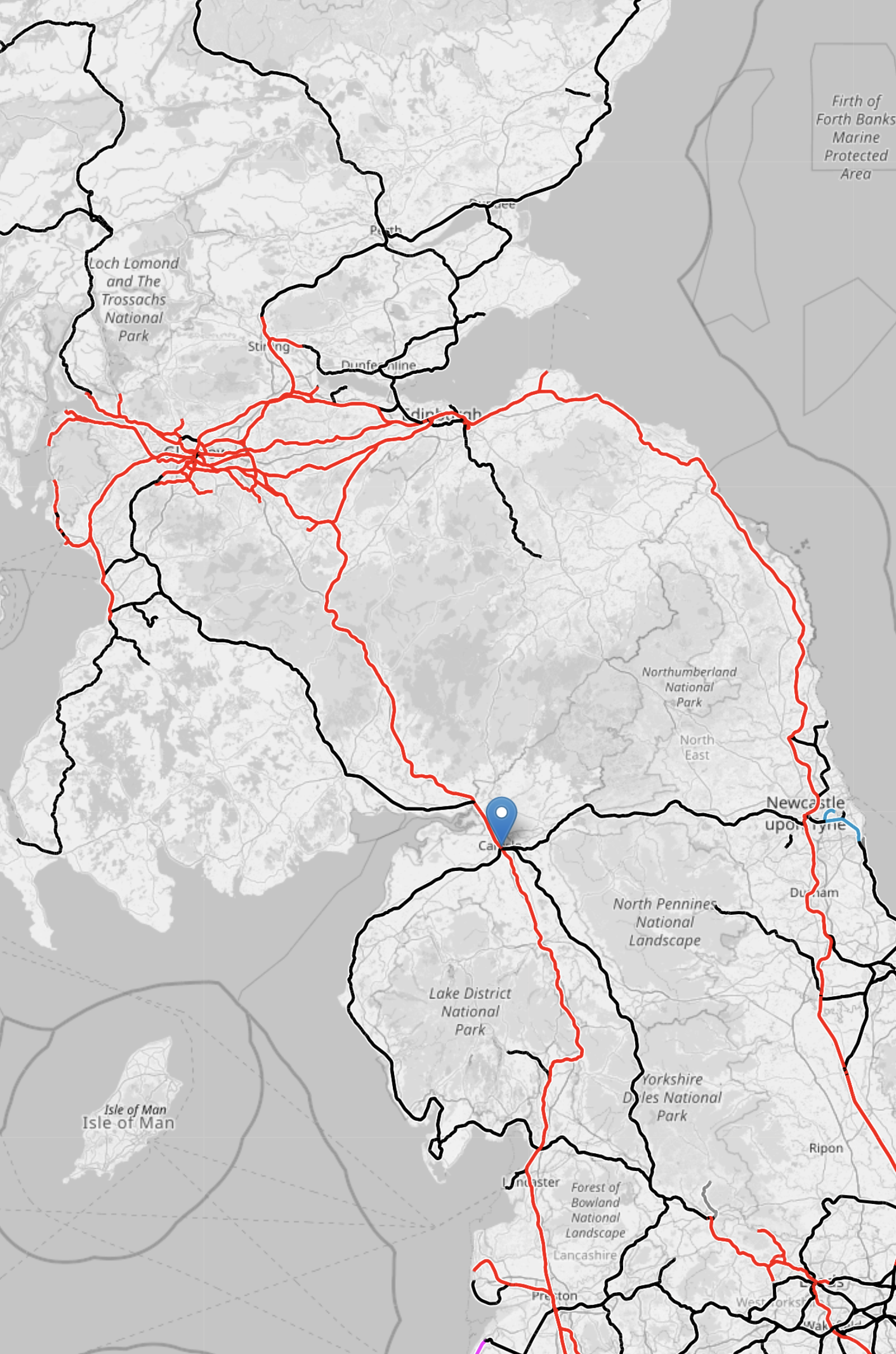
Note.
- Red tracks are electrified.
- Black tracks are not.
- The blue arrow in the middle of the map indicates Carlisle.
- The red track going North-South through Carlisle is the West Coast Main Line.
- The black track going South from Carlisle is the Settle and Carlisle Line.
- Where it turns red is at Skipton station and the electrification can power the train to Bradford Foster Square, Doncaster, Leeds or Sheffield stations.
- The West Coast Main Line splits North of Carlisle and electrified trains can reach either Glasgow Central in the West or Edinburgh Haymarket or Waverley in the East.
- The black track going North-South between Carlisle and Glasgow via Dumfries is the Glasgow South Western Line, which can be used as a diversionary route by some trains with a self-powered capability.
The Settle and Carlisle Line certainly makes Anglo-Scottish routes more robust and flexible when there is bad weather, engineering works or overhead wire or signalling failures.
Will Class 897 Trains Be Able To Run On The Settle And Carlisle Line?
I asked Google AI this question and it gave this answer.
Yes LNER’s new Class 897 tri-mode trains (scheduled for introduction from 2027) will be able to run on the Settle and Carlisle line. As tri-mode electro-diesel multiple units, these 10-car trains are designed to operate across the entire LNER network, utilizing electric, diesel, or battery power to manage non-electrified routes like this, providing a modern alternative to older, diesel-only fleets.
Key details regarding Class 897 on the Settle and Carlisle Line:
Tri-mode Capability: These trains can run on electric, diesel, or battery power, making them highly versatile for non-electrified, scenic, or challenging routes.
Operating Strategy: The trains are designed for flexibility and can be used across the LNER network, which includes routes connecting to Scotland via the West Coast Main Line (WCML) or through services from Leeds.Upgrading Service: They will replace the 40-year-old InterCity 225 fleet, offering a more environmentally friendly, modern alternative to current diesel bi-modes, such as the Class 800/802.
The route is a major, yet challenging, rail line featuring 20 viaducts and 14 tunnels, making it suitable for modern, versatile train sets.
I also believe that running Class 897 trains between Yorkshire and Glasgow offers opportunities to run new services, that will appeal to both travellers and rail operators.
Does The UK Need More Passenger Rail Capacity Between Yorkshire And Glasgow?
I asked Google AI this question and it gave this answer.
Yes, the UK requires more passenger rail capacity between Yorkshire and Glasgow due to severe overcrowding and forecasted demand growth. Major routes like the East Coast Main Line (ECML) and West Coast Main Line (WCML) are, or will soon be, at maximum capacity. Key constraints include infrastructure limitations and the need for better Scotland-England connectivity.
Key insights on this need:
Capacity Constraints: The WCML, particularly at its southern end, is already effectively full, with limited capacity for additional, longer trains. Similarly, the ECML is experiencing significant overcrowding.
Growing Demand: Passenger demand for long-distance rail travel continues to rise, with significant increases noted in journeys between Scotland and other regions.
Infrastructure Issues: Constraints include steep inclines, tight curves, and the need to mix passenger and freight traffic, particularly on the West Coast route.
Proposed Solutions: While some improvements are planned, such as Lumo extending services to Glasgow, the Integrated Rail Plan (IRP) focuses on capacity enhancements in the North/Midlands.
Strategic Need: Enhanced, high-speed connections are considered essential for long-term economic integration and to prevent increased air travel/emissions.
The great advantage of the route, is that is already in place.
Can The Settle And Carlisle Line Handle Planned Diversions?
Can The Settle And Carlisle Line Handle The Caledonian Sleeper?
I asked Google AI this question and it gave this answer.
The Settle-Carlisle line is not a standard route for the Caledonian Sleeper, which typically travels via the West Coast Main Line (WCML) to Edinburgh, Glasgow, and beyond. While the line is a scenic, double-track route with significant infrastructure, it is generally used for local services and freight, not long-distance, heavy sleeper trains.
Key Considerations:
Route: The Caledonian Sleeper operates on the West Coast Main Line, serving destinations like Edinburgh, Glasgow, Aberdeen, Inverness, and Fort William.
Capacity & Infrastructure: While the Settle-Carlisle line has major structures like the Ribblehead Viaduct, it is not the primary route for high-speed or overnight sleeper services.
Operational Normal: The sleeper service splits into portions at Edinburgh, and does not regularly operate via the Settle-Carlisle line.
In short, the Settle-Carlisle line is not designed for or used by the Caledonian Sleeper, which operates via the West Coast Main Line.
But it does appear, that in the past some sleeper trains have used it.
How Many Freight Trains Use the Settle And Carlisle Line In A Typical Day?
This article on the BBC is entitled Settle To Carlisle line: Shortage of trains ‘Hampering Growth’, says this about the number of trains.
From only two trains a day in the 1980s the Settle and Carlisle line now sees 14 passenger and 18 freight services a day.
That is progress!
Could London And Central Scotland Air Passengers Be Persuaded To Use The Trains?
How Many Passengers Fly Between London And Edinburgh?
Wikipedia gives these figures for 2024 for passengers from Edinburgh to London
- London City – 334,873
- London Gatwick – 476,152
- London Heathrow – 1,148,634
- London Luton – 338, 729
- London Stansted – 693,953
This gives a total of 2,992,341.
As Wikipedia doesn’t give complete figures for from London to Edinburgh, for the purpose of this analysis, I’ll assume they are the same.
How Many Passengers Fly Between London And Glasgow?
Wikipedia gives these figures for 2024 for passengers from Glasgow to London
- London City – 208,405
- London Gatwick – 456,002
- London Heathrow – 954,027
- London Luton – 255,095
- London Stansted – 225,110
This gives a total of 2,098,639.
As Wikipedia doesn’t give complete figures for from London to Glasgow, for the purpose of this analysis, I’ll assume they are the same.
How Many Passengers Fly Between London And Scotland’s Central Belt?
Adding the two figures gives 5,090,980. in both directions.
Which is an average of 97,903 per week or 13,948 per day.
How Many Train Seats Run Between London And Scotland’s Central Belt?
These figures are for Friday the 1st of August.
- Aventi West Coast – London Euston and Glasgow Central – 5 x 9-car Class 390 train – 2,345 seats
- Aventi West Coast – London Euston and Glasgow Central – 16 x 11-car Class 390 train – 6,677 seats
- LNER – London King’s Cross and Edinburgh – 26 x 9-car Class 801 train – 15,886 seats
- Lumo – London King’s Cross and Edinburgh – 5 x 5-car Class 803 train – 2,010 seats
Note.
- All services are all-electric.
- All services are fairly new or have recently been refurbished,
This gives a total of 26,918 train seats.
Adding Lumo’s Service To Glasgow
In Lumo Will Extend Its King’s Cross And Edinburgh Service To Glasgow, I suggested that the Glasgow service would be run as follows from December 2025.
- Two existing Lumo services will leave London as pairs of five-car trains.
- The pairs will split at Edinburgh.
- The leading train will go on to Glasgow Queen Street calling at Edinburgh Haymarket and Falkirk High stations.
- The trailing train will return to London King’s Cross.
- At the end of the day, the two trains in Glasgow will do a fast run back to London King’s Cross as a pair of 5-car trains.
This will add 804 seats per day between London and Glasgow Queen Street in both directions.
The daily total would now total 27,722 train seats, which compares with a daily average of 13,948 passengers per day, who travel by air.
Adding Lumo’s Service To Stirling
In Lumo To Expand Scotland’s Rail Network With New London-Stirling Rail Route From Spring 2026, I talk about Lumo’s new service to Stirling.
- There will be five trains per day (tpd) in each direction.
- Lumo’s new route will link London Euston directly to Stirling, also calling at Milton Keynes, Nuneaton, Crewe, Preston, Carlisle, Lockerbie, Motherwell, Whifflet (serving Coatbridge), Greenfaulds (serving Cumbernauld) and Larbert.
- The service will use 6-car Class 222 trains, which in the linked post, I estimate will have a similar one-class capacity to the Class 803 trains between London King’s Cross and Edinburgh.
- If the capacity of the two train types is similar, this should give operational advantages and allow some more Class 803 trains to run the Euston and Stirling route.
This second Scottish route will add 2010 train seats per day between London Euston and Stirling in both directions.
The daily total would now total 29,732 train seats, which compares with a daily average of 13,948 passengers per day, who travel by air.
Could More Capacity Be Added Between London And Scotland’s Central Belt?
I believe some of the Lumo services between London King’s Cross and Edinburgh could be doubled up to a pair of trains.
There would have to be no platform length issues at London King’s Cross, Stevenage, Newcastle and Morpeth stations.
If three trains could be doubled up, that would add 1,206 train seats per day between London and Edinburgh in both directions.
The daily total would now total 30,938 train seats, which compares with a daily average of 13,948 passengers per day, who travel by air.
I also suspect, that some of the Stirling services could be doubled up.
Connectivity Of England’s Northern Airports To London And Central Scotland
Birmingham Airport
Consider.
- There are easyJet flights to Edinburgh and Glasgow
- There are 1.5 trains per hour (tph) between Birmingham New Street and Edinburgh.
- There are 6 tpd between Birmingham New Street and Glasgow.
You would make your choice and pay the money.
East Midlands Airport
There are no flights or trains to Edinburgh and Glasgow.
Leeds Airport
Consider.
- There are no flights to Edinburgh or Glasgow.
- There is one tph between Leeds and Edinburgh
- There is one tpd between Leeds and Glasgow
Could Leeds and Glasgow get better connectivity?
Liverpool Airport
Consider.
- There are no flights to Edinburgh or Glasgow.
- There is one tph between Liverpool Lime Street and Edinburgh
- There is three tpd between Liverpool Lime Street and Glasgow
The Liverpool area is well connected to Crewe, Warrington Bank Quay, Wigan North Western and Preston stations on the West Coast Main Line for alternative services to Glasgow.
Manchester Airport
Consider.
- There are no flights to Edinburgh or Glasgow.
- There is one tph between Manchester Airport and Scotland via Manchester Piccadilly and Manchester Oxford Road, which alternates between Edinburgh and Glasgow.
The Manchester area is well connected to Crewe, Warrington Bank Quay, Wigan North Western and Preston stations on the West Coast Main Line for alternative services to Glasgow.
Omio gives this summary of flights between Heathrow and Manchester airports.
Flights from Manchester Airport to London Heathrow Airport depart on average 8 times per day, taking around 1h 6m. Cheap flight tickets for this journey start at £63 but you can travel from only £16 by coach.
Wrightbus and others will be producing mouse-quiet hydrogen-powered coaches in a couple of years. I suspect these will give short flights a good kicking.
Newcastle Airport
Consider.
- There are no flights to Edinburgh or Glasgow.
- There is three tph between Newcastle and Edinburgh with an additional 5 tpd from Lumo.
- There is two tpd between Newcastle and Glasgow.
- There is one tpd between Newcastle and Stirling.
- From December 2025, Lumo will add two tpd from Newcastle to Glasgow and one tpd from Glasgow to Newcastle.
- In Lumo Will Extend Its King’s Cross And Edinburgh Service To Glasgow, I stated that I believe that Lumo’s Glasgow to Newcastle service will be a late evening ten-car train, so travellers can have a long day in Glasgow, Edinburgh and Newcastle and still return to London.
Lumo would appear to fill in the gap between Newcastle and Glasgow.
Google AI gives this summary of flights between Heathrow and Newcastle airports.
There are usually 5-6 direct flights per day between Newcastle and Heathrow airports. These flights are operated by British Airways. The average flight time is around 1 hour and 10 minutes.
Note.
- In 2024, 497, 469 passengers flew between between Heathrow and Newcastle airports, which is an average of 681 passengers in each direction every day.
- This was an increase of 13.6 % on 2023.
- From December Lumo will be running extra London King’s Cross and Newcastle services, with each train having 402 seats.
- The improvements in rail services in and around Newcastle in recent months, will surely bring more passengers to use trains from Newcastle station.
- Will Lumo also target adverts at airline passengers?
London and Newcastle could be another route for mouse-quiet hydrogen-powered coaches.
Conclusion
These numbers summarise my calculations.
- Currently an average of 13,948 passengers per day fly between London and Central Scotland.
- Currently, there are 26,918 train seats available per day between London and Central Scotland.
- In December 2025, Lumo will add another 804 low-cost train seats between London King’s Cross and Glasgow Queen Street.
- In Spring 2026, Lumo will add 2010 low-cost train seats between London Euston and Stirling.
- From Spring 2026, there will be 29,732 train seats available per day between London and Central Scotland.
- This represents a 10 % increase of seats on the trains between London and Central Scotland.
How many passengers, who normally fly, will switch to using the train?
- Lumo may only offer one class, but you get a trolley and can order food from M & S and others to be delivered to your seat.
- Both LNER and Lumo accept dogs. I don’t know about Avanti.
- All services will be all-electric, when Lumo gets its new electric trains for Stirling, in a few years.
- It looks to me like Lumo could be offering a late train back to London from Edinburgh and Glasgow.
- Digital signalling on the East Coast Main Line should speed up services.
If Lumo to Glasgow and Stirling works out, it could also cut the total carbon footprint of travel between London and Central Scotland.
Is Wigan North Western Station Ready For High Speed Two?
This diagram shows High Speed Two services, as they were originally envisaged before Phase 2 was discontinued.
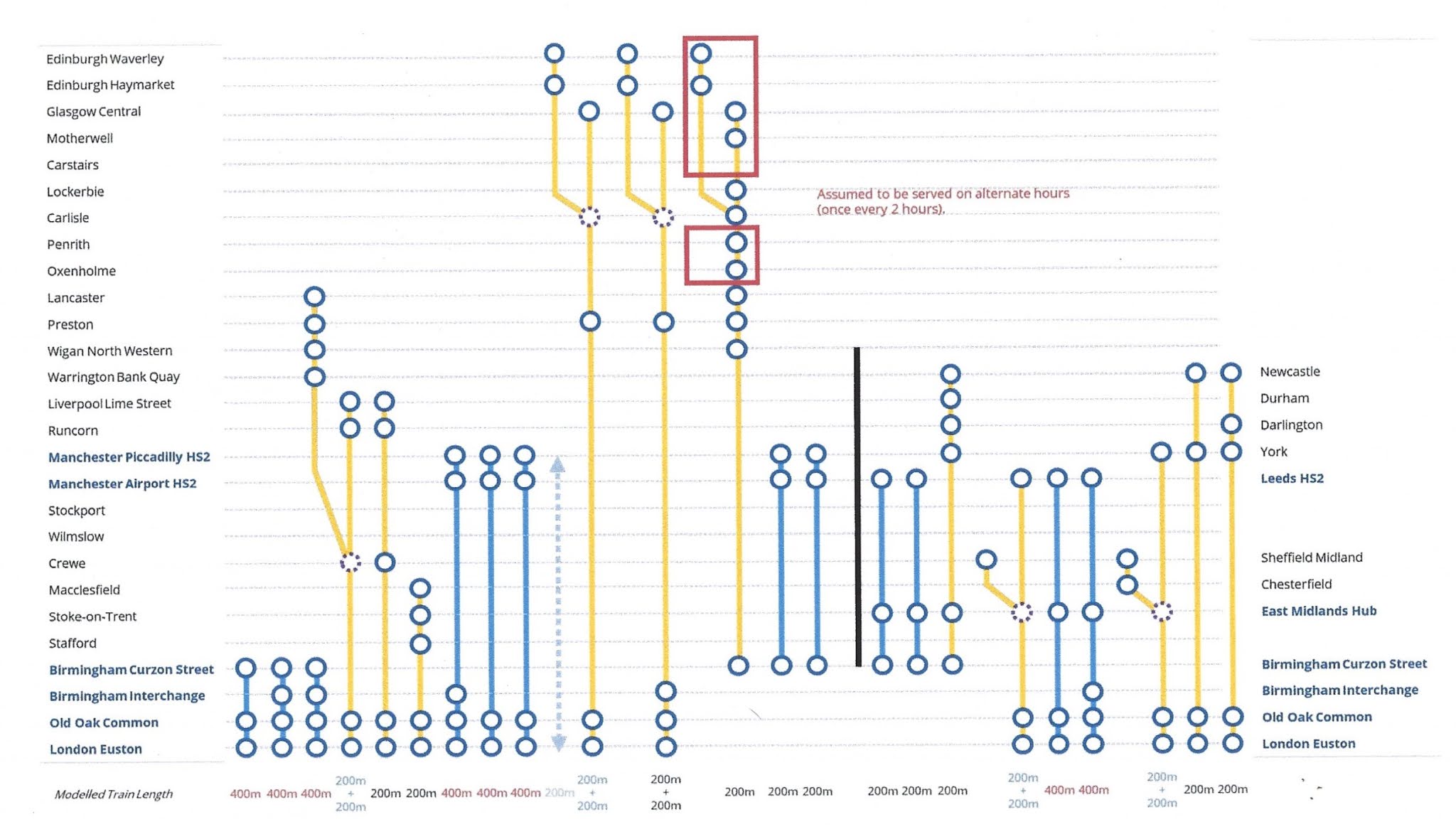
Note.
- Trains to the left of the vertical black line are Phase 1 and those to the right are Phase 2.
- Full-Size trains are shown in blue.
- Classic-Compatible trains are shown in yellow.
- Blue circles are shown, where trains stop.
- The dotted circles are where trains split and join.
- In the red boxes routes alternate every hour.
- Was Lancaster chosen as it’s close to the new Eden Project Morecambe?
Click on the diagram to enlarge it.
It would appear if High Speed Two sticks to this original pattern of services, then the following trains will go through Wigan North Western station.
- 200 metre single train – London Euston and Lancaster, which stops at Old Oak Common, Crewe, Warrington Bank Quay, Wigan North Western and Preston.
- 400 metre pair of trains – London Euston and Edinburgh Haymarket/Edinburgh Waverley/Glasgow Central, which stops at Old Oak Common, Preston, Carlisle.
- 400 metre pair of trains – London Euston and Edinburgh Haymarket/Edinburgh Waverley/Glasgow Central, which stops at Old Oak Common, Birmingham Interchange, Preston, Carlisle.
- 200 metre single train – Birmingham Curzon Street and Edinburgh Haymarket/Edinburgh Waverley or Motherwell/Glasgow Central, which stops at Wigan North Western, Preston, Lancaster, Carlisle and Lockerby and every two hours at Oxenholme and Penrith.
Note.
- Only single High Speed Two classic-compatible trains, stop in Wigan North Western station and they are only two hundred metres long.
- One train per hour (tph) terminates at Lancaster and a second tph terminates alternatively at Edinburgh Haymarket/Edinburgh Waverley or Glasgow Central.
- Four hundred metre long pairs of trains go through North Western station without stopping.
Currently Wigan North Western has 14 trains per day (tpd) stopping at the station, eleven of which go to Scotland and three to Blackpool.
This Google Map shows Wigan North Western station.
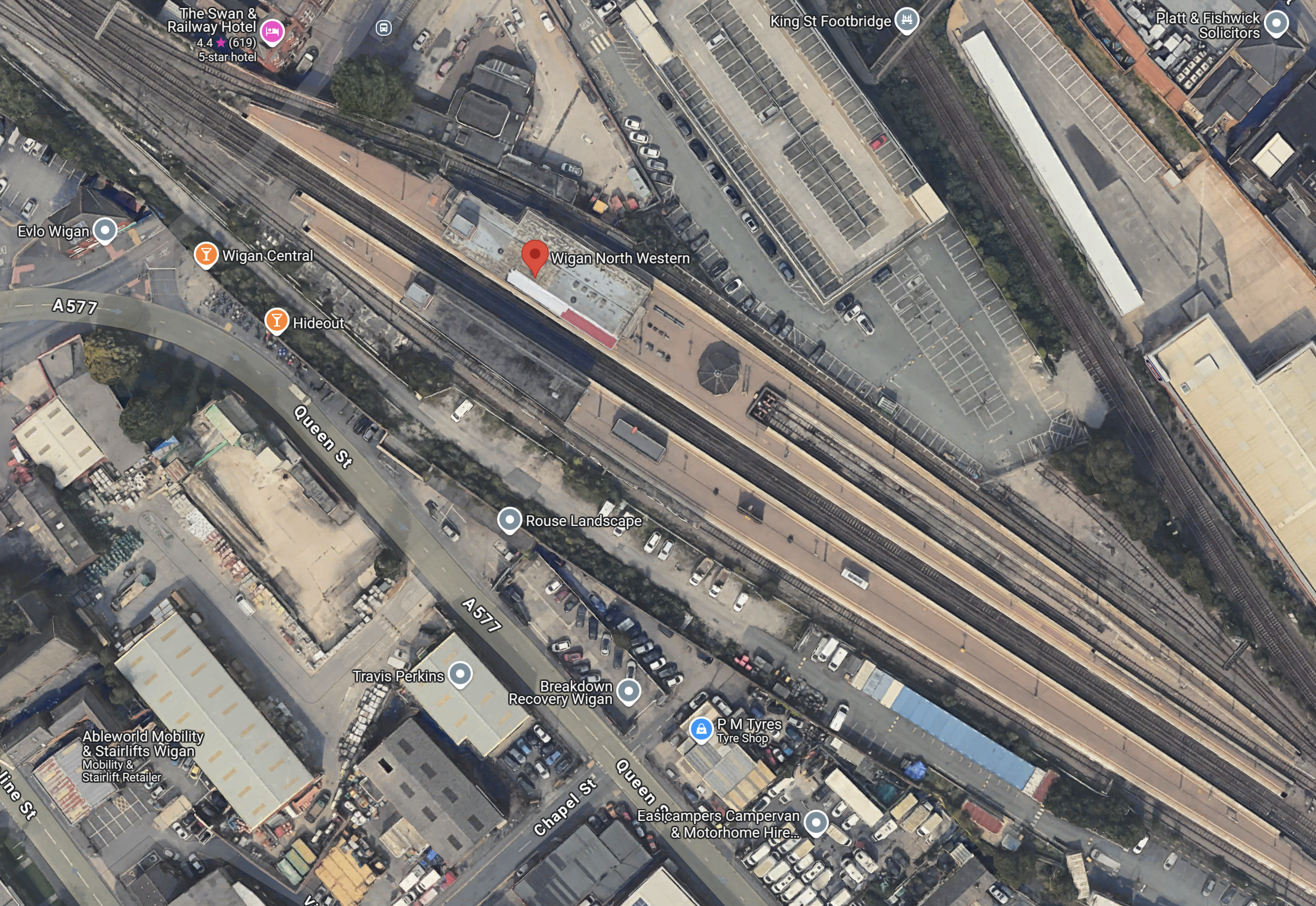
Note.
- The two long platforms in the middle of the station, where the Avanti trains stop.
- A long platform on the Southern side of the station used by local services to and from Liverpool and Blackpool.
- Three bay platforms on the Northern side of the station, one of which is unused, that handle local services to Manchester and beyond.
As the 265.3 metre long Class 390 trains can use the central platforms, High Speed Two classic-compatible trains will be able to use these platforms.
On my brief visit to the station yesterday, I took these pictures.
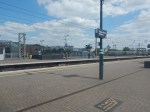
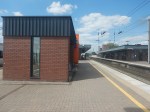
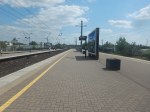
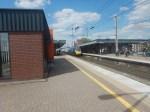
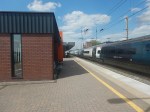
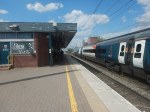
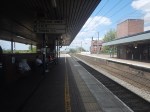
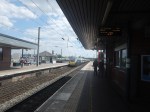
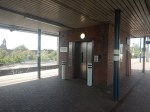
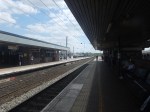
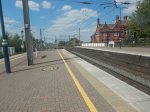
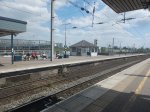
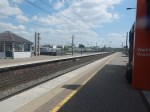
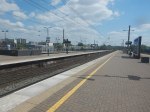
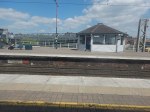
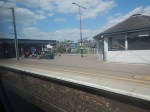
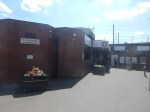

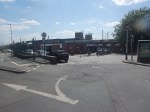
Note.
- All Class 390 trains are longer than High Speed Two classic-compatible trains, so the train in the pictures indicates that the High Speed Two trains will be able to stop at Wigan North Western station.
- The platforms are long and wide.
- The station is well-equipped with lifts, cafes, waiting rooms and some of the best toilets in a station in the North of England.
- Wigan Wallgate station is only a short walk away, with a selection of local services to Blackburn, Headbolt Lane, Manchester, Southport and a large proportion of Lancashire.
- The last two pictures were taken looking at the two stations from halfway.
- The shops between the two stations are a good selection and include a Morrisons Local.
I had been intending to go on to Preston, Lancaster and Morecambe, but a points failure at Preston meant that no trains were running.
Conclusion
The two Wigan stations and the buses that serve them, could be a good interchange for passengers to catch High Speed Two.
I feel that most of the work needed to be done at Wigan North Western to get the station ready for High Speed Two will mainly be cosmetic or technical upgrades like signalling. I can’t see any expensive or disruptive upgrades like platform lengthening being needed.
Piling Work To Get Underway To Electrify Line To Fife
The title of this post, is the same as that of this press release from Network Rail.
These four paragraphs outline the project.
Work to lay foundations that will pave the way for the electrification of the Fife Circle is about to get underway.
The £55million Scottish Government investment in the line between Haymarket and Dalmeny will see the railway transformed to accommodate quieter, more environmentally friendly electric trains.
The first phase of work between Haymarket and Dalmeny will see Network Rail pile the foundations for masts that will carry overhead wires up to the Forth Bridge. In total it will see 25 single track kilometres (STKs) of railway electrified by December 2024.
Subsequent phases of work will see ‘partial’ electrification of lines in Fife – totalling a further 104 STKs, to enable the introduction of Battery Electric Multiple Units (BEMUs) to replace life-expired diesel units which will be phased out.
This map from Wikipedia shows the stations on the Fife Circle Line.
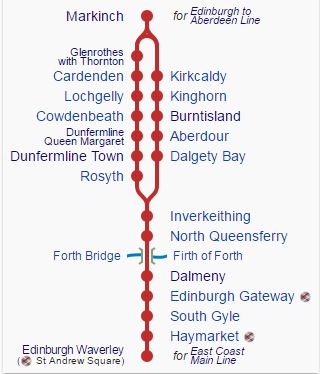
Note.
- The route is double-track.
- The route is not electrified.
- The train service is generally two trains per hour (tph) in both directions.
- The distance from Dalmeny to Glenrothes with Thornton via Cowdenbeath is 22.3 miles
- The distance from Dalmeny to Glenrothes with Thornton via Kirkcaldy is 21.4 miles
- Trains appear to wait between three and seven minutes at Glenrothes with Thornton before returning to Edinburgh by the alternate route.
I have a few thoughts.
Partial Electrification And Battery-Electric Trains
In the Notes To Editors, this is said about what Network Rail means by partial electrification.
The ‘partial’ electrification approach to the decarbonisation of the railway – beyond delivering a reduction in carbon emissions, will also reduce the ongoing net cost to the taxpayer of operating the railway at an earlier point.
Reduced upfront infrastructure and associated capital expenditure makes projects more affordable and enables electrification of key trunk routes to start as a priority so the benefits of electrified railways will be realised earlier. Additionally, it does not preclude full electrification occurring at a future date.
The Fife electrification scheme has been approved for partial electrification, using battery electric multiple units, and further development work is to be undertaken to support this. The project is part of the plan to decarbonise the passenger railway network by 2035.
This map has been downloaded from the Network Rail web site.
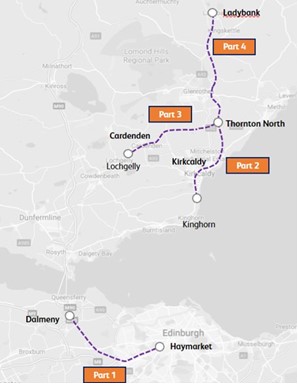
The electrification is split into four phases.
- Haymarket and Dalmeny – 25 km
- Kirkcaldy and Thornton North – 25 km.
- Lochgelly and Thornton North – 20 km.
- Thornton North and Ladybank – 34 km.
Note that the last three phases of electrification connect to Thornton North.
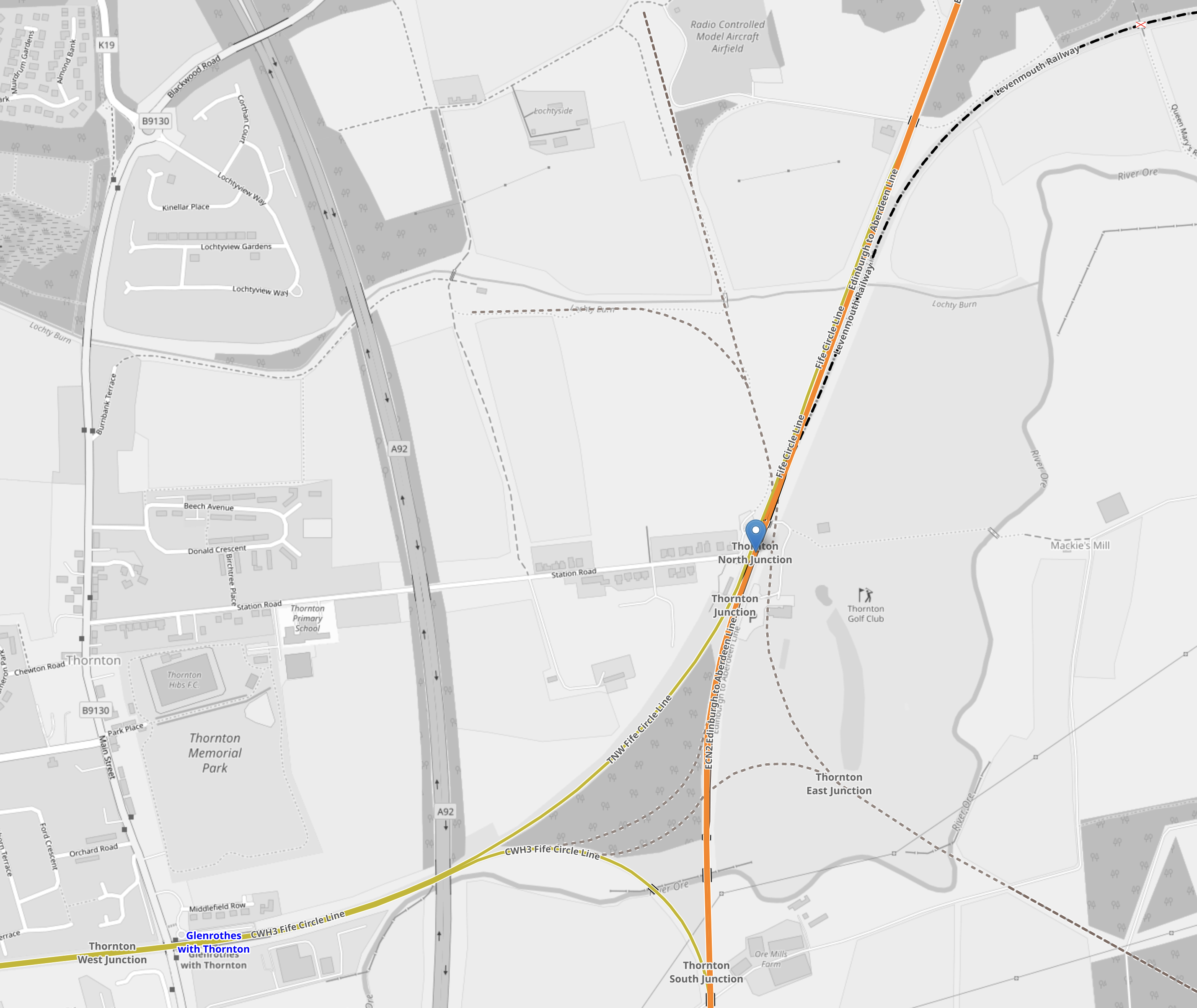
Thornton North is Thornton North Junction, which is shown in this map from OpenRailwayMap.
Note.
- The orange line is the main Edinburgh and Aberdeen Line. South from here, it forms part of the Fife Circle Line and goes over the Forth Bridge.
- The yellow lines going West via Glenrothes with Thornton station are the Fife Circle Line via Dunfermline.
- The lines form a triangle which is Thornton Junction.
- North Thornton Junction is the Northern point of the triangle marked by a blue arrow.
- The black hashed line going to the North-East is the Levenmouth Rail Link, which is under construction.
As the Levenmouth Rail Link will be electrified, there will be four electrified lines fanning out from Thornton North Junction.
This must make construction easier.
- Power supply can be established at Thornton North Junction.
- The Levenmouth Rail Link can be built and electrified.
- Phase 1 of the Fife Electrification between Haymarket and Dalmeny can be installed, as an extension of the electrification at Haymarket station.
- These two sections of electrification could also allow battery-electric trains to run between Edinburgh and Leven stations, as the gap is less than thirty miles.
- Phase 2, 3 and 4 of the Fife Electrification can then be installed in the preferred order.
It would appear, that someone has designed the electrification to a high standard.
The Forth Bridge
The Forth Bridge will be a nightmare to electrify.
I suspect the engineering problems can be solved, but the Heritage Taliban would probably protest about the desecration of a World Heritage Site.
Electrification Gaps And The Hitachi Regional Battery Train
The gaps in the electrification after all phases of the electrification have been completed, will be as follows.
- Dalmeny and Lochgelly – 15.2 miles
- Dalmeny and Kirkaldy – 16.4 miles
- Ladybank and Perth – 17.8 miles
- Ladybank and Dundee – 20.1 miles
The performance of the Hitachi Regional Battery Train is shown in this Hitachi infographic.

Note that a battery range of 90 km. is 56 miles.
A battery train of this performance, should be able to handle these routes.
- Edinburgh and Dundee
- Edinburgh and Glenrothes with Thornton via Kirkcaldy
- Edinburgh and Glenrothes with Thornton via Lochgelly
- Edinburgh and Leven
- Edinburgh and Perth
With one of more further stretches of electrification North of Dundee, a train with this performance should be able to reach Aberdeen.
But to handle the Fife Circle and Levenmouth Rail Link, would probably need a train with a battery range of about forty miles, to allow for a round trip, if say there were problems like lifestock on the line.
Rolling Stock Procurement
The Network Rail press release also says this about Rolling Stock Procurement.
Approval has also been given hold a procurement competition to identify a preferred manufacturer and financier for new suburban trains to operate decarbonised rail passenger services on the routes covered by East Kilbride, Fife and Borders routes, replacing 42 Class 156 trains and to replace the 55 Class 318 and 320 trains operating in the Strathclyde area.
Note.
- It would appear that the East Kilbride, Fife and Borders routes would be worked by battery-electric trains, as they are all routes without electrification.
- I wrote about the East Kilbride and Kilmarnock services in East Kilbride Electrification Underway. The largest gap is about 16.8 miles.
- I wrote about electrification of the Borders Railway in Scottish Government Is Considering Plans To Electrify The Borders Railway. The largest gap is just under 31 miles.
It looks to me that a Hitachi Regional Battery Train with a battery range of over 40 miles would be suitable for the East Kilbride, Fife and Borders routes’
Market Harborough Station – 10th May 2019
I stopped at Market Harborough station and took these pictures.


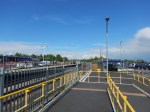
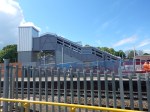
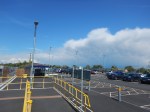
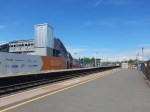
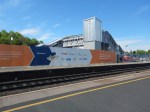

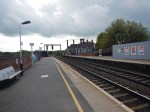
As can be seen, the works at the station are well underway.
Market Harborough Line Speed Improvement Project
This document on the Network Rail web is entitled Market Harborough Line Speed Improvement Project.
According to the document, the project will deliver.
- A line speed increase through Market Harborough enabling a reduction in journey time for passengers.
- New longer platforms that improve access and reduce stepping distances onto trains whilst also catering for longer trains with more seats.
- Station accessibility will be improved with a new footbridge featuring lifts, opening up travel opportunities for more passengers.
- A new 300 space car park has already been constructed, providing step-free access to platforms for passengers arriving by car.
Unfortunately, Network Rail don’t seem to have published a well-prepared visualisation of what passengers, will see, when the project is completed.
There isn’t even a decent visualisation on the station.
Talk about Mushroom Marketing! Keep your customers and project funders in the dark and feed them shit.
This Google Map shows the station..
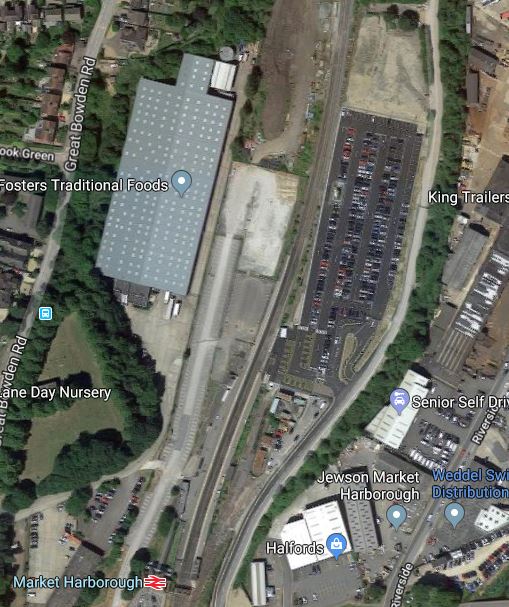
Note.
- The Midland Main Line going up the middle of the map.
- The large new car-park on the Eastern side of the line.
- The building site on the Western side of the line, where new strauighter tracks will go.
The completion date is planned to be December 2019.
Conclusion
The project looks good in the flesh, but that can’t be said for the project presentation to stakeholders.
Edinburgh Haymarket Station Gets It Right
Edinburgh Haymarket station is another example of Network Rail’s stations with a wide bridge over the tracks, like Leeds, Derby and most spectacularly Reading. London Bridge will join the club in the next couple of years.



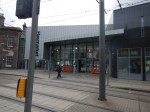
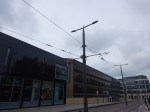
As most trains stop at both Waverley and Haymarket stations in Edinburgh, I think passengers will ask themselves, why they would ever use the truly dreadful Waverley station?
- Access to the trams at Waverley means using endless steps and escalators to get to Princes Street and then an uncovered walk to the tram.
- Trams at Haymarket are just a short level walk outside.
- Taxi drop at Waverley is difficult with more steps. It’s on the level at Haymarket.
- Tickets to Edinburgh allow you to go to either station.
- Coming from the West and needing the tram, will passengers increasingly change at Edinburgh Park station?
Don’t fall into the trap of getting off at Edinburgh Waverley, which now always seems to be called just Edinburgh.
My only reservation about Haymarket is the station’s size.
Is it big enough for an important rugby match at Murrayfield, where the savvy will arrive at Haymarket and take a tram?
And will it be big enough, when the trams are extended, as they surely will be?
 The Anonymous Widower