Extending The Elizabeth Line – A Branch To The Isle Of Grain
In Elizabeth Line To Ebbsfleet Extension Could Cost £3.2 Billion, I talked about extending the Elizabeth Line to Ebbsfleet International and Gravesend stations.
In Gibb Report – Hoo Junction Depot, I talked about how Chris Gibb proposed using the former Hoo branch to create a depot for Thameslink trains.
I am a great believer in the idea, that modern railways are a great way of levelling up an area.
I have watched as Dalston and Hackney have risen as the London Overground has developed more and more frequent services through the area.
So when I wrote about the Ebbsfleet Extension to the Elizabeth Line, I asked this question.
Could The Elizabeth Line Be Extended To The Proposed Hoo Station?
The Hundred of Hoo Railway, leaves the North Kent Line about three miles to the East of Gravesend and runs across the Isle of Grain.
I wrote about the proposed reopening of the Hundred of Hoo Railway or the Hoo Branch as it is commonly known in Effort To Contain Costs For Hoo Reopening.
I then put various proposals and facts together.
It is proposed that the Elizabeth Line runs a four trains per hour (tph) service to Gravesend station.
- Gravesend station is a not very suitable station to turn nine-car Class 345 trains, that are over two hundred metres long, as it is on a cramped site.
- Government money has been pledged to build a station on the Isle of Grain to support the new housing on the island.
- According to Chris Gibb, there is space to build a depot.
So why not build a terminal station for the Elizabeth Line on the Isle of Grain?
I had these thoughts on the proposed Hoo station.
- It would be under ten kilometres from Hoo Junction, where the North Kent Line is electrified.
- A single platform could handle 4 tph, but provision for two platforms would be prudent.
- A couple of sidings could provide stabling.
- Services would join the North Kent Line at Hoo Junction.
- Services would use battery power between Hoo Junction and Hoo station.
- If charging were needed at Hoo station a short length of 25 KVAC overhead electrification would be needed.
- There is plenty of power available locally to power any electrification.
The only problem is that there would be a need for battery-electric Class 345 trains, but as Aventra trains were designed and built with battery operation in mind, this shouldn’t be too challenging.
I have a few other thoughts.
Housing By An Elizabeth Line Station
Woolwich station was built to serve a housing development and the developers even built the station box, which I wrote about in Exploring The Woolwich Station Box.
So I don’t think the developers of the housing on the Isle of Grain will be against the Elizabeth Line station.
What Would Be The Frequency To Hoo Station?
As I said, the proposed Hoo branch, could easily have a capacity of four tph.
But services to Heathrow Terminal 4, Heathrow Terminal 5, Maidenhead and Reading are all two tph. Only Abbey Wood, Paddington and Shenfield have a higher frequency.
I suspect that two tph maximises the number of passengers, as they are prepared to wait thirty minutes.
Conclusion
I can see the branch to Hoo station on the Isle of Grain, being one of these options.
- A branch to turn trains running to Gravesend.
- A short branch to level-up the Isle of Grain.
- A short branch to provide transport for new housing.
Or perhaps a mixture of some or all options.
Could we see other branches like Hoo?
Could There Be An Elizabeth Line Extension To Grays?
This article on My London is entitled London Underground Tube Map: The Towns That Could Be Added To The Elizabeth Line As New Giant Loop Through London, Essex And Kent Is Proposed.
This paragraph described the proposal.
The proposal, which is part of its Vision 2050 local transport plan, would see the current Elizabeth line service from Romford take over the Overground branch to Emerson Park and Upminster, then join c2c services continuing via Chafford Hundred Lakeside to Tilbury. It would then head under a new tunnel beneath the Thames to Gravesend, connecting with the reintroduced Eurostar at Ebbsfleet International/Northfleet.
It’s certainly a bold idea and you can view the report to Thurrock Council here.
These are my thoughts.
The Frequency Of Trains
Currently, these services have a frequency of two trains per hour (tph) in both directions.
- Romford and Upminster.
- Upminster and Tilbury Town.
It would seem sensible that this frequency is preserved, thus giving every station on the loop four tph to and from the Eastern End of the Central Tunnel at Whitechapel station. Two tph would go via Romford and Stratford and two tph would go via Ebbsfleet and Abbey Wood.
What Would Be The Western Terminal?
It would probably be the two busiest terminals in the West.
I suspect that these will be Heathrow Terminal 4 and Heathrow Terminal 5
- Two tph would go between Heathrow Terminal 4 and Heathrow Terminal 5 via the loop.
- Two tph would go between Heathrow Terminal 5 and Heathrow Terminal4 via the loop.
- Two tph would go clockwise.
- Two tph would go anticlockwise.
I suspect the digital signalling can sort it out, just as it does the loop in Thameslink.
The Connection At Romford To The Romford and Upminster Line
Consider.
- The Romford and Upminster Line is single-track.
- A well-signalled single-track railway can handle two tph in both directions in an hour.
- Trains take five minutes to go between Romford and Emerson Park stations.
- Trains between Romford and Upminster will use Platform 5 at Romford station.
- Trains between Upminster and Romford will use Platform 4 at Romford station.
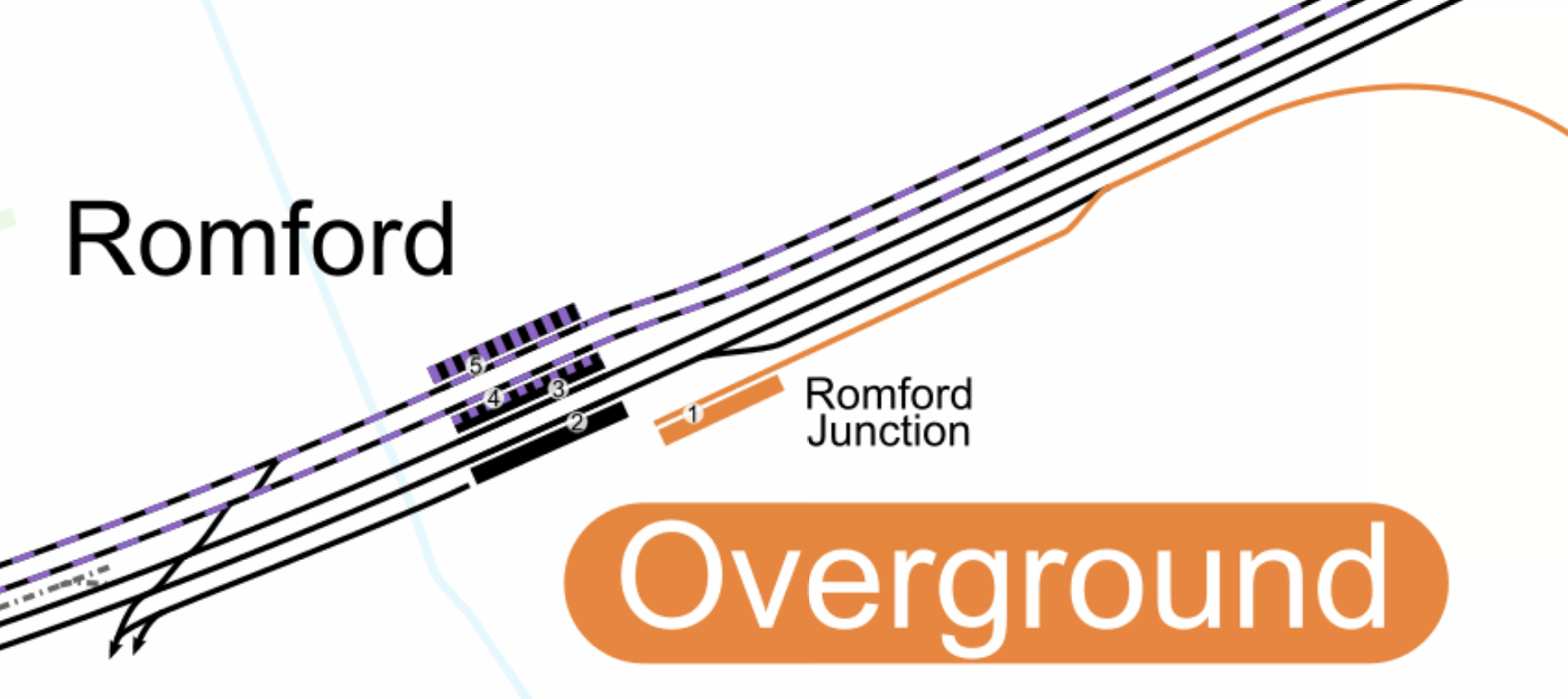
This map from cartometro shows the track layout at Romford station.
Note.
- The orange lines are the Overground tracks of the Romford and Upminster Line, which connects to Platform 1 in Romford station.
- The black and purple lines are the Elizabeth Line, which go through Platforms 4 and 5 at Romford station.
- The black lines are the fast lines of the Great Eastern Main Line, which go through Platforms 2 and 3 at Romford station.
- There is no connection between the Elizabeth Line and the Romford and Upminster Line.
I believe it is possible to build a single-track flyover or dive-under that connects both Platforms 4 and 5 at Romford station to the Romford and Upminster Line.
A similar double track flyover was built to connect the Barking Riverside branch to the main lines through Barking.
- But this track layout would only need to be single-track.
- I also suspect that there may not be enough space to put in a full double-track flyover.
- It would avoid the inconvenience and danger of using flat junctions to cross the fast lines of the Great Eastern Main Line.
As it only takes five minutes to go between Romford and Emerson Park stations, there is plenty of time to fit two tph in both directions in an hour.
Platform Extension In Platform 1 At Romford Station
Platforms 4 and 5 at Romford regularly take nine-car Class 345 trains, but I think that Platform 1 should be lengthened, to provide a bay platform on the route to help out when the service needs to recover.
Platform Extension At Emerson Park Station
The platform at Emerson Park station will need to be lengthened to take nine-car Class 345 trains.
Some commentators claim, that the passing loop at the station needs to be rebuilt. But I suspect, this isn’t needed as the expanded layout at Romford station effectively creates a passing loop.
The Connection At Upminster Between The Romford and Upminster Line And The Upminster And Tilbury Town Line
Consider.
- Both lines are single-track.
- But there is a passing loop at Ockenden station.
- There are three tracks between West Thurrock junction and Grays.
- Trains take five minutes to go between Emerson Park and Upminster stations.
- Trains take ten minutes to go between Upminster and Chafford Hundred stations.
- Trains take four minutes to go between Chafford Hundred and Grays stations.
- Trains take thirteen minutes to go between Upminster station and West Thurrock junction.
This map from cartometro shows the track layout at Upminster station.

Note.
- The orange lines are the Overground tracks of the Romford and Upminster Line, which connects to Platform 6 in Upminster station.
- The green lines are the District Line tracks that handle the services that terminate at Upminster station.
- The black lines are the c2c tracks between Fenchurch Street and Southend Central stations go through Platforms 1 and 2 at Upminster station.
- The Upminster and Tilbury Town Line leaves Upminster station in a South-Easterly direction.
- The Upminster and Tilbury Town Line connects to Platforms 1 and 2 at Upminster station.
I believe it is possible to build a single-track flyover or dive-under that connects both Platforms 1 and 2 at Upminster station to the Romford and Upminster Line.
This would connect the following.
- The Romford and Upminster Line to the the Upminster and Tilbury Town Line.
- The Romford and Upminster Line to the the Fenchurch Street and Southend Central Line.
Upminster station would be a much improved interchange.
Two tph Between Tilbury Town and Romford Stations
Consider.
- The route is fully electrified.
- The route is a mixture of single and double-track.
- There is a passing loop at Ockendon station.
- The platform at Emerson Park and possibly others may need to be extended to take nine-car Class 345 trains.
I believe single-track flyovers or dive-unders at Romford and Upminster stations would enable two tph on the route.
The only downside I can see, is that passengers going between Fenchurch Street and Chafford Hundred or Ockendon stations would need to change at Grays or Upminster stations.
Alternatively, they could take the Elizabeth Line, which would have a 4 tph direct service between the Central Tunnel of the line and Chafford Hundred and Ockendon stations.
Under The Thames
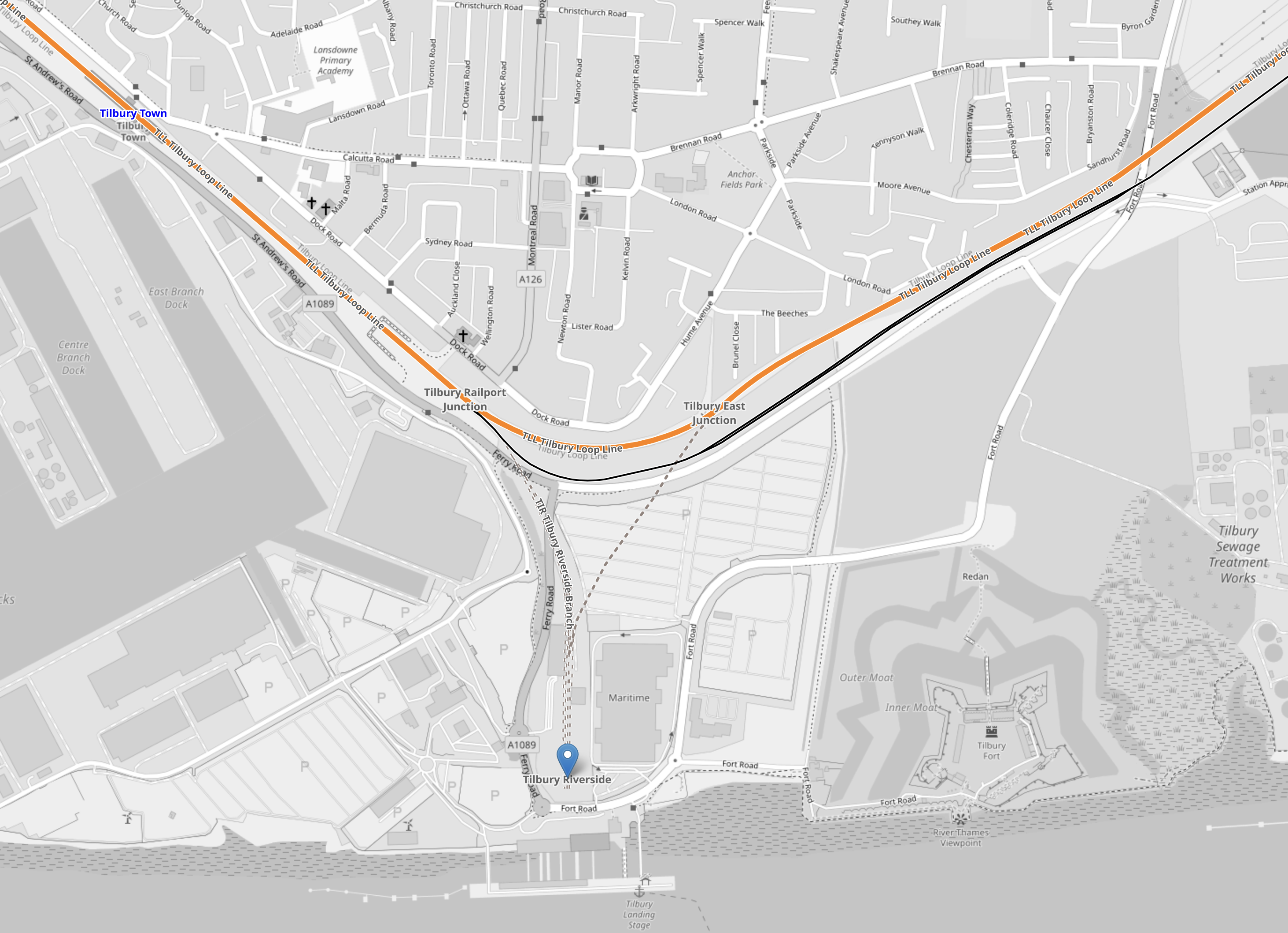
This map from OpenRailwayMap shows the lines on the North bank of the Thames.
Note.
- The orange line is the double-track Tilbury Loop Line between Fenchurch Street and Southend Central stations.
- Tilbury Town station is in the North-West corner of the map.
- There is a proposal for a Tilbury Fort station in the North-East corner of the map.
- The blue arrow at the bottom of the map indicates the former Tilbury Riverside station, which is next to the London International Cruise Terminal.
I believe the North portal of the tunnel under the river could be at the site of the former Tilbury Riverside station.
Would it be an idea to rebuild the station and connect it to the cruise terminal, so that passengers on the cruise ships would have excellent access to Central London, Ebbsfleet International station for High Speed One and Heathrow Airport?
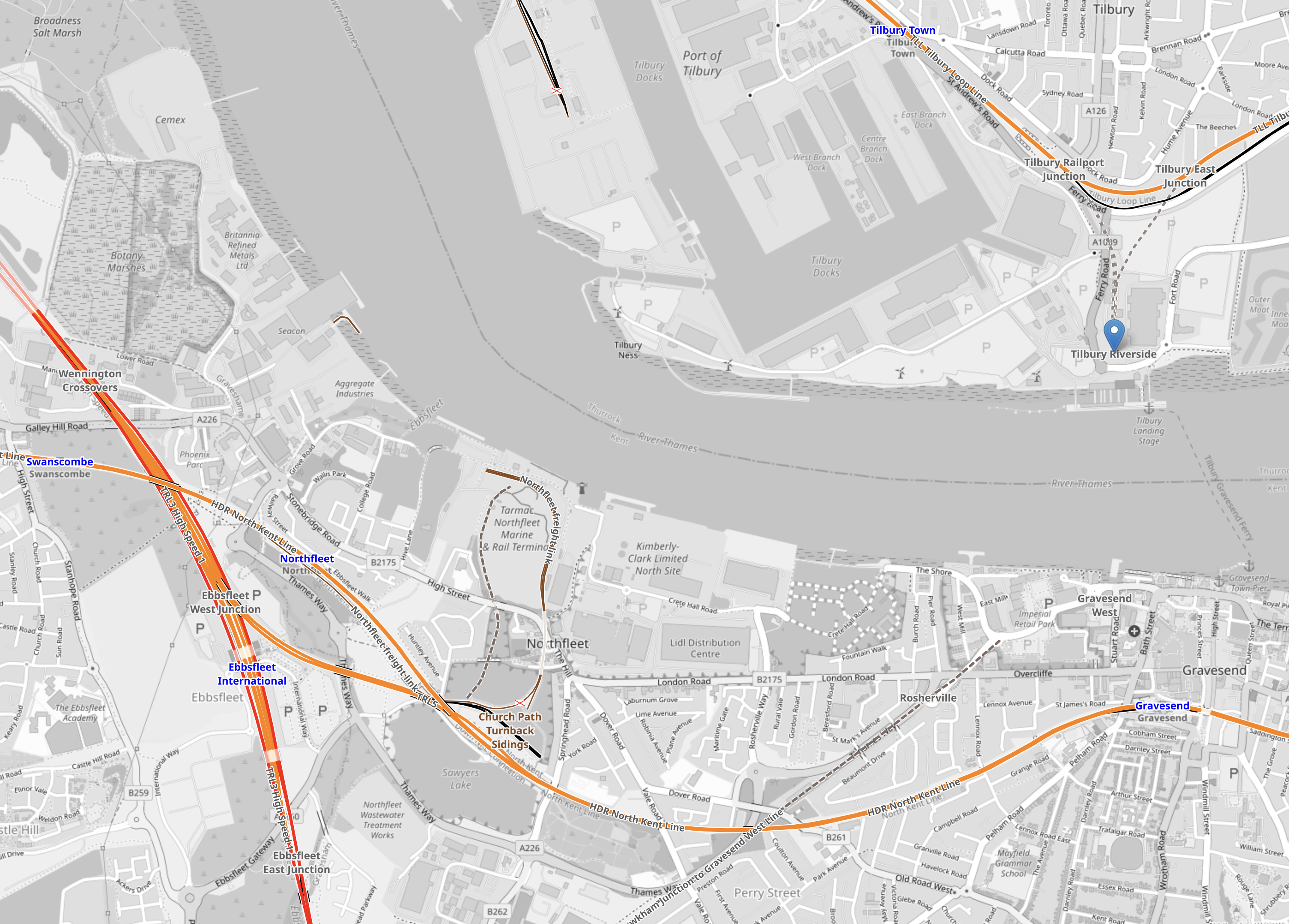
This map from OpenRailwayMap shows the lines on the South bank of the Thames.
Note.
- Tilbury Town station, the former Tilbury Riverside Riverside station and the Tilbury Loop Line are in the North-East corner of the map.
- Gravesend station is in the South-East corner of the map.
- The wide orange line going vaguely North-South at the Western side of the map is High Speed One going through Ebbsfleet International station.
- Connecting Gravesend and Ebbsfleet International stations is the North Kent Line.
I suspect it would be possible to bore a tunnel from Tilbury Riverside, that passed under Gravesend station and joined the North Kent Line to the West of the station.
How Would The River Crossing Connect To Gravesend Station?
The platform or platforms on the Elizabeth Line Loop would have to be underground, as there is not much space at Gravesend station as these pictures show.
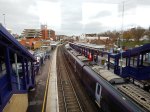
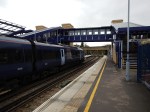
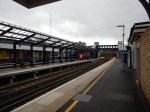
Note.
- Gravesend has SouthEastern HighSpeed services to St. Pancras International station and North-East Kent.
- The route to Gravesend has been safeguarded for the Elizabeth Line.
- The railway under the Thames could replace the Tilbury and Gravesend Ferry.
There also could be operational advantages in not terminating Elizabeth Line services at Gravesend.
Abbey Wood And Gravesend
In Elizabeth Line To Ebbsfleet Extension Could Cost £3.2 Billion, I looked at the Transport for the South East proposal for extending the Elizabeth Line to Kent.
This image from the Abbeywood2Ebbsfleet consultation, shows the proposal.
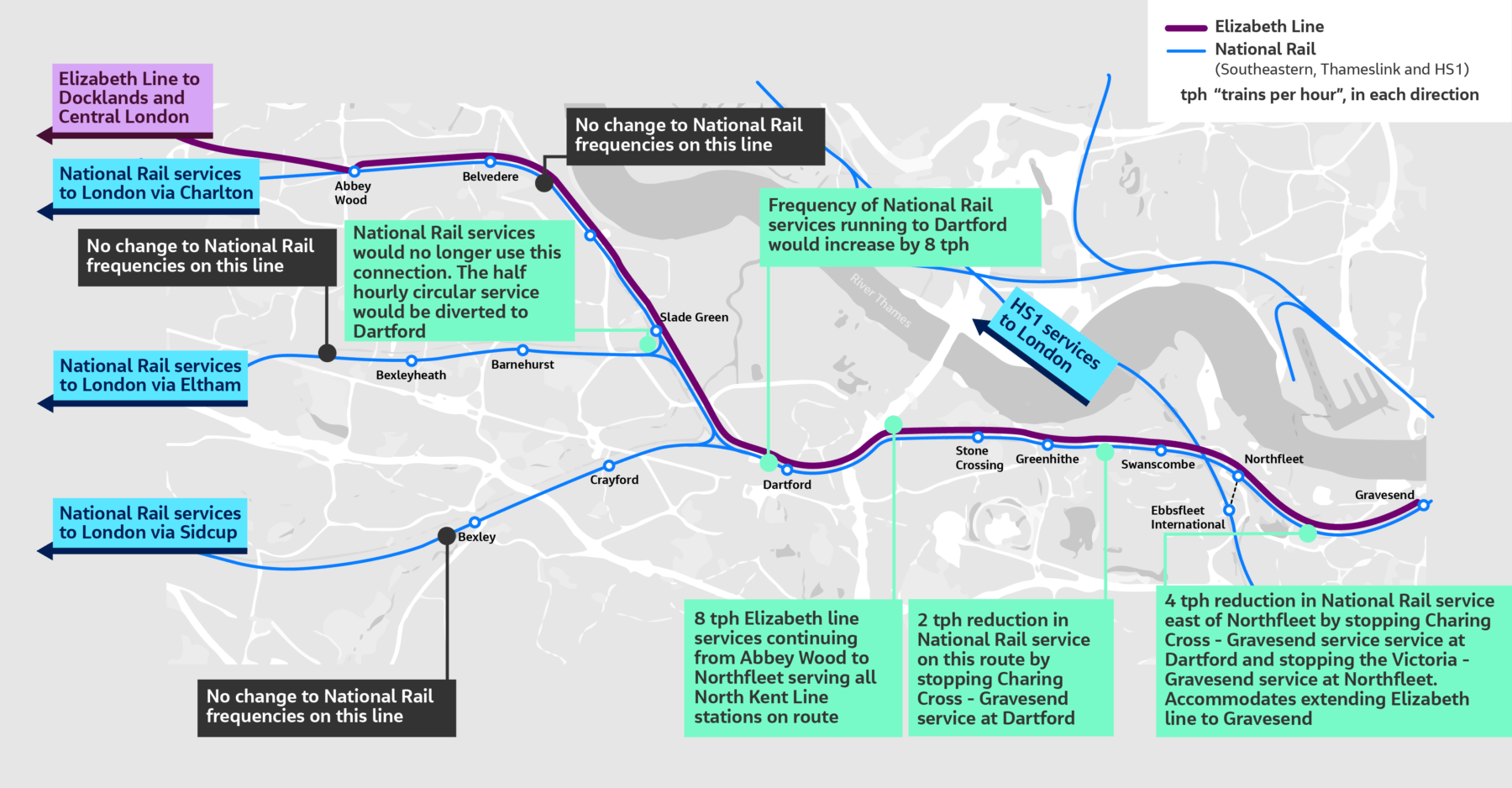
Note, that there doesn’t appear to be too much new infrastructure, except for a proper connection between Northfleet and Ebbsfleet stations. References on the Internet, say that the similar-sized Luton DART connection at Luton Airport, cost around £225 million, but we now know it was well upwards of that.
The TfSE proposal says that trains would terminate as follows.
- Abbey Wood – 4 tph
- Northfleet – 4 tph
- Gravesend – 4 tph
As space is limited at Gravesend and there is money for extending a railway service to a new Hoo station, I feel that proposing a two tph service to Hoo station would be a prudent action to take.
This would leave a handy two tph to take the loop back to Central London.
Could A Large Parkway Station Be Built Between Romford and Tilbury Riverside Stations?
Ebbsfleet International station, which is to the South-East of London, has 5,000 parking spaces and is the only large Park-and-Ride site around the capital.
Could another large Park-and-Ride site be opened on the Elizabeth Line North of the Thames?
One place could be at Chafford Hundred station and the nearby Lakeside Shopping Centre.
This Google Map shows the area.
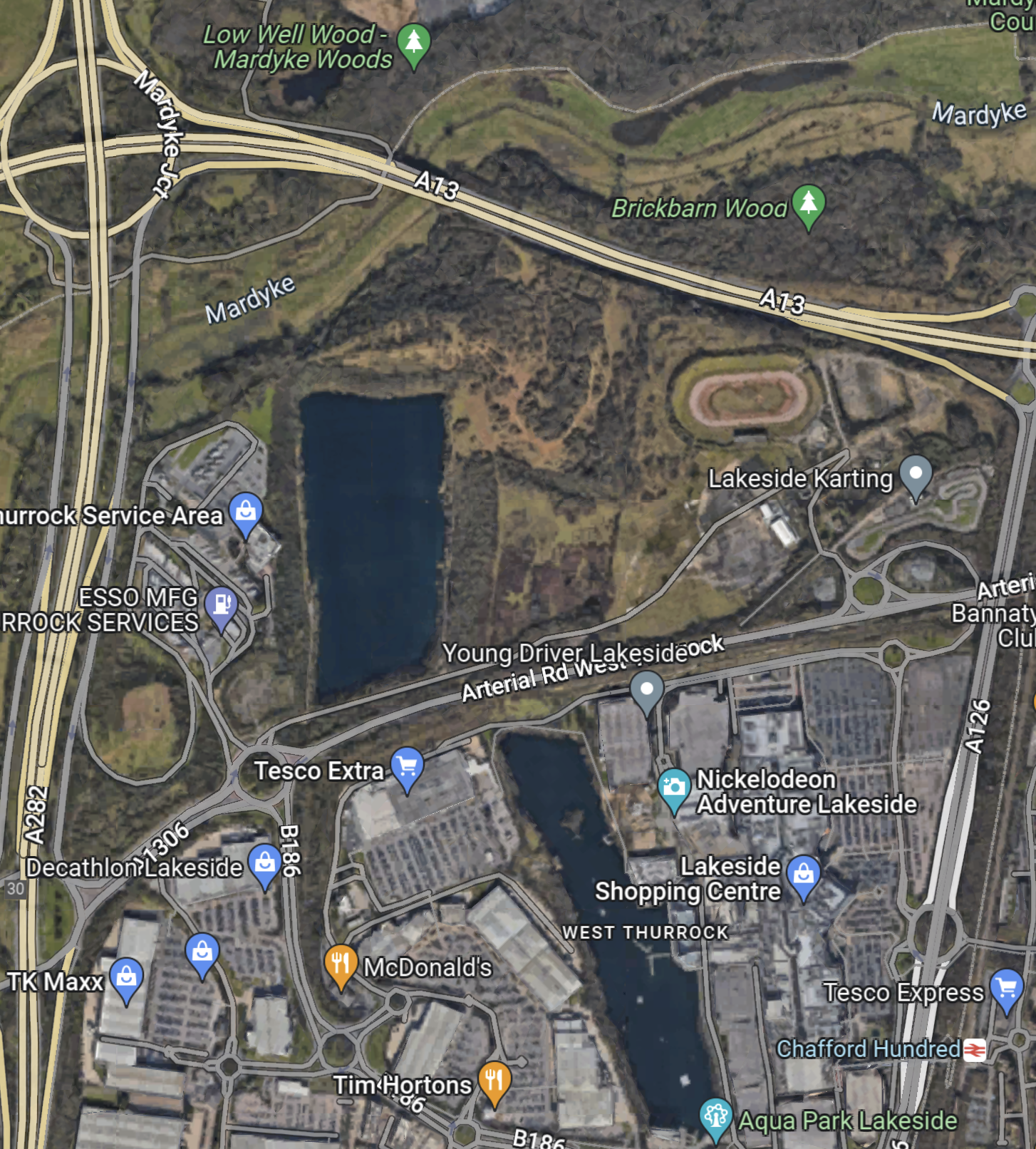
Note.
- The M25 runs North-South up the Western side of the map.
- Chafford Hundred station is in the South-East corner of the map.
- The shopping centre is next to the station.
Last time I went, Lakeside was looking tired.
Timings To And From Whitechapel
These are estimated timings to and from Whitechapel.
- Romford – 26 mins – 81 mins
- Emerson Park – 31 mins – 76 mins
- Upminster – 35 mins – 72 mins
- Ockendon – 41 mins – 66 mins
- Chafford Hundred – 45 mins – 62 mins
- Grays – 49 mins – 58 mins
- Tilbury Town – 52 mins – 55 mins
- Tilbury Riverside – 58 mins – 49 mins
- Gravesend – 62 mins – 45 mins
- Northfleet – 65 mins – 42 mins
- Swanscombe – 68 mins – 39 mins
- Greenhithe for Bluewater – 71 mins – 36 mins
- Stone Crossing – 73 mins – 34 mins
- Dartford – 81 mins – 26 mins
- Slade Green – 86 mins – 21 mins
- Erith – 88 mins – 19 mins
- Belvedere – 89 mins – 18 mins
- Abbey Wood – 92 mins – 15 mins
Note.
- The times between Tilbury Town and Gravesend are my best estimates.
- All other times are taken from current services.
- The first time is the time to Whitechapel via Romford.
- The second time is the time to Whitechapel via Abbey Wood.
It does appear that the best times from all stations are under an hour.
The Mayor Rubs It In!
I took these pictures whilst waiting to get home this morning from Moorgate, whilst waiting for a 141 bus.

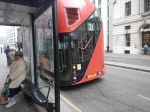
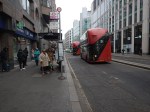
It’s one thing to reroute the buses, but quite another to send them up and down the old route, with plenty of space for passengers. Although, I don’t think this will help his reelection chances next year.
When the 141 bus did arrive, it was about ninety percent full.
I predicted in a letter to my MP. that this overcrowding would happen because the opening of the Elizabeth Line and the Bank Station Upgrade.
I also said similar things in Does London Need High Capacity Bus Routes To Extend Crossrail?, which I wrote in February 2022, before the Elizabeth Line opened in May.
But I didn’t get it all right, as it appeared the biggest increase in passenger numbers happened after the new escalators between the Docklands Light Railway and the Northern Line opened at Bank station. That puzzled me and I can only assume that there is a lot of traffic between the catchment area of the DLR and North East London.
Predicting the number of passengers, who will use a new railway, road or bus service is a difficult science, which very often results in a wrong answer.
In the Mysterious Case Of Rerouting The 21 Bus, it would have been better to have completed all the works at Bank, Moorgate and Old Street stations, before trying to solve the best way to deploy the buses.
- Bank and Moorgate stations are almost completed.
- The completion of Old Street station and the associated road works are still several months away, as I wrote in Is Old Street Roundabout A ‘Too Many Cooks’ Project?
In Does London Need High Capacity Bus Routes To Extend Crossrail?, I said this about the buses needed.
I suspect any route seen as an extension of Crossrail needs to have the following characteristics.
-
- High frequency of perhaps a bus every ten minutes.
- Interior finish on a par with the Class 345 trains.
- Wi-fi and phone charging.
I would also hope the buses were carbon-free. Given that some of these routes could be quite long, I would suspect hydrogen with its longer range could be better.
Get the design of these buses correct and they could attract a large number of passengers from their cars to public transport.
- Ten year old buses, as on the 141 bus are unacceptable.
- Before the 21 bus was withdrawn, you noticed that some passengers wait an extra minute to get a 21 bus with its greater space and comfort.
- Because of the better design of the stairs on modern buses and New Routemasters, I will go upstairs on these buses. But I don’t chance it on an older bus.
- Wi-fi and phone charging would make up for the fact that the Class 345 trains don’t have it.
From experience of the 141 bus in recent days, a frequency of a bus every five minutes is probably needed now.
Elizabeth Line: More Than 100 Million Journeys On Elizabeth Line, Says YouGov
The title of this post, is the same as that of this article on the BBC.
These three paragraphs introduce the article.
More than 100 million journeys have been made on London Underground’s new Elizabeth Line since it opened last May, according to a survey.
The YouGov poll suggested 45% of the capital’s residents had also used the line from Reading, Berkshire, to Abbey Wood and Shenfield in Essex.
Transport for London (TfL) said on 1 February it had completed about 600,000 daily journeys.
That is all well and good, but to me, this is the most significant paragraph.
TfL said the railway was “on track to break even” based on operating costs by the end of the 2023/24 financial year.
So it looks like that the planners got the modelling of the operation of the railway correct.
From my experience of project management, I believe that the Elizabeth Line project could have been considered as five main projects.
- The boring of the Central Tunnel
- The updating of the existing branches to Abbey Wood, Heathrow, Reading and Shenfield
- The building of the Class 345 trains
- The signalling
- The fitting out of the stations in the Central Tunnel
Delivery though was a bit patchy!
These are my thoughts on each sub-project.
The Boring Of The Central Tunnel
I was told, that early on, it was realised by the contractors that they didn’t have enough workers, who were certified to work underground.
So the Tunneling and Underground Construction Academy or TUCA in Ilford, was built to train more workers.
This helped the Central Tunnel to be completed on time.
Since then, two more tunnels; the Thames Tideway and the London Power Tunnel have been successfully completed on time and on budget, thus vindicating the building of TUCA.
The Updating Of The Existing Branches To Abbey Wood, Heathrow, Reading and Shenfield
There were a few hiccups, but generally the branches were updated and were operating into Paddington and Shenfield before the line opened.
The Building Of The Class 345 Trains
This wasn’t perfect and Bombardier’s financial state didn’t help, but the trains had good tests running out of Liverpool Street and Paddington.
The Signalling
A lot of commentators have said the signalling was too complicated. But eventually, it all seems to be working.
Was enough testing done away from the Elizabeth Line?
My feeling is that a new UK test track should have been built in the early 2010s, so that some testing could have been done professionally away from London.
The Fitting Out Of The Stations In The Central Tunnel
This was certainly a cause of late handover of stations like Bond Street, Farringdon, Whitechapel and others.
I heard tales, where other projects in London, were offering more money, so consequently workers were moving with the money, thus delaying the completion of stations.
I certainly heard a tale, where all the electricians on one station project moved en masse to complete the new Tottenham Hotspur stadium.
Some of the projects were office projects, paid for by sovereign wealth funds with bottomless projects, so they could make sure their project finished on time.
There were also the problems caused by Brexit, the pandemic and major projects running late in Germany and Europe.
It is my view that Elizabeth Line should have been given more priority, by delaying commercial projects, so that the pool of available labour wasn’t exhausted.
Some of the forest of projects around Elizabeth Line stations, should have been given planning permission, that meant they couldn’t start until Elizabeth Line was finished.
In the 1960s, there was certainly a similar labour problem in Aberdeen. I was told, that the oil majors, who nearly all used the project management system; Artemis, that I had written, talked to each other to make sure the situation didn’t get any worse.
I wonder, if someone was watching the labour shortage problems in City Hall?
Conclusion
I believe that if Elizabeth Line had been given the priority it should have been, that it would have been opened earlier and just as it is now, it would be showing a sensible cash flow.
Now it is a question of catching up financially.
Very Busy Lizzie
Yesterday, I took the Elizabeth Line, back from Reading to Moorgate.
- When, I got on at Reading, there were perhaps fifty empty seats and I was able to have three seats to myself.
- But by Slough, It was standing room only!
- It cleared a bit at Paddington, but by Moorgate there were only a few seats left.
Currently, there are two trains per hour (tph) between Abbey Wood and Reading stations.
As other passengers said it’s always busy, I suspect that Transport for London need to tweak the signalling, so that four tph run to Reading.
This section called Planned Service in the Wikipedia entry for the Elizabeth Line says this.
In May 2023, it is planned to allow trains to run from both eastern branches to west of Paddington. This will allow both more flexible, and higher frequency, services: 24 tph peak, 20 tph off-peak, and direct services between Shenfield and Heathrow. In the longer term, when Old Oak Common opens, all trains will serve Old Oak Common, with those not serving the Reading or Heathrow branches reversing there.
The service changes for May 2023 were confirmed in February 2023. The peak timetable will increase to 24 trains per hour. Off-peak service level will remain at 16 trains per hour, with two Shenfield–Paddington trains extended to Heathrow Airport Terminal 5 and two Abbey Wood–Terminal 5 trains switching to Terminal 4.
This will give an Off Peak schedule as follows.
- Reading and Abbey Wood – 2 tph
- Maidenhead and Abbey Wood – 2 tph
- Heathrow Terminal 4 and Abbey Wood – 4 tph
- Heathrow Terminal 5 and Abbey Wood – 0 tph
- Heathrow Terminal 5 and Shenfield – 2 tph
- Paddington and Shenfield – 6 tph
I don’t believe it is good enough.
- There is no direct Heathrow Terminal 5 and Abbey Wood service.
- Reading needs four tph to Central London.
- See Elizabeth Line: Commuters Say Service ‘Not What Was Promised’
- See So Many Cases On A Train!
I suspect passenger congestion and reaction will force a rethink by the Mayor and Transport for London.
Extending The Elizabeth Line – Connecting West Anglia Main Line Services To The Central Tunnel
If say it was ever needed to run a train between Cambridge or Stansted stations and the Central Tunnel of the Elizabeth Line, three things must be possible.
Trains Would Have To Be Compatible With The Central Tunnel Of The Elizabeth Line
As any train would have to be compatible with the platform-edge doors in the central tunnel of the Elizabeth Line, the trains would have to be dimensionally identical to the current Class 345 trains.
- Nine cars
- Possibility of lengthening to ten cars.
- 204.73 metres long.
- 6 sets of doors per carriage
- Ability to run under full digital signalling.
I covered this in detail in Extending The Elizabeth Line – High Speed Trains On The Elizabeth Line.
Trains Would Need A 100 mph Capability To Travel On The Fast Lines Of The West Anglia Main Line
They would be designed for a higher speed of at least 100 mph, to enable running on the fast lines.
The faster running would ease scheduling of the trains.
Effectively, the train would be a Class 345 train with more features and considerably more grunt.
Trains Must Be Able To Connect Between The West Anglia Main Line And The Central Tunnel Of The Elizabeth Line At Stratford
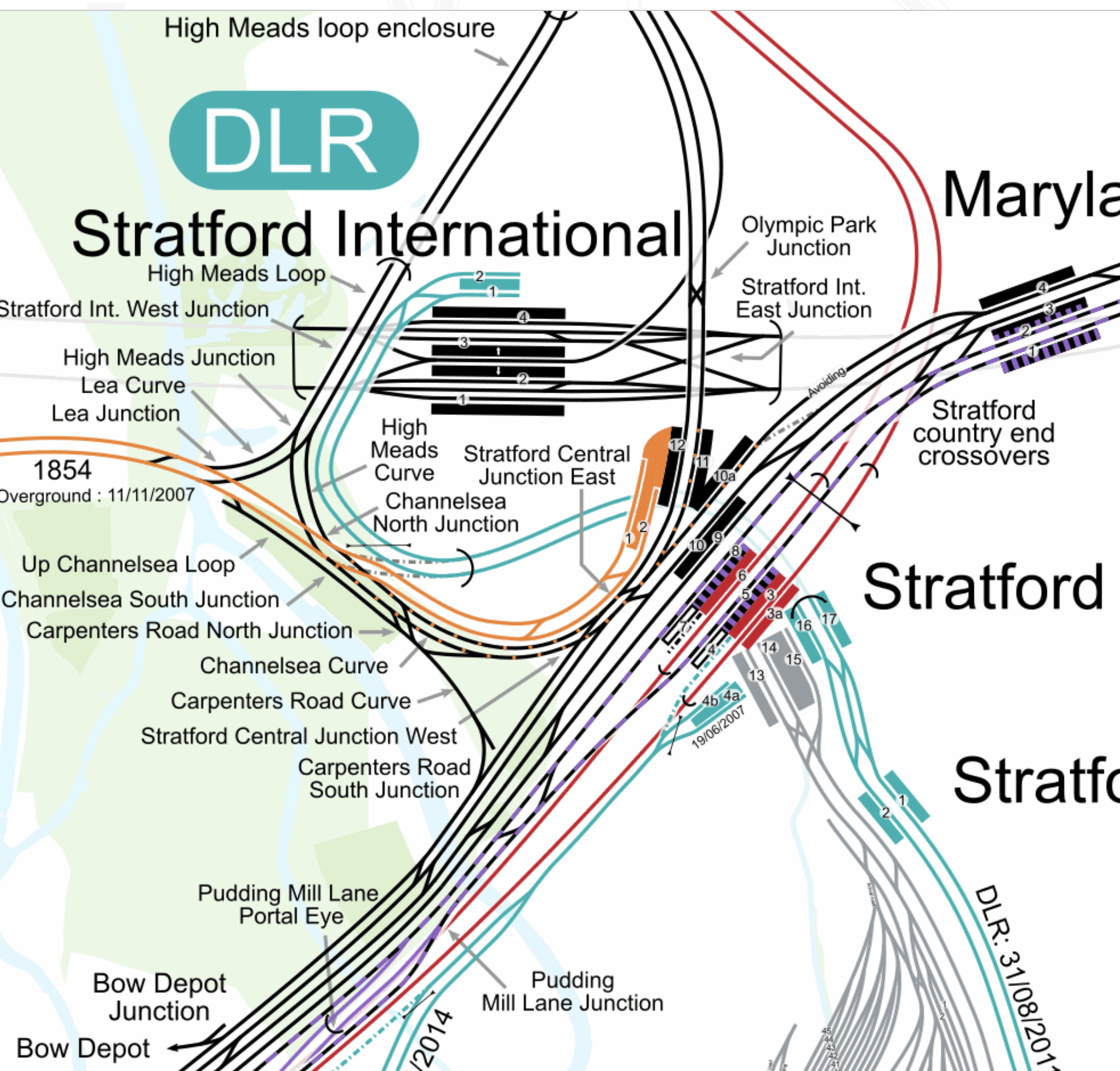
This map from cartometro.com shows the track layout at Stratford.
Note.
- The Elizabeth Line is shown in black and purple.
- The Elizabeth Line enters and leaves the Central Tunnel at the Pudding Mill Lane Portal Eye.
- The West Anglia Main Line to and from Stansted and Cambridge goes through Platforms 11 and 12 at Stratford station, before crossing over Stratford International station and going through Olympic Park Junction.
I am fairly sure that the track layout at Stratford does not allow trains to go both ways between West Anglia Main Line and the Elizabeth Line Central Tunnel.
But I suspect with the addition of a couple of extra crossovers, that this could be arranged.
Thoughts On Extending The Northern Line To Clapham Junction
As I wrote in Northern Line Could Be Extended To Clapham Junction In Regeneration Plans, the extension of the newly-built extension to Battersea Power Station station could be further extended to Clapham Junction station.
Railways Between Battersea And Clapham
This map from OpenRailwayMap shows the tracks that run between the two stations.

Note.
- Battersea Power Station station is in the North-East corner of the map.
- The orange and yellow lines going North from that corner go to Victoria station.
- The orange and yellow lines going North-East from that corner go to Waterloo station.
- The yellow line going West is the West London Line to Shepherds Bush and Willesden Junction stations.
- Clapham Junction station is in the South-West corner of the map.
I estimate that the distance between Battersea Power Station and Clapham Junction stations is about three kilometres.
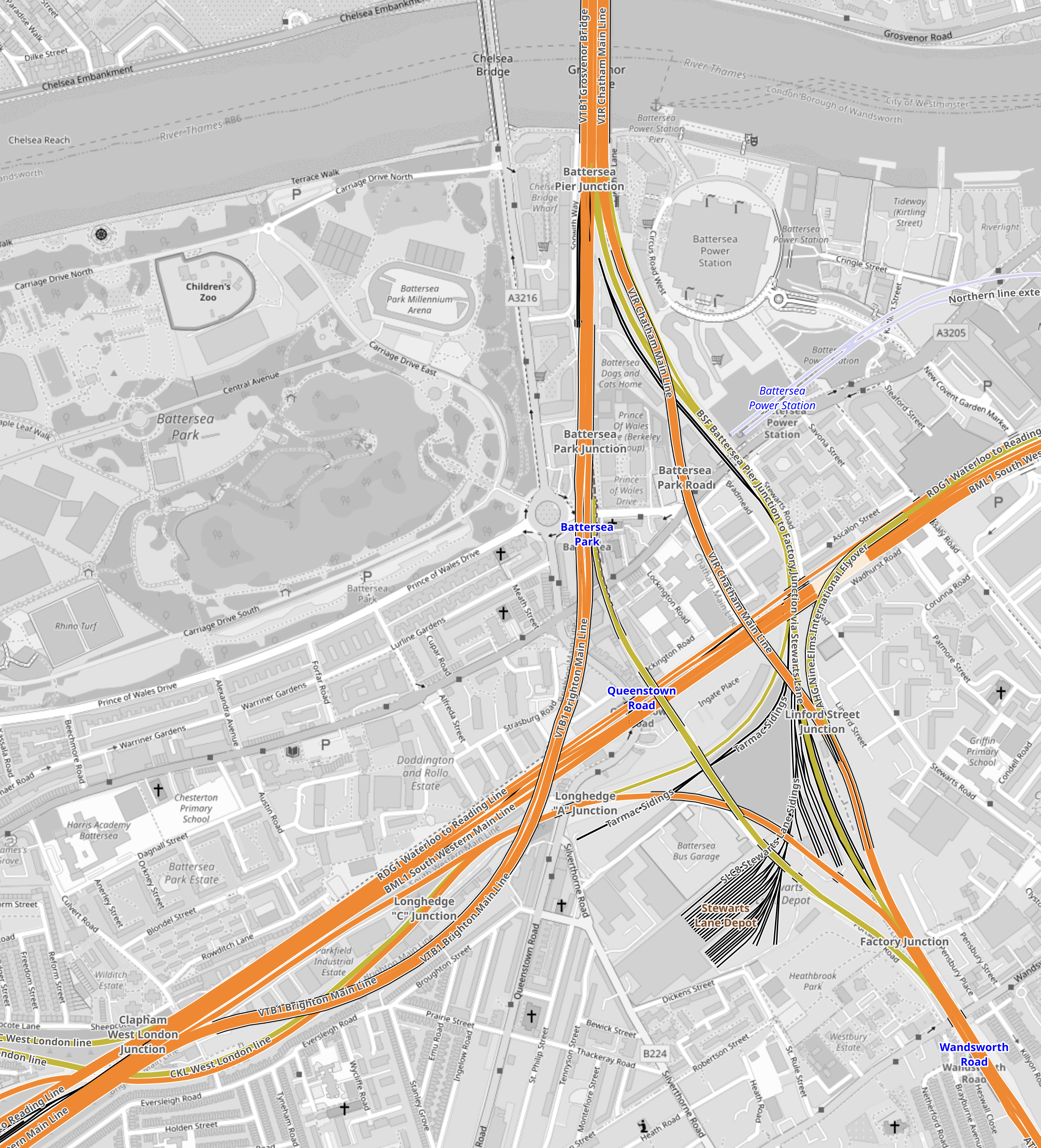
This map from OpenRailwayMap shows an enlargement of the tracks around Battersea.
Note.
- The tracks going North over the River to Victoria station.
- The tracks going East to Waterloo station.
- The tracks going South West to Clapham Junction station.
- The tracks from Victoria pass over and then join the tracks from Waterloo to continue to Clapham Junction station.
Battersea Power Station station can be seen to the North-East of the junction.
This map from OpenRailwayMap shows an enlargement of the tracks around Battersea Power Station station.
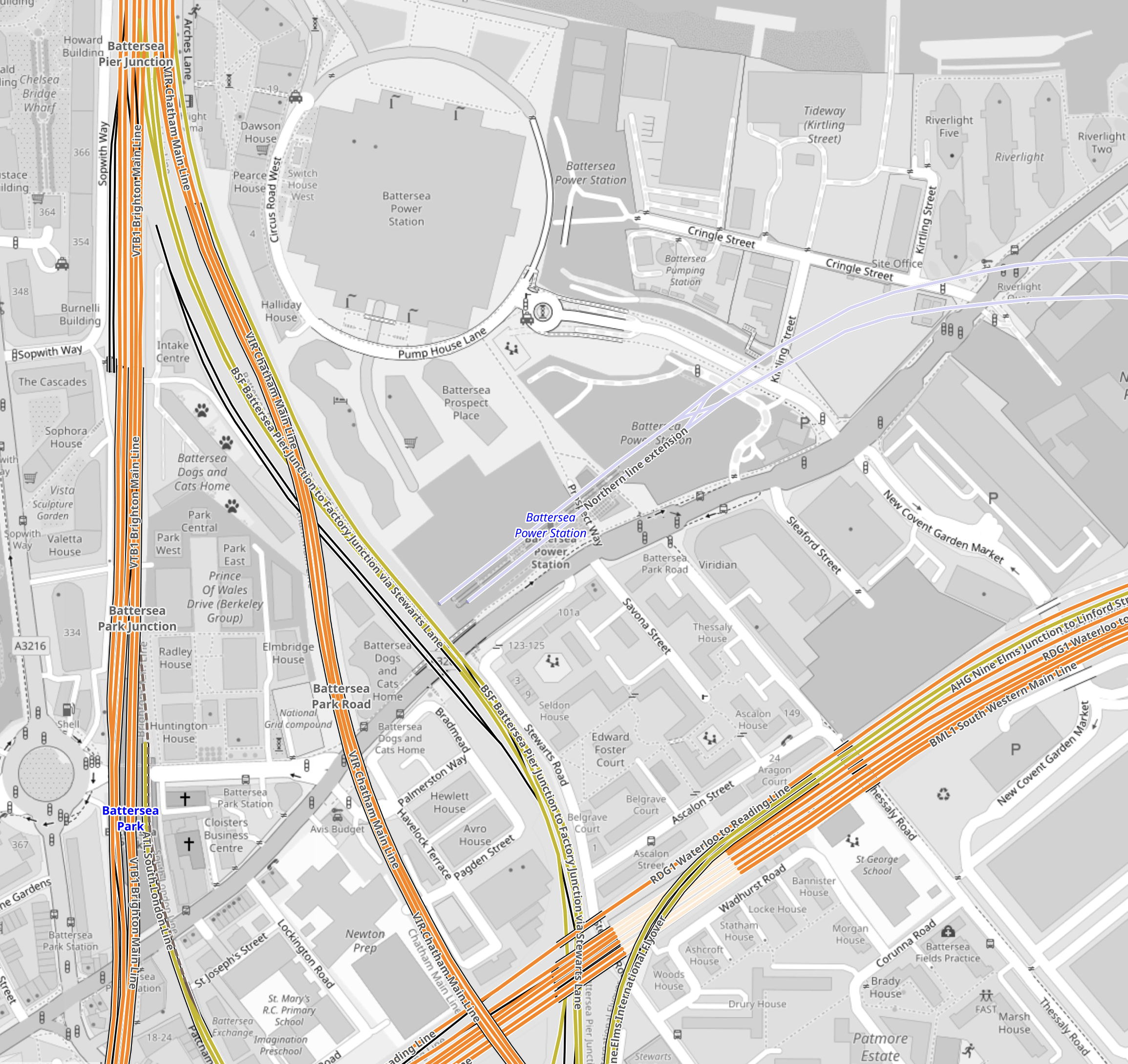
Note how the tracks go through Battersea Power Station station and terminate just before the lines into Victoria station.
It should also be noted that the platforms at Battersea Power Station station are reached using two sets of escalators, so they could be over forty metres below the surface. This would surely make the construction of tower blocks with deep foundations easier over the Northern Line.
But the depth would also enable an extended Northern Line to be below any existing or future construction.
This map from OpenRailwayMap shows the approaches to Clapham Junction station.
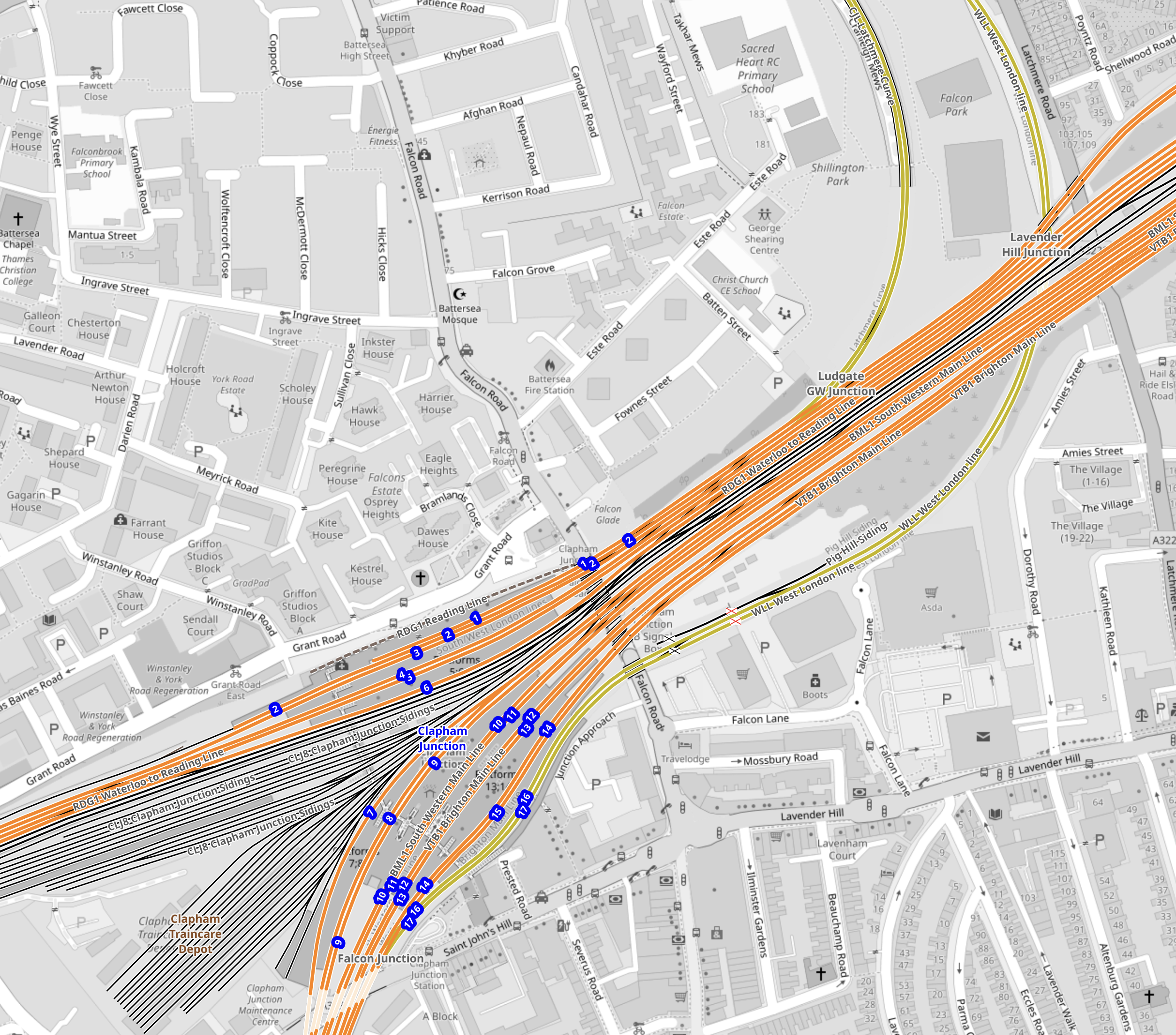
There are certainly a lot of tracks through Clapham Junction station.
Reasons For The Extension Of The Northern Line To Clapham Junction
These reasons come to mind.
To Enable Development In The Area
This is always a good reason.
In Network Rail To Outline Business Case For Clapham Junction Redevelopment, I said this.
The Rail Technology Magazine article talks of decking over the whole station and putting two million square feet of development on top. But it also cautions, it would be very expensive.
With that amount of development, there would be a need for as many transport links as possible.
To Improve Access To The Elizabeth Line For Passengers On Trains To And From Victoria
Victoria station does not have an Underground Line, that connects to easily the Elizabeth Line.
The best route to use is described in The Lizzie Line And Circle/District Line Interchange At Paddington – 1st July 2022, where you use the Circle to Paddington.
- To go to the West on the Elizabeth Line, take the Circle/District Line to Paddington.
- To go to the East on the Elizabeth Line, take the District Line to Whitechapel.
- To go to Liverpool Street take the Circle Line all the way.
Getting to the stations between Paddington and Liverpool Street means a change at either of those stations.
At Waterloo, you can use the Northern Line, which has a direct connection to Tottenham Court Road on the Elizabeth Line.
Connecting to the Northern Line at Clapham Junction will give Victoria-bound passengers, the advantages of those going to Waterloo.
An Alternative Way Of Connecting Victoria To The Elizabeth Line
The lack of an easy connection between the Victoria and the Elizabeth Line is a pain and I believe that it was a major omission in the design of the Elizabeth Line.
- Dear Old Vicky has a frequency of upwards of thirty trains per hour (tph)
- With some improvements at stations like Oxford Circus, Highbury & Islington and Walthamstow Central, the line could handle some more passengers.
- More step-free access would also help increase capacity.
- Engineers are a competitive bunch and I could see the day, when Vicky is running at 40 tph.
If Vicky was running at forty full tph, it would be moving 45120 passengers per hour.
This would mean that to match the passenger capacity of the older line, the Elizabeth Line would have to be running at a frequency of thirty tph.
As passengers at the ends of the line have difficulty getting to places like Paddington and Heathrow, a connection between the two Queens would really help.
Vicky was universe-class in the 1960s and now she needs updating to the 21st Century.
This map from cartometro shows the Lines through Bond Street and Oxford Circus stations.
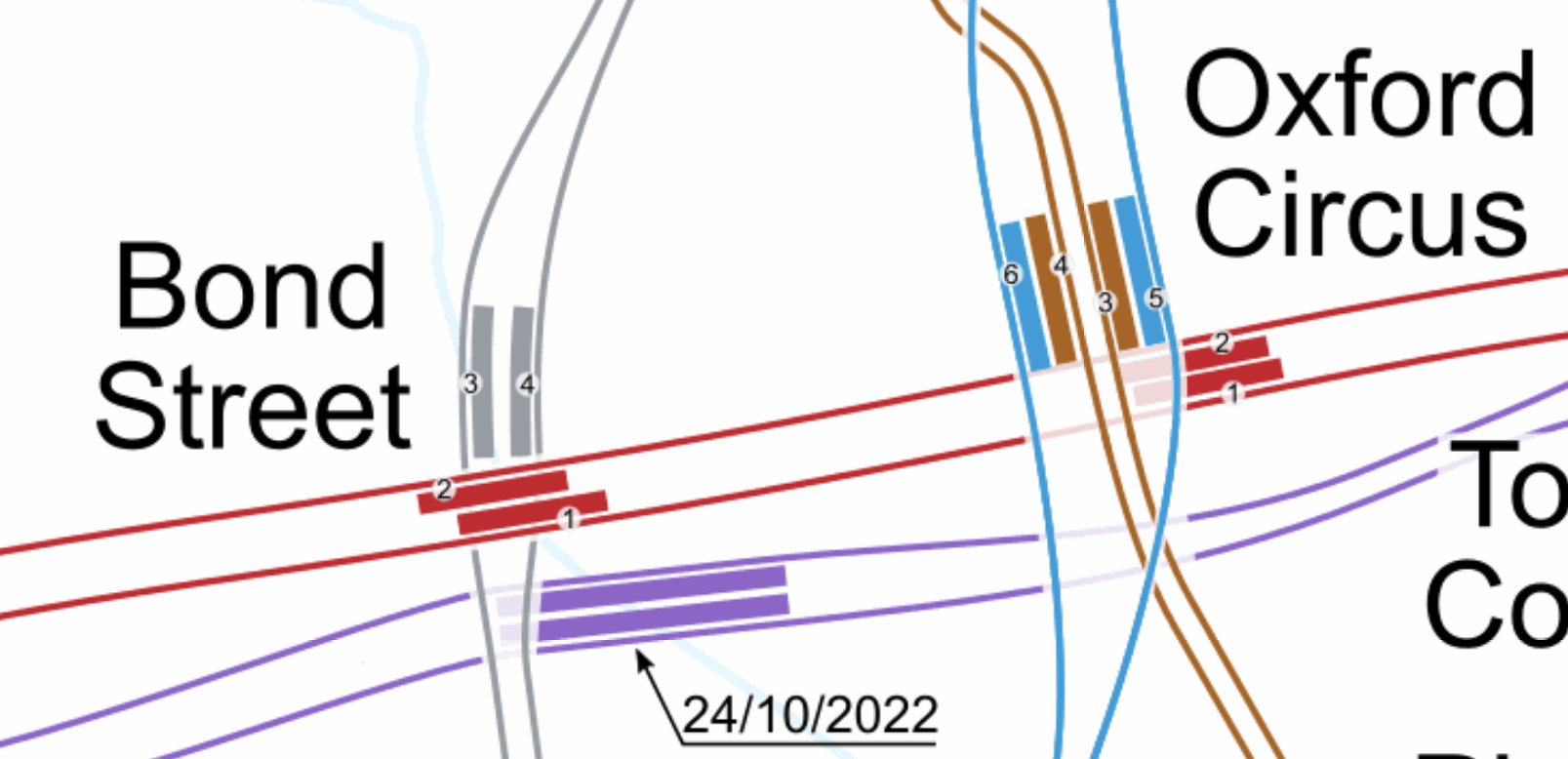
Note.
- The Bakerloo Line is shown in brown.
- The Central Line is shown in red.
- The Elizabeth Line is shown in purple.
- The Victoria Line is shown in light blue.
- The Elizabeth Line is the deepest line.
In addition, consider.
The Eastern exit of the Elizabeth Line at Bond Street station has three escalators and lifts. It also opens onto Hanover Square, so it won’t suffer from overcrowding problems outside.
- Hanover Square is just a garden, with no car park underneath, so pedestrian tunnels could pass under it
- I also suspect there are no existing or planned buildings between the two stations with deep foundations that would block a pedestrian tunnel.
- With the capability and ingenuity of three-D design software, I can see wide tunnels being created that would link Oxford Circus and the two Bond Street stations.
- The new wide tunnels at Bank station have opened up the station’s capacity and all the tunnels were dug traditionally.
- If it was felt to be needed, moving walkways could be added, just as they have been at Bank station.
I am absolutely sure, that by using the ideas and methods, that have worked so well in the upgrade of Bank station, that Oxford Circus and Bond Street stations could be turned into a London Superhub Station, that connects all the Underground lines together and has entrances all over the area.
The benefits of such a station would be.
- It would provide a high-capacity link between London’s two highest-capacity Underground Lines; Elizabeth and Victoria.
- It would provide a high-capacity link between the Elizabeth Line and Euston, St. Pancras and King’s Cross.
- It would provide a high-capacity link between the Elizabeth Line and Victoria.
- It would provide a high-capacity link between the Elizabeth Line and High Speed Two.
- Areas like Brixton, Haringey and Walthamstow would gain a much needed link to the Elizabeth Line for Heathrow and Paddington.
Wikipedia says this about the building of the Bank Station Upgrade.
As part of the development of the scheme, TfL worked with potential bidders to improve the design of the station from TfL’s original design. The design proposed in the winning bid by Dragados was 9.7% cheaper than the original design (saving TfL £60m), took 10 months less time to construct than the original design (the proposed closure of the Northern line was also 5 weeks shorter), and the layout of the station was more efficient. This substantially improved the benefit–cost ratio by 45% to 3.5:1.
The Mayor should be knocking on the door of Dragados and asking them for a price for a design and build for a West End Superhub station.
A Possible Route For The Extension Of The Northern Line To Clapham Junction
I suspect that the simplest route for the extension of the Northern Line would be to bore or dig a twin-track railway underneath the numerous other railways in the area.
It could terminate in two underground platforms at Clapham Junction station.
This is the first map of this post and it shows the tracks that run between the two stations.
Note.
- Battersea Power Station station is in the North-East corner of the map.
- Clapham Junction station is in the South-West corner of the map.
The Western of the pair of orange Lines going off the map in the North-East corner of the map is the Brighton Main Line.
It passes through Battersea Park station.
It passes over the South Western Main Line out of Waterloo.
It then loops to the West and joins the lines to Clapham Junction on the Southern side.
It serves four platforms at Clapham Junction; 12 and 14 are up platforms and 13 and 15 are down platforms.
This Google Map shows an overview of Clapham Junction station.
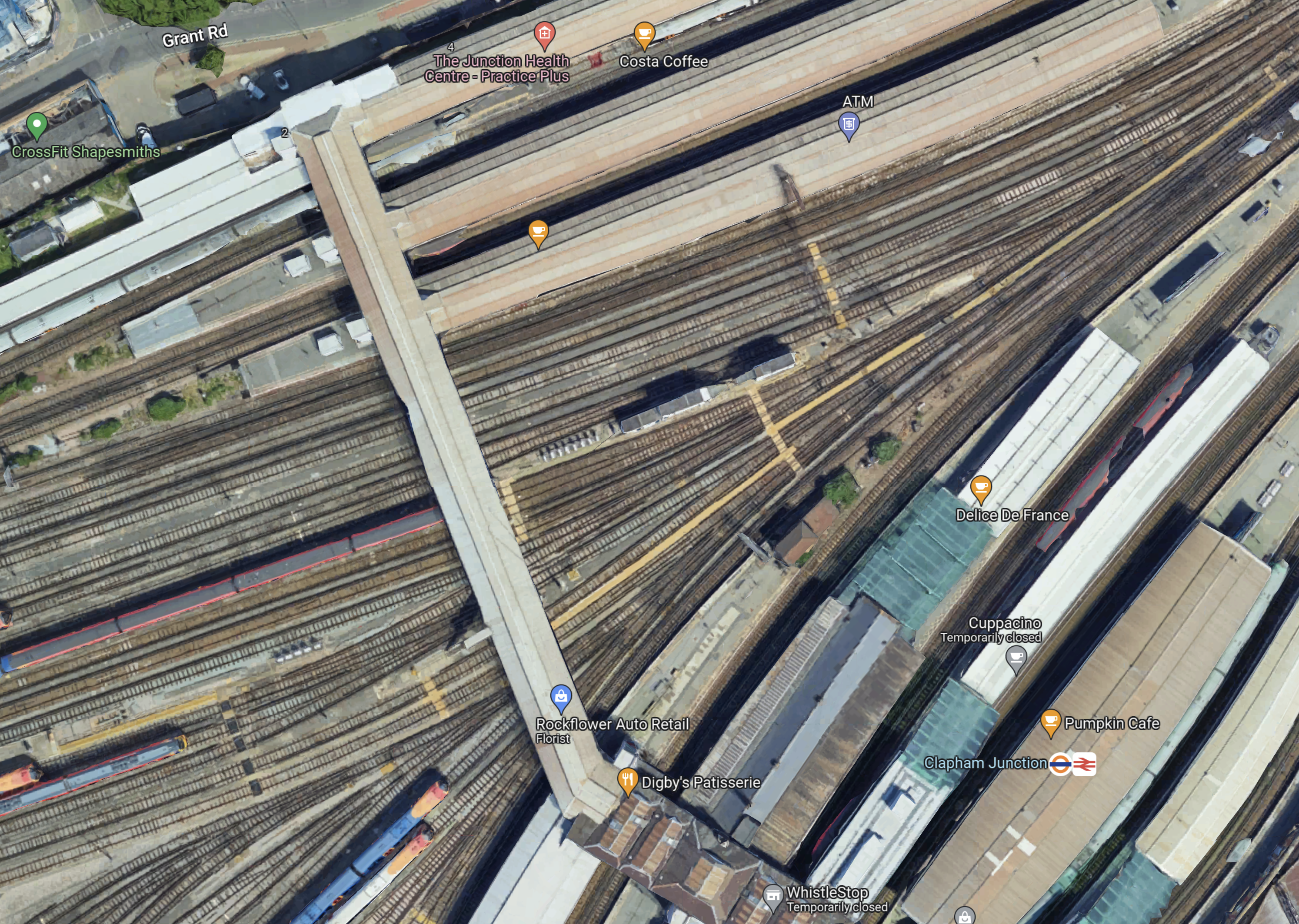
Note.
- Platforms 1 and 2 at the top of the map, handle London Overground services.
- Platforms 3 to 11 handle South Western Train services.
- Platforms 12 to 17 handle Southern services.
- Platforms 9 and 10 have a Delice de France cafe.
- Platforms 11 and 12 have a Cuppacino cafe.
- Platforms 13 and 14 have the logos.
- All platforms have full step-free access with lifts to the wide footbridge that connects all platforms.
The platforms don’t seem to be very wide and putting stairs and escalators down to underground platforms could be a difficult proposition.
This map from OpenRailwayMap shows shows the platforms at Clapham Junction station and the track layout to the West of the footbridge.
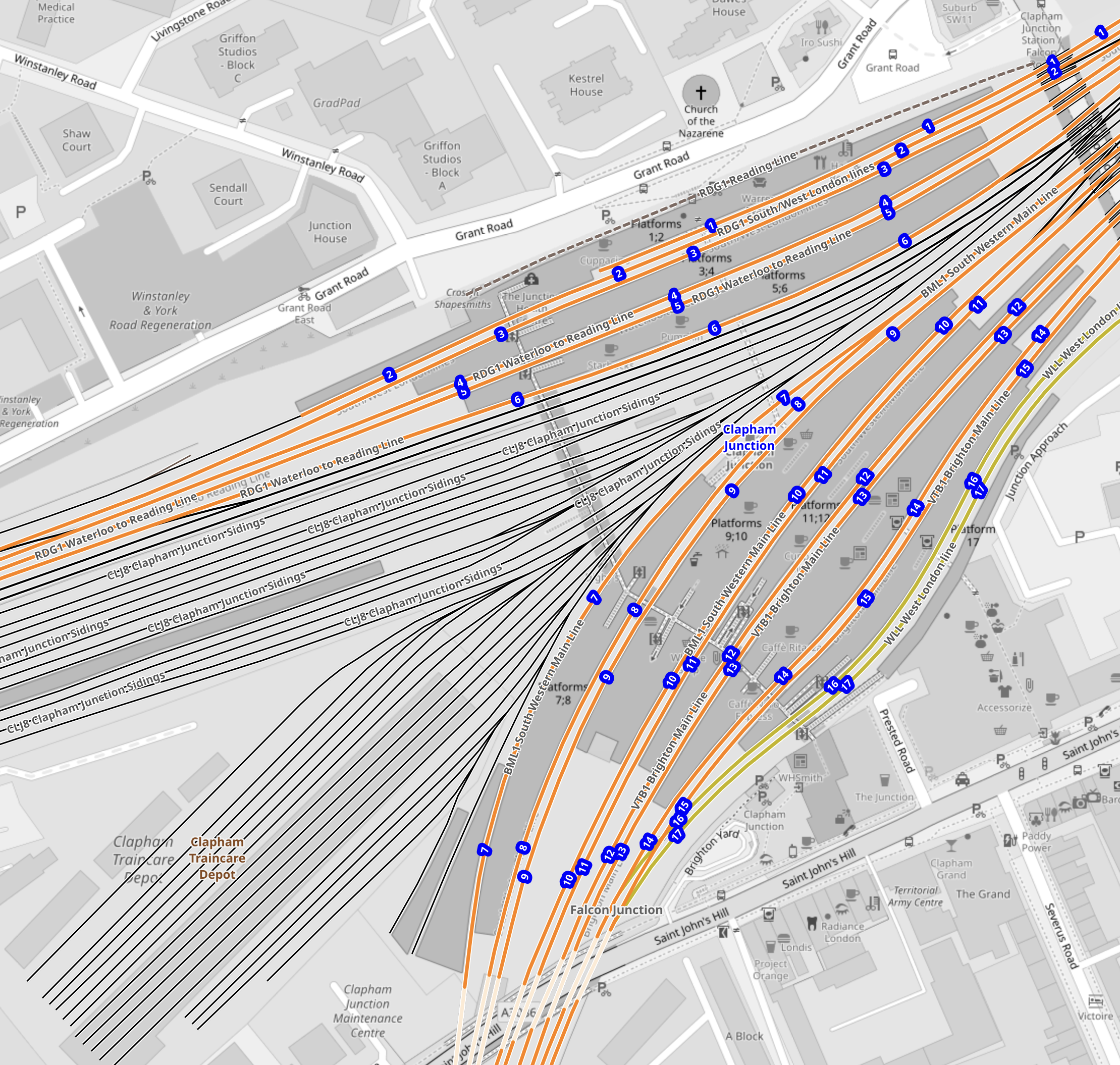
Note.
- The tracks through the platforms are shown in orange.
- The blue dots are platform numbers.
- The bridge connecting all the platforms is shown shaded in the middle of the map.
- To the West of the bridge are Clapham Junction Sidings and Clapham Traincare Depot.
These pictures were taken from the bridge.
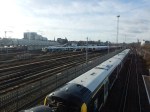
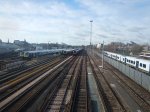
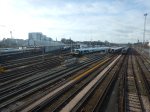
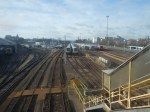
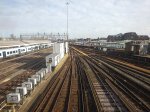
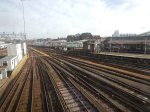
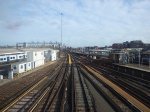
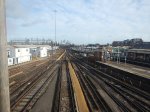
Note.
- The top row of pictures were taken looking West.
- The bottom row of pictures were taken looking East.
- Many of the tracks are electrified.
- There is a lot of space to park trains.
Will all the space be needed now, that a new depot has been built at Feltham.
Could Two New Surface Platforms Be Built For The Extension Of The Northern Line To Clapham Junction?
Consider.
- The step-free bridge across all the platforms at Clapham Junction station works well.
- It is connected to the streets around the station at both ends.
- Clapham Junction station will be redeveloped and surplus depot land could be used for housing.
- As the maps show, there is a large gap in the platforms between the South Western Railway and the Southern sides of the station.
- As Battersea Power Station station can turn services on the Northern Line with only two platforms, there would only need to be the same number of Northern Line platforms at Clapham Junction.
So could an extra pair of platforms be built under the bridge, with stairs and a lift similar to the existing platforms?
- The platform would have full step-free access.
- The platforms could be long enough for any future trains.
- There could be sidings for a few trains.
- The tunnels from Battersea Power Station would surface just outside the station.
- There would need to be a crossover or a turnback siding for operational reasons.
I also think, that once the depot and sidings at Clapham Junction have released the space, the new platforms and tracks could be installed without interrupting main line services through the station.
Would The Extension Of The Northern Line Be Electrified?
Consider.
- Merseyrail were not allowed to use third-rail electrification to Headbolt Lane station and had to use batteries.
- The Northern Line was extended to Battersea Power Station station using London’s four-rail electrified system.
- Clapham Junction station has third-rail electrification everywhere.
I think that the authorities would be very churlish not to allow electrification to Clapham Junction.
Conclusion
I believe it is possible to extend the Northern Line to two new surface platforms at Clapham Junction station.
But I also believe that using similar methods to those used in the Bank Station Upgrade, that a full interchange between the Elizabeth and Victoria Lines can be built at Oxford Circus and Bond Street.
.
Elizabeth Line Sees 100 million Journeys Since May 2022
The title of this post, is the same as that of this article on the BBC.
These two paragraphs outline the figures.
More than 100 million journeys have been made on the Elizabeth line in its first eight months.
Since opening in May 2022, about 600,000 trips have been made every day across the line, which links Reading and Heathrow to Shenfield and Abbey Wood, Transport for London (TfL) said.
Note.
-
- There have been complaints, which I wrote about in Elizabeth Line: Commuters Say Service ‘Not What Was Promised’.
- I also tend to avoid trains to and from Heathrow, as I wrote about in So Many Cases On A Train!
But how do you know a train has come from Heathrow? Only because it’s full of cases.
Extending The Elizabeth Line – Connection To Southeastern High Speed One Services
The Two Stratford Stations
In this post, Stratford station is the station handling Greater Anglia and London Overground, Underground and Docklands Light Railway services, with Stratford International station handles High Speed services.
The Elizabeth Line And The Great Western Railway Services
One of the most important stations on the Elizabeth Line is Paddington, where it connects to the London terminus of the Great Western Railway.
I would expect that quite a few passengers going to the West and Wales on the Great Western Railway, will be transported to Paddington by the Elizabeth Line.
The Elizabeth Line And Greater Anglia Services
Another of the important stations on the Elizabeth Line is Liverpool Street, where the station is the London terminus of the Greater Anglia.
I would expect that quite a few passengers going to East Anglia on the Greater Anglia, will be transported to Liverpool Street by the Elizabeth Line.
Southeastern High Speed One Services
Southeastern runs some High Speed services on High Speed One to provide Kent with an improved service to London.
Current services are
- London St Pancras International to Ramsgate via Faversham.
- London St Pancras International to Ramsgate via Dover Priory.
- London St Pancras International to Margate via Canterbury West.
Note
- All trains are one train per hour (tph).
- All trains stop at Stratford International and Ebbsfleet International.
- All trains are run by 140 mph Class 395 trains.
There has also been talk of running a fourth service to Hastings and Eastbourne via Stratford International, Ebbsfleet International and Ashford International.
St. Pancras Station
All of these trains terminate in three platforms; 11 to 13 at St. Pancras International station.
St. Pancras is not the ideal terminal for the Southeastern High Speed services.
- St. Pancras is not on the Elizabeth Line.
- St.Pancras doesn’t have good connections to Heathrow.
- All connections to the Underground are a long walk.
- Eurostar services are a longer walk.
- East Midland services are also a longer route, with stairs and escalators for good measure.
St. Pancras station was designed by a committee, as a museum to Victorian architecture, rather than as a working station.
Ebbsfleet International Station Must Be The Largest Parkway Station In The UK
It holds nearly five thousand cars and it is served by Southeastern High Speed Services.
Thanet Parkway Station Will Open This Year
Thanet Parkway station is under construction.
- It will have nearly three hundred parking spaces.
- It will be served by Southeastern High Speed Services.
- It should open in May 2023.
This station will need a good connection to London.
Could An Interchange Between The Elizabeth Line And Southeastern High Speed Services Be Provided At Stratford?
Such an alternative interchange would be popular with passengers.
- The Elizabeth Line from Stratford currently serves the West End, the Northern section of the City of London, East London, Liverpool Street, Paddington and the West End directly.
- The Elizabeth Line from Stratford currently serves Canary Wharf, Cannon Street, Charing Cross, Euston, Heathrow, King’s Cross. Reading, St. Pancras and Victoria with a change at Whitechapel.
- The Central Line, which shares platforms with the Elizabeth Line serves Bank and the West End directly.
- The Overground is easily accessed for travel across North London to Richmond.
- The Jubilee Line is easily accessed for travel to London Bridge, Waterloo and Westminster.
It would be connected to two large parkway stations and lots of parking all over Kent.
I believe that Stratford must be promoted as an alternative terminus for Southeastern High Speed Services.
Today, I walked both ways between two Stratford stations.
These pictures show the route I took between Stratford and Stratford International stations, through the Eastfield Shopping Centre.
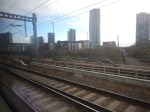
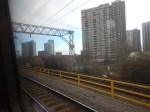
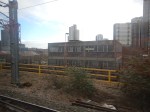
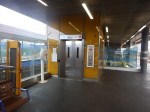
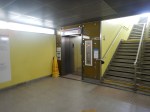
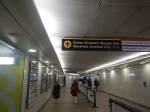
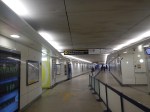

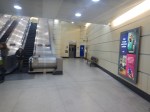


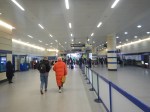
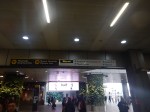








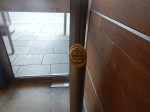
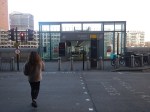
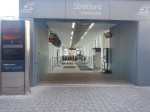
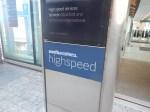

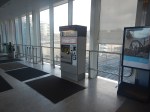
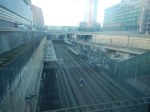
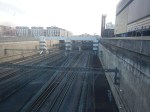
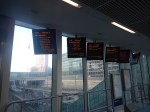
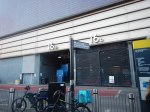
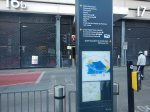
Note.
- I went through the Shopping Centre.
- I passed Marks & Spencer’s large food hall, excellent toilets and a Food Court.
- By the Food Court is an exit that leads to an entrance to Stratford International station.
- The walk took about 10 minutes.
- It was vaguely level.
- Lifts by-passed the escalators.
- One thing that makes the journey to London easier, is to travel in the Eastern end of the train, as the lifts and escalators at Stratford International station, are at that end.
It does need some better signage, but they were doing a bit of refurbishment, so that may already be underway.
It could be a very high quality interchange and it is already better than St. Pancras.
Coming back I took the longer route outside the Shopping Centre.


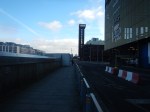

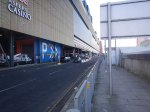
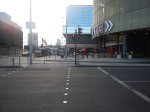
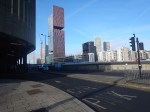

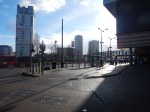
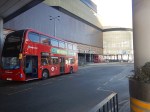


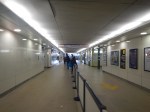
Note.
- I just turned left out of the entrance, walked along the road and turned right past the bus station.
- If the weather had been colder or wetter, I’d have gone back via the Shopping Centre.
- The walk took about 12 minutes.
I think normally, I’d go back through the Shopping Centre, as there’s a Marks and Spencer Food Hall on the route and it’s slightly quicker and often warmer.
Could Stratford Station Be A London Superhub Station?
When you consider the stations connected to Stratford in London, East Anglia and Kent, it has an excellent collection.
- Airports – Gatwick, Heathrow, Luton, Southend and Stansted
- Cities – Cambridge, Canterbury, Chelmsford, Colchester, Ipswich, Norwich and Southend-on-Sea
- London Main and Terminal Stations – Cannon Street, Charing Cross, Clapham Junction, Euston, Farringdon, King’s Cross, London Bridge, Liverpool Street, Marylebone, Moorgate, Paddington, Victoria and Waterloo
- Major Areas – Canary Wharf, City of London, Hampstead, Olympic Park and West End
- Ports – Dover, Felixstowe, Folkestone and Harwich
You can even get a train to Slough, with a change at Whitechapel.
I would think it already is a London Superhub Station.
Could The Giant Station At Bank, Liverpool Street, Monument And Moorgate Be Considered A Superhub?
In Is The City Of London Moving Towards One Giant Station?, I showed how the four stations were being drawn together and developed as one large station that served the heart of the City of London.
London is also developing other large interchange stations that could claim because of their connectivity could be classed as London superhub stations.
- Canary Wharf stations, which connect the Elizabeth and Jubilee Lines, and the Docklands Light Railway.
- Old Oak Common station, which could bring together the Central, Chiltern and Elizabeth Lines, the London Overground and High Speed Two.
- Stratford station, which connects the Central, Elizabeth and Jubilee Lines, the Docklands Light Railway, the London Overground, High Speed One and the Great Eastern Main Line.
- Whitechapel station, which connects the Circle, District, Elizabeth and Hammersmith & City Lines, and the London Overground.
But what are the characteristics of a superhub station?
A Lot Of Lines And Services
Obviously, it must have a lot of lines and services, so perhaps Clapham Junction station is the original superhub station.
All Lines Should Have Step-Free Access
This surely, goes without saying.
There Should Be Lots of Information
If the station is large it needs a lot of information and there’s probably the space to put it.
Helpful Staff
Should we have a fully-staffed kiosk at superhub stations, as there are at some main line stations?
Good Bus Connections
Bus connections at a superhub station must be comprehensive and probably connect to other superhubs.
There Should Be A Selection Of Shops For Travellers
I do my daily food and other shopping, as I travel around London. I’ll often use a station like Paddington with a good selection of shops.
Toilets
There are not enough public toilets in London.
Cash Machines
I know we’re using less cash, but a large station is a secure place to put a cash-machine.
Works Of Art
I also believe that railway stations are a secure place to put some of those large bronze sculptures and other works of art, that are currently locked away in the storerooms of galleries.
 The Anonymous Widower