Would A Lumo-Style Service Work Between King’s Cross And Norfolk?
This is a bit of a fantasy and you’ll never know the real reason why I have written it!
With the upgrade of the East Coast Main Line to full digital signalling, there will be a problem South of Hitchin with 140 mph Azumas and Hitachi Class 802 trains and similar from Grand Central , Hull Trains and Lumo hogging the fast lines to and from King’s Cross. I first wrote about it in Call For ETCS On King’s Lynn Route.
One solution would be to replace the current Class 387 trains with a 140 mph train , such as a Hitachi Class 802 variant. This would enable these fast King’s Lynn and Cambridge trains to join the 140 mph trains on a fast run to and from King’s Cross.
The Future Of Cambridge
Cambridge is one of the UK’s four world cities, with its heritage and lately its high position in any technology league table.
The Current Rail Service Between London And Cambridge
Currently, it has a good service into King’s Cross, Liverpool Street and St. Pancras.
- Great Northern – two tph to King’s Cross – A stopping train using Class 700 or Class 387 trains.
- Great Northern – one tph between Ely and King’s Cross – A fast train using Class 387 trains.
- Great Northern – one tph between King’s Lynn and King’s Cross – A fast train using Class 387 trains.
- Thameslink – two tph to Brighton – A semi-fast train using Class 700 trains.
- Greater Anglia – two tph to Liverpool Street – A semi-fast train using Class 720 or Class 379 trains.
Note.
- tph means trains per hour.
- The similar Class 387 and Class 379 trains are both late-model Bombardier Electrostars with sensible seats and a large number of tables. Both train types can or could be modified to run at 110 mph.
- The Class 700 trains are unsuitable for the route, as they have ironing-board seats and no tables. These are only 100 mph trains.
- The Queen’s bottom doesn’t like the Class 700 trains.
A large proportion of the passengers and commuters between to and from Cambridge work in high-tech or information-rich businesses and I believe if the trains were more geared to this market they would attract passengers away from the roads.
The Cambridge Employment Problem
Fast-growing Cambridge is taking over the region and it is always looking for towns and villages to develop as places for dormitories and to build premises for the hundreds of high-tech businesses.
This is one of the reasons why Greater Anglia acquired new Stadler Class 755 trains to run services from Cambridge to Bury St. Edmunds, Ipswich, Norwich, Peterborough and Stansted Airport.
If you’re going to lure Cambridge’s well-paid high-tech commuters out of their cars, you must give them an equivalent seat to their car. The Class 379, 387 and 755 trains do this.
Living In Norfolk And Suffolk And Working In Cambridge
This has always been the choice of many who work in Cambridge, but using rail into Cambridge didn’t really take-off seriously until modern three-car Class 170 trains replaced the single-car Class 153 trains.
Greater Anglia have followed the upward trend in passenger numbers, by running hourly four-car Class 755 trains from Cambridge to both Ipswich and Norwich.
Before the pandemic, it was starting to look like Norwich and Cambridge would soon need a second service, especially with the planned opening of the new Cambridge South station in 2025.
Addenbrooke’s Hospital And The Cambridge Biomedical Campus
Cambridge South station is being built to serve Addenbrooke’s Hospital and Cambridge Biomedical Campus, which intend to be create the foremost medical research cluster in the world.
Staycations And Holiday Homes In East Anglia
Life is changing because of the covids and more people are taking staycations or buying holiday homes.
And many are following the example of the Queen and going to Norfolk for their relaxation.
The Undoubted Need To Improve Rail Services Between London King’s Cross And Norfolk Via Cambridge
These factors convince me that there is a need for a new or repurposed rail service between London King’s Cross and Norfolk via Cambridge.
- The need to provide a high-class commuter service between London and Cambridge.
- The need to bring workers into Cambridge from Norfolk.
- The need to provide a fast high-class rail link to Cambridge South station with all its medical research.
- The need to provide a comprehensive working environment on the trains.
- The need to cater for all those people relaxing in Norfolk after a hard week in London.
It is my view, that a radical design of train is needed for this route.
- It would need to have a high-class interior.
- It would need at least a 125 mph capability, so that it can use the fast lines between Hitchin and King’s Cross.
- The train may need the ability to split and join.
- It would need an independent power capability for running on the Breckland Line between Ely and Norwich.
- Because of Cambridge and because East Anglia is easy country for cycling, it would need a sensible capacity for cycles.
I also believe that because of the need to decarbonise, the train should be zero-carbon.
These are my thoughts.
Operating Speed
Because of running on the fast lines between Hitchin and King’s Cross with the 140 mph trains from the North, I suspect that an operating speed of at least 125 mph is needed. But if the Hitachi trains of LNER, Hull Trains, Lumo and in the future possibly other operators like Grand Central, will be capable of 140 mph, this speed could be desirable.
Speed limits once the trains have left the East Coast Main Line at Hitchin North junction are as follows.
- Hitchin and Cambridge – 90 mph
- Cambridge and King’s Lynn – 90 mph
- Ely and Norwich – 75-90 mph
I can see Network Rail using their expertise to raise the speed limit on sections of these lines.
Flighting Of Trains On The East Coast Main Line
To increase capacity on the East Coast Main Line, I believe that at some point in the not too distant future that trains will be flighted. This will involve two or more trains leaving King’s Cross in a sequence and proceeding with all trains at a safe distance from each other.
I can envisage a flight like this from King’s Cross.
- An Edinburgh train with York as the first stop – Leaves at XX.00
- A Leeds train with Doncaster as the first stop – Leaves at XX.03
- A Lincoln train with Peterborough as the first stop – Leaves at XX.06
- A Cambridge train with Stevenage as the first stop – Leaves at XX.09
Note.
- The Edinburgh train would set the speed.
- Trains would maintain their time behind the lead train.
- Everything could be controlled by the digital signalling.
- Gaps between the trains would be sufficient for a safe stop.
- No train in the flight would make a station stop unless it was the last train in the flight.
- The last train in the flight would drop off and go to their destination.
As there are at least two tph to Edinburgh, Leeds and Cambridge, there would be two main flights per hour leaving King’s Cross, with the second flight perhaps incorporating a service to Hull.
Digital signalling and precise driving would enable the flights to be built in the opposite direction into King’s Cross.
The big advantage would be that instead of needing eight paths per hour on the East Coast Main Line, only two would be needed.
All trains would need to have similar performance, so this is another reason why the Cambridge trains need to be at least 125 mph trains.
Train Interiors
Lumo has broken new ground in train interiors.
- It is one class.
- Everybody gets a decent seat.
- Everybody gets good legroom.
- Everybody gets some form of table.
- There are decent-sized overhead racks for hand-baggage and coats.
- There is space for bicycles and heavy luggage appropriate to the route.
This can be built on to provide a good working and playing environment suited to the passengers who would use a fast King’s Cross and Norfolk service via Cambridge.
- Lots of tables for four, as in the high-class Electrostars.
- Better bicycle storage.
- Better alignment of seats with windows.
Hitachi could obviously produce a train to this specification.
But what about other manufacturers.
Stadler’s Class 755 trains are surely a possibility.
- A senior driver from Greater Anglia told me that the design speed for a Class 755 train is 200 kph or 125 mph.
- They have good seats.
- They have flat floors.
- They have large windows.
- They have step-free access between train and platform.
- Like the Hitachi trains, they are in service.
I believe the closely-related Class 745 trains are probably the best commuter trains in the UK and are the only alternative to the Hitachi trains on a125 mph fully-electrified route.
Bridging The Electrification Gap Between Ely And Norwich
Between Norwich and Ely stations is 53.8 miles and this section is not electrified, although both stations have full electrification.
The line is not heavily used with typically only two passenger trains and the occasional freight trains in each direction in an hour.
This Hitachi infographic describes the Hitachi Regional Battery Train.

A 90 km. range could be sufficient to cover the gap between Norwich and Ely.
Could Hitachi build a Class 802 train or similar with a battery range of 90 km or 56 miles?
Certainly, a speed of 100 mph would probably be sufficient to bridge the gap in a decent time.
Improving The Breckland Line
The Breckland Line is the route between Cambridge and Norwich.
- Cambridge and Norwich is 68.5 miles
- Only the sixteen miles between Cambridge and Ely North junction is electrified.
- There are thirteen stops between the two cities.
- A typical time is 79 minutes
- This is an average speed of just 52 mph.
- The operating speed is 75-90 mph.
I am sure that Network Rail can squeeze a few minutes here and there to get the operating speed up to the 100 mph of the Great Eastern Main Line.
But the big problem at Norwich is the Trowse swing bridge.
It is only single track and it is likely that this bridge will be replaced soon.
This Google Map shows Trowse junction, a short distance South of the swing bridge.
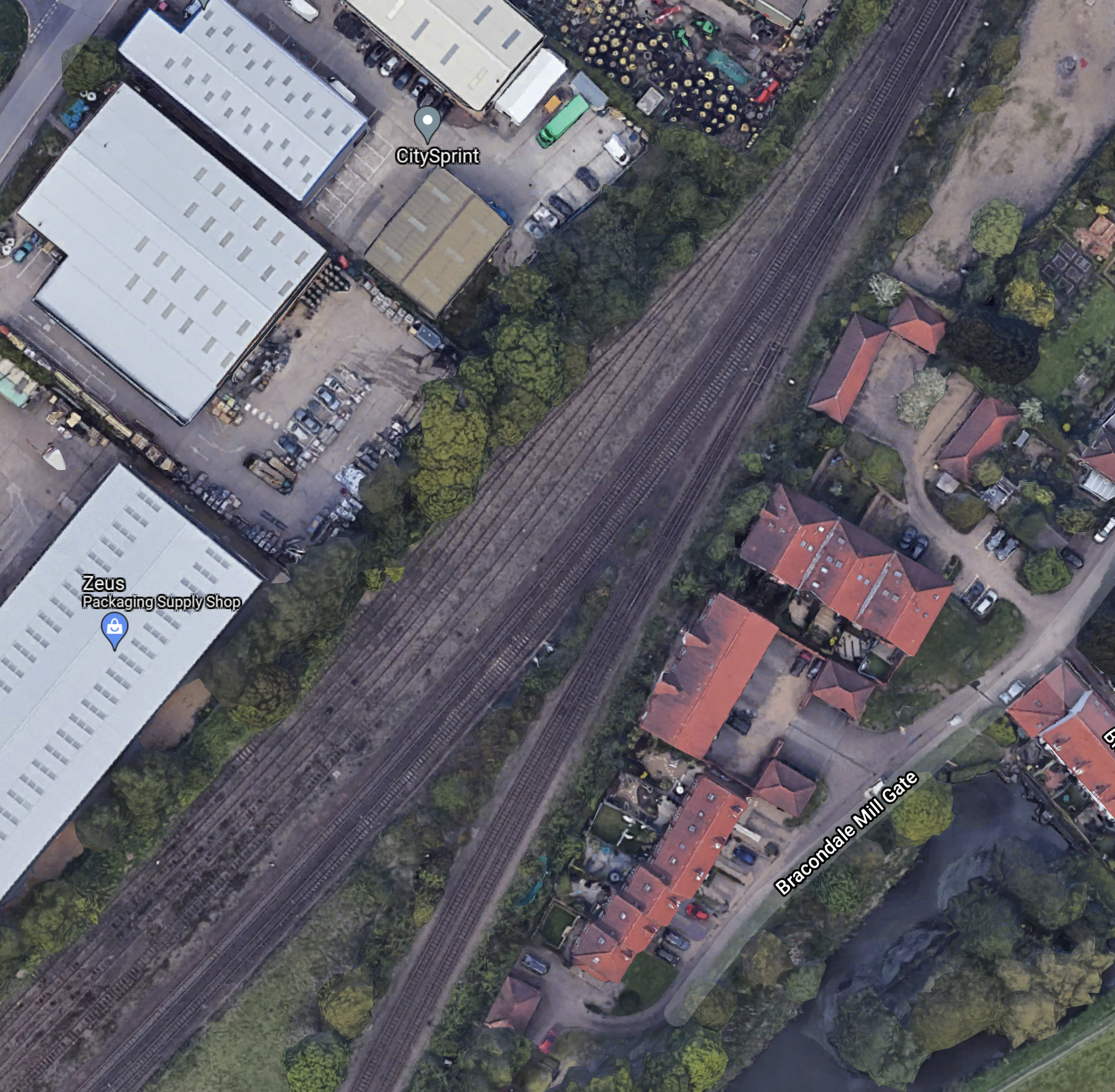
Note.
- The electrified double-track of the Great Eastern Main Line goes across the map from North East to South West.
- The double-track railway to the East of the main line is the unelectrified Breckland Line to Cambridge, which turns West and goes under the main line.
- On the West of the main lines are the Victoria sidings that I wrote about in Greater Anglia Completes Directly-Managed Norwich Victoria Sidings Project.
As the replacement of the swing bridge will require some work to be done to the electrification, I wonder if at the same time Network Rail would electrify the Norwich end of the Breckland Line.
There must be a balance point adding electrification or batteries to the trains.
As the Breckland Line has few freight trains, electrification is not needed for freight.
Ticketing
A high-speed high-capacity service as I’m proposing must be easy to use.
It is a classic route, where nothing short of London-style contactless ticketing will do, as I’m certain this encourages people to use the trains.
As East Anglia is self-contained and has few services that don’t terminate in the area or in London, I am certain that this could be achieved.
If you remove First Class as Greater Anglia has done on many services, you actually simplify the ticketing, so a Lumo-style mid-class is ideal.
High Speed Train Services
Currently Great Northern run two tph from King’s Cross to Ely via Cambridge.
- One service is extended to King’s Lynn.
- I could see the second service extended to Norwich.
Both services would need to be run by 125 mph trains because of the speed of other trains on the East Coast Main Line.
Conclusion
I think duch a system would be possible.
Carbon Emissions Cut With The New Trains In East Anglia
The title of this post, is the same as that of this article on Rail Advent.
The article explains the various ways Greater Anglia’s new trains cut carbon emissions.
The picture shows a PowerPack car of a Class 755 train.

The article indicates that these cars are more intelligent than I thought.
- Regenerative braking can be used to power the trains systems.
- The trains have a coast mode to cut emissions.
- The article also confirms, that with time some diesel engines will be replaced with batteries.
It will be interesting to see how much carbon emissions are saved, when the trains have batteries and software developments are complete.
The picture sh
Battery Train Fast Charging Station Tested
The title of this post, is the same as that of this article on Railway Gazette.
This is the first paragraph.
A prototype Voltap rapid charging station for battery trains has been tested under real-world conditions for the first time.
The Voltap system is from Furrer + Frey and this is the data sheet on their web site, which is entitled Voltap Charging Station For Battery Trains.
Looking at the pictures in the article, the system seems to consist of two components.
- An overhead conductor rail suspended from pantries on the platform.
- A container that contains all the power supplies and control systems.
It certainly looks to be a simple system to install and operate.
- Charging would appear to take place through the pantograph, with no cables to handle.
- It is claimed to be able to charge a train in an extremely short time.
- The system is designed for areas, where the electricity network is perhaps a bit weaker.
- It is available in 15 KVAC and 25 KVAC.
- The system is future-proofed.
I can see these being suitable for several stations in the UK.
Norfolk And Suffolk
As an example, it looks like all the branch lines in Norfolk and Suffolk could be made suitable for battery-electric trains with Voltap systems at Cromer, Felixstowe, Lowestoft, Sheringham, Sudbury and Yarmouth.
Note.
- The Class 755 trains would be converted to battery-electric trains.
- Some stations would need more than one platform to have a charger.
- There may be other chargers to ensure that services like Norwich and Stansted Airport could be run electrically.
These pictures show Class 755 trains in various East Anglian stations.

Felixstowe and some other stations may need a slightly different installation due to the narrow platforms, but I’m sure Furrer + Frey have installations for all platforms.
I think Great British Railways are going to need a lot of these chargers and the battery-electric trains to go with them.
The Uckfield Branch
The Uckfield Branch probably needs to have some form of charging at Uckfield station.

The picture shows the single long platform at Uckfield station.
Consider.
- Trains to work the branch will need to be able to use third-rail electrification between London Bridge station and Hurst Green junction.
- Hurst Green junction to Uckfield station and back is probably too far for a battery-electric train, so charging will be needed at Uckfield station.
- Third-rail charging could be used, but I suspect that Health and Safety will say no!
But using a dual-voltage train and a Voltap system at Uckfield station would probably be ideal.
Middlesbrough
From December the 13th, LNER will be running a new daily service between Middlesbrough and London, which I described in LNER’s Middlesbrough And London Service Starts On December 13th.
The route is fully electrified except for between Middlesbrough and Longlands Junction, where it joins the electrification of the East Coast Main Line, which is a distance of twenty-two miles.
Hitachi are developing a battery-train, which they call the Hitachi Intercity Tri-Mode Battery Train, which is described in this Hitachi infographic.

Note.
- LNER’s current Class 800 trains will probably be able to be converted to this train.
- Normally, these trains have three diesel generators.
- A range on battery power of upwards of forty miles would be expected.
If the range on battery-power can be stretched to perhaps sixty miles, this train should be capable of serving Middlesbrough without the need for any extra charging at the terminus.
I have just looked at the planned path of the first train on December 13th.
- The train comes from Heaton depot in Newcastle via Sunderland and Hartlepool.
- It passes through Middlesbrough station.
- It then reverses amongst the chemical and steel works to the East, before returning to Middlesbrough station.
Once back at Middlesbrough station, it waits for eight minutes before leaving for London.
It looks to me to be a safe route, to make sure that the train leaves on time. It also only occupies the platform at Middlesbrough station for less than ten minutes.
But it would also be possible to find space amongst the chemical and steel works to find space for a well-designed reversing siding with refuelling for the diesel-electric trains or a Voltap charging system for a battery-electric train.
Lincoln
I have been looking at the pattern of LNER’s London and Lincoln service today.
- There have been six trains per day (tpd) in both directions.
- Trains going North take up to seven minutes to unload passengers at Lincoln station before moving on to Lincoln Terrace C. H. S., which I would assume is a convenient reversing siding.
- Trains going South wait up to thirty-forty minutes at Lincoln station after arriving from Lincoln Terrace C. H. S., before leaving for Kings Cross.
It looks to me, that if London and Lincoln were to be run by a Hitachi Intercity Tri-Mode Battery Train, that the timings would be ideal for charging the batteries on the train in either the reversing siding or the station.
But surely, the charging system in the station would allow extension of the service to Grimsby and Cleethorpes, which has been stated as being part of LNER’s plans.
This picture shows Lincoln station.

I suspect that Swiss ingenuity could fit a Voltap charging system in the station.
These are a few distances from Lincoln station.
- Cleethorpes – 47.2 miles
- Doncaster – 35.4 miles
- Newark North Gate – 16.6 miles
- Peterborough – 56.9 miles
How many of these destinations could be reached by a battery-electric train, that had been fully-charged at Lincoln station.
New £157m Chelmsford Railway Station Makes Progress
The title of this post, is the same as that of this article on Rail Technology Magazine.
This is the introductory paragraph.
The submission of an environmental impact assessment application to Chelmsford City Council for the proposed £157m Beaulieu railway station marks the next step in the ambitious project.
It may not be a large step, but it moves things forward to creation of this new Beaulieu station, North of the City of Chelmsford, which should be open around 2025.
Beaulieu Station Will Have Three Platforms
Intriguingly, Wikipedia says that the station will have three platforms.
The stations on the Great Eastern Main Line between Shenfield and Colchester will have the following numbers of platforms.
- Ingatestone – 2
- Chelmsford – 2
- Beaulieu – 3
- Hatfield Peverel – 2
- Witham – 4
- Kelvedon – 2
- Marks Tey – 3
As Witham and Marks Tey have branch lines, Beaulieu will be very much the outsider.
I suspect the extra platform is very much for reasons, similar to those that result in Cambridge North station being built as a three-platform station with two through and one bay platform.
I don’t think we’ll see Crossrail extended to Beaulieu.
- The route between Shenfield and Beaulieu is only double-track.
- All passenger trains currently on the route are 100 mph electric trains.
- Crossrail’s Class 345 trains are only 90 mph trains.
The speed mismatch would slow services to and from stations to the North.
But will we see a new service between London Liverpool Street and Beaulieu, which stops at perhaps, Stratford, Romford, Shenfield, Ingatestone and Chelmsford?
I suspect we will certainly see a new service terminating at Beaulieu, even if it is only in the Peak.
How Will Current Services Call At Beaulieu?
Currently, one fast and four stopping services stop in Chelmsford station every hour.
There are actually two trains per hour (tph) between London Liverpool Street and Norwich, but only one stops at Chelmsford.
So will the second hourly fast service stop at Beaulieu?
I would certainly be logical.
The four stopping services, that stop at Chelmsford every hour are.
- London Liverpool Street and Braintree
- London Liverpool Street and Clacton-on-Sea
- London Liverpool Street and Colchester Town
- London Liverpool Street and Ipswich
As all services stop at most stations, I would expect they would stop at Beaulieu.
- This would give Beaulieu a four tph Turn-Up-And-Go service to and from Chelmsford station, which uniquely for East Anglia is in the centre of the City.
- If the third platform were to be used for a fifth service to London Liverpool Street, this would be a train every twelve minutes between Chelmsford and Beaulieu stations.
- I can see that for some journeys, the fastest and most convenient route may include a change of train at Beaulieu.
I also seem to remember, that Greater Anglia had plans to extend the Ipswich service to Norwich and this will surely be useful to travellers from Beaulieu, who would then have a fast and a stopping service to Norwich.
A Park-And-Ride For Football And Events At Ipswich And Norwich Football Grounds
Both football grounds at Ipswich and Norwich are close to the stations and I can see many attendees driving to Beaulieu to catch a train, as parking in both Ipswich and Norwich can be difficult.
If in the future, there are two tph between Beaulieu and both destinations, it could be the quickest way to the grounds.
Essex Councillors Call For Underground Link
The title of this post, is the same as that of this article on Railnews.
This is the first paragraph.
Councillors in Harlow are calling for a new Underground link, saying that they are examining ‘all possibilities for improving and modernising transport connections’.
I’ve tackled this subject before in Does Harlow Need An Improved Train Service?, but this time I’m starting with what is possible and working backwards.
Harlow’s Current Train Service
Currently, these trains serve Harlow Town station.
- Stratford and Bishops Stortford – 2 tph – via Lea Bridge, Tottenham Hale, Waltham Cross, Cheshunt, Broxbourne and Sawbridgeworth
- London Liverpool Street and Cambridge North – 1 tph – via Tottenham Hale, Cheshunt, Broxbourne, Bishop’s Stortford, Audley End, Whittlesford Parkway and Cambridge
- London Liverpool Street and Cambridge North – 1 tph – via Tottenham Hale, Cheshunt, Broxbourne, Roydon, Sawbridgeworth, Bishop’s Stortford, Stansted Mountfitchet, Elsenham, Newport, Audley End, Great Chesterford, Whittlesford Parkway, Shelford and Cambridge
- London Liverpool Street and Stansted Airport – 1 tph – via Tottenham Hale
- London Liverpool Street and Stansted Airport – 1 tph – via Tottenham Hale and Stansted Mountfitchet
In addition these services run through Harlow Town station without stopping.
- London Liverpool Street and Stansted Airport – 2 tph – via Tottenham Hale
Note.
- tph is trains per hour
- The Stansted services are fast services and take 29 minutes between London Liverpool Street and Harlow Town.
- The other services seem to take a few minutes longer.
Summarising the services gives the following.
- Eight tph pass through the station of which six tph stop.
- Cambridge and Cambridge North has a 2 tph service.
- London Liverpool Street has a 4 tph service.
- Stansted Airport has a 2 tph service.
- Stratford has a 2 tph service.
- Tottenham Hale has a 6 tph service.
Each of Greater Anglia’s new Class 720 trains, when working as a ten-car formation can carry well over a thousand passengers.
Harlow Town station has a fairly good service, but it could probably be improved.
What Are Harlow’s Councillors Suggesting
This paragraph in the Railnews article gives the councillors wish list.
Harlow Councillor Michael Hardware is portfolio holder for strategic growth. He said: ‘With Harlow’s close proximity to London our plans include investigating the potential for the extension of the central line to Harlow, lobbying to extend London Transport Zones to Harlow, examining connectivity to Crossrail 2 and promoting four tracking of the main line to Stansted Airport as well as improving existing public transport links in and out of the town.
I’ll look at each proposal in turn.
Extending The Central Line To Harlow
Epping and Harlow are about nine miles apart.
This Google Map shows the two towns and the M11 that runs to the East of both towns.
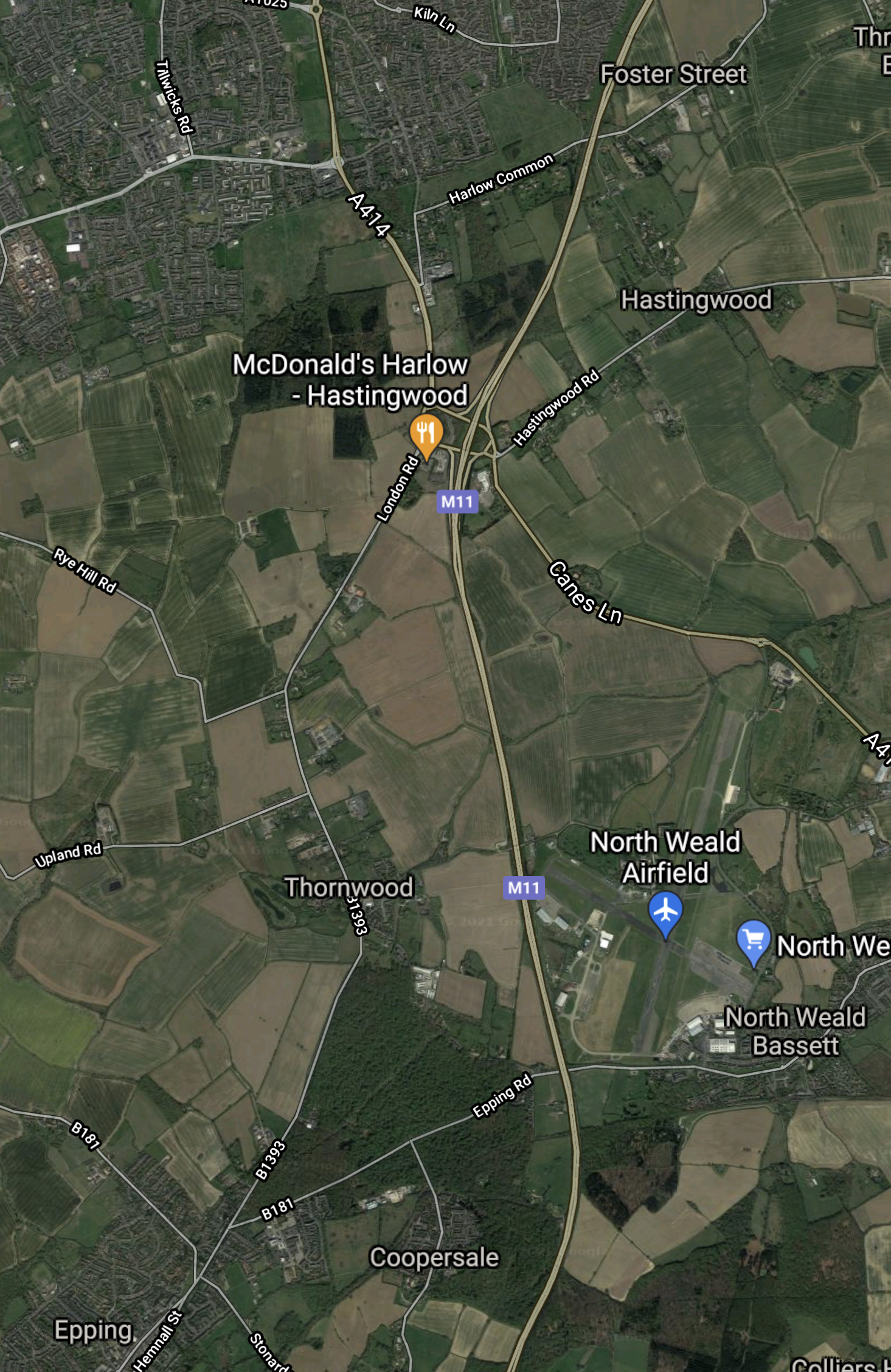
Note.
- Epping is in the South-West corner of the map.
- Harlow, which is a large town of nearly 90,000 residents is at the top of the map.
- The M11 runs North-South across the map to the East of both towns.
- North Weald Airfield lies to the East of the motorway.
Would it be possible to run an extension of the Central Line from Epping to Harlow?
It could run up the West side of the motorway.
- The terminus could be in South-East Harlow close to Junction 7 of the M11.
- Any plans for the development of North Weald Airfield could have a big effect on any plans.
This Google Map shows the location of Epping station with respect to the motorway.
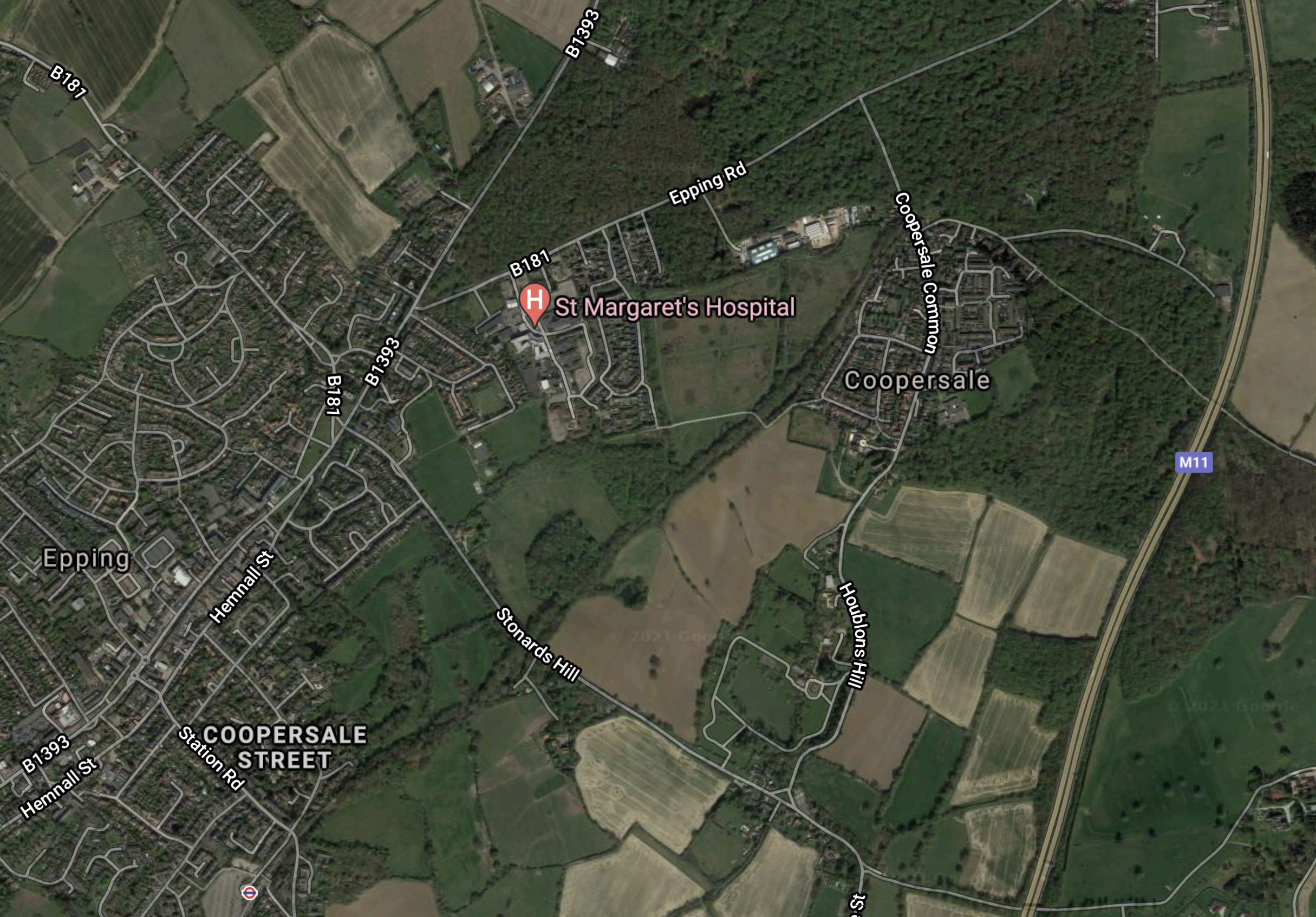
Note Epping station is in the South-West corner of the map.
Running North-East from the station, the dark green scar of the single-track Epping Ongar Railway can be picked out, as it runs between St. Margaret’s Hospital and the village of Coopersale.
This third Google Map shows the railway as it passes under the M11.
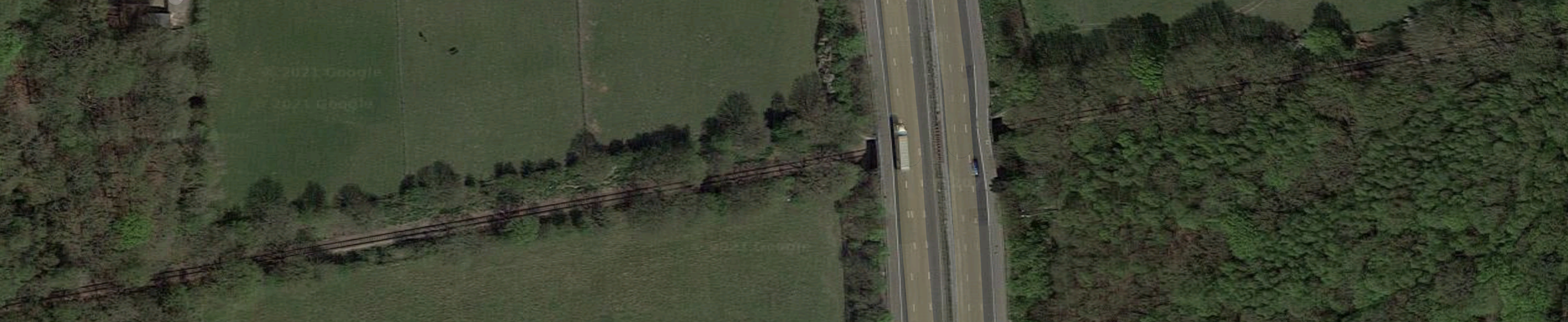
Would it be possible to use the route of this line to connect to a new line alongside the motorway?
This fourth Google Map shows Epping tube station.
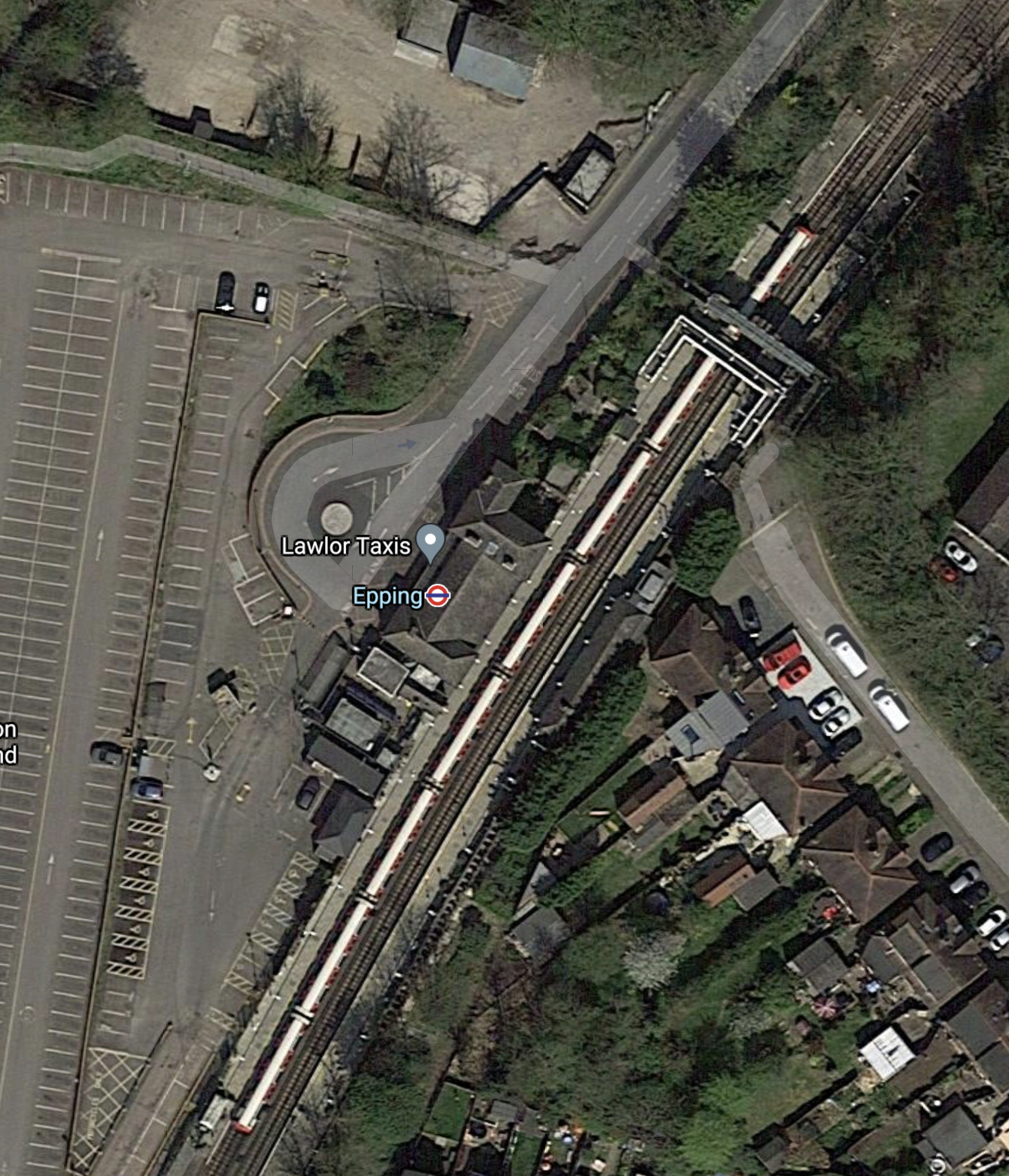
Note.
- The station has two platforms, but is not step-free.
- It has a large car-park.
- Trains take thirty-seven minutes between Epping and Liverpool Street stations.
- Trains have a frequency of nine tph.
This map from cartometro.com shows the track layout at Epping station and the interface with the Epping Ongar Railway.
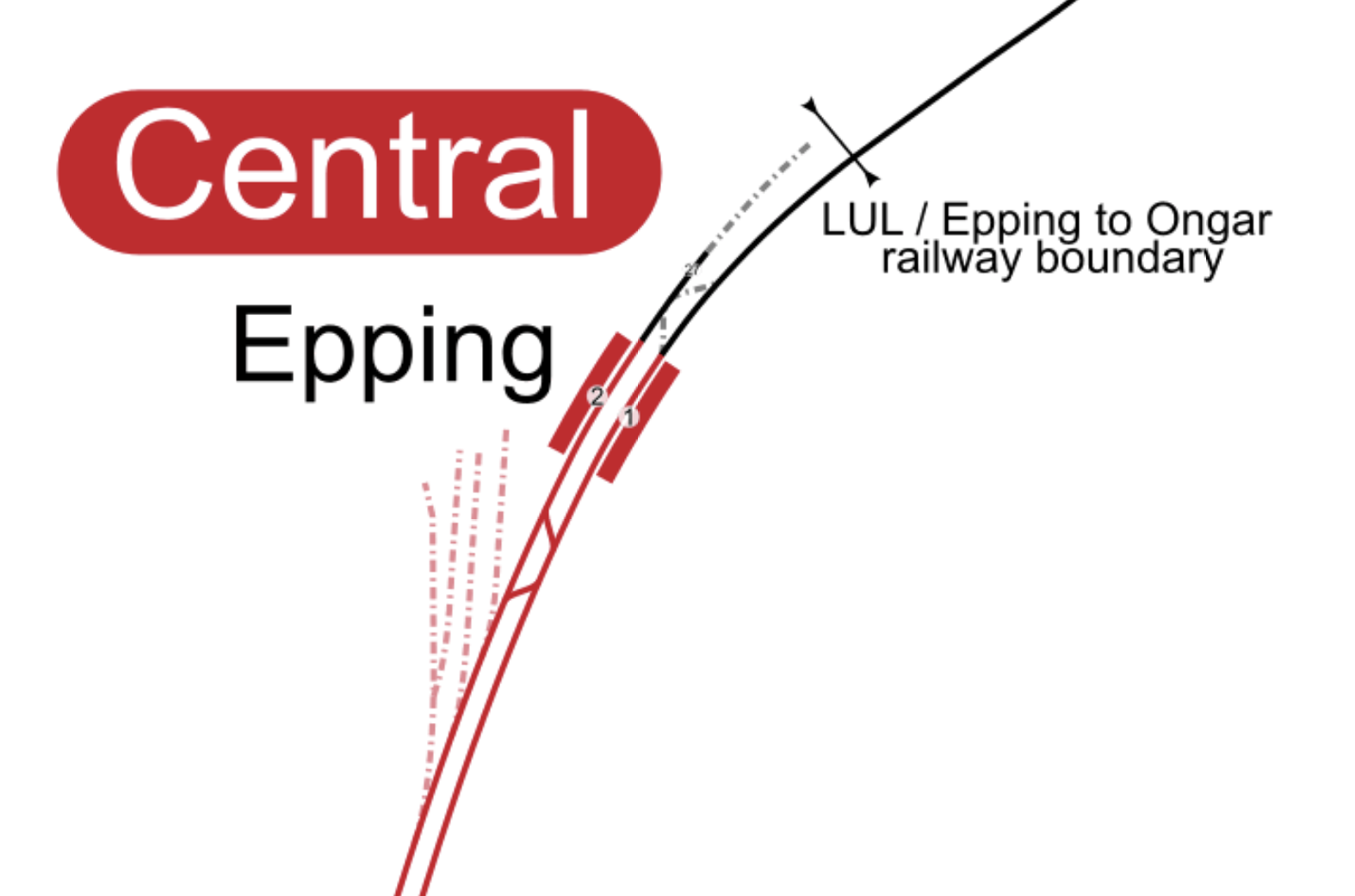
Note.
- The Epping Ongar Railway has always been single track.
- The crossovers to the South of Epping station allow either platform to be used for Central Line services.
- When the Central Line ran to Ongar, it looks like all services used Platform 1 at Epping.
I feel that it might be possible to create an extension to Harlow, by doing something like the following.
- Add a second bi-directional track alongside the Epping Ongar Railway between Epping station and the M11.
- Extend Platform 1 to the North, so that the heritage trains can load and unload passengers at Epping station.
- The Central Line platforms would be unaltered, so could still handle the nine tph they currently handle.
- Trains to and from Harlow would always use Platform 2.
At the M11, the new bi-directional track would turn North and become double-track to Harlow.
- The double-track would allow trains to pass.
- If the rolling stock for the Central Line has been renewed, it might be possible to run the extension on battery power.
- If Harlow had a single platform, it would be possible to run four tph to Harlow.
- The current 2012 Stock trains have a capacity of around a thousand passengers.
- I estimate that trains would take about ten minutes between Epping station and the new Harlow station.
I feel something is possible, but building the line might be easier if new battery-electric trains were available, as this would probably allow the extension to be built without electrification.
On the other hand, it might not have the greatest financial case.
- It could be difficult to add large numbers of passengers to the Central Line.
- At around forty-seven minutes, the Central Line service will be slower than the main line trains, which currently take around a dozen minutes less.
I’ll be interested to see what the professionals say.
Extending London Transport Zones To Harlow
Harlow Town station has ticket barriers, but I don’t think it is part of London’s contactless card zone.
Adding Harlow Town and all stations between Harlow Town and the zone could be very beneficial to passengers and train companies.
Examining Connectivity To Crossrail 2
I think that in the current economic situation this should be discounted.
- It is a very expensive project.
- Building it will cause tremendous disruption on the West Anglia Main Line.
- It is only planned to go as far as Broxbourne station.
But I don’t think politicians from outside London and the South-East would sanction another massive project for London.
I don’t think Crossrail 2 will ever be build in its currently proposed form.
Four Tracking Of The Main Line To Stansted Airport
Consider.
- Currently, the numbers of trains on the West Anglia Main Line is under twelve tph.
- Modern double-track railways with the latest digital in-cab signalling like Thameslink and Crossrail can handle twice this number of trains.
- The West Anglia Main Line will be getting new trains with better acceleration.
Four-tracking is mainly needed to cut times to Cambridge and Stansted Airport, but I suspect that with some clever design and improved signalling, the current double-track can be improved significantly.
Improving Existing Public Transport Links In And Out Of The Town
I think that this could be a fruitful area.
- As I said earlier, Harlow has only 6 tph trains stopping in the station.
- I believe this could be increased to at least 10 tph, if the West Anglia Main Line were to be modernised.
- Extending London Transport Zones To Harlow, which I discussed earlier would surely help.
- Is there enough car parking?
- Are there enough buses to the stations?
- Would a fleet of zero-carbon buses tempt people to use them?
- Would it be possible to run a hydrogen commuter bus service up and down the M11 between say Harlow and Ilford for Crossrail?, as is being done in Dublin, that I wrote about in Three Hydrogen Double Decker Buses Set For Dublin.
Hopefully, Harlow’s councillors would have a few good ideas.
A Few Thoughts On What Is Possible
These are a few of my thoughts on what is possible.
Digital Signalling Could Increase The Number of Trains Per Hour Significantly
Consider.
- Currently, the West Anglia Main Line handles ten tph between Liverpool Street and Bishops Stortford.
- Thameslink handles 24 tph with digital signalling.
- Crossrail will handle 24 tph with digital signalling.
- High Speed Two will handle eighteen tph.
I certainly believe that another four tph could be easily handled through the two Harlow stations, with full digital signalling.
Perhaps a frequency of eight tph, that would match TfL Rail between London Liverpool Street and Shenfield would be ideal.
If it works for Shenfield it should work for Harlow!
Rebuild Cheshunt Station
Cheshunt station with its level crossing is a bottleneck and any increase in the number of trains through the station will need the level crossing to be replaced by a bridge.
But developers are talking of high class housing in the area and removal of the level crossing appears to be in their plans.
New High-Capacity Class 720 Trains
Pairs of five-car Class 720 trains are coming to the West Anglia Main Line and each pair will carry over a thousand passengers.
These will be used on four tph, that call at Harlow Town station.
Turn Trains In The High Meads Loop at Stratford Station
The single-track Wirral Line Loop under Liverpool handles up to sixteen tph.
Network Rail built a double-track loop under the Eastfield Shopping Centre, which calls at Platforms 11 and 12 in Stratford.
If this loop was used to turn trains it could probably handle at least twelve tph on one platform.
Liverpool Street currently handles these trains that go up the West Anglia Main Line or the Lea Valley Lines.
- 6 tph – Greater Anglia
- 6 tph – London Overground
It looks to me that the terminal capacity in London could be as high as 20 tph.
Run More Trains On A Digitally-Signalled Route Through Seven Sisters
Just four tph run on the London Overground route through Seven Sisters station.
Compare that with the East London Line of the London Overground, where sixteen tph run between Dalston Junction and Surrey Quays stations.
The London Overground has ambitions to run four tph to Cheshunt and Enfield Town, as they do to Chingford, but that would only up the frequency through Seven Sisters to eight tph.
The tracks in the area also allow trains from Stratford to use the lines through Seven Sisters stations to go North.
Run West Anglia And Lea Valley Services Together
Currently, Greater Anglia and London Overground seem to do their own things, but surely properly integrated and with the moving of more services to the London Overground, I suspect that everything could be more efficient.
I believe that by using Liverpool Street and Stratford as twin London terminals for Lea Valley services, that upwards of twenty tph can on digitally-signalled West Anglia Main Line and the Lea Valley Lines.
These are the current trains.
- Bishops Stortford – 2 tph
- Cambridge North – 2 tph
- Cheshunt – 2 tph
- Chingford – 4 tph
- Enfield Town – 2 tph
- Hertford East – 2 tph
- Stansted Airport – 4 tph
Note.
- This is a total of eighteen tph
- The pinch point is surely the stretch between Bethnal Green and Clapton stations, which handles 14 tph including a mix of fast expresses and London Overground services.
- On the other hand the route through Seven Sisters is handling just four tph.
- Ten tph run between Tottenham Hale and Cheshunt stations on the West Anglia Main Line.
- Only two tph terminate in Stratford.
If the Cheshunt and Enfield Town services are increased to 4 tph, as is London Overground’s aspirations we get the following.
- Bishops Stortford – 2 tph
- Cambridge North – 2 tph
- Cheshunt – 4 tph
- Chingford – 4 tph
- Enfield Town – 4 tph
- Hertford East – 2 tph
- Stansted Airport – 4 tph
Note.
This is a total of twenty-two tph.
But there is still plenty of spare capacity at Stratford and through Seven Sisters.
If our objective is more trains through Harlow, why not double up the Stratford and Bishops Stortford service.
- Bishops Stortford – 4 tph
- Cambridge North – 2 tph
- Cheshunt – 4 tph
- Chingford – 4 tph
- Enfield Town – 4 tph
- Hertford East – 2 tph
- Stansted Airport – 4 tph
Note.
- This is a total of twenty-four tph.
- Harlow will have eight tph to and from London.
- There will be 8 tph through Seven Sisters.
- There will be twelve tph between Tottenham Hale and Cheshunt stations on the West Anglia Main Line.
- Four tph will terminate at Stratford.
Perhaps to reduce the trains on the West Anglia Main Line, the Hertford East trains could go via Seven Sisters.
But that would mean that stations like Brimsdown and Ponders End would lose a lot of their service.
So why not add extra stops to the Bishops Stortford services?
Conclusion
I believe that by doing the following.
- Adding digital signalling to all lines.
- Turning more trains at Stratford.
- Using the route through Seven Sisters at a much higher frequency.
- Rebuilding Cheshunt station and level crossing.
- Reorganising stops on the West Anglia Main Line.
That it would be possible to create a high-frequency Metro up the Lea Valley.
Except for the digital signalling and Cheshunt station, there is not much work to do on the infrastructure.
Manea Station
Manea station, is one of least-used stations in the UK.


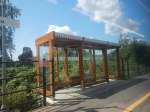

But it does have a rather nice new shelter.
Perhaps, Greater Anglia are expecting more passengers.
Comings And Goings At Ely Station
On my meander around the Fens yesterday, I spent twenty minutes or so at Ely station, as the variety of trains came through the station, whilst I waited for a train to March.



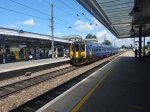
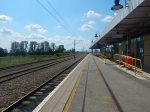
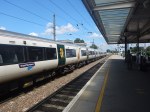
Ely and the surrounding lines are to be remodelled, so that more trains can pass through the complicated junctions.
I had hoped to see a freight train pass through, which would have used the avoiding lines to pass the station.
In some ways, Ely sums up the problems of some of our major railway junctions.
- Several important passenger services needing to pass through.
- Several long freight trains a day.
- Level crossings everywhere.
- More passenger services are needed.
And on top of it all, there is a need to decarbonise.
British Rail and Network Rail have been trying to sort Ely for decades and it should be noted that the Fen Line to King’s Lynn station was electrified in 1992, which was probably an early phase of their master-plan.
Ely And Battery-Electric Trains
These are the distances without electrification on the various routes from Ely.
- Ipswich – 39 miles
- Norwich – 52 miles
- Peterborough – 30.5 miles
- Wisbech – 25 miles
Routes to King’s Cross, King’s Lynn, Liverpool Street, Stansted Airport and Stevenage are all fully electrified.
It does appear to me, that the new generation of battery-electric should be able to handle services from Ely on battery power.
For many of these services, which are or will be run by Greater Anglia, the required battery range can be achieved by swapping some of the diesel engines in the Class 755 trains for batteries.
Freight And Hydrogen Power
In Was This The Most Significant Statement On Freight Locomotives Last Week?, I referred to this press release from Freightliner, which is entitled Freightliner Secures Government Funding For Dual-Fuel Project.
This sixth paragraph from the press release is very significant.
This sustainable solution will support a programme to decarbonise freight operating companies’ diesel fleets in a cost-efficient manner that does not require significant short-term investment and facilitates operational learning in support of a longer-term fleet replacement programme, potentially using 100% hydrogen fuel.
I believe the paragraph indicates, that Freightliner and possibly the other companies involved in the building and operation of heavy freight locomotives have concluded, that the technology is now such, that a zero-carbon rail locomotive powered by 100 % hydrogen is now possible.
Hydrogen offers several advantages.
- Large amounts of power.
- Range comparable with diesel locomotives.
- Depots and freight terminals can be without electrification.
- As hydrogen-powered locomotive will most likely have an electric transmission, this opens the possibilities of using electrification where it exists and regenerative braking to an onboard battery.
My unreliable crystal ball says that we’ll see hydrogen-powered locomotives by 2026.
Class 321 Renatus Trains At Wickford And On The Crouch Valley Line
This article on Rail Advent indicated that the platform extension at Wickford station had been completed, so that five-car Class 720 trains can work the Crouch Valley Line.
This morning I went to look at the progress and took these pictures.
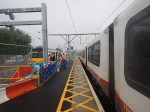
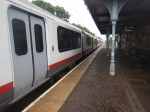
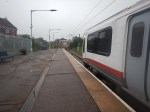
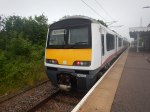



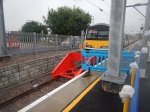
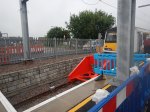
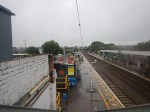
Note.
- Platform 1 has been extended at the London end.
- The two trains working the branch were Class 321 Renatus trains.
- The stations on the branch seemed to have been spruced up.
I suspect Greater Anglia are expecting a lot more commuters and visitors.
- But then the area is getting a lot more housing.
- There are fast direct trains to and from London Liverpool Street on a railway with refurbished electrification.
- Burnham-on-Crouch is one of the foremost yachting towns.
- Remember the area is not far from Snowgoose Country.
- The new Wallasea wetlands that were created with the tunnel spoil from Crossrail’s tunnels is not far away.
This Google map shows Burnham-on-Crouch and Wallasea Wetlands.
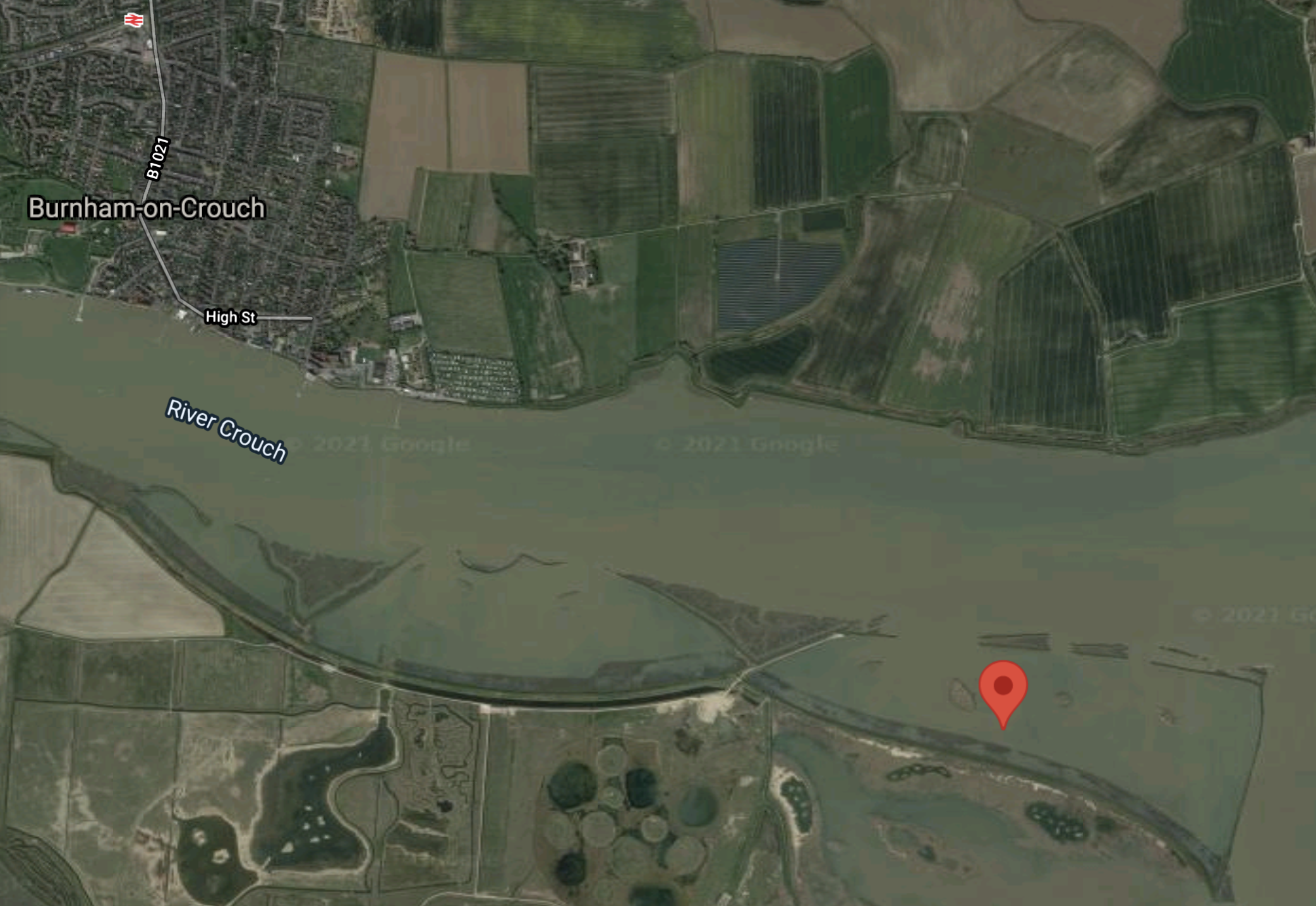
Note.
- Burnham-on-Crouch with its station in the North-West corner of the map.
- Wallasea Wetlands are marked by the red arrow.
I don’t think it will be long before an appropriately-powered ferry is provided across the River Crouch.
I also have some thoughts.
The Class 321 Renatus Trains
The Class 321 Renatus trains may be a 2017 conversion of a 1990-built British Rail Class 321 train, but that doesn’t mean they are a cheap and nasty conversion.
So until all the Class 720 trains are in service, they are a more than adequate stand-in.
I was told that the Class 720 trains will be in service on the branch in September.
The Snow Goose
The Snow Goose is one of the great books of the Twentieth Century, written by the American; Paul Gallico.
This summary of the plot is from Wikipedia.
The Snow Goose is a simple, short written parable on the regenerative power of friendship and love, set against a backdrop of the horror of war. It documents the growth of a friendship between Philip Rhayader, an artist living a solitary life in an abandoned lighthouse in the marshlands of Essex because of his disabilities, and a young local girl, Fritha. The snow goose, symbolic of both Rhayader (Gallico) and the world itself, wounded by gunshot and many miles from home, is found by Fritha and, as the human friendship blossoms, the bird is nursed back to flight, and revisits the lighthouse in its migration for several years. As Fritha grows up, Rhayader and his small sailboat eventually are lost in the Dunkirk evacuation, having saved several hundred men. The bird, which was with Rhayader, returns briefly to the grown Fritha on the marshes. She interprets this as Rhayader’s soul taking farewell of her (and realizes she had come to love him). Afterwards, a German pilot destroys Rhayader’s lighthouse and all of his work, except for one portrait Fritha saves after his death: a painting of her as Rhayader first saw her – a child, with the wounded snow goose in her arms.
It is not a book, you’d expect an American to write about the dark days of World War II in the UK.
But as Christopher Nolan showed in his film, Dunkirk was the battle in World War II, that stiffened up the sinews and summoned up the blood.
Wickford Station
The pictures show that Wickford station is being rebuilt.
I would think it needs a speed-free bridge.
An Airport Train For A Pandemic?
These pictures show one of Greater Anglia‘s new Class 745 trains on a Stansted Express service at Hackney Downs station, on the way to Liverpool Street station.
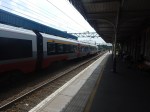
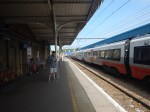
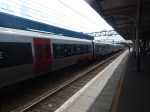
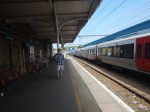
Stansted Express services do not usually use Platform 3, but it would appear that the service had started from Bishops Stortford.
The Future Of Stansted Express Trains
The previous Stansted Express trains; the more-than-adequate Class 379 trains are still waiting for a future, after being replaced.
Now because of the pandemic, the excellent Class 745 trains are running virtually empty.
Perhaps, it’s not a lucky route for trains.
Does Harlow Need An Improved Train Service?
I ask this question, because I am increasingly seeing articles like this one on My London, which is entitled The Large Town Just Outside London Desperate For A London Underground Station.
The town is Harlow.
This Google Map shows the West Anglia Main Line, as it runs through the North of the town.
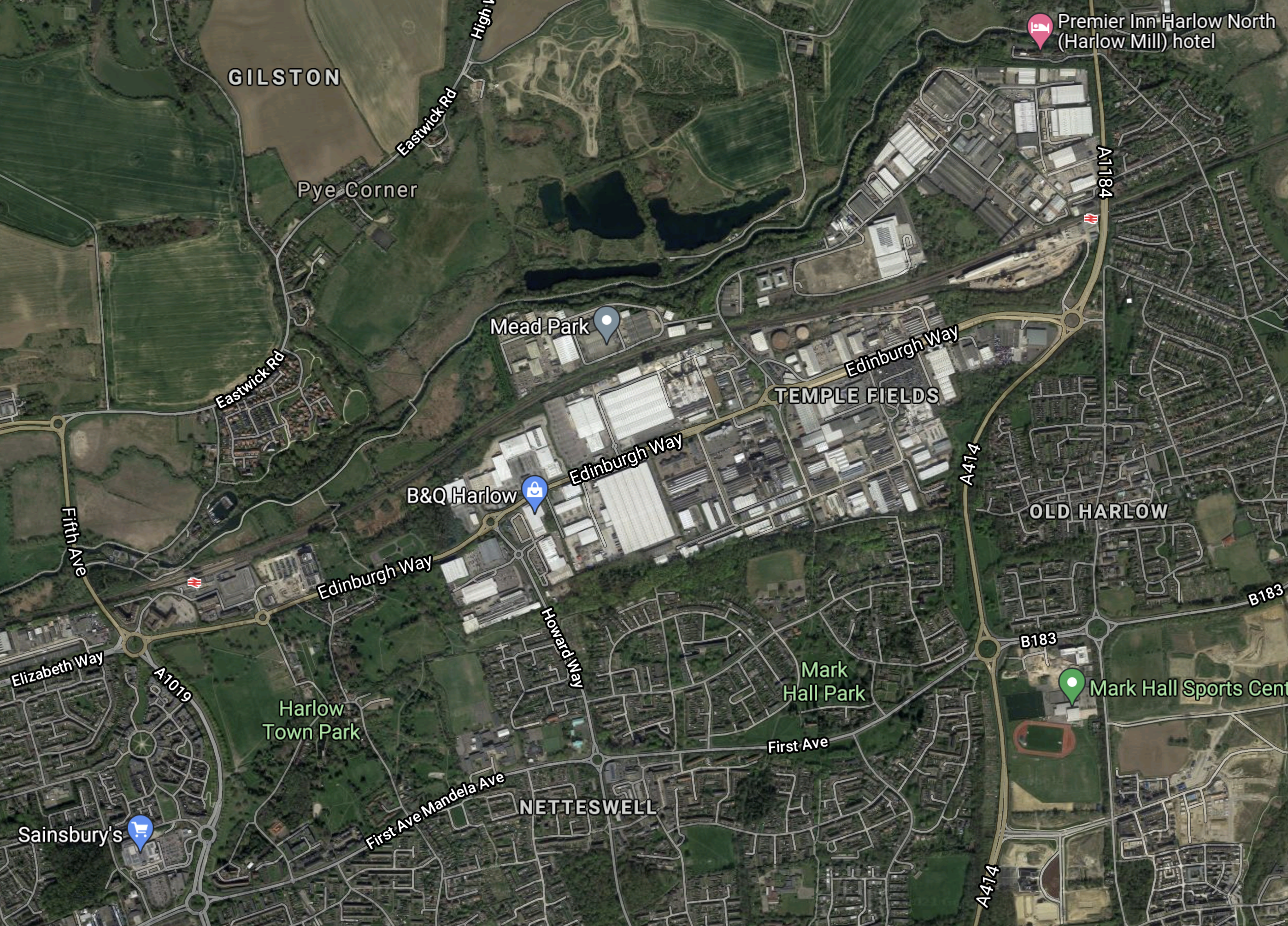
Note.
- Harlow Town station towards the South West of the map.
- Harlow Mill station towards the North East of the map.
- The West Anglia Main Line running between the two stations.
On the face of it the town seems well-served by the trains.
Harlow Town Station
This Google Map shows Harlow Town station to a larger scale.
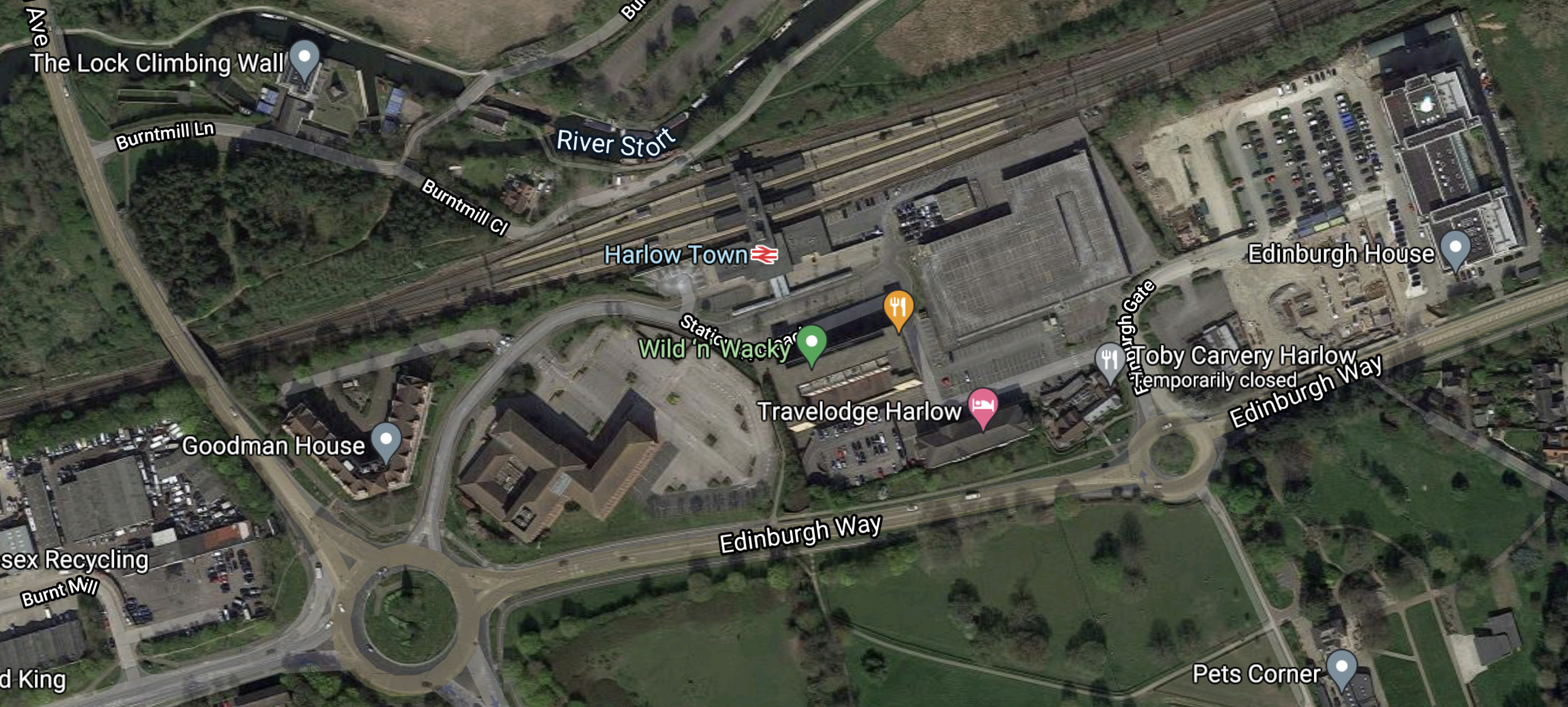
Note.
- The station has four platforms.
- The station has full step-free access.
- The station has 697 parking spaces with 18 fully accessible spaces.
The station was built in the 1950s and is a Grade II Listed building.
Train services at the station are as follows.
- Stratford and Bishops Stortford – 2 tph – via Lea Bridge, Tottenham Hale, Waltham Cross, Cheshunt, Broxbourne and Sawbridgeworth
- London Liverpool Street and Cambridge North – 1 tph – via Tottenham Hale, Cheshunt, Broxbourne, Bishop’s Stortford, Audley End, Whittlesford Parkway and Cambridge
- London Liverpool Street and Cambridge North – 1 tph – via Tottenham Hale, Cheshunt, Broxbourne, Roydon, Sawbridgeworth, Bishop’s Stortford, Stansted Mountfitchet, Elsenham, Newport, Audley End, Great Chesterford, Whittlesford Parkway, Shelford and Cambridge
- London Liverpool Street and Stansted Airport – 1 tph – via Tottenham Hale
- London Liverpool Street and Stansted Airport – 1 tph – via Tottenham Hale and Stansted Mountfitchet
Note.
- tph is trains per hour
- The Stansted services are fast services and take 29 minutes between London Liverpool Street and Harlow Town.
- The other services seem to take a few minutes longer.
- London Liverpool Street or Stratford and Tottenham Hale both get six tph.
- Bishop’s Stortford gets a four tph service from Harlow Town.
- The two Cambridge stations only get two tph.
Harlow Town station has a fairly good service, but it could probably be improved.
Harlow Mill Station
This Google Map shows Harlow Mill station to a larger scale.
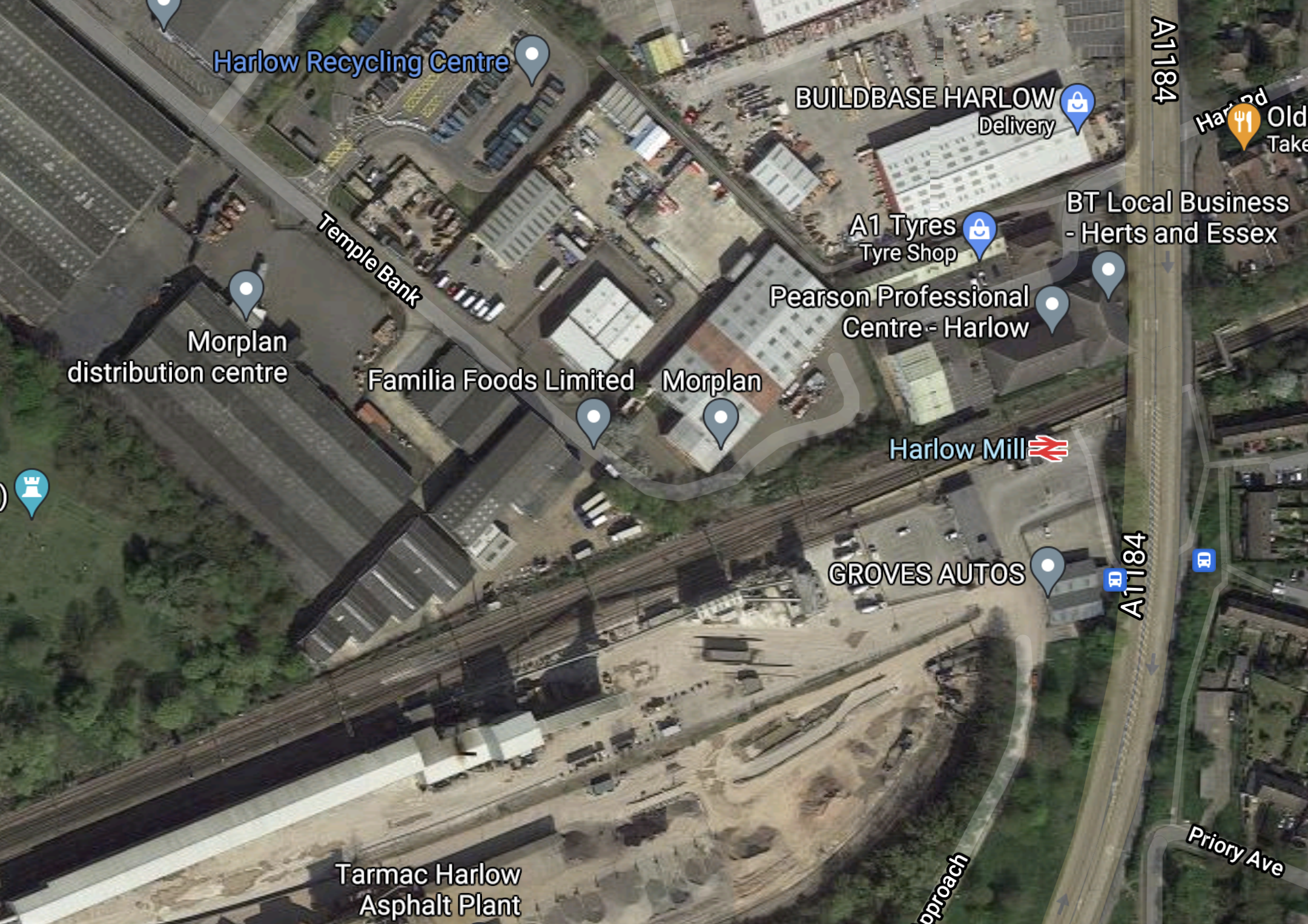
Note.
- The station has two platforms.
- The station has step-free access to the London-bound platform only.
- The station has 29 parking spaces with 1 fully accessible space.
The station was built in the 1840s and gets about 13 % of the passengers compared to Harlow Town station.
Train services at the station are as follows.
- Stratford and Bishops Stortford – 1 tph – via Lea Bridge, Tottenham Hale, Waltham Cross, Cheshunt, Broxbourne and Sawbridgeworth
- London Liverpool Street and Cambridge North – 1 tph – via Tottenham Hale, Cheshunt, Broxbourne, Roydon, Sawbridgeworth, Bishop’s Stortford, Stansted Mountfitchet, Elsenham, Newport, Audley End, Great Chesterford, Whittlesford Parkway, Shelford and Cambridge
Note.
- tph is trains per hour
- London Liverpool Street or Stratford and Tottenham Hale both get only two tph.
- Bishop’s Stortford gets two tph service from Harlow Mill.
- The two Cambridge stations only get one tph.
Unless you lived or worked nearby, I doubt you would be likely to use Harlow Mill station.
Recent And Planned Improvements
These improvements are planned and it is very unlikely they won’t happen.
Class 710 Trains
London Overground now runs new four-car Class 710 trains between London Liverpool Street and Cheshunt.
- Each has 189 seats and can accept 489 standing passengers.
- Busy services to Cheshunt will probably are pair of trains.
- There are four tph between Cheshunt and London.
- Will the trains shave a few minutes from journey times?
This massive increase in capacity and train quality must attract some passengers to change to and from the London Overground at Cheshunt.
Class 720 Trains
Greater Anglia has 133 new five-car Class 720 trains on order.
- Each has 540 seats and can accept 145 standing passengers.
- They are 100 mph trains.
- Busy services through Harlow will probably be a pair of these trains.
These new trains will be a massive increase in capacity and should attract more passengers to the route.
Class 745 Trains
Greater Anglia has recently introduced ten new twelve-car Class 745 trains on Stansted Express services.
- Each has 767 seats.
- They are 100 mph trains.
- They run a two tph service between Harlow Town and London Liverpool Street station and Stansted Airport.
These new trains should attract more passengers to the route.
Crossrail
Services through Harlow will connect to Crossrail at both London Liverpool Street and Stratford.
Will this mean that some passengers will switch from the Victoria Line to Crossrail for their onward journeys?
- Crossrail will have more capacity than the Victoria Line.
- Bond Street, Canary Wharf, Heathrow, Paddington and West London will be easier by Crossrail.
- Victoria and Waterloo will probably be easier by the Victoria Line.
- London Liverpool Street station’s new connection to the Northern Line will give easier access to parts of South London.
- London Liverpool Street station will have much improved step-free connections to all London Underground lines.
Crossrail will certainly change the way many people travel between Harlow and London.
Four Lines Modernisation
This page on the Transport for London web site explains the Four Lines Modernisation. This is the first paragraph.
We’re transforming the Circle, District, Hammersmith & City and Metropolitan lines. When the work is done we’ll be able to run trains more frequently and reliably to make journeys faster and more comfortable.
The project should increase Peak Hour capacity by 33 %.
This will benefit those who change trains at London Liverpool Street between the West Anglia Main Line and the Circle and Metropolitan Lines.
Possible Improvements
These are possible improvements that may happen.
Crossrail 2
It is unlikely, that a start will be made on Crossrail 2 in the near future.
Victoria Line Improvements
The Victoria Line will continue to do, what it has done reliability for over fifty years.
But there could be improvements.
- Walthamstow Central station will have an additional step-free entrance.
- Highbury and Islington station will become a full step-free station.
- Oxford Circus station will be expanded and become a full step-free station.
I also suspect that engineers will find a way to increase the frequency to forty tph.
Four Tracks On The West Anglia Main Line
There are two reasons for four-tracking sections of the West Anglia Main Line.
- To separate Crossrail 2 trains from fast expresses to Stansted and Cambridge.
- To speed up services to and from Stansted Airport.
However four-tracking the route between Tottenham Hale and Broxbourne stations would probably be very beneficial.
- Stansted Airport and Cambridge services could be speeded up.
- Extra services could be run on the West Anglia Main Line.
- It could make it easier to extend the Overground from Cheshunt.
Four-tracking will be needed for Crossrail 2, so there is surely the possibility, that it could be done earlier to bring benefits to those living along the Lea Valley.
ERTMS Signalling On The West Anglia Main Line
ERTMS Signalling could speed up services and increase their number on the West Anglia Main Line.
It might also enable four-tracking, which would be very disruptive to both train services and road traffic to be delayed.
Station Improvements On The West Anglia Main Line
The stations between London Liverpool Street and Cambridge are a poor bunch with only Tottenham Hale, Northumberland Park, Meridian Water, Waltham Cross, Broxbourne, Harlow Town, Bishop’s Stortford and Audley End having full step-free access.
Some of the other stations need refurbishment and step-free access.
As step-free access will be needed for Crossrail 2, why not setup a rolling program of station improvements.
Level Crossings On The West Anglia Main Line
There are four level crossings on the route to the South of Broxbourne, including three at Cheshunt, Enfield Lock and Brimsdown stations.
They all need to be removed for safety reasons.
New Trains And Capacity
The new trains being rolled out by Greater Anglia and the London Overground will certainly have effects on the services on the West Anglia Main Line.
- The better performance could speed up services by a few minutes.
- The capacity increase on the new trains should be welcome.
- The trains will be of better quality than those they replace.
I also wonder, if the better quality of the trains and their facilities will surely attract more passengers. I suspect the train companies hope so!
Extending The London Overground
This map from cartometro.com shows Cheshunt station and Cheshunt Junction just to the South.
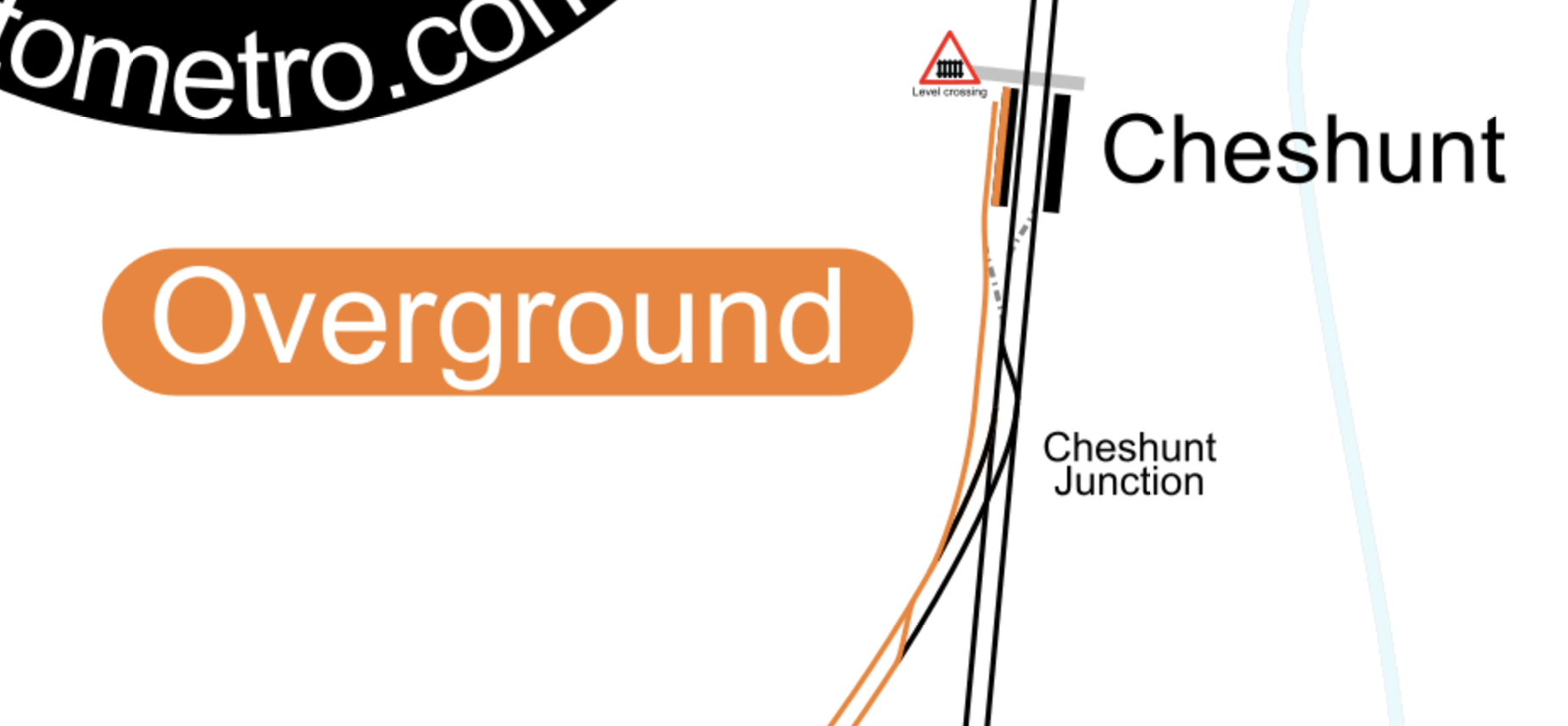
Note.
- The two platforms on the West Anglia Main Line and the single bay platform for the London Overground.
- The level crossing to the North of Cheshunt station.
- The comprehensive Cheshunt Junction which trains to go between the Southbury Loop and the West Anglia Main Line.
Cheshunt Junction is occasionally used by Greater Anglia trains to access the Southbury Loop.
It certainly seems to me, that the Overground could connect to the West Anglia Main Line.
- All trains from London going to the North of Cheshunt could use Platform 2.
- All trains to London coming from the North of Cheshunt could use Platform 1.
- The bay Platform 3 would still be available to turn local trains on the Southbury Loop.
- An extra crossover could probably be inserted to allow trains from London on the West Anglia Main Line to use Platform 3.
London Overground trains could run to a terminal further North.
Trains Between Cheshunt And London
It is worth looking at the number of trains between Cheshunt and London.
- Greater Anglia -2 tph – London Liverpool Street and Hertford East via West Anglia Main Line
- Greater Anglia – 2 tph – Stratford and Bishop’s Stortford via West Anglia Main Line
- Greater Anglia – 2 tph – London Liverpool Street and Cambridge North via West Anglia Main Line
- Greater Anglia – 4 tph – London Liverpool Street and Stansted Airport via West Anglia Main Line
- London Overground – 4 tph – London Liverpool Street and Cheshunt via the Southbury Loop
This means that the West Anglia Main Line has 10 tph and the Southbury Loop has 4 tph.
This suggests possibilities.
- Move some services from the West Anglia Main Line to the Southbury Loop.
- Extend some or all of the London Overground trains to the North of Cheshunt.
- Stations like Bishop’s Stortford, Broxbourne, Harlow, Hertford East and Ware could get extra services to London.
- The new services would connect to extra stations without changing trains.
Very little new infrastructure would be required.
Bishop’s Stortford Station As A London Overground Destination
Bishop’s Stortford station has these trains to and from London.
- Greater Anglia – 2 tph – Stratford and Bishop’s Stortford
- Greater Anglia – 2 tph – London Liverpool Street and Cambridge North
- Greater Anglia – 2 tph – London Liverpool Street and Stansted Airport
Consider.
- Bishop’s Stortford station could probably easily handle up to an extra two tph.
- London Overground’s Class 710 trains only have an operating speed of only 75 mph.
- The trains may need a speed upgrade to serve Bishop’s Stortford, as their speed could slow the Cambridge and Stansted Airport expresses.
If the London Overground services ran to Bishop’s Stortford station, all the smaller stations South of Bishop’s Stortford, could travel to and from Stansted Airport with a single change.
Bishop’s Stortford station may be a possibility, as a destination of two tph on the London Overground route to London.
Broxbourne Station As A London Overground Destination
Broxbourne station has these trains to and from London.
- Greater Anglia -2 tph – London Liverpool Street and Hertford East
- Greater Anglia – 2 tph – Stratford and Bishop’s Stortford
- Greater Anglia – 2 tph – London Liverpool Street and Cambridge North
Consider.
- Broxbourne station could probably easily handle up to an extra two tph.
- As Broxbourne is only 3.2 miles and six minutes to the North of Cheshunt, the 75 mph speed of the London Overground’s Class 710 trains may not be a problem.
Broxbourne station may be a possibility, as a destination of up to two tph on the London Overground route to London.
Harlow Town Station As A London Overground Destination
Harlow Town station has these trains to and from London.
- Greater Anglia – 2 tph – Stratford and Bishop’s Stortford
- Greater Anglia – 2 tph – London Liverpool Street and Cambridge North
- Greater Anglia – 2 tph – London Liverpool Street and Stansted Airport
Consider.
- Harlow Town station could probably easilyhandle up to an extra four tph.
- If one is needed there would appear to be space for a turnback facility or an extra platform.
- As Harlow Town is only 5.4 miles and eight minutes to the North of Cheshunt, the 75 mph speed of the London Overground’s Class 710 trains may not be a problem.
If the London Overground services ran to Harlow Town station, all the smaller stations South of Harlow Town, could travel to and from Stansted Airport with a single change.
Harlow Town station may be a possibility, as a destination of up to four tph on the London Overground route to London.
Hertford East Station As A London Overground Destination
Hertford East station has these trains to and from London.
- Greater Anglia -2 tph – London Liverpool Street and Hertford East
- There is an extra tph in the Peak.
Consider.
- Hertford East station has platforms long enough for eight-car trains and may need modification to accommodate a pair of Greater Anglia’s Class 720 trains.
- Ware station would need to be remodelled to increase frequency above three tph.
- As the route from Broxbourne is on a branch line, the 75 mph speed of the London Overground’s Class 710 trains may not be a problem.
Hertford East station may be a possibility, as a destination of up to two tph on the London Overground route to London.
Conclusion
I think the best two destinations of the London Overground service to the North of Cheshunt would be Harlow and Hertford East.
- Trains could terminate at Harlow Town station to connect with Stansted Express and Cambridge trains.
- It appears that the slightly shorter Class 710 trains may have advantages when using the short platforms at Hertford East station.
Perhaps each destination should receive two tph.
- Harlow Town would be connected to the Overground.
- Passengers using stations between Hackney Downs and Cheshunt on the Southbury Loop would change at Harlow Town to and from Cambridge and Stansted Airport.
- But the biggest benefit would be that two paths on the West Anglia Main Line would be released, as the two tph to Hertford East would be using the Southbury Loop.
I feel there are possibilities to increase the number of trains on the West Anglia Main Line without adding expensive extra tracks.
 The Anonymous Widower