Do We Need More New Measurement Trains?
In New Measurement Train – 30th July 2020, I said this.
With all the spare InterCity 125 trains at present, will Network Rail create a second train?
We have now had the tragic Stonehaven Derailment, where three have been sadly killed.
Increasingly, we seem to be getting weather-related problems on the UK’s railways.
I can remember several in the last few years.
So perhaps just as the Hatfield Crash led to the New Measurement Train, we should up our testing and the development of new tests.
Extra trains would increase the amount of testing, but also provide more laboratory space to test the testing systems in real railway conditions.
Perhaps, if a University or high-tech company has a feasible idea, there should be a mechanism, whereby they can rent space in the trains, just as they can on satellite launchers.
Funding To Develop Geothermal Energy Plans For Disused Flooded Coal Mines
The title of this post, is the same as that of this page on the University of Strathclyde web site.
This is the introductory paragraph.
Researchers at the University of Strathclyde have won early stage funding to develop plans to tap into the geothermal energy contained within disused, flooded coal mines in Scotland.
I have talked about this technique before in Can Abandoned Mines Heat Our Future?, which I wrote after I attended a public lecture at The Geological Society.
This page on the Geological Society web site, gives a summary of the lecture and details of the speaker; Charlotte Adams of Durham University.
This paragraph indicates the scale of the Scottish project, which has been called HotScot.
Heat trapped in 600 km3 of disused mine-workings in the Central Belt of Scotland could meet up to 8% of Scotland’s domestic heating demand.
It looks to be a very comprehensive project.
Conclusion
As this appears to be the second project where disused coal mines are used as a source of heat, after one in Spennymoor, that I wrote about in Exciting Renewable Energy Project for Spennymoor. I wouldn’t be surprised to see other projects starting in other mining areas.
And not just in the UK, as techniques developed by engineers and scientists get more efficient and more affordable.
Turning Waste Plastic Into Hydrogen – Is This The Future?
The title of this post, is the same as that of this article on H2 View.
This paragraph is a description of the process from Myles Kitcher of Peel L&P Environmental.
At Peel L&P Environmental we’ve been working with PowerHouse Energy who have developed a world first plastic to hydrogen technology. The first plant at Protos, our strategic energy and resource hub in Cheshire, is due to start construction later this year. It will take unrecyclable waste plastic – destined for landfill, or worse export overseas – and use it to create a local source of clean hydrogen to fuel buses, Heavy Goods Vehicles (HGVs) and cars. Not only will this help reduce air pollution and improve air quality on local roads, it’s helping us deal with the pressing problem of plastic waste.
This sounds like an eminently sensible way of dealing with unrecyclable waste plastic.
The Schoolgirl Who Helped To Win A War
The title of this post, is the same as a programme to be shown on the BBC News Channel, this weekend.
Seeing the trailers on the BBC this morning, I am reminded of my mother, who was my mathematical parent. The girl in the story is Hazel Hill, who was the daughter of Captain Frederick William Hill, who worked on armaments research.
My mother would be a few years older than Hazel and won a scholarship to one of the best girls schools in London at the time; Dame Alice Owen’s, which was then in Islington.
I get the impression, that contrary to perceived opinion, that in the 1920s and 1930s, girls with aptitude were well-schooled in practical mathematics.
I’d be very interested to know, where Hazel Hill went to school.
I shall watch the programme.
South Wales Metro Railway Works Imminent
The title of this post, is the same as that of this article on Rail Technology Magazine.
Work starts on the third of August and is described in this sentence,
TfW is now starting to build the South Wales Metro which will see major infrastructure works including the electrification of over 170km of track mostly with overhead lines, station and signalling upgrades and the construction of at least five new stations.
It will be one of the most innovative electrification projects ever performed in the UK, as it uses discontinuous electrification.
I explained discontinuous electrification in More On Discontinuous Electrification In South Wales, where I said this.
In the July 2018 Edition of Modern Railways, there is an article entitled KeolisAmey Wins Welsh Franchise.
This is said about the electrification on the South Wales Metro.
KeolisAmey has opted to use continuous overhead line equipment but discontinuous power on the Core Valley Lnes (CVL), meaning isolated OLE will be installed under bridges. On reaching a permanently earthed section, trains will automatically switch from 25 KVAC overhead to on-board battery supply, but the pantograph will remain in contact with the overhead cable, ready to collect power after the section. The company believes this method of reducing costly and disruptive engineering works could revive the business cases of cancelled electrification schemes. Hopes of having money left over for other schemes rest partly on this choice of technology.
Other points made include.
-
- A total of 172 km. of track will be electrified.
- The system is used elsewhere, but not in the UK.
- Disruptive engineering works will be avoided on fifty-five structures.
- Between Radyr and Ninian Park stations is also proposed for electrification.
Nothing is said about only electrifying the uphill track, which surely could be a way of reducing costs.
I wrote the last sentence, as surely coming down the hills, the trains can be powered by Newton’s friend.
The New Stations
This article on Business Live, gives the list of new stations and their completion dates.
- Crwys Road – End of 2022
- Loudoun Square – End of 2023
- Cardiff Bay – End of 2023
- Treforest Estate – End of 2025
- Gabalfa – 2028
If the builders crack on as they did at Horden station, I wouldn’t be surprised to see those dates achieved, with time to spare.
Vivarail And Hitachi Seem To Be Following Similar Philosophies
This press release on the Vivarail web site, is entitled Battery Trains And Decarbonisation Of The National Network.
This is the two paragraphs.
Vivarail welcomes the recent announcements regarding new technologies for rail, and the growing understanding that battery trains will be a key part of the decarbonisation agenda.
Battery trains have been much misunderstood until now – the assumption has been that they can’t run very far and take ages to recharge. Neither of these are true! Vivarail’s trains:
To disprove the assumptions, they then make these points.
- Have a range of up to 100 miles between charges
- Recharge in only 10 minutes
They also make this mission statement.
Vivarail’s battery train, Fast Charge and power storage system is a complete package that can drop into place with minimal cost and effort to deliver a totally emission-free independently powered train, ideally designed for metro shuttles, branch lines and discrete routes across the country.
They add these points.
- Batteries can be charged from 750 VDC third-rail or 25 KVAC overhead electrification or hydrogen fuel cells.
- A daily range of 650 miles can be achieved on hydrogen.
- Vivarail seem very positive about hydrogen.
- The company uses modern high-performance lithium Ion pouch batteries from Intilion.
- It also appears that Vivarail are happy to install their traction package on other trains.
The press release finishes with this paragraph.
The rail industry needs to move now to hit its own decarbonisation targets and assist with the national effort. Battery trains are the quick win to achieve that.
Following on from Hitachi’s announcement on Monday, that I wrote about in Hyperdrive Innovation And Hitachi Rail To Develop Battery Tech For Trains, it does appear that battery trains will be arriving soon in a station near you!
HS2 Trials UK’s First Electric Forklift
The title of this post, is the same as that of this article on Rail Technology Magazine.
This is the introductory paragraph.
In their efforts to lessen their carbon footprint and support the country’s green economic recovery, HS2 are trailing the UK’s first electric forklift on one of its major construction sites in London.
The construction industry is certainly thinking about cutting its emissions.
Some Pictures Of Platform Edges On The Uckfield Branch
I took these pictures on my visit to Eridge station yesterday.
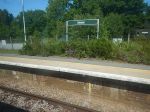



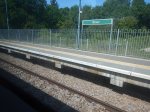


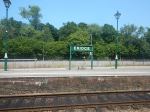
The platform edges are a very mixed bunch.
- Some are only a couple of years old and were built, as part of new platform extensions.
- Some were built using pre-fabricated components.
- Some are of fairly indeterminate age.
- The ones at Eridge station probably date from when the station was opened in 1868.
I would suspect that your patio is in better condition than some of these important interfaces between train and platform.
So why did I photograph them?
In First Of A Kind Funding Awarded For 25 Rail Innovation Projects, Project Number Number 4 from Sheffield Hallam University was entitled Illumin Heated Concrete Platform Coper Slabs and was described like this.
Illuminated and heated low-energy concrete slabs for station platforms, which automatically switch on in freezing conditions to help prevent passengers from slipping on ice.
Some more information was given in Heated Railway Platforms Tested To Avoid Ice Accidents.
Could these platforms be fitted to a set of platform edges like these?
I would hope so.
If so, new smoother platforms and not just the edges, would also hope to cut small falls.
The World’s First Bi-Mode Hydrogen-Electric Train
This news page on the University of Birmingham web site is entitled HydroFLEX Secures Funding For Hydrogen-Powered Train Design.
The page is mainly about the new funding from Innovate UK, that I wrote about in First Of A Kind Funding Awarded For 25 Rail Innovation Projects, but it also includes this significant paragraph.
As well as being the UK’s first hydrogen-powered train, HydroFLEX is also the world’s first bi-mode electric hydrogen train. It will be undergoing mainline testing on the UK railway in the next few weeks.
One of my disappointments in the design of the Alstom Coradia iLint, is that, it is designed as a hydrogen-power only train, where it could surely have had a pantograph fitted, for more efficient working.
Consider.
- I suspect many hydrogen-powered trains will only be doing short distances, where electrification is not available, so daily distances under hydrogen power could be quite short.
- In the UK, a smaller hydrogen tank would certainly ease the design problems caused by a large fuel tank.
- There have been improvements in hydrogen storage in recent years.
The funding award to the project talks about raft production, so are the engineers, aiming to design a hydrogen power-pack on rafts, that could be fitted underneath the large fleets of retired electric multiple units, that are owned by Porterbrook.
Now that would be a game changer.
- Porterbrook have thirty-seven Class 350 trains, that will be replaced in the next few years by new trains. The electric trains are less than a dozen years old and Porterbrook have been talking about fitting batteries to these trains and creating a battery/FLEX train. Would making these trains bi-mode hydrogen-electric trains be better?
- Birmingham wants to open up new rail routes in the city on lines without electrification. What would be better than a hydrogen powered train, designed in the city’s premier university?
- Routes from Birmingham to Burton-on-Trent, Hereford, Leicester, Shrewsbury, Stratford-on-Avon and Worcester would be prime candidates for the deployment of a fleet of bi-mode hydrogen-electric trains.
- Birmingham have already asked ITM Power to build a hydrogen filling station in the city for hydrogen buses.
First Of A Kind Funding Awarded For 25 Rail Innovation Projects
The title of this post, is the same as that of this article on Railway Gazette.
This is the introductory paragraph.
The Department for Transport and Innovate UK have announced the 25 projects which are to share £9·4m of funding under the 2020 round of the First of a Kind rail industry innovation programme.
It appears to be a longer list, than I’ve seen previously awarded.
Project 1 Train Swap From Seatfrog Ops
Seatfrog is an app, that enables passengers to quickly and remotely update their seat reservation to a different service.
It already appears to be in use with Avanti West Coast, CrossCountry, GWR and LNER.
This application could have legs, as it looks a bit like eBay for First Class seats.
Project 2 Dynamic Capacity Management From Esoterix Systems Ltd
It is described as follows.
Ticketing that adjusts to travel patterns and rewards particular choices, using a monthly subscription that will help customers to save money on a large upfront fee.
Their web site doesn’t give much specific detail, as I write this.
Project 3 Next Generation Composite Poles For A 5G Enabled Railway From Hive Composites
It is descrtibed as follows.
Installation of lightweight composite poles along railways to improve wi-fi speed, consistency and connectivity.
Their web site doesn’t give more specific detail, as I write this.
Project 4 Illumin Heated Concrete Platform Coper Slabs From Sheffield Hallam University
It is described as follows.
Illuminated and heated low-energy concrete slabs for station platforms, which automatically switch on in freezing conditions to help prevent passengers from slipping on ice.
The Sheffield Hallam University doesn’t give more specific detail, as I write this.
Project 5 LAMINAR From iProov
It is described as follows.
iProov, WorldReach Software and Eurostar are to establish a walk-through ’facial biometric corridor’ at London St Pancras International to allow passengers to complete ticket checks and border exit processes without needing to come into contact with people or hardware.
There is more on the iProov web site.
I think, this could be the way to ensure safe train travel in these pandemic times.
It would certainly cut queues.
Project 6 Track-To-Train Communications To Transport for Wales From Ingram Networks
It is described as follows.
Lab-based study into cost-effective 10 Gbps+ trackside to train communications infrastructure, to be tested on an 8 km heritage railway in Leicestershire.
Their web site doesn’t give more specific detail, as I write this.
Project 7 Prototype Zero Emissions Trac Rail Transposer (TRT-e) From Unipart Rail
This is described as follows.
A zero-emissions machine which removes and replaces rails.
The Unipart Rail web site, doesn’t give more specific details as I write this
Will it be battery or hydrogen-powered?
Project 8 LoCe: Less Oil, Cleaner Exhaust From Porterbrook Leasing
This is described as follows.
£400 000 to support Porterbook, Eminox, Bosch Rexroth and DG8 in retrofitting a Bombardier Class 170 Turbostar DMUs leased to East Midlands Railway with with Eminox SCRT technology to evaluate whether this can reduce CO, particulate, hydrocarbon and NOx emissions to make mid-life diesel engines more environmentally sustainable.
There is more on Porterbrook’s web site.
Project 9 Zero Emission Rail Freight Power From Steamology Motion
This is described as follows.
Hydrogen-based steam turbine system to provide zero emission power for existing freight locomotives.
In Steam, But Not As You Know It…, I give more details of their technology.
Could Steamology Motion really be on the verge of reengining a Class 66 locomotive with a zero-carbon steam technology that uses hydrogen and oxygen as a fuel?
Project 10 Daybreak From Riding Sunbeams
This is described as follows.
A direct connection between renewable energy generation and overhead electrifcation systems.
There is more on this page on the Riding Sunbeams web site.
Project 11 Resi-Glaze From FAR-UK
This is described as follows.
Resilient glazing solution to ensure passenger safety on trains and a potential CO2 emissions saving.
I can’t find anything more about this.
Project 12 HydroFLEX Raft Production From BCRRE
This is described as follows.
£400 000 grant to support final production design and testing by the University of Birmingham and Porterbrook of a hydrogen power pack intended to minimise the loss of passenger saloon space.
Just reading the extract, it seems that the University of Birmingham have found a solution to the big problem of hydrogen-powered trains in the UK; the small loading gauge.
Project 13 Low Environmental Impact Composite Footbridge From Associated Utility Supplies
This is described as follows.
A footbridge made entirely from fibre reinforced polymer, which is designed to be significantly easier to install than an equivalent steel bridge to help reduce network disruption and local environmental damage.
Could their share of the £9.4 million, almost build the first footbridge?
Looking at the Associated Utility Supplies web site, amongst the wide range of equipment, that they source for various industries, where danger is ever present, there are no footbridges.
So did their expertise and that of some Network Rail engineers, all come together in a convivial meeting to produce an innovative design of footbridge?
Project 14 Integrated Optical Fibre Sensing (OptRail-PRO) From rcm2
This is described as follows.
Optic fibre sensors to monitor the condition of switches and crossings.
The rcm2 web site doesn’t give more specific details, as I write this.
Project 15 Train Axle Crack Monitoring From TAMON – Perpetuum
This is described as follows.
Using sensors and pattern-recognition technologies to identify cracks in axles, helping to reduce returns to depot.
Perpetuum seem a very capable company.
Project 16 High Speed Cryogenic Blasting For Rail Cleaning To Alleviate Low Adhesion From Sheffield University
This is described as follows.
High speed cryogenic cleaning system for tracks to prevent low adhesion and slow running of trains.
This article on the BBC, which is entitled Dry ice ‘could stop leaves on line rail delays’, explains the technology.
Dry Ice Blasting is also explained on this page on the IceTech Technologies web site.
As the dry ice is carbon dioxide, will the Green Movement object?
The Wikipedia entry for dry ice blasting says this about its environmental effects.
Dry ice blasting is an environmentally responsible cleaning method. Dry ice is made of reclaimed carbon dioxide that is produced from other industrial processes, and is an approved media by the EPA, FDA and USDA. It also reduces or eliminates employee exposure to the use of chemical cleaning agents.
Compared to other media blasting methods, dry ice blasting does not create secondary waste or chemical residues as dry ice sublimates, or converts back to a gaseous state, when it hits the surface that is being cleaned. Dry ice blasting does not require clean-up of a blasting medium. The waste products, which includes just the dislodged media, can be swept up, vacuumed or washed away depending on the containment.
It appears it could be one of those processes, that when it replaces a traditional method, has more benefits than disadvantages.
Project 17 InnoTamp From Fugro
This is described as follows.
Data gathering to ensure the maintenance of optimum rail alignment.
The project is described on this page of the Fugro web site.
Prokject 18 Thermal Radiometry For The Remote Condition Monitoring Of Railway Vehicles From Rail Innovations
This is described as follows.
Using thermal radiometry camera technology to measure temperatures of mechanical systems on moving trains, sending automatic alarms in the event of over heating.
I can’t find any more information on this project.
Project 19 Minimising Disruption Of Overhead Line Renewals Via Novel Headspan Assemblies From Associated Utility Supplies
This is described as follows.
Span wire clamping system to enable rapid, low-cost overhead line equipment headspan renewals with minimum network disruption.
This is a second project from the same company.
Project 20 Trainserv Software User Trial And Preparation For Commercialisation From Cogitaire
This is described as follows.
Integrating multiple sources of real-time data for use by rail workers to help them improve services and respond to incidents.
Cogitare seem a very capable company.
Project 21 Cleartrak On-Train Testing From Garrandale
This is described as follows.
Innovative and efficient system for processing toilet waste, reducing cost and maintenance requirements.
Ptoject 22 IRIS: Information System For Railway Station Staff From Liverpool John Moores University
This is described as follows.
An information system for frontline station staff to enhance communication and enable them to help passengers in making travel decisions and planning more effectively.
Another project from a University.
Project 23 Railway Optical Detection & Obstructions – Tunnel & Station Monitoring From Vortex IoT
This is described as follows.
Sensors and data analysis tools to detect and identify intrusion and obstructions on the track, and send real-time situational alerts to the rail control centre to prompt further investigation.
This page on the Vortex IoT web site shows some of the technology they will use.
Project 24 Improving Resilience Through A Surface Water Flooding Decision Support System from IBA Consulting
This is described as follows.
This project seeks to develop a first of a kind surface water flood forecasting and early warning system for Network Rail using technology and data to map the surface water flood likelihood in real time, ahead of the event and forecast rainfall intensity.
I can’t find the company or this project.
Project 25 Improved Railway Operations Through Train-Mounted Water Addition From CoCatalyst
This is described as follows.
Spraying a small amount of water from the train when slippery rails are detected to improve traction and braking, and prevent subsequent services from being affected.
There’s a detailed description on this page on the Water=Trak web site.
This looks to be a simple idea, that may be significant, to stop wheel slippage.
Conclusion
The ideas are more numerous than usual and they are a very wide-ranging bunch.
In Grants To Support Low-Carbon Technology Demonstrators, which were a similar group in 2019, that were also funded by Innovate UK, there were only five projects.
I also feel, some could have significant export opportunities.

