Why Are Liverpool Good At Transfers?
This question was asked on BBC Radio 5, about Liverpool Football Club.
As an alumni, I raise money for cancer research at Liverpool University.
I get the impression, the University has no problem getting the best researchers to come to the Second City of England!
Everybody in the World has heard of Liverpool!
TfGM Announces Contactless Payments On Metrolink Trams
The title of this post, is the same as that of this article on Rail Technology Magazine.
This is the first paragraph.
Passengers will be able to ‘touch-in’ using their contactless cards on Manchester Metrolink trams from July 15, Transport for Greater Manchester (TfGM) announced today.
I shall be there with my contactless credit card on Monday week, to check that this is not fake news.
I look forward to the day, when Liverpool, Manchester, Sheffield and Leeds are all one contactless card area for trams, trains and buses.
When you consider that the combined area will be smaller than Greater London’s contactless area and that the distance between Lime Street and Leeds or Sheffield, is less than Reading to Shenfield, which will be contactless when Crossrail opens, the problems can’t be technological.
If the leaders of the four major Northern cities can agree this advance in ticketing, they will do more for the North, than any other short-term transport development will achieve.
Transport for Wales Is Invading England
There is an article in the July 2019 Edition of Modern Railways, which is entitled TfW Targets Swansea To Bristol Services.
This is the first paragraph.
Transport for Wales Rail Services is aiming to start an open access service between Swansea and Bristol Temple Meads, commencing in December 2020.
These are characteristics of the proposed service.
- Hourly service
- Calls at Neath, Port Talbot Parkway, Bridgend, Cardiff Central, Newport, Severn Tunnel Junction and Filton Abbey Wood stations.
- Sixteen services per day will run Monday to Saturday in both directions, with twelve services on Sundays.
- Trains will be Class 170 or Class 175 diesel trains.
Looking at current times of sections of the route, I suspect that services could take a few minutes under two hours and would need four trains.
Reasons given for planning the service include.
- Long-term political pressure.
- Welsh ministers abandoning plans for the £1.6 billion M4 Relief Road around Newport.
- Cross-Severn road traffic has increased after abolition of tolls.
- Main roads on either side of the Severn are congested.
- Increased house sales in South Wales to people who work in the Bristol area.
Incidentally, before I read the article, if you asked me, I’d have thought there would be a direct service.
My only thought about the service, is that as there will be electrification between Bristol and Cardiff, why not run a proper fast bi-mode train like a Hitachi Class 800 train or a Stadler Class 755 train. The latter of which Transport for Wales have on order, for delivery in 2023.
The Class 755 train or its Welsh cousin, could be an interesting option.
- The distance without electrification between Cardiff and Swansea is 46 miles.
- Transport for Wales tri-mode version of the Class 755 train could have three batteries and a diesel engine in the four slots in the powrpack car.
Could it have the capability of jumping the gap.
Birmingham Services
The article also says that, Transport for Wales are also planning to extend their services that terminate at Birmingham to Coventry.
- Holyhead and Birmingham New Street takes three hours.
- Aberystwyth and Birmingham New Street takes three hours
- Pwllheli and Birmingham New Street takes five hours
As Birmingham and Coventry takes twenty minutes or perhaps a convenient hour to go to Coventry and return with a relaxed turnround, does the extension make these three long services simpler to operate?
Extra positioning services from Crewe to Coventry in the morning and return in the evening are also proposed.
These would also suggest that improving the ease of operation of these services is the reason for the extension to Coventry.
Liverpool Services
The article also says that these services to Liverpool will be added in 2022.
- An hourly service to Llandudno.
- A two-hourly service to Cardiff.
It isn’t said, if one of these services is an extension to the recently launched Liverpool and Chester service.
Conclusion
The Welsh are getting ambitious.
Cadent Launches Report Mapping Out Routes To Hydrogen Fuelled Vehicles On UK Roads
The title of this post is the same as that of this article on Gasworld.
This is the first paragraph.
A roadmap using hydrogen to decarbonise transport, particularly commercial transport, in the North West of the UK, has been unveiled by the country’s leading gas distribution network Cadent.
The article makes some points about hydrogen-powered transport.
- Using Cadent’s network to deliver hydrogen, rather than tube trailers, massively reduces the cost and makes fuel cell electric cars (FCEVs) available to the general public for around the same price as a battery electric vehicle or a conventional diesel car.
- FCEVs can travel further than battery electric vehicles and take the same time to refuel as a conventional petrol car.
- Grid-supplied hydrogen is the most cost-effective way of supplying hydrogen transport fuel at the required volume – up to six times cheaper than if delivered by trailer and 70 per cent cheaper than electrolysis.
Cadent‘s interest in all this, is not about selling gas, as their interest and income is totalling in transporting gas from producers to end users. So they don’t care whether they transport natural gas or hydrogen.
Hydrogen Storage
The article also discloses plans of INOVYN, a wholly owned subsidiary of INEOS, to develop a grid-scale hydrogen storage facility.
It will be in salt caverns in mid-Cheshire.
It will be able to hold 2,000 tonnes of hydrogen.
It is cheaper to store hydrogen in salt caverns, than on the surface.
The salt caverns have been used to store gas for decades.
This is a quote from the INOYN spokesman.
Storage is a vital component of delivering a viable hydrogen energy system in the UK.
I only had an indirect quick glimpse underground, when I worked at ICI in the area around 1970, but ICI’s salt expert, said they had enough salt in Cheshire to last 9,000 years at the current rate of extraction.
Salt in Cheshire, is a unique geological formation, that is very valuable to the UK and it looks like in the future, thar could enable hydrogen power.
Hydrogen Generation
The hydrogen will still need to be produced. Wikipedia has an entry caslled Hydrogran Production, which is fairly dismissive of electrolysis.
But in my view, hydrogen could be produced by electrolysis using wind power, as other methods like steam reforming of methane produce carbon-dioxide.
I particularly like the idea of building wind farms in clusters around offshore gas platforms, that have extracted all the gas from the fields, they were built to serve.
- Instead of running electricity cables to the wind farms, hydrogen is produced by electrolysis on the platform and this is transported to the shore using the same gas infrastructure, that brought the natural gas onshore.
- This could enable wind-farms to be developed much further offshore.
- If carbon capture is ever successfully made to work, the existing gas pipe could also be used to transfer the carbon dioxide offshore for storage in worked-out gas fields.
- The pipe between platform and shore could easily be made reversible, carrying hydrogen one way and carbon dioxide the other.
All of the technology required would also appear to be fully developed.
Conclusion
I am convinced that in the next few years, a hydrogen gas network can be created in parts of the UK.
The North West has advantages in becoming one of the first parts of the UK to have an extensive hydrogen network.
- It has the means to produce hydrogen gas.
- It has large wind farms in Liverpool Bay.
- There are worked-out gas fields, that might in the future be used for carbon storage.
- If INOVYN can store large quantities of hydrogen, this is a big advantage.
The biggest problem would be converting large numbers of houses and commercial premises from natural gas to hydrogen.
But, we’ve been through that process before, when we changed from town gas to natural gas in the 1960s and 1970s.
Should We Remove Gas From Our Houses?
I only use gas for heating.
- I feel that naked flames are not a good idea to have anywhere near people, as they can produce oxides of nitrgen, that causes health problems.
- Gas cookers are also a major cause of household fires.
- Technology is moving against cooking with gas, as more more to electric induction hobs.
- If you are fitting a new gas boiler, make sure it can be connected to hydrogen.
When I buy my next property, it will be all electric.
Hillside Station To Go Step-Free
This document on the Government web site is entitled Access for All: 73 Stations Set To Benefit From Additional Funding.
Hillside station in Liverpool, is on the list.
These pictures show the station and the current station building, which is on a bridge.

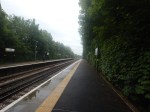
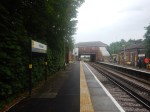
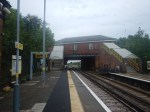
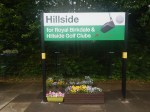

This 3D Google Map shows the station.

Note.
- The station appears to have a large forecourt.
- The stairs to the platforms have thirty-two steps.
- There could be enough space for lifts outside the platforms.
But will a simple solution, be able to cope with major events like the Open Championship at Royal Birkdale?
Perhaps something more radical, but very possible will be done.
One idea, could be to extend the station building at both ends.
- A set of wide safe stairs and a lift could provide direct access from the street to the platform in the extensions.
- Once installed, the original stairs could be removed.
There are certainly possibilities for an architect to develop a solution to cope with the biggest events.
St Michaels Station To Go Step-Free
This document on the Government web site is entitled Access for All: 73 Stations Set To Benefit From Additional Funding.
St. Michaels station is on the list.
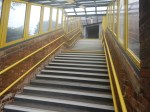
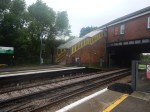
These pictures show the current station.
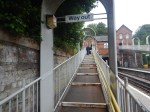
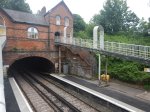
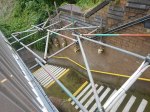
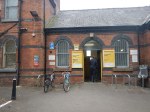
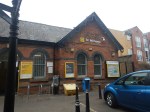
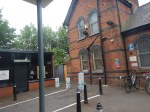

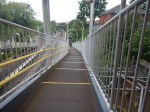
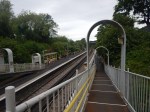
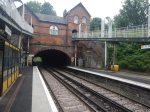
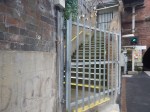
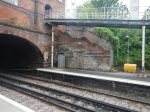
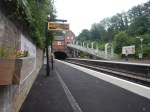
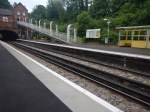
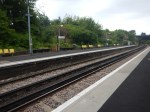
St Michaels station, like Hunts Cross station, has rather unusual long shallow angle ramps, with steps.
This 3D Google Map shows the station.
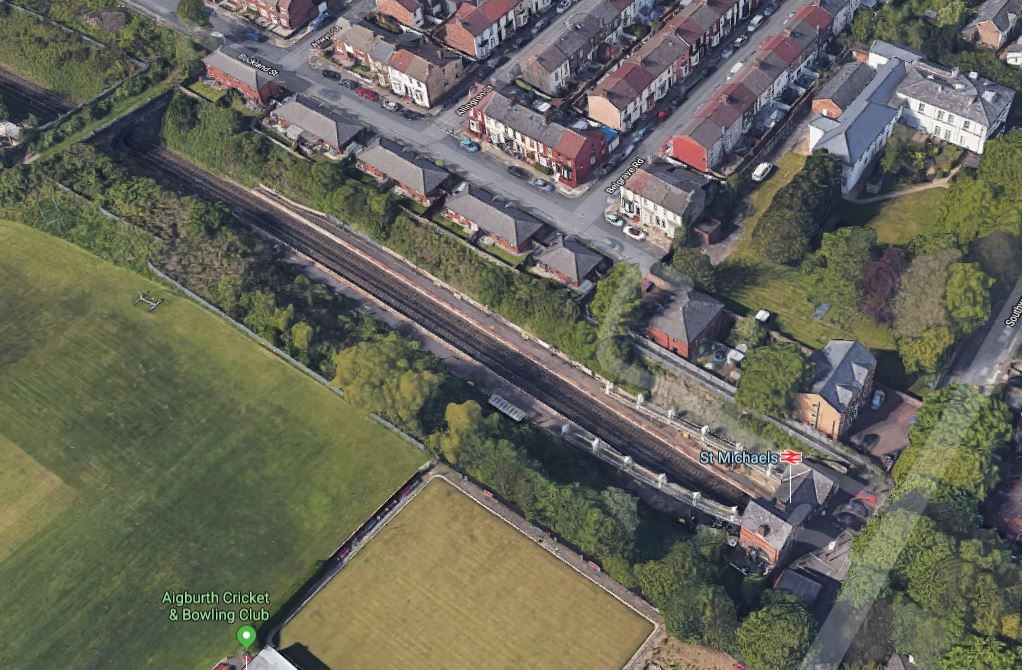
Note.
- It is a well-appointed and well-maintained station with a Ticket Office, a toilet and cycle storage and hire.
- Car parking is very limited.
- But the station is designed for pedestrians, cyclists and visitors
- The station has a rather chequered history, being closed in 1972, only to be reopened six years later.
- I think the design of the ramps is a good example of independent Liverpudlian thinking, which often ignores conventional practice.
The ramps were built for International Garden Festival in 1984, the site of which is shown on this second Google Map.
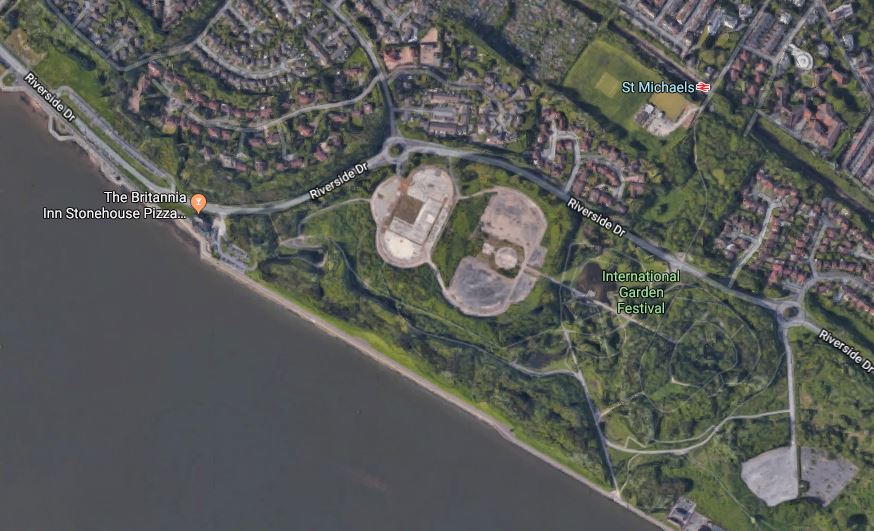
St. Michaels station is in the top-right corner of the map.
The International Garden Festival site has since been updated and 1300 new houses are being built on the site.
Adding step-free access to the station, will surely be a big asset to the area.
Preparation For Class 777 Trains
Note that St. Michaels station has been updated to allow step-free access between the new Class 777 trains and platform.
According to a fellow traveller, it had been done at night with little inconvenience to passengers.
Installing The Lifts
I would suspect, that the two new lifts could be installed in the space currently occupied by the two disused stairways.
Conclusion
This is the type of station that needs step-free access.
- It will make nearby developments more desireable.
- It will facilitate walking with children and for those in wheelchairs.
- It will increase traffic at the station.
I would also suspect the lifts can be added without too much disruption to the travelling public.
I also think there a lesson in the chequered history of St. Michaels station.
Next time a station or even a whole line has to be closed, make sure that it can be reopened, if necessary in the future. To many useful stations like Horden and Maiden Lane have been reduced to rubble. The former is being rebuilt and many believe the latter is needed.
Hunts Cross Station To Go Step-Free
This document on the Government web site is entitled Access for All: 73 Stations Set To Benefit From Additional Funding.
Hunts Cross station is on the list.
These pictures show the station and the current bridge.
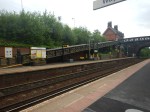
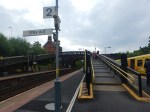
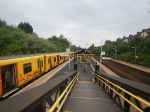
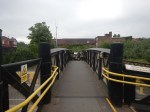
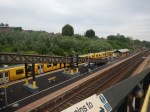
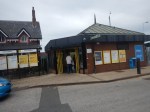
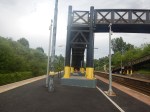
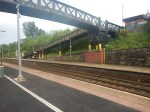
Hunts Cross station, like St. Michaels station, has rather unusual long shallow angle ramps, with steps.
This 3D Google Map shows the station.
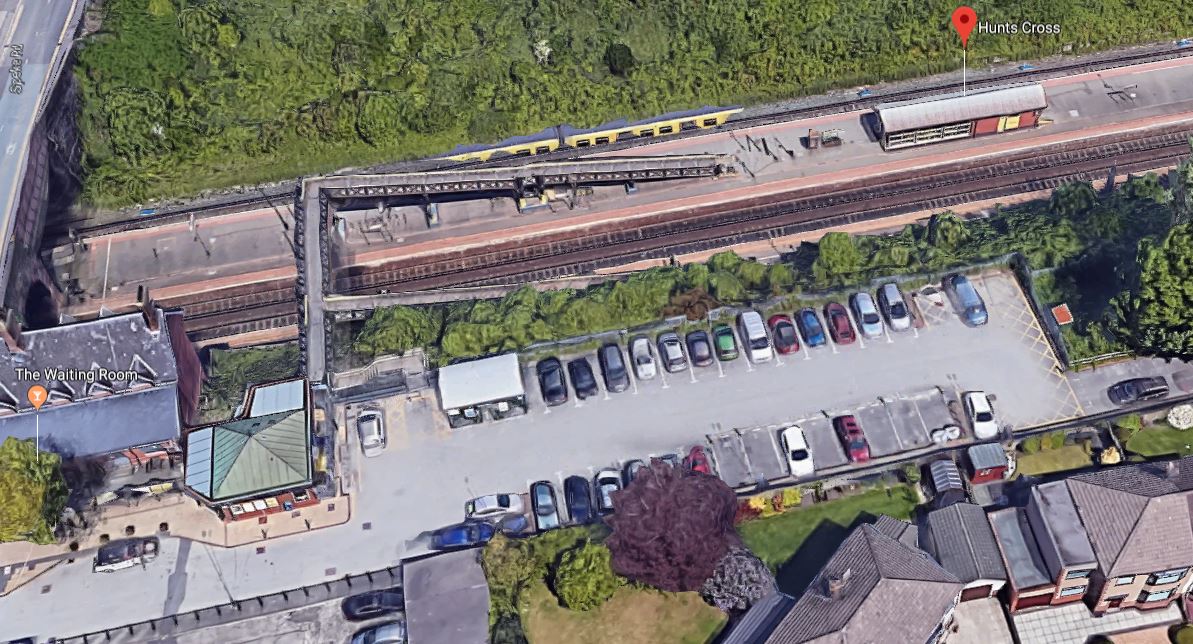
It may be unusual, but I suspect a conventional lift tower on each platform would make the station fully step-free.
Note.
- The station is Grade II Listed and is described as”A good example of the stations built for the Cheshire Lines Committee.”
- The ramps and bridge look to be in excellent condition and could be reasonably recent. Some repainting was actually in progress.
- For those that are in need of a drink, after climbing the ramps, there is a handy pub called the Waiting Room. It was busy, when I went to the station.
- As well as providing step-free entrance and exit to the station, the lifts would provide step-free interchange for passengers from Manchester needing to transfer to Merseyrail.
- Passengers arriving at the station, who need to go to Manchester, would do as they do now and walk across the platform.
- Do the last two pictures in the gallery show that the bridge was built or has been modified for lifts to be added? The bridge seems to have a lower wall, which could be removed.
- There may be some adjustments needed to the path that Links the station entrance to the bridge.
I’m also pretty certain, that the layout of the station, would allow works to be done, whilst the station is in full operation.
Preparation For Class 777 Trains
Unlike most other stations, that I saw on on the Merseyrail network, work appears to be outstanding to create level access between the new Class 777 trains and platform.
Future Electrification
The bridge would appear to be high enough to clear any future 25 KVAC electrification.
Conclusion
This shouldn’t be the most difficult of projects, unless the Heritage Lobby get upset.
The only problem, I can see would be, it might attract more passengers and create a need for a larger car park.
What Would Be The Best Result In The Manchester Derby?
Despite supporting Ipswich since our next door neighbour in Felixstowe took me at the end of the Ramsey era, I have affections for two other clubs.
As a child and teenager living in London, I did what my father had done in his youth and regularly went to see Spurs at White Hart Lane.
My father would tell stories about how he was at the Cup Final in 1921 and how before the Great War, his father would take them to the game in a pony and trap. My grandfather would give a kid a shilling to hold the horse’s head during the match.
Then in the 1960s at Liverpool University, I regular went to see both of the Liverpool clubs, although I identified more with Liverpool.
Perhaps because inh those years they played the better football and were more successful!
So who do I want to win the Manchester Derby?
Certainly not United, as in the 1950s, I lived next door to the most obnoxious United supporter, who rammed them down mine and my father’s throats at every opportunity.
I actually think, that both Spurs and Liverpool, would be happy with an extremely hard-fought goal-less draw at Old Trafford tonight!
New Facility To Power Liverpool’s Buses With Hydrogen
The title of this post is the same as that of this article on Air Quality News.
These are the first three paragraphs.
Arcola Energy will build a facility to develop hydrogen and fuel cell technology for buses near Liverpool.
The company has secured 15,000 sq. ft of newly-built premises in Knowsley which will house the company’s manufacturing, installation and maintenance facilities.
The manufacturing area of the new site will be used to produce and install hydrogen fuel systems into a fleet of double-decker buses for the Liverpool City Region, after the city region was awarded £6.4m for the project by the Office for Low Emission Vehicles.
The article says this about the design of the buses.
The buses have been developed through a partnership between Arcola and Alexander Dennis, the world’s largest double-decker bus manufacturer.
Arcola Energy‘s Head Office is just round the corner from where I live, by the Arcola Theatre in Dalston.
Direct Trains Between Liverpool Lime Street And Norwich
In my wanderings around the UK, I very often come across this service and use it for short trips between two major towns or cities many miles from both Liverpool and Norwich.
The Current Service
Currently, the service is run by East Midlands Trains and is usually a two-car Class 158 train. Although, I have seen the service worked by a pair of these trains.
The route is very comprehensive with calls at Liverpool South Parkway, Widnes, Warrington Central, Manchester Oxford Road, Manchester Piccadilly, Stockport, Sheffield, Chesterfield, Alfreton, Ilkeston, Nottingham, Grantham, Peterborough, Ely and Thetford.
The service always seems to be full and I suspect that in addition to offering useful routes like Manchester-Sheffield, Liverpool-Nottingham and Nottingham-East Anglia, it is often a convenient route for some long distance business and family travellers.
The major problem for a train operator is that it needs a lot of rolling stock to provide a service.
Liverpool to Norwich takes five and a half hours, so to provide the hourly service probably needs as many as a dozen trains.
This extract comes from the East Midlands Trains section in Wikipedia entry for the Class 158 train.
The hourly Norwich to Liverpool service has been criticised for overcrowding, especially between Liverpool and Nottingham. This resulted from the Department for Transport specifying two-coach units in the EMT franchise starting in November 2007. In the light of persistent and excessive overcrowding, with some passengers being left behind on occasions, the DfT eventually admitted that it had made a mistake. Various cascades of other units enabled more Class 158 stock to be released for this route, and from the December 2011 timetable change the busiest services have been lengthened to four-coach trains between Liverpool and Nottingham, with units splitting and joining at Nottingham as necessary, two-coach trains being regarded as adequate between Nottingham and Norwich. Further services on this route were strengthened from December 2012.
Running a pair of Class 158 trains on the route between Liverpool and Nottingham, does seem to ease problems there, but I’ve encountered bad over-crowding at the Eastern end too.
Improvements On The Route
Several improvements or changes of rolling stock have or are taking place in the next few years.
Increased Capacity At Liverpool Lime Street
This is detailed in the 2017-2018 Station Remodelling section of the Wikipedia entry for Liverpool Lime Street station.
- Two new platforms are being added.
- Platforms are being lengthened.
In addition there are improvements on the approaches to the station.
Ordsall Chord And Related Improvements In Manchester
The Liverpool-Norwich service calls at both Manchester Oxford Road and Manchester Piccadilly stations, although it doesn’t use the new Ordsall Chord.
But I can’t believe that the Liverpool-Norwich service won’t be affected by all the works in Manchester.
Hope Valley Line Improvements
This article on Rail Technology Magazine is entitled Long-Awaited Hope Valley Line Plans Given The Green Light.
Improvements to the Hope Valley Line between Manchester and Sheffield include.
- A loop to allow passenger trains to overtake slow freight trains.
- Removal of a foot crossing.
- Improvements around Dore and Totley station.
This is said on this document on the Transport for the North web site, which announces the Hope Valley improvements.
The new passing loops will mean three fast trains can run per hour between Sheffield and Manchester, one every 20 minutes, freight and stopping trains every hour, and a fast Manchester-Nottingham and East of England service every hour.
If nothing else, the extra capacity between Manchester and Sheffield, will reduce reliance on the Liverpool-Norwich service.
Improvements To The Midland Main Line
The Midland Main Line is not being electrified between Nottingham and Sheffield, but other improvements have taken place over the last few years.
- In particular, the Erewash Valley Line has been improved and a new station at Ilkeston has been added.
- The Liverpool-Norwich service calls at stations on this by-pass.
- The line has been resignalled.
Would a train with a 125 mph capability, as opposed to the 90 mph operating speed of the Class 158 train, allow a faster service?
East Coast Main Line Running
The 90 mph Class 158 trains must present pathing problems on the East Coast Main Line, whereas a 125 mph train could mix it easier with the high speed trains.
Greater Anglia’s Plans
Greater Anglia have ordered a fleet of Class 755 trains.
- The trains are bi-mode.
- The trains have a 100 mph operating speed.
- Greater Anglia have ordered fourteen three-car and twenty-four four-car trains.
Greater Anglia will be replacing 27 diesel trains, that consists of 58 carriages, with 38 bi-mode trains, that consist of 138 carriages.
- There are forty percent more trains.
- There are a hundred and thirty-eight percent more carriages.
- Average train length of the diesels is 2.1 carriages, wheres that of the bi-modes is 3.6.
There are two possible reasons for these large number of trains.
- Abellio have decided to buy a few bi-modes for their other franchises.
- There is going to be a massive expansion of train services in East Anglia.
Two of the new bi-mode services interact with the Liverpool-Norwich service.
- Colchester to Peterborough via Ipswich, Bury St. Edmunds and Ely
- Norwich to Stansted Airport via Ely and Cambridge.
Both services are thought to be hourly.
Consider the Colchester to Peterborough service.
- I estimate that trains will take around two hours.
- The round trip could be under five hours, even with a generous turn-round at both ends and perhaps a wait at Ipswich.
- The waits would allow connecting passengers to join the train.
- A five hour round trip would need five Class 755 trains.
- I would choose four-car trains, as the route can get crowded.
Could the Colchester to Peterborough service be considered as an extension of the Liverpool-Norwich service, that serves Bury St. Edmunds, Ipswich and Colchester?
I think it could if the trains were timed appropriately.
- Passengers from Liverpool to Ipswich, would change at Peterborough or Ely to the Peterborough to Colchester train, which would arrive a few minutes after the Liverpool to Norwich train.
- Passengers from Ipswich to Liverpool, would change at Ely or Peterborough to the Liverpool train, which would arrive a few minutes after Colchester to Peterborough train.
Hopefully, the change would not require a platform change.
Consider the Norwich to Stansted Airport service.
- I estimate trains will take about one hour and fifty minutes.
- The round trip would be four hours and would need four Class 755 trains.
- I would choose four-car trains, as the route can get crowded.
Could the Norwich to Stansted Airport service be equally spaced with the Liverpool-Norwich service between Ely and Norwich to give a clock-face two trains per hour (tph)?
These services call at Ely
- CrossCountry -Birmingham to Stansted Airport
- East Midlands Trains – Liverpool to Norwich
- Greater Anglia – Peterborough to Colchester
- Greater Anglia – Norwich to Stansted Airport
- Great Northern – Kings Lynn to Kings Cross
Totalling them up gives the following frequencies to various stations.
- Bury St. Edmunds/Ipswich/Colchester – 1 tph
- Cambridge North/Cambridge – 3 tph
- Kings Lynn – 1 tph
- Norwich – 2 tph
- Peterborough – 3 tph
- Stansted Airport – 2 tph
I suspect that the services will be arranged so there are convenient interchanges. No-one wants to spend an hour on a draughty Ely station waiting for the next train.
I also suspect that Greater Anglia will use some of their extra trains to improve connectivity at Ely.
Speed Limits On The Route
Speed limits on the route are rather variable.
- Liverpool to Manchester via Warrington is limited to 85 mph
- The Hope Valley Line between Manchester and Sheffield is 90 mph
- The proportion of the Midland Main Line, where 125 mph running is possible, is being increased.
- Grantham to Peterborough on the East Coast Main Line allows 125 mph running.
- The Peterborough to Ely Line is limited to 75 mph.
- The Breckland Line between Ely and Norwich is limited to 75- 90 mph.
I feel that increasing speed limits on some parts of the line would help the Liverpool to Norwich service.
But surely, a train with a 125 mph-capability would help with journey times and train timetabling between Sheffield and Peterborough.
But on the rest of the route, trains with this speed capability, wouldn’t be needed.
Rolling Stock Choices For Liverpool Lime Street And Norwich
Various choices include.
Class 158 Trains
Everything could carry on as now using Class 158 trains
- Two two-car trains working ass a pair would go from Liverpool Lime Street to Nottingham.
- The trains would divide at Nottingham.
- One train would go on its way to Norwich, and the other would wait at Nottingham to join with the train returning from Norwich.
With all the new diesel multiple units arriving in the next few years, I think it is likely that more Class 158 trains could be made available to strengthen the service.
The trouble with the Class 158 trains, is that with only a 90 mph operating speed, they can’t take advantage of the sections of the route where 125 mph running is possible.
Class 170 Trains
These trains were built as successors to the Class 158 trains.
- They are more modern.
- They are 10 mph faster.
- Most are three cars.
But they are still not fast enough for the 125 mph sections of the route.
A Second Service Between Liverpool And Nottingham
Improvements on the Hope Valley Line and in Liverpool and Manchester, might make it possible to run a much-needed second service between Liverpool and Nottingham via Manchester, Stockport and Sheffield..
This extra service could use the same trains as the full service.
Currently, the direct service between Liverpool Lime Street and Nottingham takes two hours thirty five minutes. In some ways, this is a problem, as if the timing was say two hours twenty minutes, a five hour round trip would be possible.
This would mean that the second service would need just five trains.
I doubt that Class 158 trains could meet this schedule, so more would be needed.
Class 800 Trains
Class 800 trains are 125 mph bi-mode trains, but are they fast enough on diesel to make real differences to the timetable by running fast on the Midland Main Line?
I think not!
So more trains would be needed to run the service.
Bombardier’s Proposed 125 mph Bi-Mode
A genuine 125-mph bi-mode, with that performance on both electricity and diesel, would be a totally different matter.
- Timings between Liverpool and Nottingham would drop to perhaps two hours twenty, thus allowing a five hour round trip.
- Timings between Liverpool and Norwich would drop to perhaps four hours fifty, thus allowing a ten hour round trip.
Even so a full service would require fifteen trains.
Bombardier have proposed a train of this type and I wrote about it in Bombardier Bi-Mode Aventra To Feature Battery Power.
In my view, this small exercise shows why some routes in the UK need a 125 mph bi-mode.
If the train can’t do 125 mph, where it is possible on the Midland and East Coast Main Line, the time savings on the route won’t be possible and more trains will be needed to run the service.
One great advantage is that the trains working this route could be the same as those working the main routes of the East Midlands franchise to and from London.
Short Formation InterCity 125 Trains
The forty-year-old InterCity 125 trains have the power and the speed to match the 125 mph bi-mode trains.
Short formation with four or five passenger cars between the two Class 43 locomotives are being used by Scotrail and Great Western Railway, but to use them on Liverpool to Norwich would require another fifteen trains to be updated, which is probably not as cost effective as new 125 mph bi-modes.
Conclusion
If service between the Liverpool Lime Street and Norwich is to continue in its present form, it needs 125 mph bi-more trains.

