Could Merseyrail’s Class 777 Trains Run As Tram-Trains On The Manchester Metrolink?
Look at the main dimensions of the Stadler Class 777 train destined for Merseyrail and the current M5000 tram of the Manchester Metrolink. I have also added the dimensions of the Stadler Class 399 tram-train, that is running on the Sheffield Supertram network.
Class 777 train
- Width – 2.82 metres
- Height – 3.82 metres
- Floor Height – 0.96 metres
- Overall Length – 64.98 metres
- Capacity – 190 seats and 302 standing – 492 total
- Operating Speed – 75 mph
M5000
- Width – 2.65 metres
- Height – 3.67 metres
- Floor Height – 0.90 metres
- Overall Length – 28.4 metres
- Double Length – 56.8 ,metres
- Capacity – 60 or 66 seats and 146 standing – 206 or 212 total
- Operating Speed – 50 mph
Class 399 tram-train
- Width – 2.65 metres
- Height – 3.72 metres
- Floor Height – 0.425 metres
- Overall Length – 37.2 metres
- Capacity – 96 seats and 140 standing – 236 total
- Operating Speed – 62 mph
Note.
- Vehicle width and height could probably be incorporated on the same track
- The floor heights of the Class 777 train and the M5000 are surprisingly close,
- The floor height of the low-floor Class 399 tram-train is lower and wouldn’t allow step-free access from platform to tram on the Metrolink network.
- A double M5000 and a Class 777 train have similar lengths.
- A double M5000 has 86% of the capacity of a Class 777 train.
A Class 777 train looks to be able to go anywhere that a double M5000 tram can go and be able to give the same quality of passenger access.
Can double M5000 trams use the whole of the Metrolink network?
Power Supply
Around Manchester and Liverpool there are the following types of electrification.
- 25 KVAC overhead – Connecting major cities and on the West Coast Main Line.
- 750 VDC overhead – Manchester Metrolink
- 750 VDC third-rail – Merseyrail
In the future it is intended that Class 777 trains will be able to handle.
- 25 KVAC overhead
- 750 VDC third-rail
It should also be noted that Class 399 tram-trains, which are also built by Stadler can handle.
- 25 KVAC overhead
- 750 VDC overhead
I wouldn’t be surprised to find, that Stadler can produce a Class 777 train, that could handle these voltages.
- 25 KVAC overhead
- 750 VDC overhead
- 750 VDC third-rail
It’s all about the electrical systems on the train, but Stadler probably have the solutions in their boxes of tricks.
I very much feel it would possible for a version of a Class 777 train with an additional battery to do the following.
- Run as a train on the Merseyrail network. using 750 VDC third-rail.
- Run as a train between Otmskirk and Preston using a mixture of battery power and 25 KVAC overhead.
- Run as a train between Kirkby and Wigan using the battery.
- Run as a double tram on the Manchester Metrolink using 750 VDC overhead.
- Run as a tram-train to extend the Manchester Metrolink using a mixture of battery power and 25 KVAC overhead.
Class 777 trains might even be able to run on the Sheffield Supertram network. But they might be too long and would not be able to provide step-free access from platform to tram, without modification of trains and/or platforms.
Poasible Routes
Just about anywhere a Manchester Metrolink M5000 tram or a four-car electric or diesel multiple unit can run.
Thjis article on Railway Gazette is entitled Battery Trial Planned For New EMU Fleet.
This is the first sentence.
The sixth of the 52 four-car 750 V DC third rail electric multiple-units which Stadler is to supply for Merseyrail services around Liverpool is to be fitted with a 5 tonne battery to test the business case for energy storage.
A five tonne battery will soon be able to have a capacity of 500 kWh, which should be able to give the train a range of fifty miles on battery power.
This would more than cover the thirty miles without electrification between Altrincham and Chester, where the battery could be recharged.
Conclusion
I am in no doubt that Merseyrail’s Class 777 trains, could run as tram-trains on the Manchester Metrolink.
But then, Stadler don’t do ordinary and obvious!.
Why should they?
There must also be an advantage to Manchester Metrolink and Merseyrail, if they were using the same or similar vehicles for their public transport networks.
Irlam Station To Go Step-Free
This document on the Government web site is entitled Access for All: 73 Stations Set To Benefit From Additional Funding.
Irlam station is on the list.
These pictures show the station and the current subway.

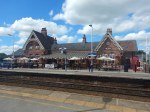

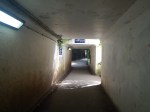

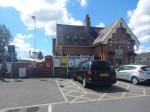
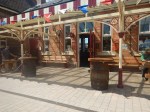
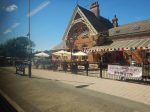
The station was a total surprise, with a large pub-cafe and a lot of visitors and/or travellers sitting in the sun.
I had an excellent coffee and a very welcoming gluten-free blueberry muffin!
This Google Map shows the station.
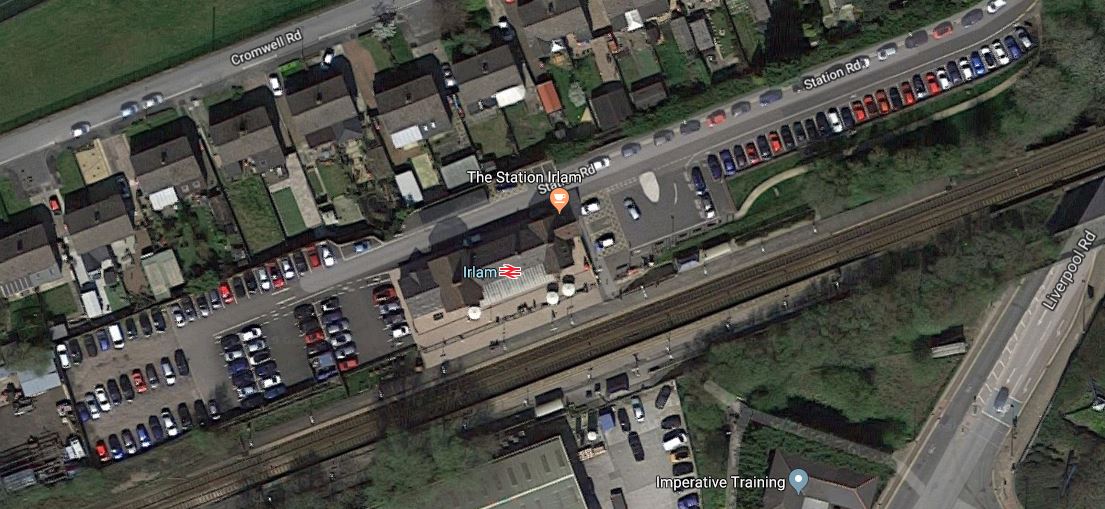
It is one of those stations where commuters have to cross the railway either on the way to work or coming home.
So a step-free method of crossing the railway is absolutely necessary.
The Current And Future Rail Service
As the station lies conveniently between Liverpool and Warrington to the West and Manchester and Manchester Airport to the East, it must be a station with tremendous potential for increasing the number of passengers.
At the moment the service is two trains per hour (tph) between Liverpool Lime Street and Manchester Oxford Road stations.
- Oxford Road is probably not the best terminus, as it is not on the Metrolink network.
- When I returned to Manchester, many passengers alighted at Deansgate for the Metrolink.
- On the other hand, Liverpool Lime Street is a much better-connected station and it is backed up by Liverpool South Parkway station, which has a connection to Merseyrail’s Northern Line.
- The current service doesn’t serve Manchester Piccadilly or Airport stations.
A guy in the cafe also told me that two tph are not enough and the trains are often too short.
Merseyrail work to the same principle as the London Overground and other cities of four tph at all times and the frequency certainly draws in passengers.
Whilst I was drinking my coffee, other trains past the station.
- One tph – Liverpool Lime Street and Manchester Airport
- One tph – Liverpool Lime Street and Norwich
Modern trains like Northern’s new Class 195 trains, should be able to execute stops at stations faster than the elderly diesel trains currently working the route.
So perhaps, after Irlam station becomes step-free, the Manchester Airport service should call as well.
As Liverpool Lime Street station has been remodelled, I can see a time in the not too distant future, when that station can support four tph, that all stop at Irlam station.
The Manchester end of the route could be a problem, as services terminating at Oxford Road have to cross the busy lines of the Castlefield Corridor.
So perhaps all services through Irlam, should go through Deansgate, Manchester Oxford Road and Manchester Piccadilly stations to terminate either at the Airport or perhaps Stockport or Hazel Grove stations.
But would this overload the Castlefield Corridor?
Battery/Electric Trains
If you look at the route between Liverpool Lime Street and Manchester Oxford Road stations, the following can be seen.
- Only about thirty miles between Deansgate and Liverpool South Parkway stations is not electrified.
- The section without electrification doesn’t appear to be particularly challenging, as it is along the River Mersey.
It is my view, that the route between Liverpool and Manchester via Irlam, would be an ideal route for a battery/electric train.
A train between Liverpool Lime Street and Manchester Airport stations would do the following.
- Run from Liverpool Lime Street station to Liverpool South Parkway station using the installed 25 KVAC overhead electrification.
- Drop the pantograph during the stop at Liverpool South Parkway station.
- Run from Liverpool South Parkway station to Deansgate station using battery power.
- Raise the pantograph during the stop at Deansgate station.
- Run from Deansgate station to Manchester Airport station, using the installed 25 KVAC overhead electrification.
The exact distance between Deansgate and Liverpool South Parkway stations is 28.2 miles or 45.3 kilometres.
In 2015, I was told by the engineer riding shotgun on the battery/electric Class 379 train, that that experimental train was capable of doing fifty kilometres on battery power.
There are at least four possible trains, that could handle this route efficiently.
- Porterbrook’s proposed batteryFLEX train based on a Class 350 train.
- A battery/electric train based on the seemingly unwanted Class 379 train.
- A battery/electric version of Stadler’s Class 755 train.
- I believe that Bombardier’s Aventra has been designed so that a battery/electric version can be created.
There are probably others and I haven’t talked about hydrogen-powered trains.
Battery power between Liverpool and Manchester via Irlam, appears to be very feasible.
Tram-Trains
As my train ran between Manchster and Irlam it ran alongside the Metrolink between Cornbrook and Pomona tram stops.
Manchester is very serious about tram-trains, which I wrote about in Could A Class 399 Tram-Train With Batteries Go Between Manchester Victoria And Rochdale/Bury Bolton Street/Rawtenstall Stations?.
Tram-trains are often best employed to go right across a city, so could the Bury tram-trains go to Irlam after joining the route in the Cornbrook area?
- Only about thirty miles between Deansgate and Liverpool South Parkway stations is not electrified.
- The route between Liverpool and Manchester via Irlam doesn’t look to be a very challenging line to electrify.
- The total distance bettween Liverpool Lime Street and Manchester Victoria station is only about forty miles, which is a short distance for a tram-train compared to some in Karlsruhe.
- Merseyrail’s Northern Line terminates at Hunts Cross station, which is going to be made step-free.
- There is an existing step-free interchange between the Liverpool and Manchester route via Irlam and Merseyrail’s Northern Line at Liverpool South Parkway station.
- Class 399 tram-trains will have a battery capability in South Wales.
- Class 399 tram-trains have an operating speed of 62 mph, which might be possible to increase.
- Stadler make Class 399 tram-trains and are building the new Class 777 trains for Merseyrail.
I think that Stadler’s engineers will find a totally feasible and affordable way to link Manchester’s Metrolink with Liverpool Lime Street station and Merseyrail’s Northern and Wirral Lines.
I can envisage the following train service running between Liverpool and Manchester via Irlam.
- An hourly service between Liverpool Lime Street and Nottingham, as has been proposed for the new East Midlands Franchise.
- A four tph service between Liverpool Lime Street and Manchester Airport via Manchester Piccadilly.
- A tram-train every ten minutes, linking Liverpool Central and Manchester’s St Peter’s Square.
- Tram-trains would extend to the North and East of Manchester as required.
- All services would stop much more comprehensively, than the current services.
- Several new stations would be built.
- In the future, the tram-trains could have an interchange with High Speed Two at Warrington.
Obviously, this is just my speculation, based on what I’ve seen of tram-train networks in Germany.
The possibilities for the use of tram trains are wide-ranging.
Installing Step-Free Access At Irlam Station
There would appear to be two ways of installing step-free access at Irlam station.
- Add lifts to the existing subway.
- Add a separate bridge with lifts.
These are my thoughts on each method.
Adding Lifts To The Existing Subway
Consider.
- The engineering would not be difficult.
- Installaton would probably take a number of weeks.
- There is good contractor access on both sides of the railway.
There are similar successful step-free installations around the UK
The problem is all about, how you deal with passengers, whilst the subway is closed for the installation of the lifts.
Adding A Separate Bridge With Lifts
Consider.
- There is a lot of space at both the Eastern and Western ends of the platform to install a new bridge.
- Adding a separate bridge has the big advantage, that during the installation of the bridge, passengers can use the existing subway.
- Once the bridge is installed, the subway can be refurbished to an appropriate standard.
Passengers will probably prefer the construction of a new bridge.
In Winner Announced In The Network Rail Footbridge Design Ideas Competition, I wrote how the competition was won by this bridge.
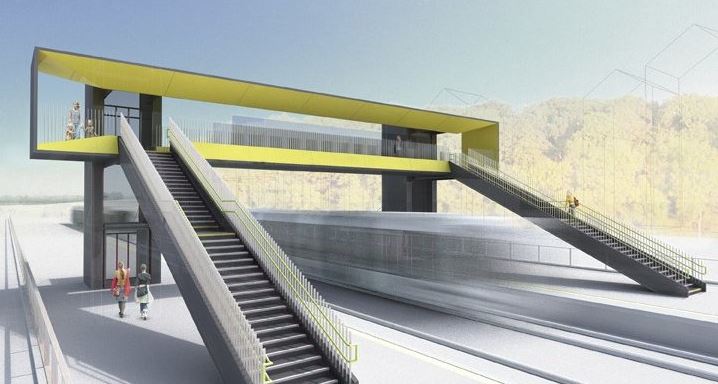
So could a factory-built bridge like this be installed at Irlam station?
There is certainly space at both ends of the platform to install such a bridge and the daily business of the station and its passengers would be able to continue unhindered, during the installation.
I’m also sure, that the cafe would be happy to provide the daily needs of the workforce.
Conclusion
From a station and project management point-of-view, adding a new factory-built bridge to Irlam station is the easiest and quickest way to make the station step-free.
It also appears, that Network Rail have made a wise choice in deciding to put Irlam station on their list of stations to be made step-free, as the station could be a major part in creating a new high-capacity route between Liverpool and Manchester.
This could also be one of the first stations to use an example of the new bridge.
- Installation would be quick and easy.
- There is no site access problems.
- There station can remain fully open during the installation.
- All stakeholders would probably be in favour.
But above all, it would be a superb demonstration site to bring those from stations, where Network Rail are proposing to erect similar bridges.
Hillside Station To Go Step-Free
This document on the Government web site is entitled Access for All: 73 Stations Set To Benefit From Additional Funding.
Hillside station in Liverpool, is on the list.
These pictures show the station and the current station building, which is on a bridge.

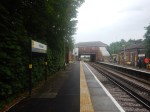
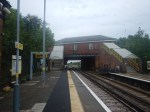
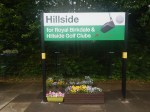
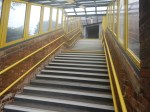

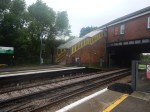
This 3D Google Map shows the station.

Note.
- The station appears to have a large forecourt.
- The stairs to the platforms have thirty-two steps.
- There could be enough space for lifts outside the platforms.
But will a simple solution, be able to cope with major events like the Open Championship at Royal Birkdale?
Perhaps something more radical, but very possible will be done.
One idea, could be to extend the station building at both ends.
- A set of wide safe stairs and a lift could provide direct access from the street to the platform in the extensions.
- Once installed, the original stairs could be removed.
There are certainly possibilities for an architect to develop a solution to cope with the biggest events.
Hunts Cross Station To Go Step-Free
This document on the Government web site is entitled Access for All: 73 Stations Set To Benefit From Additional Funding.
Hunts Cross station is on the list.
These pictures show the station and the current bridge.
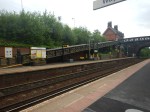
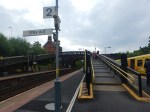
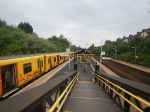
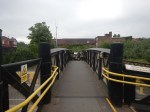
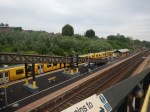
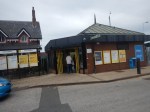
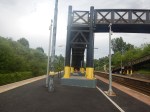
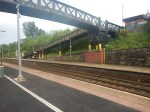
Hunts Cross station, like St. Michaels station, has rather unusual long shallow angle ramps, with steps.
This 3D Google Map shows the station.
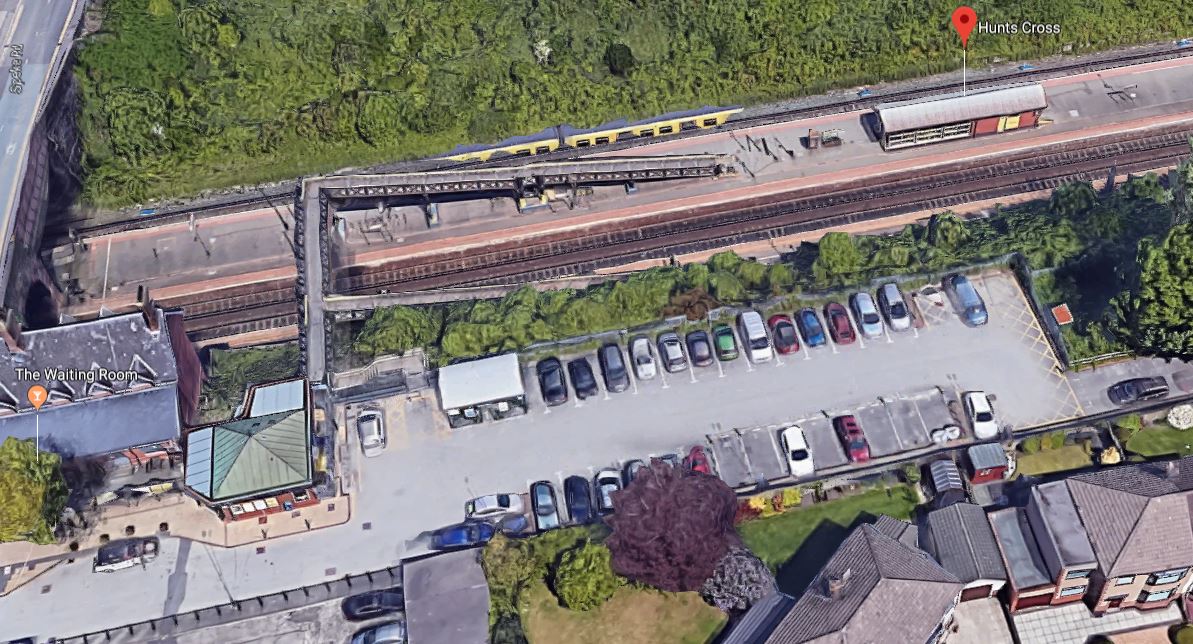
It may be unusual, but I suspect a conventional lift tower on each platform would make the station fully step-free.
Note.
- The station is Grade II Listed and is described as”A good example of the stations built for the Cheshire Lines Committee.”
- The ramps and bridge look to be in excellent condition and could be reasonably recent. Some repainting was actually in progress.
- For those that are in need of a drink, after climbing the ramps, there is a handy pub called the Waiting Room. It was busy, when I went to the station.
- As well as providing step-free entrance and exit to the station, the lifts would provide step-free interchange for passengers from Manchester needing to transfer to Merseyrail.
- Passengers arriving at the station, who need to go to Manchester, would do as they do now and walk across the platform.
- Do the last two pictures in the gallery show that the bridge was built or has been modified for lifts to be added? The bridge seems to have a lower wall, which could be removed.
- There may be some adjustments needed to the path that Links the station entrance to the bridge.
I’m also pretty certain, that the layout of the station, would allow works to be done, whilst the station is in full operation.
Preparation For Class 777 Trains
Unlike most other stations, that I saw on on the Merseyrail network, work appears to be outstanding to create level access between the new Class 777 trains and platform.
Future Electrification
The bridge would appear to be high enough to clear any future 25 KVAC electrification.
Conclusion
This shouldn’t be the most difficult of projects, unless the Heritage Lobby get upset.
The only problem, I can see would be, it might attract more passengers and create a need for a larger car park.
A Scrapyard Special Ready For The Blowtorch
I took these pictures of possibly the worst train, I’ve ridden in for some years.
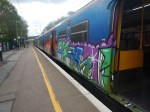
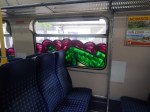
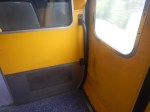
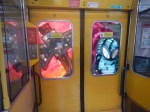
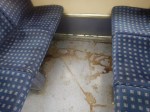
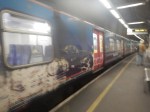
I took this Class 313 train between Hertford North and Old |Street stations.
Not all trains of this age have to be so dirty and unkempt.
In Liverpool’s Underground Trains, I showed these pictures.
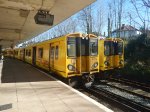
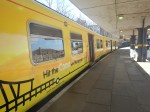
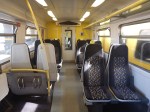
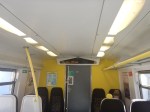
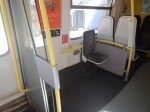
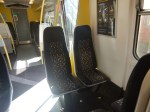
These Merseyrail Class 507/508 trains are only three years younger, than those in London.
Both fleets are being replaced before the end of 2020.
So it’s not that if trains are going to the scrapyard they have to be let go!
I do wonder whether that this illustrates the point, that if trains are run as a concession from the Local Authority, like those of Merseyrail and London Overground, there is much better control of service quality.
In Gibb Report – Moorgate Services Could Be Transferred To The London Overground, I laid out Chris Gibb’s view of what should happen.
This was my conclusion.
Chris Gibb has made an interesting proposal.
There are good reasons to transfer the Great Northern Metro to London Overground.
- London Overground have the expertise to introduce the new trains.
- Transport for London have the expertise to redevelop the stations on the route at the Southern end.
- GTR will be able to concentrate on Thameslink
- Moorgate, Old Street, Essex Road and Highbury and Islington stations become Transport for London-only stations.
- London would gain a new Metro line between Moorgate and Alexandra Palace via Highbury and Islington and Finsbury Park, that extends into Hertfordshire and has a frequency of at least twelve tph.
- Crossrail gets another North-South feeder line.
- Highbury and Islington and Finsbury Park will become high quality interchanges.
- The Hertford Loop Line can be developed independently of Thameslink and the East Coast Main Line to be a high-capacity North-South Metro from North London to Stevenage.
- The Victoria Line gets a cross-platform connection to the Great Northern Metro for Crossrail at Highbury and Islington.
- The only problem, is that it might remove some of the reasons for extending Crossrail 2 to New Southgate.
Overall it strikes me that GTR have been working totally without any vision or any idea about how their new trains will transform the Great Northern Metro.
I hope Sadiq Khan is watching what is happening from his bunker in South London.
Should Railways Have A Pop-Up Service Capability?
Most of us will be familiar with the concept of Pop-Up Retail.
This is the first paragraph of the Wikipedia entry.
Pop-up retail, also known as pop-up store (pop-up shop in the UK, Australia and Ireland) or flash retailing, is a trend of opening short-term sales spaces that started in Los Angeles and now pop up all over the United States, Canada, China,Japan, Mexico, France, Germany, the United Kingdom and Australia. The pop-up industry is now estimated to be a $50 billion industry. Pop-up retail has been an increasing factor during the retail apocalypse of the 2010s, including seasonal Halloween retailer Spirit Halloween, who has operated stores in vacant spaces during the season.
Two of the units are scheduled for export to the United States, to demonstrate for the potential for ‘pop-up’ commuter services; the cost of a one-year period are said to be equivalent to the consultancy costs for opening a new route. Should such an approach be considered in this country too? The gestation period for new services on freight-only routes is probably the best part of 10 years, but it doesn’t have to be like that.
When floods swept away the road bridge at Workington in 2009; Network Rail and Northern constructed a pop-up station and introduced additional trains in less than two weeks.

I can envisage three types of simple stations.
- A one-platform station on a single-track line.
- A two-platform station on a double-track line.
- A one-platform station on a double-track line.
Note
- Type One, would be the simplest and would be worked bidirectionally.
- Type Two, would probably require a bridge across the tracks.
- Type Three, would need crossovers at both ends of the station, to allow the single platform to be worked bidirectionally.
Obviously, Type 1 would be the most affordable and probably easiest to install.


- It would certainly bridge the gap between two platforms with a double-track railway in between.
- In a rail application, the bridge would be interlocked with the signalling and controlled by the signaller.
- Signals and lights could be added to the bridge to ensure complete safety.
- Wikipedia says the original at the Paddington Basin cost £500,000, which could probably be reduced if more were built.
- This page on the Merchant Square web site, shows the bridge in action.
- I suspect this bridge would work on single- or double-track lines, without electrification, or with third-rail or with overhead electrification.
- At many stations it could just be dropped in place from a rail-mounted crane, after preparing the existing platforms.
- I suspect though, that there would be a limit to the number of trains per hour it could handle.
- The ability to execute a fast stop at a station.
- Level access will be possible between train and platform.
- On-board CCTV systems to ensure safe loading and unloading of passengers.
- Modern in-cab digital signalling.
This will enable the trains to make a station stop without causing problems to the existing timetable.
So if Network Rail, had the ability to quickly install a pop-up station, modern trains would allow a service to be tested at a reasonable cost.
The Practicalities Of Installing A Pop-Up Station
Suppose a station were to be installed at Soham or any other suitable place.
I would expect Network Rail to produce standard designs for the foundations of their pop-up stations.
Network Rail periodically close a line to replace track or do various other work. When a line is closed for this work and a pop-up station might be needed on the route, the standard foundations would be installed.
Then, when the budget for the station had been obtained, the station would be installed and commissioned in a suitable possession.
Conclusion
I believe a pop-up station is a feasible proposition.
If a pop-up station is a feasible proposition, then it follows that to install perhaps five stations on a freight-only line to create a totally new passenger service is also a feasible proposition.
Merseyrail’s Battery Intentions
In New Merseyrail Fleet A Platform For Future Innovations, I quoted from this article on the Rail Technology Magazine web site.
The article mainly is an interview with David Powell, who is programme director of rolling stock at Merseytravel.
This is a direct quote from the article.
We will be exploring, with Stadler, what the options are for having the trains becoming self-powered. This isn’t the bi-modes that lots of other people are talking about in the industry; this is on-board electrical storage.
The Wikipedia entry for Merseyrail links to this document, which puts a lot more flesh on Merseyrail’s intentions for battery trains.
It outlines strategies for the following routes.
Ellesmere Port And Helsby
The document says this.
There is a reasonable business case for extending the Merseyrail service through to Helsby.
However this is likely to be best served by the use of Merseyrail battery powered enabled
services. This will be tested on the new units in 2020.
According to Wikipedia, the sixth Class 777 train to be delivered will be fitted with batteries.
Currently, the service between Liverpool Central and Ellesmere Port stations is as follows.
- A train every thirty minutes.
- Trains take eighty-five minutes to do the round trip from Ellesmere Port round the Wirral Loop under Liverpool and back to Ellesmere Port.
- There are thirty-one stops on the route.
- There is a five minute turnround at Ellesmere Port station.
Two trains are needed to run the service.
The Current Class 507/508 trains and the future Class 777 trains both have the same operating speed, but there are performance differences.
The British Rail trains have 656 kW of power per train, whereas every new Stadler train will have 2,100 kW. The speed may be the same, but the acceleration will be much greater if needed and and the regenerative braking should be powerful and smoothly controlled.
- Figures for the Class 313 train, which is similar to the Class 507/508 trains show a top speed of 75 mph and an acceleration of 0.67 m/s².
- Figures for the Class 777 train show a top speed of 75 mph and an acceleration of 1.1 m/s².
These figures mean that a Class 507 train will get to 75 mph in 125 seconds, whereas the new Stadler trains will take just 76 seconds.
In addition, loading and unloading of passengers with their increasing levels of extras will be much faster due to the hollistic design of the trains and the platforms on the new Stadler trains.
It would not be unrealistic to see around a minute saved at every stop.
I think this level of improvement could be expected, with all the modern trains in the UK.
The extended service between Ellesmere Port and Helsby stations is not much extra distance and time.
- Just over five miles each way.
- About thirteen minutes each way , based on existing services on the route.
So if the terminus were to be moved to Helsby, when the new trains are in service, the time savings between Ellesmere Port and Liverpool should cover the extra distance.
It should also be noted about Helsby station.
- It has four platforms and could probably handle four trains per hour (tph).
- A platform with a charging station could be created.
- It has a wide selection of services including Chester, Llandudno, Manchester and Warrington.
To my mind, Liverpool to Helsby would be an ideal route for a battery electric train.
Ormskirk-Preston Enhancements
The document says this.
This incorporates both electrification from Ormskirk through to Preston and the potential
reintroduction one or both of the Burscough Curves. In view of the deferral of electrification
proposals, and the relative low ranking of the electrification proposal in the Northern Sparks
report, it is unlikely that the electrification proposal is expected to be taken forward in the
near future. In addition to this, the business case for extending electrification to Burscough,
and the introduction of the southern Burscough Curve, is poor. The potential use of battery
powered Merseyrail units may improve the business case for both proposals. This will be
reviewed after the Merseyrail units have been tested for battery operation in 2020.
Currently, the service between Ormskirk and Preston stations is as follows.
- A train every hour.
- Trains take around thirty minutes to go between the two terminal stations.
- The route is fifteen and a half miles long.
- There are three stops on the route.
- There is a long turnround in a bay platform at Preston station.
At the present time, the service seems rather erratic, with some services replaced by buses and long connection times at Ormskirk.
The service between Liverpool Central and Ormskirk stations takes thirty-five minutes with eleven stops and is generally every fifteen minutes, with a half-hourly service in the evening and at weekends.
If a Class 777 train could use battery power, I estimate it could run between Liverpool Central and Preston stations within an hour.
This would surely open up the possibility of a new service between Liverpool and Preston.
- It would take only a few minutes longer than the fifty-one minutes of a direct train between Liverpool Lime Street and Preston stations.
- It would connect a lot of stations to the West Coast Main Line at Preston.
- It would link the major sporting venues of Aintree, Anfield and Goodison or Everton’s new ground to the North.
- At the Southern end, it could connect to Liverpool Airport.
The Class 777 trains would need to be able to do about thirty miles on battery power and if required, the technology exists to either top up the batteries at Preston or use a pantograph to access the overhead wires of the West Coast Main Line.
At the present time, the Ormskirk Branch Line between Ormskirk and Preston stations is only single track and probably needs resignalling, but I suspect that a four tph service could be run between Liverpool and Ormskirk, with two tph extended to Preston.
Extra track work, North of Ormskirk and the reinstatement of the Burscough curves would allow.
- Four tph between Liverpool and Preston via Ormskirk.
- A service between Liverpool and Southport via Ormskirk.
- A service between Preston and Southport.
There is even the possibility of extending Liverpool and Preston services to Blackpool South station, if they used the overhead electrification through Preston to charge the batteries.
Borderlands Development
The document says this.
While the aspiration is to fully electrify the line, and incorporate it into the Merseyrail
network, this is very much a long term aspiration. In the interim period the aim is to develop
the line through the introduction of an improved diesel service. Merseytravel will work
closely with relevant cross-border organisations such as Growth Track 360 to bring this
about. There are a number of new station proposals for the line, the principal being a new
station close to the Deeside Industrial Park, which would improve the ability of the
workforce to access the site via public transport.
The Borderlands Line provides a service between Liverpool and Wrexham Central station with a change at Bidston station.
- The twenty-seven miles between Wrexham Central and Bidston are not electrified.
- The line is double-track throughout.
- There are twelve stations on the line.
- The service is hourly, but probably needs to be at least half-hourly.
- The service takes about an hour between Wrexham and Bidston stations.
Using Class 777 trains on the route, using battery power between Bidston and Wrexham Central stations would enable.
- A direct service, that terminated in the Wirral Loop under Liverpool.
- An increased capacity at Bidston station.
- A faster service.
I estimate that a time of perhaps seventy to eighty minutes between Liverpool Central and Wrexham Central stations will be possible.
There would be very little infrastructure work, except for new stations and the possible ability to top up batteries at Wrexham Central.
I suspect that political problems, rather than any railway ones will be larger.
Bootle Branch Electrification
The document says this.
A long term proposal which will need to be considered alongside the developing freight
strategy for the region and the expansion of the Port of Liverpool. The proposal envisages
the introduction of passenger services which will operate from the Bootle Branch into Lime
Street. An initial study is required to understand fully the freight requirements for the line
and what the realistic potential for operating passenger services over the line is.
The Bootle Branch is known as the Canada Dock Branch in Wikipedia.
Class 777 trains with a battery capability and the ability to use the overhead electrification into Liverpool Lime Street would be able to serve this route, without the need for electrification.
Obviously, if for freight efficiency, the route was electrified, the trains could use it as needed.
North Mersey Branch
The document says this.
A long term proposal; this envisages a new service operating from Ormskirk via Bootle into
Liverpool. It was reviewed as part of the Merseyrail Route Utilisation Strategy in 2009 which
identified a poor business case.
I can’t identify the actual route, but there are various rail alignments into and through the Docks.
Skelmersdale
The document says this.
Merseytravel is currently working with Lancashire County Council and Network Rail to
develop the Merseyrail network from Kirkby through to Skelmersdale. This work is expected
to be completed in 2019. Further development work will be required before this project is
implemented. While 3rd rail electrification is being considered currently, alternatives will be
considered later in the development process. A new station at Headbolt Lane to serve the
Northwood area of Kirkby is an integral part of this proposal. The potential to extend the
network further through to Wigan will need to be developed separately.
I wrote about this plan in Merseyrail To Skelmersdale – How To Plan A New Rail-Link.
Thoughts On Battery Size And Range
Thjis article on Railway Gazette is entitled Battery Trial Planned For New EMU Fleet.
This is the first paragraph.
The sixth of the 52 four-car 750 V DC third rail electric multiple-units which Stadler is to supply for Merseyrail services around Liverpool is to be fitted with a 5 tonne battery to test the business case for energy storage. While all the EMUs will be equipped for regenerative braking, this is not seen as optimal on the Merseyrail network.
I find the last part of this paragraph difficult.
Does it mean the trains can use regenerative braking, but that it is not worth using?
This media release on the Stadler web site is entitled Stadler Signs Contract To Build And Maintain 52 Metro Trains For
Liverpool City Region.
This is a sentence.
The units will also be equipped with batteries that allow independent movement of the units in the workshop and depot areas.
Out of curiosity, what will be the kinetic energy of the four-car trains at the full speed of 75 mph
- The train weight is given as 99 tonnes in Wikipedia.
- The passenger capacity is 484, with a weight of 90 Kg each.
- This gives a train weight of 142.56 tonnes.
Putting these figures into Omni’s Kinetic Energy Calculator gives a kinetic energy of 22.3 kWh.
I feel that this fairly low amount of energy could be held in a 60 kWh battery, that would probably come from a hybrid bus and weigh about 600 Kg.
I would be very surprised if Stadler are not using a smaller battery to do the following.
- Handle regenerative braking.
- Independent movement in the workshop and depot areas.
- Train power in sidings and platforms.
It could also handle, train rescue to a safe evacuation point, in the event of power failure. I suspect that like Crossrail in London, Merseyrail would be very happy to have an independent recovery system in the tunnels under Liverpool, Birkenhead and the River Mersey.
In How Much Power Is Needed To Run A Train At 125 mph?, I estimated that using 3 kWh per vehicle mile is not a bad estimate for the energy use of an electric train running at speeds in excess of 100 mph.
Using this figure would give a range on a 60 kWh battery of at least five miles, which would move the train out of the tunnels if the power failed.
But we’re talking about a modern lightweight train running on probably newly relaid track and my 3 kWh per vehicle mile could be a little on the high side.
Stadler are talking of fitting the sixth train with a fifty five battery, which would probably have a capacity of around 500 kWh.
Using various consumption figures, the range would be as follows.
- 3 kWh per vehicle mile – 42 miles
- 2 kWh per vehicle mile – 62 miles
- 1 kWh per vehicle mile – 125 miles
Stadler and their battery supplier are probably working on.
- A train that uses less electricity.
- More efficient regenerativer braking.
- A more intelligent train control system.
- Increased energy density in the battery.
- Efficient charging systems.
- A plug-in battery pack that can be added and removed in minutes.
As a Control and Electrical Engineer, I wouldn’t be surprised to see that the control, electrical and software system of trains with and without the five tonne battery are identical and some just have a larger amount of energy storage.
Range on battery power can only increase!
Consider the lengths of some of the routes discussed earlier.
- Ellesmere Port and Helsby – 5 miles
- Ormskirk and Preston – 16 miles
- Bidston and Wrexham Central – 27 miles
Only the last route might need a charging station at the remote terminal.
My Own Speculation On Routes
I think there could be other routes that could easily be run by Class 777 trains running on battery power.
Onward From Hunts Cross
The current service between Hunts Cross and Manchester Oxford Road stations is only two tph, using rather suspect rolling stock.
- Under Merseyrail and London Overground rules, it should be at least four tph to give travellers a Turn-Up-And-Go service.
- The stations are of variable quality, but are being improved and will soon be joined by a new station at Warrington Wrst.
- There is a lot of new developments along the route.
- The service terminates in a convenient bay-platform at Manchester Oxford Road station.
- The service calls at Deansgale station for the Manchester Metrolink.
The route could be developed into a City-Centre-to-City-Centre and commuter route for both Liverpool and Manchester.
So could this route be run by Class 777 trains using battery power?
Consider.
- Hunts Cross and Manchester Oxford Road are just twenty-seven miles apart.
- The last couple of miles to Oxford Road is electrified with 25 KVAC overhead wires.
- Hunts Cross is electrified with 750 VDC third-rail.
It will be a Liverpool and Manchester Railway for the Twenty-First Century
I think it is one of those problems, where the engineering is easy, but the politics will be very difficult.
Onward From Headbolt Lane
The current service between Liverpool and Kirkby, which will be extended to the new station at Headbolt Lane, is a a Turn-Up-And-Go service of four tph. But the onward service to Wigan and Manchester is just a very inadequate hourly-service.
Consider.
- Headbolt Lane and Wigan are just twelve miles apart.
- Plans are being developed to create a proper transport interchange at Wigan for the arrival of High Speed Two.
- Wigan North Western is electrified with 25 KVAC overhead wires.
- Kirkby is and Headbolt Lane will be electrified with 750 VDC third-rail.
It would appear to be very possible to extend Class 777 trains from Kirkby to Wigan using battery power.
More Trains For Merseyrail
This is a paragraph from the Stadler media release about Merseyrail’s new trains.
The new four-car trains will all be in service by 2021, with the first unit arriving for testing by the middle of 2019.
The value of the manufacture and maintenance contracts for the 52 trains is up to £700m and Merseytravel
also has the option to procure an additional 60 units of rolling stock.
If the options are taken up, this would more than double the size of the Merseyrail’s fleet.
But where will these trains connect to Liverpool City Centre?
Helsby, Preston, Skelmersdale, Wrexham Central and the other routes in Liverpool will all need more trains, but nothing like sixty trains.
So will we see Wigan and Warrington added to Merseyrail’s destinations? And what about Manchester?
Never say no to Liverpool and their Swiss co-conspirators!
Conclusion
It is a comprehensive expansion strategy, where much of the work to create the various extensions is performed by adding equipment to the trains in factories or depots, rather than by the disruptive installation of electrification.
It looks very much like a case of Have Swiss Train Will Travel.
But then, I think the London Overground is using a similar strategy to expand in partnership with Bombardier.
Other networks like the Tyne & Wear Metro and those in cities like Birmingham, Cardiff, Glasgow and Leeds will be using similar philosophies of battery trams, tram-trains and trains.
Cardiff has already disclosed their plans and Stadler are building the trains for the South Wales Metro.
Merseyrail Reveals Latest Station Closures For Upgrade Work Ahead Of New Trains
The title of this post is the same as that of this article on Liverpool Business News.
This is the first paragraph.
Merseyrail has announced details of the next phases of station closures as it upgrades is platforms to make them ready its new £460m fleet of trains due to come into service in 2021.
In total, there are eleven phases of work to give all platforms level access to the new trains.
I am fairly sure that no other local rail network in the UK, will have this quality of level access.
Some stations on the London Overground have similar access, but not that many. When you consider, that many station platforms have been rebuilt and they are only used by Class 378 trains, I believe an opportunity was missed.
The article says this about Merseyrail‘s new Class 777 trains.
Swiss manufacturer Stadler has started the manufacturing process at its Szolnok plant in Hungary on the new fleet of 52 trains. There, the car-body production is under way with the units being machined, welded, sandblasted and coated in special protection and premium quality paint to combat corrosion, caused by the contact with sea-water.
Most of the current Class 507/508 trains are forty years old, but they appear to me to be one of the most bottom-friendly suburban trains in the UK, with desirable 2+2 seating. I regularly travel on Class 313 trains, which are similar trains of the same vintage, into and out of Moorgate, and these are scrapyard specials compared to Merseyrail’s spotless, spacious and comfortable trains.
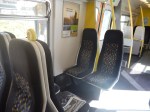
These pictures from March 2017, show the current trains.
They certainly look to be in good enough condition to see all the new trains into service and through their inevitable teething troubles in the next couple of years.
Conclusion
,The care being taken by Merseyrail and Stadler in the preparation for and design of their new trains, seems to indicate that they are intending to get forty years out of the new fleet.
Maghull North Station – 29th June 2018
I went to the new Maghull North station today.
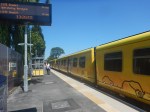

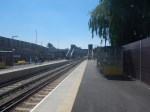
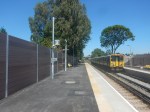

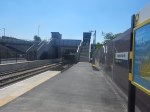

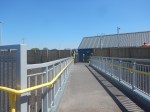
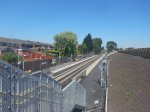

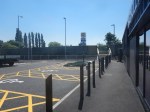
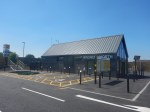
There are still a few things to do, like add the grass and complete the lifts, but the station is now operational.
Other issues include.
Car Parking
I have a feeling that this could be a station, where the car parks could be a victim of the station’s success. There weren’t many spaces today.
Car parking does appear to be free and a p[passenger who lives nearby, said that you can never park at Maghull station, which is the next station towards Liverpool.
Kiosk
There didn’t appear to be a kiosk of any sort.
Ticketing
I didn’t see a ticket machine and the ticket office was closed!
Conclusion
It looked to be a well-built and functional step-free station.
A Reason Why The UK Is Fertile Territory For Tram Trains
The UK has several modern tram systems. If you look at the cross section of trams you get the following figures.
- Blackpool Tramway – Width 2.65 metres – Height 3.42 metres
- Edinburgh Trams – Width 2.65 metres – Height 3.4 metres
- Manchester Metrolink – Width 2.65 metres – Height 3.67 metres
- Midland Metro – Width 2.65 metres – Height 3.4 metres
- Nottingham Express Transit – Width 2.40 metres – Height N/A
- Sheffield Supertram – Width 2.65 metres – Height 3.65 metres
- Tramlink – Width 2.65 metres – Height 3.67 metres
I wonder why Nottingham is twenty-five centimetres narrower!
If you look at the Class 399 tram-train, it has a width of 2.65 metres and a height of 3.67 metres.
So no wonder, there has been no problems with Class 399 tram-trains running on the Sheffield Supertram as trams!
Various trains that run local rail networks include.
- Class 142 – Width 2..8 metres – Height 3.86 metres
- Class 150 – Width 2.8 metres – Height 3.8 metres
- Class 222 – Width 2.73 metres
- Class 319 – Width 2.82 metres – Height – 3.58 metres
- Class 345 – Width 2.78 metres – Height N/A
- Class 378 – Width 2.80 metres – Height 3.78 metres
- Class 700 – Width 2.80 metres – Height N/A
- Class 769 – Width 2.82 metres – Height 3.58 metres
- Mark 4 Coach – Width 2.73 metres – Height 2.79 metres
These are some figures from German trains.
- DBAG 641 – Width 2.90 metres – Height 3.7 metres
- BD Class 420 – With 3.08 metres
- ICE 3 – Width 2.95 metres – Height 3.89 metres
I’ll look at various issues.
Tram And Train Height
I think this is not a big issue.
If a tram or electric train can run on a particular track, then there should be no height problems running a tram-train over the route, providing overhead wires can be erected.
UK Tram And Train Width
It would appear that the maximum width of UK trains is 2.82 metres. In some stations, where there is only one class of train, level access is possible.
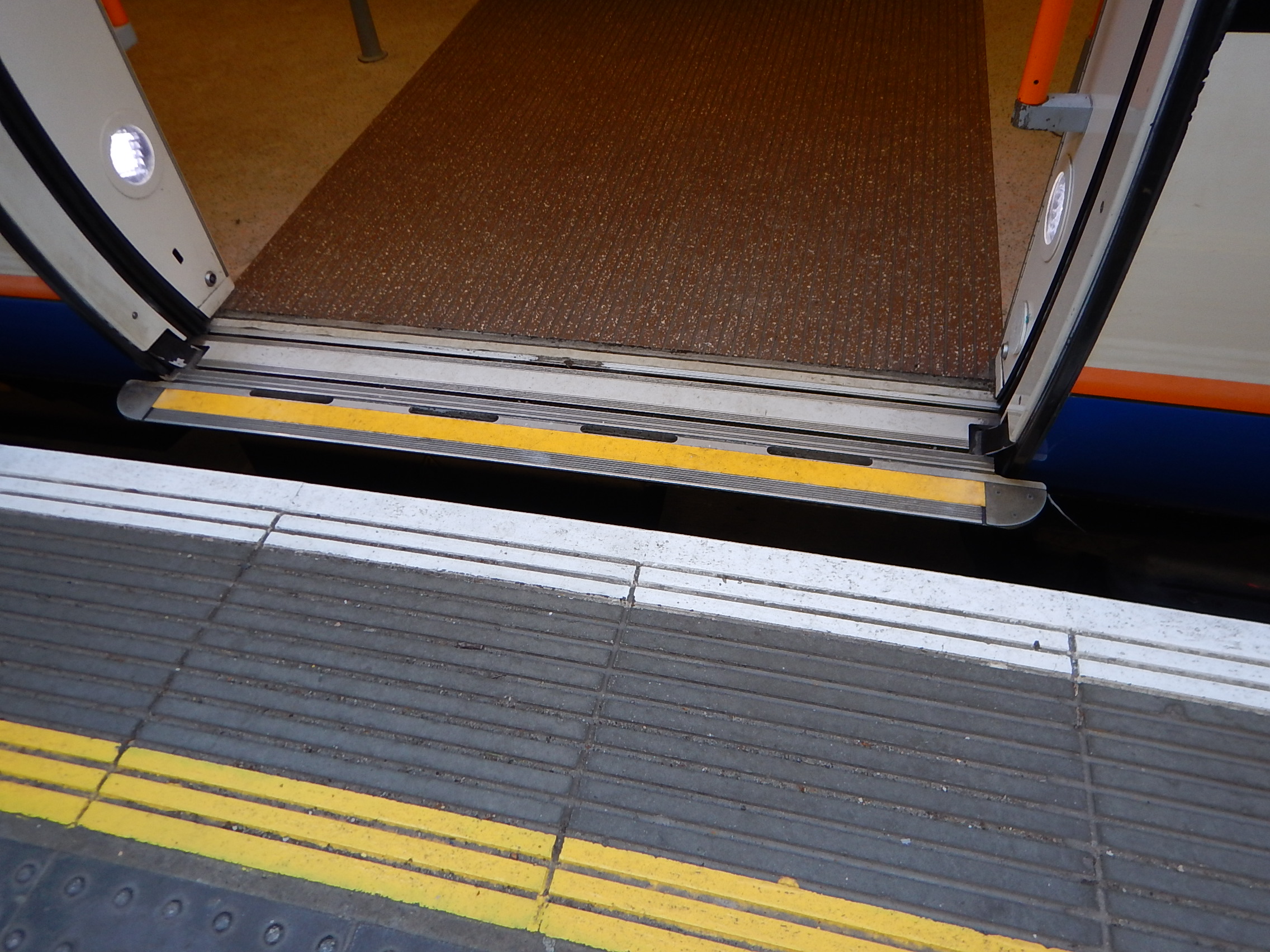
The picture shows a Class 378 train on the London Overground.
This is not one of the best I’ve seen, but there is no reason, why someone in a wheelchair shouldn’t be able to wheel themselves into every train at every station.
This is in the train operating company’s interest, as one of the things that delays trains, is getting someone in a wheelchair on and off the train with a portable ramp.
If we take the UK train width of 2.82 metres and compare that to the width of a Class 399 tram-train, which is 2.65 metres, that means that there is seventeen centimetres difference or eight and a half centimetres on each side of the train.
If the platform can be arranged to be level, that is not a large gap. It’s probably about the same size as this gap in this picture.
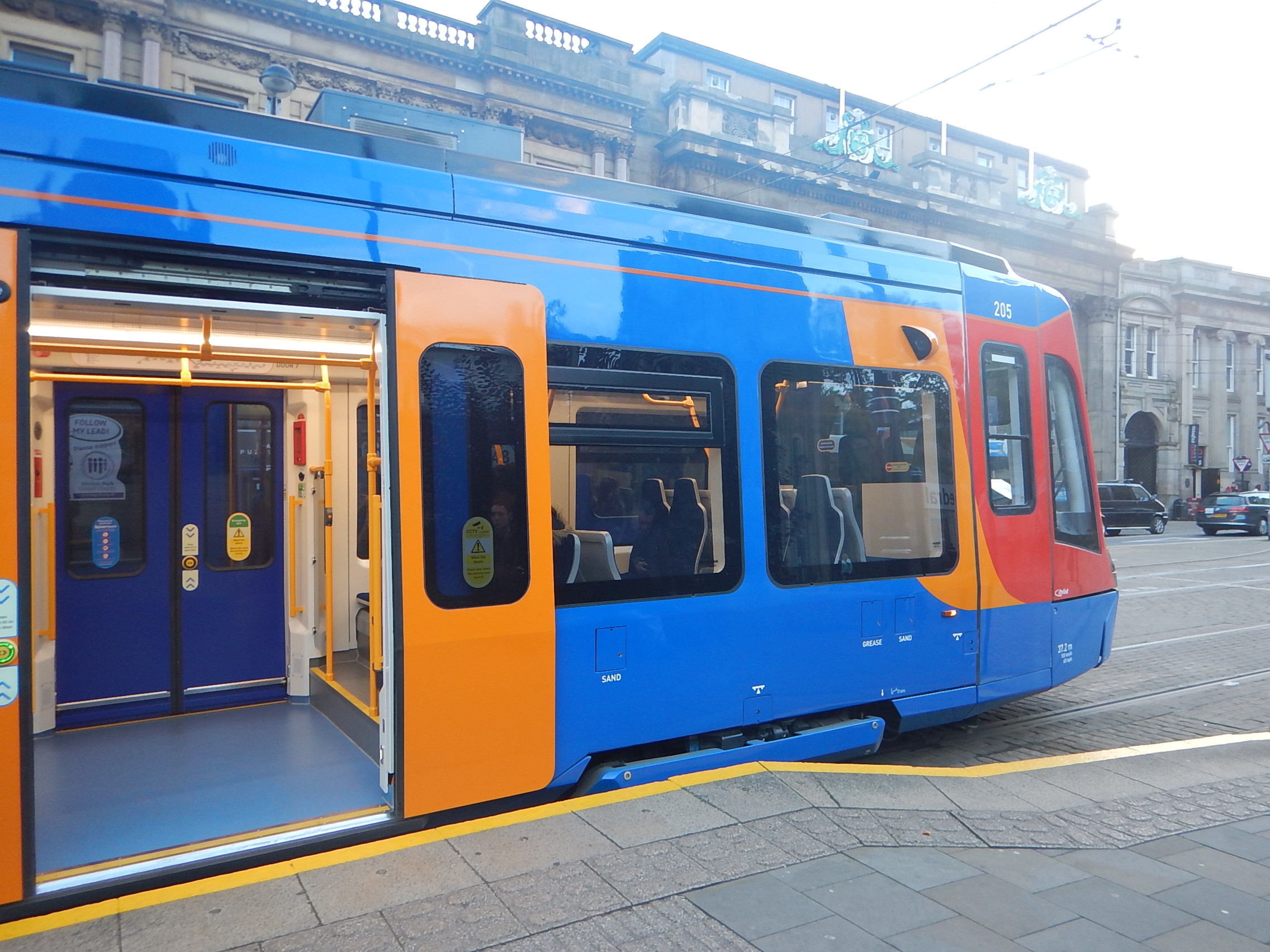
Shown is a Class 399 tram-train at a tram stop on the Sheffield Supertram.
Continental Tram And Train Width
But on the Continent, where the trains are wider and the loading gauge is bigger, the gap will be larger.
Trains on the Continent also often have a significant step up as this picture shows.
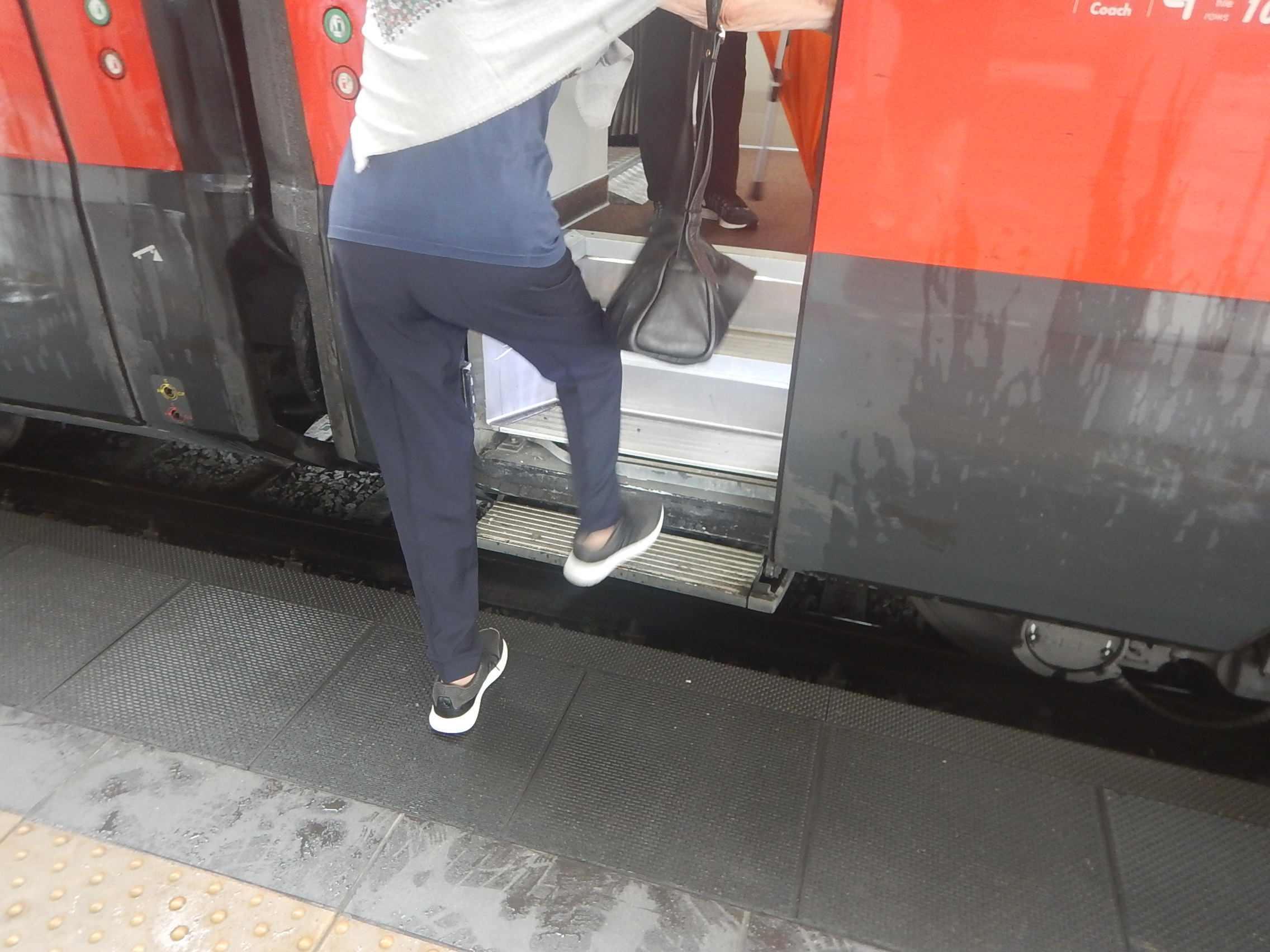
Shown is an Italian High Speed train.
If the EU wanted to improve train travel for the disabled, those in wheelchairs, those with buggies and the elderly, they should make it compulsory for all trains to have level access from the platform.
It’s very rare to find level access on the Continent and not that easy in parts of the UK.
Gap Fillers
But things are getting better, as this picture shows.
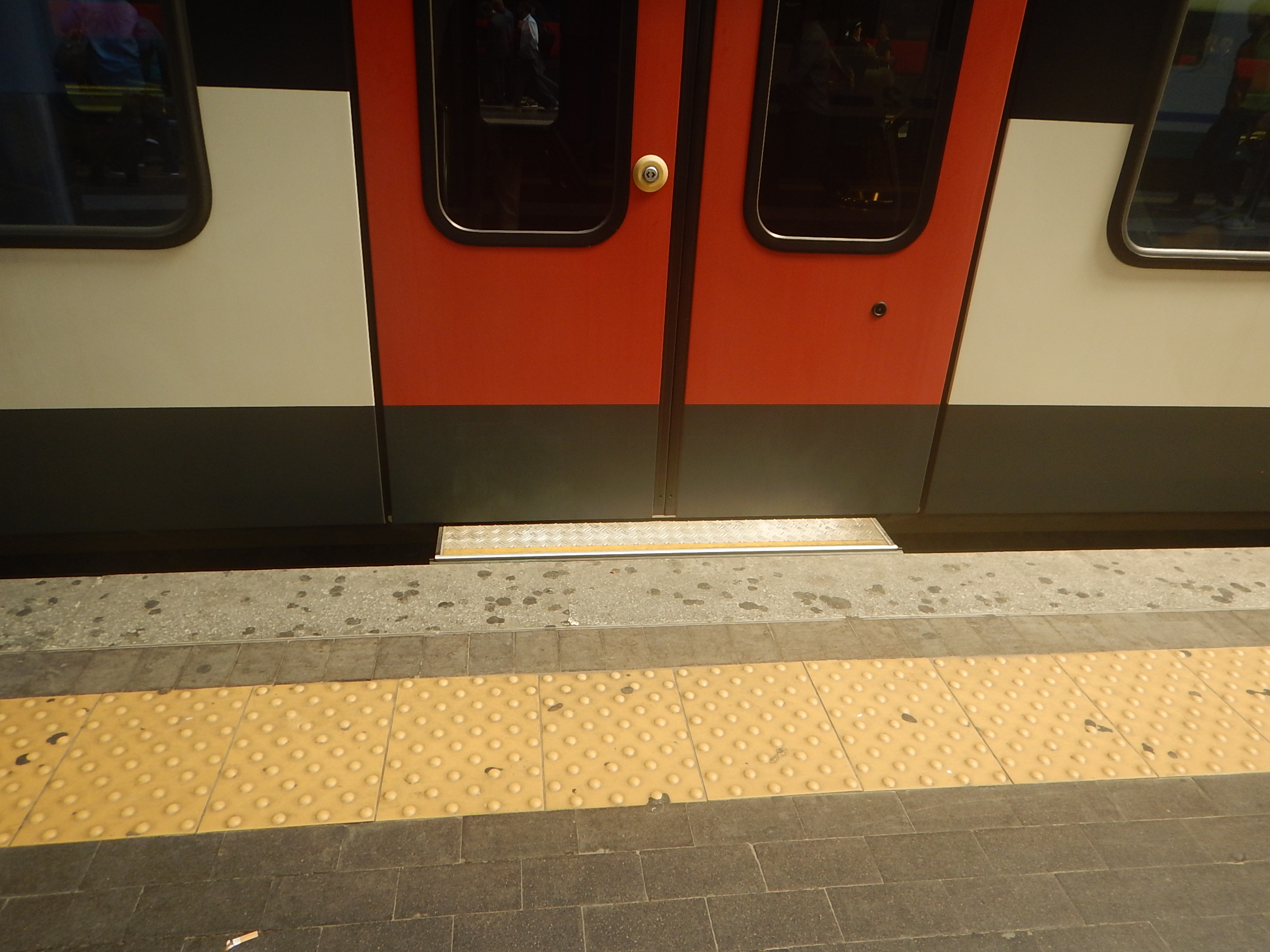
Shown is a Stadler Flirt with a rather nifty automatic gap filler.
Merseyrail’s New Class 777 Trains
Gap fillers will be fitted to Merseyrail‘s new Class 777 trains, which are being built by Stadler.
The Class 777 trains and the current Class 507 trains have the same width of 2.82 metres, but the new Stadler trains have an eighteen centimetre lower floor.
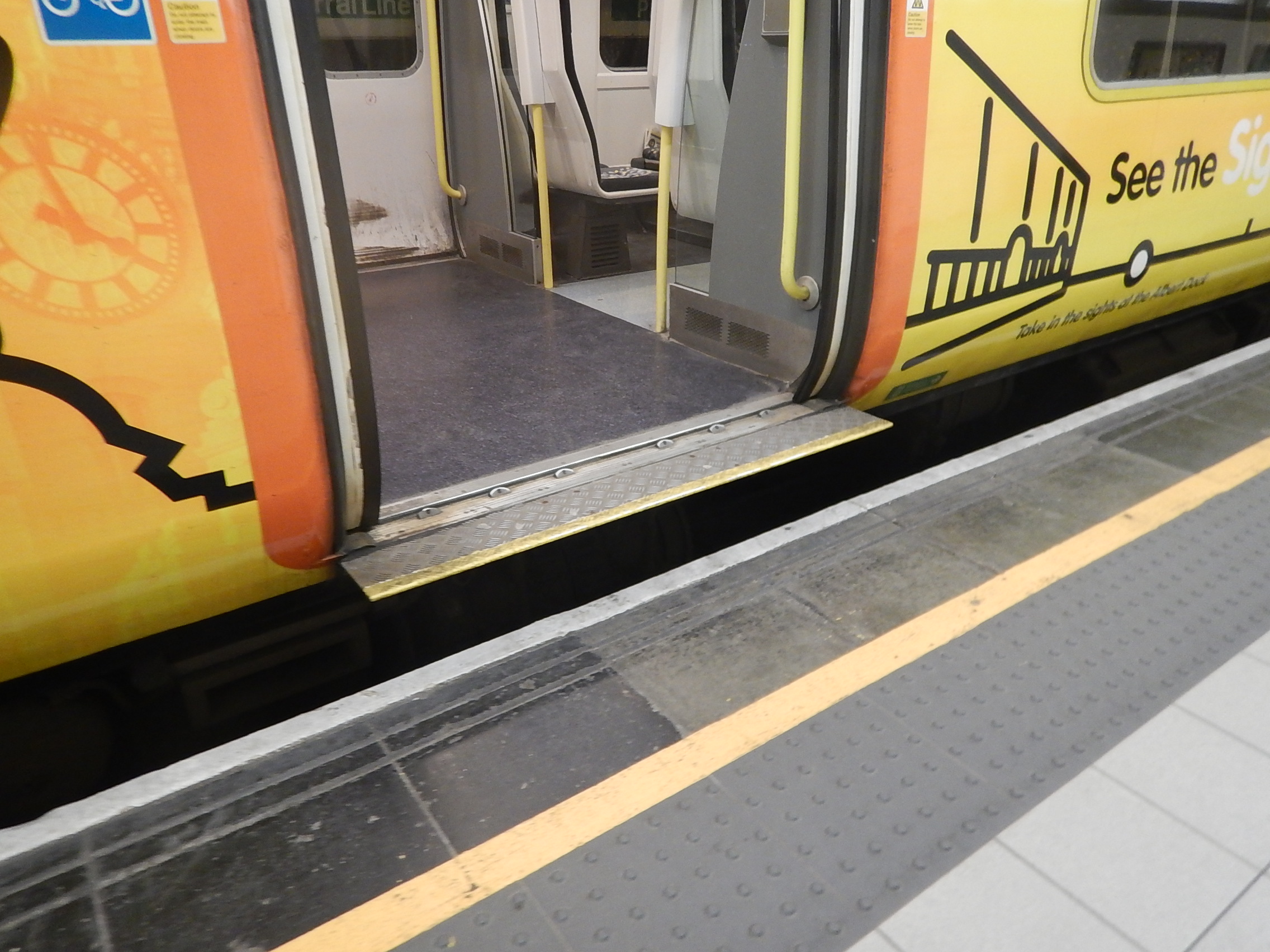
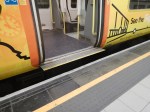
The picture shows a Class 507 train at one of Liverpool’s underground stations.
Eighteen centimetres wouldn’t be far away from the height of the step in the picture.
The design must also allow both classes of trains to be in service at the same time, to ease introduction of the new Class 777 trains.
Talk about Swiss precision!
South Wales Metro
This document on the KeolisAmey web site details their plans for the new Wales and Borders Franchise.
For services around Cardiff and on the Cardiff Valley Lines, KeolisAmey Wales intend to acquire the following fleet.
- 11 – four-car Stadler Flirt DEMU
- 7 – three-car Stadler Flirt Tri-mode MU
- 17 – four-car Stadler Flirt Tri-mode MU
- 36 – three-car Stadler Citylink Metro Vehicles
Note.
- The Stadler Flirts look very similar to Greater Anglia‘s Class 755 trains, that by the time of delivery of these trains for Wales, will have proven themselves on the mountains of East Anglia.
- The tri-mode multiple units will be able to run on electric, diesel or battery power.
- The Stadler Citylink Metro Vehicles look very similar to Sheffield Supertram‘s Class 399 tram-trains, that are providing a tram service in Sheffield and will soon be running on the rail network to Rotherham.
- It is an all-Stadler fleet.
This is a clip from the KeolisAmey document.

This looks like a visualisation of one of the Flirts, as the Citylink tram-trains have flat sides.
I will be very surprised if Stadler don’t provide the Cardiff area, with one of the best step-free networks in the world.
Conclusion
The UK’s standard tram width of 2.65 metres and our small loading gauge must make it easier to design tram-train systems for the UK.
.
 The Anonymous Widower