Articles In Today’s Times
In addition to World’s Top Wealth Fund Puts Billions Into Britain, there were other articles worth blogging about in today’s copy of The Times.
Build New Homes Away From Roads, Heath Watchdog Says
Surely, this very sensible! The distance can of course be vertical!
Plastic Packaging Used To Make Car Parts In Upcycling Revolution
Scientists working for the US Department of Defense have shown it is possible to convert recycled PET bottles and other packaging into useful long-life products.
Corbyn’s Favourite Firebrand Is Suspended In Antisemitism Row
My father believed that there was little different between the extreme left as represented by Stalin and the extreme right as represented by Hitler.
I Am A Twenty-Four Hour Person
I rose as usual at around five-thirty this morning and went through my normal routine.
- I measured my weight and blood pressure. Incidentally, I weighed 61.8 Kg.
- I checked my savings in Zopa and my bank account.
- I did two dozen press-ups
Now I am on my first cup of tea of the day. I have also replied to a couple of e-mails.
I’ve been like this in one way or other since the 1970s, when I started programming Artemis.
In those pre-e-mail days, I would be on my computer writing code before six and generally only stopped writing code around ten at night having been writing on and off all day.
C would sometimes drag me off for some shopping or a visit to a pub or restaurant, but I worked very hard and was well rewarded.
Some would say my hours are unusual, but my father was the same. Memorably, he once mowed the lawn at two o’clock in the morning!
Should We Exempt Low Alcohol Beer And Wine From The Age Regulations
I drink Marks & Spencer ).5% Southwold Pale Ale for four main reasons.
- It is low alcohol and doesn’t interact with the Warfarin, that I am prescribed to control the INR of my blood, so I don’t have another stroke.
- Because it is made with less barley, it appears to be gluten-free to my body.
- It also has the proper taste of real beer.
- It is brewed by Adnams in Suffolk and I started drinking their beers at fourteen under supervision of my father, whilst we played snooker in Felixstowe Conservative Club.
As my GP says, at 0.25 alcohol units a 500 ml bottle, you’d have difficult drinking enough to affect your health.
There is one annoying thing about it and that is buying it.
This morning, I bought three bottles in the M & S store at the Angel, where my family has been shopping since before the First World War.
As I usually do, I used one of the automatic tills and had to wait for a minute or so, whilst the assistant verified that I was over eighteen.
The store was busy and she was helping someone with another till.
I wonder what would happen at the checkouts, if there was no age check on low alcohol beer and wine.
- It would obviously speed up the tills with some customers.
- But would it have the affect of brewers and winemakers, making more quality low alcohol products?
- And would these be purchased by those who knew they should cut their alcohol intake?
It’s probably one of those ideas, that would go down well in London boroughs like Barnet, Islington and Richmond, but how would it go down in places where alcohol was a necessary way of life for many?
How too, would such a drink fit with those of a Muslim faith?
An MG Y-Type
On Bank Holiday Monday, in my travels along the Crouch Valley Line, I ended up at Quay Day at Burnham-on-Crouch.
I took these pictures of an MG Y-Type.


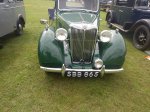
It is an example of the earliest car owned by my father that I can remember
I can still remember the number, which was BNH 368.
Incidentally, my father had owned several MGs, both before and after the Second World War. The last two MGs were both ZA Magnettes; TNK 663 and 676 RME.
Now That’s What I Call A Footbridge!
This article on Global Rail News is entitled Network Rail Launches Footbridge Design Competition.
This is the first two paragraphs.
A competition for new footbridge design ideas has been launched by Network Rail and the Royal Institute of British Architects (RIBA).
Entrants are asked to design fully accessible footbridges that can be used across Britain’s rail network and that further improve the legacy of rail pioneers.
Hopefully, something better than some of those on Britain’s rail network will be designed.
I was in Wales last week on the Ffestiniog Railway and saw this bridge.
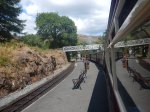
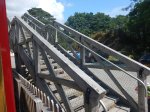


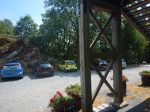
Surely, someone can come up with something like this, that meets all the regulations and looks a lot better, than Network Rail’s standard offering in green-painted steel.
My father used to build structures like this with timber and bolts to create extra floors and storage in his print works in Wood Green. From about the age of seven, I was his little helper.
Perhaps, thirty years later, I had a barn built at a house I owned. The architect had the building designed in a similar manner.
Someone, ought to enter Network Rail’s competition with a similar design.
England In Kaliningrad
There is a good chance, that my great-great-great-grandfather; Robert Muller, came from East Prussia, the capital of which was Konigsberg East Prussia was annexed by the Soviet Union after the Second World |War and Konigsberg was renamed Kaliningrad.
My father was about fourteen, when his grandfather died and my father once told me, that his grandfather had told him, about meeting Robert, who would have been his grandfather’s grandfather.
Apparently, the elderly man didn’t speak any English and only spoke German. Knowing that my male line is Jewish, I wonder if it wasn’t German but Yiddish.
Konigsberg was an important city and the Prussian
Wikipedia has a section about the Jews in Konigsberg, where this is said.
The Jewish population of Königsberg in the 18th century was fairly low, although this changed as restrictions became relaxed over the course of the 19th century. In 1756 there were 29 families of “protected Jews” in Königsberg, which increased to 57 by 1789. The total number of Jewish inhabitants was less than 500 in the middle of the 18th century, and around 800 by the end of it, out of a total population of almost 60,000 people.
Speaking to someone at the German History Museum, a lot of Jewish men had to leave East Prussia, when they became adults, unless they were protected.
As Robert would have been a young adult,, when he turned up in Bexley, I suspect that soon after he qualified as a tailor, he left the area.
This keeping out of the way of trouble, is very much a family trait.
Konigsberg was at that time a port city and there was quite a lot of trade with London. So I suspect getting to London was not that great a problem.
I very much regret not asking my father for more details.
Like me my father was an atheist, although with a Jewish philosophy of life. He was also very much against fascists, communists and dictators of both the left and right. He was proud to have been at the Battle of Cable Street, when the East End of London stopped Oswald Mosley and his Blackshirts.
In some ways, I regret not being at the match tonight. But then I was advised that there would be trouble.
I have been to the Polish border with the Russian enclave. I wrote about it in At Poland’s Border With Russia.
A Visit To The Swanage Railway
Yesterday, I noticed this article on Railnews which was entitled National Rail Trains To Score Heritage First.
This was the first two paragraphs.
Scheduled National Rail trains will run on a heritage railway tomorrow for the first time.
South Western Railway is launching Saturday services to Corfe Castle on the Swanage Railway, and Corfe Castle has been restored to the national stations database.
So I thought, I’d be on the first South Western Railway train on a scheduled service into Corfe Castle station on the Swanage Railway.
I caught the 08:25 train from London Waterloo to Weymouth and I alighted at Wareham station to catch the 11:12 train to Corfe Castle.
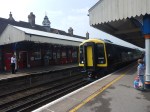
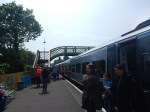
These pictures illustrate my trip.


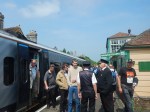
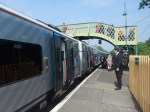
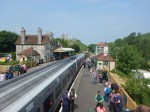
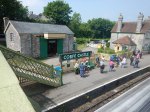
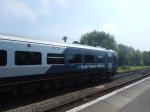
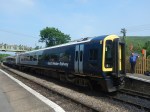
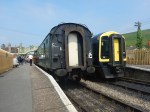

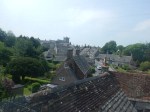
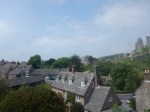
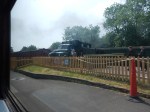

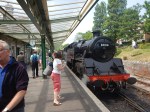


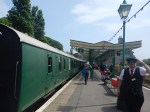

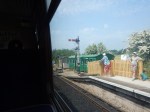
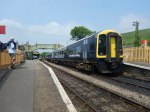
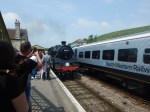
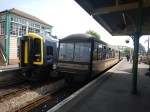

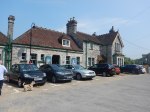
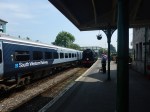
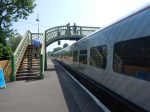
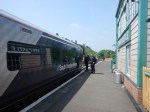
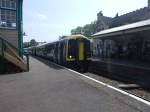
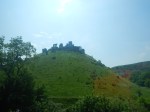
I have various observations.
Costs
I came down from London, so I had to pay for that ticket, but train tickets to Swanage from Wareham cost me five pounds for the South Western Railway leg and ten pounds for steam haulage.
Operations
Everything was very professional and there seemed to be a high-level of communication and good humour between the staff of South Western Railway and the volunteers of the Swanage Railway.
Swanage Railway were operating a steam-hauled shuttle along their line between Norden and Swanage stations and as the pictures show, both companies were able to run their own services, without interrupting the other.
Does Swanage Need A Year Round Train Service?
After my father retired, my parents went to live in Felixstowe.
It certainly didn’t work for me, as it was not the sort of place, a late teenager, could amuse himself, especially as all my friends were in London. As we hadn’t sold the house in London, I was usually to be found there.
I don’t know Swanage and I don’t know what it is like to live there!
But I do remember a short film on the BBC program Tonight in the early 1960s.
They were talking about long-distance commuting and they used as an example, a guy, who had moved his family to Swanage and was leaving home very early in the morning to go back to London for his work.
He was very happy with the arrangement, but the last shot of the film was after the reporter had asked his two teenage daughters what they thought of it all. Their faces said it all and I can remember my mother made an acerbic comment.
I wonder what a year round hourly service would do for Swanage?
Felixstowe has a year-round hourly rail service to Ipswich, but then Felixstowe is over twice as large as Swanage.
On the other hand, Felixstowe also has a fast dual-carriageway road connecting it to the rest of East Anglia.
Providing An Hourly Service To Swanage
Unlike many rail schemes aiming to create a new branch line, a lot of infrastructure is already in place.
Track
Yesterday, the following services were running.
- A roughly hourly steam service between Norden and Swanage stations, run by the Swanage Railway.
- A two-hourly service diesel service between Wareham and Corfe Castle stations, run by South Western Railway.
The track, which is a mixture of single and double track, seemed to cope well.
Interestingly, there is a mothballed oil terminal at Furzebrook, which was used to export oil from the large field at Wytch Farm. It is connected to the Swanage Railway between Norden station and the South Western Main Line.
As development and exploitation of oil fields is a very unpredictable process, I suspect that the Northern section of the Swanage railway is kept in very good condition by Network Rail, just in case Furzebrook has to reopen.
Norden Station
Norden station is the Northernmost station on the Swanage Railway.
This Google Map shows the station.
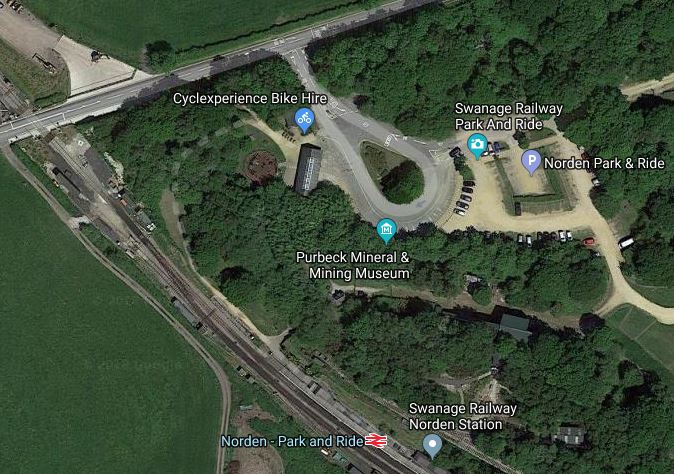
The map clearly shows the single platform, the Purbreck Mineral and Mining Museum and the Swanage Railway Park & Ride.
The Wikipedia entry for Norden station, says this about the car park.
A large car park, provided by Purbeck District Council, allows the station to function as a park & ride facility for the tourist centres of Corfe Castle and Swanage
Could this car park, also be used by local residents wanting to commute to or go shopping in Poole or Bournemouth?
Corfe Castle Station
Corfe Castle station is a well-built station with two platforms and a footbridge, that is as good if not better than many rural stations.
Harman’s Cross Station
Harman’s Cross station is a two platform station, without a footbridge.
It appears from the Google Map of the area, that new houses are being built in Harman’s Cross.
Swanage Station
Swanage station is the terminus station with two platforms.
As the pictures show, the platform used by the steam train is long and would certainly take an eighty metre long train.
Operating As A Single-Track Branch Line
I suspect that on days, when the heritage railway is not in operation, that the Swanage Railway could be used as a single-track branch line.
So perhaps, a diesel multiple unit could run a passenger shuttle along the branch. Operation would be little different to any of several diesel-operated branch lines in the UK.
Surely, if the CAA can allow Loganair to use Barra Airport, which is a beach on the island of the same name, then the ORR must be able to write a sensible rule book, to allow an hourly passenger service between Wareham and Swanage.
This picture shows Zwickau Zentrum station in the centre of the German town of Zwickau.
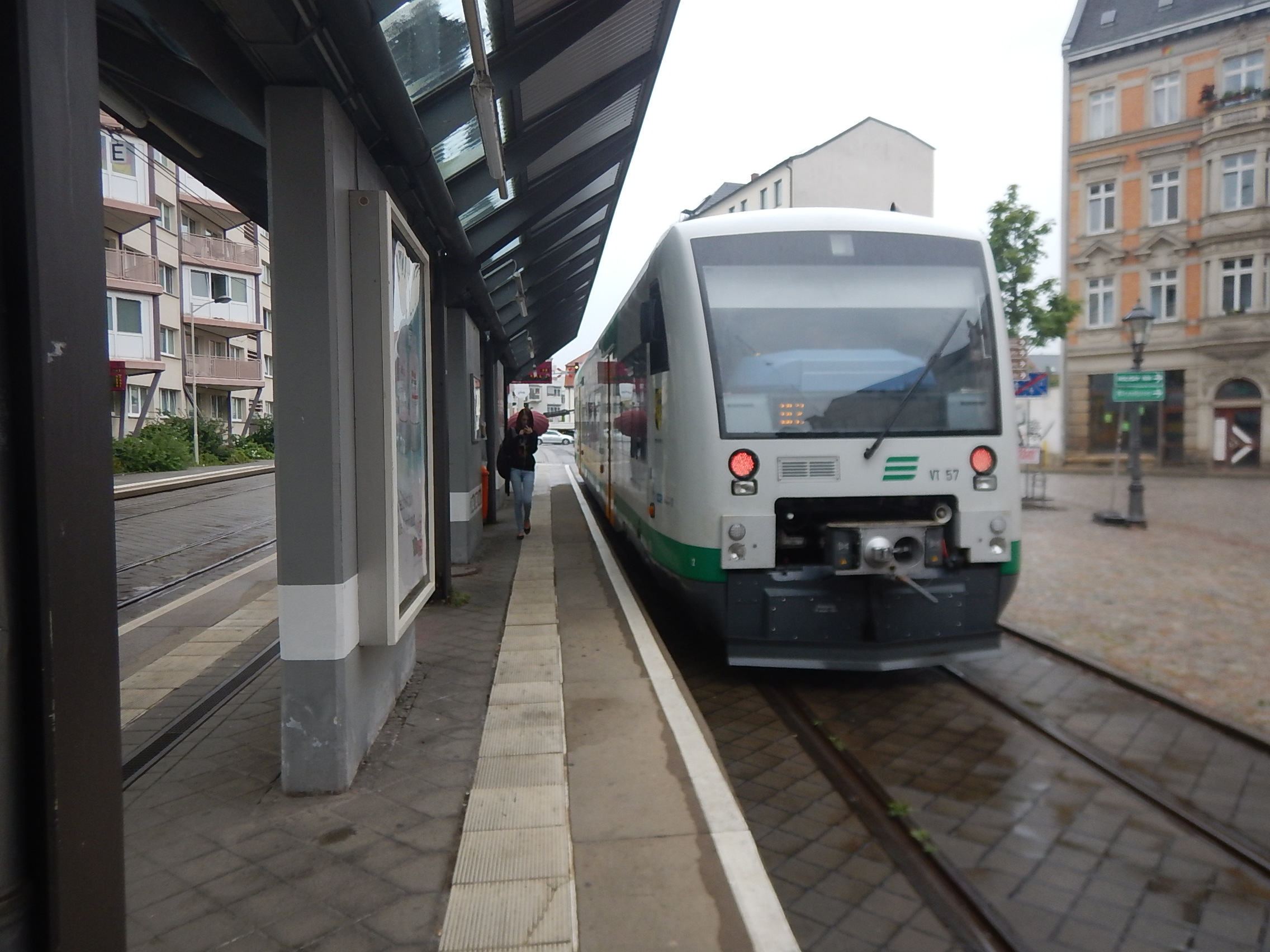
It is the simplest station, I’ve ever seen in a town centre. The diesel multiple unit appears to come into the city under the following rules.
- A sensible speed.
- Orange lights flashing.
- Two crew operation.
Effectively, the train service in Zwickau is run like a tram and even has an unusual three-rail track, that it shares with metre-gauge trams.
Note that as the Swanage Railway is a heritage railway, the speed limit is only 25 mph anyway.
As yesterday showed, South Western Railway and the Swanage Railway are able to operate a practical shared service on days, when the heritage railway is in operation.
Connecting To South Western Main Line Services
As was demonstrated yesterday by South Western Railway’s Class 159 train, operation between Corfe Castle and Wareham stations, is not the most difficult of operations.
Two things help.
- The South Western Main Line is not the busiest of routes through Wareham station.
- There is a cross-over to the West of the station.
These allowed the Class 159 train to use one of the through platforms to turnback.
Would this continue, if say the Swanage Railway were to run an hourly shuttle between Corfe Castle and Wareham stations?
Look at this Google Map of Wareham station.
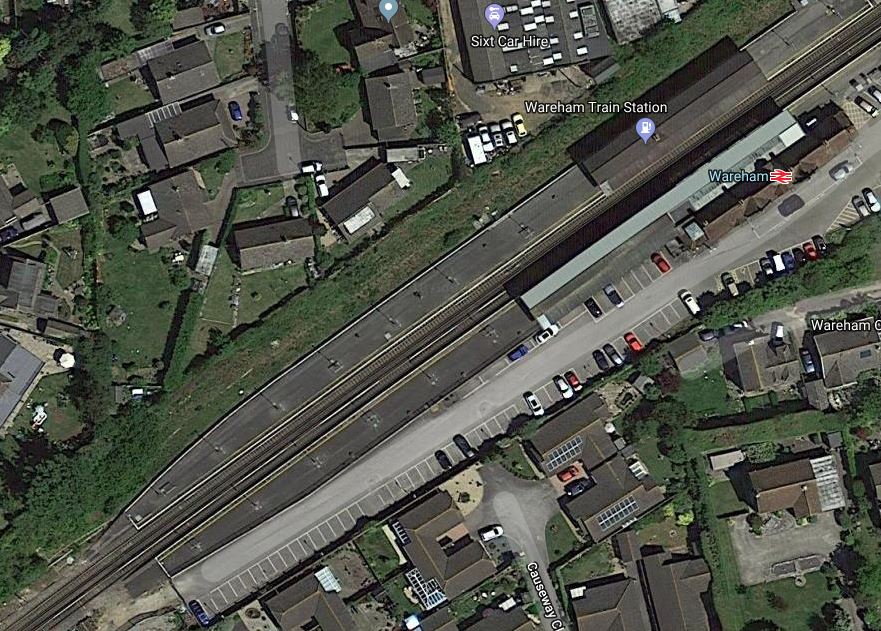
Is there space on the Northern side of the station to add a bay platform, to allow the shuttle to terminate in its own platform?
When I returned from Wareham to Waterloo, I just missed a train and I had to wait thirty minutes for the next train.
Looking at the Google Map of Poole station, there would appear to be a large amount of space around the station,
The Wikipedia entry for Poole station, also says this.
In 2004 proposals were drawn up for the current station buildings and footbridge to be replaced as part of redevelopment plans for the old goods yard. A hotel was to be built on the site of the current station building, however as of 2010 these plans have not progressed.
So would it be feasible at some time in the future to terminate a Swanage service in a bay platform in the much larger town of Poole?
There are certainly possibilities to use Poole or even Bournemouth stations as a terminus of a service to Swanage station, that would also increase the frequency on the South Western Main Line between Bournemouth and Weymouth.
How Long Would A Train Take To Go From Wareham To Corfe Castle And Back?
Looking at yesterday’s figures on Real Time Trains, the following times were achieved yesterday.
- Wareham to Corfe Castle – 21 minutes
- Corfe Castle to Wareham – 26 minutes
Yesterday, the trains were waiting for a long time at Corfe Castle station, to fit with their two-hourly timetable and that of the steam trains on the other track.
If you add in sensible turnback times at Wareham and Corfe Castle, I doubt that a round trip could be done in an hour, making it difficult to run an hourly shuttle between the two stations.
How Long Would A Train Take To Go From Wareham To Swanage And Back?
Using yesterday’s figures and the quoted times for steam trains between Corfe Castle and Swanage stations, we get the following times.
- Wareham to Corfe Castle – 21 minutes
- Corfe Castle to Swanage – 22 minutes
- Swanage to Corge Castle – 20 minutes
- Corfe Castle to Wareham – 26 minutes
Or a total of 89 minutes plus how long the turnround will be at Swanage station.
I have a feeling that timetabling an hourly service could be difficult.
What Rolling Stock Can Be Used?
If the trains travel for more than a few miles on the South Western Main Line, being able to use the third-rail electrification would be useful.
But they would also need to be self-powered on the Swanage Railway.
So perhaps, a bi-mode would be ideal.
As they have rather a heritage flavour, perhaps a Class 769 train would be ideal?
Conclusion
There is a lot of potential to improve services on the Swanage Railway.
I suspect that if South Western Railway and the Swanage Railway got into serious discussion, there will be a solution, that would be beneficial to both parties and all those who live and work in or visit Swanage and the Isle of Purbeck.
My Father’s Politics
In a A Trip To The Berlin Olympic Stadium, I said this about my father’s politics.
My father hated both extreme-right and extreme-left politics with a vengeance and I can honestly say, that I never heard him tell a racist joke.
With the rows going on this morning about antisemitic elements in the Labour Party, I looked up Stalin and antisemitism in Wikipedia.
My father had a Jewish male line, but no religion of any kind, although the more I learn, his outlook on life and morals were fairly Jewish.
In the Battle of Cable Street, he was there to stop Oswald Mosley and his supporters marching through the East End.
I know he moved in left-wing Tory Party circles, nearly stood for Parliament against one of Mosley’s supporters, and once said he had been at the League of Nations in Geneva. But, he remained largely silent about what he did in the 1920s and 1930s.
But I do think his Jewish genes drove him to take up his strong centrist views, especially when you read about Stalin and the Jews.
It is one of my regrets in life, that I didn’t find out more about my father’s life, in what must have been exciting times for those, who thought about politics.
A Trip To The Berlin Olympic Stadium
My father hated both extreme-right and extreme-left politics with a vengeance and I can honestly say, that I never heard him tell a racist joke.
My father also liked his sport and always claimed he’d first been driven to White Hart Lane in a pony and trap, before the First Wold War. He said, that you used to give a kid, a shilling to hold the horse’s head during the match.
He also used to like his athletics and one day told me with great joy, how the black American athlete Jesse Owens had annoyed Hitler by wining three gold medals.
So as I was in Berlin, I had to visit the Berlin Olympic Stadium.
I arrived at the S-bahn station and walked through to the U-bahn station from where I returned to Central Berlin.
These are some of the npictures that I took.
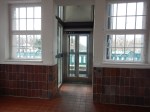
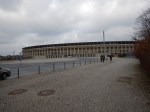
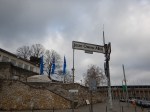
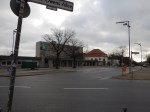

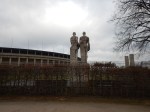

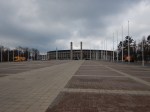
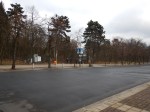
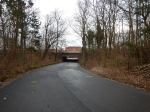
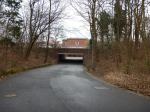
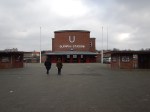
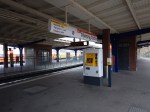
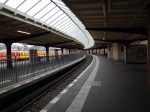
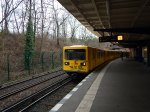
It was a cold walk, but would be very pleasant in the sun.
The Finest Low-Alcohol Gluten-Free Beer In The World
In some ways this is an open letter to Archie Norman and Jonathan Adnams, who are respectively chairman of Marks and Spencer and Adnams Brewery.
Adnams brew Southwold Pale Ale 0.5% for Marks and Spencer.
I have three medical conditions.
- I am coeliac, which means I must avoid gluten.
- I’ve had a stroke and am on Warfarin, which means I can’t drink too much alcohol.
- I have a need to drink lots of fluids and I find beer is best.
So I need a low-alcohol and gluten-free beer, that has all the thirst-quenching properties of beer.
I should say that my grandfather had the same need to drink a lot and he eventually turned into a serious alcoholic and died at the age of just forty.
I am now seventy and started drinking halves of Adnams at fourteen in Felixstowe Conservative Club, whilst playing snooker with my father. Since a stroke seven years ago, I’ve probably never drunk more than ten units of alcohol in a week.
The Southwold Pale Ale 0.5% satisfies my need for a low-alcohol beer and it has a quality taste, that I very much like.
When I was diagnosed as a coeliac twenty years ago, one of the problems was finding a decent gluten-free beer. So I had a discussion with a brewer at Adnams and he said that their beers could be gluten-free.
But I never tried one!
However, after testing a few bottles of Southwold Pale Ale 0.5% , I was convinced that the beer was low enough in gluten not to have any ill-effects on my body.
But then surely, a low-alcohol beer must be made with less barley to create the low-alcohol level!
I think Southwold Pale Ale 0.5% is a superb beer.
Don’t just take my word for it!
In the reviews on the Marks and Spencer web site, these are some of the titles.
- Favourite Low Alcohol Option
- Best Low Alc Beer I’ve Tried Yet
- Excellent Low Alcohol Pale Ale
Two other reviewers complain about the availability of the product.
Research shows that as many as one-in-fifty of the population of the UK could be coeliac.
Conclusion
Improving the availability of this product could be good for all concerned.
Then

