Is The Paddington Bakerloo Line Link Opening Soon?
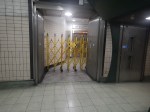
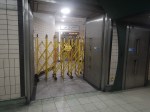
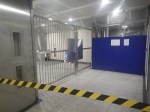
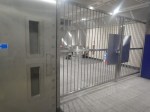
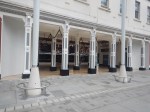
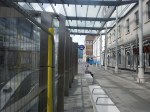
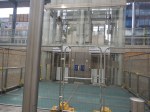
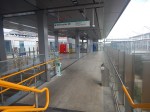
I took these pictures on the Bakerloo Line platforms at Paddington station yesterday.

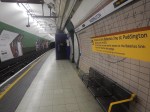
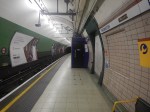

Note.
- There are new direction signs by the entrance, but they are covered in white plastic.
- The lights on the lift were showing sensible messages.
- The escalators behind the grill doors were running.
- It was only shut off using a barrier and black and yellow tape.
- The access between the Northbound Bakerloo Line platform and the escalator lobby, still needed to be opened up.
But it does look to me that this route is getting ready to be used.
In The Crossrail Article That Everyone Must Read, I review this article on Ian Visits, which is entitled A Sneak Preview Of London’s New Elizabeth Line Railway.
In a section, that is entitled The Bakerloo Line Link At Paddington Station, I wrote this.
Ian writes this interesting paragraph.
Something though that was added to Paddington station after the funding was approved was a new direct deep tunnel link from the platforms to the Bakerloo line. London Underground contractors built the link, and Andy Lord suggested that they are considering opening up the link before the Elizabeth line opens fully as it would help with offering step-free access for Bakerloo line customers.
Many people find getting to Paddington difficult, as I do from Dalston.
I typically use some roundabout and slow routes and most end up with arriving at Paddington on the Bakerloo Line.
Opening the link early would have the following effects.
- It would make things a lot easier for me and probably many other passengers.
- It would add passengers to London’s least-used Underground line.
- It would add capacity to the Bakerloo Line station at Paddington.
It would also give a piece of the infrastructure, a good soak testing with real passengers and may flag up some changes that needed to be made to details like signage.
Did Ian call it right?
Conclusion
I think he might have!
The Crossrail Article That Everyone Must Read
This article on Ian Visits is entitled A Sneak Preview Of London’s New Elizabeth Line Railway.
As the title of this post indicates, Ian’s article is very much a must read and it gives everybody something worthwhile to look forward to, after what has been the worst two years of many peoples’ lives.
The Crossrail Opening Date
There are a few more tests to do and Ian says the line could open a few weeks after Easter. With the Bank station upgrade apparently going well as I reported in Final Tunnelling Gets Underway On Bank Station Blockade and likely to open in mid-May, I wonder if TfL would prefer that the two projects opened at different times for management and operational reasons.
Easter is the 17th of April, and two weeks later is May Day, with the Bank Holiday on the Monday.
If they can do all the tests, there would be good reasons to open Crossrail on the first of May.
- It’s a different day to the opening of the Bank station upgrade.
- They would have two clear days to get Crossrail open.
- A lot of people will be going to Central London.
- Other Mayors would have organised a party.
- A Bank Holiday would give the new infrastructure a proper test with real passengers and lots of children.
- Crossrail could also help to cover for a late-opening Bank Station Upgrade.
If I needed to bet on it, my money would be on an opening on Sunday, the first of May.
The Bakerloo Line Link At Paddington Station
Ian writes this interesting paragraph.
Something though that was added to Paddington station after the funding was approved was a new direct deep tunnel link from the platforms to the Bakerloo line. London Underground contractors built the link, and Andy Lord suggested that they are considering opening up the link before the Elizabeth line opens fully as it would help with offering step-free access for Bakerloo line customers.
Many people find getting to Paddington difficult, as I do from Dalston.
I typically use some roundabout and slow routes and most end up with arriving at Paddington on the Bakerloo Line.
Opening the link early would have the following effects.
- It would make things a lot easier for me and probably many other passengers.
- It would add passengers to London’s least-used Underground line.
- It would add capacity to the Bakerloo Line station at Paddington.
It would also give a piece of the infrastructure, a good soak testing with real passengers and may flag up some changes that needed to be made to details like signage.
Opening The Liverpool Street and Moorgate Pedestrian Link
In London’s First Underground Roller Coaster, I described this link, which I believe will be used by more than just rail passengers.
I feel that like the Bakerloo Line Link at Paddington station, that this link could be opened early.
Conclusion
I can’t wait for Crossrail to open.
Walking The Line
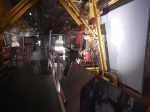
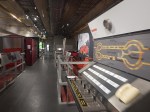
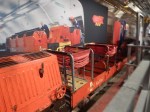
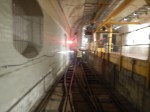
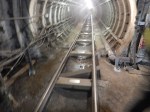
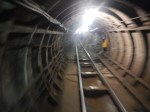
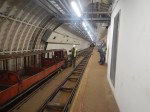
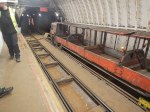
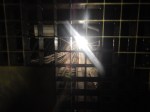
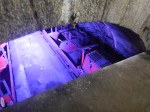
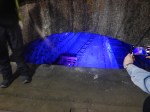
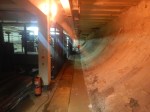
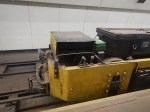
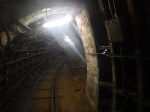
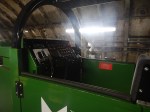
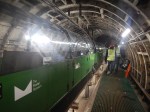
A friend asked, if I’d like to accompany her on a walk along the tunnels of the Post Office Railway.
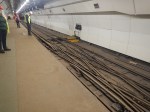
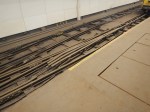
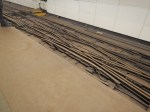
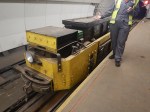
I said yes, went along and took these pictures.
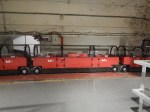

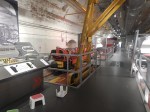
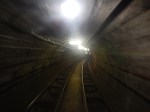
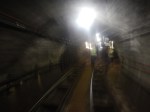
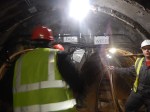



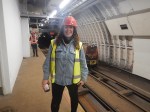
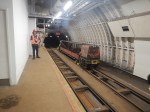
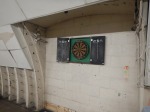
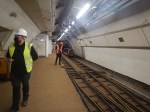
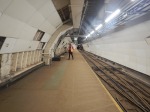
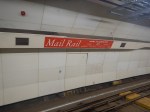


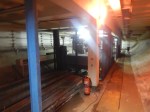
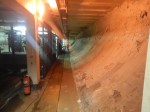
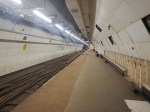
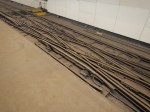
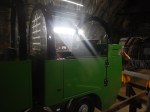
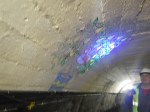

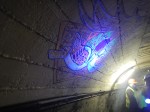


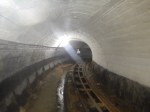
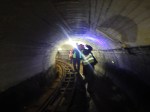
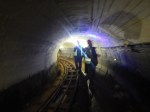

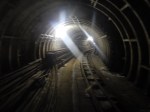
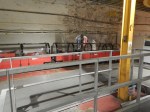
Note.
- The tracks are only two-foot gauge.
- The trains were driverless and electrically powered.
- The two modern trains with the plastic roofs; one of which is red and the other green, are used to take Postal Museum visitors along the tunnels.
- The yellow train was painted that colour for its part in the Bruce Willis film; Hudson Hawk.
- A large number of the sleepers had plaques on them, indicating their sponsors. The sleeps looked to be nearly all original.
- The paintings on the wall show the Twelve Days of Christmas and date from when Christmas parties for children were held in the tunnels.
- The tunnels were dug by hand using a Greathead Shield.
- There was no evidence of rodents.
It is a unique railway that is well worth a visit.
A few other facts and thoughts.
New Tunnels
Most modern tunnels like Crossrail, High Speed Two and the Thames Tideway are now dug by tunnel boring machines or TBMs. These pictures show Millicent and Ursula preparing to start boring the Thames Tideway.
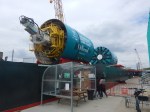
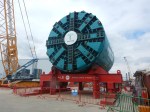
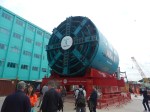
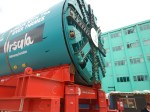
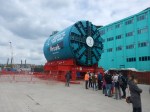
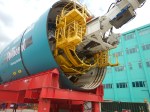

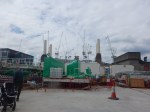
Not all tunnels though use a TBM. Recently, the new running tunnel at Bank and pedestrian tunnels at Paddington and possibly Moorgate have been dug in the traditional way, but probably with the aid of some of the likes of JCB’s finest.
There was also the innovative way, that Whitechapel station was built, that I described in Coal Mining in Whitechapel.
Tunnel Life Research
This is a paragraph from the Wikipedia entry for the Post Office Railway.
A team from the University of Cambridge has taken over a short, double track section of unused Post Office tunnel near Liverpool Street Station, where a newly built tunnel for Crossrail is situated some two metres beneath. The study is to establish how the original cast-iron lining sections, which are similar to those used for many miles of railway under London, resist possible deformation and soil movement caused by the new works. Digital cameras, fibre optic deformation sensors, laser scanners and other low-cost instruments, reporting in real time, have been installed in the vacated tunnel. As well as providing information about the behaviour of the old construction materials, the scheme can also provide an early warning if the new tunnel bores are creating dangerous soil movement
This is worthwhile research, as there have been some problems with London’s older tunnels.
Building The Paddington Bakerloo Line Link Project
This was done in and around the Paddington end of the Post Office Railway.
There is a link to a professional presentation about this complex project in Paddington Bakerloo Line Link Project, London.
Royal Mail Group assets at Paddington helped in the comstruction of the link.
Alstom Hydrogen Aventras And Great Western Branch Lines Between Paddington And Oxford
In Alstom And Eversholt Rail Sign An Agreement For The UK’s First Ever Brand-New Hydrogen Train Fleet, I give my thoughts on Alstom’s new hydrogen train, which I have called the Alstom Hydrogen Aventra.
One reader suggested these lines in a comment, as they are all run by diesel Class 165 trains.
These are the lines, that could be converted to Hydrogen operation.
Greenford Branch
The branch runs between West Ealing and Greenford via Drayton Green, Castle Bar Park and South Greenford.
- It has a frequency of two trains per hour (tph).
- The branch is 2.5 miles long.
- Services take eleven minutes.
- It needs a single train to run the service.
Note.
- In GWR To Test Battery Train On Branch Line, I wrote about Great Western Railway’s plans to test battery-eclectic trains on this line.
- The platform at Greenford station may need lengthening to accommodate the Alstom Hydrogen Aventra.
- It is my view that the branch needs four tph.
- It might also be possible to run Peak hour services to and from Paddington.
I do think that if the train length issue is solved that a single Alstom Hydrogen Aventra could work this branch.
A two-car Class 230 train would certainly fit.
Windsor Branch
The branch runs between Slough and Windsor & Eton Central.
- It has a frequency of three tph
- The branch is 2.8 miles long.
- Services take six minutes.
- It needs a single train to run the service.
Note.
- The extra capacity of the Alstom Hydrogen Aventra could be welcome.
- Prince Charles would like it.
I do think that a single Alstom Hydrogen Aventra could work this branch.
Marlow Branch
The branch runs between Maidenhead and Marlow via Furze Platt, Cookham and Bourne End.
- It has a frequency of one tph
- The branch is 7.1 miles long.
- Services take twenty-three minutes.
- The service reverses at Bourne End.
- It needs a single train to run the service.
Note that the three-car Alstom Hydrogen Aventra may be too long to execute the reverse at Bourne End.
I do think that if the Bourne End problem can be solved that a single Alstom Hydrogen Aventra could work this branch.
The two-car Class 165 train, that currently works the branch is 46 metres long, so a two-car battery-electric train may be needed for this branch. A two-car Class 230 train would certainly fit.
Regatta Line
The branch runs between Twyford and Henley-on-Thames via Wargrave and Shiplake.
- It has a frequency of two tph
- The branch is 4.6 miles long.
- Services take twelve minutes.
- It needs a single train to run the service.
Note.
- If this line needed more capacity trains could be doubled up, as there are no length issues.
- It might also be possible to run Peak hour services to and from Paddington.
I do think that a single Alstom Hydrogen Aventra could work this branch.
North Downs Line
The line runs between Reading and Gatwick Airport via Wokingham, Crowthorne, Sandhurst, Blackwater, Farnborough North, North Camp, Ash, Guildford, Shalford, Chilworth, Gomshall, Dorking West, Dorking Deepdene, Betchworth, Reigate and Redhill
- It has a frequency of two tph
- The route is 53.1 miles long.
- The route is partially-electrified with 750 VDC third-rail electrification.
- The route has been planned for 100 mph trains.
- Services take eighty-two minutes.
- It needs six trains to run the service.
Note.
- The route is proposed to be run by four-car Class 769 bi-mode trains.
- Would a three-car train be sufficient for this route?
- The Alstom Hydrogen Aventras are only 90 mph trains and would they be fast enough?
I do think that Alstom Hydrogen Aventras could work this route, but given the number of trains and possible capacity and speed issues, a four-car battery-electric train could be better suited to the route.
Reading And Basingstoke Line
This line runs between Reading and Basingstoke via Reading West, Mortimer and Bramley
- It has a frequency of two tph
- The route is 15.4 miles long.
- There is 25 KVAC overhead electrification at Reading.
- There is 750 VDC third-rail electrification at Basingstoke, but the platform used by the service is unelectrified.
- The route has been planned for 100 mph trains.
- Services take twenty-eight minutes.
- It needs two trains to run the service.
Note.
- For a battery-electric train to work this route, it might need a charging system at Basingstoke.
- The Alstom Hydrogen Aventras are only 90 mph trains and would they be fast enough?
I do think that a pair of Alstom Hydrogen Aventras could work this service.
Oxford Canal Line
This route runs between Didcot Psrkway and Banbury via Appleford, Culham, Radley, Oxford, Tackley, Heyford and Kings Sutton.
- It is effectively two routes with a combined frequency of two tph between Didcot Junction and Oxford and half that between Oxford and Banbury.
- The full route is 33 miles long.
- There is 25 KVAC overhead electrification at Didcot Parkway.
- Services take forty-one minutes.
- It probably needs four trains to run the service.
I do think that a small fleet of Alstom Hydrogen Aventras could work this service.
Some General Thoughts
These are a few general points.
Stabling And Hydrogen Fuelling
Reading Train Care Facility is a large depot to the west of Reading.
- It is ideally placed for all the lines, that I’ve mentioned.
- It is connected to all the lines by electrified lines.
I am sure that it would be possible to build a hydrogen fuelling facility at the depot.
Two-Car Battery-Electric Trains
It looks like the Greenford and Marlow Branches might need to be served by two-car battery-electric trains.
Four-Car Trains
Some of the services might be run by four-car trains, as these would be more suitable for the number of passengers.
Total Number Of Trains
My rough estimates of numbers of trains are as follows.
- Greenford Branch – 1 train
- Windsor Branch – 1 train
- Marlow Line – 1 train
- Regatta Line – 1 train
- North Downs Line – 6 trains
- Reading And Basingstoke Line – 2 trains
- Oxford Canal Line – 4 trains
This would be a total of sixteen trains or ten, if the Class 769 trains were used on the North Downs Line.
Additional Routes
There may be other routes, where the trains could be used, that are handy for Reading Train Care Facility.
Hydrogen or battery power may give advantages in opening new routes.
Would Hydrogen Trains Attract Passengers And Tourists?
I think they could, as if nothing there is a curiosity value.
Conclusion
This collection of routes surround Reading Train Care Facility and would be a nice package to run with hydrogen or battery-electric trains.
The Crossrail Tracks To The West Of Paddington Station
This map from carto metro, shows the track layout to the West of the Crossrail platforms at Paddington station.
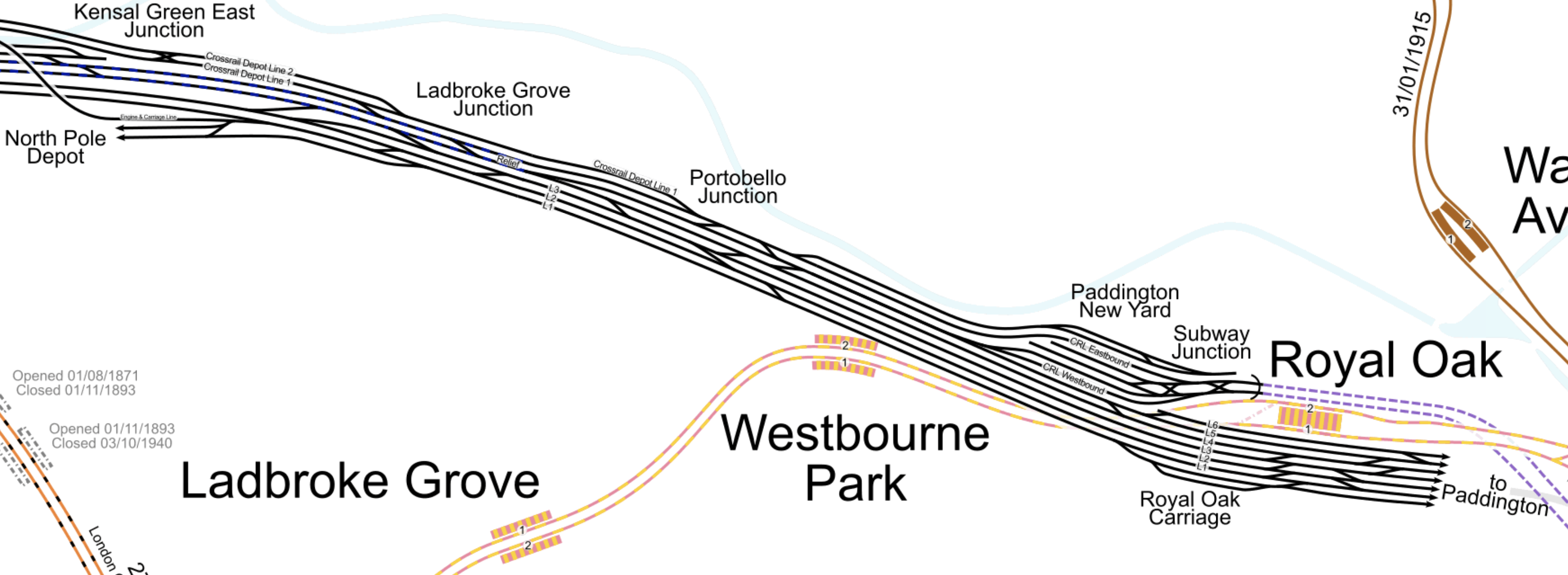
Note.
- The Crossrail tunnels are shown in dotted purple at the Eastern end of the map.
- The tracks change from purple to black at the Royal Oak tunnel portal.
- Two tracks named CRL Eastbound and CRL Westbound appear to pass either side of two turnback sidings.
- These tracks change to purple in colour and can be followed to the Western end of the map.
- Tracks break off from this route to the North and serve the depot at Old Oak Common.
It appears to be a very clean and simple layout.
Crossrail Formally Hands Paddington Station Over To TfL
The title of this post, is the same as that article on Ian Visits.
Ian says this about the current status of the stations.
This is the sixth of the Elizabeth line stations to be transferred over to TfL, following Custom House, Farringdon, Tottenham Court Road, Woolwich and Liverpool Street stations, which leaves only Canary Wharf, Whitechapel and the late running Bond Street to go.
Paddington station certainly looked very ready, when I visited yesterday and took the pictures in The Main Crossrail Entrance At Paddington Station.
The Main Crossrail Entrance At Paddington Station
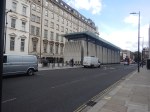
These pictures show the entrance to Crossrail at Paddington station, which is by Platform 1.
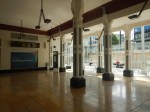
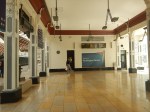
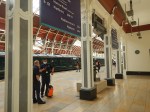







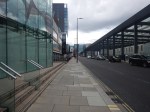
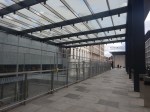
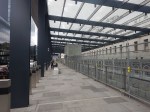

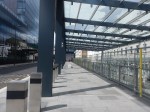
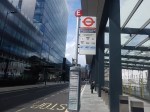
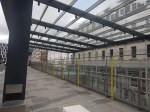
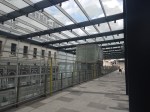
Note.
- The whole entrance is under a massive glass roof.
- Eastbourne Terrace is above the station and connected to it by stairs and a pair of lifts.
- There is a bus stop and short-term parking on Eastbourne Terrace.
- There are a large number of escalators between the main line station and the Crossrail level.
- There are plenty of seats everywhere.
- It is only a short walk between one set of escalators to Crossrail and the shops in the Lawn.
I think Brunel would have liked it, as it has a touch of the over-the-top.
This is a 3D Google Map of the new entrance.

Note.
- The cloud pattern on the roof is clearly visible.
- The lifts to the station are in the middle and the stairs are at the ends of the roof.
- The blue dot shows the position of the bus stop, where about five routes stop.
Will cars and taxis be able to drop people off in Eastbourne Terrace?
Conclusion
It’s an impressive new entrance to the station.
Crossrail’s New Opening Plan
This article on the excellent and well-informed IanVisits is entitled Crossrail Changes Its Staged Opening Plans.
Ian states that Crossrail will be split into two routes.
- Shenfield and Paddington
- Abbey Wood and Heathrow/Reading
Frequencies will be reduced, but Ian states there could be two positive benefits.
- Abbey Wood and Paddington could open earlier in 2022.
- The full integrated service could be brought forward six months.
Why is this possible?
These are my thoughts.
The Covid-19 Pandemic
The current TfL Rail service between Shenfield and Liverpool Street stations coped well before the pandemic and now with reduced passenger numbers it is able to handle current passenger loads without a problem.
I have used Crossrail from Paddington to Heathrow and Reading during the pandemic and Crossrail’s nine-car trains are handling passenger numbers with ease.
It would appear to me, that by using two platforms at Liverpool Street and Paddington stations, the benefits of Crossrail have been delivered to the East and West of the massive Greater London conurbation.
Stratford Station
Stratford station is more or less complete with respect to Crossrail.
- It can handle ten-car trains, if they run in the future.
- The two dedicated platforms for Crossrail, can probably handle the maximum frequency of trains, the line will ever carry.
But Stratford’s biggest advantage is the connections to the Central and Jubilee Lines, and the North London Line of the London Overground, which between them give access to most of Central and North London.
Ealing Broadway Station
A few weeks ago, a fully step-free Ealing Broadway station opened, as I wrote about in Ealing Broadway Station – 31st May 2021.
As with Stratford station, Ealing Broadway station is ready for any future Crossrail service.
It also has connections to the Central and District Lines to give access to most of Central London.
Can The Underground Cope In Central London?
All Lines except the Northern and Piccadilly Lines have seen improvement to signalling and/or trains in recent years and in my meandering around London, they seem to be coping well with the current passenger levels.
Liverpool Street Station
I use Liverpool Street station regularly and changes are happening at the station.
- Platforms have been lengthened so that ten-car Crossrail trains can be handled.
- The main entrance to the Underground was updated a few years ago and has a very wide gateline.
- A wider gateline is being installed for Crossrail and other suburban services on the East side of Liverpool Street station.
- A new entrance to Crossrail has been completed in front of Broadgate and appears ready to open, as I observed in Crossrail’s First Inclined Lift Is Now Available To View!.
A second high capacity step-free entrance has opened on Moorgate. When Crossrail opens through Liverpool Street station opens it will enable the following.
Passengers will be able to walk underground between Liverpool Street and Moorgate, with a substantial section of the route up and down escalators. I described the route in detail in London’s First Underground Roller Coaster.
The Crossrail entrance inside the Underground station at Liverpool Street station is now visible.

Note.
- Crossrail is behind the two pairs of massive stainless-steel doors.
- Peeping through the window, construction appeared to be almost at completion.
- If you turn right here, you take the escalator down to the Central Line.
Eventually, Liverpool Street and Moorgate stations could even be considered a single station with a massive escalator connection between the two original stations.
Liverpool Street And Stratford Stations Together Give Crossrail A Comprehensive Under/Overground Connection
These Under/Overground lines connect to either or both stations.
- Central Line – Connects to both stations, but at Stratford it’s a cross-platform interchange with Crossrail. Ideal for Oxford Street, the City of London and St. Paul’s.
- Circle Line – Connects to Liverpool Street. Ideal for Euston, Kings Cross, Paddington, St. Pancras, Victoria and large parts of South Central and West London.
- Hammersmith And City Line – Connects to Liverpool Street. Ideal for Euston, Kings Cross, Paddington, St. Pancras and large parts of West London.
- Jubilee Line – Connects to Stratford. Ideal for Bond Street, Canary Wharf, London Bridge, Waterloo and Westminster.
- Lea Valley Lines – These Overground Lines connect to Liverpool Street. Ideal for Enfield, Hackney, Haringey, Waltham Forest and North East London and South East Hertfordshire.
- Metropolitan Line – Connects to Liverpool Street. Ideal for Euston, Kings Cross, Paddington and St. Pancras, Wembley Stadium and North-West London.
- North London Line – This Overground Line connects to Stratford. Ideal for Acton, Brent, Dalston, Hackney, Hampstead and a large proportion of North and West London.
Liverpool Street and Stratford certainly have comprehensive connections to the Underground and Overground.
Liverpool Street And Shenfield Is Signalled With TPWS
TPWS is the only signalling system used on the section of Crossrail between Liverpool Street And Shenfield stations.
It offers these benefits, as opposed to the ETCS used in Crossrail’s core tunnel.
- It eased the replacement of the original Class 315 trains with new Class 345 trains.
- It allows Crossrail’s trains to share tracks with other trains not fitted with ETCS.
- Drivers only have to handle one signalling system on the route.
The single signalling system must make commissioning and operating the service between Liverpool Street And Shenfield stations easier.
Liverpool Street Station Gives Crossrail Flexibility In The East
The distance between the two current Crossrail platforms at Liverpool Street station and the steel doors will probably be no more than a couple of minutes walk with just a couple of steps down into the Underground station, which can be by-passed by a lift.
Currently, the service between Liverpool Street and Shenfield station has a frequency of eight trains per hour (tph)
- These trains are currently nine-cars long.
- The two Crossrail platforms at Liverpool Street have been lengthened to handle ten-car trains.
- The gateline for the Crossrail platforms is being improved to handle a higher volume of passengers.
If overcrowding should become a problem between Liverpool Street and Shenfield, then there is a quick fix of adding a tenth car to the trains, which would increase capacity by eleven percent.
The extra cars would be borrowed from Crossrail trains sitting in sidings, that are not needed because of the reduced train frequencies.
When Crossrail opens between Abbey Wood and Paddington stations, passengers needing to go between say Ilford and Paddington will be able to take the short walk between both pairs of Crossrail platforms at Liverpool Street station.
But the big advantage comes, when Crossrail starts running between Shenfield and Paddington.
Trains can be gradually swapped between Liverpool Street and Paddington as a terminus.
If there is a problem in Crossrail’s central tunnel, then services can be swapped back to Crossrail’s two current platforms in the National Rail station.
It looks to be a well-designed system.
Could The Pedestrian Route Between Liverpool Street And Moorgate Stations Be Opened Early?
This article on IanVisits is entitled Northern Line Bank Branch To Close For 4 Months Next Year.
The Northern Line will be closed between Moorgate and Kennington stations from the 15th January to mid-May.
Extra buses will obviously be run between Moorgate and Kennington to help during the closure.
- Finsbury Square is already used to turn buses and could be used as a Northern terminal.
- London Bridge has a bus station and could be used to turn buses.
- In his article Ian talks of buses between Oval and the City.
- The 21 and 141 bus routes run between Moorgate and London Bridge.
Would opening the pedestrian link help a lot of people by providing an easier route between Bank and Moorgate stations, by using the Central Line to Liverpool Street and then the tunnel?
- It would be fully step-free.
- Passengers from say St. Paul’s or Chancery Lane stations on the Central Line needing to get to say Angel station might find it an easier route.
- The weather isn’t always good enough for a walk.
It would be an escalator connection par excellence.
I suspect that this pedestrian route could open before January 15th.
- It will obviously need to be open when Crossrail opens between Abbey Wood and Paddington.
- As a pedestrian route, it will improve connectivity at both Liverpool Street and Moorgate stations.
- The Crossrail station at Liverpool Street, has been handed over to Transport for London.
- It could allow the opening up of the step-free tunnel from the Northern and Northern City Lines to the new entrance at Moorgate station.
Could the last point be the most significant, as it would make the Northern Line platforms at Moorgate station fully step-free in time for the blockade between Moorgate and Kennington stations?
As Transport for London have accepted Liverpool Street station, opening of the pedestrian route is surely their sole decision.
Could The Pedestrian Route Between The Bakerloo Line And Crossrail Be Opened Early?
Access to the Bakerloo Line at Paddington is being transformed by two projects.
- The addition of a step-free pedestrian tunnel, which will be around eighty metres long, that will link the Bakerloo Line and Crossrail.
- A new step-free entrance and booking hall for the Bakerloo Line,that will replace the current Praed Street entrance.
This page on the Transport for London web site, which is entitled Paddington Bakerloo Ticket Hall, gives more details of the new entrance.
Transport for London indicate that the second project will be completed by mid-2022.
But I do wonder, if after Paddington station is handed over to Transport for London, if this tunnel could be opened to give interim step-free access to the Bakerloo Line, until either Crossrail or the new entrance opens.
When Crossrail and these two projects are completed, will this mean that the Bakerloo Line will see a lot more passengers?
Abbey Wood And Paddington
Crossrail between Abbey Wood And Paddington has the following characteristics.
- It is a new twin-track railway, that it doesn’t share with other trains.
- Most of the route is in tunnel, with just three sections on the surface.
- The route is signalled with ETCS.
- All new underground stations will have platform-edge doors.
It is very much a railway designed to the highest modern standards.
The Surface Section At Abbey Wood
The surface section at Abbey Wood has these purposes.
- To provide an interchange station with the North Kent Line.
- To turn back trains towards the West.
- To provide stabling for trains and service trains to enable a smooth operation of the Abbey Wood and Paddington section of Crossrail.
This map from cartometro shows the track layout to the East of Plumstead station.
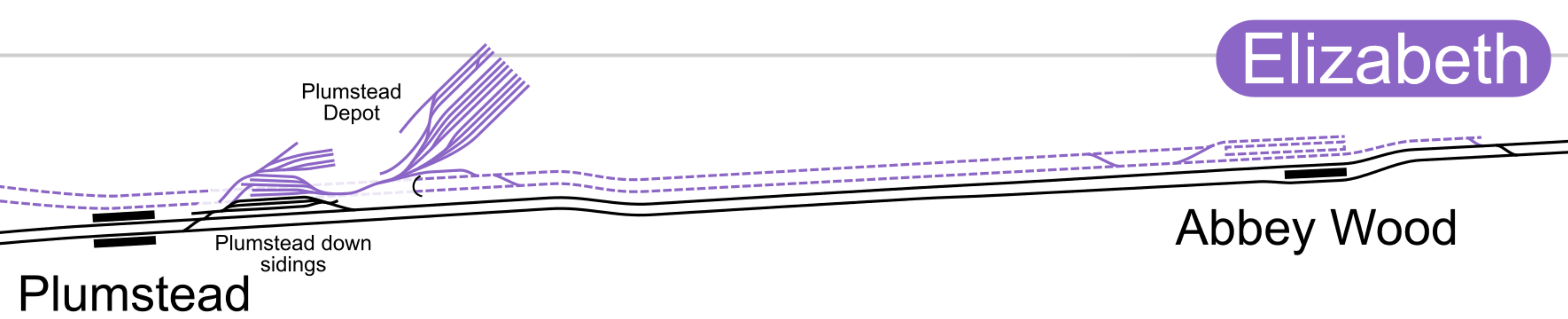
Note.
- Crossrail is shown in purple.
- Abbey Wood station has two platforms for Crossrail and two for the North Kent Line.
- The platforms appear to be numbered one to four from the South.
- There appears to be a turnback for Crossrail trains in Platform 3, which also appears to have crossovers to connect to the North Kent Line.
- Crossovers to the West of Abbey Wood station allow trains to use either Crossrail platform.
- These crossovers also allow access to the sidings at Plumstead.
- The Plumstead tunnel portal can be seen below Plumstead Depot.
If Abbey Wood station follows the two National Rail platforms at Liverpool Street in handling a total of 8 tph, then initially Abbey Wood could handle this frequency of trains.
Ian says this in the first article about the frequencies of Crossrail during testing.
Before the blockade, Crossrail was testing the line with an 8 trains per hour (8tph) service, but this week they are going to be ramping that up to 12tph, which will mirror the timetabled service that the line will offer when it opens early next year.
Note that 12 tph will require Abbey Wood station to handle 6 tph on each platform.
Transport for London also intend to simulate 24 tph through the central section, which will be the Peak frequency when the line fully opens.
The Surface Section At Custom House
This map from cartometro shows the track layout around Custom House station.
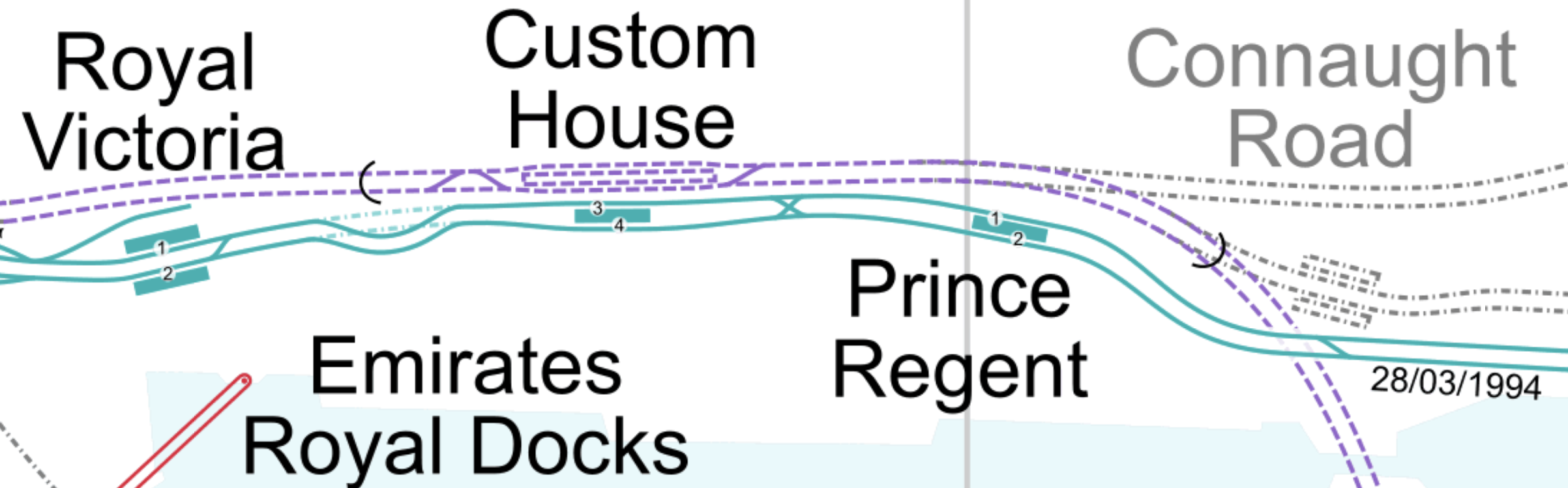
Note.
- Crossrail is shown in purple.
- The DLR is shown in light green.
- The tunnel portal for the central Crossrail tunnel is to the West of Custom House station.
- The tunnel portal for the Connaught tunnel is in the area of the former Connaught Road station.
- Between the other end of the Connaught tunnel and Woolwich station, some of the route is in a cutting.
- There are crossovers either side of Custom House station.
I suspect a lot of the complications are because an old route was reused.
The Surface Section At Paddington
This map from cartometro shows the track layout around Paddington station.
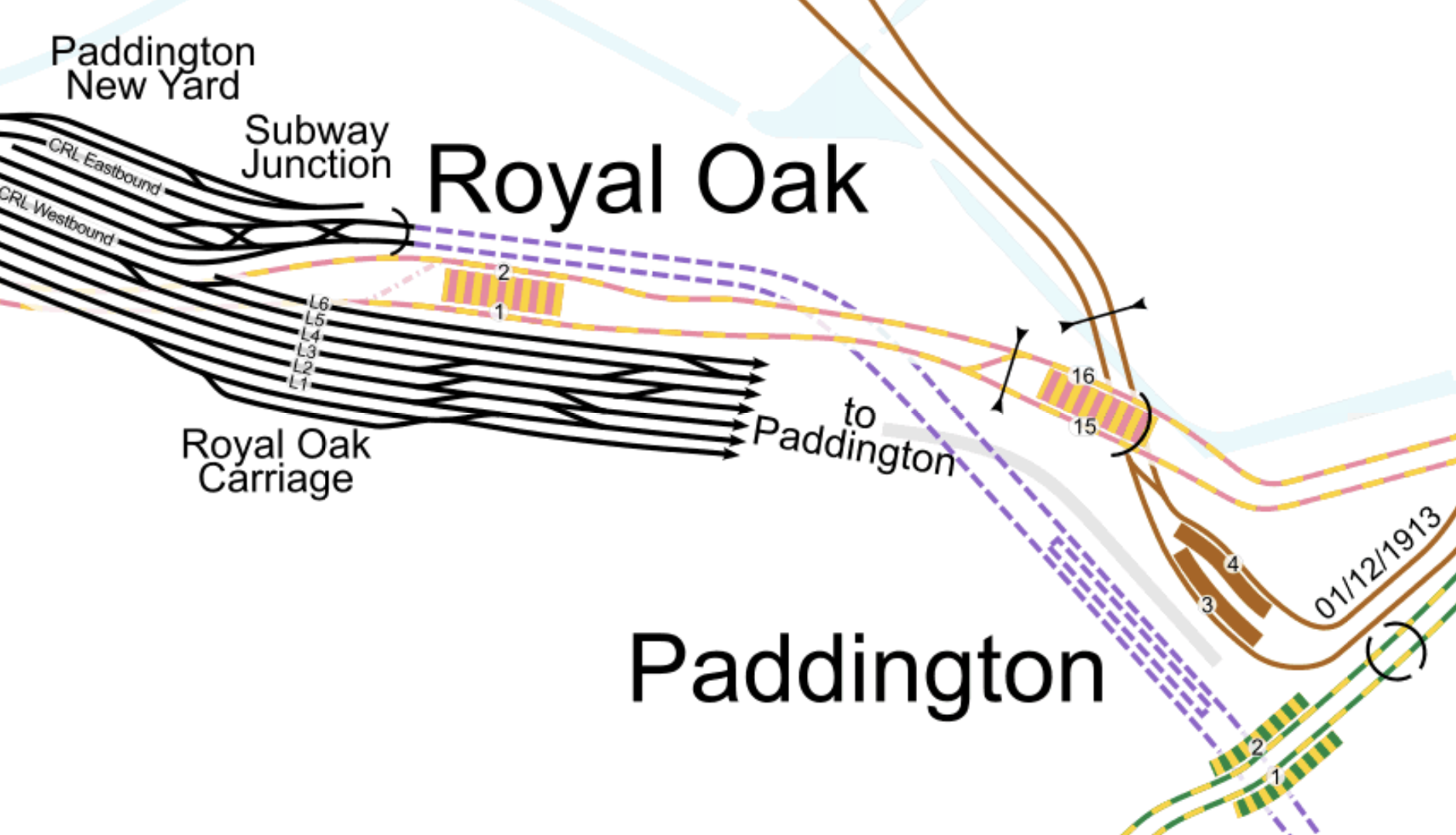
Note.
- The Crossrail station at Paddington is a straight-through two platform station.
- The Royal Oak portal, where Crossrail comes to the surface is just to the West of Royal Oak Underground station.
- Two lines are labelled CRL Eastbound and CRL Westbound are connected to the Crossrail lines.
- Between and around these lines is Paddington New Yard
- There are two full crossovers between Paddington New Yard and the Royal Oak portal.
To reverse at Paddington, trains proceed to Paddington New Yard, where the driver changes ends and then returns to Paddington, when needed.
Trains for Reading and Heathrow use the CRL Eastbound and CRL Westbound lines to connect to Crossrail’s Western surface tracks and the Central core tunnel.
It all looks well-designed to my untrained eye.
Platform Edge Doors
This page on the Crossrail web describes the platform edge doors.
This is the first paragraph.
Crossrail has installed floor-to-ceiling platforms screen doors at each of the eight new underground stations on the Elizabeth line – that’s roughly 4 kilometers of platform edge screens in total.
The new stations between Abbey Wood and Paddington are,
- Paddington
- Bond Street
- Tottenham Court Road
- Farringdon
- Liverpool Street
- Whitechapel
- Canary Wharf
- Custom House
- Woolwich
This is eight underground stations and one surface station; Custom House.
So does it mean that Custom House station doesn’t have platform edge doors?
I took these pictures of Custom House station today.


Note.
- The Crossrail trains were running at a frequency of 8 tph.
- , The pictures don’t show any platform edge doors or structures capable of supporting platform edge doors.
Could the regulations allow a surface station like Custom House to be built without doors, or were they left out to save money?
Safety is assured by being able to shut off all entrances to the platforms.
But it does appear that between Custom House and Paddington stations, passengers and trains are separated by platform edge doors.
- Platform edge doors are controlled by the signalling, so with the correct interlocking a lot of things are possible.
- Suppose, a station is not ready for passengers, then by locking the doors closed, trains can still pass through.
- Does this mean that at stations like Liverpool Street, where passengers might need to walk between the Moorgate and Liverpool Street ends of the station to change trains, that these pedestrian routes could be opened? I think it does?
It does appear to me, that platform edge doors are the key to opening a partially-completed railway.
When Could Abbey Wood And Paddington Open?
It strikes me that the following conditions must be met.
- Paddington station must be handed over to Transport for London.
- Platform edge doors at all stations must work reliably.
- The trains must work reliably with the signalling.
It looks like Bond Street, Paddington and Whitechapel stations, are the only stations that have not been handed over to Transport for London.
- I suspect, as Paddington is a terminal station, it must be handed over.
- Crossrail have said they could live with Bond Street opening later.
- Whitechapel appears to have been a difficult station to build, so perhaps it could open later.
Could Crossrail open partially, earlier than anyone thinks?
Perhaps this post called Your First Crossrail Service May Arrive In Time For Christmas, was based on fact and not rumour in the Sunday Times.
800009 – John Charles
On my way to Wales on Tuesday, I travelled in the Class 800 train, that is numbered 800009 and named after the great Welsh footballer; John Charles at one end.
I actually saw him play for Leeds in a match against Spurs at White Hart Lane. Leeds played in a blue kit in those days and I am fairly sure John Charles played up front.
I suspect, it likely, that it must have been the 1956-57 season as it would be the only season where Leeds were in the First Division, before John Charles left in 1957 to go to Juventus.
I wonder how many people, who saw John Charles play, have actually ridden in the train named after him?
It was good to see that Great Western Railway have also put his Italian nickname; Il Gigante Buono on the train.
Thoughts On Train Times Between London Paddington And Cardiff Central
I went to Cardiff from Paddington on Tuesday.
These were the journey details.
- Distance – Paddington and Cardiff – 145.1 miles
- Time – Paddington and Cardiff – 110 minutes – 79.1 mph
- Time – Cardiff and Paddington- 114 minutes – 76.4 mph
There were four stops. Each seemed to take between two and three minutes.
I do feel though, that the trains are still running to a timetable, that could be run by an InterCity 125.
I watched the Speedview app on my phone for a lot of both journeys.
- There was quite an amount of 125 mph running on the route.
- Some stretches of the route seemed to be run at a line speed of around 90 mph.
- The Severn Tunnel appears to have a 90 mph speed.
- Coming back to London the train ran at 125 mph until the Wharncliffe Viaduct.
These are my thoughts.
Under Two Hour Service
The current service is under two hours, which is probably a good start.
Improving The Current Service
It does strike me that the current timetable doesn’t take full advantage of the performance of the new Hitachi Class 80x trains.
- Could a minute be saved at each of the four stops?
- Could more 125 mph running be introduced?
- Could the trains go faster through the Severn Tunnel?
- If two trains per hour (tph) were to be restored, would that allow a more efficient stopping pattern?
- The route has at least four tracks between Paddington and Didcot Parkway and the Severn Tunnel and Cardiff.
I would reckon that times of between one hour and forty minutes and one hour and forty-five minutes are possible.
These times correspond to average speeds of between 87 and 83 mph.
Application of In-Cab Digital Signalling
Currently, a typical train leaving Paddington completes the 45.7 miles between Hanwell and Didcot Parkway with a stop at Reading in 28 minutes, which is an average speed of 97.9 mph.
This busy section of the route is surely an obvious one for In-cab digital signalling., which would allow speeds of up to 140 mph.
- Services join and leave the route on branches to Bedwyn, Heathrow, Oxford and Taunton.
- The Heathrow services are run by 110 mph Class 387 trains.
- There are slow lines for local services and freight trains.
If an average speed of 125 mph could be attained between Hanwell and Didcot Parkway, this would save six minutes on the time.
Would any extra savings be possible on other sections of the route, by using in-cab digital signalling?
I suspect on the busy section between Bristol Parkway and Cardiff Central stations several minutes could be saved.
Would A Ninety Minute Time Between Paddington And Cardiff Be Possible?
To handle the 145.1 miles between Paddington and Cardiff Central would require an average speed including four stops of 96.7 mph.
This average speed is in line with the current time between Hanwell and Didcot Parkway with a stop at Reading, so I suspect that with improvements to the timetable, that a ninety minute service between Paddington and Cardiff Central is possible.
It may or may not need in-cab digital signalling.
My Control Engineer’s nose says that this signalling upgrade will be needed.
Would A Sixty Minute Time Between Paddington And Cardiff Be Possible?
A journey time of an hour between Paddington and Cardiff Central would surely be the dream of all politicians the Great Western Railway and many of those involved with trains.
To handle the 145.1 miles between Paddington and Cardiff Central would require an average speed including four stops of 145.1 mph.
It would probably be difficult to maintain a speed a few mph above the trains current maximum speed for an hour.
- How many minutes would be saved with perhaps a single intermediate stop at Bristol Parkway station?
- Perhaps the Cardiff service could be two tph in ninety minutes and one tph in sixty minutes.
- Full in-cab digital signalling would certainly be needed.
- Faster trains with a maximum speed of up to 155-160 mph would certainly be needed.
- There may be a need for some extra tracks in some places on the route.
A journey time of an hour will be a few years coming, but I feel it is an achievable objective.
The Extended Route To Swansea
Cardiff Central and Swansea is a distance of 45.7 miles
A typical service takes 55 minutes with three stops, at an average speed of 49.8 mph.
This would be an ideal route for a Hitachi Intercity Tri-Mode Battery Train, which is described in this Hitachi infographic.

It would probably be needed to be charged at Swansea station, to both enable return to Cardiff Central or extend the service to the West of Swansea.
Conclusion
Big improvements in journey times between Paddington and Cardiff Central are possible.

