Thoughts On Step-Free Access At Manor House Station
I use Manor House station regularly, as I have a bus-stop by my house, that is perhaps fifty metres from my front door, that connects to the station.
- There is also a zebra crossing to get to the other side of the road.
- The 141 bus actually connects me to Manor House, Turnpike Lane and Wood Green stations on the Piccadilly Line.
- This is because it was a replacement for the 641 trolley-bus route that used to run between Winchmore Hill and Moorgate via. Milmay Park.
- I also use the station as a convenient station to go West on the Piccadilly Line.
- As it connects step-free at Finsbury Park station to the Victoria Line, it certainly has its uses.
Click this link to see an excellent photo of a 641 trolley-bus at Manor House station.
The pub in the photo was the Manor House, where I saw such performers as John Mayall and Eric Clapton amongst others.
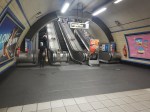
I took these pictures today
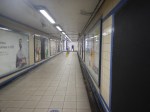
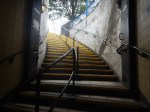
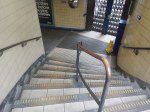
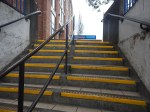
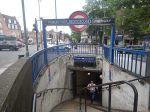

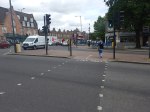
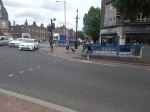
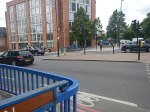
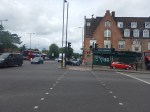
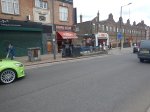
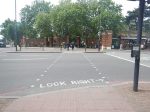
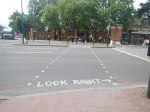
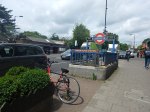
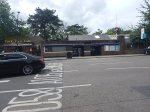

The station has an unusual layout.
-
-
- Two major roads; the Seven Sisters Road (A503) and Green Lanes (A 105) cross at the station.
- The four major roads are all controlled by traffic lights, which also allow pedestrians to cross the major roads safely on the surface.
- There are a couple of staircases at each corner of the junction and these lead down to a maze of passages that connect these entrances to the escalators that lead up and down to the platforms.
- The former Manor House pub and a new Travel Lodge sit opposite each other on the junction.
- The Travel Lodge sits on the South-West corner.
- The North-West corner leads directly into Finsbury Park., which is not a bad place to go for a walk or a jog.
-
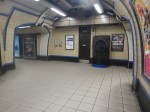
The below ground subways in the station are all level.
The staircases between subway and street level are very reminiscent of those at Piccadilly Circus or Leicester Square stations.
The staircases also have some excellent period details.
But then they tend to do things as they should in my part of North London.
This picture was taken after a World Cup Third!
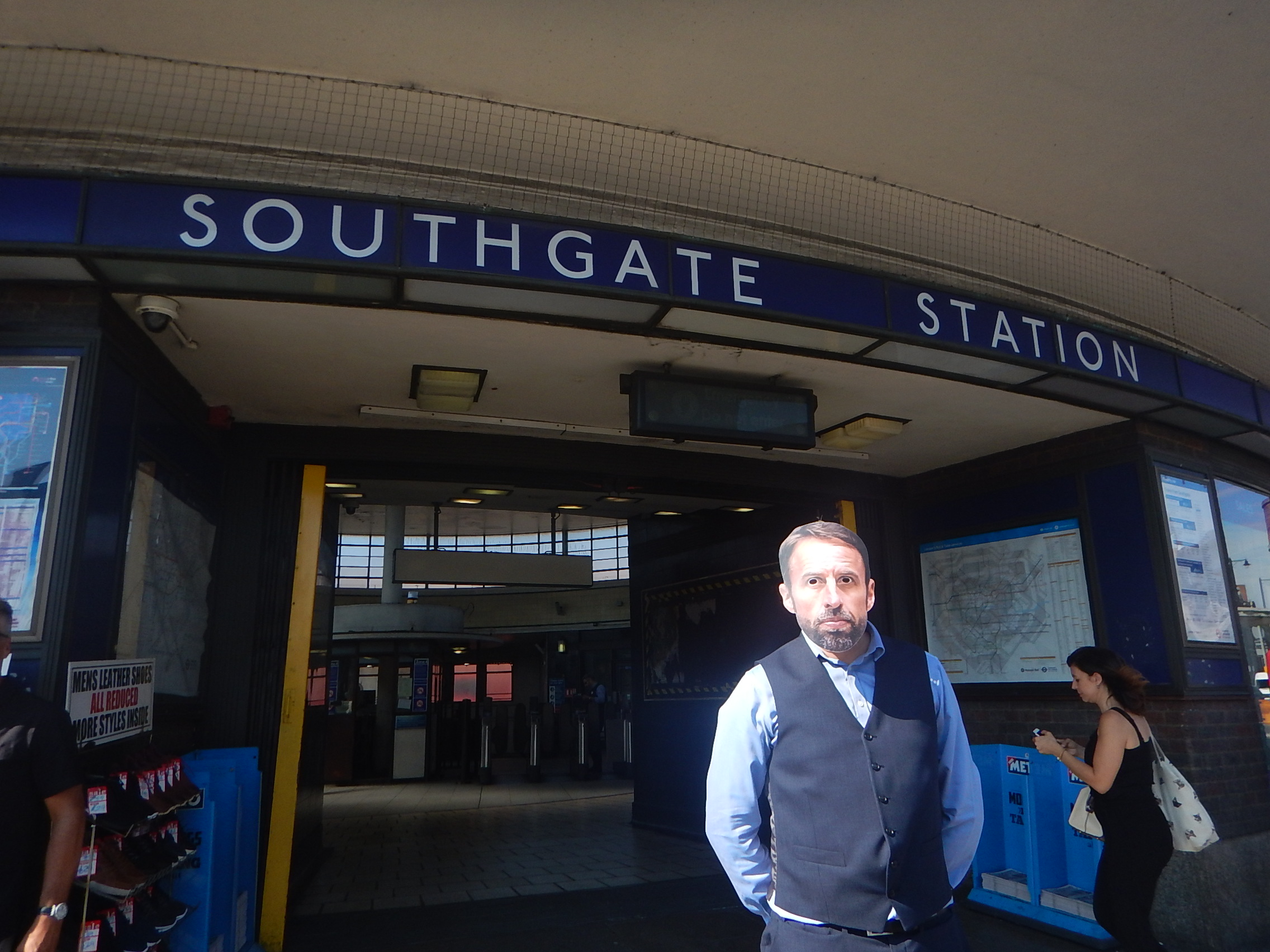
What will happen, if England win the Euros?
Manor House station’s design can best be summed up as two level areas connected by a series of staircases.
- Central London stations with this layout include Bank, Cockfosters, Kings Cross St. Pancras,Leicester Square, Manor House, Piccadilly Circus. Tottenham Court Road and Victoria.
- At least Cockfosters, Kings Cross St. Pancras, Tottenham Court Road and Victoria have lifts between the two levels.
- Bank station will have more lifts than Oti Mabusi in a dance routine, after the rebuild.
- Old Street was similar, but Transport for London (TfL) are rebuilding the station.
Cockfosters has level access at both the surface and the platform level and they have sneaked in a lift in a corner of the station.
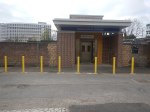
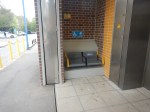
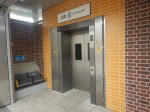

Grandparents in a wheel-chair or Louis or Lilibet in a pushchair can easily be taken easily between train and the car-park.I am certain, that if there are a number of lifts at the four corners of the road junction at Manor House, then access both to the station and across the junction will be substantially eased.
That just leaves us with the problem of getting between subway and platform levels.
This map from cartometro.com shows the platform layout.

Note that as at Turnpike Lane station in this platform layout, there is also a generous space between the platforms.
The two escalators and a set of stairs face North.
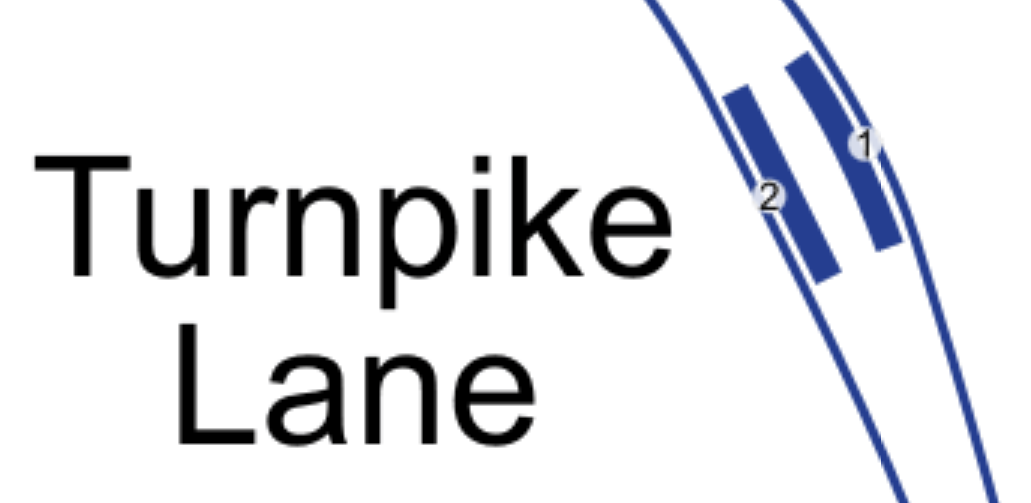
Wood Green station is a bit different, as it has a turnback siding
The two escalators and a set of stairs also face South.

When I used to use the Piccadilly Line in the 1960s, it tended to be pain, if a Wood Green train turned up, when you wanted to go to Oakwood or Cockfosters.
Bounds Green station is shown in this map.
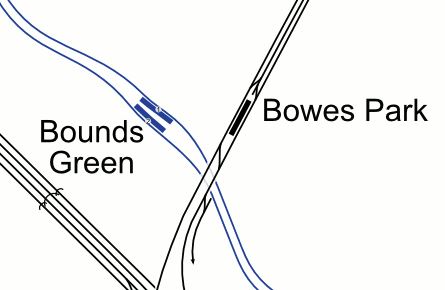
Again the tracks appear to have been curved to allow generous space.
The two escalators and a set of stairs face North.
Arnos Grove station is a station with sidings and four platforms on the surface.
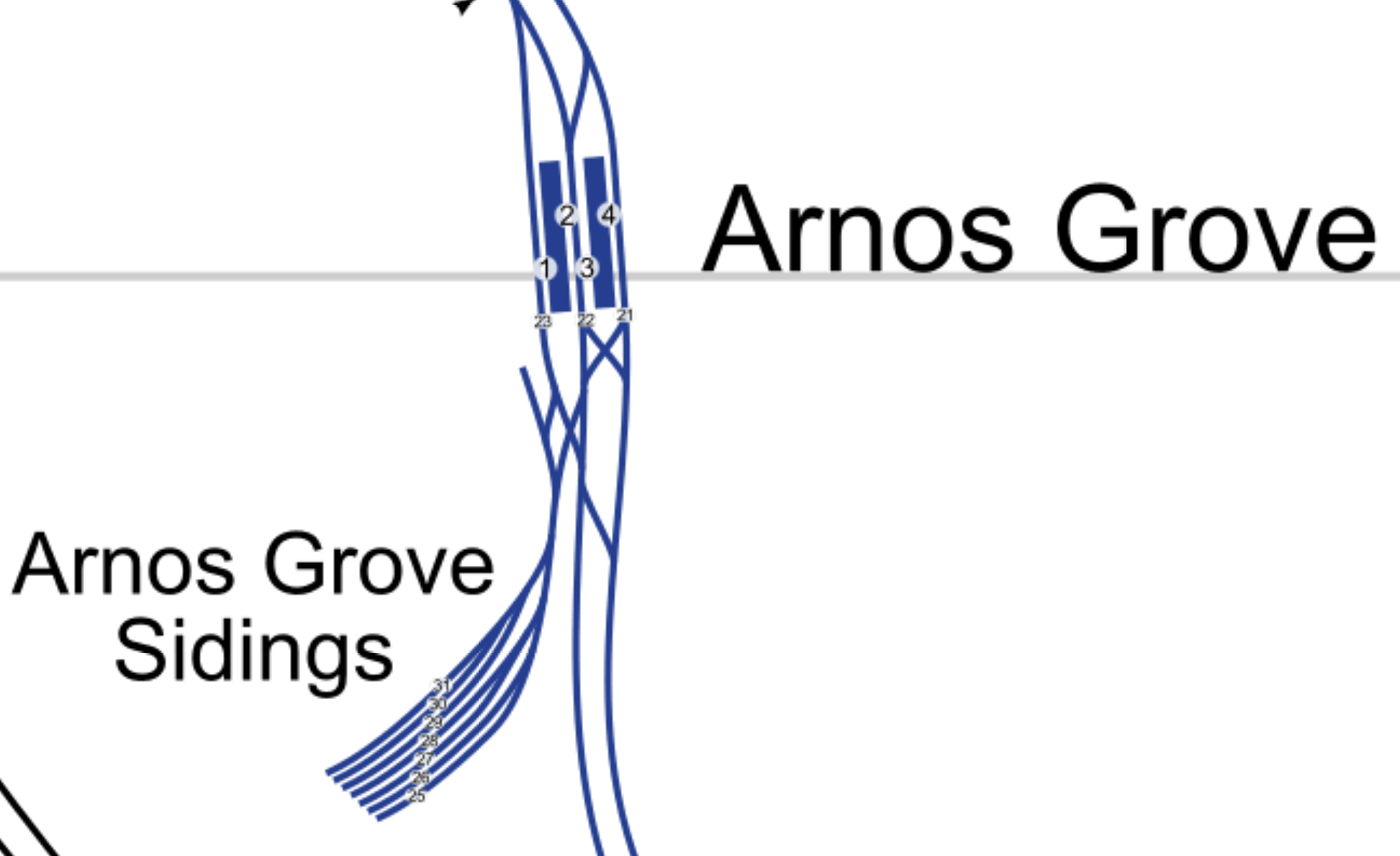
The car parks are likely to be developed for housing, so there will be major changes at the station.
Southgate station is the last station, that doesn’t have step-free access.
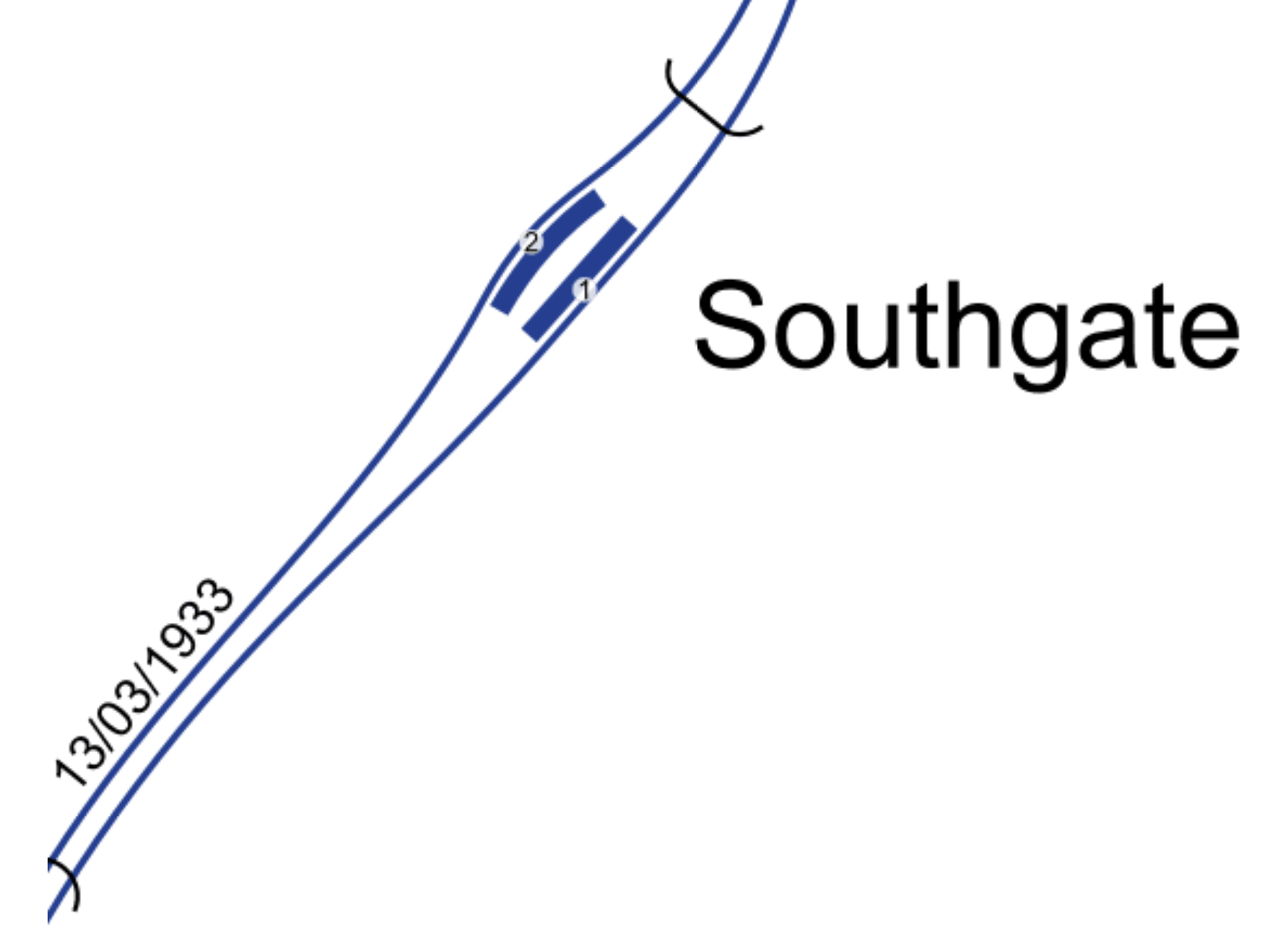
But again there is some space between the tracks.
The two escalators and a set of stairs face North.
So did the designers of the Northern Extension of the Piccadilly Line leave space to put in more equipment or even lifts?
After all they didn’t stint themselves on the design of the stations.
Designing Step-Free Access
This is not easy and various considerations must be taken into account.
Revenue Protection
At Cockfosters station, the new lift goes between two areas that are outside the ticket barriers.
If as I have proposed at Manor House station, where there would be lifts between the surface and the subway level, both areas are outside the ticket barriers.
At Tottenham Hale station, there several lifts all of which are inside the ticket barrier.
Staff At The Barrier
Nearly all ticket barriers in London are watched by staff to sort out problems like passengers, who don’t know how to use the system.
Costs
It is unlikely, that large sums of money will be available to add step-free access to all stations on the Underground.
I also think, that step-free access at stations will be funded by developments close to stations.
A London-Wide Solution
It is for these and other reasons, that I think London needs to look in detail at all stations and see if a series of solutions can be developed for all stations.
In this section of the Piccadilly Line, there are five stations with three escalators or two escalators and a staircase.
But there are others on the other deep tube lines.
So should a standard solution be developed for all stations like this? And for all groups of similar stations.
Could An Inclined Lift Be Used At This Group Of Stations?
This picture shows the first inclined lift, I ever saw, which was on the Stockholm Metro.
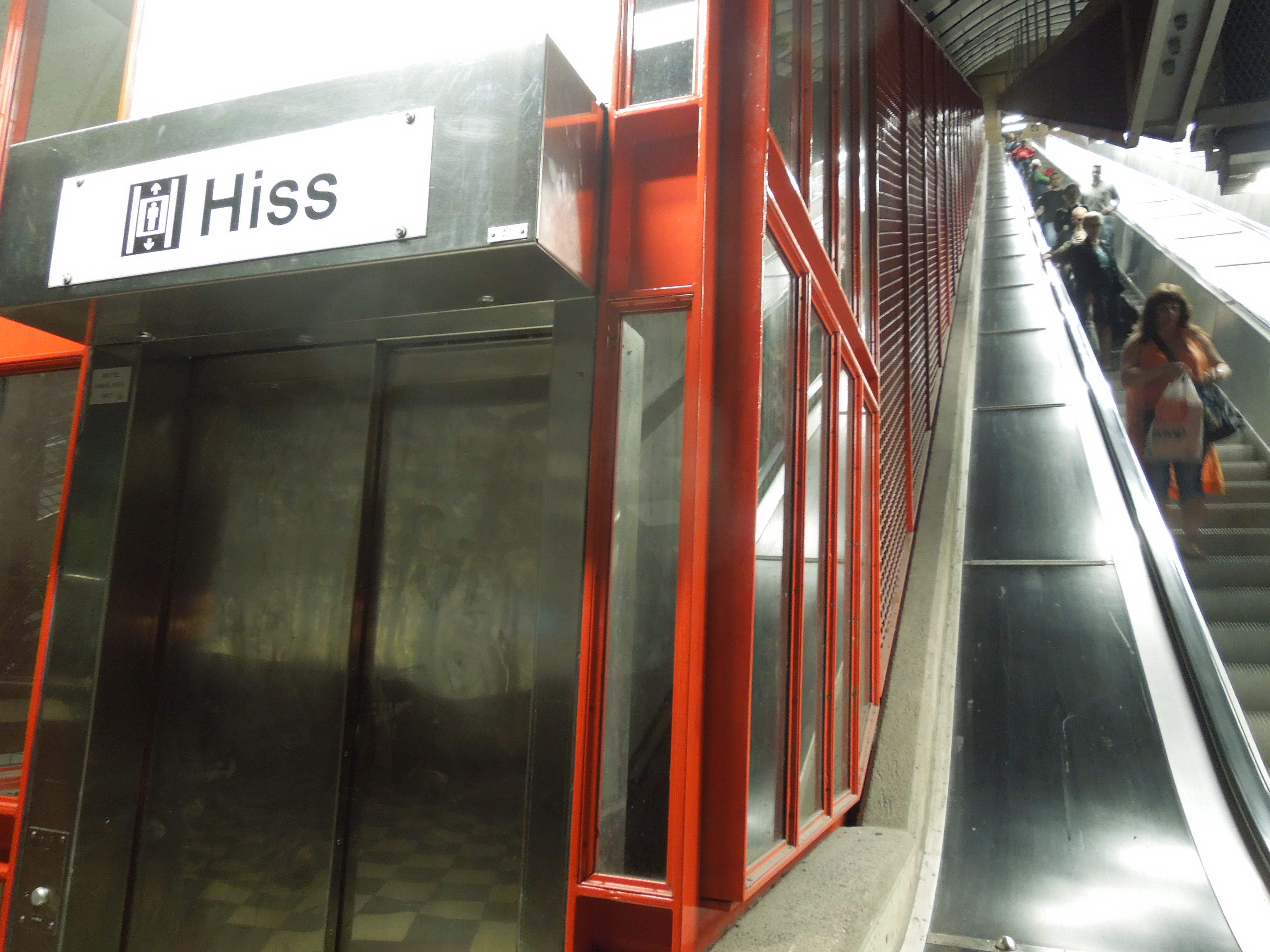
Looking at the picture shows it was installed on a very long set of escalators.
At present, there is only one inclined lift on the London Underground and that one is at Greenford station.

It is a very neat and compact installation, that incorporates a double-staircase, an up escalator and an inclined lift in a confined space.
I think we’ll see similar solutions to Greenford employed in some stations on the Underground. In Is This A Simple And Affordable Solution To Providing Step-Free Access At Essex Road Station?, I outline how an inclined lift could be used at Essex Road station.
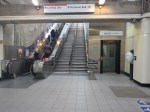
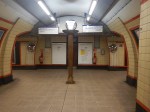
These pictures show the three escalators at Manor House station.
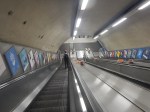
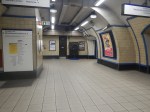
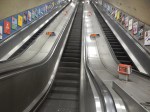
Note.
- The middle escalator was switched off.
- There is a spacious lobby at the bottom of the escalators.
The other four below-ground stations North of Finsbury Park; Turnpike Lane, Wood Green, Bounds Green and Southgate all have two escalators and a central staircase
These pictures show Bounds Green station.
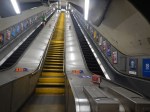
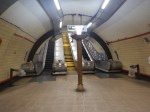
Note that the stairs are in the middle.
It looks to me, that all five escalator systems to the North of Finsbury Park are more or less identical.
- Only Manor House has a third escalator.
- There is a large lobby at the bottom.
- All stairs are in the middle escalator slot.
- Are the stairs designed to be replaced with a third escalator?
So would it be possible to design an inclined escalator solution for all stations, that fitted all of the stations?
I think it might be very much a possibility.
- The central staircase would be replaced by a third escalator.
- One of the outside escalators would be replaced with an inclined lift.
Note
- Many of these escalators were probably installed in the early 1990s, a few years after the Kings Cross Fire.
- Escalators are replaced regularly every ten or twenty years.
So could the installation of the inclined lifts, be worked into the schedule of escalator maintenance and replacement?
I believe with good project management it could be arranged.
- At no time during the works would any station have less than two escalators.
- If there were to be an escalator failure, all of the stations are connected by frequent buses and some are even within walking distance.
The works could also be arranged to fit in with available cash-flow.
I believe that eventually all these stations will need to be provided with full step-free access.
Conclusion
I believe that a sensible program of works can be developed to make all deep-level stations North of Finsbury Park step-free on the Piccadilly Line.
- The deep-level platforms would be served by two escalators and an inclined lift.
- The works would be performed alongside the regular maintenance and replacement of the current escalators.
- There would be no substantial tunneling.
- The works could also be arranged to fit in with available cash-flow.
The technique would be applicable to other stations on the Underground network.
Turnpike Lane Station
In Is Turnpike Lane Tube Station Going Step-Free?, I tried to explain the puzzling works going on at Turnpike Lane station.
Could those works be digging a lift-shaft or something in a more engineering line, like installing more ventilation or new power cables?
There’s certainly no clues on the Internet.
This table shows step-free status and 2019 passenger numbers at the Piccadilly Line stations to the North of Kings Cross St. Pancras station.
- Cockfosters – Step-Free – 1.86 million
- Oakwood – Step-free – 2.78 million
- Southgate – 5.43 million
- Arnos Grove – 4.44 million
- Bounds Green – 5.99 million
- Wood Green – 12.13 million
- Turnpike Lane – 10.6 million
- Manor House – 8.55 million
- Finsbury Park – Step-free – 33.40 million
- Arsenal – 2.77 million
- Holloway Road – 6.69 million
- Caledonian Road – Step-free – 5.60 million
- Kings Cross St. Pancras – Step-free – 88.27 million
Note.
- The high passenger numbers at Finsbury Park and Kings Cross St. Pancras, where there is interchange with lots of other services.
- The long gap of step-free access between Oakwood and Finsbury Park.
- Arnos Grove could be an easier station to make step-free.
I just wonder, if a lift at Turnpike Lane station could be the interim solution, until inclined lifts are installed in the distant future.
Is Turnpike Lane Tube Station Going Step-Free?
I took these pictures as I passed through Turnpike Lane station today.
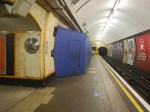

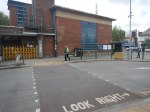
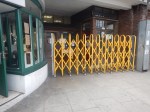
Note.
- The blue hoardings are at the London end of the Northbound platform.
- There are no other blue hoardings at platform level.
- The yellow gates are on the bus station side of the station.
- A lift on the surface behind the yellow gates would be convenient for the buses and just round the corner from a light-controlled crossing of the busy Green Lanes.
- I couldn’t find any other evidence of work.
This Google Map shows the station.

Note.
- The station block in the North-West corner of the map.
- Green Lanes runs North-South to the West of the station.
- There is a bus on Green Lanes by the station.
- The spine of the bus station to the East of the station.
- The pedestrian crossing between the Underground station and the bus station at the Northern end of the spine.
- The wide pavements to give access to the light-controlled crossing over Green Lanes and the bus stops on the road.
This second map from carto metro, shows the track layout through the station.
Note that the escalators to the platforms are to the North of the platforms and connect to a lobby between middle of the two platforms,
Could this mean that using traditional tunneling on the London-end of Platform 2 allows access to what appears to be a generous space between the two platforms and their associated tracks?
It looks to my untrained eye, that a lift shaft could be dug in this area.
But there is no reference to step-free access at Turnpike Lane station anywhere on the internet.
Conclusion
This could be a simple scheme to add step-free access to another of the stations on the Northern section of the Piccadilly Line.
- At present, Cockfosters, Oakwood, Finsbury Park and Caledonian Road stations are already step-free.
- Southgate station could be difficult, but it does have bus connections to some of the stations with step-free access.
- Arnos Grove station is a surface station, where there will be a major housing development on the car park. So I would expect, that this could be one of the next to be planned for step-free access.
- The track and escalator layout might make Wood Green station difficult to make step-free. But it does have lots of buses to Turnpike Lane station.
- I’ve never used Bounds Green station, but it does appear that a Turnpike Lane solution might be possible.
- Manor House station has so many exits, that full step-free access could be expensive. But if it were to be decided that it should be step-free, I feel there could be an innovative solution.
It should be noted that all these stations, with the exception of Manor House are Grade II or Grade II* Listed.
As all road crossings at Manor House are controlled by lights, perhaps the solution at the station, is to replace one or more of the many exits with a lift.
Starter Homes At Cockfosters
This would seem to be the final failure of a 1960s office development at Cockfosters.
It must have been about 1962, when I remember my mother telling me about the topping-out ceremony of these blocks by Cockfosters station.






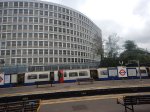
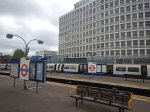
They probably will satisfy a need, but it wouldn’t be my place to choose to live.
- You may have the Piccadilly Line to Central London, but it is a long way. It takes 43 minutes to Leicester Square.
- Cockfosters shopping centre hasn’t improved much since the 1960s.
- I doubt that the development will have lots of parking.
But then on top of the hill with all the wind blowing from the East in the winter, it will be a bitterly cold place to live!
There are perhaps two good points.
- The development is close to Trent Park for walking.
- The buildings do seem to be structurally fairly sound.
But they’ll need to be, with all that cold wind!
Would A Mutant Many-Parent Child Help To Solve London’s Transport Problems?
London needs to increase the capacity of its public transport system, as the City continues to get larger and larger.
Current Major Projects
There are only three major rail projects ongoing in London at the present time.
The Bank Station Upgrade
The Bank Station Upgrade appears to be progressing well, albeit perhaps it’s a bit late due to the pandemic.
It is a complex project and from what I have heard and observed, it has been well designed and planned.
The Barking Riverside Extension
As with the Bank Station Upgrade the Overground extension to the new Barking Riverside station, appears to be going reasonably well.
But compared to that project, it is a relatively simple project, built mainly in the open air, with no tunneling.
Crossrail
Crossrail is in trouble, after what many believe was a very good tunnelling phase of the project.
But then tunnels under London usually seem to go well. I can remember the Victoria Line tunnelling and many other under London since the 1960s and all of these tunnels seem to have been dug without trouble. As I write, there don’t seem to be any tunneling problems with the Thames Tideway Tunnel.
Crossrail now has been reduced to a series of station builds and rebuilds, some of which are as large as the Bank Station Upgrade, with other ongoing projects like the testing of trains and systems.
So why are some of these stations running late in their delivery?
If you walk along the route of Crossrail in the City of London and through Clerkenwell and the West End, it is one massive building side as developers raise massive clusters of new developments around and above the Crossrail stations.
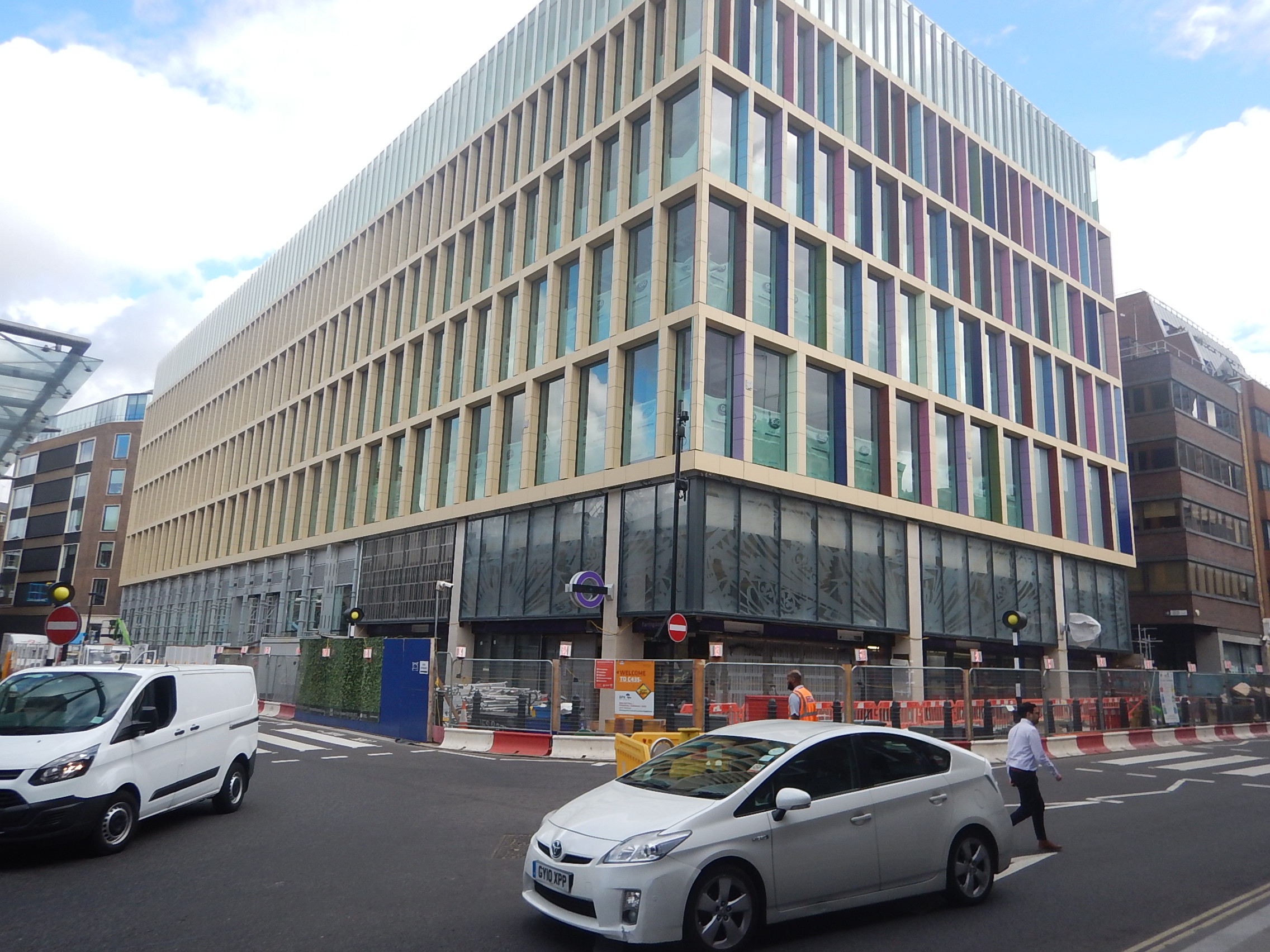
The picture shows Farrington station’s Eastern entrance, with a new development on top.
This one wasn’t a big one, but it went up in record time.
These buildings are often funded by Sovereign Wealth Funds, who want their buildings finished ASAP and as they have bottomless pockets, they are prepared to pay more to get the builders and tradesmen they need.
And where did they get the workers from? Other projects, including Crossrail.
This problem happened in Aberdeen at the height of the oil boom in the last century.
I also think that Brexit worsened the problem, as workers from mainland EU moved to large projects closer to home, like Stuttgart 21 and the new Berlin Brandenburg airport, that were both very much in trouble and could have been offering premium salaries as well!
The solution would have been to phase developments so that the limited pool of workers was not exhausted.
But that probably wouldn’t have suited the developers and politicians for all sorts of reasons.
- An uncompleted building doesn’t bring in money and jobs.
- Early completion must improve chances of letting the building.
- Delaying the building would probably have meant fewer holidays for politicians in exotic locations.
Hopefully, a comprehensive enquiry into the lateness of Crossrail will provide answers.
High Speed Two
High Speed Two is to my mind a London local project. But only in a secondary way!
- Rebuilding Euston station will improve Underground connections and interchange at Euston and Euston Square stations.
- It is claimed by High Speed Two, that the rebuilt Euston station will create 16000 jobs and 2200 homes.
- High Speed Two will enable massive development at Old Oak Common, with tens of thousands of homes and jobs.
- Old Oak Common station will be a very important rail hub in North-West London.
With seventeen trains per hour (tph) between Euston and Old Oak Common will High Speed Two attract local traffic?
- I suspect High Speed Two between Manchester Airport and Manchester Piccadilly and between Birmingham Interchange and Birmingham Curzon Street will also attract local traffic.
- I’ve used TGVs between Nice and Antibes.
- Tourists might visit, just like they did and still do at the Olympic Park.
- Many Londoners will join High Speed Two at Old Oak Common.
Some wag will suggest putting it on the Tube Map. But is it such a stupid idea?
Where Does London Need More Rail Services?
Having lived in London on and off for over seventy years, I feel the worst areas for rail links are probably.
- North West London
- South East London
- South Central London between Wimbledon and Croydon.
- South West London
Note.
- Over the years, there is no doubt that East and North London have improved considerably, with the development of the East London, North London and Gospel Oak to Barking Lines.
- Thameslink has been improved in North London and now it is being supported with improvements to the Northern City Line. Both routes now have new Siemens trains, which give a whole new dimension to using ironing-boards as seats.
- Crossrail will produce major improvements in West, East and South East London.
- Building of a new Penge Interchange station, which I wrote about in Penge Interchange could improve routes to and from South East London.
- Hopefully the work in recent years at Waterloo will improve suburban services out of Waterloo. In An Analysis Of Waterloo Suburban Services Proposed To Move To Crossrail 2, I showed that four tph could be run to Chessington South, Epsom, Hampton Court and Shepperton stations.
It looks like North West and South Central London are missing out.
How Can Services Be Improved In North West London?
There are radial routes from the centre of London to the suburbs.
Starting from the North and going to the West, there are the following lines.
- The High Barnet branch of the Northern Line
- The Mill Hill East branch of the Northern Line
- The Midland Main Line to St. Albans, Luton, Bedford and the East Midlands.
- The Edgware branch of the Northern Line
- The Jubilee Line to Stanmore
- The West Coast Main Line to Watford, Milton Keynes, the West Midlands, the North West of England and West Scotland.
- The Bakerloo Line to Harrow & Wealdstone.
- The Watford DC Line of the London Overground
- The Amersham, Chesham and Watford branches of the Metropolitan Line
- The Chiltern Route to Aylesbury.
- The Chiltern Main Line to High Wycombe, Banbury, Bicester, Birmingham and Oxford.
- The West Ruislip branch of the Central Line.
- The Uxbridge branch of the Metropolitan and Piccadilly Lines
When I used to live at Cockfosters as a child, to visit my many cousins in North West London, there was no alternative but to use a bus and take well over an hour each way.
There are now some circular rail routes in London but nothing in the North West of the capital.
The Dudding Hill Line And The West London Orbital Railway
But there is the little-used freight route called Dudding Hill Line.
- It runs between Cricklewood on the Midland Main Line and Acton Central on the North London Line.
- It is four miles of double-track railway.
This YouTube video shows a cab ride from Acton to Cricklewood.
Plans exist to turn it into the West London Orbital Railway, which will run two services.
- West Hampstead and Hounslow via Cricklewood, Neasden, Harlesden, Old Oak Common Lane, Acton Central, South Acton, Lionel Road, Brentford, Syon Lane and Isleworth
- Hendon and Kew Bridge via Brent Cross West, Neasden, Harlesden, Old Oak Common Lane, Acton Central, South Acton
Note.
- The proposed frequency of both services is four tph.
- There would be some stations to be built, but the track exists.
- There would be no new tunnels.
- The route is technically feasible.
- The route would connect West London to High Speed Two.
- There would be little disruption whilst it was built.
- The services could be run by dual-voltage battery-electric trains charged on the electrification at both ends of the route.
- The scheme represents a high value for money, with a benefit-cost ratio (BCR) of 2.2.
On the other hand, the scheme has two serious problems, as far as the current London Mayor is concerned.
- Transport for London has no money, partly because of London’s Fare Freeze.
- The project is not in South London.
This important and value-for-money project will not be built, whilst Sadiq Khan is still Mayor of London.
Harlesden Interchange
I believe that if we get the interchanges right on the West London Orbital Railway correct we can do things like.
- Increase the benefit cost ratio.
- Link the route to South London to make the Mayor a bit happier about the North London Scheme.
This Google Map shows Harlesden station.
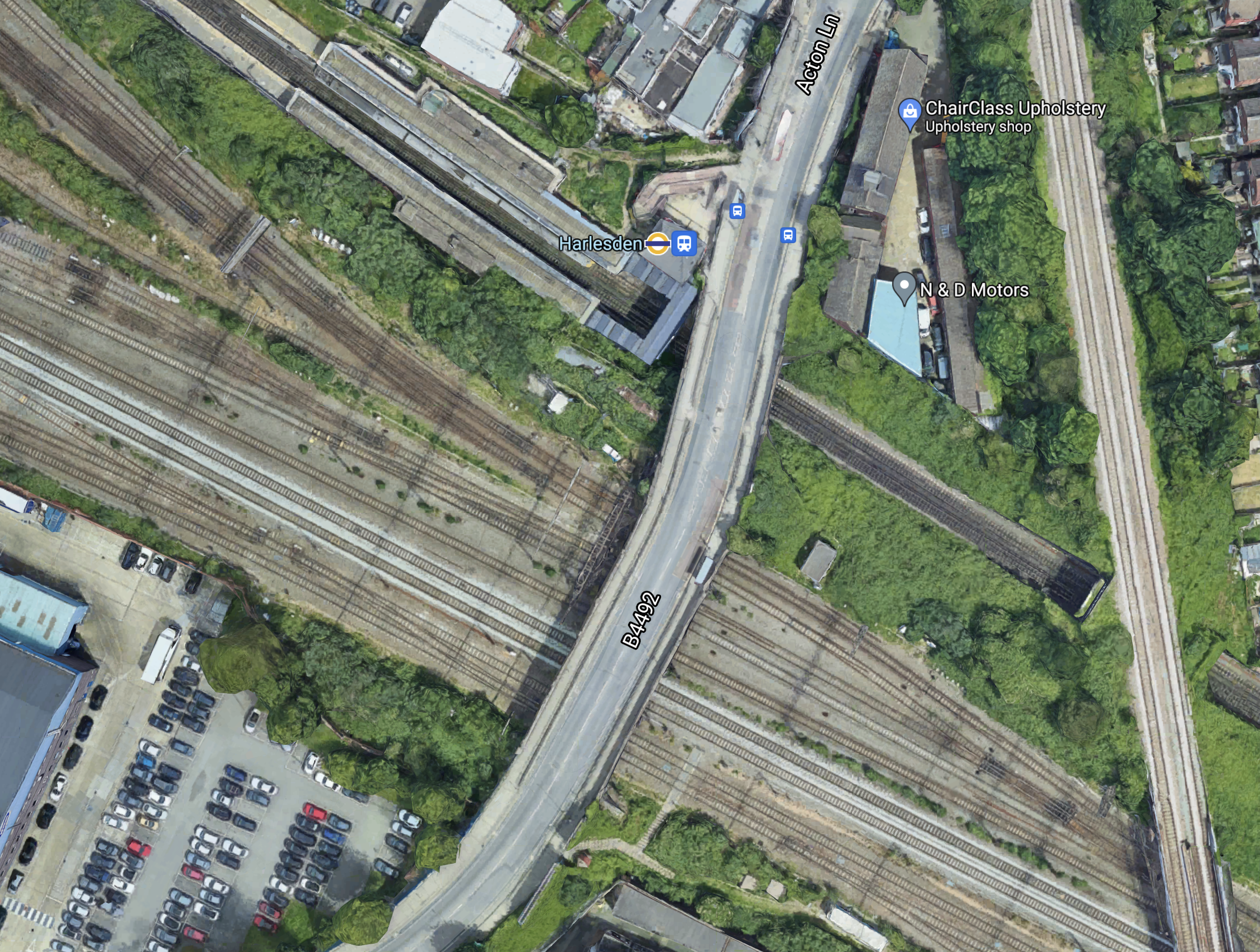
Note.
- The Bakerloo Line/Watford DC Line running North-West/South-East through Harlesden station.
- The West Coast Main Line in the Southern section of the map.
- The Dudding Hill Line running North-South across the map.
Platforms will be built on the Dudding Hill Line to connect that would probably be new or extended platforms in the current Harlesden station to enable interchange between the West London Orbital and the Watford DC Lines.
I also think there is a possibility that platforms could be added to the slow tracks of the West Coast Main Line, so that suburban services into London Euston can also connect to the West London Orbital Line.
It would also enable a connection between Southern’s Clapham Junction and Milton Keynes service and the West London Orbital Railway.
Looking at this from various angles, I think that an architect good at designing three-dimensional structures could develop a quality Harlesden Interchange station.
Neasden Interchange
Like Harlesden, Neasden is another possibility for a comprehensive interchange.
This Google Map shows Neasden station.
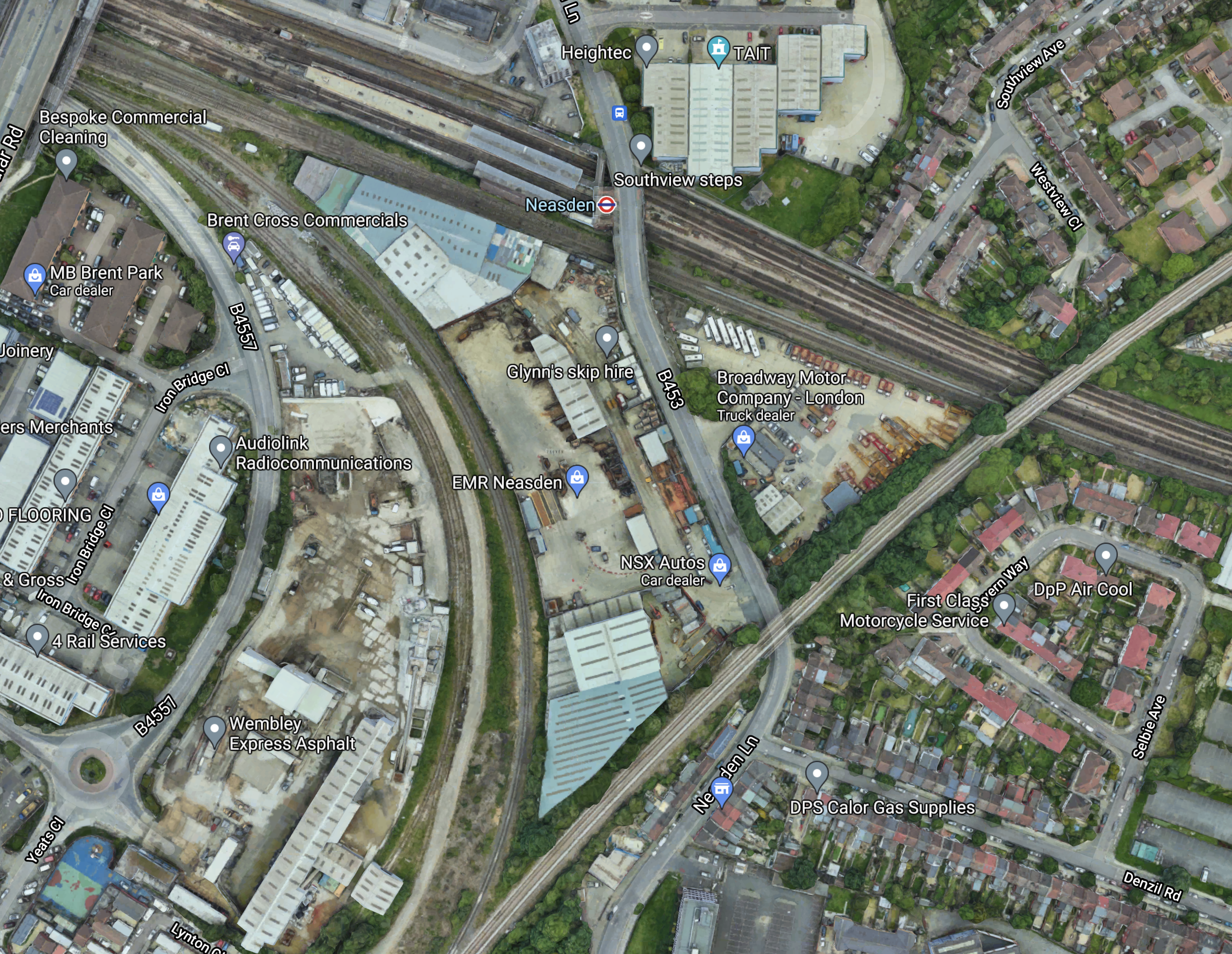
Note.
- There are a lot of lines going through Neasden station.
- The Dudding Hill Line goes across the South-East corner of the map.
- There is plenty of space in the area.
This map from cartometro.com shows the lines in the area.
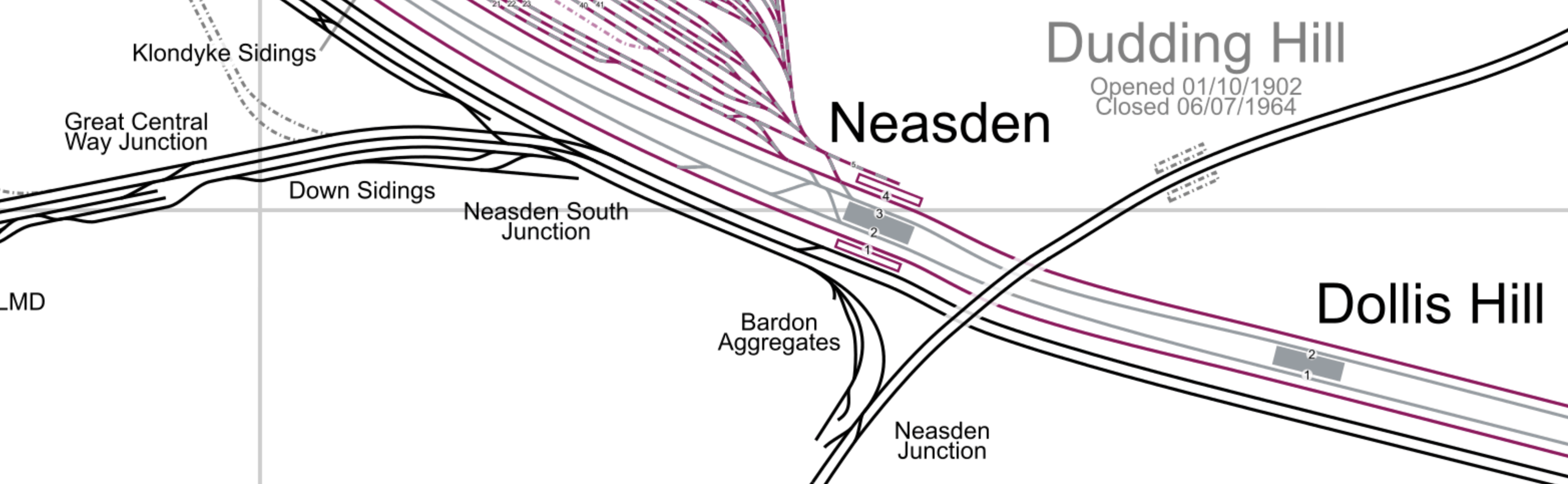
Note.
- The Dudding Hill Line is indicated by the former Dudding Hill station.
- The red tracks are Metropolitan Line tracks.
- The silver tracks are Jubilee Line tracks.
- The Southerly pair of lines through Neasden and Dollis Hill stations are Chiltern’s lines into Marylebone.
- The Chiltern tracks divide to the West of Neasden station, with the Aylesbury line following the other tracks and the Chiltern Main Line diverging to the West.
- London’s largest Underground Depot at Neasden, lies to the North-West in an area of London noted for few merits with the North Circular Road passing through.
I wonder, if the station and the depot offers a unique opportunity to offer large scale additions to London’s housing stock over the top of a rebuilt station and depot.
This Google Map shows the wider area.
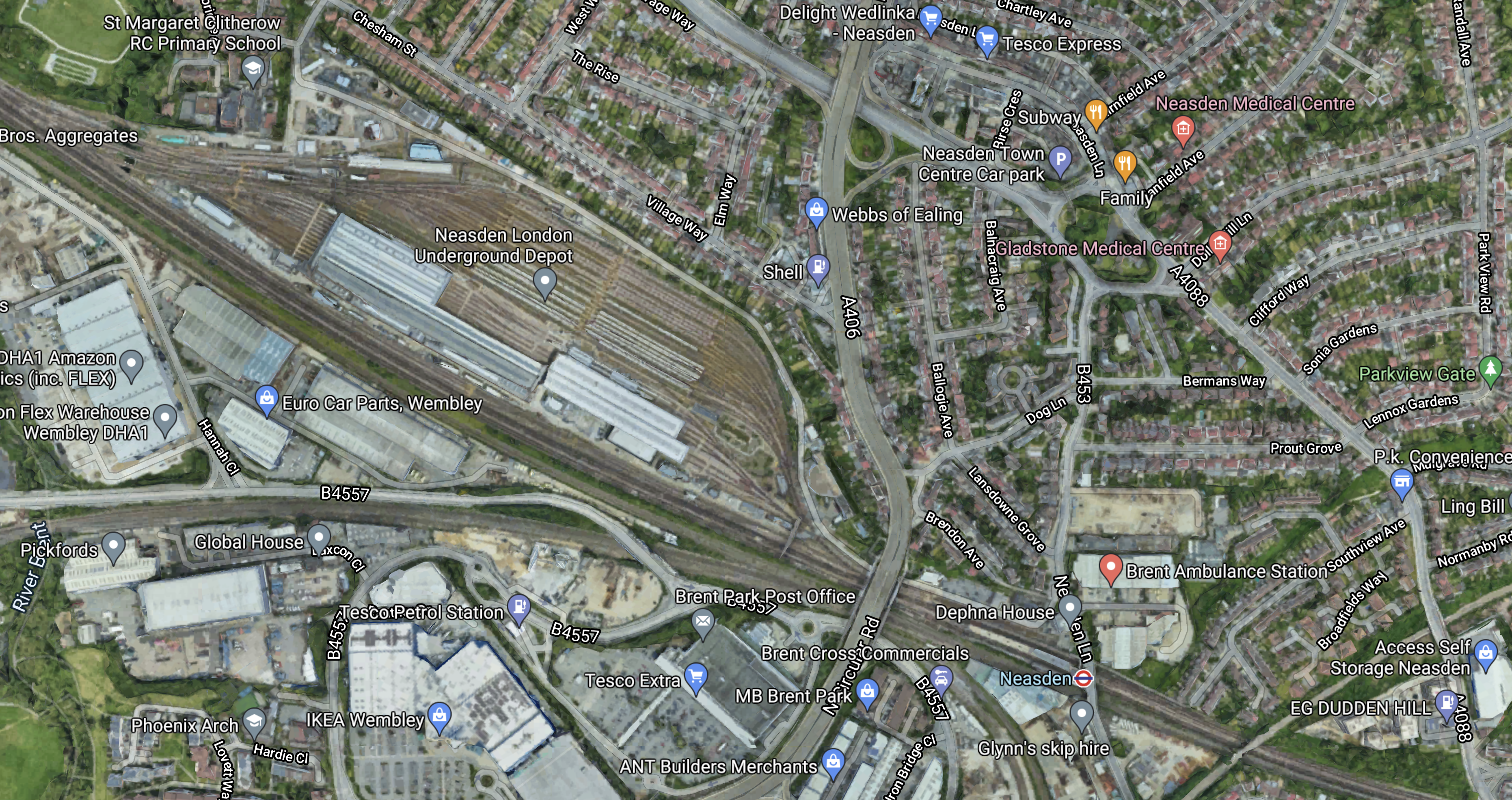
Note.
- Much of the depot appears to be open-air stabling for trains.
- The North Circular Road passes North-South between the depot and Neasden station.
- The Dudding Hill Line cuts across the South-East corner of the map.
- This corner of the map is labelled as Dudden Hill.
- According to Wikipedia, Dudding Hill is considered a more genteel spelling of Dudden Hill and could be as old as 1544.
It looks as if it would be relatively easy to develop over the top of the depot to create housing, industrial or commercial properties.
But why stop there and cover both the North Circular Road and the six tracks through Neasden station?
Neasden station could be rebuilt into a station with platforms on the following lines.
- Metropolitan Line
- Jubilee Line
- Chiltern Lines
- Dudding Hill Lines
Note.
- I estimate that Chiltern has a train about every six minutes, so some could stop.
- There might be space for a bay platform for Chiltern.
Neasden could be a major housing and transport hub.
- There could be large amounts of parking.
- Road access would be good.
- It would have good rail connections.
- It could have a bus interchange.
- London needs housing.
It might even be an alternative to Chiltern’s plan for a West Hampstead Interchange.
The Mayor of London, Transport for London and the Borough of Brent need to be bold!
Improvements To Chiltern’s Routes
Chiltern Railways have some plans that could improve services in North West London.
Using The Acton-Northolt Line
Wikipedia says this about using the Acton-Northolt Line to access new platforms at Old Oak Common station.
Upgrading the Acton–Northolt line (formerly the “New North Main Line”) to new platforms at Old Oak Common. This upgrade will also extend to London Paddington to increase capacity on the Chiltern Main Line as there is no room to expand the station at Marylebone.
This scheme has merit.
- The platforms would be connected to the Chiltern Main Line along the route of a partly-disused railway.
- The route could be double-tracked.
- There must be space for at least two new platforms.
- The new platforms could easily handle four tph.
- There may be a case for some new stations.
The scheme could add valuable extra capacity for Chiltern.
A Chiltern Metro
Wikipedia says this about a proposed metro service between Marylebone and West Ruislip stations.
- The Metro would have a frequency of four tph.
- It would call at Wembley Stadium, Sudbury & Harrow Road, Sudbury Hill Harrow, Northolt Park and South Ruislip.
- The service would require a reversing facility at West Ruislip.
- There would need to be passing loops at Sudbury Hill Harrow, and Wembley Stadium.
Given that the Chiltern Metro was first proposed over a decade ago, perhaps the concept could be increased in scope.
- Housing and other developments along the route may suggest that a station further out like High Wycombe might be a better terminal.
- ERTMS in-cab digital signalling is likely to be installed at some time, which would decrease headways between trains and allow more services.
- Electrification is likely in some form before 2040 and this will improve train performance.
- If Neasden station were to be rebuilt, as a comprehensive transport and residential development, I believe that this Metro service should also call at Neasden, as it would complement the West London Orbital Railway.
I believe that a review of the Chiltern Metro may mean, that an improved version is worth building.
Improvements To The Milton Keynes And Clapham Junction Service
I feel that this service could be key in improving services between North London and South London via the West London Line and High Speed Two’s station at Old Oak Common.
Currently, this service is as follows.
- It runs between Milton Keynes and Clapham Junction stations.
- It has a frequency of one tph.
- It calls at Bletchley, Leighton Buzzard, Tring, Berkhamsted, Hemel Hempstead, Watford Junction, Harrow & Wealdstone, Wembley Central, Shepherd’s Bush, Kensington (Olympia), West Brompton and Imperial Wharf stations.
- The service used to extend to South Croydon via Wandsworth Common, Balham, Streatham Common, Norbury, Thornton Heath, Selhurst and East Croydon.
- It uses Class 377 trains.
- It shares parts of the route with the London Overground.
I also think it has various issues and questions with respect to the future.
- The Class 377 trains are only 100 mph units, whereas the outer suburban trains on the West Coast Main Line are 110 mph Class 350 trains, which will soon be replaced by 110 mph Class 730 trains. Do the slower trains cause timetabling problems?
- Is one tph enough?
- The route doesn’t serve High Speed Two at Old Oak Common station.
- Is the service run by the right operator?
- What is the ideal Southern terminal?
These are my thoughts on the various issues.
The Service As A North-South Link
A friend, who lives in South London has told me, that if you go to an event at Wembley stadium the route is busy.
On the other hand, I’ve used it at midday on a Tuesday and found the trains empty.
But developed properly it could connect the following.
- Milton Keynes Central
- Bletchley for the East West Rail Link
- Watford for the West Coast Main Line to the North
- Wembley Central for Wembley Stadium and other entertainments
- Willesden Junction for the North London Line
- Hythe Road for High Speed Two, Crossrail and the Great Western Railway
- Shepherd’s Bush for the shopping.
- Clapham Junction for most of South London and the South of England
It would be a very useful cross-London route to complement Thameslink and the East London Line.
The Frequency
The current Milton Keynes and Clapham Junction has a frequency of one tph.
This may be enough for some parts of the route, as other services also provide services.
But many would argue, that perhaps South of Watford Junction, the service needs to be increased to connect the area to Old Oak Common and Clapham Junction.
I feel that High Speed Two, Crossrail and the Great Western Railway give so much connectivity, that between Clapham Junction and Willesden Junction needs a frequency of at least eight tph.
As the North London Line and the Watford DC Line are working at a frequency of four tph, this could indicate that a four tph direct service Watford Junction and Clapham Junction be ideal. Perhaps, it could continue North to Milton Keynes with a frequency of two tph.
The Trains
I am absolutely certain, that the full service needs to be operated by dual voltage trains, that are capable of running at 110 mph.
The Class 350/1 trains of West Midlands Trains would probably be ideal for the full service.
- They are dual voltage trains.
- They are 110 mph trains.
- They have a long distance interior.
They are being replaced with new Class 730 trains, so would be available.
If some services were running only as far North as Watford Junction, these could be either Class 378 or Class 710 trains of the London Overground.
The Connection To The West London Line And High Speed Two
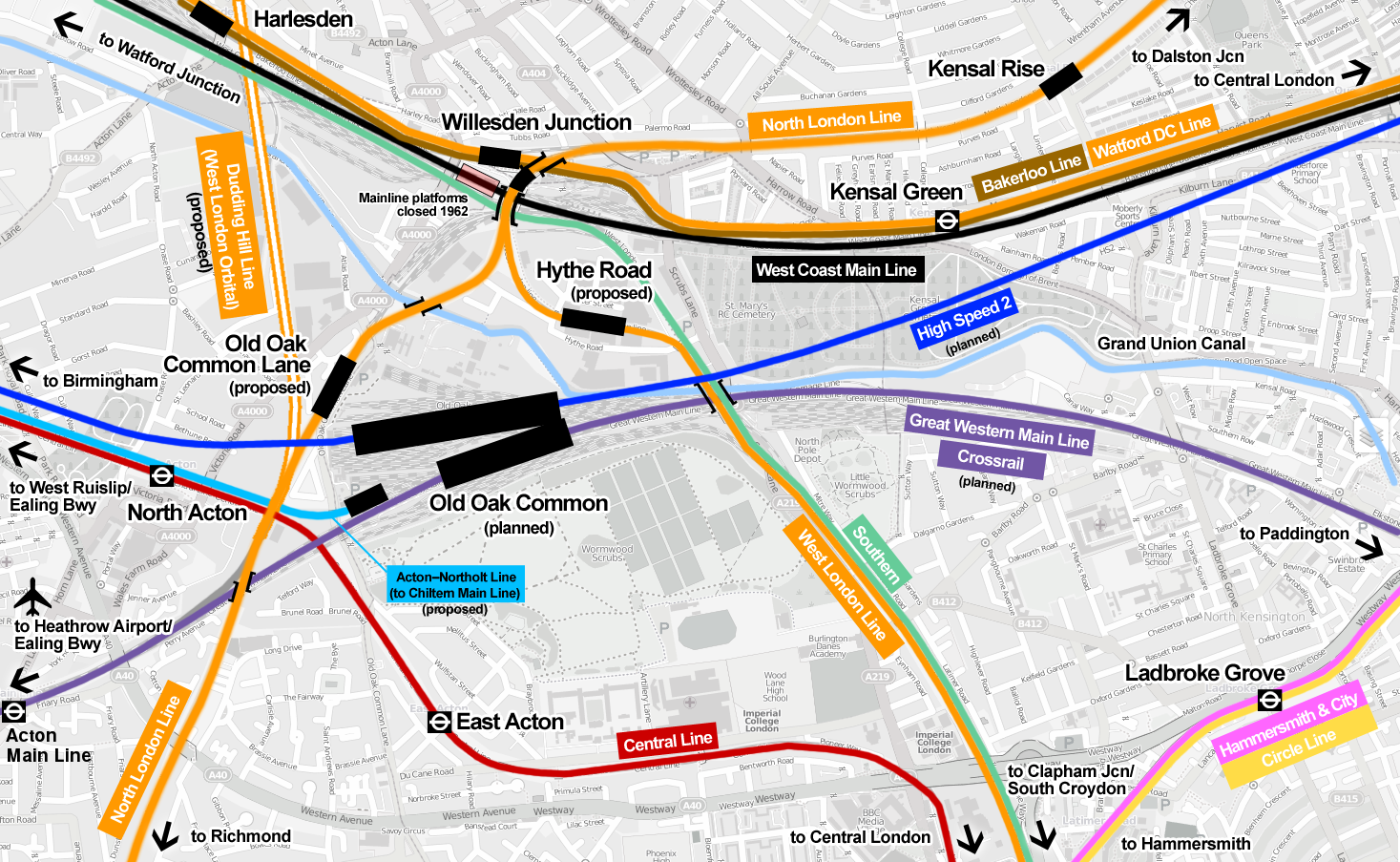
This map from Wikipedia by Cnbrb shows the latest iteration of the lines at Old Oak Common station.
Note.
- The green route is taken by the Milton Keynes and Clapham Junction trains.
- The bright blue is High Speed Two.
- The purple is Crossrail.
- The orange is the Overground
- Hythe Road station is proposed for the West London Line to connect to Old Oak Common station for High Speed Two.
- Hythe Road station will have a bay platform to turn trains from the South.
- Old Oak Common Lane station is proposed for the North London Line to connect to Old Oak Common station for High Speed Two.
But where is the connection between the Milton Keynes and Clapham Junction service and Old Oak Common station for High Speed Two?
- Access from the South is not a problem as the Overground can be used to Hythe Road station.
- Extra services from the South can be run to and from the bay platform at Hythe Road station.
- Access from the East is not a problem as the Overground can be used to Hythe Road station.
- How do passengers go between say Wembley Central and Heathrow?
In addition for access from the West is the Overground can be used to Old Oak Common Lane station.
But as things stand at the moment the Milton Keynes and Clapham Junction service bypasses Hythe Road station and the only ways to go from Milton Keynes to Old Oak Common station for either High Speed Two, Crossrail or the Great Western is to do one of the following.
- Change to the Watford DC Line at Watford Junction, Harrow & Wealdstone or Wembley Central and then change to the Overground at Willesden Junction for either Old Oak Common Lane or Hythe Road station.
- Continue South to Shepherd’s Bush station, cross over to the other platform and then come back to Hythe Road station.
- Go via Euston station. OK for High Speed Two, but not for Crossrail or the Great Western.
They cannot be serious!
I hope that there is a cunning plan to enable the Milton Keynes and Clapham Junction service to connect.
Whilst on the subject of connections at Old Oak Common, where is the promised connection of Crossrail to the West Coast Main Line?
Were all these connections just kicked into the long grass and quietly forgotten, as they were deemed too difficult and/or expensive?
I think serious questions need to be asked about the design of Crossrail and High Speed Two at Old Oak Common.
Why weren’t Crossrail and High Speed Two designed to connect directly to the London Overground at Willesden Junction station perhaps by the use of a North South people mover serving the following lines?
- Bakerloo, Watford DC, West Coast Main and West London Orbital Lines at a rebuilt Harlesden station.
- London Overground at the high-level Willesden Junction station.
- High Speed Two
- Crossrail and the Great Western Railway
- The new Chiltern platforms.
- Central Line at East Acton station.
Note.
- Hythe Road and Old Oak Common stations would not be needed.
- The Milton Keynes and Clapham Junction service would call additionally at the rebuilt Harlesden station.
The current design of Old Oak Common stinks like a horse designed by a committee!
The Northern Terminal
I suggested earlier that some trains use Watford Junction and others use Milton Keynes Central.
Both stations have the capacity and the connectivity.
The Southern Terminal
In the last ten years, South Croydon, East Croydon and Clapham Junction have been used as the Southern terminal.
Thameslink seems to have chosen its various terminals to satisfaction of the travelling public, so perhaps the same method or personnel should be used.
The Operator
The Gibb Report said that this service should be transferred to the London Overground and I wrote about this proposal in Gibb Report – East Croydon – Milton Keynes Route Should Be Transferred To London Overground.
This is one suggestion, but I do wonder, if it should be transferred to West Midlands Trains and run in conjunction with their West Coast Main Line services.
- The service needs 110 mph trains.
- Timetabling and operation should be easier.
- London Overground trains don’t have a long-distance interior.
On the other hand, trains running between Watford Junction and Clapham Junction would probably be better if they were London Overground trains.
Conclusion
I believe that by using the current network and some modern trains and signalling, the passenger services to the West of the capital can be substantially improved.
Air-Conditioned Piccadilly Line Train Designs Presented
The title of this post, is the same as that of this article on Railway Gazette.
The article has four pictures of the final design of the new trains for the Piccadilly Line and the pictures don’t seem to be the same as those I took of the mock-up in October 2013 and can be seen in Siemens’ View Of The Future Of The Underground.
- The design has a less dramatic nose compared to the mock-up.
- It also appears to be taller.
- Judging by the external profile, the design has a clerestory to perhaps add a couple of inches.
- The seats appear to have a chunky profile. Is the air-conditioning partly behind the seats.
The interior seems to borrow heavily on the design for the London Overground’s Class 710 train.


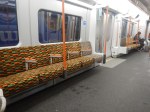
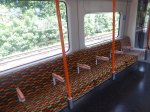


Note.
- The air-conditioning outlets in front of or underneath the seats.
- No grilles behind the seats.
- The Class 710 train has a clerestory for extra height, but it is not visible on the outside. Does the one on the Siemens’ design have grilles from air entry or exit?
These are some views of seats in current Underground stock.


Note.
- The Piccadilly Line trains were fully refurbished in 2001.
- The Northern Line trains were fully refurbished in 2013.
- The grilles behind the seats on the Northern Line trains.
You can see a progression through the various designs, with the Class 710 trains
It looks like Siemens are using a similar interior layout to current trains on the Underground and the Overground.
A few thoughts.
Heated Floors
Some Bombardier Aventras like Greater Anglia’s Class 720 trains have heated floors. Will Siemens copy this idea?
These trains will go to some of the coldest parts of the Underground around Cockfosters.
USB Charging
This Siemens’ picture shows a front view of the seats.
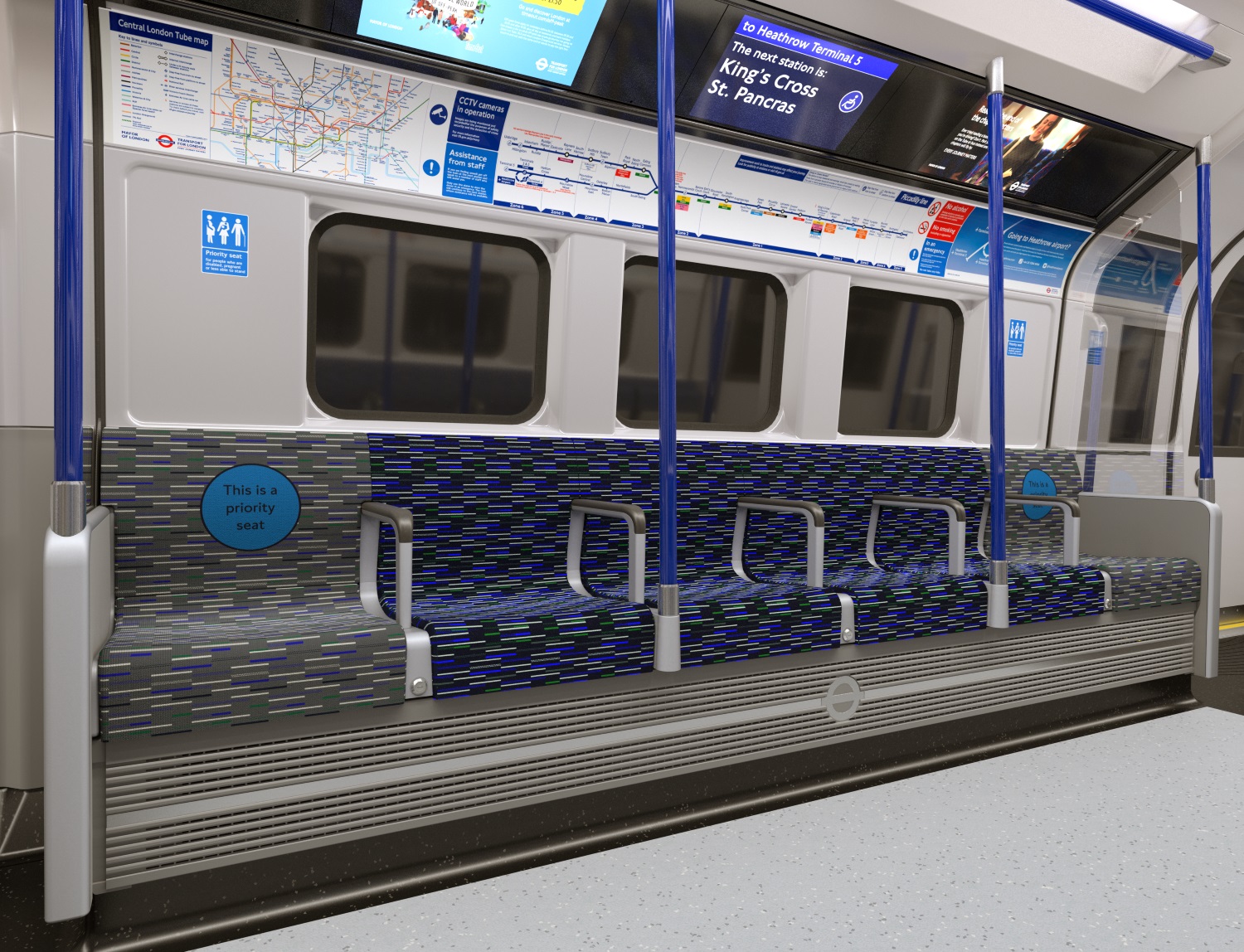
I thought for a moment, that there was a USB charge point in the front of the seat, but on second thoughts, that is just a fitting to enable extra vertical grab rails.
Siemens should put USB charge points in the arm rests, as Vivarail have done.
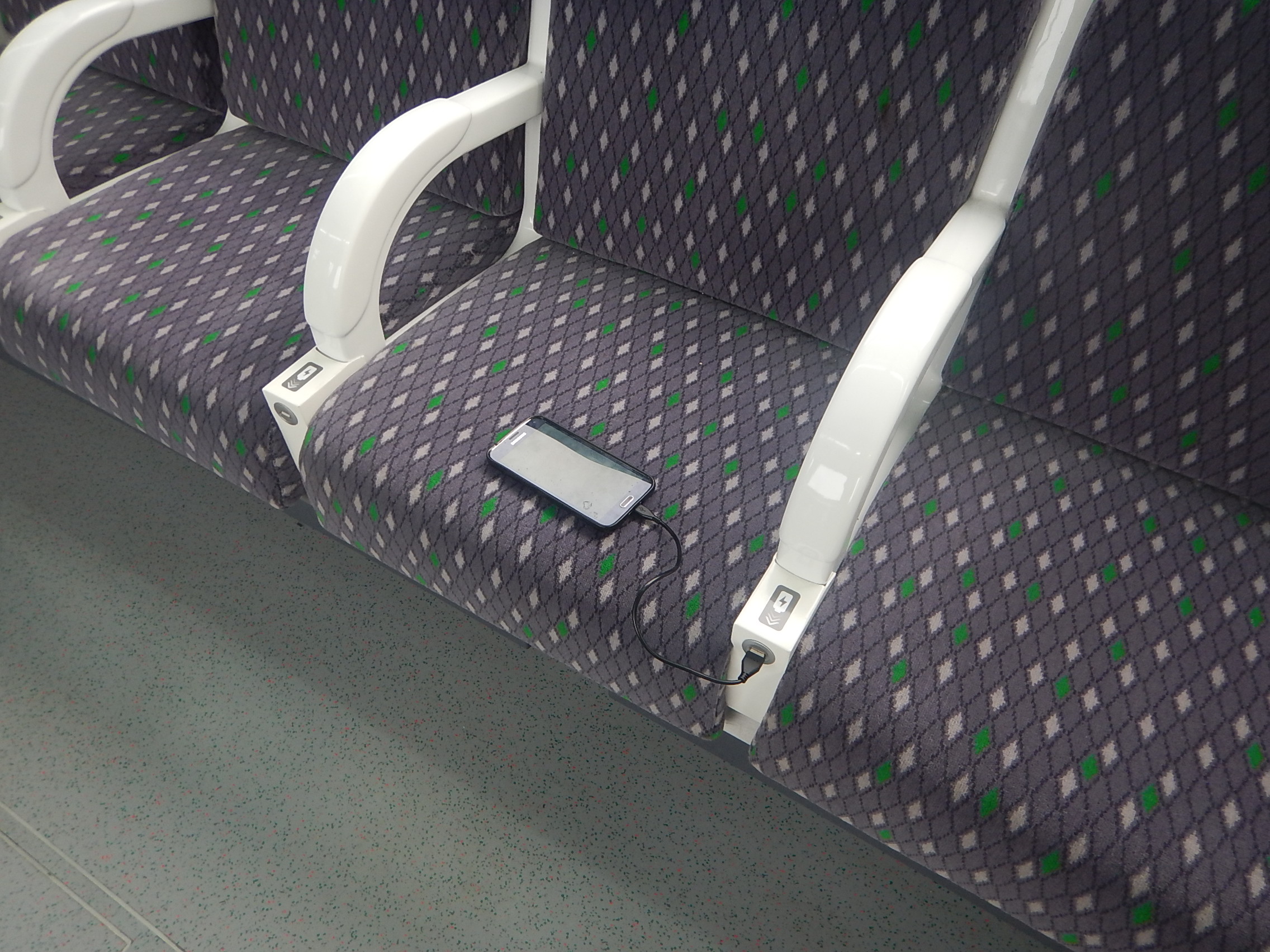
Good design is often simple.
Walk-Through Cars
The Railway Gazette article says this about walk-through cars.
The longer cars and walk-through interior of the articulated design would maximise the usable interior space, increasing capacity by 10%.
They say nothing about what I think is there biggest advantage – Passengers can freely circulate in the train, to perhaps get a better seat or be better placed for a quick exit.
Do women feel less vulnerable in wall-through trains?
Step-Free Entry
One of the good points of the mock-up in 2013 was that entrance into the train was step-free, as this picture shows.
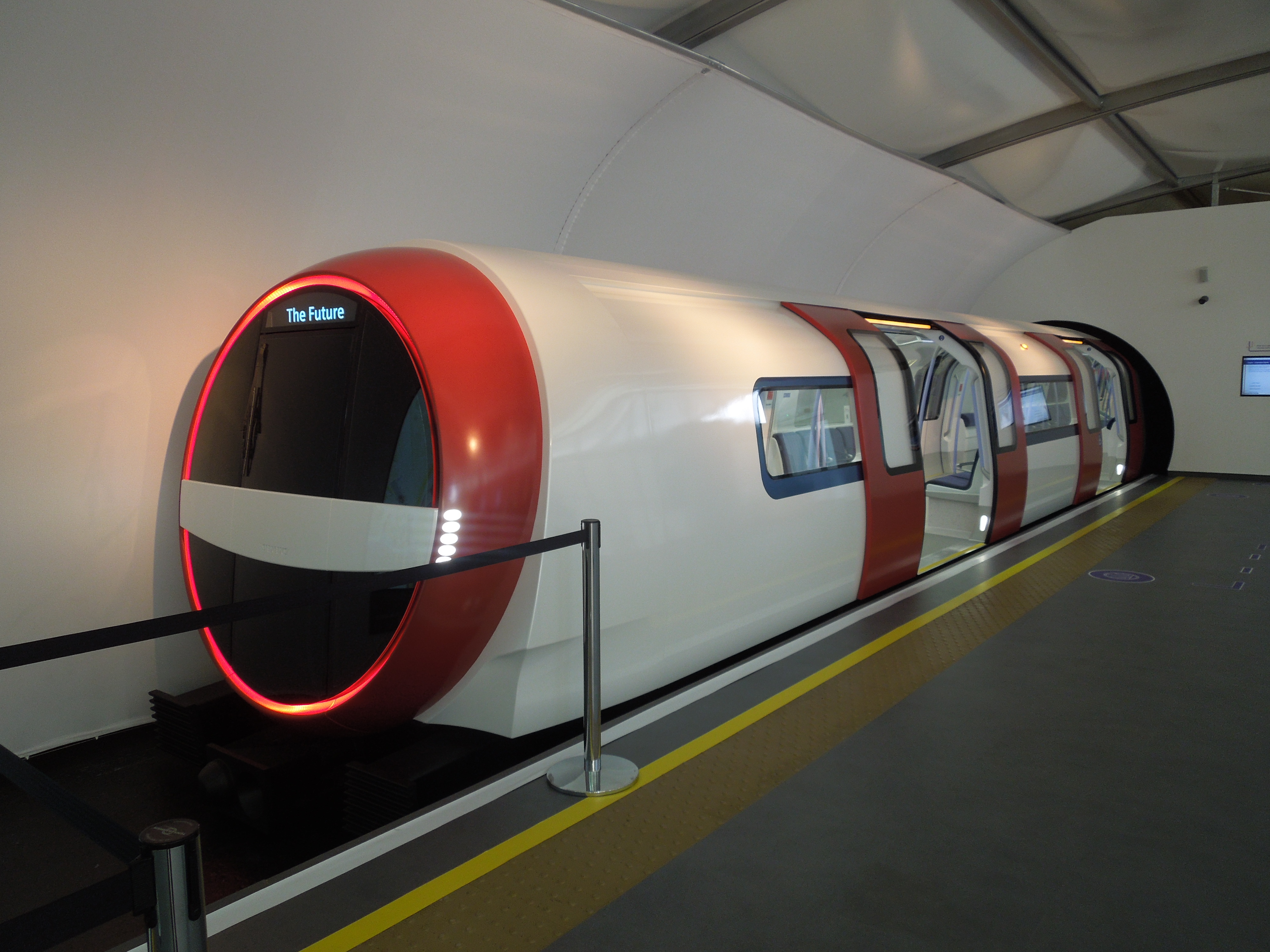
But look at this screen-capture for the detailed design.
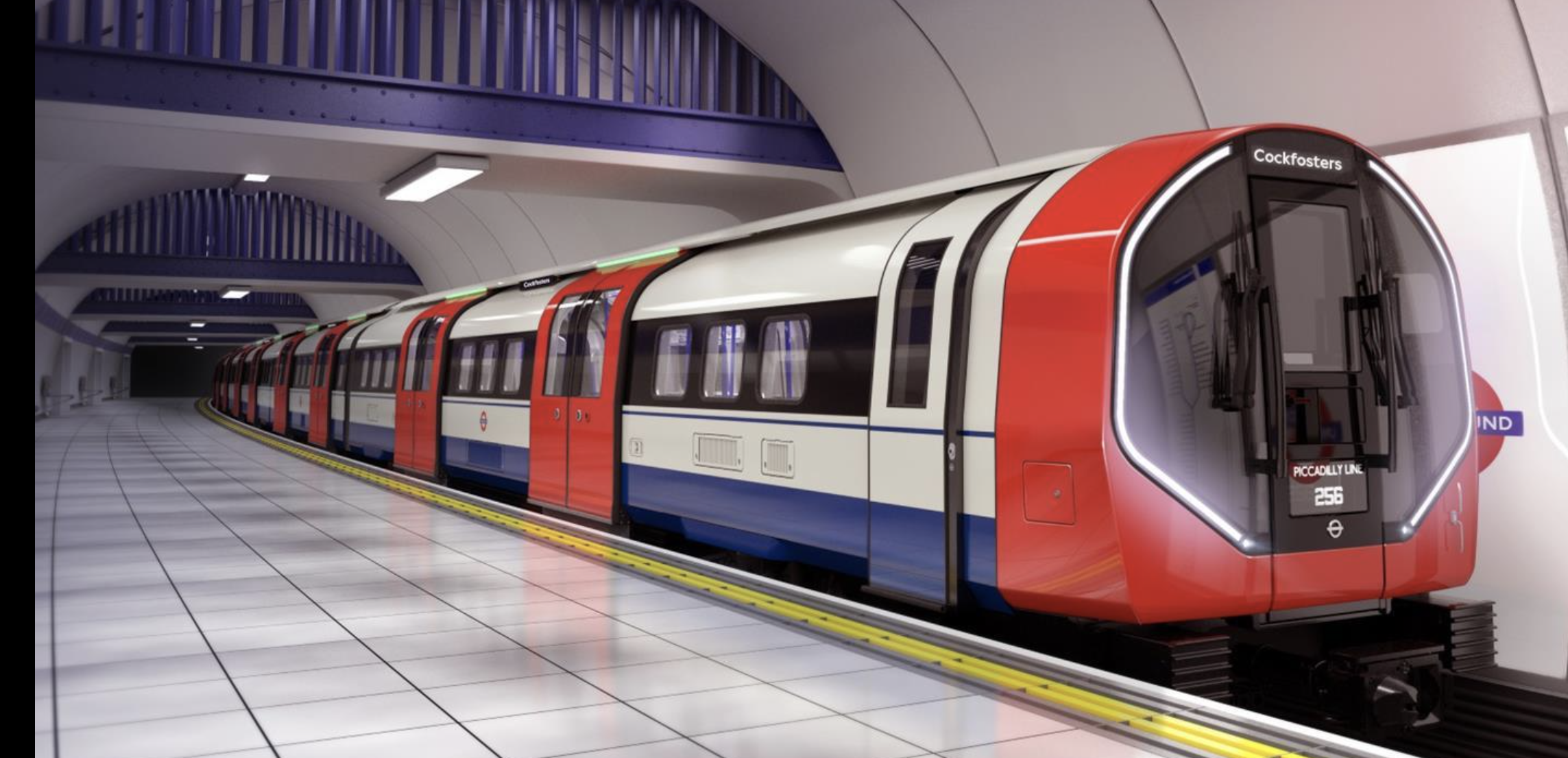
The doors now seem a couple of inches above the platform.
Have the designers removed a must-have feature?
German trains have a terrible reputation for not being step-free between train and platform, but if Stadler and Merseyrail can do it with the new Class 777 trains, then surely it can be done on the London Underground.
Front End
The previous two pictures do show the front end of the mock-up and final design well.
I do wonder, if the original design with the bar across didn’t go down to well with drivers.
- The driver on most trains sits to the left.
- Trains in the UK generally run on the left.
- Signals on the Underground are usually placed on the left.
So did the bar across get in the way of looking across at passengers, as a train entered a station?
Driver’s Doors
The previous two pictures also show that the original mock-up is without a door for the driver, but that these have been added to the final design.
Perhaps drivers feel a separate door is necessary, as it can’t be blocked by baggage, bicycles or buggies.
Train Length
In Thoughts On The New Tube For London, I speculated about train length and feel that with clever cab design, that the trains can be a bit longer than the platform with the walk-through design.
After all on the East London Line at a few stations, the platforms aren’t long enough for the five-car trains and passengers in the last car are just asked to walk forward.
This picture shows what happens on the Overground at Canada Water station.
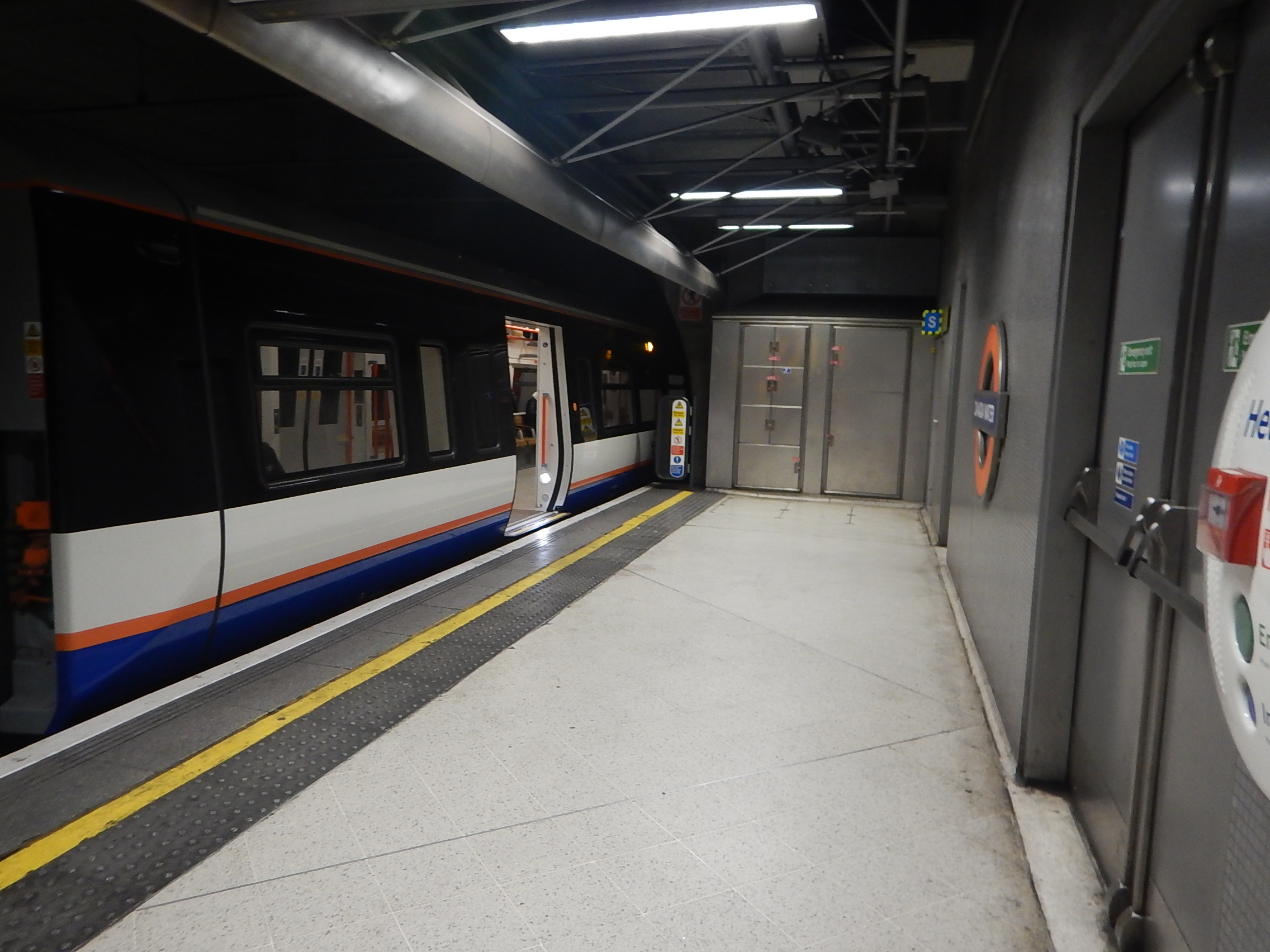
Those travelling in the last car of the train have to walk forward to the front doors of the car to exit. I suspect that with Siemens new trains, this will be the case on the Piccadilly Line.
The big advantage is that it avoids lengthening the platforms, which would be extremely tricky and very expensive.
So will the new Siemens trains be made longer, by allowing overhang into the tunnel at the rear and messaging to inform passengers?
I think they might!
Wikipedia gives the length of the new Siemens 2024 Stock as 113.7 metres, which compares with the 106.8 metres of the current 1973 Stock.
So the new trains are 6.9 metres longer.
Does that mean that if the front of the train is at the same position it is now, the rear end of the train will be overhanging the platform, by almost seven metres?
Judging by what happens on the East London Line, I think it would be feasible. It could even be a few metres longer, in which case the first set of double-doors would be outside the platform and wouldn’t open.
Seats Per Car
I believe this Siemens’ picture shows the view of one of the end cars looking towards the driver’s cab.

Note.
- The red and green labels on the door to the driver’s compartment at the far end.
- The two pairs of passenger doors and the lobbies with the black floors.
- The six banks of seats, each of which have six individual seats.
This means that the driver cars each have thirty-six seats.
According to Wikipedia, each new Siemens train has nine cars and a total of 268 seats.
So that means that the middle seven cars have a total of 196 seats or twenty-eight in each car. What convenient numbers!
Could that mean that the seven intermediate cars have four banks of seven seats arranged around a lobby with a pair of double-doors on both sides?
Could the intermediate cars have just one set of wide doors? I shall be taking a tape measure and my camera to a Class 710 train, to see what Bombardier have done.
So a new Siemens train might look something like this.
- Car 1 – driver cab – six seats – double-door/lobby – six seats – double-door/lobby – six seats
- Car 2 – seven seats – double-door/lobby – seven seats
- Car 3 – seven seats – double-door/lobby – seven seats
- Car 4 – seven seats – double-door/lobby – seven seats
- Car 5 – seven seats – double-door/lobby – seven seats
- Car 6 – seven seats – double-door/lobby – seven seats
- Car 7 – seven seats – double-door/lobby – seven seats
- Car 8 – seven seats – double-door/lobby – seven seats
- Car 9 – six seats – double-door/lobby – six seats – double-door/lobby – six seats- driver cab
Note.
- There will be a maximum of fourteen seats between any two entrance and exit lobbies.
- The train will have eleven sets of doors on either side.
- Trains of different lengths can be made for the Waterloo and City Line, where trains are shorter, and the Jubilee, where trains are longer, by just removing or adding intermediate cars.
For the Piccadilly Line, so long as the distance between the front of the train and the first set of doors is greater than 6.9 metres, these trains can be run using the overhanging into the tunnel method used on the East London Line of the London Overground.
Observations From The Underground And Overground
I went for a look and can say this.
- The seats on Overground Class 710 trains and Underground S Stock trains have a width of 0.5 metres. So is this a Transport for London standard?
- Double doors on both trains are around 1.5 metres wide.
On Class 710 trains, some cars have a run of fourteen seats. Is it a design clue for Transport for London train interiors?

There must be some proof somewhere that fourteen 0.5 metre seats and two 1.5 metre lobbies can handle large numbers of passengers.
The new Siemens trains will have an articulated join in the middle.
Could The Trains Be Lengthened?
The only things we know about the lengths of the cars of the new Siemens trains are.
- The average length of cars is 12.6 metres.
- The two driving cars are probably identical.
- The seven intermediate cars are probably identical.
- The distance between the end of the train and the first set of doors must be long enough to allow the first set of doors to open on the platform, with nearly seven metres of the train in the tunnel.
If we assume that the length of the intermediate car is X metres and it has two banks of seats and one lobby, then the driving car with three banks of seats, two lobbies and a driving cab could be almost twice as long.
I can do a little calculation.
How long would the driver cars be for various lengths of intermediate car?
As the driver car is effectively an intermediate car with an extra pair of doors/lobbie and an overhang containing another set of sets and the driving cab, I can also estimate the between the end of the train and the first set of doors, by subtracting the intermediate car length and two metres for the lobby from the driver car length
- 9 metres – 25.35 metres – 14.35 metres
- 9.5 metres – 23.6 metres – 12.1 metres
- 10 metres – 21.85 metres – 9.85 metres
- 10.5 metres – 20.1 metres – 7.6 metres
- 11 metres – 18.35 metres – 5.35 metres
- 12 metres – 14.85 metres – 0.85 metres
Note.
- The three figures are intermediate car length, driver car length and an estimate of the distance between the end of the train and the first set of doors.
- I shall improve this table, when I get the measurements from a Class 710 train.
- As there is a need for at least an overhang into the tunnel of at least 6.9 metres, it looks like intermediate cars can’t be longer than 10.5 metres.
Suppose that the intermediate car length is 10.5 metres.
Adding an extra car would mean that the new train length would be 124.2 metres, which would be 17.4 metres longer than the current Piccadilly Line 1973 Stock train.
This would be an overhang of 8.7 metres at both ends of the train, which would probably mean that the train wouldn’t fit the route, as the overhang is not long enough to accommodate it.
But with a length of ten metres, the overhang would be only 8.45 metres, which would appear to be feasible.
I wonder, if it would be possible with appropropriate modifications to the tunnel mouths and by using in-cab signalling to run ten car trains, if the intermediate cars were limited to ten metres.
- It looks to be possible mathematically.
- There would need to be no modifications to the platforms.
- There would be a ten percent increase in capacity.
It will hopefully come clear, when Siemens release the length of the driver and intermediate cars.
I believe that it is possible, that Siemens have designed these trains, so they can be extended without having to lengthen the platforms.
Crossrail And Ealing Broadway Station
This map from carto.metro.free.fr shows the track layout at Ealing Broadway station.
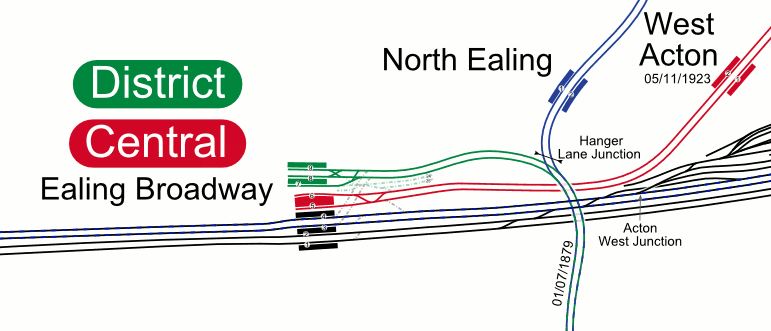
These are lines from North to South through the station.
- The lines shown in green are the District Line, which terminates in platforms 9, 8 and 7.
- The lines shown in red are the Central Line, which terminates in platforms 6 and 5.
- The lines shown in dark blue are the slow lines through platforms 4 and 3, which carry Crossrail and other slow services. Platform 4 is the London-bound platform.
- The lines shown in black are the fast lines through platforms 2 and 1, which carry all fast services. Platform 2 is the London-bound platform.
These are my thoughts on the layout.
Eastbound Crossrail Trains
Passengers travelling East on Crossrail, will be able to walk across from Platform 4 to any of the terminal platforms numbered 5 to 9, for the Central and District Lines.
This picture taken from a London-bound train in Platform 4 shows a Central Line train in Platform 5.
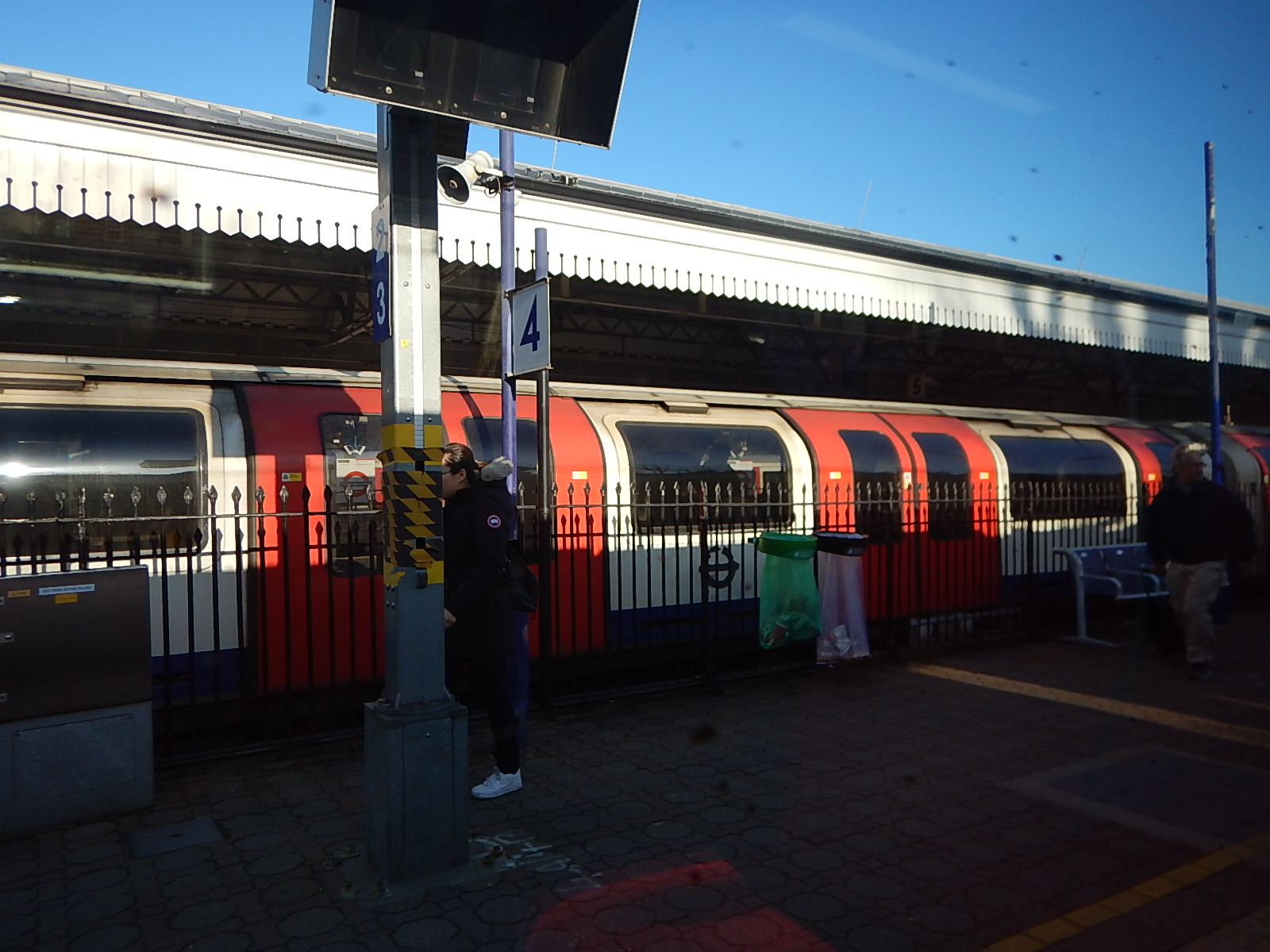
They are only a short walk apart and passengers who are changing trains will probably position themselves in the rear of the Crossrail train.
Passengers entering the station will just walk across to Platform 4 to use Crossrail to Central London and beyond.
I doubt there will be many passengers arriving on the Central and District Lines, who will want to go back on themselves to Central London. If say they lived near a station between West Acton and Marble Arch, and wanted to go East on Crossrail, they’d probably change between the Central Line and Crossrail at Bond Street station.
Westbound Crossrail Trains
Passengers needing to access the Westbound Crossrail trains in Platform 3, will have to use the bridge over the slow lines carrying Crossrail.
Because of the multiple interchanges between the Central Line and Crossrail, depending on where you join the Central Line, you will probably change to Westbound Crossrail trains at different points.
- Start a journey between West Acton and Marble Arch and you’ll probably change to the Westbound Crossrail at Ealing Broadway.
- Start a journey at Oxford Circus and you’ll probably change to the Westbound Crossrail at Bond Street.
- Start a journey between Bank and Holborn and you’ll probably change to the Westbound Crossrail at Tottenham Court Road.
- East of Bank, there are two interchanges at Liverpool Street and Stratford.
It is very much a ducker and diver’s paradise.
Escalators And Lifts Could Be Needed At Ealing Broadway Station
There could be quite a number of passengers needing to cross to and from Platform 3, who will mainly be in two categories.
- Westbound passengers leaving the station.
- Westbound passengers arriving on the Central and District Lines wanting to continue West on Crossrail.
In addition, there will be a large number of passengers entering the station, wanting to catch trains to Central London.
To cater for these passenger flows, there must be a full set of up-and-down escalators and lifts for the following.
- Platforms 4 to 9 in the main station.
- Platform 3 on the Westbound slow line for Crossrail and other slow services.
Wikipedia says four lifts will be added.
It should be noted, that Dlston Junction station handles similar numbers of passengers to Ealing Broadway with one lift and one wide double staircase.
Escalators would future proof the station for more services.
Will District Line Services Be Replaced By Piccadilly Line Services?
There are rumours, that the District Line services at Ealing Broadway station will be replaced by Piccadilly Line services.
Reportedly, this will do the following.
- Allow frequency increases on the District Line to Richmond and Wimbledon.
- Allow a frequency increase on the core section of the Piccadilly Line.
Consider
- Whatever service uses Ealing Broadway will have little effect on the operation of the station.
- Acton Town, Hammersmith, Barons Court, Earl’s Court, Gloucester Road and South Kensington stations are all served by both the District and Piccadilly Lines.
- The Piccadilly Line could be an alternative to Crossrail 2 between Green Park and Kings Cross.
- The Piccadilly Line will have new high-capacity trains in a few years.
Will the change, which means the Piccadilly Line has a capacity increase, allow Crossrail 2 to be delayed by a couple of years?
- This would ease, Transport for London’s cash flow.
- It might also allow a better plan for building Crossrail 2
It will be interesting to see the full details of the swapping of lines.
Could Rail Access To Heathrow Be Formed Of The Best Bits Of Various Schemes, But Discounting HS4Air And Windsor Link Railway?
This post is an updated version of Could Rail Access To Heathrow Be Formed Of The Best Bits Of Various Schemes?, which has been written to fit with the situation as it exists in April 2019.
- HS4Air has not been accepted.
- Windsor Link Railway has not been accepted.
- The scheme is Heathrow-only.
Various schemes have been proposed to improve rail access to Heathrow.
- Heathrow Southern Railway
- HS4Air – Now not accepted!
- Western Rail Approach to Heathrow
- Windsor Link Railway – Now not accepted!
There are also two schemes in progress, that will improve rail access to Heathrow.
- Crossrail, which will open to Heathrow in 2019.
- Piccadilly Line Upgrade, which will be complete in 2025.
I also believe that if the West London Orbital Railway is created, then this could have a positive affect on travelling to and from Heathrow.
Heathrow In The Future
Heathrow are disclosing a master plan, for rebuilding a lot of the airport to make it more efficient and up with the best.
- There will be two main terminals; Heathrow West and Heathrow East with satellites in between handling the actual planes.
- These two terminals and the satellites will be between the two existing runways, with a passenger and baggage transport system beneath.
- Terminal Five will become Heathrow West.
- An extended Terminal Two will become Heathrow East.
- Crossrail, Heathrow Express and the Underground will serve both main terminals.
I believe that this rebuilding will happen, whether or not a third runway is built and it could start in the next few years.
Heathrow’s Pollution Footprint
Heathrow is a big polluter, but it is not so much the planes, as the diesel cars, buses and trucks serving the airport.
Heathrow’s Third Runway
Heathrow’s third runway and another terminal could be built North of the current two runways.
These factors would effect the chance of it being built and the eventual opening date.
- The development of extra services on High Speed One.
- The opening of High Speed Two.
- The building of a second runway at Gatwick.
- Extra capacity at other London airports, like City, Luton, Southend and Stansted.
- Politics, as many possible leaders of the Conservative and Labour parties don’t want it built.
I have a feeling that Heathrow’s Third Runway could be a back-burner project for decades.
I do think though, that the space underneath the third runway could be used as a rail terminal.
Uses For Improved Rail Access
There are several uses for improved rail access to Heathrow.
Passengers
Many passengers feel they must drive to and from Heathrow.
Next year, Crossrail will connect Heathrow directly to the City of London, Canary Wharf, the West End and to the heart of London’s Underground, Overground and National Rail system.
An example journey will be Bond Street to Heathrow Central in twenty-six minutes.
New trains on the Piccadilly Line are planned to enter service in 2023 and will offer more capacity and more pleasant journeys.
Currently, Piccadlly Circus to Heathrow Central takes fifty-two minutes and I would hope that this time is reduced to perhaps 40-45 minutes.
I think, these two upgrades will change the way many in Central, North East, East and South East London access the airport.
- Trains will be more comfortable.
- Trains will be frequent.
- Crossrail will be completely step-free.
- The Piccadilly Line will have more step-free stations.
- The Crossrail trains will have masses of space.
- Trains will take passengers to all the terminals
But Crossrail and the Piccxadilly Line upgrade, will do little for those in North West and South West London and those living to the West of the airport.
Workers
Workers at Heathrow, range from highly-paid pilots down to lowly-paid cleaners, with a full spectrum in between.
Many though have a problem, in that they need to get to and from the airport at times, that are inconvenient for public transport.
A station guy at Staines said that getting between there and Heathrow for an early start or after a late finish is difficult.
The lower-paid workers also need good links to areas of lower-cost housing.
In an ideal world, Crossrail and Piccadilly Line services, should run on a twenty-four hour basis, with appropriate frequencies.
Supplies For The Airport And The Aircraft
I wonder what percentage of the supplies for Heathrow is brought in by diesel truck.
In the Heathrow of the Future, surely many supplies could be loaded onto smart trolleys and taken on electric freight trains to delivery points under the airport.
Air Cargo
Heathrow is an important air cargo terminal, but as with supplies, surely the cargo can be collected outside of the airport and delivered by electric shuttle trains.
Could Heathrow Go Diesel-Free?
I believe that if a well-designed rail-terminal was built under a new third runway, the extra rail capacity could enable, Heathrow to go substantially zero-carbon on the ground!
- All vehicles bringing passengers to the Airport would have to be zero-carbon powered.
- Hybrid vehicles would have to use battery power within a few miles of the Airport.
- Air cargo and airport supplies would be shuttled into the Airport by electric train to the rail terminal under the third runway.
- All vehicles serving the planes would be zero-carbon powered.
- Even giant aircraft tugs for Boeing 747s and Airbus A380s can be battery-powered.
- We are probably talking several years before a third runway would open! So why not?
It is disruptive innovation on a grand scale!
Airports built to these principles and there will be several before 2030, will have a massive marketing advantage.
The Best Bits Of The Various Actual And Proposed Rail Routes Into Heathrow
Crossrail
- Connectivity to large parts of London and the East.
- Connectivity to lower-cost housing areas in East and West London.
- High capacity.
- Frequent trains
- Modern trains
- All terminals served
- Extra trains could be added.
The capability for 24 hour operation has hopefully been built in.
Heathrow Southern Railway
- Connectivity to Waterloo, Clapham Junction, South and South West London
- Extends Heathrow Express to Woking and Basingstoke
- Adds a new route for commuters into Paddington.
- Extends Crossrail from Heathrow to Staines.
- It will be built alongside the M25 with a tunnel to Terminal Five.
- All terminals served
- Provides a freight route into the airport from the South West.
- Privately funded.
Heathrow Southern Railway would also be able to serve any future rail terminal under a new third runway.
Piccadilly Line Upgrade
- Connectivity to West and North London
- Connectivity to lower-cost housing areas in West London
- Frequent trains
- All terminals served.
- No new infrastructure
The Piccadilly Line probably needs 24 hour operation.
Western Rail Approach To Heathrow
- Connectivity to Slough and Reading and further West with a change.
- All terminals served.
- Provides a freight route into the airport from the West.
- Network Rail’s proposed scheme.
- Government funded (?)
As with the Heathrow Southern Railway, Western Rail Approach To Heathrow would also be able to serve any future rail terminal under a new third runway.
West London Orbital Railway
- Connectivity to North West London with a change at Old Oak Common.
- Connectivity to low-cost hosting areas in West London.
- Created as part of the Overground.
- Eight trains per hour (tph) through Old Oak Common.
- Connectivity for high-value passengers in affluent parts of North London.
- Connectivity for important workers in less-affluent parts of North West London.
- Probably, Transport for London funded.
- No difficult construction.
The West London Orbital Railway should go ahead, because it connects so much of West London to Crossrail, Old Oak Common and High Speed Two.
Conclusions
I have seen railway stations and airports all over Europe.
Many airport stations are cramped, as they have been built as an afterthought.
But some like Schipol and Frankfurt have a comprehensive station, where you can get trains to a very long list of places without a change.
Heathrow Connectivity
Heathrow needs a very high level of connectivity, for passengers, workers and freight.
The two major schemes, that are left, provide that.
- Heathrow Southern Railway, which extends Heathrow Express to the South West and provides links to Waterloo and Greater South London.
- Western Rail Approach To Heathrow does what it says in the name.
Both schemes would share the same Western access route to Terminal 5 station and this could be extended to also serve a new rail terminal under the proposed third runway.
What About The Workers?
Heathrow’s other big need is rail access for the increasing numbers of people, who work at the airport and live locally.
- Heathrow Southern Railway links the airport to South West London.
- Western Rail Approach To Heathrow links the airport to Reading and Slough.
- Crossrail links the airport to Old Oak Common with its housing developments and rail connections with High Speed 2 and the London Overground.
- West London Orbital Railway will bring more workers and passengers to Old Oak Common from all over North West and South West London.
Old Oak Common will be important for many working at the airport.
Pollution Solution
As the airport develops, Heathrow Southern Railway and Western Rail Approach To Heathrow could together make a substantial reduction in the pollution emitted by the airport.
Old Oak Common station
Old Oak Common station will become an important interchange for workers and passengers travelling to and from Heathrow.
- It must be totally step-free.
- Some of the long interchange walks on current plans should be augmented by travelators.
- Crossrail is planning six tph between Old Oak Common and Heathrow. Is that enough?
Get Old Oak Common right and all those needing to go to and from Heathrow will benefit.
Heathrow And Gatwick
The connection between Heathrow and Gatwick Airports is tortuous at present.
- It will get better, as Crossrail and Thameslink improve.
- As the airports grow, with a third runway at Heathrow and a second one at Gatwick, how many people will want to travel quickly between the two airports, as increasingly, both airports will offer services to more destinations?
- As a Londoner, I also believe that we will see more split flights, where passengers stopover in London for a night or two, when they are going halfway around the world.
Terminal London will be the best airport transfer terminal in the world.
Heathrow And High Speed One
I will be very surprised if many travellers need to go quickly between Heathrow and High Speed One.
For those that need to do it, using an extended Crossrail between Heathrow and Ebbsfleet will probably be good enough.
Heathrow And High Speed Two
For all sorts of reasons Heathrow needs good connectivity to High Speed Two.
With the elimination of direct access to the airport by High Speed Two, a short journey between Heathrow Airport and Old Oak Common stations will have to be acceptable.
The Shape Of Things To Come
Yesterday, I needed to go between Moorgate and Tottenham Hale stations.
It was just before the evening Peak and I took the escalators down to the Northern City Line platforms, where a new Class 717 train was waiting.
The increased capacity meant I got a seat and I took the train three stops to Highbury & Islington station.
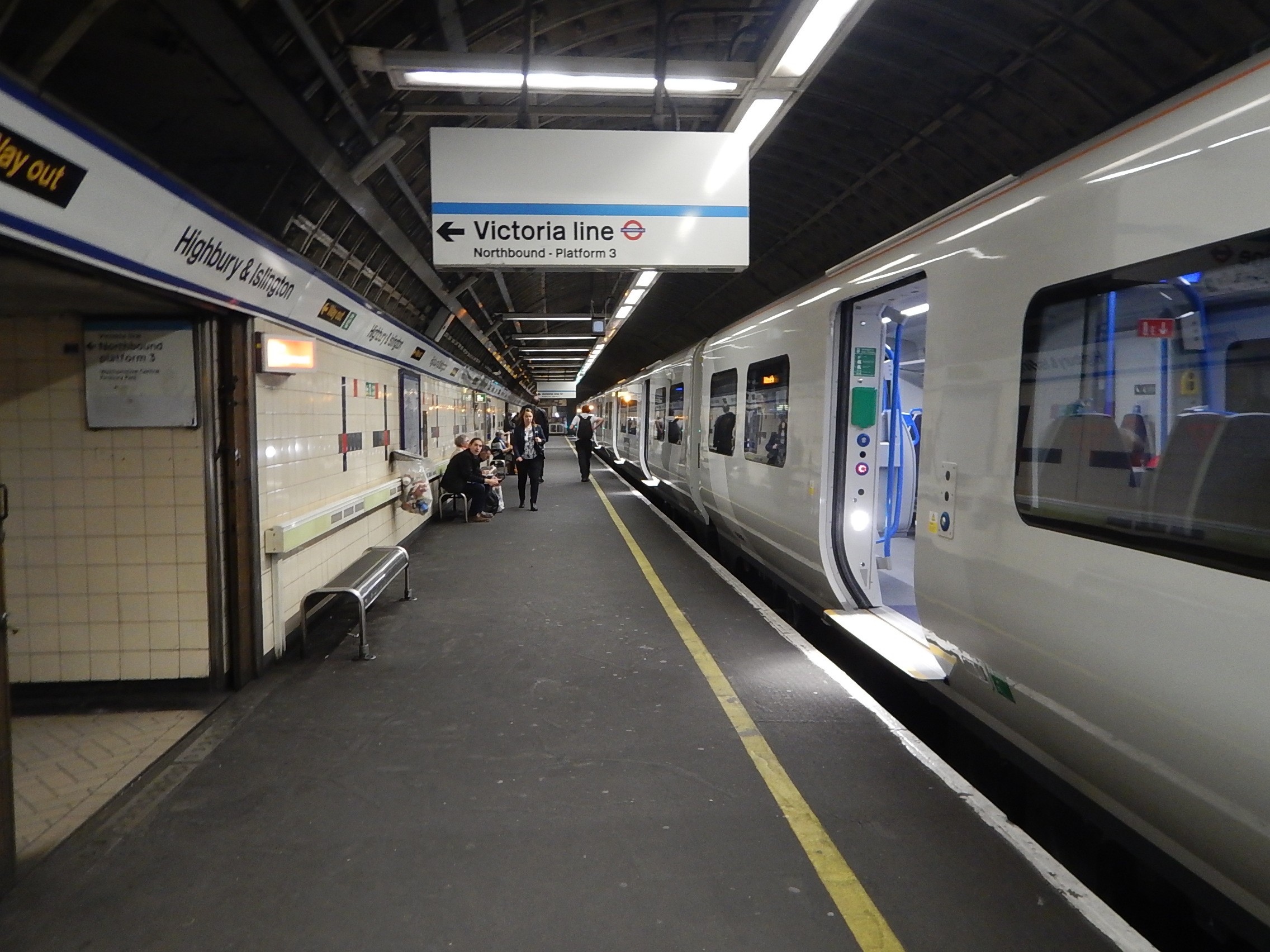
It was then just a walk through a very short tunnel to the Victoria Line and a train to Tottenham Hale.
It was so much more relaxed than squeezing into a crowded and very elderly Class 313 train.
After the timetable change in May, there will be eight trains per hour (tph), as there is now, but given the number of trains in the new fleet and signalling improvements in the pipeline, I feel that this frequency will be increased.
It should also be noted that in the Peak there are twelve tph, which in the future could be used all day.
But in the interim, trains with extra capacity will be very welcome.
From An Ugly Ducking To A Swan
These developments are either underway or planned for the next few years.
- Improved signalling on the Northern City Line.
- Full step-free interchange at Finsbury Park between Moorgate services and Thameslink, Piccadilly and Victoria Lines.
- Higher frequencies on Thameslink and the Piccadilly Line through Finsbury Park
- Full step-free access to the Northern City and Victoria Lines at Highbury & Islington station.
- Full step-free access at Old Street station.
- Hopefully, Essex Road station will be cleaned.
- Crossrail will finally arrive at Moorgate station.
North London’s ugly ducking, which has caused passengers, British Rail and London Underground, so much trouble, will finally have turned into a swan.
I always wonder if the City of London’s transport planners, wish that the Victorians had built the planned extension to a new Lothbury station, close to Bank.
What Will Be The Ultimate Frequency?
Currently the frequency between Alexandra Palace and Moorgate stations in the Peak is twelve tph.
Compare this with the following frequencies.
- Crossrail will be initially 24 tph.
- The East London Line is planned to go to 20 tph
- The Piccadilly Line is currently at 24 tph between Arnos Grove and Acton Town stations in the Peak.
- Thameslink will soon be at 24 tph
- The Victoria Line is currently at 36 tph.
I don’t think it unreasonable that a frequency of at least sixteen and possibly twenty tph between Alexandra Palace and Moorgate stations is achievable.
- Digital signalling and Automatic Train Control will be possible.
- If Dear Old Vicky can turn 36 tph at Brixton and Walthamstow Central stations, with two platforms, then surely 20 tph at Moorgate is possible, once there is better access for passengers to the platforms.
- Alexandra Palace to Moorgate is a double-track railway, that is almost exclusively used by Moorgate services.
- 16-20 tph would make the cross-platform interchange with the Victoria Line at Highbury & Islington station very efficient.
- There are two branches North of Alexandra Palace station. I’m sure each could handle 8-10 tph.
- The Hertford Loop Branch has three terminal stations; Gordon Hill, Hertford North and Stevenage stations.
- The East Coast Main Line has two terminal platforms at Welwyn Garden City station.
I could see the following frequencies.
- Moorgate and Gordon Hill – four tph
- Moorgate and Hertford North – four tph
- Moorgate and Stevenage – four tph
- Moorgate and Welwyn Garden City – four to eight tph
It will be a very high-capacity Metro into Moorgate. There could be a need for a few more trains.
But with increased speed.
Should The Northern City Line Be Shown On The Tube Map?
Increasingly, passengers will use the high-frequency Southern section of the Northern City Line between Alexandra Palace and Moorgate stations, as a new tube line.
So like Thameslink, the arguments will start as to whether this line should be on the Tube Map.
If Crossrail is to be shown, it is my view that nThameslink and the Northern City Line should be shown too!
New Lifts At Finsbury Park Station
As I passed through Finsbury Park station, I took these pictures of the new lifts to the Piccadilly and Victoria Lines.
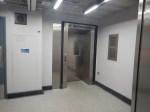


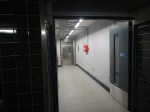
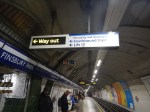
These lifts are particularly needed as there are no escalators between the Underground and the surface and you have to use spiral staircases.
This access is probably one of the worst design crimes on the Victoria Line, which was built on the cheap in the 1960s.
Notice that some of the signage is not complete and finding the lifts isn’t as easy, as it should be.
But then the installation is not fully finished.
Should The Drain Get The First New Tubes For London?
Introducing new trains onto a rail route can be a difficult process, where all sorts of problems occur.
Testing And Introducing Class 710 Trains
Currently, London Overground are introducing Class 710 trains on the Gospel Oak to Barking Line.
As the trains are about eighteen months late, I think that there must have been problems.
I’ve never tested a train, but the modern train must require lots of systems to be tested and Aventras and other recent trains could best be described as computers-on-wheels.
So I must admit, I was a bit surprised, when I heard that first route to receive the new Class 710 trains was the Gospel Oak to Barking Line.
- The line had only been recently electrified.
- Both diesel and electric freight trains use the route.
- Eight trains are needed to run a complete service.
As this will be the first time the trains are used, there would appear to be a lot of things that could go wrong.
The simplest route, where the new Class 710 trains are to be used is the Romford-Upminster Line.
- It is 5.4 km long.
- It is single-track
- It has a 30 mph speed limit.
- There is only three stations, each of which are a single platform.
- The journey takes nine minutes.
- The service operates every thirty minutes.
- There is only one signal.
- Only one train is needed for the service.
It must be one of the simplest electrified railways in the world.
My instincts would have been to put a single train on this line and constantly shuttle it backwards and forwards.
This was exactly how Bombardier tested the Class 379 BEMU train on the Mayflower Line.
- Only the train is being tested.
- Passenger systems can be tested.
- Drivers can be trained.
- Passengers can be asked their opinions.
If the train fails, there is a regular bus service between the two stations and service engineers are not far away at Ilford Depot.
There must be good reasons, why this approach hasn’t been used.
Perhaps, it’s just that London Overground are not going to use a Class 710 train on this route. There have been rumours of this, that I talked about in A Heritage Class 315 Train For The Romford-Upminster Line.
The New Tubes For London
London Underground are buying New Tubes For London from Siemens for four lines.
- Piccadilly – 100 trains
- Bakerloo – 40 trains
- Central – 100 trains
- Waterloo & City – 10 trains
First trains are to run on the Piccadilly Line in 2023.
I think that it will not be a simple case of replacing one fleet of old trains, with another fleet of new trains, as has been done in the past.
It was managed successfully in recent times on the Victoria Line, when 2009 Stock trains replaced 1967 Stock trains.
But Siemens design is more radical and may need track and platform work to be performed before the trains can be run.
My research in The Train-Platform Interface In London, showed that the interface seemed fairly consistent on the Piccadilly Line, so it may be easy to design trains to run the line efficiently with step-free access between train and platform.
But what about the section of the line, where the trains share track with the S8 Stock trains of the Metropolitan Line.
If the Piccadilly Line has to be closed to make it fit for the New Tubes for London, then it will be a major undertaking, even if it is done in sections.
It would be a high-risk undertaking.
A Test Line For New Tubes for London
I believe there would be advantages in creating a test line for the following purposes.
- Test the engineering for track and platforms.
- Test the train performance and reliability.
- Test the Automated Train Control
- Test the passenger systems.
One of the suburban sections could be used, but there could be problems.
The Waterloo & City Line As A Test Track
On the other hand the Waterloo & City Line could be an ideal test track.
- It has only two stations.
- It is step-free
- It is only 2.4 km. long.
- Journeys take four minutes.
- It is integrated with a depot.
The only problem is that trains have to be moved in and out by the use of a crane.
Using the Waterloo & City Line as a test track does have other advantages.
Alternative Routes During Closure
If the line had to be closed for any period of time for track or platform work, then in 2023, there will be some excellent alternative routes.
- Northern Line to Tottenham Court Road and then the Central Line to Bank.
- Northern Line to Tottenham Court Road and then Crossrail to Moorgate.
- Bakerloo Line to Embankment and then the Circle/District Lines to Monument.
- Jubilee Line to London Bridge and then the Northern Line to Bank.
- Southeastern From Waterloo East to London Bridge and then bus or walk.
There is also the direct 76 bus and possibly others.
It should be noted that from late 2021, the Northern Line platforms at Bank station will be much improved.
So, if the Waterloo & City Line was used to test the trains, this in itself would not present any problems during closure or unreliable service.
Improved Capacity For The Line
According to an article in the November 2017 Edition of Modern Railways, which is entitled Deep Tube Upgrade, new trains for the Waterloo & City Line will give a capacity increase of twenty-five percent.
This is much-needed.
Automatic Train Control Testing
Testing of any automatic control system must be very rigorous and the short double-track route of the Waterloo & City Line would be ideal for testing automatic control of the new trains.
Trains could test twenty-four hours per day and every day of the year and not annoy anybody.
Driver Training
It could a valuable resource in training new drivers and converting others to the new trains.
Ongoing Train Development
It is London Underground’s and Seimen’s objective to have the same trains on as many lines of the London Underground as possible.
Siemens might get it right first time, but each line has its own quirks and design features and having a short line in London, where the next version of the trains could be tested by the public could be an advantage.
Conclusion
I believe that introducing the New Tubes for London on the Waterloo & City Line before the other lines could give advantages in the testing and designing of the trains and for the passengers of this short route.
 The Anonymous Widower