Cardiff And Caerphilly – 24th March 2026
I took this pictures, as I rode up the Rhymney Valley from Cardiff to Caerphilly.
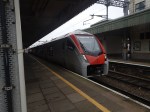
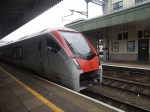






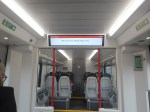














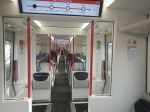
Note.
- The trains I took up and down the valley were both Class 756 tri-mode trains.
- My train reversed to Penarth in Platform 1.
- I think they were running using the diesel power in the power pack.
- There is an overhead conductor rail in Platform 1 at Caerphilly station to charge trains.
- The electrification North of Caerphilly station can be seen through the bridge in one of the pictures.
- Platforms 2 and 3 are not electrified.
I think Caerphilly station is a very neat electrification layout for occasional charging of battery-electric or tri-mode trains.
I have some specific thoughts.
What Have Caerphilly And St. Pancras Thameslink Stations Got In Common?
These pictures show the rigid conductor rail through St. Pancras Thameslink station.




It looks remarkably similar to that in Platform 1 at Caerphilly station.
Judge in this picture.
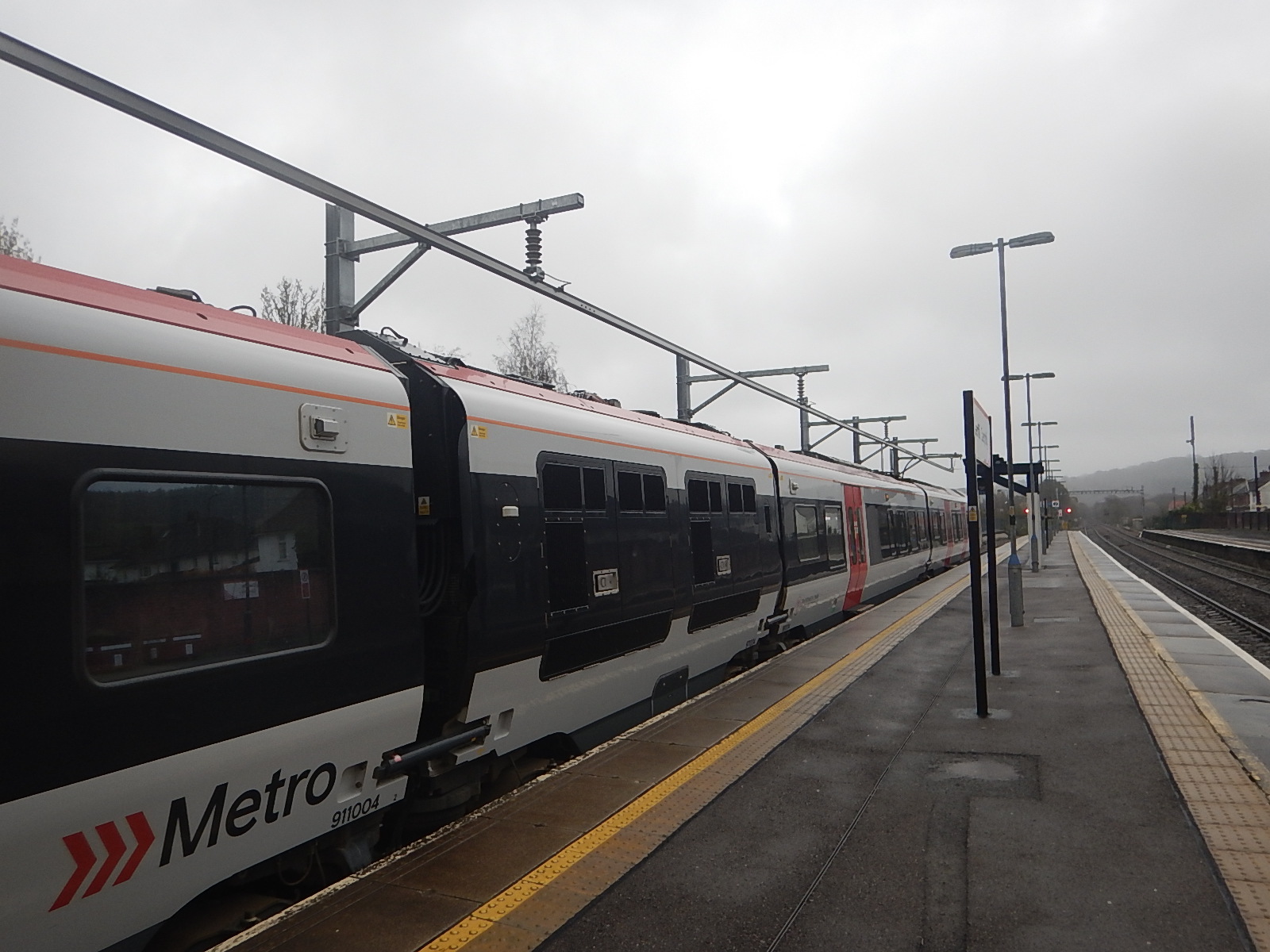
The rails are probably out of the same Swiss electrification maker’s parts bin.
Both look equally professional with an I-section conductor, which could be aluminium, as it is lightweight and a good electrical conductor.
Google AI finds this.
The I-beam overhead conductor system used in St. Pancras Thameslink station is made of a hollow extruded aluminium profile. This system, known as a conductor beam, holds a conventional copper contact wire, providing a rigid, low-profile alternative to traditional overhead wires.
Key details:
Material: Extruded aluminium profile.
Structure: Hollow, designed to hold an un-tensioned, conventional copper contact wire.
Application: Developed by Balfour Beatty to reduce the required depth of overhead line equipment.
Installation: Often installed in a sinusoidal wave to ensure consistent wear on the pantograph.
This technology is used in areas with restricted overhead space, such as tunnels and some modern station approaches, to manage 25kV AC electrification.
It looks like it’s been used to provide a charging rail in Caerphilly station.
Is The Conductor Rail In Platform 1 Used To Create A Continuous Electrical Connection Around Caerphilly Station?
Look at this OpenRailwayMap, which shows the completed electrification through Caerphilly station.
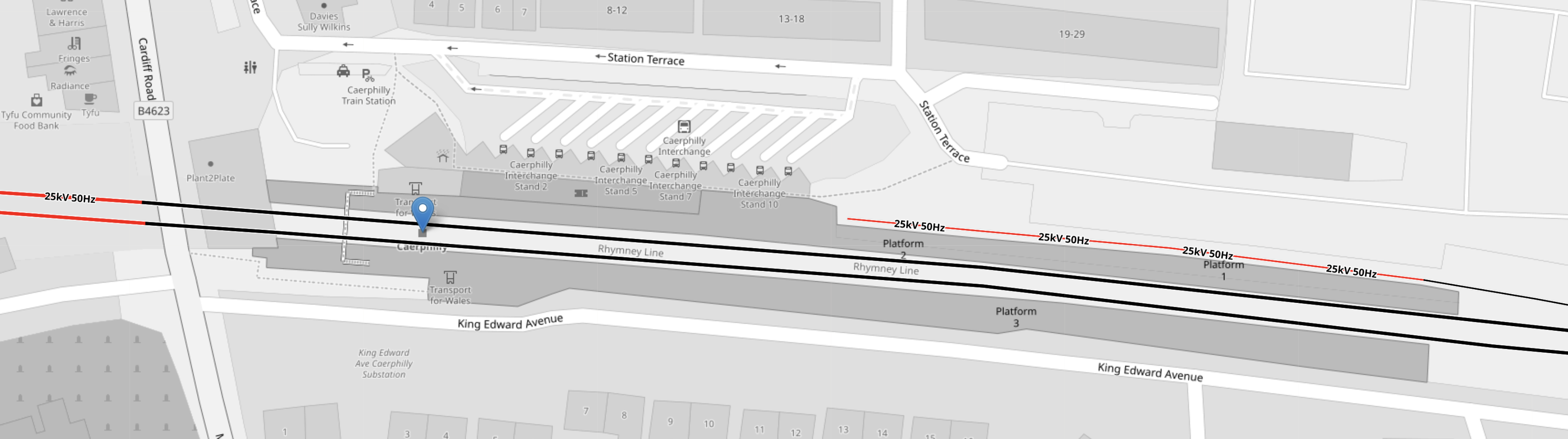
Note.
- Red tracks are electrified.
- Black tracks are not electrified.
- Caerphilly station is indicated by the blue arrow.
- The electrification continues to the Western end of the station.
- The two main platforms 2 & 3 are not electrified.
- The bay platform 1 is electrified to charge trains for return to Cardiff.
- Class 756 tri-mode electric-diesel-battery trains are already in service.
- There appears to be a comprehensive bus interchange.
The power for Platform 1 could come from the electrification at the Western end of the station.
I wouldn’t be surprised that the Rhymney Line will be fed with electricity at the heads of the valleys and it is fully-connected down to Cardiff to give a secure electrical connection.
Will Welsh Wind Power From The Heads Of The Valleys Be Used To Power The Cardiff Valley Lines?
To start with, as I know it can be blowy there, I asked Google AI, this question.
“Is Onshore Wind Planned At The Heads Of The Valleys In South Wales?”
I received this answer.
Yes, there is significant onshore wind energy development planned and in progress along the Heads of the Valleys area in South Wales. This region, encompassing areas like Merthyr Tydfil, Blaenau Gwent, and northern Rhondda Cynon Taf, is part of a broader push to increase onshore wind capacity in Wales, with many projects located on Natural Resources Wales forestry land.
Key Developments and Proposed Projects (2025-2026):
Trydan Gwyrdd Cymru: The Welsh government-owned developer has selected sites in South Wales for new, large-scale wind farms intended to be operational by 2040.
Carreg Wen Wind Farm: A planned 18-turbine project located between Aberdare and Maerdy (Rhondda Cynon Taf), near the Hirwaun/Heads of the Valleys area.
Hirfynydd Renewable Energy Park: A proposed project located on the Hirfynydd mountain range between Seven Sisters and Banwen, north of Neath, near the western end of the Heads of the Valleys.
Mynydd Llanhilleth and Trecelyn Wind Farms: Projects in the pre-application or planning stages by Pennant Walters in the Blaenau Gwent area.
Abergorki Wind Farm: A consented three-turbine project on Mynydd Maerdy (Rhondda Cynon Taf) with construction scheduled for 2026.
Operational Context:
Pen y Cymoedd: Already operational and currently the largest onshore wind farm in England and Wales, situated in the hills above the upper Neath, Afan, Rhondda, and Cynon Valleys.
Grid Infrastructure: Proposed new substations, such as one near Hirwaun (Rhondda Cynon Taf), are intended to connect these new projects to the national grid.
These developments are part of a target to generate 70% of Wales’ electricity from renewable sources by 2030, with a focus on areas previously identified as suitable for large-scale wind development.
Note.
- Pen y Cymoedd is the largest onshore wind farm in Wales and England, with an installed capacity of 228 MW.
- With the right size of battery, I’m fairly sure, that this wind farm could go a long way to powering the Cardiff Valley Lines.
- Carreg Wen Wind Farm is planned to be 108 MW wind farm.
- Hirfynydd Renewable Energy Park is planned to be a 100 MW hybrid development of wind turbines and solar with a battery.
- Mynydd Llanhilleth is planned to be a 48 MW wind farm.
- Trecelyn is planned to be a 20 MW wind farm.
- Abergorki is planned to be a 13 MW wind farm.
The total of new developments is 389 MW, which is about the same size as a Rolls-Royce SMR.
Raft Of US-UK Nuclear Deals Ahead Of Trump Visit
The title of this post, is the same as that of this article on World Nuclear News.The article is a good summary of all the deals done between the US and UK governments concerning next-generation nuclear power.
This is the introduction.
Several agreements have been signed between UK and US companies to advance the deployment of small modular reactors and advanced reactors in both countries. The deals were signed ahead of the state visit of President Donald Trump to the UK later this week.
The whole article is a must-read.
These are my posts, that are related to the main agreement.
- Centrica And X-energy Agree To Deploy UK’s First Advanced Modular Reactors
- Nuclear Plan For Decommissioned Coal Power Station
- Rolls-Royce Welcomes Action From UK And US Governments To Usher In New ‘Golden Age’ Of Nuclear Energy
I shall finish it later.
Rolls-Royce Welcomes Action From UK And US Governments To Usher In New ‘Golden Age’ Of Nuclear Energy
The title of this post, is the same as that of this press release from Rolls-Royce.
These three paragraphs introduce the press release.
The agreement between the UK and US Governments to deepen cooperation in advanced nuclear technologies and make it quicker for companies to build new nuclear power stations sets the stage for a significant step forward in the energy security and resilience of the two nations. The Atlantic Partnership for Advanced Nuclear Energy will help ensure the accelerated development and deployment of advanced nuclear reactor technologies in the US and UK. Building a bridge between the world’s first and world’s largest civil nuclear power markets.
The global market for advanced nuclear technologies is estimated to be worth many trillions up to 2050. Secure, scalable and reliable power across civil, defence, industrial and maritime sectors is needed to meet growing demands in digital and AI. In the US alone, demand for nuclear power is forecast to grow from 100GWe to 400GWe by 2050.
Rolls-Royce stands ready to seize the opportunity to further innovate and partner in the development of advanced nuclear technologies which will deliver thousands of skilled jobs, attract investment and support the economic growth of both the US and the UK.
Note.
- Rolls-Royce have several partners for the SMR, who include Siemens and a couple of American companies.
- Rolls-Royce are involved with US company; BWXT, in one of the consortia developing a micro-reactor for the US Department of Defense, which I wrote about in Rolls-Royce To Play Key Role In US Department Of Defense Nuclear Microreactor Program.
- Rolls-Royce also has a large design, development and manufacturing presence in the United States.
- The new engines for the B-52s are from Rolls-Royce.
Rolls-Royce has a very strong footprint in the United States.
Centrica And X-energy Agree To Deploy UK’s First Advanced Modular Reactors
The title of this post, is the same as that of this press release from Centrica.
This is the sub-heading.
Centrica and X-Energy, LLC, a wholly-owned subsidiary of X-Energy Reactor Company, LLC, today announced their entry into a Joint Development Agreement (JDA) to deploy X-energy’s Xe-100 Advanced Modular Reactors (“AMR”) in the United Kingdom.
These three paragraphs add more details.
The companies have identified EDF and Centrica’s Hartlepool site as the preferred first site for a planned U.K. fleet of up to 6 gigawatts.
The agreement represents the first stage in a new trans-Atlantic alliance which could ultimately mobilise at least £40 billion in economic value to bring clean, safe and affordable power to thousands of homes and industries across the country and substantive work for the domestic and global supply chain.
A 12-unit Xe-100 deployment at Hartlepool could add up to 960 megawatts (“MW”) of new capacity, enough clean power for 1.5 million homes and over £12 billion in lifetime economic value. It would be developed at a site adjacent to Hartlepool’s existing nuclear power station which is currently scheduled to cease generating electricity in 2028. Following its decommissioning, new reactors would accelerate opportunities for the site and its skilled workforce. The site is already designated for new nuclear under the Government’s National Policy Statement and a new plant would also play a critical role in generating high-temperature heat that could support Teesside’s heavy industries.
This is no toe-in-the-water project, but a bold deployment of a fleet of small modular reactors to provide the power for the North-East of England for the foreseeable future.
These are my thoughts.
The Reactor Design
The Wikipedia entry for X-energy has a section called Reactor Design, where this is said.
The Xe-100 is a proposed pebble bed high-temperature gas-cooled nuclear reactor design that is planned to be smaller, simpler and safer when compared to conventional nuclear designs. Pebble bed high temperature gas-cooled reactors were first proposed in 1944. Each reactor is planned to generate 200 MWt and approximately 76 MWe. The fuel for the Xe-100 is a spherical fuel element, or pebble, that utilizes the tristructural isotropic (TRISO) particle nuclear fuel design, with high-assay LEU (HALEU) uranium fuel enriched to 20%, to allow for longer periods between refueling. X-energy claims that TRISO fuel will make nuclear meltdowns virtually impossible.
Note.
- It is not a conventional design.
- Each reactor is only about 76 MW.
- This fits with “12-unit Xe-100 deployment at Hartlepool could add up to 960 megawatts (“MW”) of new capacity” in the Centrica press release.
- The 960 MW proposed for Hartlepool is roughly twice the size of the Rolls-Rpoyce SMR, which is 470 MW .
- Safety seems to be at the forefront of the design.
- I would assume, that the modular nature of the design, makes expansion easier.
I have no reason to believe that it is not a well-designed reactor.
Will Hartlepool Be The First Site?
No!
This page on the X-energy web site, describes their site in Texas, which appears will be a 320 MW power station providing power for Dow’s large site.
There appear to be similarities between the Texas and Hartlepool sites.
- Both are supporting industry clustered close to the power station.
- Both power stations appear to be supplying heat as well as electricity, which is common practice on large industrial sites.
- Both use a fleet of small modular reactors.
But Hartlepool will use twelve reactors, as opposed to the four in Texas.
How Will The New Power Station Compare With The Current Hartlepool Nuclear Power Station?
Consider.
- The current Hartlepool nuclear power station has two units with a total capacity of 1,185 MW.
- The proposed Hartlepool nuclear power station will have twelve units with a total capacity of 960 MW.
- My instinct as a Control Engineer gives me the feeling, that more units means higher reliability.
- I suspect that offshore wind will make up the difference between the power output of the current and proposed power stations.
As the current Hartlepool nuclear power station is effectively being replaced with a slightly smaller station new station, if they get the project management right, it could be a painless exercise.
Will This Be The First Of Several Projects?
The press release has this paragraph.
Centrica will provide initial project capital for development with the goal of initiating full-scale activities in 2026. Subject to regulatory approval, the first electricity generation would be expected in the mid-2030s. Centrica and X-energy are already in discussions with additional potential equity partners, as well as leading global engineering and construction companies, with the goal of establishing a UK-based development company to develop this first and subsequent projects.
This approach is very similar to the approach being taken by Rolls-Royce for their small modular reactors.
Will Centrica Use An X-energy Fleet Of Advanced Modular Reactors At The Grain LNG Terminal?
This press release from Centrica is entitled Investment In Grain LNG Terminal.
This is one of the key highlights of the press release.
Opportunities for efficiencies to create additional near-term value, and future development options including a combined heat and power plant, bunkering, hydrogen and ammonia.
Note.
- Bunkering would be provided for ships powered by LNG, hydrogen or ammonia.
- Heat would be needed from the combined heat and power plant to gasify the LNG.
- Power would be needed from the combined heat and power plant to generate the hydrogen and ammonia and compress and/or liquify gases.
Currently, the heat and power is provided by the 1,275 MW Grain CHP gas-fired power station, but a new nuclear power station would help to decarbonise the terminal.
Replacement Of Heysham 1 Nuclear Power Station
Heysham 1 nuclear power station is part-owned by Centrica and EdF, as is Hartlepool nuclear power station.
Heysham 1 nuclear power station is a 3,000 MW nuclear power station, which is due to be decommissioned in 2028.
I don’t see why this power station can’t be replaced in the same manner as Hartlepool nuclear power station.
Replacement Of Heysham 2 Nuclear Power Station
Heysham 2 nuclear power station is part-owned by Centrica and EdF, as is Hartlepool nuclear power station.
Heysham 2 nuclear power station is a 3,100 MW nuclear power station, which is due to be decommissioned in 2030.
I don’t see why this power station can’t be replaced in the same manner as Hartlepool nuclear power station.
Replacement Of Torness Nuclear Power Station
Torness nuclear power station is part-owned by Centrica and EdF, as is Hartlepool nuclear power station.
Torness nuclear power station is a 1,290 MW nuclear power station, which is due to be decommissioned in 2030.
I don’t see why this power station can’t be replaced in the same manner as Hartlepool nuclear power station.
But the Scottish Nationalist Party may have other ideas?
What Would Be The Size Of Centrica’s And X-energy’s Fleet Of Advanced Modular Reactors?
Suppose.
- Hartlepool, Grain CHP and Torness power stations were to be replaced by identical 960 MW ADRs.
- Heysham 1 and Heysham 2 power stations were to be replaced by identical 1,500 MW ADRs.
This would give a total fleet size of 5,880 MW.
A paragraph in Centrica’s press release says this.
The companies have identified EDF and Centrica’s Hartlepool site as the preferred first site for a planned U.K. fleet of up to 6 gigawatts.
This fleet is only 120 MW short.
Does Nuclear Power Not Sell Newspapers?
Five days ago, In Rolls-Royce SMR Advances To Final Stage In Swedish Nuclear Competition, I wrote about Rolls-Royce being one of two successful bids to advance to the ext stage to build Small Modular Reactors for Vatenfall in Sweden.
Since then, Rolls-Royce’s Swedish success has not featured in any newspaper in the UK, not even the Financial Times.
I can only assume, that good news stories about nuclear power, don’t sell newspapers.
Rolls-Royce SMR Advances To Final Stage In Swedish Nuclear Competition
The title of this post, is the same as that of this press release from Rolls-Royce.
This is the sub-heading.
Rolls-Royce SMR has been selected by Vattenfall as one of only two companies to reach the final stage in the process to identify Sweden’s nuclear technology partner.
These are the first two paragraphs, which add details.
After being shortlisted in 2024, Rolls-Royce SMR has progressed through a detailed assessment and will now work with Vattenfall through the final technology selection which could initially result in Rolls-Royce SMR delivering three SMRs.
This positive news is testament to Rolls-Royce SMR’s transformative approach to delivering proven nuclear technology in an innovative way through modularisation and builds on our successful selection in both the United Kingdom and Czech Republic.
Some other points from the press release.
- Sweden is initially looking to build three SMRs.
- Each SMR will supply 470MWe of clean low-carbon electricity.
- They are expected to have a lifetime of sixty years. Sizewell B was originally expected to have a lifetime of forty years, but appears to be being extended to sixty years, so I will accept Rolls-Royce’s expected lifetime.
- The first units will be at the Ringhals site on the Värö Peninsula, where there is an existing nuclear power station.
This Google Map shows the Ringhals site in relation to Gothenburg.
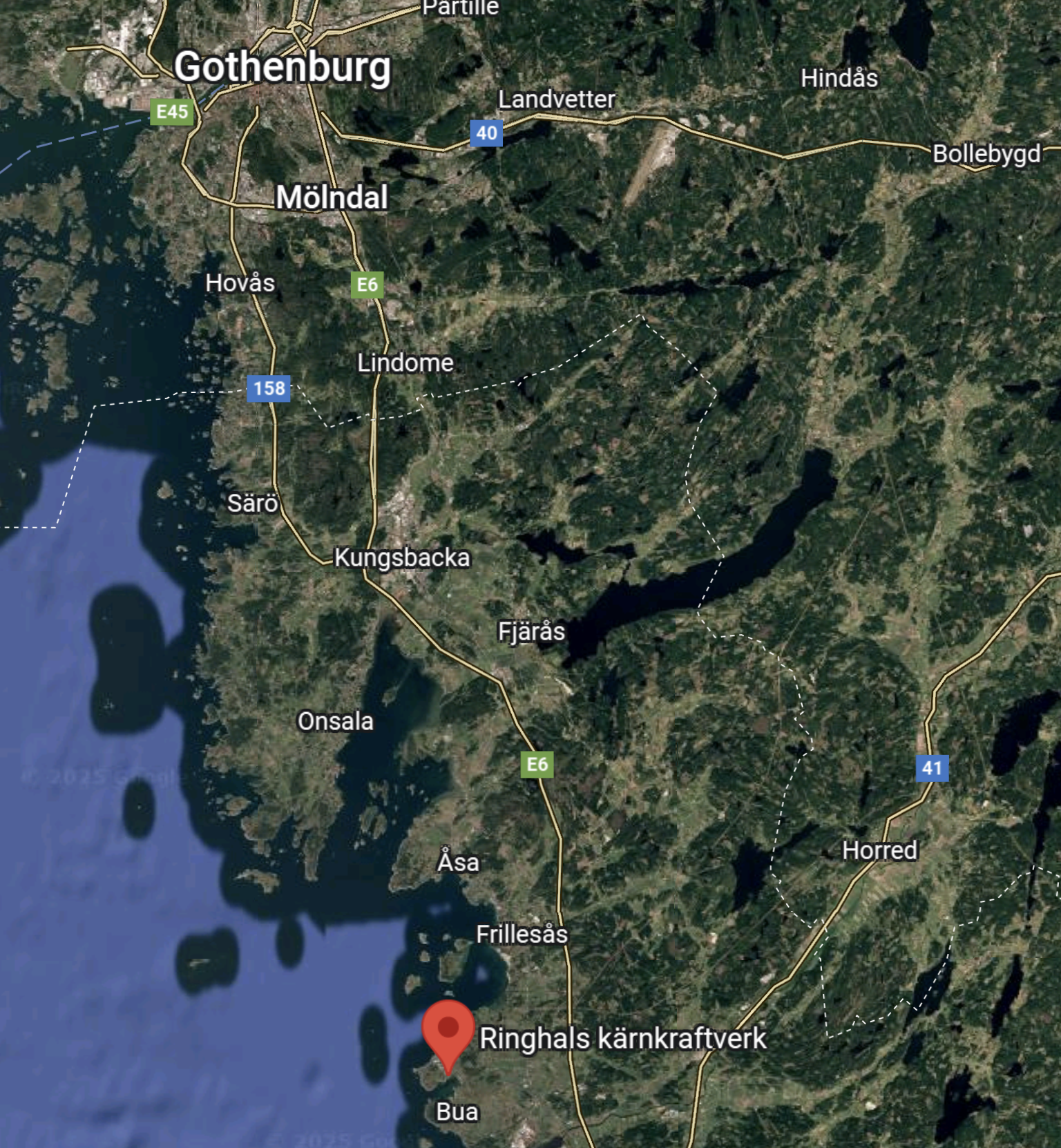
The site is marked by the red arrow.
On taking a closer look, it appears to be a site with expansion possibilities.
The British Media Don’t Seem Very Interested
It is now the 31st of August and the only paper to report the story has been the Financial Times.
British Gas Owner Mulls Mini-Nuke Challenge To Rolls-Royce
The title of this post, is the same as that of this article in The Telegraph.
This is the sub-heading.
Centrica is looking to follow Rolls-Royce in developing small modular reactors
These are the first three paragraphs.
The owner of British Gas is considering investing in mini nuclear power plants in the UK as it seeks to cash in on burgeoning demand for the technology.
Centrica is in early talks with the Government about a potential future deal that could see the energy giant participate in the development of so-called small modular reactors (SMRs).
It comes after Ed Miliband, the Energy Secretary, last month announced billions of pounds in funding for SMRs, which will form part of a new “golden age” for atomic energy.
In Centrica Really Can’t Lose At Sizewell, I looked at Centrica’s involvement in Sizewell C and in particular the financing of the nuke and what Centrica would do with their share of the electricity, that the nuke will produce.
I listed these uses for hydrogen in the East of England.
- Transport – Buses, Coaches and Trucks
- Large Construction Projects
- Rail
- Ports
- Airports
- Agriculture And The Rural Economy
- Exports
I do wonder, if Centrica made the investment in Sizewell C, when they realised that there were a lot of uses for hydrogen and producing hydrogen using the electricity from a nuclear power station was a good way to generate hydrogen.
- Sizewell B is a 1.2 GW nuclear powerstation.
- Sizewell C is a 3.2 GW nuclear powerstation.
- Their investment in HiiROC surely gives them access to the technology to generate hydrogen.
- Centrica have a lot of experience of selling natural gas to customers, who need energy.
- There were also substantial government guarantees involved.
- Hydrogen made by a nuclear reaxtor is generally referred to as pink hydrogen.
- In Westinghouse And Bloom Energy To Team Up For Pink Hydrogen, I describe how two American companies have formed a partnership to make pink hydrogen.
Before they invested in Sizewell C, they would have done detailed financial and technical due diligence.
Did Centrica then scale the calculations to see if funding a Small Modular Reactor (SMR) to make hydrogen was a viable deal?
- SMRs are typically around 400-500 MW.
- The article mentions Rolls-Royce, but other companies are developing SMRs.
- Centrica use Rolls-Royce mtu generators for some of their installations.
- Some SMR/HiiROC systems could be built close to steelworks or other high energy users.
This is a very interesting development in taking the UK to net-zero.
Chinese firm ‘Will Not Bid’ To Run Essex Nuclear Plant
The title of this post, is the same as that of this article on The Times.
This is the sub-heading.
Sources no longer expect planning applications to be submitted by China General Nuclear Power Group for Bradwell B
These three paragraphs give brief details of the current situation.
Plans for China’s state-run nuclear company to develop and operate a proposed nuclear site in Essex will no longer go ahead, The Times can reveal amid renewed focus on Chinese involvement in Britain’s critical infrastructure.
Bradwell B, the proposed nuclear power station, was earmarked for investment by China General Nuclear Power Group (CGN) in 2015. CGN is the majority investor in the proposed development alongside French energy company EDF.
But government and industry sources told The Times and Times Radio they no longer expected planning applications to be submitted by CGN for the site, and EDF will look to take back the lease from the Chinese firm at the earliest opportunity.
So what will happen to the Bradwell Site?
This Google Map shows the Blackwater Estuary to the North of Southend.
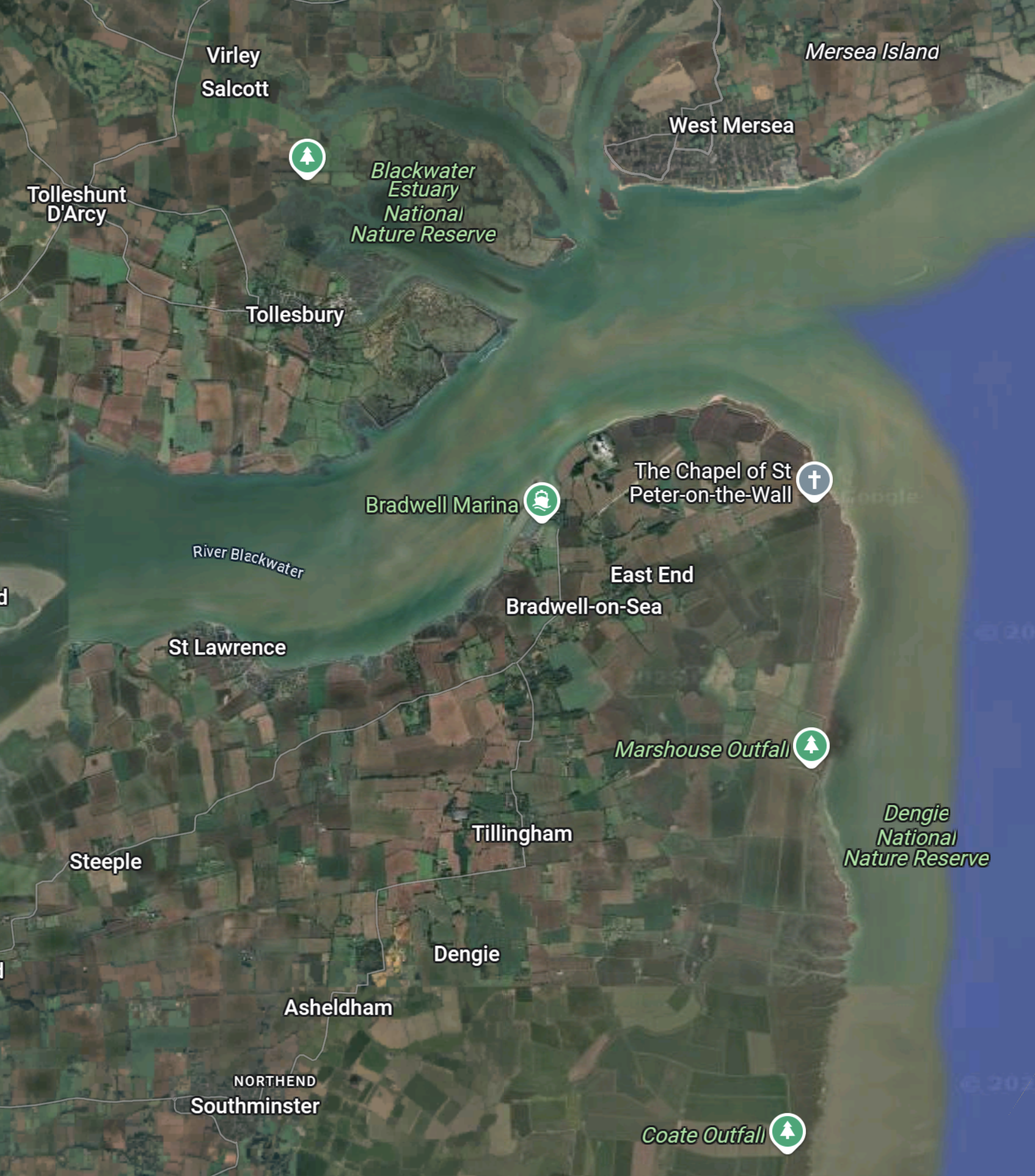
Note.
- The Blackwater Estuary is at the top of the map.
- Bradwell Marina and Bradwell-on-Sea can be seen on the map to the South of the Blackwater Estuary.
- Southminster has a rail connection, which was used to handle the nuclear fuel and now has a passenger service to Wickford on the Southend Victoria to London Liverpool Street Line.
This second Google Map shows Bradwell-on-Sea and the North of the peninsular in greater detail.
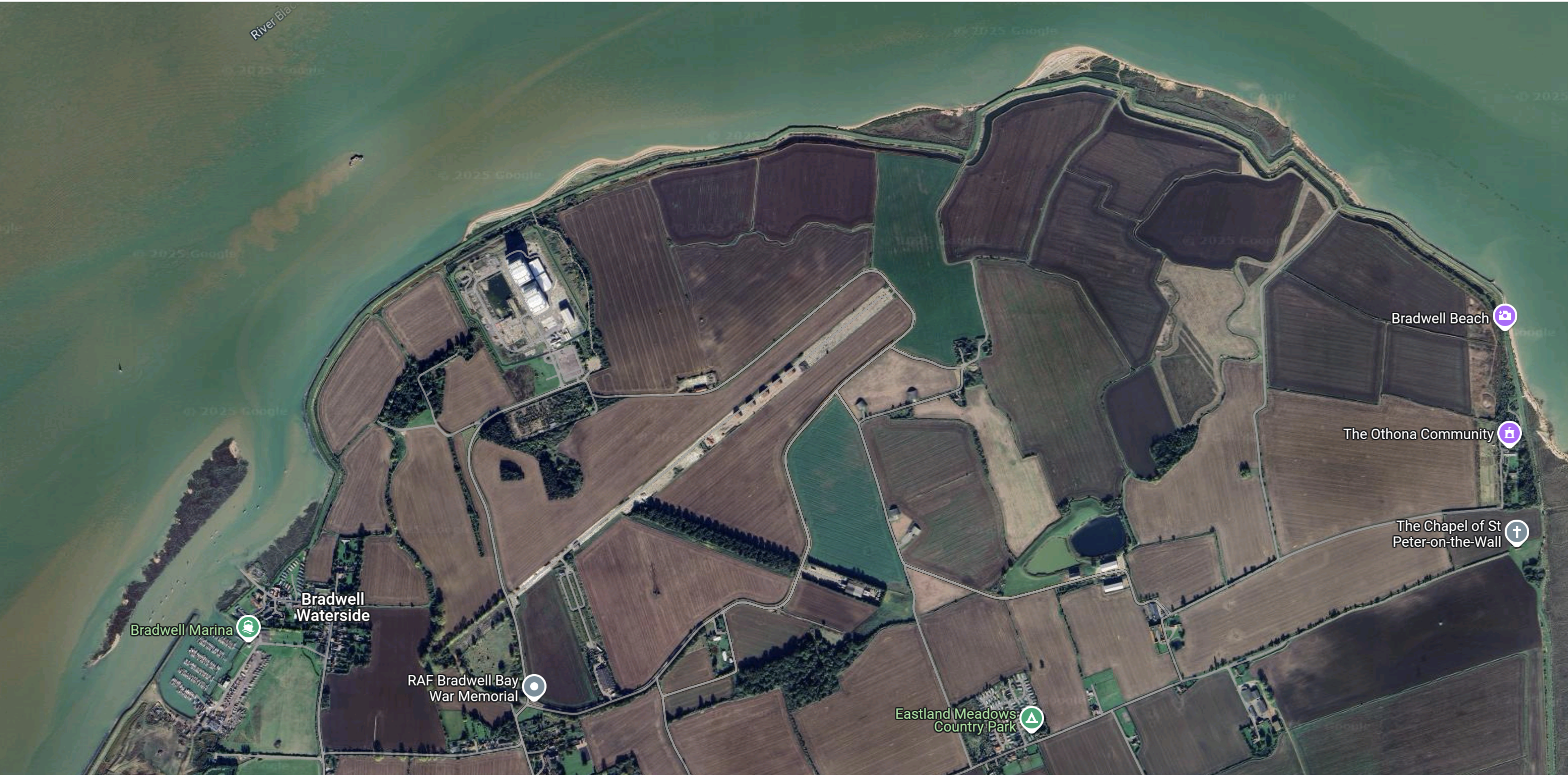
Note.
- The remains of the three runways of the Second World War RAF Bradwell Bay can be picked out.
- The remains of Bradwell A nuclear power station are towards the coast to the North-West of the former runways.
- It is large site.
I wonder, if the site could be used for backup to all the offshore wind farms in the area.
This is a list of all the wind farms, that are planned in the sea to the North and East of the Bradwell site.
- The East Anglia Array is partly operational, but could grow to as much as 7.2 GW.
- Greater Gabbard is 504 MW
- Gunfleet Sands is 172 MW
- London Array is 630 MW
- North Falls is 504 MW
Note.
- That is a total of roughly 9 GW.
- There’s also plenty of space in the sea for more turbines.
All these wind turbines will need backup for when the wind goes on strike.
These are possibilities for backup.
Another Hinckley Point C Or Sizewell C
You can see why the government wants to build a big nuke on the Bradwell site.
The 3.26 GW of a power station, which would be the size of Hinckley Point C would provide more than adequate backup.
But the builders of these power stations haven’t exactly covered themselves in glory!
- Construction of Hinckley Point C started in the late 2010s and first power is expected in 2031.
- Hinckley Point C power station has all the stink of bad project management.
- The Nimbbies would also be out in force at Bradwell.
There are also all the financial problems and those with the Chinese, indicated in The Times article.
A Fleet Of Small Modular Reactors
Hinckley Point C will hopefully be a 3260 MW nuclear power station and Rolls-Royce are saying that their small modular reactors will have a capacity of 470 MW.
Simple mathematics indicate that seven Rolls-Royce SMRs could do the same job as Hinckley Point C.
The advantages of providing this capacity with a fleet of SMRs are as follows.
- Each reactor can be built separately.
- They don’t all have to be of the same type.
- The total 3260 MW capacity could also be built at a pace, that matched the need of the wind farms.
- Building could even start with one of each of the chosen two initial types, the Government has said it will order.
- I also believe that there could be advantages in the sharing of resources.
- The rail link to Southminster would enable the bringing in of the smaller components needed for SMRs by rail.
Hopefully, the power of a big nuke could be added to the grid in a shorter time.
A Number of Long Duration Energy Stores
Highview Power is building 4 x 200 MW/2.5 GWh liquid air batteries for Orsted in the UK ; 2 in Scotland and 2 in England. They are backed by the likes of Centrica, Goldman Sachs, Rio Tinto, the Lego family trust and others.
Each GWh of liquid air needs a tank about the largest size of those used to store LNG. I suspect like LNG tanks they could be partly underground to reduce the bulk.
A Hybrid System
Bradwell is a large site and could easily accommodate a pair of Highview Power batteries, two SMRs, and all the other electrical gubbins, which would total to around 1.5 GW/5 GWh. This should be sufficient backup, but there would be space to add more batteries or SMRs as needed.
Nuclear Deal Gives Rolls-Royce £2.5bn Boost
The title of this post, is the same as that of this article on The Times.
This is the sub-heading.
UK engineers selected to build a fleet of mini-nuclear power plants in the Czech Republic
These are the first two introductory paragraphs.
Almost £2.5 billion was added to the market value of Rolls-Royce after it was selected to build a fleet of mini-nuclear power plants in the Czech Republic, the first deal of its kind in Europe.
Rolls was selected as the preferred supplier for the development and construction of a number of small modular reactors by the Czech government from a shortlist of seven companies. The exact number of SMRs due to be delivered will be announced in the next few weeks.
Strangely, despite the announcement having a positive movement on the company’s share price, there was no corporate press release. but the Rolls-Royce subsidiary; Rolls Royce SMR did publish this press release, which is entitled Rolls-Royce SMR Named As Preferred Supplier To Build In Czechia.
These four paragraphs are the complete release.
Rolls-Royce SMR CEO, Chris Cholerton, said: “We welcome today’s landmark announcement by the Government of the Czech Republic and the Czech State utility, ČEZ Group, naming Rolls-Royce SMR as their preferred supplier for the development and construction of Small Modular Reactors (SMRs).
“This decision, to select Rolls-Royce SMR from a list of seven potential SMR technology providers, follows a rigorous evaluation process by ČEZ Group. Discussions are ongoing to finalise contract terms and the final agreements are subject to customary regulatory clearances. Details of the agreement will be published at signing.
“This important strategic partnership further strengthens Rolls-Royce SMR’s position as Europe’s leading SMR technology, and will put CEZ, Rolls-Royce SMR and its existing shareholders at the forefront of SMR deployment.
“Rolls-Royce SMRs will be a source of clean, affordable, reliable electricity for Czechia – creating jobs, enabling decarbonisation, reducing the reliance on imported energy and supporting the global effort to reach net zero.”
These are my thoughts.
Rolls-Royce And Small Nuclear Reactors
The Wikipedia entry for Rolls-Royce Submarines, who build the nuclear engines for submarines, indicates that the subsidiary was formed in 1954.
The first nuclear submarine with a Rolls-Royce engine was HMS Valiant, which was commissioned in 1966, according to its Wikipedia entry.
Valiant was powered, until it was decommissioned in 1994, by a Rolls-Royce PWR or Pressurised Water Reactor, that is described in this Wikipedia entry.
Since Valiant, the UK has built nearly forty nuclear submarines for the Royal Navy, and all have been or will be powered by that original Rolls-Royce PWR or derivatives of the design.
The next nuclear submarine project for Rolls-Royce Submarines, will be the nuclear power unit for the SSN-AUKUS, which is described in this Wikipedia entry, which describes the submarine like this in the first paragraph.
The SSN-AUKUS, also known as the SSN-A, is a planned class of nuclear-powered fleet submarine (SSN) intended to enter service with the United Kingdom’s Royal Navy in the late 2030s and Royal Australian Navy in the early 2040s. The class will replace the UK’s Astute-class and Australia’s Collins-class submarines.
The Wikipedia entry for the Rolls-Royce PWR, says this about the power unit for the SSN-AUKUS.
Rolls Royce is building the reactor for SSN-AUKUS, which may be the PWR3, or a derivative.
The PWR3 is the latest version of the original 1966 design.
If you fly on the latest Airbus A350, the aircraft is powered by Rolls-Royce Trent XWB engines, which are the most powerful engines in the Trent family of turbofan engines.
The Trent engine was developed from the RB-211 engine of the 1960s. The RB-211 may have bankrupted the company, but it later provided the cash-flow for the world-class company we see today.
I don’t think Rolls-Royce need have any fears about using sixty years of nuclear reactor technology to build the Rolls-Royce SMR.
Rolls-Royce And The US Department Of Defense Nuclear Microreactor Program
I discuss this in Rolls-Royce To Play Key Role In US Department Of Defense Nuclear Microreactor Program.
Surely to be involved in a key US program, Rolls-Royce’s offering must be tip-top.
Will The Czechs Play Any Part In The Manufacture?
This article in the Financial Times, is entitled Rolls-Royce Wins Pioneering Deal To Build Mini Nuclear pPlants In Czech Republic.
A paragraph sounds very much like active participation to me.
Between the Two World Wars, Skoda Works in Czechoslovakia, was according to its Wikipedia entry, was one of the largest European industrial conglomerates of the 20th century.
This paragraph from the Wikipedia entry describes their history after the First World War.
By World War I, Škoda Works had become the largest arms manufacturer in Austria-Hungary, supplying the Austro-Hungarian army with mountain guns, mortars and machine guns, including the Škoda M1909, and the ships of the Austro-Hungarian navy with heavy guns. After the end of the war and the creation of the First Czechoslovak Republic, the company, previously focused on manufacturing of armaments, diversified and became a major manufacturer of locomotives, aircraft, ships, machine tools, steam turbines, equipment for power utilities, among other industrial products.
The company sounded just like a Czechoslovakian version of Vickers.
I believe that as a teenager, I heard a story, that the armour plate for the British battleship; Duke of York, was smuggled out of Czechoslovakia, under the noses of the Nazis. I can’t find the story on the Internet, but Czech armour seemed to be of high quality, between the two wars.
This paragraph from the Wikipedia entry describes the history of Skoda Works after World War II.
After World War II, Škoda Works was nationalized and split into several companies by the newly communist government in Czechoslovakia. Important products during the Communist era include nuclear reactors and trolley buses.
I don’t think they made nuclear trolley buses, but they might have had the capability.
What happened to the knowledge about all the steelworking needed to make nuclear reactors?
This further paragraph gives an indication. that lack of modern designs killed the business.
The factory concentrated on markets in the Soviet Union and the Eastern Bloc. The company produced a wide range of heavy machinery such as nuclear reactors and locomotives. A lack of updates to its product designs and infrastructure considerably weakened the company’s competitive position and its brand.
Note.
- Can Rolls-Royce and their partner; The Welding Institute (TWI), provide modern designs and techniques to build the parts of reactors for modern SMRs in Czechia?
- The Welding Institute, which is based just outside of Cambridge, describes themselves as the leading engineering institution supporting welding and joining professionals with welding, joining and allied technologies.
- Czechia is also in the heart of Europe and components would be easily shipped by rail or road to European construction sites.
- Wikipedia also says that a lot of post-Soviet trams and trolley busses, were made by Skoda, so the same must count for something.
There will be much worse places to build components for SMRs than Czechia.
Will The Czechs Help With The Soviet Reactors?
If the Czechs built the reactors, they will have a lot of answers about things like.
- Where the Soviet reactors are?
- When will the Soviet reactors need replacing?
- How were they transported?
- How were they assembled?
- What will be the difficult parts to take apart?
Choosing the Czechs for their knowledge as partners seems a good idea.
Conclusion
The Czechs would appear to be good partners for Rolls-Royce.
Teesside Private SMR Nuclear Power Station To Be Built
The title of this post, is the same as that of this article on the BBC.
This is the sub-heading.
An agreement has been reached to build a privately financed nuclear power station in Teesside.
These are the first three paragraphs.
Community Nuclear Power (CNP) has announced plans to install four small modular reactors (SMRs) in North Tees.
CNP said it aims to be up and running in ten years’ time and will supply “roughly a gigawatt of energy”.
With other similar power stations planned, hundreds of jobs are expected to be created in the north-east of England.
A CNP spokesperson said the four North Tees reactors will generate clean, always-on energy which will be used to help develop a green energy and chemical hub, also within the North Tees Group Estate, on the north bank of the River Tees near Stockton.
These are my thoughts.
The Westinghouse AP300™ SMR
This SMR has its own web page.
This is the sub-heading.
Only SMR based on Licensed, Operating & Advanced Reactor Technology
These paragraphs introduce the reactor.
The Westinghouse AP300™ Small Modular Reactor is the most advanced, proven and readily deployable SMR solution. Westinghouse proudly brings 70+ years of experience developing and implementing new nuclear technologies that enable reliable, clean, safe and economical sources of energy for generations to come.
Our AP1000® reactor is already proving itself every day around the globe. Currently, four units utilizing AP1000 technology are operating in China, setting performance records. Six more are under construction in China and one AP1000 reactor is operating at Plant Vogtle in Georgia while a second nears completion.
Our AP300 SMR leverages that operating experience, as well as tens of millions of hours on AP1000 reactor development.
Gain the benefits of the record-setting Westinghouse AP1000 PWR technology in a smaller power output to augment the backbone of your community energy system.
The AP300 SMR complements the AP1000 reactor for a cleaner energy mix, energy security, and grid flexibility and stabilization.
Westinghouse seem to have taken a very professional and scientifically correct approach and downsized something that works well.
Where Will The Reactors Be Built?
This is a paragraph from the BBC article.
Small reactors, built in a factory by the American power giant Westinghouse, will be transported to Seal Sands near Billingham, coming on stream in the early 2030s and going some way to providing part of the big rise in nuclear capacity the UK government wants to see by 2050.
This Google Map shows the mouth of the River Tees.
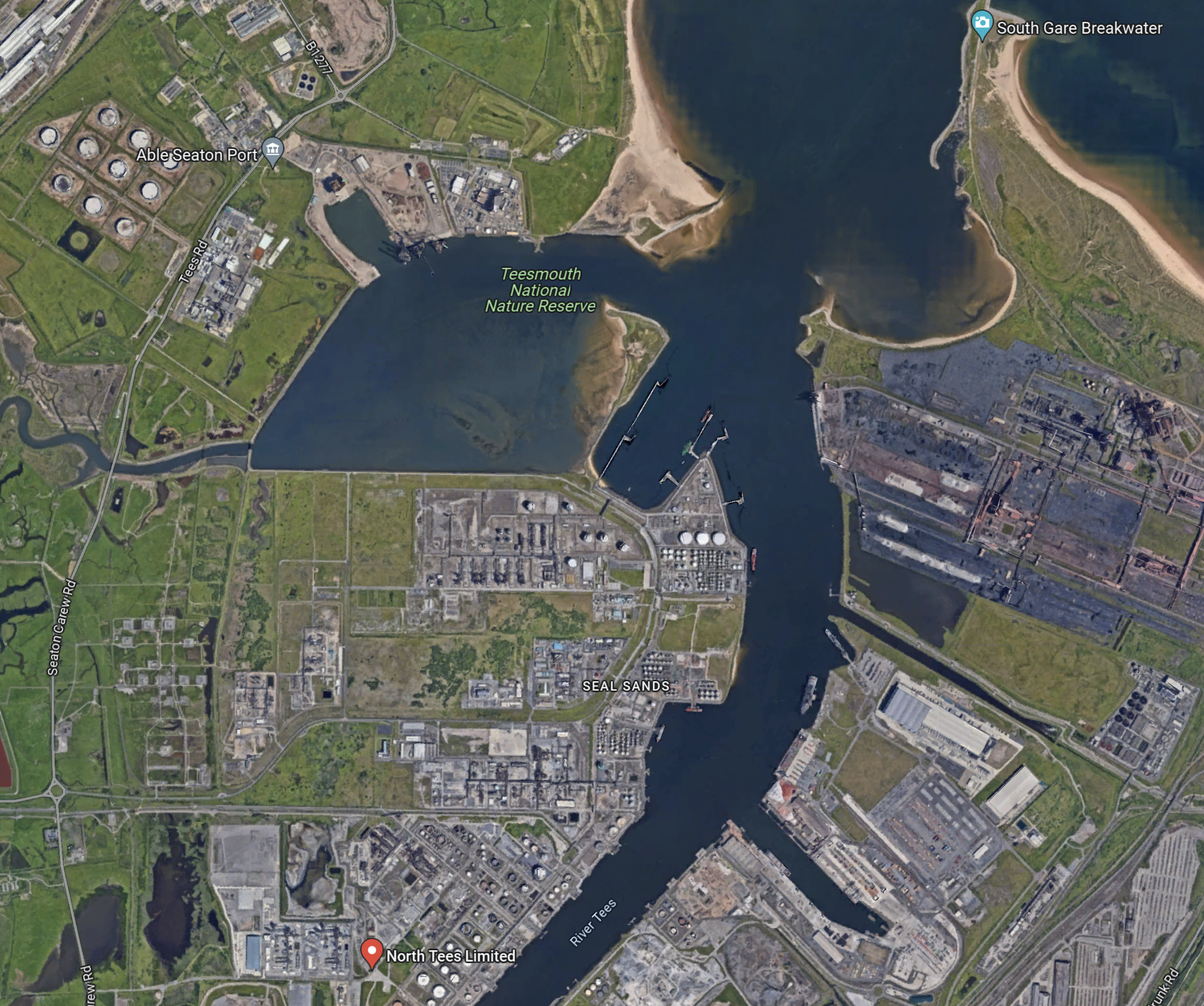
Note.
- The red arrow at the bottom of the map indicates the location of North Tees Group Estate.
- Follow the river to the North and a capitalised label indicating the position of Seal Sands can be seen.
This second Google Map shows the Seal Sands area in a larger scale.
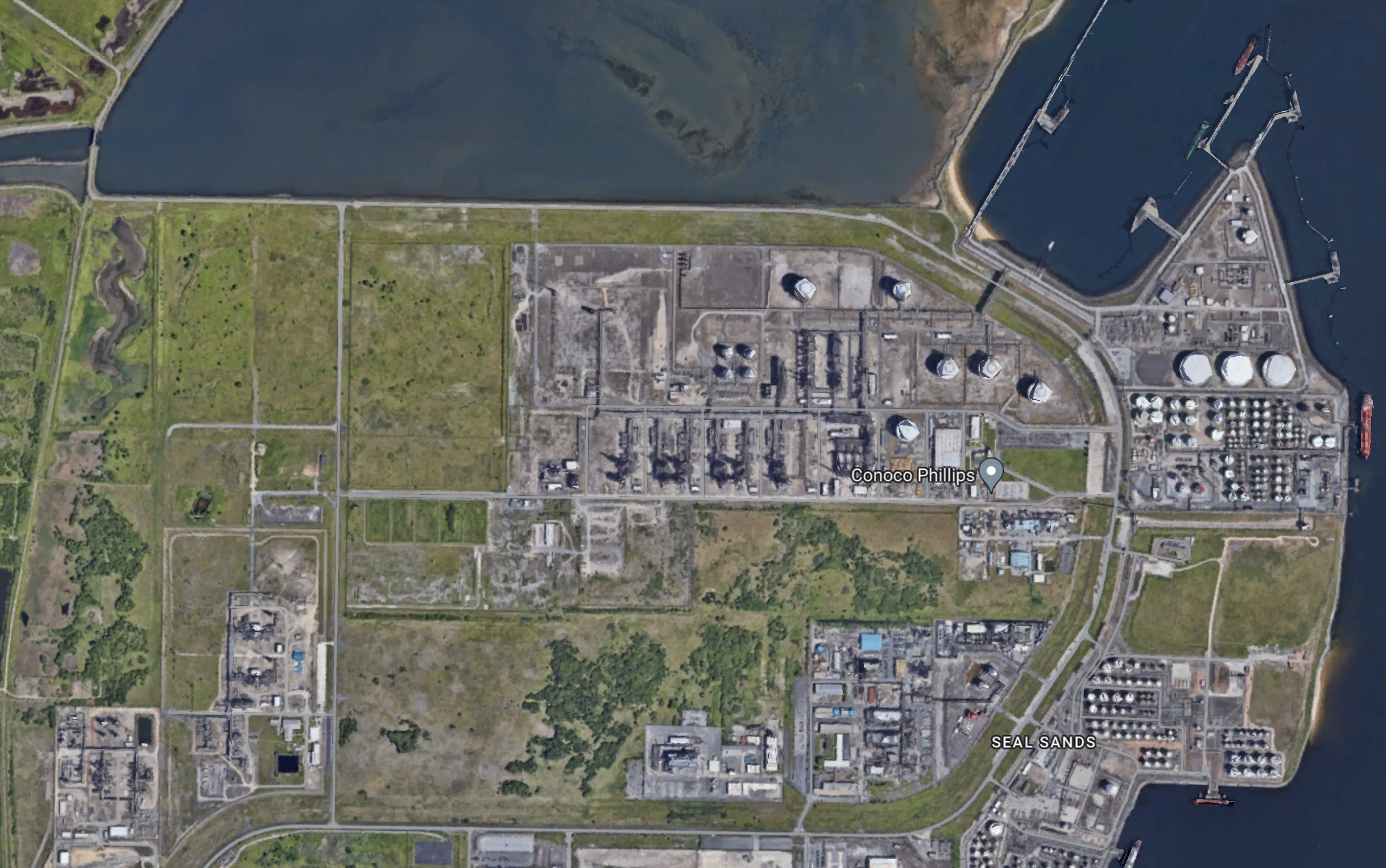
There seems to be several spaces, where the reactors could be located.
Would It Be Safe To Locate A Nuclear Reactor Or Reactors In a Cluster Of Oil Refineries And/Or Chemical Plants?
Consider.
- In the 1970s, when I worked at ICI, there were companies like Westinghouse advocating nuclear steelmaking.
- We did discuss the concept a couple of times over coffee but no one, I worked with, ever looked at it officially or seriously, as far as I know.
- In addition to requiring large amounts of electricity, oil refineries and chemical plants often use a lot of steam.
- Nuclear reactors generate steam to produce electricity, so some could be diverted to oil refineries or chemical plants
- To decarbonise some processes might switch to hydrogen.
- In Westinghouse And Bloom Energy To Team Up For Pink Hydrogen, I talk about how to use a nuclear reactor to efficiently produce pink hydrogen.
It looks like for efficiency, building the various plant close together could be a good thing.
But is it safe?
I suspect the level of safety will be that of the least safe plant.
So provided all plants are designed to the highest standards, it should be OK, as nuclear plants, oil refineries and chemical plant don’t regularly explode.
The Donald C Cook Nuclear Plant
The Donald C Cook Nuclear Plant in Michigan is a 2.2 GW nuclear plant, that was built by Westinghouse and commissioned in the mid-1970s.
They were clients for Artemis, the project management system that I wrote.
Soon after the Three Mile Island accident on March 28th, 1979, I visited the Donald C Cook Nuclear Plant to see how they were coping with the aftermath of the accident.
I remember being told by the operators of the plant, who were American Electric Power, that as it was their only nuclear plant, they were going to do everything by the book and Artemis was helping them to do that.
Reading about the plant, which is now licenced to operate until 2034 for one reactor and 2037 for the other, it seems to have performed impeccably so far for nearly fifty years.
It is a credit to both Westinghouse, who built it and American Electric Power who own it.
Now that is what I call high-class engineering and I’d be happy to have a cluster of SMRs to the same standard in my back yard.
Sizewell B
I used to live a few miles from Sizewell B, which is another Westinghouse reactor.
- This is the Wikipedia entry for the power station.
- Sizewell B was based on a proven Westinghouse design.
- It seems to have performed well since it was commissioned in 1995.
It looks like it will be operating until 2055, which will make its working life similar to those of the reactors at the Donald C Cook Nuclear Plant.
Westinghouse And Hinckley Point C Compared
Consider.
- Sizewell B was built in approximately seven years.
- This compares well with the two units at the Donald C Cook Nuclear Plant, which took six and nine years respectively
- It looks like Hinckley Point C will take between twelve and fourteen years to build.
- Sizewell B and the two units at Donald C Cook Nuclear Plant seem to be looking at a sixty year operating lifetime.
- Sizewell has a rail connection and Hinckley Point does not.
- Sizewell B seems to have been signed off, when John Major was Prime Minister.
- Hinckley Pont C seems to have resulted from a government white paper when Gordon Brown was Prime Minister.
Westinghouse seem to design nuclear power stations, that can operate for a long period and can be built within a decade.
Westinghouse And Rolls-Royce
Consider.
- Rolls-Royce also have an SMR design.
- Rolls-Royce and Westinghouse are both world-class companies.
- Rolls-Royce have the advantage they are British.
- I also suspect, that both Westinghouse and Rolls-Royce will use the same subcontractors and sub-assembly manufacturers.
- The Rolls-Royce SMR has a power output of 470 MW.
- The Westinghouse SMR has a power output of 300 MW.
I suspect the choice between the two, will be like choosing between top-of-the-range British and American products.
Conclusion
I wonder why we ended up with an unproven new French design at Hinckley Point, when sitting in Suffolk was a traditional Westinghouse design, that was performing to its design specification?
But for the SMR, we need to buy the reactors, which are financially best for Britain. If Westinghouse choose to manufacture large sections in the UK, they could be the better bet, as I suspect, if SMRs are successful, we’ll be seeing exports from the UK.
 The Anonymous Widower