Orkney Council To Look At Proposals To Become Territory Of Norway
The title of this post, is the same as that of this article on the BBC.
This is the sub-heading.
The Orkney Islands could change their status in the UK or even become a self-governing territory of Norway under new proposals.
These paragraphs outline their possible strategy.
A motion will go before the council next week to investigate “alternative forms of governance”.
Council leader James Stockan said Orkney does not get fair funding with its current relationship within the UK.
He wants to look at Crown Dependencies like the Channel Islands and overseas territories like the Falkland Islands.
He suggested another possible future could be like the Faroe Islands – which is a self-governing territory of Denmark.
Councillor Stockan told BBC Radio Scotland there were many areas where Orkney was being “failed dreadfully” by both the UK and Scottish governments.
These are my thoughts.
Has Orkney Been Failed Dreadfully By The UK And Scottish Governments?
I wouldn’t be surprised, if the legal and economic framework between the Orkney, Scotland and the UK, dates back hundreds of years and didn’t really expect to see a more independent Scotland.
This is a quote from Council leader James Stockan.
And the funding we get from the Scottish government is significantly less per head than Shetland and the Western Isles to run the same services – we can’t go on as we are.
I could argue, they should be similar.
Orkney’s Income From Oil, Gas And Wind
Orkney doesn’t have Shetland’s oil, gas and wind infrastructure, so perhaps Scotland and the UK, think Orkney is the other’s problem.
Wind Development In Orkney, Shetland And The Western Isles
This map from Cross Estate Scotland shows all the wind contracts for Orkney, Shetland and The Western Isles.

These wind farms could send wind power to Orkney.
- 7 – Ayre – 1008 MW
- 13 – West of Orkney – 2000 MW
That is a total of 3008 MW.
These wind farms could send wind power to Shetland.
- 18 – Ocean Winds – 500 MW
- 19 – Arven – 1800 MW
- 20 – ESB Asset Development – 500 MW
That is a total of 2800 MW.
These wind farms could send wind power to the Western Isles.
- 14 – Havbredey – 1400 MW
- 15 – N3 Project – 495 MW
- 16 – Spiorad na Mara – 840 MW
That is a total of 2735 MW.
On this quick look, it does appear that there is a fair balance of investment in wind power between Orkney, Shetland and The Western Isles.
The Flotta Hydrogen Hub
The Flotta Hydrogen Hub is being planned and it has its own web site.
It looks like it will be linked to the West of Orkney wind farm.
The Ferries
CouncilStockan says this about the ferries.
We are really struggling at the moment, we have to replace the whole ferry fleet which is older than the CalMac fleet.
And it is well-known, that the Scottish Nationalist Party got into a muddle with ferries.
Conclusion
If you read the Wikipedia entry for Orkney, the islands would appear to have a sound future, based on hydrogen, tourism and wind.
I would hope that a discussion around some good local food and the local whisky could sort out Otkney’s worries.
Green Hydrogen Project Win
The title of this post, is the same as that of this news item from Nova Innovation.
These are the first two paragraphs.
Nova and consortium partners The University of Strathclyde, Shetland Islands Council and Ricardo Energy, have been awarded funding from the Scottish Government’s Emerging Energy Technologies Fund – Hydrogen Innovation Scheme for their GHOST project.
The GHOST project (Green Hydrogen and Oxygen Supply from Tidal Energy) will look at the potential of producing green hydrogen and oxygen from Nova’s tidal energy projects in Shetland.
They plan to generate hydrogen from tidal energy around the island of Yell. The oxygen, which is often just released into the air, will be used in aquaculture and possibly as rocket fuel at SaxaVord Spaceport.
This map shows Shetland.
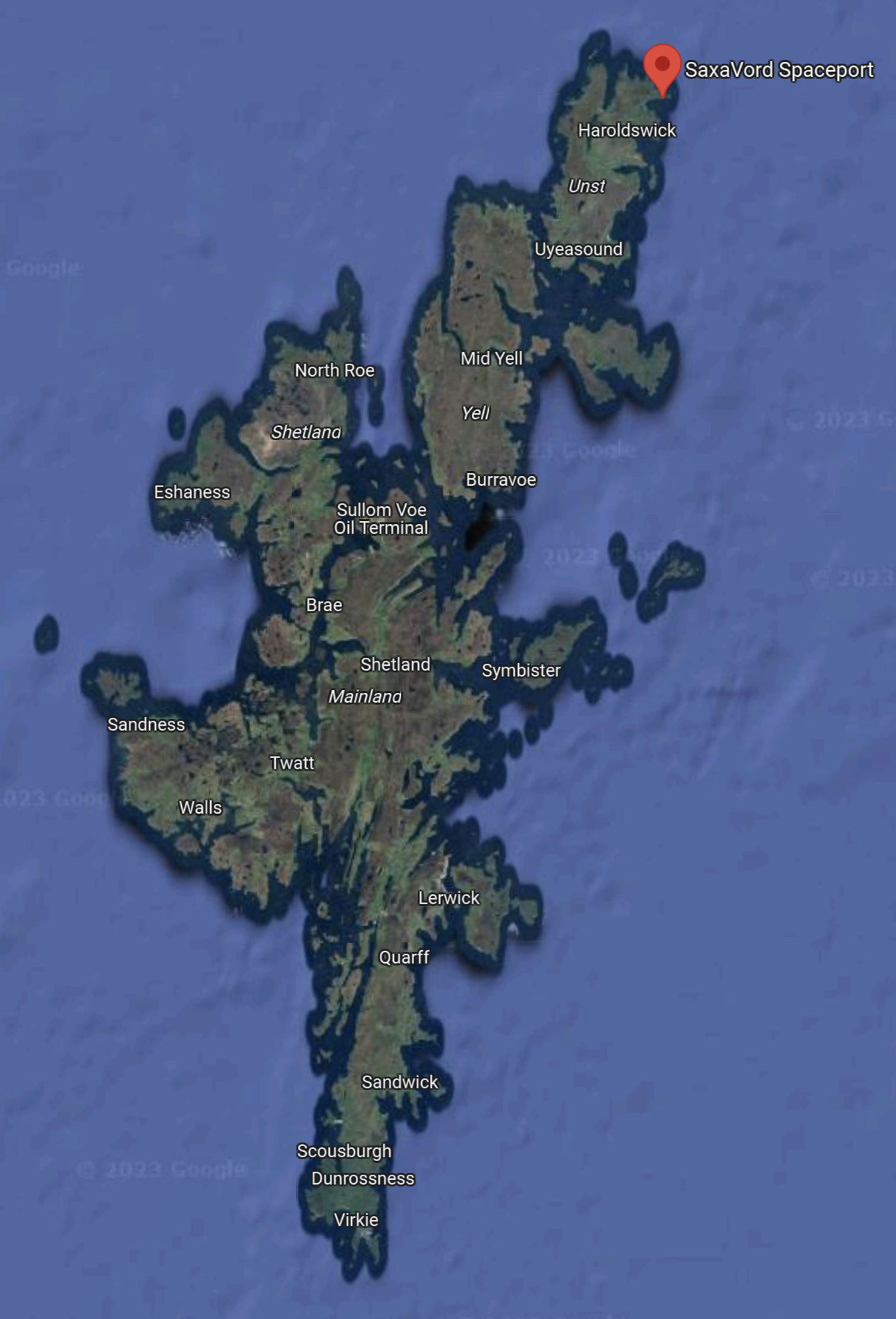
SaxaVord Spaceport is marked by the red arrow at the North end of the archipelago on the island of Unst and Yell is the next island to the South.
If GHOST is successful, it looks like they will have a ready market for their fuel.
Irish ESB Joins Northland Power On Two Scottish Offshore Wind Projects
The title of this post, is the same as that of this article on offshoreWIND.biz.
This is the sub-heading.
ESB will acquire a 24.5 per cent interest in Northland Power’s ScotWind projects, the fixed-bottom offshore wind farm Spiorad na Mara and the floating wind project Havbredey. Northland will retain 75.5 per cent in each project and continue to lead their development, construction, and operation
This is the first paragraph.
The companies have signed definitive agreements on ESB’s purchase of project stakes, with all commitments made prior to the agreements to remain in place.
Last month, I wrote ESB Invests In Floating Offshore Wind Mooring Tech. so are they in acquisitive mode?
This map from Cross Estate Scotland shows all the ScotWind contracts.
ESB now lrasr the following stakes in ScotWind.
Their details are as follows.
- 14 – Havbredey – Floating – 1500 MW – 25 %
- 16 – Spiorad na Mara – Fixed – 840 MW – 25 %
- 20 – Unnamed – Floating – 500 MW – 100 %
These figures mean they lease about a GW.
I have my thoughts.
Will There Be A Multi-Purpose Interconnector between Ireland And Scotland?
Nothing has been mentioned yet, but could new wind farms om the future to the West of the Hebrides be connected to both the North of Scotland and the North of Ireland by a multi-purpose interconnector?
Biden-Harris Administration Announces New Actions To Expand U.S. Offshore Wind Energy
The title of this post is the same as that of this fact sheet from the White House briefing room.
This is the sub-title.
Departments of Energy, Interior, Commerce, and Transportation Launch Initiatives on Floating Offshore Wind to Deploy 15 GW, Power 5 Million Homes, and Lower Costs 70% by 2035.
Some points from the fact sheet.
- The President set a bold goal of deploying 30 gigawatts (GW) of offshore wind by 2030, enough to power 10 million homes with clean energy, support 77,000 jobs, and spur private investment up and down the supply chain.
- Conventional offshore wind turbines can be secured directly to the sea floor in shallow waters near the East Coast and the Gulf of Mexico.
- However, deep-water areas that require floating platforms are home to two-thirds of America’s offshore wind energy potential, including along the West Coast and in the Gulf of Maine.
- Globally, only 0.1 GW of floating offshore wind has been deployed to date, compared with over 50 GW of fixed-bottom offshore wind.
- The Floating Offshore Wind Shot will aim to reduce the costs of floating technologies by more than 70% by 2035, to $45 per megawatt-hour.
- The Administration will advance lease areas in deep waters in order to deploy 15 GW of floating offshore wind capacity by 2035.
This all seems to be ambitious!
But!
- In ScotWind Offshore Wind Leasing Delivers Major Boost To Scotland’s Net Zero Aspirations, I looked at Scotland’s latest round of offshore wind leases.
- If the lessors carry out their proposals Scotland will add 9.7 GW of fixed-foundation offshore wind farms and 14.6 GW of floating offshore wind farms, which I estimate will be built by 2035.
- In Three Shetland ScotWind Projects Announced, I looked at three floating wind farms to the East of Shetland, which are a secondary deal after ScotWind, which could generate 2.8 GW by 2035.
- In Is This The World’s Most Ambitious Green Energy Solution?, I describe an ambitious plan called Northern Horizons, proposed by Norwegian company; Aker to build a 10 GW floating wind farm, which will be 120 km to the North-East of the Shetlands.
It could be possible that little Scotland installs more floating wind farms before 2035, than the United States.
And what about England, Wales and Northern Ireland?
- England hasn’t announced any floating wind farm projects, but has around 17 GW of fixed-foundation offshore wind farms under development in the shallower waters along the East and South coasts.
- In Two Celtic Sea Floating Wind Projects Could Be Delivered By 2028, I looked at prospects for the Celtic Sea between Wales, Ireland and Devon/Cornwall. It is possible that a GW of floating wind could be developed by 2028, out of an ultimate potential of around 50 GW.
- Northern Ireland is a few years behind England and Scotland and might eventually make a substantial contribution.
But Biden’s aims of a strong supply chain could be helped by Scotland, as several of the floating wind farms in Scotland are proposing to use WindFloat technology from Principle Power, who are a US company. The Principle Power website has an explanatory video on the home page.
Three Shetland ScotWind Projects Announced
The title of this post, is the same as that of this press release on Crown Estate Scotland.
These three paragraphs outline how the leases were allocated.
Three projects will be offered seabed agreements for offshore wind projects following Crown Estate Scotland’s ScotWind clearing process.
The announcement comes as an offshore wind supply chain summit is held in Aberdeen today (22 August) with Sir Ian Wood, chaired by Michael Matheson MSP, Cabinet Secretary for Energy, and including a keynote address by First Minister Nicola Sturgeon MSP.
Clearing saw the ‘NE1’ area east of Shetland made available for ScotWind applicants who met the required standards but who did not secure their chosen location earlier in the leasing process.
I think it was good idea to offer these leases to those bidders that failed to get a lease, the first time around, despite meeting the standards.
- Would it encourage bidders, if they knew that after the expense of setting up a bid, that if they failed, they could have another chance?
- It must also save the Scottish Government time and money checking out bidders.
- How many times have you interviewed several applicants for a job and then found jobs for some of those, that you didn’t choose for the original job?
Let’s hope the philosophy has generated some good extra contracts.
This map from Cross Estate Scotland shows all the contracts.
Note the three new leases numbered 18, 19 and 20 to the East of Shetland, in the North-East corner of the map.
Their details are as follows.
- 18 – Ocean Winds – 500 MW
- 19 – Mainstream Renewable Power – 1800 MW
- 20 – ESB Asset Development – 500 MW
Note.
All are floating wind farms.
- Ocean Winds is a Spanish renewable energy company that is developing the Moray West and Moray East wind farms.
- Mainstream Renewable Power appear to be a well-financed and ambitious company, 75 % owned by Aker.
- ESB Energy appear to be an experienced energy company owned by the Irish state, who operate several wind farms and Carrington gas-fired power station in the UK.
2.8 GW would appear to be a generous second helping.
Ocean Winds and Mainstream Renewable Power
This web page on the Ocean Winds web site, is entitled Ocean Winds Designated Preferred Bidder For Seabed Leases For 2.3 GW Of Floating Projects East Of Shetland, Scotland, contains several snippets of useful information.
- Crown Estate Scotland announced the result of ScotWind Leasing round clearing process, awarding Ocean Winds with two seabed leases for floating offshore wind projects: a 1.8 GW capacity site with partner Mainstream Renewable Power, and another 500 MW capacity site, east of the Shetland Islands.
- Ocean Winds’ international portfolio of projects now reaches 14.5 GW of gross capacity, including 6.1 GW in Scotland.
- Floating wind turbines for the two adjacent sites are confirmed, because of the water depth.
- The partners are committed to developing floating offshore wind on an industrial scale in Scotland, generating local jobs and opportunities in Scotland and the Shetland Islands.
- From the picture on the web page, it looks like WindFloat technology will be used.
- Ocean Winds developed the WindFloat Atlantic project.
Ocean Winds appear to want to go places.
The Shetland HVDC Connection
The Shetland HVDC Connection will connect Shetland to Scotland.
- It will be 160 miles long.
- It will have a capacity of 600 MW.
- It is estimated that it will cost more than £600 million.
- It will allow the 66MW Lerwick power station to close.
- It will be completed in 2024.
I have a feeling that all these numbers don’t add up to a sensible answer.
Consider.
- The three offshore wind farms can generate up to 2800 MW of green electricity.
- With a capacity factor of 50 %, an average of 1400 MW of electricity will be generated.
- The Viking onshore wind farm on Shetland could generate up to 450 MW.
- More wind farms are likely in and around Shetland.
- Lerwick power station can probably power most of the Shetland’s needs.
- Lerwick power station is likely to be closed soon.
- Sullum Voe Terminal has its own 100 MW gas-turbine power station.
- Load is balanced on Shetland by 3MWh of advanced lead-acid batteries.
- Lerwick has a district heating scheme.
If we assume that Shetland’s energy needs are of the order of a few hundred MW, it looks like at times the wind farms will be generating more electricity, than Shetland and the Shetland HVDC Connection can handle.
Various plans have suggested building electrolysers on Shetland to create hydrogen.
Conversion of excess electricity to hydrogen, would have the following advantages.
- The hydrogen could be used for local heavy transport and to replace diesel.
- Hydrogen could be used to fuel a gas turbine back-up power station, when needed.
- Hydrogen could be used for rocket fuel, if use of Shetland as a Spaceport for launching satellites takes off.
Any excess hydrogen could be exported to the rest of the UK or Europe.
The Concept Of Remote Island Wind
This document from the Department of Business, Industry and Industrial Strategy lists all the Contracts for Difference Allocation Round 4 results for the supply of zero-carbon electricity that were announced yesterday.
The contracts have also introduced a concept that is new to me, called Remote Island Wind. All have got the same strike price of £46.39 per MWh.
Two of the projects on Orkney are community projects of around 30 MW, run by local trusts. This is surely, a model that will work in many places.
There is more on Orkney’s Community Wind Farm Project on this page of the Orkney Islands Council web site.
It could even have an electrolyser to provide hydrogen for zero-carbon fuel, when there is more electricity than is needed. Companies like ITM Power and others already build filling stations with an electrolyser, that can be powered by wind-generated electricity.
The other Remote Island Wind projects are larger with two wind farms of over 200 MW.
It does look to me, that the Department of BEIS is nudging wind farm developers in remote places to a model, that all stakeholders will embrace.
The Viking Wind Farm
I wrote about this wind farm in Shetland’s Viking Wind Farm.
There are more details in this press release from SSE enewables, which is entitled CfD Contract Secured For Viking Energy Wind Farm.
These introductory paragraphs, give a good explanation of the finances of this farm.
SSE Renewables has been successful in the UK’s fourth Contract for Difference (CfD) Allocation Round, announced today, and has secured a low-carbon power contract for 220MW for its wholly-owned Viking Energy Wind Farm (Viking) project, currently being constructed in Shetland.
Viking’s success in securing a contract follows a competitive auction process in Allocation Round 4 (AR4) where it competed within Pot 2 of the allocation round set aside for ‘less established’ technologies including Remote Island Wind.
The 443MW Viking project, which SSE Renewables is currently building in the Shetland Islands, has secured a CfD for 220MW (50% of its total capacity) at a strike price of £46.39/MWh for the 2026/27 delivery year.
The successful project will receive its guaranteed strike price, set on 2012 prices but annually indexed for CPI inflation, for the contracted low carbon electricity it will generate for a 15-year period. Securing a CfD for Viking stabilises the revenue from the project whilst also delivering price security for bill payers.
It’s very professional and open to explain the capacity, the contract and the finances in detail.
The press release also has this paragraph, which details progress.
Viking is progressing through construction with over 50 per cent of turbine foundation bases poured. When complete in 2024, Viking Energy Wind Farm will be the UK’s most productive onshore wind farm in terms of annual electricity output, with the project also contributing to Shetland’s security of supply by underpinning the HVDC transmission link that will connect the islands to the mainland for the first time.
SSE also released this press release, which is entitled Major Milestone Reached As First Subsea Cable Installation Begins On Shetland HVDC Link, where this is the first paragraph.
The first phase of cable laying as part of the SSEN Transmission Shetland High-Voltage Direct Current (HVDC) Link began this week off the coast of Caithness, marking a major milestone in the £660M project.
SSE seem to be advancing on all fronts on the two projects!
The Stornoway Wind Farm
This press release from EDF Renewables is entitled EDF Renewables UK Welcomes Contract for Difference Success, where these are the first two paragraphs.
Two EDF Renewables UK projects bid into the Contract for Difference (CfD) auction round held by the UK Government’s BEIS department have been successful.
The projects are the Stornoway wind farm on the Isle of Lewis and Stranoch wind farm in Dumfries and Galloway. Together these onshore wind farms will provide 300 MW of low carbon electricity which is an important contribution to reaching net zero.
The press release also gives this information about the contract and completion of the Stornoway wind farm.
Stornoway Wind Farm on the Isle of Lewis is a joint venture with Wood. The project has won a CfD for 200 MW capacity, the strike price was £46.39, the target commissioning date is 31 March 2027.
This page on the Lewis Wind Power web site, gives these details of the Stornoway Wind Farm.
The Stornoway Wind Farm would be located to the west of the town of Stornoway in an area close to the three existing wind farm sites.
The project has planning consent for up to 36 turbines and is sited on land owned by the Stornoway Trust, a publicly elected body which manages the Stornoway Trust Estate on behalf of the local community.
The local community stands to benefit as follows:
- Community benefit payments currently estimated at £900,000 per annum, which would go to an independent trust to distribute to local projects and organisations
- Annual rental payments to local crofters and the Stornoway Trust – which we estimate could total more than £1.3m, depending on the CfD Strike Price secured and the wind farm’s energy output
- Stornoway Wind Farm is the largest of the three consented wind farm projects with a grid connection in place and is therefore key to the needs case for a new grid connection with the mainland. Indeed, the UK energy regulator Ofgem has stated that it will support the delivery of a new 450MW cable if the Stornoway and Uisenis projects are successful in this year’s Contract for Difference allocation round.
Note the last point, where only the Stornoway wind farm was successful.
The Uisenis Wind Farm
This press release from EDF Energy is entitled Lewis Wind Power Buys Uisenis Wind Farm, gives these details of the sale.
Lewis Wind Power (LWP), a joint venture between Amec Foster Wheeler and EDF Energy Renewables has bought the Uisenis Wind Farm project on the Isle of Lewis. The wind farm has planning consent for the development of 45 turbines with a maximum capacity of 162 MW. This would be enough to power 124,000 homes and would be the biggest renewable energy development on the Western Isles.
LWP owns the Stornoway Wind Farm project located around 20km to the north of Uisenis which has planning consent to develop 36 turbines to a maximum capacity of 180 MW – enough to power 135,000 homes.
This would bring Stornoway and Uisenis wind farms under the similar ownership structures.
This is a significant paragraph in the press release.
On behalf of Eishken Limited, the owner of the site where the Uisenis Wind Farm will be located, Nick Oppenheim said: “I am delighted that LWP are taking forward the wind farm. The resources available on the Eishken estate, and the Western Isles in general, means that it is an excellent location for renewable energy projects and, as such, the company is also developing a 300MW pumped storage hydro project immediately adjacent to the Uisenis wind farm. With such potential for renewables and the positive effect they will have on the local community, economy, and the UK as a whole I am are looking forward to positive news on both support for remote island projects and the interconnector.”
Note the mention of pumped storage.
This article on the BBC is entitled Pumped Storage Hydro Scheme Planned For Lewis, where this paragraph introduces the scheme.
A pumped storage hydro scheme using sea water rather than the usual method of drawing on freshwater from inland lochs has been proposed for Lewis.
The only other information is that it will provide 300 MW of power, but nothing is said about the storage capacity.
It looks like Lewis will have a world-class power system.
Mossy Hill And Beaw Field Wind Farms
Mossy Hill near Lerwick and Beaw Field in Yell are two Shetland wind farms being developed by Peel L & P.
This press release from Peel L & P is entitled Government Support For Two Shetland Wind Farms, where these are the first two paragraphs.
Plans for two onshore wind farms on the Shetland Islands which would help meet Scotland’s targets for renewable energy production are a step closer to being delivered after receiving long-term Government support.
Clean energy specialists Peel NRE has been successful in two bids in the Department for Business, Energy and Industrial Strategy’s (BEIS) Contracts for Difference (CfD) scheme; one for its Mossy Hill wind farm near Lerwick and the other for Beaw Field wind farm in Yell.
It looks like the two wind farms will power 130,000 houses and are planned to be operational in 2027.
Conclusion
I must admit that I like the concept. Especially, when like some of the schemes, it is linked to community involvement and improvement.
Only time will tell, if the concept of Remote Island Wind works well.
Is This The World’s Most Ambitious Green Energy Solution?
In the 1970s and 1980s, when I was developing Artemis, which was the first desk-sized project management system, we were heavily involved in North Sea Oil, with dozens of systems in Aberdeen. As Norway developed the oil business on the other side of the North Sea, the number of systems there grew to at least twenty.
Increasingly, I became aware of a Norwegian company called Kværner, which seemed to have large numbers of Artemis systems.
In 2002, Kværner merged with Aker Maritime and this eventually led to the formation of Aker Solutions in 2008, which is a company that is headquartered in Oslo and employs nearly 14,000.
According to Wikipedia, the Kværner name was dropped somewhere along the way, as non-Scandinavians have difficulty pronouncing Kværner.
Aker Solutions appears to be wholly Scandinavian-owned, with Aker ASA owning a third of the company.
They are a very respected company, when it comes to offshore engineering for oil and gas and wind projects.
Aker ASA also have a subsidiary called Aker Horizons, which has this web site, where they call themselves a planet-positive company.
This page on the Aker Horizons is entitled Northern Horizons: A Pathway for Scotland to Become a Clean Energy Exporter.
These first two paragraphs outline the project.
A vision to utilise Scottish offshore wind resources in the North Sea to make the country an exporter of clean energy has been unveiled at the COP 26 climate change conference in Glasgow.
The Northern Horizons Project has been unveiled by Aker Horizons’ portfolio companies Aker Offshore Wind and Aker Clean Hydrogen, who have the technical know-how and expertise to realise the project, and DNV, the independent energy expert and assurance provider.
Various targets and ambitions are listed.
- 10 GW of renewable energy in the North Sea.
- 5 GW of green hydrogen.
- Giant turbines nearly as tall as the London Shard on floating platforms more than 130km from Shetland.
- Enough liquid hydrogen will be produced to power 40 percent of the total mileage of local UK buses.
- Enough synthetic fuel to make 750 round trips from the UK to New York.
A completion date of 2030 for this project is mentioned.
This article on The Engineer is entitled Northern Horizons Plans Clean Energy Exports For Scotland.
The article is dated the 4th of November 2021 and starts with this sub-heading and an informative video.
Aker Horizons’ new initiative, Northern Horizons, aims to make Scotland a clean energy exporter by utilising offshore wind resources in the North Sea.
There is an explanatory graphic of the project which shows the following.
- Floating wind turbines.
- A floating DC substation.
- A floating hydrogen electrolyser.
- An onshore net-zero refinery to produce synthetic aviation fuel and diesel.
- A hydrogen pipeline to mainland Scotland.
- Zero-carbon energy for Shetland.
It is all very comprehensive.
These are some other thoughts.
Project Orion
Project Orion how has its own web site and the project that seems to have similar objectives to Northern Horizons.
The title on the home page is Building A World-Leading Clean Energy Island.
There is this statement on the home page.
Orion is a bold, ambitious project that aims to transform Shetland into the home of secure and affordable clean energy.
We will fuel a cleaner future and protect the environment by harnessing the islands’ renewables potential, using onshore and offshore wind, tidal and wave energy.
The graphic has similar features to that Northern Horizons in the article on The Engineer, with the addition of providing an oxygen feed to Skyrora for rocket fuel.
German Finance
I feel very much, that the Germans could be providing finance for developments around Shetland, as the area could be a major source of hydrogen to replace Vlad the Mad’s tainted gas.
In Do BP And The Germans Have A Cunning Plan For European Energy Domination?, I described how BP is working with German utilities and finance to give Germany the hydrogen it needs.
NorthConnect
The NorthConnect (also known as Scotland–Norway interconnector) is a proposed 650 km (400-mile) 1,400 MW HVDC interconnector over the floor of the North Sea.
- It will run between Peterhead in North-East Scotland and Norway.
This project appears to be stalled, but with the harvesting of more renewable energy on Shetland, I can see this link being progressed, so that surplus energy can be stored in Norway’s pumped storage hydro.
Icelink
Icelink is a proposed electricity interconnector between Iceland and Great Britain.
- It would be the longest undersea interconnector in the world, with a length of 620 to 750 miles.
- It would be a 800–1,200 MW high-voltage direct current (HVDC) link.
- National Grid is part of the consortium planning to build the link.
- Iceland has a surplus of renewable energy and the UK, is the only place close enough for a connection.
I believe that if Icelink were to be built in conjunction with energy developments on and around Shetland, a more powerful and efficient interconnector could emerge.
Conclusion
This ambitious project will transform the Shetlands and the energy industry in wider Scotland.
This project is to the North-East of Shetland, but the islands are surrounded by sea, so how many other Northern Horizons can be built in a ring around the islands?
Shetland’s Viking Wind Farm
I was listening to SSE’s Chief Executive; Alistair Phillips-Davies, on the radio this morning, when he mentioned the Viking wind farm on Shetland.
- The wind farm is being developed by Viking Energy, a partnership between Shetland Islands Council and SSE plc.
- It will have 103 turbines and a nameplate capacity of 370 MW.
- Construction started in September 2020 and should be complete by 2024.
- The wind farm will be connected to the National grid via the Shetland HVDC Connection.
- There’s more on the Viking Energy web site.
Note.
- According to Wikipedia, wind farms in the Shetlands can have capacity factors of over 50 %.
- Viking Energy hope that the Viking wind farm will become one of the most productive onshore wind farms in the world.
- Is it unusual, that the wind farm is developed by a partnership between a local authority and a large utility company?
It also appears that together the Viking wind farm and the Shetland HVDC Connection will allow the 66 MW diesel-powered Lerwick power station to be closed.
Does The Electricity System On Shetland Need Energy Storage?
As an Electrical Engineer, who specialised in Control Engineering, I am surprised that to ensure energy security, that there is no energy storage on Shetland.
In the Wikipedia entry for Lerwick power station, there is a section entitled Load Balancing, where this is said.
The growth of output from wind turbines in Shetland has increased instability in the local grid (which is not connected to the national grid on mainland Scotland). SSE installed a 1 MW sodium–sulfur battery in a nearby building to ameliorate the peak loads. However due to safety concerns, the sodium-sulfur battery was removed prior to commissioning and the energy storage building was reconfigured to accommodate 3MWh of advanced lead-acid batteries.
A combination of the new Shetland HVDC Connection and the lead-acid batteries must be enough to ensure energy security for the Shetlands.
Skyrora Creates Europe’s Largest 3D Printer In ‘Game-Changer’ For Cutting Rocket Building Time
The title of this post, is the same as that of this article on CityAM.
The title is a good summary of a must-read article.
Shetland Blasts Off Into Space Race As Britain’s First Rocket Launch Pad Skyrora
The title of this post, is the same as that of this article on The Times.
This second paragraph, explains what Skyrora are doing.
Skyrora, a technology company with its headquarters in Edinburgh, has agreed a deal for scores of rocket launches over the next decade from a site on Unst, the most northerly of the Shetland islands.
This Google Map shows the most Northerly part of Unst.
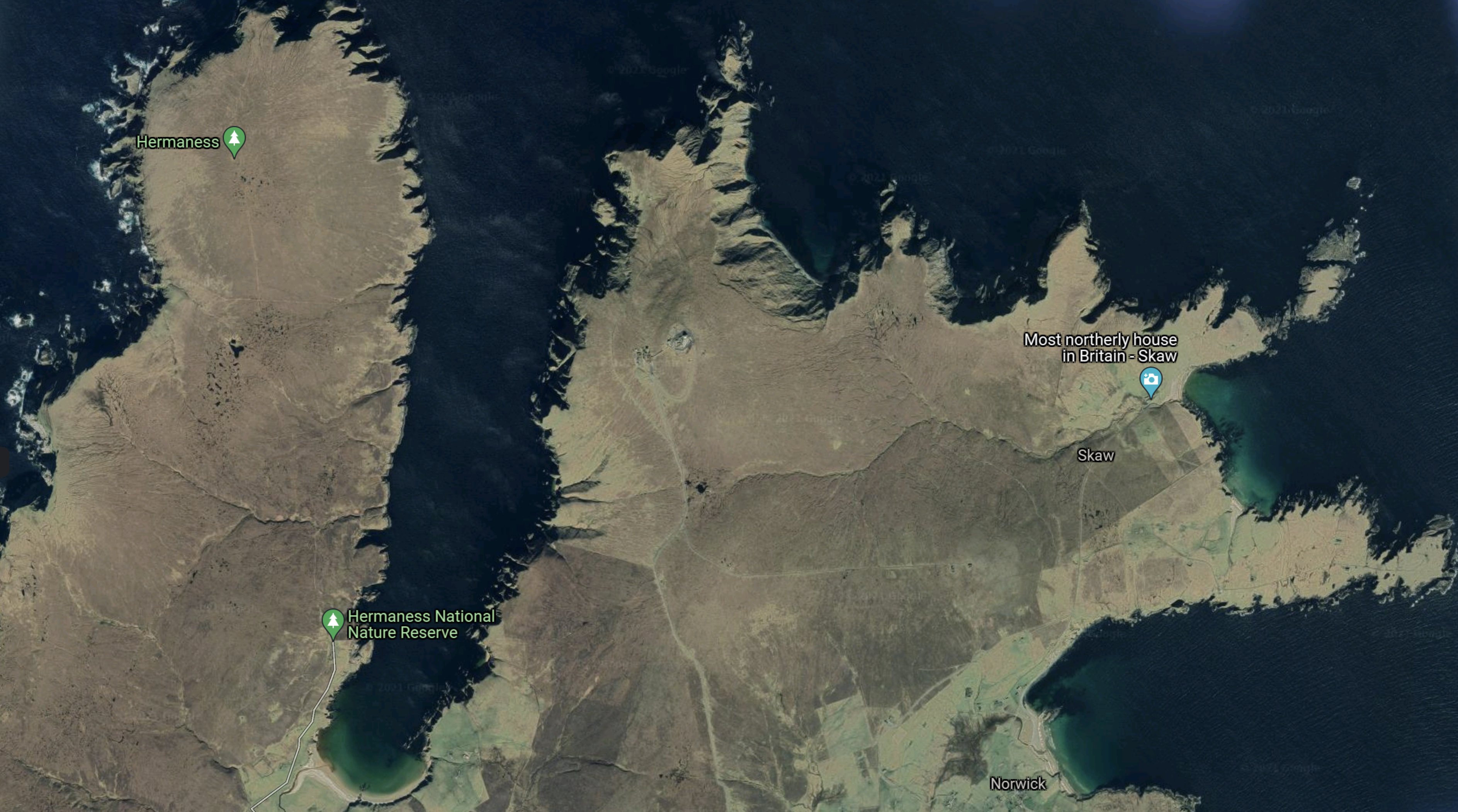
There’s not really much there, except birds, trees and the most northerly house in Britain.
Enlarging to the West of the house, gives this second Google Map.
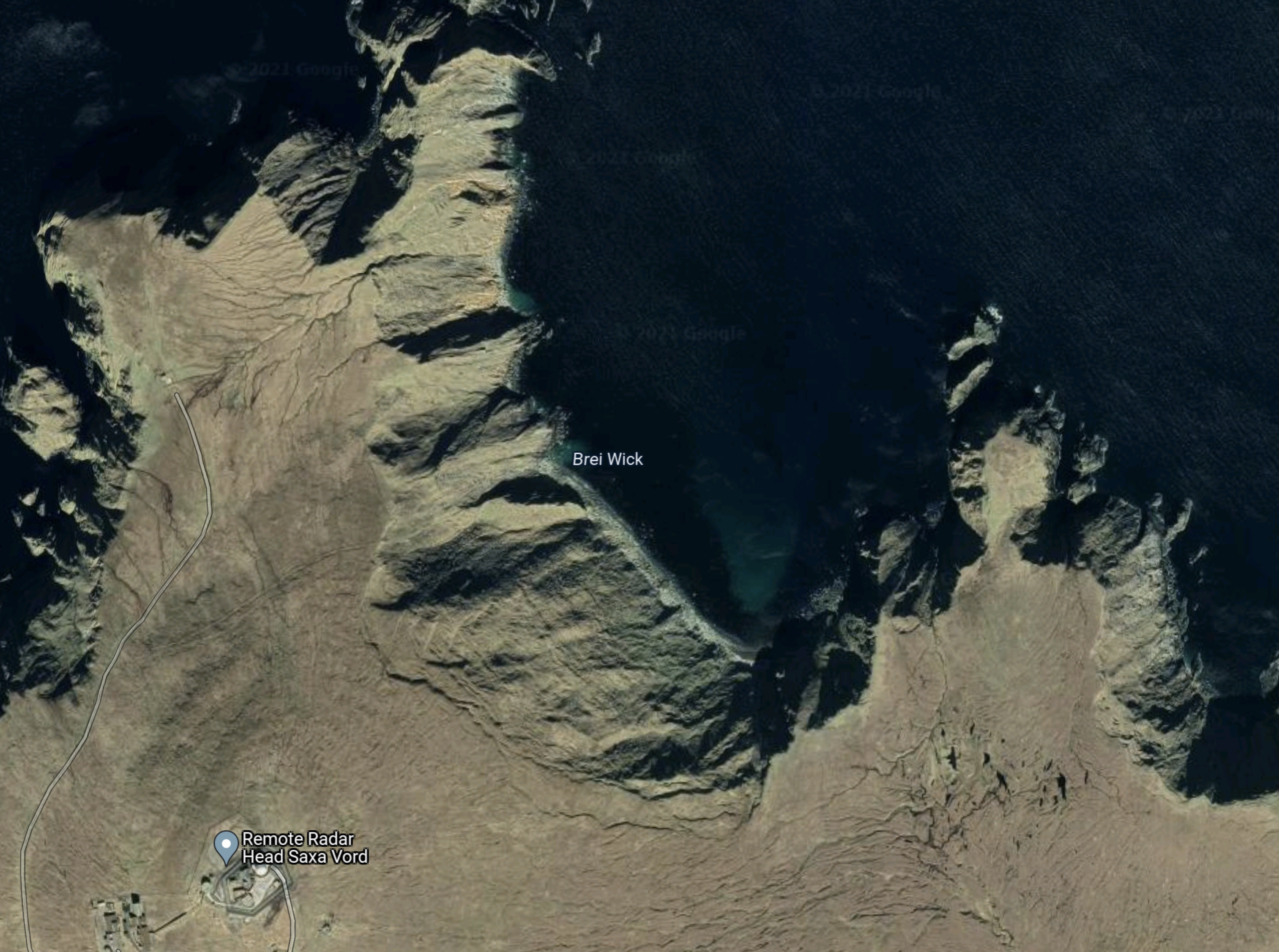
Note the Remote Radar Head Saxa Vord, which has a Wikipedia entry as RAF Saxa Voe.
- It is now a fully-operational radar station again, after closure in 2006.
- It is at the same latitude as St. Petersburg and Anchorage.
- In 1992, it measured a wind speed of 197 mph, before the equipment blew away.
The Wikipedia entry is worth a read, as it gives a deep insight into radar and its tracking of Russian intruders in the Cold War.
This third Google Map shows a 3D closeup of the radar.
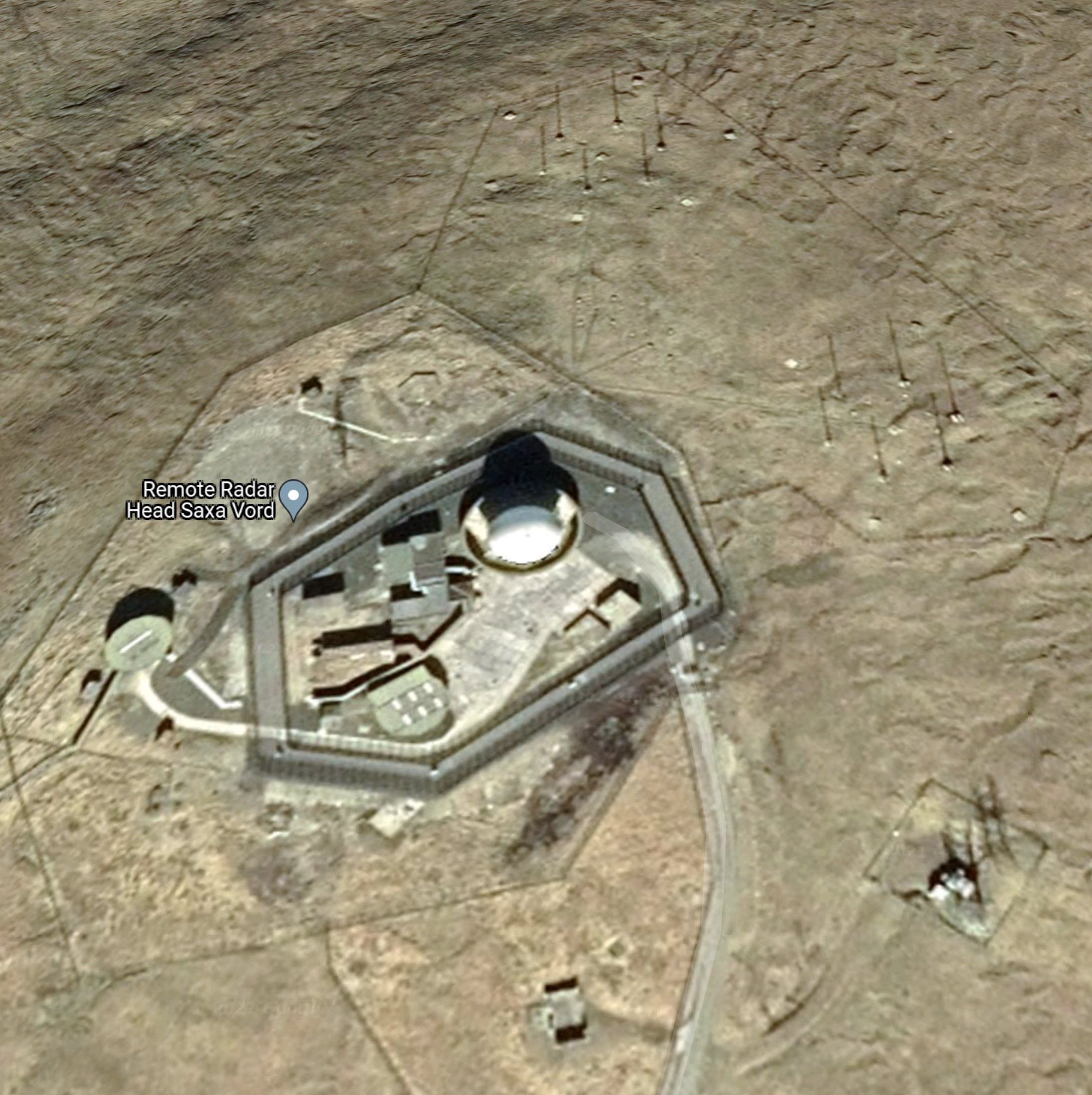
No staff are based at Saxa Vord, although maintenance staff do visit.
According to The Times, the space port will be at Lamba Ness, which is to the East of the most northerly house in Britain.
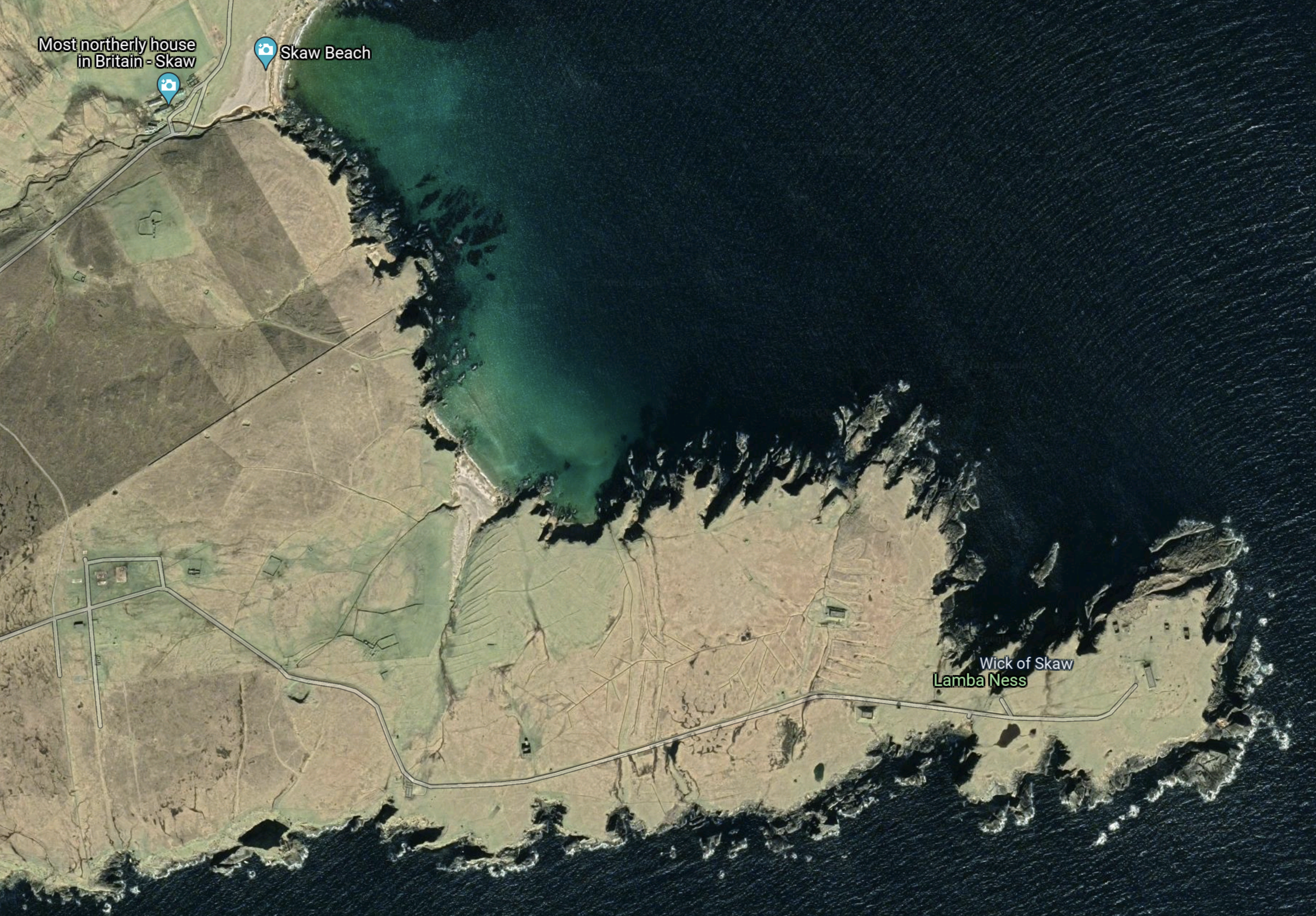
The peninsular in the South-East is marked Lamba Ness.
It may seem a very bleak place, but it could have one thing, that rocketry will need – rocket fuel!
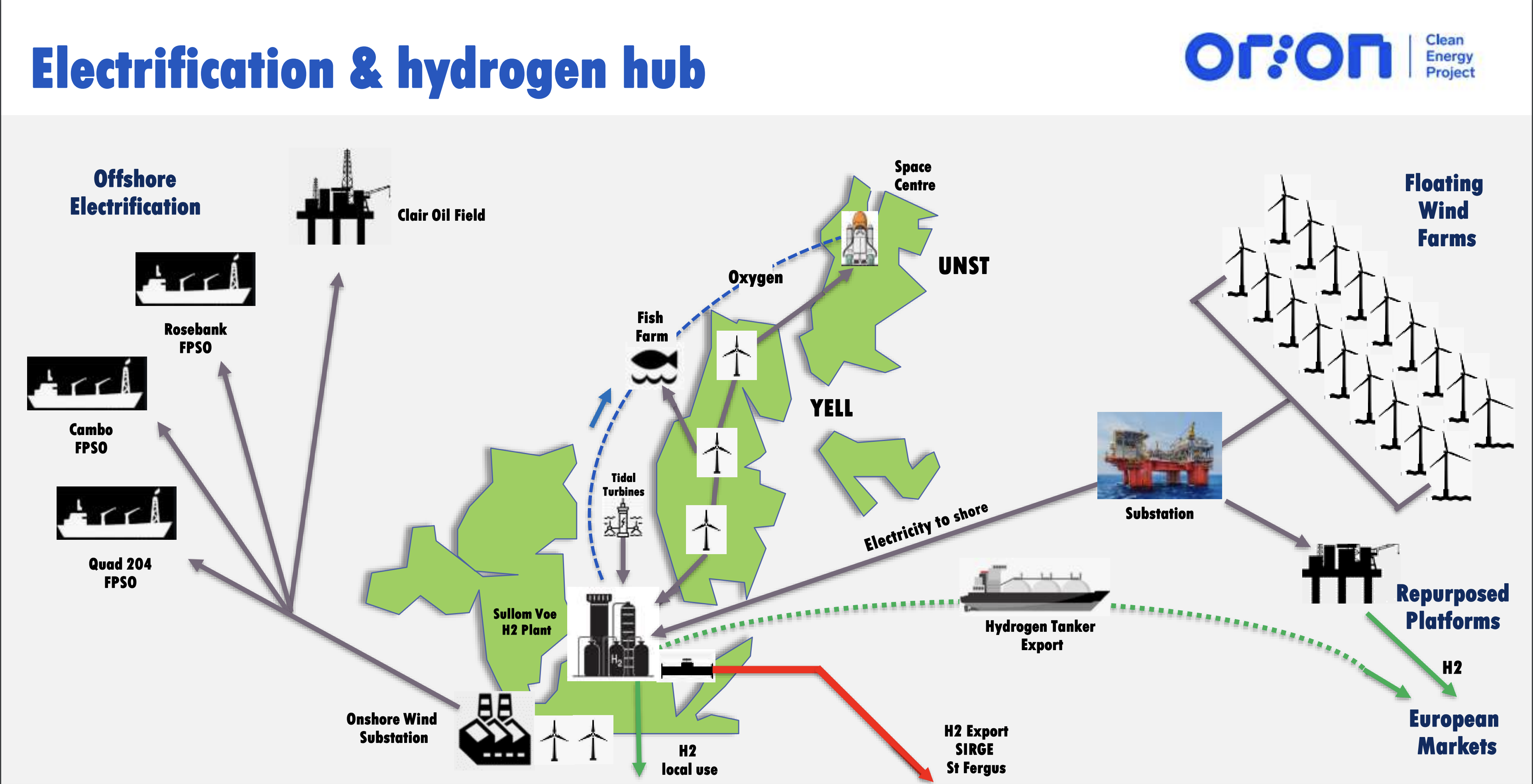
In Do BP And The Germans Have A Cunning Plan For European Energy Domination?, I introduced Project Orion, which is an electrification and hydrogen hub and clean energy project in the Shetland Islands.
The project’s scope is described in this graphic.
Note
- Project Orion now has its own web site.
- A Space Centre is shown on the Island of Unst.
- There is an oxygen pipeline shown dotted in blue from the proposed Sullom Voe H2 Plant to the Fish Farm and on to the Space Centre.
- I suspect if required, there could be a hydrogen pipeline.
The Space Centre on Unst could be fuelled by renewable energy.
Who Are Skyrora?
They have a web site, which displays this mission statement.
Represents a new breed of private rocket companies developing the next generation of launch vehicles for the burgeoning small satellite market.
The Times also has this paragraph.
At the end of last year, the company also completed trials of the third stage of its Skyrora XL rocket, including its orbital transfer vehicle which, once in orbit, can refire its engines 15 times to carry out tasks such as acting as a space tug, completing maintenance or removing defunct satellites.
The company seems to have big ambitions driven by innovation and a large range of ideas.
Conclusion
I shall be following this company.

