Elizabeth Line To Ebbsfleet Extension Could Cost £3.2 Billion
The title of this post, is the same as that of this article on Ian Visits.
These is the first paragraph.
A report looking at transport upgrades across the southeast of England suggests that extending the Elizabeth line into Kent would cost around £3.2 billion. The report, by Transport for the South East (TfSE) also supports the proposal and looks at how it could be funded.
This image from the Abbeywood2Ebbsfleet consultation, shows the proposal.
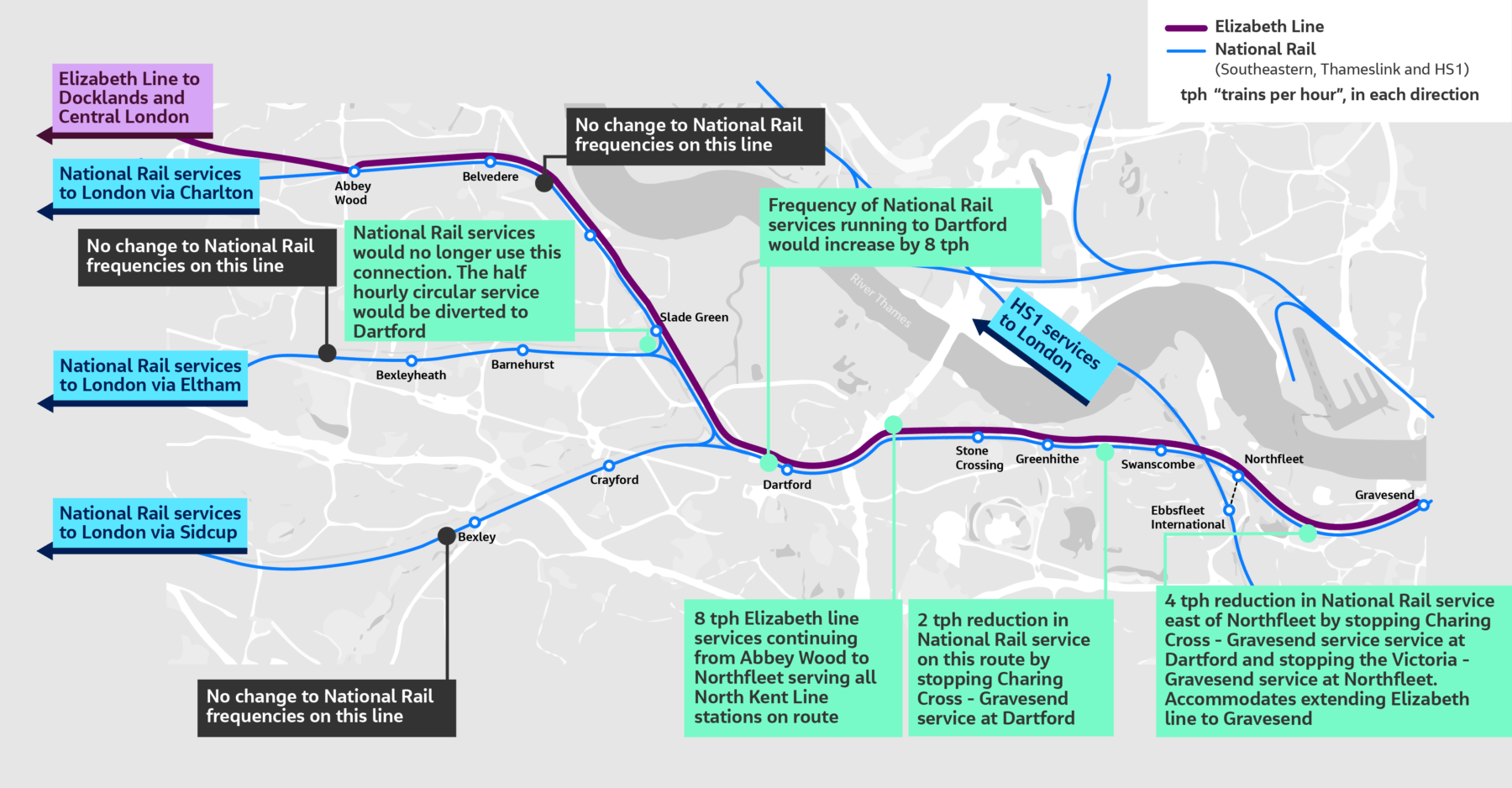
Note, that there doesn’t appear to be too much new infrastructure, except for a proper connection between Northfleet and Ebbsfleet stations. References on the Internet, say that the similar-sized Luton DART connection at Luton Airport, cost around £225 million.
As the quoted cost is £3.2 billion, I would assume, that installation of digital signalling on the North Kent Line and the trains that use it, is one of the major costs.
I have some thoughts.
Improvement Is Needed
There are endless jokes, which have a punchline something like, “If you want to go to X, I wouldn’t start from here.”
On Monday, I intend to go to visit my friend; Ian, who lives at Longfield in Kent. Abbey Wood is the nearest Elizabeth Line station to Longfield and it is only seventeen miles away from Abbey Wood, but the quickest way you can do it by train is 64 minutes with a change at Rochester or 79 minutes going back into London and coming out from Victoria.
As before, I leave London, I will be having breakfast with another friend in Moorgate, the Elizabeth Line to Abbey Wood will be a good place to start.
If I got the trains right, I can get between Moorgate and Northfleet in 41 minutes. Northfleet is just 5.5 miles from Longfield.
If Ian, wants to go to London, he usually drives to Ebbsfleet, where there is lots of parking and gets the Highspeed trains to Stratford or St. Pancras. Trains take 12 and 19 minutes to and from the two London termini, but go nowhere near to Canary Wharf, the City of London, Liverpool Street, Oxford Street, Paddington, West London and Heathrow.
I believe that for Ian and the other nearly million residents of West Kent, that the following should be done as soon as possible.
- Extend the Elizabeth Line to Gravesend, which would give 300,000 more people a local Elizabeth Line station.
- Build a people-mover between Northfleet and Ebbsfleet stations, which would create a high-capacity rail hub for North-West Kent, with connections to London, Heathrow and the Continent, and massive parking.
Heathrow and Northfleet would take under an hour and a quarter on a direct train.
Current Services Between Abbey Wood And Gravesend
Currently, these services run at some point on the North Kent Line between Abbey Wood And Gravesend stations.
- Southeastern – London Cannon Street and London Cannon Street – 2 tph – Via Abbey Wood, Belvedere, Erith and Slade Green.
- Southeastern – London Cannon Street and Dartford – 2 tph – Via Abbey Wood, Belvedere, Erith, Slade Green and Dartford.
- Southeastern – London Charing Cross and Gravesend – 2 tph – Via Dartford, Stone Crossing, Greenhithe, Swanscombe, Northfleet and Gravesend.
- Southeastern HighSpeed – London St Pancras and Ramsgate via Faversham – 1 tph – Via Ebbsfleet International and Gravesend.
- Thameslink – Luton and Rainham – 2 tph – Via Abbey Wood, Slade Green, Dartford, Stone Crossing, Greenhithe, Swanscombe, Northfleet and Gravesend.
Note.
- tph is trains per hour.
- I have only indicated stations, where trains stop between Abbey Wood and Gravesend stations.
Aggregating these trains gives the following totals for each station.
- Abbey Wood – 6 tph
- Belvedere – 4 tph
- Erith – 4 tph
- Slade Green – 6 tph
- Dartford – 6 tph
- Stone Crossing – 4 tph
- Greenhithe – 4 tph
- Swanscombe – 4 tph
- Northfleet – 4 tph
- Gravesend – 5 tph
As stations get at least four tph, with more important ones getting 5 or 6 tph, it appears to be a well-constructed timetable.
Effect Of Changing The London Cannon Street And London Cannon Street From The Erith Loop To A Dartford Service
This should make no difference to the numbers, as the service is now clear of the Elizabeth Line after Slade Green.
Effect Of Cutting Back The London Charing Cross and Gravesend Service To Dartford
This service between London Charing Cross and Gravesend has a frequency of 2 tph and calls at Dartford, Stone Crossing, Greenhithe, Swanscombe, Northfleet and Gravesend.
Cutting it back to Dartford adjusts the totals as follows.
- Abbey Wood – 6 tph
- Belvedere – 4 tph
- Erith – 4 tph
- Slade Green – 6 tph
- Dartford – 4 tph
- Stone Crossing – 2 tph
- Greenhithe – 2 tph
- Swanscombe – 2 tph
- Northfleet – 2 tph
- Gravesend – 3 tph
Some of the frequencies have halved.
Effect Of Adding Eight tph To Northfleet And Four tph To Gravesend On The London Charing Cross and Gravesend Service
The Elizabeth Line Extension is proposed to add the following trains to the service.
- 8 tph will continue from Abbey Wood to Northfleet.
- 4 tph will continue from Abbey Wood to Gravesend.
This adjusts the totals as follows.
- Abbey Wood – 6 tph
- Belvedere – 12 tph
- Erith – 12 tph
- Slade Green – 14 tph
- Dartford – 12 tph
- Stone Crossing – 10 tph
- Greenhithe – 10 tph
- Swanscombe – 10 tph
- Northfleet – 10 tph ( 4 tph – Terminating, 6 tph – Passing through)
- Gravesend – 7 tph ( 4 tph – Terminating, 3tph – Passing through)
Note.
- These surely are frequencies, that will satisfy the most picky traveller.
- There are freight trains running on the route.
- The tightest section would appear to be between Abbey Wood and Dartford, although Dartford and Northfleet is only two tph less.
- West of Northfleet it gets easier.
- But I do think though, that full digital signalling between Abbey Wood and Gravesend would be able to handle it.
- 14 tph is a frequency that is less than that of the central sections of the East London Line, the Elizabeth Line and Thameslink.
- I have flown my virtual helicopter along the line and there may be places to add a third track, which would add more capacity.
I believe that it is possible to achieve the passenger train frequencies in the last table.
Abbey Wood East Junction
This Google Map shows the track layout to the East of Abbey Wood station.
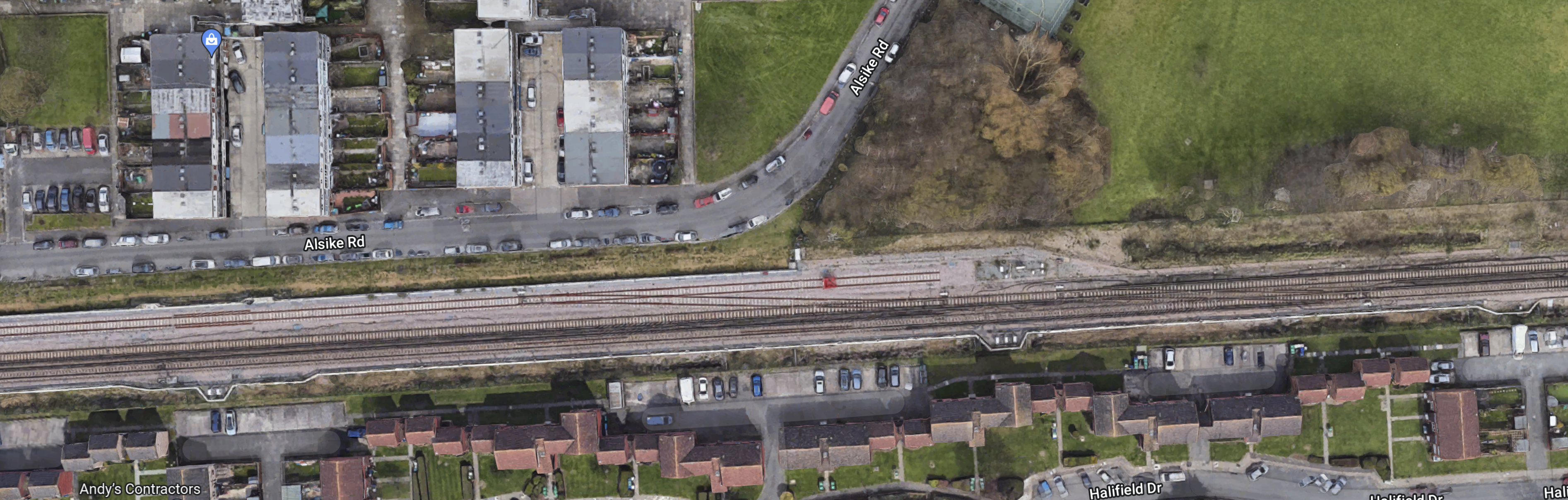
Note.
- There are crossovers so trains can run between the Elizabeth Line platforms on the North side of Abbey Wood station and the North Kent Line.
- There is space on either side of the railway.
- I have my doubts that the current track layout would be able to handle twelve Elizabeth Line, six North Kent Line and possibly a freight train in every hour, especially where flat junctions are involved.
I can see a flyover or dive-under being built in this area to handle the trains efficiently.
Abbey Wood Power Change-Over
Some thoughts.
- I will assume, that the change-over between 25 KVAC overhead and 750 VDC third-rail power will take place in or near Abbey Wood station.
- This would avoid any erection of electrification gantries to the East of Abbey Wood station.
- If the Office of Road and Rail refuse to allow any more third rail, I could see a Headbolt Lane solution being applied, where batteries are used to bridge the 1.4 mile gap between Abbey Wood station with its 25 KVAC overhead electrification and Belvedere station with its 750 VDC third-rail electrification.
- North Kent Line trains would take their existing route between Abbey Wood and Belvedere stations.
- Also, if a comprehensive and efficient track layout is used here, then there might be cost savings if the Elizabeth Line trains supplied their own power from batteries.
An efficient junction to the East of Abbey Wood station, coupled with well-thought out electrification could be key to successfully handling the nearly 20 tph at Abbey Wood station.
Belvedere, Erith And Slade Green Stations
Belvedere, Erith and Slade Green stations are on a double-track section of the line.
- The three stations are not step-free.
- There appear to be a lot of industrial sites, that could be developed for housing.
- There might be the possibility of adding an extra track in places.
- Luckily, there are no level crossings.
- There are some footbridges over the railway, that probably need updating to step-free
I suspect that developing the housing on this route will be most important.
Slade Green Depot
This Google Map shows Slade Green depot and the large triangular junction opposite the depot.
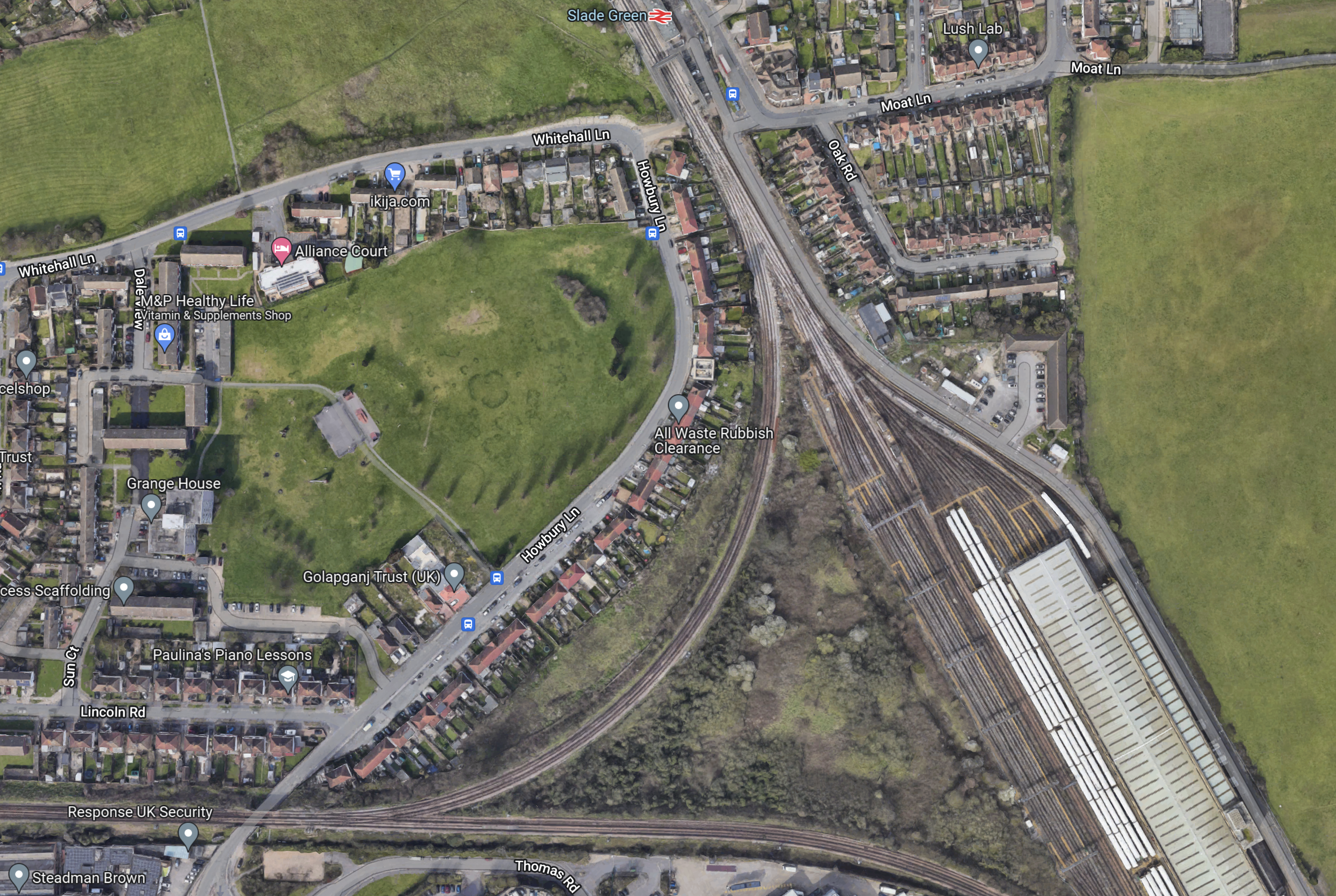
Note.
- Slade Green station is at the top of the map.
- Slade Green depot is in the South-East corner of the map.
- The West point of the junction leads to Bexleyheath.
- The West and North points of the junction are connected by the Erith Loop.
- The South point of the junction leads to Dartford.
There are rail capacity problems in this area.
- Slade Green depot is not big enough.
- One train service goes both ways on the Erith Loop between Slade Green and Bexleyheath every thirty minutes, which could be a block on increasing train frequencies between Abbey Wood and Dartford stations.
- The proposal is saying that the Slade Green and Bexleyheath service will go via Dartford station, where it will probably reverse.
I can see comprehensive redevelopment of the depot and the junction to remove the capacity problems and perhaps build a lot of housing.
- If the Erith Loop is not used could the centre of the junction be developed with a much-needed extension to the depot?
- The depot might be moved elsewhere or perhaps rebuilt with tower blocks on the top.
I think that moving the Slade Green and Bexleyheath service via Dartford could mean that the Erith Loop isn’t needed, so this might free up space to increase the size of the depot.
Dartford Station
This Google Map shows Dartford station and the area around the station.
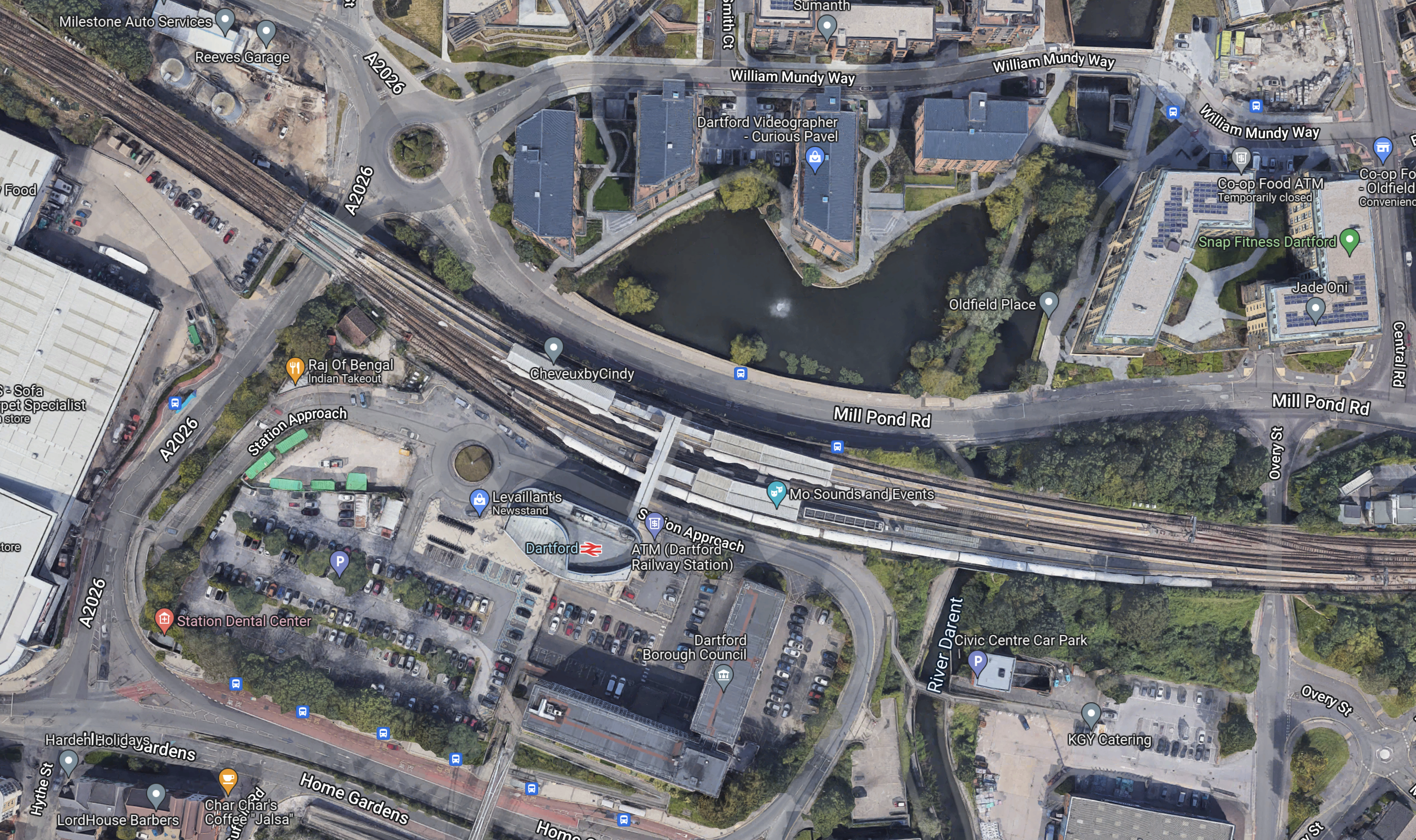
Note.
- The station has four long platforms.
- It should be able to handle the 12 tph in both directions.
- There is a lot of new developments by the station.
- The station is step-free.
- There are some pictures of Dartford station in Dartford Station – June 27th 2022.
But I do suspect that the station probably needs extra capacity and a substantial rebuild.
Stone Crossing, Greenhithe And Swanscombe Stations
Stone Crossing, Greenhithe and Swanscombe stations will be handling 10 tph.
- Greenhithe is a new station with full step-free access.
- But Stone Crossing and Swanscombe stations may need improvement to bring them up to Elizabeth Line standards.
- More details of Stone Crossing station are given in Stone Crossing Station – June 27th 2022.
- More details of Greenhithe station are given in Bluewater Shopping Centre By Train.
- More details of the current state of Swanscombe station are given in Swanscombe Station – June 27th 2022.
- The one level crossing in the area was closed in 2018.
- There may be scope to add an extra track at places in this section.
I feel that these three stations could be fairly easy to bring up to the required standards.
Northfleet Station
Northfleet station is a station, which in the words of estate agent; Roy Brooks, would have a lot of potential.
This Google Map shows the station.
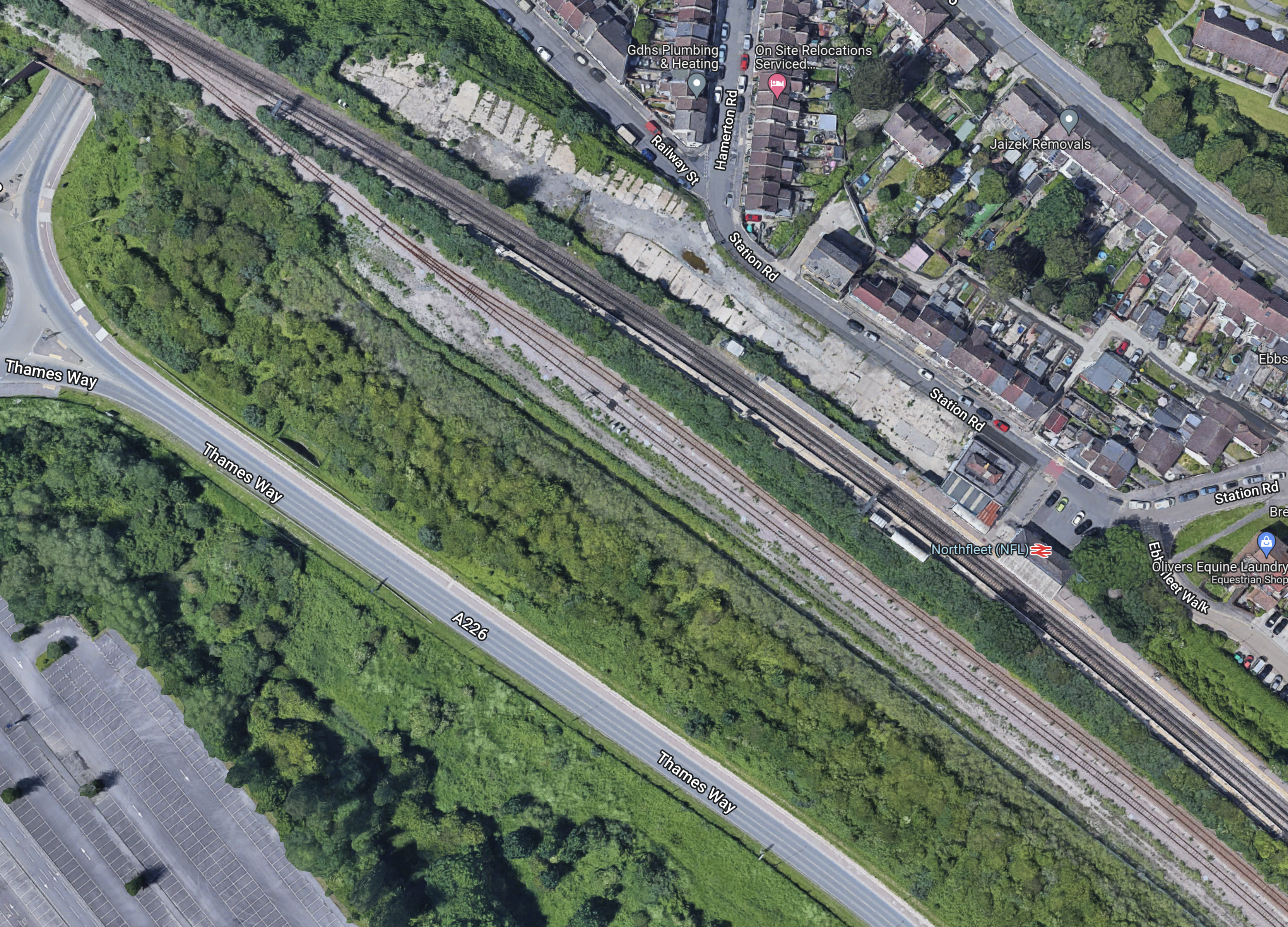
Note.
- The two tracks through the station are the North Kent Line.
- The other two tracks are freight sidings.
- The car-parks at Ebbsfleet station are in the South-West corner of the map.
- There appears to be a large cleared site to the North-West of the station.
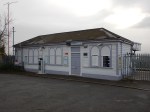
These pictures show the station.
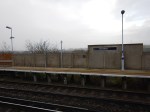
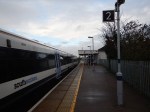
The requirements for the station will be as follows.
- The ability to handle 6 tph passing through.
- The ability to be able to handle 4 tph, that terminate at the station.
- Terminating four tph, will probably need two platforms for all eventualities.
- Full step-free access.
- An interchange with Ebbsfleet International station is also needed.
- Is car parking needed?
There is certainly enough space.
The Pedestrian Link Between Northfleet And Ebbsfleet Stations
This is part of the plan and is shown on the first map in this post.
This Google Map shows Northfleet and Ebbsfleet stations.
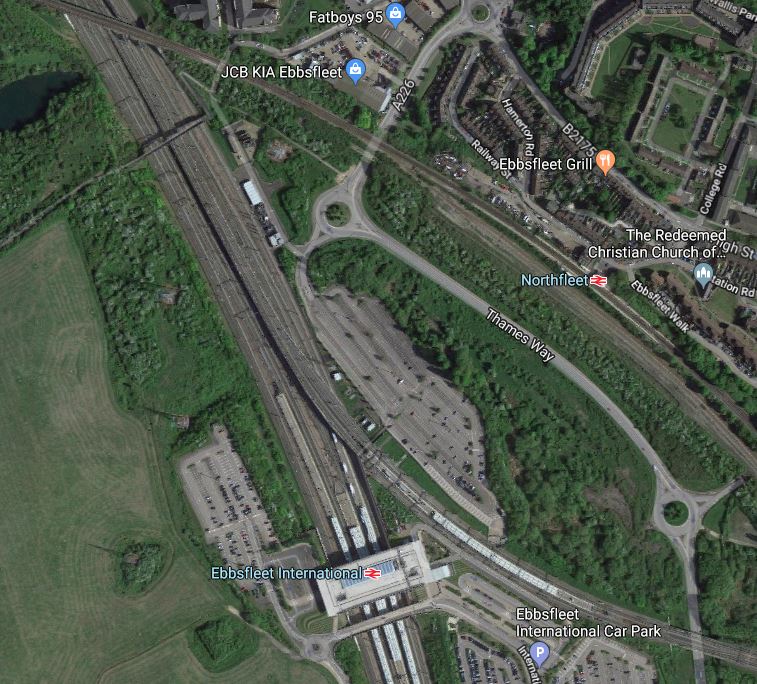
Note.
- The large Ebbsfleet International station towards the bottom of the map.
- Northfleet station on the North Kent Line in the North East corner of the map.
- The two stations are about five hundred metres apart as the crow flies.
There has been a lot of pressure in the past to build a pedestrian link between the two stations, as reported by the Wikipedia entry for Northfleet station.
The station is very close to Ebbsfleet International station (the NNE entrance is only 334 yards (305 m) from Northfleet’s station), but passengers (using public transport) will find it far easier to access Ebbsfleet International from Gravesend or Greenhithe, as these stations are more accessible and offer easy access to Fastrack bus services. The walking route between the two stations is 0.6 miles (1 km) or 0.8 miles (1.3 km) and a suitable pedestrian link has not been built because of funding issues and objections from Land Securities.
Why when Ebbsfleet International station was built in the early 2000s for opening in 2007, was a pedestrian link not built between the two stations?
How much did omitting the link save?
Luton Airport are building the Luton DART, which is a people mover to connect Luton Airport Parkway station with the airport.
- It is 1.4 miles long.
- It is fully automated.
- It might have an extra station serving the mid-stay parking.
- It appears to be taking three years to build.
All of this very comprehensive system appears to be costing around £200 million.
I doubt that a simple pedestrian link, like a bridge with travellators, would have cost more than a few tens of million pounds.
Will Northfleet/Ebbsfleet Become A Major Railway Hub?
If Northfleet station and the connection to Ebbsfleet is well designed,, I can see this station becoming a major railway hub.
- It would have Eurostar Continental services.
- It would have HighSpeed services to London and Kent.
- It would have Elizabeth Line services to London and Heathrow.
- It would have Thameslink and Southeastern services.
- The station would have lots of parking.
I also feel in the future that more Continental services will be developed.
- Adding extra platforms for Continental services could be easier than at St. Pancras.
- It could be an ideal terminus for sleeper trains to and from the Continent.
- I might be the ideal terminus for very long distance trains to and from the Continent.
Northfleet/Ebbsfleet has something that St. Pancras lacks – space.
Gravesend Station
Gravesend station is a rebuilt step-free station with three platforms, as these pictures show.
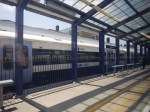
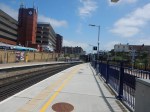
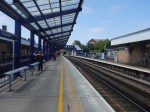
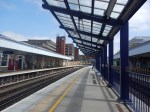
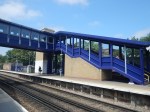
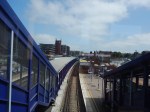
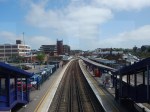
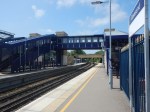
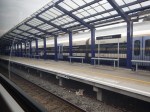
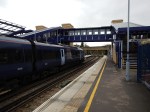
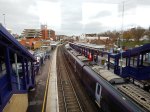
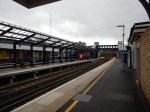
But is it the right station, for the end of the Elizabeth Line?
These points are in favour.
- There is a bay platform, that could handle 4 tph.
- The station is step-free.
- The station has had a recent refurbishment.
- It has HighSpeed services to London and East Kent.
- Gravesend is a town of 74,000 people.
- Passengers can change between through trains by just staying on the same platform.
But these points are against.
- The station is on a cramped site in the town centre.
- There is no train stabling nearby.
- Adding lots of car parking may be difficult.
- Suppose adding the Elizabeth Line to the town was very successful and it was felt more services were needed. Could Gravesend station cope?
These are the times for the various services.
- HighSpeed to St. Pancras – 25 minutes
- HighSpeed to Stratford – 17 minutes
- Southeastern to Charing Cross – 65 minutes
- Thameslink to Abbey Wood- 28 minutes
- Thameslink to London Bridge – 60 minutes
I estimate that the Elizabeth Line will take just over 50 minutes to Tottenham Court Road.
This last timing in itself is a good reason for the Elizabeth Line to serve Gravesend.
But I don’t think the Elizabeth Line has to start there.
I am worried that the Elizabeth will be too successful.
- It serves Central London, Paddington and Heathrow.
- It will have a frequency of four tph from and to Gravesend.
- It will have trains with a very large capacity.
- The trains will have wi-fi and 4G connections.
I don’t think the cramped Gravesend station will be able to cope with the needs of expansion.
- An extra platform.
- Handling trains that need to be turned back to London.
- More car parking.
Northfleet/Ebbsfleet will have the parking and eight tph on the Elizabeth Line, so surely the best solution is to have the actual Elizabeth Line terminal station to the East of Gravesend.
- Travellers to the West of Gravesend will use Northfleet/Ebbsfleet.
- Travellers in Gravesend will use Gravesend station by walking, cycling or using a local bus.
- Travellers to the East of Gravesend will use the new terminal station.
The Elizabeth Line extension is supposedly costing £3.2 billion, so it should serve as many potential passengers as possible.
The Elephant In The Garden Of England
It is proposed that the new Lower Thames Crossing is built to the East of Gravesend.
This map from the Department of Transport, shows the route.
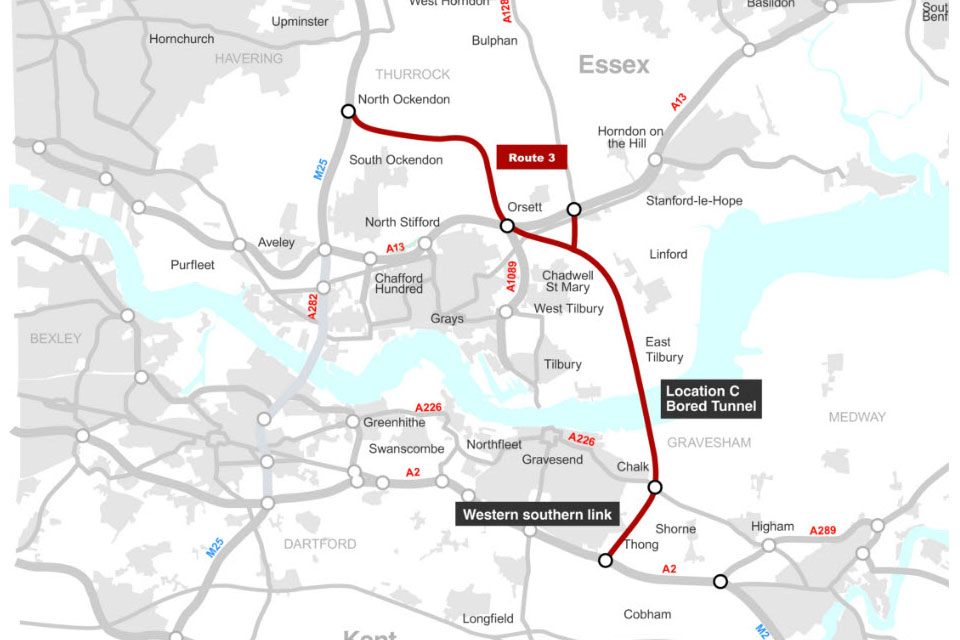
Note.
- The new crossing, which is shown in red, bypasses the Dartford Crossing on the M25.
- The A226 runs between Gravesend and Higham via a junction with the new crossing at Chalk.
- Northfleet is to the West of Gravesend.
This Google Map shows the area between Chalk and Higham.
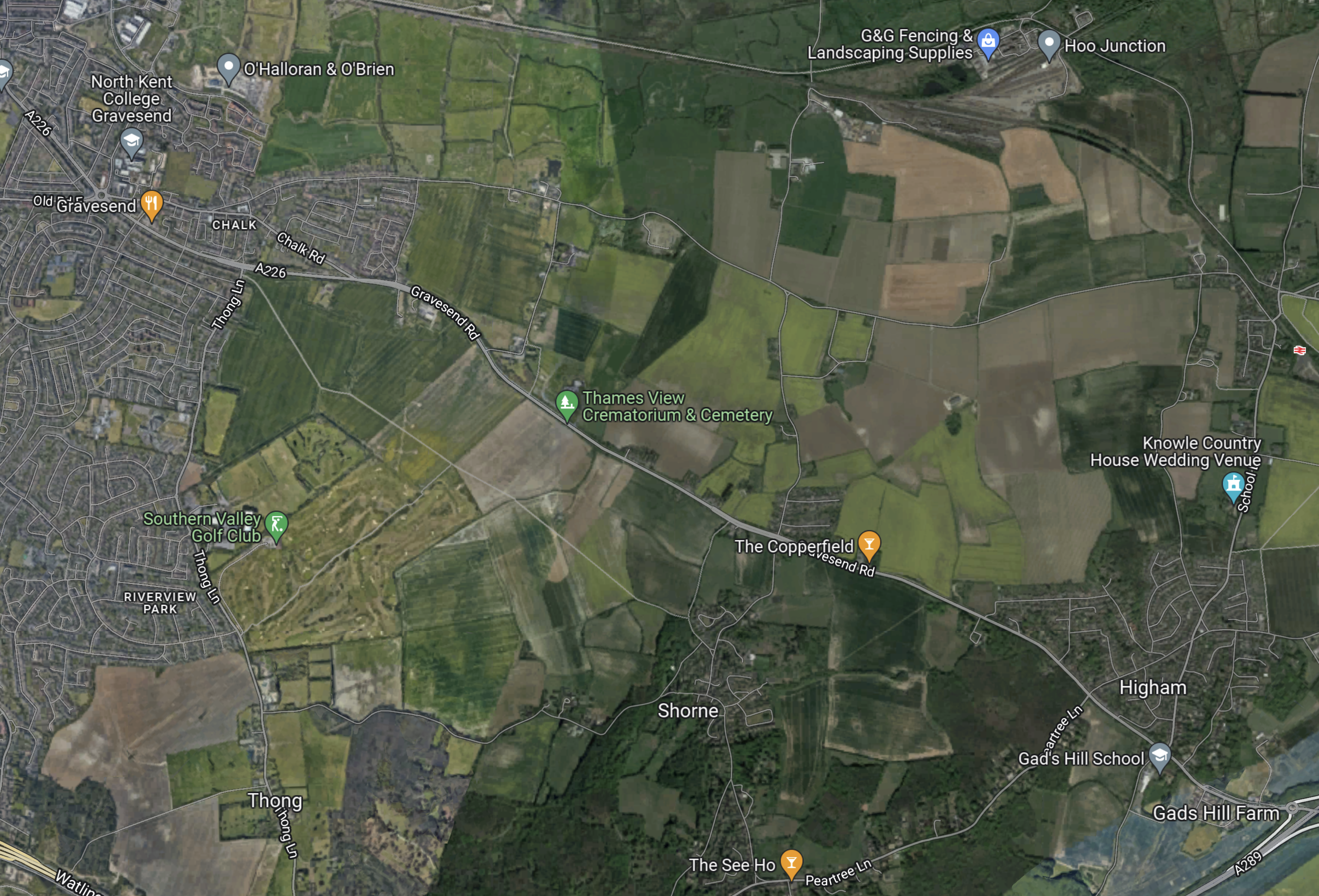
Note.
- Chalk in the North-West corner of the map.
- Higham in the South-East corner of the map.
- The A226 running between Chalk and Higham.
- Higham station on the North Kent Line about half-way up the East side of the map.
- The North Kent Line running across the top of the map between Gravesend and Higham stations via Hoo Junction.
The Lower Thames Crossing will run North-South across this map to the East of Chalk and according to the Department of Transport map to the West of Thong.
I should admit, that I don’t drive, so the Lower Thames Crossing will be of no use to me, but I have friends in Kent and most seem to be in favour of the new crossing.
Reopening The Hoo Branch To Passenger Trains
In Effort To Contain Costs For Hoo Reopening, I wrote about an article in the April 2022 Edition of Modern Railways with the same title.
This is the first paragraph of the Modern Railways article..
Medway Council is working with Network Rail and other industry players in an effort to make restoration of a passenger service to Hoo on the Isle of Grain branch feasible. The Council was awarded £170 million from the Housing Infrastructure Fund in 2020 to support schemes to facilitate building of 12,000 new houses in the area, with £63 million of the HIF money for reinstatement of services on the Hoo Branch.
The article mentions, this new infrastructure.
- A new station South of the former Sharnal Street station.
- Works to level crossings, of which there are six between Gravesend station and proposed site of the new Hoo station.
- A passing place at Hoo Junction, where the branch joins the North Kent Line.
- A passing place at Cooling Street.
It looks like we may have the smaller project of reopening the Hoo branch railway, whilst a major road and tunnel is built through the area.
This OpenRailwayMap shows the North Kent Line between Gravesend and Higham stations.
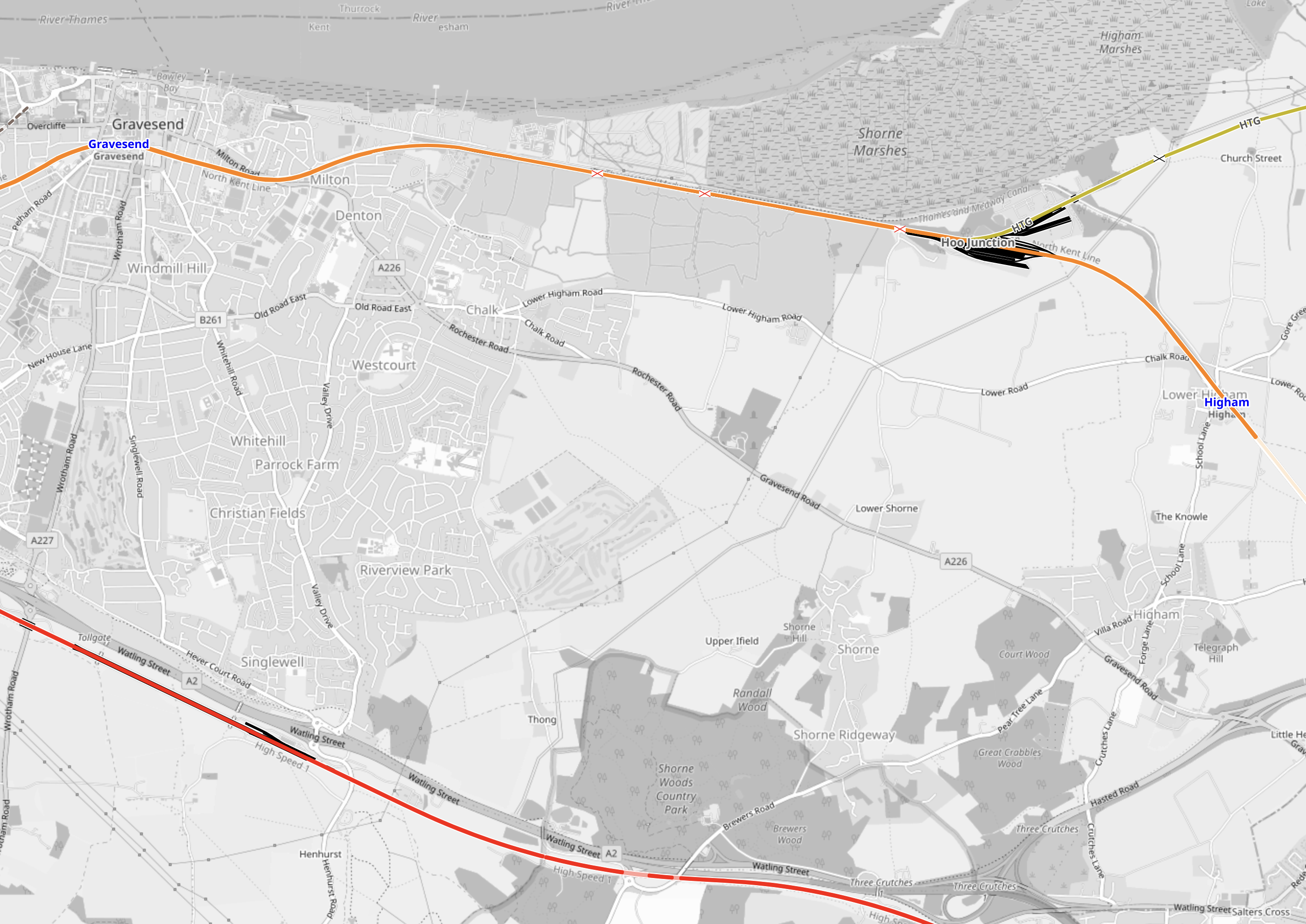
Note.
- Gravesend station is in the North-West corner of the map.
- Higham station is at the Eastern edge of the map.
- The railway shown in orange is the North Kent Line.
- The railway shown in yellow is the Hoo branch.
- The railway shown in red is the Channel Tunnel Rail Link.
It looks like the path of the new crossing could follow a similar path to the overhead power cable shown on this map.
According to Modern Railways, the main reason for reopening the Hoo Branch for passenger trains is to provide rail access for new housing on the Isle of Grain.
- Improving the Hoo branch will also help the freight services to the various docks and installations on the Isle of Grain.
- Will the builders of the new crossing, use the Isle of Grain for the supply of aggregates and the disposal of tunnel spoil?
- Remember that barges on the Thames were used to remove the tunnel spoil from London for both Crossrail and the Battersea extension to the Northern Line.
My knowledge of major projects is saying to me, that before the major works of the new crossing are started, this branch railway must be updated, otherwise it will cause problems in the future.
Could this be why, the Hoo branch reopening has been mentioned in both the April and July 2022 Editions of Modern Railways? Perhaps a sensible decision has been made, that means the Hoo branch will be improved first, to speed the construction of the new Lower Thames Crossing.
Could The Elizabeth Line Be Extended To The Proposed Hoo Station?
The proposed Hoo station is to be just South of the former Sharnal Street station.
- This is under ten kilometres from Hoo Junction, where the North Kent Line is electrified.
- A single platform could handle 4 tph, but provision for two platforms would be prudent.
- A couple of sidings could provide stabling.
- Services would join the North Kent Line at Hoo Junction.
- Services would use battery power between Hoo Junction and Hoo station.
- If charging were needed at Hoo station a short length of 25 KVAC overhead electrification would be needed.
- There is plenty of power available locally to power any electrification.
This Google Map shows the possible location of the station.
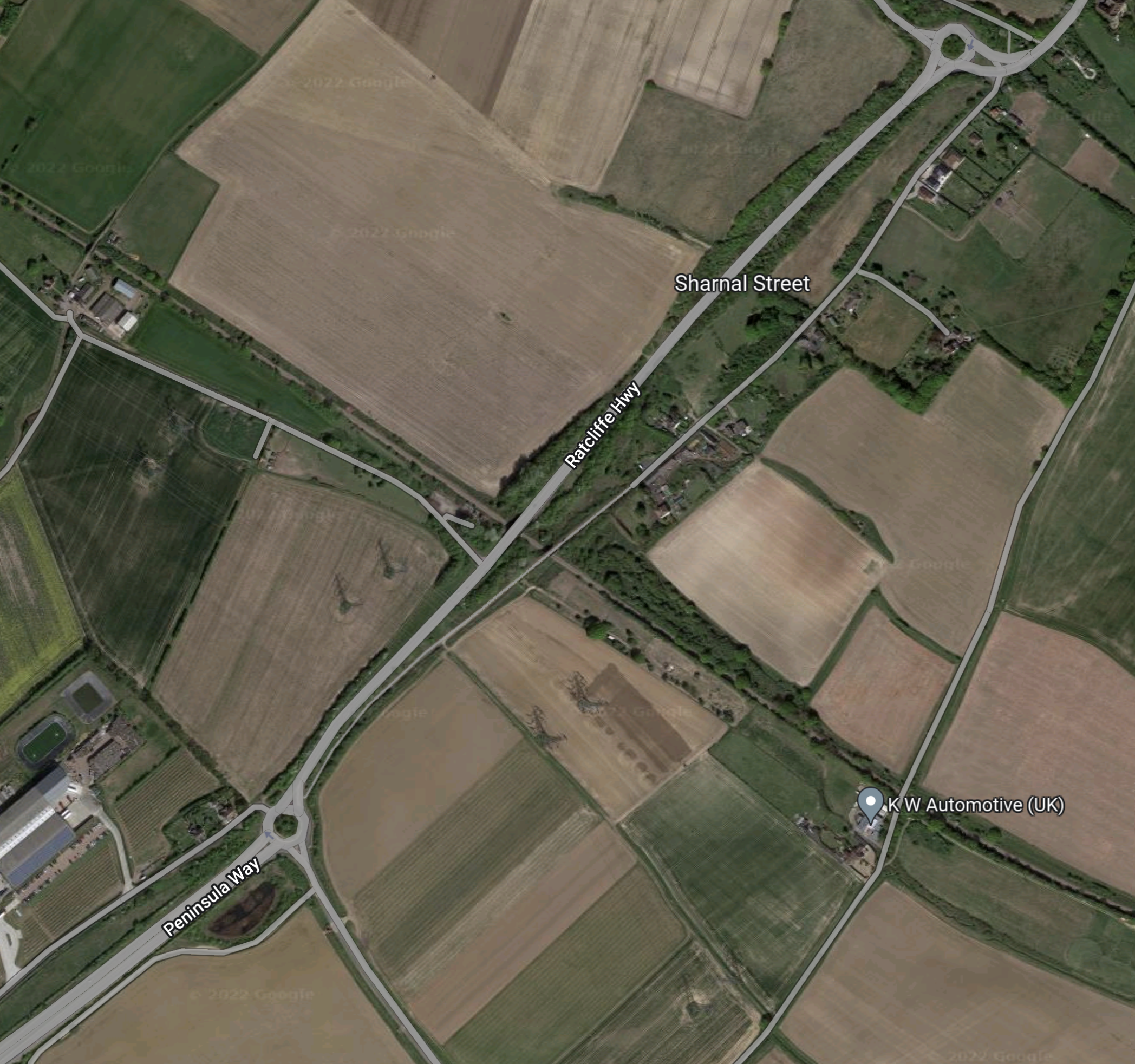
Note.
- The A 289 road running NE-SW across the map from a roundabout in the North-East corner of the map.
- The A 289 leads from the roundabout in the South-West corner of the map to the Medway Tunnel to Chatham.
- Sharnal Street is between the two roundabouts.
- The single-track railway crosses the A 289 at right-angles, about 500 metres South of Sharnal Street.
- There is even a high voltage power line going through the area to the South of the railway.
It seems to be an ideal place for a station with good road access, space and plenty of power to charge battery vehicles and trains.
I took these pictures of where the A289 crosses over the railway on June 27th 2022.
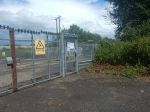
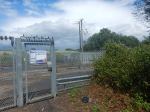
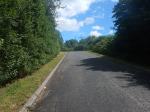
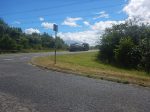
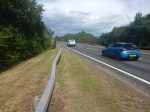
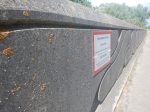
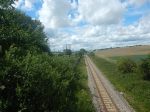
Note.
- The substation site, which is marked with Network Rail logos. It looks like power has been provided to the site.
- The high-voltage line passing to the South of the site.
- There were trucks carrying tunnel segments. Is there a factory on the Isle of Grain and will it produce segments for the Lower Thames Crossing?
- The Sharnal Street bridge over the railway.
It certainly looks like Network Rail have been planning a station there for some time.
Around The Isle Of Grain
I took these pictures of the Isle of Grain on June 27th 2022.







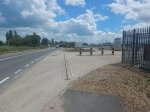








Note.
- There is a lot of housing planned on the island.
- Someone wants to build a theme park.
- The road past the station leads to the Medway Tunnel.
All these factors would add to the case for the station.
Battery-Electric Class 345 Trains
There would be a need to develop a third-rail battery/electric version of the Class 345 trains.
In this article in Global Rail News from 2011, which is entitled Bombardier’s AVENTRA – A new era in train performance, gives some details of the Aventra’s electrical systems. This is said.
AVENTRA can run on both 25kV AC and 750V DC power – the high-efficiency transformers being another area where a heavier component was chosen because, in the long term, it’s cheaper to run. Pairs of cars will run off a common power bus with a converter on one car powering both. The other car can be fitted with power storage devices such as super-capacitors or Lithium-ion batteries if required. The intention is that every car will be powered although trailer cars will be available.
Unlike today’s commuter trains, AVENTRA will also shut down fully at night. It will be ‘woken up’ by remote control before the driver arrives for the first shift
This was published over eleven years ago, so I suspect Bombardier have refined the concept.
A Simple Extension Of The Elizabeth Line
The branch to Hoo station could be a very simple extension of the Elizabeth Line.
- There appear to be no challenging engineering problems.
- Parking and cycling routes could be provided as required at the station.
- The centre of Gravesend would be under ten minutes from Hoo station.
- There would be a same-platform change for HighSpeed services at Gravesend station.
- The developers of the housing would be over the moon.
- Workers for the Lower Thames Crossing and the big energy projects on the Isle of Grain could reverse commute from London.
- The station would only be a few minutes more than an hour from Central London.
- The station could also double as a Park-and-Ride for Chatham and Gillingham.
- Buses could connect Hoo station to Chatham and Gillingham.
It could prove to be a very valuable station for the Isle of Grain and the Medway Towns.
The Contactless Ticketing Conundrum
This is said on the Transport for London website.
Contactless pay as you go is accepted throughout the Elizabeth line.
So it’s just a case of Have Card Will Travel!
So this will mean, that contactless ticketing will have to be accepted at all stations East of Abbey Wood.
Everybody will love that!
Are There Any Other Possible Elizabeth Line Destinations In Kent?
Train companies, since the days of British Rail have run Peak time commuter trains to bring workers into London in the morning and take them home in the evening.
There will be four tph passing through Gravesend and they don’t all have to go to and from Hoo station.
Digital signalling will give flexibility as to which stations the trains could serve.
Possibilities include.
Gillingham
Gillingham station may be a possibility.
Maidstone West
Maidstone West station may be a possibility.
Rainham
Rainham station has three platforms and is already served by two Thameslink tph to Luton through Central London, which use the bay Platform 0
Some might argue that two Elizabeth Line tph should extend from Abbey Wood to Rainham, to give a four tph service between Abbey Wood and Rainham.
This would be a North Kent Metro.
Rochester
Rochester station has three platforms and Platform 3 can turn trains back to London.
It is already used by Thameslink to turn Peak services.
Project Management
The project may be budgeted to cost £3.2 billion, but it is a small number of independent projects.
- Digital signalling
- Electrification changeover at Abbey Wood station.
- An efficient junction East of Abbey Wood.
- Rebuild Belvedere station with step-free access.
- Rebuild Erith station with step-free access.
- Rebuild Slade Green station with step-free access.
- Extend Slade Green depot.
- Upgrade Dartford station.
- Rebuild Stone Crossing station with step-free access.
- Upgrade Greenhithe station.
- Upgrade Swanscombe station.
- Rebuild Northfleet station with step-free access and two extra bay platforms.
- Install people mover between Northfleet and Ebbsfleet stations.
- Upgrade the Hoo Branch.
- Build Hoo station.
Note.
- Gravesend station would only need minimal updating.
- As I said before, I suspect the digital signalling will be the biggest cost.
- Choosing the optimal order is good project management!
- Projects that create fare revenue should be done early, especially if they don’t interfere with services on the railway.
The first projects, that I would develop would be these.
- Rebuild Northfleet station with step-free access and two extra bay platforms.
- Install people mover between Northfleet and Ebbsfleet stations.
- Upgrade the Hoo Branch.
- Build Hoo station.
As I said earlier, this project needs to be developed with the Lower Thames Crossing.
Conclusion
This seems an excellent plan.
Council ‘Talking’ To Government On Improving Train Provision, Leader Says
The title of this post, is the same as that of this article on the Barking and Dagenham Post.
These are the introductory paragraphs.
Barking and Dagenham Council leader Darren Rodwell said the authority is “talking” to the government about improving train provision through the borough.
Last week saw the opening of the Elizabeth line, which stretches more than 100km from Reading and Heathrow in the west to Shenfield and Abbey Wood in the east.
But none of its stations are in Barking and Dagenham – with the nearest being Chadwell Heath – and Cllr Rodwell does not believe the borough stands to benefit from the line at the moment.
He has a point and is asking for extra stations in the borough.
Dagenham East on c2c is mentioned.
This paragraph also talks about HS1 domestic.
Cllr Rodwell, who is beginning a third term as council leader, also said HS1 domestic should stop in the borough.
At the moment, the domestic services that run on the line are operated by Southeastern and travel between London and Kent.
The sole stops in the capital are St Pancras and Stratford International.
“It should be Ebbsfleet, Purfleet, Barking, Stratford International” before terminating at St Pancras, Cllr Rodwell said.
“That would be massive for the ability of our young people to get jobs.
I feel he’s right about the jobs, but would the extra stations be possible.
Dagenham East
This map from cartometro.com shows the location of Dagenham East station.
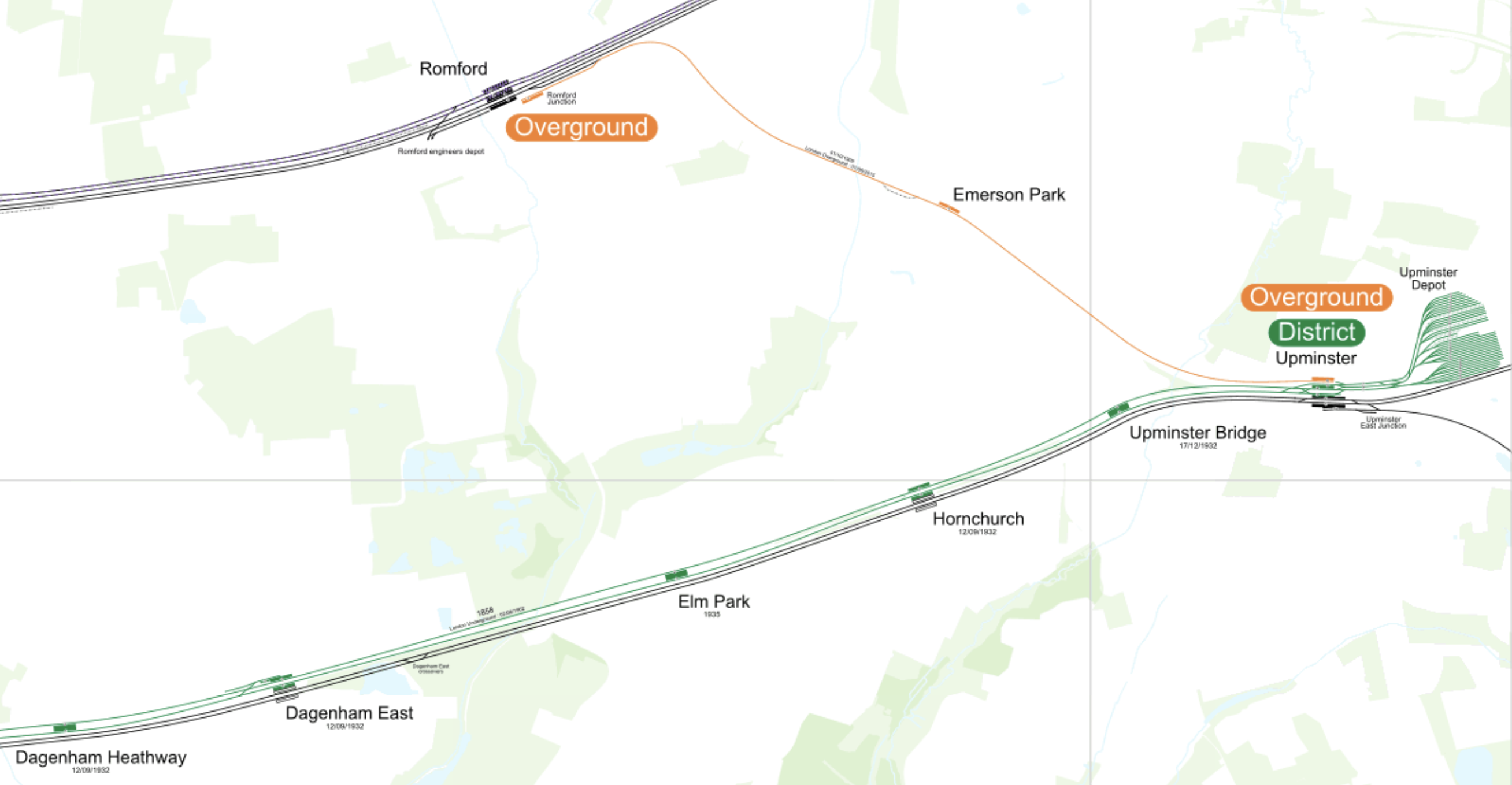
Note.
- The Elizabeth Line passing through Romford at the North of the map.
- The District Line and c2c passing through Upminster across towards the bottom of the map.
- Upminster is in the London Borough of Havering, as are all stations after Dagenham East.
- Dagenham East station is the second station on the line and used to be a c2c station until 1962.
This Google Map shows Dagenham East station.
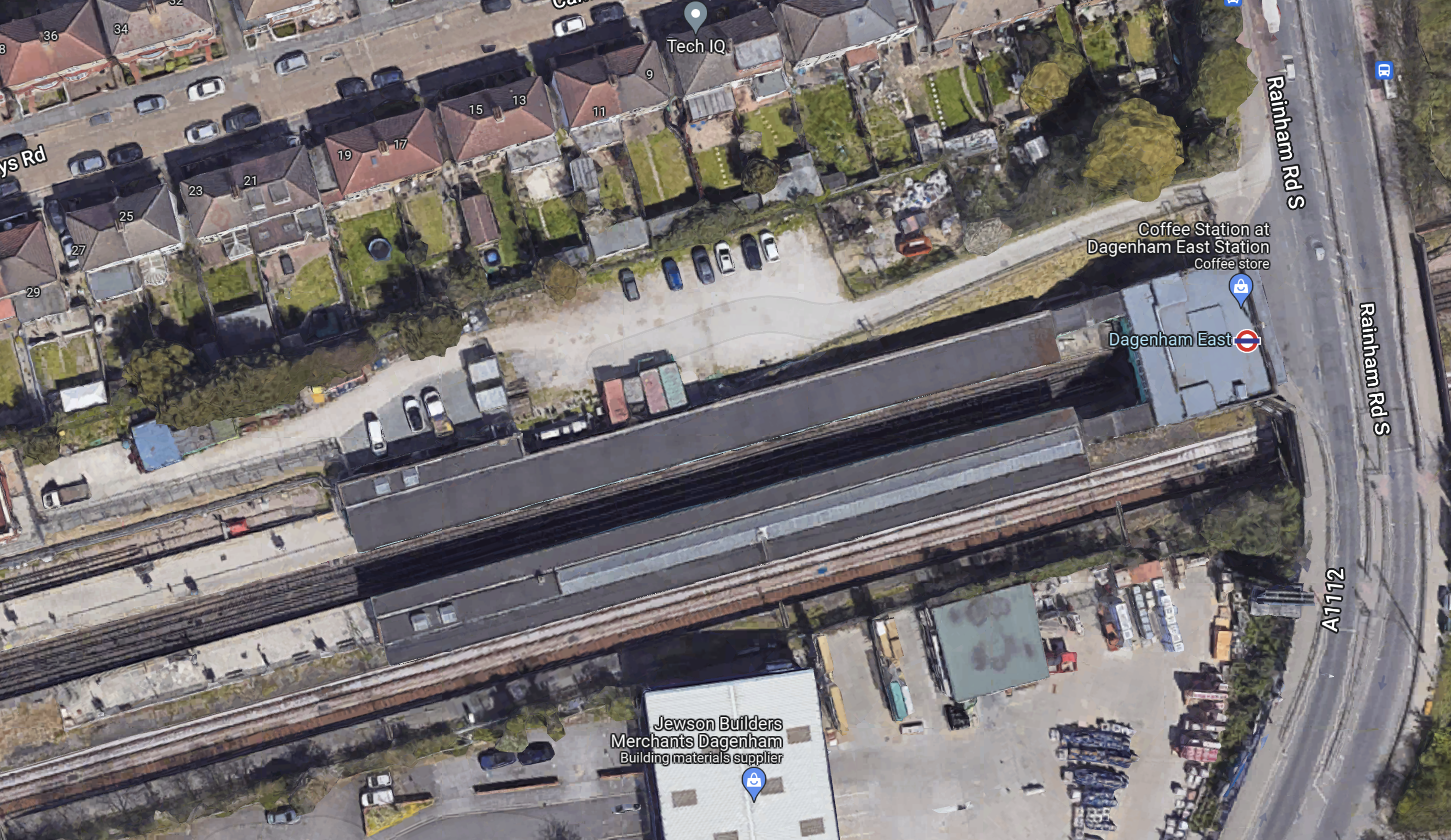
These pictures show the station.

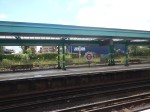
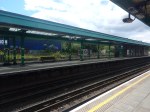


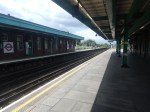
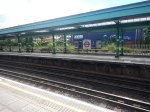
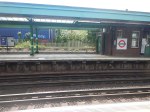
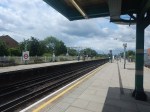
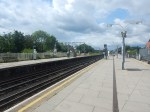
Note.
- The c2c platforms appear to be still in place. Although, some work needs to be done.
- A new bridge will be required to access the far platform.
- six c2c trains per hour (tph) pass through the station.
I feel that perhaps a two tph service between Dagenham East and Fenchurch Street could be possible.
A Thought About High Speed One
High Speed One links London and the Channel Tunnel.
- Every time a train stops, it increases the total journey time by a couple of minutes.
- So two extra stops on Southeastern Highspeed services at Purfleet and Barking, would slow the service and take up capacity on High Speed One.
- If you read the Wikipedia entry for the link, there are several operators, who seem to be hoping to run extra services on the route.
- In addition Thalys and Eurostar have merged and surely, they will bring London more into their routes.
I feel that what spare capacity, there is on High Speed One will more likely be allocated to European services than domestic services in East London. It’s probably more profitable for the operator of High Speed One for a start.
Purfleet
This Google Map shows Purfleet station and its location in relation to High Speed One.
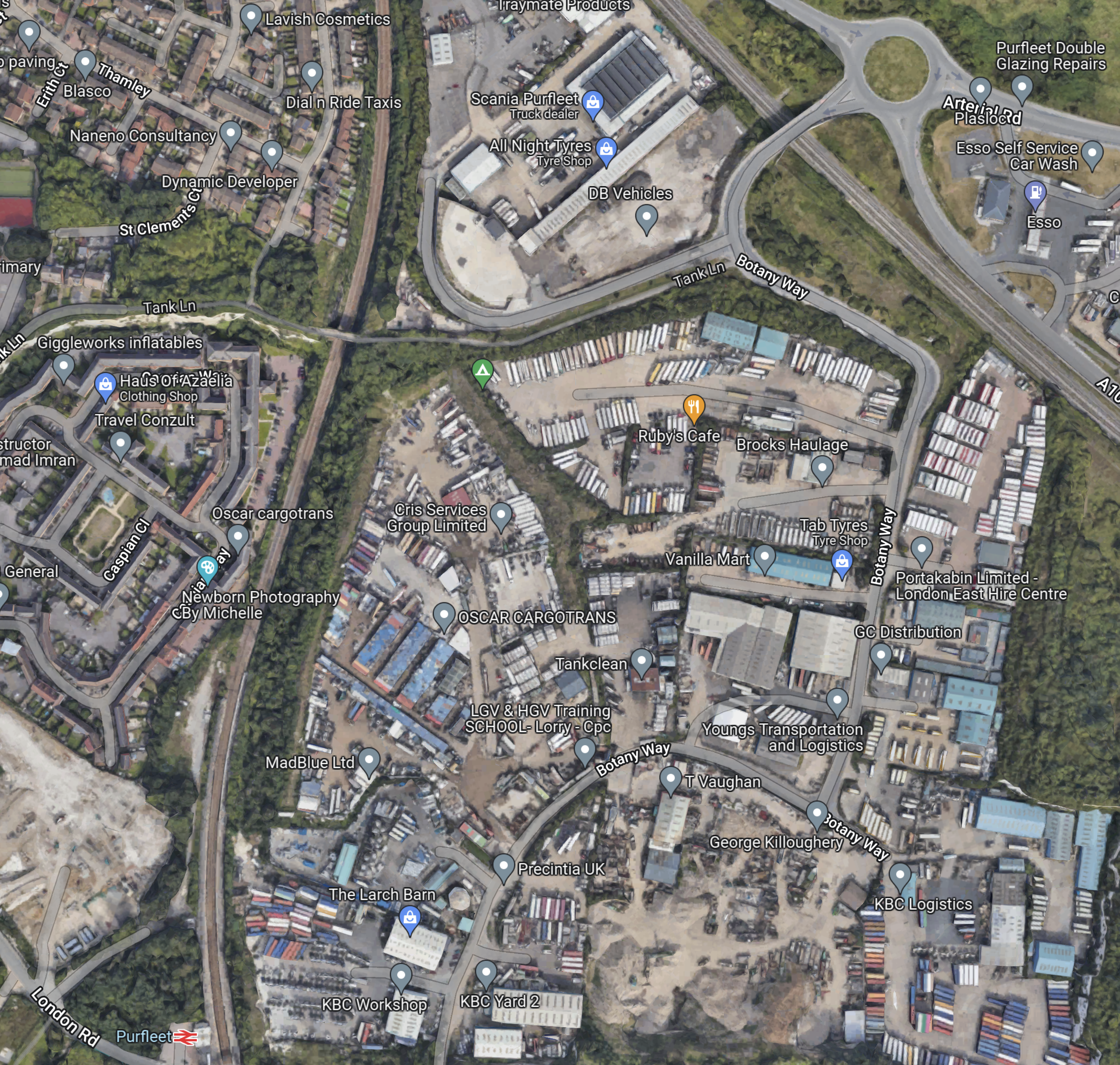
Note.
- Purfleet station is in the South-West corner of the map.
- High Speed One runs across the North-East corner of the map.
- Purfleet station is served by two tph between Fenchurch Street and Grays.
- In Purfleet Station – 19th August 2021, there is a gallery of pictures of Purfleet station.
- In that post, I also describe planned developments at Purfleet station.
Given the distance between the current Purfleet station and High Speed One, and the planned developments, I think that an interchange between c2c and High Speed One at the current Purfleet station, would not be a very practical one.
But there may be possibilities to the East, where c2c and High Speed One cross.
This Google Map shows the location of their crossing by the QE2 bridge.
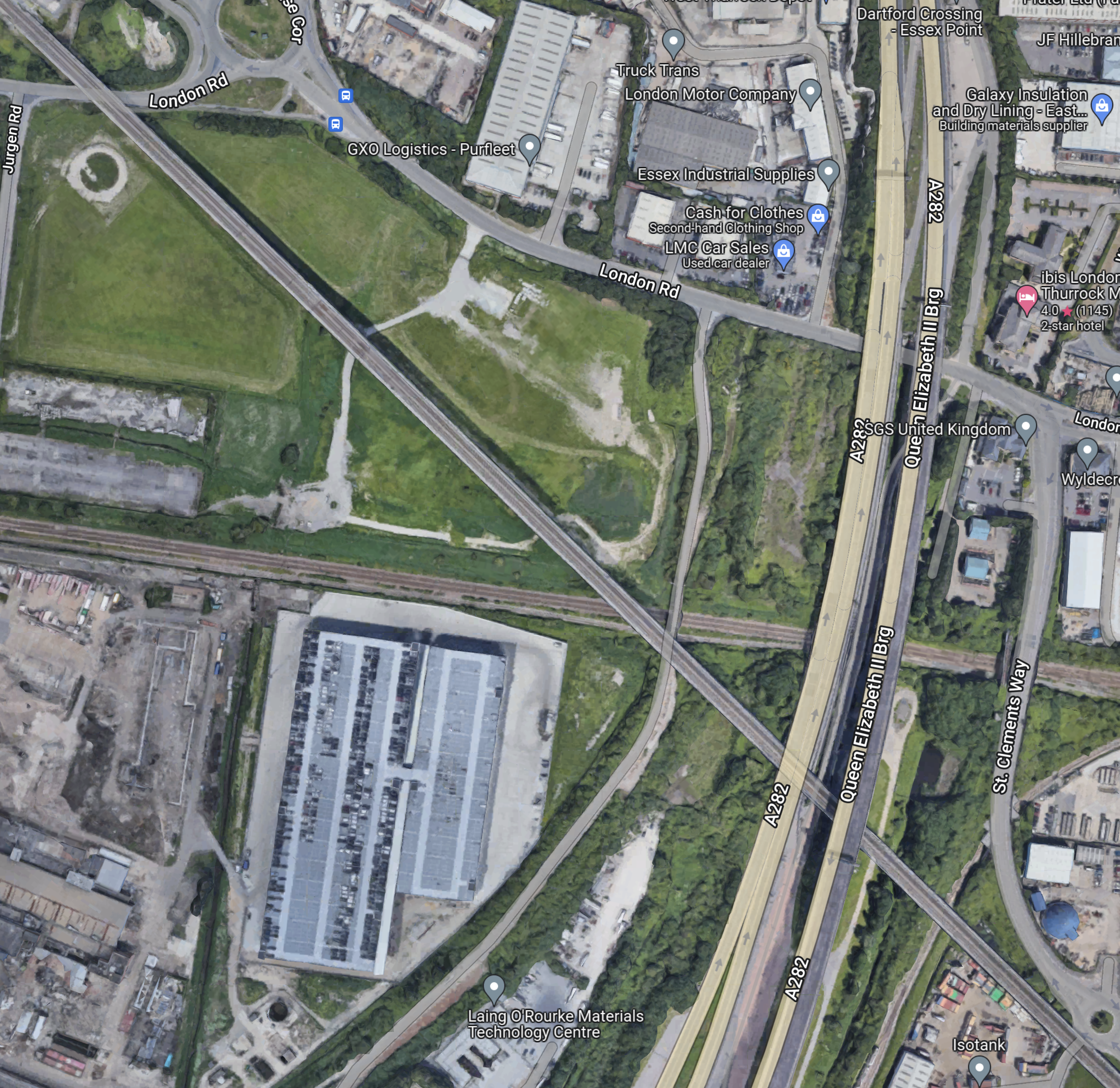
Note.
- High Speed One going diagonally NW-SE across the map
- The A 282 crossing over the QE2 bridge going North-South.
- The c2c line going East-West across the map.
Could the proposed station be built, where the two rail lines cross?
Probably, but!
- High Speed One would only connect to the Fenchurch Street and Grays service running at two tph.
- Passengers for the City of Southend would have to change at Grays.
- There would probably need to be separate lines for expresses to pass stopping trains.
- Stations on viaducts are expensive to build.
I don’t think a station at Purfleet would be the most practical or affordable of projects.
Barking
This OpenRailwayMap shows the routes of High Speed One and c2c through Barking.

Note.
- The red line is High Speed One.
- High Speed Two is shown in pink, when it is in tunnel.
- The orange line is the c2c line between Fenchurch Street and Grays.
- Dagenham Dock station is in the London Borough of Barking and Dagenham.
- Rainham station is in the London Borough of Havering.
It looks like Dagenham Dock station would be the only station, where an interchange could be built.
This Google Map shows Dagenham Dock station.
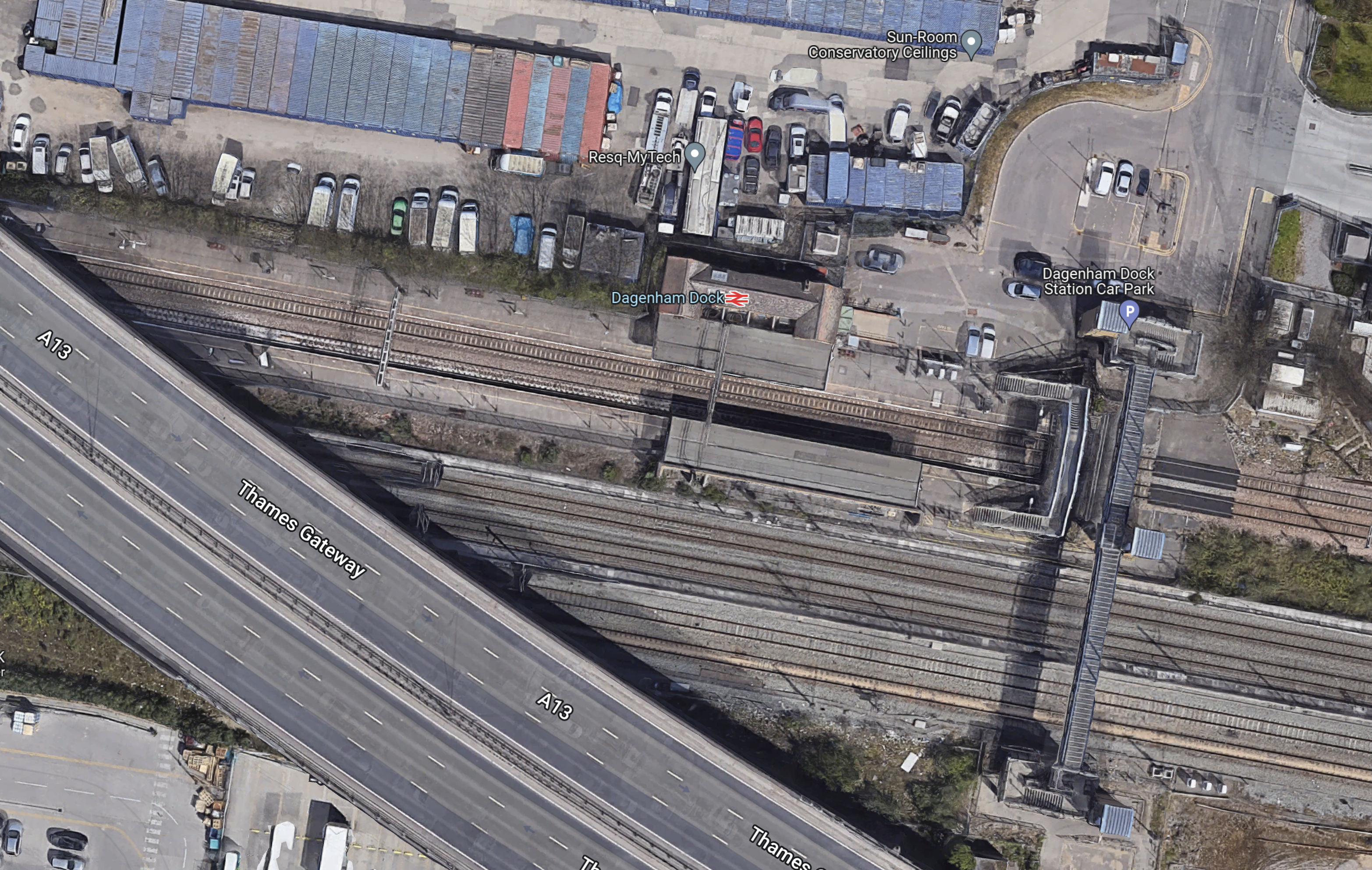
Note.
- The top pair of lines are the c2c lines.
- The next pair of lines are High Speed One.
- The lines below High Speed One are a freight link between High Speed One and the Barking freight hub.
There certainly would appear to be space for two platforms on High Speed One.
But then we still have the problem of an extra station using up valuable space on High Speed One.
The only solution, that I can think of, is that Southeastern HighSpeed services would perhaps stop only at Dagenham Dock or Stratford, but not both.
Conclusion
In this simple analysis, it looks like an extra stop on c2c at Dagenham East is possible, but extra stations on High Speed One might be difficult to fit in.
An Analysis Of The Train Service On The East Kent Line With Respect To The Three Options For Crossrail To Ebbsfleet (C2E)
Much of the analysis is an update of a post called Up To £3 Billion For Crossrail To Ebbsfleet, that I wrote in June 2019.
Current Services Along The North Kent Line
I shall start by looking at current services on the North Kent Line.
Thameslink – Luton And Rainham (Kent)
A Thameslink service
- Two trains per hour (tph)
- South of the Thames, the service calls at London Bridge, Deptford, Greenwich, Maze Hill, Whatcombe Park, Charlton, Woolwich Arsenal, Plumstead, Abbey Wood, Slade Green, Dartford, Stone Crossing, Greenhithe for Bluewater, Swanscombe, Northfleet, Gravesend, Higham, Strood, Rochester, Chatham and Gillingham.
- Eight-car Class 700 trains work the route, which have a 100 mph operating speed.
- The service calls at Northfleet for a possible interchange with services running from Ebbsfleet International station
- The service calls at Abbey Wood for interchange with Crossrail.
If there needed to be more capacity on this service, I suspect Thameslink could run twelve-car trains.
Southeastern – London Charing Cross And Gravesend
A Southeastern Metro service.
- Two tph
- Calls at Waterloo East, London Bridge, Hither Green, Lee, Mottingham, New Eltham, Sidcup, Albany Park, Bexley, Crayford, Dartford, Stone Crossing, Greenhithe for Bluewater, Swanscombe and Northfleet
- The service calls at Northfleet for a possible interchange with services running from Ebbsfleet International station.
- The service calls at Gravesend for interchange with Southeastern HighSpeed services between St. Pancras International station and North-East Kent, East Kent and soon-to-be East Sussex.
- Class 465 trains work the route, which have a 75 mph operating speed.
This picture shows a train for Gravesend in London Bridge station.
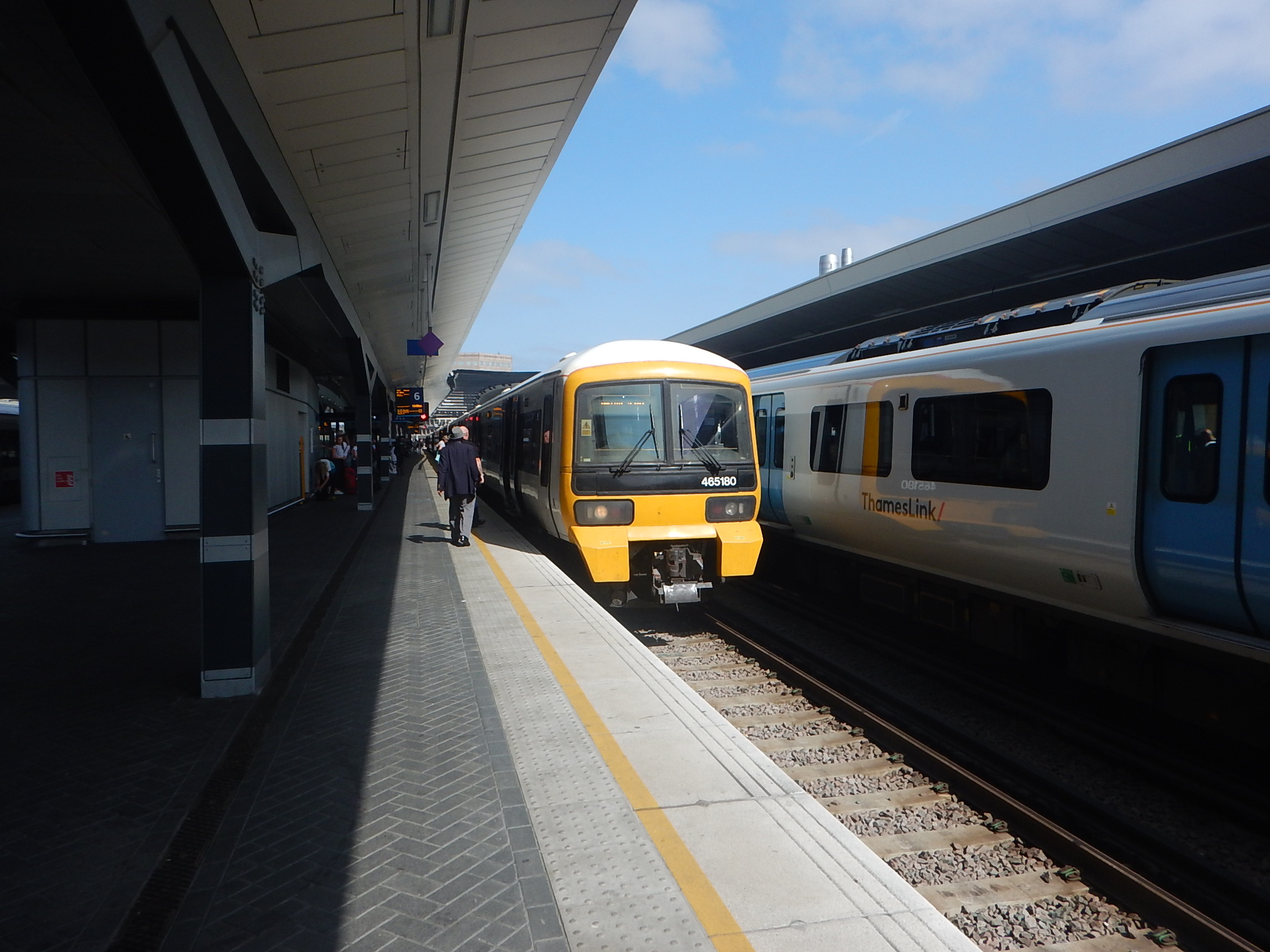
My feeling, is that the service would be improved by modern 100 mph trains, as these antique slow-coaches must restrict the speed of faster trains.
Southeastern – London Cannon Street And Dartford Loop Line
A Southeastern Metro service.
- Four tph in both directions.
- Calls at London Bridge, Deptford, Greenwich, Maze Hill, Westcombe Park, Charlton, Woolwich Dockyard, Woolwich Arsenal, Plumstead, Abbey Wood, Belvedere, Erith and Slade Green.
- Two tph return to Cannon Street via Crayford and Sidcup and two tph return to Cannon Street via Barnehurst and Bexleyheath.
- The service calls at Abbey Wood for a planned interchange with Crossrail.
- Class 465 trains work the route.
As I said with the previous service, these 75 mph trains need replacing with 100 mph trains.
Southeastern – London Charing Cross And Dartford
A Southeastern Metro service.
- Two tph
- Calls at Waterloo East, London Bridge, Lewisham, Blackheath, Charlton, Woolwich Dockyard, Woolwich Arsenal, Plumstead, Abbey Wood, Belvedere, Erith and Slade Green.
- The service calls at Abbey Wood for a planned interchange with Crossrail.
- Class 465 trains work the route.
As I said with the two previous services, these 75 mph trains need replacing with 100 mph trains.
Southeastern – London Victoria And Dover
A Southeastern Mainline service.
- Two tph
- Calls on the North Kent Line at Rochester, Chatham, Gillingham and Rainham.
- Class 465 trains work the route.
As I said with previous services, these 75 mph trains need replacing with 100 mph trains.
Southeastern – London Victoria And Ramsgate
A Southeastern Mainline service.
- One tph
- Calls on the North Kent Line at Rochester, Chatham, Gillingham and Rainham.
- Class 465 trains work the route.
As I said with previous services, these 75 mph trains need replacing with 100 mph trains.
Southeastern – London St. Pancras And Faversham
A Southeastern HighSpeed service.
- One tph
- Calls at Stratford International, Ebbsfleet International, Gravesend, Strood, Rochester, Chatham, Gillingham, Rainham and Sittingbourne.
- The service calls at Ebbsfleet International for an interchange with Continental services.
- Class 395 trains work the route, which have a 100 mph operating speed on lines electrified using a third-rail.
This picture shows a Class 395 train at Gravesend station.
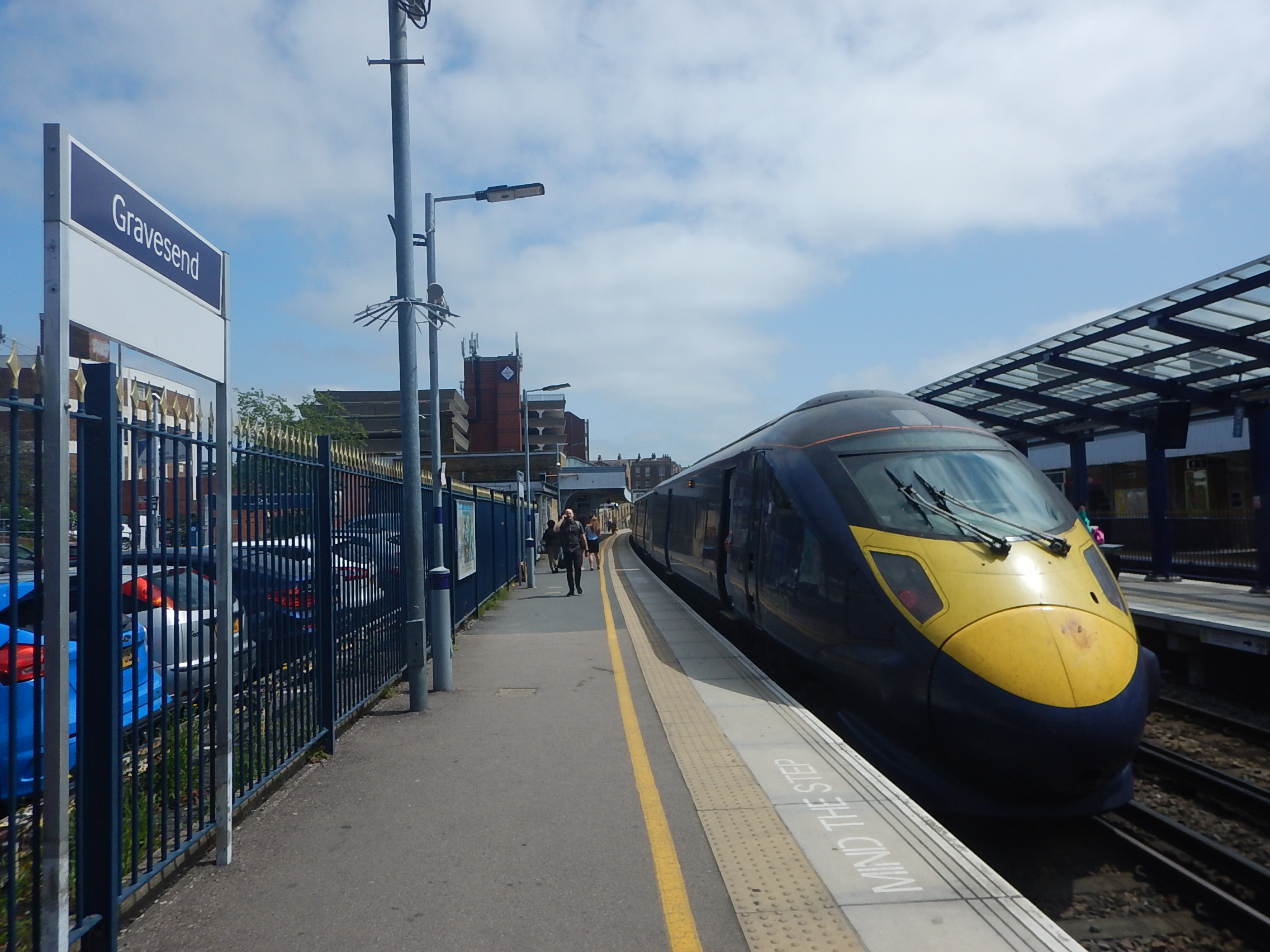
East of Ebbsfleet International, this service can be considered a 100 mph local train, that gets slowed by the 75 mph services.
Southeastern – London St Pancras International Loop Service
A Southeastern HighSpeed service.
- One tph
- Calls at Stratford International, Ebbsfleet International, Gravesend, Strood, Rochester, Chatham, Gillingham, Rainham, Sittingbourne, Faversham, Whitstable, Herne Bay, Birchington-on-Sea, Margate, Broadstairs, Ramsgate, Sandwich, Deal, Walmer, Martin Mill, Dover Priory, Folkestone Central, Folkestone West, Ashford International, Ebbsfleet International and Stratford International.
- The service calls at Ebbsfleet International and Ashford International for an interchange with Continental services.
- Class 395 trains work the route.
East of Ebbsfleet International, this service can be considered a 100 mph local train, that gets slowed by the 75 mph services.
Southeastern – London St Pancras International And Ramsgate
A Southeastern HighSpeed service.
- One tph
- Calls at Stratford International, Ebbsfleet International, Ashford International, Canterbury West, Ramsgate and Broadstairs
- The service calls at Ebbsfleet International and Ashford International for an interchange with Continental services.
- Class 395 trains work the route.
East of Ashford International, this service can be considered a 100 mph local train, that gets slowed by the 75 mph services.
A Summary Of Services By Station
I will look at the current number of trains at stations between London Bridge and Faversham.
- Deptford – 6 tph
- Greenwich – 6 tph
- Maze Hill – 6 tph
- Westcombe Park – 6 tph
- Charlton – 8 tph
- Woolwich Dockyard – 6 tph
- Woolwich Arsenal – 8 tph
- Plumstead – 8 tph
- Abbey Wood – 8 tph
- Belvedere – 6 tph
- Erith – 6 tph
- Slade Green – 6 tph
- Dartford – 12 tph to London and 6 tph to the East
- Stone Crossing – 4 tph
- Greenhithe for Bluewater – 6 tph
- Swanscombe – 4 tph
- Northfleet – 4 tph
- Gravesend – 6 tph to London and 5 tph to the East
- Higham – 2 tph
- Strood – 4 tph
- Rochester – 7 tph
- Chatham – 7 tph
- Gillingham – 7 tph
- Rainham – 7 tph to London and 5 tph to the East
- Sittingbourne – 5 tph
- Faversham – 5 tph
Note.
- This is almost a train every ten minutes all the way from London to Faversham.
- Between Gravesend and Faversham one tph is a Southeastern HighSpeed service.
- In addition Ebbsfleet International has four tph to and from London St. Pancras International.
This can be considered the base service to which Crossrail services can be added.
Service Frequency Of Option 1
The first option provides for an extension of Crossrail from Abbey Wood to Northfleet/Ebbsfleet and Gravesend, sharing the existing tracks with National Rail services.
- Of the 12 trains per hour (tph) that are planned to run to Abbey Wood. four tph will terminate at each of Abbey Wood, Northfleet/Ebbsfleet and Gravesend.
- Crossrail trains would call at all stations on the North Kent Line between Abbey Wood and Gravesend stations.
This gives a summary as follows.
- Deptford – 6 tph
- Greenwich – 6 tph
- Maze Hill – 6 tph
- Westcombe Park – 6 tph
- Charlton – 8 tph
- Woolwich Dockyard – 6 tph
- Woolwich Arsenal – 8 tph
- Plumstead – 8 tph
- Abbey Wood – 20 tph
- Belvedere – 14 tph
- Erith – 14 tph
- Slade Green – 14 tph
- Dartford – 20 tph to London and 14 tph to the East
- Stone Crossing – 12 tph
- Greenhithe for Bluewater – 14 tph
- Swanscombe – 12 tph
- Northfleet – 12 tph
- Gravesend – 10 tph to London and 5 tph to the East
- Higham – 2 tph
- Strood – 4 tph
- Rochester – 7 tph
- Chatham – 7 tph
- Gillingham – 7 tph
- Rainham – 7 tph to London and 5 tph to the East
- Sittingbourne – 5 tph
- Faversham – 5 tph
Note.
- Train frequencies between Abbey Wood and Northfleet have increased by 8 tph
- Train frequencies at Gravesend have increased by 4 tph.
- Train frequencies to the East of Gravesend are unchanged.
- Between Gravesend and Faversham one tph is a Southeastern HighSpeed service.
- Crossrail has a direct interchange at Gravesend with the Southeastern HighSpeed services.
I am fairly certain that signalling must be improved and train speeds must be increased for Option 1.
Service Frequency Of Option 2
The second option is to draw out Crossrail from south east London to Dartford using new dedicated tracks built next to the existing North Kent line, with increased rail service frequency between Dartford and Northfleet.
- All the 12 tph, that currently are planned to run ro Abbey Wood, all will terminate at Dartford station.
- Crossrail trains would call at all stations on the North Kent Line between Abbey Wood and Dartford stations.
- I will assume that Southeastern run an extra 4 tph between Dartford and Northfleet.
This gives a summary as follows.
- Deptford – 6 tph
- Greenwich – 6 tph
- Maze Hill – 6 tph
- Westcombe Park – 6 tph
- Charlton – 8 tph
- Woolwich Dockyard – 6 tph
- Woolwich Arsenal – 8 tph
- Plumstead – 8 tph
- Abbey Wood – 20 tph
- Belvedere – 18 tph
- Erith – 18 tph
- Slade Green – 18 tph
- Dartford – 24 tph to London and 10 tph to the East
- Stone Crossing – 8 tph
- Greenhithe for Bluewater – 10 tph
- Swanscombe – 8 tph
- Northfleet – 8 tph
- Gravesend – 6 tph to London and 5 tph to the East
- Higham – 2 tph
- Strood – 4 tph
- Rochester – 7 tph
- Chatham – 7 tph
- Gillingham – 7 tph
- Rainham – 7 tph to London and 5 tph to the East
- Sittingbourne – 5 tph
- Faversham – 5 tph
Note.
- There is a big increase in services to between Abbey Wood and Dartford.
- There is an increase of 4 tph in services between Dartford and Northfleet.
- There is no increase in services at Gravesend.
- Between Gravesend and Faversham one tph is a Southeastern HighSpeed service.
- Crossrail has no direct interchange with the Southeastern HighSpeed services.
I am fairly certain that signalling must be improved and train speeds must be increased for Option 2.
Service Frequency Of Option 3
A third option consists of improving the National Rail service between Abbey Wood and Northfleet, combined with a new Bus Rapid Transit service.
- It appears Crossrail services would stay the same at Abbey Wood, with all twelve tph terminating at the station, as are currently planned.
- Southeastern services to Dartford via Abbey Wood would be extended to Northfleet. This would increase the number of Southeastern trains to/from London serving stations between Northfleet and Dartford for connection to Crossrail at Abbey Wood from four to eight tph.
This gives a summary as follows.
- Deptford – 6 tph
- Greenwich – 6 tph
- Maze Hill – 6 tph
- Westcombe Park – 6 tph
- Charlton – 8 tph
- Woolwich Dockyard – 6 tph
- Woolwich Arsenal – 8 tph
- Plumstead – 8 tph
- Abbey Wood – 20 tph
- Belvedere – 6 tph
- Erith – 6 tph
- Slade Green – 6 tph
- Dartford – 8 tph to London and 10 tph to the East
- Stone Crossing – 8 tph
- Greenhithe for Bluewater – 10 tph
- Swanscombe – 8 tph
- Northfleet – 8 tph
- Gravesend – 6 tph to London and 5 tph to the East
- Higham – 2 tph
- Strood – 4 tph
- Rochester – 7 tph
- Chatham – 7 tph
- Gillingham – 7 tph
- Rainham – 7 tph to London and 5 tph to the East
- Sittingbourne – 5 tph
- Faversham – 5 tph
Note.
-
- There is a 4 tph increase in services between Abbey Wood and Northfleet.
- There is no increase in services at Gravesend.
- Between Gravesend and Faversham one tph is a Southeastern HighSpeed service.
- Crossrail has no direct interchange with the Southeastern HighSpeed services.
I am fairly certain that signalling must be improved and train speeds must be increased for Option 3.
Conclusion
I have come to several small conclusions about future services on the North Kent Line.
Improved Signalling
To handle the number of trains required, I am fairly certain that modern digital signalling as used on the central sections of Crossrail and Thameslink, should be installed on the route.
Faster Trains
The operating speed of the North Kent Line is 90 mph, which is not a good fit to the operating speed of the trains.
- Class 375 train – 100 mph
- Class 376 train – 75 mph
- Class 395 train – 100 mph
- Class 465 train – 75 mph
- Class 466 train – 75 mph
- Class 700 train – 100 mph
- Class 707 train – 100 mph
I’m sure that train capacity would be increased if trains could operate at 90 mph or even 100 mph on the route.
Only Option 1 Allows Interchange Between Crossrail And Southeastern HighSpeed Services
Option 1 allows this interchange at Gravesend and it could prove useful, when travelling between North-East Kent and Crossrail stations, including Paddington and Heathrow.
More Services East Of Gravesend
I suspect that there could be extra paths to the East of Gravesend.
These could be either classic or HighSpeed services.
In Kent On The Cusp Of Change – Highspeed Routes, I said this.
The Kent On The Cusp Of Change article in the July 2017 Edition of Modern Railways talks about the Southeastern Highspeed routes through Kent.
Some principles are laid down.
- All six-car services would be extended to twelve-car services.
- Trains could be divided at Ashford International station to serve multiple destinations.
- Maidstone West station would get an hourly Off Peak service.
The article gives an estimate that at least another twenty Class 395 trains are needed of which perhaps three would have batteries for operation along the Marshlink Line between Ashford International and Ore stations.
The new timetable proposed in the article is similar to that now, with the following changes in each hour.
- All Day – A St. Pancras – Ashford – Dover Priory service runs once per hour and splits at Ashford with one six-car train going to and from Hastings and the other six-car train going to and from Dover Priory.
- Off Peak – A new St. Pancras – Ashford – Canterbury West service runs once per hour.
- All Day – A new St. Pancras – Ebbsfleet service runs twice per hour.
- Off Peak – A new St. Pancras – Gravesend – Strood – Maidstone West service runs once per hour.
In addition all trains passing Thanet Parkway station will stop after it opens.
Note.
- Southeastern HighSpeed services will serve Hastings.
- Gravesend gets a second Southeastern HighSpeed service to St. Pancras.
I also wrote Kent On The Cusp Of Change – Fawkham Junction Link, which is about a Network Rail proposal to use Victoria as a second terminal for Southeastern HighSpeed services.
Little has been said about using Victoria as a second terminal, but if it was, it could free up space on the North Kent Lines, which would allow more paths for Crossrail.
It’s Time To Detopsify Stratford Station
Stratford Station has grown like Topsy for too long and has several problems and possible future expansions.
Not least of these include.
- The final arrival of Crossrail.
- A direct connection to Chingford.
- A Stansted Express service.
- Massive housing developments in the area.
- More hotels
- New cultural developments like the branch of the Victoria and Albert Museum.
- A new campus for University College London.
This article on IanVisits is entitled Stratford Station Set For Massive Transformation.
This is his opening paragraph.
Stratford station could be radically redeveloped under plans being worked on by the rail companies and local council.
That is rather understated!
The station will become several times busier and needs a complete rethink, many more services and deTopsification.
These are my thoughts.
The Development Of The High Meads Loop
The High Meads Loop exists and is a double-track loop that can turn trains arriving at Stratford station via Lea Bridge station.
- It is underneath the Eastfield Shopping Centre – Westfield is in the West of London.
- Each track of the loop has its own long platform in the station. – Platform 11 is for clockwise trains and Platform 12 is for anti-clockwise.
- It has been used in the past for a Stansted Express service.
The Wirral Line in Liverpool like the High Meads Loop is now a modern loop for turning trains.
- The Wirral Loop is only single-track.
- It gives connections for over thirty stations on the Wirral and in Cheshire and North Wales to Liverpool City Centre.
- It is run by fifty-year-old Class 507 and Class 508 trains.
- The loop has now been improved and can handle upwards of the fourteen trains per hour (tph) it currently does.
Merseyrail will soon be introducing new Class 777 trains on the Wirral Line in the near future and will be increasing services and the number of destinations.
British Rail’s vision for Liverpool, that was cruelly cut-short by Liverpool MP; Harold Wilson, is finally coming to fruition.
Newcastle also got its British Rail tunnel which is now being used by the Metro, but what would have happened in Manchester if British Rail had been allowed to build the Picc-Vic Tunnel?
I have a strong belief, that a Lea Valley Metro can be developed on the West Anglia Main Line.
- It would have two Southern terminals – Liverpool Street station and the High Meads Loop at Stratford.
- When it opens, Crossrail will mean that Liverpool Street and Stratford stations will be seven or eight minutes apart with a frequency of at least 12 tph.
- Northern terminals would include Broxbourne, Cheshunt, Chingford, Enfield Town and Hertford East.
- Crossrail 2 was planned to have a frequency of 10 and 15 tph between Tottenham Hale and Broxbourne stations.
I believe that if services in East London are thoroughly reorganised, that all the benefits of Crossrail 2 can be brought to East London by the use of the High Meads Loop and the upgrading of existing lines.
Stansted Express Services
Go to Stratford station and there is an out-of-date sign at the end of Platform 1 and 2, where the Overground trains terminate.

It directs passengers to Platform 12 for Stansted Airport.
The picture was taken in 2017, but there is still a walk-through to Platform 12, that I use regularly, if I’m changing between London Overground and Greater Anglia or TfL Rail services to destinations on both the West Anglia or Great Eastern Main Lines.
I believe that there is still a need for a Stansted Express services from Stratford, as for some people, including myself, it is easier to get to Stratford, than Liverpool Street.
From some places the connections to and from Stansted are not very good. Try going between London Bridge, Canterbury, Euston, Victoria or Waterloo and Stansted with a few mobility issues like a heavy suitcase and/or a baby, without a degree in Ducking-and-Diving!
An additional Stansted Express service from Stratford would make things a lot easier to get to the airport for many travellers, because of Stratford’s connections to the Central, Jubilee and North London Lines and SouthEastern’s Highspeed services.
Better Connection Between High Speed One And The High Meads Loop For Passengers
Some passenger connections are missing at Stratford.
This is indicated in the IanVisits article.
This map from cartometro.com shows the Topsy-like nature of the platforms at Stratford.
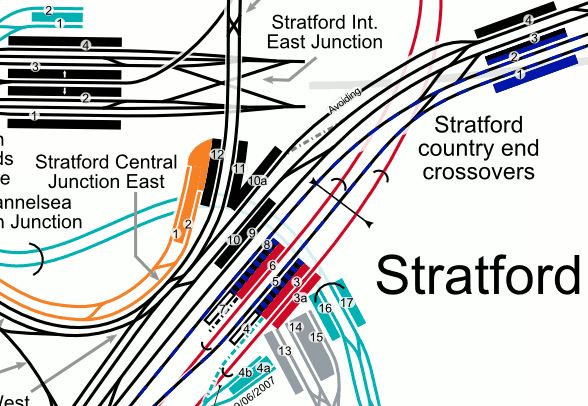
Note.
- The Docklands Light Railway is shown in turquoise.
- The DLR platforms in the North-West corner of the map are those of Stratford International station.
- High Speed One and the four platforms of Stratford International station are shown in black.
- The North London Line of the London Overground is shown in orange.
- The North London Line terminates in Platforms 1 and 2, which have a level link to Platform 12.
- Platform 12 is on the anti-clockwise platform for the High Meads Loop and has step-free access to the subway system underneath the station.
- Platform 11 is on the clockwise platform for the High Meads Loop and has level access to Platform 10a and full step-free access,
- Platform 10a is used by some services to East Anglia.
- Crossrail is shown in blue.
- The Central Line is shown in red.
- The Jubilee Line is shown in silver.
It is not the best passenger-friendly station layout.
- Inevitability, you often find yourself trudging a long way at Stratford station.
- Changing to or from any high speed services is supremely difficult.
- Often you have to walk through the busy Eastfield Shopping Centre.
Particularly annoying for me is coming back from Kent on High Speed One and needing to take the North London Line, as I do several times a year.
As it involves a long walk through the Shopping Centre, I now take the easy way out and carry on to St. Pancras and get a taxi home.
As Stratford International is one of the draughtiest stations in England, the station is a real Design Crime and it needs a serious makeover.
Conclusion
Sort it!
Kent On The Cusp Of Change – Victoria As A Highspeed Terminal
The Kent On The Cusp Of Change article in the July 2017 Edition of Modern Railways has made me ask questions about services into St. Pancras International station.
Is There Enough Capacity For Continental Services At St. Pancras International Station?
Platforms 5-10 at the station are allocated to Continental services.
Under Eurostar (High Speed 1) in the Wikipedia entry for the station this is said.
Seventeen pairs of trains to and from Paris Gare du Nord every day, ten pairs of trains to and from Bruxelles-Midi/Brussel-Zuid for Brussels and the European Union de facto capital, and one train to and from Marne-la-Vallée for Disneyland Resort Paris. Extra services run to Paris on Fridays and Sundays, with a reduced service to Brussels at weekends. Additional weekend leisure-oriented trains run to the French Alps during the skiing season, and to Marseille via Lyon and Avignon in the summer.
So it looks like on a typical day, there are just under thirty pairs of trains between St. Pancras International station and the Continent. So on a typical operational day from 0700 to 2200, that means it’s approximately two trains per hour (tph).
I feel that with perhaps some changes to the operation of the passenger and train cleaning and victualling systems, that six platforms could easily handle up to six tph.
So I doubt, that there is too much of a problem increasing the number of Continental services from St. Pancras International station.
Is There Enough Capacity For Highspeed Services At St. Pancras International Station?
Platforms 11-13 at the station are allocated to Southeastern‘s Highspeed services, which are run by Class 395 trains.
Is There Enough Capacity On High Speed 1 Between Ebbsfleet International And St. Pancras International Stations?
Under Services in the Wikipedia entry for High Speed 1, this is said.
High Speed 1 was built to allow eight trains per hour through to the Channel Tunnel. As of May 2014, Eurostar runs two to three trains per hour in each direction between London and the Channel Tunnel. Southeastern runs in the high peak eight trains per hour between London and Ebbsfleet, two of these continuing to Ashford. During the 2012 Olympic Games, Southeastern provided the Olympic Javelin service with up to twelve trains per hour from Stratford into London.
I think the key figures here are the ability to handle eight tph for the Channel Tunnel and the twelve tph that was achieved during the Olympics.
Let’s fast forward to 2024 when Paris could be hosting the Olympic Games.
Given too, that by then, Continental services to Germany, the Netherlands and other parts of France could have expanded and there must be a strong possibility, that the full eight Channel Tunnel paths will be needed.
So that would leave just four train paths for the Highspeed services.
I suspect that whoever is running the Highspeed services will want to develop them with services to other destinations like Hastings and Eastbourne and more frequent services to the existing destinations in Thanet.
This leads me to the conclusion, that more capacity is needed for Highspeed services into London.
Some extra capacity can probably be created by improving the signalling and operational methods, but will that be enough.
The Problems With The Highspeed Services
Every time, I use the Highspeed services, they work well, but they do have problems.
- The only London terminal is St. Pancras International station.
- The interchanges at Stratford International station to the Underground is a long walk.
- The interchange at Stratford International station to Crossrail will be equally poor.
- The frequency of services are not what passengers demand these days.
- The services need to connect to Hastings and Eastbourne.
- Passengers complain about the cost.
Expanding the Highspeed services would solve some of these problems, but if the Continental services of Eurostar and other operators expand, there could be a capacity problem before the mid-2020s.
The Two London Terminal Solution
Network Rail and the train operating companies (TOCs) seem to have come up with a cunning plan.
In the Kent on the Cusp of Change article and in one in the May 2017 Edition, Modern Railways, the magazine reports that consideration is being given to reopening the Fawkham Junction link, that used to be used by Eurostar trains to access Waterloo station from the Channel Tunnel.
Trains would not now go to Waterloo, as there are other plans for the expansion of the station.
But it would be fairly simple for trains to go via Swanley and Bromley South stations into Victoria station.
In the next few sections, I will outline why I think this station could and probably will be used as a second London terminal for Highspeed services.
Extra Highspeed Terminal Capacity In London
As I indicated earlier, I think that within the next few years, there may be a capacity problem between London and Ebbsfleet and opening a second terminal at Victoria would add extra train paths on the surface through South L:ondon.
A Second Highspeed Terminal In London
Services to Victoria with its Underground connections, that are currently being improved dramatically, would be welcomed by many travellers, who want to go to places like Kensington and Westminster or perhaps avoid the long walks at Stratford International station to the Underground or Crossrail.
Crossrail 2 will also call at Victoria, if it’s ever built.
Services Between Victoria And Thanet Could Go Highspeed
All or some of the services between Victoria and the Thanet area would be able to go Highspeed and use the Class 395 trains.
The Highspeed services would use the reinstated Fawkham Junction link and High Speed One between stops at Ebbsfleet International and Ashford International stations.
Suppose All Services Between Victoria And Thanet Used Class 395 Trains
Surely, this would have tremendous advantages for Network Rail and the operator in that, all of the stations and tracks, to the East of Ashford International station, could be updated, so that they efficiently handled twelve-car Class 395 trains.
In a Network Rail document about the East Kent lines, Network rail says this.
Increase speed to rolling stock and signalling capability.
As the East Kent Re-Signalling Project seems to be improving the signalling, the faster Class 395 trains would set the desired operating speed.
As I indicated earlier, if the new batch of Class 395 trains could have a faster capability on third-rail routes.
What Times Could Class 395 Trains Achieve On Classic Routes?
As an illustration of the operating speed on the East Kent lines, Ashford International to Ramsgate stations takes thirty-six minutes for a journey of about thirty-five miles with only one stop.
Network Rail probably know how to reduce this important journey by at least ten minutes, which would benefit Highspeed and Classic services.
Currently, London Victoria to Ashford International stations takes just under an hour and a half via Maidstone East and another ten stops.
This document from Network Rail has two projects, that will improve times on the Chislehurt to Ashford section of this route.
- Journey Time Improvement – Reduce impact of Permanent Speed Restrictions
- Maidstone signalling interlocking renewal – Renewal of interlocking and external equipment
The document indicates they could be completed in 2019.
The Class 395 trains are a modern train with bags of grunt and probably the ability to execute a station stop in double-quick time.
So with the track improvements to allow higher speeds between London Victoria and Ashford International station, I suspect that it might be possible to trim perhaps twenty minutes from the journey time.
Could Network Rail be aiming for an hour between Victoria and Ashford International stations on the Classic route, via Bromley South, Swanley and Maidstone East stations?
If they could manage the magic hour, then Hastings could be within perhaps 95 minutes of Victoria in a Class 395 train with either diesel or battery power.
This would be a few minutes faster than the current faster times to Cannon Street on the Hastings Line.
It would certainly be a good interim alternative, until trains can go between High Speed One and the Marshlink Line.
What Times Could Class 395 Trains Achieve Using High Speed One Between Victoria and Ashford International Stations?
I estimate that Victoria to Ebbsfleet International using the Fawkham Junction link and Class 395 trains could be in the order of thirty minutes.
As Class 395 trains take nineteen minutes between Ebbswfleet International and Ashford International stations, I believe it would be reasonable to assume between Victoria to Ashford International stations will take forty-nine minutes or just twelve minutes longer than the current time between St. Pancras and Ashford International stations.
Victoria To Fawkham Junction
If the Fawkham Junction link were to be reinstated, a number of the trains between Victoria and Thanet would take the Chatham Main Line after passing Swanley station and then take the Fawkham Junction link to Ebbsfleet International station.
Other than the Fawkham Junction link, no substantial new infrastructure would be required, but if line improvements increased the speed between Victoria and Fawkham Junction, the Class 395 trains could certainly take advantage.
I suspect that each Class 395 train, would just take over the path of the Classic service it replaced.
There might even be a bonus, in that all fast trains through Bromley South and Swanley became Class 395 trains, which might aid the timetabling.
Class 395 Trains At Victoria Station
There are various reports on the Internet of Class 395 trains running into Victoria station, sometimes as a twelve-car train.
Class 377 trains also appear to run as twelve-car trains to Ramsgate.
So I think we can assume that Class 395 trains can run into Victoria.
Conclusion
I think that it is possible that Victoria can be used as a second terminal for Highspeed services from Thanet into London.
See Also
These are related posts.
- Abbey Wood Station
- Ashford Spurs
- Crossrail
- Elimination Of Slow Trains
- Fawkham Junction Link
- Highspeed Routes
- High Speed To Hastings
- Historic Routes
- Longfield Station
- Maidstone
- Reading To Tonbridge
- Thameslink
- Track Improvements
- Ultimate Class 395 Train
- Thanet Parkway Station
To know more read Kent On The Cusp Of Change in the July 2017 Edition of Modern Railways.
 The Anonymous Widower