British Gas Joins Forces With Samsung To Help Customers Power Smarter Energy Use
The title of this post, is the same as that of this press release from Centrica.
This is the sub-heading.
British Gas and Samsung have today announced the exciting first step in a long-term venture – aimed at helping customers better manage their energy use and increase the adoption of low carbon heating technologies in homes across Britain.
These are the first two paragraphs.
The collaboration will see British Gas integrate with Samsung’s SmartThings app to help customers optimise their home appliances to use energy when the cost and demand are lower. This is now possible through the integration of SmartThings Energy and British Gas’ PeakSave demand flexibility scheme informing customers (by sending notifications via their smartphone, TV or other compatible devices) of the best times to use household appliances to save money.
The PeakSave scheme includes PeakSave Sundays, running every Sunday until the end of February with half-price electricity from 11am to 4pm for British Gas customers and PeakSave Winter events which encourages customers to move their electricity use out of peak times when there is high demand on Britain’s energy grid.
As a Graduate Control Engineer, I believe that this could make optimising your energy use much easier.
- It would surely be a lot easier to check usage on your phone rather than a smart meter, when you perhaps cook a ready meal, so that you can see if your microwave or traditional cooker is cheapest.
- Suppose you and everybody, who lives with you are out for supper and British Gas want to cut off your gas for a reward, you can make an appropriate decision.
- Hopefully, if you have the right controls, you’ll be able to switch lights and appliances off and on.
The possibilities are endless.
I shall certainly be looking at the reviews of this app.
There is a section in the press release called Scaling Up Low Carbon Heating Opportunities, where this is said.
The collaboration will also help support customers in their journey to decarbonising their homes by introducing smart technologies in a way that is simple and empowering. From early 2024, British Gas will include Samsung heat pumps in its offering to British households to support the UK’s commitment to reach net zero by 2050.
The venture will see specially trained British Gas surveyors and engineers working with consumers to explain the benefits of heat pumps and then conducting the installations on-site. Samsung will be supporting workforce training as part of their efforts to upskill the heating industry to ensure there are enough installers to service the expected growing demand.
British Gas also offers customers the chance to purchase heat pumps through flexible financing methods. This, combined with the recently increased UK Government Boiler Upgrade Scheme grant of £7,500, creates an attractive package of financing options to help people make the transition more affordable.
Various plumbers, who I would trust, have given me different views about heat pumps.
I suspect the Samsung’s SmartThings app might be able to simulate your energy usage with or without the heat pump, as it would know your energy use with your current boiler.
I was doing similar calculations for chemical plants in the early 1970s at ICI, using a PACE 231-R computer.

Consider.
- It may look rather old fashioned, but it could solve a hundred simultaneous differential equations in one go.
- Two similar computers linked together were the analogue half of NASA’s moon mission simulator.
- Without these wonderful machines, NASA would not have been able to re-calculate the dynamics of Apollo 13 and the mission would be remembered as a disaster, rather than the first space rescue.
The average current smart phone has more computing power than a PACE 231-R.
What’s In It For Samsung?
I have a Samsung television, but unfortunately it has a screen fault because of age. So if I had the Samsung app and liked it, I might buy another Samsung TV.
Similarly, the app might give me a financial reason to buy a Samsung heat pump.
Samsung will sell more equipment.
What’s In It For Centrica?
Centrica would appear to be a loser, as bills will fall and they could be paying customers to not use energy.
But they are surely hoping that their market share will increase and I’m sure Samsung will give them a commission.
What’s In It For The Consumer?
Hopefully, they’ll get lower energy bills.
But also they might get a lot of convenience controlling their appliances and heating.
Conclusion
Using energy is becoming a computer game with monetary rewards.
Is the deal between Centrica/British Gas and Samsung another deal that has been brought to fruition by the Korean President’s visit to the UK?
It looks like this is the third recent deal signed between UK and Korean companies, after these two.
- South Korea, UK Strenghten Offshore Wind Ties
- UK And South Korea Help Secure Millions For World’s Largest Monopile Factory
I suspect, there might be a few more deals, if Charles and Camilla really turned on the charm.
In Mersey Tidal Project And Where It Is Up To Now, I wrote about talks between Liverpool City Council and Korea Water about a tidal barrage of the Mersey. This project must surely be a possibility!
This is said in the Wikipedia entry for Korean Air under Fleet Plans.
At the Association of Asia Pacific Airlines Assembly in 2018, Korean Air announced that it was considering a new large widebody aircraft order to replace older Airbus A330, Boeing 747-400, Boeing 777-200ER and Boeing 777-300. Types under consideration for replacement of older widebody aircraft in the fleet include the Boeing 777X and Airbus A350 XWB. At the International Air Transport Association Annual General Meeting (IATA AGM) in Seoul, Chairman Walter Cho said Korean Air’s widebody order is imminent and it is considering an extra order of Airbus A220 Family including developing version, Airbus A220-500.
Note.
- Airbus A350 XWB have Welsh wings and Rolls-Royce engines.
- Airbus A220-500 are made in Canada with wings and composite parts from Belfast. Rolls-Royce may have a suitable engine.
Could a deal have something in it for the UK?
Although Korea has its own SMR program, I wonder, if there could be a link-up between Korean industry and Rolls-Royce over SMRs?
Malta Months Away from First Offshore Wind Tender, Identifies Six Floating Wind Areas
The title of this post, is the same as that of this article on offshoreWIND.biz.
This is the sub-heading.
Malta’s Ministry for the Environment, Energy and Enterprise has issued a draft National Policy for the Deployment of Offshore Renewable Energy for public consultation and has demarcated six floating offshore wind development areas located beyond the country’s 12-nautical-mile territorial waters and into its potential Exclusive Economic Zone (EEZ).
These are the first three paragraphs.
According to the Ministry, an international call for expressions of interest will be launched after the public consultation and the subsequent updating of the policy document, while a Strategic Environmental Assessment (SEA) will be prepared at the same time. The completion of a plan-level SEA will help further narrow down the preliminary areas and pinpoint the preferred locations for offshore renewable installations.
The six areas, as well as the rest of Malta’s potential EEZ, have been deemed most suitable for floating offshore wind and solar technologies and, according to the policy, the government has taken into account the possibility of having projects that combine the two technologies.
Looking at other offshore and marine renewables, the government has determined that, although not precluded, wave and tidal energy potential for Malta is considered very limited.
Note.
- Malta has no domestic resource of fossil fuels and no gas distribution network.
- Renewable energy on Malta has one of the lowest shares in the European Union.
- Malta has four operational electricity plants , with a total capacity of 537.8 MW.
- There is a 200 MW interconnector to Sicily.
- Malta has run a pilot project to assess floating solar power.
- The article embraces solar power, but dismisses wave and tidal power.
As the article says that Malta has 25 GW of offshore wind potential, I suspect that Malta will attract bids for the offshore wind licences around the island from some of the world’s largest, experienced and most well-respected offshore wind companies.
I do have a few thoughts.
A Large Generation Capacity
If Malta develops its full 25 GW of offshore wind potential, it will have more than enough electricity for its normal use.
This could mean.
- Malta could have all the electricity needed to run air-conditioners everywhere.
- Malta could export electricity to Sicily.
- Malta could become a hydrogen production centre.
- I also suspect, it could mean that Malta would need some energy storage.
I’ll look at the last two points, in the next two sections.
Hydrogen Production
In the last year or so I’ve written several posts about Offshore Hydrogen Production and Malta would it seems be an ideal location to develop this industry.
- Hydrogen could be used for transport on the island.
- Hydrogen could replace imports of gas.
- Hydrogen could be exported by tanker.
- Lhyfe and other companies are developing offshore hydrogen production.
I don’t think, there would be a problem recruiting engineers to develop the industry.
Energy Storage
Because of the large generation capacity around Malta, even with substantial hydrogen production, I am sure there will be a need for some energy storage around the island.
In UK Cleantech Consortium Awarded Funding For Energy Storage Technology Integrated With Floating Wind, I described a technique called Marine Pumped Hydro, which is being developed by the STORE Consortium.
- Energy is stored as pressurised water in 3D-printed hollow concrete spheres fitted with a hydraulic turbine and pump.
- The spheres sit on the sea-bed.
- This page on the STORE Consortium web site, describes the technology in detail.
- The technology is has all been used before, but not together.
I think it is excellent technology and the UK government has backed it with £150,000 of taxpayers’ money.
I also believe that Marine Pumped Hydro or something like it, could be the solution to the intermittency of wind farms.
It could be ideal to use in the seas around Malta.
Conclusion
Malta could be a renewable energy hub in the middle of the Mediterranean.
I think the Malta renewable energy developments, will show how various technologies can work together.
UK Confirms £205 Million Budget To Power More Of Britain From Britain
The title of this post, is the same as that of this press release from the Department of Energy Security And NetZero.
This is the sub title.
UK government confirms budget for this year’s Contracts for Difference scheme as it enters its first annual auction, boosting energy security.
These are the three bullet points.
- Government announces significant financial backing for first annual flagship renewables auction, boosting Britain’s energy security
- £170 million pledged for established technologies to ensure Britain remains a front runner in renewables and £10 million ring-fenced budget for tidal
- Scheme will bolster investment into the sector every year, delivering clean, homegrown energy as well as green growth and jobs
These are my thoughts.
First And Annual
The scheme is flagged as both first and annual!
Does this mean, that each Budget will bring forward a pot of money for renewables every year?
My father, who being a letterpress printer and a Cockney poet would say it did and I’ll follow his lead.
Two Pots
In Contracts for Difference Round 4, there were three pots.
- Pot 1 – Onshore Wind and Solar
- Pot 2 – Floating Offshore Wind, Remote Island Wind and Tidal Stream
- Pot 3 – Fixed Foundation Offshore Wind
This document on the government web site lists all the results.
For Contracts for Difference Round 5, there will be two pots, which is described in this paragraph of the press release.
Arranged across 2 ‘pots’, this year’s fifth Allocation Round (AR5) includes an allocation of £170 million to Pot 1 for established technologies, which for the first time includes offshore wind and remote island wind – and confirms an allocation of £35 million for Pot 2 which covers emerging technologies such as geothermal and floating offshore wind, as well as a £10 million ring-fenced budget available for tidal stream technologies.
It could be described as a two-pot structure with a smaller ring-fenced pot for tidal stream technologies.
Contract for Difference
There is a Wikipedia entry for Contract for Difference and I’m putting in an extract, which describes how they work with renewable electricity generation.
To support new low carbon electricity generation in the United Kingdom, both nuclear and renewable, contracts for difference were introduced by the Energy Act 2013, progressively replacing the previous Renewables Obligation scheme. A House of Commons Library report explained the scheme as:
Contracts for Difference (CfD) are a system of reverse auctions intended to give investors the confidence and certainty they need to invest in low carbon electricity generation. CfDs have also been agreed on a bilateral basis, such as the agreement struck for the Hinkley Point C nuclear plant.
CfDs work by fixing the prices received by low carbon generation, reducing the risks they face, and ensuring that eligible technology receives a price for generated power that supports investment. CfDs also reduce costs by fixing the price consumers pay for low carbon electricity. This requires generators to pay money back when wholesale electricity prices are higher than the strike price, and provides financial support when the wholesale electricity prices are lower.
The costs of the CfD scheme are funded by a statutory levy on all UK-based licensed electricity suppliers (known as the ‘Supplier Obligation’), which is passed on to consumers.
In some countries, such as Turkey, the price may be fixed by the government rather than an auction.
Note.
- I would trust the House of Commons Library to write up CfDs properly.
- As a Control Engineer, I find a CfD an interesting idea.
- If a generator has more electricity than expected, they will make more money than they expected. So this should drop the wholesale price, so they would get less. Get the parameters right and the generator and the electricity distributor would probably end up in a stable equilibrium. This should be fairly close to the strike price.
I would expect in Turkey with Erdogan as President, there are also other factors involved.
Renewable Generation With Energy Storage
I do wonder, if wind, solar or tidal energy, is paired with energy storage, this would allow optimisation of the system around the Contract for Difference.
If it did, it would probably mean that the generator settled into a state of equilibrium, where it supplied a constant amount of electricity.
Remote Island Wind
Remote Island Wind was introduced in Round 4 and I wrote about it in The Concept Of Remote Island Wind.
This was my conclusion in that post.
I must admit that I like the concept. Especially, when like some of the schemes, when it is linked to community involvement and improvement.
Only time will tell, if the concept of Remote Island Wind works well.
There are possibilities, although England and Wales compared to Scotland and Ireland, would appear to be short of islands.
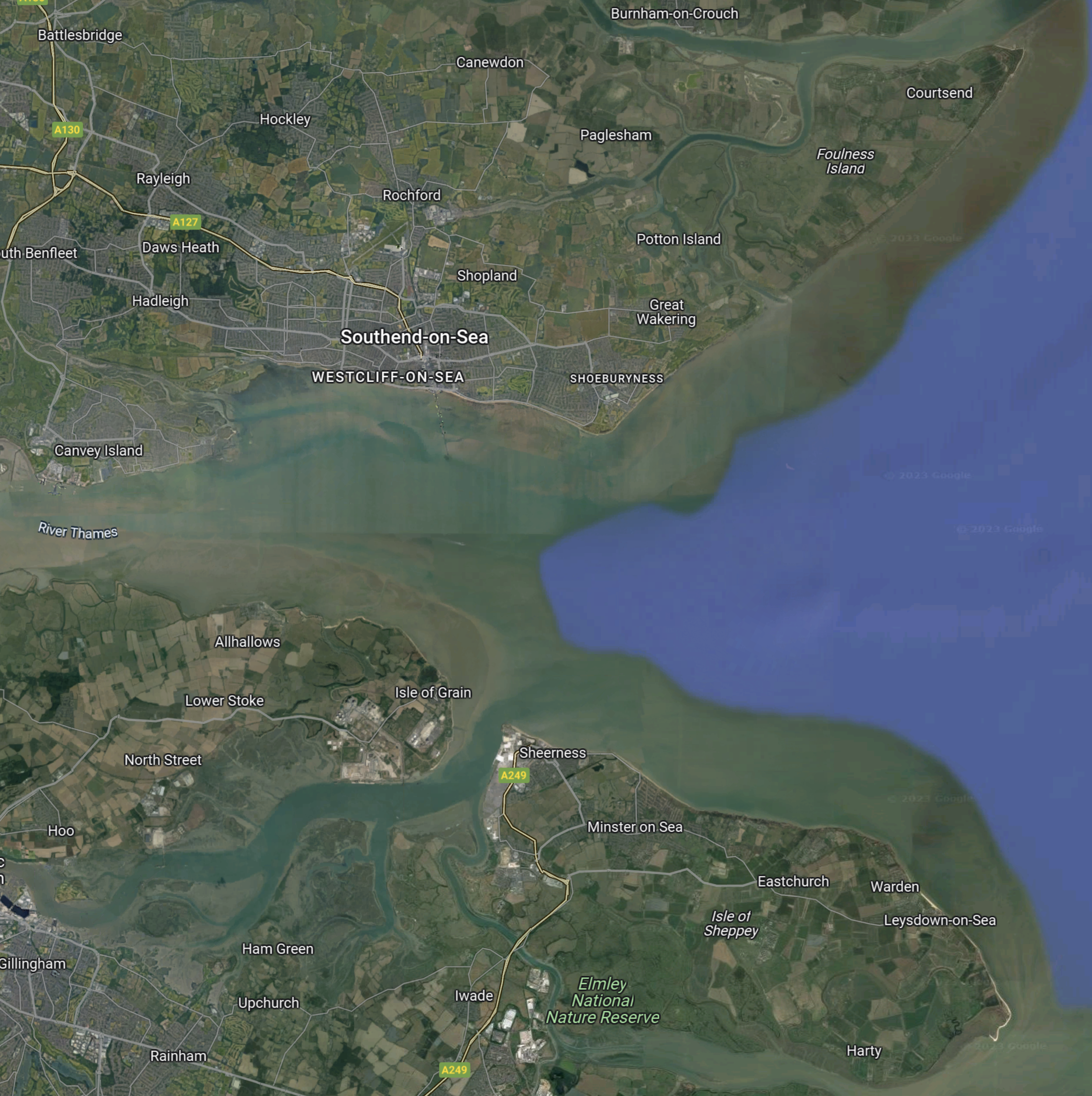
This map shows the islands of the Thames Estuary.
Note.
- In Kent, there is the Isle of Sheppey and the Isle of Grain.
- Between the two islands is a large gas terminal , a gas-fired power station and an electricity sub-station connecting to Germany.
- In Essex, there is Canvey, Foulness and Potton Islands.
- There is also the site at Bradwell, where there used to be a nuclear power station.
If we assume that each island could support 200 MW, there could be a GW of onshore wind for London and perhaps a couple of SMRs to add another GW.
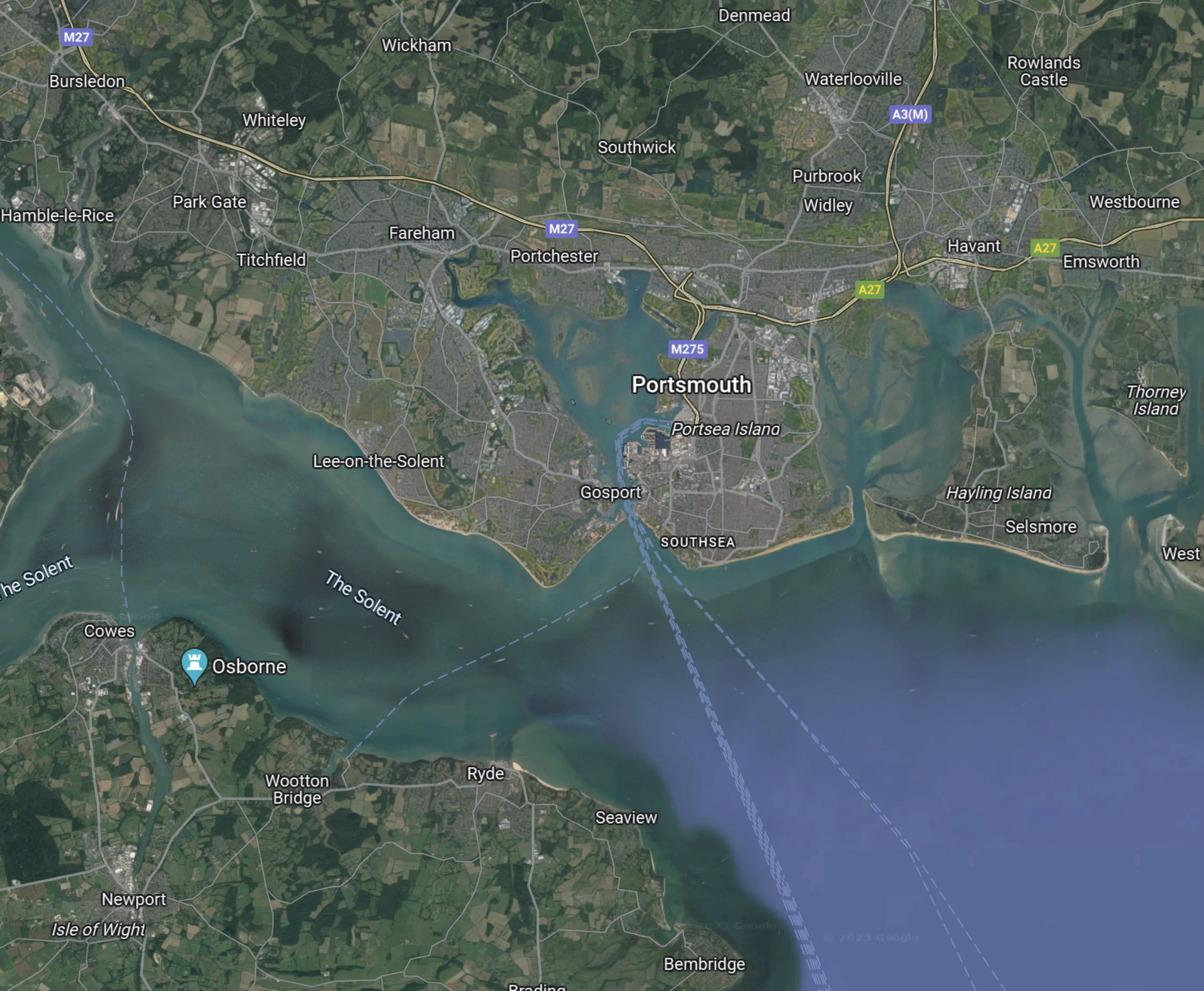
This map shows the islands around Portsmouth.
Note.
- Hayling Island is to the East of Portsmouth.
- Further East is Thorney Island with an airfield.
The Isle of Wight could be the sort of island, that wouldn’t welcome wind farms, although they do make the blades for turbines. Perhaps they should have a wind farm to make the blades even more green.
But going round England and Wales there doesn’t seem to be many suitable places for Remote Island Wind.
I do think though, that Scotland could make up the difference.
Geothermal Energy
This is directly mentioned as going into the emerging technologies pot, which is numbered 2.
I think we could see a surprise here, as how many commentators predicted that geothermal heat from the London Underground could be used to heat buildings in Islington, as I wrote about in ‘World-First’ As Bunhill 2 Launches Using Tube Heat To Warm 1,350 Homes.
Perhaps, Charlotte Adams and her team at Durham University, will capitalise on some of their work with a abandoned coal mine, that I wrote about in Exciting Renewable Energy Project for Spennymoor.
Timescale
This paragraph gives the timescale.
The publication of these notices mean that AR5 is set to open to applications on 30 March with results to be announced in late summer/early autumn 2023, with the goal of building upon the already paramount success of the scheme.
It does look like the Government intends this round to progress at a fast pace.
Conclusion
If this is going to be an annual auction, this could turn out to be a big spur to the development of renewable energy.
Supposing you have a really off-beat idea to generate electricity and the idea place in the world is off the coast of Anglesey.
You will certainly be able to make a bid and know like Eurovision, one auction will come along each year.
9 Energy, House And Rail Projects Planned For Norfolk
The title of this post, is the same as that of this article on the Eastern Daily Press.
The article is a survey of major projects across Norfolk.
Projects in the article with my thoughts will now be detailed.
Railway Village
This is described as follows in the article.
Plans to build a new 5,000-home town north of Dereham could take a significant step forward in 2023.
The proposals have been dubbed a ‘railway village’ and would lie close to the Mid Norfolk Railway at North Elmham.
The 1,278-acre site has been put forward by its owners as a potential area for development included in Breckland Council’s forthcoming local plan – a document detailing how the district should grow over the next two decades.
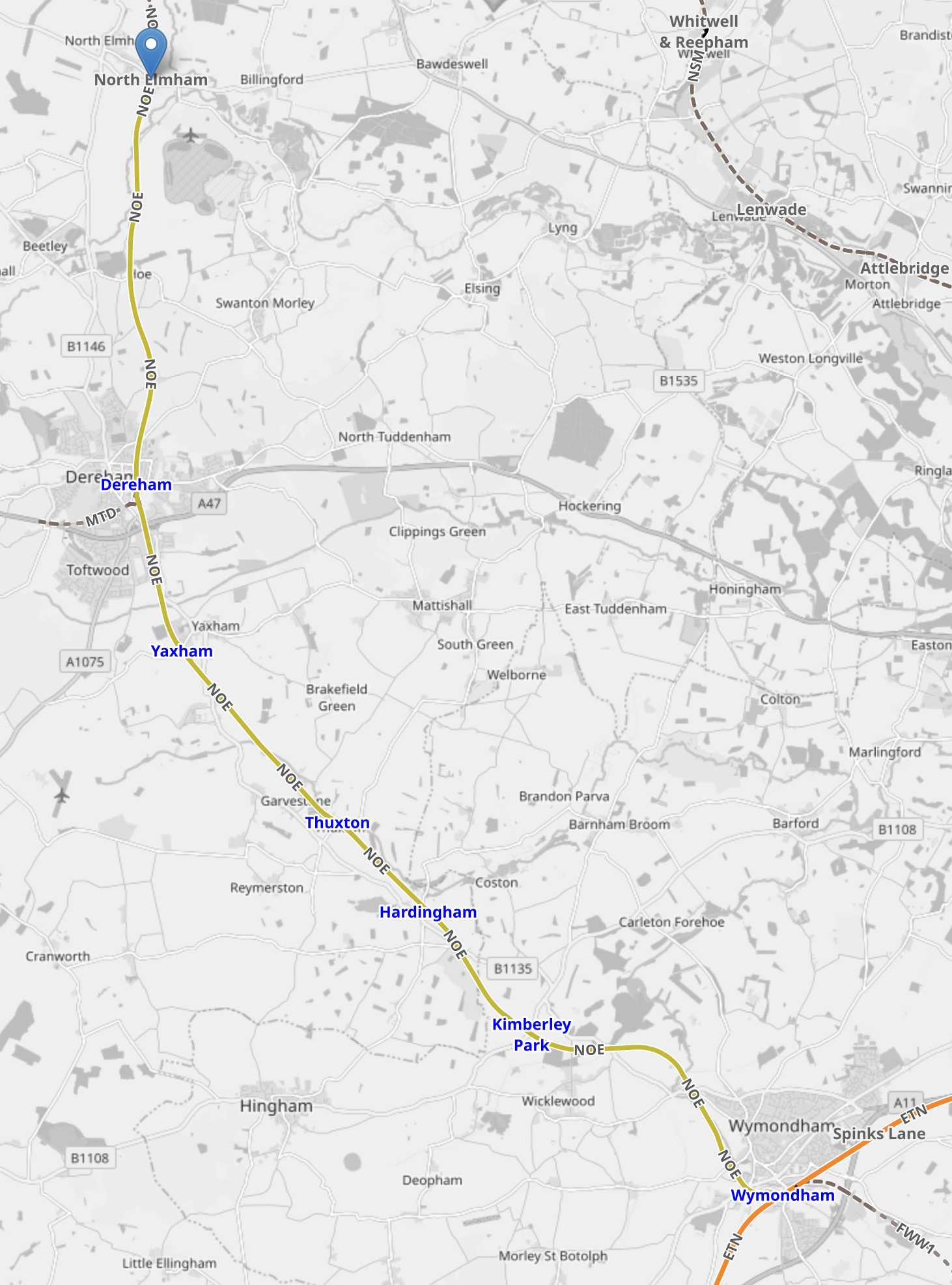
This map from OpenRailwayMap shows North Elmham and the Mid-Norfolk Railway.
Note.
- The yellow line is the Mid-Norfolk Railway.
- The site of the former North Elmham station is shown by the blue arrow at the top of the map.
- The orange line across the South-East corner of the map is the Breckland Line between Cambridge and Norwich.
- Wymondham station is on the Breckland Line, but trains between the Mid-Norfolk Railway and Norwich would be able to call at Wymondham station.
Wymondham station could be converted into a proper connection between the Breckland Line and the Mid-Norfolk Railway, with services being run between Norwich and North Elmham via Dereham.
In the Wikipedia entry for the Mid-Norfolk Railway, there is a section, which is entitled Community Railway, where this is the first paragraph.
The Mid-Norfolk Railway was established as a multi-functional line, with an intention to operate a community service in addition to tourist and freight services. The railway has also stated their belief that a commuter service between Dereham and Norwich remains a viable proposition, with the MNR either running the service themselves or working with an existing train operator. One obstacle on the MNR to running such services is the requirement to operate five manual gated level crossings between Dereham and Wymondham, although level crossing automation is a possibility in the future.
Later the section indicates that the Mid-Norfolk Railway could be extended to Fakenham.
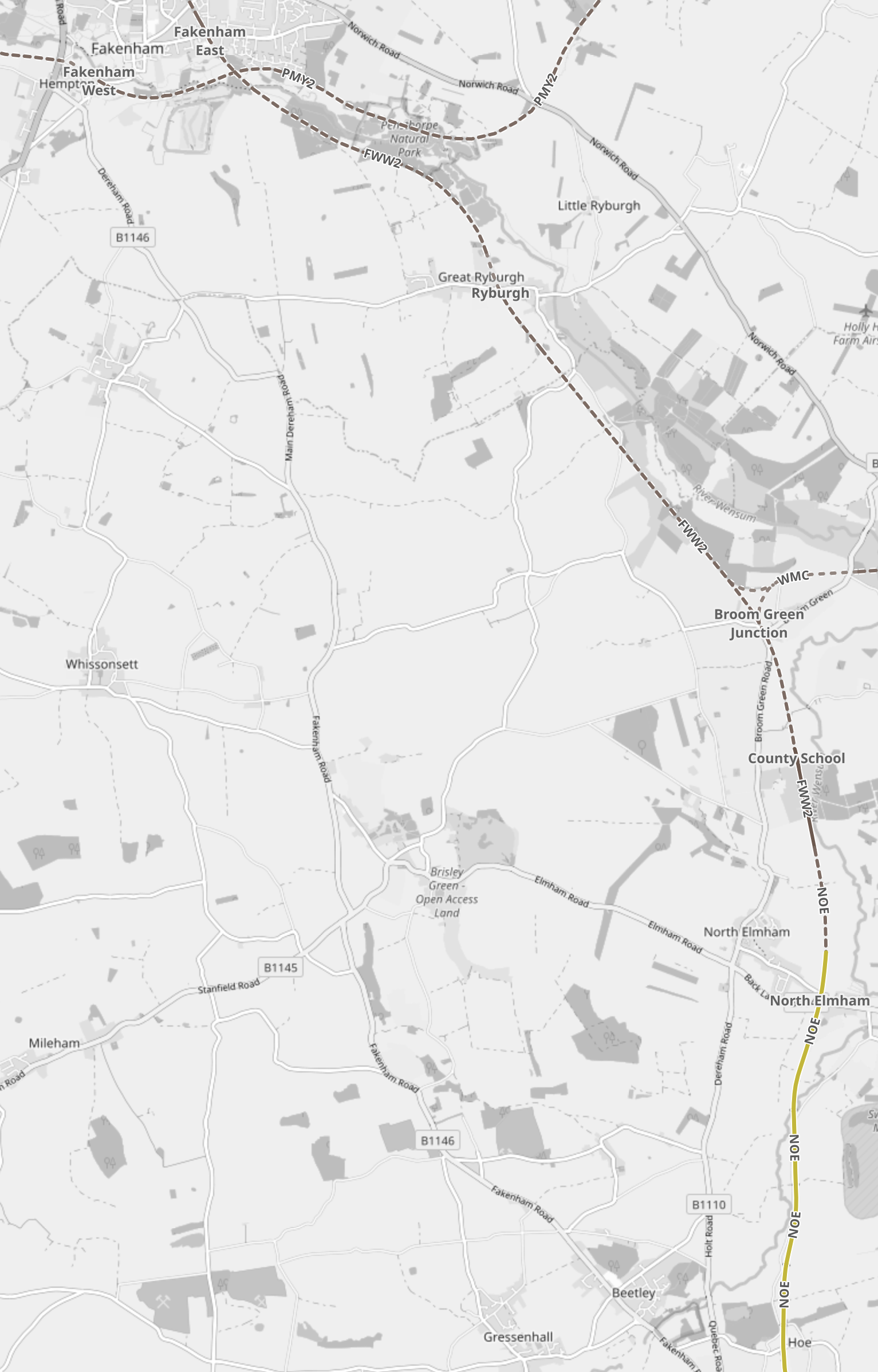
This map from OpenRailwayMap shows the original route between North Elmham and Fakenham.
Note.
- The yellow line is the Mid-Norfolk Railway.
- North Elmham station is at the top of the yellow.
- Fakenham is at the top of the map.
Adding Fakenham to the passenger service from Norwich would surely increase its viability.
There have been ambitions in the past to create a Norfolk Orbital Railway, that would connect the National Rail stations at Sheringham and Wymondham, using the tracks of the North Norfolk Railway and Mid-Norfolk Railway, and some new and relaid track.
This map from OpenRailwayMap shows North Norfolk from Fakenham and North Elmham in the West to Sheringham in the East.

Note.
- Fakenham is on the Western edge of the map about halfway up.
- North Elmham is in the South-West corner of the map, on the yellow line, what indicates the Mid-Norfolk Railway.
- The railway shown in the North-West corner is the Wells and Walsingham Light Railway. which is a 260 mm. gauge railway.
- Sheringham station, which has an hourly service to Norwich via Cromer, is in the North-East corner of the map.
- The Eastern terminus of the North Norfolk Railway is a short walk from Sheringham station.
- The blue arrow to the West of Sheringham station, indicates the Western terminus of the North Norfolk Railway at Holt station.
The Norfolk Orbital Railway would need to connect Fakenham and Holt, which doesn’t appear to be easy.
But if the connection could be made, Greater Anglia could run a combined service around the county, which would allow those living in the houses at North Elmham to get easily to the coast or the City of Norwich.
Wash Barrage
This is described as follows in the article.
A bid to build a tidal barrage stretching from Norfolk to Lincolnshire was unveiled at the end of last year.
While the scheme has seen objections from conservation groups, proponents say it would help protect the Fens from flooding, generate tidal power and would allow a new deep-sea container port to be built.
A planning application has yet to be submitted for the scheme, which Centre Port, the group behind the proposal, said could be operational by the end of the decade if given the go-ahead.
The Wash Barrier has a web site, but I doubt the RSPB will like it.
New Reservoir
The article says that the proposed site is between Chatteris and March in Cambridgeshire.
Long Stratton Bypass
This is described as follows in the article.
The Long Stratton Bypass has been mooted for decades and finally looked like it was going to get underway after funding was approved in 2021.
The scheme will mean motorists can avoid passing through the centre of the town.
It was needed, when C regularly commuted to Norwich in the 1980s.
Norwich Western Link
This is described as follows in the article.
The flagship infrastructure project has been thrown into doubt after County Hall announced an indefinite delay earlier this month.
The 3.9-mile road is designed to link the A47 with the NDR to the west of the city and has been hailed as a council priority for several years.
Climate protestors are mounting a High Court challenge.
Windfarms
These are described as follows in the article.
There are a series of major windfarms planned for the Norfolk coast.
These include Swedish energy giant Vattenfall’s Boreas and Vanguard projects, which could be some of the largest in the world.
The company was granted development consent for its Norfolk Vanguard windfarm in 2022, pledging to get underway early this year.
The two schemes could power more than 3.9m homes in the UK.
Hornsea Three, another major scheme which could power another 3.2m homes, is set to start being built in March.
Note.
- The author missed out the Sheringham Shoal and Dudgeon Extension windfarms.
- Total wind power that will be developed is around 6 GW, which would supply around a quarter of the UK.
The only problem is that Norfolk is protesting against the cables to connect the wind farms to the National Grid.
I suspect they will have to be put under the sea. I wrote about this in Is There A Need For A Norfolk-Suffolk Interconnector?
New Rail Junctions
The problems around Ely station are described as follows in the article.
A key rail junction, which could help to boost growth across the region, could steam ahead this year.
Ely Junction is important because it links five lines connecting Norwich, Ipswich, Cambridge, Peterborough and King’s Lynn.
It is currently operating at full capacity, which limits the opportunity for growth of routes for passenger and cross-country freight services.
It would also enable more frequent passenger services, including between King’s Lynn and London.
An outline business case was submitted to the Department for Transport last year to seek money for the next stage of the design process – but the government has yet to make a decision.
There are also problems at Haughley Junction.
Hospitals Rebuild
The article also puts the case for developing both King’s Lynn and Great Yarmouth hospitals.
Conclusion
Norfolk is going to be busy.
Mersey Tidal Project And Where It Is Up To Now
The title of this post, is the same as that of this article on the Liverpool Echo.
This is the sub-heading.
With a major agreement on the project reached this week, we take a look at what it all means.
There is a section, which is called So What Is A Mersey Tidal Project?, where this is said.
The idea is to build a huge damn structure in the River Mersey with turbines that can harness energy from the tides of the river and convert it into clean power. The city region combined authority is hopeful that this could power up to 1 million homes and create thousands of local jobs
The city region has one of the country’s largest tidal ranges so it is seen as a perfect opportunity to explore a tidal project here. It is hoped such a project could generate a ‘plentiful, reliable supply of clean, green energy for generations to come.
In the 1970s, I did a small project management consultancy at Frederick Snow and Partners in London. They showed me their ambitious plans for a Severn Barrage, which was a tidal scheme, that would have created a tenth of our electricity and would have cost around a billion pounds.
But Harold Wilson, who was Prime Minister at the time, felt that the money would be better spent on building massive coal-fired power stations, rather than building a clean power station, that would last centuries.
A second section is called What Happened This Week?, where this is said.
This week the Liverpool City Region signed an agreement with the company behind the current world’s current largest tidal project with a view to learning lessons.
The Sihwa Lake tidal range power plant, which is operated by Korea Water Resources Corporation, generates 552GWh of clean, green energy every year, replacing the equivalent of 862,000 barrels of oil a year.
Jeong Kyeong Yun, Vice President of Korea Water Resources Corporation, known as K-water, was in Liverpool this week to sign an historic Memorandum of Agreement with Mayor Rotheram. It is hoped the agreement will pave the way for close co-operation between the two tidal power projects, through reciprocal visits and information sharing.
Note.
- The Liverpool Echo is still making spelling mistakes, like damn instead of dam. In the 1960s, Fritz Spiegl used to give us all pleasure by writing about them.
- 552 GWh would keep the UK powered up for nearly a month.
- The Sihwa Lake Tidal Power Station has a comprehensive Wikipedia entry.
- The Sihwa dam has a road over the top.
- Unlike Frederick Snow’s scheme for the Severn, Sihwa only generates power, on the incoming tide. But it does generate 254 MW.
As ever, Liverpool is thinking big and getting the experience from those, who know what they are doing.
This last paragraph, gives the thoughts of the Mayor.
Mayor Rotheram said that with the right support, he hopes the project could be generating clean, renewable power by the end of this decade.
I would go along with that.
The Mersey Tidal Project And The Mersey Gateway Bridge
Frederick Snow’s plans for the Severn could have incorporated a new road and rail crossing of the estuary.
This Google Map shows the the Sihwa Lake Tidal power station.
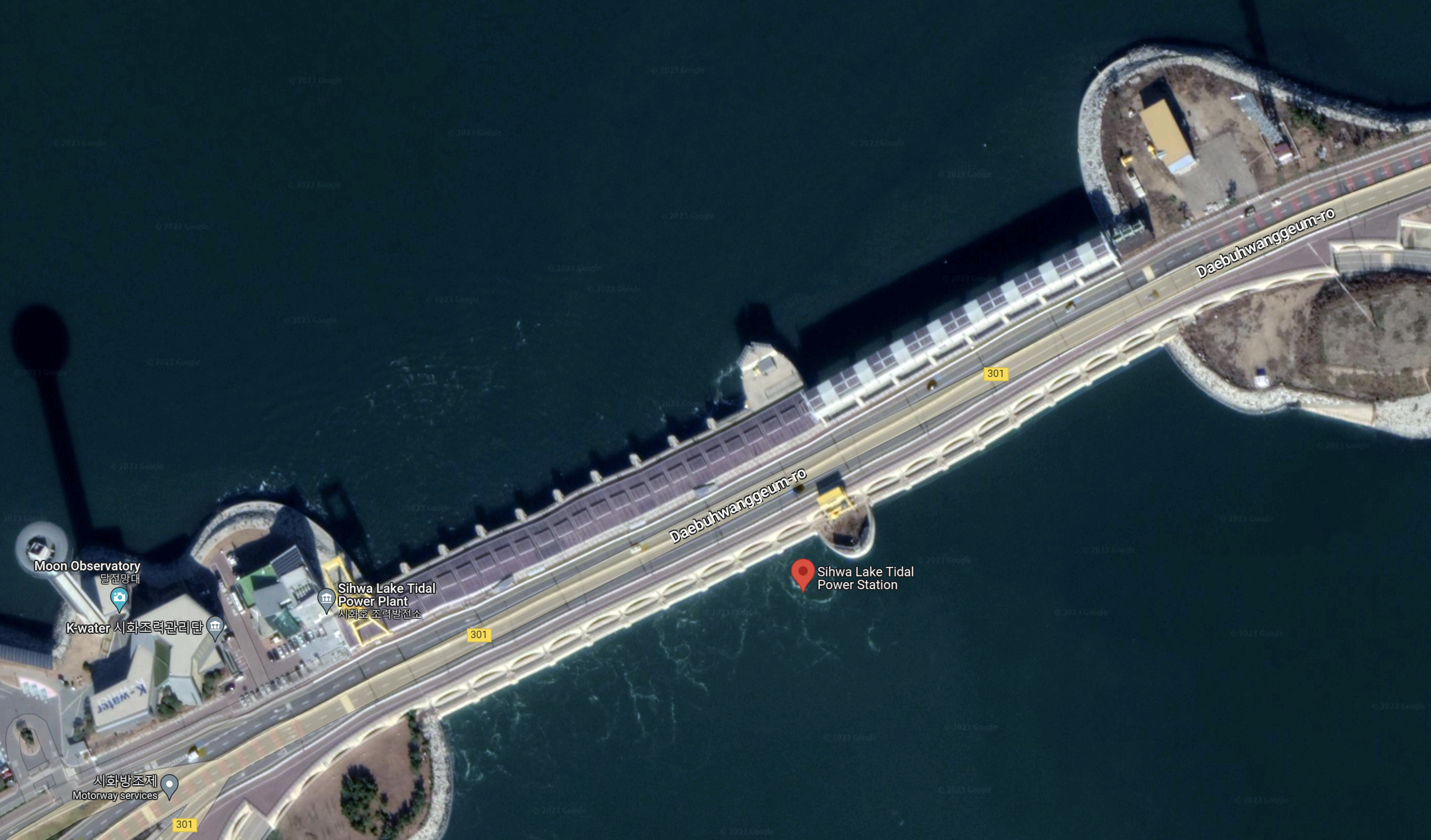
The road over the dam is clearly visible.
I took these pictures of the Mersey Estuary as I came back from Liverpool on Tuesday.





This Google Map shows the Mersey Estuary.
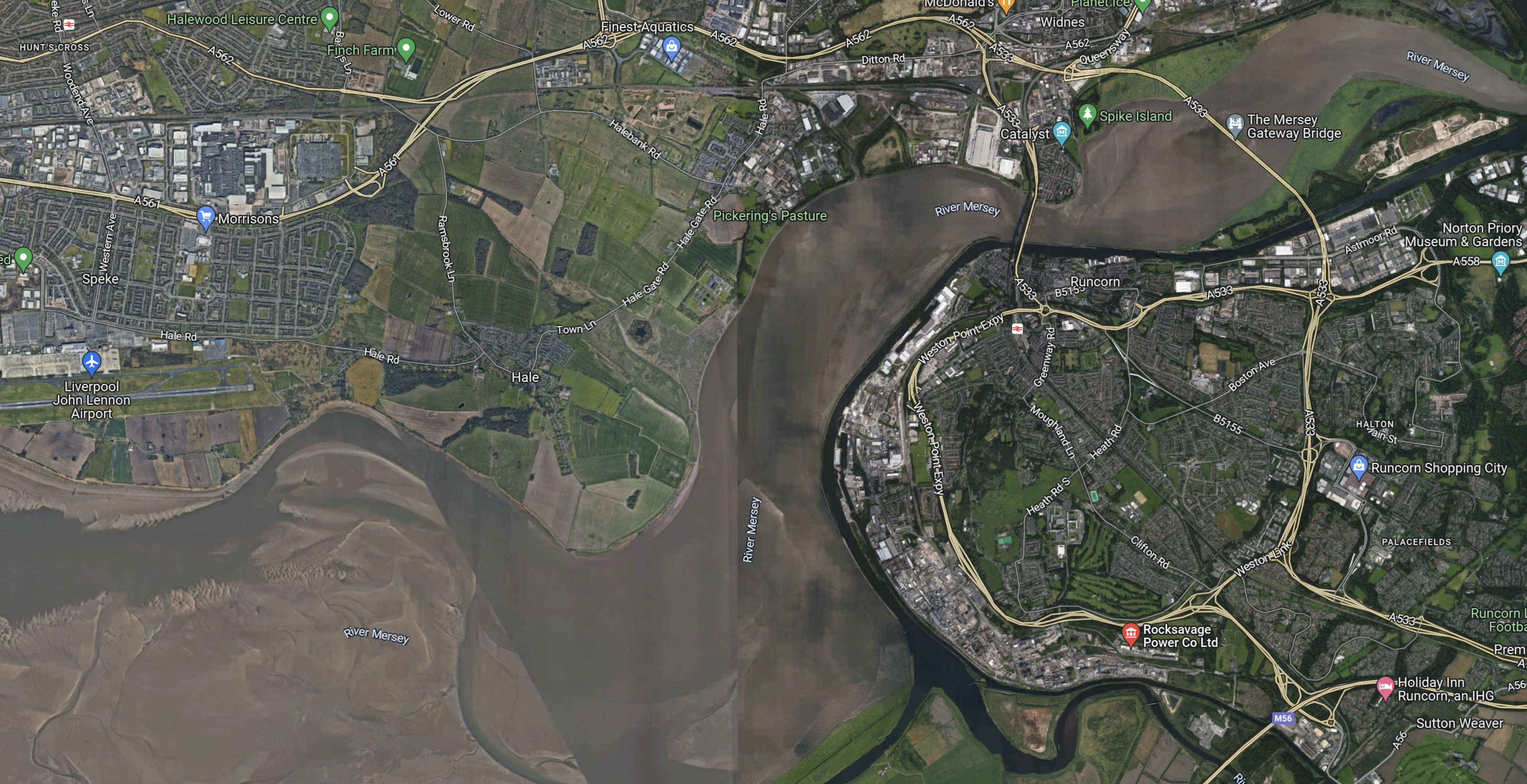
Note.
- The River Mersey flowing from the North-East corner of the map to the South-West corner.
- On the South Bank of the Mersey, there is the deep-water channel of the Manchester Ship Canal.
- The bridge in the North-East corner of the map is the Mersey Gateway Bridge.
- Then there is the pair of bridges at Runcorn; the Silver Jubilee Bridge and the Runcorn Railway Bridge.
I am fairly sure, that the Mersey Tidal Project would be built downstream of the pair of bridges at Runcorn.
This Google Map shows the Mersey Estuary from the Runcorn Bridges to the mouth of the Manchester Ship Canal.

Note.
- The Mersey Gateway Bridge and the two Runcorn bridges are in the North-East corner.
- The route of the Manchester Ship Canal is clearly visible.
- Liverpool John Lennon Airport is on the North Bank of the Mersey.
- The M56 and M53 Motorways run East-West across the map to the South of the River.
This map leads me to the conclusion, that a tidal barrage with a road on top could link Liverpool to the M56.
I have some thoughts.
Rail Access To Liverpool
There is an electrified railway between Liverpool and Ellesmere Port.
- The railway can be picked out running across the bottom of the map.
- In Liverpool’s Vision For Rail, I talked about Liverpool City Region’s plan to expand this service to Helsby, Frodsham and Runcorn East.
- Helsby and Frodsham are shown on the map.
I wouldn’t be surprised to see a new Park-and-Ride station, where the M56 and the railway cross.
Ship Access To Manchester And Other Ports
Barrages usually have to provide access for ships to pass through to any ports behind the barrage.
But the Mersey Tidal Project already has that access. – It was built in the 1893 and is called the Manchester Ship Canal.
There is probably strong protection between the Mersey and the Canal between the mouth of the Canal and Runcorn, which may impact positively on the costs of the barrage.
The Simple Barrage
Sihwa Lake Tidal power station is a simple barrage with a bridge over the power station in the middle.
This Google Map shows the location of the power station.
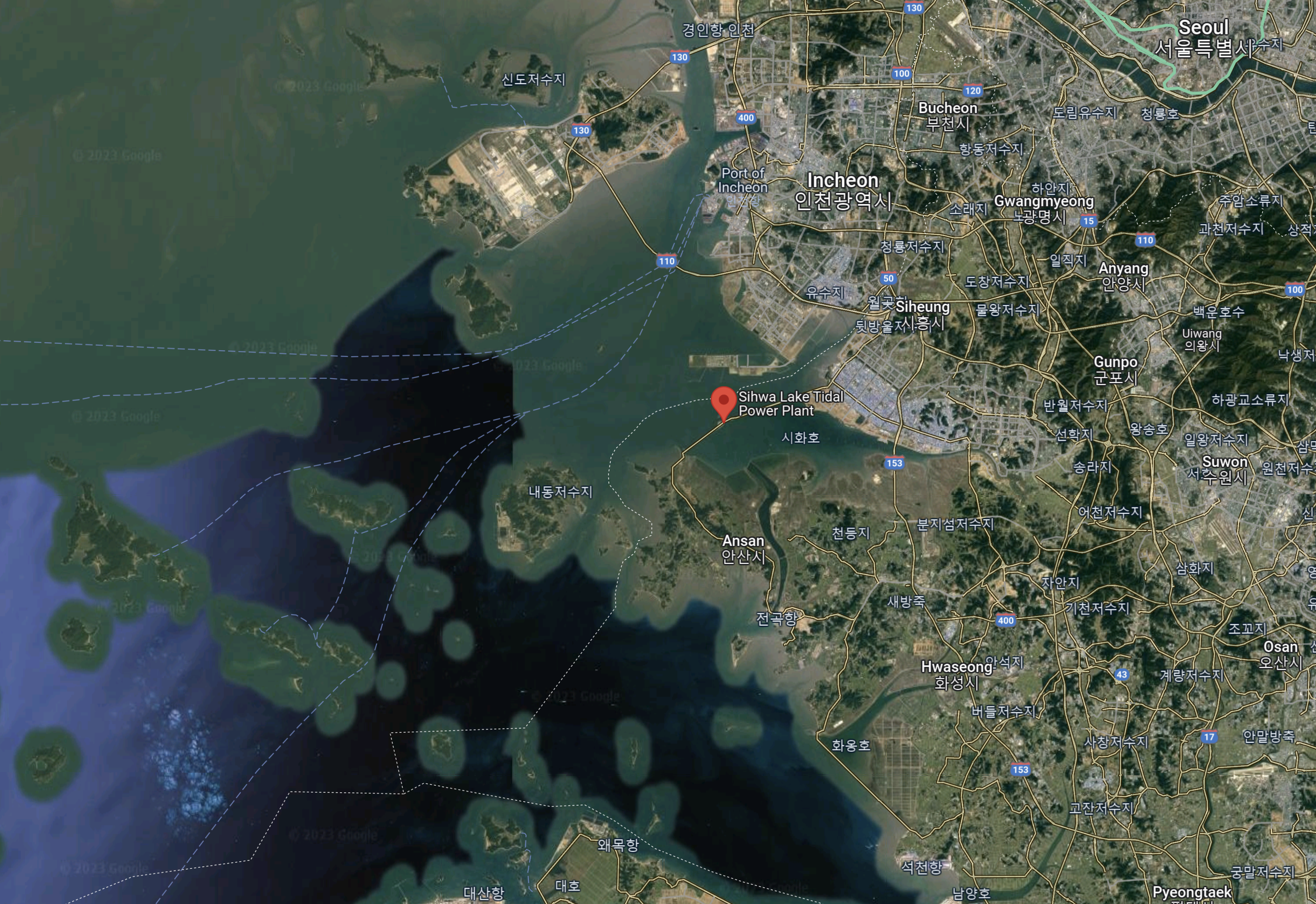
Note.
- Seoul is in the North-East corner of the map.
- The Sihwa Lake Tidal power station is marked by the red arrow.
This Google Map shows a close-up of the power station.
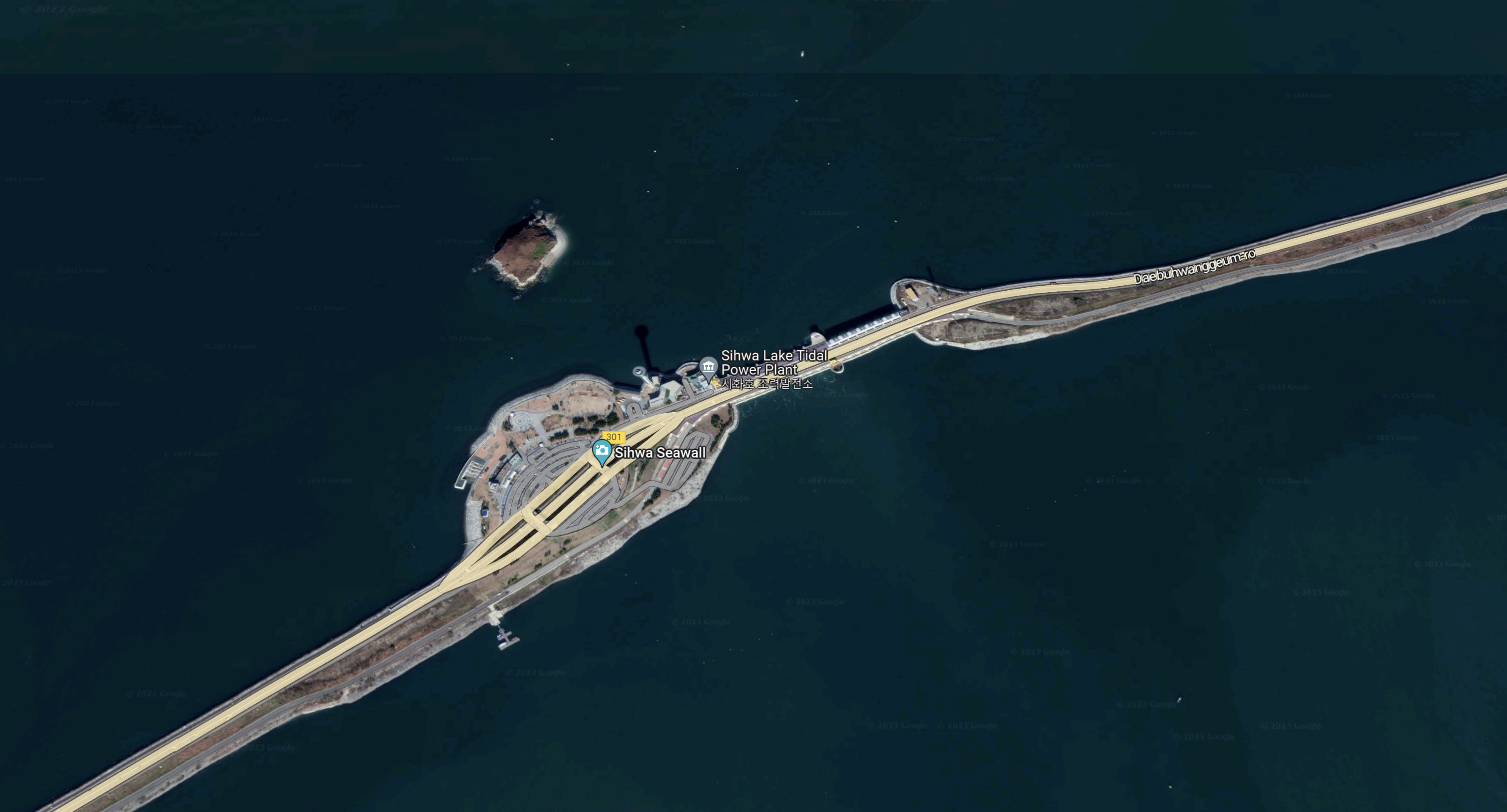
Note.
- The ten turbines appear to be in the gap.
- There appears to be a road on top of the barrage.
- The area to the West of the power station is marked as a rest area.
- A Moon Observatory is marked.
- It has bus stops, showing that it is served by the 123 and 123-1 buses.
It is an impressive structure.
I’m sure that this type of barrage would work over the Mersey.
- A road could be built on top.
- It may only be able to generate electricity,from an incoming tide, like Sihwa.
- It could incorporate a rest area.
I do suspect though Liverpudlians would add a few unique touches of their own. Perhaps some liver birds or superlambananas.
The Frederick Snow Solution
The Severn is a wide river and he proposed that there would be a dam across the river, with a spine running East along the middle of the river.
- The spine would divide the river into two lakes.
- On the incoming tide, sluices would open and allow water to flow into the Northern or high lake from the Mersey estuary.
- On the outgoing tide, sluices would open and allow water to flow out of the Southern or low lake into the Mersey estuary.
- Water would flow between the high and low lake through turbines to generate electricity.
- I have assumed that the high lake is on the North side, but if the geography is more suitable, the high and low lakes could be reversed.
In the design for the Severn Barrage, an International airport would have been built on the spine.
But Liverpool already has a nearby International airport, so perhaps it could be much better to install a large electrolyser and hydrogen storage on the spine.
Scotland’s Renewable Energy Jackpot: Hydrogen Exports Alone Could Be worth £25 Billion A Year By 2045
The title of this post, is the same as that of this article on the Edinburgh News.
This is the sub-heading.
Scotland is a phenomenally energy rich country. For decades the largest oil-producing nation in the European Union, it is now set to trail-blaze as a leader in renewable energy.
The title and sub-heading say it all for Scotland.
But these words could equally well apply to Anglesey, Cornwall, Devon, East Anglia, Humberside, Liverpool and Morecambe Bays, the Severn Estuary and Pembrokeshire.
We also mustn’t forget the Dogger Bank!
Is This The World’s Best Renewable Energy Video?
This is a promotional video from Minesto about their Deep Green technology.
Is it a serious proposition or is it just kite-flying?
After reading their web site in detail, I think they are serious.
Here’s why!
The Company Is A Well-Backed Spin-Out from Swedish Aerospace Company SAAB
These two paragraphs are from the About Us page.
Minesto is a marine energy technology developer, founded in 2007 as a spin-off from Swedish aerospace manufacturer Saab. Since then, Minesto has successfully developed its unique Deep Green technology.
The company has operations in Sweden, Wales, Northern Ireland and Taiwan, with headquarters in Gothenburg, Sweden. Main owners are BGA Invest and Midroc New Technology. The Minesto share is listed on the Nasdaq First North Growth Market in Stockholm.
A company rarely succeeds without appropriate and sufficient financial backing.
One Of Their Target Markets Is Powering Remote Islands
This page from World Atlas is entitled Which Countries Have The Most Islands?
These are the top five countries.
- Sweden – 267,570
- Norway – 239,057
- Finland – 178,947
- Canada – 52,455
- United States – 18,617
Note.
- That’s a lot of islands.
- The United Kingdom is 26th with a thousand islands.
- Scandinavia has 685574 islands or 686993 if you include Denmark.
Sweden has a thousand inhabited islands, so that means that in Scandinavia alone, there are about 2,500 inhabited islands. How many need a reliable decarbonised power supply?
In the UK, we are developing Remote Island Wind to serve similar locations, which I wrote about in The Concept Of Remote Island Wind.
The UK and Minesto are both looking at the supply of power to remote islands.
One of Minesto’s projects is in the Faroe Islands and it is described in this page on the Minesto web site, which has a title of Faroe Islands – Tidal Energy To Reach 100% Renewable By 2030.
These are the first two paragraphs.
In the Faroe Islands, Minesto is part of one of the world’s most ambitious energy transition schemes.
Collaborating with the electric utility company SEV, Minesto is working to pave the way for tidal energy to become a core part of the Faroese energy mix, allowing them to reach 100% renewable energy by 2030.
Onshore wind and tidal could be an ideal combination, if they worked together.
At the bottom of the Faroe Islands page, the web site talks about The Deep Green Island Mode Project, where this is said.
In June 2019, Minesto was awarded a €2.5 million grant from the European Commission’s SME Instrument programme. The awarded funding will support the installation of Minesto’s technology in the Faroe Islands together with the utility company SEV. The aim of the project, called Deep Green Island Mode (DGIM), is to install Minesto’s first two commercially viable microgrid units in a production and customer environment.
Successful demonstration of DGIM will act as a first step to developing commercial ties with utilities across Europe, both for smaller-scale microgrid systems and as a catalyst for the market up take of larger utility-scale Deep Green systems.
This is also said about the number of installations in Europe.
15 million Europeans live on Europe’s 2,400 inhabited islands, at an average of approximately 1,500 households per island. As recognised by the European Commission, island energy is expensive, polluting, inefficient and dependent on external supply, with significant negative impacts on emissions, the competitiveness of businesses, and the economy.
It appears to me, that Minesto have researched their market well.
Minesto Can Provide Baseload Power
Another of Minesto’s projects is in Taiwan and it is described in this page on the Minesto web site, which has a title of Taiwan – Replacing Nuclear With Renewable Baseload.
These are the first two paragraphs.
In Taiwan, Minesto is carrying out site development with the purpose to establish the first tidal energy arrays with Minesto’s technology in Asia – and to demonstrate renewable baseload generation from the continuously-flowing Kuroshio current.
The conditions for extracting marine energy in Taiwan are very good due to access to both tidal streams and continuous ocean currents. Taiwan aims to produces 20% of electricity from renewable sources by 2025 and has decided to scrap its nuclear power capacity within the same timeframe. Today, 97.5 percent of the country’s total energy use comes from imported fossil fuels.
Taiwan has a well-developed industrial infrastructure and a number of stakeholders in the private and public sectors are active in marine energy.
Decarbonising Taiwan and removing nuclear is a tough ask!
Conclusion
Minesto may be kite-flying in an unusual way, but they appear to be a very serious Swedish company.
UK CfD Round 4 Offshore Wind Projects Power Forward
The title of this post, is the same as that of this article on offshoreWIND.biz.
These are the first two paragraphs.
All 99 contracts offered through the fourth Allocation Round (AR4) of the UK government’s Contracts for Difference (CfD) scheme have now been signed and returned to Low Carbon Contracts Company (LCCC).
A total of 93 individual projects across Britain will now proceed to work with LCCC to meet the contractual milestones specified in the CfD, supporting projects’ development and the delivery of almost 11 GW of clean energy. The first AR4 projects are due to come online in 2023-24.
It does look like it’s a case of all systems go!
In Will We Run Out Of Power This Winter?, I estimated that these Round 4 projects would come onstream as follows.
- 2024 – Round 4 Solar – 125.7 MW
- 2025 – Round 4 Solar – 1958 MW
- 2025 – Round 4 Onshore Wind – 888 MW
- 2025 – Round 4 Energy from Waste – 30 MW
- 2026 – Round 4 Tidal Stream – 5.62 MW
- 2027 – Round 4 Tidal Stream – 35.2 MW
- 2027 – Round 4 Floating Offshore Wind – 32 MW
- 2027 – Round 4 Offshore Wind – 6994 MW
These are totals for the next four years from these contracts.
- 2024 – 125.7 MW
- 2025 – 2876 MW
- 2026 – 5.62 MW
- 2027 – 7061.2 MW
This is a total of over 10 GW.
Orbital Marine Power Awarded Two CfDs As Part Of UK Government Renewable Energy Auction
The title of this post, is the same as that of this news item on the Orbital Marine Power web site.
This is the heart of the news item.
Orbital, the renewable energy company focused on the development and global deployment of its pioneering floating tidal stream turbine technology, has been awarded two contracts for difference (CfDs) in the UK Allocation Round 4 (AR4) process.
This is a significant milestone in the company’s growth, with these CfDs underpinning the delivery of multi-turbine projects in Eday, Orkney.
Capable of delivering 7.2MW of predictable clean energy to the grid once completed, these Orbital tidal stream energy projects can power to up to 7,200 homes, supporting the UK’s security of supply, energy transition and broader climate change objectives.
This positive outcome also means Orbital can make a transformative investment in its UK supply chain, with around 150 jobs expected to be created through the manufacture and installation phase alone. On a jobs per MW installed basis, this would represent an unprecedented level of UK role creation for the construction phase of a renewable energy project.
It is good to see tidal power taken seriously.
The Strike Price For Tidal Stream Energy
Consider.
- Four contracts have been awarded for tidal stream energy.
- All have strike price of £178.54 per MWh of electricity.
- This may seem high, as all large wind farms have a strike price of only £37.35 per MWh of electricity.
On the other hand, there is a level playing field for all tidal stream energy developers. Just as there is for large wind farm developers, who have to live with £37.35 per MWh of electricity.
I think it will incentivise the developers and give them a reward for their technology.
All these strike prices are also mapped out for fifteen years, when trying to raise money for your tidal stream gubbins, you will know exactly where you stand.
I’ll give the Department of Business, Energy and Industrial Strategy, at least four out of five for their strike price regime!
 The Anonymous Widower