Northern’s Battery Plans
The title of this post, is half of the title of an article in the March 2020 Edition of Modern Railways.
It appears that CAF will convert some three-car Class 331 trains into four-car battery-electric trains.
- A three-car Class 331 train has a formation of DMSOL+PTS+DMSO.
- A fourth car with batteries will be inserted into the train.
- Batteries will also be added to the PTS car.
- The battery-electric trains would be used between Manchester and Windermere.
It looks like a round trip would take three hours including turnarounds, thus meaning three trains would be needed to run the service.
The article says this.
The branch was due to be electrified, but this was cancelled in 2017, and as a result 3×3-car Class 195 trains were ordered. As well as the environmental benefits, introduction of the battery ‘331s’ on Windermere services would free-up ‘195s’ for cascade elsewhere on the Northern network.
Note that the total length or the route is 98 miles of which only the ten miles of the Windermere Branch Line are not electrified.
What Battery Capacity Would Be Needed?
I reckon it will be fine to use a figure of 3 kWh per vehicle-mile to give a rough estimate of the power needed for a return trip from Oxenholme to indermere.
- Two x Ten Miles x Four Cars x 3 kWh would give 240 kWh.
- There would also be losses due to the seven stops, although the trains have regenerative braking, to limit losses.
Remember though that CAF have been running battery trams for several years, so I suspect that they have the experience to size the batteries appropriately.
In Thoughts On The Actual Battery Size In Class 756 Trains And Class 398 Tram-Trains, I say that four-car Class 756 trains will have 600 kWh of batteries and a range of 40 miles. I wouldn’t be surprised to find that a four-car Class 331 train had similar battery size and range on batteries, as the two trains are competing in the same market, with similar weights and passenger capacities.
Charging The Batteries
The Modern Railways article says this about charging the train’s batteries.
Northern believes battery power would be sufficient for one return trip along the branch without recharging, but as most diagrams currently involve two trips, provision of a recharge facility is likely, with the possibility that this could be located at Windermere or that recharging could take place while the units are in the platform at Oxenholme.
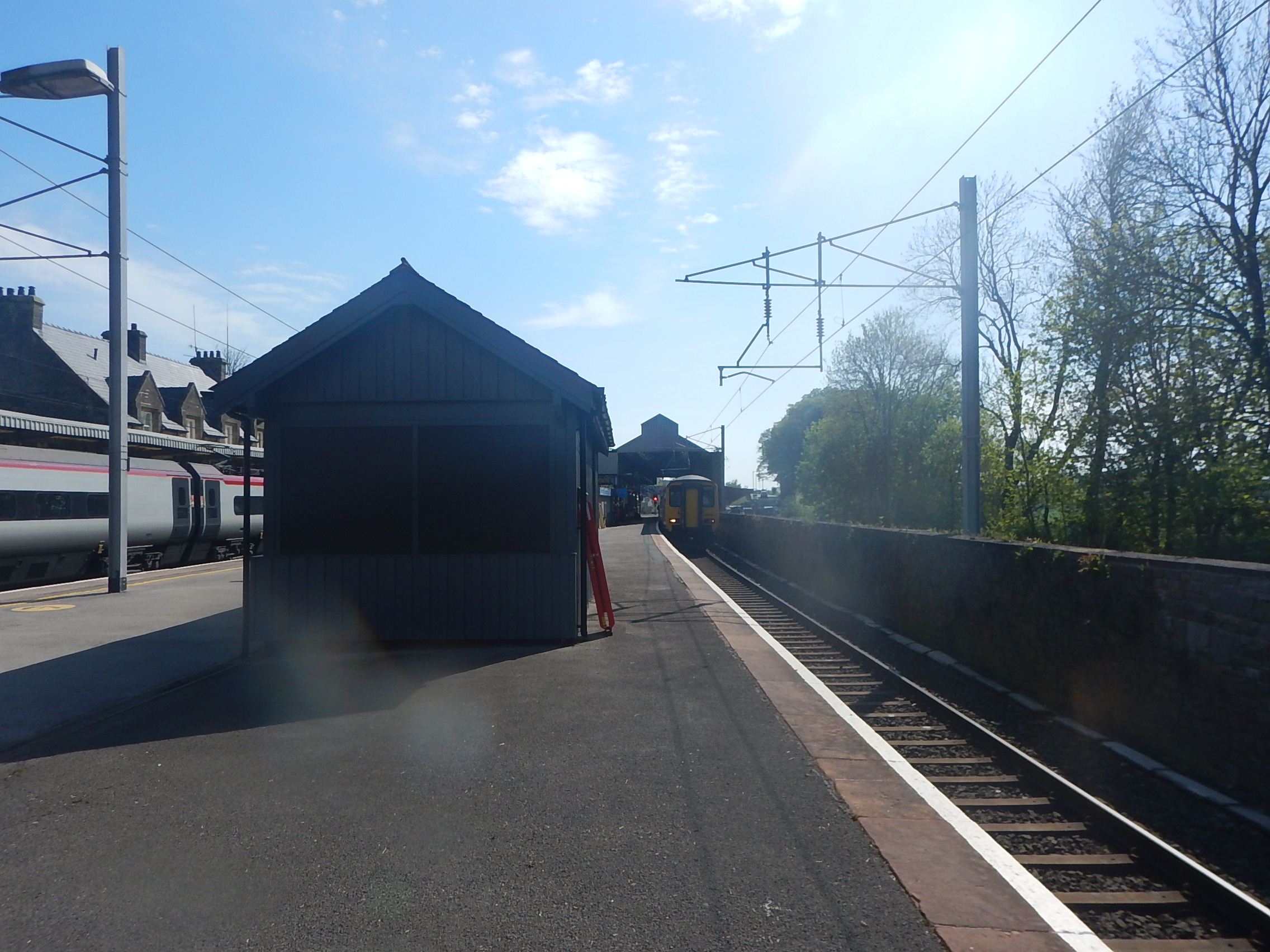
The bay platform 3 at Oxenholme station is already electrified, as this picture shows.
I particularly like Vivarail’s Fast Charge system based on third-rail technology.
A battery bank is connected to the third-rail and switched on, when the train is in contact, so that battery-to-battery transfer can take place.
It’s just like jump-starting a car, but with more power.
This form of charging would be ideal in a terminal station like Windermere.
- The driver would stop the train in Windermere station in the correct place, for passengers to exit and enter the train.
- In this position, the contact shoe on the train makes contact with the third-rail, which is not energised..
- The Fast Charge system detects a train is connected and connects the battery bank to the third-rail.
- Energy flows between the Fast Charge system’s battery bank and the train’s batteries.
- When the train’s batteries are full, the Fast Charge system switches itself off and disconnects the third-rail.
- The third-rail is made electrically dead, when the train has left, so that there is no electrical risk, if someone should fall from the platform.
Note that the only time, the third-rail used to transfer energy is live, there is a four-car train parked on top of it.
When I was eighteen, I was designing and building electronic systems using similar principles to control heavy rolling mills, used to process non-ferrous metals.
Changing Between Overhead Electrification And Battery Power
All trains running between Manchester Airport and Windermere, stop in Platform 3 at Oxenholme station to pick up and put down passengers.
- Trains going towards Windermere would lower the pantograph and switch to battery power.
- Trains going towards Mabchester Airport would raise the pantograph and switch to overhead electrification power.
Both changes would take place, whilst the train is stopped in Platform 3 at Oxenholme station.
Could Battery-Electric Hitachi Trains Work LNER’s Services?
Before I answer this question, I will lay out the battery-electric train’s specification.
Hitachi’s Proposed Battery Electric Train
Based on information in an article in Issue 898 of Rail Magazine, which is entitled Sparking A Revolution, the specification of Hitachi’s proposed battery-electric train is given as follows.
- Based on Class 800-802/804 trains or Class 385 trains.
- Range of 55-65 miles.
- Operating speed of 90-100 mph
- Recharge in ten minutes when static.
- A battery life of 8-10 years.
- Battery-only power for stations and urban areas.
- Trains are designed to be created by conversion of existing Class 80x trains
For this post, I will assume that the train is five or nine-cars long. This is the length of LNER‘s Class 800 and 801 trains.
LNER’s Services
These are LNER services that run from London to the North of England and Scotland.
I shall go through all the services and see how they would be affected by Hitachi’s proposed battery-electric Class AT-300 train.
London Kings Cross And Edinburgh
- The service runs at a frequency of two trains per hour (tph)
- Some services extend to Aberdeen, Stirling and Inverness and are discussed in the following sections.
This service can be run totally using the existing electrification.
London Kings Cross And Aberdeen
- The service runs at a frequency of four trains per day (tpd)
- Intermediate stations are York, Darlington, Newcastle, Berwick-upon-Tweed, Edinburgh, Haymarket, Inverkeithing, Kirkaldy, Leuchars, Dundee, Arbroath, Montrose and Stonehaven.
- Currently, the electrification goes 394 miles to Haymarket.
The service is 524 miles long and takes seven hours and four minutes.
To ascertain, if the Hitachi’s proposed battery-electric Class AT-300 train, could run this route, I’ll display the various sections of the route.
- London Kings Cross and Haymarket – 394 miles – Electrified
- Haymarket and Inverkeithing – 12 miles – Not Electrified
- Inverkeithing and Kirkcaldy – 13 miles – Not Electrified
- Kirkaldy and Leuchars – 25 miles – Not Electrified
- Leuchars and Dundee – 8 miles – Not Electrified
- Dundee and Arbroath – 17 miles – Not Electrified
- Arbroath and Montrose – 14 miles – Not Electrified
- Montrose and Stonehaven – 24 miles – Not Electrified
- Stonehaven and Aberdeen – 16 miles – Not Electrified
Note.
- Haymarket and Dundee is a distance of 58 miles
- Dundee and Stonehaven is a distance of 55 miles
So could the service be run with Fast Charge systems at Dundee, Stonehaven and Aberdeen?
I think it could, but the problem would be charging time at Dundee and Stonehaven, as it could add twenty minutes to the journey time and make timetabling difficult on the route.
Perhaps, an alternative would be to electrify a section in the middle of the route to create an electrification island, that could be reached from both Haymarket and Aberdeen.
The obvious section to electrify would be between Dundee and Montrose.
- It is a distance of 31 miles to electrify.
- I have flown my virtual helicopter along the route and it could be already gauge-cleared for electrification,
- Dundee station has been recently rebuilt.
- Haymarket and Dundee is a distance of 58 miles.
- Montrose and Aberdeen is a distance of 40 miles.
- Pantographs could be raised and lowered at Dundee and Montrose stations.
With this electrification and a Fast Charge system at Aberdeen, I believe that Hitachi’s proposed battery-electric Class AT-300 train could run between London Kings Cross and Aberdeen.
As an alternative to the Fast Charge system at Aberdeen, the route of Aberdeen Crossrail between Aberdeen and Inverurie could be electrified.
- This would enable battery-electric Class 385 trains to run between Inverurie and Montrose.
- The route through Aberdeen is newly-built, so should be gauge-cleared and reasonably easy to electrify.
It should also be noted that if battery-electric trains can run between Edinburgh and Aberdeen, then these services are also possible, using the same trains.
- Glasgow and Aberdeen
- Stirling and Aberdeen
All passenger services between Scotland’s Cenreal Belt and Aberdeen appear to be possible using battery-electric trains
London Kings Cross And Stirling
- The service runs at a frequency of one tpd
- Intermediate stations are York, Darlington, Newcastle, Berwick-upon-Tweed, Edinburgh, Haymarket, Falkirk Grahamstown
This service can be run totally using the existing electrification.
London Kings Cross And Inverness
- The service runs at a frequency of one tpd
- Intermediate stations are York, Darlington, Newcastle, Berwick-upon-Tweed, Edinburgh, Haymarket, Falkirk Grahamstown, Stirling, Gleneagles, Perth, Pitlochry, Kingussie and Aviemore.
- Currently, the electrification goes 429 miles to Stirling, but I have read that the Scottish government would like to see it extended to Perth, which is 462 miles from London.
The service is 581 miles long and takes eight hours and six minutes.
To ascertain, if the Hitachi’s proposed battery-electric Class AT-300 train, could run this route, I’ll display the various sections of the route.
- London Kings Cross and Haymarket – 394 miles – Electrified
- Haymarket and Falkirk Grahamsrown – 23 miles – Electrified
- Falkirk Grahamsrown and Stirling – 11 miles – Electrified.
- Stirling and Gleneagles – 17 miles – Not Electrified
- Gleneagles and Perth – 16 miles – Not Electrified
- Perth and Pitlochry – 28 miles – – Not Electrified
- Pitlochry and Kingussie – 44 miles – Not Rlectrified.
- Kingussie and Aviemore – 12 miles – Not Rlectrified.
- Aviemore and Inverness – 34 miles – Not Electrified
Note.
- The distance between Dunblane, where the electrification actually finishes and Perth is only 28 miles, which shouldn’t be too challenging.
- All the sections North of Perth are well within range of a fully charged train.
- Some sections of the route are challenging. Look at the video I published in Edinburgh to Inverness in the Cab of an HST.
- Hitachi run diesel Class 800 trains to Inverness, so they must know the power required and the battery size to run between Perth and Inverness.
I also believe that the Scottish Government, ScotRail, the Highland tourist industry and Hitachi, would all put their endeavours behind a project to get battery-electric trains between Perth and Inverness.
It would send a powerful message, that if battery-electric trains can run on one of the most scenic rail lines in the world without electrification, then nowhere is out of reach of battery trains.
Looking at the figures, I am convinced that a series of Fast Charge systems at stations like Pitlochry, Kingussie and Aviemore could supply enough power to allow a nine-car version of Hitachi’s proposed battery-electric Class AT-300 train to work the route.
This battery-electrification, would also enable battery-electric Class 385 trains to work the route.
If all this sounds a bit fanciful and over ambitious, read the history of the North of Scotland Hydro-Electric Board, which brought electricity to the area in the 1940s and 1950s.
This battery-electrification is a small project compared to what the Hydro-Electric Board achieved.
I can see a time, when similar techniques allow battery-electric trains to run these lines from Inverness.
- Far North Line – 174 miles
- Inverness and Kyle of Lochalsh – 82 miles
- Inverness and Aberdeen – 108 miles
The Far North Line would probably need two or three Fast Charge systems at intermediate stations, but the other lines would probably only need one system, somewhere in the middle.
I think that this analysis for London and Inverness shows that all parts of England, Scotland and Wales can be served by modern battery-electric trains.
It would also appear that the cost of the necessary Fast Charging systems, would be much more affordable than full electrification, North of Perth.
I estimate that less than a dozen Fast Charging systems would be needed, North of Perth.
- Some electrification might be needed in Inverness station.
- Electrification between Inverurie and Aberdeen could help.
- There’s no shortage of zero-carbon electricity from wind and hydro-electric power.
A couple of years ago, I speculated in a post called London To Thurso Direct.
Could it happen on a regular basis in the summer months?
London Kings Cross And Leeds
- The service runs at a frequency of two tph
- Intermediate stations are Stevenage, Peterborough, Grantham, Doncaster and Wakefield Westgate
This service can be run totally using the existing electrification.
London Kings Cross And Harrogate
- The service runs at a frequency of six tpd
- Intermediate stations are Stevenage, Grantham, Doncaster and Wakefield Westgate
- Leeds and Harrogate is a distance of nineteen miles and is not electrified.
- Hitachi’s proposed battery-electric Class AT-300 train should be able to go from Leeds to Harrogate and back, using battery power alone.
- Batteries will be charged using the electrification at and around Leeds.
This service can be run totally using the existing electrification.
London Kings Cross And Bradford Foster Square
- The service runs at a frequency of one tpd
- Intermediate stations are Stevenage, Peterborough, Grantham, Doncaster and Wakefield Westgate
- Leeds and Bradford Forster Square is a distance of fourteen miles and electrified.
This service can be run totally using the existing electrification.
London Kings Cross And Skipton
- The service runs at a frequency of one tpd
- Intermediate stations are Stevenage, Peterborough, Grantham, Doncaster and Wakefield Westgate
- Leeds and Skipton is a distance of twenty-six miles and electrified.
This service can be run totally using the existing electrification.
London Kings Cross And Lincoln
- The service runs at a frequency of one train per two hours (1tp2h)
- Intermediate stations are Stevenage, Peterborough, Grantham and Newark North Gate
- Newark North Gate and Lincoln is a distance of sixteen miles and not electrified.
- Hitachi’s proposed battery-electric Class AT-300 train should be able to go from Newark North Gate to Lincoln and back, using battery power alone.
- Batteries will be charged using the electrification between Newark North Gate and London Kings Cross.
This service can be run totally using the existing electrification.
London Kings Cross And York
- The service runs at a frequency of 1tp2h
- Intermediate stations are Stevenage, Peterborough, Grantham and Newark North Gate, Retford and Doncaster
This service can be run totally using the existing electrification.
London Kings Cross And Hull
- The service runs at a frequency of one tpd
- Intermediate stations are Stevenage, Peterborough, Grantham and Newark North Gate, Retford and Doncaster
- Temple Hirst Junction and Hull is a distance of thirty-six miles and not electrified.
- Hitachi’s proposed battery-electric Class AT-300 train should be able to go from Temple Hirst Junction and Hull and back, using battery power and a Fast Charge system at Hull.
- Batteries will also be charged using the electrification between Temple Hirst Junction and London Kings Cross.
This service can be run totally using the existing electrification.
Consider.
- The train runs seventy-two miles to get to Hull and back on lines without electrification..
- Hitachi state that the trains maximum range on battery power is sixty-five miles.
- Hull Trains and TransPennine Express also run similar trains on this route, that will need charging at Hull.
So rather than installing a Fast Charge system at Hull, would it be better to do one of the following.
- Create a battery-electric AT-300 train with a bigger battery and a longer range. A One-Size-Fits-All could be better.
- However, the larger battery would be an ideal solution for Hull Trains, who also have to reverse and go on to Beverley.
- Electrify the last few miles of track into Hull. I don’t like this as electrifying stations can be tricky and getting power might be difficult!
- Electrify between Temple Hirst Junction and Selby station and whilst this is done, build a solution to the problem of the swing bridge. Power for the electrification can be taken from the East Coast Main Line.
I’m sure a compromise between train battery size and electrification can be found, that creates a solution, that is acceptable to the accountants.
Conclusion
I think it could be possible, that LNER could use a fleet of all-electric and battery-electric AT-300 trains.
Could Battery-Electric Hitachi Trains Work TransPennine Express’s Services?
Before I answer this question, I will lay out the battery-electric train’s specification.
Hitachi’s Proposed Battery Electric Train
Based on information in an article in Issue 898 of Rail Magazine, which is entitled Sparking A Revolution, the specification of Hitachi’s proposed battery-electric train is given as follows.
- Based on Class 800-802/804 trains or Class 385 trains.
- Range of 55-65 miles.
- Operating speed of 90-100 mph
- Recharge in ten minutes when static.
- A battery life of 8-10 years.
- Battery-only power for stations and urban areas.
- Trains are designed to be created by conversion of existing Class 80x trains
For this post, I will assume that the train is five cars long. This is the length of TransPennine Express’s Class 802 trains.
TransPennine Express’s Services
These are TransPennine Express services that run in the North of England and to Scotland.
I shall go through all the services and see how they would be affected by Hitachi’s proposed battery-electric train.
Liverpool Lime Street And Edinburgh
- The service runs at a frequency of one train per hour (tph)
- Intermediate stations are Newton-le-Willows, Manchester Victoria, Huddersfield, Leeds, York, Darlington, Durham, Newcastle and Morpeth
The service is 305 miles long and takes four hours and 25 minutes.
The route can be divided into sections, some of which are electrified and some of which are not!
- Liverpool Lime Street and Manchester Victoria – 32 miles – Electrified
- Manchester Victoria and Huddersfield – 26 miles – Not Electrified
- Huddersfield and Dewsbury – 8 miles – Not Electrified
- Dewsbury and Leeds – 9 miles – Not Electrified
- Leeds and Colton Junction – 20 miles – Not Electrified
- Colton Junction and Edinburgh – 220 miles – Electrified
Note that the distance between Manchester Victoria and Colton Junction, which is the only section of the route without electrification is sixty-three miles, which is just within the 55-65 mile battery range of Hitachi’s proposed battery-electric train.
That is too close for my liking, as what happens, if the train gets delayed by an operational incident.
In this article on the BBC, which was published in August 2019 and is entitled Detailed TransPennine £2.9bn Rail Upgrade Plans Unveiled, the following is said.
- The route between Huddersfield and Dewsbury will be electrified.
- Parts of this route will have two extra tracks.
- The plans will be going to full consultation, later in the year.
This would mean that a route summary would be like this.
- Liverpool Lime Street and Manchester Victoria – 32 miles – Electrified
- Manchester Victoria and Huddersfield – 26 miles – Not Electrified
- Huddersfield and Dewsbury – 8 miles – Electrified
- Dewsbury and Colton Junction – 29 miles – Not Electrified
- Colton Junction and Edinburgh – 220 miles – Electrified
The two sections without electrification are well within the 55-65 mile battery range of Hitachi’s proposed battery electric train.
It should also be noted that the electrification between Newcastle and Edinburgh is rather down on power and needs upgrading.
I would suspect that Hitachi’s proposed battery electric train could handle this power deficiency by using the batteries.
Liverpool Lime Street And Scarborough
- The service runs at a frequency of one tph
- Intermediate stations are Lea Green, Manchester Victoria, Stalybridge, Huddersfield, Leeds, Garforth, York, Malton and Seamer
The service is 142 miles long and takes two hours and 58 minutes.
The route can be divided into sections, some of which are electrified and some of which are not!
- Liverpool Lime Street and Manchester Victoria – 32 miles – Electrified
- Manchester Victoria and Huddersfield – 26 miles – Not Electrified
- Huddersfield and Dewsbury – 8 miles – Not Electrified
- Dewsbury and Leeds – 9 miles – Not Electrified
- Leeds and Colton Junction – 20 miles – Not Electrified
- Colton Junction and York – 6 miles – Electrified
- York and Scarborough – 42 miles – Not Electrified
Between Liverpool Lime Street and Colton Junction, the route is identical to the Liverpool Lime Street and Edinburgh service.
The improvement of the section between Huddersfield and Dewsbury will also benefit this service and mean that a route summary would be like this.
- Liverpool Lime Street and Manchester Victoria – 32 miles – Electrified
- Manchester Victoria and Huddersfield – 26 miles – Not Electrified
- Huddersfield and Dewsbury – 8 miles – Electrified
- Dewsbury and and Colton Junction – 29 miles – Not Electrified
- Colton Junction and York – 6 miles – Electrified
- York and Scarborough – 42 miles – Not Electrified
As Hitachi’s proposed battery-electric train has a range of 55-65 miles on battery power, it looks to me that this service could be handled by the train.
It would need a Fast Charge system at Scarborough to recharge the batteries to be able to return to York.
But, as the timetable allows a generous turn-round, fully-charging the batteries shouldn’t be a problem.
Manchester Airport And Newcastle
- The service runs at a frequency of one tph
- Intermediate stations are Manchester Piccadilly, Manchester Oxford Road, Manchester Victoria, Huddersfield, Dewsbury, Leeds, York, Northallerton, Darlington, Durham and Chester-le-Street
The service is 162 miles long and takes three hours and one minute.
The route can be divided into sections, some of which are electrified and some of which are not!
- Manchester Airport and Manchester Victoria – 13 miles – Electrified
- Manchester Victoria and Huddersfield – 26 miles – Not Electrified
- Huddersfield and Dewsbury – 8 miles – Not Electrified
- Dewsbury and Leeds – 9 miles – Not Electrified
- Leeds and Colton Junction – 20 miles – Not Electrified
- Colton Junction and Edinburgh – 86 miles – Electrified
Between Manchester Victoria and Colton Junction, the route is identical to the two Liverpool Lime Street services, that I discussed previously.
The improvement of the section between Huddersfield and Dewsbury will also benefit this service and mean that Hitachi’s proposed battery-electric train could handle this route with ease.
Manchester Airport And Redcar Central
- The service runs at a frequency of one tph
- Intermediate stations are Gatley, Manchester Piccadilly, Manchester Oxford Road, Manchester Victoria, Huddersfield, Dewsbury, Leeds, York, Thirsk, Northallerton, Yarm, Thornaby and Middlesbrough
The service is 162 miles long and takes three hours and fifteen minutes.
The route can be divided into sections, some of which are electrified and some of which are not!
- Manchester Airport and Manchester Victoria – 13 miles – Electrified
- Manchester Victoria and Huddersfield – 26 miles – Not Electrified
- Huddersfield and Dewsbury – 8 miles – Not Electrified
- Dewsbury and Leeds – 9 miles – Not Electrified
- Leeds and Colton Junction – 20 miles – Not Electrified
- Colton Junction and Northallerton – 35 miles – Electrified
- Northallerton and Redcar Central – 29 miles – Not Electrified
Between Manchester Victoria and Colton Junction, the route is identical to the previously discussed services.
The improvement of the section between Huddersfield and Dewsbury will also benefit this service and mean that Hitachi’s proposed battery-electric train could handle this route with ease.
As with the Scarborough service, a Fast-Charge system would probably be needed at Redcar Central.
Manchester Piccadilly And Hull
- The service runs at a frequency of one tph
- Intermediate stations are Stalybridge, Huddersfield, Leeds, Selby and Brough
The service is 94 miles long and takes two hours and four minutes.
The route can be divided into sections, some of which are electrified and some of which are not!
- Manchester Piccadilly and Huddersfield – 25 miles – Not Electrified
- Huddersfield and Dewsbury – 8 miles – Not Electrified
- Dewsbury and Leeds – 9 miles – Not Electrified
- Leeds and Hull – 52 miles – Not Electrified
Between Huddersfield and Leeds, the route is identical to the previously discussed services.
The improvement of the section between Huddersfield and Dewsbury will also benefit this service and mean that Hitachi’s proposed battery-electric train should be able to handle this route.
As with the Scarborough and Redcar Central services, a Fast-Charge system would probably be needed at Hull.
Manchester Piccadilly And Huddersfield
- The service runs at a frequency of one tph
- Intermediate stations are Stalybridge, Mossley, Greenfield, Marsden and Slaithwaite
The service is 25 miles long and takes forty-three minutes.
The route is without electrification.
Hitachi’s proposed battery-electric train should be able to handle this route with ease.
The train could charge at either end using the electrification.
Huddersfield And Leeds
- The service runs at a frequency of one tph
- Intermediate stations are Deighton, Mirfield, Ravensthorpe, Dewsbury, Batley, Morley and Cottingley
The service is 17 miles long and takes thirty-six minutes.
Hitachi’s proposed battery-electric train should be able to handle this route with ease.
The train could charge at Leeds using the electrification.
Manchester Airport And Cleethorpes
- The service runs at a frequency of one tph
- Intermediate stations are Manchester Piccadilly, Stockport, Sheffield, Meadowhall Interchange, Doncaster, Scunthorpe, Barnetby, Habrough and Grimsby Town
The service is 124 miles long and takes two hours and fifty-eight minutes.
he route can be divided into sections, some of which are electrified and some of which are not!
- Manchester Airport and Stockport – 16 miles – Electrified
- Stockport and Sheffield – 37 miles – Not Electrified
- Sheffield and Doncaster – 19 miles – Not Electrified
- Doncaster and Cleethorpes – 52 miles – Not Electrified
There would need to be some en route charging and surely the easiest way to achieve this would be to extend the electrification at Doncaster to Sheffield.
As with the other services, a Fast-Charge system would probably be needed at Cleethorpes.
Manchester Airport And Glasgow Central Or Edinburgh Waverley Via Preston
This service is all-electric.
Conclusion
Hitachi’s proposed battery-electric train can handle all of TransPennine’s routes without using one drop of diesel.
What I have found interesting, is that the eight miles of electrification between Huddersfield and Dewsbury appears to make the operation of a battery-electric train a lot easier.
It looks like someone at Hitachi and Network Rail have taken a calculator to a decent hostelry and worked out a cunning plan!
Charging Battery Trains
In Sparking A Revolution, I talked about Hitachi’s plans to develop battery versions of their Class 800 trains.
The article also gives the specification of a Hitachi battery train.
- Range – 55-65 miles
- Performance – 90-100 mph
- Recharge – 10 minutes when static
- Routes – Suburban near electrified lines
- Battery Life – 8-10 years
These figures are credited to Hitachi.
Methods Of Charging
I can envisage two main methods of changing battery trains.
- Static charging in a station, depot or siding.
- Dynamic charging, whilst the train is on the move.
I am not covering other possible methods like battery swapping in this post.
Static Charging
Hitachi only mention static charging in their specification and they give a charge time of ten minutes.
This is a very convenient time, when you consider quite a few trains take around 10-15 minutes to turn round at a terminus.
Two companies have stated that they have products that can charge battery trains in around this time.
- Vivarail offers a system based on well-proven third-rail electrification technology.
- Furrer + Frey offers a system based on overhead electrification technology.
I suspect that other companies are developing systems.
Dynamic Charging
With dynamic charging, the batteries are charged as the trains run along standard electrified routes.
In the UK, this means one of two systems.
- 750 VDC third rail electrification
- 25 KVAC overhead electrification
Both systems can be used to charge the batteries.
Note that in the BEMU Trial in 2015, the Class 379 train used for the trial charged the batteries from the 25 KVAC overhead electrification.
A Mixture Of Dynamic And Static Charging
Many routes will be handled by a mixture of both methods.
As an example London Paddington and Cheltenham is electrified except for the 42 miles between Swindon and Cheltenham.
A round trip between London Paddington and Cheltenham could be handled as follows.
- London Paddington to Swindon using electrification – Dynamic charging battery at the same time!
- Swindon to Cheltenham using battery power
- Turnround at Cheltenham – Static charging battery at the same time!
- Cheltenham to Swindon using battery power
- Swindon to London Paddington using electrification
Note the following.
- Two legs of the round-trip are run using electrification power.
- Two legs of the round-trip are run using battery power.
- There is one dynamic charge and one static charge of the batteries.
No diesel power would be used on the journey and I suspect journey times would be identical to the current timetable.
I suspect that many routes run by battery electric trains will employ a mixture of both dynamic and static charging.
Here’s a few examples.
- London Kings Cross and Lincoln
- London Kings Cross and Harrogate
- London St Pancras and Melton Mowbray
- London Euston and Chester
- London Paddington and Bedwyn
There are probably many more.
Intermediate Charging On A Long Route
South Western Railway has a fleet that is nearly all-electric.
But they do have forty diesel trains, which are mainly used for services between London Waterloo and Exeter.
These don’t fit with any decarbonising strategy.
There is also the problem that the route between London Waterloo and Exeter, is only electrified as far as Basingstoke, leaving a long 124 miles of route without electrification.
This means that a battery train needs to charge the batteries at least twice en route.
Charging At A Longer Stop
The obvious approach to providing en route charging would be to perform a ten minute stop, where the batteries are fast charged.
Looking at Real Time Trains, the stop at Salisbury is often five minutes or more, as trains can join and split and change crews at the station.
But two stops like this could slow the train by fifteen minutes or so.
Charging At A An Electrification Island
On the section of the route, West of Salisbury, there are a series of fairly close-together stations.
- Tisbury – 7 miles
- Gillingham – 16 miles
- Templecombe – 18 miles
- Sherborne – 23 miles
- Yeovil Junction – 39 miles
- Crewkerne – 48 miles
- Axminster – 61 miles
Note,
The distances are from Salisbury.
- Much of this nearly ninety mile section of the West of England Line between Salisbury and Exeter is single track.
- The Heart of Wessex Line between Westbury and Weymouth crosses at Yeovil Junction.
- There are three sections of double track and four passing loops.
- There is a passing loop at Axminster.
It strikes me that the optimal way of charging battery trains on this secondary route might be to electrify both the West of England and Heart of Wessex Lines around Yeovil Junction station.
The power for the electrification island, could come from local renewable sources, as proposed by Riding Sunbeams.
Distances from Yeovil Junction station are.
- Bath Spa – 50 miles
- Castle Cary – 12 miles
- Exeter St. Davids – 49 miles
- Salisbury – 39 miles
- Weymouth – 30 miles
With a battery-electric train with a 55-65 mile range, as proposed in Hitachi’s draft specification, SWR’s London Waterloo and Exeter service would certainly be possible. Charging would be at Salisbury and in the Yeovil area.
On Summer Saturdays, SWR also run a London Waterloo and Weymouth service via Salisbury and Yeovil Junction. This would appear to be within the range of a battery-electric train.
As Weymouth is electrified with third-rail, I suspect that arranging charging of a battery-electric train at the station, will not be an impossible task.
The other service through the area is Great Western Railway‘s service between Gloucester and Weymouth, that runs every two hours.
It would appear that in some point in the future, it will be possible to run this service using a Hitachi battery-electric train.
Third-Rail Or Overhead?
The previous example of an electrification island would probably use 750 VDC third-rail electrification, but there is no reason, why 25 KVAC overhead electrification couldn’t be used.
Note that these trains have been talked about as possibilities for running under battery power.
- Greater Anglia’s Class 379 trains, built by Bombardier
- Greater Anglia’s Class 755 trains, built by Stadler.
- Merseyrail’s Class 777 trains, built by Stadler.
- Scotrail’s Class 385 trains, built my Hitachi
- Several companies’ Class 800 trains, built by Hitachi
- Suthern’s Class 377 trains, built by Bombardier
All the manufacturers named have experience of both dual-voltage trains and battery operation.
I would suspect that any future battery-electric trains in the UK will be built to work on both of our electrification systems.
When talking about battery-electric trains, 750 VDC third-rail electrification may have advantages.
- It can be easily powered by local renewable sources, as Riding Sunbeams are proposing.
- It is compatible with Vivarail’s Fast-Charge system.
- Connection and disconnection is totally automatic and has been since Southern Railway started using third-rail electrification.
- Is is more affordable and less disruptive to install?
- Third-rail electrification can be installed in visually-sensitive areas with less objections.
Developments in third-rail technology will improve safety, by only switching the power on, when a train is connected.
More Electrification Islands
These are a few examples of where an electrification island could enable a battery-electric train to decarbonise a service.
London Euston and Holyhead
In Are Hitachi Designing the Ultimate Battery Train?, I looked at running Hitachi’s proposed battery-electric trains between London Euston and Holyhead.
I proposed electrifying the fourteen miles between Rhyl and Llandudno Junction stations, which would leave two sections of the route between London Euston and Holyhead without electrification.
- Rhyl and Crewe is fifty-one miles.
- Llandudno Junction and Holyhead is forty-one miles.
Both sections should be within the battery range of Hitachi’s proposed battery-electric trains, with their 55-65 mile range.
The following should be noted.
- The time between arriving at Rhyl station and leaving Llandudno Junction station is nineteen minutes. This should be time enough to charge the batteries.
- Either 25 KVAC overhead or 750 VDC third-rail electrification could be used.
- There could be arguments for third-rail, as the weather can be severe.
- The railway is squeezed between the sea and the M55 Expressway and large numbers of caravans.
The performance of the new trains will be such, that they should be able to run between London Euston and Holyhead in a similar time. Using High Speed Two could reduce this to just under three hours.
Edinburgh And Aberdeen
I’m sure Scotland would like to electrify between Edinburgh and Aberdeen.
But it would be a difficult project due to the number of bridges on the route.
Distances from Edinburgh are as follows.
- Leuchars – 50 miles
- Dundee – 59 miles
- Arbroath – 76 miles
- Montrose – 90 miles
- Stonehaven – 114 miles
- Aberdeen – 130 miles
A quick look at these distances indicate that Hitachi’s proposed battery-electric trains with a 55-65 mile range could cover the following sections.
- Edinburgh and Dundee – 59 miles
- Arbroath and Aberdeen – 56 miles
Would it be possible to electrify the seventeen miles between Dundee and Arbroath?
I have just flown my helicopter along the route and observed the following.
- Dundee station is new and appears to be cleared for overhead wires.
- Many of the bridges in Dundee are new and likely to be cleared for overhead wires.
- There is a level crossing at Broughty Ferry station.
- Much of the route between Broughty Ferry and Arbroath stations is on the landward side of golf links, with numerous level crossings.
- Between Arbroath and Montrose stations, the route appears to be running through farmland using gentle curves.
- There is a single track bridge across the River South Esk to the South of Montrose station.
- According to Wikipedia, the operating speed is 100 mph.
Montrose might be a better Northern end to the electrification.
- It has a North-facing bay platform, that could be used for service recovery and for charging trains turning back to Aberdeen.
- Montrose and Aberdeen is only forty miles.
- It might be possible to run the service between Montrose and Inverurie, which is just 57 miles on battery power.
The problem would be electrifying the bridge.
Operationally, I can see trains running like this between Edinburgh and Aberdeen.
- Trains would leave the electrification, just to the North of Edinburgh with a full battery.
- Battery power would be used over the Forth Bridge and through Fife and over the Tay Bridge to Dundee.
- Electrification would take the train to Arbroath and possibly on to Montrose. The battery would also be charged on this section.
- Battery power would take trains all the way to Aberdeen.
Trains would change between battery and electrification in Dundee and Arbroath or Montrose stations.
My one question, is would it be a good idea to electrify through Aberdeen, so that trains returning South could be charged?
I believe that four or five-car versions of Hitachi’s proposed battery-electric trains would be able to run the route.
Glasgow And Aberdeen
This builds on the work that would be done to enable battery-electric trains go between Edinburgh and Aberdeen.
The route between Glasgow and Dundee is partially-electrified with only a forty-nine mile section between Dundee and Dunblane without wires.
I believe that four or five-car versions of Hitachi’s proposed battery-electric trains would be able to run the route.
To Be Continued…
Conclusion
I don’t think it will be a problem to provide an affordable charging infrastructure for battery trains.
I also think, that innovation is the key, as Vivarail have already shown.
Ready To Charge
The title of this post is the same as that of this article in Issue 898 of Rail Magazine.
This is the sub-title of the article.
Vivarail could be about to revolutionise rail traction with its latest innovation
The article details their plans to bring zero-carbon trains to the UK.
These are a few important more general points.
- The diesel gensets in the trains can be eco-fenced to avoid unning on diesel in built-up areas.
- The Transport for Wales trains could be the last Vivarail diesel trains.
- A 100 kWh battery pack is the same size as a diesel generator. I would assume they are almost interchangeable.
- Various routes are proposed.
- In future battery trains will be Vivarail’s focus.
- At the end of 2020, a battery demonstration train will be dispatched to the United States.
- Two-car trains will have a forty-mile range with three-cars managing sixty.
- Trains could be delivered in nine to twelve months.
The company also sees Brexit as an opportunity and New Zealand as a possible market.
Modifying Other Trains
The article also states that Vivarail are looking at off-lease electric multiple units for conversion to battery operation.
Vivarail do not say, which trains are involved.
Vivarail’s Unique Selling Point
This is the last two paragraphs of the article.
“Our unique selling point is our Fast Charge system. It’s a really compelling offer.” Alice Gillman of Vivarail says.
Vivarail has come a long way in the past five years and with this innobvative system it is poised to bring about a revolution in rail traction in the 2020s.
Conclusion
Could the train, that Vivarail refused to name be the Class 379 trains?
- There are thirty trainsets of four-cars.
- They are 100 mph trains.
- They are under ten years old.
- They meet all the Persons of Reduced Mobility regulations.
- They currently work Stansted Airport and Cambridge services for Greater Anglia.
- They are owned by Macquarie European Rail.
I rode in one yesterday and they are comfortable with everything passengers could want.

The train shown was used for the BEMU Trial conducted by Bombardier, Network Rail and Greater Anglia.
The only things missing, for these trains to run a large number of suitable routes under battery power are.
- A suitable fast charging system.
- Third rail equipment that would allow the train to run on lines with third-rail electrification.
- Third rail equipment would also connect to Vivarail’s Fast Charge system
As I have looked in detail at Vivarail’s engineering and talked to their engineers, I feel that with the right advice and assistance, they should be able to play a large part in the conversion of the Class 379 fleet to battery operation.
These trains would be ideal for the Uckfield Branch and the Marshlink Line.
If not the Class 379 trains, perhaps some Class 377 trains, that are already leased to Southern, could be converted.
I could see a nice little earner developing for Vivarail, where train operating companies and their respective leasing companies employ them to create battery sub-fleets to improve and extend their networks.
Shapps Wants ‘Earlier Extinction Of Diesel Trains’
The title of this post, is the same as that of this article on the East London and West Essex Guardian.
This is the first two paragraphs of the article.
The phasing out of diesel trains from Britain’s railways could be intensified as part of the Government’s bid to cut carbon emissions.
Transport Secretary Grant Shapps told MPs he is “hugely concerned” that the current policy means diesel trains will continue to operate until 2040.
In some ways the positioning of the article in a newspaper serving East London and West Essex is a bit strange.
- The only diesel trains in the area are freight trains, after the electrification of the Gospel Oak and Barking Line.
- Grant Schapps constituency is Welwyn and Hatfield, which is twenty or so miles North of London.
It looks to me to be a syndicated story picked up by the paper.
But as it reports what he said to the Transport Select Committee, there is a strong chance that it is not fake news.
How Feasible Would It Be To Bring Forward The 2040 Diesel Extinction Date?
Government policy of an extinction date of 2040 was first mentioned by Jo Johnson, when he was Rail Minister in February 2018.
This article on Politics Home is entitled Rail Minister Announces Diesel Trains To Be Phased Out By 2040, gives more details about what Jo said.
Since then several developments have happened in the intervening nearly two years.
Scores Of Class 800 Trains Are In Service
Class 800 trains and their similar siblings can honestly be said to have arrived.
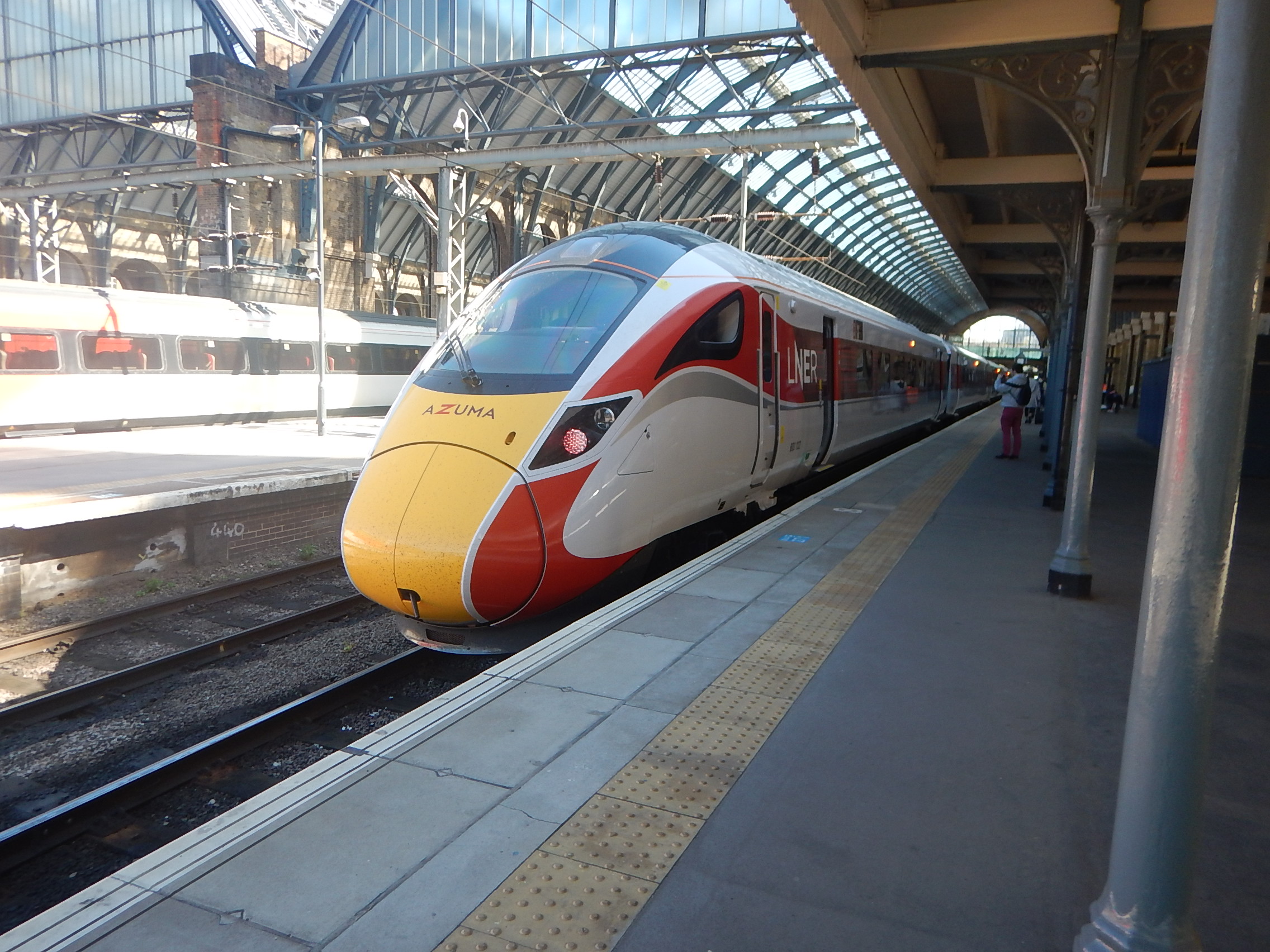
Currently, there appear to be over two hundred of these trains either delivered or on order.
Many have replaced diesel trains on Great Western Railway and LNER and stations like Kings Cross, Paddington and Reading are becoming over ninety percent diesel-free.
It should be noted that over half of these trains have diesel engines, so they can run on lines without electrification.
But the diesel engines are designed to be removed, to convert the trains into pure electric trains, when more electrification is installed.
Midland Main Line Upgrade
This line will be the next to be treated to the Hitachi effect, with thirsty-three of the second generation of Hitachi’s 125 mph trains.
- The Hitachi trains will use electrification South of Melton Mowbray and diesel power to the North.
- The trains will have a redesigned nose and I am sure, this is to make the trains more aerodynamically efficient.
- The introduction of the trains will mean, that, all passenger trains on the Midland Main Line will be electric South of Melton Mowbray.
- St. Pancras will become a diesel-free station.
Whether High Speed Two is built as planned or in a reduced form, I can see electrification creeping up the Midland Main Line to Derby, Nottingham and Sheffield and eventually on to Leeds.
Other Main Line Routes
The Midland Main Line will have joined a group of routes, that are run partly by diesel and partly by electricity.
- London and Aberdeen
- London and Bradford
- London and Cheltenham
- London and Harrogate
- London and Hull
- London and Inverness
- London and Lincoln
- London and Middlesbrough
- London and Penzance via Exeter and Plymouth.
- London and Sunderland
- London and Swansea
- London and Worcester and Hereford
Once the Midland Main Line is upgraded, these main routes will only be these routes that use pure diesel for passenger routes.
- TransPennine Routes
- Chiltern Route
- London and Exeter via Basingstoke
- London and Holyhead
Plans already exist from West Coast Rail to use bi-mode on the Holyhead route and the Basingstoke route could also be a bi-mode route.
TransPennine and Chiltern will need bespoke solutions.
Some Electrification Has Happened
Electrification has continued at a slow pace and these schemes have been completed or progressed.
- Chase Line
- Between Birmingham and Bromsgrove
- North West England
- Between Edinbugh, Glasgow, Alloa, Dunblane and Stirling.
- Gospel Oak to Barking Line
- Between St. Pancras and Corby.
- Crossrail
In addition London and Cardiff will soon be electrified and a lot of electrification designed by the Treasury in the past fifty years has been updated to a modern standard.
Battery Trains Have Been Developed And Orders Have Been Received Or Promised
Stadler bi-mode Class 755 trains have been delivered to Greater Anglia and these will be delivered as electric-diesel-battery trains to South Wales.
Stadler also have orders for battery-electric trains for Germany, which are a version of the Flirt called an Akku.
In the Wikipedia entry for the Stadler Flirt, this is a paragraph.
In July 2019, Schleswig-Holstein rail authority NAH.SH awarded Stadler a €600m order for 55 battery-powered Flirt Akku multiple unit trains along with maintenance for 30 years. The trains will start entering service in 2022 and replace DMUs on non-electrified routes.
55 trains at €600 million is not a small order.
Alstom, Bombardier, CAF, Hitacxhi and Siemens all seem to be involved in the development of battery-electric trains.
I think, if a train operator wanted to buy a fleet of battery trains for delivery in 2023, they wouldn’t have too much difficulty finding a manmufacturer.
Quite A Few Recently-Built Electric Trains Are Being Replaced And Could Be Converted To Battery-Electric Trains
In 2015 Bombardier converted a Class 379 train, into a battery-electric demonstrator.
The project showed a lot more than battery-electric trains were possible.
- Range could be up to fifty miles.
- The trains could be reliable.
- Passengers liked the concept.
Judging by the elapsed time, that Bombardier spent on the demonstrator, I would be very surprised to be told that adding batteries to a reasonably modern electric train, is the most difficult of projects.
The Class 379 trains are being replaced by by brand-new Class 745 trains and at the time of writing, no-one wants the currents fleet of thirty trains, that were only built in 2010-2011.
In addition to the Class 379 trains, the following electric trains are being replaced and could be suitable for conversion to battery-electric trains.
- Thirty Class 707 trains from South Western Railway.
- Thirty-seven Class 350/2 trains from West Miidlands Railway.
- Perhaps twenty Class 387 trains from various sources.
There also may be other trains frm Heathrow Express and Heathrow Connect.
All of these trains are too good for the scrapyard and the leasing companies that own them, will want to find profitable uses for them.
Porterbrook are already looking at converting some Class 350 trains to Battery-electric operation.
Vivarail And Others Are Developing Fast Charging Systems For Trains
Battery trains are not much use, unless they can be reliably charged in a short time.
Vivarail and others are developing various systems to charge trains.
Hydrogen-Powered Trains Have Entered Service In Germany
Hydrogen-powered Alstom Coradia Lint trains are now operating in Germany.
Alstom are developing a Class 321 train powered by hydrogen for the UK.
Stadler’s Bi-Mode Class 755 Train
The Class 755 train is the other successful bi-mode train in service on UK railways.
I would be very surprised if Grant Schapps hasn’t had good reports about these trains.
They may be diesel-electric trains, but Stadler have made no secret of the fact that these trains can be battery electric.
Like the Class 800 train, the Class 755 train must now be an off-the-shelf solution to use on UK railways to avoid the need for full electrification.
Class 93 Locomotives
Stadler’s new Class 93 locomotive is a tri-mode locomotive, that is capable of running on electric, diesel or battery power.
This locomotive could be the best option for hauling freight, with a lighter carbon footprint.
As an example of the usability of this locomotive, London Gateway has around fifty freights trains per day, that use the port.
- That is an average of two tph in and two tph out all day.
- All trains thread their way through London using either the North London or Gospel Oak to Barking Lines.
- Most trains run run substantially on electrified tracks.
- All services seem to go to freight terminals.
With perhaps a few of miles of electrification, at some freight terminals could most, if not all services to and from London Gateway be handled by Class 93 locomotives or similar? Diesel and/or battery power would only be used to move the train into, out of and around the freight terminals.
And then there’s Felixstowe!
How much electrification would be needed on the Felixstowe Branch to enable a Class 93 locomotive to take trains into and out of Felixstowe Port?
I have a feeling that we’ll be seeing a lot of these tri-mode freight locomotives.
Heavy Freight Locomotives
One of the major uses of diesel heavy freight locomotives,, like Class 59 and Class 70 locomotives is to move cargoes like coal, biomass, stone and aggregate. Coal traffic is declining, but the others are increasing.
Other countries also use these heavy freight locomotives and like the UK, would like to see a zero-carbon replacement.
I also believe that the current diesel locomotives will become targets of politicians and environmentalists, which will increase the need for a replacement.
There could be a sizeable world-wide market, if say a company could develop a powerful low-carbon locomotive.
A Class 93 locomotive has the following power outputs.
- 1,300 kW on hybrid power
- 4,055 kW on electric
It also has a very useful operating speed on 110 mph on electric power.
Compare these figures with the power output of a Class 70 locomotive at 2,750 kW on diesel.
I wonder if Stadler have ideas for a locomotive design, that can give 4,000 kW on electric and 3,000 kW on diesel/battery hybrid power.
A few thoughts.
- It might be a two-section locomotive.
- Features and components could be borrowed from UKLight locomotives.
- It would have a similar axle loading to the current UKLight locomotives.
- There are 54 UKLight locomotives in service or on order for the UK.
- Stadler will have details of all routes run by Class 59, Class 66 and Class 70 locomotives, in the UK.
- Stadler will have the experience of certifying locomotives for the UK.
Stadler also have a reputation for innovation and being a bit different.
Conclusion
All pf the developments I have listed mean that a large selection of efficient zero carbon passenger trains are easier to procure,than they were when Jo Johnson set 2040 as the diesel extinction date.
The one area, where zero carbon operation is difficult is the heavy freight sector.
For freight to be zero-carbon, we probably need a lot more electrification and more electric locomotives.
Vivarail Unveils Fast Charging System For Class 230 Battery Trains
The title of this post is the same as that of this article on Railway Technology.
A few points from the article.
- Class 230 trains running on battery power have a range of sixty miles.
- Fully charging the train takes seven minutes.
- Short lengths of third and fourth-rail are used.
- Power is provided from a battery bank, which is trickle charged.
I feel this paragraph describes the key feature.
The automatic technique utilises a carbon ceramic shoe, which is capable of withstanding the significant amount of heat generated during the process.
The article finishes with a quote from Vivarail CEO Adrian Shooter.
I know how important it is to the public and the industry as a whole to phase out diesel units and our battery train is paving the way for that to take place today not tomorrow.
Consider.
- Alstom, Bombardier, Siemens and Stadler have built or are building third-rail powered trains for the UK.
- Bombardier, Porterbrook and Stadler are developing battery-powered trains for the UK.
- Trickle-charging of the secondary batteries could be performed by mains power or a local renewable source like wind or solar.
- Control electronics can make this a very safe system, with low risk of anybody being hurt from the electrical systems.
I’ve said it before, but I think that Vivarail may have some very important technology here.
If I have a worry, it is that unscrupulous companies and countries will probably find a way round any patent.
 The Anonymous Widower