Norwich In Ninety And Ipswich In Sixty Is Just Seventy Days Away!
This article on the Norwich Evening News is entitled At Last! High Speed Train Service Delivering Norwich To London In 90 Minutes Will Soon Begin.
This is the key section.
The first of the faster services are due to come into service on Monday, May 20.
The 90-minute services will depart from Norwich at 9am and 5pm, Monday to Saturday, and will call at Ipswich at 9.33am and 5.33pm.
Meanwhile the London Liverpool Street service departs at 11am and 7pm, Monday to Saturday, and calls at Ipswich at 11.55am and 7.57pm.
Greater Anglia said it will shave 12 minutes off the current fastest journey between Norwich and London and cut the fastest journey between Ipswich and London by four minutes.
I shall be on the first train from London as far as Ipswich.
I don’t want to get tainted do I?
Comparing Trams And Tram-Trains In Manchester And Sheffield
In Could A Class 399 Tram-Train With Batteries Go Between Manchester Victoria And Rochdale/Bury Bolton Street/Rawtenstall Stations?, I discussed how Class 399 tram-trains might be used on a route in the Manchester area.
This was my conclusion.
Could we see tram-trains running from Bury Bolton Street, Hebden Bridge, Rawtenstall and Rochdale into Manchester Victoria and then taking to the existing tram network?
If you’ve ever been to Karlsruhe, as I have to see the Class 399 tram-trains German cousins, you wouldn’t rule out anything.
That would include tram-train services to Blackburn, Buxton, Chester, Glossop, Hebden Bridge, Sheffield, Southport and Wigan.
So how do Manchester’s M5000 trams, Sheffield’s Supertrams compare to the Class 399 tram-train?
Body Construction
- M5000 – Aluminium
- Supertram – Steel
- Class 399 – Lightweight Stainless Steel
Does the Class 399 use lightweight stainless steel to give enhanced crash protection and better corrosion resistance?
Sections, Doors and Length
- M5000 – 2, 4 and 38.4 metres
- Supertram – 3, 4 and 34.8 metres
- Class 399 – 3, 4 and 37.2 metres
Capacity
- M5000 – 60 or 66 seats, 149 standing, 209/215 maximum
- Supertram – 86 seats, 155 standing, 241 maximum
- Class 399 – 88 seats and 150 standing, 238 maximum
The M5000 is a bit less because it is a shorter vehicle with less standing space.
Entrance Height
- M5000 – 0.98 metres
- Supertram – 0.42 metres
- Class 399 – .425 metres
The Supertram and the Class 399 have obviously been built to be able to use the same tram platforms in Sheffield.
Wikipedia says this about standard UK platform height.
The standard height for platforms is 915 mm with a margin of +0,-25 mm
But it would appear that the M5000 is not far from the UK standard height, but the Class 399 is 0.465 metres too low.
Consider.
- The entrance height of a Greater Anglia Class 755 train, which is a bi-mode FLIRT is 0.96 metres.
- On the South Wales Metro, variants of Class 399 tram/trains and Class 755 trains will share platforms.
So Stadler must have a nifty solution to overcome the platform height difference for these two trains, which is similar to that in Manchester between a Class 399 tram-train and an M5000.
If it’s on the tram-train, then Stadler have a solution, that will allow Class 399 tram-trains to run on the Manchester Metrolink.
The datasheet for the Class 399 tram-train says this about the suspension of the tram-train.
Smooth and silent operation with secondary air suspension and resilient wheels.
Secondary air suspension is not new on trains, as it certainly featured on British Rail Mark 3 coaches from the 1970s, which have a legendary smooth ride. It can still be seen between the bogie and the coach on many Bombardier trains, which trace their ancestry to British Rail designs.
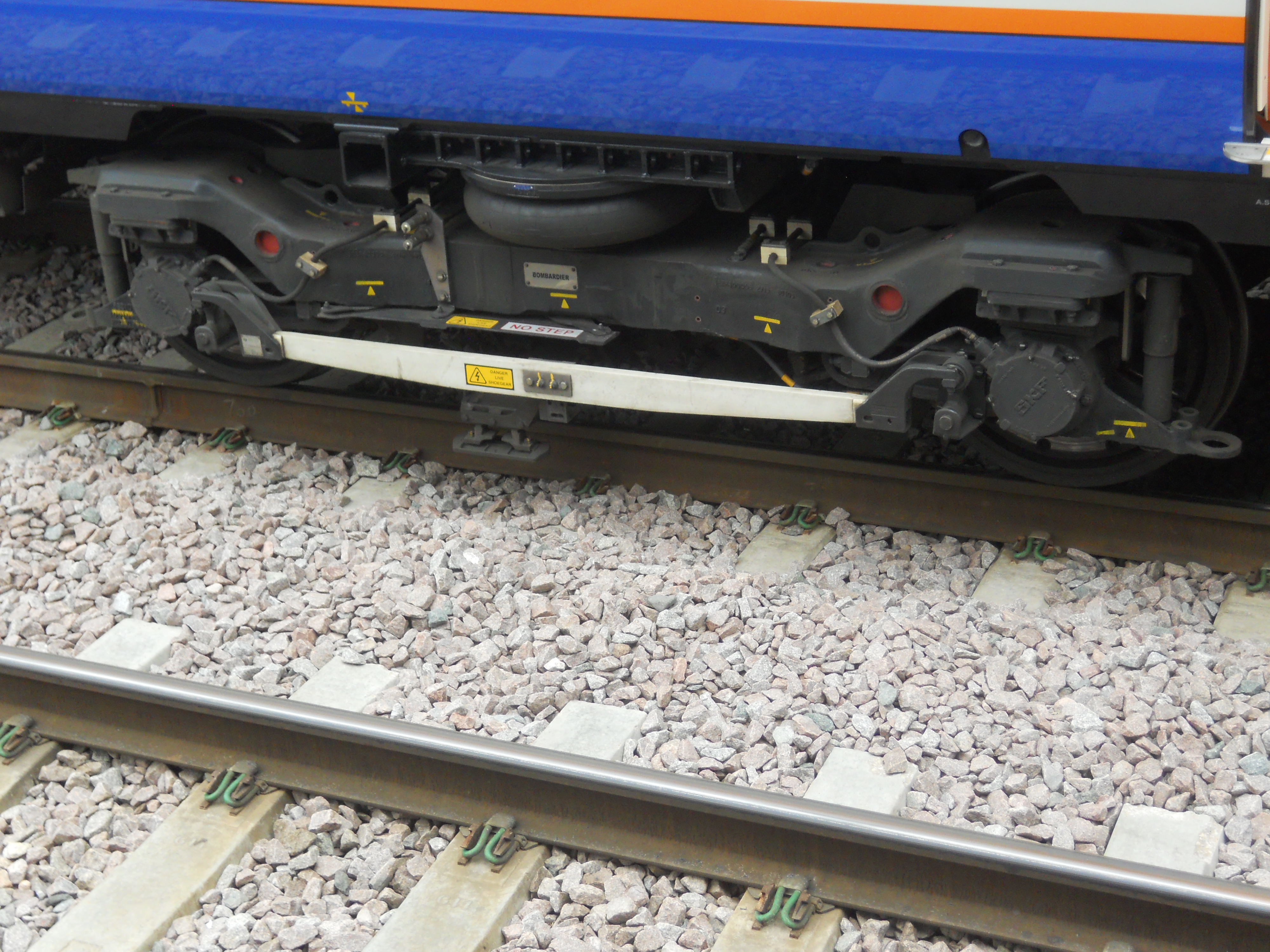
The picture shows the bogie on a Class 378 train.
Note the air-suspension above the frame of the bogie.
Some cars use secondary air suspension with computers to control the amount of air in each rubber bag to improve the ride and road-holding.
Transport for London measure the pressure in the suspension and use this to calculate train loading. I described this application in Is This The Hippest Train Status Displays?
Could the air bags be pumped up to raise the train and and reduced in pressure to drop it a few centimetres?
There are certainly suspension engineers, in the automotive and motor-sport industries, who have relevant experience and could suggest a solution.
All this speculation is a bit like Lew Grasde’s quote on the film Raise the Titanic on which he lost a lot of money.
Raise The Titanic? It would have been cheaper to lower the Atlantic!
Here it’s a bit of the reverse as if the tram-trains can be adjusted to the platform height, then hundreds of platforms don’t need to be rebuilt.
Suppose the platforms were built to fit an existing tram or train.
- On the Manchester Metrolink the platforms would fit the M5000 trams.
- On the Sheffield Supertram, the platforms would fit the Supertrams.
- On the South Wales Metro, the platforms would fit the Welsh variant of the Class 755 train.
The Class 399 tram-trains running in Sheffield have their suspension adjusted on mnufacture and in the depot, so that there is level access between tram-train and platform.
Could the same tram-trains be adjusted so that they fit the Manchester Metrolink platforms, which are higher?
If they can, then Manchester has got a source of off-the-shelf tram-trains.
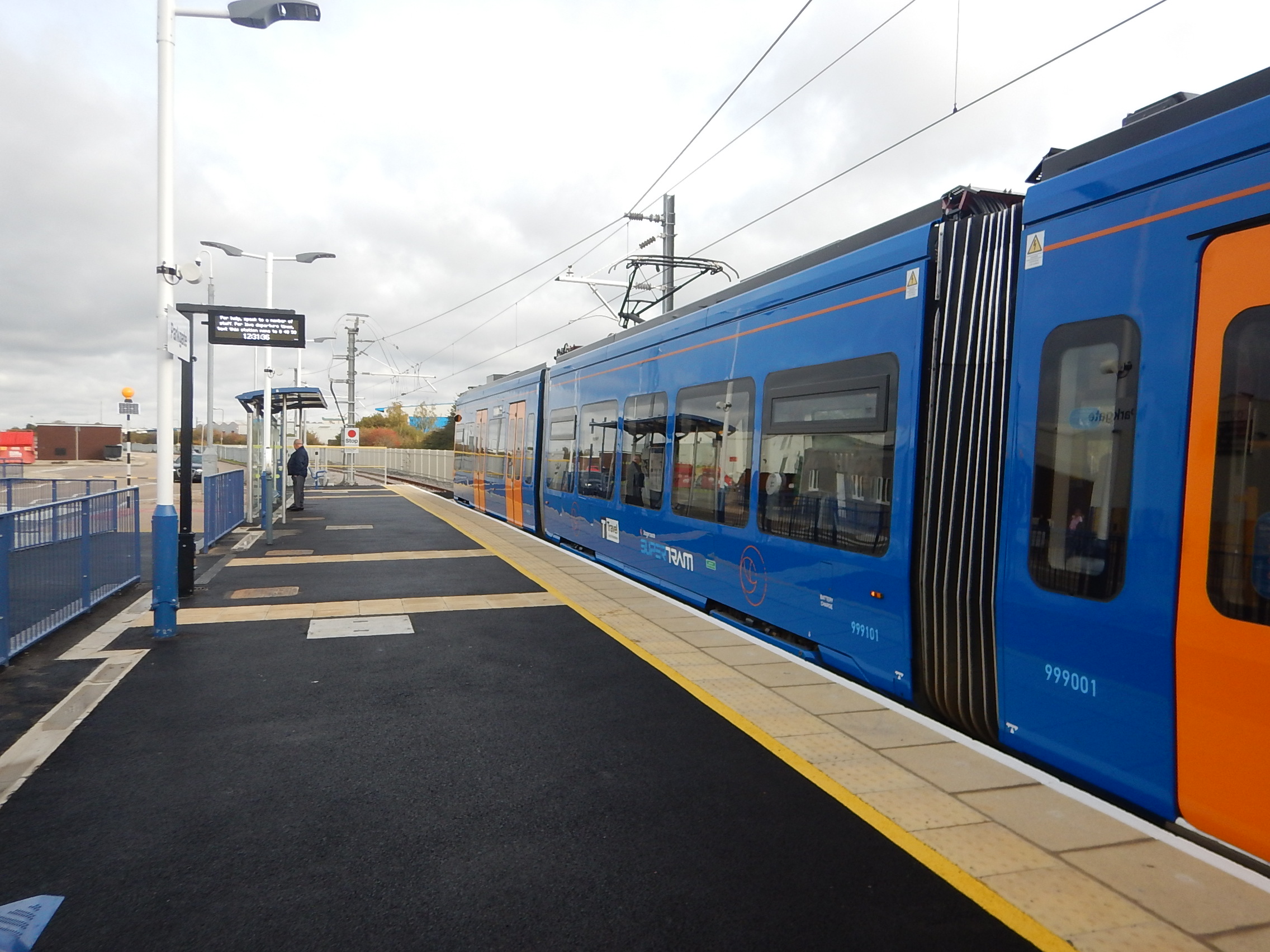
The picture shows a Class 399 tram-train at Rotherham Parkgate. Note the level access at the orange door in the foreground.
Manchester would need a different colour as Chelsea Blue wouldn’t be appropriate.
The intriguing idea, is can the same Class 399 tram-trains run in both Manchester and Sheffield, with the tram-train’s computer adjusting the ride height to suit the different height of platforms?
At present the answer is probably no, as if they could then there wouldn’t be dual-height platforms at Rotherham Central station.

Note the slopes down on both sides of the tracks from the high-level train platforms in the background, to the low-level tram platforms in the foreground.
It all depends on whether the suspension design is possible.
If it is, which I doubt, it would get round the bit problem of platforms on tram-train systems.
Weight
- M5000 – 30.7 tonnes
- Supertram – 46.5 tonnes
- Class 399 – .66.1 tonnes
The Class 399 tram-train is a heavy beast so raising it by much might be difficult, as you changed from Sheffield to Manchester heights.
Operating Speed
- M5000 – 80 kph
- Supertram – 80 kph
- Class 399 – .100 kph
Power And Power/Weight Ratio
- M5000 – 480 kW – 15.6 kW/tonne
- Supertram – 1108kW – 23.8 kW/tonne
- Class 399 – 870 kW – 13.2 kW/tonne
Noye.
- By comparison the power/weight ratio of a Class 321 train is just 7.9 kW/tonne
- I have talked to Sheffield tram-drivers and their view is that the Class 399 tram-trains handle Sheffield’s hills better with a full load of passengers.
- The Class 399 has six traction motors, whereas the others have four.
So perhaps, the way that the Class 399 tram-train puts its power to the rail with more driven axles, is important.
Conclusion
I am convinced that just as Sheffield’s Supertram can work happily with Class 399 tram-trains, Stadler have ways and means of making Manchester Metrolink’s M5000 trams work with the tram-trains.
If the Class 399 tram-train is compatible with both tram networks, this will be a great advantage in designing new tram-train routes.
It would also mean that one day, a tram-train service could run from Cathedral in Sheffield to Piccadilly Gardens in Manchester via the Hope Valley Line.
I suspect that a lot of local services from the two cities will be run by tram-train services, that cross the cities.
Stadler Rail’s Specification For UK Trains
These are links to the pdf specifications of Stadler Rail’s products in the UK.
- DRS – Class 68
- DRS – Class 88
- Greater Anglia – Class 755
- Merseyrail – Class 777
- Sheffield – Class 399 tram-train
I shall add more as I find them!
Science Has Dim View Of Brexiteers’ Brains
The title of this post is the same as that as an article on Page 3 of The Sunday Times
This is the first three paragraphs.
It is a belief that some pro-Europeans already hold dear, but a group of scientists now claim to have confirmed it: Brexit voters are less bright than remainers.
Researchers gave 11,225 volunteers psycholigical tests before the referendum and asked how they intended to vote. Results suggest that leavers tended to be less numerate, more impulsive and more prone to accept the unsupported claims of authoritarian figures.
“Compared with remain voters, leave voters displayed significantly lower levels of numeracy and appeared more reliant on impulsive thinking.” said the researchers, based at Missouri University.
Nigel Farage is quoted as saying the research was “divisive and arrogant”.
Some would say those two words should be applied to him.
Liverpool Lime Street And Chester Services Via Halton Curve Start In May
This page on the National Rail web site is entitled Changes to the National Rail Timetable.
Under Transport for Wales, this is said.
New services will run between Liverpool Lime Street and Chester via Runcorn. An hourly service will run, with peak time extensions to Wrexham General.
This sounds like the Halton Curve service to me.
Timing On The Route
Timing on the sections of route are as follows.
- Liverpool Lime Street and Runcorn – 21 minutes – West Midland Class 350 train, with a stop at Liverpool South Parkway.
- Runcorn and Chester – 17 minutes – Parliamentary service as given on Wikipedia.
- Chester and Wrexham General – 14 minutes – Trains for Wales
This gives timings as follows.
- Liverpool Lime Street and Chester – 38 minutes
- Liverpool Lime Street and Wrexham General – 52 minutes
It looks to me that a round trip would be under two hours to both destinations, so two trains would be enough to provide an hourly service.
If Trains for Wales should decide to run a half-hourly service, then four trains would be needed.
Trains On The Route
The Crewe-Liverpool Line has fast services between Liverpool Lime Street and Crewe, so I suspect that it has a speed limit of at least 100 mph.
For this reason along, I suspect that all operators and Network Rail, would hope that Trains for Wales will use a train capable of running at up to 100 mph between Liverpool Lime Street and Runcorn.
The operating speed of trains owned or planned by Trains for Wales are.
- Class 150 train – 75 mph
- Class 158 train – 90 mph
- Class 175 train – 100 mph
- Class 769 train – 100 mph on electricity
It seems to me for various reasons that the Class 769 trains would be ideal for this route.
- They could use the electrification between Liverpool Lime Street and Runcorn.
- They are four-car high-capacity trains, that meet all the regulations.
- They are 100 mph trains on electrification.
- They will be straight from the factory with new interiors.
- Northern will have servicing facilities for these trains at Allerton TMD.
- They would give the service some publicity.
They probably won’t be delivered in time for May 2019, but they could replace whatever is used for the initial service.
SWR And Porterbrook Trial New Emission-Slashing Rail Technology
The title of this post is the same as that as this article on Rail Technology Magazine.
This is the first three paragraphs of the article.
Groundbreaking emission-reducing technology is to be fitted to South Western Railway (SWR) train units as part of a new trial aiming to cut down harmful emissions from diesel trains by 80%.
Porterbrook is working in partnership with exhaust manufacturer Eminox to carry out the trial, with the DfT supporting the rolling stock company’s investment.
This will see South Western Railway’s Class 159 diesel units fitted with a first-of-its-kind emissions control device, with plans to roll out the technology to hundreds of diesel trains across the UK’s rail network.
I have looked up Eminox on their web site.
This is the mission statement on the front page.
Eminox designs and manufactures exhaust after-treatment systems, reducing emissions from heavy-duty vehicles and equipment.
Our products are supplied as original equipment to meet the latest emissions standards. We also produce complete emissions systems for retrofit to meet the ever-changing demands of local air quality programmes such as London’s Ultra Low Emission Zone and Clean Air Zones across the country.
Our Eminox Custom team specialises in exhaust conversions and bespoke systems.
While politicians dither and fiddle, engineers engineer, with a little bot of help from Porterbrook and the DfT.
If this technology proves to be successful, I can see its application to large numbers of diesel trains around the world.
Comparing Class 195 And Class 769 Trains
This may seen a strange comparison to do.
- In the blue corner is an upgraded forty-year-old four-car bi-mode Class 769 train from British Rail via Brush at Louthborough.
- In the red corner is a new three-car diesel Class 195 train from CAF.
So how do they compare?
Seats
- The Class 769 train shows 255 Standard Class and 12 First Seats in an example layout in the brochure.
- The Class 195 train has 204 seats according to Wikipedia.
The seats per car in both trains are almost identical.
Diesel Power
- The Class 769 train has two 390 kW diesel engines and electric transmission.
- The Class 195 train has three 390 kW diesel engines and a ZF Ecolife six-speed transmission.
So it would appear that the Class 195 train is more powerful, but Class 769 train has an electric transmission, which doesn’t need to change gear.
I look forward to riding in both trains.
Operating Speed
- The Class 769 train has a 100 mph operating speed on electricity and has been designed for 91 mph on diesel power.
- The Class 195 train has a 100 mph operating speed.
The proof of the pudding will be in the timetables and journey times.
Conclusion
The two trains are fairly evenly matched for a lot of routes.
Forest Gate Station Is Almost Ready For Crossrail
These pictures show the almost complete Forest Gate station.
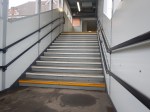
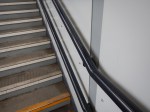
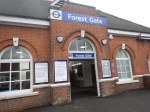


Compare them with these from 2014 in Before Crossrail – Forest Gate.
I wonder what wil happen to the pepper pot. I think it used to be a coffee kiosk.
The staff said, that one is needed.
Maryland Station Is Almost Ready For Crossrail
These pictures show the almost complete Maryland station.
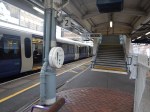



Compare them with these from 2014 in Before Crossrail – Maryland.
A sow’s ear has been turned into a silk purse.
More Than A Thousand People In This Town Want A Rail Service To Cambridge
The title of this post is the same as that of this article on Cambridgeshire Live.
This is the first three paragraphs.
t’s a town talked about more for its struggling market than its booming businesses.
But more than a thousand people in St Neots have signed a petition wanting to see that end.
The petition, which was started by Michelle Woodbridge, a resident from the town, wants the ‘forgotten’ area to be part of a new rail connection between Oxford and Cambridge – which people believe may revitalise the area.
St. Neots station is on the East Coast Main
- It is to the East of the town.
- The station has a new footbridge with lifts.
- It has an half-hourly Thameslink service between Peterborough and Horsham, with extra services in the Peak.
- There is a bus connection to Cambridge
This Google Map shows the Eastern area of the town around the railway station.
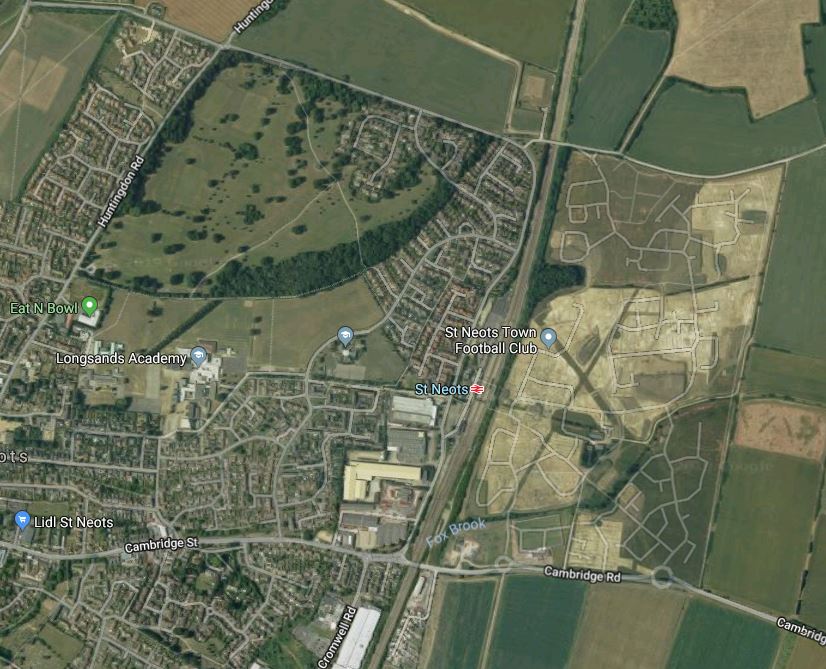
Note.
- The large area of development to the East of the station.
- The A428 road running across the bottom half of the map.
- The A428 is being upgraded and could become a dual-carriageway route to Cambridge via Caxton Gibbet, Cambourne and Madingley.
The East-West Rail Link between Oxford and Cambridge is planned to cross the East Coast Main Line at Sandy and then take a Southerly route to Cambridge South station.
The Route Option B is described like this in Wikipedia.
Route B involves running from the Marston Vale line to a new Bedford South station before then running to a relocated Sandy (to the north Tempsford area or south of St. Neots). The route heads east to a new station in Cambourne before swinging south to join the existing line northbound to Cambridge.
It does seem a bit of a roundabout route, but the new station at Tempsford could be a well-placed Park-and-Ride station for Cambridge.
I don’t think that the choice of route between Bedford and Cambridge will be easy.
However, certain factors may help in the design of the route.
An Improved A1 Road
The A1 road runs North-South to the West of the East Coast Main Line.
The road is only a two lanes in each direction and probably needs improvement.
So the improvements could be done in conjunction with the building of the East-West Rail Link.
The East Coast Main Line Is Four Tracks
Much of the East Coast Main Line is four tracks or could be made so, through St. Neots and Sandy stations.
Both stations have four platforms.
Sandy Station Could Be An Interchange Between The East-West Rail Link And The East Coast Main Line
I wouldn’t be surprised to see Sandy station developed into a comprehensiove interchange station, either in its present position or slightly closer to St. Neots.
It would be served by the following services.
- East Coast Main Line services between Kings Cross, the North of England and the East of Scotland.
- Tramslink services between London and Peterborough.
- East-West services between Cambridge and Oxford via Bedford and Milton Keynes.
It would also be a Park-and Ride station for London, Bedford and Cambridge.
The East Coast Main Line Will Be Digitally Signalled
This must help increase the numbers of trains on the Route.
Greater Anglia Are Ambitious
I just wonder if there was a flyover at Sandy station, if trains could use the East Coast Main Line and the East West Rail Link to create a new service from Cambridge to Peterborough via Cambridge South, Sandy, St. Neots, and Huntingdon.
It would suit Greater Anglia’s ambitions and the 100 mph Class 755 trains could handle the partially-electrified route with ease.
There could even be a circular service, where trains returned from Peterborough via March, Ely, Waterbeach and Cambridge North.
- The trains would not terminate at Cambridge, but would go through the three Cambridge stations in order.
- Four trains per hour (tph), with two going via Sandy and two via Ely could be handled in a single platform at Peterborough.
I estimate the following times are possible
- Cambridge and Peterborough via Sandy – 60 minutes
- Cambridge and Peterborough via Ely – 50 minutes
Two tph doing the circular route in both directions would need eight trains. All stations would get at least two tph service to Cambridge and Peterborough.
Conclusion
I can see a time when there is a direct service between Peterborough and Cambridge via Cambridge South, Sandy, St. Neots, and Huntingdon.
St. Neots would have a two tph service to Cambridge South, Cambridge, Cambridge North, Ely and Peterborough.
 The Anonymous Widower