Scotland To Trial World’s First Hydrogen-Powered Ferry In Orkney
The title of this post, is the same as that of this article on The Herald.
This is the introductory paragraph.
The world’s first hydrogen-fuelled ferry is set to undergo testing as Scotland powers forward in the green energy race.
I wonder how many of these there are in the world?
This paragraph lists those behind the project.
The HyDIME project is made up of a consortium of partners being led by Ferguson Marine. Partners include ULEMCo, Lloyd’s Register, HSSMI and Orkney Islands Council.
I suspect ULEMCo will provide the motive power, as their speciality is converting vehicles to run on hydrogen or dual-fuel of hydrogen and diesel.
There is also a HyDIME web site.
This is the project description from the web site.
- HyDIME (Hydrogen Diesel Injection in a Marine Environment) is a 12 month, Innovate UK funded project that will use an environmentally friendly form of hydrogen as a fuel for a commercial ferry operating between Shapinsay and Kirkwall in Orkney.
- HyDIME aims to make waves in the marine industry by proving the safe integration and use of hydrogen on vessels. One of HyDIME’s goals is the design and physical integration of a hydrogen injection system on a commercial passenger and vehicle ferry which will be the first of its kind worldwide.
- The hydrogen used in the HyDIME project will be cleanly produced from renewable energy. Excess energy generated from Orkney’s abundance of wind and tidal power will be used to produce hydrogen via electrolysis, resulting in carbon free, ’green’ hydrogen.
- Looking to the future beyond the project, HyDIME will conduct a scale-up analysis, addressing key questions such as, “How much hydrogen and renewable energy would be required to fuel the Shapinsay ferry PLUS a fleet of hydrogen vehicles in Orkney?” and “Can this project be replicated in other areas of Scotland and the rest of the UK?”.
- The HyDIME project will provide a stepping stone to accelerate and de-risk future hydrogen marine projects and will contribute towards growing the hydrogen economy in the UK.
This looks to be a very professional project, as they seem to be trying to answer all the questions, anyone will ask.
Any Politician Who Advocates A Circuit Breaker Is Ignoring The Dynamics
As a Control Engineer, trying to control things with an on-off control like a circuit breaker is like trying to ride a bike only turning hard left or hard right.
We need to apply lots of small actions to nudge the pandemic to a safe equilibrium with the UK population.
- A small action, I would do is shut betting shops, as this can be done on-line and most are owned by big groups, so commercial damage wouldn’t be great. Some staff surely could be redeployed.
- I would also close down all religious services with more than six people. Obviously, God is working on a bigger project at the moment and is too busy to help with the pandemic.
- I would also encourage working from home where possible, as that has been shown to reduce spread.
But perhaps we need to take some serious dramatic action.
Why not release the latest James Bond film on a Saturday evening on free-to-air television? And do it worldwide, except to China!
It wouldn’t do the cinemas any good, but if they got on with the next one, if this one is any good, everybody will flock to see it.
Hull Trains Seat Allocation System
When I went to Hull recently, I used Hull Trains.
These pictures show the train as I boarded at London Kings Cross.

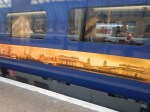

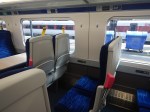
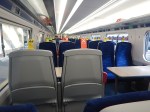
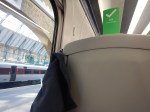
When I got my ticket out of the machine, I was very surprised to see the phrase No Specified Seat on the ticket.
I queried it with one of the LNER staff and they said, it will be alright and anyway, it is nothing to do with them.
When I got to the gate, I asked the guy from Hull Trains and he said, you’ll see when you get inside and something like. “Sit in any seat with a green flag!”
You can see the coloured flags on the seats in the pictures. The different colours mean.
- Green – For single travellers
- Red – Do not sit here
- Yellow – For two or more travelling together.
So I choose a window seat with a green flag on it.
Did it work?
- There were no families, but several pairs of travellers and I suspect about sixty percent of the seats were taken.
- Everybody was socially distanced and either had a spare seat or someone they knew next to them.
- At one table, I could see four guys all sitting together,
- The system deals with no-shows and leaves their seat for someone else.
Until proven otherwise, I think it worked well.
- I didn’t get allocated a seat, but I’m certain the system would work well if say some seats had been allocated by the booking computer.
- Seats could also be indicated by coloured lights.
- But as Hull Trains had only just restarted after the attack of the covids.
I had to have a quiet smile though.
My father was a master at designing production control systems and coloured cards were one of the tools in his box.
Often cards for his big customers like Belling, Dunlop and Enfield Rolling Mills were intricate and numbered creations, all produced with letterpress and his two faithful Original Heidelberg Plattern Presses.
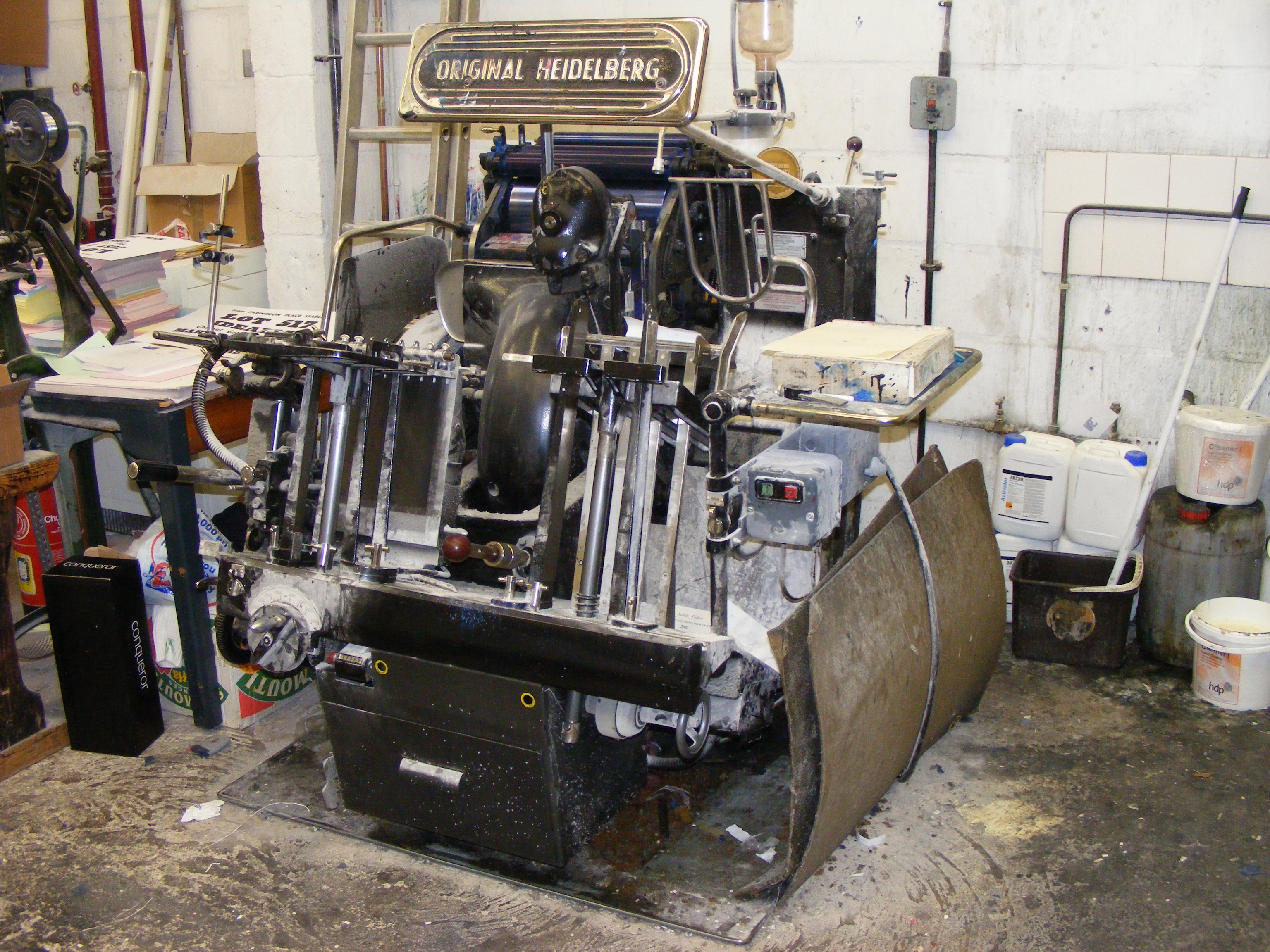
Original Heidelberg
With the right gadgets in the chase, that held the type, they could number, score and perforate. You couldn’t do those operations with litho, in the 1950s and 1960s.
I hadn’t realised much about this side of my father’s work, until I met Ray Askew, whilst walking our basset hound. He had a basset too and on talking, it turned out he had worked for Enfield Rolling Mills and it was part of his job to source production control documents and he used to design them with my father, whose firm, then printed them!
Could This System Be Used On East Coast Trains?
East Coast Trains are another First Group company like Hull Trains, who will be running services between London and Edinburgh from some time next year.
I can’t see why they could use a developed version of this system, with tri-colour lights on the seats.
East Coast Trains will be aiming for a four hour service and I suspect they’d like people to just turn up and go, so quick ticketing would be needed. A simple app, where you said how many tickets and what train and then you just turned up in time for your train would do.
Nickel Metal Hydride Battery Storage Company Receives €47m Investment From European Investment Bank
The title of this post, is the same as that of this article on Energy Storage News.
This is the introductory paragraph.
Nilar, a Sweden-headquartered producer of nickel metal hydride chemistry batteries aimed to compete with lithium-ion and lead acid, will receive €47 million (US$55.45 million) in funding from the European Investment Bank (EIB).
There certainly seem to be several promising new technologies being developed for energy storage.
Ealing Broadway Station – 12th October 2020
I took these pictures, as I passed through Ealing Broadway station yesterday.
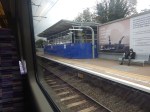
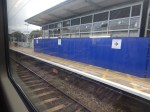
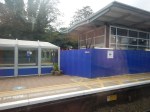
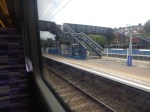
Note.
- It looks to be a large posh shelter on the platform.
- Ealing Broadway seems to be joining the group of Crossrail stations, with means to cross the tracks at both ends of the trains.
I took the pictures from a train with a full nine car Class 345 train! They have a capacity of 1,500 passengers and are 200 metres long.
West Ealing Station – 12th October 2020
These pictures show the current state of West Ealing station.
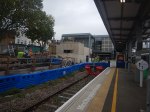
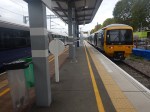
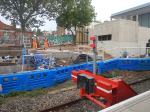
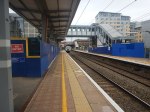
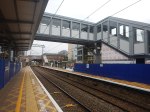
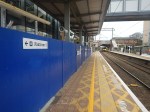
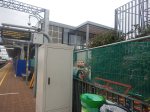
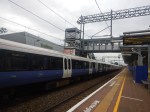
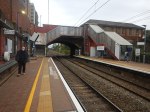
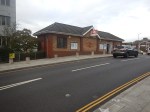
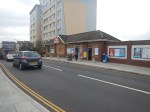

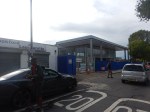
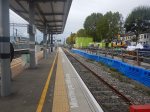
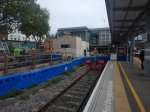
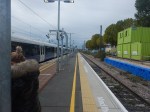
A few of my thoughts.
The Size Of The Station
It is not small!
Will The Current Entrance Be Retained?
From the outside the original entrance looks to be in good condition.
Will it be retained?
I think it won’t be as the stairs are a bit of an accident waiting to happen.
Electrification Of The Greenford Branch
If the Greenford Branch is going to be electrified, the last picture shows that gantries and headspan wires are in place over the Western end of Platform 5.
The electrification could be fixed to the new station building, if it were to be electrified.
Power would not be a problem, as a main sub-station for Crossrail and the Great Western Main Line is nearby.
In Could Class 165 HyDrive Trains Be The Solution To The Greenford Branch?, I showed that a train with better acceleration could provide four trains per hour (tph) on the Greenford Branch.
I feel that a pair of powerful two-car battery electric trains could provide four tph on the branch.
- They would charge using a short length of 25 KVAC overhead electrification in Platform 5 at West Ealing station.
- The route is only 2.5 miles.
- Recharging time wouldn’t be very long, as the battery wouldn’t be enormous.
In Special Train Offers A Strong Case For Reopening Fawley Line, the Managing Director of South Western Railway; Mark Hopwood is quoted as saying, that their Class 456 trains could be converted to two-car battery trains. Converting Class 456 Trains Into Two-Car Battery Electric Trains discusses this conversion in detail.
A two-car Class 456 train equipped with batteries and the ability to use 25 KVAC overhead electrification, would be ideal for the branch and could probably provide four tph.
Conclusion
This station is starting to look like a quality station for Crossrail.
SEA Electric And Toyota Team Up For Electric Trucks
The title of this post, is the same as that of this article on AuManufacturing.
These are the introductory paragraphs.
Toyota’s Hino truck division has announced a major foray into electric and hydrogen powered trucks, with Melbourne’s SEA Electric set to partner in the development of a new medium sized truck.
SEA Electric manufactures electric vehicle drive trains in Melbourne and has been converting Hino truck models to electric here and in the United States.
Now the company will partner with Hino in its global Project Z which will expand its range of largely diesel trucks.
It appears that electric and hydrogen powered vehicles are being developed.
This paragraph describes the powertrain.
Running the SEA Drive 120 a powertrain, it is mounted on on a cab/chassis platform. The 1470Nm electric motor and 136kWh battery pack delivers range of up to 350km (220 miles), and a typical breakeven period of less than 4 years.
They also claim to have eliminated the need for a battery cooling system.
Conclusion
I am drawn to these conclusions.
It seems that there are scores of small companies all over the world developing battery and hydrogen power systems for trucks, buses and trains.
As with SEA Electric and Hino, big manufacturers are often happy to tie up with smaller technology companies to create new products.
Carnot – Is This The Next Generation Of Hydrogen Technology?
I first heard about Carnot on the crowdfunding site I use.
On this page on their web site, they talk about disruptive technology and say this.
The off-grid energy and long-haul transport sectors, unregulated until the last decade, must be net zero by 2050. Battery technology is unsuitable due to cost and weight. Hydrogen technology is considered to be the only viable solution to decarbonising these sectors. Carnot power units will have greater efficiency, lower total cost of ownership and greater range, reliability and durability than fuel cells. They are the key to unlocking a hydrogen future while minimising the impact to supply chains.
I have put a bet of a grand on this company, just in case it does turn out to be the next generation of hydrogen technology.
High Speed Two To Build Stabling Facility In Scotland
High Speed Two has announced the intention to build a stabling facility for trains at Annandale in Dumfries and Galloway.
This document on the Government web site is entitled HS2 Phase 2b Western Leg Design Refinement Consultation.
Details of the Annandale Depot, start on Page 43.
This is the introductory paragraph.
Phase 2b will provide an increased number of services to Scotland and North West England compared to Phase 2a or Phase One of HS2, with two 400m trains running from Euston each hour and splitting at Carlisle into two 200m trains to serve Glasgow and Edinburgh. HS2 trains will also serve Scotland from Birmingham. New HS2 trains serving Scotland and the north west of England will need overnight stabling and light maintenance in this area, near to where trains finish and start service. It would not be operationally efficient for these trains to run empty to the next closest HS2 depot north of Crewe, approximately 150 miles away.
Note the services are as laid out in the June 2020 Edition of Modern Railways, which was obviously the thinking at the time on High Speed Two.
If you ignore the splitting and joining and assume that they are two separate trains, the Anglo-Scottish services on High Speed Two are as follows.
- One train per hour (tph) – London Euston and Edinburgh Waverley via Old Oak Common, Preston, Carlisle and Edinburgh Haymarket.
- One tph – London Euston and Edinburgh Waverley via Old Oak Common, Birmingham Interchange, Preston, Carlisle and Edinburgh Haymarket.
- One tph – London Euston and Glasgow Central via Old Oak Common, Preston and Carlisle.
- One tph – London Euston and Glasgow Central via Old Oak Common, Birmingham Interchange, Preston and Carlisle.
- One train per two hours (tp2h) – Birmingham Curzon Street and Edinburgh Waverley via Wigan North Western, Preston, Lancaster, Oxenholme, Penrith, Carlisle. Lockerbie and Edinburgh Haymarket
- One tp2h – Birmingham Curzon Street and Glasgow Central via Wigan North Western, Preston, Lancaster, Oxenholme, Penrith, Carlisle. Lockerbie and Motherwell
Note.
- Oxenholme and Penrith might not be served by both Birmingham trains.
- All services would be run by High Speed Two’s Classic-Compatible trains.
- The two Birmingham services effectively provide a one tph service between Birmingham and Scotland.
- All services will be single 200 metre long trains to the North of Carlisle, as pairs will split and join at Carlisle station.
- There would appear to be a fairly consistent five tph between Carlisle and Carstairs, where the Glasgow and Edinburgh routes divide.
- Edinburgh Waverley and Glasgow Central will both have three tph to and from Carlisle and Preston.
These were factors in the choice of location of the depot, stated in the report.
- Be close to the existing railway.
- Be a relatively large, flat site.
- Preferably a brownfield rather than greenfield site.
- Located as close as feasible to where HS2 services will terminate or begin to minimise empty train movements.
- Be accessible to the workforce and local transport network.
- Be suitable for 24-hour working.
- Have enough space to accommodate equipment for light maintenance activities.
- Have enough space to accommodate the expected number of trains.
The site is also close to the M74.
A few of my thoughts.
The Location Of The Proposed Depot
This Google Map shows the area mentioned in the report.
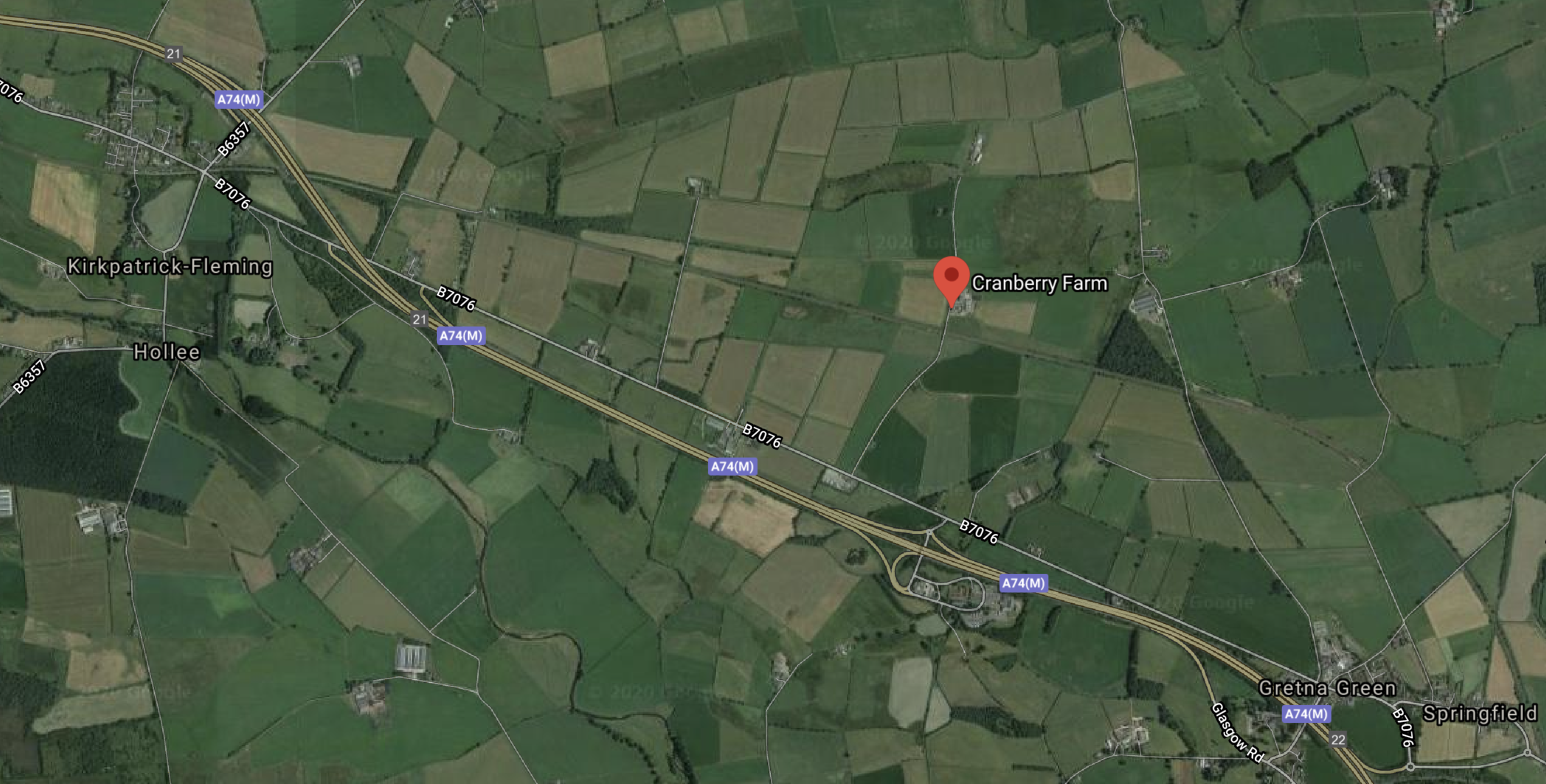
Note.
- The red arrow indicates Cranberry Farm, which will be just to the North of the site.
- The West Coast Main Line passing just South of Cranberry Farm, going across the map.
- The B 7076 and M74 will be to the South of the site.
It looks to meet many of the factors, I stated earlier. But it does appear to be a greenfield, rather than a brownfield site.
Distances And Times From The Depot
These are distances to places, where services will or might start.
- Carlisle – 9 miles – 6 minutes
- Edinburgh – 93 miles – 68 minutes
- Glasgow – 94 miles – 59 minutes
I have used distances from Gretna Green Junction, which is just to the South of the proposed depot.
Will The Depot Be Only For Classic-Compatible Trains?
Consider.
- All services North of Wigan North Western will be run by High Speed Two’s Classic-Compatible trains.
- A simpler depot would surely be possible if it only handled High Speed Two’s Classic-Compatible trains.
- With the possible exception of the occasional demonstration or test run High Speed Two;s full-size fleet will never be seen North of the Border.
The only thing this depot might have to do with the full-size fleet is turn-back a test train, which would only need a 400 metre long siding. A siding this length would probably be needed to turn a pair of High Speed Two’s Classic-Compatible trains.
Could The Depot Serve A Possible Irish Extension?
I believe that eventually High Speed Two will be extended across Southern Scotland and a bridge will connect it to Northern Ireland
In A Glimpse Of 2035, I gave a fictionalised version of the first journey from London Euston to Dublin, by high speed train.
I have just calculated the length of a high speed rail link between the proposed Annandale . Depot and a Belfast Parkway station. It is around 120 miles and the route would probably branch off between Lockerbie and Annandale Depot.
I feel that Annandale Depot could serve trains for Belfast, but there would probably need to be another depot in Dublin.
Extra HS2 Services To Scotland
Currently, TransPennine Express run services Between Liverpool and Manchester in England and Edinburgh and Glasgow in Scotland.
I can see High Speed Two replacing these services with a similar service to the one they are planning for Birmingham.
The current service is as follows,
- One tp2h – Manchester Airport and Edinburgh Waverley via Manchester Piccadilly, Preston, Lancaster, Carlisle and Haymarket
- One tp2h – Manchester Airport and Glasgow Central via Manchester Piccadilly, Preston, Lancaster, Carlisle and Motherwell
- Four trains per day (tpd) – Liverpool Lime Street and Glasgow Central via Wigan North Western, Preston, Lancaster, Carlisle and Motherwell
Note.
- They call at smaller stations like Wigan North Western, Lancaster, Oxenholme, Penrith and Lockerbie as appropriate, to even up the service.
- These services probably share one path between Preston and Carstairs.
- The Liverpool services are diverted Manchester services.
Could they be replaced by High Speed Two services?
The Manchester services could become.
- One tp2h – Manchester Piccadilly and Edinburgh Waverley via Manchester Airport, Preston, Lancaster, Carlisle and Haymarket
- One tp2h – Manchester Piccadilly and Glasgow Central via Manchester Airport, Preston, Lancaster, Carlisle and Motherwell.
Blackpool, Liverpool and other parts of the North West may be better served with high speed commuter services linking them to Preston.
Serving Scotland’s Seven Cities
Scotland has seven cities that are connected by Inter7City trains.
- Aberdeen – Not Electrified
- Dundee – Not Electrified
- Edinburgh – Will be served by High Speed Two
- Glasgow – Will be served by High Speed Two
- Inverness – Not Electrified
- Perth – Not Electrified
- Stirling – Fully Electrified
Can we forget about serving Aberdeen, Dundee, Inverness and Perth until they are fully electrified?
But Stirling must be a possibility.
There is a fully electrified route via Motherwell, Whifflet, Greenfaulds and Larbert
I estimate, that coming up from London will take four hours and five minutes, as against the current time of five hours and eighteen minutes.
Increasing Capacity On The West Coast Main Line In Scotland
Over the years, there have been several plans to run more and faster trains between England and Glasgow on the West Coast Main Line.
So would a High Speed Two service go to Stirling?
At present the maximum operating speed on the route is 125 mph. Trains like Avanti West Coast’s Class 390 trains and Hitachi’s AT-300 trains, could run at 140 mph, if digital in-cab signalling were rolled out on the route.
It is absolutely essential before High Speed Two trains run to Scotland, that the West Coast Main Line is digitally signalled.
In addition to faster running, trains can be closer together, so more trains can be run in an hour.
There are also other things, that could be done to help.
- Ensure, that all the many freight trains on the route are electrically-hauled and capable of operating at 100 mph or more.
- Make sure that local trains sharing the routes into Glasgow and Edinburgh are fast enough to keep out of the way of the expresses.
- Selectively, add extra tracks, so that fast trains can overtake slow ones.
- Ideally, a line like the West Coast Main Line, needs to be quadruple track all the way.
There also must be scope for flighting.
Consider.
- Class 390 trains take about 30 minutes between Edinburgh Waverley and Carstairs South Junction
- Class 390 trains take about 30 minutes between Glasgow Central and Carstairs South Junction
- Carstairs South Junction is where the two routes join.
Suppose two High Speed Two trains were to leave Edinburgh and Glasgow at similar times and run South from Carstairs South Junction, a safe distance apart.
- The lead train would be travelling at 140 mph perhaps three to five minutes in front of the second train.
- In-cab digital signalling would enforce the safe distance.
When the trains arrived in Carlisle, they would take a couple of minutes to join up physically for the high speed dash to London.
This Google Map shows Carstairs station and the splitting of the Glasgow and Edinburgh routes.
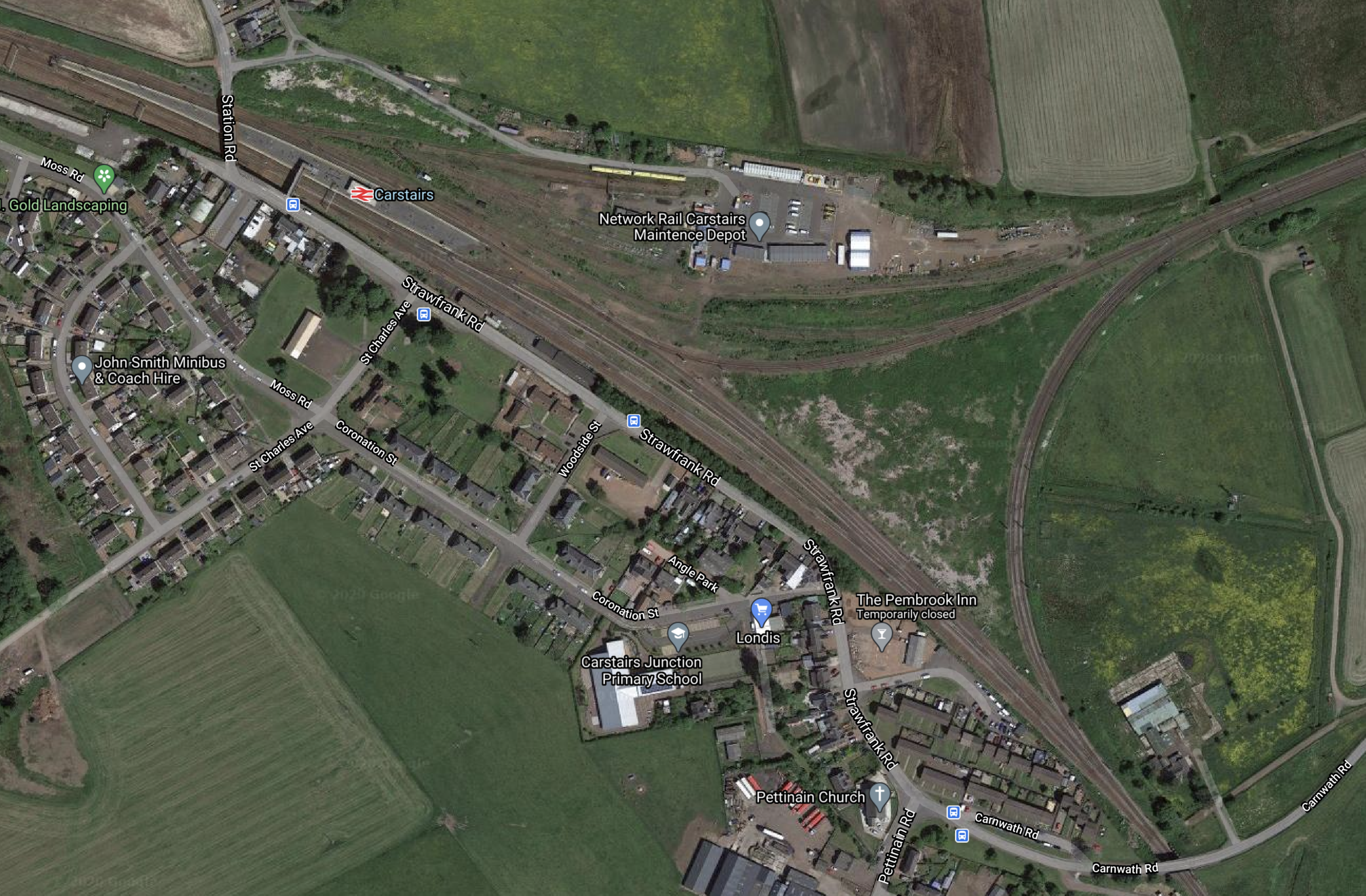
Note.
- The tracks going North-West to Glasgow.
- The tracks going North-East to Edinburgh.
- The tracks going South-East to Glasgow
- All tracks in the picture are electrified.
There might be a need for a passing loop to increase the efficiency of this junction.
It’s not just high speed passenger trains, that can use this technique, but it can be applied to trains with the same performance. So freight trains could form a convoy!
Flighting can decrease the number of train paths needed for a particular number of services and as digital in-cab signalling extends its reach across the UK, we’ll see more applications of the technique.
Effectively, by pathing the two London and Edinburgh/Glasgow trains and adding in one Birmingham and Manchester service, High Speed Two services would only need four paths between Carlisle and Carstairs.
But there would be.
- Four tph between Preston/Carlisle and Scotland. So capacity would be good.
- Three tph Between Carlisle and Edinburgh.
- Three tph Between Carlisle and Glasgow.
As Birmingham Curzon Street, Manchester Piccadilly and Manchester Airport all can handle a pair of High Speed Two’s Classic-Compatible trains, it might be possible in the future to serve both Edinburgh and Glasgow with the Birmingham and Manchester services, splitting the trains at Carlisle. This would mean.
- Four tph between Preston/Carlisle and Scotland.
- Four tph Between Preston/Carlisle and Edinburgh.
- Four tph Between Preston/Carlisle and Glasgow.
That looks strange mathematics, but that’s what you get when a train can serve two places by splitting.
What About The Glasgow And South Western Line?
The Glasgow And South Western Line, runs between Glasgow and Carlisle via Dumfries.
Consider.
- It is not electrified
- It can be used as a diversion, when the West Coast Main Line is blocked.
- It has always puzzled me, why this line wasn’t electrified, when the West Coast Main Line was electrified in the 1970s.
- High Speed Two’s need for more paths and higher speeds on the West Coast Main Line, may chase some of the freight on that route on to the Glasgow and South Western, as an alternative.
Perhaps, a small part of the High Speed Two budget could be used to electrify the route.
It certainly could be used to take some freight traffic from the West Coast Main Line and to ease diversions, if High Speed Two needed to close the West Coast Main Line for improvements to track, electrification or signalling.
It is also a line, where alternative methods of powering the trains could be used.
- It has electrification at both ends and with some electrification in the middle, battery electric passenger trains might be able to use the route.
- The City of Glasgow is majoring on hydrogen and the route, which is 115 miles long, could be ideal for a hydrogen train.
On the other hand full electrification could enable the electric services to be run at times, when the West Coast Main Line was blocked.
It is certainly a route, that could benefit from improvement.
Extension Of The Borders Railway To Carlisle
It is looking increasingly likely that the Borders Railway will be extended to Carlisle.
This report from the High Speed Rail Group is entitled Cross-Border High-Speed Rail And The Borders Railway Project.
The first paragraph is firm about why the Edinburgh and Glasgow services should split and join at Carlisle.
It has taken a while for HS2 service plans to focus on Carlisle as the right place to divide and join Glasgow/Edinburgh high-speed train portions. Earlier plans used Carstairs – and left Carlisle with no HS2 London service.
I also think it will be considerably more affordable and less disruptive to extend Carlisle’s already long platforms, than to build a massive new station at Carstairs capable of handling 400 metre long trains.
This paragraph puts its case for extending the Borders Railway to Carlisle.
To get best use out of the enhanced services that will then be possible, and to fully utilise the additional line capacity along the West Coast Main Line, onward rail connectivity is crucial. That’s why we flagged the compatibility with the Borders Railways re-opening from Tweedbank via Hawick to Carlisle in our report. With Carlisle-London journey times reduced to a little over 2 hours, and the Borders Railway fully re-instated, journey times from the Borders towns could be dramatically shortened – to London as well as to other major cities in England. Inward travel for tourists to the Borders region would be dramatically enhanced too.
They also add that a Borders Railway could be an useful diversion route, during the increasing number of problems on UK rail networks caused by the weather.
I believe that the Borders Railway should be extended to Carlisle and it should also be electrified.
- It would be a useful diversion route.
- It could handle some freight trains.
- It might be useful to move empty stock between Edinburgh and Annandale Depot, as the Borders Railway joins the West Coast Main Line not far from the depot.
We mustn’t underestimate how many passengers to and from the Borders will use the Borders Railway to catch High Speed Two at Carlisle.
Conclusion
Moving the depot to Annandale, may look to some like a way of giving the Scots a higher profile in High Speed Two.
But I do think it gives options to make a High Speed Network easier to run North of the border.
- High Speed Two have total control of their depot.
- It is well placed for Carlisle, Edinburgh and Glasgow.
It is also extremely well placed for the rail network of South Scotland.
 The Anonymous Widower