Crossrail’s Fans At Canary Wharf Station
I have just watched today’s episode of The Fifteen Billion Pound Railway on the BBC.
In one storyline, they negotiate a giant ventilation fan into Canary Wharf station.
Installing the fans is a fascinating tale, where in the end the last movements are performed using hover-pads and several strong men.
I am reminded of a tale I heard in my youth.
- At the age of 15 and 16, I spent two summers working at a company in North London called Enfield Rolling Mills.
- The boss of the company was John Grimston, who was a friend of my father and ERM were the largest customer of his printing business.
- I got a superb introduction to working in a large factory, where I installed simple valve-based electronic control systems on heavy machinery.
The most important rolling mill in the company, was a mill, that reduced copper wirebars to wire about half a centimetre in diameter.
- The machine had been acquired from Krupp, as war-reparations after the First World War and was still marked with Krupp’s trademark of three interlocked railway tyres.
- Enfield Rolling Mills had a trademark of four rings.
- The hot wire zig-zagged from one side to the other and it was turned by men using tongs.
- The machine was powered by a massive flywheel driven by an electric motor.
At some time in the 1950s, the flywheel needed to be replaced, by a new 96-ton wheel.
The Chief Engineer of the company was an Austrian Jew, known to all as Shimmy, which was a contraction of his surname Shimatovich.
- He had spent some time in a Nazi concentration camp and walked with a distinct stoop.
- He was widely recognised as one of the experts on roll grinding and very much respected by management, staff and workers alike.
- He had supposedly calculated, that if the new flywheel had come off its bearings at full speed, it would have gone a couple of miles through all the housing surrounding the factory.
There was very much a problem of how the new flywheel would be installed until Shimmy announced at a Board Meeting. “We will do it the way, we’d have done it in the concentration camp. We will use men! But our men are fit, well-fed and strong.”
So one Sunday morning, a large force turned up and rolled the flywheel off the low loader and into position using ropes, blocks and tackle and other equipment, that would have been familiar to ancient builders, after which it was duly fixed in place.
The job was completed just before one and the Managing Director of the company then asked if anybody would like a drink and indicated that everybody follow him to the company’s social club.
They arrived just as the steward was cleaning the last of the glasses and getting ready to lock up. On being asked to provide a large number of pints of bitter, he announced he was closed.
On this the Managing Director, by the name of Freddie Pluty, who was a strong man picked up the steward and sat him on the bar.
He then asked the two large workers at the front of the queue. “Are you going to hit him or shall I?”
They got their drinks.
Does Anybody Have Good Contacts At Network Rail?
In the 1980s, I did some business with British Rail, as it then was.
I provided my Daisy software and they used it to analyse signal failures.
It led to a guy called J S Firth, writing a paper called Failure Recording And Analysis On British Rail.
He had the courtesy to send me a copy of the paper, which mentions SigTech, which appears to have been a business unit of the British Railways Board.
All my dealings with Firth and his colleagues were in person at an office block in front of Marylebone station, which is now a posh hotel.
And then, a few months ago, someone contacted me from Network Rail.
Apparently, his father had worked on the signal failure project with me and he was now working in Milton Keynes for Network Rail on a similar project.
He asked if I had a copy of the paper.
At the time, I didn’t, but today I had a small sort out and found a copy.
Unfortunately, I have now lost the piece of paper on which I wrote the guy’s details.
Does anybody have any ideas, how I can find the guy, who contacted me?
Thales Supports Rollout Of UK Digital Railway Programme
The title of this post, is the same as that of this press release from Porterbrook.
The press release starts with these bullet points.
- Thales wins the fitment and supply of European Train Control System (ETCS) onboard units for Class 43 high-speed train retrofit.
- Implementation will benefit passengers and freight operators by delivering additional capacity, improving performance, enhancing safety and reducing the costs of operating the national railway.
Which is followed by this explanation.
As a key player in delivering this digital transformation, Thales has today been awarded the contract for the Class 43 First in Class (FiC) design and fitment project that will use Network Rail’s new measurement train power cars in the Infrastructure Measurement fleet. The FiC project will culminate in a Type approval from the Office of Road and Rail to enable subsequent Class 43 ETCS fleet fitments.
The new Thales onboard system will be integrated as part of the Digital Railway train control system, and will enable rolling stock to operate on ETCS-equipped infrastructure. The onboard equipment is an evolution of Thales’s level 1 ETCS system that has been successfully deployed worldwide.
This could be a smart move.
- Type Approval will mean that the Class 43 power cars of ScotRail’s Inter7Cities, Great Western Railway’s Castles and those of other operators can be retrofitted.
- Will the New Measurement Train also be used to test the digital signalling, as it covers all the tracks in Great Britain in a four-weekly cycle?
- Fitting of these iconic 1970’s designed power cars with the latest modern signalling could be a design exercise, that helps in the fitting of ETCS to other older and unusual locomotives.
I still think, that because of the iconic nature of the InterCity125, that we may see a conversion of Class 43 power cars to more sustainable operation.
- All power cars now have modern MTU diesel engines, which probably could be fuelled by hydrogen.
- The simplest way would be to run them on HVO, as I wrote about in Powered By HVO.
- Some operations like the short format trains in Scotland and South-West England might be more suitable for battery-electric operation.
- Given that there are 167 in operation or in store, it would be a good-sized order for the company converting the power cars.
I also believe that zero-carbon InterCity 125s could be an unusual tourist attraction.
Conclusion
The fitting of digital signalling to Class 43 power cars is a good move, but is it the start of a wider plan to bring these iconic trains up to modern standards.
Westinghouse And Bloom Energy To Team Up For Pink Hydrogen
The title of this post, is the same as that of this article on Hydrogen Fuel News.
This is the introductory paragraph.
Westinghouse Electric Company and Bloom Energy Corporation have announced that they have signed a letter of intent together for the production of pink hydrogen in the commercial nuclear power market.
Note.
- Westinghouse Electric Company is an American builder of nuclear power stations.
- Bloom Energy Corporation make a solid-oxide electrolyser.
- Pink hydrogen is green hydrogen produced using nuclear power.
Figures on the Bloom web site, claim that their electrolysers could be upwards of twelve percent more efficient than PEM electrolysers, as produced by companies like ITM Power.
Bloom Energy Vice President of Hydrogen Business Rick Beuttel, is quoted as saying this.
We are proud Westinghouse has turned to Bloom and our solid oxide technology to supercharge the clean hydrogen economy. Solid oxide technology is well suited for nuclear applications, efficiently harnessing steam to further improve the economics of hydrogen production. High temperature electrolysis is already garnering attention and accolades as a cost-effective and viable solution to create low-cost, clean hydrogen, which is critical to meeting aggressive decarbonization goals.
It sounds that by integrating the nuclear power station and the electrolyser, there are cost savings to be made.
Conclusion
I think this could turn out to be a significant development.
Some countries, like Iceland, Indonesia, New Zealand, Philippines and the United States, who can generate large amounts of electricity and steam from geothermal energy, Bloom’s technology must surely be a way of electrolysing hydrogen.
The Barbican Entrance To The Elizabeth Line – 10th June 2022
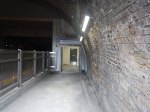
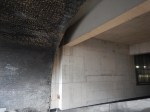
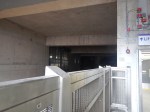
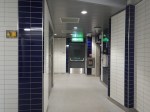
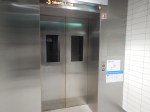
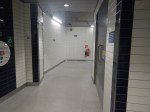
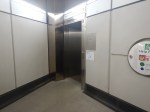
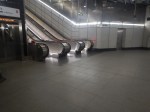
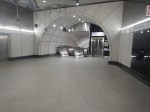
This series of pictures shows the route between the Westbound platform at Barbican station to the Elizabeth Line at Farringdon station.
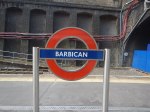
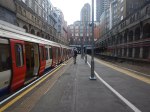
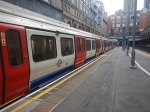
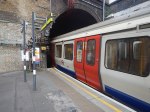

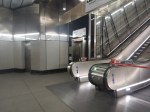
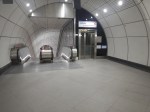
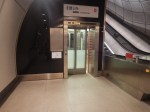
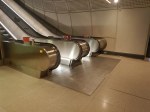
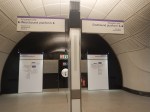
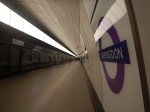
Note.
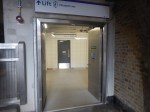
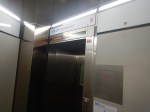
- There is only a single lift between the Western end of the Westbound Platform 2/3 at Barbican station and the lobby between the two banks of escalators and inclined lifts, that give access to the Barbican end of Elizabeth Line platforms.
- Currently, there is no access between the Elizabeth Line and the Eastbound Platform 1 at Barbican station.
- If you lived in one of the towers of the Barbican estate, if might be a marginally shorter walk to walk along Platform 2/3 and up the stairs to the street.
When C and myself, lived in Cromwell Tower in the Barbican, in the 1970s, we must have walked that route with our three children hundreds of times. It really isn’t very different.
I have a few thoughts.
Is The Route Really For Passengers?
Consider.
- A journey, where you might need to use the route could be one like Barking and Heathrow.
- But you have a wide choice, as you could alight at Whitechapel, Liverpool Street, Moorgate, Farringdon and Ealing Broadway on the sub-surface lines and have step-free access to the Elizabeth Line.
- I suspect most customers will choose Whitechapel or Liverpool Street.
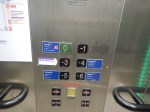
This picture shows the comprehensive control panel in the lift.
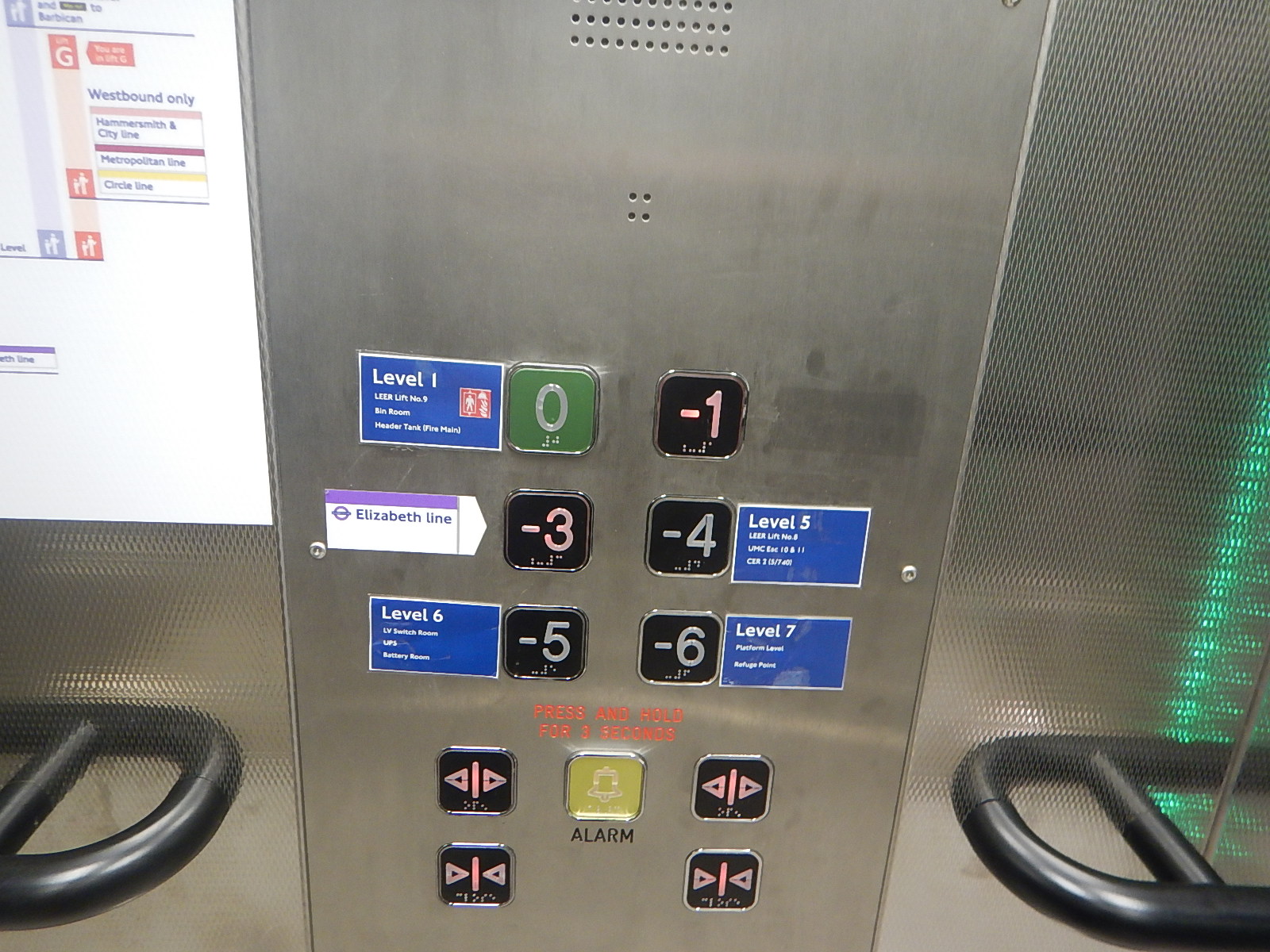
Could it be, that the main purpose of the lift is for staff access to hard to reach plant rooms?
Or perhaps it is designed to get a stretcher or wheelchair to the island platform at Barbican station?
Is The Connection Incomplete?
It could be that there is more work to do and the connection is incomplete.
There is a section, which is entitled Elizabeth Line, in the Wikipedia entry for Barbican station, where this is said.
Farringdon’s Barbican ticket hall for the Elizabeth line is just to the west of Barbican station along Long Lane. This construction involved significant changes at the western end of the station, including the demolition of the former signal box to construct a lift shaft from the Elizabeth line station to the westbound Underground platform only. The original plan of a new footbridge spanning the tracks to the eastbound platform was not proceeded with on the grounds of engineering difficulties. Work was anticipated to be completed in 2018, but was completed in May 2022.
It does look like, that the best that was possible was built.
Dalston Junction To Moorgate Via The Elizabeth Line
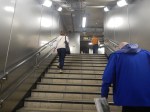
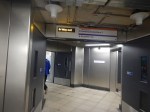
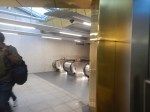
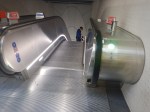
This morning to get my breakfast at Leon on Moorgate, I took the longer route via Dalston Junction and Whitechapel stations using the East London and Elizabeth Lines.






Note.
- I travelled in the last coach of the Overground train from Dalston Junction station.
- I travelled towards the front of the Elizabeth Line train from Whitechapel station.
- There are lifts between Overground and the Elizabeth Line at Whitechapel station.
- All the escalators have traffic lights.
- Using stairs and escalator, the change at Whitechapel station took around two minutes.
The total journey time was just over 25 minutes.
Monte To Purchase 100 FC Aircraft Drives From ZeroAvia
The title of this post, is the same as that of this article on electrive.com.
This is the first paragraph.
ZeroAvia and Monte Aircraft Leasing will jointly market hydrogen-powered aircraft to regional operators. Under an agreement now signed between the companies, Monte will purchase up to 100 ZA600 hydrogen-electric powertrains from ZeroAvia to be installed on existing and new 5- to 20-seat aircraft.
Monte look to be an interesting company from their web site, which has this title.
Supporting The Transition Of The Regional Aviation Industry To Net Zero Carbon Emissions
The business model appears to be a well-proven and it is not that far removed from the one, colleagues and myself used to sell the project management system; Artemis.
In our case we took proven Hewlett-Packard computers and and other hardware, added our Artemis software and a custom-made desk and leased the systems to those who wanted to do project management, with as much support as our clients required. Customers just had to supply operators, printer paper and a thirteen amp socket.
Finance was obtained by various innovative methods, often through a bank manager, who was a bit of a rogue. But he was a rogue, who was on the side of the angels.
Later he became a firm friend of mine, before he sadly died within a few days of my wife.
Monte Aircraft Leasing’s model would appear to take a proven aircraft like a Cessna Caravan, Dornier 228 or Dash 8, replace the turboprop engines with a zero-carbon powerplant and then lease the aircraft. Often this will just be an additional lease to the existing operator.
The great advantage of this approach, is that the reengined aircraft does not need to be fully re-certified. It can fly under a Supplemental Type Certificate, which is described like this in Wikipedia.
A supplemental type certificate (STC) is a civil aviation authority-approved major modification or repair to an existing type certified aircraft, engine or propeller. As it adds to the existing type certificate, it is deemed “supplemental”. In the United States issuance of such certificates is under the purview of the Federal Aviation Administration (FAA).
Monte seem to have found a good way to make money from going net-zero.
Energy Dome Launches World’s First CO2 Battery Long-Duration Energy Storage Plant
The title of this post, is the same as that of this article on Renewable Energy Magazine.
This is the first paragraph.
Energy Dome, a provider of utility-scale long-duration energy storage, has successfully launched its first CO2 Battery facility in Sardinia, Italy. This milestone marks the final de-risking of the CO2 Battery technology as Energy Dome enters the commercial scaling phase, becoming the first commercial long-duration energy storage technology on the market offering a reliable alternative to fossil fuels for dispatchable baseload power globally.
I like their technology and you can find more about it on their web site.
They say this about how they use the unique properties of carbon dioxide.
CO2 is the perfect fluid to store energy cost effectively in a closed thermodynamic process as it is one of the few gases that can be condensed and stored as a liquid under pressure at ambient temperature. This allows for high density energy storage without the need to go at extreme cryogenic temperatures.
And it’s not that carbon dioxide is a rare and expensive gas.
This is certainly technology to watch.
A First Ride In Avanti West Coast’s Refurbished Class 390 Train – 23rd May 2022
I took these pictures on a very fraught trip back from Liverpool, that was caused by someone being hit by a train.


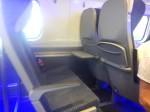

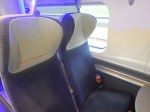
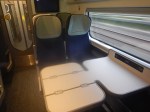
Note.
- It was much more comfortable, than the standard Class 390 train seats.
- The setup for charging phones was comprehensive and included induction charging.
- I do wonder, if there was more space in the seat.
It’s a great improvement on the original interior.
Garmisch-Partenkirchen Train Derailment
The Garmisch-Partenkirchen train derailment, which took place a few days ago, seems a strange one to me.
A push-pull train of five Bombardier double-deck carriages being pushed by a Class 111 locomotive derailed on a single-track line.
This map from OpenRailwayMap shows the are of the derailment.
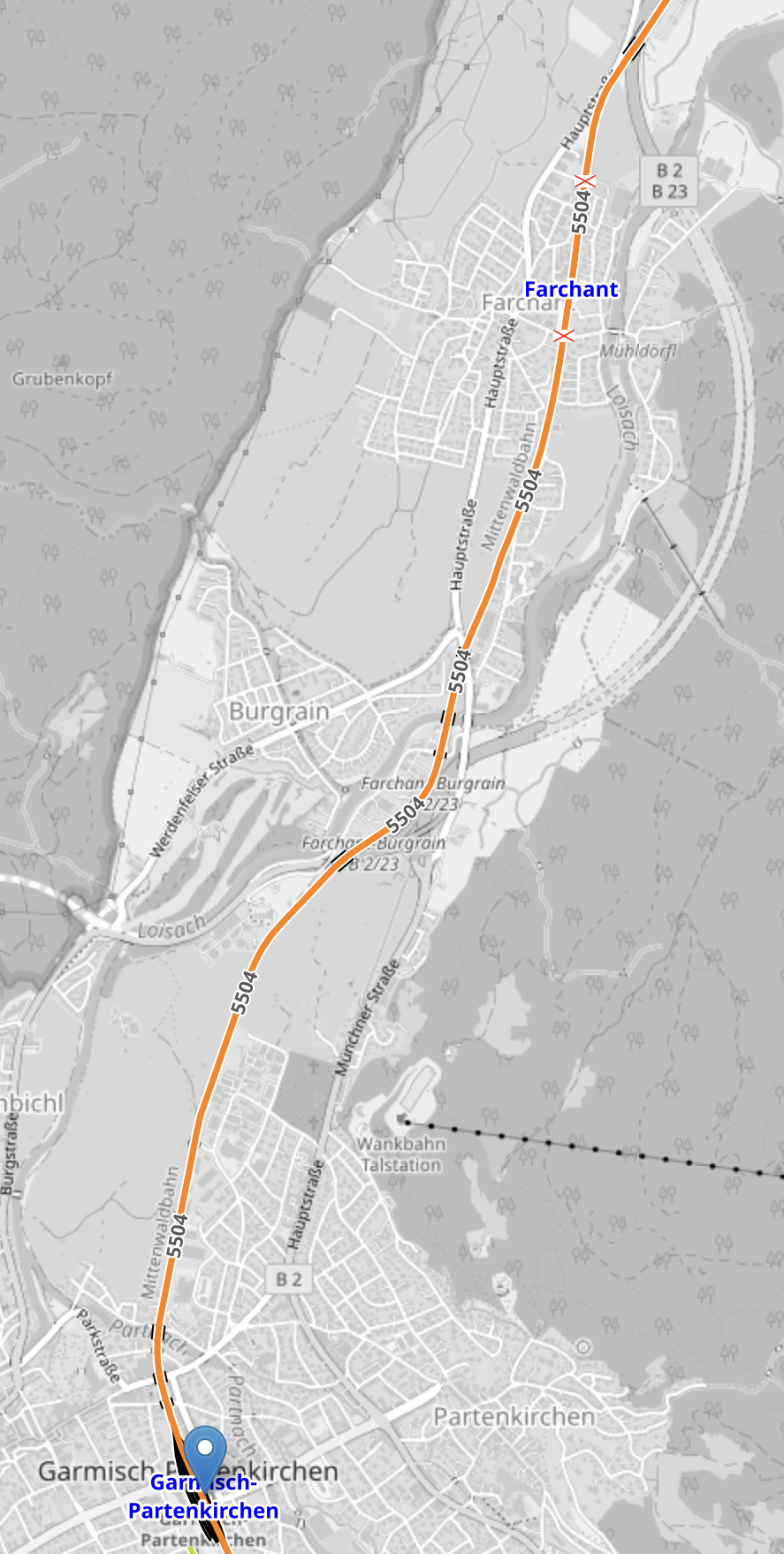
Note.
- The derailment took place between Garmisch-Partenkirchen and Farchant.
- The train was heading North.
- The accident happened close to the junction of the B2 and B23 roads.
- The speed limit through the area would appear to be between 100 and 110 kph.
This Google Map shows the area in detail.
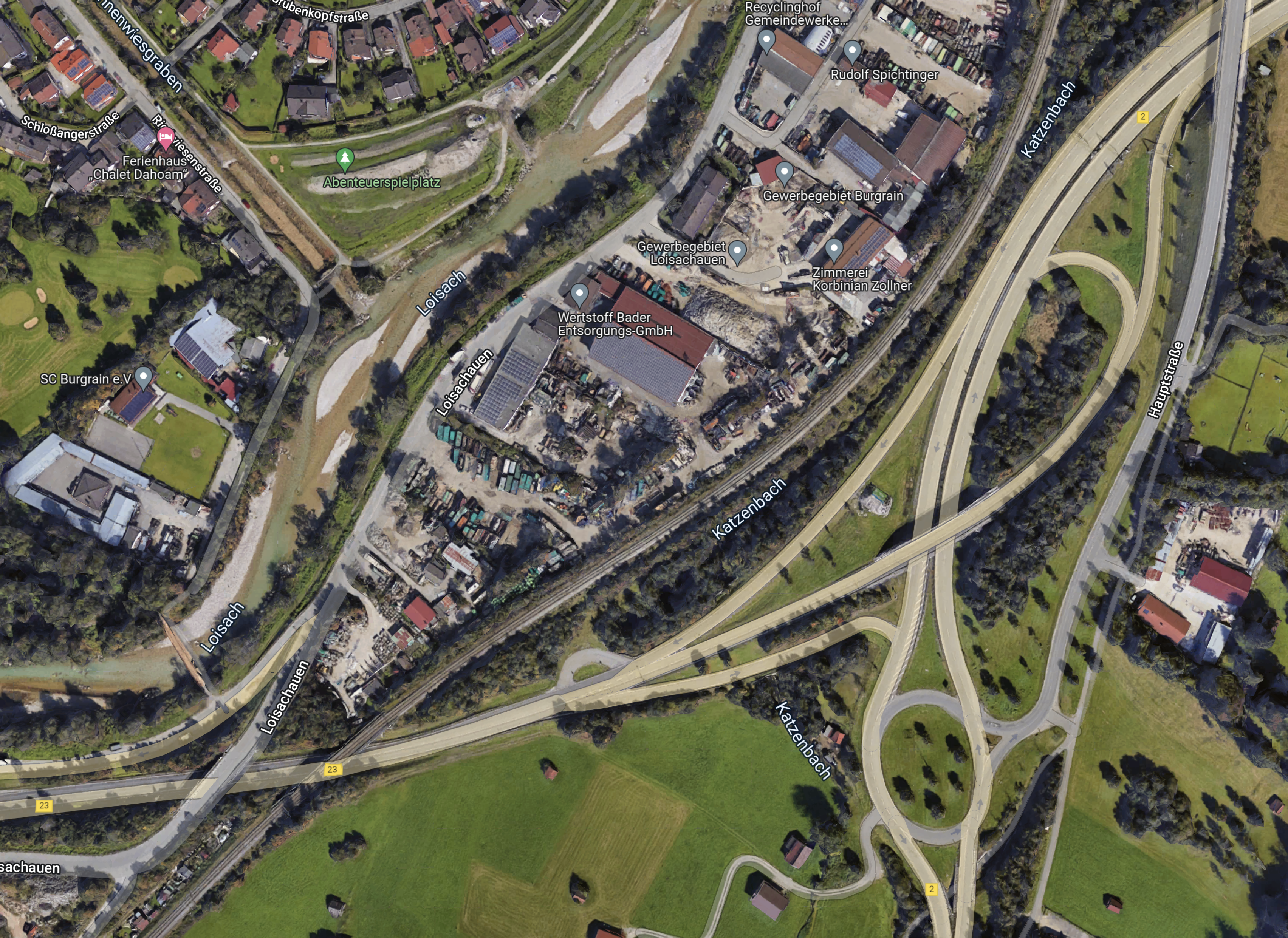
Note the railway curving to the left.
As an engineer, I used to be worried, where a heavy powerful locomotive pushed a rake of coaches at a high speed.
But then I had a long talk with a British Rail engineer, with whom I was working on the analysis of signal failures. He put my worries to rest.
In recent years in the UK, we have had four services, where a heavy, powerful locomotive runs a service in a push-pull mode, with a driving van trailer (DVT) at the other end of the train.
- Chiltern Railways – Marylebone and Birmingham.
- East Coast Main Line – London and Leeds and Edinburgh.
- Great Eastern – London and Norwich.
- TransPennine – Across the Pennines.
There has only been two serious accidents on these services.
- The Hatfield train crash, where poor track maintenance was the blame.
- The Selby train crash, where a train hit a Land Rover on the track.
Strangely, the same locomotive was involved in both crashes. It was pulling at Hatfield, but pushing at Selby.
It should also be noted that prior to the introduction of the driving van trailer, a less sophisticated control car calla a Driving Brake Standard Open (DBSO) was used.
- They were converted from Mark 2 coaches.
- Some are still in services with Network Rail.
One was destroyed in the Polmont rail accident, where an Edinburgh to Glasgow train struck a cow.
In a section entitled Background in its entry for the Polmont rail accident, Wikipedia says this.
Glasgow Queen Street and Edinburgh Waverley were operated by the push-pull technique with a single British Rail Class 47 locomotive located at one end of the train at all times (the locomotive usually pulled the carriages from Glasgow to Edinburgh and pushed them on the return journey). At the other end of the train was a Driving Brake Standard Open (DBSO). DBSO carriages were introduced on the line in 1980 and consisted of a passenger carriage with a control cab at the front for the driver; a DBSO would be situated at the front of the train allowing the driver to control the locomotive with a set of remote controls from which control signals were sent through the lighting circuits of the train to the locomotive pushing from behind. This system meant that the train could continuously run between the two cities without having to allow time to switch the locomotive to the front of the train between departures. However, it left the front of the train vulnerable when being pushed from behind because the front end was lighter than the rear and had the risk of being pushed over an obstruction, leading to derailment.
To summarise in the UK, of the three major accidents involving push-pull trains, two were caused by substantial objects getting on the line, that was hit by the DVT or DBSO.
- All three accidents have been fully explained.
- Recommendations have been made to ensure better track security.
- I notice that now, where push-pull trains are used for replacement services, they seem to be run using two locomotives.
- Hitachi and Stadler both build quality bi-mode trains, which can replace push-pull operation using diesel locomotives.
I doubt that we’ll see many more new push-pull services in the UK, except where there is a shortage of suitable new rolling stock or on heritage services.
No reports from Germany have indicated that anything was on the line.
 The Anonymous Widower