Are Kraft Heinz Up To Something?
This article on The Times, is entitled Ketchup On Its Way Back To Britain As Kraft Heinz Invests In UK Site.
This is the first two paragraphs.
Heinz tomato ketchup will be made in Britain again after its owner announced plans for a £140 million upgrade of a site on the outskirts of Wigan.
Europe’s largest food manufacturing facility is set to start making the sauces of Kraft Heinz, which also include mayonnaise and salad cream, in a move designed to meet demand in the UK.
I wrote about Kraft recently in Kraft Heinz And Freight Innovation, where they were experimenting with Network Rail to get goods to their Wigan site faster and with less carbon emissions.
I think the two stories might fit together.
have just looked at my 435 gram bottle of Heinz tomato ketchup. It states on the bottle that every 100 grams of the sauce is made from 174 grams of tomatoes. I suspect leaving in the pips and the skins would make a rather lumpy sauce!
But this means that for every tonne of sauce, there is a need for 1.74 tonnes of tomatoes.
Could this be a reason why Kraft Heinz ran an experiment a couple of months ago with bringing in goods to the site at Wigan by rail?
There could be TomatoLiner trains all the way from Spain or Italy.
Or perhaps, they could link Wigan to Lincolnshire or South Yorkshire, where tomatoes could be grown in large automated greenhouses, heated by the waste heat from all the power stations. Carbon dioxide from gas-fired power stations could also be used to make the tomatoes grow big and strong.
Why shouldn’t we eat the carbon dioxide we produce?
The more I look at Google Maps of Lincolnshire and South Yorkshire, the more I think that cost-competitive UK-produced tomatoes could be one of the reasons for this move.
I have found companies like Yorkshire Grown Produce, who grow the speciality varieties of tomatoes for supermarkets. and CambridgeHOK, who design and build the automated greenhouses.
But the problem, all growers of fruit and vegetables face, is the lack of people to do the harvesting, at an affordable price.
- As a Control Engineer, who has worked on automation, it is my view that robot or automatic harvesting is needed.
- After all robots don’t get drunk at the weekend and not turn up on Mondays.
I haven’t found a robot that would pick tomatoes yet, but I suspect there’s a company out there working on it.
Yorkshire Grown Produce are in Brough, a few files to the South-West of Hull. and say they can provide quality tomatoes from March to November.
So could a company provide affordable tomatoes to Kraft Heinz’s specification for 9-10 months of the year?
- Looking at bottles of Ketchup, it appears they have a shelf life of at least a year, so the month’s without tomatoes could be bridged by a warehouse.
- I also suspect that automated greenhouses could turn out guaranteed Organic tomatoes.
- The tomatoes would arrive in Wigan the day they are picked.
- It probably wouldn’t be a large train every day and the line at Wigan is not electrified, so it wouldn’t necessarily be a zero-carbon trip across the Pennines.
I can see an efficient system for the production of tomato ketchup, which could be labelled organic and 100 % British.
How many tonnes of carbon emissions would be saved? Probably not many! But it’s the thought that counts.
If this isn’t technology-aided marketing, I don’t know what is?
Conclusion
How many other production and delivery processes can be simplified by the use of rail?
Ealing Broadway Station – 31st May 2021
This article on Rail Technology Magazine, which is entitled Transport for London Completes Step-Free Access At Ealing Broadway, alerted me that the station might be worth a look.
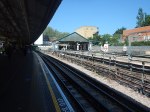

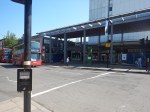
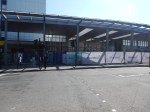

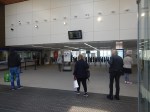

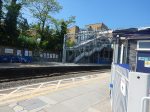
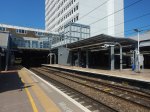
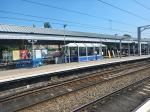


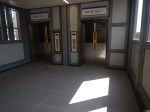
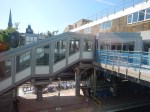
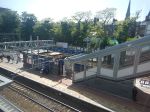
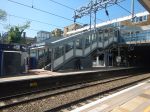
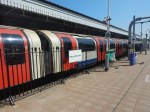
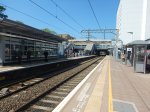
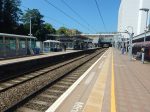
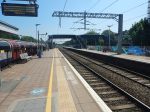
I took these pictures this morning.
This map from cartometro.com shows the station layout.
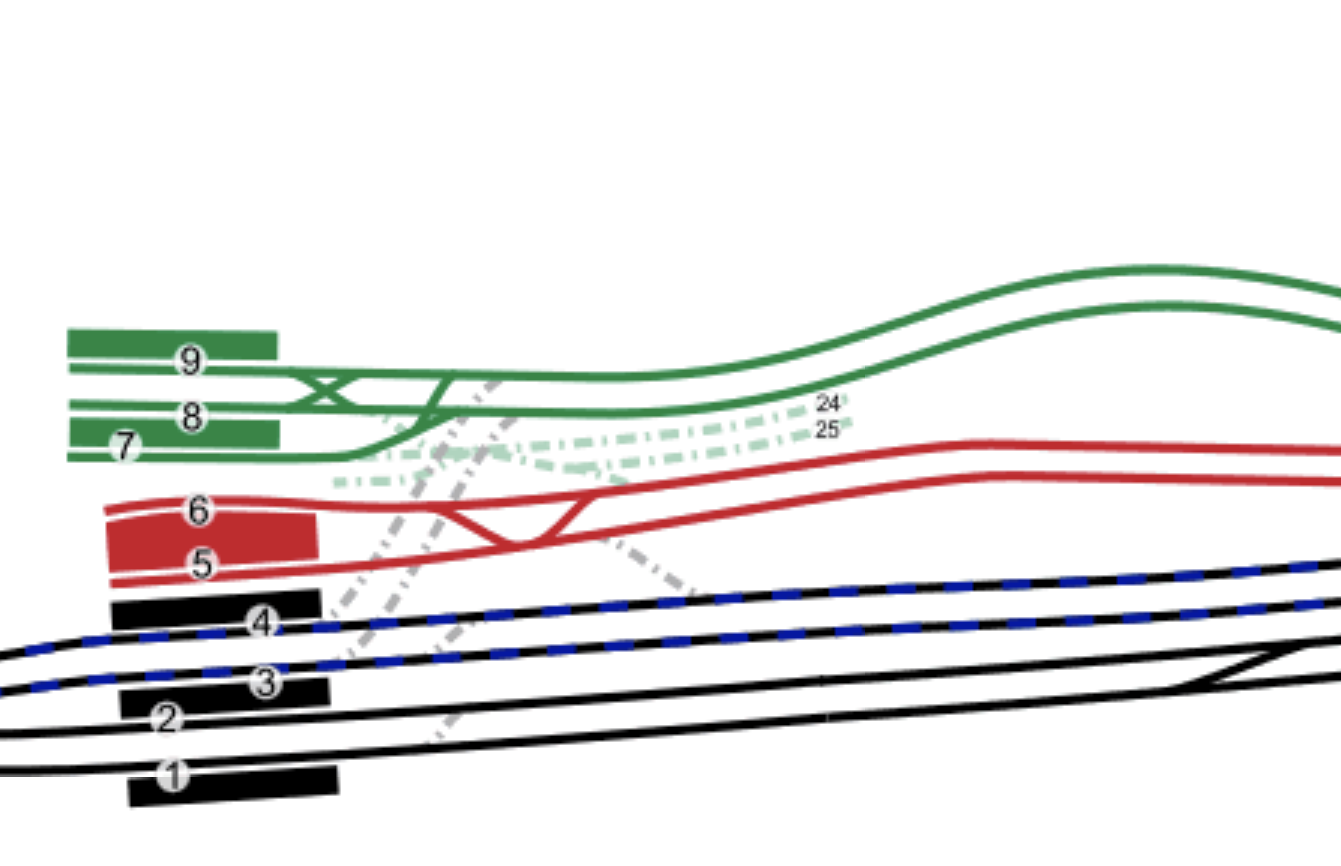
Note.
- The black lines in Platforms 1 and 2 are the Great Western Railway main line platforms.
- The black/blue lines in Platforms 3 and 4 are the Great Western Railway slow line platforms, which are also used by Crossrail.
- The red tracks in Platforms 5 and 6 are the Central Line platforms.
- The green tracks in Platforms 7, 8 and 9 are the District Line platforms.
These are my thoughts.
Step-Free Access
Consider.
- Access between platforms 4, 5, 6, 7, 8 and 9 is on the level, as it has been for years.
- There are a pair of lifts to access these six platforms from street level.
- There are also two other lifts to Platform 1 and Platform 2/3.
- There are three typical Network Rail stairs to the platforms, with double-handrails, which at 73, I can still manage.
I’ve certainly seen much worse stations with supposedly step-free access.
I also wonder if another lift will be added to directly serve the District Line platforms.
It could be one of those additions, that has been catered for, so it can be added if necessary.
Crossrail And Routes Into And Out Of London
Crossrail will change commuting and leisure routes, into and out of London.
- Crossrail serves the West End, the North of the City and Canary Wharf directly.
- Crossrail has good connections to the Central, Circle, District and Jubilee Lines.
- Crossrail has a direct connection to Thameslink.
- All Crossrail interchanges will be step-free.
After it has been opened for a few months, I can see that direct connections and ducking and diving will have seriously changed London’s well-established commuting and travel patterns.
Using Ealing Broadway Station As An Interchange
It will certainly be easier with all the new step-free access, but I suspect some passengers, who previously changed at Ealing Broadway station, will go straight through on Crossrail.
In Will Crossrail Open To Reading in 2019?, I said that Ealing Broadway station will get the following total number of Crossrail trains.
- 12 tph in the Peak
- 10 tph in the Off-Peak
Note.
- tph is trains per hour.
- Six tph would go between London Paddington and Heathrow.
- Two tph would go between London Paddington and Reading.
It will be interesting to see what Crossrail timetable is delivered.
The Overall Design
It is a fairly conservative design, that follows the principles of good step-free access.
Interchange is level and good between Crossrail and the tube lines.
There are still a few details to be finished and I suspect it will be a well-thought of station.
A Few Questions
These are a few questions.
Will The Station Be A Gateway To Heathrow?
I suspect it could be, as the station is well-connected by bus and tube to large numbers of places.
Conclusion
Ealing Broadway will be a busy interchange and I’m sure, it’s been designed to handle a lot of passengers.
Thoughts On Batteries On A Hitachi Intercity Tri-Mode Battery Train
This Hitachi infographic describes a Hitachi Intercity Tri-Mode Battery Train.

Hitachi are creating the first of these battery trains, by replacing one of the diesel power-packs in a Class 802 train with a battery-pack from Hyperdrive Innovation of Sunderland.
This press release from Hitachi is entitled Hitachi And Eversholt Rail To Develop GWR Intercity Battery Hybrid Train – Offering Fuel Savings Of More Than 20%, gives a few more details.
The Class 802 train has the following characteristics.
- Five cars.
- Three diesel power-packs, each with a power output of 700 kW.
- 125 mph top speed on electricity.
- I believe all intermediate cars are wired for diesel power-packs, so can all intermediate cars have a battery?
In How Much Power Is Needed To Run A Train At 125 Or 100 mph?, I estimated that the trains need the following amounts of energy to keep them at a constant speed.
- Class 801 train – 125 mph 3.42 kWh per vehicle mile
- Class 801 train – 100 mph 2.19 kWh per vehicle mile
The figures are my best estimates.
The Wikipedia entry for the Class 800 train, also gives the weight of the diesel power-pack and all its related gubbins.
The axle load of the train is given as 15 tonnes, but for a car without a diesel engine it is given as 13 tonnes.
As there are four axles to a car, I can deduce that the diesel power-pack and the gubbins, weigh around eight tonnes.
How much power would a one tonne battery hold?
This page on the Clean Energy institute at the University of Washington is entitled Lithium-Ion Battery.
This is a sentence from the page.
Compared to the other high-quality rechargeable battery technologies (nickel-cadmium or nickel-metal-hydride), Li-ion batteries have a number of advantages. They have one of the highest energy densities of any battery technology today (100-265 Wh/kg or 250-670 Wh/L).
Using these figures, a one-tonne battery would be between 100 and 265 kWh in capacity, depending on the energy density.
As it is likely that if the diesel power-pack replacement would probably leave things like fuel tanks and radiators behind, so that the diesel engines could be reinstalled, I would expect that a battery of around four tonnes would be fitted.
On the basis of the University of Washington’s figures a 400 kWh battery pack would certainly be feasible.
Using. the energy use at 100 mph of 2.19 kWh per vehicle mile, I can get the following ranges for different battery sizes.
- 400 kWh battery – 36.53 miles
- 500 kWh battery – 45.67 miles
- 600 kWh battery – 54.80 miles
- 800 kWh battery – 73.06 miles
As Lincoln and Newark are just 16.6 miles apart, it looks to me that a 500 or 600 kWh battery could be a good choice for that route, as it would leave enough hotel power for the turnround.
It should also handle shorter routes like these.
- Newbury and Bedwyn – 13.3 miles.
- Didcot and Oxford – 10.3 miles
- Newark and Lincoln – 16.6 miles
- Leeds and Harrogate – 18.3 miles
- Northallerton and Middlesbrough – 20 miles
- Hull and Temple Hirst Junction and Hull – 36.1 miles
Some routes like Temple Hirst Junction and Hull would need charging at the destination.
The Range Of A Five Car Train With Three Batteries
Suppose a Hitachi Intercity Tri-Mode Battery Train had three battery-packs and no diesel engines.
- It would be based on Hitachi Intercity Tri-Mode Battery Train technology.
- It would have two driver cars without batteries.
- It would have three intermediate cars with 600 kWh batteries.
- It would have 1800 kWh in the batteries.
- The train would be optimised for 100 mph running.
- My estimate says it would need 2.19 kWh per vehicle mile to cruise at 100 mph.
It could have a range of up to 164 miles.
If the batteries were only 500 kWh, the range would be 137 miles.
The Ultimate Battery Train
I think it would be possible to put together a nine car battery-electric train with a long range.
- It would be based based on Hitachi Intercity Tri-Mode Battery Train technology, which would be applied to a Class 800 or Class 802 train.
- It would have two driver cars without batteries.
- It would have seven intermediate cars with 600 kWh batteries.
- It would have a total battery capacity of 4200 kWh.
- The train would be optimised for 100 mph running.
- My estimate in How Much Power Is Needed To Run A Train At 125 Or 100 mph?, said it would need 2.19 kWh per vehicle mile to cruise at 100 mph.
That would give a range of over 200 miles.
If the batteries were only 500 kWh, the range would be 178 miles.
Aberdeen, Inverness, Penzance and Swansea here we come.
Can Hitachi Increase The Range Further?
There are various ways that the range can be improved.
- More electrically-efficient on-board systems like air-conditioning.
- A more aerodynamic nose.
- Regenerative braking to the batteries.
- Batteries with a higher energy density.
- Better driver assistance software.
Note.
- Hitachi have already announced that the Class 810 trains for East Midlands Railway will have a new nose profile.
- Batteries are improving all the time.
I wouldn’t be surprised to see a ten percent improvement in range by 2030.
Conclusion
I was surprised at some of the results of my estimates.
But I do feel that Hitachi trains with 500-600 kWh batteries could bring a revolution to train travel in the UK.
Edinburgh And Aberdeen
Consider.
- The gap in the electrification is 130 miles between Edinburgh Haymarket and Aberdeen.
- There could be an intermediate charging station at Dundee.
- Charging would be needed at Aberdeen.
I think Hitachi could design a train for this route.
Edinburgh And Inverness
Consider.
- The gap in the electrification is 146 miles between Stirling and Inverness.
- This could be shortened by 33 miles, if there were electrification between Stirling and Perth.
- Charging would be needed at Inverness.
I think Hitachi could design a train for this route.
The Two Problems With Israeli Politics
I liked the comment on the Radio Five Live from an Israeli political commentator.
There are only two problems with Israeli politics; Benjamin and Netanyahu.
Israeli politics is certainly different.
Should All High Speed Long Distance Services To Newcastle Extend To Edinburgh?
Look at this Google Map of Newcastle station.
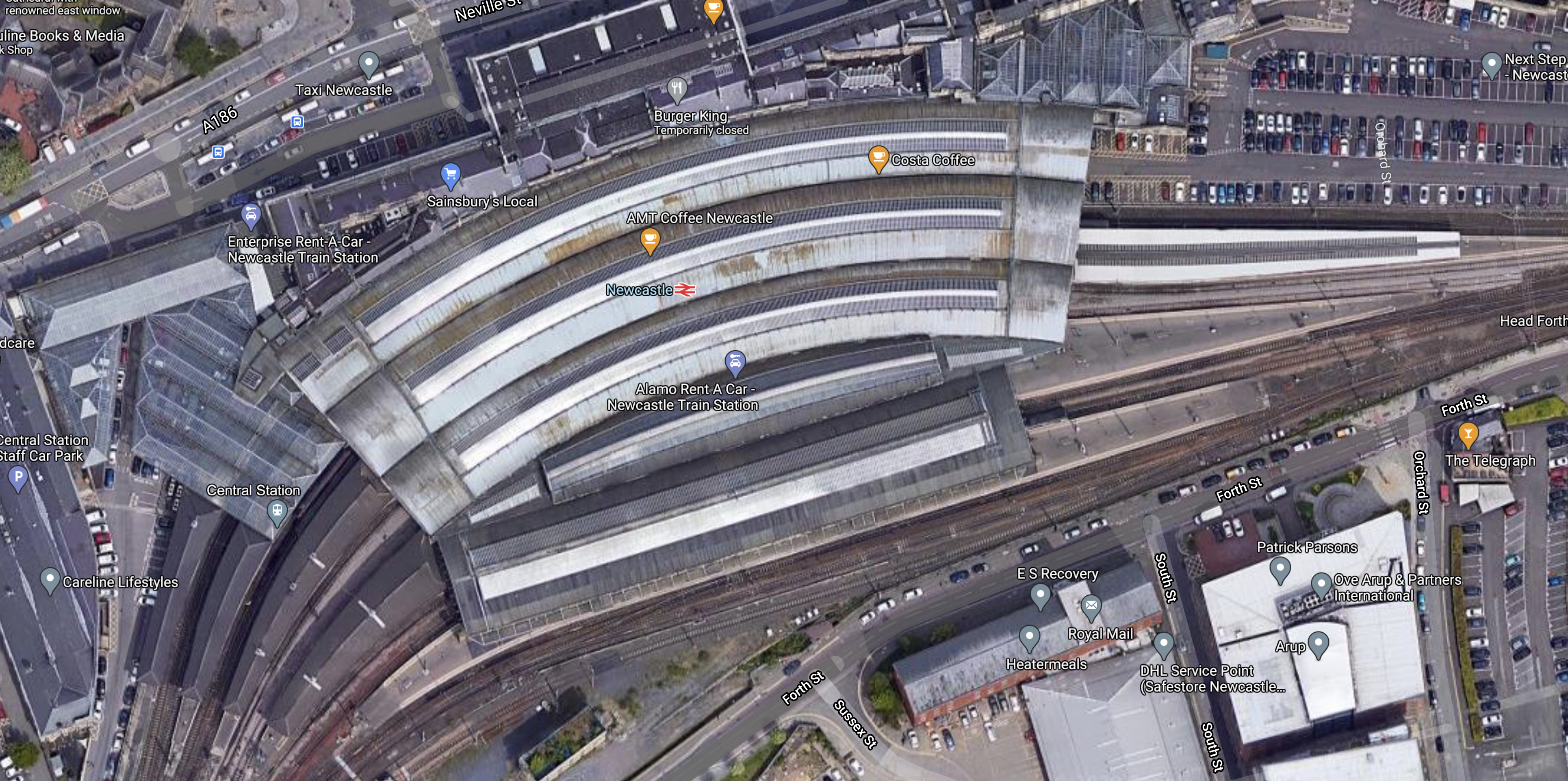
Note.
- It is built on a curve.
- It is on a cramped site.
- Platforms are numbered from 1 at the top to 8 at the bottom.
- Platform 2 seems to be used for all express services going North.
- Platforms 3 and 4 seem to be used for all express services going South.
- Not all platforms would appear to be long enough for nine-car Class 80x trains.
I am certain, that any nation with a sophisticated railway system wouldn’t build a station on a curve with no avoiding lines like Newcastle these days.
Network Rail have a plan to sort out Darlington station and I’m sure they’d like to sort out Newcastle as well!
Current Long Distance Trains Through And To Newcastle
These include.
- CrossCountry – Plymouth and Edinburgh or Glasgow via Alnmouth, Berwick-upon-Tweed and Dunbar.
- CrossCountry – Southampton Central or Reading and Newcastle.
- LNER – King’s Cross and Edinburgh via Berwick-upon-Tweed
- LNER – King’s Cross and Edinburgh via Alnmouth
- TransPennine Express – Liverpool Lime Street and Edinburgh via Morpeth
- TransPennine Express – Manchester Airport and Newcastle.
Note.
- All have a frequency of one train per hour (tph)
- All trains call at Newcastle.
- Two tph terminate at Newcastle and four tph terminate at Edinburgh or beyond.
There is also a new and Edinburgh service from East Coast Trains, that will start this year.
- It will run five trains per day (tpd).
- It will call at Newcastle.
- It will stop at Morpeth between Newcastle and Edinburgh.
There will also be High Speed Two services to Newcastle in a few years.
- There will be two tph between Euston and Newcastle
- There will be one tph between Birmingham Curzon Street and Newcastle.
Note.
- All services will be run by 200 metre long High Speed Two Classic-Compatible trains.
- There is no High Speed Two service to Newcastle, that calls at Leeds.
- Only one High Speed Two service to Newcastle calls at East Midlands Hub.
I suspect High Speed Two services need a dedicated platform at Newcastle, especially, if another High Speed Two service were to be added.
Extra Paths For LNER
In the December 2020 Edition of Modern Railways, there is an article, which is entitled LNER Seeks 10 More Bi-Modes.
This is the last paragraph.
Infrastructure upgrades are due to prompt a timetable recast in May 2022 (delayed from December 2021), from which point LNER will operate 6.5 trains per hour out of King’s Cross, compared to five today. As an interim measure LNER is retaining seven rakes of Mk. 4 coaches hauled by 12 Class 91 locomotives to supplement the Azuma fleet and support its timetable ambitions until new trains are delivered.
There would certainly appear to be a path available if LNER wanted to increase the frequency of trains between King’s Cross and Edinburgh from the current two trains per hour (tph) to three.
I laid out how I would use this third path to Edinburgh in A New Elizabethan.
The Possible Long Distance Trains Through And To Newcastle
These trains can be summed up as follows.
- 1 tph – CrossCountry – Plymouth and Edinburgh or Glasgow via Alnmouth, Berwick-upon-Tweed and Dunbar.
- 1 tph – CrossCountry – Southampton Central or Reading and Newcastle.
- 1 tph – LNER – King’s Cross and Edinburgh via Berwick-upon-Tweed
- 1 tph – LNER – King’s Cross and Edinburgh via Alnmouth
- 1 tph – TransPennine Express – Liverpool Lime Street and Edinburgh via Morpeth
- 1 tph – TransPennine Express – Manchester Airport and Newcastle.
- 5 tpd – East Coast Trains – King’s Cross and Edinburgh via Morpeth
- 2 tph – High Speed Two – Euston and Newcastle
- 1 tph – High Speed Two – Birmingham Curzon Street and Newcastle
- 1 tph – LNER – King’s Cross and Edinburgh – Extra service
This is ten tph and the five tpd of East Coast Trains.
Capacity Between Newcastle And Edinburgh
I wonder what capacity and linespeed would be possible on the East Coast Main Line between Newcastle and Edinburgh.
There are a few freight trains and some suburban electrics at the Northern end, but I suspect that the route could handle ten tph with some upgrades.
Edinburgh As A Terminal
Consider.
- Not all trains terminate at Edinburgh, but several tpd go through to places like Aberdeen, Glasgow, Inverness and Stirling.
- Edinburgh has several shorter East-facing bay platforms, that can take five-car Class 802 trains.
- Edinburgh has undergone a lot of reconstruction in recent years, so that it can turn more trains.
I very much feel that Edinburgh could handle, at least ten tph from the South.
Conclusion
I think it would be possible to extend all trains to Newcastle to at least Edinburgh.
Would it increase passenger capacity between the two capitals?
It would certainly avoid the difficult and expensive rebuilding at Newcastle station.
Starter Homes At Cockfosters
This would seem to be the final failure of a 1960s office development at Cockfosters.
It must have been about 1962, when I remember my mother telling me about the topping-out ceremony of these blocks by Cockfosters station.





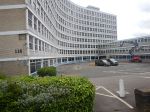
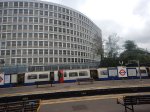
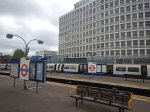
They probably will satisfy a need, but it wouldn’t be my place to choose to live.
- You may have the Piccadilly Line to Central London, but it is a long way. It takes 43 minutes to Leicester Square.
- Cockfosters shopping centre hasn’t improved much since the 1960s.
- I doubt that the development will have lots of parking.
But then on top of the hill with all the wind blowing from the East in the winter, it will be a bitterly cold place to live!
There are perhaps two good points.
- The development is close to Trent Park for walking.
- The buildings do seem to be structurally fairly sound.
But they’ll need to be, with all that cold wind!
HybridFLEX Battery-Diesel Train Continues Programme Of Testing
The title of this post, is the same as that of this article on Global Railway Review.
This is the first two paragraphs.
The HybridFLEX battery-diesel train is currently undertaking a programme of tests between Duffield and Wirksworth, prior to returning to Chiltern Railways in the summer.
Fitted with a Rolls Royce MTU hybrid drive, the HybridFLEX will cut noise emissions in stations and deliver zero emissions when operating under battery power.
All seems to be going well, according to the article.
I like the concept, as to replace a diesel engine with a diesel-battery hybrid power pack must surely be a sensible way to at least partially decarbonise.
In the UK, the following diesel multiple units are fitted with modern MTU engines and could be candidates from a replacement power pack.
- Class 168 train – 19 trains – 82 diesel engines
- Class 170 train – 136 trains – 350 diesel engines
- Class 171 train – 20 trains – 56 diesel engines
- Class 172 train – 39 trains – 93 diesel engines
- Class 195 train – 58 trains – 149 diesel engines
- Class 196 train – 26 trains – 80 diesel engines
- Class 197 train – 77 trains – 180 diesel engines
That is a total of 990 diesel engines.
As some of the Class 196 and Class 197 trains have yet to be delivered, I do wonder, if it would be sensible to deliver them as diesel-battery hybrid trains.
Somerset: Plans For New Railway Station On Levels
The title of this post, is the same as that of this article on the BBC.
This is the first two paragraphs.
Plans for a new railway station have moved forward after councillors agreed to help fund a feasibility study.
The stations at Somerton and Langport on the Somerset Levels were closed in the Beeching cuts during the 1960s.
I put my thoughts on this station in Beeching Reversal – New Station For Langport And Somerton Area.
The BBC article says this about the study.
The study, to be carried out by the Langport Transport Group (LTG) will identify possible sites, which may include a parkway-style station between the towns, possibly on the site of the former Long Sutton and Pitney station.
This Google Map shows the railway between the two villages of Langport and Somerton.
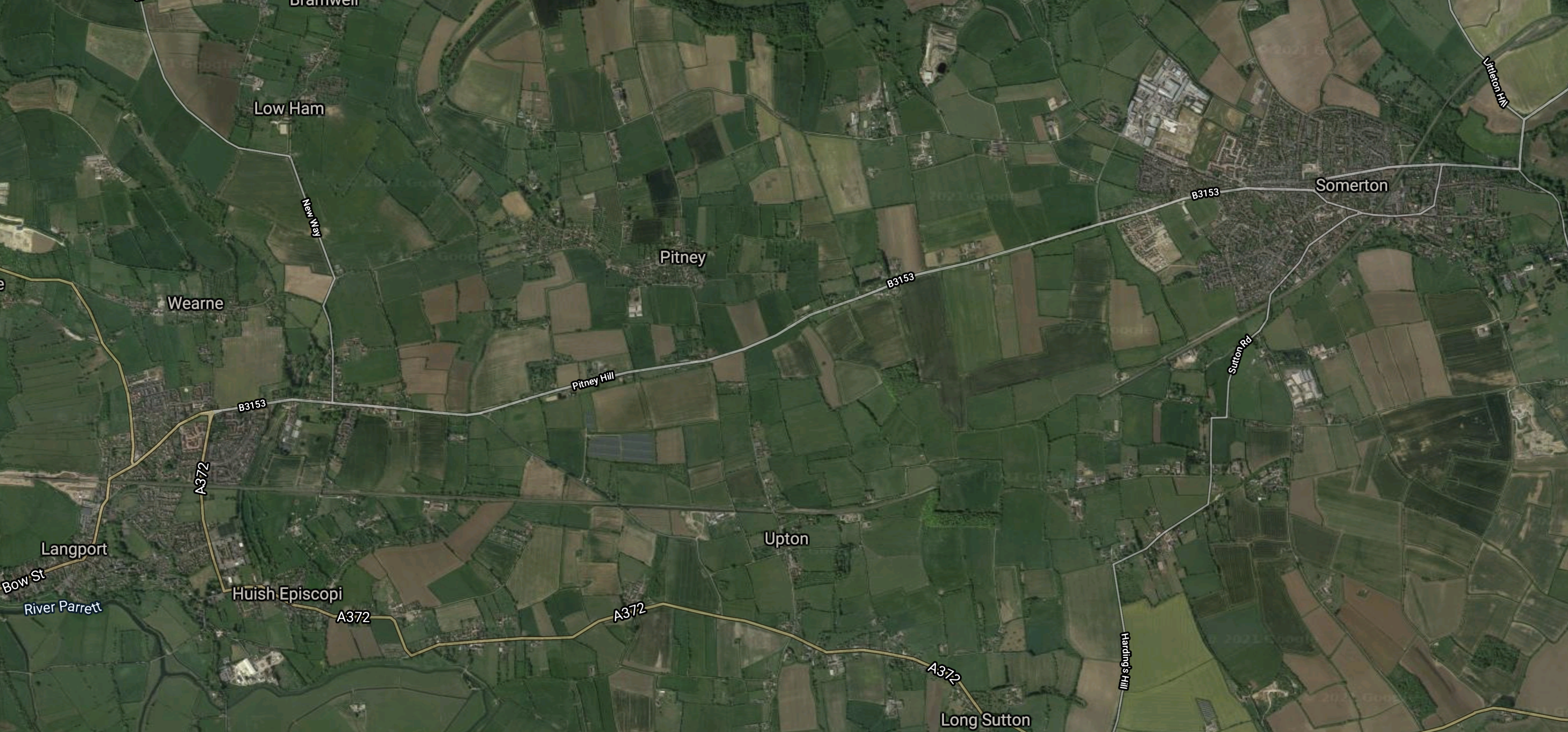
Note.
- Langport is in the South-West corner of the map.
- Somerton is in the North-East corner of the map.
- The Reading-Taunton Line goes through both villages, although both stations are now closed.
The map is probably best clicked to show on a larger scale.
This second Google Map shows the area between the two villages of Long Sutton and Pitney.
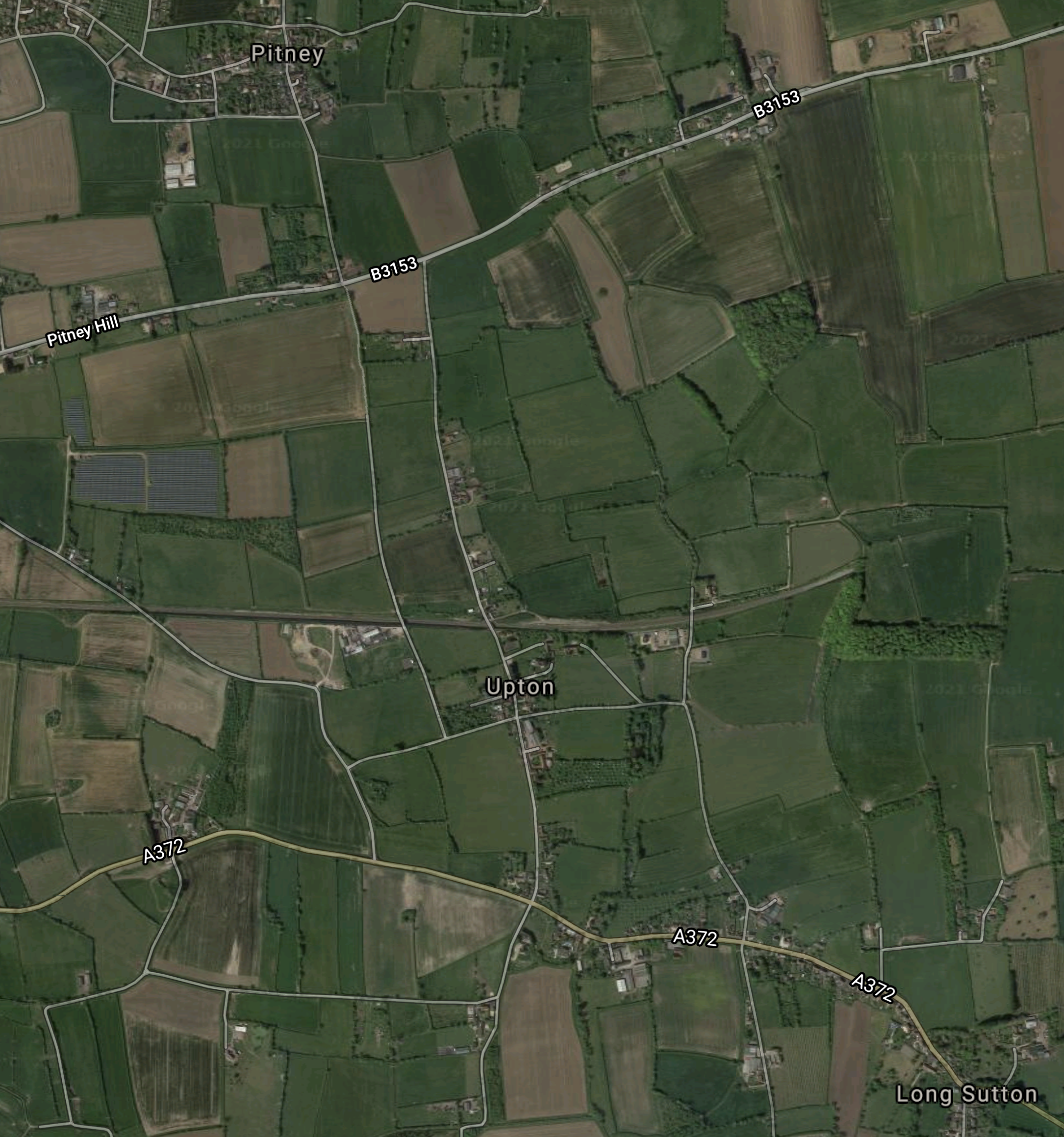
Note.
- Pitney is in the North-West corner of the map.
- Long Sutton is in the South-East corner of the map.
- The railway runs across the middle of the map it looks as if there was a station site to the North of the village of Upton.
- The only major road in the area; the A372, runs across the bottom of the map.
It is certainly a possibility for a Parkway station, but are the road connections good enough?
Thoughts On Seating In East Coast Trains’ New Class 803 trains
This page on RailAdvent contains this YouTube video of one of East Coast Trains’ New Class 803 trains under test.
On this page on the First Group web site, they give some details of the service.
- Five trains per day, seven days per week in both directions.
- One class of travel
- Offer tickets at an average price of less than £25.
- At seat catering on every train.
- Introduce an additional 1.5 million seats on the route every year.
They also expect 80 % of passengers to be new to rail.
The internet doesn’t give the number of seats on the train, so I will estimate a number.
The number of trains per year will be at least 365 * 2 * 5, which is an easy 3650 trains.
Dividing this into 1.5 million gives 410.9 seats per train. I’ll call that 411.
After I made that estimate, I found this page on the Beacon Rail Leasing web site.
It gives this information.
- Power – 4.5 MW
- Speed – 125 mph
- Passenger Capacity – 400
- Weight – 228.5 tonnes
Using the figure of 400 passengers and 3650 trains per year, that gives a total number of 1,460,000 passengers per year, which is probably within the margin of error for the arithmetic of marketing experts.
If you watch the video, the following can be ascertained.
- The two driver cars have six large windows each.
- The three centre cars have nine large windows each.
- It looks like the seating in the train is three on one side and two on the other.
This picture shows the Standard Class seating bay layout on a Great Western Railway Class 802 train.
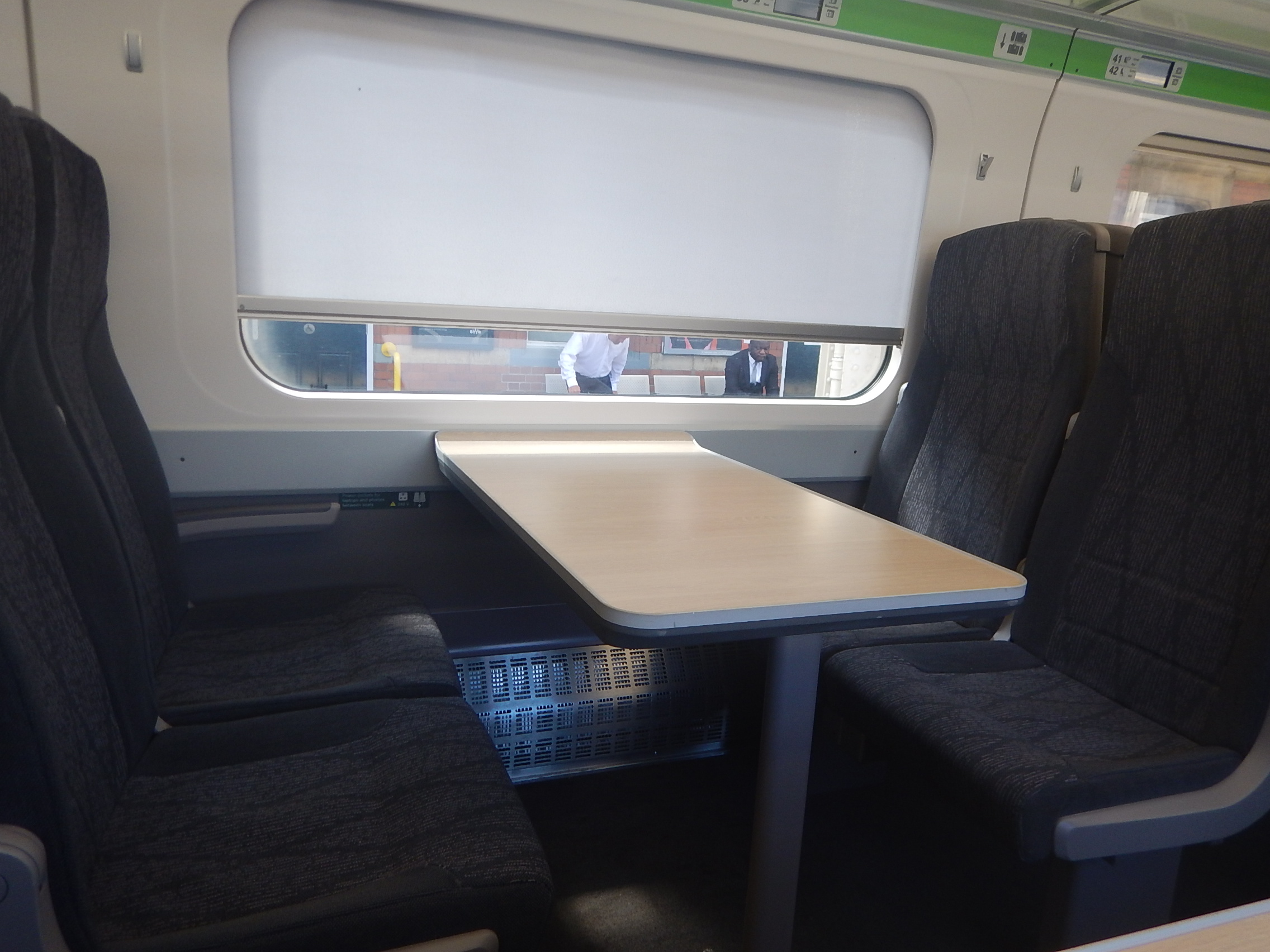
Note.
- The seats are arranged either side of the window.
- There are lots of tables.
- If the blind was up, passengers will get a good view.
If as I surmised from the video, seating is two+three and there are 39 bays, that means that the train has a base seating capacity of 390 seats.
That leaves ten seats to find places for, or just two per car.
With two+two seating, there would be 312 seats in the bays under windows, so there would be a need to fit in another 86 seats.
It appears to me that to meet their objective of 1.5 million additional seats that a two+three layout is needed.
But it could be that most passengers will get a proper table and possibly reasonable leg room. Try getting that on a budget airline!
A Few Questions
These are a few questions.
When Will The Service Start?
Your guess is as good as mine, but First Group are saying Autumn 2021.
Is The Service Geared For Group Or Family Travel?
Each train has thirty-nine groups of six seats and the same number of groups of four seats.
If say it was granny’s birthday in Edinburgh or a group of six friends were going to Scotland-England at Murrayfield, the layout would accommodate groups and families well.
They certainly need a good seat allocation algorithm.
Will I Be Able To Use My Railcard?
I would suspect not!
But then it would only save £8.33!
What About Delay Repay?
This will be automatic! I can’t ever be bothered to claim otherwise!
Will There Be Disabled Toilets?
It’s the law! But I have seen some much smaller ones that are well-designed and meet all aspects of the law in some new trains, so I would expect to find innovative designs.
Will There Be Single Seats?
I can sleep anywhere and regularly find myself returning to London curled in the corner of my seat fast asleep.
A single seat in the corner of the carriage might be ideal for some passengers.
Will Everybody Get A Table?
If I’m right about each seating bay having a table, then it would look like around ninety-seven percent of passengers would get a proper table. Not big enough for a copy of the Daily Telegraph, but they should have enough space for a laptop and/or a few beers.
What Food And Drink Will Be Offered?
I suspect, it will mainly be drinks and snacks like crisps or nutrition bars, which can be easily served from a trolley.
It should be noted that the three major stations on the route King’s Cross, Newcastle and Edinburgh all have a good selection of places to buy a carry-on!
But unlike at an airport, I suspect passengers won’t turn up two or three hours before departure, so will be unlikely to eat before departure.
I do think, that we could see improvements in the food offerings for taking on the train at Stevenage and Morpeth.
East Coast Trains may also contribute to the development of carry-on shops at some stations.
Will The Trains Accept Bicycles?
This is a tricky one and personally I feel that offering a decent bike hire service could be better value all round.
Using The Fleet Of Five Trains
Wikipedia and other sources indicate that the fleet is just five trains.
We know these facts or proposals.
- King’s Cross and Edinburgh are 393.15 miles apart.
- LNER run trains between King’s Cross and Edinburgh in four hours and twenty minutes (4 stops) and four hours and forty minutes (9 stops)
- The record time between King’s Cross and Edinburgh was set in 1991 by a shortened all-electric InterCity 225 train at three hours twenty-nine minutes and thirty seconds, which represented an average speed of 112.5 mph.
- Trains start leaving King’s Cross and Edinburgh about 05:45.
- The Werrington Dive-Under will, be completed in 2021.
- The King’s Cross Remodelling should be completed this year.
- Full digital in-cab signalling is being installed between King’s Cross and Doncaster. This will allow 140 mph running and as a Control Engineer, I believe it could ease the bottlenecks at Newark and over the Digswell Viaduct.
- East Coast Trains’ Class 803 trains appear to have been designed for sparkling acceleration.
- East Coast Trains will only make three stops.
- East Coast Trains intend to compete with the budget airlines.
- East Coast Trains intend their first train to arrive in London by 10:00. Does that mean Edinburgh as well?
I have just checked on Real Time Trains and this East Coast Trains timetable can be found.
King’s Cross and Edinburgh
- 05:45 – Arrives 10:10 – 4 hours 25 minutes – Stops at Stevenage
- 10:45 – Arrives 15:17 – 4 hours 32 minutes
- 12:18 – Arrives 16:41 – 4 hours 23 minutes – Stops at Stevenage
- 14:36 – Arrives 19:15 – 4 hours 39 minutes
- 20:18 – Arrives 00:46 – 4 hours 28 minutes
Edinburgh and King’s Cross
- 06:14 – Arrives 10:51 – 4 hours 37 minutes
- 09:11 – Arrives 13:48 – 4 hours 37 minutes
- 11:14 – Arrives 15:46 – 4 hours 32 minutes
- 16:12 – Arrives 20:47 – 4 hours 35 minutes – Stops at Stevenage
- 19:58 – Arrives 01:05 – 5 hours 7 minutes – Stops at Stevenage
Note.
- Times appear to be in-line with those of LNER.
- East Coast Trains’ objective of arriving by 10:00 is not met.
- Paths exist for East Coast Trains from the 7th June.
I believe this timetable is based on what is possible today without the improvements at King’s Cross and Werrington, and the digital signalling.
What Could Be Possible?
Consider.
- The improvements that are underway will help to reduce journey times.
- I also believe that by being clever, East Coast Trains could reduce turn-round times at King’s Cross and Edinburgh.
I think it is likely, that East Coast Trains could probably run between King’s Cross and Edinburgh in a time of around four hours.
I can also see a turn-round time of five minutes, if East Coast Trains use all their First Group experience.
Could this mean, a train starting from King’s Cross doing the following trips in a day?
- 05:50 – King’s Cross to Edinburgh – Arrives 09:50
- 09:55 – Edinburgh to King’s Cross – Arrives 13:55
- 14:00 – King’s Cross to Edinburgh – Arrives 18:00
- 18:05 – Edinburgh to King’s Cross – Arrives 22:05
- 22:10 – King’s Cross to Edinburgh – Arrives 02:10
Note.
- A second train would mirror this time-table starting in Edinburgh.
- Every minute saved on each journey between King’s Cross and Edinburgh will bring the final arrival forward.
- There is tremendous potential to speed up services.
This time-table would be straight out of Michael O’Leary’s notebook about making assets sweat.
Conclusion
I think that East Coast Trains have done a Ryanair and designed the train to accommodate the maximum number of passengers. But the quoted £25 fare does appear to be good value.
I am certain that two+three seating will be used.
It Was Once Called The Only Rear-Engined Front-Wheel-Drive Car In Captivity!
A friend has just moved to Ainsdale and I once went to see cars racing on the flat sandy beach.
One of the cars I saw was the Cooper-Buick, which was a 1964 Mini-Cooper with a 3.5-litre Buick V8 engine in the boot, driving the front wheels, through the back axle of an E-type Jaguar.
This page on the Road and Track web site gives more details.
It certainly threw a lot of sand about!
 The Anonymous Widower