Thoughts On The Class 360 Trains On The London St. Pancras And Corby Route
In May the Class 360 electric trains will be introduced by East Midlands Railway on the service between St. Pancras and Corby stations.
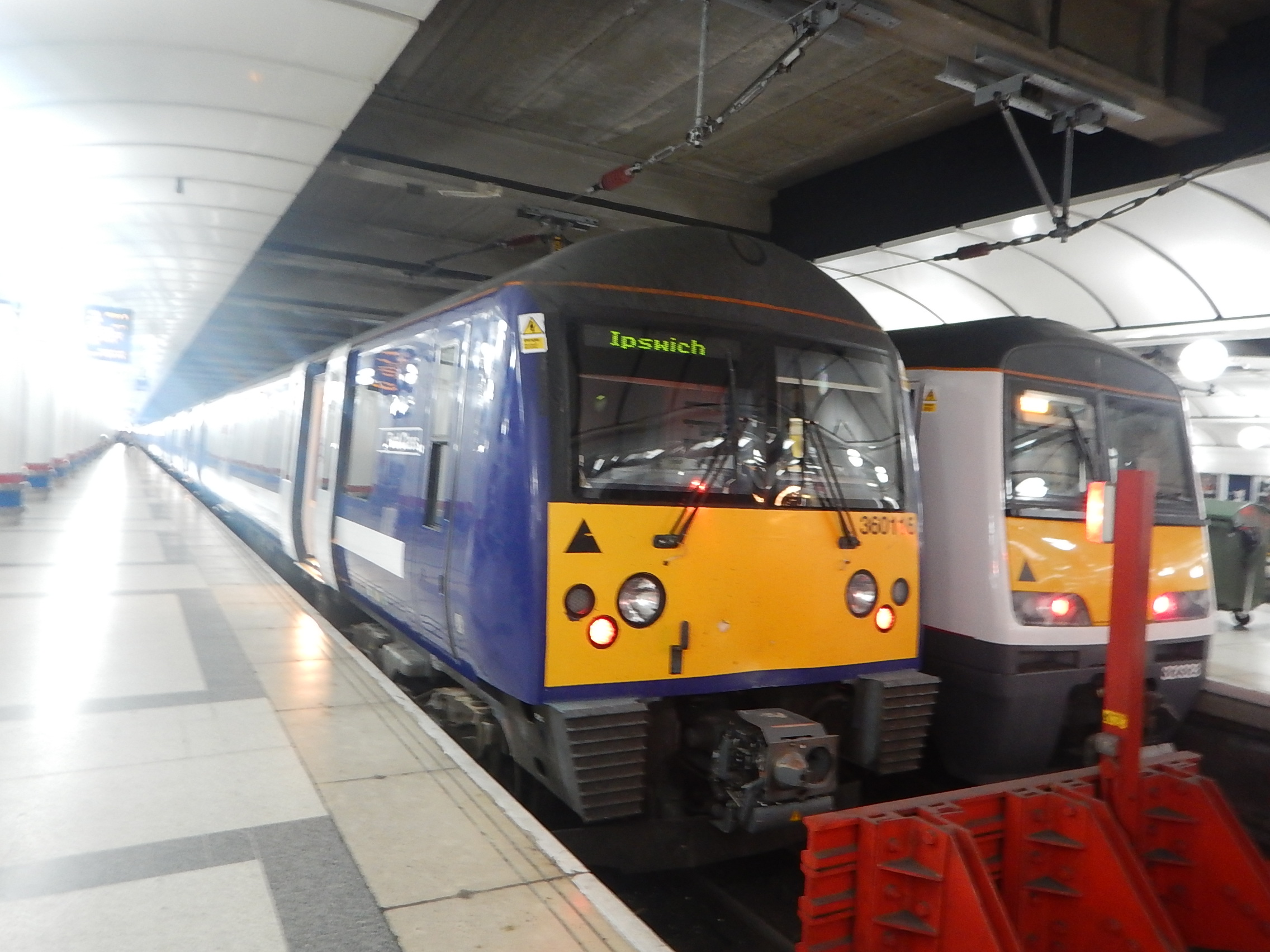
The Class 360 train is on the left.
The following data has come from Real Time Trains.
- St. Pancras and Corby are 79.3 miles apart.
- The current service stops at Kettering, Wellingborough, Bedford and Luton.
- The new electric service stops at Kettering, Wellingborough, Bedford and Luton and Luton Airport Parkway.
- Current services take between 67 and 73 minutes
- The new electric services take between 71 minutes
- Services leave St. Pancras at XX:15 and XX:45
- Services leave Corby at XX:11 and XX:40
- Turnround at St. Pancras appears to be about 23-25 minutes
- Turnround at Corby appears to be about 12-16 minutes.
- St. Albans and St. Pancras takes 14 minutes.
Note.
- The Class 222 train has a top speed of 125 mph and a maximum acceleration: of 0.80 ms-2
- The Class 360 train has a top speed of 110 mph and a maximum acceleration: of 0.98 ms-2
Looks like a case of swings and roundabouts to me!
I can deduce the following.
Average Speed
Consider.
- Assuming a trip time of seventy minutes for the Class 222 train, gives an average speed of 68 mph including stops.
- Assuming a trip time of seventy-one minutes for the Class 360 train, gives an average speed of 62 mph including stops.
These speeds don’t seem to be too difficult to achieve. Especially, as the Midland Main Line is a series of straight line between a number of stations., which are ideal for a quick dash in between.
It’s A Three Hour Round Trip
Add up the two 71 minute trips and the turnaround times and it looks to be a comfortable three hour round trip.
So for a two trains per hour (tph) service, you will need six formations of Class 360 trains.
As it looks like each formation will be twelve cars long, that will mean that eighteen of the current twenty-one trains will be needed.
The three spare trains will be very useful, whilst the trains are refurbished with new liveries and interiors.
Route Capacity
This picture shows a five-car Class 222 train at Corby station.
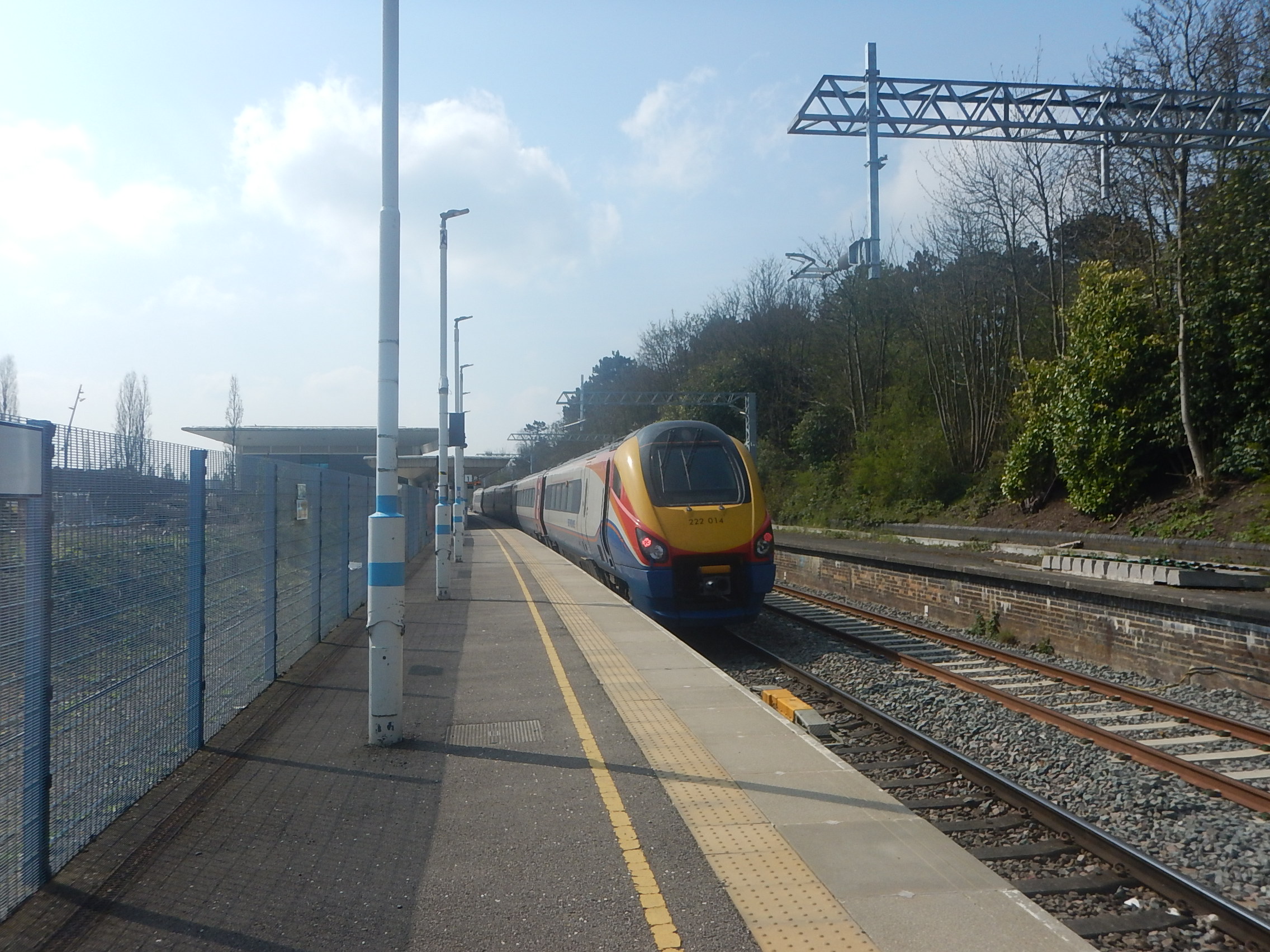
Consider.
- The current five-car Class 222 trains have a capacity of 50 First Class and 192 Standard Class seats
- Four-car Class 222 trains have a capacity of 33 First Class and 132 Standard Class seats.
- A four-car Class 360 train has a capacity of 16 First Class and 264 Standard Class seats.
I can do a simple calculation.
- The current one tph service, if run by a five-car Class 222 trains would have an hourly capacity of 50 First Class and 192 Standard Class seats.
- The planned two tph service if run by twelve-car 360 trains has an hourly capacity of 96 First Class and 1584 Standard Class seats.
First Class capacity on the route has doubled and Standard Class accommodation has gone up by a massive 8.25 times.
The latter figure will probably be reduced as some of the seats are to be removed for a more spacious interior with tables.
Serving Luton Airport
It looks like these trains will enable a quick journey to Luton Airport.
- The St. Pancras and Corby train will take 22 minutes between St. Pancras and Luton Airport Parkway stations.
- There will be the Luton DART connecting Luton Airport Parkway to the Airport from 2022.
- I suspect Luton Airport will be aiming for a thirty minute journey between St. Pancras and the Airport.
- The fast service will have a frequency of two tph.
It will not compare badly with rail times from London to Gatwick of 35 minutes and to Stansted of 50 minutes.
Services To Oakham And Melton Mowbray
Consider.
- Oakham and Melton Mowbray stations are on the route between Corby station and the Midland Main Line North of Leicester.
- Oakham and Melton Mowbray stations have a one train per day (tpd) in both directions to London via Corby.
- In Beeching Reversal – Increased Services To Nottingham And Leicester, via Syston And Loughborough From Melton Mowbray. I wrote about how the local MP wants better services at Melton Mowbray.
- Oakham is 11.5 miles from Corby.
- Melton Mowbray is 25.8 miles from Corby.
- Leicester is just over forty miles from Corby and could be covered in under an hour.
- A pair of Class 810 trains are the same length as a trio of Class 360 trains, so both trains would fit all platforms.
I think that there are a lot of possibilities for services through Corby.
- Class 810 trains could use Corby as a diversion, when the Midland Main Line is closed for engineering works.
- Class 810 trains could run a service between St. Pancras and Leicester via Corby, Oakham and Melton Mowbray.
- If the Class 360 trains could be fitted with batteries, they should be able to provide a service from St. Pancras to Melton Mowbray and perhaps Leicester.
It could even provide an alternative route to London, if Leicester station has to be substantially rebuilt for electrification..
Conclusion
This not the longest of electric services, but I can see it carrying a lot of passengers.
It will also give a boost to Luton Airport.
Thoughts On Faster Trains On Thameslink
The Class 700 trains used by Thameslink only have an operating speed of 100 mph.
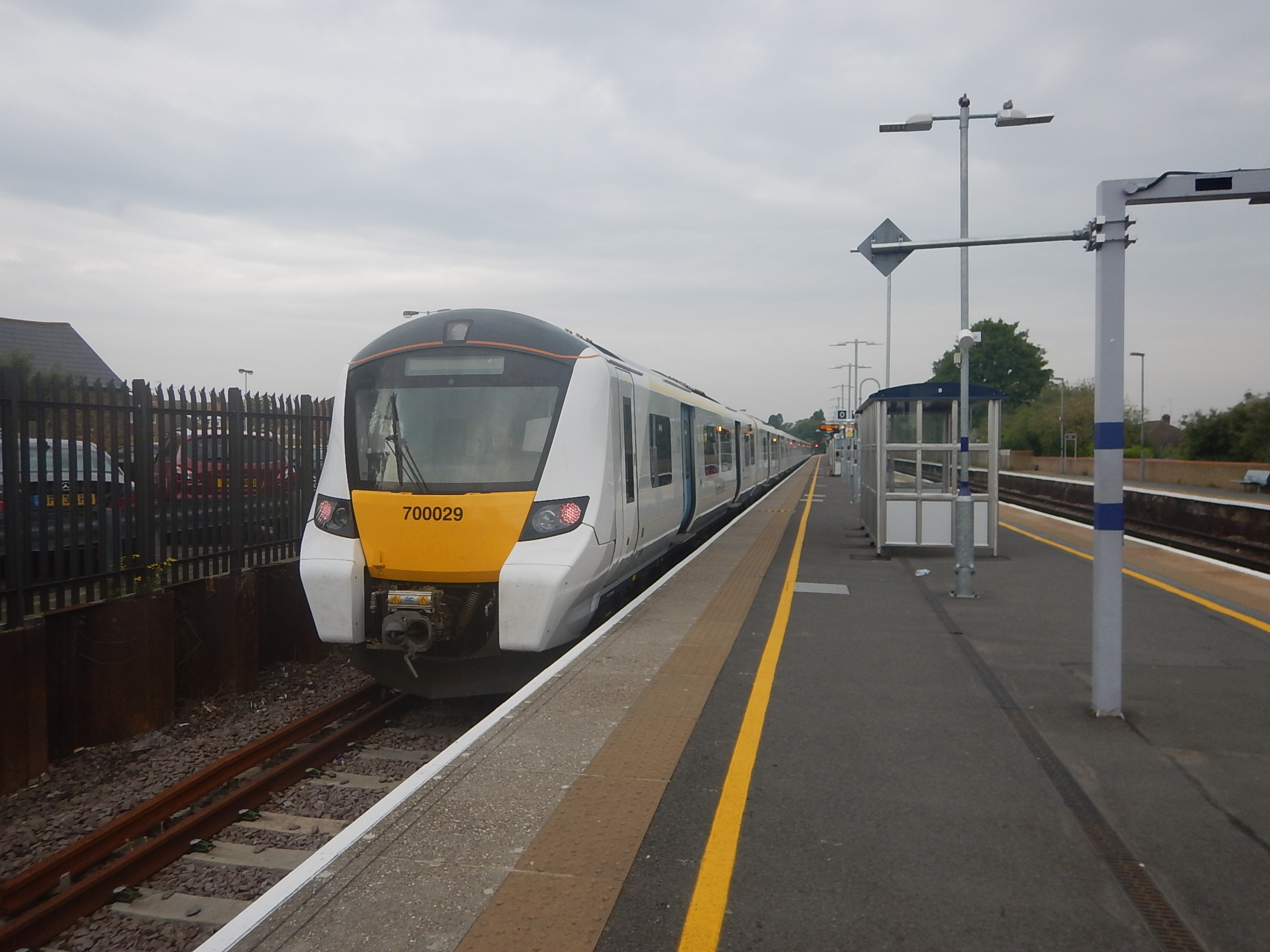
I do wonder, if that is a fast enough operating speed for all Thameslink routes.
Sharing The Midland Main Line With 125 mph Trains
A couple of years ago, I travelled back into St. Pancras with a group of East Midlands drivers in a Class 222 train.
They told me several things about the route including that the bridge at the South of Leicester station would be difficult to electrify, as it was low and the track couldn’t be lowered as one of Leicester’s main sewers was under the tracks at the bridge. Perhaps, this is one place, where discontinuous electrification could be used on the Midland Main Line.
They also told me, that sometimes the Thameslink trains were a nuisance, as because of their 100 mph operating speed, the 125 mph Class 222 trains had to slow to 100 mph.
Upgrading Of The Midland Main Line South Of Bedford
The electrification of the Midland Main Line South of Bedford is being updated, so that it is suitable for 125 mph running.
An Analysis Of Services On The Midland Main Line South Of Bedford
The current Class 222 trains are capable of 125 mph and will be replaced by Class 810 trains capable of the same speed on both diesel and electricity.
Currently, a Class 222 train is capable of doing the following on a typical non-stop run between St. Pancras and Leicester.
- Covering the 30 miles between St. Albans and Bedford in 17 minutes at an average speed of 106 mph.
- Covering the 50.3 miles between Bedford and Leicester in 30 minutes at an average speed of 100.6 mph.
- Maintaining 125 mph for long stretches of the route, once the trains is North of London commuter traffic at St. Albans
I can estimate the timings on the 79.2 miles between Leicester and St. Albans, by assuming the train runs at a constant speed.
- 100 mph – 47.5 minutes
- 110 mph – 43.2 minutes
- 125 mph – 38 minutes
- 140 mph – 34 minutes
Note.
- I have done the calculation for 140 mph, as that is the maximum operating speed of the Class 810 train with full in-cab digital signalling.
- Trains have been running at 125 mph for a couple of decades on the Midland Main Line.
- To get a St. Pancras and Leicester time add another 14 minutes, which is the current time between St. Pancras and St. Albans of a Class 222 train.
- Some Off Peak trains are timed at 62-63 minutes between St. Pancras and Leicester.
- A time of under an hour between St. Pancras and Leicester might be possible and the Marketing Department would like it.
- As Thameslink trains between Bedford and St. Albans stop regularly, they are on the slow lines of the four-track railway, to the North of St. Albans.
- South of St. Albans, Thameslink trains often run on the fast lines.
I can expect that East Midlands Railway will want to be running their new Class 810 trains as far as far South as they can at 125 mph, to speed up their services. When the signalling allows it, they’ll want to run at 140 mph.
So they won’t want to see Thameslink’s slow trains on the fast lines.
- But if you look at the Thameslink trains that do run on the fast lines between St. Albans and St. Pancras, they appear to be the four trains per hour (tph) that run to and from Bedford.
- Of these trains, two tph terminate at Brighton and two tph terminate at Gatwick Airport.
- The average speed of a Class 222 train between St. Albans and St. Pancras assuming 14 minutes for the 19.7 miles is 84.4 mph.
So it looks to me that a 100 mph Thameslink train could be able to get away without slowing the East Midland Railway expresses.
But then that is not surprising, as for many years, the Class 222 trains worked happily with 100 mph Class 319 trains.
Is There Scope For Extra And Faster Services Into St. Pancras?
I have only done a simple calculation, but I do wonder if there is scope for the following.
- Increasing the frequency of trains for both Thameslink and East Midlands Railway.
- Saving a few minutes on East Midlands Railway services.
Consider.
- The new Class 810 electric trains will probably have better acceleration and deceleration than the current Class 222 diesel trains, when working using electric power.
- East Midlands Railway is introducing Class 360 trains that were built as 100 mph trains by Siemens, who are now upgrading them to 110 mph trains.
- Can Siemens do the same for the Class 700 trains and create a sub-fleet capable of 110 mph running?
- All trains will be running under full in-cab digital signalling with a large degree of automatic train control.
I feel that if the Class 700 trains had the extra speed, they would make the planning of services South of St. Albans easier and allow the Class 810 trains to both run faster and provide more services.
Sharing The East Coast Main Line With 125 mph Trains
The following Thameslink services run up the East Coast Main Line past Stevenage.
- Cambridge And Brighton – Two tph – Stops at Royston, Ashwell and Morden (1 tph), Baldock, Letchworth Garden City, Hitchin, Stevenage, Finsbury Park, London St Pancras International, Farringdon, City Thameslink, London Blackfriars, London Bridge, East Croydon, Gatwick Airport, Three Bridges, Balcombe, Haywards Heath and Burgess Hill
- Cambridge and Kings Cross – Two tph – Stops at Foxton, Shepreth, Meldreth, Royston, Ashwell and Morden, Baldock, Letchworth Garden City, Hitchin, Stevenage, Knebworth, Welwyn North, Welwyn Garden City, Hatfield, Potters Bar and Finsbury Park
- Peterborough and Horsham – Two tph – Stops at Huntingdon, St Neots, Sandy, Biggleswade, Arlesey, Hitchin, Stevenage, Finsbury Park, London St Pancras International, Farringdon, City Thameslink, London Blackfriars, London Bridge, East Croydon, Coulsdon South, Merstham, Redhill, Horley, Gatwick Airport, Three Bridges, Crawley, Ifield, Faygate (limited) and Littlehaven
Note.
- Services are generally run by Class 700 trains, although lately the Kings Cross service seems to use Class 387 trains, which have a maximum speed of 110 mph and a more comfortable interior with tables.
- It is intended that the Cambridge and Kings Cross service will be extended to Maidstone East by 2021.
In addition there are two Cambridge Express and Fen Line services.
- Kings Cross and Ely – One tph – Stops at Cambridge and Cambridge North.
- Kings Cross and King’s Lynn – One tph – Stops at Cambridge, Cambridge North, Waterbeach, Ely, Littleport, Downham Market and Watlington
Note.
- These services are generally run by Class 387 trains.
- Cambridge and King’s Cross is timetabled at around fifty minutes.
Adding all of this together means that slower services on the East Coast Main Line are comprised of the following in both directions.
- Three tph – 110 mph – Class 387 trains
- Four tph – 100 mph – Class 700 trains
These seven trains will have to be fitted in with the 125 mph trains running services on the East Coast Main Line, for LNER, Grand Central, Hull Trains and East Coast Trains.
There are also the following problems.
- All trains must navigate the double-track section of the East Coast Main Line over the Digswell Viaduct and through Welwyn North station.
- The King’s Cross and Cambridge service stops in Welwyn North station.
- Full in-cab digital signalling is being installed on the East Coast Main Line, which could increase the speed of the expresses through the double-track section.
Could the introduction of the Class 387 trains on the Cambridge and King’s Cross service have been made, as it easier to fit in all the services if this one is run by a 110 mph train?
However, the full in-cab digital signalling with a degree of automatic train control could be the solution to this bottleneck on the East Coast Main Line.
- Trains could be controlled automatically and with great precision between perhaps Hatfield and Stevenage.
- Some expresses might be slowed to create gaps for the Cambridge and Peterborough services.
- The Hertford Loop Line is also getting full in-cab digital signalling, so will some services be sent that way?
In Call For ETCS On King’s Lynn Route, I talked about a proposal to improve services on the Fen Line. This was my first three paragraphs.
The title of this post, is the same as that on an article in Edition 849 of Rail Magazine.
The article is based on this document on the Fen Line Users Aoociation web site, which is entitled Joint Response To Draft East Coast Main Line Route Study.
In addition to ETCS, which could improve capacity on the East Coast Main Line, they would also like to see journey time reductions using trains capable of running at 125 mph or faster on the King’s Lynn to Kings Cross route.
My scheduling experience tells me that a better solution will be found, if all resources are similar.
Hence the proposal to run 125 mph trains between King’s Cross and King’s Lynn and probably Ely as well, could be a very good and logical idea.
If the Class 700 trains were increased in speed to 110 mph, the trains through the double-track section of the East Coast Main Line would be.
- One tph – 110 mph – Class 387 trains
- Four tph – 110 mph – Class 700 trains
- Two tph – 125 mph – New trains
Note.
- This would probably be an easier mix of trains to digest with the high speed services, through the double-track section.
- I like the idea of extending the Ely service to Norwich to give Thetford, Attleborough and Wymondham an improved service to London, Cambridge and Norwich.
The new trains would probably be a version of Hitachi’s Regional Battery Train.
- It would need to be capable of 125 mph on the East Coast Main Line.
- If the Ely service were to be extended to Norwich, this section would be on battery power.
There are certainly a lot of possibilities.
But as with on the Midland Main Line, it looks like for efficient operation, the operating speed of the Class 700 trains on the route needs to be increased to at least 110 mph.
Could Faster Class 700 trains Improve Services To Brighton?
These are the Thameslink services that serve Bedford, Cambridge and Peterborough, that I believe could be run more efficiently with trains capable of at running at speeds of at least 110 mph.
- Bedford and Brighton – Two tph
- Bedford and Gatwick Airport – Two tph
- Cambridge and Brighton – Two tph
- Cambridge and Maidstone East – Two tph
- Peterborough and Horsham – Two tph
Note.
- I have assumed that the Cambridge and King’s Cross service has been extended to Maidstone East as planned.
- Eight tph serve Gatwick Airport.
- Four tph serve Brighton.
The Gatwick Express services have a frequency of two tph between London Victoria and Brighton calling at Gatwick Airport is already run by 110 mph Class 387 trains.
It would appear that if the Bedford, Cambridge and Peterborough were run by uprated 110 mph Class 700 trains, then this would mean that more 110 mph trains would be running to Gatwick and Brighton and this must surely improve the service to the South Coast.
But it’s not quite as simple as that, as the Cambridge and Maidstone East services will be run by eight-car trains and all the other services by twelve-car trains.
Conclusion
There would appear to be advantages in uprating some or possibly all of the Class 700 trains, so that they can run at 110 mph, as it will increase capacity on the Brighton Main Line, East Coast Main Line and Midland Main Line.
Fall In Covid Infection Rates A Pleasant Surprise, Says Adviser
The title of this post, is the same as that of this article on The Times.
The adviser who is pleasantly surprised is Mike Tildesley of the University of Warwick.
I am not surprised that Mike Tildesley is pleasantly surprised.
I have successfully built mathematical models on computers for over fifty years, and since the pandemic started I have been pursuing my own mining of UK, WHO and Wikipedia data and peer-reviewed scientific papers from sources all over the world.
Several scientists have said, that an individual’s immune system is important, when it comes to fighting the covids.
I am coeliac on a long-term gluten-free diet and we as a group have a strong immune system. This probably explains, why we are 25 % less likely to suffer from cancer, than the general population. This fact is not from the Gwyneth Paltrow School of Quack Science, but from JVT’s alma mata; Nottingham University.
It has also been shown by the University of Padua, who followed a group of coeliacs on a long-term gluten-free diet, that they did very well during the first wave of the virus in Padua, with no serious cases reported.
Look at the figures for Cambodia, which has very low figures. They have had just 22 deaths and they have a fatality rate of 0.78% according to Wikipedia. Our rate on a similar basis is 2.94 %.
Can their gluten-free diet be the reason?
I’ve also heard verified stories of groups of immigrants doing well, as they have not been seduced by Western junk food and are sticking to traditional diets.
I think there are a large number of people out there like coeliacs on a long-term gluten-free diet, who because of their diet or lifestyle are not going to get the virus and act like moderators do in a nuclear power station to slow the reaction. So they are slowing the transmission of the virus. We have already seen how some religious groups and types of behaviour have accelerated the spread of the virus, so why can’t groups exist that slow the rate of spread?
Hence Mike Tildesley’s pleasant surprise!
I have not found any UK-based scientific research on how coeliacs are faring in the pandemic and the charity Coeliac-UK has said nothing except Keep Calm And Carry On!
Let’s hope the good scientists of Padua are continuing to follow their coeliacs through successive waves of the pandemic!
We need more research now!
UK Medicines Watchdog ‘Considers Limiting Use Of Oxford-AstraZeneca Coronavirus Vaccine In Young’
The title of this post, is the same as that of this article in The Times.
This is the first two paragraphs.
The medicines watchdog is considering restricting use of the Oxford-AstraZeneca coronavirus vaccine in younger people, it was reported last night.
Channel 4 News said sources had told it that the Medicines and Healthcare Products Regulatory Agency (MHRA) could decide as soon as today after concerns about very rare cases of blood clots potentially linked to the vaccine.
I’m, no medic, but I do find, I got a different reaction to the AstraZeneca vaccine to that of my friends.
But I am coeliac on a long-term gluten-free diet and have therefore got a strong immune system.
I believe my immune system gave the vaccine and its carrier a bit of a kicking.
But then it did that four months ago, with a pneumococcal vaccine.
There is a peer-reviewed Danish study, which I wrote about in A Danish Study On Links Between Coeliac Disease And Blood Clots.
I just wonder if there is a link in there somewhere.
All those, who have suffered blood clots after having the AstraZeneca vaccine should at least be tested for coeliac disease.
Tesla And PG&E Are Working On A Massive ‘Up To 1.1 GWh’ Powerpack Battery System
The title of this post, is the same as that of this article on electrek.
This is the first two paragraphs.
For the past few months, Tesla and CEO Elon Musk have been teasing a giant battery project that would dwarf even the company’s 129 MWh Powerpack project in Australia.
Today, we learn that Tesla is working with PG&E on a massive battery system with a capacity of “up to 1.1 GWh” in California.
It certainly, is a big lithium-ion battery.
- It will be able to provide 182.5 MW for four hours.
- It looks like it could be the largest lithium-ion battery in the world.
It is worth comparing with the Castaic Power Plant, which is also in California.
- This is a pumped storage plant.
- It can produce 1566 MW and has a capacity of 12470 MWh.
This Google Map shows the plant.
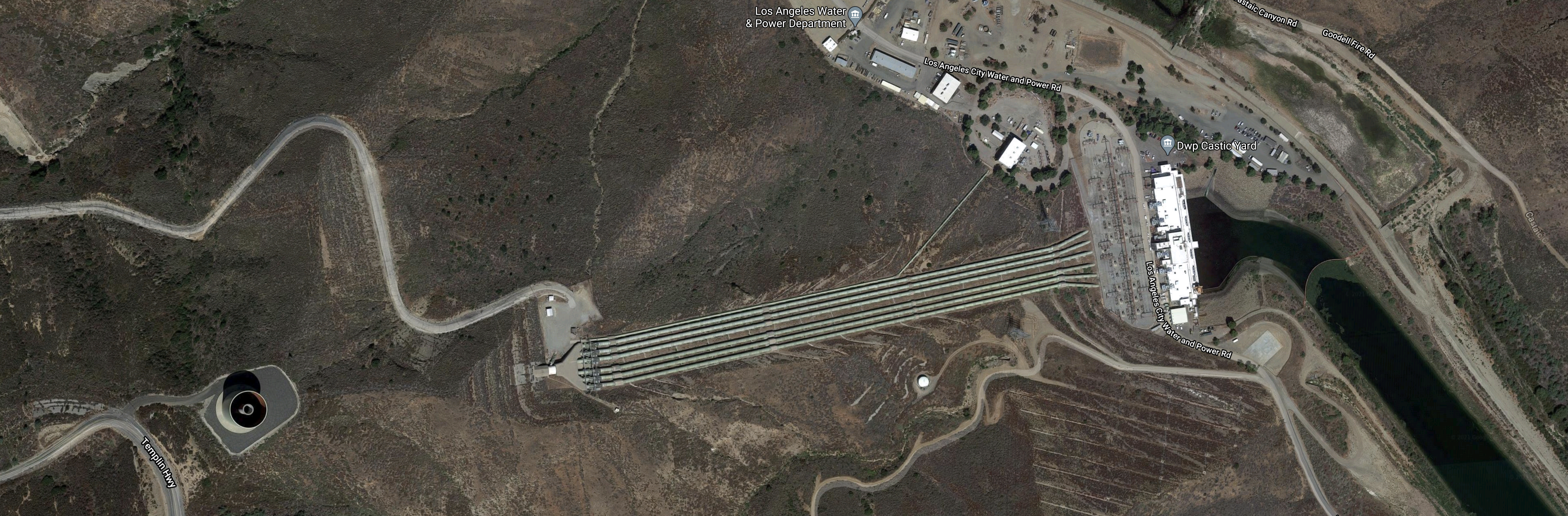
Note.
- The power plant is also part of the California State Water Project, which transfer water from North to South.
- The low-lake is Elderberry Forebay to the East.
- The high-lake is Pyramid Lake to the North.
It is a complicated system that includes the Angeles Tunnel, which takes water between Pyramid Lake and the Castaic power plant.
It cost a lot more than the 1.1 GWh battery, but it can generate a lot more power.
Piney Point: Emergency Crews Try To Plug Florida Toxic Wastewater Leak
The title of this post, is the same as that of this article on the BBC.
This is the introductory paragraph.
Emergency crews in Florida have been working to prevent a “catastrophic” flood after a leak was found in a large reservoir of toxic wastewater.
This Google Map shows the location.
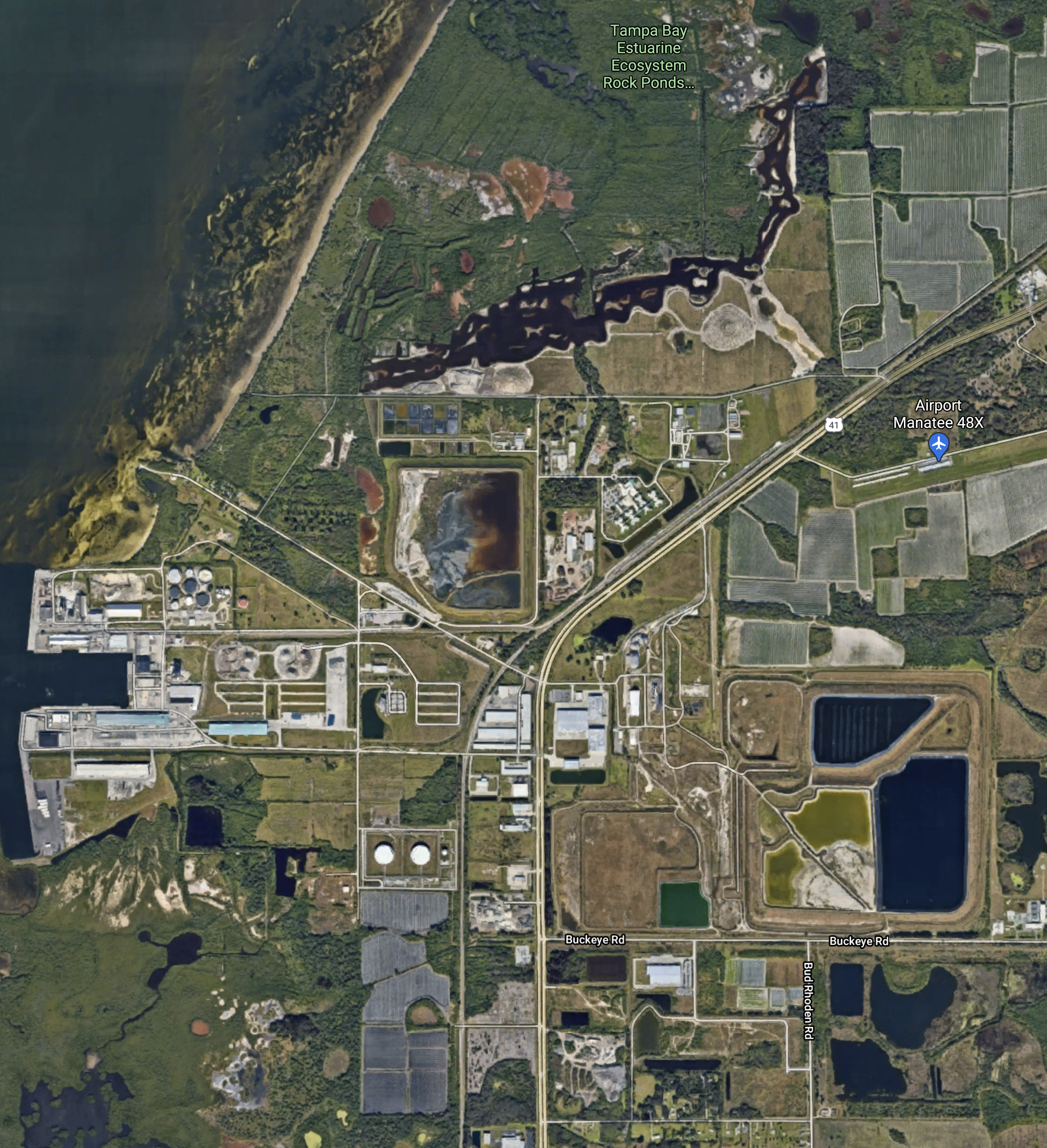
Note.
- At the top of the map is an area called Tampa Bay Estuarine Ecosystem Rock Ponds.
- The reservoir appears to be in the South East corner of the map.
- There appear to be several chemical works to the West of the highway.
This second Google Map shows the reservoir at a larger scale.
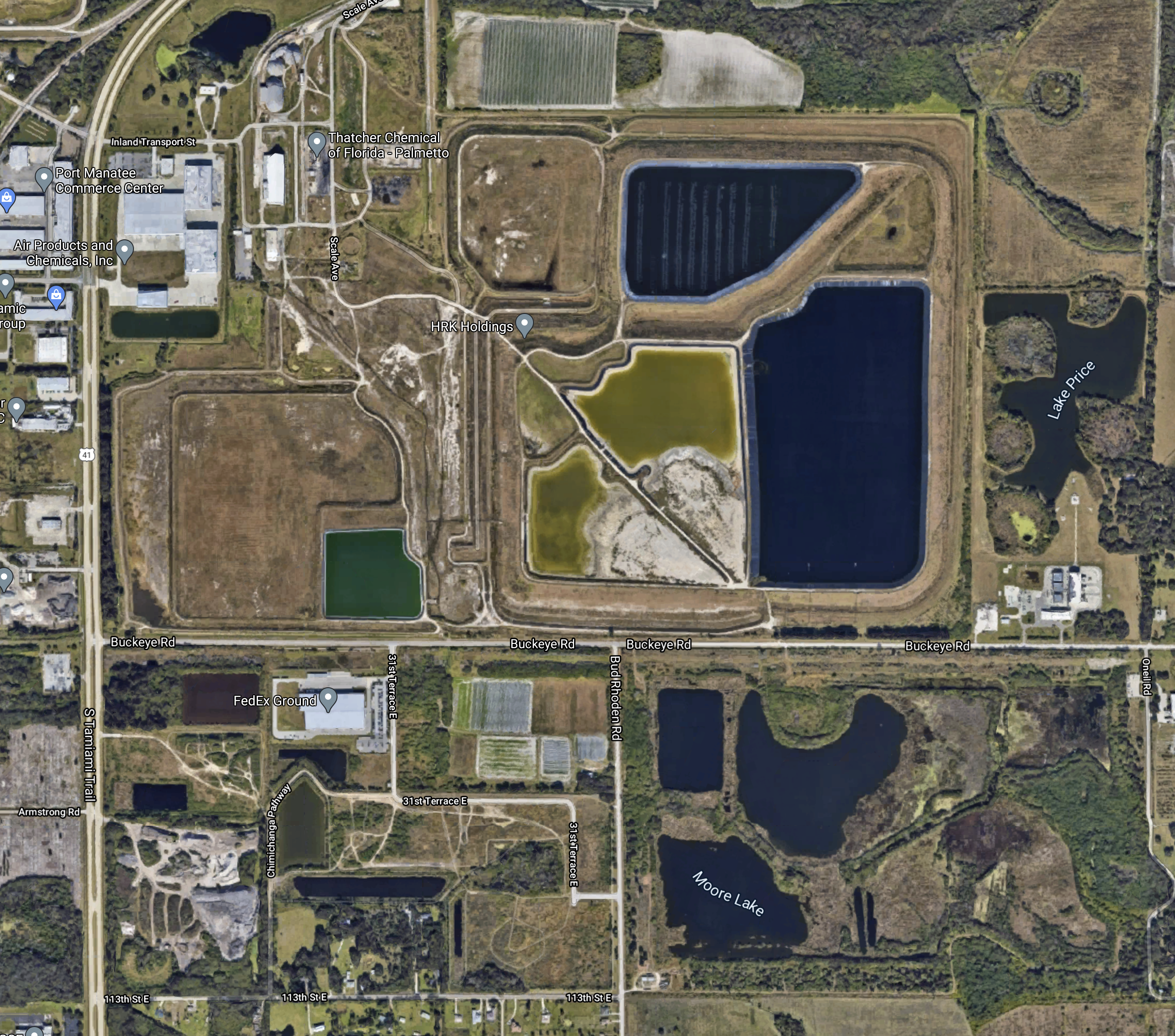
Note.
- The picture in the BBC article was taken from the North West.
- The problem reservoir is right and above of centre.
- To its right is Lake Price, which appears to be the sort of lake to sail a boat and perhaps do a bit of fishing and swimming.
- Moore Lake to the South appears similar to Lake Price.
It looks to me that it is not the place to have an environmental incident.
This article in The Times says this.
Engineers are furiously pumping the phosphate-rich water into the sea to avoid an uncontrolled spill at Piney Point, whose failure could unleash a 20ft-high wall of toxic effluent.
Pumping it into the sea? Surely not?
I suspect there could have been a mixture of sloppy management and loose regulation, with minimal enforcement and I’ll be interested to see what recommendations are put forward by the inevitable investigation.
In my varied past, I was once indirectly involved, in the toxic waste that comes out of chemical plants. At the time, I was working for ICI in Runcorn and my main job was building designing and building instruments for the various chemical plants in and around Runcorn.
As they had hired me because of my programming skills, they asked me if I could do a few small jobs on their Ferranti Argus 500, which could be plugged in to both their Varian NMR machine and their AEI mass spectrometer.
With the former, to get better accuracy in analysis of chemicals, I would take successive scans of a sample and aggregate them together. The accuracy of the results would be proportion to the square root of the number of scans.
The second to my mind was more difficult and much more interesting.
This explanation of mass spectroscopy is from Wikipedia.
Mass spectrometry (MS) is an analytical technique that is used to measure the mass-to-charge ratio of ions. The results are typically presented as a mass spectrum, a plot of intensity as a function of the mass-to-charge ratio. Mass spectrometry is used in many different fields and is applied to pure samples as well as complex mixtures.
ICI at Runcorn had a lot of complex mixtures and the aim of my project, was to take a mass spectrum and automatically decide what chemicals were present in the mixture.
The mass spectra were presented as a long graph on a roll of thermal paper. I noticed that operators would pick out distinctive patterns on the graph, which they told me were distinctive patterns of chlorine ions.
Chlorine has an unusual atomic weight of 35.5 because it is a mixture of two stable isotypes Chlorine-35 and Chlorine-37, which produced these distinctive patterns on the spectra.
I was able to identify these patterns to determine the number of chlorine atoms in a compound. By giving the algorithm a clue in stating how many carbon, oxygen and hydrogen atoms could be involved, it was able to successfully identify what was in a complex mixture.
All this was programmed on computer with just 64K words of memory and a half-megabyte hard disc.
ICI must have been pleased, as I got a bonus.
One of the jobs the software was used for was to identify what chemicals were present in the lagoons alongside the River Weaver, which are shown today in this Google Map.
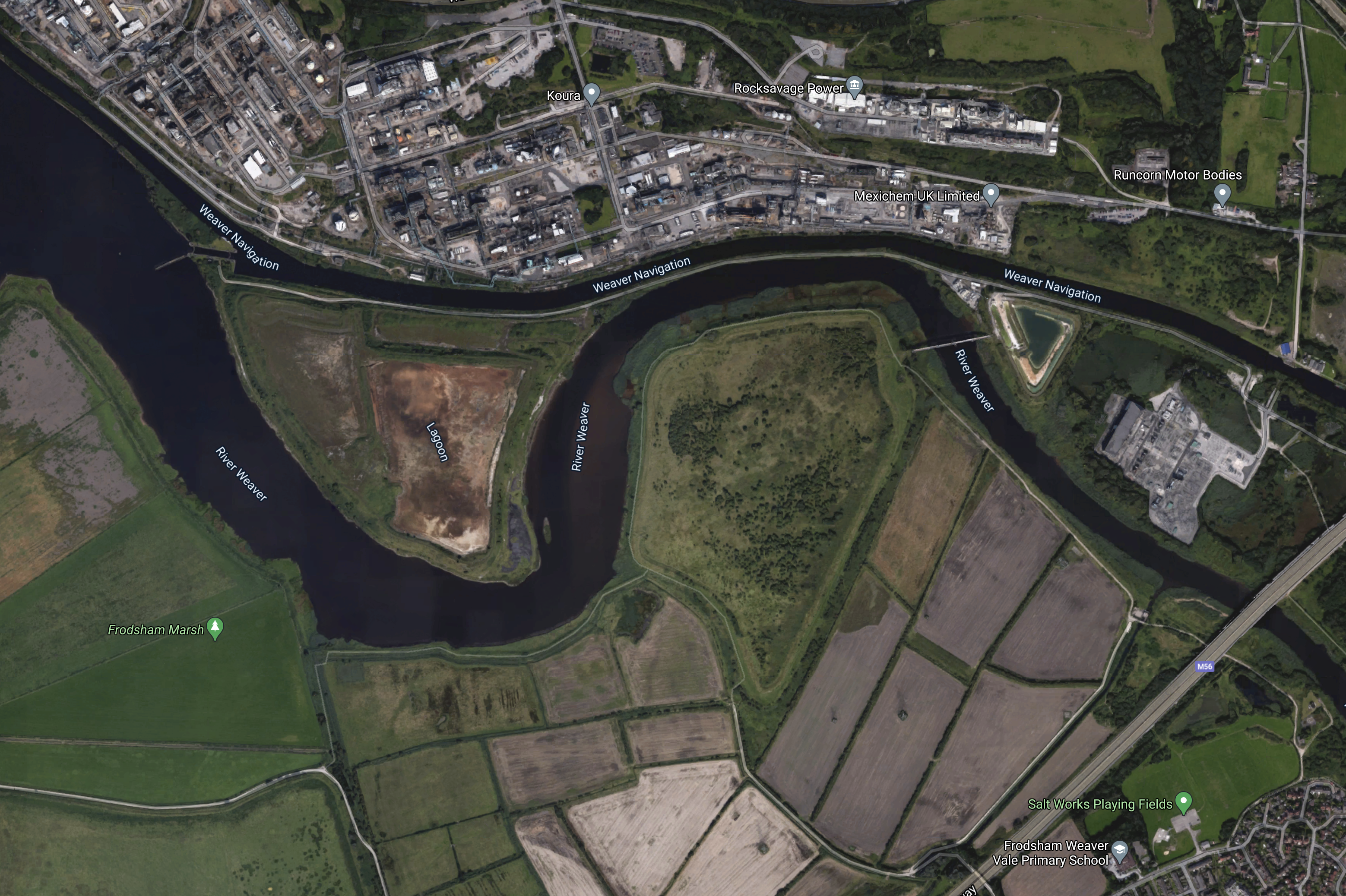
Note.
- The chemical works, which were part of ICI in the 1960s, to the North of the Weaver Navigation Canal.
- The two former lagoons between the canal and the River Weaver, which seem to have been cleaned out and partially restored.
- Was that a third large lagoon to the South of the River Weaver?
- There also appears to be a fourth smaller triangular lagoon between the canal and the river.
There certainly seems to have been a better clear-up in Runcorn, than in Florida.
I moved on from Runcorn soon after, I’d finished that software and have no idea how or if it developed and was used.
But the techniques I used stayed in my brain and were used at least four times in the future.
- In the design of a Space Allocation Program for ICI Plastics Division.
- In the design of two Project Management systems for Time Sharing Ltd.
And of course, they were also used in designing the scheduler in Artemis for Metier.
I
Increase In Hate Crime Against Disabled Rail Users
The title of this post, is the same as that of this article on Rail Technology Magazine.
This is the introductory paragraph.
New figures published by the Department for Transport have shown that hate crimes toward disabled people traveling on the rail network have risen by 24% in the last three years.
I don’t think the abuse has just been on trains either.
I rarely see any friction over the use of the wheelchair bay on buses in London, but my feeling is that I see it more often than I used too!
- Perhaps six months ago, a mother was not very pleased at having to get off the bus so that a disabled guy in a wheelchair could use the space.
- Some people think possession of the space is all important.
- I’ve also heard arguments over who takes precedent.
I wonder, if it is worse in other parts of the UK, where wheelchair access to buses is not as easy,as in London and there are fewer buses.
Are Some Passengers Annoyed At Being Delayed?
I’ve certainly seen moderate annoyance on buses and trains, when there is a delay caused by a disabled passenger getting on or off a bus or train, with sometimes some very offensive words being said.
So What Should Be Done About It?
Obviously, we need to do all the usual personal things to make sure that things run smoothly and serious abusers should be prosecuted.
But I also think, that we should aim for the following.
Every train must have a level platform and train interface.

The picture was taken from literature about the South Wales Metro and shows a visualisation of one of the Flirts, that will run on the routes in South Wales.
We should ban the ordering of trains, that don’t meet this criteria.
All routes between street and platform should be step-free.
It would be an expensive program, but there would be a lot who’d benefit.
- People in wheelchairs
- Babies and toddlers in buggies and their pushers.
- People dragging large cases.
- Cyclists with bicycles
- Older people with mobility issues.
There will be collateral benefits.
- Trains would be speeded up, as they would not have to wait so long in stations.
- More people will use the trains and not just the disabled.
- If the program were properly managed, it could create work for local construction firms all over the UK.
It might even encourage inward and stay-at-home tourism from those with mobility issues.
Have I Got Thrombophilia?
I was chatting on-line on The Times last night with a guy or even a girl, as their nick didn’t indicate gender.
I had said that a Danish study had shown that there were links between coeliac disease and blood clots. I wrote about this study in A Danish Study On Links Between Coeliac Disease And Blood Clots. Two of my on-line friends have since responded to that post with stories of coeliacs and blood-clots.
I got this reply from the person, I was chatting with.
There are some studies linking coeliac condition and the Factor V Leiden thrombophilia mutation. Several members of my family have (or had, since some have passed away) both conditions. I have the Factor V Leiden, as have both of my children. I do a lot of family history and have traced the Leiden mutation through triangulation of DNA matches and shared chromosome matches (via Family Tree DNA which goes into such detail) and I believe this is pointing to my Swedish ancestry.
I replied and asked if the person had coeliac disease.
This was the reply.
I had some tests and a biopsy about 30 years ago to see if I had inherited the coeliac condition which had cut a swathe through my mother’s side of the family. It was negative, but I do suspect that I may have passed it on to my son. He’s not keen on getting tested although he did get a Leiden Factor V test and he is heterozygous for that. My mother, aunt, grandmother and cousins have coeliac and Leiden. Some have both and some have one or the other.
My mother was young enough to get proper advice, but my grandmother had a terrible time. She just literally faded away. Her treatment was eating raw liver and having injections of liver which left lumps under her skin. Awful.
I then looked up thrombophilia on Wikipedia. The picture of a red leg in the entry could have been of me, except that with me, It’s the other leg.
The NHS web site also gives useful information.
I need to see an expert urgently!
But at least, I’m already on the likely medication – Warfarin.
So it’s hopefully just a case of keep taking the tablets.
I must admit, I’m slightly annoyed with the medics. I have never been told, that there is a link between coeliac disease and blood clots, when evidence from the Danish peer-reviewed study and people I’ve met on-line clearly shows there is a link!
Given, all the arguments about the AstraZeneca vaccine and blood clots, more research needs to be done.
Approaching Kings Cross – 2nd April 2021
I took these pictures approaching Kings Cross.



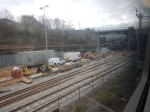
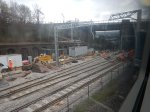



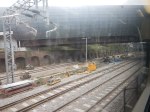
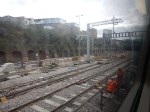
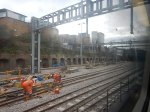
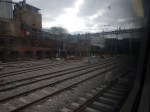


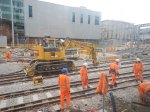

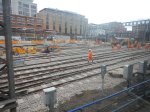
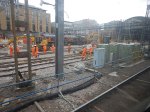
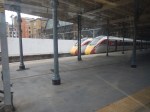
Comparing these pictures to those in Approaching Kings Cross – 19th February 2021, show that work is progressing.
It should be finished by the Summer.
Battersea Power Station’s Glass Elevator To Open Next Year
The title of this post, is the same as that of this article on Ian Visits.
It sounds like it will give a reason for some tourists to visit the area and it will be a balance to the cable-car in the London Docks.
Ian gives more details about what could be a new experience for Londoners and tourists.
 The Anonymous Widower