Thoughts On The Actual Battery Size In Class 756 Trains And Class 398 Tram-Trains
A Freedom of Information Request was sent to Transport for Wales, which said.
Please confirm the battery capacity and maximum distance possible under battery power for the Tram/Train, 3 & 4 Car Flirts.
The reply was as follows.
The batteries on the new fleets will have the following capacities: –
- Class 756 (3-car) Flirt – 480 kWh
- Class 756 (4-car) Flirt – 600 kWh
- Class 398 tram-trains – 128 kWh
I will now have thoughts on both vehicles separately.
Class 756 Trains
In More On Tri-Mode Stadler Flirts, I speculated about the capacity of the batteries in the tri-mode Stadler Flirts, which are now called Class 756 trains, I said this.
I wonder how much energy storage you get for the weight of a V8 diesel, as used on a bi-mode Flirt?
The V8 16 litre diesel engines are made by Deutz and from their web site, it looks like they weigh about 1.3 tonnes.
How much energy could a 1.3 tonne battery store?
The best traction batteries can probably store 0.1 kWh per kilogram. Assuming that the usable battery weight is 1.2 tonnes, then each battery module could store 120 kWh or 360 kWh if there are three of them.
I also quoted this from the July 2018 Edition of Modern Railways.
The units will be able to run for 40 miles between charging, thanks to their three large batteries.
Since I wrote More On Tri-Mode Stadler Flirts in June 2018, a lot more information on the bi-mode Stadler Class 755 Flirt has become available and they have entered service with Greater Anglia.
Four-car trains weigh around 114 tonnes, with three-car trains around a hundred. I can also calculate kinetic energies.
How Good Was My Battery Size Estimate?
These are my estimate and the actual values for the three batteries in Class 756 trains
- My estimate for Class 756 (3- & 4-car) – 120 kWh
- Class 756 (3-car) Flirt – 160 kWh
- Class 756 (4-car) Flirt – 200 kWh
So have Stadler’s battery manufacturer learned how to squeeze more kWh into the same weight of battery?
In Sparking A Revolution, I talked about Hitachi’s bullish plans for battery-powered trains, in a section called Costs and Power.
In that section, I used Hitachi’s quoted figures, that predicted a five tonne battery could hold a massive 15 MWh in fifteen years time.
If Stadler can get the same energy density in a battery as Hitachi, then their battery trains will have long enough ranges for many applications.
Class 398 Tram-Trains
In Sheffield Region Transport Plan 2019 – Tram-Trains Between Sheffield And Doncaster-Sheffield Airport, I showed this map of the route the trams would take.
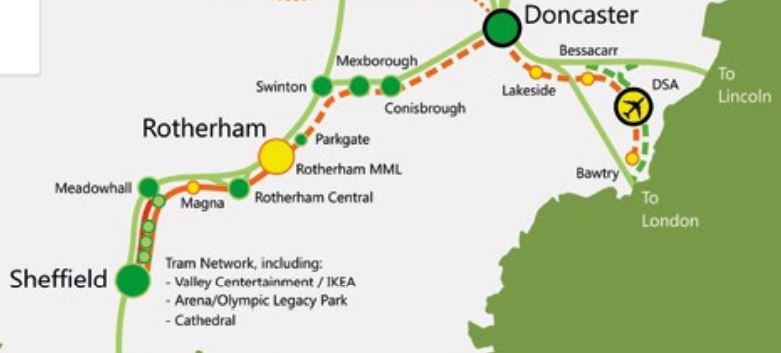
I also said this about the tram-trains.
The distance between Rotherham Parkgate and Doncaster is under twelve miles and has full electrification at both ends.
The Class 399 tram-trains being built with a battery capability for the South Wales Metro to be delivered in 2023, should be able to reach Doncaster.
But there are probably other good reasons to fully electrify between Doncaster and Sheffield, via Meadowhall, Rotherham Central and Rotherham Parkgate.
The major work would probably be to update Rotherham Parkgate to a through station with two platforms and a step-free footbridge.
Currently, trains take twenty-three minutes between Rotherham Central and Doncaster. This is a time, that the tram-trains would probably match.
If you adopt the normal energy consumption of between three and five kWh per vehicle mile on the section without electrification between Rotherham Parkgate and Doncaster, you get a battery size of between 108 and 180 kWh.
It looks to me, that on a quick look, a 128 kWh battery could provide a useful range for one of Stadler’s Class 398/399 tram-trains.
Class 398 Tram-Trains Between Cardiff Bay and Cardiff Queen Street Stations
The distance between these two stations is six chains over a mile,
Adding the extra bit to the flourish might make a round trip between Cardiff Queen Street and The Flourish stations perhaps four miles.
Applying the normal energy consumption of between three and five kWh per vehicle mile on the section without electrification between Cardiff Queen Street and The Flourish, would need a battery size of between 36 and 60 kWh.
Conclusion
The battery sizes seem to fit the routes well.
EU Announces ‘Clean Hydrogen Alliance’ For Launch In The Summer
The total of this post is the same as this article on Euractiv.
The title is probably fairly clear, but the article is well worth a read.
I Need Help To Get This Surface Pro Computer Working
I was always a software man and this computer is showing that up.
Any offers of help, paif for or free in the London N1 area gratefully accepted.
My First Ride In A Class 710/1 Train
I got on the Class 710/1 train at Liverpool Street station and took it as far as Bush Hill Park station, before catching it at the same station on its return from Enfield Town station.
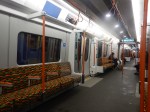
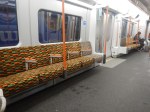
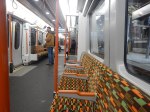
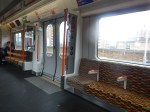
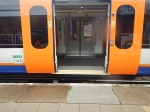
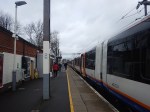
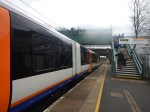
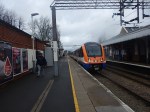

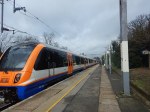


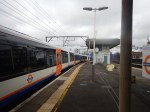

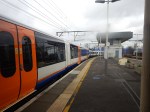

I took it as far as Hackney Downs station, from where I got a 56 bus home.
Door Control Detail
These pictures show the comprehensiveness layout of the door controls on the Class 710 train.


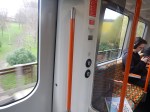

Note that there are the following controls.
- Opening and closing buttons on both sides of the door inside the cars.
- An opening button in the middle of the pair of doors, on the inside of each car.
- An opening button in the middle of the pair of doors, on the outside of each car.
All these buttons must make entry and exit through the doors faster.
Micturition Syncope
It is now appearing that I most likely suffered from micturition syncope.
This is from Wikipedia.
Micturition syncope or post-micturition syncope is the name given to the human phenomenon of fainting shortly after or during urination. The underlying cause is not fully understood but it may be a result of vasovagal response, postural hypotension, or a combination thereof.
People often become pale, lightheaded, nauseated, sweaty and weak before they lose consciousness. Sometimes defecating, coughing, or severe vomiting may cause fainting in a similar way.
In some ways I think I have been lucky. This picture was taken forty-eight hours after I fell.

I’m looking and feeling a bit better now!
Dutch Test Hydrogen Train As EU Alliance Set To Launch
The title of this post is the same as that of this article on Euractiv.
This is the introductory paragraph.
The Netherlands wrapped up testing on its first foray into hydrogen train technology at the weekend, as the European Commission readies a strategy for the clean fuel that will debut on Tuesday (10 March).
I shall be interested to see what the European Commission says tomorrow.
I indicated in Alstom Coradia iLint Passes Tests, that hydrogen-powered trains could run through The Netherlands all the way to Germany.
Community Leaders Add Their Voices To Demand For Railway Extensions In Nottinghamshire To Be A ‘Top Priority’
The title of this post, is the same as that of this article on Nottinghamshire Live.
This is the introductory paragraph.
The opportunity to make ‘isolated’ rural areas more “attractive to investors” is one reason why campaigners and local politicians think it should be a “top priority” to extend railways in Nottinghamshire.
It does seem to me that arguments for new or reopened rail lines are getting more professional, as more arguments prevail.
I think that the extension of the Robin Hood Line through the Sherwood Forest to Warsop, Edwinstowe and Ollerton, is one of those projects, that will get approved in the next few years.
- The track is already in place and used for such purposes as driver training.
- The route could link a large number of people to High Speed Two, if the closely-related Maid Marian Line were to be reopened.
- The Robin Hood Line also links up to the High Marnham Test Track, which could be extended further East.
I do wonder, if an extended Robin Hood Line would be an ideal route for introducing Alstom’s Class 321 Breeze hydrogen trains.
Metrolink Trafford Park Line Start Date Announced
The title of this post is the same as that of this article on Rail Technology Magazine.
This is the introductory paragraph.
Greater Manchester’s new £350m Trafford Park line will launch on Sunday 22nd March.
Manchester Metrolink keeps growing and will become 96km of track and 93 stops.
Consultation On The Cambridge Autonomous Metro
Issue 900 of Rail Magazine has an article called Have Your Say On Plans For Cambridge Metro Network.
These are the introductory paragraphs.
The Cambridge and Peterborough Combined Authority has launched a public consultation into outline plans for the Cambridge Autonomous Metro (CAM)
Under current proposals the CAM network would comprise a tunnelled section beneath Cambridge city centre, and four regional routes, radiating out towards St. Neots, Alconbury, Mildenhall and Haverhill.
This is a map clipped from the proposals.
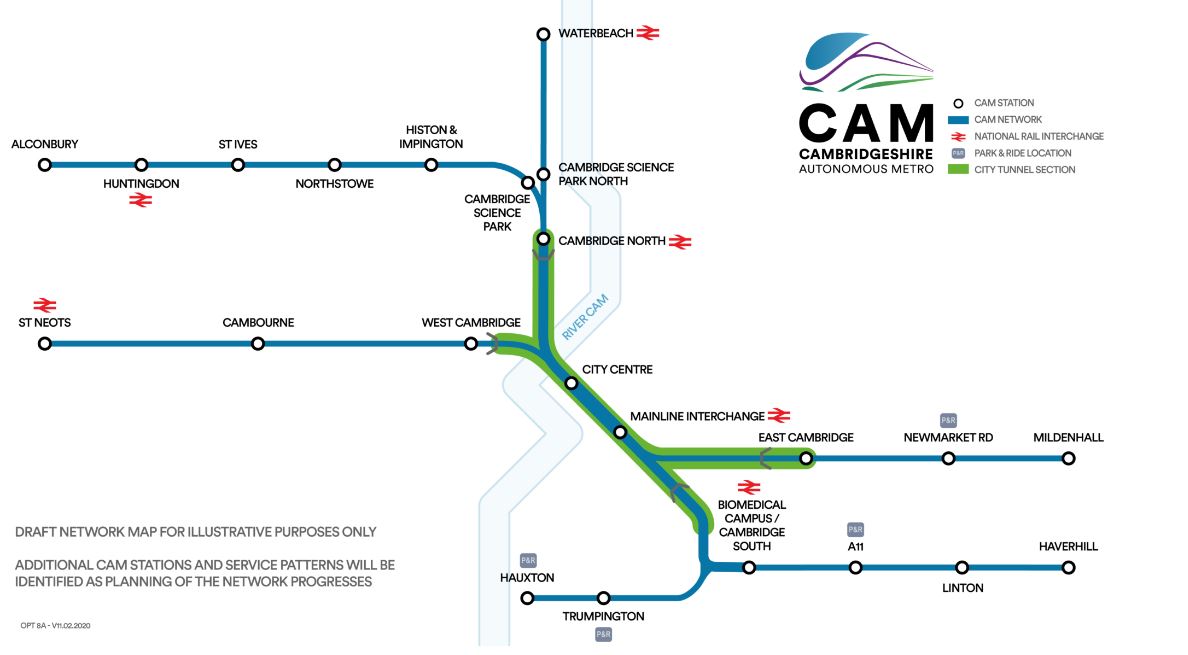
Note.
Sections shown in green are tunnelled.
Sections shown in blue are on the surface.
Some sections would appear to reuse parts of the Cambridgeshire Guided Busway.
These are a few of my thoughts.
Rolling Stock
This picture from the consultation, shows possible rolling stock.
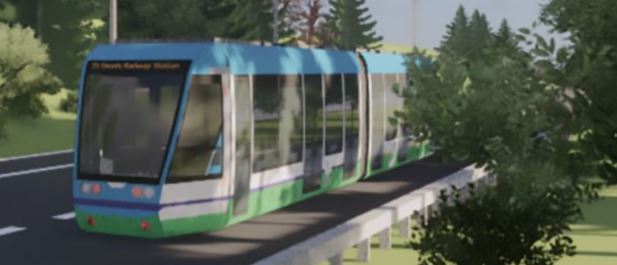
It could be a version of Van Hool’s ExquiCity BRT tram-bus, which is used is Belfast, Geneva, Metz and Parma – To name just four!
A hydrogen-powered version has also recently been introduced in Pau in France.
Could this be the version, that will be preferred for Cambridge?
- It would be carbon and pollution free.
- It could use exclusively green hydrogen, created from renewable electricity. Pau uses a hydrogen-generation system from ITM Power.
- Would hydrogen-power encourage passengers to use the system?
- It might borrow ideas from the Glider system in Belfast, which is diesel-electric powered.
- Each Belfast Glider vehicle can hold 105 passengers.
A hydrogen-powered system would surely be ideal for working in the tunnels under Cambridge.
Tunnels
This article on the BBC is entitled Cambridge Metro: Engineer Says Underground Will Work.
In the article, Professor John Miles of Cambridge University says.
Britain was a world leader in boring small tunnels
It will be tight in the cramped city, but it should be possible.
Conclusion
Oxford will want one!
Direct London-Bordeaux Service By 2022 – SNCF
The title of this post is the same as that of this article on Rail Magazine.
Diego Diaz, who is International President of SNCF is quoted as saying this.
With the view to opening up to the international scene, SNCF Gares & Connexions and HS1 Ltd, the owner of St Pancras station, have decided to twin the two stations and the operating teams.
I hope I can be on the first service, when it happens.
 The Anonymous Widower