Alpha Trains Commits To Hybrid Retrofit For Diesel Fleet
The title of this post is the same as that on this article on Global Rail News.
This is the first paragraph.
Alpha Trains has signed a letter of intent with Rolls-Royce to retrofit its existing diesel train fleet with hybrid drive systems.
This involves using an MTU Hybrid PowerPack, from the same family as those, that will be used in the UK to upgrade the Class 170 trains. I talked about the latter project in Rolls-Royce And Porterbrook Launch First Hybrid Rail Project In The UK With MTU Hybrid PowerPacks.
It certainly looks like Rolls-Royce have created the MTU Hybrid PowerPack for a worthwhile market.
This video explains Rolls-Royce’s thinking.
Rolls-Royce And Porterbrook Launch First Hybrid Rail Project In The UK With MTU Hybrid PowerPacks
The title of this post is the same as that on this Press Release from Porterbrook.
Porterbrook, Eversholt and the other train leasing companies have a problem, that can be turned into an opportunity to make money in a way, few will find unacceptable.
There are several fleets of trains in the UK, that are reasonably new and have plenty of life left in their basic structure, running gear and traction equipment.
But compared to modern rolling stock, they are like a twenty-year-old BMW, Jaguar or Mercedes. Good runners and comfortable, but not up to the standards, passengers, rail operators, rail staff and environmentalists expect.
So the train leasing companies are looking for ways to update their fleets, so that they can continue to earn money and satisfy everybody’s needs and aspirations.
Class 769 Train
Porterbrook started this innovation by taking redundant Class 319 trains and converting them into Class 769 trains, so they could be used on lines without electrification.

The picture shows one of Northern’s Class 319 trains.
Thirty-five of these trains have been ordered. So far, due to design and testing issues none have been delivered. Hopefully, as testing has now started, some will be in traffic before the end of the year.
This project could create upwards of fifty much-needed four-car bi-mode trains for running on partially-electrified routes.
Class 321 Hydrogen Train
Eversholt have also teamed up with Alstom to create a hydrogen-powered version of their Class 321 train.
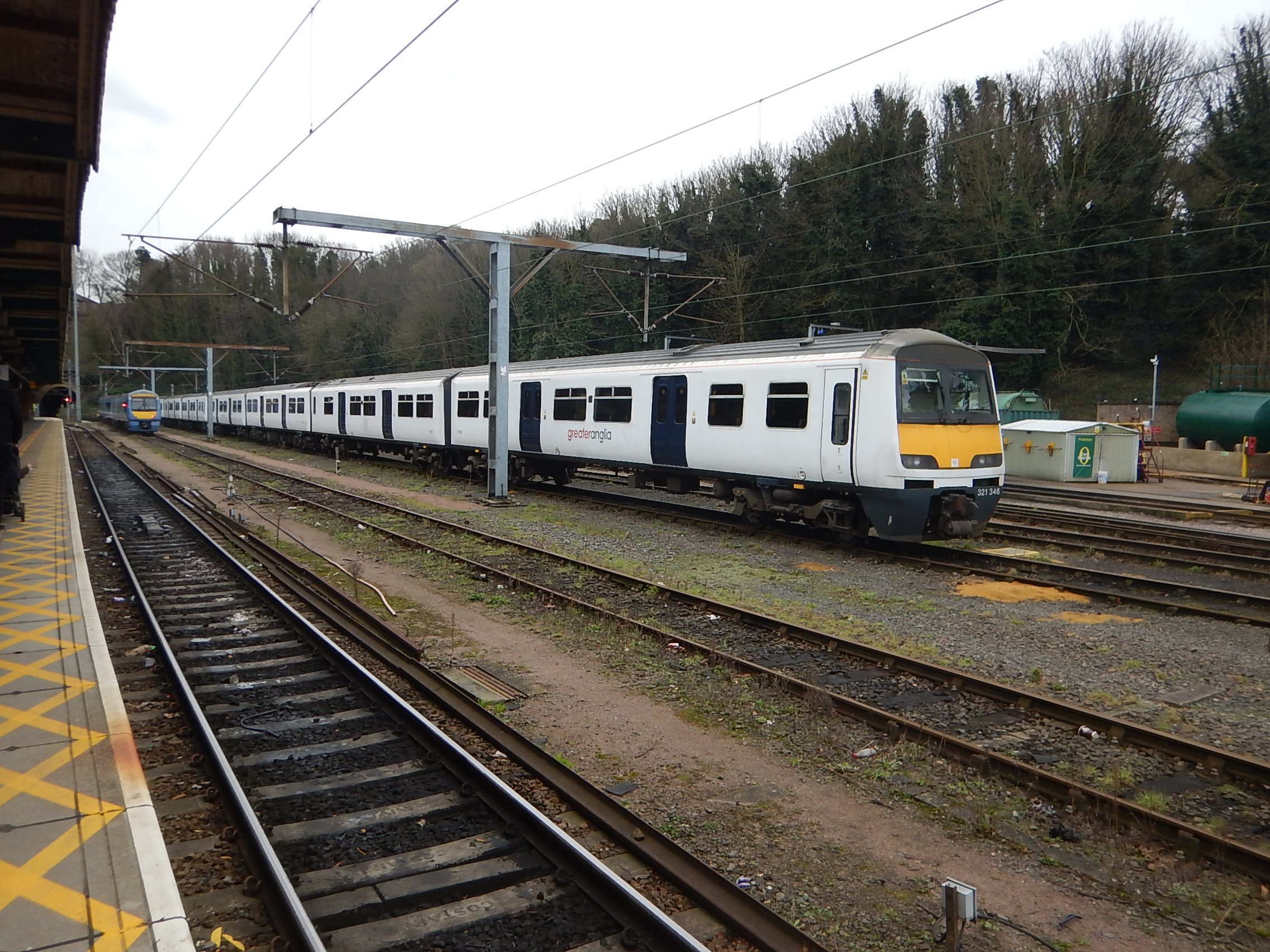
This project could create around a hundred four-car 100 mph, zero-emission electric trains, for running on routes with no or only partial electrification.electrification.
The Four-Car High Speed Train
Everybody loves High Speed Trains and Scotrail and Great Western Railway are taking a number of them and creating four-car quality trains to increase their rolling stock.
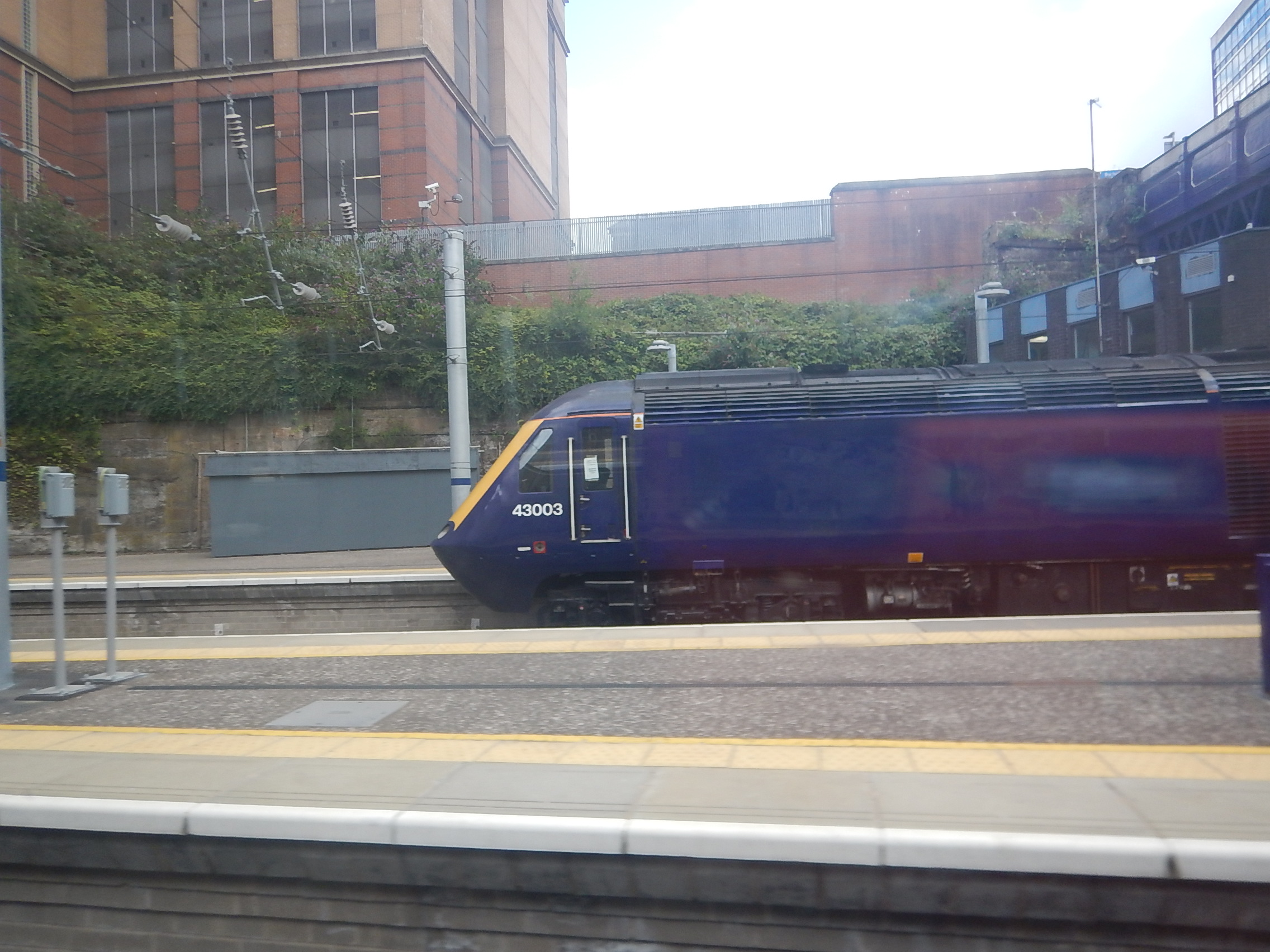
The picture shows a High Speed Train under test in Glasgow Queen Street station.
They are already running in Cornwall and they should be running in Scotland before the end of the year.
Updating The Class 170 Trains
The Press Release announces Porterbrook’s latest project and gives this picture.
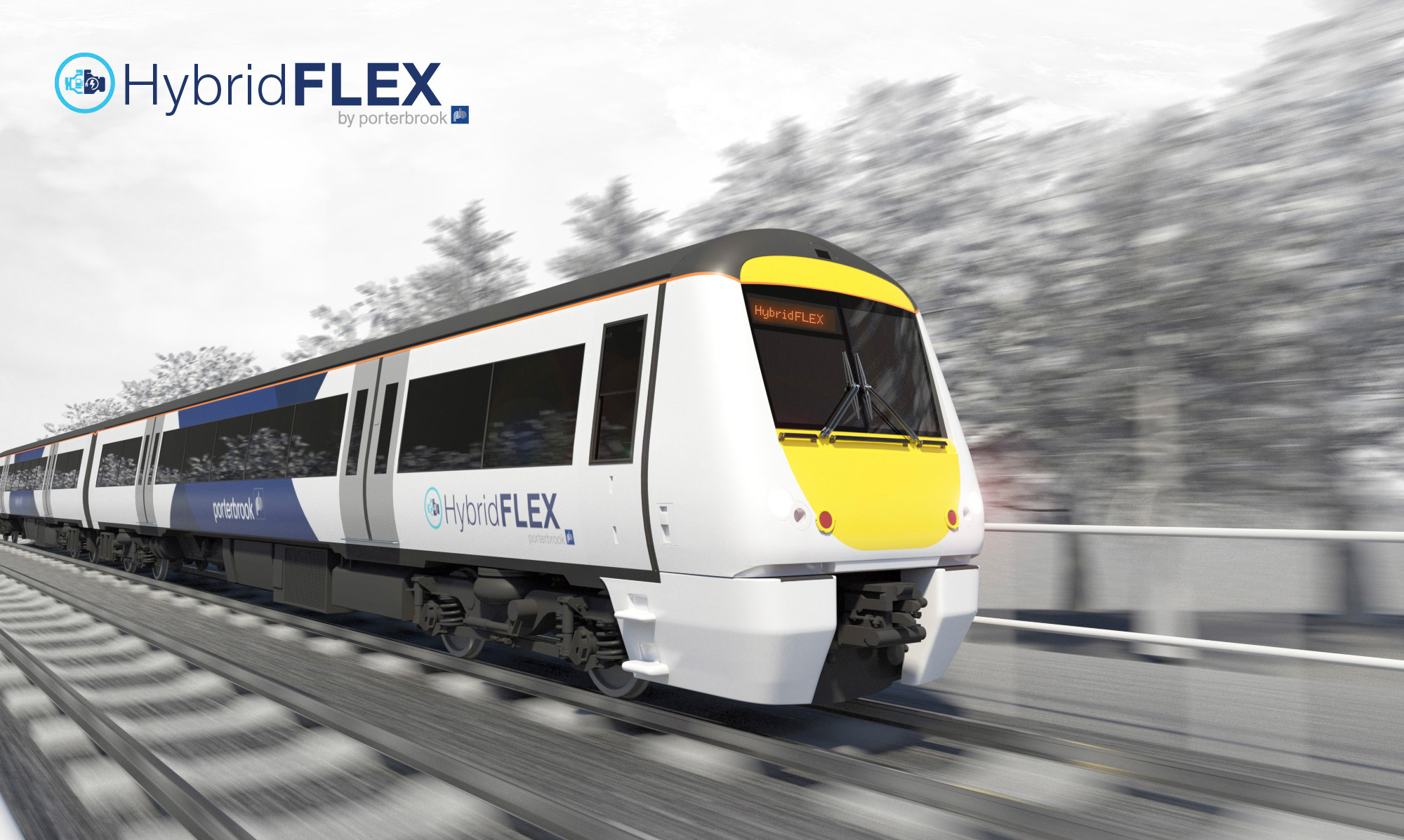
There are 122 Class 170 trains on the UK rail network, which were built around twenty years ago. There are also nearly a hundred other Class 168, 171 and 172 trains with a similar design.
They are 100 mph trains, that are diesel-powered and some are used on long distances.
As a passenger, they are not a bad train, but being diesel, they are not that environmentally friendly.
The Class 172 trains, which are currently running on the Gospel Oak to Barking Line, would surely be a much better train with a smoother electric transmission, that had regenerative braking. Although, as they have a mechanical transmission, rather than the hydraulic of the other Turbostars, this might not be possible.
On the other hand, West Midlands Trains will soon have a fleet of thirty-five Class 172 trains of various sub-types, so fuel savings could be significant.
This is from the Press Release.
Rolls-Royce and Porterbrook, the UK’s largest owner of passenger rolling stock, have agreed the delivery of MTU Hybrid PowerPacks that can convert Class 168 and Class 170 ‘Turbostar’ DMUs from diesel-only to hybrid-electric operation. Hybrid technology allows for the cleaner and quieter operation of trains in stations and through urban areas.
As I understand it, the current hydraulic traction system will be replaced by an electric one with a battery, that will enable.
- Regenerative braking using a battery.
- Battery electric power in urban areas, stations and depots.
- Lower noise levels
- Lower maintenance costs.
This should also reduce diesel fuel consumption and carbon emissions.
Conclusion
The good Class 170 trains, are being improved and should give another twenty years of service.
How many other projects like these will surface in the next few years?
Brush Traction Signs Contract With Skeleton Technologies For Modules For Class 769 Trains
The title of this post is the same as that of this article on Rail Advent.
This is the first two paragraphs
Skeleton Technologies has announced that they have signed a contract with Brush Traction to supply SkelStart Engine Start Modules for all Porterbrook Bi Mode Class 769 trains.
The high-power density, safe and tiny size of the 24V SkelStart module were decided over other solutions during the feasibility stage to start the Auxiliary Power Supply (APS) units. Simply put, there was not enough room available for another solution.
The article then gives a few brief details on the SkelStart
Who are Skeleton Technologies?
They have a web site at www.skeletontech.com and there is a brief description on the home page.
Under a title of.
Powering Energy Savings With Ultracapacitors
There is this description.
Skeleton Technologies’ patented curved graphene is changing the world of energy storage.
Our superior technology enables us to deliver ground-breaking energy storage solutions with market leading power and energy density. Our products are used across industries from automotive to aerospace and everything in between.
Curved graphene? I know about graphene, but I’d never heard of it being curved.
There is a Press Release on the Skeleton Technologies web site, which is entitled Skeleton Technologies Signs Contract with Brush Traction to Supply Ultracapacitors for All BMU Class 769 Prime Movers.
This gives a lot more details, including this brief description of size and weight.
The 24V SkelStart has the size of a regular car battery and with its 8kg weight, it solved the space restriction we had.
It looks to be a very simple application of a capacitor with the ability to hold a lot of charge.
One of their products is called a SkelMod 170V 53F Ultracapacitor Module.
The datasheet gives these details.
- Voltage – 170 Volts
- Capacitance – 53 Farads
- Maximum Stored Energy – 0.2127 kWh
- Weight – 77 Kg.
That is a lot of energy for a capacitor.
A 50 kWh capacitor suitable for a bus or train, with this energy density would weigh eighteen tonnes, so it’s a bit impractical for this type of application at present.
But who knows what will be possible in the near future?
Skeleton Technologies would already appear to have pushed capacitor design a long way.
Skeleton Technologies Are An Estonian Company
This surprised me at first! But why not?
An Aside
Somewhere in my past about the 1960s, I remember an electronic news item, where someone like AERE Harwell, had built a one Farad capacitor, that was house-sized. Noe we get 53 Farad in a suitcase.
Conclusion
I think we’ll eventually see supercapacitors big enough to replace lithium-ion batteries in a lot of applications.
Swiss Pass And Swiss Pocket Timetables
I used a Swiss Pass on my three day trip to Switzerland.
Wikipedia describes it like this.
The Swiss Travel Pass allows unlimited travel on the Swiss public transport network (trains, buses, ships and tramways) for a certain number of days (3, 4, 8 or 15 consecutive days), as well as free or discounted entry to most Swiss museums. Discounts apply to mountain transport (lifts, funiculars, cogwheel trains). Some mountain transport is free of charge.
The Swiss Travel Pass Flex works exactly like the Swiss Travel Pass, but can be used to travel on 3, 4, 8 or 15 consecutive or non-consecutive days within one .
Research the pass you need before you go.
I bought mine from athe SBB ticket office in Zurich Airport.
It also came with a map, where it could be used.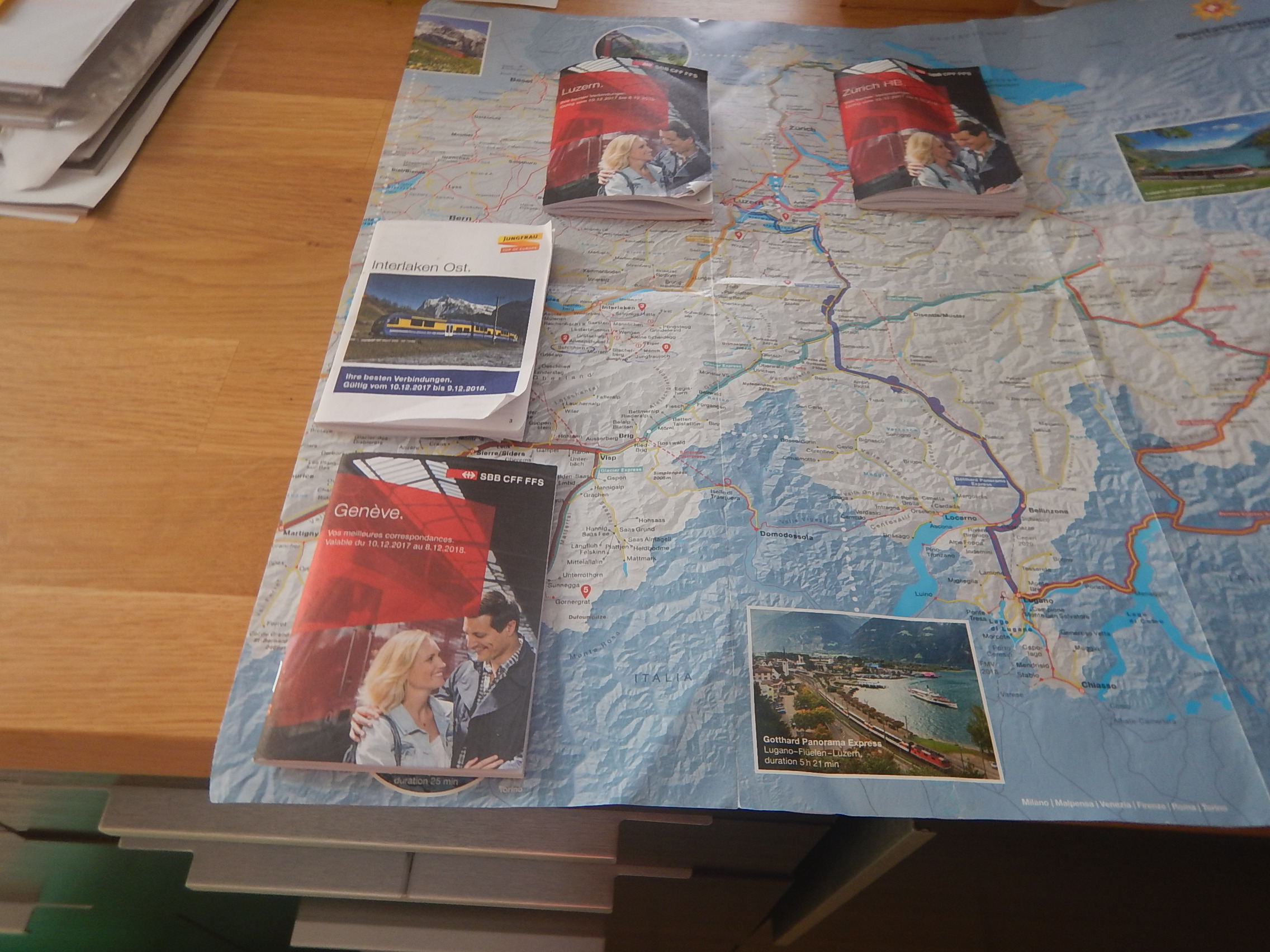
In the picture, there are four of the mini-timetables that seem to be available at most major stations.
These timetables give the times of trains from the station to other major cities. They also give the return trains, so are ideal for planning a day out.
The train companies in the UK, should copy this.
One thing that I found out about a Swiss Pass after I bought it, is that you can buy extension tickets for a journey from the Swiss border to say somewhere like Innsbruck, which is a few kilometres further on. It’s a bit like the ticket, I’ll buy in a few minutes to extend my Freedom Pass to Rayleigh.
The Swiss Pass may be pricey, but it’s worth it and is probably a lot cheaper than hiring a car.
Steelworm At Whitechapel Station
I took this picture at Whitechapel station.
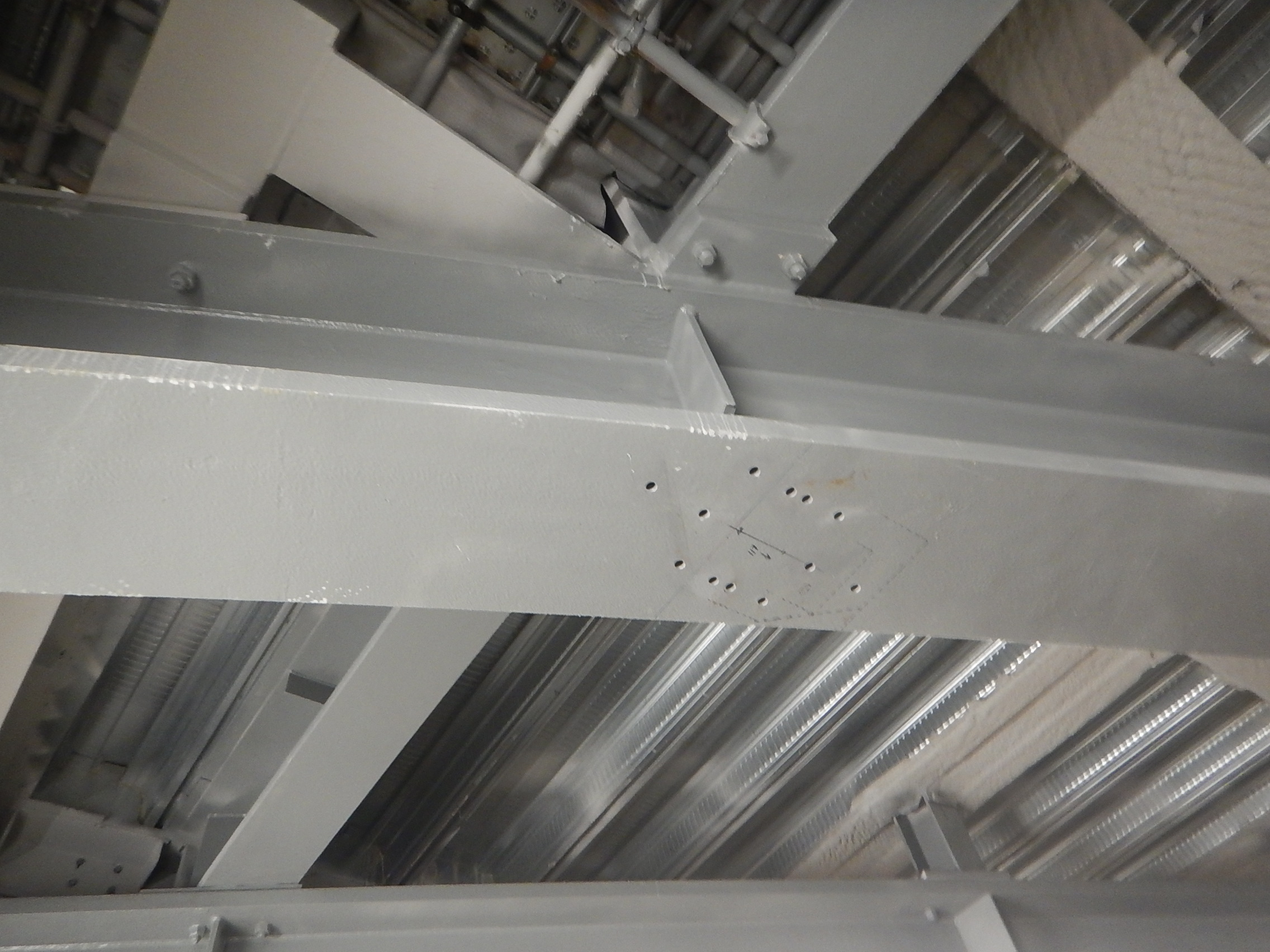
It looks like steel’s equivalent of woodworm has been at work!
What Is Happening (Or Not!) At West Ealing Station?
I took these pictures at West Ealing station a few days ago.
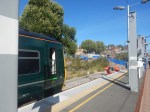
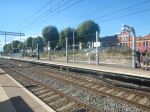

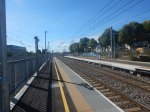
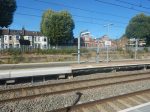



There appears to be no work going on to finish the station for Crossrail.
There has also been no announcement about what is happening to the Greenford Branch.
Surely, if the bay platform were to be electrified, it would be the ideal place to charge a battery shuttle train to Greenford station.
Should We Exempt Low Alcohol Beer And Wine From The Age Regulations
I drink Marks & Spencer ).5% Southwold Pale Ale for four main reasons.
- It is low alcohol and doesn’t interact with the Warfarin, that I am prescribed to control the INR of my blood, so I don’t have another stroke.
- Because it is made with less barley, it appears to be gluten-free to my body.
- It also has the proper taste of real beer.
- It is brewed by Adnams in Suffolk and I started drinking their beers at fourteen under supervision of my father, whilst we played snooker in Felixstowe Conservative Club.
As my GP says, at 0.25 alcohol units a 500 ml bottle, you’d have difficult drinking enough to affect your health.
There is one annoying thing about it and that is buying it.
This morning, I bought three bottles in the M & S store at the Angel, where my family has been shopping since before the First World War.
As I usually do, I used one of the automatic tills and had to wait for a minute or so, whilst the assistant verified that I was over eighteen.
The store was busy and she was helping someone with another till.
I wonder what would happen at the checkouts, if there was no age check on low alcohol beer and wine.
- It would obviously speed up the tills with some customers.
- But would it have the affect of brewers and winemakers, making more quality low alcohol products?
- And would these be purchased by those who knew they should cut their alcohol intake?
It’s probably one of those ideas, that would go down well in London boroughs like Barnet, Islington and Richmond, but how would it go down in places where alcohol was a necessary way of life for many?
How too, would such a drink fit with those of a Muslim faith?
Hybrid Regional Train To Be Tested
The title of this post is the same as that of this article on Railway Gazette.
This is the first two paragraphs.
Plans to convert a TER regional multiple-unit into a prototype overhead electric, battery and diesel hybrid unit were announced by SNCF and Alstom on September 17.
The Grand Est, Nouvelle-Aquitaine and Occitanie regions and Alstom are to spend €16.6m converting and testing the Régiolis unit, which will be taken from the Occitanie region’s fleet. Two of the four diesel engines will be replaced with high-capacity lithium-ion batteries able to store regenerated braking energy.
It looks to me, that each Régiolis train has four slots in which to put a diesel engine. So are they doing what Stadler are doing with the tri-mode Flirts for the South Wales Metro and allowing operators to fill each slot with a diesel engine and generator or a lithium-ion battery.
Hopefully, the modules are designed, so they are just Plug-and Play.
The train’s computer would decide what power is best and swap between electric/diesel and battery power automatically or under the control of the driver.
The concept is simple and it could have some interesting outcomes.
- The ability to use regenerative braking on an electrified line, that can’t handle the reverse currents.
- Extending routes efficiently on non-electrified lines, where noise and pollution could be a problem.
- As battery technology gets better and can hold more energy, all diesel engines might be replaced with batteries.
It does seem that Alstom are taking battery trains seriously.
It also appears that the number of existing trains, that are being improved by the addition of batteries is growing.
An Analysis Of The Route Between Buxtehude And Cuxhaven
Alstom have chosen the route between Buxtehude and Cuxhaven, as the launch route for their hydrogen-powered Coradia iLint train.
I’ll now look at the route.
Buxtehude Station
Buxtehude station is on the outskirts of Hamburg.
This Google Map shows the station.

Note.
- There is a double-track electrified line through the station.
- There appears to be a West-facing bay platform, which conveniently has what looks to be a train in DB red, in the platform.
Services at Buxtehude include.
- Line S3 of the Hamburg S-Bahn between Pinneberg and Stade. This line appears to be electrified with 15 KVAC overhead wires.
- Service RE 5 between Cuxhaven and Hamburg via Otterndorf, Stade and Buxtehude. This route is only electrified between Hamburg and Stade.
- Service RE 33 between Cuxhaven and Buxtehude via Bremerhaven and Bremervörde. This route is not electrified.
Service three is the one that from yesterday has been run by the Coradia iLint trains.
Between Buxtehude And Bremervörde
I followed this route in my helicopter and it is a single-track line through reasonably open country with in places trees along the line.
If this line was in the UK, it would be something like the Breckland Line or Great Eastern Main Line. through Norfolk, both of which have an operating speed of between 140-160 kph.
So I wouldn’t be surprised that the Coradia iLint could be almost at its maximum speed of 140 kph for long periods between stations.
Bremervörde Station
This Google Map shows Bremervörde station.
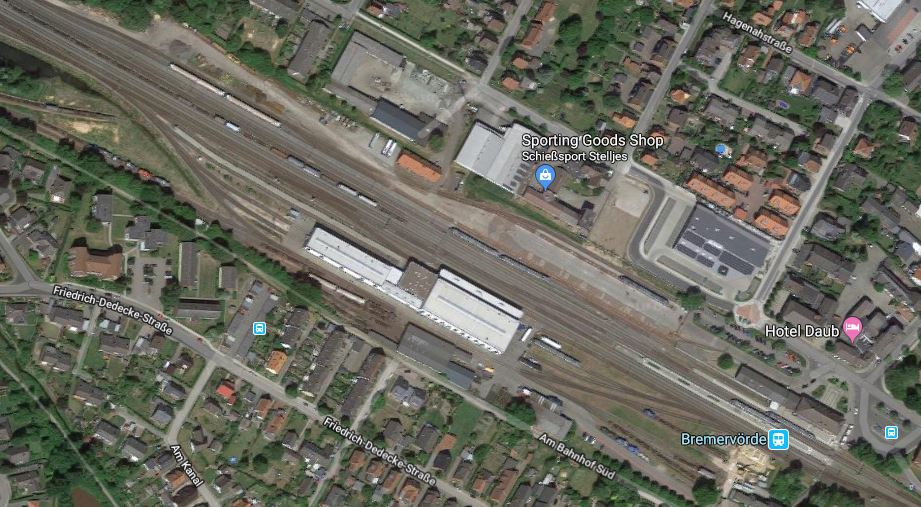
It would appear to be on a large site and there might even be a depot.
There’s certainly space to add a couple of large wind turbines to generate electricity, that could be used to create hydrogen through electrolysis.
Between Bremervörde And Bremerhafen HBf
As with the line to the East of Bremervörde, it is fairly straight across what appears to be fairly flat and through a mixture of open countryside and woodland.
This Google Map shows Bremerhafen Wulfdorf station.
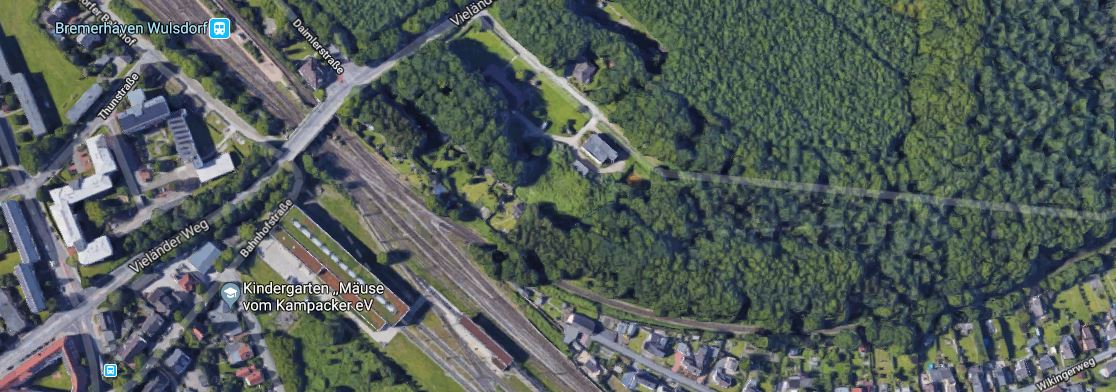
The line from Buxtehude can be seen joining from the East.
The line is electrified to Bremerhafen HBf station.
So will the Coradia iLint trains change to overhead power at Bremerhafen Wulfdorf?
From Bremerhafen HBf To Cuxhaven
This Google Map shows Bremerhaven HBf station.
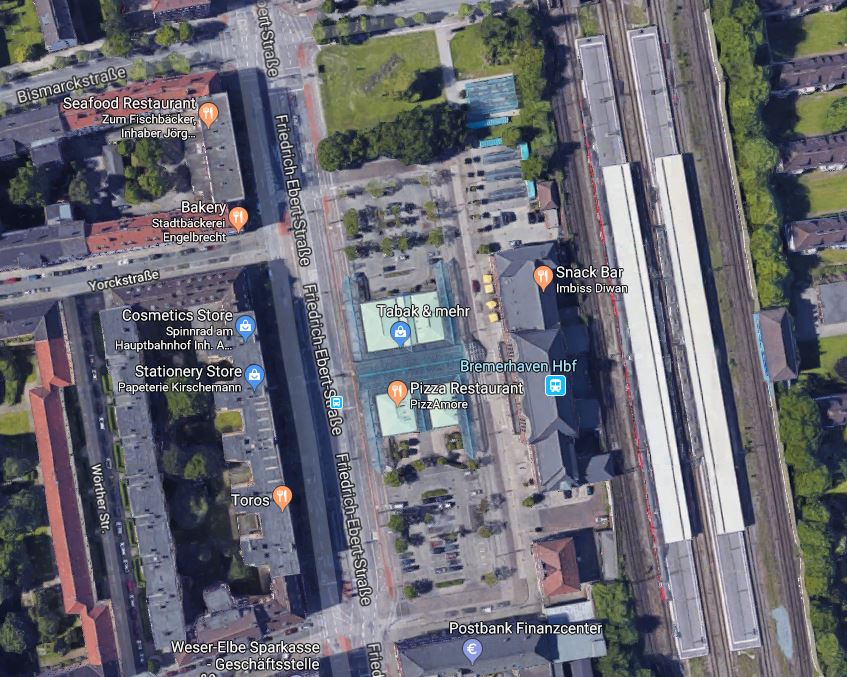
It looks to be a typical functional German station with four platforms, which are all electrified.
The electrification continues Northwards for a few kilometres, but once out of Bremerhaven, the line becomes single track without electrification.
I found this passing loop at the two-platform Dorum station, shown here on a Google Map.
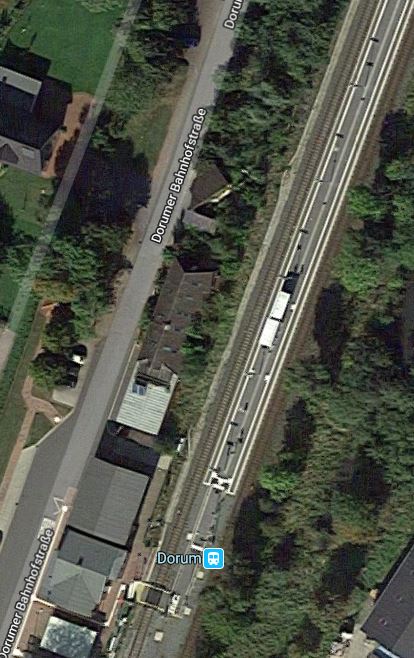
Note how the tracks go either side of an island platform.
I suspect there are other places for trains to pass or they could easily be created.
The route ends at Cuxhaven station, shown in this Google Map.
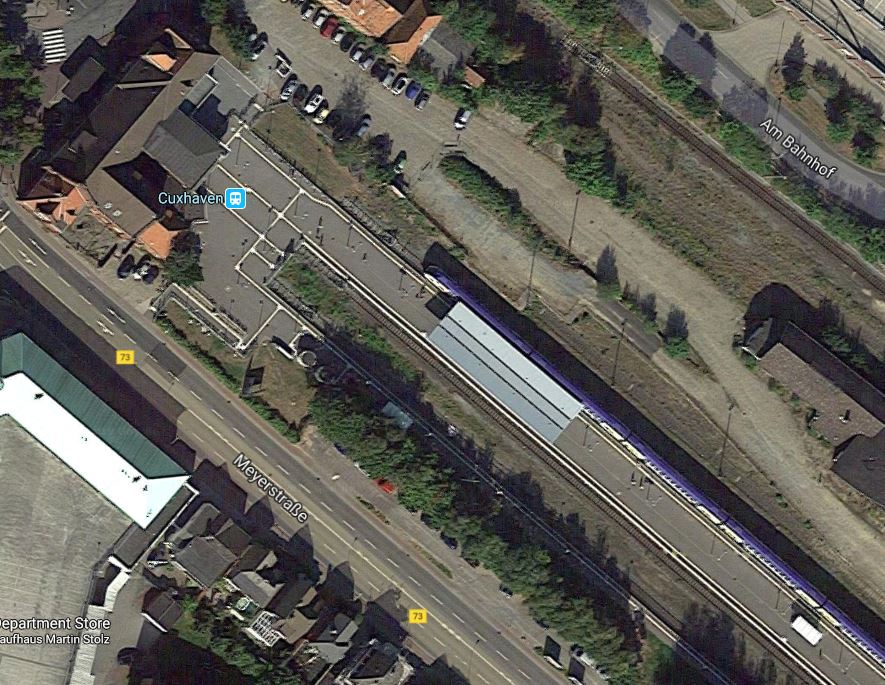
In addition to the service to Buxtehude, there is also a another service on a shorter and more direct route to Hamburg along the estuary of the River Elbe.
Summing up this section of the route.
- It is single-track with at least one passing loop.
- There are just four stations.
- It is electrified for a few miles at the Southern end.
I’ve also never seen a line with so many level crossings.
Services Between Cuxhaven And Buxtehude Via Bremerhaven HBf
The current service is hourly, with what looks to be these timings.
- Buxtehude to Bremerhaven HBf – 1:43 – Incldes 14 stops
- Bremerhaven HBf to Buxtehude – 1:37
- Bremerhaven HBf to Cuxhaven 0:51 – Includes 4 stops
- Cuxhaven to Bremerhaven HBf – 0:44
- Buxtehude to Cuxhaven – 2:34
- Cuxhaven to Buxtehude – 2:21
Turnrounds are the following times.
Buxtehute – 28 minutes
Cuxhaven – 12 minutes
This gives a round trip of five hours and thirty-five minutes.
So it would appear that at least five Coradia Lint 41 trains are needed to provide the service.
Coradia Lint Trains
From what I can find on the Internet, the Coradia Lint trains are diesel-mechanical units, where the wheels are driven directly from the two diesel engines.
I’m not sure, but the engines may be mounted under the cabs!
Coradia iLint Trains
I suspect that the hydrogen-powered iLint trains could be driven by simply replacing the diesel engine, with a suitable traction motor.
What surprises me, is that there appears to be no plans to fit a pantograph to the iLint, so that the intelligent brain on the train can use overhead electrification, when it exists.
This would mean that the range of the train on hydrogen would be increased, if the route was partially electrified.
Coradia iLint Trains Between Buxtehude to Cuxhaven
On the Buxtehude to Cuxhaven route, using electrification could be used to advantage to power the train and charge the batteries through Bremerhaven, where about ten kilometres is electrified using 15 KVAC overhead wires.
Also, in Buxtehude station, which has 15 KVAC electrification on other lines, the bay platform that it appears will be used for the hydrogen-powered trains could be electrified to charge the batteries, during the twenty-eight minutes, that the train is in the station. Perhaps, they could use a system such as I wrote about in Is This The Solution To A Charging Station For Battery Trains?
A similar system could be installed at Cuxhaven.
Surely, it is better to use the turnround times at each end of the route to charge the batteries, as this means less hydrogen will be consumed and the train’s range on a tankful will be increased!
There is an interesting comparison to be made here, with a route, I know well in the UK; Cambridge to Norwich.
- Both routes are around 100 km.
- Both routes are fairly flat and reasonably straight.
- The operating speed of the UK line is 140 kph and I suspect the German line is about the same.
- The UK line has six intermediate stops, whereas the German route has fourteen stops.
- Both lines are run by diesel trains with similar operating speeds.
But the UK route is timed at one hour and nineteen minutes, as opposed to the two hours thirty-four minutes of the German one.
The German route does have twelve more stops, but even if two minutes is allowed for each stop, that doesn’t explain the difference.
The German route must be run at a slower speed than the UK one.
As the Germans improve the speed, journey times will surely reduce.
Conclusion
I am led to the conclusion, that Buxtehude to Cuxhaven route is an ideal route on which to test hydrogen-powered trains, but that as the trains develop, journey times will reduce substantially.
 The Anonymous Widower