Cardiff Queen Street And Cardiff Bay Stations – 24th March 2026
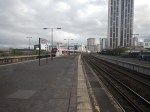
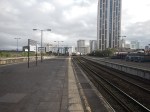
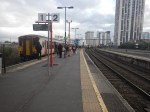
After I’d visited Caerphilly station, which I wrote about in Cardiff And Caerphilly – 24th March 2026, I went to look at Cardiff Queen Street And Cardiff Bay stations.
I took these pictures.

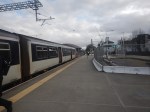

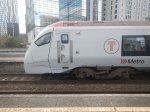
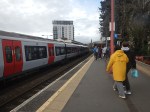
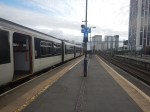
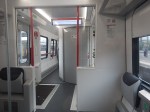
Note.
EasyJet’s New Slimline Seats Will Offer 2 Inches More Legroom
The title of this post, is the same as that of this article in The Times.
This is the sub-heading.
The Kestrel seat’s thinner design promises improved knee and shin clearance. Could the ‘fixed recline’ feature also lead to fewer spats over space?
These three paragraphs add more detail to the story.
As budget airlines try to squeeze more and more passengers onto flights, it can feel as though the seat in front gets slightly closer every time you step on a plane.
But a “next generation” economy seat is coming, which its makers say will give travellers extra legroom with no loss of space for airlines.
The Kestrel seat from Mirus Aircraft Seating, a British manufacturer, will be installed from 2028 on hundreds of easyJet’s new aircraft, providing an extra two inches of “improved knee and shin clearance” for passengers.
Hopefully easyJet’s passengers will be sitting more comfortably.
How Green Are The Valley Lines?
This news item from Transport for Wales is entitled 100% Electrification Of The Core Valley Lines Complete.
This is the sub-heading.
Transport for Wales has completed the full electrification of the Core Valley lines, at the heart of the South Wales Metro, delivering one of Wales’ most ambitious rail infrastructure transport projects.
These two paragraphs describe the current status.
Dubbed the ‘Welsh Tube’, the £1bn project brought electric tri-mode trains to the South Wales Valleys for the very first time in 2024. This spring, TfW will introduce the first of its 36 fully electric Class 398 tram-trains. The new fleet will initially operate between Pontypridd and Cardiff Bay, providing greener, more frequent services as part of the South Wales Metro.
Passengers are already benefitting from these improvements with the Core Valley lines being one of the most punctual and reliable networks in Great Britain over the past 6 months.
This OpenRailwayMap shows the electrification in the Cardiff area.
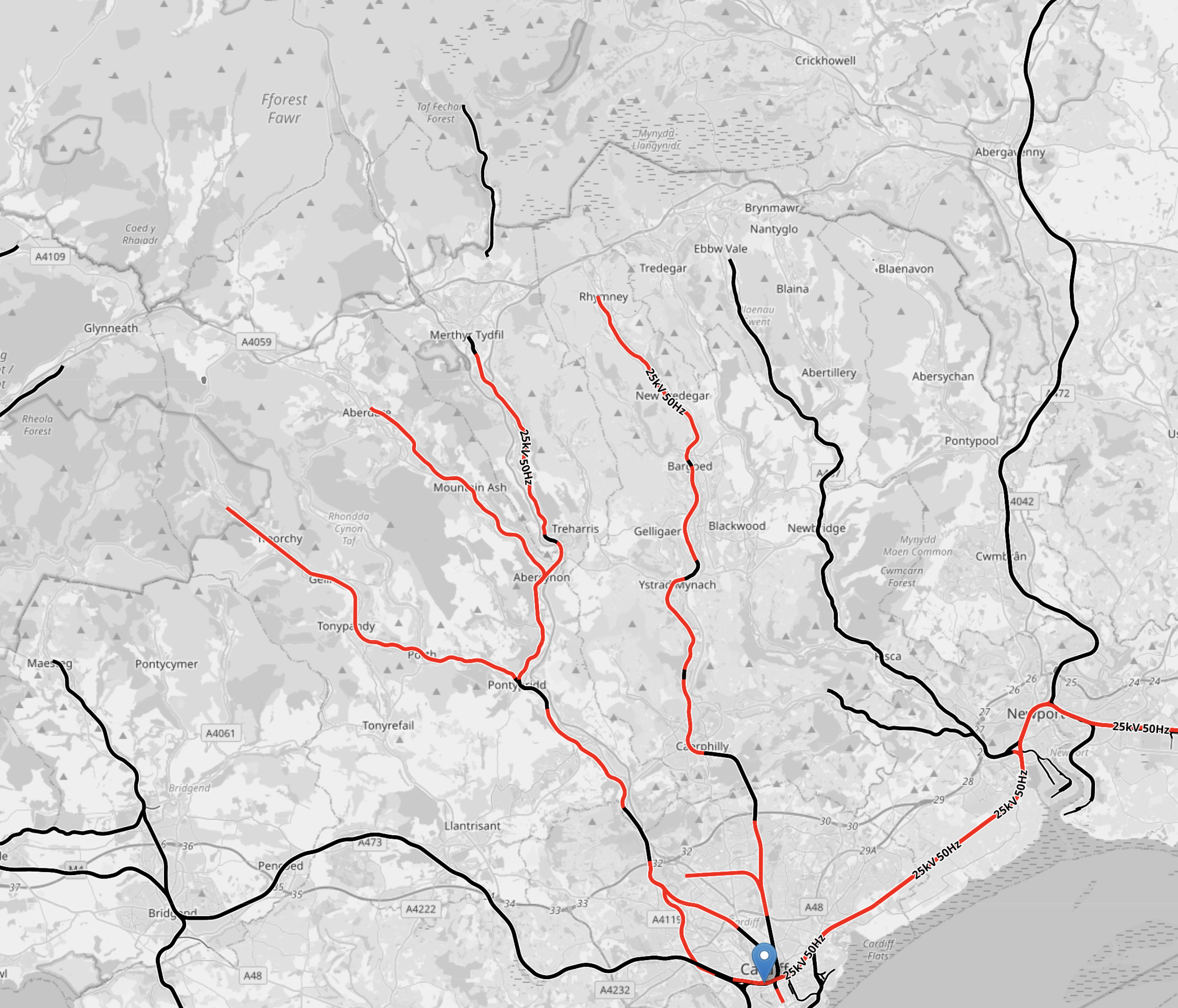
Note.
- Red tracks are electrified.
- Black tracks are not electrified.
- Cardiff station is indicated by the blue arrow.
- The black track going West from Cardiff is the South Wales Main Line to Llantrisant, Bridgend, Port Talbot and Swansea.
- The red track going East from Cardiff is the South Wales Main Line to Newport, the Severn Tunnel, Bristol Parkway, Reading and London.
- The lines going North up the valleys are from the West to Maesteg, Treorchy, Aberdare, Merthyr Tydfil, Rhymney and Ebbw Vale.
- The most Easterly line is the Newport and Hereford Line.
I will now look at some of the electrification.
Caerphilly Station
Caerphilly statition is on the Rhymney Line.
In June 2018, I wrote Caerphilly Station and took these pictures of the station.
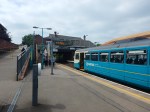
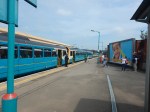
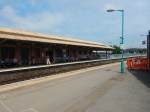
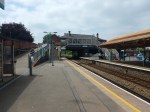
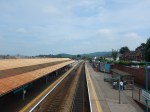
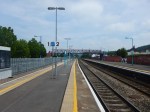
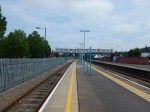
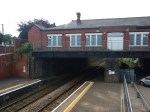
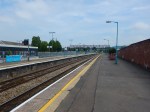
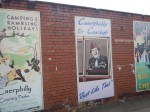
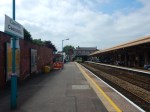
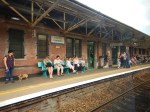
At the time, I considered it a difficult station to electrify.
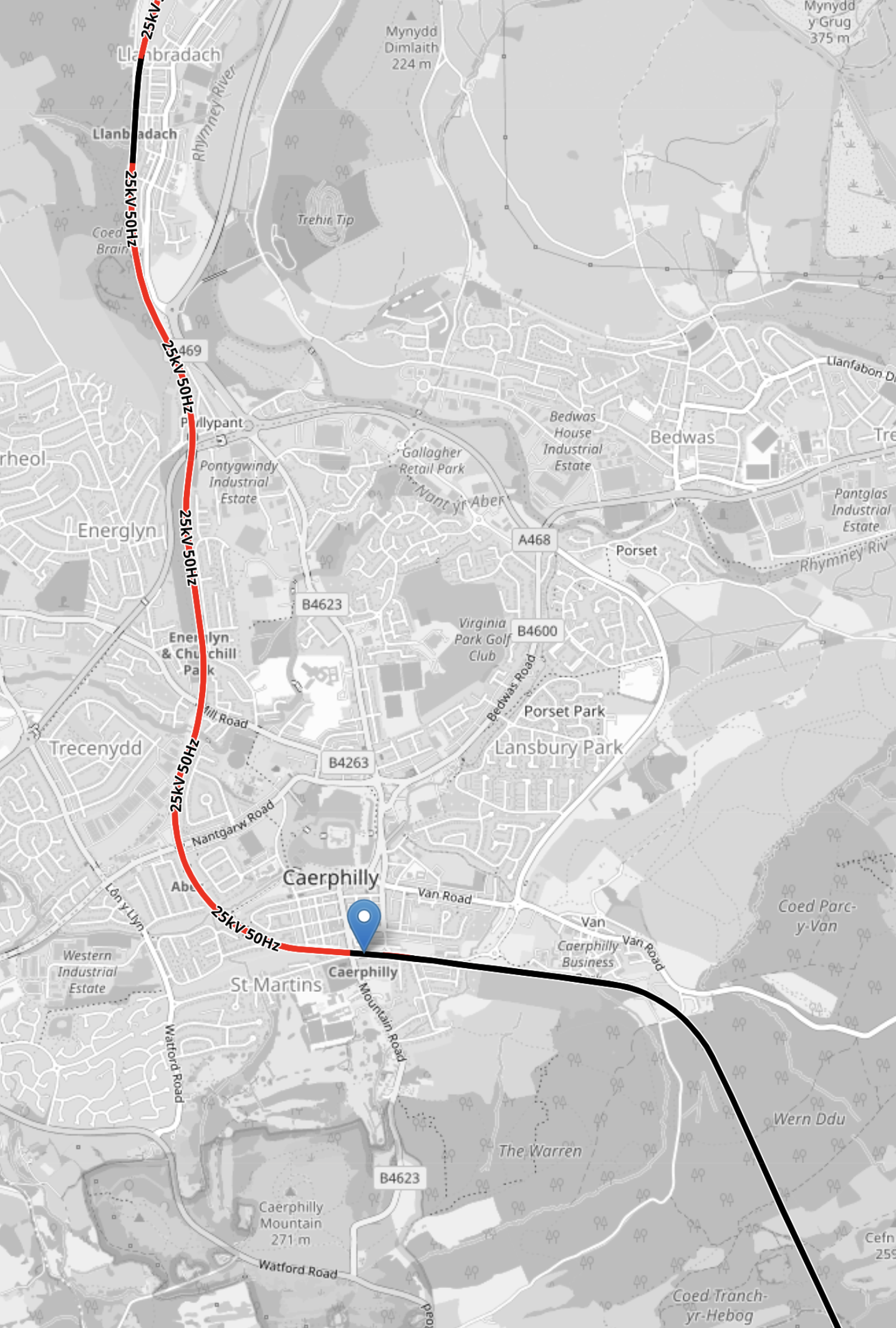
This OpenRailwayMap shows the completed electrification through Caerphilly station.
Note.
- Red tracks are electrified.
- Black tracks are not electrified.
- Caerphilly station is indicated by the blue arrow.
- Tracks to the North of Caerphilly are electrified.
- Tracks to the South of Caerphilly are not electrified.
- The electrification layout allows station with its two bridges and the 1784 metre Caerphilly Tunnel to the South of the station, to be unwired.
- There appears to be another section of plain track to the North of Caerphilly.
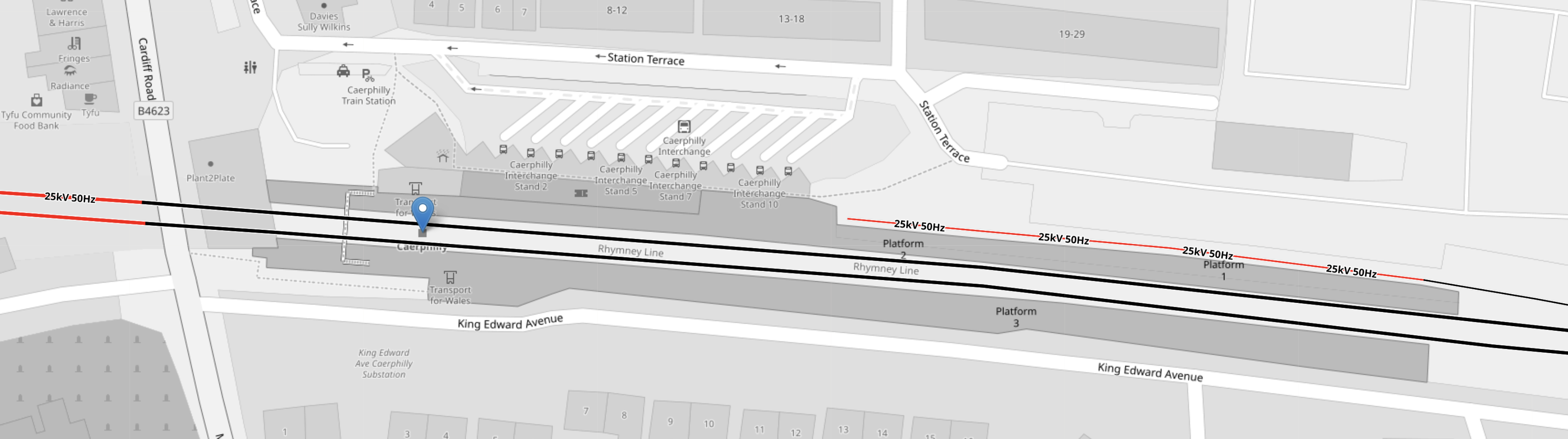
This second OpenRailwayMap shows the completed electrification through Caerphilly station.
Note.
- Red tracks are electrified.
- Black tracks are not electrified.
- Caerphilly station is indicated by the blue arrow.
- The electrification continues to the Western end of the station.
- The two main platforms 2 & 3 are not electrified.
- The bay platform 1 is electrified to charge trains for return to Cardiff.
- Class 756 tri-mode electric-diesel-battery trains are already in service.
- There appears to be a comprehensive bus interchange.
Is Sumitomo Heavy Industries Highview Power Energy Storage System On Line At Hiroshima?
From some work I did at ICI in the 1970s on a PACE231R analog computer, I believe that Highview Power may have an extremely promising way of storing energy.
The Highview Power web site talks of Sumitomo Heavy Industries, who are building one of Highview’s batteries at Hiroshima in Japan.
So I asked Google AI the question in the title of this post and received this comprehensive answer.
Yes, the Sumitomo Heavy Industries (SHI) Highview Power liquid air energy storage (LAES) commercial demonstration plant in Hatsukaichi, Hiroshima, is operational, having commenced operations on December 1, 2025.
Key details about the plant:Location: Within the Hiroshima Gas Hatsukaichi LNG Terminal.Capacity: 5 MW output with 4-hour storage (4 MW charging).Technology: Uses Highview Power’s CRYOBattery™ technology, specifically utilizing waste cold from the adjacent LNG terminal to improve efficiency.Role: The facility is designed to support grid stability and enhance renewable energy integration.A completion ceremony for the project was held on December 9, 2025. This news item from Sumitomo Heavy Industries gives more details.This paragraph describes Liquid Air Energy Storage or (LAES).
- It looks like the battery has a capacity of 5 MW/20 MWh.
- As it talks about using waste cold, this looks to be a very professionally-designed specialist application.
- But surely, that would be expected from a company like Sumitomo Heavy Industries.
There are hundreds of LNG terminals globally, with significant growth driven by over 300 projects (roughly 177 import/regasification and 124 export/liquefaction) expected between 2025 and 2030. In 2023, there were 22 countries with active liquefaction (export) capacity, while Europe alone operates roughly 28 large-scale terminals, supplemented by a rapidly expanding fleet of FSRUs.Export Capacity: In 2023, global liquefaction capacity was 472 million tonnes per annum (mtpa), with top exporters being Australia, the U.S., and Qatar.Expansion: By 2027, 52 new liquefaction terminals are expected to commence operations.Import Growth: European regasification capacity is expanding, with major terminals in Spain, France, Italy, and new additions in Germany and other nations.U.S. Infrastructure: The U.S. alone has more than 170 LNG facilities performing various services.
- They are listed in this Wikipedia entry.
- There are around thirty in Japan alone.
- Will Centrica add a 5 MW /20 MWh Highview Power battery to their Grain LNG Terminal?
- Each facility installed is claimed to be designed to support grid stability and enhance renewable energy integration, so the last part must cut carbon emissions.
Yes, several major chemical engineering and industrial processes generate significant amounts of “waste cold” (low-grade thermal energy or cryogenic energy) that is often discarded. While the chemical industry conventionally focuses on recovering waste heat, recovering waste cold is becoming increasingly popular for improving energy efficiency, particularly in cryogenic processes.
- Liquefied Natural Gas (LNG) Regasification
- Cryogenic Air Separation Units (ASUs)
- Dry Ice and CO2 Liquefaction
-
Liquid Nitrogen Vaporization
-
Emerging: Cryogenic Carbon Capture
- Creation of this page was not difficult, but you have to get the tricks right.
- I used Google Chrome and Google AI.
- My blog is hosted in WordPress.
- All pages on this blog, where I have had help in their creation from Google AI are tagged as such.
I would be happy to help anybody, who wanted to use Artificial Intelligence to create blog pages.
Will the Liverpool Street Rebuild Include Elizabeth Line Improvements?
I asked Google AI, the question in the title of this post and received this reply.
Yes, the proposed redevelopment of London Liverpool Street Station includes improvements to integration with the Elizabeth line, aiming for a fully accessible, multi-modal, and spacious hub. The plans focus on better connecting the main concourse with the Elizabeth line, Underground, and local transport, alongside doubling the concourse size, adding new, more efficient lifts, and increasing the number of ticket barriers.
Will The Liverpool Street Rebuild Have More Platforms?
I asked Google AI, the question in the title of this post and received this reply.
The approved £1bn+ redevelopment of London Liverpool Street Station, greenlit in February 2026, focuses on increasing capacity and accessibility rather than adding new platforms. The plans, to be completed by mid-2036, involve enlarging the concourse by 76%, increasing lifts/escalators, and providing step-free access to all existing platforms.
Platform Changes: While there is no mention of increasing the total number of train platforms, the project will significantly improve access and reduce congestion.
Capacity Enhancements: The project includes a 76% increase in concourse capacity.
Infrastructure Upgrades: Escalators will increase from four to ten, and eight new lifts will be installed.
Accessibility: The project aims to provide full step-free access across all rail and underground platforms.
New Construction: A large, multi-story office building is planned above the station, and the concourse area will be redesigned for better flow.
The project aims to handle over 200 million passengers annually by the time it is finished.
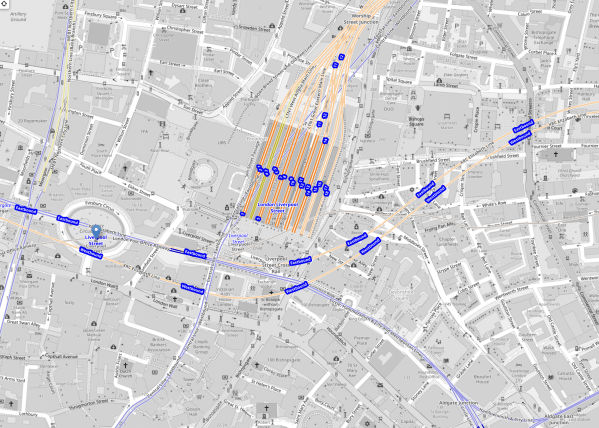
This OpenRailwayMap shows the layout of tracks in the station.
Note.
- The square block in the middle of the map are Platforms 1-18 of the main station.
- Eighteen is in the East and 1 is in the West.
- The Central Line of the London Underground runs diagonally in blue under the main station.
- Running in orange from the West to the North-East in front of the station is the Elizabeth Line.
- Running South of Lizzie in blue are the sub-surface lines of the London Underground.
I wonder, if at some point in the distant future, a terminal platform or two could be added to the very deep Elizabeth Line, that connected to tunnels underneath Liverpool Street station.
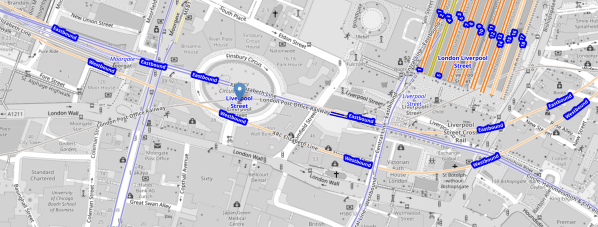
This second OpenRailwayMap shows the sub-surface lines and the Elizabeth Line, as they pass across in front of Liverpool Street station.
Note.
- Moorgate Station is in the North-West corner of the map
- Moorgate Statation has two virtually unused west facing bay platforms.
- The sub-surface lines are shown in blue.
- The Elizabeth Line is shown in orange.
- Finsbury Circus is in the middle of the map, with the sub-surface lines underneath.
- The Central Line is shown in blue and crosses between Finsbury Square and Liverpool Street station on its way to Bank.
- In front of Liverpool Street station, there is a disused bay platform on the sub-surface lines.
- The Bank branch of the Northern Line and the Great Northern run North from Moorgate station.
- Access to the Great Northern could be improved.
I feel there is scope for more trains to be run on the sub-surface lines through Moorgate and Liverpool Street.
- Accessibility to the sub-surface lines at Moorgate and Liverpool Street station could be improved.
- There has been talk of extending some services to Barking.
There is certainly scope to improve the sub-surface lines.
Northern Launches New Yorkshire Flyer Fast Service Between Leeds And Sheffield
The title of this post is the same as that of this news item from Northern Trains.
This is the sub-heading.
Northern is running a new fast service which allows customers to travel between Leeds and Sheffield in 47 minutes.
These three introductory paragraphs add more detail.
Known as the Yorkshire Flyer, as it provides a quick and convenient connection between the White Rose county’s two biggest cities, the service was officially launched during an event at Leeds station earlier today.
Cutting journey times and providing more than 30,000 extra seats a week, the service will support economic growth by making it easier for people to get to work and reach new opportunities.
It used to take all Northern customers around an hour or longer to make the journey, with trains calling at various stops along the way.
These further details come from Real Time Trains.
- The trains used appear to be two-car Class 158 trains.
- The total distance is 38.7 miles.
- Between Leeds station and South Kirkby junction is electrified and a distance of 20.6 miles.
- Trains appear to leave Leeds station at xx45.
- CrossCountry services Leeds station for Sheffield at xx15 and make a similar intermediate stop at Wakefield Westgate.
- Leeds trains for Sheffield seem to leave from Platform 12 or 12A.
- Trains appear to leave Sheffield station at xx52.
- CrossCountry services leave Sheffield station for Leeds at xx22 and make a similar intermediate stop at Wakefield Westgate.
- Sheffield trains for Leeds don’t seem to have such a regular platform, as those in the other direction. But I suppose that will be improved.
Effectively, Northern and CrossCountry have paired up two services to give a two trains per hour, fast service between Leeds and Sheffield with one stop at Wakefield Westgate.
I have some further thoughts.
The Route Could Be Run By Battery-Electric Trains
Consider.
- The only part of the route that is not electrified is the 18.1 miles between South Kirkby junction and Sheffield station.
- From talking to engineers, who are working on developing battery-electric trains, a three-car train with a battery range of fifty miles is already a possibility.
- In 2015, I actually rode on a four-car battery-electric Class 379 train, that ran reliably on the Harwich branch for three months.
- Merseyrail’s battery-electric Class 777 trains probably have the performance and are working reliably on Merseyside. But they are probably a bit slow.
I believe that any number of train manufacturers would be very pleased to provide new battery-electric trains for the route.
But Siemens must be in the prime position.
- The German company has built a £200 million train factory at Goole in East Yorkshire, which is currently building London’s Piccadilly Line trains, which have batteries.
- Siemens have already delivered trains in Germany using the technology, they would use in the UK.
- The battery charging technology they would use for other routes in the UK, is described in Technology Behind Siemens Mobility’s British Battery Trains Hits The Tracks.
- Sheffield and Leeds, would make a superb test and demonstration route for battery-electric trains, as 50% of the route is fully-electrified with 25 KVAC.
- The Sheffield and Leeds route is just down the track from the Goole factory.
- I wouldn’t be very surprised, if Siemens were very keen to get a few orders close to their factory, as they would surely be easy to support.
But the clincher must be Juergen Maier, who used to be CEO of Siemens UK, and is now Chair of Great British Energy. Maier holds both British and Austrian citizenship, and was educated in Leeds and Nottingham, so hopefully, he can give this clanger-prone government some excellent advice where they need it, from his position in Great British Energy.
Could A Stop Be Made At Meadowbank Station?
This would give access to other rail routes and the Sheffield Supertram, but most of this access could also be performed at Sheffield.
Looking at the timetable of the route, I feel that there is enough slack to fit in a stop at Meadowhall, but it would need for the route to be electrified, so that the trains had faster acceleration and deceleration.
However, battery-electric trains may have the required performance.
What Maximum Speed Would The Trains Need?
Consider.
- The current Class 158 diesel trains used between Sheffield and Leeds and in many places in the UK are 90 mph trains.
- There are also a large number of Class 170 trains in the UK, that will need to be replaced and these are 100 mph trains.
- The Sheffield and Leeds route has some sections of 85 mph running.
- Train speeds are all accurately computer-controlled.
As a Control Engineer for safety and route availability reasons, I believe the trains will have a 100 mph maximum speed, but train speed will be computer controlled.
Will The Trains Be Driver-Only Operated?
I asked Google AI if Hitachi IET trains are driver only operated (DOO) and received this reply.
Hitachi Intercity Express Trains (IETs, Class 800/802) are designed for versatile operation, capable of Driver-Only Operation (DOO) using in-cab CCTV monitors for door safety checks. While they can operate without a guard, many services, particularly on GWR, still retain a guard on board for passenger service duties, even if the driver controls the doors.
So Hitachi trains can be driver-only operated and these will surely share the tracks with the trains that work the Northern Flyer.
I asked Google AI if Thameslink trains are driver only operated (DOO) and received this reply.
Yes, all Thameslink train services are Driver Only Operated (DOO). This means the driver is solely responsible for operating the doors and ensuring the safe dispatch of the train, without a guard or conductor on board to manage the doors. Through the central London core, these trains often use Automatic Train Operation (ATO).
As I believe that Siemens would be likely to win the battery-electric train order, because of proven technology, factory location and influence of Juergen Maier, Siemens certainly have the ability to produce trains, that are driver-only operated.
I believe that, whoever builds the trains, they will be capable of driver-only operation.
But if driver-only operation is to be used will be down to politics.
- Because of the situation on East West Rail, Heidi Alexander will probably be in favour.
- The Tories and Liberal Democrats will also be in favour.
- The rail unions, the left wing of the Labour Party and the Greens will be strongly against.
- Farage and Reform UK will take a very hard line to enforce driver-only operation everywhere.
The average citizen on the Northern Flyer and all the other trains in the UK, will just want a reliable train service.
Conclusion
- This would make a superb route for a battery electric train.
- No chargers or extra electrification would need to be installed.
- There wouldn’t be much work needed to be done to the platforms or the signalling.
- The trains would use standard 25 KVAC overhead electrification for charging.
- The trains would be running close to where they were built.
I believe the new service will give a large boost to the Yorkshire economy. Even before the arrival of battery-electric trains.
Delays To Opening Makes Station A ‘Laughing Stock’
The title of this post, is the same as that of this article on the BBC.
This is the sub-heading.
Residents of Winslow are frustrated a new railway station completed over a year ago has still not opened.
These three introductory paragraphs add detail to the article.
A local councillor said it had been due to open in the Buckinghamshire town in December 2025 but there had been a “comedy of errors”, including a row over who will control the opening and closing of carriage doors.
Diana Blamires, who sits on the town council, said the local community was “obviously furious” and “it makes Winslow station a laughing stock”.
In a statement, Chiltern Railways – responsible for operating services between Oxford and Milton Keynes – said no date for the opening had yet been confirmed.
My feeling is that this project has been badly affected by two many adverse factors.
- A lack of overall leadership at the top of the project.
- Too many changes of Government in the UK.
- Are all these governments committed to the project?
- The uncertainty about the Aylesbury Spur, which I wrote about in East-West Rail: Aylesbury Spur.
- The inability to reach a sensible compromise on route through Bedford, with the large number of Nimbys in the area.
- I used to live near Newmarket and their ideas for the town will arise the anger of the horse-racing industry.
- The theme-park I wrote about in ‘Rollercoasters In My Back Yard’: Welcome To Universal Studios Bedford, hasn’t exactly helped.
- Stories like East West Rail: Could A New Rail Link ‘Tear Apart’ A Village?, don’t help.
The planning for East West Rail hasn’t been good
But another story on the BBC, which is entitled How The Elizabeth Line Has Changed Reading, has to my mind shown up the poor quality of the planning for the East West Rail.
This Is the sub-heading.
Since the Elizabeth Line opened in May 2022 it has become the UK’s busiest rail service with an estimated 750 million passenger journeys.
And this is the first paragraph.
The line provides a direct service from Reading into central London, but after years of planning and delays is the Berkshire town finally feeling the benefits of an additional connection to the capital?
Are Bicester, Bletchley, Milton Keynes, Bedford and other places going to feel a similar effect to Reading, because the railway track layouts say that if Reading gets a boost from the Elizabeth Line, then they will get one from East West Rail!
The Reading/Oxford area is where the East West and Elizabeth Lines make contact and I predict, that if in the future, you want a machine to test the strength of jelly, this will be the place, where you will go to get one invented.
I Have Just Been WordPressed
My method of using WordPress is to use the Classic editor because, that was how I started and many of the original posts were created with it.
I also do some actions with galleries, which now the program seems to have banned.
Rule one of writing software is never to go back on your original design and change things that they habitually do.
Some big software manufacturers do it all the time and I’m sure it does them harm.
As an example, who remembers the company; Wordstar, but loads of people remember and use Control-C, Control-V, Control-X, Control-Z etc.
The solution is to get the design right first time.
WordPress are driving me nuts, by my not being able to edit my post ; The Ultimate Recycled Electric Local Train.
I particularly want to get the gallery in the post into order. If I try to move the last picture into position zero, I can do it and it even stays there when I update the gallery. But if I go back to do another move, the picture is back to the old place.
That looks like a Grade A Bug to me! Fix It!
The Ultimate Recycled Electric Local Train
This morning, I took a ride across London to ride in the first Class 230 train in public service in London.
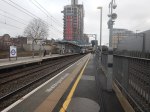
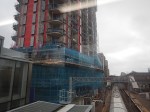
I took these pictures of the new block of flats going up at West Ealing station, the charging system for the train and the train.
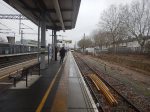
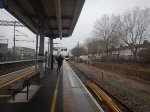
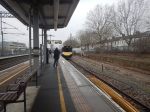
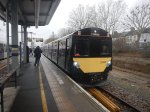
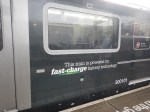
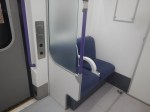
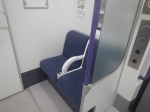
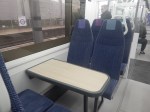
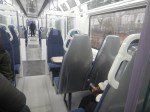
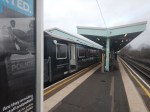
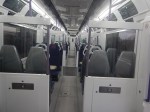
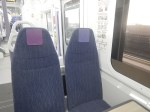
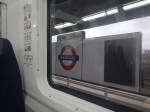
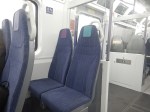

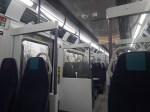
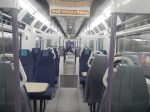
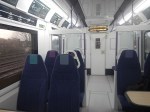

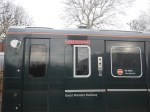
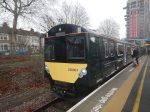
Note.
- The train is three-cars with a toilet to suit everybody, except possibly Donald Trump, who’d want it in gold.
- The single train is shuttling between West Ealing and Greenford stations.
- Each journey 2.5 mile journey takes eleven minutes.
I was surprised at the number of tables and the quality of the seats.
These are some extra thoughts.
The Blocks Of Flats
Google AI gave me this.
Several new developments around West Ealing station feature tall blocks, with major proposals ranging from 4 to 26 storeys. Key projects include a 26-storey tower, proposed 19–22 storey towers on Manor Road/Waitrose site, and 7–21 storey student accommodation blocks. These, along with other 9-storey developments, are transforming the area into a high-density “transport hub” cluster.
I think the 26-storey West 55 Tower is shown in the first two pictures.
Google AI also says some of the natives are not happy about all the towers.
But I like the “high density” transport hub.
Integrating The Railway And The Housing
Note.
- This would appear to be a good example of integrating the railway and the housing.
- The second picture appears to show a walkway between the station and Tower 55.
- I met a property developer on a train once and he told me, that housing on top of stations without car parking, had better numbers all round, with more flats, less cost and good profit.
- I wonder, if Tower 55, is one of his? He was certainly enthusiastic about the concept.
- Would a Fast-Charge system be easier and very much safer to squeeze in than traditional overhead wiring?
If the flats all don’t have garages, there must be space for other uses.
The Charger At Work
Note.
- The third to the sixth pictures, show the train coming into the station and charging ready for a trip to Greenford.
- The train acts as a heavy safety guard during the process.
- Anything electrical or dangerous is underneath the train.
I would expect that a health and safety expert, would rate the train no more dangerous than a normal train.
There Seems To Have Been A Lot Of Innovative Recycling On The Train
This certainly seems to apply to the seats, which in some cases are the originals remodeled.
A Stylish And Well-Built Train
This phrase would sum up my overall view of the train.
I have a Korean son-in-law and I know a bit, how Koreans think about design.
I would think, that he would like this as it is a stylish and practical train, so it wouldn’t embarrass you or your Korean boss, if you told him to use this train in the UK, to get to your offices.
Using my Korean example, I suspect, that this train could be one that endears itself to its passengers, with its quirky and practical feel, just like the original Mini did.
Adrian Shooter Would Be Pleased
Most Certainly!
I wish all the team well, as I believe this technology and a few trains like 230001 will make their mark on the world.
A Practical Hundred Mile Battery-Electric Route
The Sheffield and Scunthorpe Line is a Parliamentary Service.
- It is 71.6 miles over 1 hour and 48 minutes, through seven stations of the Lincolnshire countryside, at an average speed of 40 mph.
- Currently, it runs once per day, which is not very ideal for a job, education, training, shopping or visiting grandchildren.
- A two-car version of 230001 could be ideal to perhaps do four round or five trips a day and level-up some of the poorer parts of the UK, that don’t even have a decent bus service.
- A similar two-car train could also serve the 45-mile round-trip Cleethorpes and Barton-on-Humber service.
I am sure that this train could start the right sort of rural or urban revolution.
 The Anonymous Widower