Comet Ridge Lands Gladstone Gas Deal
It is obviously Highview Power’s day, as this project in Queensland, Australia gets five mentions in my Google Alert for Highview Power.
The title of this post, is the same as that of this article on Industry Queensland.
This is the sub-heading.
Mahalo gas hub developer Comet Ridge has reached a deal with Highview Power to supply the large-scale electricity project it is planning to build at the Aldoga State Development area near Gladstone.
These four paragraphs give a summary of the project.
The volume of gas targeted is 3.6 PJ/a (10 TJ/d) for a minimum of five years.
Highview’s Central Queensland Energy Storage Project is to be constructed in two phases.
Phase 1 consists of a 400MW four-hour battery energy storage system, two 200MW open-cycle gas turbines, a 370MVA synchronous condenser, and associated substations and transmission lines.
Phase 2 will be the build-out of a 200MW 12-hour liquid air energy storage system.
It looks like Highview Power’s battery is one of their larger systems and is a 200 MW/2.4 GWh version.
On Highview Power’s Projects page, this is said under a header of Australia.
Highview is developing a series of base‑load renewable energy power stations in Australia, with planning now underway for three major programmes. In Gladstone, Central Queensland, and Townsville, North Queensland, we are progressing large scale projects combining LDES and short-term battery storage. On the Darwin–Katherine network in the Northern Territory, plans are advancing for an integrated scheme incorporating solar generation, LDES and battery. Together, these initial developments will help Australia meet its target of halving carbon emissions by 2030 and achieving net zero by 2050.
Gladstone is named in this story and on Highview Power’s web site.
Could Highview Power be making a breakthrough in process engineering after Sumitomo’s success at the LNG Terminal at Hiroshima.
Loganair Agrees To Buy Five Beta Technologies’ Alia CTOL (CX300) Electric Aircraft For Use Across Scotland
The title of this post, is the same as that of this article on the John O’Groat Journal.
These two paragraphs add some detail.
A “truly historic moment” in regional air travel could soon see electric aircraft transporting passengers between between Highlands and Islands airports.
Loganair announced a deal to buy five all-electric aircraft, with options for five more, on Monday.
The first aircraft is expected to be in service in 2029.
As an engineer and a former private pilot, I felt this would happen at some time, but not as early as this.
Read the Wikipedia entry for the plane to find out more about this fascinating aircraft.
The Ghostly Drone That Spins Almost Too Fast To See
The title of this post, is the same as this article on The Times.
This is the sub-heading.
The ‘Phantom Twist’ prototype rotates about 25 times a second while its body moves in the opposite direction — appearing as a faint haze
These two initial paragraphs add some more details.
Engineers have created a drone that almost vanishes in flight by spinning so quickly the human eye sees only a faint, translucent haze.
The body of the drone, called the Phantom Twist, rotates about 25 times a second, while its propeller spins in the opposite direction. Its inventors describe it as “morphing into a ghostly smudge that seamlessly blends into the background”.
This technology obviously works and was developed at North Western University in the United States.
This paragraph speculates on a few civilian uses.
It is, they say, intended for civilian uses. The researchers believe less conspicuous aircraft could be useful for monitoring nesting birds, surveying wilderness areas or inspecting bridges and other infrastructure without causing wildlife to scatter or prompting people to alter their behaviour.
The article then details how drones have transformed the war in Ukraine.
An Avenue Of Trees, Cheered Me Up Today
I was feeling a bit down, after the loss of my phone on a train yesterday, as I cam back from Cambridge South station.
After reporting its loss at Liverpool Street station this morning, I thought I might be able to get something I needed at Sainsbury’s in Walthamstow.
To get from Walthamstow Central station to Sainsbury’s I walked along this avenue of trees.


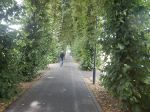





Note.
- It was lovely and cool on a hot day.
- There was a gentle breeze through the trees.
- Halfway along, I chatted to a guy with Indian heritage. He said he liked the trees at Chistmas, when the Council put lights on them.Now surely, that is multiculturalism.
I asked Google AI about the trees and got this reply.
The avenue of mature trees leading from Walthamstow Central Station towards the High Street consists of lime trees. Also locally referred to as Lime Tree Walk, these established trees are well known for soaking up pollution from the adjoining bus and transit areas.
Google AI estimates that the trees are at least a hundred years old.
I believe we should do things like this more often, as it is surely a scientifically-correct way to deal with the pollution of only a few vehicles emitting it.
Out of curiosity, I asked Google AI,”Are we doing research to increase the effectiveness of trees clearing pollution?” and received this reply.
Yes, there is extensive, ongoing scientific research dedicated to increasing the effectiveness of trees at clearing pollution. Studies focus on optimizing urban canopy cover, vegetative barrier design, and microbiome/soil enhancements to maximize both particulate matter (PM) capture and carbon sequestration.
Current research initiatives and findings include:
Vegetative Barriers & Species Traits: Research from the University of Surrey’s Global Centre for Clean Air Research (GCARE) has developed a plant selection framework. By evaluating traits like leaf hairs, canopy density, and seasonal leaf retention, they identify highly effective species (such as silver birch, elder, and yew) to act as physical green barriers that trap particulate matter and filter exhaust.
Tree Spacing & Dispersion: Studies on urban street canyons show that sparse or dense tree spacing can sometimes trap pollutants if the canopy blocks wind flow. However, “medium spacing” (where the gap between trees is roughly equal to the crown diameter) has been proven to optimize both airflow and particle reduction for pedestrians and cyclists.
Soil & Growth Interventions: Studies like the Glandwr Forest Carbon Study by Imperial College London and The Carbon Community are testing methods to boost young tree growth and carbon sequestration using enhanced rock weathering and microbial enrichment.
Cooling & Air Purification Pathways: Recent findings published in Landscape and Urban Planning highlight that trees reduce particulate pollution (PM10) not just by trapping it on leaves, but also through localized cooling. By mitigating extreme heat, trees promote the natural deposition of suspended particles.
It seems that the good citizens of Walthamstow and the nearby forest, probably achieved a result, that was very much in line with modern research.
Does BYD Stand For Bet On Your Destination?
Today I came back from Walthamstow Sainsbury’s to my home in Hackney, using two BYD electric buses on route W15, a diesel bus on route 488 and a Reliable Routemaster on Route 38.
Both the BYD electric buses stopped short of their final destination.
I also changed early to the 38, so I could have a Diet-Coke in a cafe that looked friendly.
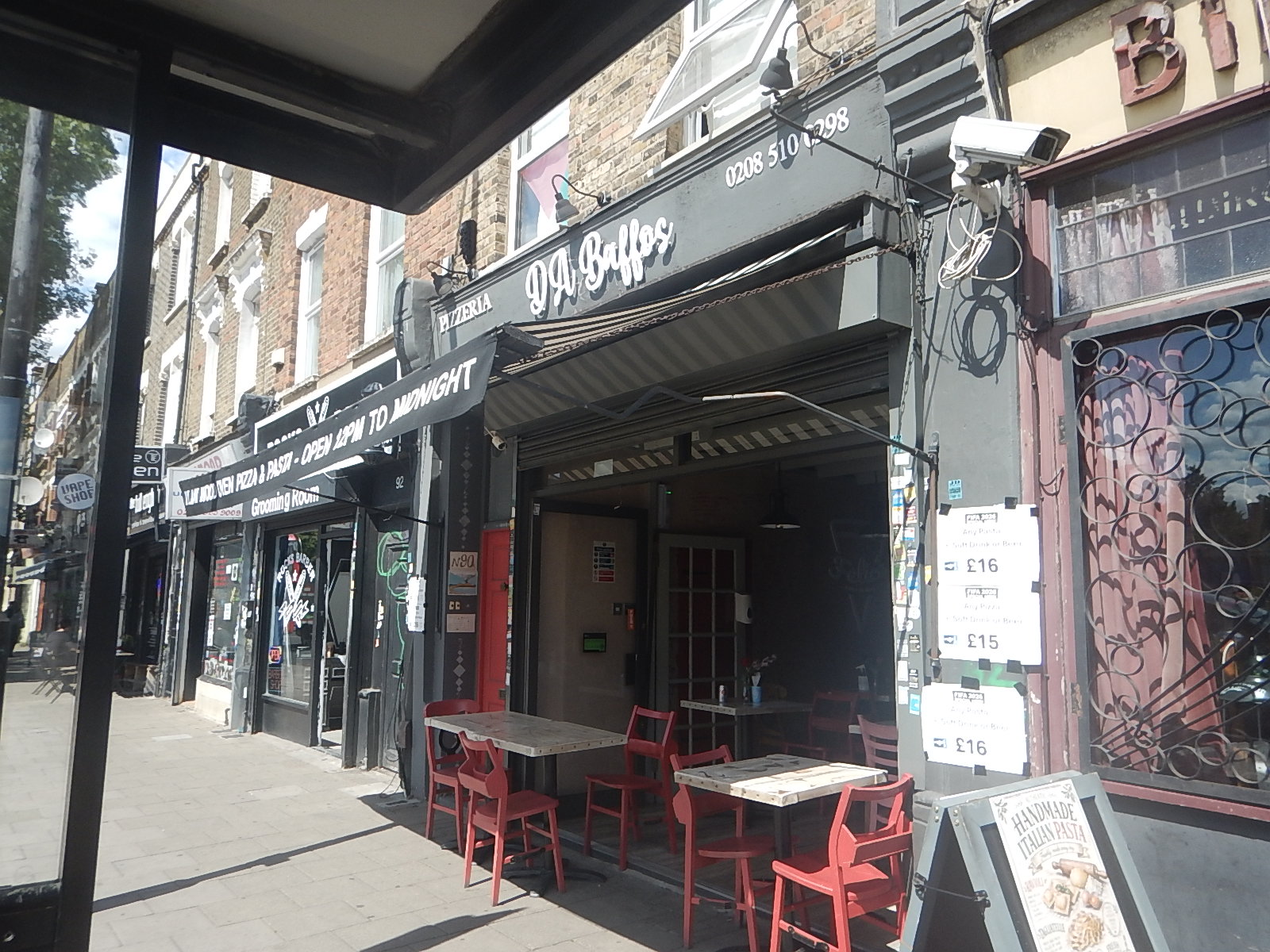
It was!
- As you can see, it was right by a bus stop, where luckily for me, 38 buses called.
- I have written a few posts about the horrid BYD electric buses on route 141, but London shouldn’t be made to suffer an inferior product.
- If Manchester and Leeds can have UK-built buses by Wrightbus, that are delivered as diesel and converted at an appropriate time to zero-carbon, why can’t London and the rest of the country?
London’s fleet of a thousand Routemasters, which were built by Wrightbus, a few years ago, seem to have found a new niche in the world of advertising and I wouldn’t be surprised to see an experimental fleet of zero-carbon Routemasters.
Here’s a few images of Routemaster paint schemes.








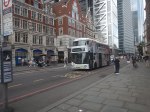
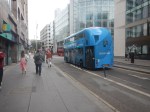
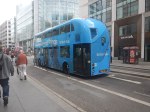
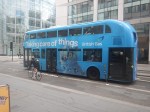




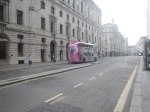
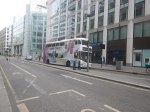


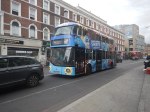
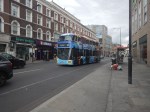
I like them. I wonder, if a bus has gone missing to have a special makeover, if England get to the latter stages of the World Cup?
Olympia Exhibition Centre – 18th June 2026
I went back to Olympia today and took these pictures.







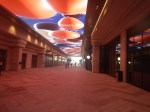




I don’t think, I’ll be going again, as they don’t seem to have any gluten-free food.
Clapham Junction Station – Platform 0 – 18th June 2026
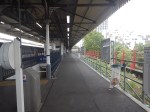
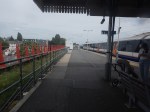
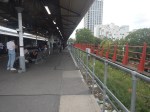
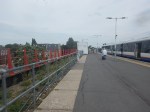
As I passed through Clapham Junction station, I took these pictures of Platform 0.
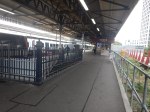
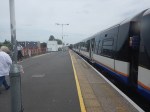
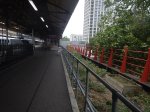

Note.
- Platform 0 has the red brackets along the back.
- Platform 1 has the Class 378 train for Stratford parked in it.
- There is a useful Costa Coffee, with a waiting room behind it on the platform.
Little seems to have changed since I wrote Barriers And Planters On The London Overground Platforms At Clapham Junction Station, except that the barriers and planters have been removed.
A Simple Way The Overground Could Operate
Surely, if Stratford trains used Platform 1 as they do now and Dalston Junction trains used the new Platform 0 would enable a much faster interchange between the two halves of the South London Line.
This OpenRailwayMap shows some platforms at Clapham Junction station.
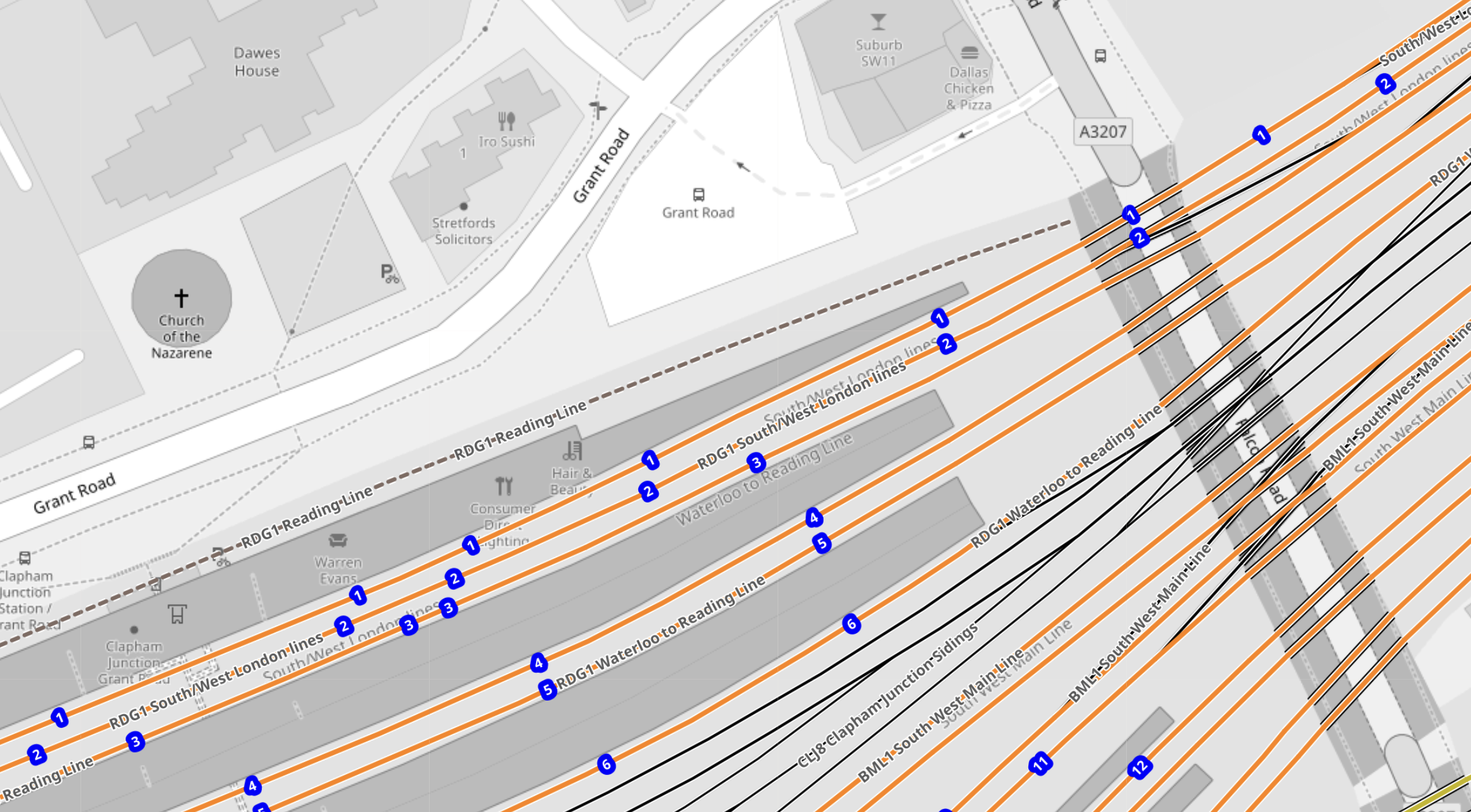
Note.
- The orange tracks are generally tracks in platforms.
- The blue dots are platform numbers.
- The top orange line in Platform 1.
- The dotted line will be Platform 0.
I suspect that with a few extra junctions, the two halves of the South London Line could access the opposide sides of the island platform 0 and 1.
It would certainly speed up passengers on their way between East London and the Olympia Exhibition Centre.
Encomara’s Floating Wind Installation Technology Gets ABS Design Approval
The title of this post, is the same as that of this article on offshoreWIND.biz.
This is the sub-heading.
Encomara’s floating wind installation technology, Squid, has received Product Design Assessment (PDA) certification from the American Bureau of Shipping (ABS)
These three paragraphs add more details.
The PDA follows an Approval in Principle (AiP) granted by ABS in November 2025 and moves the system a step closer to commercial deployment, according to Encomara, as it advances the technology along its qualification pathway towards Technology Readiness Level assessment and market adoption.
The technology is developed by Encomara and manufactured by Aurora Energy Services (AES), which acquired the Aberdeen-based company in 2025.
Squid integrates pre-installed mooring lines and electrical connections into a single subsea unit, enabling floating wind turbines to be connected using a “plug-and-play” approach.
In some ways the project reminds me of a floating oil and gas production platform, on which I did the calculations.
But the Balaena Structures design never sold a platform and the company, which was based in Cambridge, folded.
Encomara have a web site, which is well worth a visit.
Does Floating Wind Power Have A Higher Capacity Factor Than Fixed Foundation Wind Power?
I asked Google AI the question in the above sub-title and received this answer.
Yes. Floating wind power typically achieves higher capacity factors than fixed-foundation wind power.
The main reasons for this performance edge include:
Stronger, More Consistent Winds: Floating platforms allow turbines to be placed much further offshore, where wind speeds are higher, steadier, and less turbulent.
Access to Deeper Waters: Over 80% of deep-water offshore wind resources exist in waters too deep for fixed-bottom structures.
Performance Comparisons: Fixed offshore wind turbines typically see capacity factors ranging between 45% and 60% (depending on the location), whereas floating installations can push past 60%. For instance, the Hywind floating wind farm in Scotland achieved a capacity factor exceeding 65% in its first months of operation.
Despite this higher generation yield, floating wind technology is generally more complex and features higher installation and capital costs than fixed-bottom turbines.
I also believe that some of the floating wind technology, lends itself to advanced production and installation methods.
Toyota Hydrogen Cars At Le Mans
I gave the title of this post to Google AI and this is what I received.
Toyota is aggressively pushing hydrogen technology at the 24 Hours of Le Mans, moving beyond concepts to on-track public demonstrations of the TR LH2 Racing Prototype. Powered by a liquid-hydrogen combustion engine, the vehicle aims to showcase the viability of hydrogen as a near-zero emission fuel in endurance racing.
The TR LH2 Racing Prototype
The Vehicle: Built on the same chassis as Toyota’s TR010 HYBRID. It acts as a dedicated technology development platform to test hydrogen performance under extreme endurance conditions.
On-Track Debut: The prototype officially took to the track for demonstration laps at the 13.626km Circuit de la Sarthe during the 94th Le Mans 24 Hours.
The Drivers: The vehicle was driven in special dynamic sessions by former Le Mans winner Kazuki Nakajima.
The Competition: Toyota’s demos also featured other pioneering hydrogen machines, including the Alpine Alpenglow and the Ligier Bosch JS2 RH2.
Long-Term Vision & Infrastructure
Timeline: The ACO (Automobile Club de l’Ouest) is targeting the introduction of an official hydrogen class at Le Mans, with race entries potentially slated for upcoming endurance racing seasons.
Hydrogen Village: During the race week, Toyota highlighted the full hydrogen ecosystem.
Fans could explore the Hydrogen Village, which featured a functional TotalEnergies 700-bar liquid hydrogen refueling station.
Fuel Cell Support: Toyota’s commitment expanded to race operations, with official team staff and drivers utilizing hydrogen fuel cell buses and Toyota Hilux Fuel Cell prototypes during the event week.
Toyota seem serious about hydrogen.
Kensington (Olympia) Station – 16th June 2026
The refurbished Olympia Exhibition Centre is now open, so I went to have a look and took these pictures.
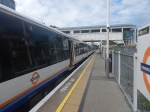
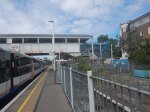
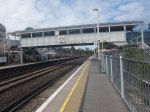
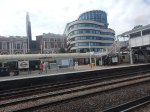
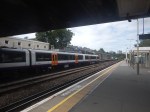
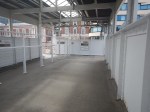
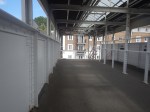



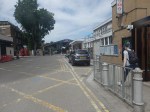

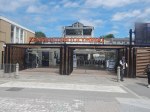
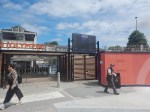

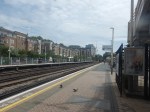
As it was a hot day and the Overground was playing up, I only got as far as the station.
- The Victorian building and the new Hyatt Regency hotel looked good from the outside.
- There were also toilets inside the updated station.
- As the owners appear to have spent £1.3 billion and six years on the refurbishment, you’d have thought, they would have put in a bridge with lifts at the station of the venue.
- There is a step-free route, that avoids the bridge, but it is a 600 metre walk.
- An affordable cafe would be nice too!
But then all the celebs, influencers and Z-listers wouldn’t turn up in a train!

