Gore Street Energy’s £60mln Fundraise Significantly Oversubscribed
The title of this post, is the same as that of this article on Proactive Investors.
Surprise! Surprise!
Well not to me! Or I suspect Which!
This article on Which is entitled Solar Panel Battery Popularity Is Booming: Should You Buy One?
I have read the article and it leaves, the overall impression, that the UK population are thinking seriously about adding batteries to their solar panels.
So if the UK population is thinking seriously about personal energy storage, it would be very surprising if professional fund managers weren’t thinking the same.
After all, I did write World’s Largest Wind Farm Attracts Huge Backing From Insurance Giant, over two years ago.
So if we’re operating and commissioning offshore wind farms like these.
- Dogger Bank – 4.8 MW
- Gwynt y Mor – 576 MW
- East Anglia Array – 7.2 GW
- Hornsea – 6 GW
- London Array – 630 MW
- Walney – 1.7 GW
- Whitelee – 539 MW
We’re going to need some humungous batteries to tide us through calm periods.
As I write this post on a Monday afternoon, the UK is generating 11.5 GW of electricity by wind, which is more than we’re generating by biomass, coal and nuclear combined.
This is a quote from Alex O’Cinneide, who is Gore Street Capital’s chief executive, in the Proactive Investors article.
We are looking forward to deploying this capital against our significant global pipeline of 1.3GW and towards the capital expenditure requirements in the company’s existing 440MW portfolio.
Gore Street certainly seem to be expanding, their portfolio of batteries.
Conclusion
The City of London has discovered renewable energy and found a way to fund it, to the benefit of all investors, from the guy with a pension managed by a reputable company to global insurance companies, funds and other companies, who have billions of pounds, dollars or euros, that needs a profitable home.
The next big development will come, when a company like Gore Street goes Giga and decide to fund Gigawatt batteries being developed by the next generation of energy storage companies, like Gravitricity, Highview Power, Siemens Ganesa and Zinc8.
Thermal Energy Storage The Key To Reducing Agricultural Food Pollution
The title of this post, is the same as that of this article on EurekAlert.
These two paragraphs, introduce the article and give the aim of the project.
University of South Australia thermal energy researcher Professor Frank Bruno has been awarded almost $1 million by the Federal Government to find a solution to agricultural pollution in Australia and India.
Prof Bruno, South Australian Energy Chair at UniSA’s Future Industries Institute, will lead a collaborative project with India’s biggest private university, LPU, to develop a renewable energy-driven food processing and drying system which alleviates both pollution and landfill issues in both countries.
The big problem in India is air pollution, a lot of which is caused by farmers burning rice husks. By collecting solar energy, which will be stored as heat and used to dry crops, there is hope that this pollution can be reduced.
The whole article is very much a must-read.
Conclusion
This very much sounds like a good way to cut pollution in areas with lots of solar energy.
This Material Can Store The Sun’s Energy For Months, Maybe Even Years
The title of this post, is the same as that of this article on Anthropocene.
This is the sub-title.
Thin coatings of the material could soak up sun in summer months and provide heat to buildings in winter, all without using fuel or electricity.
This sounds like something to file under Too Good To Be True.
But the research does come from the University of Lancaster and uses a type of material called a metal-organic framework.
Conclusion
Increasingly, it seems to me, that we’re seeing lots of outstanding chemistry coming to the fore.
Work Begins On New Substation For World’s Longest Electricity Cable Between Denmark and Lincolnshire
The title of this post, is the same as that, of this article on Lincolnshire Live.
This is the sub-title.
Britain and Denmark will be able to share enough clean energy to power 1.5 million homes.
The Viking Link is a 1400 MW at 525 KV electricity interconnector between Bicker Fen in Lincolnshire and Revsing in Jutland, Denmark.
This Google Map, shows the location of Bicker Fen, about halfway between Boston and Sleaford.

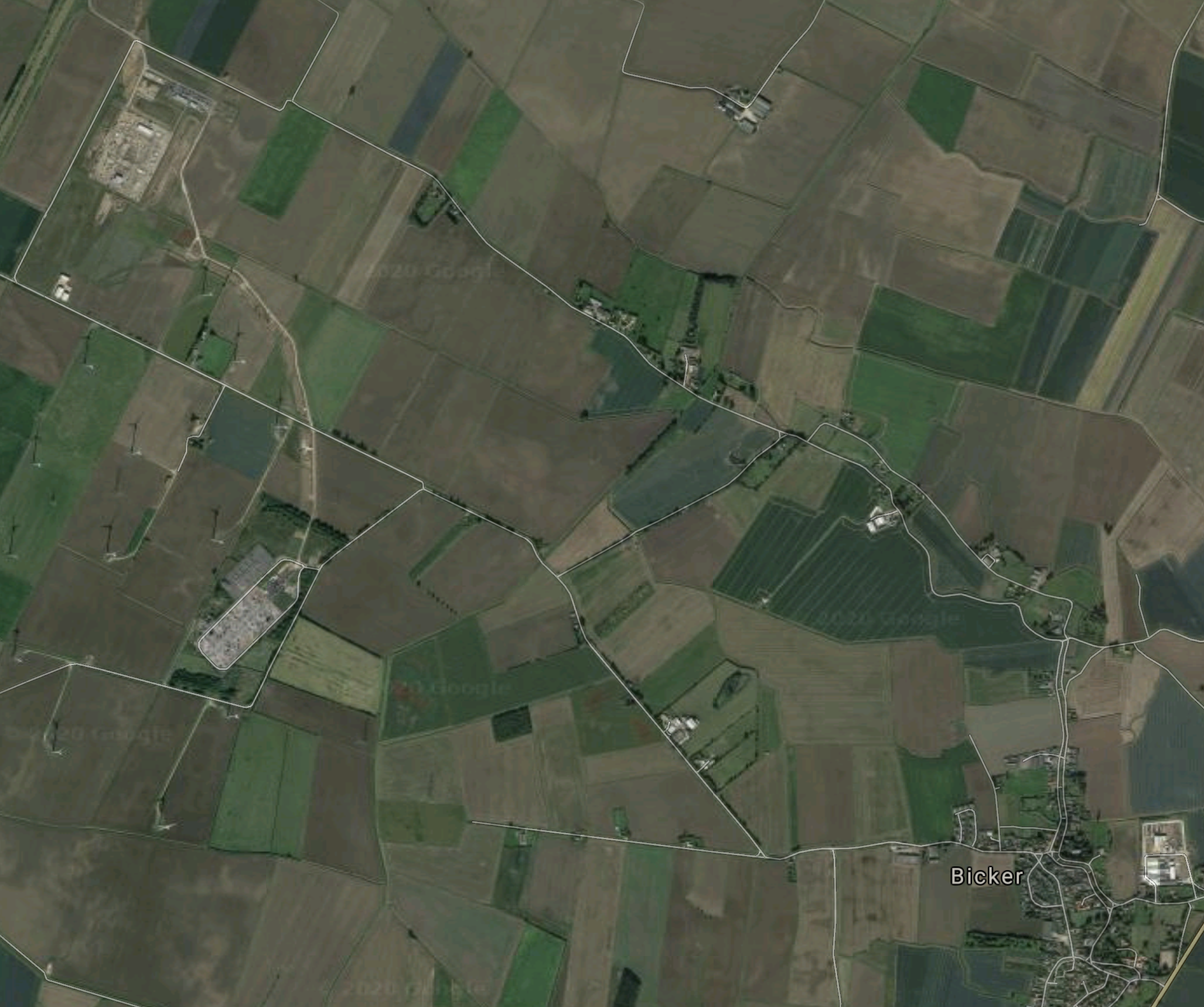
This second map shows an enlarged view of the Bicker Fen area.
Note.
- The village of Bicker in the South-East corner of the map.
- In the North-West corner of the map is Bicker Fen Wind Farm.
This third map shows the wind farm.
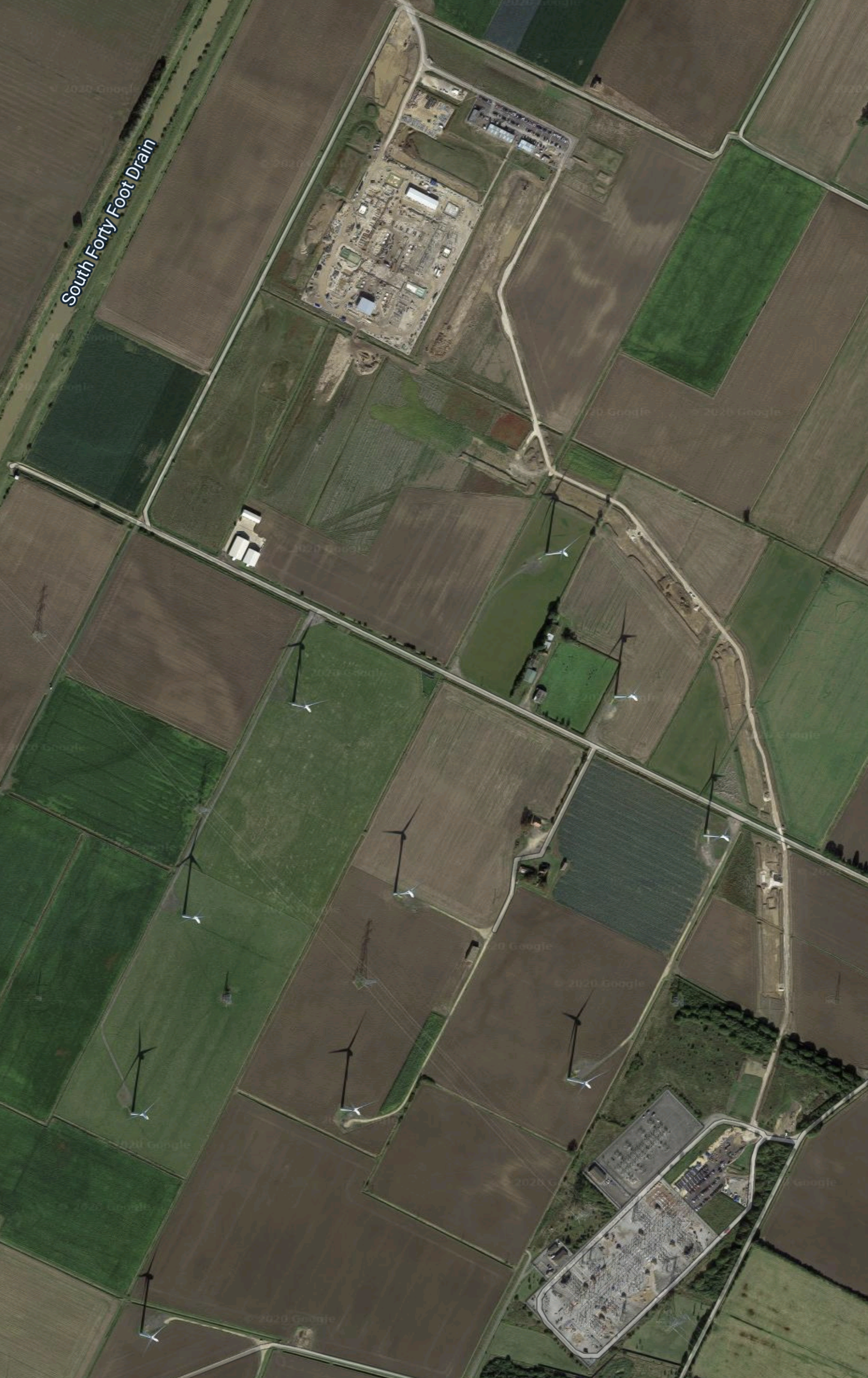
Note the thirteen wind turbines between the two sub-stations full of wo electrical gubbins.
This sentence from the Wikipedia entry for Bicker, gives more details of the wind farm and the future plans for the area.
North of the main line of 400 kV pylons is the Bicker Fen windfarm consisting of 13 turbines producing 26 MW (2 MW each), enough for 14,000 homes. The construction of the windfarm met some local objection. The windmills sit north from Poplartree Farm and were built in June 2008 by Wind Prospect for EdF. They are of the type REpower MM82, made in Hamburg. Bicker Fen substation is also the proposed landing site for a 1,400 MW power cable from Denmark called Viking Link, as well as the proposed offshore wind farm Triton Knoll.
Triton Knoll is a big wind farm, with a planned capacity of 857 MW and should start producing electricity in the next couple of years.
Conclusion
The Viking Link and Triton Knoll are obviously a good fit, as the UK will be able to exchange energy as required.
But it would appear that there’s one thing missing from this setup – energy storage.
I wouldn’t be surprised to see a large battery built at Bicker Fen. Something, like one of Highview Power‘s CRYOBatteries might be ideal.
Equinor and SSE Renewables’ Dogger Bank Wind Farm Reaches Financial Close
The title of this post, is the same as that of this article on Energy Global.
It is a very matter of fact article to record the fact that SSE and Equinor have raised three billion pounds for the first two sections of their 3.6 GW wind farm on the Dogger Bank, in the middle of the North Sea.
Wikipedia indicates, they will be operational around 2023-2025.
All very boring! But we’ll see a lot more deals like this.
Riding Sunbeams To Finance Railway Connected 3.75MW Community Solar Farm With £2.5m Grant
The title of this post, is the same as that of this article on Solar Power Portal.
This is the introductory paragraph.
The 3.75MW Cuckmere Community Solar Farm is to directly power the Eastbourne-London mainline railway in a world-first project.
This is certainly good news for Riding Sunbeams, who have been promoting the concept of powering railway electrification using solar power.
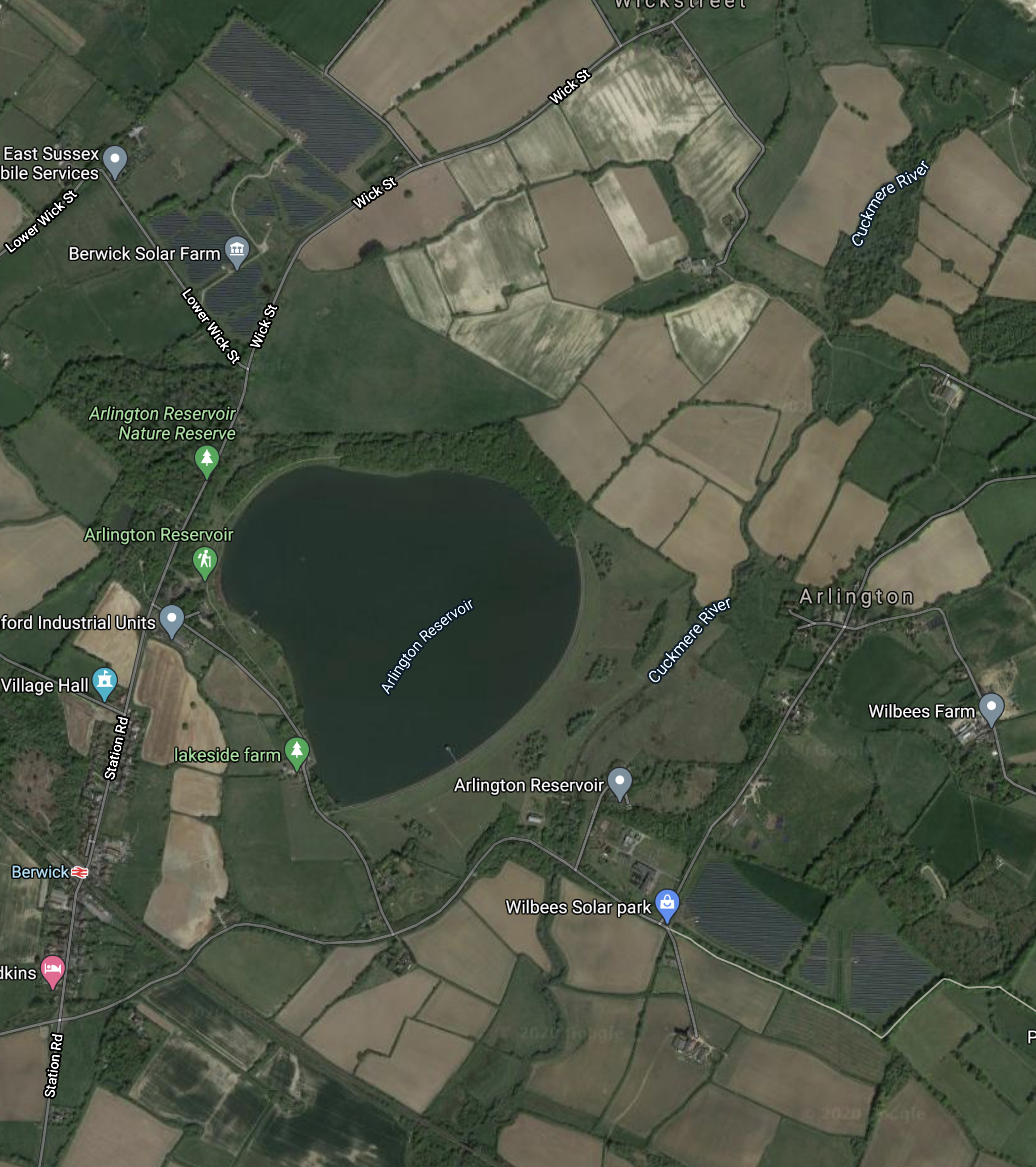
This Google Map shows the location.
Note.
- The 3.5 MW Berwick Solar Farm is to the North of Arlington reservoir.
- Berwick station and the mainline between London and Eastbourne is in the South East corner of the map.
- There is also Wilbees Solar Park to the South East of the reservoir.
If you look on Real Time Trains, there is usually around five or six trains per hour in both directions. As each train needs about a MW of power, the Berwick Solar Farm probably has a useful market for its power.
The Cuckmere Community Solar Company has developed the farm and has some interesting information on their web site.
Conclusion
I can’t really make up my mind about Riding Sunbeams.
Their heart is definitely in the right place, but there hasn’t been much take-up of the idea, as of now!
In this project, they would appear to have been more of an enabling company, who connected a solar farm to Network Rail’s infrastructure to the benefit of both parties.
As an electrical and control engineer, I can’t help feeling that there should be substantial energy storage in there somewhere.
Is Sizewell The Ideal Site For A Fleet Of Small Modular Nuclear Reactors?
As someone who spent forty years in project management, the Small Modular Nuclear Reactor or SMR could be a project manager’s dream.
Suppose you were putting a fleet of SMRs alongside Sizewell B.
This Google Map shows the current Sizewell site.
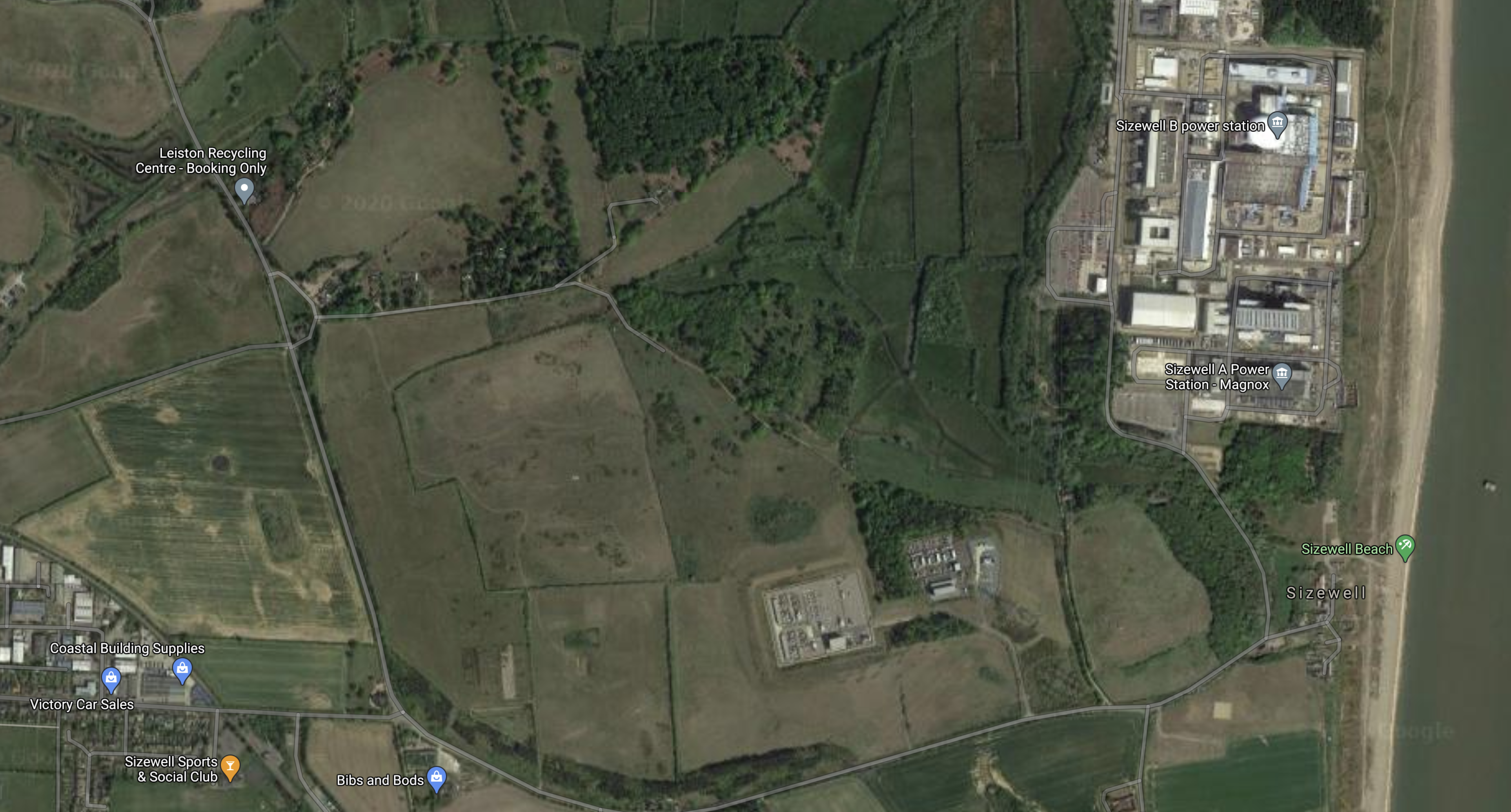
Sizewell A power station, with Sizewell B to its North, is on the coast.
This second Google Map shows the power stations to an enlarged scale.
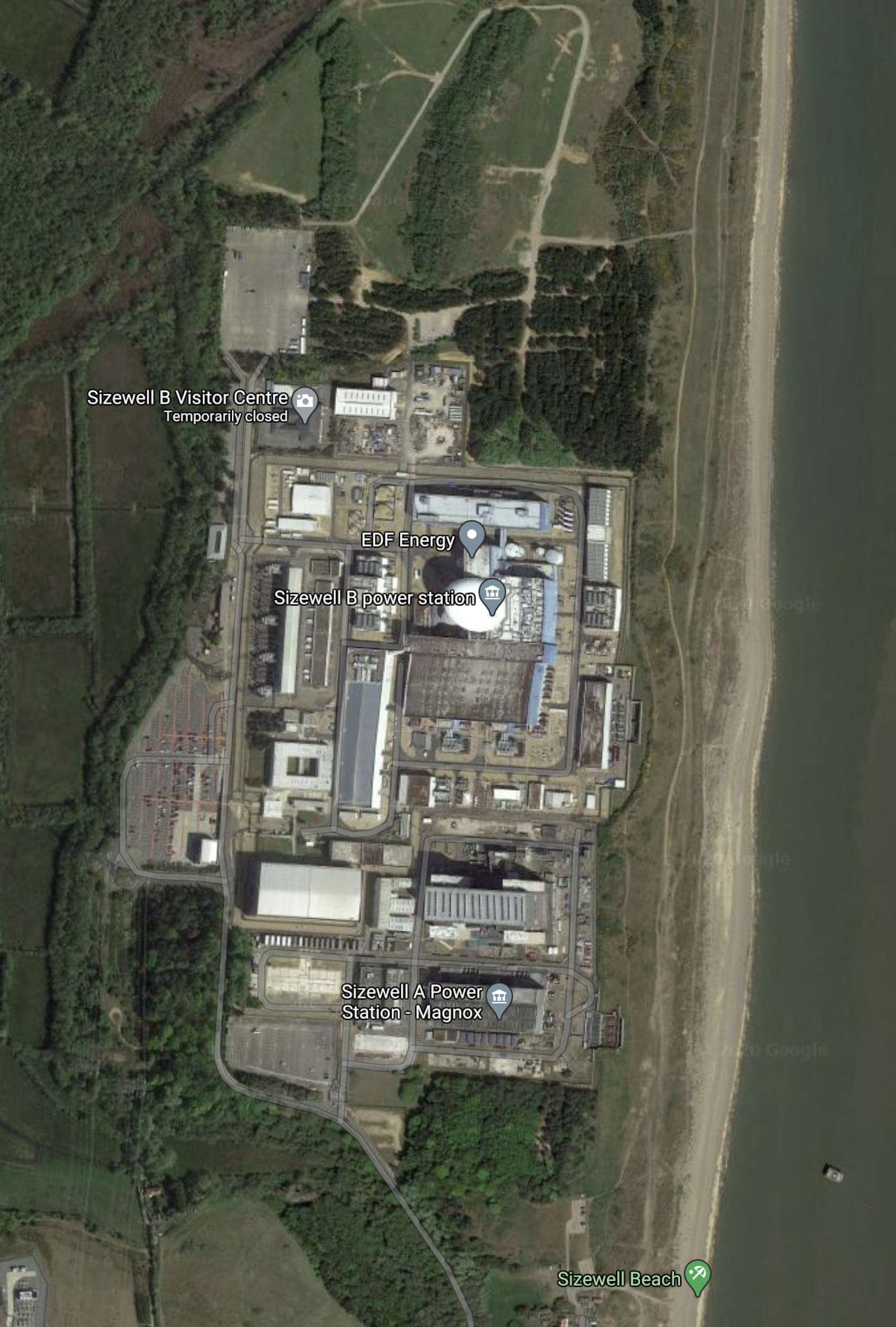
Note the white dome in the middle of Sizewell B.
Sizewell A
Sizewell A power station was shut down at the end of 2006 and is still being decommissioned, according to this extract from Wikipedia.
The power station was shut down on 31 December 2006. The Nuclear Decommissioning Authority (NDA) is responsible for placing contracts for the decommissioning of Sizewell A, at a budgeted cost of £1.2 billion. Defuelling and removal of most buildings is expected to take until 2034, followed by a care and maintenance phase from 2034 to 2092. Demolition of reactor buildings and final site clearance is planned for 2088 to 2098.
Only a few of those, reading this post, will be around to see the final end of Sizewell A.
Note that the size of the Sizewell A site is 245 acres.
It appears to me, that if any power station will be able to be built on the cleared site of Sizewell A, until the late 2080s or 2090s.
Sizewell B
Sizewell B power station opened in 1995 and was originally planned to close in 2035. The owner; EDF Energy, has applied for a twenty-year extension to 2055.
Sizewell C
Sizewell C power station is currently under discussion.
- It will be built by the French, with the help of Chinese money.
- It will have an output of 3260 MW or 3.26 GW.
- It will cost £18 billion.
- It will take twelve years to build.
This Google Map shows Sizewell B and the are to the North.
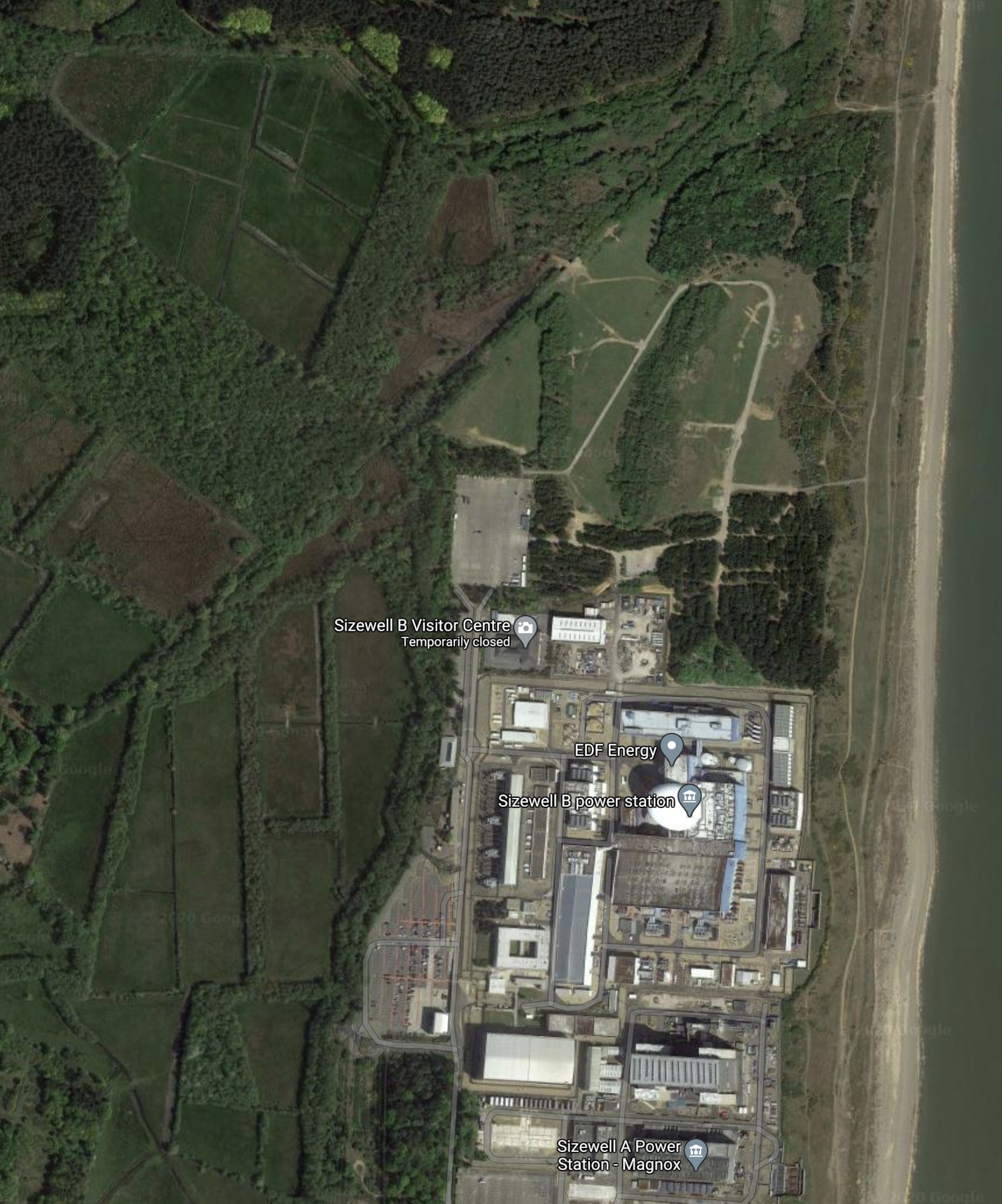
I would assume it will be built in this area.
A Fleet Of Small Modular Nuclear Reactors
These are my thoughts on building a fleet of SMRs at Sizewell instead of the proposed Sizewell C.
Land Use
In Rolls-Royce signs MoU With Exelon For Compact Nuclear Power Stations, I gave these details of the Rolls-Royce design of SMR.
- A Rolls-Royce SMR has an output of 440 MW.
- The target cost is £1.8 billion for the fifth unit built
- Each SMR will occupy 10 acres.
- Eight SMRs would need to be built to match the output of Hinckley Point C, which will occupy 430 acres.
It looks on a simple calculation, that even if the SMRs needed fifteen acres, the amount of land needed would be a lot less.
Connection To The National Grid
The transmission line to the National Grid is already in place.
This Google Map shows the sub-station, which is to the South-West of Sizewell A.
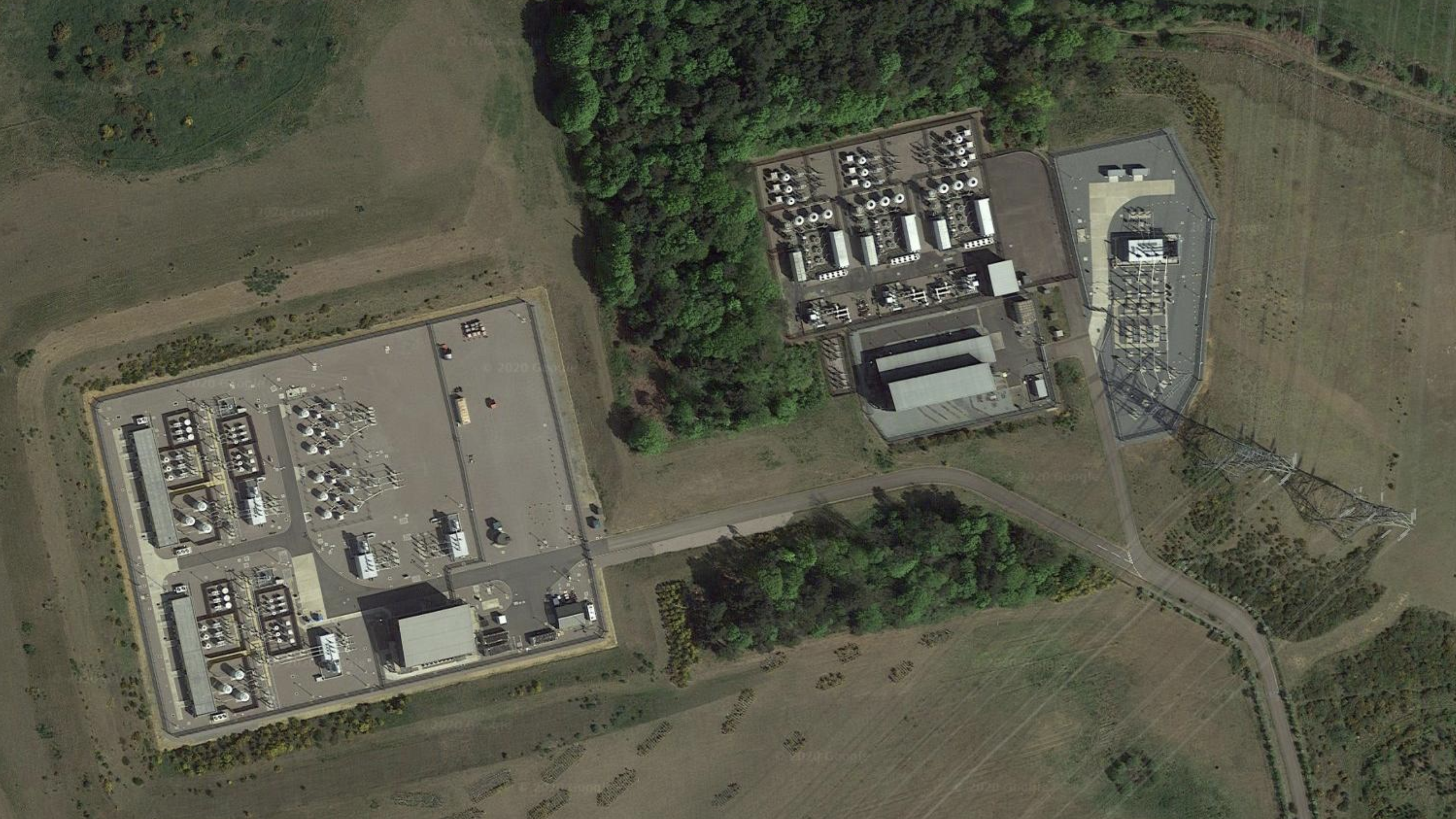
From Sizewell, there is a massive twin overhead line to Ipswich.
This Google Map shows the overhead line as it crosses Junction 53 of the A14 to the West of Ipswich.
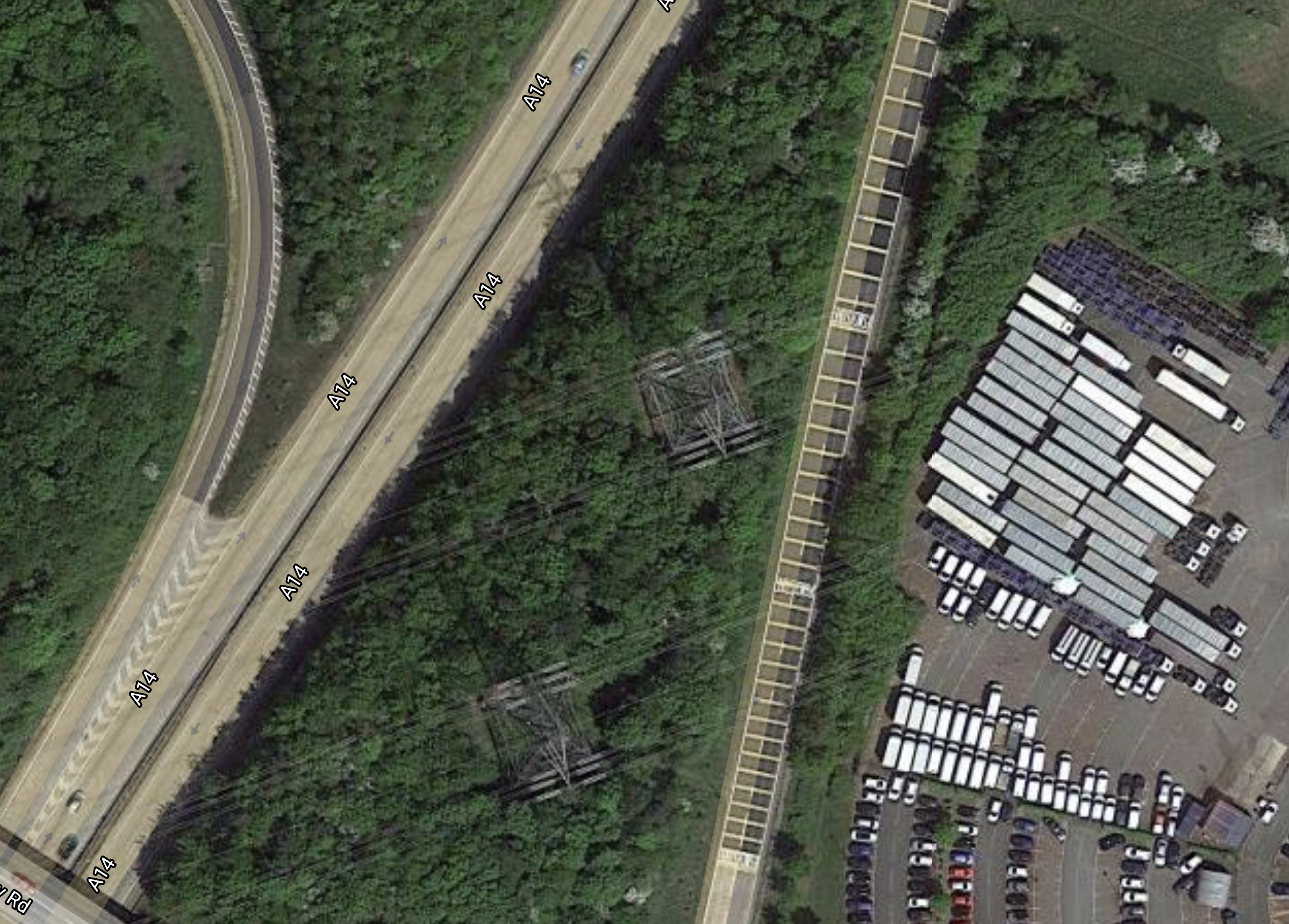
The pylons are in the centre of the map, with the wires going across.
The line has been built for a massive amount of nuclear power at Sizewell.
The Sizewell Railhead
This Google Map shows the railhead at Sizewell.
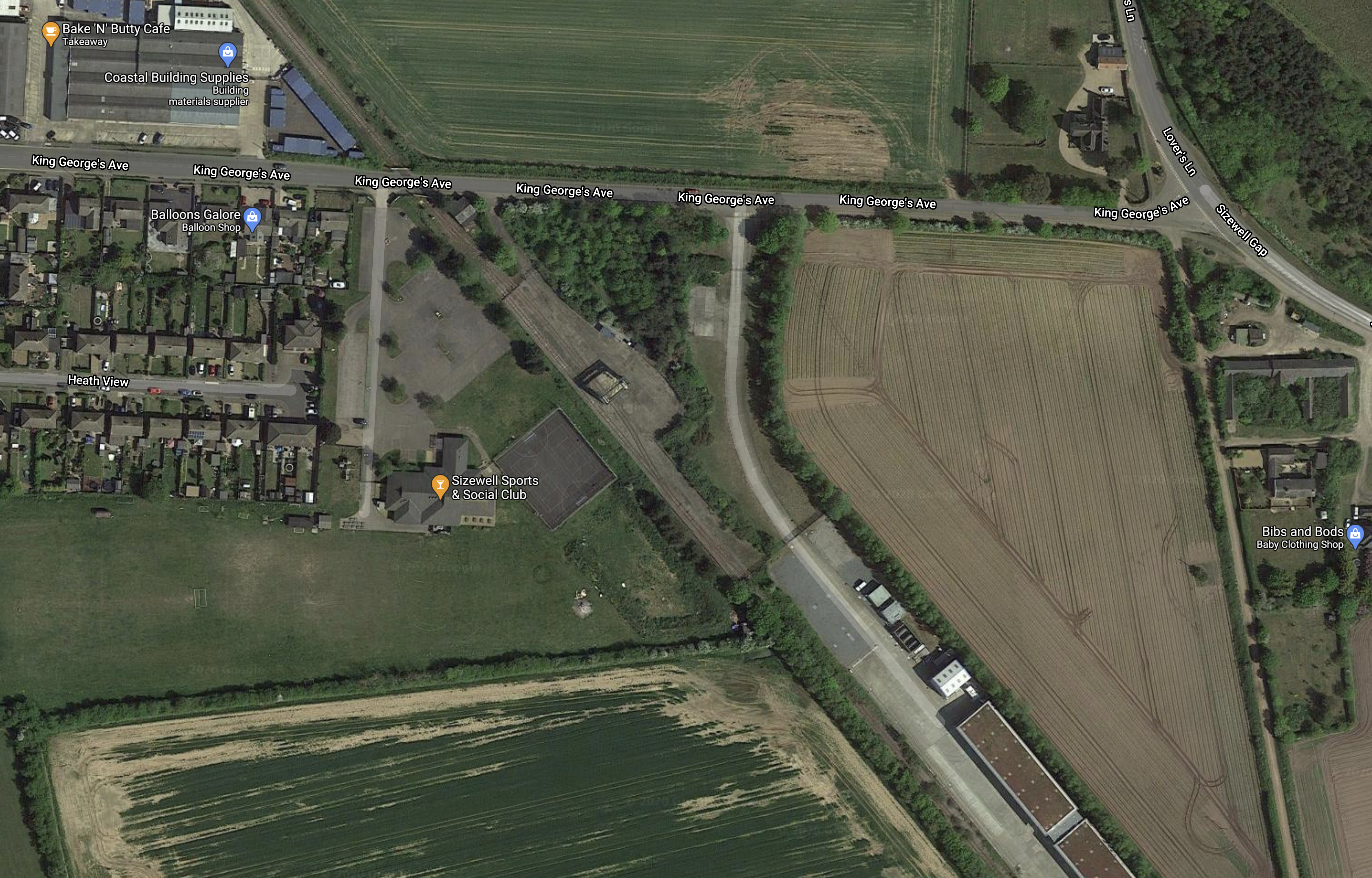
It can also be picked out in the South West corner of the first map.
- The railhead is used to take out spent fuel for processing.
- In the past, it brought in construction materials.
- Wikipedia suggests if the Sizewell C is built, the might be a new railhead closer to the site.
- If a fleet of SMRs were to be built, as the modules are transportable by truck, surely they could be move in by rail to avoid the roads in the area.
- I am an advocate of reinstating the railway from Saxmundham to Aldeburgh, as this would be a way of doubling the frequency on the Southern section of the East Suffolk Line between Saxmundham and Ipswich stations.
I hope that whatever is built at Sizewell, that the rail lines in the area is developed to ease construction, get workers to the site and improve rail services on the East Suffolk Line.
Building A Fleet Of SMRs
One of the disadvantages of a large nuclear power station, is that you can’t get any power from the system until it is complete.
This of course applies to each of the individual units, but because they are smaller and created from a series of modules built in a factory, construction of each member of the fleet should be much quicker.
- Rolls-Royce are aiming for a construction time of 500 days, from the fifth unit off the production line.
- That would mean, that from Day 501, it could be producing power and earning money to pay for its siblings.
- If the eight units were built in series, that would take eleven years to build a fleet of eight.
But as anybody, who has built anything even as humble as a garden shed knows, you build anything in a series of tasks, starting with the foundations.
I suspect that if a fleet were being built, that construction and assembly would overlap, so the total construction time could be reduced.
That’s one of the reasons, I said that building a fleet could be a project manager’s dream.
I suspect that if the project management was top-class, then a build time for a fleet of eight reactors could be nine years or less.
Resources are often a big problem in large projects.
But in a phased program, with the eight units assembled in turn over a number of years, I think things could be a lot easier.
Financing A Fleet Of SMRs
I think that this could be a big advantage of a fleet of SMRs over a large conventional large nuclear power station.
Consider
- I said earlier, that as each unit was completed, it could be producing power and earning money to pay for its siblings.
- Hinckley Point C is budgeted to cost £18 billion.
- Eight Rolls-Royce SMRs could cost only £14.4 billion.
I very much feel that, as you would get a cash-flow from Day 500 and the fleet costs less, that the fleet of smaller stations is easier to finance.
Safety
SMRs will be built to the same safety standards as all the other UK reactors.
In this section on Wikipedia this is said about the Rolls-Royce SMR.
Rolls-Royce is preparing a close-coupled three-loop PWR design, sometimes called the UK SMR.
PWRs or pressurised water reactors are the most common nuclear reactors in the world and their regulation and safety is well-understood.
This is from the History section of their Wikipedia entry.
Several hundred PWRs are used for marine propulsion in aircraft carriers, nuclear submarines and ice breakers. In the US, they were originally designed at the Oak Ridge National Laboratory for use as a nuclear submarine power plant with a fully operational submarine power plant located at the Idaho National Laboratory. Follow-on work was conducted by Westinghouse Bettis Atomic Power Laboratory.
Rolls-Royce have a long history of building PWRs, and Rolls-Royce PWRs have been installed in all the Royal Navy’s nuclear submarines except the first. The Royal Navy’s second nuclear submarine; HMS Valiant, which entered service in 1966, was the first to be powered by a Rolls-Royce PWR.
How much of the design and experience of the nuclear submarine powerplant is carried over into the design of the Rolls-Royce SMR?
I don’t know much about the safety of nuclear power plants, but I would expect that if there was a very serious accident in a small reactor, it would be less serious than a similar accident in a large one.
Also, as the reactors in a fleet would probably be independent of each other, it is unlikely that a fault in one reactor should affect its siblings.
Local Reaction
I lived in the area, when Sizewell B was built and I also went over Sizewell A, whilst it was working.
From personal experience, I believe that many in Suffolk would welcome a fleet of SMRs.
- Sizewell B brought a lot of employment to the area.
- House prices rose!
- Both Sizewell A and B have been well-run incident-free plants
Like me, some would doubt the wisdom of having a Chinese-funded Sizewell C.
Conclusion
Big nuclear has been out-performed by Rolls-Royce
Green Jet Fuel Plant Developers’ Ioy As World Economic Forum Backs Method As Best Aviation Solution
The title of this post, is the same as that of this article on Business Live.
This is the first paragraph.
The World Economic Forum has backed sustainable aviation fuel as the most promising decarbonation policy for aviation, delighting the developers of a £350 million refinery on the Humber.
I bet Velocys are delighted.
I also think, that, the biodiesel, that they can produce, is a short term solution to the decarbonisation of rail freight and the heaviest vehicles powered by diesel.
It’s so much better than throwing the rubbish into landfill.
And Now Geothermal Rum From Cornwall!
This article on ThinkGeoenergy is entitled New Project To Bring You “Tropically” Matured Rum From Cornwall’s Geothermal Heartland.
This is the introductory paragraph.
What a product addition to the United Downs Deep Geothermal Project? Distillery startup Cornish Geothermal Distillery Company is pushing forward with plans to produce “tropically” mature rum using heat from the UK’s first geothermal power facility.
The Cornish Geothermal Distillery Company has a web site for more information.
This is a paragraph from the Think Geoenergy article.
In the release shared with us it is reported that Matthew Clifford, founder of the Cornish Geothermal Distillery Company (CGDC), has submitted outline plans for an ultra high-tech biome which would incorporate his patent-pending, carbon-neutral rum “cask maturation pods” designed by Grimshaw Architects alongside Buro Happold – globally recognised for innovative architecture that respects the planet’s resources whilst being functional and awe inspiring.
It seems to be an ambitious carbon-neutral project that could create up to a hundred jobs.
M&G To Invest £150m In UK Battery Start-Up Zenobe
The title of this post, is the same as that of this article on the Financial Times.
Good to see M & G getting involved in funding batteries.
 The Anonymous Widower