Hydrogen Energy Explained
The title of this post, is the same as this story on Centrica.
This is the sub-heading.
Hydrogen is a clean alternative to natural gas, when it’s burnt it doesn’t produce carbon dioxide, which is a harmful greenhouse gas. It has the potential to play a significant role in achieving net-zero and decarbonising various sectors.
The story is a good introduction to hydrogen.
In the 1960s, when I first worked in a hydrogen electrolyser at ICI in Runcorn, I would have found a document like this one from Centrica invaluable.
Energy Dome Pens Contract For First US Project
The title of this post is the same as that as this article on Energy Storage News.
I like Energy Dome, as it makes one of the causes of global warming; carbon dioxide help with the storage of energy, which many argue is part of the solution of the problem.
This press release gives more details.
- The project is a 20MW/200MWh Battery.
- The battery will be located in Wisconsin.
- In parallel, the construction of Energy Dome’s first-of-a-kind standard CO2 Battery plant in Sardinia, Italy, is also proceeding at full speed.
As Energy Dome is an Italian company, the solution is also more about finesse than brute force.
Team GB And ParalympicsGB Athletes Find New Career Pathway At Centrica
The title of this post, is the same as that of this press release from Centrica.
This is the sub-heading.
Over the summer, billions of people from across the world tuned in to the Paris 2024 Olympic and Paralympic Games to get behind their nation’s most talented athletes, and Centrica has launched a new employment initiative to help sportspeople transition into a different career once they retire.
These first three paragraphs outline the scheme.
Elite sports professionals are highly skilled and have a lot to offer the world of work, although it can often be challenging for them to know where to start, especially when entering into a new sector.
To help adjust to life after sport, Centrica has created a new scheme – the Centrica Athletes Leadership Placement Programme – to find high performance athletes rewarding careers in the energy sector.
Made available to athletes thanks to Team GB and ParalympicsGB’s landmark five-year partnership with British Gas – a subsidiary of Centrica – the programme will give former sportspeople the chance to transfer their skills to new roles within the wider group.
The scheme appears to be similar to a successful scheme for armed forces personnel, outlined in this paragraph.
The scheme falls under the same umbrella as Centrica’s Armed Forces Pathway, which aims to hire at least 500 ex-forces leavers by 2026.
I wish Centrica and their new employees the best of luck.
But it looks to me, that it should succeed.
Could Liverpool Develop A Massive Zero-Carbon Data Centre?
There is an article in The Sunday Times today, which is entitled Google Signs Nuclear Deal To Power AI Data Centres.
These are the first three paragraphs of the article.
Google has struck a deal with a nuclear power start-up to provide low-carbon energy for its data centres and AI operations, marking a world-first in the tech industry.
The California-based company said the agreement to buy energy from multiple small modular reactors developed by Kairos Power could help spur a nuclear revival in America.
The first reactor is scheduled to come online in America by 2030, followed by additional deployments through 2035.
I am not against nuclear-powered data centres, but could Liverpool build a massive zero-carbon data centre?
This Google Map shows Liverpool Bay, which is a vast expanse of water that stretches along the North Wales coast to Anglesey and all the way to the Isle of Man.
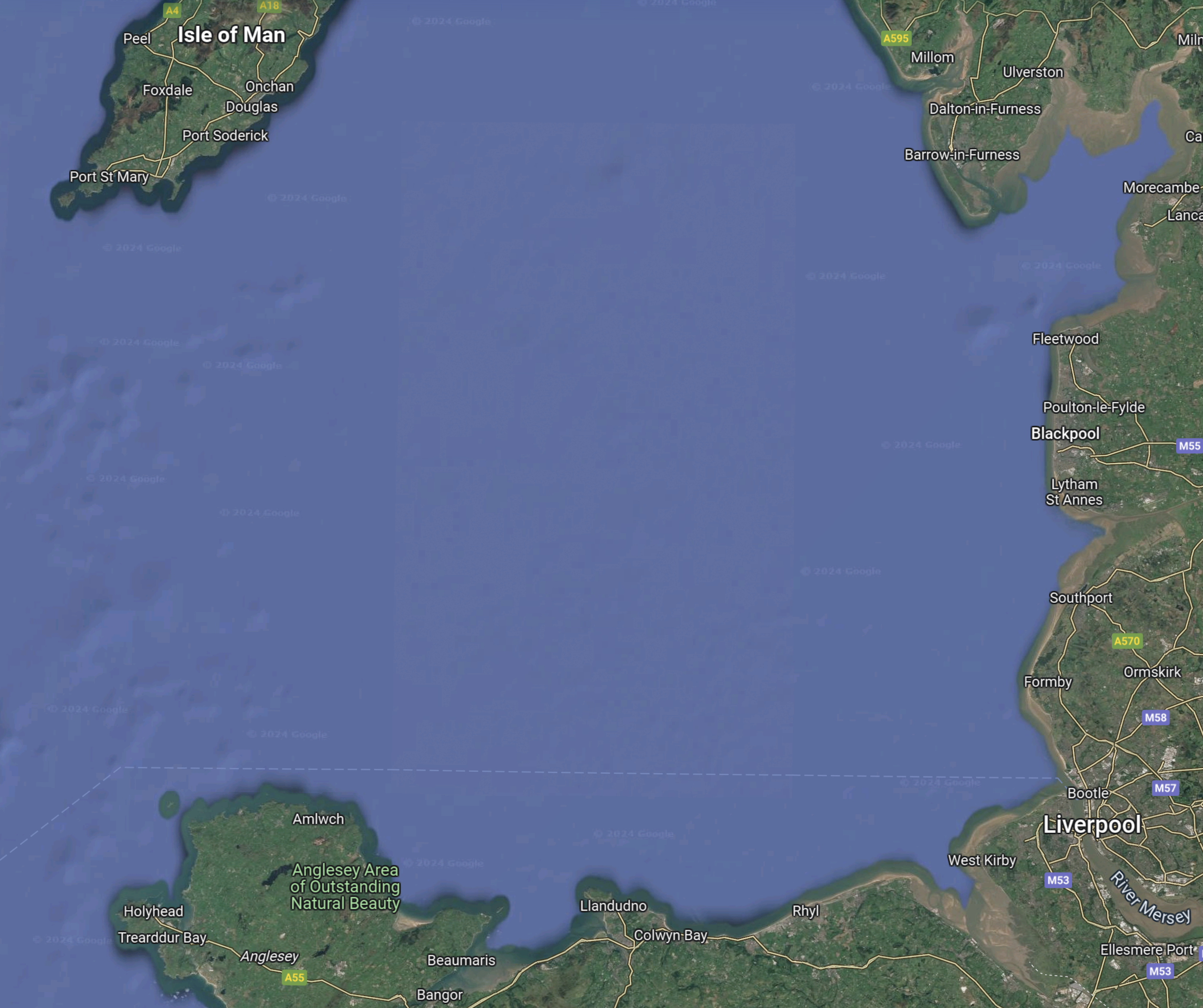
Note.
- The Isle of Man in the North-West corner.
- Liverpool, Birkenhead and the River Mersey in the South-East corner.
- Anglesey in the South-West corner.
- Blackpool with Morecambe Bay to its North in the North-East corner.
Liverpool Bay could be one of Europe’s zero-carbon energy powerhouses.
Wind Farms In Liverpool Bay
At the present time, these wind farms are producing electricity or planned in Liverpool Bay.
- Barrow – 90 MW – Commissioned in 2006
- Burbo Bank – 90 MW – Commissioned in 2007
- Burbo Bank Extension – 258 MW – Commissioned in 2017
- Gwynt y Môr – 576 MW – Commissioned in 2015
- North Hoyle – 60 MW – Commissioned in 2003
- Ormonde – 150 MW – Commissioned in 2012
- Rhyl Flats – 90 MW – Commissioned in 2009
- Walney – 367 MW – Commissioned in 2010
- Walney Extension – 659 MW – Commissioned in 2018
- West if Duddon Sands – 389 MW – Commissioned in 2014
- Awel y Môr – 500 MW – Planned
- Morecambe – 480 MW – Planned
- Mona – 1500 MW – Planned
- Morgan – 1500 MW – Planned
Note.
- 2509 MW has been commissioned.
- 3980 MW is being planned.
- That is a total of 6489 MW
I suspect more space in Liverpool Bay could be developed with wind farms.
Mersey Tidal Power
The Mersey Tidal Power project has a web site.
If it is built, it will probably be built by the South Korean company; K-Water and use some of the design principles of the Sihwa Lake Tidal Power Station.
It will likely have an output of around 1 GW and take ten years to build.
In the 1970s, I did some project management consultancy for Frederick Snow and Partners, and they showed me their plans for a Severn Barrage.
Their futuristic vision for the Severn Estuary was never built, as the Prime Minister of the time; Harold Wilson, felt coal was the future. See Last Of The Many!
I suspect that the Mersey Tidal Power project will be another variation on a proven theme.
Morecambe Bay Bridge And Tidal Barrage Proposal
In the Wikipedia entry for Morecambe Bay, there is a proposal for a bridge and tidal barrage across the bay, where this is said.
In 2004, a proposal was made to build a bridge across the bay flanked by wind turbines and using tidal power. Proposals from Northern Tidal Power Gateways in 2019 outlined a tidal barrage with a road running along on top.
If the Mersey Tidal Power project is a success, then why wouldn’t one across Morecambe Bay, be one too?
500 MW of zero-carbon tidal power would do nicely!
Nuclear Sites At Calder Hall, Heysham And Wylfa
These three nuclear stations have supplied electricity to the North-West of England.
- Calder Hall was the original Magnox site, which the Wikipedia entry says had a nameplate capacity of 240 MW and was decommissioned in 2003, after running for 47 years.
- Heysham is a powerful site which the Wikipedia entry says has a nameplate capacity of 2452 MW and will be decommissioned in 2028.
- Wylfa is an older, smaller Magnox site which the Wikipedia entry says had a nameplate capacity of 1190MW and was decommissioned in 2015.
As the sites are cleared, I am sure that we’ll see more nuclear power stations built on the sites.
How Much Electricity Does A Data Centre Use?
I found this paragraph in an NESO document.
Regardless of this, if we were to use existing market data and modelling projections, this could point to annual data centre electricity consumptions of between 3.6 TWh in 2020 to as much as 35 TWh by 2050.
Dividing by the hours in a year, indicates that an individual data centre could use between 0.4 and 4 GW of electricity.
Using my rough figures here from wind, tidal and nuclear, I suspect that the power on the Mersey will generate enough power for at least one data centre.
Liverpool Is On The Right Side Of The Country For Cables To North America
Cables will go straight out of Liverpool Bay, pass to the North of Ireland and across the Atlantic to somewhere like Puget Sound.
Liverpool has a superb location for a Transatlantic data centre, that connects to networks on both sides of the pond.
Could Underwater Data Centres Be Developed In Liverpool Bay?
This page on the Microsoft web site is entitled Microsoft Finds Underwater Datacenters Are Reliable, Practical And Use Energy Sustainably
These three paragraphs detail the research.
Earlier this summer, marine specialists reeled up a shipping-container-size datacenter coated in algae, barnacles and sea anemones from the seafloor off Scotland’s Orkney Islands.
The retrieval launched the final phase of a years-long effort that proved the concept of underwater datacenters is feasible, as well as logistically, environmentally and economically practical.
Microsoft’s Project Natick team deployed the Northern Isles datacenter 117 feet deep to the seafloor in spring 2018. For the next two years, team members tested and monitored the performance and reliability of the datacenter’s servers.
I would assume that Microsoft have continued the research, as with something like this you can’t be too careful.
But it would appear, that data centres and their servers could be submerged under the waters of Liverpool Bay.
London And Liverpool Will Be Under Two Hours By Train Within A Year
New Class 807 trains, which will be delivered within a year, will improve the train service between the two cities.
- Train times will be brought to around or even below two hours.
- , The extra trains will allow a second hourly service to be added.
- The extra service will additionally stop at Liverpool South Parkway station, for the airport.
- High Speed Two is claiming one hour and fifty minutes, between London and Liverpool.
Liverpool already has one of the best rail terminals in the North of England, as these pictures show.



































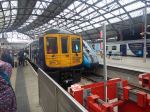







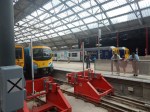



















With these service improvements, it will have a service to London and the South, that will be second to no other Northern station.
Liverpool Has A Refurbished Partly-Underground Suburban Railway With New Trains
Liverpool’s Metro is one of the best in Europe for a medium-sized city.
The Metro is also expanding with new routes and stations.













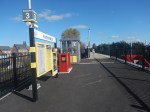


These pictures show the new Headbolt Lane station, which is swerved by the UK’s first battery-electric trains.
Liverpool Has Easy Access To Two International Airports
There are two international airports close by; Liverpool John Lennon and Manchester International.
- For Liverpool Airport, it’s a bus from Liverpool South Parkway station or an express bus from Liverpool city centre.
- For Manchester Airport, it’s a train from Lime Street station.
I am fairly sure, that a hydrofoil could connect Liverpool’s Waterfront and the Tidal Barrier to the airport.
North-West England Has A Rich University Tradition
Liverpool, Manchester and the surrounding area has several world-class universities and research establishments.
Some like The Pandemic Institute would be able to find uses for all the computing power and artificial intelligence on offer at a powerful data centre.
Liverpool Is A World City
Liverpool is a World City, where there is plenty of sport, entertainment and things to do.
Conclusion
Liverpool is installing the power infrastructure for a very large data centre, that will be able to handle the world’s largest and most difficult problems.
Last Of The Many
I took a train to East Midlands Parkway station, this morning and took these pictures of the cooling towers of the last coal-fired power station to generate electricity in the UK.
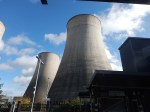

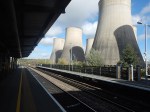

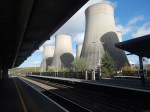
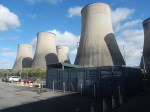
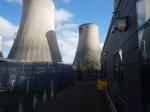
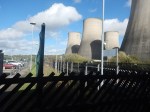
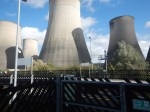
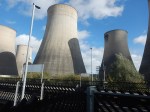
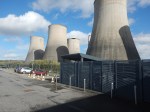
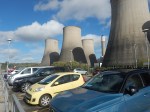
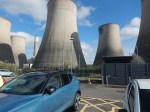
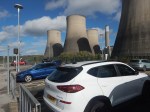
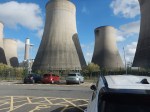
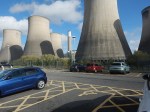
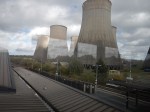
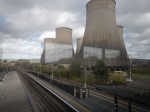
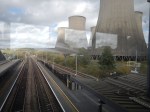
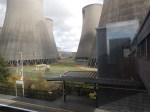
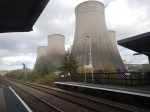
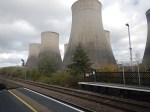

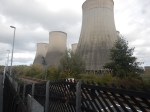
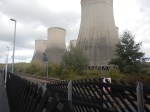
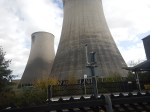
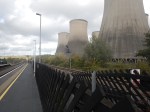
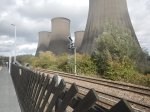



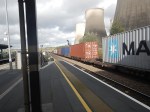
Note.
- The power station was commissioned in 1968.
- It has a nameplate capacity of 2.116 GW.
- Dogger Bank wind farm is intended to have a capacity of 3 GW
- There are eight cooling towers.The diesel locomotive hauling a freight train past the site is a Class 66 locomotive.
- These locomotives are likely to be scrapped in the next few years, to improve air quality in areas, where they run. Some will be replaced by electric or even hydrogen locomotives.
This Google Map shows a map view of the power station in 2024.
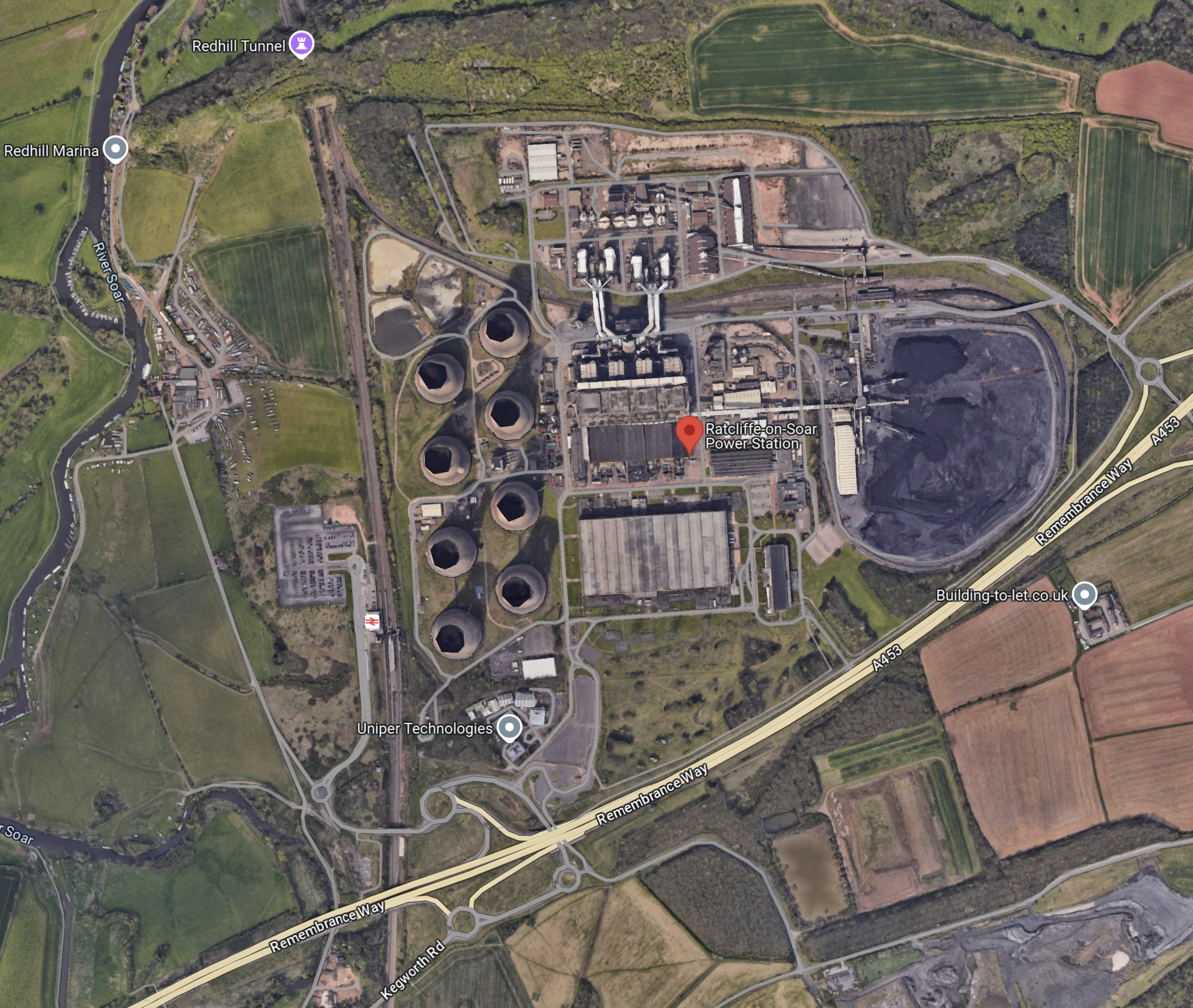
As the famous estate agent Roy Brooks would have said in the 1960s, it is a site with enormous potential.
Ensuring A Sustainable Future For A Coal-Fired Power Station Site Approaching Closure
The title of this section is that of an ARUP report on the future of the Radcliffe-on-Soar site.
This is the introductory paragraph.
Operating for more than 50 years, the Ratcliffe-on-Soar power station closed in September 2024. Its buildings, cooling towers and other structures will be decommissioned and demolished, making the site and surrounding land suitable to be redeveloped as a zero-carbon technology and energy hub for the East Midlands. Arup, working with Uniper, the site owner, supported Rushcliffe Borough Council to establish a Local Development Order (LDO) to make the most out of the potential development opportunities of the site.
ARUP’s report is a good start for one of the most important sites in the Midlands.
Highview Power Releases More Details Of The Hunterston LDES
In a long and detailed press release, these are the first two paragraphs.
London, 15 October 2024: The First Minister for Scotland, John Swinney MSP, welcomed Highview Power Executives to Scotland House in London today as the company announced its intention to develop its Hunterston project in Scotland as part of its multi-billion-pound LDES programme. Hunterston will deliver five times Scotland’s current operational battery storage capacity and is strategically placed in the grid transmission network to maximise the use of Scottish-produced renewable electricity. This follows Highview Power’s funding round in June where it secured a £300 million investment for its 300MWh proprietary Liquid Air Energy Storage (LAES) technology at Carrington, near Manchester.
Supported by the Scottish Government, Hunterston is the first project in Highview Power’s second phase, which comprises four projects across Scotland and Northern England. The 2.5GWh LAES plant at Hunterston will deliver an 8-fold increase in storage capacity on Carrington – to deliver enough power 650,000 homes for 12.5 hours.
Note these important points.
- The Hunterston battery will be the first of four 200 MW/2.5 GWh batteries.
- Together, these four batteries will have a distributed 1600 MW/10 GWh capability.
- For comparison, Dinorwig pumped storage hydroelectric power station, in Snowdonia, which opened in 1984, has a 1600 MW/9.1 GWh capability.
- The second battery will be in Aberdeenshire.
- The Hunterston project will support 1,000 jobs onsite during construction and 650 jobs in the supply chain.
John Swinney, who is First Minister for Scotland, summed the project up like this.
The creation of the largest liquid air energy facility in the world, in Ayrshire, demonstrates just how valuable Scotland is in delivering a low carbon future as well as supporting the global transition to net zero.
Highview Power Plans To Develop 2.5GWh LDES Project In Scotland
The title of this post is the same as that of this article on Power Technology.
This is the sub-heading.
The liquid air energy storage plant at Hunterston is set to deliver a substantial increase in storage capacity
These first three paragraphs add a few more details.
Highview Power has announced plans to develop a long-duration energy storage (LDES) project in Ayrshire, Scotland, with a capacity of 2.5 gigawatt hours (GWh).
The project will be built at Peel Ports’ property at Hunterston, North Ayrshire and will provide five times the existing battery storage capacity of Scotland.
It is supported by the Scottish government and its strategic location optimises the use of renewable electricity produced in the country.
Note.
- Highview Power talks of 200MW/2.5GWh capacity batteries in Scotland on its web site, so I suspect this battery is one of those.
- This battery is as large as some pumped storage hydro systems.
- In UK Infrastructure Bank, Centrica & Partners Invest £300M in Highview Power Clean Energy Storage Programme To Boost UK’s Energy Security, I described the funding now behind Highview Power. The funding appears to be solid, as it includes the UK Infrastructure Bank, Centrica, Goldman Sachs and Rio Tinto.
This is a good start for Highview Power.
UK To Fund Hydro Energy Storage Projects
The title of this post, is the same as that of this article on The Times.
This is the sub-heading.
New infrastructure aims to help balance the electricity system after the rapid growth in renewables
These three paragraphs infrastructure the article.
Projects that use water to store and release energy are to be given government support, in an attempt to help manage the volatility in supply and demand as more green power enters the grid.
From next year, pumped hydro storage projects will be able to apply for government subsidies, which will be provided via a “cap and floor” mechanism. These would guarantee revenues if prices drop below a certain floor but prevent providers from charging above a ceiling when power prices are high.
Like other government support schemes, any cost will be levied on energy bills, while consumers will be paid back any money generated above the cap. It is yet to be decided precisely how the cap and floor will be set.
I feel it is reasonable to expect the system to be a success, as a similar system is used for interconnectors and this article on Offshore Energy is entitled Over $86 million To Be Split Between UK and Belgium Consumers As 1 GW Subsea Interconnector’s ‘Remarkable’ Revenues Exceed Ofgem’s Cap.
It looks like Ofgem played this right for interconnectors and the Nemo Link is making a substantial payment.
It will be interesting to see what happens when “cap and floor” contracts are assigned.
This move by Ofgem will probably have effects in two areas.
- SSE, Statera and Statkraft, who are typically developing systems at the high end with a size of about 1.5 GW/25 GWh could find money is easier to come by.
- At the lower end, companies like Highview Power, who have systems of 50 MW/300 MWh and 200 MW/2.5 GWh under development, will also benefit.
My Control Engineering thoughts are leaning towards the 200 MW/2.5 GWh systems being the popular ones. Especially as they would appear to be close to the right size to support a 1 GW wind farm for two hours.
A Highview Power Two-Hour Liquid Air Battery could fit nearly with a fleet of Two-Hour BESS.
It should be noted that CAF use a little-and-large approach to theit battery-electric trams in the West Midlands.
A large lithium-ion battery is the main storage device.
A supercapacitor handles the high-frequency response and keeps the power steady.
Pairing a Highview Power Two-Hour Liquid Air Battery and a Two-Hour BESS could achieve the same performance and possibly result in some cost savings.
 The Anonymous Widower