The Five Minute Walk Between Oxford Circus Station And The Hanover Square Entrance To Bond Street Station For The Lizzie Line
With Bond Street station on the Elizabeth Line opening tomorrow, I thought I’d take a reconnaissance today and find out how long it takes to walk.
I took these pictures as I walked.
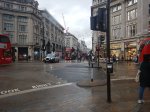



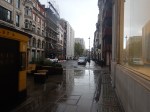


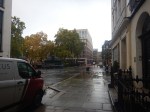
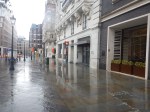


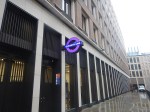
Note.
- I started from the South-East entrance to Oxford Circus station.
- I walked a few yards down Regent Street and took the first right into Princes Street.
- Princes Street has a few cafes and restaurants, a toilet and a Timpsons.
- I then walked straight across the Northern side of Hanover Square to the station entrance.
- I passed Harewood Place on my right, which leads directly to the London’s largest John Lewis.
If the station had been open, the walk would have taken five minutes.
Hanover Square
Hanover Square now is a London Square with its own station entrance. I suppose that Sloane Square is the only other one, but that doesn’t have the formal garden that Hanover Square does.
The Medici Courtyard
Hidden behind the station building is the Medici Courtyard, which has been created by the developers of the station entrance.
These pictures show the courtyard.


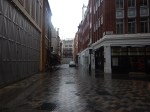

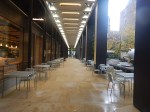


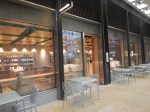



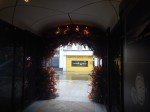

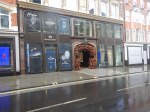
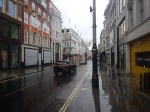

Note.
- The Medici Courtyard leads between Hanover Square and Bond Street.
- It joins Bond Street, just to the North of Fenwicks.
- It contains a high-class hotel, an upmarket coffee shop and some shops.
- There is a courtyard, where you can sit and enjoy a drink.
- There were a lot of flowers.
It is a very unique station feature, that has been designed to attract visitors and shoppers to the area.
Would A Tunnel Between Oxford Circus Station And The Hanover Square Entrance To Bond Street Station Be Possible?
Consider.
- At some point Oxford Circus station will be remodelled to provide extra capacity and full step-free access.
- In a few years time, there will be reliable statistics on how many passengers will change between Oxford Circus Station and The Hanover Square entrance to Bond Street Station.
- There will be more pedestrianisation in the area.
- I wouldn’t be surprised to find out, that the The Hanover Square entrance to Bond Street Station has provision for a possible tunnel.
I suspect various proposals will be put forward for improving the connection, if it is needed. Some will include tunnels.
Knightsbridge Station – 21st October 2022
I last visited Knightsbridge station in April, this year, when I wrote Knightsbridge Station – 25th April 2022.
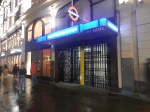
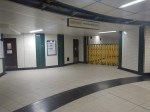
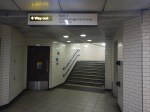
Construction has moved on in the six months since I visited, as these pictures show.
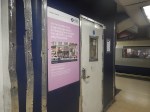
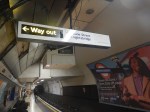
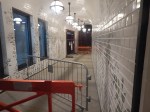

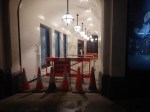
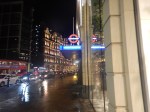



Note.
- After arrival at the station, I left using the exit at Harrods and then walked back along Brompton Road to Harvey Nicholls.
- The entrance for the lift is in an alley. According to this article on Ian Visits, two lifts are needed to get to the platforms.
- The ticket hall is under the Burberry store and has three entrances with steps.
- One unusual feature of the ticket hall, is that it has a micro-Starbucks. Is this idea going to be repeated?
In Ian’s article, he describes the step-free entrance like this.
By reusing some old tunnels, and a side alley around the corner, they will be making the station step-free for the first time. The station used to have lifts from the street down to a corridor that then linked to the platforms via a short set of stairs, but was taken out of use in the 1930s when escalators were added.
What’s being done is that a new entrance, with ticket barriers, has been created in Hooper’s Court, and there will be two lifts that will take people down to just above platform level where the old corridors are still available. There will then be a second small lift to link the corridor down to the platform level.
It looks like it was rather a tight squeeze to get everything in. But then in Knightsbridge, the space for a single toilet will cost at least a couple of millions.
Making Carbon Dioxide Into Protein For Innovative Animal Feed
The title of this post, is the same as that of this article on Horizon.
These are the first three paragraphs.
It’s common knowledge that proteins, a key component of human nutrition, are also essential for making animal feeds. Less well known is the uncomfortable fact that much of the protein we feed animals in Europe leads to deforestation and overfishing worldwide.
Biotechnology start-up Deep Branch have designed a biochemical transformation process that turns carbon dioxide (CO2) into a protein-rich powder for animals to eat.
The Deep Branch process converts carbon dioxide into a powder, called Proton, which has around 70% protein content. This is much higher than natural soy, which has around 40%.
Note.
- The technology is the brainchild of Peter Rowe, a PhD graduate in molecular biology of Nottingham University in the UK.
- Deep Branch appears to be a well-backed Anglo-Dutch company.
- Their backers are European and British household names and institutions.
- Drax, who have plenty of carbon dioxide, are also backers.
I believe that even if Deep Branch doesn’t succeed, then someone else will, with this technology.
French Farmers Are Covering Crops With Solar Panels To Produce Food And Energy At The Same Time
The title of this post is the same as that of this article on euronews.green.
These paragraphs explain the technique.
Agrivoltaics – the practice of using land for both solar energy and agriculture – is on the rise across France.
In the Haute-Saône region, in the northeastern part of the country, an experiment is being conducted by solar-energy company TSE. It is hoping to find out whether solar energy can be generated without hindering large-scale cereal crops.
Previous attempts to experiment with agrivoltaics have been through smaller-scale projects. But, keen to see if it can thrive on an industrial level, 5,500 solar panels are being spread over this farm in the commune town of Amance by TSE.
The article also contains a picture, which shows panels high in the air and a tractor going underneath.
I’m not sure of the idea’s practical application, although, I do know of a farmer, who is experimenting with using solar panels in a field with sheep. He also has found that on another field fully fitted with solar panels, hares were thriving.
In Understanding Floatovoltaics, I talked about another French idea; floating solar panels, where solar panels are floated on calm water like a reservoir.
Talking of reservoirs, I remember seeing a Tomorrow’s World, as a child, where it was proposed that concrete reservoirs, like those under the Heathrow flightpath, be filled with foamed concrete and covered with soil, so they could be used to grow crops.
- The water capacity would be slightly smaller.
- There would be less water losses.
I wonder what happened to that idea.
Battersea Power Station – 14th October 2022
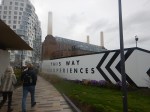
I went to Battersea Power Station today and took these pictures.
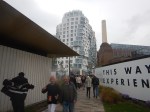


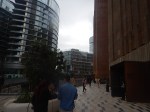
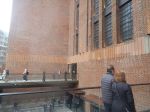
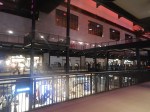








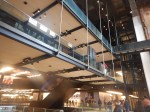

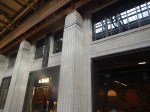


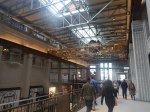
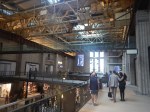

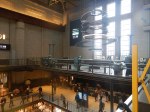



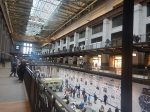
Note.
- The picture of my jacket was taken in the toilet. All male toilets should have a hook for jackets.
- The crane is still in place.
- There are a number of shops still to open.
- There was no food store, although a Marks and Spencer’s food store is coming soon.
- The only place to have a coffee and cake and sit down was Starbucks. But I never eat in an American cafe or eat American food, as I don’t trust their gluten labelling.
One guy I met described it as Dubai without the sand.
I have some thoughts.
Getting There
There are two main routes.
- Northern Line to Battersea Power Station station.
- Thames Clipper to Battersea Power Station pier.
I went by the Northern line, changing both ways at Tottenham Court Road station to and from the Elizabeth Line.
- This interchange is a short walk and step-free, if you use the lift.
- There are no trains to Battersea Power Station on the Bank branch of the Northern Line.
- There are five trains per hour (tph) to Battersea Power Station, with an extra two tph in the Peak.
- There are no Night Tube trains to Battersea Power Station.
I can see this service being improved.
Arriving At Battersea Power Station By Underground
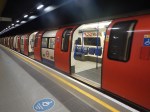
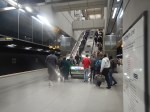
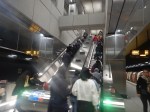

Punters were certainly arriving.
Gluten-Free Food
There was absolutely none, that I could find.
At least though a Gordon Ramsay restaurant is opening soon.
Signage
It wasn’t good. But then I have found several modern shopping centres work on this principle.
Conclusion
Canary Wharf is better.
- Partly because the shops are more useful and to my taste.
- But mainly because it is on the Elizabeth and Jubilee Lines, and the DLR.
- All rail lines go through Canary Wharf rather than terminate there.
Battersea Power Station might be better, when the Northern Line is extended to Clapham Junction station.
One Of The Three Best Pastas That I’ve Ever Eaten!
I like pasta and regularly cook myself a quick pasta dish, like this one in Serial Cooking – Pasta With Yogurt Sauce For One.
I was staying in the Premier Inn by Chester railway station last night, so I popped in to the Modern Italian Restaurant next door called The Yard.
It was one of the three best pasta dishes, that I’d ever eaten and the others had been in Michelin-starred restaurants in Italy.
The chef had one pasta dish on the main menu, but it wasn’t gluten-free.
So he happily modified it for me.
Improving The Wood Green And Moorgate Public Transport Corridor
This morning I went for coffee with an old school friend from Minchenden Grammar School at Southgate station.
Southgate is not a bad place to meet someone.
- There are a couple of good coffee shops.
- There are plenty of buses.
- It has a couple of the better chain restaurants including a Pizza Express.
- The area also has a lot of memories for me.
It also has one of London’s most iconic Underground stations.
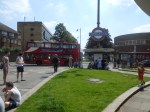
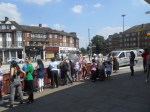
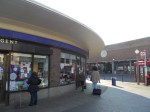
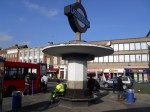
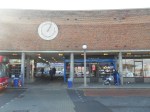
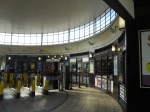
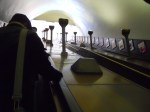
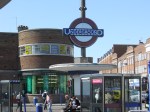
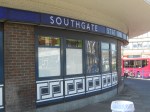
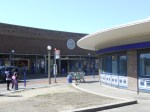
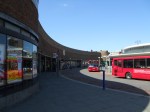
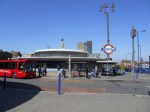
It may look familiar, as it regularly crops up in film and television dramas.
- One station guy told me, that the ticket barriers have been designed to be easy to remove, so filming of an historic drama is possible.
- It was used in The End Of The Affair to portray a Central London station.
- As the escalators have the same bronze fittings as Moscow, they could be used in a story set in Russia.
As the Piccadilly Line doesn’t go anywhere near my house, to get to Southgate, I take a 141 bus to and from a convenient Piccadilly Line station.
- Going North, I changed at Manor House station.
- Coming South, I changed at Turnpike Lane station.
- I could have also have changed at Wood Green station.
The journey home had four major problems.
- The bus stop at Turnpike Lane station, is a few hundred yards from the station.
- I waited fifteen minutes for a 141 bus.
- When it did arrive, it was so packed, it didn’t have space for a miniature dachshund to squeeze in between the feet of the standing passengers.
- The traffic was very heavy, so the journey was slow.
How can this bus route cope in the Peak, if it can’t cope on a Sunday morning?
Various issues and actions and will make these capacity issues worse.
The Victoria Line Has No Direct Connection With The Elizabeth Line
In my view, this was a mistake, although not that serious, as the young or energetic can probably walk between Oxford Circus and the Hanover Square entrance to Bond Street station on the Elizabeth Line.
Will this connection develop with coffee and snack shops to ease passenger interchanges?
When and if Oxford Circus station is ever made step-free, I can imagine a tunnel, perhaps with a moving walkway being built between Oxford Circus station and he Hanover Square entrance to Bond Street station.
There is also the cross-platform interchange at Highbury & Islington station with the Northern City Line that links with Moorgate and the City of London.
The Piccadilly Line Has No Direct Connection With The Elizabeth Line
To get between the Northern stations on the Piccadilly Line and the Elizabeth Line is either a double-change at Finsbury Park and Highbury & Islington stations or a ride on the 141 bus.
I wrote about these issues in Extending The Elizabeth Line – Improving The Northern City Line.
The Elizabeth Line Will Attract Travellers To Moorgate
I notice that my own travelling patterns have changed from using the Central, Circle, District, Hammersmith & City and Metropolitan Lines to using the Elizabeth Line since it opened and I suspect, when the Elizabeth Line is fully joined up, that more passengers will travel to Moorgate to access the Elizabeth Line.
Transport for London and the Mayor Are Rerouting The 21 Bus
The 21 bus duplicates the 141 bus between Newington Green and Moorgate station.
But it is being rerouted next year, which will increase the loading on the 141 bus.
The 141 Bus Used To Be The 641 Trolleybus
When I was a child, London’s trolleybus network was extensive and to get between Wood Green and Moorgate, you would have used the 641 trolleybus.
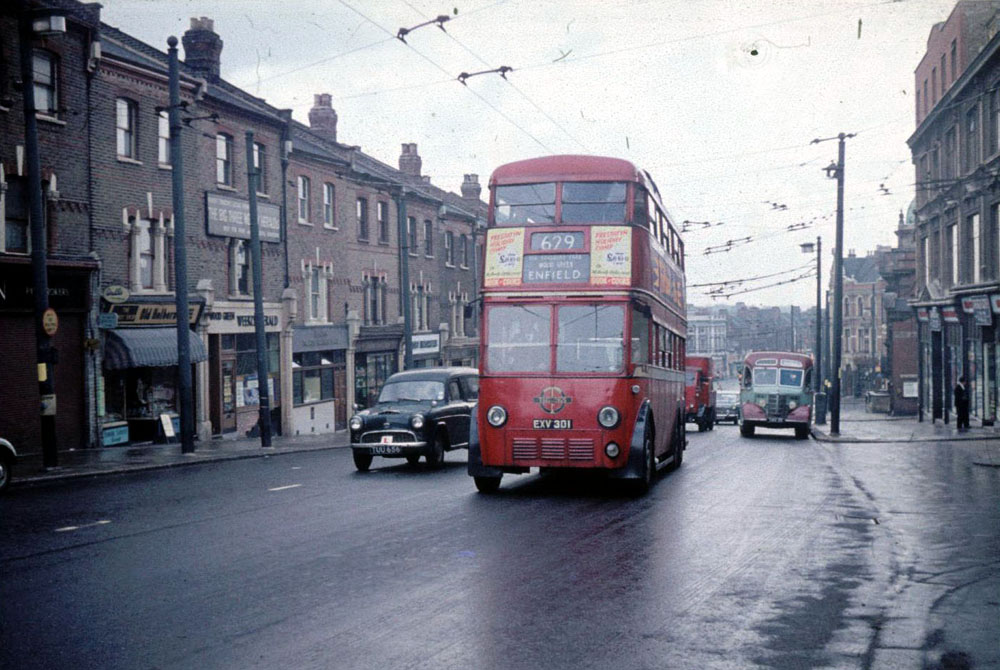
Trolleybus Ascending Jolly Butchers Hill in Wood Green
Many like me, look back on trolleybuses with affection.
Does this historical connection encourage passengers to use the 141 bus, which is the 641 trolleybus’s successor on the route?
My parents certainly had lots of trolleybus stories.
So What Could Be Done?
There are a variety of actions that could be taken to strengthen public transport between Moorgate and Wood Green stations.
Improve The 141 Bus Route
In Does London Need High Capacity Bus Routes To Extend Crossrail?, I put forward ideas for using buses to link to the Elizabeth Line.
This was my suggestion.
I suspect any route seen as an extension of Crossrail needs to have the following characteristics.
- High frequency of perhaps a bus every ten minutes.
- Interior finish on a par with the Class 345 trains.
- Wi-fi and phone charging.
I would also hope the buses were carbon-free. Given that some of these routes could be quite long, I would suspect hydrogen with its longer range could be better.
I feel that a high-quality 141 bus running every ten minutes between London Bridge station and Palmers Green, would be just what the passengers would order.
- Palmers Green bus garage is at the Northern end of the route, so could be used for refuelling or recharging.
- London Bridge station is at the Southern end of the route and was designed with an efficient bus station.
- The 141 route connects London Bridge, Bank, Moorgate and Old Street stations in the City of London.
With the right buses, this could be a route with real quality and usefulness.
Increase The Frequency On The Northern City Line
The Northern City Line may have new Class 717 trains, but it still has a pathetic frequency of eight trains per hour (tph)
- I am sure it could be increased to at least 12 tph between Moorgate and Alexandra Palace stations.
- Something like six tph would go to Welwyn Garden City, four tph to Hertford East station and two to Stevenage.
- Large areas of the Northern suburbs would get a much better connection to the Elizabeth Line.
Once the digital signalling is installed and commissioned, no new infrastructure will be needed.
I am sure, that this would be the easiest way to improve public transport in North London.
Add Step-Free Access To As Many Stations As Possible
Moorgate, Finsbury Park, Oakwood and Cockfosters are step-free with lifts.
As many stations as budgetary constraints allow, should be made step-free.
Battersea Power Station Station To Battersea Power Station Pier – 18th September 2022
I walked between Battersea Power Station station and Battersea Power Station pier.

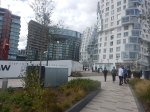




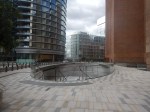








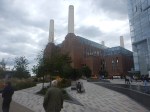
Note.
- A new route between the station and the pier has been opened up, which is shorter.
- The development opens on the fourteenth of next month, but there is already some good restaurants and coffee shops.
- The corgi was the first one I’d met for a few years.
I walked between the station and the pier in under ten minutes.
Ease Up IPA Goes Gluten Free!
The title of this post, is the same as that of this page on the Adnams web site.
I am now 75 and I have been drinking Adnams beer, almost exclusively since I was thirteen.
My father introduced me to halves of Adnams bitter, whilst playing snooker at Felixstowe Conservative Club.
Part of his logic behind doing this was to teach me to drink alcohol responsibly, like he did and to prevent me ending up like his father, who was a drunk, who died before the age of forty.
The other thing, that my father’s teaching did was give me a preference for good real ale. And especially Adnams!
As I write this, I’m drinking a bottle of their 0.5 % Ghost Ship.

I drink it for three reasons.
- Obviously, I like the taste.
- It is low-alcohol, so it doesn’t affect the action of the Warfarin, that stops me having another stroke.
- I also find, that because the beer is made with low amounts of barley to keep the alcohol low, it doesn’t affect my gut, despite the fact that I’m a coeliac.
I have yet to find a low-alcohol beer, that has had an adverse effect on my body.
But Will Ease Up Be Safe For A Coeliac To Drink?
These paragraphs describe how Ease Up is brewed and the testing of the product.
When producing Ease Up, we now use an enzyme called Clarex® which breaks down gluten-type proteins, reducing gluten content to below 20 parts per million (ppm). Only foods that contain 20ppm or less can be labelled as ‘gluten-free.’ According to Coeliac UK, research shows people diagnosed as coeliac can consume products with gluten present at or less than this level, but customers are advised to consider their own individual tolerances.
Clarex® is added in the fermentation vessel, where it mixes well during a normal, vigorous fermentation. Our beer is tested at the end of fermentation and then, after packaging, it is put on hold while it undergoes a thorough external validation process before it is confirmed gluten free and released. Just look out for the new, updated branding.
Note the phrase about individual tolerances.
Conclusion
It looks like Adnams have produced the ideal real ale to have in your pub, club or house, if you have some coeliac customers, family or friends.
Never did I think, I would ever write about disruptive innovation in the brewing industry.
To Abbey Wood For An Ice Cream
Yesterday, I went to Abbey Wood station to see what was there.
If you continue along the Elizabeth Line platforms, you come to a ground level step-free entrance to the platforms. So I used this route and found a rather nice shop, where I had a proper ice cream.


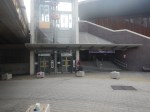
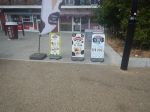
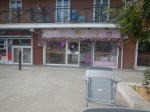
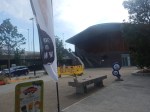

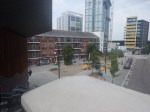


We need more proper ice cream outlets in London.
Crossness
Abbey Wood station is probably the best access point for one of London’s best tourist attractions; Crossness. I visited Crossness during Open House and wrote about it in Open House – Crossness.
These are some pictures I took in 2012.


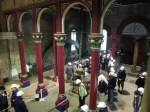


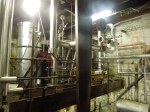

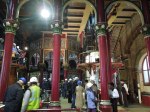
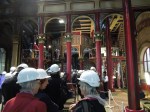

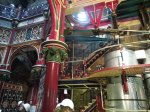

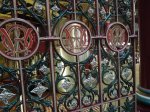

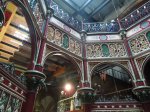


Crossness should be on everyone’s bucket list. The site is now managed by the Crossness Engines Trust.
But getting there by public transport is not easy.
In my view what is needed is either a shuttle bus from Abbey Wood station or perhaps modification to an existing route, so that it calls at Crossness.
The Joining Up Of The Elizabeth Line
I asked a station guy, when the three sections of the Elizabeth Line would be joined up.
He gave me a straight answer – The 6th of November.
This is twelve Sundays from today.
 The Anonymous Widower