Is There Anybody Out There, Who’d Like To Share a Beef Bourguignon?
Recently, Marks and Spencer introduced a range of meat dishes, one of which was Beef Bourguignon.
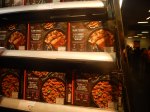



So I bought one today.
- There is a range of about six dishes.
- All of the range seems to be gluten-free and is marked as such.
- As they don’t look gluten-free from the picture, they would be ideal for serving at a mixed meal, where some diners were gluten-free and others were not!
- They seem to be simple to cook.
- The Use-By date is the 27th October.
If I have a quibble, it is that they are only for two and they also say Do Not Reheat on the box, which means that coeliacs like me, who live alone have a problem.
Perhaps they need a single portion.
But to solve my problem, if there is anybody reading this, who is close to Dalston and would like to test the Beef Bourguignon, then get in touch before the 27th!
Should We Stun Animals With Carbon Dioxide?
This post has been prompted by a text from a cardiologist. He said.
Current CO2 crisis reminds me that I think we should be using nitrogen to stun animals before slaughter, not CO2.
I heard a project on Farming Today a few months ago about CO2 stunning and thought it a great mistake as it can stimulate breathing and cause distress in some.
Have you seen anything on using nitrogen?
I haven’t but I must admit, I’ve had the thought myself and have also asked myself, if the gas in food packages is nitrogen, which would be logical to me.
I do have some thoughts.
The Best Beef I Ever Tasted
Over forty years ago, I used to buy beef from a local farmer in Suffolk.
- It would now be considered organic.
- All the farmer’s animals got the best care.
- He used to slaughter the animals himself in the field after giving them a pick of grass, using a captive bolt.
It was certainly, the best beef, I’ve ever tasted. But then the animals suffered no distress.
Medical Uses Of Carbon Dioxide
This is from the Wikipedia entry for carbon dioxide.
In medicine, up to 5% carbon dioxide (130 times atmospheric concentration) is added to oxygen for stimulation of breathing after apnea and to stabilize the O2/CO2 balance in blood.
This would appear to support the cardiologist’s text.
Is Carbon Dioxide Cheaper Than Nitrogen?
I have found these prices for ten litre cylinder of both gases.
- Carbon Dioxide – £78
- Nitrogen – £54
On this quick comparison, there would appear to not be a large difference.
Availability Of Nitrogen
Reading the Wikipedia entry for nitrogen, it appears to me, that production of oxygen-free nitrogen is not that difficult and this may explain the price comparison with carbon dioxide.
Nitrogen And The Death Penalty In The United States
This is a section called Euthanasia in the Wikipedia entry for nitrogen.
Nitrogen gas has become the inert gas of choice for inert gas asphyxiation, and is under consideration as a replacement for lethal injection in Oklahoma.
As nitrogen is an asphyxiant gas, some jurisdictions have considered inert gas asphyxiation by inhalation of pure nitrogen as a means of capital punishment (as a substitute for lethal injection).
I have been totally against the death penalty since meeting Jimmy O’Connor in the 1970s.
Conclusion
It strikes me that nitrogen could be used to stun animals as a more humane alternative to carbon dioxide.
Food Shortages Looming After Factory Closures Hit Production
The title of this post, is the same as that of this article on The Times.
This is the first paragraph.
Acute food shortages were feared last night after high gas prices forced most of Britain’s commercial production of carbon dioxide to shut down.
In some ways, this is rather ironic, when on the one hand we are trying to stop the emission of carbon dioxide and on the other we haven’t got enough for important uses in the food industry.
Perhaps we should fit carbon capture to a handy gas-fired power station, like SSE are planning to do at Keadby and use this carbon dioxide.
If the shortage continues, there’ll be no dry ice for the pantomimes this Christmas.
Denmark Hill Station – 4th September 2021
The article on Rail Technology Magazine is entitled Denmark Hill Station First To Use Innovative Solar Technology In Europe.
The first two paragraphs describe the technology.
Denmark Hill station has become the first train station in Europe to have BIPVco’s Flextron thin film technology installed, on top of other upgrades, following a £7.5m extension.
The sophisticated and flexible solar panels are different from traditional ‘glass like’ panels, requiring no additional weight support, and will be used across other stations going forward.
Note.
- In the application of the technology at Denmark Hill station, a surplus of electricity is returned to the grid.
- BIPVco is a company based in South Wales, that evolved from research by Tata Steel and Swansea University, with the backing of the Welsh Government.
- The panels are lightweight, flexible, durable and self-cleaning.
Many years ago, I put up a barn based on timber beams, which had a sheet steel roof. These panels would be ideal for many agricultural buildings, like the one I commissioned.
These are pictures I took at Denmark Hill station, this morning.


Note.
- The original station was designed by Charles Henry Driver.
- The new entrance displays a high degree of craftsmanship, especially in the brickwork.
- The coffee and gluten-free cake I had in FCB Coffee were excellent.
- The station has its own pub; The Phoenix.
According to Network Rail, it has already been nominated for two architectural awards.

Did These Strawberries Have Road- Or Rail-Miles?
These strawberries were grown my M Porter in Perthshire and I bought them in the M & S Simply Food store in Waterloo station.


So did they travel between Perthshire and London, by truck or train?
I think the strawberries came from East Seaton Farm, owned by Lochart and Debbie Porter.

If the strawberries were to be grown any further East, they’d be grown in the middle of the North Sea.
But did they come South, by road or rail?
I suspect it was the former, but there is change in the air! Or do I mean on the rails?
In My First Ride In A Class 769 Train, I talked about Rail Operations Group and their proposed Orion parcels service, that will use Class 769 trains.
This service would surely be ideal to bring strawberries and Arbroath smokies to the South.
What Does Novak Djorkovic Tell Us About The Covids?
If you search the Internet for “coeliac disease and Novac Djokovic, you get a lot of posts linking to gluten-free diet and some to coeliac disease.
Some say he is coeliac and others say he is just gluten-free.
There are also reports on the Internet of Novac Djokovic having Covid-19.
So does that tell us anything about gluten-free diets, coeliac disease and Covid-19?
As there are no reports of him spending a long time in hospital, it doesn’t disprove my theory, that coeliacs on a gluten-free diet don’t get serious doses of the Covids!
I’d love to hear more stories of coeliacs on a gluten-free diet, who have caught Covid-19.
Are Kraft Heinz Up To Something?
This article on The Times, is entitled Ketchup On Its Way Back To Britain As Kraft Heinz Invests In UK Site.
This is the first two paragraphs.
Heinz tomato ketchup will be made in Britain again after its owner announced plans for a £140 million upgrade of a site on the outskirts of Wigan.
Europe’s largest food manufacturing facility is set to start making the sauces of Kraft Heinz, which also include mayonnaise and salad cream, in a move designed to meet demand in the UK.
I wrote about Kraft recently in Kraft Heinz And Freight Innovation, where they were experimenting with Network Rail to get goods to their Wigan site faster and with less carbon emissions.
I think the two stories might fit together.
have just looked at my 435 gram bottle of Heinz tomato ketchup. It states on the bottle that every 100 grams of the sauce is made from 174 grams of tomatoes. I suspect leaving in the pips and the skins would make a rather lumpy sauce!
But this means that for every tonne of sauce, there is a need for 1.74 tonnes of tomatoes.
Could this be a reason why Kraft Heinz ran an experiment a couple of months ago with bringing in goods to the site at Wigan by rail?
There could be TomatoLiner trains all the way from Spain or Italy.
Or perhaps, they could link Wigan to Lincolnshire or South Yorkshire, where tomatoes could be grown in large automated greenhouses, heated by the waste heat from all the power stations. Carbon dioxide from gas-fired power stations could also be used to make the tomatoes grow big and strong.
Why shouldn’t we eat the carbon dioxide we produce?
The more I look at Google Maps of Lincolnshire and South Yorkshire, the more I think that cost-competitive UK-produced tomatoes could be one of the reasons for this move.
I have found companies like Yorkshire Grown Produce, who grow the speciality varieties of tomatoes for supermarkets. and CambridgeHOK, who design and build the automated greenhouses.
But the problem, all growers of fruit and vegetables face, is the lack of people to do the harvesting, at an affordable price.
- As a Control Engineer, who has worked on automation, it is my view that robot or automatic harvesting is needed.
- After all robots don’t get drunk at the weekend and not turn up on Mondays.
I haven’t found a robot that would pick tomatoes yet, but I suspect there’s a company out there working on it.
Yorkshire Grown Produce are in Brough, a few files to the South-West of Hull. and say they can provide quality tomatoes from March to November.
So could a company provide affordable tomatoes to Kraft Heinz’s specification for 9-10 months of the year?
- Looking at bottles of Ketchup, it appears they have a shelf life of at least a year, so the month’s without tomatoes could be bridged by a warehouse.
- I also suspect that automated greenhouses could turn out guaranteed Organic tomatoes.
- The tomatoes would arrive in Wigan the day they are picked.
- It probably wouldn’t be a large train every day and the line at Wigan is not electrified, so it wouldn’t necessarily be a zero-carbon trip across the Pennines.
I can see an efficient system for the production of tomato ketchup, which could be labelled organic and 100 % British.
How many tonnes of carbon emissions would be saved? Probably not many! But it’s the thought that counts.
If this isn’t technology-aided marketing, I don’t know what is?
Conclusion
How many other production and delivery processes can be simplified by the use of rail?
Kraft Heinz And Freight Innovation
In the UK, we certainly need to get more freight on to the railways.
Recently, KraftHeinz were involved in an experiment. A lot of their product currently comes into the UK in containers, which are then taken by road from the ports by truck.
This report about the experiment was on this page of the Modern Railway’s web site.
KraftHeinz’s distribution centre is in the Orrell district of Wigan, with the Wigan Wallgate to Southport route the closest railway line. The trial involved a container train that was sent from Crewe to the branch on an overnight working, with the notional offloading taking place from the running line close to Gathurst station. Also demonstrated was the feasibility of loco run round in this area. Network Rail signallers helped ensure the success of the trial by facilitating the use of a crossover at Parbold station for the run round (some signal alterations would be likely if this became a regular operation).
This Google Map shows the area.
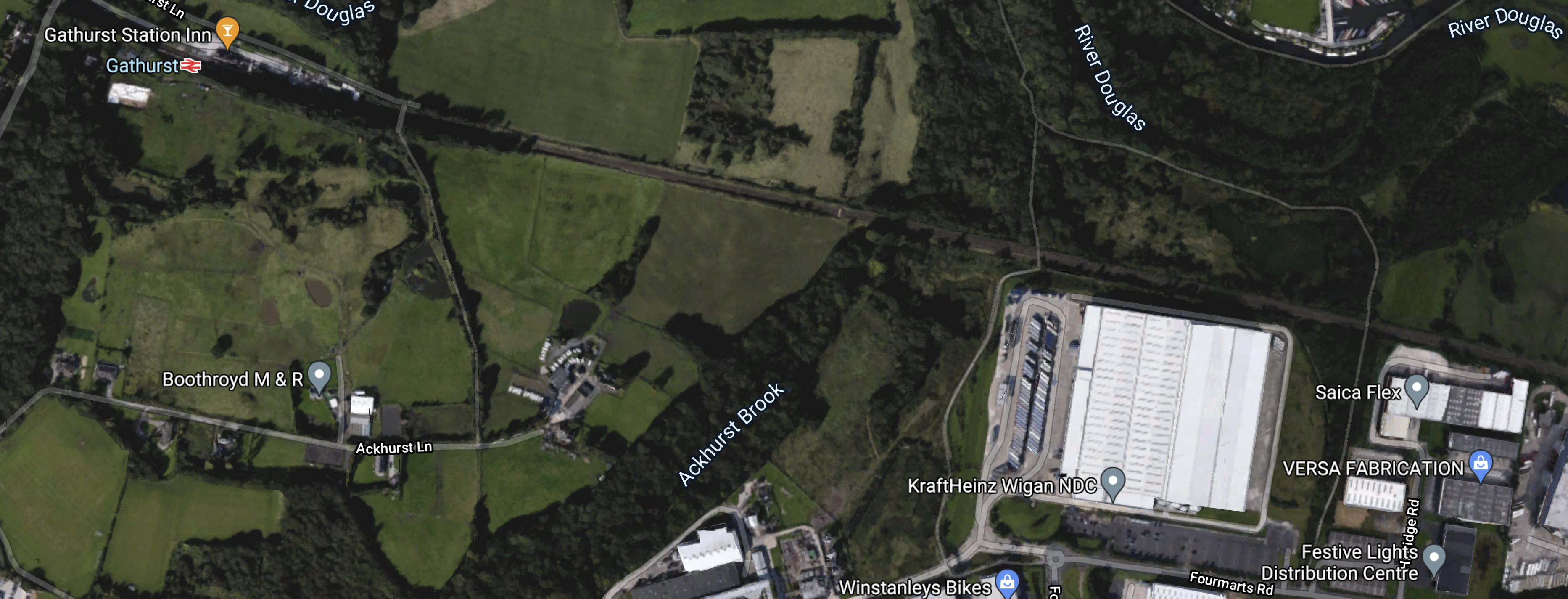
Note.
- Gathurst station is in the North-West corner of the map.
- The KraftHeinz Distribution Centre is in the South-East corner of the map.
- The Wigan Wallgate and Southport Line runs between the two.
It was all very convenient for some intense night work.
I have some thoughts.
Where’s The Siding?
Years ago a lot of factories and distribution centres like this, would have had a siding.
Many have been sold off and built over, as many companies preferred to use road transport.
Using The Running Line
This was first used in the UK to load timber on to trains in the North of Scotland for transporting to markets in the South.
Surely, the only thing needed is ground strong enough alongside the track to support a container handling machine.
Were JCB Involved?
JCB are innovators and appeared a few days on this blog, in this a post entitled JCB Finds Cheap Way To Run Digger Using Hydrogen.
Although, that post wasn’t about cargo handling, it shows that the company thinks differently and I’m sure they can come up with a pollution-free container-handler to unload containers at night for companies like KraftHeinz.
Conclusion
Surely, if this freight movement were to be used regularly, the signalling changes and perhaps some concrete should be installed.
We need more cargo-handling experiments like this to get more trucks off the road.
Strawberries And Beer
This was my afternoon snack whilst writing on the Internet.

Beer from Suffolk and strawberries from Herefordshire.
 The Anonymous Widower