Arcola Showcases Scottish Hydrogen Conversion
The title of this post is the same as an article in the December 2021 Edition of Modern Railways.
The article has this sib-title.
Class 614 Demonstration Runs at Bo’ness Next Year
This is a key paragraph early in the article.
The aim is to build capability within the Scottish supply chain with a view to future conversion of hydrogen fleets within Scotland. The choice of a ‘314’ to provide the donor vehicles was based solely on availability, following the withdrawal of the EMU fleet by ScotRail at the end of 2019.
I don’t think they would have been my choice of donor train, as the Class 314 trains were built over forty years ago.
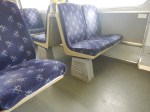
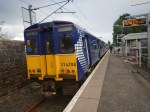
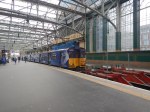
But, as Merseyrail have shown, British Rail trains of that era scrub up well.
The article is worth a full read and worth the cover price of the magazine, as it has details on the conversion and tips on how you might design a hydrogen train.
- All the hydrogen tanks , fuel cells and batteries are designed to be fitted in the vehicle underframes and don’t take up space in the passenger compartment.
- There is a fuel cell raft under both driving motor vehicles.
- Each raft contains a 70 kW fuel cell from Ballard and hydrogen cylinders.
- 40 kg. of hydrogen at a pressure of 350 bar can be carried in each raft.
- Waste heat from the fuel cell is used to heat the train.
- The DC traction motors have been replaced by modern three-phase AC motors.
- The hydrogen fillers come from the automotive industry, which is surely an obvious move.
- The interior looks good in the picture and has uses seats reclaimed from Pendolino refurbishment.
The article also reveals that Arcola are working with Arup on a study to convert a Class 158 DMU to hydrogen power.
Conclusion
I wish all the engineers and suppliers well, but I feel that these two projects are both driven by Scottish politics, rather than sound engineering principles.
More On Alston’s Hydrogen Aventra and Porterbrook’s HydroFLEX
The December 2021 Edition of Modern Railways has a small article, which is entitled Alstom To Build Hydrogen Aventras.
This is an extract.
Fuel cells will be roof-mounted, and the trains will be powered by hydrogen in conjunction with batteries, without any additional power sources such as overhead electric or diesel. They could be in service in 2025.
I am surprised that the trains can’t use electrification, as surely this would be a great advantage.
Especially, as according to another article, which is entitled New HydroFlex Debuts At Cop, which describes Porterbrook’s converted ‘319’ says this.
The original HydroFlex unit, which like the latest version has been converted from a Class 319 EMU, made its main line debut in September 2020. Porterbrook has invested £8 million in HydroFlex with the new version built over the last 10 months.
Porterbrook says its ability to operate under hydrogen, electric and battery power makes it the world’s first ‘tri-mode’ train. One carriage within the train is given over to the ‘HydroChamber’.
The contents of the ‘HydroChamber’ are given as.
- Storage for 277 Kg. of hydrogen in thirty-six high pressure tanks.
- A 400 kW fuel cell system.
- A 400 kW lithium-ion battery, which can be charged by the fuel cells in 15 minutes.
Does this mean that the battery is a 100 kWh battery that can supply energy at a rate of 400 kW?
This sentence from the article describes the train’s performance.
Porterbrook says the train carries sufficient hydrogen to offer a range of 300 miles and a top speed of up to 100 mph.
A few years ago, I had a chat with a Northern driver about the Class 319 train, which he described as a fast train with good acceleration and superb brakes.
Have Porterbrook and the University of Birmingham just added the ‘HydroChamber’ as an on-board electricity source or have they gone for a full integrated system with new traction motors and regenerative braking to the battery?
The original Class 319 trains worked well without regenerative braking, so I suspect that the simple approach has been used.
But this would make the train ideal for branch lines and extensions without electrification from electrified lines. The following routes come to mind.
- Blackpool South and Colne via Preston
- Manchester Airport and Windermere
- Ipswich and Felixstowe.
- The Borders Railway in Scotland.
The Alstom Hydrogen Aventra might be better on lines without any electrification at all.
Conclusion
My feeling is that both these trains have their good points and limitations and I suspect both will find their niche markets.
KEPSA Signs Large-Scale Green Energy Projects MoU In Kenya
The title of this post, is the same as that of this article on ESI Africa.
This is the first paragraph.
The Kenya Private Sector Alliance (KEPSA) has signed a Memorandum of Understanding (MoU) with green energy company Fortescue Future Industries (FFI) to help facilitate its members participation in new large scale green energy projects in Kenya.
FFI are planning a possible green hydrogen and green ammonia facility in the country, that will use renewable energy.
Andrew Forrest is building up the air miles again.
Is The Alstom Hydrogen Train Powered By A Fuel Cell?
In Alstom And Eversholt Rail Sign An Agreement For The UK’s First Ever Brand-New Hydrogen Train Fleet, I mentioned that Alstom’s Hydrogen Aventra could be powered by either a small gas turbine or a fuel cell or cells, but I didn’t plump for one or the other. I said this.
If you look at the proportions of the Alstom hydrogen train and the pictures of Class 710 trains, I feel that the Alstom train could have the longer twenty-four metre cars.
It may be a tight fit compared to creating the Alstom Coradia iLint hydrogen train, but I would feel it is possible to install a fuel cell or cells, the required cooling and the hydrogen tanks, having seen cutaway drawings of hydrogen-powered double-deck buses on the Wrightbus web site.
Interestingly, the Alstom press release doesn’t mention fuel cells, so could the train be powered by a small gas turbine?
I think it is unlikely, but it is technically feasible.
I had forgotten one important factor. Both the Aventra factory and Rolls-Royce are in Derby and I know from talking to a retired British Rail engineer, that there is a lot of contact between the two companies at an informal level.
Rolls-Royce have published this picture of their beer keg-sized generator.
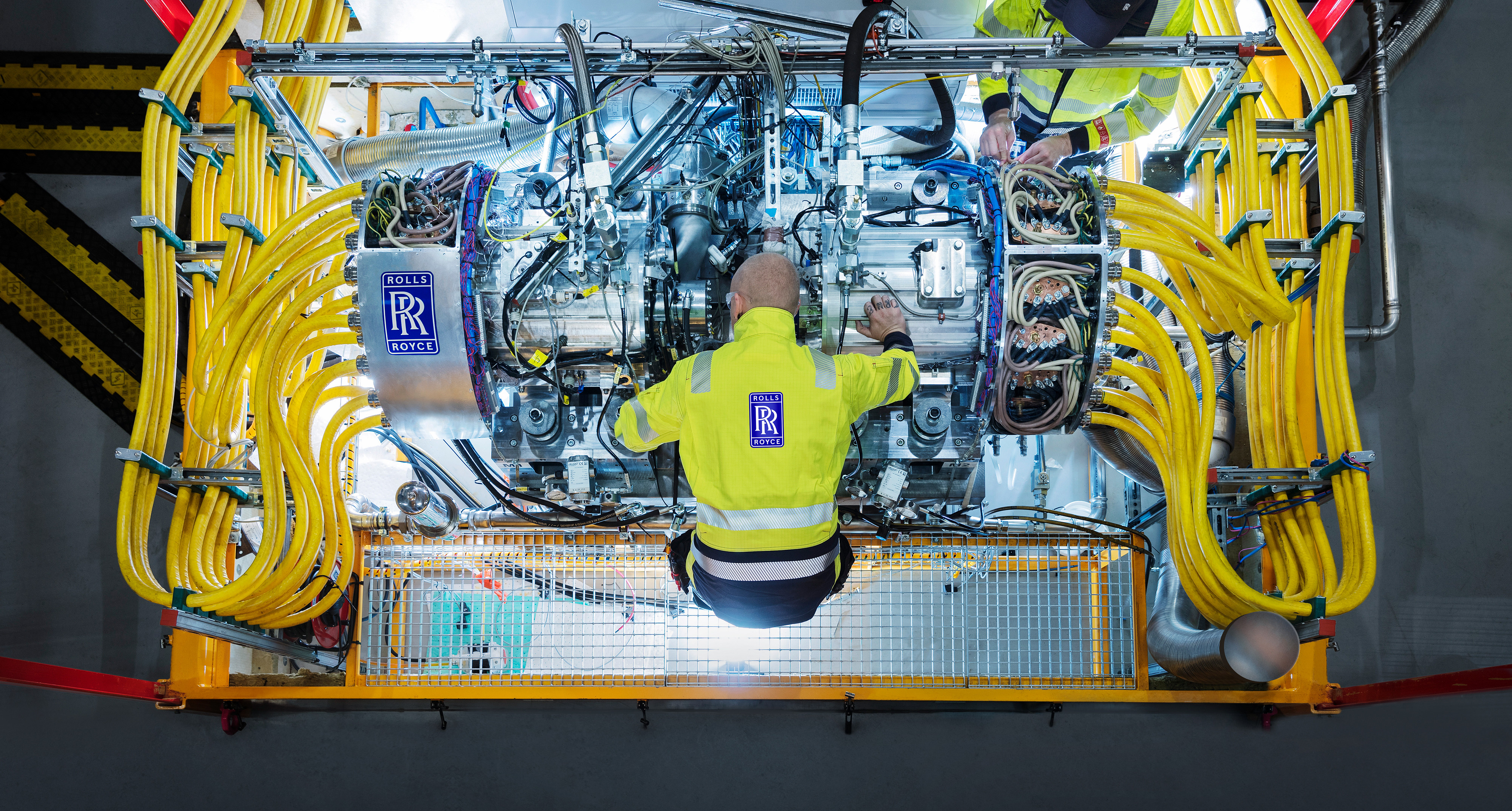
Would it need the cooling system, which appears to be needed with a fuel-cell?
The Rolls-Royce Advantage
There would surely be advantages in using a Rolls-Royce gas turbine to power the train.
- Having a Rolls-Royce power unit must help sales of your plane or train.
- There is the Derby connection.
- Alstom already deal with Rolls-Royce subsidiary; MTU for diesel engines for freight locomotives.
Could we be seeing a hydrogen multiple unit powered by a gas turbine?
Whitelee Green Hydrogen Facility To Power Public Transport
The title of this post, is the same as that of this article on the BBC.
Some points from the article.
- It will be the country’s largest electrolyser. Is that Scotland or the UK?
- The facility is being built by Scottish Power, ITM Power and BOC.
- Friends of the Earth think it’s wrong and the electricity should be used immediately.
In ScottishPower’s Green Hydrogen Project Looks To Build UK’s Largest Electrolyser, the title says that the Whitelee project will be the UK’s largest electrolyser.
Hydrogen Train Refuelling Standard To Be Developed
The title of this post, is the same as that of this article on Railway Gazette.
This is the first paragraph.
A agreement to optimise hydrogen refuelling equipment for passenger trains and define an international standard has been signed by Alstom and the Hynamics hydrogen subsidiary of French energy group EDF.
This can only be a good thing.
Bosch Investing £800 million For UK Hydrogen Car Infrastructure Development
The title of this post, is the same as that of this article on Hydrogen Fuel News.
Hopefully, this will make purchase of a hydrogen-powered vehicle a possibility for more people around the UK.
Tevva Lands $57m For Electric And Hydrogen Trucks
The title of this post, is the same as that of this article on The Engineer.
This is the sub-title.
Tevva has secured $57m for its new London-based production facility to scale up manufacturing of its electric and hydrogen trucks.
It certainly looks like this well-connected company of Israeli origin, could be going places.
Freightliner Continue Trials On New Low Carbon Fuel
The title of this post, is the same as that of this article on Rail Technology Magazine.
This is the first paragraph.
As part of their commitment to carbon reduction Freightliner will conduct operational trials of a new low carbon fuel supplied by Green Biofuels Ltd (GBF).
And this paragraph described the fuel.
GBF are the UK’s leading provider of Hydrogenated Vegetable Oil (HVO) and the new fuel consists of 55% Shell GTL (gas to liquids) Fuel and 45% Gd+ HVO.
It does appear that hydrotreated vegetable oil or HVO, could be becoming an intermediate step on the route to decarbonisation, as I’ve posted about the fuel before in Powered By HVO.
The other promising route to decarbonisation must surely be that of producing fuel from waste, as pioneered by Velocys and others.
But they are only intermediate steps before hydrogen becomes the preferred zero-carbon fuel for rail freight services.
Order! Order! It’s A Bus-y Time For Wrightbus
The title of this post, is the same as that of this article on Ballymena Times.
This is the first paragraph.
The Wrightbus order book continues to be busy. The Go-Ahead Group has signed a contract to buy its first hydrogen powered buses, as part of a deal which could become the largest of its kind in Europe.
Let’s hope that this is the start of something big!
 The Anonymous Widower