Hyundai Unveils Upgraded Xcient Hydrogen Fuel Cell Truck
The title of this post, is the same as that of this article on Automotive Powertrain International.
This is the sub-heading.
Hyundai Motor Company has unveiled the upgraded Xcient fuel cell class-8 heavy-duty truck, which features advanced hydrogen technologies and advanced driver assistance systems (ADAS) tailored for the North American market.
The article is worth a full read, as it shows how the largest American trucks, can be replaced with zero-carbon hydrogen fuel cell trucks.
This is the Hyundai Xcient truck web site.
Did Hydrogen Lose Labour The Runcorn And Helsby By-Election
I used to work in the Castner-Kellner works at ICI Runcorn, where hydrogen is produced using electrolysis in the Castner-Kellner process.
That process used a lot of mercury and wasn’t good for the health of the workforce. One of my jobs was to develop instruments to detect mercury in air, blood and urine.
I believe the mercury-based process to produce chlorine, with the hydrogen as a by-product has now been replaced with a membrane-based mercury-free process.
Consider.
- The same plant still produces a large proportion of the hydrogen we use in the UK.
- The Runcorn plant is now owned by INEOS, which in turn is owned by tax-exile and Brexiteer ; Jim Ratcliffe.
- I doubt, Mr. Ratcliffe is a supporter of the Labour Party.
- The big promoters of hydrogen are the Bamfords and their companies ; JCB, Ryse and Wrightbus, who are not considered companies that Labour would support.
- Although, Wrightbus seem to have had some political support lately.
- Google AI can’t find any details on Reform UK’s or Nigel Farage’s views on hydrogen.
- Ed Miliband hasn’t shown himself to be very knowledgeable about hydrogen.
- This article on the BBC is entitled Ellesmere Port Hydrogen Heating Trial Scrapped After Protests.
It strikes me, that if one candidate had got a grip on the hydrogen issue, then there would have been a different result in the by-election.
Wrightbus Delivers More Hydrogen Buses To Germany Bringing Total To 43 – Around 130 Are Due To Be On The Roads By The End Of 2025
The title of this post, is the same as that of this article on the Belfast Newsletter.
This is the sub-heading.
The Ballymena bus manufacturer has also opened a European service centre and spare parts warehouse in Brühl, near Cologne
These three paragraphs add detail to the story.
Northern Ireland zero-emission bus manufacturer Wrightbus has delivered 12 new hydrogen vehicles to German operator WestVerkehr GmbH.
The latest order completion of Kite Hydroliner single decks means there are now 43 hydrogen-powered buses on the streets of Germany – with around 130 due to be on the roads by the end of 2025.
WestVerkehr GmbH is based in the westernmost district of Germany, on the border with the Netherlands, and will operate the Kite Hydroliners between Heinsberg, Hückelhoven, and Erkelenz.
I always think, that if you can sell anything vehicles to the Germans, there can’t be much wrong with them.
This picture shows one of the new Wrightbus electric buses, that I ride regularly around Finsbury in London.
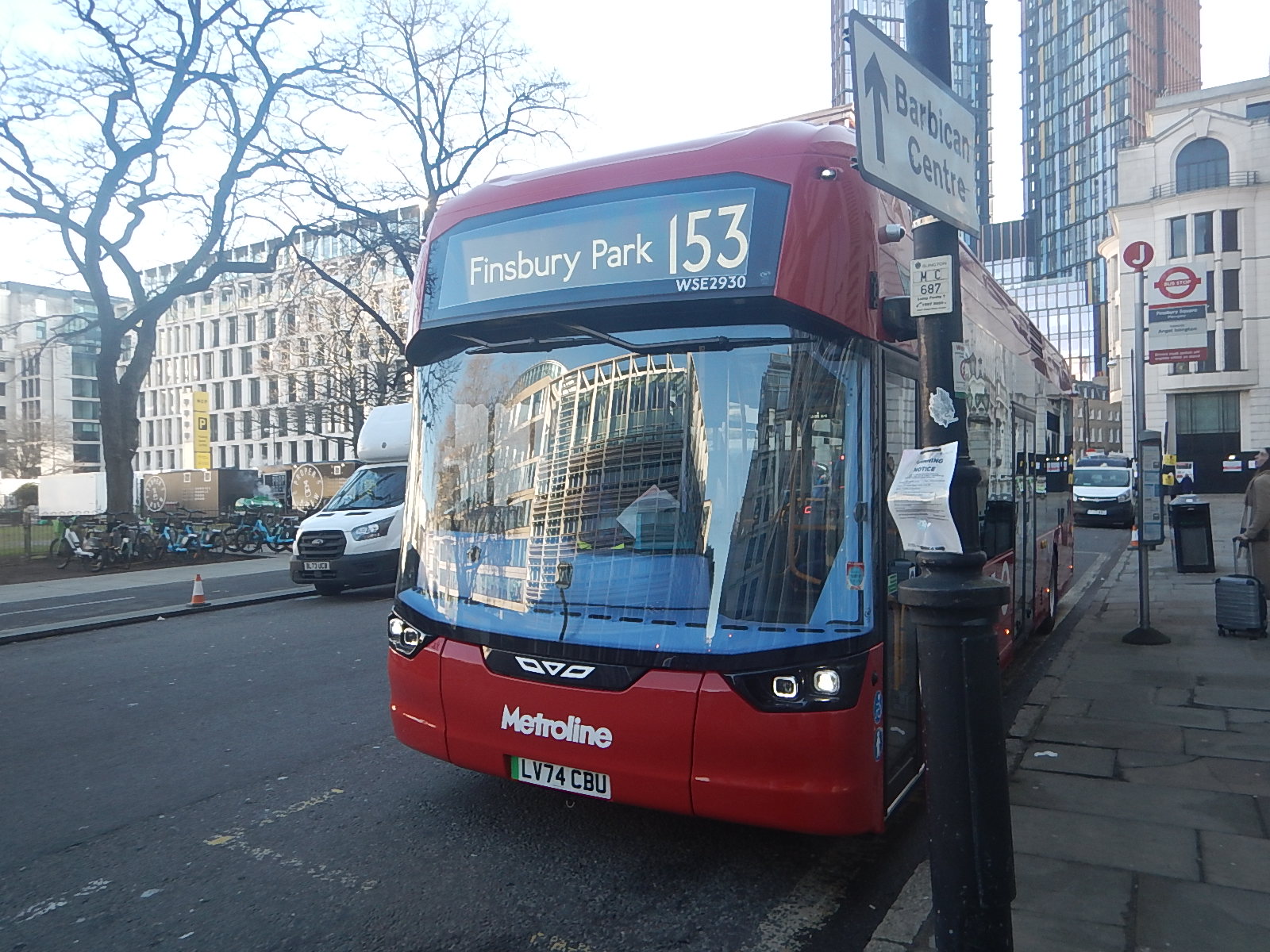
I was on a Chinese electric bus yesterday and there’s no doubt, that the ride in the Wrightbus product is smoother, than that of the Chinese one. Especially, when standing. The Chinese bus doesn’t even come close for ride with a New Routemaster.
London would do better, if it converted the thousand New Routemaster to zero-carbon power, rather than import a thousand Chinese buses.
In Equipmake Hybrid To Battery Powered LT11, I describe how one New Routemaster had a transmission transplant in Norfolk.
As it is possible, are Wrightbus NewPower working on it?
Cummins Unveils Integrated Powertrain
The title of this post, is the same as that of this article on Big Rigs.
These four paragraphs, describe what Cummins can offer to the world’s builders of large trucks.
In recent years, Cummins has gone through a remarkable transformation, becoming a genuine powertrain supplier – from engine to transmission to axles and brakes.
Now for the first time, Cummins will showcase its new integrated powertrain at the upcoming Brisbane Truck Show next month.
This world-first display will feature the integration of a Cummins X15 engine, Eaton Cummins 18-speed Endurant speed transmission, and Meritor driveline and axles.
Cummins’ acquisition of Meritor in 2022 was a critical step for the company to be able to roll out a completely integrated powertrain.
Note that the X15 engine has a hydrogen version numbered as X15H.
Wrightbus At Heart Of £6.5bn Hydrogen Mega-Project Set To Transform UK Economy
The title of this post is the same as that of this article on Love Ballymena.
These are the first three paragraphs.
Ballymena’s Wrightbus is at the forefront of a transformative £6.5 billion clean hydrogen initiative that promises to create 24,300 jobs across the UK and position the nation as a global leader in renewable energy.
Project HySpeed, unveiled this week, unites some of Britain’s most influential companies—including Wrightbus, Centrica, JCB, and ITM Power—in a landmark effort to scale up green hydrogen production, reduce costs, and accelerate industrial decarbonisation.
The project is a major coup for Ballymena, where Wrightbus, a pioneer in zero-emission transport, has been a vital part of the local economy for decades. As a key member of the HydraB Power group, which spearheads HySpeed, Wrightbus brings its expertise as the producer of the world’s first hydrogen-powered double-decker bus.
I believe we need the Irish dimension in Project HySpeed, as the Irish have a unique way of getting things done.
I am reminded by a story, that I heard from a retired Guards officer about the liberation of Vienna in World War II.
The city was in a desperate state and as he hold me the story, the retired officer said that a woman could be had for the price of two cigarettes.
In the mess one evening, the officers were discussing what to do, when an Irish Guards officer said, “The people need some fun! Let’s organise a horse race meeting!”
They all thought he was joking, but that is what they did!
The guy, who told the story is long since dead, but he believed that day of fun meant that Austria wasn’t taken over by the Soviets, like so many other East European countries.
The Irish do have this unique way of getting things done.
Note that the CEO of Centrica is Chris O’Shea. Does he have Irish roots?
Wrightbus To Build 1,000 Zero-Emission Buses
The title of this post, is the same as that of this article on The Times.
This is the sub-heading.
Northern Ireland company to ramp up production by 40% and recruit hundreds more employees as it also develops the UK’’s first long-distance hydrogen coach
These are the first two paragraphs, which add more detail.
Wrightbus, the Northern Ireland bus manufacturer, could be supplying as many as 1,000 zero-emission vehicles to depots around the UK as it increases production by 40 per cent over a two-year period and takes on hundreds more workers.
The company, best known for the redesigned 21st century take on the Routemaster ordered by the former mayor of London Boris Johnson, also announced it is to spend £5 million developing the UK’s first long-distance hydrogen coach capable of travelling 1,000km (621 miles) on a single recharging of its fuel cells.
These two paragraphs describe their production and employment plans.
Jean-Marc Gales, the former senior Peugeot director who is Wrightbus’s chief executive, said production at its Northern Ireland plant would go from 1,000 vehicles last year to 1,200 this year and 1,400 in 2026.
Over the same period the company’s workforce will grow from 1,500 to 2,500.
Peter Kyle, the secretary of state for science, innovation and technology, said this.
The level of innovation at Wrightbus and their quality standards have been recognised.
That is surely rare praise for a private company from a Labour Minster.
I first wrote about Wrightbus’s new hydrogen coach in early March, when I wrote Wrightbus Goes Back To The Future As It Relaunches The Contour Coach, which was based on this Wrightbus press release, which has the same title.
I said this in my post.
Wrightbus is entering the coach market for the first time in more than 30 years with the launch of two new vehicles in the next 18 months.
The first vehicle to hit the market is the Contour, a low-emission 55-seater coach that was launched at a customer showcase event today (March 5).
It’s a case of back to the future for Wrightbus, which last produced a Contour coach in 1987 before retiring the vehicle.
The second vehicle, a zero-emission hydrogen coach – which is under development in Ballymena, Northern Ireland – will be added to the Wrightbus coach range within the next 18 months to help drive decarbonisation of the sector.
The low emission Contour has a lead time of just six months from order, which is considerably faster than the current one-to-two-year average wait customers have come to expect from the sector. Featuring a Cummins Euro 6 400BHP X11 engine and a ZF automatic gearbox, the modern-day Contour has been built with comfort in mind, with up to 55 reclining seats – each with its own USB port – alongside other modern safety features. Competitively priced and available with or without PSVAR compliance, there is also the option of the vehicle being ‘pre-prepared’, protecting the vehicle’s ‘second life’ and flexibility.
The coach has a range of bespoke options for customers to choose from and is designed to maximise luggage space and functionality.
The low emission Contour coach was to have been built in China.
But events have moved on fast in the last month, with Trump and China trading insults on tariffs almost daily.
From today’s article in The Times and a press release from the Government, which is entitled Science Secretary Hails Wrightbus As Company Pledges £25 million To Bolster UK’s Green Transport Revolution And Drive Growth, it appears that the Chinese coach has been dropped.
Could the plan now be something like this?
- The low emission Contour coach will either be dropped, built in Ballymena or perhaps even built on JCB’s site in Texas.
- It might possibly be advantageous to build the coach in the United States to balance the tariffs and target the North American market.
- I would feel, that North America could be a lucrative market for the larger thousand kilometre coach.
- With the low emission Contour coach, Cummins get a chance to show the United States their excellent hydrogen technology.
- Trump can claim, that he’s brought jobs back to the United States.
- If Wrightbus and/or JCB build the low emission Contour coach, they could probably create a better product and get it to market earlier.
I suspect we’ll learn more of Wrightbus’s plans in the next few weeks.
Council’s Boost To Aln Valley Railway Expansion Plan
The title of this post is the same as that of this news item from Northumberland County Council.
This is the body of the news item.
Northumberland County Council has agreed to assist the Aln Valley Railway in Alnwick to extend its rail line and expand its tourism offer in the town.
The county council has agreed to repair and adopt a bridge which is crucial to the expansion plans of the Aln Valley Railway Trust which is working towards the ultimate aim of extending the track from Alnwick to Alnmouth Station.
The Trust is wanting to continue laying track past Eden Hill Bridge which is currently owned by The Historic Railways Estate (part of Highways England). However, the Estate won’t allow the passage of trains under the bridge as it would impose maintenance obligations and costs onto them.
To overcome this hurdle and assist the popular tourist attraction , the county council, as the highways authority, has agreed adopt the bridge which has an unclassified road (U3203) running over it and to repair the bridge so that it can then give consent to the railway to lay track and ultimately operate trains under the bridge.
To bring this masonry arch bridge up to adoptable standards will cost in the region of £255k. One of the main areas of work that is needed is to install a waterproofing concrete overslab to eliminate the current water ingress. Extensive repointing together with masonry repair works are also needed on the bridge arch.
There is a Wikipedia entry for the Alnwick Branch Line, where this is the first paragraph.
The Alnwick branch line is a partly closed railway line in Northumberland, northern England. A heritage railway currently operates along one mile of the line, which originally ran from Alnmouth railway station, on the East Coast Main Line, to the town of Alnwick, a distance of 2+3⁄4 miles (4.4 km).
This OpenRailwayMap shows the route of the Alnwick Branch Line between Alnmouth and Alnwick.
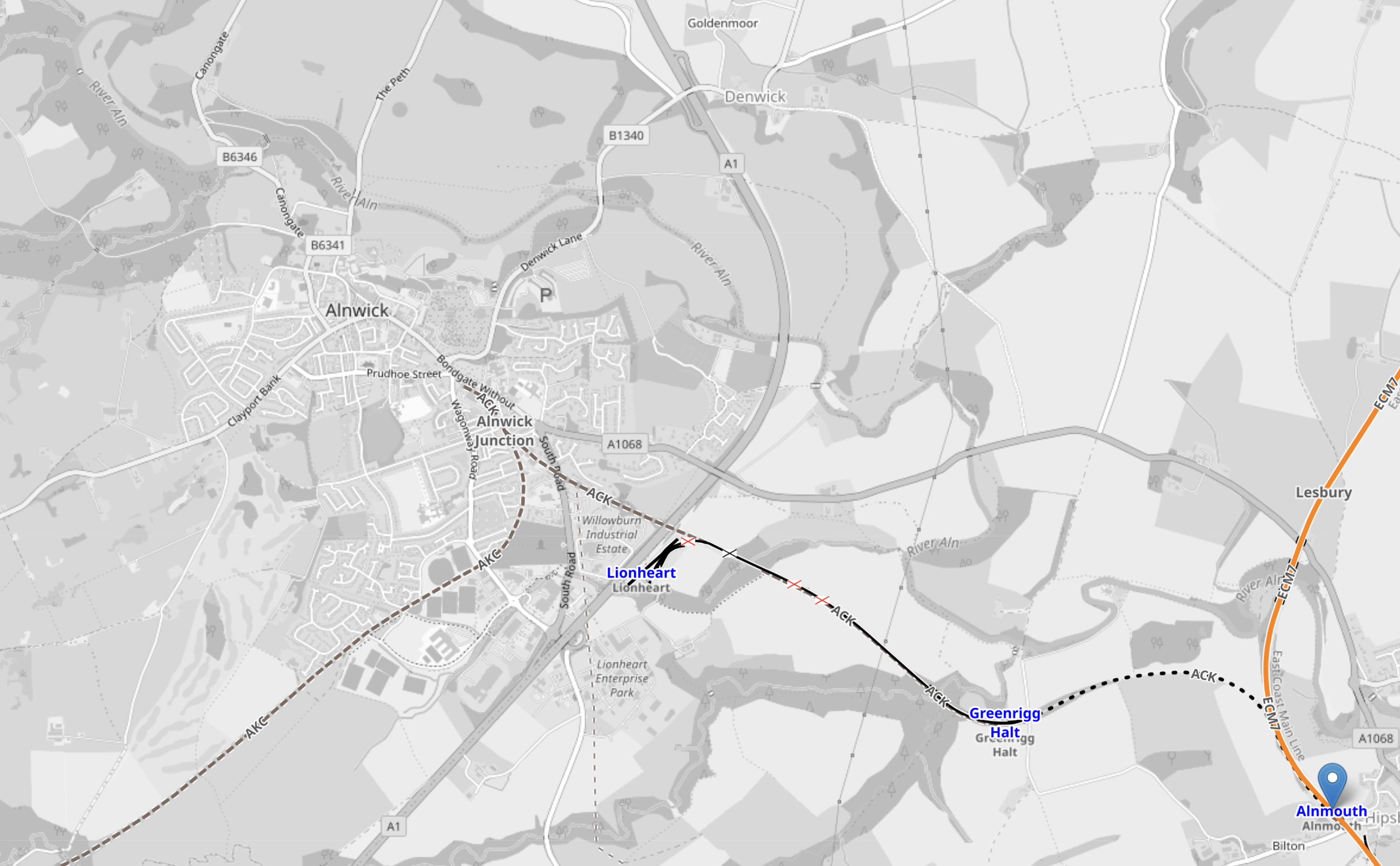
Note.
The blue arrow in the South-East corner of the map indicates Alnmouth station.
The orange line curving through Alnmouth station is the electrified East Coast Main Line between Newcastle and Scotland.
The dotted line curving away North-West from the East Coast Main Line is the route of the AlnwickBranch Line, which leads to Alnwick in the North-West of the map.
The blue text indicates the the two stations of the Aln Valley Railway.
Greenrigg Halt is nearest to the East Coast Main Line and Lionheart is nearest to the town.
The road encircling the town of Alnwick is the A1 Alnwick By-Pass.
This Google Map shows the area between Alnmouth station and Alnwick.
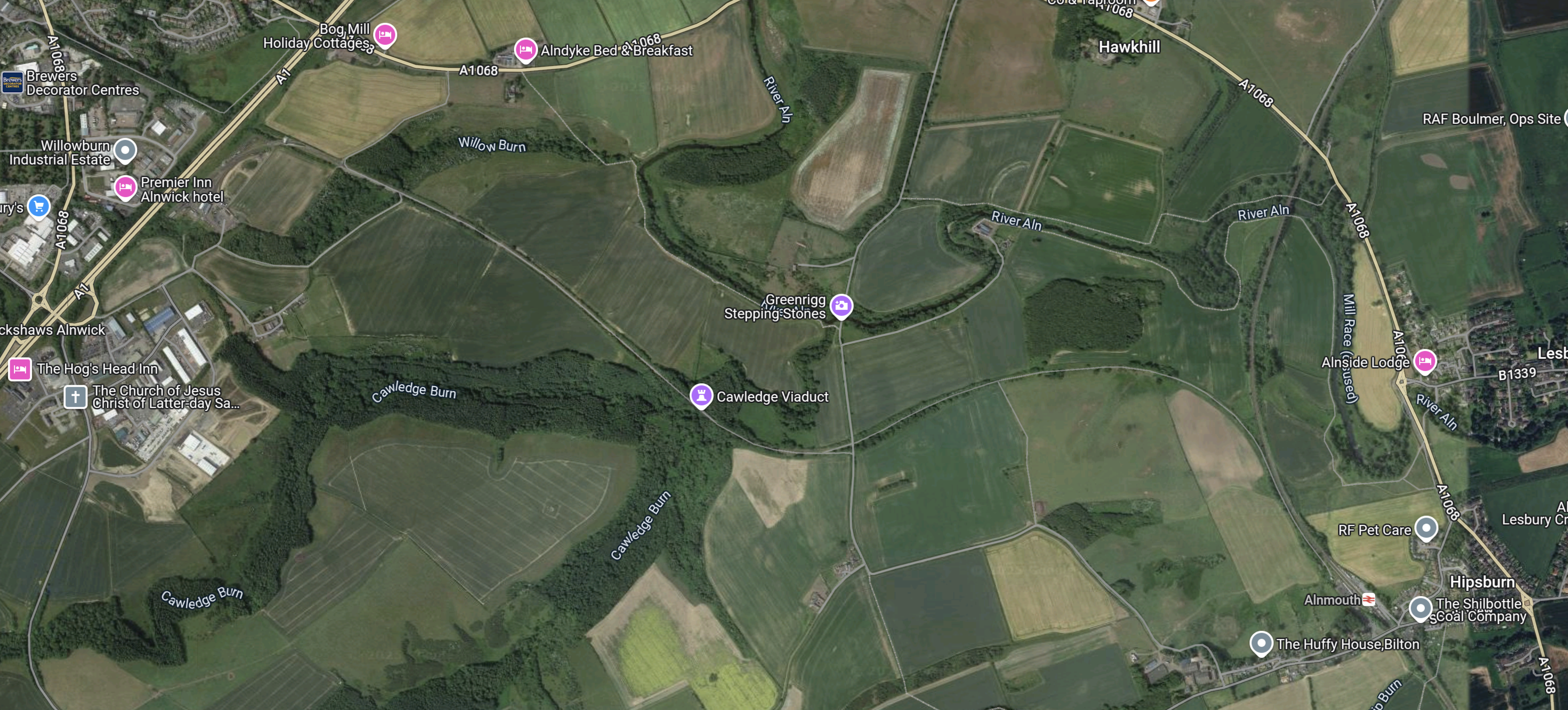
Note.
- Alnmouth and its station is in the South-East corner of the map.
- Alnwick is in the North-West corner of the map.
- The A1 crosses the North-West corner of the map.
- The line of the Alnwick Branch Line can be picked out crossing the map diagonally.
Click on the map to show it to a larger scale.
The Wikipedia entry for Alnmouth station says this about the ambitions of the Aln Valley Railway to connect to the East Coast Main Line.
The Aln Valley heritage railway has long-term ambitions of extending its running line to Alnmouth station[10] from its current terminus at Greenrigg Halt.
This picture shows a Stadler RS-ZERO.
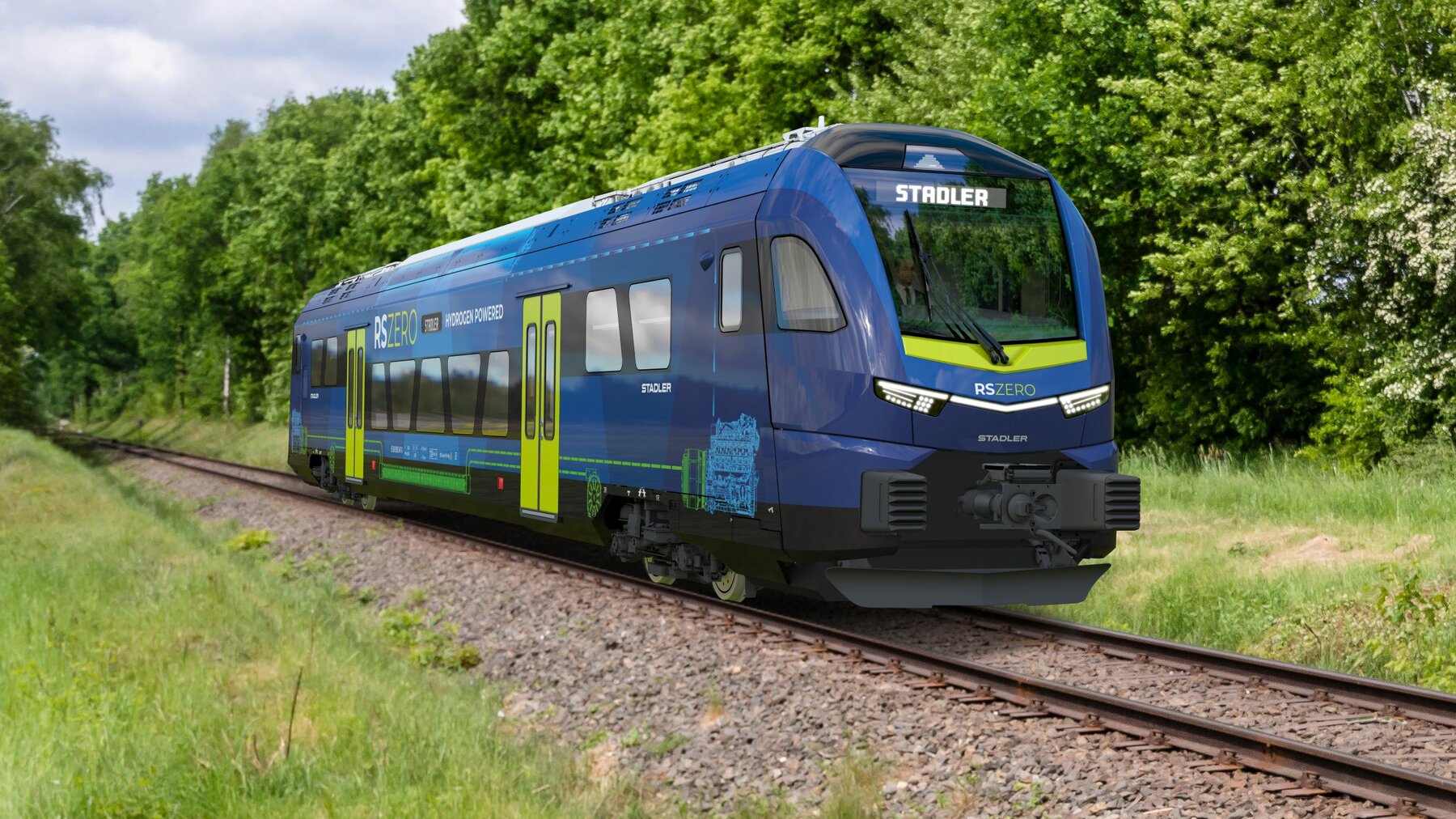
Could one of these powered by hydrogen shuttle between Alnmouth station and Alnwick? Probably, but it’s not powered by steam!
Doncaster-Sheffield Airport And Hydrogen
I believe that the airport of the future will need a lot of hydrogen.
I am probably more optimistic than most, that we will see hydrogen-powered aircraft by around 2035, as my calculations say it is probably the only way to move a hundred people by air at a time, without using fossil fuels.
Airports also have a large number of larger vehicles, that will I believe be ideal for hydrogen power.
Hydrogen buses and coaches will be more common, than they are now.
Heavy goods vehicles are likely to turn to hydrogen power.
Humberside has a large hydrogen network, which is fed by two massive hydrogen stores at AldBrough and Brough.
I suspect that Nimbys will object to hydrogen around airports on safety grounds.
But Doncaster Sheffield Airport could be an ideal location for an airport for hydrogen-powered aircraft.
Hydrogen-Powered Trains To Be Introduced In Northern Italy
The title of this post, is the same as that of this article on Fuel Cell Works.
These three paragraphs introduce the project.
Residents and visitors to Valcamonica, an Alpine region in northern Italy, will be able to ride hydrogen-powered trains from next year.
The pioneering project, the first of its kind in Italy and supported by an investment of 367 million euros ($396 million), marks a significant adoption of hydrogen fuel for a rail line, despite the high production and operational costs.
The region currently uses polluting diesel trains, which will be replaced by 14 zero-emission hydrogen-powered trains made in Italy by a unit of French group Alstom
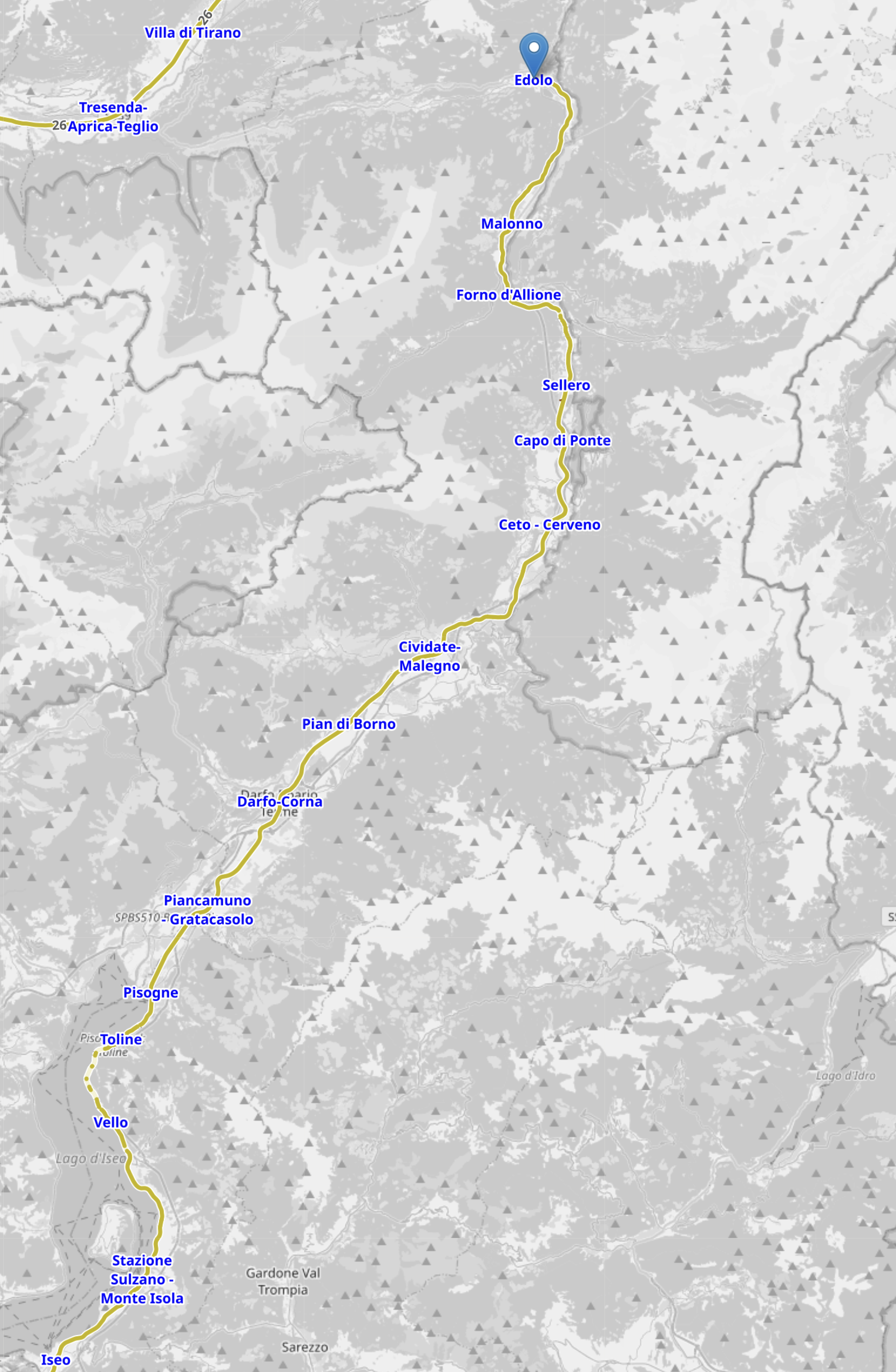
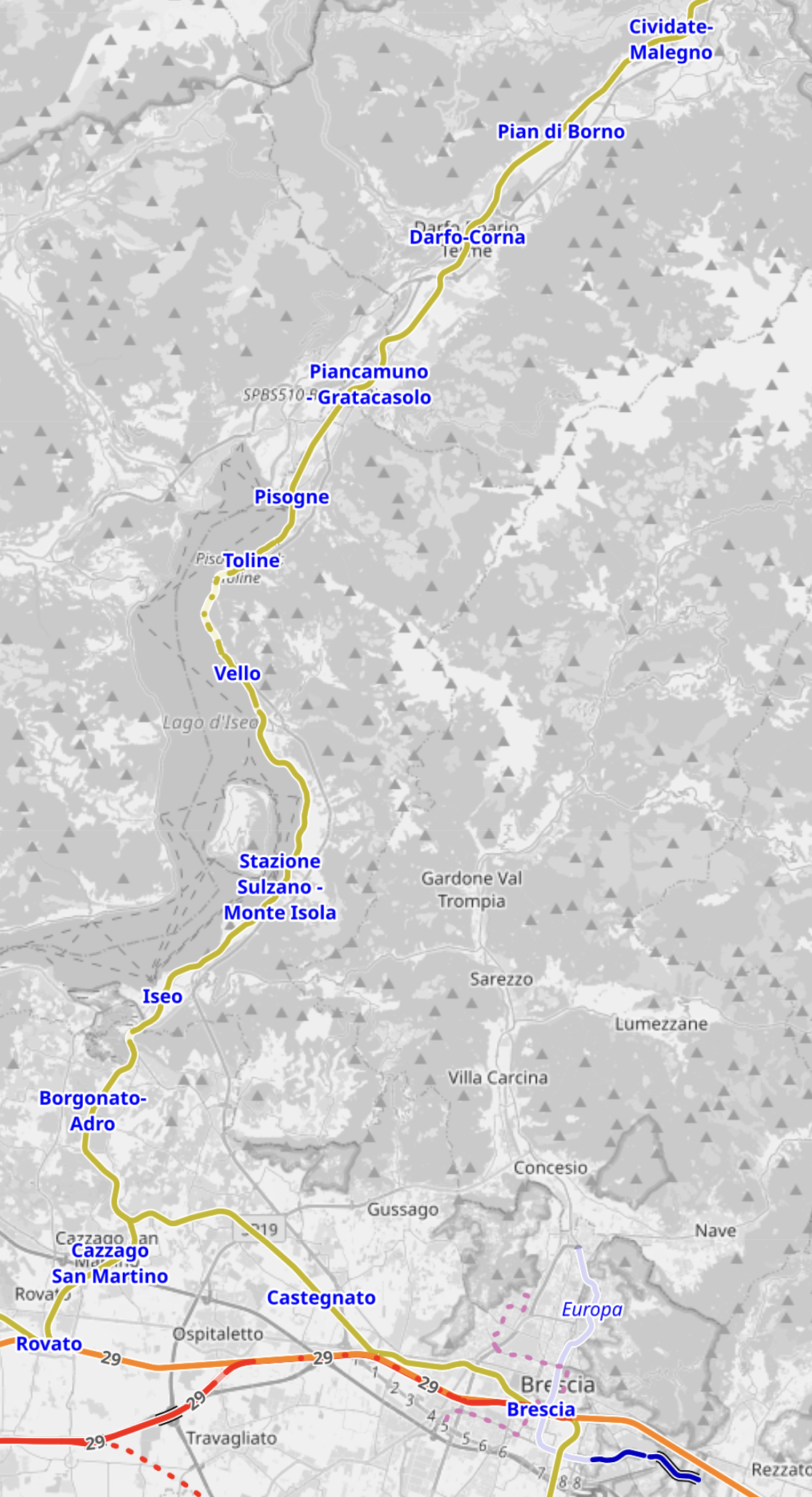
The trains will run on the Brescia–Edolo railway, which has this Wikipedia entry.
This OpenRailwayMap shows the Northern part of the railway.
Note.
- Edolo station is indicated by the blue arrow at the top of the map.
- The Brescia–Edolo railway is indicated by the yellow line.
- Stations are indicated by blue lettering.
- Iseo is the station in the South-West corner of the map.
- Click the map to show it to a larger scale.
This second OpenRailwayMap shows the Southern part of the railway to the same scale.
Note.
- The Brescia–Edolo railway is indicated by the yellow line.
- The Venice-Milan railway is indiated by the orange line across the bottom of the map.
- Stations are indicated by blue lettering.
- Iseo station is in the South-West corner of the map.
- Brescia station is in the South-East corner of the map on the Venice-Milan railway.
- Click the map to show it to a larger scale.
It looks to me, that the Brescia–Edolo railway could be a day-out if you were having a holiday in Milan, Venice or Verona.
- The railway is a single track railway.
- It appears to go through the mountains.
- Currently, it is diesel powered, but I suspect running hydrogen trains on the route will turn it into a major tourist attraction.
Could other rail routes attract visitors, by going for zero-carbon traction using hydrogen?
In the UK, these are surely six of many possibilities.
- Settle and Carlisle
- Marshlink Line
- Mid-Cornwall Metro
- Norwich and Sheringham
- Sheffield and Huddersfield
- Mid-Cornwall Metro
- Uckfield Branch
Infrastructure costs would just need a hydrogen supply to be arranged.
Conclusion
You can always trust the Italians to use a stylish solution.
Backing Up The Wind With The Keadby Power Stations
I went to Cleethorpes from Doncaster by train yesterday. You pass the Keadby site, where there are two large gas–fired power stations of 734 MW and 710 MW. A third one ; Keadby 3 of 910 MW complete with carbon capture and storage should join them by 2027.
So that will be nearly 2.5 GW of reliable electricity.
I find it interesting that one of our first gas-fired power stations with carbon capture will be in Lincolnshire, which is famous for growing plants of all shapes, types and sizes. So will we be seeing lots of greenhouses on the flat lands I saw yesterday, growing plants in an atmosphere they like, so that we can generate our carbon dioxide and eat it.
The next power station at Keadby is called the Keadby Next Generation power station, which is intended to be complete by 2030. It is a bit of a puzzle in that it will run on up to 1800 MW of hydrogen and only produce up to 910 MW of electricity.
Note.
- The hydrogen will come from SSE’s hydrogen store at Aldbrough and Centrica’s store at Rough.
- Surely, the amount of hydrogen and electricity should balance.
When I worked in ICI’s hydrogen plant in the 1960s, ICI had no use for the hydrogen, so they sent it to their power station, blended it with coal gas and used it to make steam for other processes.
Could Keadby Next Generation power station be providing zero-carbon steam for the chemical and other processes on Humberside?
Adding the 910 MW of electricity to Keadby’s gas-fired total of 2.5 GW gives 3.4 GW of electricity from Keadby to back up the wind farms.
3.4 GW at Keadby is what I call backup!
It also should be noted, that one of the reasons for building the Mersey Tidal Barrage is to provide backup for all the wind farms in Liverpool Bay.
Conclusion
I believe that SSE could be supplying zero-carbon steam in addition to electricity from the Keadby Hydrogen power station.
 The Anonymous Widower