Should Hospitals Be The Power Backup Locations?
I was reading an article in The Times about how protestors were blocking roads in Central London and they’re inadvertently stopped an ambulance.
So this question occurred to me. Why I don’t know, but my mind has always jumped about and put thoughts together?
Consider.
- The latest generation of energy storage that could be used to back up the grid are coming down in physical size.
- Hospitals have complex power systems, as they use a lot of electricity.
- Hospitals need emergency power backup.
- Because of their high electrical use, hospitals will have a high capacity connection to the National Grid.
- Some modern treatments need a lot of electricity.
- Will ambulances be battery-powered and will need to be charged up, whilst delivering patients?
- Many bus routes terminate at the local hospital, so if the buses are battery-powered, these could be charged as well.
As an Electrical and Control Engineer, I feel that to put a town, city or are’s back-up battery at the hospital would be a sensible idea.
Hospitals should be designed to be health, energy and transport hubs for their communities.
Improving The Wood Green And Moorgate Public Transport Corridor
This morning I went for coffee with an old school friend from Minchenden Grammar School at Southgate station.
Southgate is not a bad place to meet someone.
- There are a couple of good coffee shops.
- There are plenty of buses.
- It has a couple of the better chain restaurants including a Pizza Express.
- The area also has a lot of memories for me.
It also has one of London’s most iconic Underground stations.
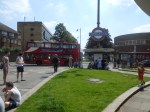
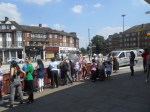
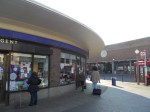
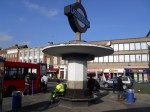
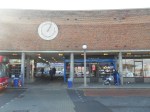
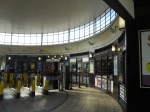
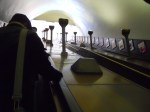
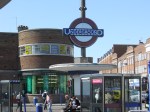
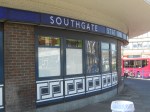
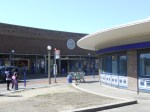
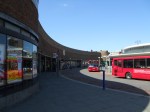
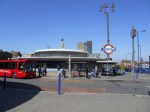
It may look familiar, as it regularly crops up in film and television dramas.
- One station guy told me, that the ticket barriers have been designed to be easy to remove, so filming of an historic drama is possible.
- It was used in The End Of The Affair to portray a Central London station.
- As the escalators have the same bronze fittings as Moscow, they could be used in a story set in Russia.
As the Piccadilly Line doesn’t go anywhere near my house, to get to Southgate, I take a 141 bus to and from a convenient Piccadilly Line station.
- Going North, I changed at Manor House station.
- Coming South, I changed at Turnpike Lane station.
- I could have also have changed at Wood Green station.
The journey home had four major problems.
- The bus stop at Turnpike Lane station, is a few hundred yards from the station.
- I waited fifteen minutes for a 141 bus.
- When it did arrive, it was so packed, it didn’t have space for a miniature dachshund to squeeze in between the feet of the standing passengers.
- The traffic was very heavy, so the journey was slow.
How can this bus route cope in the Peak, if it can’t cope on a Sunday morning?
Various issues and actions and will make these capacity issues worse.
The Victoria Line Has No Direct Connection With The Elizabeth Line
In my view, this was a mistake, although not that serious, as the young or energetic can probably walk between Oxford Circus and the Hanover Square entrance to Bond Street station on the Elizabeth Line.
Will this connection develop with coffee and snack shops to ease passenger interchanges?
When and if Oxford Circus station is ever made step-free, I can imagine a tunnel, perhaps with a moving walkway being built between Oxford Circus station and he Hanover Square entrance to Bond Street station.
There is also the cross-platform interchange at Highbury & Islington station with the Northern City Line that links with Moorgate and the City of London.
The Piccadilly Line Has No Direct Connection With The Elizabeth Line
To get between the Northern stations on the Piccadilly Line and the Elizabeth Line is either a double-change at Finsbury Park and Highbury & Islington stations or a ride on the 141 bus.
I wrote about these issues in Extending The Elizabeth Line – Improving The Northern City Line.
The Elizabeth Line Will Attract Travellers To Moorgate
I notice that my own travelling patterns have changed from using the Central, Circle, District, Hammersmith & City and Metropolitan Lines to using the Elizabeth Line since it opened and I suspect, when the Elizabeth Line is fully joined up, that more passengers will travel to Moorgate to access the Elizabeth Line.
Transport for London and the Mayor Are Rerouting The 21 Bus
The 21 bus duplicates the 141 bus between Newington Green and Moorgate station.
But it is being rerouted next year, which will increase the loading on the 141 bus.
The 141 Bus Used To Be The 641 Trolleybus
When I was a child, London’s trolleybus network was extensive and to get between Wood Green and Moorgate, you would have used the 641 trolleybus.
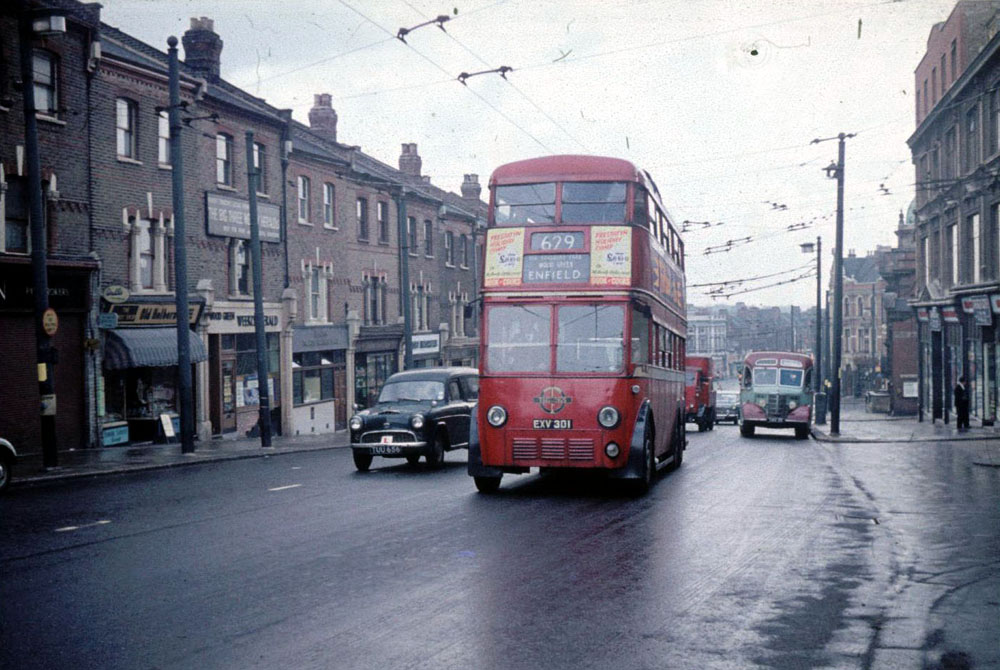
Trolleybus Ascending Jolly Butchers Hill in Wood Green
Many like me, look back on trolleybuses with affection.
Does this historical connection encourage passengers to use the 141 bus, which is the 641 trolleybus’s successor on the route?
My parents certainly had lots of trolleybus stories.
So What Could Be Done?
There are a variety of actions that could be taken to strengthen public transport between Moorgate and Wood Green stations.
Improve The 141 Bus Route
In Does London Need High Capacity Bus Routes To Extend Crossrail?, I put forward ideas for using buses to link to the Elizabeth Line.
This was my suggestion.
I suspect any route seen as an extension of Crossrail needs to have the following characteristics.
- High frequency of perhaps a bus every ten minutes.
- Interior finish on a par with the Class 345 trains.
- Wi-fi and phone charging.
I would also hope the buses were carbon-free. Given that some of these routes could be quite long, I would suspect hydrogen with its longer range could be better.
I feel that a high-quality 141 bus running every ten minutes between London Bridge station and Palmers Green, would be just what the passengers would order.
- Palmers Green bus garage is at the Northern end of the route, so could be used for refuelling or recharging.
- London Bridge station is at the Southern end of the route and was designed with an efficient bus station.
- The 141 route connects London Bridge, Bank, Moorgate and Old Street stations in the City of London.
With the right buses, this could be a route with real quality and usefulness.
Increase The Frequency On The Northern City Line
The Northern City Line may have new Class 717 trains, but it still has a pathetic frequency of eight trains per hour (tph)
- I am sure it could be increased to at least 12 tph between Moorgate and Alexandra Palace stations.
- Something like six tph would go to Welwyn Garden City, four tph to Hertford East station and two to Stevenage.
- Large areas of the Northern suburbs would get a much better connection to the Elizabeth Line.
Once the digital signalling is installed and commissioned, no new infrastructure will be needed.
I am sure, that this would be the easiest way to improve public transport in North London.
Add Step-Free Access To As Many Stations As Possible
Moorgate, Finsbury Park, Oakwood and Cockfosters are step-free with lifts.
As many stations as budgetary constraints allow, should be made step-free.
How Did The Ukrainians Attack The Crimea Bridge?
No-one seems to know what happened on the Crimea Bridge, which appeared to catch fire.
- Was it the Ukranians?
- Was it some of Putin’s enemies in Russia?
- Was it an accident?
- Did a battery in an electric car explode?
- Was it a suicide bomber?
- Was it a drone strike?
- Was it a drunken lorry-driver, who hit something?
We just get more and more questions.
But here’s two questions, that can be answered.
Was the train going from Russia? For my theory to be feasible, it must have been going from Russia into Crimea.
Did more than one part of the train catch fire? Someone said it did.
The Track Layout
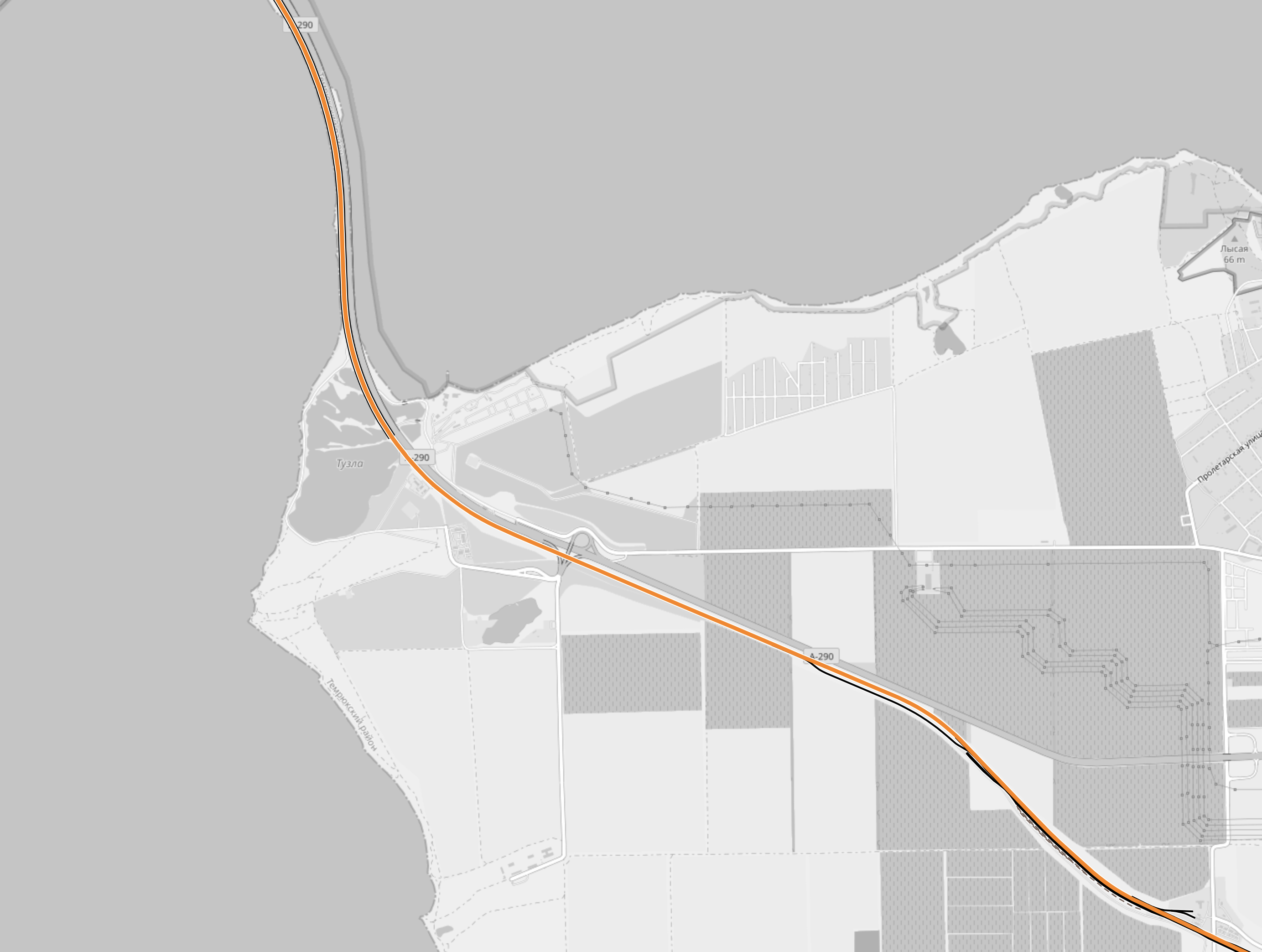
I have been looking at the track layout over the bridge on OpenRailwayMap, which shows everything. It appears a couple of kilometres. to the South (Russian) side of the bridge there is a set of sidings and/or freight loops.
This OpenRailwayMap shows the sidings in relation to the bridge.
Note.
- The main line is shown in orange.
- The bridge is in the North-West corner of the map.
- The sidings are shown in black alongside the main line in the South-East corner of the map.
This second map shows the loops and sidings in more detail.

Note.
- Trains in Russia run on the right track, whereas the UK runs on the left.
- There are actually two sets of loops; one has extra sidings and the other doesn’t.
- Both loops can be accessed from both tracks and directions.
Unfortunately, the Google Map of the area shows the construction phase.
Did the freight train stop overnight in these sidings and proceed at first light? After all it might be going a long way and drivers needed time for sleep, some food, vodka and a few ciggies.
Whilst it was stopped did Ukrainian saboteurs sneak in and fix bombs with timers to the train? After all kids sneak into our sidings at night and graffiti the trains.
The timers could even have been fitted with GPS, so they went off on the most vulnerable part of the bridge.
This could explain the timing and how the train appeared to have been hit more than once!
For a raid, it would be much easier than say what the Norwegians did in WW2 to blow up the heavy water plant at Telemark, where they didn’t lose a man.
A Picture Of The Train Fire
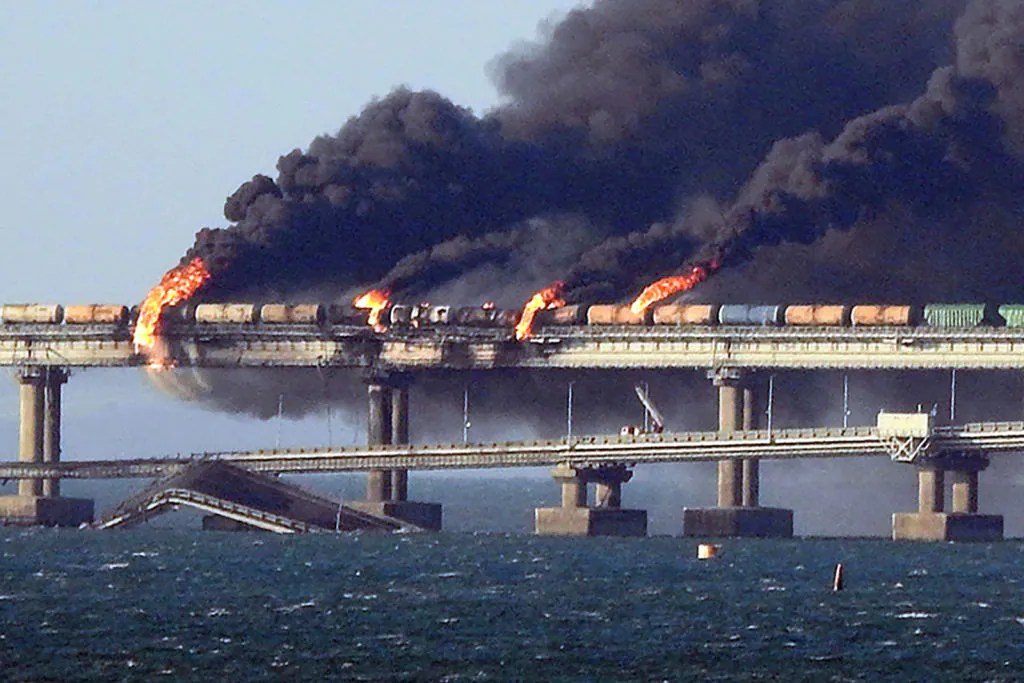
This picture shows the train fire.
Note.
- It appears that the carriageway nearest to the camera has collapsed.
- If we assume, the break point is now lying on the seabed, it points to the pier with the light-coloured rectangle on top being the failure point of the road bridge.
- According to OpenRailwayMap, who handily show carriageway directions, that is the carriageway to Crimea.
- The rail bridge is double-track and appears to be reasonably intact.
- The train also appears to be intact, except for some fire damage.
- If the train was going to Crimea, it would be on the track nearest to the camera.
I do think, that if it was explosions on the train that caused the bridge collapse, there would be more damage on the other carriageway and on the railway.
The Collapse Of The Crimea-Bound Carriageway
This reminds me very much of the collapse of the Cleddau Bridge in Wales, during construction in 1970.
Wikipedia says this about that collapse.
Errors in the box girder design caused the collapse during construction in 1970. The bridge became operational during 1975.
If I remember correctly, during construction, the bridge was effectively overloaded. I can certainly remember lots of discussion about the failure in the office, where I worked in ICI at Runcorn.
I am not suggesting, that there were errors in the Russian calculations, but that something happened to take the bridge outside of its safety limits.
Suppose, there was a large explosion near the pier, where the break occurred, could it have caused the bolts holding the sections of the bridge to shear and allow the bridge to fall, as the pictures show.
It is certainly looking that a major truck bomb, is the cause.
CCTV pictures have been shown, that purport to see a truck exploding.
Was It A Suicide Attack?
I don’t think that the type of traditional suicide attacks, as practiced by the Islamic State and others would be carried out by either Ukraine or Russia. Although Chechens did use suicide attacks in their war against Russia.
But I do think it would be possible for a driver to stop a truck, put out warning triangles or whatever is the law in Russia and then be picked up by a friendly driver.
Alternatively, they could wait until the truck exploded and then make a getaway under cover of the fire. They could even jump into the water and be picked up by a boat.
If the Russians were behind it, they would have the ability to use a hired driver from perhaps a local agency.
Suppose, a hired driver were to be told to take a truck load of watermelons to Sebastopol and bring the truck back. A quick look would confirm the watermelons, but I doubt, the driver would find the bomb underneath.
If the driver was killed would the Russians mind.
The Ukrainians might not either, but they’d have the problem of getting the truck deep into Russian territory, without being detected.
The Truck On The Bridge According To The BBC
This article on the BBC is entitled Crimean Bridge: Who – Or What – Caused The Explosion?.
The article says this about the truck.
Security camera footage released on social media showed a truck – allegedly from the Russian city of Krasnodar, an hour’s drive from the crossing – moving west across the bridge at the time of the explosion.
Russian officials named a 25-year old Krasnodar man, Samir Yusubov, as the owner of the truck, and said an older relative, Makhir Yusubov, was the driver.
But close examination of the footage seems to show that the truck had nothing to do with the explosion.
Note.
- If the truck was going West it was going from Russia to Crimea, this meant it was on the carriageway furthest from the railway.
- The truck was on the carriageway that collapsed.
Does that rule out a truck bomb?
The View Of A British Army Explosives Expert
The BBC article also says this.
“I’ve seen plenty of large vehicle-borne IEDs [improvised explosive devices] in my time,” a former British army explosives expert told me. “This does not look like one.”
A more plausible explanation, he said, is a massive explosion below the bridge – probably delivered using some kind of clandestine maritime drone.
“Bridges are generally designed to resist downwards loads on the deck and a certain amount of side loading from the wind,” he said. “They are not generally engineered to resist upward loads. I think this fact was exploited in the Ukrainian attack.”
That sounds feasible to me, but the BBC article also has this paragraph.
If this is how Ukraine managed to attack the Kerch Bridge, hundreds of miles from Ukrainian-controlled territory, then it’s one of Kyiv’s most ambitious operations so far.
If that is true, it certainly is an ambitious operation, that ranks alongside the St Nazaire Raid in World War II.
A Structural Engineer’s Thoughts
This article on New Civil Engineer is entitled How The Crimean Bridge Explosion Caused Multiple Spans To Collapse.
It is the thoughts of Andrew Barr at the University of Sheffield and it well worth a read.
Conclusion
We’re still a long way from the truth.
The Development of Liverpool Street And Paddington Stations
This article in The Telegraph is entitled Row Over ‘Grotesque’ £1.5bn Liverpool Street Revamp.
There is no doubt that Liverpool Street and Paddington stations will need a higher number of trains per hour and this will probably mean more platforms. But there is no space in either station.
Suppose a long-distance version of the current nine-car Alstom/Bombardier trains were to be built with toilets, a 110 mph top speed, but dimensionally identical to the existing Class 345 trains.
The Central Tunnel of the Elizabeth Line could probably handle more trains, than it currently does, given that Dear Old Vicky handles 36 trains per hour.
So services like Southend and Oxford or Beaulieu and Newbury could be run through the Central Tunnel, replacing the current Greater Anglia and GWR services.
This would relieve platform space in the current terminals and the high-speed Elizabeth Line trains, would just be more trains going through the Central Tunnel at 80 mph.
The important Oxford and Cambridge route would be one change at either Farringdon or Liverpool Street, Or with some track modifications, it might be possible to run direct via the Central Tunnel, Stratford and the West Anglia Main Line.
Sorting out the trains, would ease the development of Liverpool Street and Paddington stations.
Interior Lights On Victoria Line Trains
After looking at the lighting on the Bakerloo Line trains, before and after the fitting of LEDs in Seeing London Underground’s Bakerloo Line Trains In A New Light, I thought it would be useful to look at other lines.
These pictures show the 2009 Stock trains of the Victoria Line.


They look like florescent tubes to me.
I am surprised that these trains which are less than fifteen years old, don’t have LED lights.
I very much suspect though, that if the Bakerloo Line LED lights are an undoubted success, that the Victoria Line trains will be updated.
Florescent Lights On The Circle Line
These pictures show a selection of florescent lights on the Circle Line.
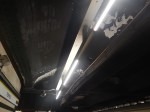
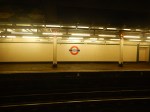
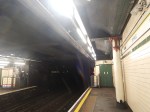
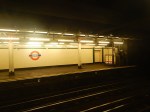
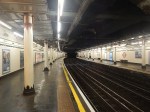
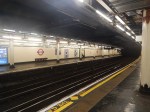
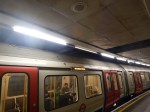
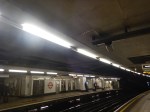
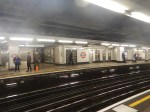
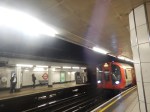
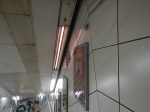
The pictures were taken at Monument and Temple stations.
In Seeing London Underground’s Bakerloo Line Trains In A New Light, I talked about fitting LED lighting on Bakerloo Line trains.
As LED replacements for florescent tubes seem to exist, are these tubes up for replacement?
LED Lighting In The New Parts Of Bank Station
These pictures show the lights in the new parts of Bank station.
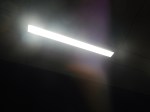
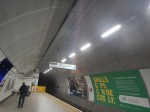

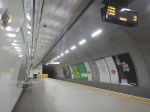
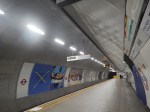
Note.
- They would appear to be LED downlighters, as I can see a distinct matrix.
- One light appears to have died.
The older parts of the station, including the Northbound Northern Line platform still have fluorescent strip lighting.
New Escalators At Bank Station Between The Northern Line And The DLR
This picture shows the triple-barrelled escalator that runs between the Northern Line and the Docklands Light Railway.
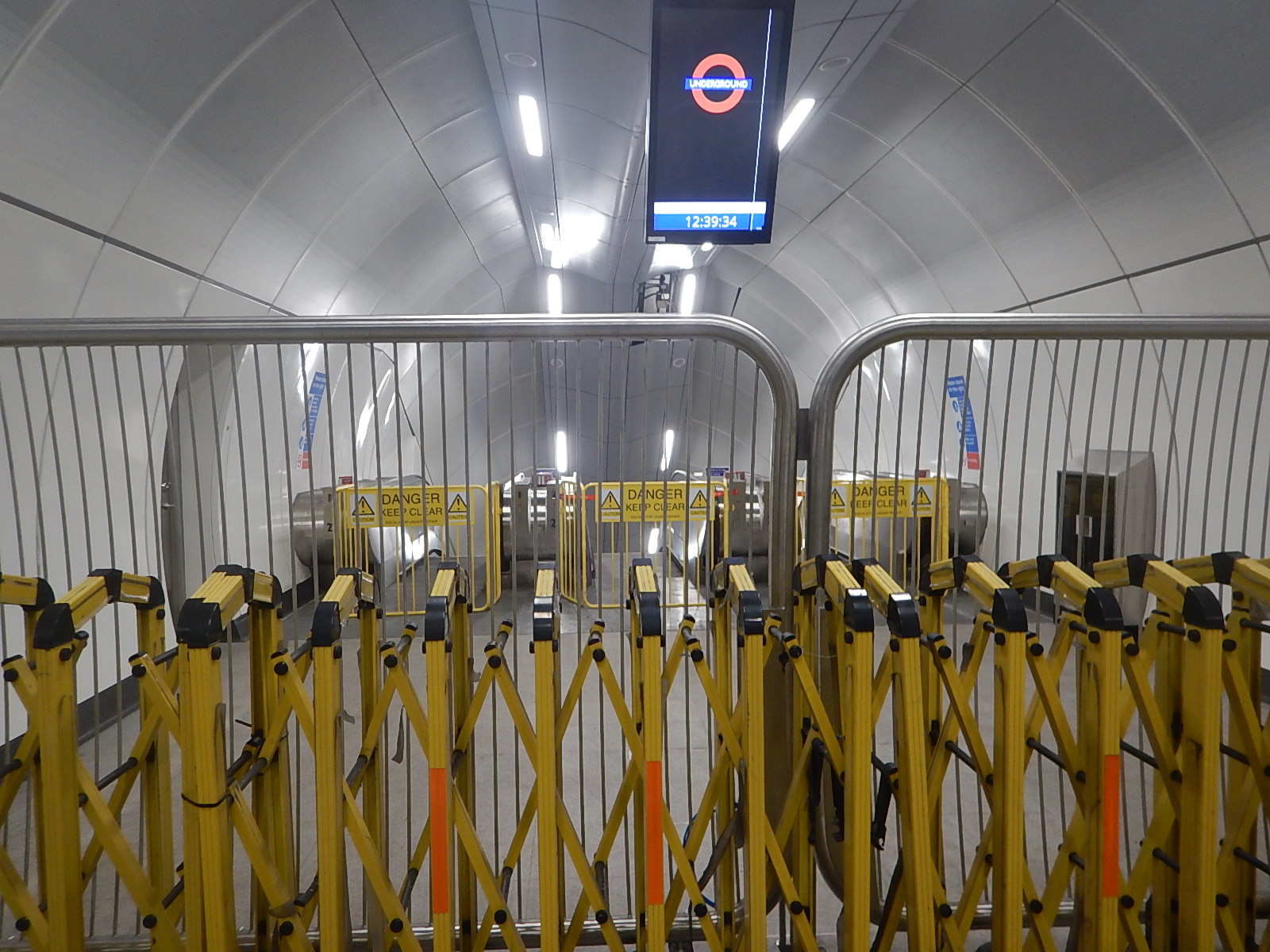
Note.
- The digital clock was showing the right time.
- There are three escalators.
- Peering over the barrier, it looked to be that construction has almost finished.
This visualisation shows the station.
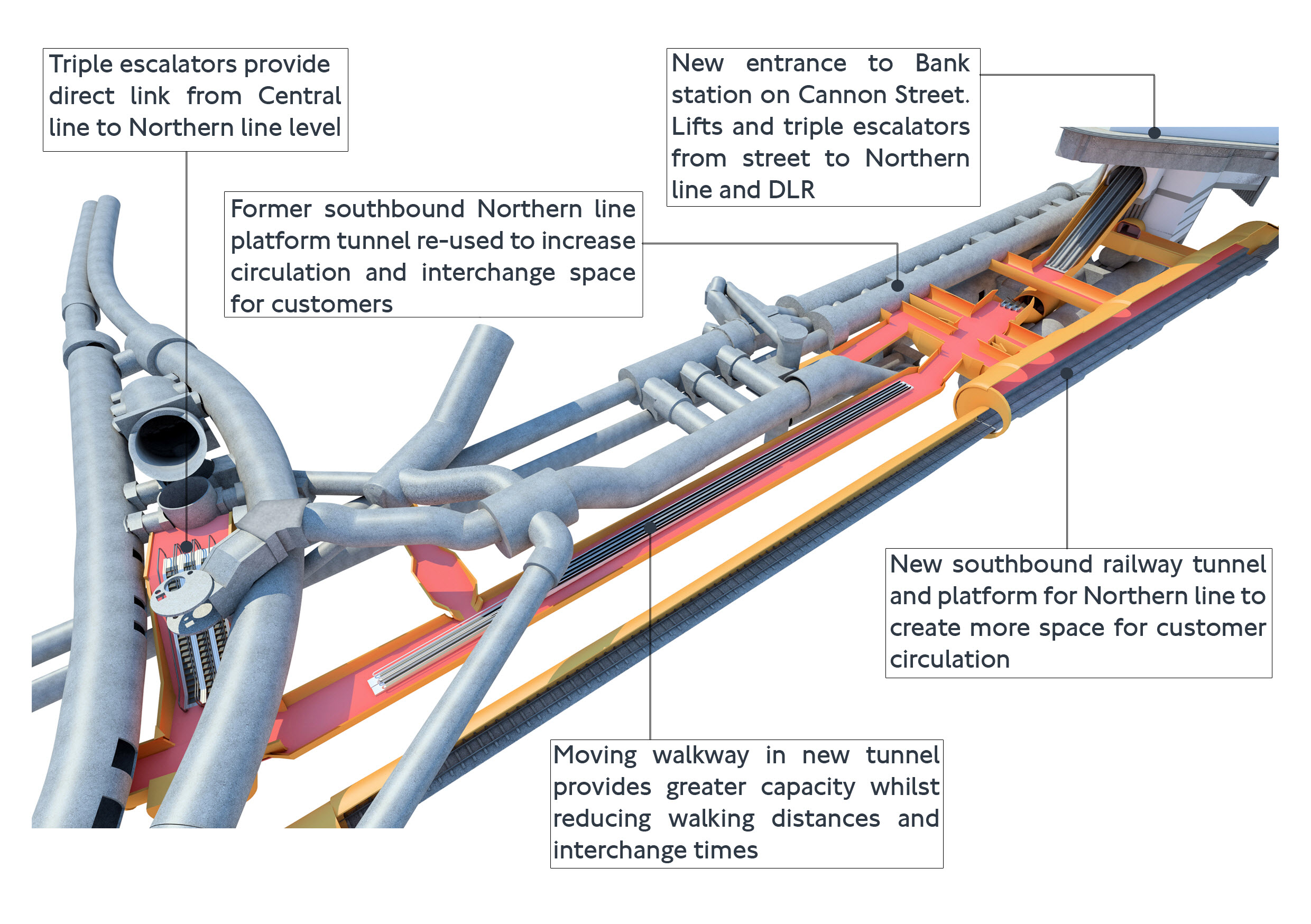
Where was I standing when I took the picture?
The label at the top right says.
New entrance to Bank station on Cannon Street. Lifts and triple escalators to Northern Line and DLR.
The triple escalator leading down from the Cannon Street entrance to the Northern Line level is clearly visible.
- It looks like passengers can go between the bottom of the escalators and both the Northbound and Southbound platforms of the Northern Line, using the cross-passage shown.
- I suspect that the triple escalators to and from the DLR in-line with the escalators to the entrance.
- Lifts would probably serve all three levels.
It is an intricate design, that looks like it minimises conflicting passenger routes, at the Cannon Street or Southern end of the station.
Move towards the North and you can see the moving walkway in a new tunnel parallel to the two Northern Line tracks, which connects to the Central Line.
At its Southern end, there is a spacious plaza.
- It has two cross passages to the two Northern Line platforms.
- It is a short walk to the moving walkway to and from the Central Line
- It appears that on the Southern side, is the triple-escalator leading down to the DLR.
These pictures show this plaza and the connecting tunnels and escalators.
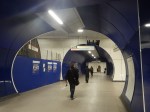
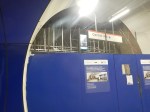
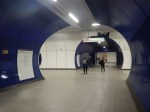
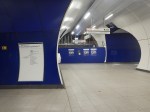
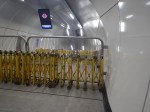
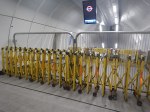
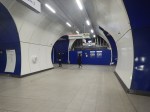
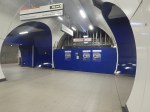
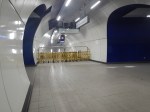
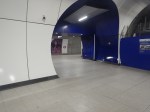
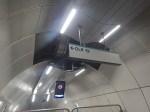
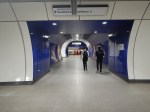
Note.
- The entrance to the tunnel with the moving walkway is opposite the escalators to the DLR.
- There are two cross-tunnels connecting the two Northern Line platforms and the plaza.
- All tunnels are wide.
It looks like pedestrian routes are as follows.
Cannon Street Entrance And Northern Line
The large three-barrel escalator between the Cannon Street and Northern levels.
Cannon Street Entrance And Docklands Light Railway
The large three-barrel escalator between the Cannon Street and Northern levels and a shorter escalator between the Northern and DLR levels.
Cannon Street Entrance And Central Line
The large three-barrel escalator between the Cannon Street and Northern levels, a walk to the moving walkway and the escalators to the Central Line.
Cannon Street Entrance And Waterloo And City Line
I suspect, this will use the new route to the DLR and then the existing route between the DLR and the Waterloo and City Line.
Northern Line And Central Line
The moving walkway and the escalators to the Central Line.
Northern Line And Docklands Light Railway
It looks like there are two-banks of three escalators between the Northern and DLR levels.
Northern Line And Waterloo And City Line
Not sure of this route, but it could be via the DLR.
Central Line And Docklands Light Railway
Via the moving walkway and escalators at both ends.
Central Line And Waterloo And City Line
As now?
Docklands Light Railway And Waterloo And City Line
As now?
Conclusion
It would be an ideal location for a chase thriller!
I can’t wait until it opens.
But I do believe that the moving walkway should be extended under the roads to Moorgate station.
Painting Blackfriars Bridge
It looks like Blackfriars Bridge is being repainted.
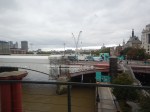
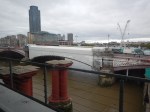
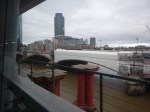
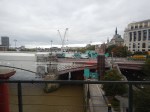
It certainly looks like it needs a repaint.
Seeing London Underground’s Bakerloo Line Trains In A New Light
The title of this post, is the same as that of this article on Railway Gazette.
This is the first paragraph.
A 50% energy saving and a substantial reduction in maintenance costs is being achieved by replacing fluorescent tubes on London Underground’s Bakerloo Line trains with custom designed LED lights from MARL International.
From the pictures in the article, they look to be a good design.
I took these pictures of a train with the new lighting on the 6th of November.
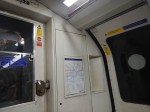
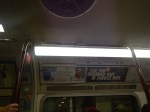
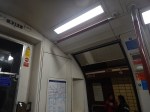
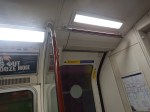
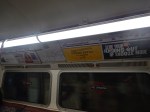
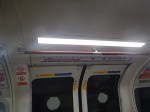
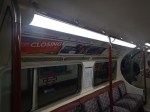
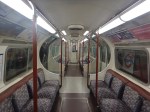
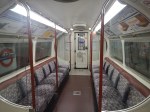
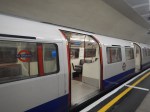
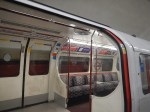
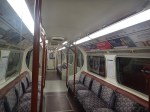
These pictures show a train with the old lighting.
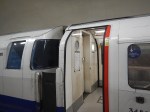
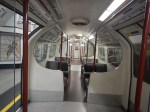
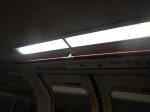
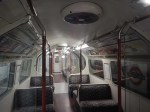
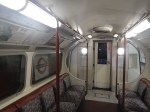
Note.
- The old lighting has round lights at the end of the cars.
- The hole for the round lights has been covered by a blanking plate. See the first picture of the new lights.
- Some of the old fluorescents have died.
- Four passengers, that I spoke to, thought the cars were brighter.
The shots through the empty cars were all taken in Elephant & Castle station, so they show a comparison between new and old lighting.
I also spoke to a driver, who said the headlights on the trains will be replaced. He’d driven the train with the prototype installation and said it was much better.
 The Anonymous Widower