A Walk Around Barnes Bridge – 28th July 2022
After writing A New Garden Bridge Proposed For London, I had to go and visit.
So I went this afternoon and took these pictures.
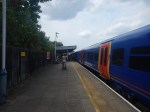
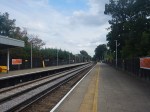
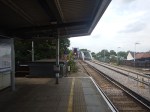

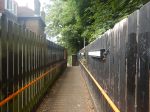

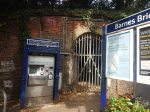
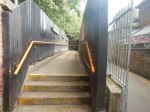

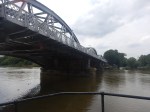

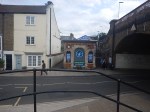

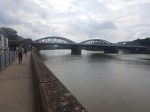


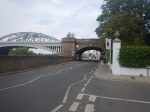


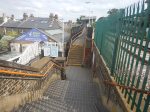
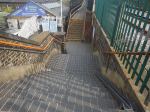

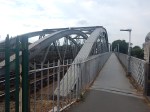
After arrival at Barnes Bridge station, I walked along the river had a drink in a pub before retracing my steps and taking a train back to Waterloo.
These are my observations and thoughts.
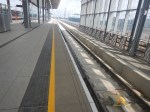
Access To The Country-Bound Platform
The access is not good at present, as it is up and down a steep set of steps.
But it does appear that there is space to improve things.
In A New Garden Bridge Proposed For London, I indicated that it might be possible to connect the platform directly to the new garden bridge. That certainly looks possible and I suspect that a lift could be incorporated.
The Walkway On The Downstream Side Of The Bridge
This walkway was being used by walkers and cyclists.
It is connected to the London-bound platform, by means of two sets of stairs.
I Walked Along The Bank Of The River To A Pub
All I needed was a drink and I got one.
If you walk the other way, there is an excellent Rick Stein restaurant.
Access To The London-Bound Platform
The access is better than to the other platform, but it needs improvement.
Conclusion
I believe that a good architect could squeeze in step-free access to both platforms and have good connections to the proposed garden bridge and the existing walkway.
A New Garden Bridge Proposed For London
This article on Ian Visits is entitled Plans Open A Disused Railway Bridge To Pedestrians.
This is the introductory paragraph.
A section of the Thames with few bridges could become a lot easier for pedestrians and cyclists to cross if plans to convert a disused railway bridge for pedestrian use go ahead.
The disused railway bridge to be used is the original 1849 Barnes Railway Bridge, which was closed to trains, when a new stronger bridge was built alongside in 1890.
This Google Map shows the two bridges.
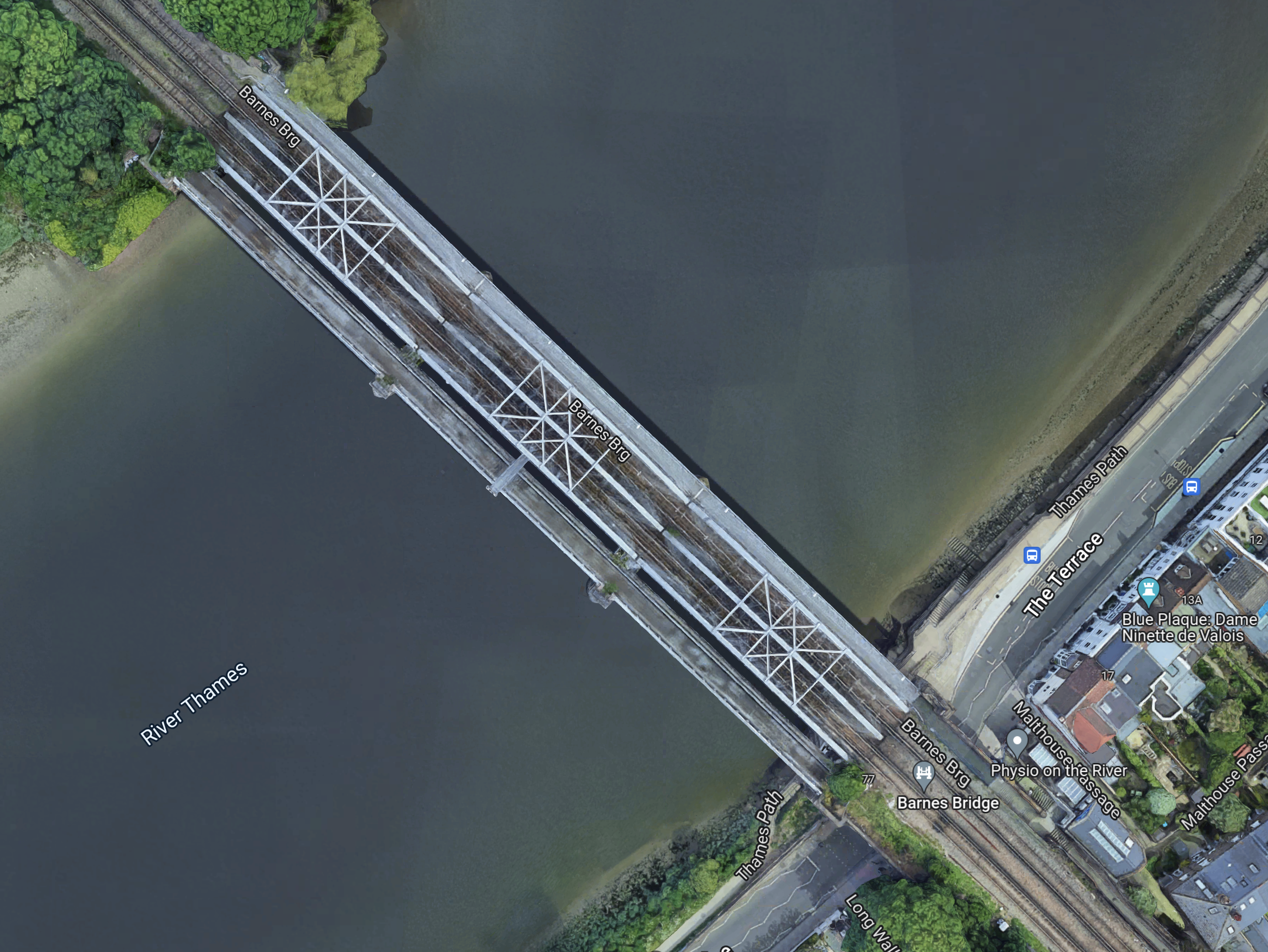
Note.
- The railway tracks in the centre on the 1890 three-arch bridge.
- The Thames flows from South-West to North-East under the bridge.
- A walkway on the North-Eastern side of the is still in use.
- The original 1849 bridge is on the South-Western side of the bridge.
The pedestrian garden bridge will be built on the 1849 bridge, which will be refurbished.
This second Google Map shows the bridge and Barnes Bridge station.
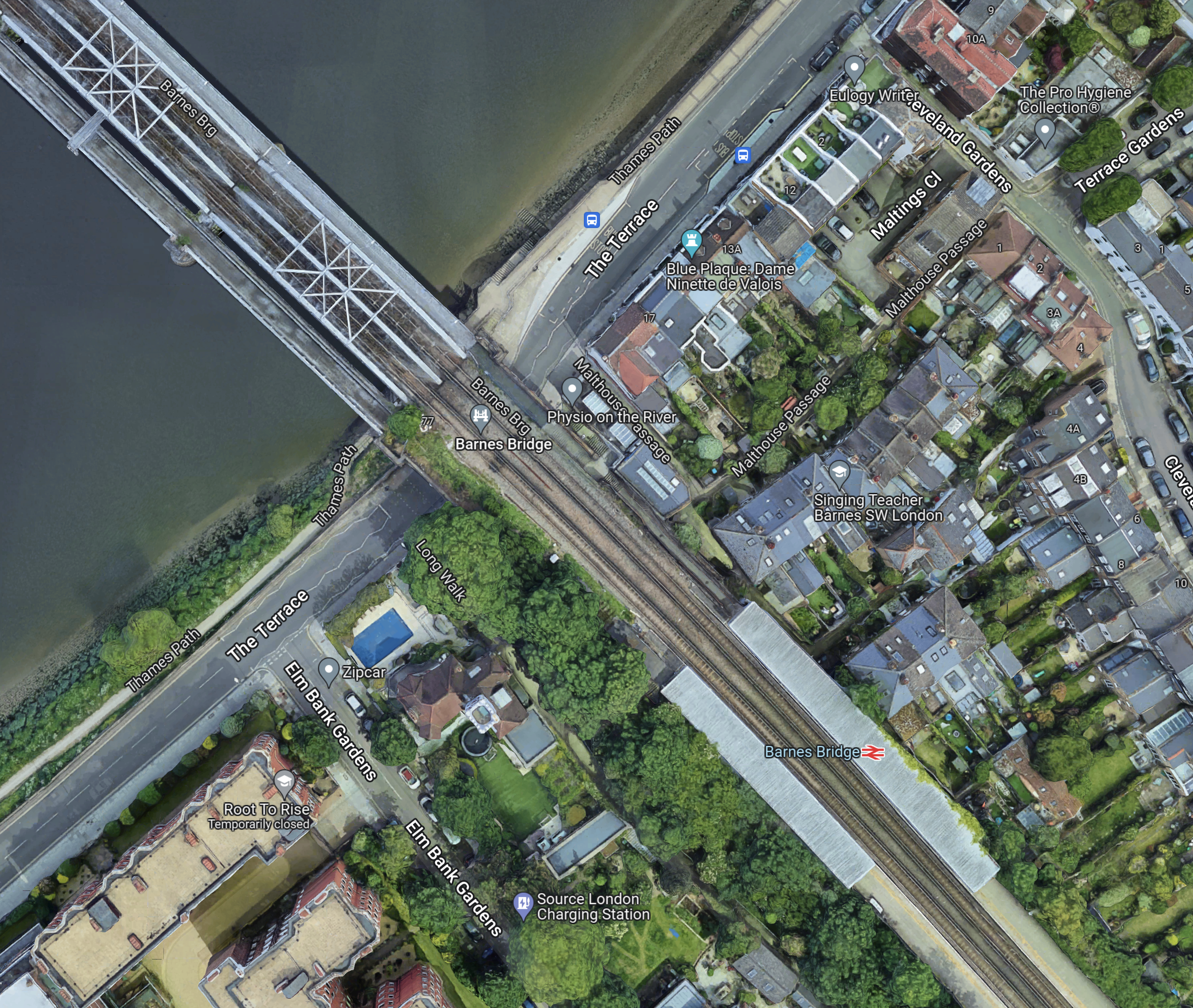
Note.
- Barnes Bridge in the North-West corner of the map.
- Barnes Bridge station in the South-East corner of the map.
Part of the plan envisages connecting the South-Western platform to the pedestrian garden bridge.
It looks a plan with a lot of good possibilities.
The Project
It appears that Network Rail, the London Boroughs of Richmond and Hounslow are all supportive and Moxon Architects have been appointed to the project.
The project now appears to be called The View at Barnes Bridge and it has an impressive web site, with lots of information and pictures.
I have a few thoughts.
I Am Not Surprised That Network Rail Are Supportive
Network Rail must be pleased to be getting a Grade II Listed structure off their hands.
Could Barnes Bridge Station Be Made Step-Free?
I suspect that Moxon will produce designs for this and it will probably be a question of money, if they are implemented.
But as the garden bridge will attract more visitors, this will surely increase the need for full step-free access at Barnes Bridge station.
Could A Refurbished Bridge Carry Utilities?
I suspect that this will be looked at, as it could be a nice little earner.
Could This Project Be An Example Of a Levelling-Up Project?
In my travels around the UK and Europe, I’ve seen several disused railway bridges that could be reused as footbridges to provide walking and cycling.
Many are being converted, but this high-profile bridge could inspire architects to create other worthwhile bridges.
My First Ride On The Midland Metro To Edgaston Village
I went to Birmingham today and took the Midland Metro to its new terminus at Edgbaston Village.

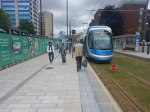
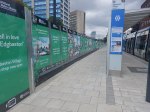

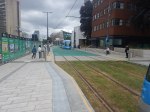
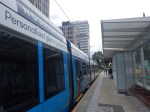


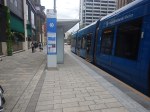
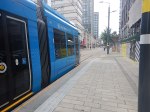
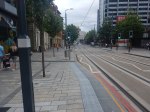
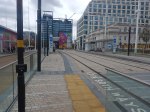





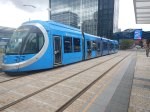


I have a few thoughts.
The Edgbaston Village Tram Stop
The Edgbaston Village tram stop is the new terminus of Line 1 of the West Midlands Metro, which is shown in the first eight pictures.
- The station has two tracks and two platforms, which would obviously allow extension to a new terminus.
- Plans exist for a terminus at Quinton, according to Wikipedia.
- As each platform could probably handle between four and six trams per hour (tph), the current layout could probably handle up to 12 tph.
- The Edgbaston Village tram stop is fully wired.
- I watched three or four trams come and go and both platforms are used.
As the pictures show there is still work to do and it looks like this will create a bus stop on the main road by the side of the main road.
Edgbaston Village Tram Stop To Edgbaston Stadium
This Google Map shows the area between the tram stop and the stadium.
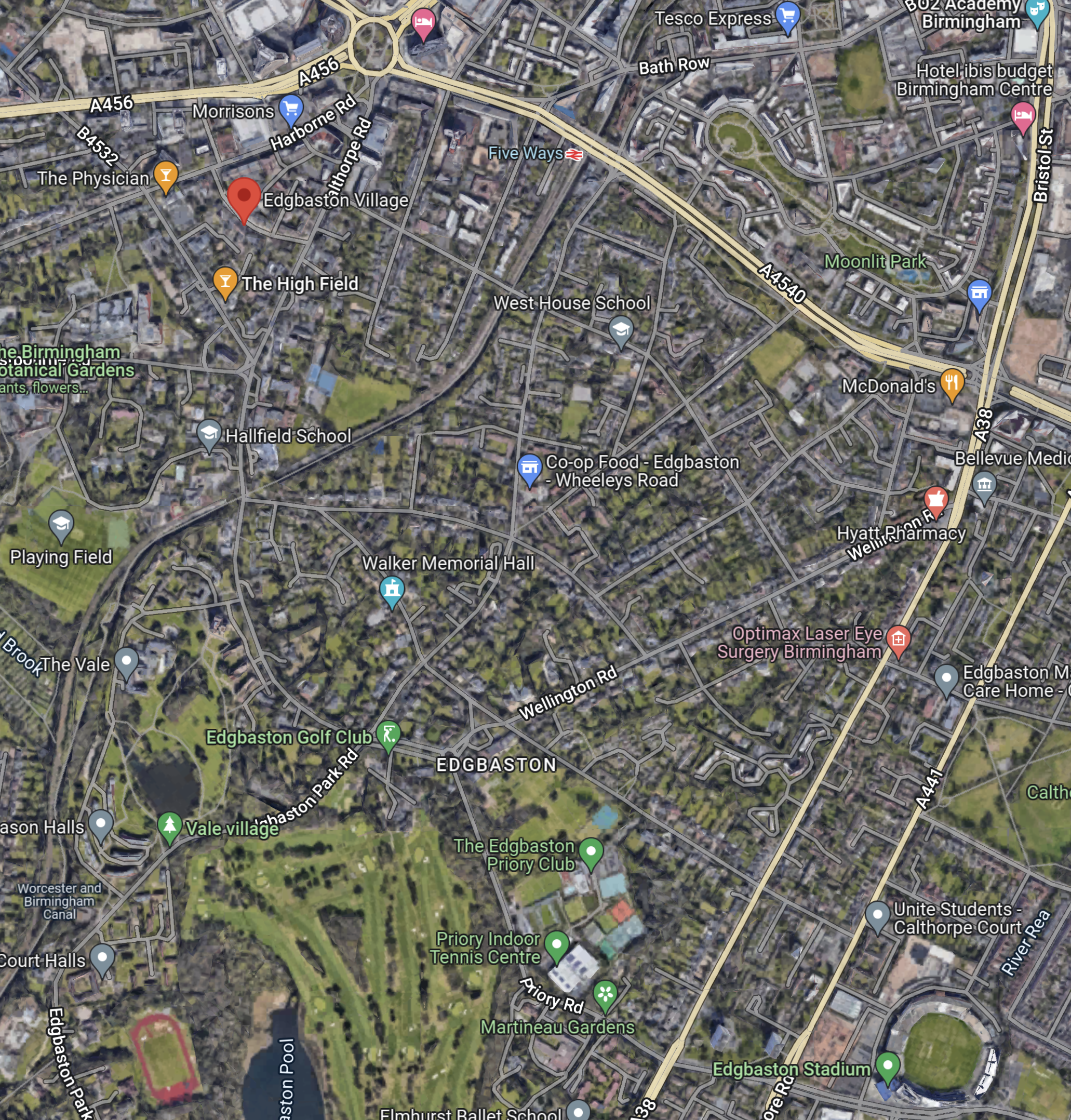
Note.
- The Edgbaston Village tram stop is on the A456 to the North of the of the red arrow marking Edgbaston Village in the North-West corner of the map.
- Edgbaston stadium is in the South-East corner of the map.
- I estimate that the distance between the tram stop and the stadium is a little over two kilometres.
I have a feeling there are more direct routes by bus, but I feel that for many people, who take the tram to Edgbaston Village. the walk wouldn’t be too much, especially with a refreshment stop.
Brindleyplace
The tram now gives access to Brindleyplace, where I had lunch.
Note in the the pictures of this stop, there are overhead wires.
Library Tram Stop
Library tram stop is now a through stop, as the pictures show.
Charging Trams At The Edgbaston Village Tram Stop
Not all trams seem to put their pantograph up, so I would assume a double trip between Grand Central and Edgbaston Village is possible on a full battery, that has been charged on the trip from Wolverhampton, with a bit of assistance on the wires through Brindleyplace tram stop.
The Dreaded Advertising Wrap
One of the trams I rode, had one of those dreaded advertising wraps, that ruin the view from the tram.
When will the dunderheads, who decide these things, that to many travellers on trams, they are a complete no-no.
Whenever, I arrive in a new city, I will often take a city-centre tram to get a feel of the city.
When I see advertising wraps on trams, I don’t.
Ticketing
If you go to Liverpool, which has no trams, the term Liverpool Stations on your train ticket includes the stations on the Wirral Loop, so you can get to any of the stations in the City Centre.
Manchester Stations, on a ticket also allows you to get around the city, when you first arrive.
London allows you add a Travelcard to your ticket, but because of contactless ticketing, you don’t need to.
A common scenario for visitors to Birmingham, is probably to use the tram to get somewhere in Zone 1.
So I had to buy an all-day Zone 1 ticket on the tram, which cost me £2.80
This is not good enough.
My preference would be to create a destination called Zone 1 Birmingham, which would allow unlimited trips in Zone 1 on the trams.
Sort it out Birmingham!
On My Way To Birmingham
I made the mistake of not going on Chiltern to avoid a walk in Brum. No seats at all, so I’m doing a Corbyn and sitting on the floor. Pendolinos aren’t as comfortable as Mark 3’s.
Rolls-Royce Chief Warren East Spies Rebound For Air Travel
The title of this post, is the same as that of this article on The Times.
It is a must-read article.
This is the first paragraph.
Warren East, the outgoing chief executive of Rolls-Royce, has sounded a bullish note on aviation’s recovery from Covid-19, reporting increased demand from the jet-engine maker’s airline customers and expressing his belief that China will gradually open up to international travel.
Certainly, with all the chaos at the Channel this weekend, people are starting to travel again.
Support For The Military
This is a paragraph in the article.
Tom Bell, head of Rolls-Royce Defence, said the company was in talks with the US and UK militaries about supplying “deployable” reactors for military bases.
I’m sure that a reactor would have advantages to a large diesel or gas-turbine generator to power a military base.
- Military bases need a lot of power.
- It would not need refuelling every day.
- It could be connected to an electrolyser, to generate hydrogen for vehicles.
- It would be a lot quieter.
- I wonder, if it could be transported in a large transport aircraft.
But I feel, it might have other applications.
- It could provide power support after a large earthquake or natural disaster.
- It could provide power in remote or difficult locations.
- If the only power station for a remote community had a catastrophic failure, a deployable reactor could be brought in.
- It could provide power for a large construction site, which would help to decarbonise the construction.
- Power would be zero-carbon at point of generation.
The reactors might even be rail-transportable, so they could be moved to where they are needed safely and quickly.
But I don’t think they would necessarily be the same size as the Rolls-Royce SMRs, which are 470 MW.
A Scalable Reactor
This is a paragraph in the article.
Rolls also has a contract with the UK Space Agency to develop a “micro reactor” for space vehicles and satellites, Bell added. “These are really exciting opportunities for us to not only perpetuate our business undersea, at sea, on land, in the air, but also to go to space,” he said. East noted the advantage of nuclear reactors in space: “You can’t have air-breathing engines on the moon.”
Note.
- East is Warren East, who is the outgoing Chief Executive of Rolls-Royce.
- Nuclear power sources have been used in space before, usually by using an isotope, that gives out heat, as it decays.
- How small is micro?
- The US deployed a 1.75 MW nuclear power plant in Antarctica under the Army Nuclear Power Program. That reactor also provided heating and hot water. It is worth reading the Wikipedia entry, especially the section about the MM-1 reactor.
It does seem that Rolls-Royce are designing a reactor that can be scaled in size, to cover a whole spectrum of applications.
Repowering Zero-Emission Buses As An Alternative
The title of this post, is the same as that of this article on Digital Journal.
The article makes the argument for swapping out the diesel engine for a zero-emission powertrain.
I very much feel that this is a worthwhile idea, as do Ricardo.
I wrote about converting London’s New Routemasters to hydrogen in Could London’s New Routemaster Buses Be Converted To Hydrogen Power?.
The Channel Crossing Problem
My company provided the project management computer system; Artemis, that planned how both the tunnel and the rail link to London was built. So I heard numerous stories of inadequate infrastructure on both sides of the Channel.
I also for a time was a business partner of the man, who had been project manager on a previous attempt to build a Channel Tunnel, that was cancelled by Harold Wilson’s government in 1975, who had a lot of interesting input.
I have heard over the years of these inadequacies,
- The Dartford Crossing wouldn’t be able to handle the traffic generated at busy times.
- The Eurotunnel terminal in Folkestone wasn’t built large enough.
- The port of Dover is too small.
- The roads to the Port of Dover were inadequate.
- The rail terminal at St. Pancras doesn’t have the capacity to run services to the places that are better served by train.
The government only has one major improvement in place, which is a new Thames Crossing, but that will only make matters worse, as more traffic will be tempted to cross the Channel to get to Europe.
It is my belief, that we need more innovative services to provide more capacity.
- A German company called CargoBeamer, is developing a system, whereby unaccompanied freight trailers can be moved thousands of miles across Europe by rail. Their plans include services to Birmingham, Cardiff, Manchester and Scotland.
- I would also run a CargoBeamer service from Calais to Holyhead to create a direct freight service between Ireland and Europe.
- Ebbsfleet needs to be developed as a destination for the Elizabeth Line and an extra terminal for both daytime and sleeper trains to Europe.
- High speed freight trains, based on existing 160 mph EMUs could be used.
- Given the position of the new Thames Crossing on the Isle of Grain, perhaps a new ferry port could be built on the island to partially replace Dover.
- Could some Eurotunnel services start from Watford Gap?
We have to be bold.
The Grade II Listed Next-Train Indicators At Earl’s Court Station Are Back
This page on Rail News has a section, which is entitled Heritage Train Indicators Return To Service, where this is said.
Vintage train describers have returned to the platforms of Earl’s Court District Line station, which is Grade II listed. First installed in 1905 when London’s District Railway was electrified, they have been renovated and given replica destination name plates, which are highlighted as required by an illuminated arrow. The indicators had been switched off while they were connected to a new signalling system. Modern information panels showing the destination and the number of minutes before the next train is due from each of the four platforms have also been installed.
I went Earl’s Court station to have a look this morning and took these pictures.
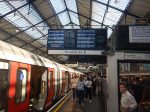
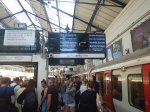
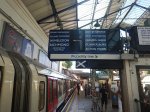

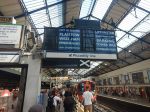
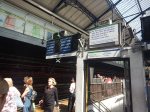
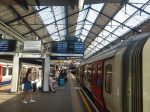
They all seemed to working as they should.
Earl’s Court station is a Grade II listed London Underground station and Wikipedia says this about these indicators.
On each platform is an old-fashioned “next train” indicator board which had various routes shown, of which one is usually highlighted by an arrow to indicate that this is the route of the next train. As of March 2022, these have been temporarily disabled while signalling is upgraded to CBTC signalling, as part of the 4LM improvement works to the subsurface lines, although are expected to return in June the same year. These have not been replaced by modern electronic equivalents as they are Grade II listed.
There can’t be many next train indicators in the world, that are listed or given the local equivalent.
This does take me all back to the 1960s, when for two summers, I worked in the Electronics Laboratory at a company called Enfield Rolling Mills. The Electronics Laboratory developed control systems for the many machines in the factory. At that time, a lot of the work involved replacing relays and electronic valves with then-modern transistors. I learned a lot about industry in those two summers and it wasn’t all about automation and electronics.
Would a fifteen-year-old be allowed to do a job like that, these days?
I suspect that on that Earl’s Court indicator board, there is some interesting electronics connecting it to the CBTC signalling.
Minding The Gap – Barking Style
There are several ways of minding the gap between the train floor and the platform on railway systems.
- There’s the simple get the geometry right method used on the Elizabeth Line, parts of the London Overground and some other routes.
- There’s Stadler’s method where a gap filler comes out from the train.
But I’d never seen, this simplemethod that is used at Barking Riverside station on the London Overground.

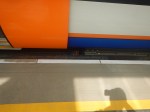

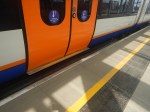

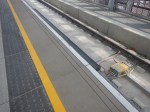

Note the rubber strip, where all the doors on the train are by the platform.
This is a simple device and I’ve never seen it before.
But according to this article on Rail Technology Magazine, it has been in use on Heathrow Express for a year.
The devices are Australian and come from a company called Delkor Rail.
Schoolchildren Get First Glimpse Of Northumberland Line Train Services
The title of this post, is the same as that of this article on the Northumberland Gazette.
The title does say it all, but what a good idea to give the kids a ride first to build up enthusiasm for the new Northumberland Line.
 The Anonymous Widower