Express On A Perpetual Motion Machine. Scientists Create An Electric Train That Will Charge By Gravity
The title of this post, is the same as that of this article on The Saxon.
These are the first two paragraphs.
The world’s first “infinity train” will recharge its electric batteries during deceleration using the force of gravity.
Scientists and engineers from the Australian company Fortescue Future Industries have begun developing the world’s first train that will be powered by gravity. The company plans to spend $50 million on this development over the next two years, according to the Daily Mail.
How Does The Train Work?
According to the article, the sequence of operation appears to be as follows.
- The train starts at the high end of the line.
- The train rolls down the hill to the low end of the line.
- As it descends, it will pick up kinetic energy due to gravity.
- Regenerative braking on the train will be used to charge the battery.
- The train will have a full battery, when it reaches the low end of the line.
- The full battery will then power the empty train back up the hill.
I have a feeling that this will work, where there is a full train coming down the hill and an empty one going up.
In an example, I will assume the following.
- The high end of the line is 100 metres above the low end.
- The train weighs 100 tonnes.
- The full load weighs 100 tonnes.
- Regenerative braking is 100 % efficient.
I can calculate these energy values for a train running down and then up the line.
- A full train just about to descend, which weighs 200 tonnes and is 100 metres up will have a potential energy of 54.4 kWh.
- Whilst descending, this energy will be converted to kinetic energy and the regenerative braking will transfer this energy to the battery, which will then contain 54.4 kWh of electrical energy.
- After descending, the full train, which weighs 200 tonnes and is zero metres up will have a potential energy of 0 kWh.
- After emptying, the empty train, which weighs 100 tonnes and is zero metres up will have a potential energy of 0 kWh.
- After ascending, the the empty train, which weighs 100 tonnes and is 100 metres up will have a potential energy of 27.2 kWh.
- When the train reaches the high end, there will still be 27.2 kWh left in the battery.
Note.
- After a trip, there will be some energy left in the battery to start the train rolling down the hill on the next trip.
- Effectively, the train is powered by the weight of its cargo, which in Fortescue’s case is very dense iron ore on its trains from Pilbara to the coast.
- In some ways the Infinity train carrying iron ore is a bit like an overshot water wheel, where weight is added to the wheel and this makes the wheel turn.
- The train is driven by the weight of the cargo.
It may look like perpetual motion, but the train needs to be loaded for each trip to increase its potential energy.
I will now look at a passenger train on the same route.
- The high end of the line is 100 metres above the low end.
- The train weighs 100 tonnes.
- I will assume there are 50 passengers in both directions.
- I will assume each weighs 80 Kg with baggage, bikes and buggies, which gives a weight of 4 tonnes.
- Regenerative braking is 100 % efficient.
I can calculate these energy values for a passenger train running down and then up the line.
- A passenger train just about to descend, which weighs 104 tonnes and is 100 metres up will have a potential energy of 28.3 kWh.
- Whilst descending, this energy will be converted to kinetic energy and the regenerative braking will transfer this energy to the battery, which will then contain 28.3 kWh of electrical energy.
- After descending, the full train, which weighs 104 tonnes and is zero metres up will have a potential energy of 0 kWh.
- After emptying and reloading, the empty train, which weighs 104 tonnes and is zero metres up will have a potential energy of 0 kWh.
- After ascending, the the empty train, which weighs 104 tonnes and is 100 metres up will have a potential energy of 28.3 kWh.
Note.
- After a trip, there will be almost no energy left in the battery to start the train rolling down the hill on the next trip.
- If the regenerative braking has an efficiency of less than 100 %, it would be unlikely to work.
But it would work, if an appropriate amount of energy were to be added to the battery at either or both ends of the route.
Could A Passenger Train Like This Work On A Real Route?
In the UK, there are several lines, where a rail line climbs a few hundred metres.
- Cardiff Central and Aberdare
- Cardiff Central and Ebbw Vale Town
- Cardiff Central and Merthyr Tydfil
- Cardiff Central and Rhymney
- Cardiff Central and Treherbert
- Glasgow Central and East Kilbride
- Llandudno Junction and Blaenau Ffestiniog
- Manchester Piccadilly and Buxton
- Manchester Piccadilly and Glossop
For the trains to work, I suspect the following is needed.
- Regenerative braking efficiency must be as close to 100 % as possible.
- The total number of passengers going down during the day needs to be at least the same as the total number of passengers going up.
- For passenger trains to work, an appropriate amount of energy needs to be added to the battery at either or both ends of the route.
Freight trains which are transferring weight down the hill will generally always work.
Conclusion
The Infinity Train will work well with heavy freight, but will probably need supplemental charging to work with passenger trains.
Both heavy freight and passenger trains will use less energy, than one working to traditional principles.
Great British Journeys┃Beautiful Railway Journeys┃24/7 Live Stream
The title of this post is the same as this National Rail video on YouTube.
This is their description.
Sit back and relax as you enjoy a driver’s eye view of Britain’s most picturesque railway journeys, streamed in our exclusive footage.
Experience what it’s like to travel across the Scottish Highlands; watch the waves crash against the Devon coast; get lost in the pleasant green land of Wales and immerse yourself in the natural beauty of Suffolk.
The sounds and the motion of travelling by train have been scientifically proven to help people relax, which is why we’ve developed Great British Journeys; a series of the country’s most scenic train journeys – all shot from the train driver’s cab.
It looks like this could be an idea that grows and could turn out to be good marketing.
Harrow-On-The-Hill Station – 16th March 2022
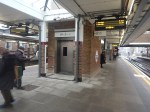
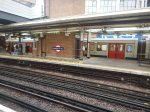
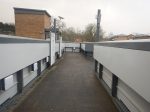
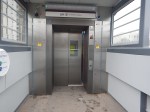
Harrow-On-The-Hill station is now step-free.
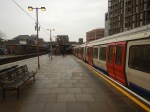
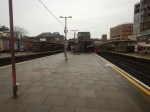
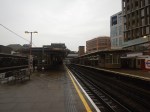
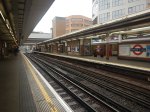


Note.
- Three lifts have been added with a new walkway between them.
- It looks like the brick-work and other details are tasteful and in keeping with the original station.
It is one of the best step-free installations, constructed in the last few years.
Deutsche Bahn Is Building Overhead Line ‘Islands’ For Battery Trains
The title of this post, is the same as that of this article on Railway News.
This paragraph describes the concept.
This means, instead of electrifying a line in full, as is conventional for electric trains to draw traction power, these lines will feature intermittent electrification. The first of these lines to become operational will be in Schleswig-Holstein in December 2023. Deutsche Bahn says it will only electrify short stretches (a few hundred metres up to a few kilometres) or stations – enough to allow battery-powered trains to recharge on these lines. The state rail operator estimates that this move will mean that more than ten million train kilometres can be completed using electric rather than diesel traction in Schleswig-Holstein. The diesel trains currently in use will be decommissioned. DB estimates an annual diesel fuel saving of around ten million litres.
It looks like a simple concept will save a lot of diesel fuel.
I first talked about electrification islands to charge battery-electric trains in The Concept Of Electrification Islands, which I wrote in April 2020.
DB Cargo UK Successfully Trials The Use Of ‘Combi-Consists’
The title of this post, is the same as that of this press release on DB Cargo UK.
This is the first paragraph.
DB Cargo UK is trialling the use of ‘combi-consists’ to increase capacity, improve customer service and improve its efficiency.
The next four paragraphs describe the trial.
This month the UK’s largest rail freight operator ran a unique jumbo train from Belmont Yard in Doncaster to Barking, East London, carrying a mix of wagons for two altogether different types of customers.
The train consisted of two sets of empty wagons – 21 x MBA wagons for Ward Recycling and 18 x JNA wagons for FCC Environment – with an isolated DIT (dead-in-train) locomotive – in the middle.
The MBA wagons had previously been discharged at Immingham in North Lincolnshire and the JNA wagons discharged at FCC Environment’s new waste transfer facility at Tinsley in South Yorkshire.
Both sets of wagons were then taken to DB Cargo UK’s Belmont Yard depot in Doncaster where the jumbo train was assembled. The train travelled from Belmont Yard to Barking via Lincoln Central, Spalding, The East Coast Mainline, Hertford North and Canonbury Tunnel.
There is also a video embedded in the press release, which shows the formation of the train in detail.
This train is certainly efficient, as it uses less train paths, crew and fuel.
DB Cargo UK now intend to trial the concept on a greater portion of the East Coast Main Line and the Midland Main Line.
I have a few thoughts.
Could The Concept Work With Loaded Trains?
This trial was with empty trains, but would it be possible to use the concept with two shorter loaded trains?
Would there be advantages in terms of efficiency, if the following were done?
- Two container trains leave Felixstowe as a pair, with one going to Plymouth and the other going to Cardiff.
- They split at say Swindon and then proceed independently.
Obviously, all the weights would have to be in order and the locomotive would need to be able to pull the combined train.
Other possibilities might be.
- Stone trains running from the Mendips and the Peak District to London.
- Biomass trains running from import terminals to power stations in the Midlands.
- Trains delivering new cars.
- Trains delivering goods for supermarkets. Tesco are certainly increasing their use of trains.
I would suspect that DB Cargo UK have several ideas.
Could An Electric Locomotive Go In The Middle?
A Class 90 locomotive weighs 84.5 tonnes, as against the 129.6 tonnes of the Class 66 locomotive used in the trial.
So if the electric locomotive can be run dead-in-train, the weight would be slightly less.
But this might give a big advantage, if they ever wanted to run a pair of trains from Felixstowe to Plymouth and Cardiff, as per my earlier example.
- The trains would split anywhere on the electrified section of the Great Western Main Line.
- The lead train would go to Plymouth.
- The second train would go to Cardiff, which is now fully electrified.
There would appear to be possibilities to save carbon emissions.
Could An Electric Locomotive Go On The Front?
Some routes out of Felixstowe are fully-electrified from the Great Eastern Main Line.
It could be possible for the following.
- Two diesel-hauled trains to leave Felixstowe with ubiquitous Class 66 locomotives and form up as a combi-consist train in Ipswich yard.
- The Class 66 locomotive on the front is replaced by an electric locomotive.
- Both Class 90 and Class 92 electric locomotives have twice the power of a Class 66 locomotive, so both should be able to haul the combi-consist train.
The trains would split en-route with the electric locomotive hauling a train to an electrified destination.
This picture shows, what could be an experiment by Freightliner at Shenfield.
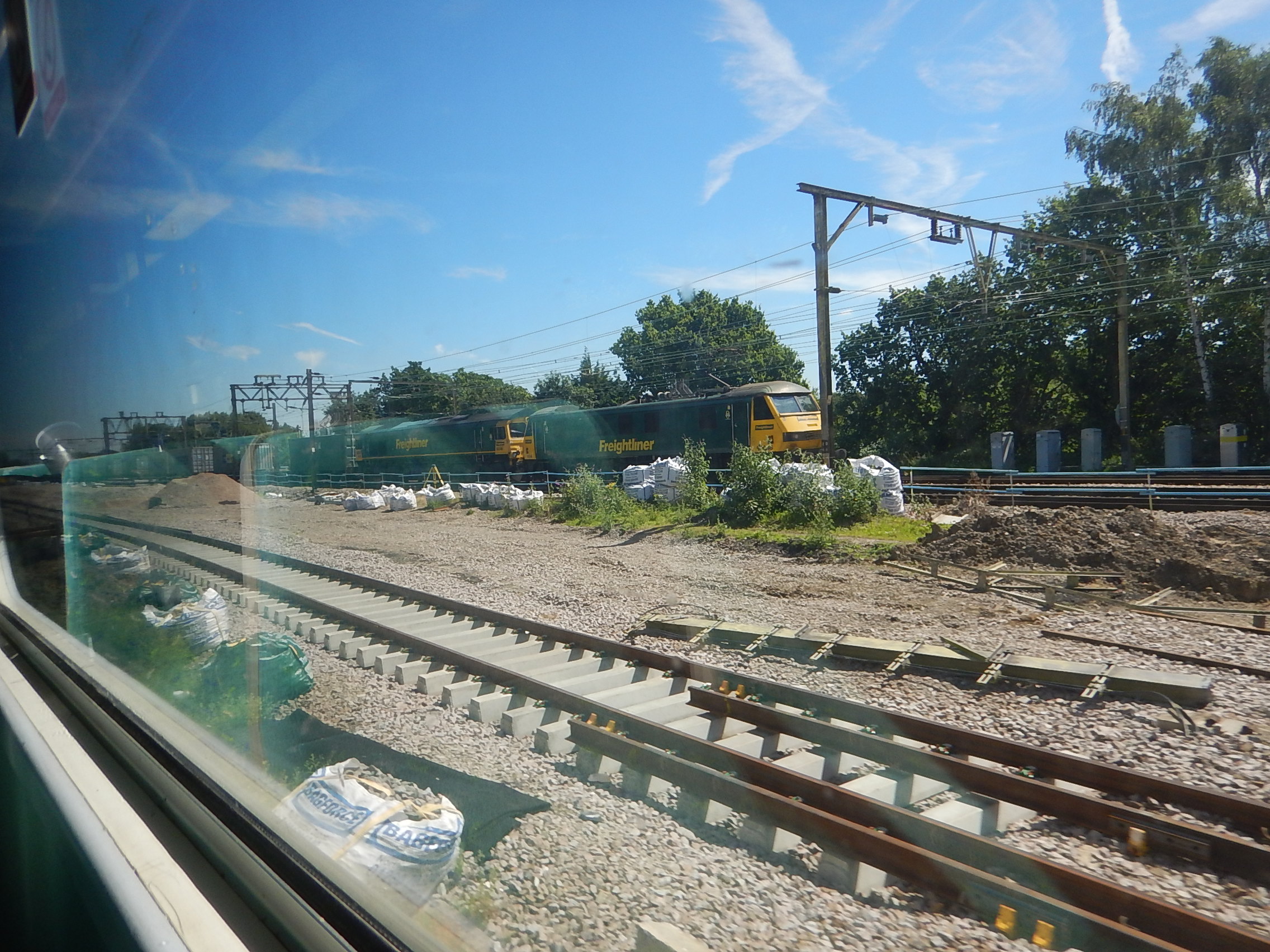
Unfortunately, I didn’t have a chance to ask the driver, if the Class 66 locomotive was running dead-in-train or helping the Class 90 locomotive with a very heavy load.
The picture shows, that the electric and diesel locomotives can work together, at the front of a train.
Since I took this picture, I’ve never seen a similar consist again.
Could A Bi-Mode Locomotive Go On The Front?
In GB Railfreight Plans Order For Future-Proofed Bi-Mode Locomotives, I talked about how GB Railfreight had started negotiations to purchase a fleet of powerful bi-mode locomotives from Stadler.
- Provisionally, they have been called Class 99 locomotives.
- The locomotives will be Co-Co bi-modes.
- The diesel engine will be for heavy main line freight and not just last-mile operations.
- I suspect that on diesel the power will be at least 2.5 MW to match a Class 66 locomotive.
These locomotives could be ideal for hauling combi-consist trains.
Would Combi-Consist Trains Save Energy?
This could be a big driver of the use of combi-consist trains and may push DB Cargo UK to acquire some powerful bi-mode locomotives.
Conclusion
Combi-consist trains seem to be an excellent idea.
TransPennine Express Explores Further Fleet And Capacity Expansion Options
The title of this post, is the same as that of this article on Railway Gazette.
This is the first paragraph.
First TransPennine Express is hopeful that it will be able to issue a call for expressions of interest in the provision of additional bi-mode trains before the end of March. This follows ‘a healthy level of interest’ in its existing call for expressions of interest in the supply of bi-mode locomotives to replace the Class 68s which work with its MkVa coaches.
I wrote about the expressions of interest to replace the Class 68 locomotives with new bi-mode locomotives in Suppliers Sought For New Bi-Mode Locomotives For TransPennine Express And Great Western Railway.
This was my conclusion in the related post.
When I saw First Group’s proposals, I thought that they were over ambitious.
But after doing a few simple calculations, I think they can decarbonise some, but not all of the TransPennine Express services and the Night Riviera.
So do First Group want to complete the decarbonisation of TransPennine Express services?
These are my thoughts.
The Train Fleet Specification
The Railway Gazette article makes these points about the new bi-mode trains.
- The trains could be existing or new bi-modes.
- It would be desirable for the trains to have a long-term electric-only option.
- Options for this would include removing the diesel engines or converting the trains to battery-electric operation.
- Hydrogen is not mentioned.
- A fleet size of twenty-five trains is mentioned.
- The possibility of electric-only trains in the future is mentioned..
- Five-cars, with the ability to lengthen to six- or seven-cars.
- 200 km/h operation.
There is nothing unusual in the specification.
Will They Be Existing Or New Trains?
I doubt that there are any existing 200 km/h bi-modes in the UK, that are not wanted by their current operators.
I am very certain they will be new trains.
Could The Trains Be Hitachi Class 802 Trains?
The trains sound very much like Hitachi Class 802 trains, that are in service with TransPennine Express, Great Western Railway and Hull Trains, all of whom are First Group companies.
- Long-term, the diesel engines can be removed or replaced with batteries.
- The battery option is under development and should be on test this year.
- The trains can be lengthened to as long as twelve cars, so six- and seven-car trains would be possible.
Hitachi will obviously show interest in this possible order.
Will These Trains Replace the Class 185 Trains?
Consider.
- TransPennine Express have 51 three-car Class 185 trains.
- This is a total of 153 cars.
- On some routes they work singly and on others they work in pairs.
- A three-car Class 185 train has 167 Standard Class and 15 First Class seats or 60.7 seats per car.
- A pair of Class 185 trains have 334 Standard Class and 30 First Class seats.
- A five-car TransPennine Express Class 802 train has 318 Standard Class and 24 First Class seats or 68.4 seats per car.
- It would appear that a Class 802 train is not that far short of the capacity of a pair of Class 185 trains.
- Some of the TransPennine services are very crowded.
I suspect that twenty-five five-car trains be able to handle the the workload of the Class 185 trains.
If a small amount of extra capacity were needed, some of the new trains could be six-cars.
In this section, I have assumed the new trains will be Class 802 trains, but any train manufacturer pitching for this order would adjust the capacity to the needs of TransPennine Express.
The Railway Gazette article says this.
TPE continues to explore opportunities for new services in the north of England, and the move could also feed into government plans for the removal of older and more costly to operate diesel trains elsewhere on the network, should any rolling stock become surplus to requirements at TPE.
So where could the Class 185 trains be used in the future?
Recently, MTU Hybrid PowerPacks have replaced the transmission on a Class 168 train, which reduces carbon emissions and fuel consumption and makes the train quieter and more passenger-friendly, as it doesn’t use diesel in stations.
The Class 185 trains are only fifteen years old and I suspect that MTU have designed the Hybrid PowerPack, so that it can replace the Cummins engine in trains like these.
The conversion could be done as a rolling program, so that any future operator would start with diesel and go hybrid a train at a time.
There has been speculation, that the trains may end up on the East West Railway and I wrote about this in East West Railway Company To Start Second Phase Of Rolling Stock Procurement.
But the East West Railway may prefer to use zero-carbon trains on a route, where there is electrification in places on the route.
Alternatively, South Western Railway run 10 two-car Class 158 trains and 30 three-car Class 159 trains between London Waterloo and Exeter.
- South Western Railway is another First Group company.
- The Class 185 trains could provide a capacity increase.
- The Class 185 trains are 100 mph trains, whereas the Class 158/159 trains are only capable of 90 mph.
The London Waterloo and Exeter Route could be electrified in the future and I am pretty sure, that the Class 185 trains with a hybrid transmission could be a good stand-in until this happens.
Other Train Manufacturers
I believe that Hitachi are in pole position for this order, just because they are an established supplier to both TransPennine Express and First Group.
But twenty-five five-car trains would be a very worthwhile order, so I suspect that companies like Alstom, CAF, Siemens, Stadler and Talgo will also express interest.
Conclusion
Buying extra bi-mode trains will take TransPennine Express further along the route to full decarbonisation.
Bletchley Viaduct – 15th March 2022
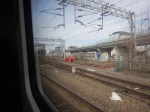
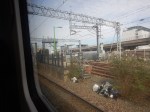
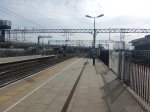
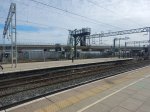
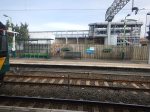
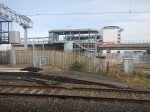
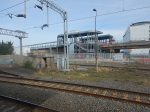
The Bletchley Viaduct is now complete and the extra platforms of Bletchley station are under construction.

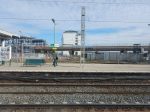
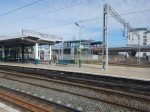
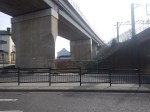

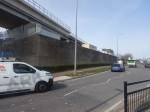




This visualisation from East West Rail shows an idea for the new station.
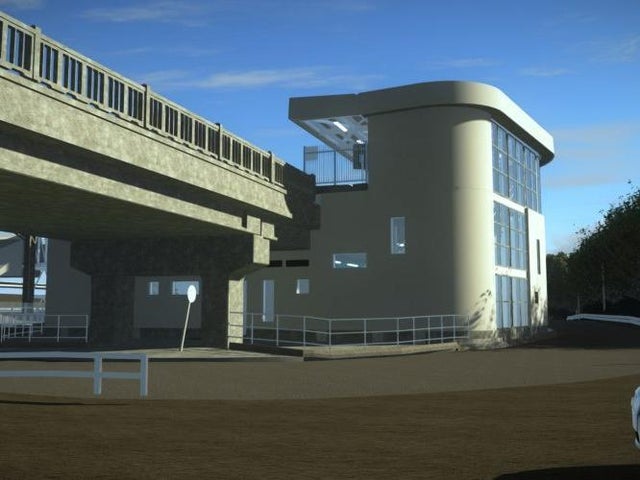
It would appear the visualisation was taken from somewhere near the roundabout on the East side of the viaduct.
The Crossrail Article That Everyone Must Read
This article on Ian Visits is entitled A Sneak Preview Of London’s New Elizabeth Line Railway.
As the title of this post indicates, Ian’s article is very much a must read and it gives everybody something worthwhile to look forward to, after what has been the worst two years of many peoples’ lives.
The Crossrail Opening Date
There are a few more tests to do and Ian says the line could open a few weeks after Easter. With the Bank station upgrade apparently going well as I reported in Final Tunnelling Gets Underway On Bank Station Blockade and likely to open in mid-May, I wonder if TfL would prefer that the two projects opened at different times for management and operational reasons.
Easter is the 17th of April, and two weeks later is May Day, with the Bank Holiday on the Monday.
If they can do all the tests, there would be good reasons to open Crossrail on the first of May.
- It’s a different day to the opening of the Bank station upgrade.
- They would have two clear days to get Crossrail open.
- A lot of people will be going to Central London.
- Other Mayors would have organised a party.
- A Bank Holiday would give the new infrastructure a proper test with real passengers and lots of children.
- Crossrail could also help to cover for a late-opening Bank Station Upgrade.
If I needed to bet on it, my money would be on an opening on Sunday, the first of May.
The Bakerloo Line Link At Paddington Station
Ian writes this interesting paragraph.
Something though that was added to Paddington station after the funding was approved was a new direct deep tunnel link from the platforms to the Bakerloo line. London Underground contractors built the link, and Andy Lord suggested that they are considering opening up the link before the Elizabeth line opens fully as it would help with offering step-free access for Bakerloo line customers.
Many people find getting to Paddington difficult, as I do from Dalston.
I typically use some roundabout and slow routes and most end up with arriving at Paddington on the Bakerloo Line.
Opening the link early would have the following effects.
- It would make things a lot easier for me and probably many other passengers.
- It would add passengers to London’s least-used Underground line.
- It would add capacity to the Bakerloo Line station at Paddington.
It would also give a piece of the infrastructure, a good soak testing with real passengers and may flag up some changes that needed to be made to details like signage.
Opening The Liverpool Street and Moorgate Pedestrian Link
In London’s First Underground Roller Coaster, I described this link, which I believe will be used by more than just rail passengers.
I feel that like the Bakerloo Line Link at Paddington station, that this link could be opened early.
Conclusion
I can’t wait for Crossrail to open.
Union Demands Withdrawal Of All HSTs After Carmont Report
The title of this post, is the same as that of this article on Railnews.
This is the first paragraph.
The TSSA union says it has written to the regulator demanding the immediate withdrawal of all surving HSTs, after new revelations in the Carmont derailment. report.
Manuel Cortes of the TSSA feels that the corrosion problem found in the train that crashed at Carmont, may be present in other trains.
He finishes with this this statement.
Frankly, it’s time to ban the HSTs. They were great in their day, but that day is nearly 50 years ago now and they simply aren’t up to modern safety standards.
I must admit, that I tend to agree with him, on this last point.
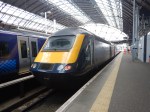
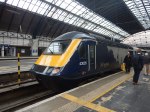

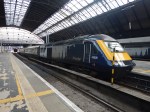

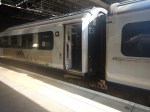
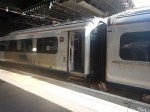




Scotrail have the following fleet of Inter7City trains.
- There are 52 Class 43 power cars and 120 Mark 3 coaches, which are arranged as nine four-car and seventeen five-car trains.
- The trains have sliding passenger doors.
- The trains meet all the regulations for Persons of Reduced Mobility.
- The trains have wi-fi and power points.
- They seem to run at up to 100 mph, as against the 125 mph for InterCity 125‘s in the past.
- The power cars have generally been reengined with modern MTU 16V4000 R41R diesel engines.
But they are now on average over forty years old.
In Battery And Hydrogen Trains For ScotRail ‘Could Make Scotland A Global Leader’ In Zero-Emission Transport, which is based on an article in the Scotsman with the same title, I said this.
Other points from the article.
- Talgo appear to have passed the story to Scotland on Sunday.
- Three routes are mentioned; Borders Railway, Fife Circle and Glasgow-East Kilbride.
- The new trains could help phase out diesel trains by 2035, which is Scottish Government policy.
- The Inter7City trains might be replaced by 2030.
- Talgo hopes to win an order for its factory in Fife.
Talgo’s Managing Director is quoted as saying, they are starting testing of a hydrogen and electric train with a range of 311 miles.
Consider.
- I wrote about this train in Talgo To Begin Fuel Cell Loco Trials.
- Talgo’s hydrogen and electric train would be ideal for Scotland’s railways of which only forty percent are electrified.
- A four or five-car high specification hydrogen and electric train would be ideal for the Inter7City routes, if it were built specifically for the routes.
- The range would cover all of Scotland.
- Hydrogen hubs are being planned all over Scotland.
- Scotland have 26 Inter7City trainsets.
This could be a rather nice order to fund the factory and test all the trains close to the factory.
- There could be as many as fifty trains.
- They would probably have an operating speed of 100 mph on electricity.
- Would the speed on hydrogen be 100 mph or perhaps a bit less?
- They would be able to use 25 KVAC overhead electrification, where it exists.
- They could have a length of three, four or five cars.
I wouldn’t be surprised to see three or four car trains for the suburban trains and four or five car trains for the Inter7City replacements.
It’s Time We Used Cyber Dark Arts To Foil Putin
The title of this post, is the same as that of this article on The Times, which was written by Edward Lucas.
This is the first paragraph.
Breaking the Kremlin’s grip on the Russian people is the greatest national security priority of our lives. We cannot (or rather, will not) fight the Russian invaders in Ukraine. But we can fight inside Russia, using disruption and subversion to disable the war machine, ideally to the point that the country becomes ungovernable.
He suggests the following.
- Russian speakers could sow doubt about the regime’s lies and brutalities.
- Use the Russian diaspora to contact friends and relatives back home.
- Build and unleash a psychological warfare arsenal against Putin’s cocktail of crimes, lies and secrecy.
- Send condolences to family members for their losses in the war.
- Prepare Nuremberg for war crimes trials.
- Highlight the friendly treatment that Ukrainians give Russian deserters.
- Use wit as a weapon.
Edward Lucas then talks about the antics of Sefton Delmer in World War II. Wikipeda says this about him.
During the war, he led a black propaganda campaign against Hitler by radio from England. It was so successful that Delmer was named in the Nazis’ Black Book for immediate arrest after their planned invasion of Britain.
I suspect he was very good at his job. Two of his weapons were.
Aspidistra, which was a 500 kW radio station.
A daily “grey” German-language newspaper titled Nachrichten für die Truppe (“News for the Troops”). These leaflets were delivered by the USAF.
Edward Lucas says that we should all read Delmer’s autobiography, which is called Black Boomerang, which is now out of print and difficult to find.
Wikipedia gives this explanation of Black Boomerang.
When fighting entered Germany itself, black propaganda was used to create an impression of an anti-Nazi resistance movement.
At the end of the war in Europe, Delmer advised his colleagues not to publicise the work they had been involved in, lest unrepentant Nazis claim (as had been the case after the First World War), that they had been defeated by unconscionable methods, rather than on the battlefield. Consequently, former Nazis were able to claim, without contradiction, that they had assisted the fictitious resistance movement; Delmer described this unintended consequence as a “black boomerang”
Edward Lucas suggests reprinting Black Boomerang.
If someone has a good clear copy, I could possibly arrange it.
Demoralising The Russians
Edward Lucas believes, we can use similar techniques to Delmer to attack the Russians.
But instead of using a massive radio, he proposes using the Internet and its various messaging apps.
I suspect with a bit of arm-twisting Facebook, Twitter, Google, Microsoft et al, could produce a very good list of Russian Internet users.
It might be against the law, but who cares? It’s a war out there, we’re not using the information to physically hurt anybody or steal anything of value.
News For The Troops
I believe we can go one better than Sefton Delmer.
We are dealing with Russians invading and occupying Ukrainian territory, where many of the inhabitants can certainly read Russian.
So could we develop a truthful leaflet, that is delivered across Ukraine to both Russian Troops and the Ukrainian population?
Delivery would be primarily by the Internet, but why not deliver it by drone?
Delivery from say 5000 feet would distribute the leaflets over a wide area.
Could We Go Candy Bombing?
Gail Halvorsen, who died recently was known as the Candy Bomber.
This is the introduction to his Wikipedia entry.
Gail Seymour Halvorsen (October 10, 1920 – February 16, 2022) was a senior officer and command pilot in the United States Air Force. He is best known as the “Berlin Candy Bomber” or “Uncle Wiggly Wings” and gained fame for dropping candy to German children during the Berlin Airlift from 1948 to 1949.
I think, his actions could be copied in Ukraine.
Consider.
- The Ukrainian people are starving in the occupied territories.
- The Russian soldiers aren’t doing much better.
- These days, we can supply nutrition bars instead of sweets.
- Automated drones could deliver them safely from 5000 feet.
- They could be flown on behalf of the Red Cross from over the border in Hungary, Moldova, Poland and Slovakia.
Organised properly, the Russians would have a problem.
- If they let the drones through, the siege will be broken in a small way.
- If they shoot them down, their soldiers won’t get the smallest snack and the Russians will be attacking the Red Cross.
We might lose a lot of drones, but eventually we’ll get the nutrition through, each wrapped in a large dollop of propaganda.
 The Anonymous Widower