Battery And Hydrogen Trains For ScotRail ‘Could Make Scotland A Global Leader’ In Zero-Emission Transport
The title of this post is the same as that of this article in the Scotsman.
This is the first paragraph.
New fleets of cutting-edge trains expected to include battery and hydrogen power are to be ordered for ScotRail which the rail industry believes will put Scotland at the forefront of zero-emission transport.
Other points from the article.
- Talgo appear to have passed the story to Scotland on Sunday.
- Three routes are mentioned; Borders Railway, Fife Circle and Glasgow-East Kilbride.
- The new trains could help phase out diesel trains by 2035, which is Scottish Government policy.
- The Inter7City trains might be replaced by 2030.
- Talgo hopes to win an order for its factory in Fife.
Talgo’s Managing Director is quoted as saying, they are starting testing of a hydrogen and electric train with a range of 311 miles.
Consider.
- I wrote about this train in Talgo To Begin Fuel Cell Loco Trials.
- Talgo’s hydrogen and electric train would be ideal for Scotland’s railways of which only forty percent are electrified.
- A four or five-car high specification hydrogen and electric train would be ideal for the Inter7City routes, if it were built specifically for the routes.
- The range would cover all of Scotland.
- Hydrogen hubs are being planned all over Scotland.
- Scotland have 26 Inter7City trainsets.
This could be a rather nice order to fund the factory and test all the trains close to the factory.
Is there a better place to show off your new train to a prospective buyer than the Highlands of Scotland?
In A Class 319 Train, But Not As We Know It!, I told this tale.
I am reminded of a tale, that I heard from a former GEC manager.
He was involved in selling one of GEC’s Air Traffic Control radars to a Middle Eastern country.
The only working installation of the radar was at Prestwick in Scotland, so he arranged that the dignitaries and the sales team would be flown to Prestwick in GEC’s HS 125 business jet.
As they disembarked at Prestwick and walked to the terminal, the pilot called the GEC Manager over.
The pilot told him “The Scottish Highlands at this time of the year, are one of the most beautiful places in the world! Would you and your guests like a low-level tour on the way back? I can arrange it, if you say so!”
Despite knowing GEC’s draconian attitude to cost control he said yes.
The sale was clinched!
I’m sure that Talgo will exploit the scenery and the local produce.
Talgo’s Hydrogen Trains
This page on the Talgo web site, is entitled Talgo’s Hydrogen Train Will Be Ready In 2023.
This paragraph gives an overview of Talgo’s hydrogen power system.
This system is configured as a modular solution that can be installed on all types of trains, as well as in upgrades from diesel to hydrogen. However, it has been specifically designed for the Vittal platform for Commuter and Regional trains, which Talgo has presented in the bidding process for various tenders in Spain and other countries.
And these two paragraphs describe Talgo’s hydrogen trains in more detail.
This innovative system uses hydrogen batteries that provide the energy for the train’s electric motors. It is powered by renewable energy sources, such as solar photovoltaic or wind, which produce hydrogen that is stored and then used to power fuel cell-based propulsion systems, such as the one designed by Talgo. The system is complemented by batteries that increase the speed of the train when it starts, taking advantage of the braking system to recharge it.
Unlike the extended battery systems in the automotive industry, hydrogen (H2) technology is the logical answer to the needs of heavy transport and, in particular, of those railway lines that do not have catenary electrification systems, and which today depend on trains powered by diesel engines. The hydrogen system designed by Talgo enables conventional network lines to be “electrified” without the need for costly and lengthy adaptation operations, and without the use of fossil fuels.
What do they mean by hydrogen batteries? Looking at the German and the Spanish on the page, I think Talgo means hydrogen fuel cells.
The Rebuilding Of Ukraine
It should be noted that Talgo have sold trains in the past to Russia, which has a gauge of 1.520 metres, which lies between Iberian gauge of 1.668 metres and our standard gauge of 1.435 metres.
- Talgo have also sold trains to Germany, who use standard gauge.
- Talgo have built Strizh trains for Russia, that are both standard gauge and Russian gauge for running between Berlin and Moscow.
- According to the BBC and The Times, Ukraine’s railways have been an important lifeline during the Russian invasion, but pictures show they are in need of modernisation and more electrification.
- The Strizh trains or a development would surely be ideal for running between Kviv and Berlin, Budapest, Prague and Warsaw.
- There would also appear to be a need for a hydrogen and electric regional train to reconnect the country back together.
- Other countries using Russian gauge include Mongolia, Kazakhstan, Kyrgyzstan, Tajikistan, Turkmenistan, Uzbekistan, Armenia, Azerbaijan, Georgia, Belarus, Moldova, Estonia, Latvia, Lithuania, and Finland.
So are Talgo positioning themselves to take part in the modernisation of Ukraine’s railways, once the war is over?
- Development and testing is done in Spain and Scotland.
- Manufacturing could be done in Spain and Scotland.
- Delivery from Scotland could either be by ship or if they were dual-gauge trains, they could be hauled through the Channel Tunnel and then through Germany and Poland.
As Talgo has the technology, I can certainly see them exploiting the Russian gauge market once Vlad the Mad has gone.
Penge East Station – 11th March 2022
When I wrote Advance Warning Of Brixton To Beckenham Junction Rail Closure In July, I realised I’d never been to Sydenham Hill station.
So when I visited Sydenham Hill station this morning, I decided to take the train through Penge Tunnel to take some pictures of Penge East station.





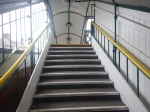

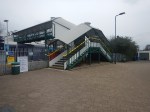

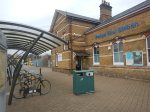
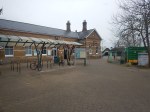

Note.
- The station is a Grade II Listed Building.
- It has been well-painted since I last visited.
- It would be very difficult to make the existing bridge step-free.
I think this station could be difficult to incorporate into a Penge Interchange station.
But it would be a shorter walk along the platforms to a lift and stairs to the high level platforms, than the current one to Penge West station.
New HS2 Pilot Project Swaps Steel For Retired Wind Turbine Blades To Reinforce Concrete
The title of this post, is the same as that of this press release from High Speed Two.
These are the first three paragraphs.
Worn-out wind turbine blades destined for the incinerator will instead be used to create carbon-friendly reinforced concrete on Britain’s new high speed rail network, HS2 Ltd has said today (12.03.21).
The innovative project will swap steel rebar, traditionally used to reinforce concrete, with sections of glass fibre reinforced polymer turbine blades that have reached the end of their operational lives generating low carbon electricity.
By 2023, around 15,000 turbine blades will have been decommissioned across the UK and EU. Until now, expired blades have either been ground down to be used as building materials or sent to energy-from-waste incinerators.
Replacing reinforcing steel with sections of retired wind turbine blades is claimed to cut up to 90 % of the carbon generated by steel reinforcement.
It would appear to me, that this is a worthwhile process.
- In 2018, 295,000 metric tons of steel reinforcing bars were produced in the UK.
- Retired blades don’t end up in landfill or incinerators.
- Could we export them as eco-friendly reinforcing bars, to countries with smaller wind industries.
As we have more wind farms, than most other countries, we will probably have more blades to recycle, so perhaps we should research other secondary uses for these blades.
A Passing Loop At Ponders End
I can’t write Ponders End without smiling, as my mother was born in that district of Enfield and used to refer to herself in light-hearted moments as a Ponders Plonker.
The West Anglia Main Line, through Ponders End station is a busy line and Enfield Council want to have four trains per hour (tph) serving their new development at Meridian Water.
This page on the CPMS Group web site is entitled The Changing Face Of Rail Investment and it describes the solution to the capacity problem at Ponders End/Meridian Water stations.
This is the introductory paragraph.
Peter George, Meridian Water Programme Director, London Borough of Enfield, and Damien Gent, Managing Director, CPMS Infrastructure, talk about the ground-breaking work undertaken by the London Borough of Enfield to deliver the rail infrastructure needed to increase passenger capacity at the newly built Meridian Water rail station and regenerate brownfield land to make space for up to 13,000 new homes and create over 6,000 new jobs in North-East London.
The Meridian Water project has been split into three phases.
- Phase 1 of the project was the construction of the new Meridian Water rail station.
- Phase 2 was building the rail infrastructure which would support the increased rail traffic.
- Phase 3 was the regeneration of the area, the procurement of new homes and creation of new jobs.
Only Phase 1 has so far been completed with Meridian Water station opening in June 2019.
This paragraph describes the complexity and solution to Phase 2.
The complexity of Phase 2 of the project was very high. The West Anglia mainline is one of the most congested routes into London. Consequently, the team had to find a way to reconcile increased capacity and trains stopping at Meridian Water station with ensuring high speed trains could still pass through the station seamlessly. This was a very challenging task. The solution which received the most support and proved the most viable was to install a new passing loop, approximately 1700 metres of new track at Ponders end, and to create a bi-directional section on the mainline heading towards London, as well as to implement broad changes to the signalling, telecoms and Overhead Line power systems to align with the new track position. This infrastructure solution provides the capacity within the rail network to then consider the timetable changes required to increase the frequency of services calling at Meridian Water.
It does seem that the web page is getting a bit ahead of reality.
But there is also this article on the Enfield Dispatch, which is entitled Boost For Rail Services At Meridian Water.
This is said.
Plans to boost rail services at Enfield Council’s £6billion Meridian Water regeneration scheme have taken a step forward.
The council has agreed a construction deal to create a passing loop at Ponders End Station, which will allow four trains per hour to serve Meridian Water Station, which was opened in June 2019.
The loop will enable fast trains on the West Anglia Main Line to overtake stopping services at Ponders End Station, allowing more trains to stop at Meridian Water, which is presently only served by two trains per hour towards Stratford.
To secure funding the works need to be completed by the end of March 2024.
A Visit To Ponders End Station
I went to Ponders End station this morning.
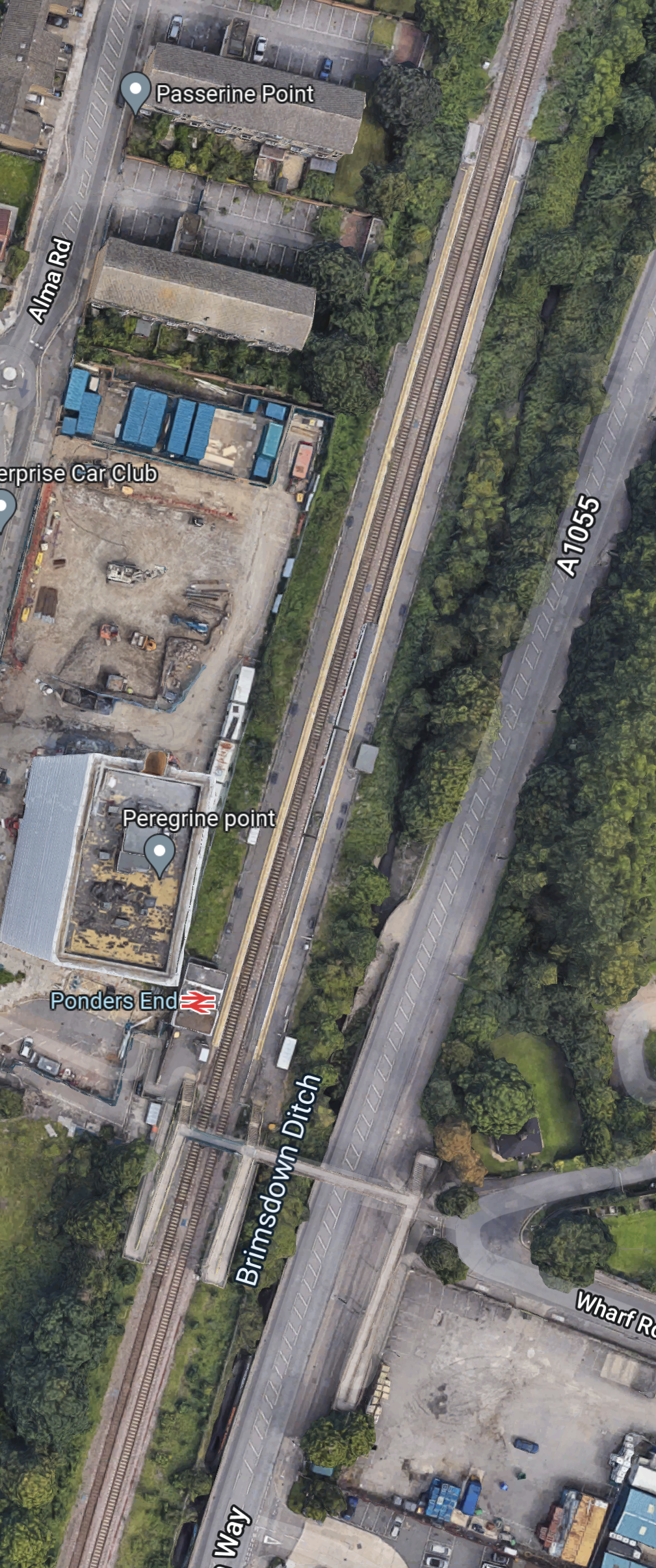
This Google Map shows the station.
Note.
- The Brimsdown Ditch on the East side of the station.
- The footbridge spanning both the railway and the road.
- The footbridge has ramps for step-free access.
- I suspect that the platforms will take a 240 metre train.
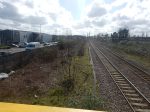
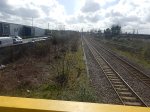
These pictures show the station




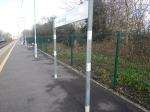
Note.
- The station serves the Lee Valley Regional Park and the Lea Valley Athletics Centre, so it probably needs lifts in an ideal world.
- The bridge seems to be built high enough for a track or even two to pass underneath.
- There seems to be plenty of space between the railway tracks and the A1055 road.
I wonder if a very simple solution is going to be built.
Consider that the distance between the two stations either side of Ponders End station is 3.2 miles or 5150 metres. So if the loop is placed symmetrically around Ponders End station to the East of the station, that would mean that the loop started and finished around 1700 metres from Brimsdown and Meridian Water stations. The Brimsdown Ditch could be put in a culvert, if more space were needed.
A Southbound express after passing through Brimsdown station would then take the loop between the platform and the road at Ponders End station and then cross over to the main line after the station.
I could envisage the Southbound express path through the three stations, being as straight as possible for several hundred metres through Ponders End station, with very gentle curves to connect to the current Southbound track at each end.
To access the Southbound platform at Ponders End, there would be two crossovers from the loop to the track through the station at each end of the station. As the train would be stopping or accelerating away, when it crossed between the passing loop and the station track, it could be done at a much slower speed.
There will be no problem for Southbound represses overtaking a stopping train sitting in Ponders End station. The loop would be very simple and I suspect Network Rail have enough expertise to design it for perhaps 100 mph. The sharpest changes of direction would only be performed by the stopping train at a much slower speed.
But surely, a Northbound train will need to overtake a stopping one.
Could this be done at Meridian Water station by stopping the Northbound stopping train in Platform 3 at the station and allowing the Northbound expresses to overtake through Platform 4?
It would need a couple of crossovers either side of Meridian Water station and bi-directional running through Platform 3 at the station.
Conclusion
How many small rail schemes like this, that unlock housing and job opportunities could be accelerated by better design, management, planning and cooperation between stakeholders.
Aberdeen City Council And BP Sign Joint Venture Agreement To Develop City Hydrogen Hub
The title of this post, is the same as this article on Renewable Energy Magazine.
The title is a good description of the project and these are a few details.
- Production will start in 2024.
- The hub will produce 800 kilograms of green hydrogen per day.
- That will be enough for 25 buses and 25 other vehicles.
- Further investment would provide hydrogen for rail, freight and marine uses.
I don’t think this is a small project, as they are talking about potentially exporting the hydrogen.
These are a few thoughts.
Electricity Supply
In Can The UK Have A Capacity To Create Five GW Of Green Hydrogen?, I said the following.
Ryze Hydrogen are building the Herne Bay electrolyser.
- It will consume 23 MW of solar and wind power.
- It will produce ten tonnes of hydrogen per day.
The electrolyser will consume 552 MWh to produce ten tonnes of hydrogen, so creating one tonne of hydrogen needs 55.2 MWh of electricity.
Scaling those figures mean that to create 800 kilograms of hydrogen will need 44.16 MWh of electricity or if it is a 24/7 operation, the electrolyser will need a feed of 1.84 MW.
Currently, there are two offshore wind farms close to Aberdeen.
- European Offshore Wind Development Centre – 93 MW
- Hywind Scotland – 30 MW
That would provide enough electricity to provide a starter of under 2 MW.
I can see a lot more wind farms off the coasts around Aberdeen, as on all my visits to the city it has been windy and there is a lot of empty sea.
I don’t think providing enough renewable electricity for a very large electrolyser in Aberdeen will be a problem.
Hydrogen Exports
I would expect, that the hydrogen would go to Germany, as the Germans are backing BP in their wind farm ambitions and they are building a large hydrogen import terminal at Wilhelmshaven on the North-West German coast. The distance for a ship is under 500 miles.
BP’s Future Hydrogen Plans
This is a quote from Louise Kingham CBE, BP’s UK head of country and senior vice president for Europe.
Partnering with cities and corporates as they shape their paths to net zero is a core part of BP’s strategy. BP expects to partner with 10-15 cities globally by 2030 to provide innovative, integrated, and decarbonized energy solutions at scale to help them achieve their goals of net zero emissions. BP also aims to capture 10% of the low carbon hydrogen market in key geographies by 2030.
BP is investing across all the energy transition growth areas in the UK. In fact, we have committed to spend £2 in the UK for every £1 generated here out to the middle of this decade.
“Today’s announcement is evidence of that commitment in action and is supported by other ambitious plans to produce clean energy from UK offshore wind, develop carbon capture in Teesside and grow the country’s electric vehicle charging network.
BP would be in part using their expertise in providing oil and gas to the production and delivery of hydrogen to end users, be they large or small.
I can also see BP repurposing a few gas and oil production platforms into offshore hydrogen production hubs, as this could be a better financial route, rather than demolishing the platforms.
Conclusion
Birmingham is building a hydrogen hub at Tyseley Energy Park to fuel hydrogen buses and other vehicles.
Where is the plan for London’s hydrogen hubs?
Highland Council Forges Green Hydrogen Pact
The title of this post, is the same as that of this article on renews.biz.
These are the first two paragraphs.
Getech subsidiary H2 Green has signed a memorandum of understanding (MoU) with the Highland Council in Scotland aimed at creating a regional network of green hydrogen hubs across the Scottish Highlands.
Under the terms of the MoU, H2 Green and the Highland Council will produce a regional plan to develop a network of green hydrogen hubs at optimal locations across the region.
The first hub appears to be in Inverness, as I wrote in Hydrogen Hub Plan Will Cut Transport Sector Emissions In The Highlands.
But that is only the start.
- Green hydrogen will be used in transport in the Highlands.
- By-products like oxygen and heat will be distributed.
- Delivery of Highland decarbonisation will be planned.
- SGN Commercial Services will service large-volume customers.
- Agreements are in place for Eversholt Rail to deploy their hydrogen-powered trains on the Far North and West Highland Lines of Scotland.
This statement from Jonathan Copus of Getech, sums up the objectives of the hydrogen project.
These activities combined with the Highland Council initiative are set to establish the Highlands as the leading UK-centre for decarbonisation and innovation; they will also support job creation, deliver energy security and provide a sustainable path for the region’s net zero transition.
I believe that a similar approach could be taken in other parts of the UK. Cornwall, East Anglia, Lincolnshire, much of Wales and the Borderlands between England and Scotland come to mind.
Each region will probably, decarbonise slightly differently and each will develop more and more innovative ways to use the hydrogen.
Conclusion
Hydrogen will play a large part in the decarbonisation of the UK.
Sydenham Hill Station – 11th March 2022
When I wrote Advance Warning Of Brixton To Beckenham Junction Rail Closure In July, I realised I’d never been to Sydenham Hill station.
So this morning, I went to have a look.
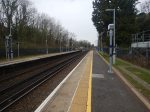

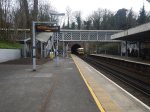
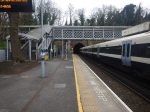


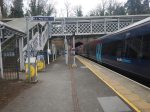
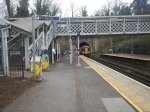
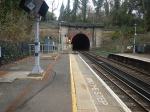


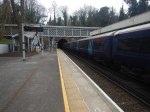
Note.
- Penge tunnel doesn’t look to be the widest of tunnels.
- Few if any freight trains, seem to use the route.
- Sydenham Hill station, certainly isn’t one of the grandest of stations.
I doubt there’s much work to do at the station, during the closure.
Advance Warning Of Brixton To Beckenham Junction Rail Closure In July
The title of this post, is the same as that of this article on Ian Visits.
These are the first two paragraphs.
In late July, the railway between Brixton and Beckenham Junction will be closed for 9-days as Network Rail carry out a major upgrade of the tracks in the Penge railway tunnel.
Over the 9-day closure Network Rail says that it will be delivering a £4.5 million investment to replace the tracks through the Penge tunnel to help improve train service reliability. During the works, they will be replacing 3,970 metres of track in total, using engineering trains, road-rail vehicles and other heavy machinery to complete the work.
The railway will be closed between Herne Hill and Beckenham Junction stations for the week of Saturday 23rd to Sunday 31st July 2022.
This map from OpenRailwayMap shows the tunnel.

Note.
- The North-South railway is the Brighton Main Line, that passes through Sydenham and Penge West stations.
- The NW-SE railway is the Chatham Main Line, with Sydenham Hill station in the North-West and Penge East station in the South-East.
- Penge East Station – 11th March 2022 shows the station and the distance to Penge Tunnel.
- Sydenham Hill Station – 11th March 2022 shows the station and Penge Tunnel.
- Penge Tunnel is between the two stations and is shown in cream.
This second map, shows where the two lines cross.
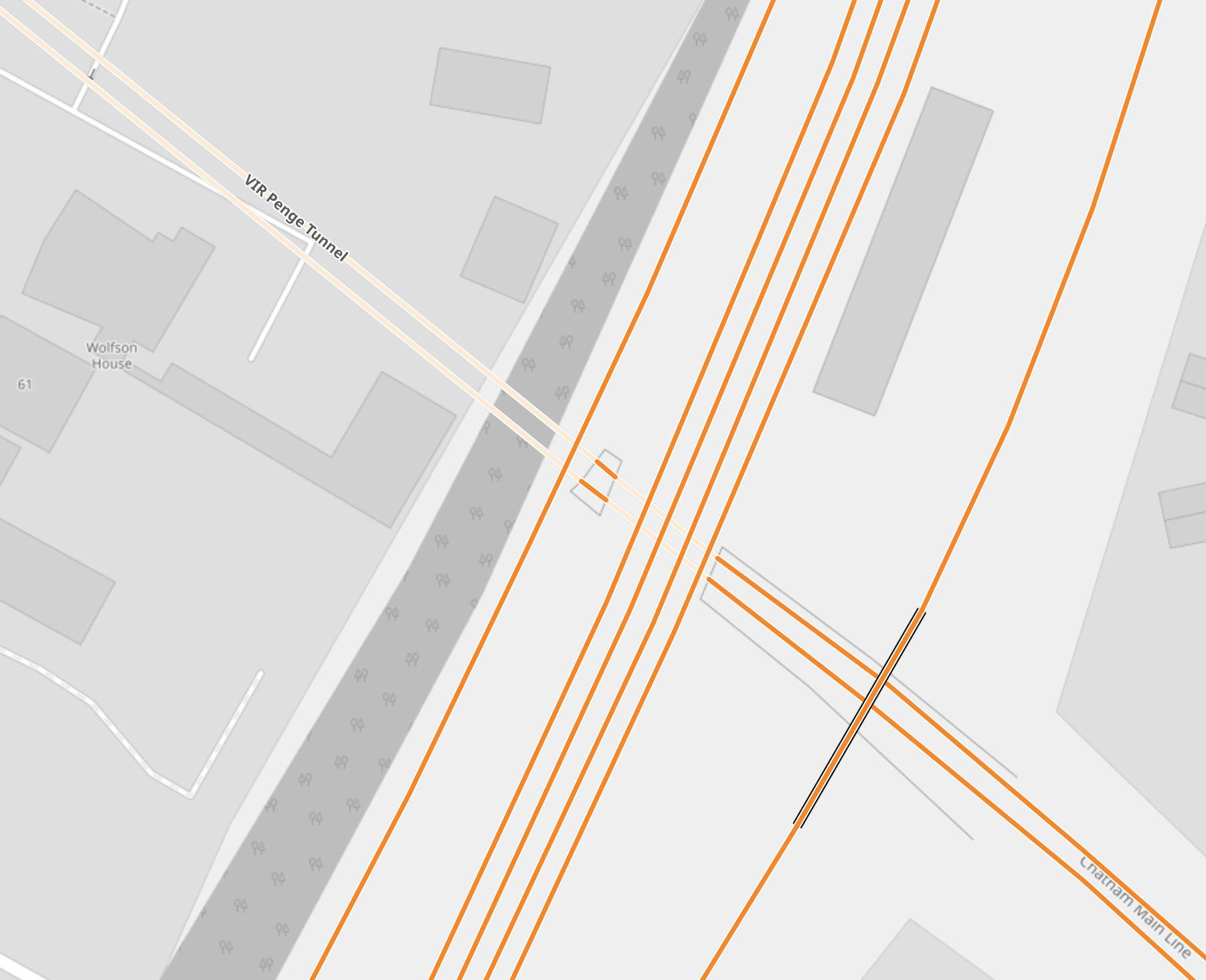
In Penge Interchange, I described how Transport for London would like to build a new Penge Interchange station to possibly replace both Penge East and Penge West stations.
- It could be fully step-free.
- The station would be built on railway land.
- It would have four tph between Victoria and Bromley South stations.
- It would have four tph between Highbury & Islington and West Croydon stations.
- It would have two tph between London Bridge and Caterham stations
- It might also be possible to have platforms on the Crystal Palace branch, thus adding six tph between Highbury & Islington and Crystal Palace stations.
- The station could have Thameslink platforms.
I feel it would offer the following benefits.
- Better connection between South East and North London, without going through Central London.
- Better connection between South East London and Crossrail, with all its connections.
- Closure of the two older Penge stations.
I hope that whilst the railway is closed for the relaying of track, that Network Rail will do a full survey to at least find out whether a Penge Interchange station is feasible.
Gelion Claims Zinc-Bromine Gel Batteries Will Replace Lithium-Ion
The title of this post, is the same as that as this article on RideApart.
These are the first two paragraphs.
Battery technologies are evolving at a rapid pace—and for good reasons. With the automotive world moving toward electrification, companies need to find solutions for producing electric vehicles on a massive scale. While lithium-ion battery technology rules the roost today, that isn’t stopping firms from developing the next big leap forward.
From solid-state power units to structural batteries to sci-fi-worthy quantum batteries, there’s no shortage of ideas and concepts. However, the Australian company Gelion Technologies believes it found a more affordable and durable approach with its zinc-bromine gel battery. Unlike lithium-ion units, the material found in Gelion’s design isn’t rare, expensive, or potentially flammable.
It’s yet another development coming out of Australia.
‘Upgrade East Coast Main Line Before HS2’ If Leeds And Yorkshire Want Faster Rail Links To London
The title of this post, is the same as that of this letter to the Yorkshire Post.
This is the opening paragraph.
The decision to scrap HS2 running to Leeds is controversial but those who travel to London should not despair.
The writer makes these points.
- High Speed Two will probably charge a premium fare because of the speed.
- The current journey time to the capital is two hours 13 minutes at a cost of £28-60, if purchased in advance.
- Planned improvements on the East Coast Main Line will reduce the journey time to London King’s Cross to one hour 56 minutes.
- High Speed Two will take one hour 22 minutes.
- If the line between Doncaster and Leeds were to be improved, the journey time could be reduced to one hour 45 minutes.
The writer finishes by saying that if the government ‘four tracked’ the entire East Coast route, 140mph LNER’s Azuma trains would match the times of High Speed Two.
In What Will Be The Fastest Times Possible Between London King’s Cross And Leeds?, I came to this conclusion.
It looks like a non-stop service between London and Leeds running at 140 mph, with perhaps some sections at perhaps a bit faster, could be able to match the High Speed Two times.
Running non-stop saves a total of eighteen minutes.
In an hour, I would give Leeds one non-stop and one stopping service to London.
 The Anonymous Widower