Dual-Fuel Class 37 And 66 Locomotive Concepts Unveiled
The title of this post, is the same as that of this article on Railway Gazette.
This is the first paragraph.
G-volution and SBL-Rail have produced design concepts for dual-fuel versions of Class 37 and 66 locomotives, which would be able to run on diesel with biomethane, biopropane or hydrogen.
Note.
- There are about sixty Class 37 locomotives in service or stored.
- 480 Class 66 locomotives were originally produced and over 300 must still be in service.
- Both locomotives have electric transmissions.
- G-volution are developing a dual-fuel Class 180 train, that I wrote about in Grand Central DMU To Be Used For Dual-Fuel Trial.
- Two of the design concepts involve replacing the current diesel engines with modern Cummins engines, that meet current emission regulations.
- Fuel savings of ten percent are mentioned for one engine conversion.
This is said about the dual-fuel conversions.
Biomethane and biopropane dual fuel engines would offer significant carbon and cost savings verses diesel. Hydrogen has the potential to do so if produced from renewable sources, but would need to be ‘much cheaper’ than it is today.
The article then gives a table, which shows the various savings.
The article comes to these conclusions.
- Biomethane and biopropane prices are expected to fall, as production increases.
- Green hydrogen is too expensive, but costs will come down.
- More rises in the price of diesel, will tilt costs towards alternative fuels.
I feel that to get the emissions and costs down, there would need to be a bit of cheating.
Look at this picture of a Class 66 locomotive under 25 KVAC electrification.

I wonder, if a pantograph and all the electrical gubbins could be fitted to a Class 66 locomotive to create a genuine electro-diesel locomotive.
- It would use electrification, where it exists.
- It would use the existing electric transmission.
- I do suspect though that the Class 37 locomotive may be more difficult to convert because of its age.
It should be noted that in GB Railfreight Plans Order For Future-Proofed Bi-Mode Locomotives, I talk about how GB Railfreight are proposing to purchase a fleet of new electro-diesel freight locomotives, that appears will have Class 66 locomotive performance on both electrification and diesel.
The Involvement Of Cummins
Cummins, who are one of the world’s largest manufacturers of diesel engines, could have a lot to lose from the move to zero-carbon.
- But they have adopted an if-you-can’t-them-join-them philosophy to hydrogen.
- They have bought up hydrogen companies like Hydrogenics.
- They are developing internal combustion engines that can run on hydrogen.
- Cummins have claimed to me, that they will try to fill any niche market with their engines, so it would be likely, they would apply that philosohy to hydrogen.
I believe that Cummins will not give up their market share without a fight.
I would expect, Cummins will actively support G-volution’s plans, if it would sell upwards of fifty large engines.
Conclusion
I have four main conclusions.
- I believe that this study could lead to a very significant and worthwhile updating of a Class 66 locomotive.
- The locomotive would need to be modified so it could use electrification.
- But I am more dubious, that this could be done with the Class 37 locomotive.
- I also believe that Cummins will be part of the solution.
In the wider world, I also believe that to retain their turnover and market share, Cummins and the other big diesel engine manufacturers will come up with increasingly innovative solutions.
Caterpillar, Cummins, Deutz, JCB, MTU and others will not give up multi-billion businesses without a fight.
Brighton Buses – 30th March 2022
I had a short ride up from the sea-front back to Brighton station on a bus, as the climb is a bit much for me on some days.
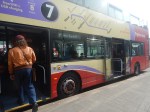
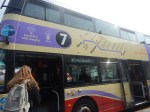
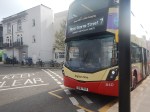

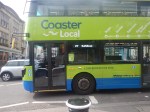


Note.
- The bus I travelled on had two doors like London’s, which makes entry and exit so much more efficient.
- Brighton seems to have contactless ticketing, where you touch-in and touch-out, as you do on the London Underground.
- The two buses in the pictures have the route on the side.
I was very surprised that there were no stops on the sea-front, where you can get a bus to the station, as not all visitors to the city, are in the first flush of youth.
There wasn’t even any instructions about how to find a bus.
Gatwick Airport Station – 30th March 2022
Gatwick Airport station is being upgraded and I took these pictures as I passed through twice today on my way to and from Brighton.












It will be a much bigger and better station when the upgrade is complete.
London’s Other New Underground Line
In the middle of next month, Phase One of London’s other new Underground line will open.
The Bank station upgrade may only be a short section of new Southbound tunnel and track for the Northern Line and a much expanded station, but it promises to do proportionally for the City of London, what Crossrail will do for the whole of London.
The lucky Ian of IanVisits has been allowed to descend into the depths of the new section of the station with his camera and has posted this report on his web site, which is entitled Behind The Scenes At Bank Tube Station’s Huge Upgrade Project. The report contains twenty-four revealing photographs.
If ever there was a must-read, then Ian’s article must be it.
Old Street Station – 28th March 2022
More beams have gone up at Old Street station in the last ten days.





Several beams have now been erected.
West Midlands To Run ‘Largest Hydrogen Bus Fleet’ Due To New Funding
The title of this post, is the same as that of this article on the BBC.
These are a few points from the article.
- The region is set to get 124 new hydrogen vehicles.
- The West Midlands is set to run the UK’s largest hydrogen bus fleet after securing new funding.
- The region will get 124 new buses after it won £30m from the Department for Transport to fund a switchover.
- Twenty four of the new vehicles will be articulated tram-style buses set to run on a new bus priority route between Walsall, Birmingham and Solihull.
Does the last statement mean, that they will buying a hundred double-decker hydrogen buses?
A few thoughts.
Riding Birmingham’s New Hydrogen-Powered Buses
These are a few pictures from Riding Birmingham’s New Hydrogen-Powered Buses.
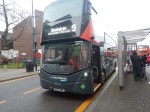

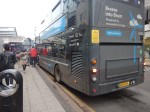

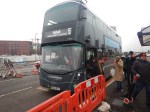
They were excellent buses from Wrightbus.
The Tram Style Buses
The Belgian firm; Van Hool have a product called Exquicity. This video shows them working in Pau in France.
These tram buses run on rubber types and are powered by hydrogen.
Similar buses running in Belfast are diesel-electric.
Could these be what the article refers to as tram-style buses?
It should be noted, that the West Midlands and Pau have bought their hydrogen filling stations from ITM Power in Sheffield.
So has there has been a spot of the Entente Cordiale between Pau and the West Midlands?
Will The West Midlands Buy The Other Hundred Buses From Wrightbus?
There doesn’t seem to be any problems on the web about the initial fleet, so I suspect they will.
It should also be noted that Wrightbus make the following types of zero-emission buses.
- StreetDeck – Hydroliner FCEV – Double-deck hydrogen bus
- StreetDeck – Electroliner BEV – Double-deck battery bus
- GB Kite – Hydroliner FCEV – Single-deck hydrogen bus
- GB Kite – Electroliner BEV – Single-deck battery bus
These would surely enable the West Midlands to mic-and-match according to their needs.
Conference Calls For More Freight Routes To And From Spain
The title of this post, is the same as that of this article on Railway Gazette.
This is the first paragraph.
Salvador Galve, Chairman of the Railway Commission of the General Council of Industrial Engineers, presented the European Alliance for the Development of Railway Corridors in the Iberian Peninsula initiative at a conference held in Madrid on March 9.
These are some points from the article.
- Less than 4% of freight is currently transported by rail in Spain, compared with an average of 18% across the EU.
- The Spanish government wants to raise this to 20%.
- Incidentally, in the UK, rail freight is at a level of 5 %.
- Italy has seven main lines connecting it to its neighbours, Spain has only two!
- Spain also has a break of gauge, whereas the UK and Italy do not!
- Plans exist for more freight corridors in Spain, and linking these to ports in North Africa and logistics hubs in the rest of Europe.
- Zaragoza, could be turned into a key southern European logistics hub, linked by tunnels to the main line between Toulouse and Bordeaux.
But to me the most interesting plan is set out in this paragraph.
On March 1 the Infrastructure Ministry gave its provisional approval for study into the feasibility of converting the single track, non-electrified line from Huesca to Canfranc from 1 668 mm gauge to 1 435 mm gauge, ahead of any possible reconstruction of the through route to Pau in France in the longer term.
It has always been on my bucket list to visit the magnificent Canfranc station.
UK On Track To Reach 4,000 Zero Emission Bus Pledge With £200 Million Boost
The title of this post, is the same as that of this press release from the Government.
These are the main points of the press release.
- Nearly 1,000 more zero-emission buses to be funded in towns and cities across the country, bringing the total funded in England to 2000 so far under this government.
- A further 600 zero-emission buses have been funded in Scotland, Wales and Northern Ireland.
- Comes as consultation launched on ending sale of all new non-zero emission buses from 2025 to 2032.
- Government continues taking unprecedented action to hit net zero and level up transport across the country.
Areas to get the new buses include.
- Blackpool
- Greater Manchester
- Hertfordshire
- Norfolk
- North Yorkshire
- Nottingham
- Oxfordshire
- Portsmouth
- South Yorkshire
- West Midlands
- West Yorkshire
- York
I would also like to see the government fund trials for the conversion of suitable buses to zero carbon. I certainly believe that London’s New Routemaster buses could be converted to hydrogen.
Hydrogen Fuel Cell Trucks And H2 Infrastructure Could Benefit From New Legislation
The title of this post, is the same as that of this article on Hydrogen Fuel News.
Politicians from both main parties in the United States are promoting a Hydrogen for Trucks Act, to support the conversion of domestic trucking from diesel to hydrogen.
These are the three main parts of the Act
- Provide incentives for adopting hydrogen fuel cell trucks by covering the difference in cost between them and conventional diesel-powered vehicles.
- Encourage tandem fueling station and vehicle deployment, to ensure that one doesn’t need to exist before the other is in place, solidifying the overall fueling infrastructure.
- Collect data and establish benchmarks for various forms of fleet operation, helping to accelerate deployment by incentivizing private investment.
We could do with an Act like this in the UK.
But whereas the United States would start with hydrogen for trucks, we would probably start with hydrogen for buses.
Stadler Reports ‘Best Year’ Since IPO
The title of this post, is the same as that of this article on Railway Gazette.
This is the first paragraph.
Stadler has reported record orders and earnings before tax for the 2021 financial year.
And these are a few statistics.
- Orders were up by 28%.
- Revenue was up 18 %.
- Earnings before interest and tax (EBIT) was up 43 %.
- EBIT margin rose to 6·2%.
Overall group profits was slightly down on the previous year due to exchange rate losses.
There is a note of caution.
However, it cautions that it is unlikely to achieve its target EBIT margin of 8 to 9% in 2023 as previously forecast, predicting instead that this would be achieved by 2024-25.
Overall the company is doing well and certainly producing the best trains in Europe.
 The Anonymous Widower