Will Twiggy Save The World?
This article on the Sydney Morning Herald is entitled ‘No One’s Married To Coal’: How Forrest Is Taking On The World To Save The Climate.
The article is the story of Andrew ‘Twiggy’ Forrest’s Damascene conversion to hydrogen.
These three paragraphs sums up Andrew Forrest‘s vision and ambitions.
Forrest’s companies, including its mining arm, Fortescue, and its green energy arm, Fortescue Future Industries, would be net zero by 2030. This would necessitate inventing and then developing hydrogen-powered trucks, trains and ships. This way the mining operation would avoid burning up to a billion litres in diesel a year.
The project would include the construction of vast solar and wind power stations in the Pilbara that would create green hydrogen to first fuel the trains, trucks and ships of the iron ore empire and then for export to a clean-energy starved world. The electrolysers needed to make the hydrogen for the early phases of the plan would be built by a vast new factory in Queensland, that itself would double the global supply of the machines.
Hydrogen would soon become the world’s largest shipborne trade. The Fortescue revolution would occur at a blistering pace set by the demands of addressing global warming, and it would be done for profit, to remove the excuses of governments and businesses that objected to ambitious climate action.
Note.
- How many other companies are intending to be net-zero by 2030?
- Certainly not many Chinese, German or Russian companies.
- And how many companies have planned to achieve net-zero at a profit?
If Forrest achieves his ambitions, the world will be a much better place.
Cycle Paths To Run Alongside HS2 For 200 Miles
The title of this post, is the same as that of this article on The Times.
This is the first paragraph.
The route of HS2, the high-speed railway line from London to Manchester, is to become an unlikely tourist and leisure destination, with a trail for cyclists and walkers that will eventually run for 200 miles.
The article says this about the design of the proposed trail.
- The cycle path is expected to be 3m wide.
- The walkers path is expected to be 2.5m wide.
- The two paths would be separated by a grass verge.
I am pleased that the combined path will be set at some distance from the High Speed Two track, as I don’t like to be near speeding trains.
I have some thoughts.
Rest Areas
In some places, there should be rest areas. Some of these could be close to towns or villages, where there is a convenient cafe or pub.
In Burnley, there is even a Premier Inn on the banks of the Leeds and Liverpool Canal and the manager told me, that in the summer, they get cyclists staying the night, as it’s the mid-point between Leeds and Liverpool.
Mobility Scooters
Will rules for these to use the trail be developed?
Health And Safety
In Edinburgh to Inverness in the Cab of an HST, I talked about a memorable trip, that I made to Inverness.
The route to Inverness is for a long way alongside the A90 and driver told me how on one trip, there was a serious multiple car crash in heavy snow.
So he stopped the train, alerted the emergency services and even asked the passengers, if there were any medical staff on board.
Obviously, stopping a High Speed Two train from 225 mph is not as practical as stopping an InterCity 125 from perhaps 90 mph.
But the drivers’ eyes or the CCTV systems on the train would probably spot a minor accident on the path, so the appropriate assistance can be called.
Conclusion
I like this idea.
It should be fully developed.
Crossrail is Over Budget And Very Late – But The End Is Nearly In Sight
The title of this post is a quote from this article on the BBC, which is entitled Elizabeth line: The Ambient Detailing Behind Crossrail’s New Stations.
There have been little signs appearing in the last few days.
- In Is The Paddington Bakerloo Line Link Opening Soon?, it looked like the new tunnel, that will form the Bakerloo Line Link to Crossrail could be opening soon.
- In The Covers Are Off At Tottenham Court Road Station, it looked like the builders were finishing off Tottenham Court Road station.
- I go through Moorgate station about six times a week.This morning, as I normally do, I took the rat-up-the-drainpipe route to the surface, that I described in Up From The Depths At Moorgate Station. The escalators have been reversed and there were a lot of staff around.
- I’ve also seen guys and gals walking around with clipboards.
This all indicates to me that D-Day is not far-off, when passengers will be allowed to set foot on Crossrail’s platforms and trains.
Is The Paddington Bakerloo Line Link Opening Soon?
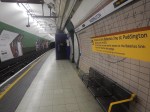
I took these pictures on the Bakerloo Line platforms at Paddington station yesterday.
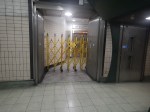
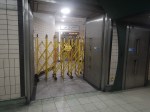
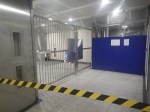
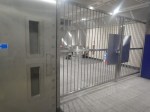



Note.
- There are new direction signs by the entrance, but they are covered in white plastic.
- The lights on the lift were showing sensible messages.
- The escalators behind the grill doors were running.
- It was only shut off using a barrier and black and yellow tape.
- The access between the Northbound Bakerloo Line platform and the escalator lobby, still needed to be opened up.
But it does look to me that this route is getting ready to be used.
In The Crossrail Article That Everyone Must Read, I review this article on Ian Visits, which is entitled A Sneak Preview Of London’s New Elizabeth Line Railway.
In a section, that is entitled The Bakerloo Line Link At Paddington Station, I wrote this.
Ian writes this interesting paragraph.
Something though that was added to Paddington station after the funding was approved was a new direct deep tunnel link from the platforms to the Bakerloo line. London Underground contractors built the link, and Andy Lord suggested that they are considering opening up the link before the Elizabeth line opens fully as it would help with offering step-free access for Bakerloo line customers.
Many people find getting to Paddington difficult, as I do from Dalston.
I typically use some roundabout and slow routes and most end up with arriving at Paddington on the Bakerloo Line.
Opening the link early would have the following effects.
- It would make things a lot easier for me and probably many other passengers.
- It would add passengers to London’s least-used Underground line.
- It would add capacity to the Bakerloo Line station at Paddington.
It would also give a piece of the infrastructure, a good soak testing with real passengers and may flag up some changes that needed to be made to details like signage.
Did Ian call it right?
Conclusion
I think he might have!
A Chiltern Class 68 Locomotive At Marylebone Station
As I was passing through Marylebone station, I took these pictures of a very clean Class 68 locomotive.
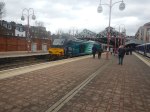
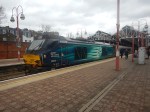
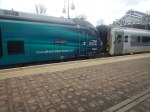

If I’m going to Birmingham, I generally use Chiltern, as often you get to travel in one of these well-restored Mark 3 coaches hauled by a Class 68 locomotive.
With the Mark 3 coach, you get a full size table and a large window to enjoy the countryside.
- The Class 68 locomotives were all built by Stadler in Spain, within the last ten years.
- The UK has a fleet of 34 Class 68 locomotives.
- They are powered by a Caterpillar diesel engine.
- The only problem with the trains is that the Class 68 locomotives are diesel.
But is Caterpillar working on a simple solution?
Search the Internet for “Caterpillar Hydrogen” and you find press releases and other items, like this press release, which is entitled Caterpillar to Expand Hydrogen-Powered Solutions to Customers.
I wouldn’t be surprised to find out, that Stadler and Caterpillar were working on a program to provide a solution to convert Class 68 locomotives to hydrogen.
The Covers Are Off At Tottenham Court Road Station
These pictures show some of the new signs at Tottenham Court Road station.






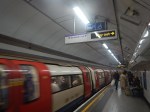
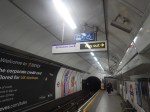
As the covers seem to have been taken off, does that mean that like with cricket, something is about to happen?
HS2 Reveals Dramatic Carbon Saving With Ambitious Modular Design For Thame Valley Viaduct
The title of this post, is the same as that of this press release on High Speed Two.
This is the first paragraph.
HS2 today revealed the final designs for the Thame Valley Viaduct and the pioneering pre-fabricated construction methods that will see the 880m long structure slotted together like a giant Lego set, cutting its carbon footprint by an estimated 66%.
This is one of the pictures released in this photoset.

This second picture shows a closer view of a pillar and the catenary.

It does appear in these two views that the catenary and the gantries that support it are more elegant than those that tend to be used on most electrification schemes at the present time.
These paragraphs describe how the design saved carbon emissions.
Applying lessons from recent high speed rail projects in Spain, the design team cut the amount of embedded carbon by simplifying the structure of the viaduct so that every major element can be made off site.
In a major step forward for viaduct design in the UK, the team opted for two wide ‘box girder’ beams per span instead of eight smaller beams – to simplify and speed up assembly.
The production of steel and concrete is a major contributor to carbon emissions, with the new lighter-weight structure expected to save 19,000 tonnes of embedded carbon in comparison to the previous design. That’s the same amount of carbon emitted by one person taking a flight from London to Edinburgh and back 70,000 times.
It would appear that saving weight and using less steel and concrete can save a lot of carbon emissions.
I once got a bonus at ICI because I saved ten metres on the height of a chemical plant. My boss said, I’d saved nearly a million. by using a mathematical model on an analogue computer to show that a vessel in the plant wasn’t needed and this eliminated a complete floor of the plant.
How much concrete and steel has been saved by High Speed Two on this viaduct, by making it more basset than Afghan hound?
Ever since I watched the building of Crossrail’s Custom House station, I have been in favour of off-site construction.
I wrote about it in An Express Station and am pleased to see it being used on High Speed Two.
GB Railfreight Names Locomotive For Ukraine
The title of this post is the same as that of this article on Railnews.
This is the first paragraph.
GB Railfreight has unveiled a Class 66 locomotive bearing the nameplates ‘Glory to Ukraine’, and painted in a special livery using the Ukrainan colours. GBRf said it ‘stands with Ukraine, and this newly painted locomotive honours the people affected by the conflict as they continue to courageously defend their homeland’.
Perhaps not in the same class as this article from the Guardian, which is entitled Lithuania Names Road Leading To Russian Embassy ‘Ukrainian Heroes’ Street’.
But every little bit helps!
The TruckTrain
Note that I first came across the TruckTrain, when I wrote Innovative Composite Masts Look To Reduce Cost And Increase Efficiency Of Rail Electrification.
I have now decided that the concept could be so revolutionary, that it needs its own post.
The TruckTrain
TruckTrain is a concept with roots in Coventry University that could be off-beam enough to become a new normal.
The TruckTrain Web Site
The TruckTrain web site is the main source of information for the TruckTrain.
A sales leaflet for the TruckTrain can be accessed from the Home page.
The About page on the web site, gives this description of the TruckTrain.
TruckTrains® are short, fast, bi-directional self-propelled fixed freight train formations able to operate at passenger train speeds. Train sets can work in multiple in response to operational and commercial imperatives. Each vehicle is powered and all axles are powered to deliver the acceleration and braking required to achieve and to sustain this demanding level of performance. The initial configuration will use diesel-electric power to ensure freedom of operation over the national network. A hybrid design able to operate on electrified lines has also been developed together with an all-electric variant capable of extremely high-speed performance.
The Specifications page on the web site gives a detailed specification of the TruckTrain.
These are my thoughts.
The Basic Design Concept
The leaflet on their web site describes the concept.
This visualisation at the bottom of the leaflet shows four TruckTrains forming a train carrying twelve intermodal containers, each of which I suspect are 20 feet long.

Note.
- Each of the four TruckTrains appears to be carrying three intermodal containers.
- A 20 foot container is 6.096 metres long, so three are 18.288 metres long.
- Each TruckTrain has two bogies and four axles.
- The cabs at the two ends of each TruckTrain are different sizes.
- The longest carriages in use on the UK rail network are the 26 metre carriages used by Hitachi in their Class 800 and other trains.
I can deduce that with a twenty metre load space, a TruckTrain would accommodate any of the following.
- Three twenty-foot containers.
- A forty foot container and a twenty foot container.
- Large numbers of pallets.
- Ability to handle roll-cages as regularly used by supermarkets.
- A curtain-sided load space.
Any of these would give six metres for the two cabs.
This should be enough space for two cabs, but there are other possibilities.
- The longer cab could have a pantograph on the roof to use 25 KVAC electrification.
- The space behind the driver cab in the longer cab could be used for power-train gubbins.
- There must also be space under the load space for more power-train gubbins.
I feel certain, that an electrically-powered TruckTrain is more than a possibility.
The Width And Height Of A TruckTrain
This sentence from the Wikipedia entry for intermodal container, says this about their size.
Intermodal containers exist in many types and a number of standardized sizes, but ninety percent of the global container fleet are so-called “dry freight” or “general purpose” containers – durable closed rectangular boxes, made of rust-retardant Corten steel; almost all 8 feet (2.44 m) wide, and of either 20 or 40 feet (6.10 or 12.19 m) standard length, as defined by International Organization for Standardization (ISO) standard 668:2020. The worldwide standard heights are 8 feet 6 inches (2.59 m) and 9 feet 6 inches (2.90 m) – the latter are known as High Cube or Hi-Cube (HC / HQ) containers.
The Specifications page for the TruckTrain says this.
2-7 car Freight multiple unit capable of carrying combinations of 6 to 21 TEU of ISO containers, Hi-cube containers or swap bodies or 175 cubic meters of palletised cargo per vehicle with refrigeration available for both variants.
And the sales leaflet for the TruckTrain says this.
Performance and train path profile similar to a Turbostar passenger DMU.
Does that also mean that the width and height of a TruckTrain are no greater than that of a Class 170 train, which are respectively 2.69 and 3.77 metres?
It appears that international standards allow for a wagon floor height of 0.94 metres, which gives the following train heights to the top of the container.
- Standard container – 3.53 metres
- High Cube container – 3.84 metres
It will be a tight fit, but companies like Stadler use smaller wheels on some of their UK trains, which also have a height of 3.95 metres
I suspect that with a bit of selective bridge-raising TruckTrains will be able to go anywhere a Turbostar can go.
Connecting TruckTrains Together
The pictures of the TruckTrain on the web-site and the leaflet appears to show a standard multiple unit coupler like a Dellner.
The Specifications page for the TruckTrain says this.
2-7 car Freight multiple unit capable of carrying combinations of 6 to 21 TEU of ISO containers.
Is seven the maximum or just a marketing limit?
The technology and software to connect the trains and run them as a formation has been well and truly tested in many multiple units.
Motive Power Of TruckTrains
The About page for the TruckTrain says this.
The initial configuration will use diesel-electric power to ensure freedom of operation over the national network. A hybrid design able to operate on electrified lines has also been developed together with an all-electric variant capable of extremely high-speed performance.
As I said earlier, the pantograph could go on the roof of the longer cab for electric operation and the diesel engine could go under the load, as it does on most diesel multiple units.
I would think though, that one of the best variants would mount batteries under the load space.
Hydrogen would probably be a no-no, as this would limit the availability of the train to serve certain routes.
Performance Of TruckTrains
The Specifications page for the TruckTrain says this.
Maximum speed 140 kph for the inter-modal version, 160 kph for the pallet carrier.
As some of the routes, where these trains would be used is out of Felixstowe, where there is a 100 mph operating speed on the Great Eastern Main Line, I suspect that TruckTrains will sell better with a 100 mph (160 kph) operating speed on electric power.
125 mph Truck Trains
If they were running on a fully electrified route, I suspect the technology is available to run TruckTrains at 125 mph, which would make them ideal for parcels and light freight.
Manufacture Of TruckTrains
I don’t see that there would be many problems in manufacturing TruckTrains.
- 100 mph (160 kph) bogies are readily available for freight trains.
- A wagon manufacturer would probably be happy to design and build the chassis.
- The cabs could possibly be a standard multiple unit design.
- There shouldn’t be any problems with the power-train.
- Multiple running and splitting/joining technology is very much proven.
Certified rail components would probably be available for other parts and uses.
Combi TruckTrains
Combi Aircraft is defined in Wikipedia like this.
Combi aircraft in commercial aviation are aircraft that can be used to carry either passengers as an airliner, or cargo as a freighter, and may have a partition in the aircraft cabin to allow both uses at the same time in a mixed passenger/freight combination.
Would a Combi TruckTrain have applications on some routes in the world, where a passenger route carries the occasional container up and down the route?
Several ideas might be possible.
- The simplest would probably to have a twenty or forty foot passenger module, which could be lifted in and out like a standard intermodal freight container.
- TruckTrains could also be built with the load space fitted out for passengers, so they became a Class 153 replacement, that could be coupled to a freight TruckTrain.
- Could a TruckTrain be fitted out as a specialised work train to take workers and equipment to a work site, which had difficult road access?
It could almost be like a rail equivalent of Thunderbird 2.
Point-To-Point TruckTrains
The classic point-to-point train, could be run by someone like Toyota, where the engines for their cars are made in North Wales and the cars are assembled at Burnaston near Derby. I know there is a doubt over the future of Toyota’s engine plant, due to the stopping of manufacture of cars running on fossil fuels, but surely, an appropriate number of TruckTrains shuttling on the route would give advantages over a fleet of trucks, like, speed and reliability.
In the leaflet, they mention that the TruckTrain has been designed to use single-track short-terminals. These would surely be ideal for a company that decides to use TruckTrain as a point-to-point train between an important supplier and their main factory or distribution centre.
TruckTrains Could Use Stations
There has been a lot of talk recently about using major stations as freight terminals at night.
I doubt that a TruckTrain would have any problems using stations.
International TruckTrains
Why not? In Kraft Heinz And Freight Innovation, I talked about an international freight movement, that would be ideal for TruckTrains.
TruckTrains And Ferries
Could we even see the revival of train ferries?
Imagine a terminal at a port in Ireland, which could load and unload containers between standard gauge TruckTrains and trucks.
- A short length of standard gauge track would lead from the terminal to the quay, so that the TruckTrains could be driven on and off the ferry, either using a shunter or the TruckTrains’ own battery or diesel power.
- On the other side of the water, the TruckTrain would use the UK railways to get to its destination.
This concept would allow freight to go between most of Western Europe and Ireland with only a transfer to and from trucks at both ends.
It could even be improved with dual-gauge TruckTrains, which might be able to run between Ireland and Spain, through the Channel Tunnel.
Conclusion
I like the concept and I can’t see why it would not be successful worldwide.
Lidl Supermarket Chain Dumps Battery Electrics For Hydrogen Fuel Cell Fleet
The title of this post, is the same as that of this article on Hydrogen Fuel News.
These are a few points from the article.
- Lidl Germany is replacing electric vehicles with hydrogen fuel cell vehicles.
- They are the first retailer to do this in Europe.
- They are also replacing electric fork-lifts in a major depot in France with hydrogen-powered ones.
- The green hydrogen for the depot will be produced by Lhyfe 75 kilometres away from wind energy.
- Lidl is also considering converting some of its delivery trucks to hydrogen.
With respect to the forklifts the article lists the advantages of hydrogen forklifts over electric.
- Hydrogen forklifts have a 97 % availability, as opposed to 50 % for battery ones.
- Refuelling a hydrogen forklift takes 2 to 3 minutes, whereas recharging a battery forklift can take several hours.
- Hydrogen forklifts allow a smaller fleet.
- Hydrogen forklifts need less refuelling bays.
The article shows some of the advantages of using hydrogen.
Conclusion
How many other supermarket groups will switch to hydrogen?
 The Anonymous Widower